From peak whale watching in June and July to aurora-chasing cruisetours that push into Fairbanks, when to cruise Alaska depends on what you want
-1920x1440.jpg)
Heather Shevlin / Unsplash
Alaska resists the single-answer approach to trip planning. Ask when to go, and the honest response is: it depends. The state’s cruise season runs from April through October, a seven-month window that encompasses conditions so different from one end to the other that two travelers on the same itinerary, one in May and one in August, could return with entirely different accounts of what they experienced. Weather, wildlife, daylight, fishing, crowds, and shore excursion availability all shift across that span, and the best time to go depends entirely on which of those variables matters most to the person doing the planning.
What draws travelers to an Alaska cruise in the first place is a combination of scale and access. Much of the state’s most dramatic terrain, its snowcapped mountains, glacial waterways, and the wildlife that inhabits them, sits in locations reachable only by plane or boat. A cruise through the Inside Passage puts travelers in direct proximity to glaciers calving into the sea, humpback whales surfacing alongside the ship, and brown bears feeding along riverbanks, all without requiring the logistical complexity of land-based travel through remote wilderness. The ship handles the transportation; the landscape does the rest.
The guidance below draws on the expertise of Tyler Hickman, senior vice president of Icy Strait Point, an Alaska Native-owned port in Hoonah and a port of call in Southeast Alaska, and appears in U.S. News & World Report. It covers the major considerations that shape an Alaska cruise experience and identifies the window within the season that best serves each one. No single window wins on every dimension, which is what makes Alaska worth returning to more than once.
Sandra Seitamaa / Unsplash
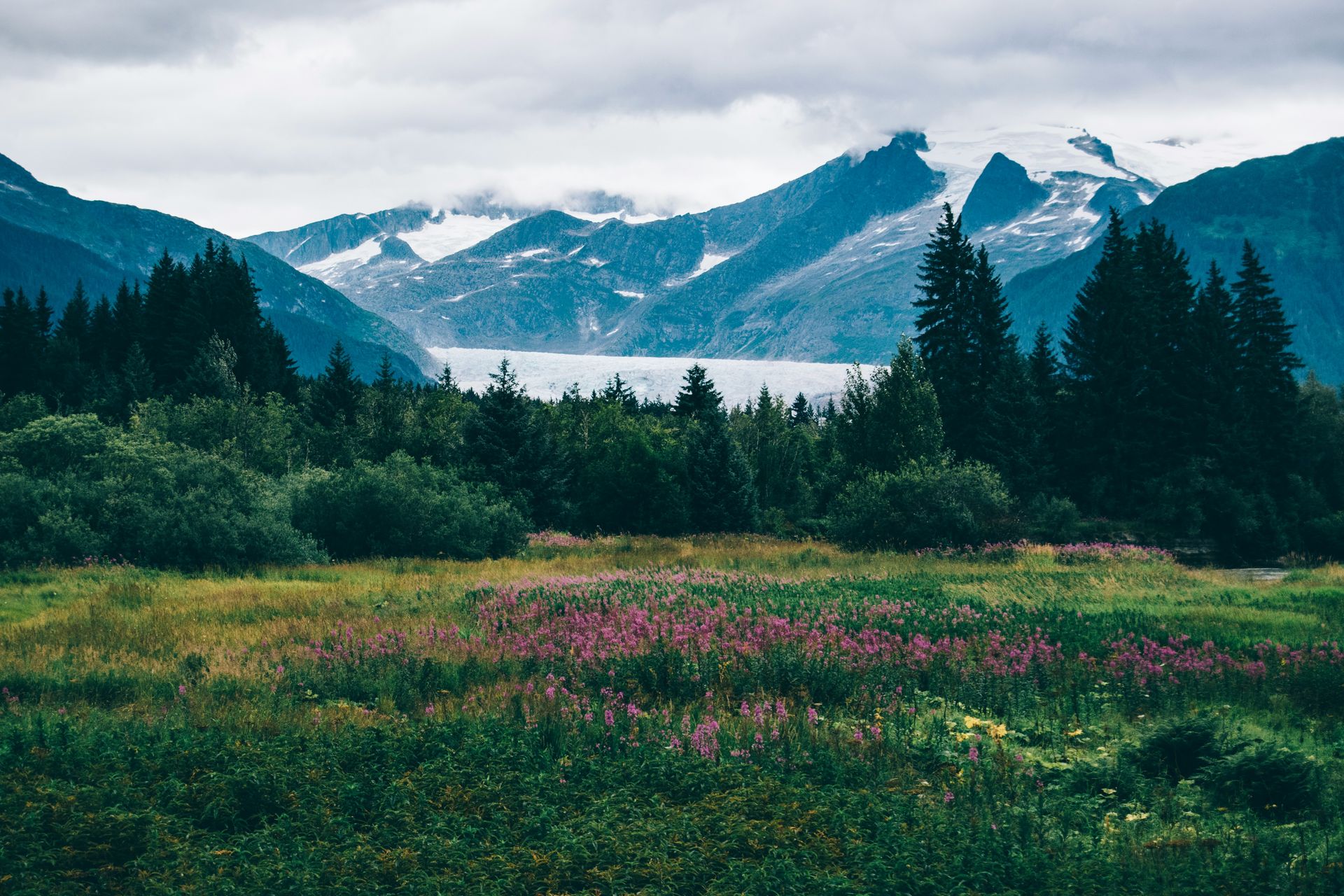
May and September function as the sweet spots of the Alaska cruise calendar for travelers who want a strong experience without peak-season crowds or costs. Cruise fares in these months run lower than midsummer rates, ships carry fewer passengers, and cabin availability is broader, giving travelers options that the compressed peak season rarely offers. Shore excursion pricing can also drop in the shoulder months, and hotels in Alaskan ports charge less at the beginning and end of the cruise season than during the summer rush.
The extended shoulder season has expanded in recent years as a changing global climate has brought more moderate temperatures to Alaska in April and October, pushing the viable cruise window beyond its traditional boundaries. Several major cruise lines now sail in late April, including Princess Cruises, Holland America Line, Norwegian Cruise Line $NCLH, MSC Cruises, Carnival Cruise Line, UnCruise Adventures, and National Geographic-Lindblad Expeditions. Norwegian offers sailings in October, and National Geographic-Lindblad runs an extended 13-night voyage departing in early October 2027.
April in Alaska surprises many first-time visitors. Hickman describes long stretches of sunny days and crisp, clear evenings, with temperatures in the mid-40s, and notes that April ranks among the favorite months for local Alaskans. The cooler air that some travelers worry about discourages the kind of rain that summer months bring increasingly as the season progresses, and the lower sun angle gives the landscape a quality of light that midday summer sun flattens. September, on the other hand, delivers fall foliage alongside the cooler temperatures, and the absence of bugs and the thinning of crowds give the experience a quality that July cannot match, despite its better weather.

Eddie Mark Blair / Unsplash
The Alaska cruise season’s summer window runs from mid-May to mid-September, with daytime temperatures typically reaching between 60 and 80 degrees Fahrenheit across that span. Local Alaska experts identify the 30-day period from June 15 to July 15 as the peak window for warm, dry weather, the most reliable stretch of the season for outdoor activities that depend on conditions: hiking, wildlife viewing from shore, and excursions that require clear skies to deliver their full value. May is technically the driest month, with roughly a 25% chance of precipitation, but the June-to-July window combines warmth with the long daylight hours that make Alaska’s summer feel genuinely extraordinary.
Daylight defines the summer experience in Alaska in ways that travelers from lower latitudes do not anticipate. The summer season brings between 16 and 24 hours of daylight, and the weeks immediately surrounding the summer solstice on June 21 produce the maximum extent of the midnight sun phenomenon. Travelers $TRV who want to experience the most continuous daylight should plan their cruise for a few weeks before or after the solstice, when the sun barely dips below the horizon and the evening light over glaciated mountains persists long after a normal sunset would have ended the day.
The tradeoff is crowd density and cost. Peak season brings the highest fares, the fullest ships, and the most competitive booking environment for popular shore excursions that sell out well in advance. Families with school-age children often have no flexibility on this point, and the peak season accommodates that constraint effectively: the infrastructure of the summer season, the ranger programs, the excursion operators, and the port facilities run at full capacity in ways that the shoulder months do not always match.
Chris Oggerino / Unsplash
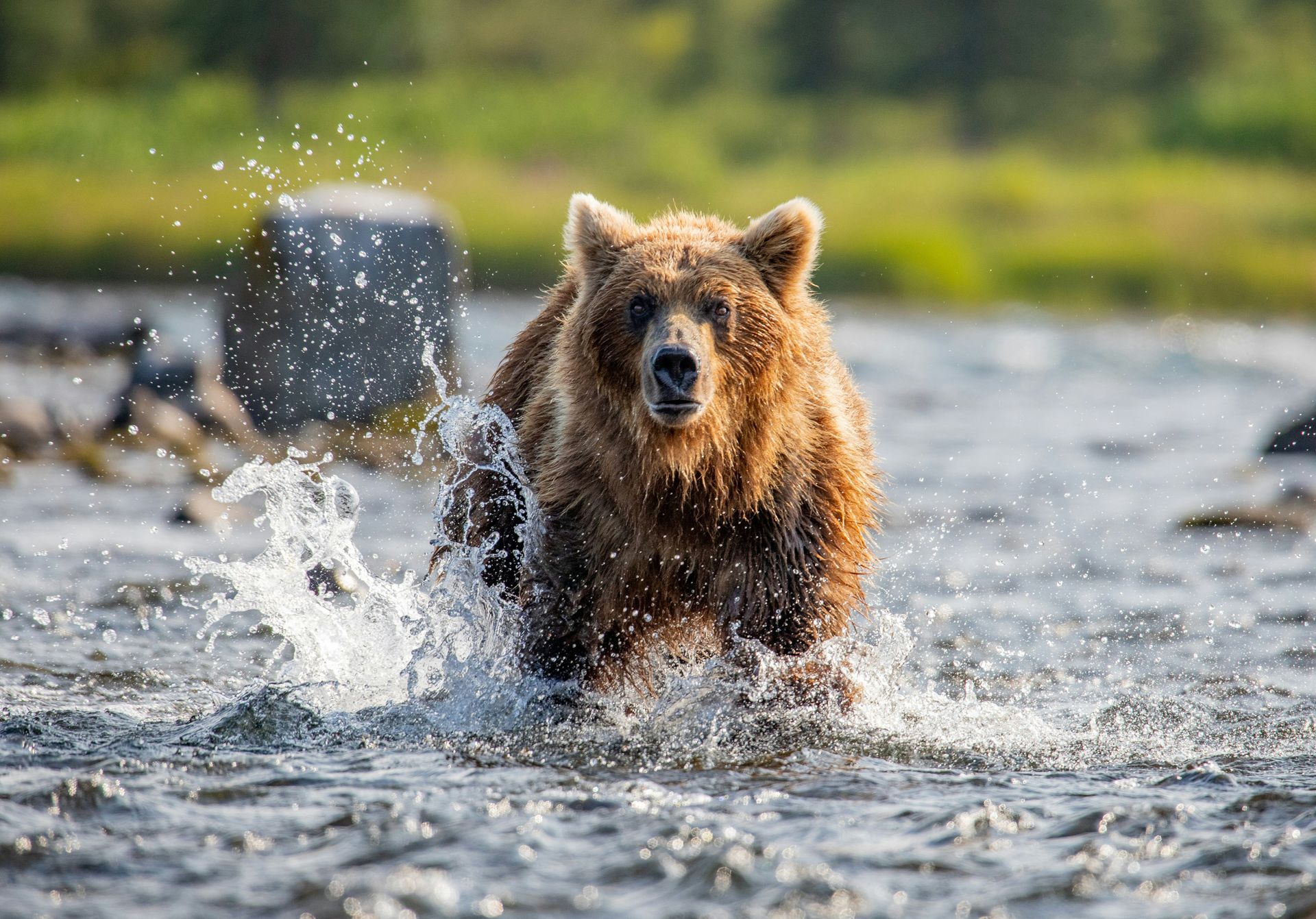
Glacier Bay National Park and Preserve offers wildlife-viewing opportunities that the Inside Passage itinerary builds around. Humpback whales up to 50 feet long, brown bears reaching 1,400 pounds, orcas, harbor porpoises, sea otters, harbor seals, Steller sea lions, mountain goats, moose, more than 200 species of seabirds, and bald eagles all inhabit the park’s marine and terrestrial environment. Rangers board ships during passages through the park to provide commentary and help spot animals along the route, offering passengers a guided encounter with the wildlife supported by the surrounding landscape.
Whale sightings remain consistent from May through September, according to Hickman, with fewer occurring in April and October as the animals migrate to and from Hawaii for winter. The reliability of whale encounters across the core cruise season makes this the least timing-dependent of the major wildlife experiences, though Hickman notes that even fog does not eliminate the encounter: the sounds and physical presence of whales near the ship register even when visibility prevents a clear sighting.
Brown bear viewing follows a different seasonal logic tied to food availability. Bears emerge from hibernation in spring, feeding on valley grass and skunk cabbage roots in May and early June before shifting to berries as summer progresses. Mid-July marks the beginning of salmon runs that draw bears to the rivers in concentrated numbers, sustaining a food source that continues through September. Chichagof Island, where Icy Strait Point is located, carries one to two brown bears per square mile, a density National Geographic has recognized by designating the island “Bear Island.” Hickman says the chances of a bear sighting on one of Icy Strait Point’s bear-watching tours are strong across the full May-through-September window.
Drew Farwell / Unsplash
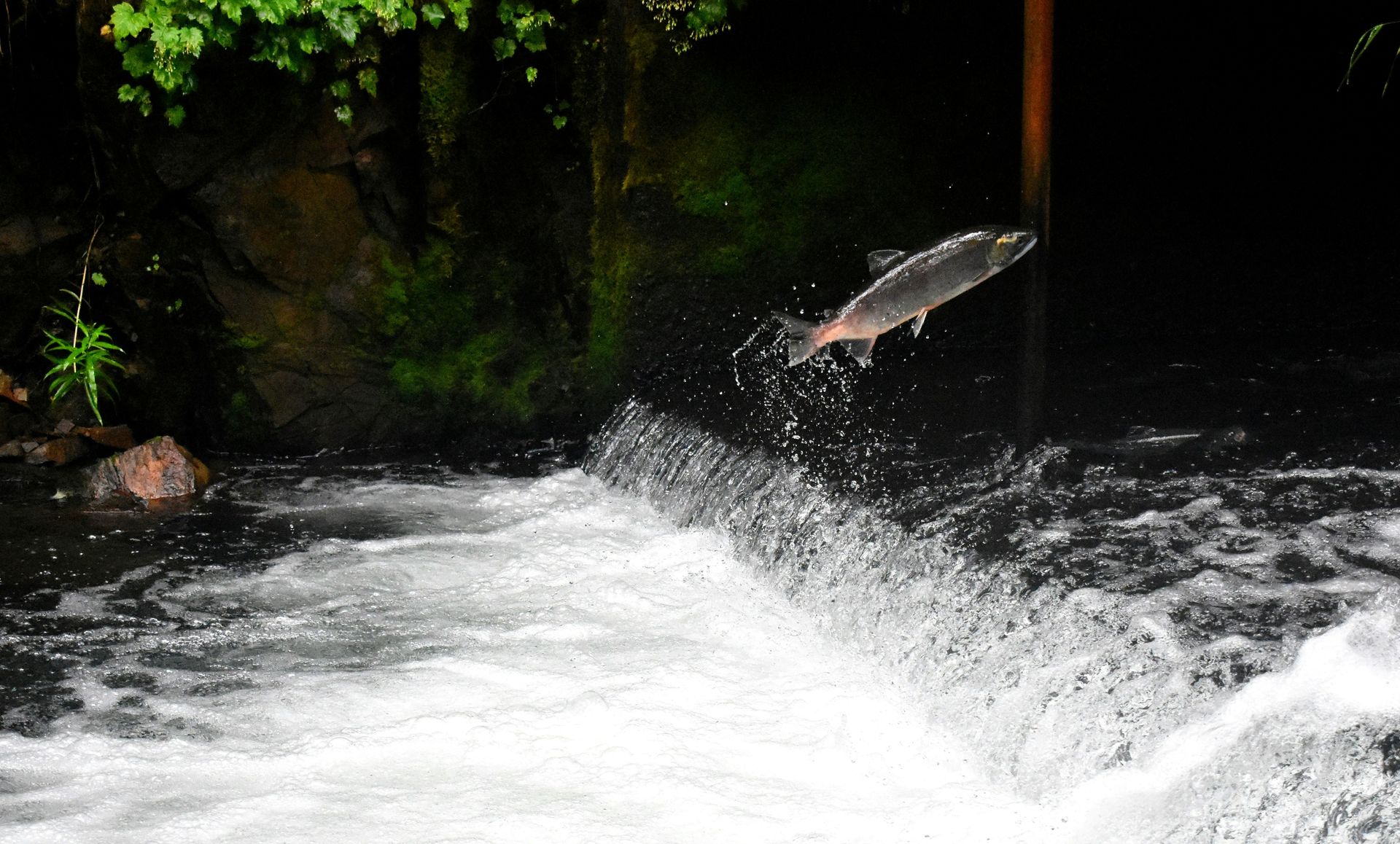
The peak salmon runs that make Alaska one of the world’s premier sport fishing destinations span the entire core cruise season, with different species peaking at different points across those five months. King salmon season opens in May and runs through the end of July. Silver salmon follow from July through the end of November. Red salmon occupy the window from mid-June through mid-August, and pink and chum salmon both peak in the brief overlap of mid-July to mid-August. A traveler whose cruise falls anywhere within the May-to-September window will find at least one species in season; those traveling in June and July encounter the most overlap between available species.
Halibut and other ocean species extend the fishing calendar further. The best conditions for wild Pacific halibut run from May to September, aligning with the core cruise season and providing anglers who prefer ocean fishing over river salmon a consistent window across the full summer. Rainbow trout, arctic char, northern pike, lingcod, and rockfish round out the range of species accessible through cruise line excursions or private and group charters out of ports including Ketchikan and Kodiak.
The intersection of salmon season and bear viewing creates an experience specific to mid-July through September that neither activity alone produces. Bears congregating at riverside locations to feed on salmon runs give wildlife viewers and anglers overlapping reasons to seek out the same rivers and viewing platforms, and the behavioral intensity of bears during active feeding differs from the spring grazing behavior that earlier in the season produces. Extending a cruise with a trip to the Kodiak Brown Bear Center and Lodge, an Indigenous-owned property on Karluk Lake accessible by floatplane from Kodiak, adds a land-based dimension to the salmon and bear viewing that the ship itinerary cannot replicate.
Tommy Tang / Unsplash
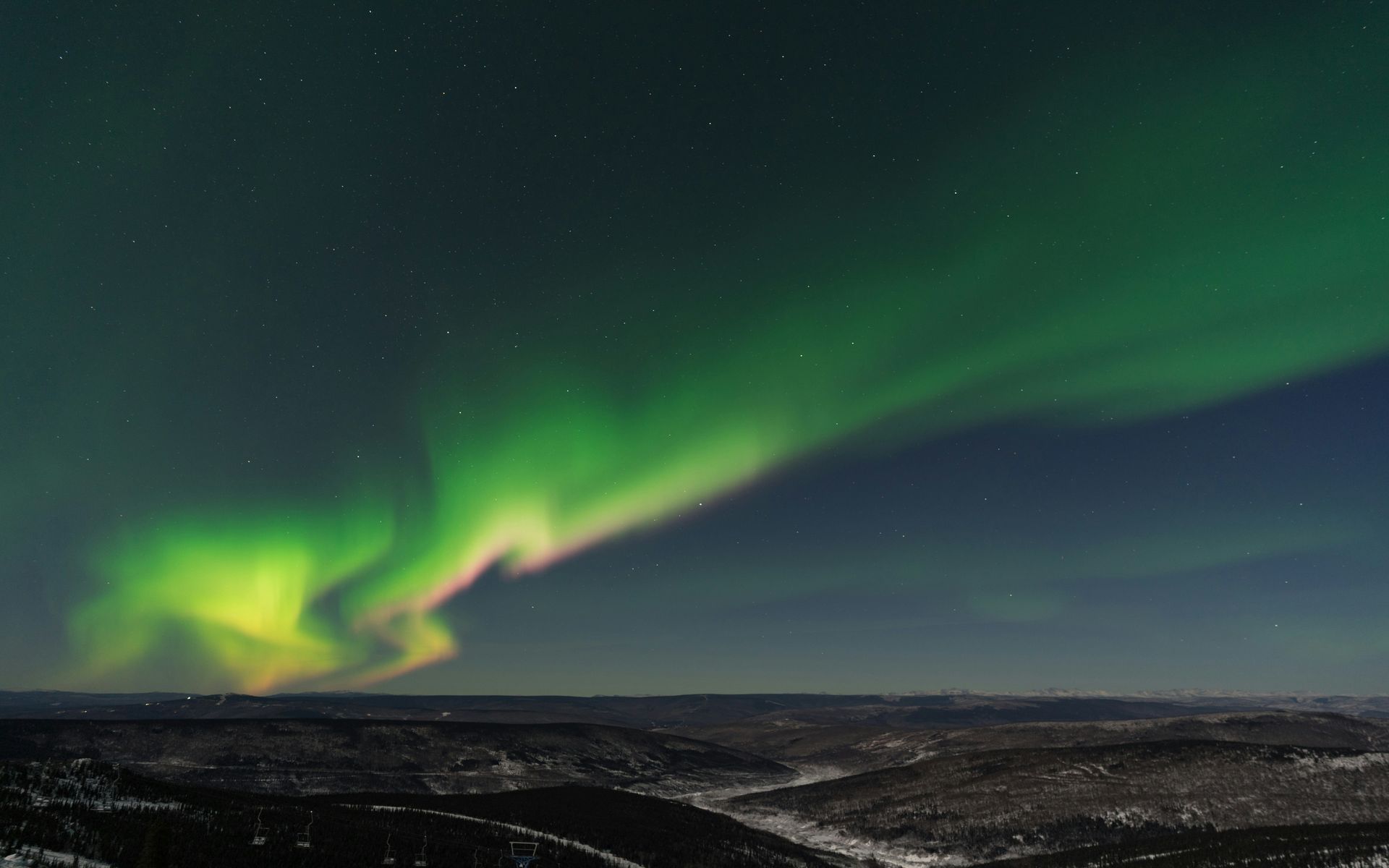
The northern lights are visible in Alaska from mid-August through mid-April, a window that partially overlaps with the cruise season and that the cruise itinerary itself does not optimize for. Travelers $TRV cruising the Inside Passage in late summer or early fall may catch a glimpse of the aurora, but Southeast Alaska’s temperate rainforest climate and its associated cloud and precipitation patterns reduce the probability of clear-sky aurora viewing to a level that dedicated aurora chasers would find unsatisfying.
The solution is geographic rather than temporal. Moving farther north substantially improves aurora-viewing conditions, and the cruisetour format offered by several major cruise lines provides the mechanism. Lines including Norwegian, Celebrity Cruises, Holland America, Princess, Royal Caribbean $RCL, Azamara, and Silversea offer combined land-and-sea packages that include the cruise alongside overnight lodging, railway journeys, and motorcoach travel to interior Alaska destinations. Anchorage, Fairbanks, and Denali National Park and Preserve all feature in these itineraries, with Fairbanks sitting directly under the auroral oval where northern lights activity concentrates most reliably.
2026 and 2027 are projected to be particularly strong years for aurora activity in Alaska, making this an unusually well-timed window for travelers who want to combine a cruise with a genuine aurora viewing opportunity. The aurora forecast tools maintained by Explore Fairbanks and the Geophysical Institute at the University of Alaska Fairbanks allow travelers to track conditions in real time and position themselves for the best possible viewing window within their travel dates.
Ronald Wong / Unsplash
Shore excursion availability across the Alaska cruise season is subject to weather cancellation at roughly equal probability throughout the April-to-October window, a fact that reflects the state’s genuinely unpredictable conditions. The mid-June to mid-July window offers the best statistical chance of clear skies, which the most dramatic excursions require to deliver their full experience, and several of the most sought-after tours operate only within a narrower portion of the season due to conditions specific to the activity.
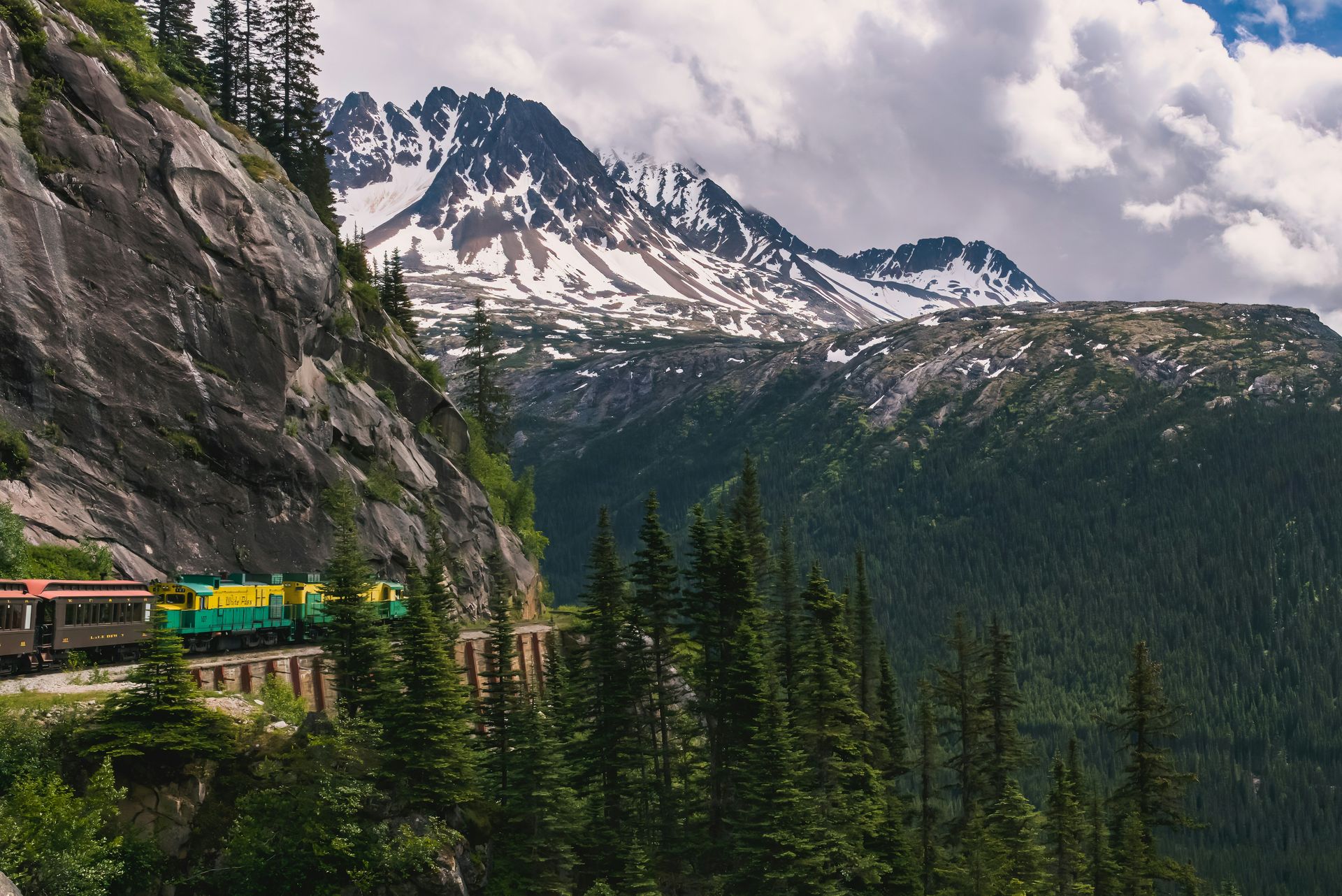
Flightseeing helicopter adventures in Skagway, including glacier-based dog-sledding experiences, typically open no earlier than May and close after September, when conditions for the sled dogs deteriorate. Heli-hike and rail adventures that begin with a helicopter flight over glaciers and mountains, then transition to a guided hike along the Skagway River and a return journey on the White Pass and Yukon Route Railroad require clear visibility to justify the investment. The Misty Fjords Flightseeing tour out of Ketchikan, which covers more than 2 million acres of lakes, waterfalls, ancient forests, and snowcapped mountains by bush plane, similarly depends on clear-day conditions that the peak summer window provides most reliably.
Checking availability with specific tour operators before booking a cruise date, rather than after, is the most effective way to ensure that a priority excursion falls within the operating window of the chosen sailing. Cancellation and refund policies vary across operators, and the practical reality of Alaska’s weather means that even peak-season travelers should carry contingency plans for the excursions that sit highest on their priority list. Layered clothing and a rain jacket are the logistical minimum for any Alaska cruise, regardless of the season a traveler chooses.
