
Hebert Santos / Pexels
Poetry is the literary form most resistant to summary and most dependent on the specific word in the specific place. A novel can be described — its plot, its characters, its argument — without losing most of what makes it worth reading. A poem cannot. The compression that is poetry's defining characteristic means that every word is doing more work than words usually do, that the sound and the meaning are inseparable, and that removing even a single word from a great line changes what the line is capable of doing to the reader.
This is why the single line is the right unit of entry into a poet's work. Not the biography, not the career summary, not the genre classification — the line. The line is where poetry happens, where the specific invention of a particular poet is most legibly on display, where the difference between good writing and great writing is most directly perceivable. A reader who encounters the right line from the right poet at the right moment can find the experience of reading poetry transformed — not because the line explains poetry but because it demonstrates what poetry is capable of that nothing else is.
The 20 poets here span six centuries, multiple languages in translation, and the full range of what poetry has attempted in the modern era. The selection criterion is not canonical prestige alone — several of the most prestigious poets in the English literary tradition have been set aside in favor of poets whose specific contribution is more illuminating in a single line. The criterion is the line that opens a door: the line that, if you have not encountered the poet before, makes their entire body of work immediately necessary; and if you have, makes you want to return.
Each slide quotes one line, explains what the poet was doing with it and with their work more broadly, and makes the argument for why this particular line is the door into that poet's world. The goal is not to substitute for reading the poems but to make reading them feel urgent — to produce the specific desire for more that a great line always generates.
1 / 20
-600x744.jpg)
Yale University Manuscripts & Archives Digital Images Database / Wikimedia Commons
"Tell all the truth but tell it slant —"
Emily Dickinson wrote approximately 1,800 poems in her lifetime, published fewer than a dozen, and was not recognized as one of the greatest American poets until decades after her death in 1886. The line above — the opening of a poem that goes on to argue that truth, like lightning, must be received obliquely or it will blind — is the line that most directly describes her entire method. Dickinson's poems do not approach their subjects directly. They approach them from the angle, through metaphor and compression, and the slant of the approach is what makes the arrival so startling.
Dickinson's specific formal inventions — the dashes that interrupt and defer meaning, the slant rhymes that create resolution without settling, the capitalization that gives abstract nouns (Death, Hope, Circumference) the weight of personified presences — were so unlike the poetry being written around her that her work was treated as eccentric and unfinished by her first editors, who regularized her punctuation and smoothed her rhymes before publication. The restored versions of her poems, which showed what her punctuation was actually doing, transformed the critical understanding of her achievement.
The compression of her best lines is extraordinary. "After great pain, a formal feeling comes" — the opening of a poem that describes psychological shutdown with greater clinical accuracy than most psychiatric literature manages in pages — is the same compression at work. The slant is not evasiveness. It is the recognition that the thing can only be approached from an angle, that the direct approach would destroy the very thing being approached.
2 / 20
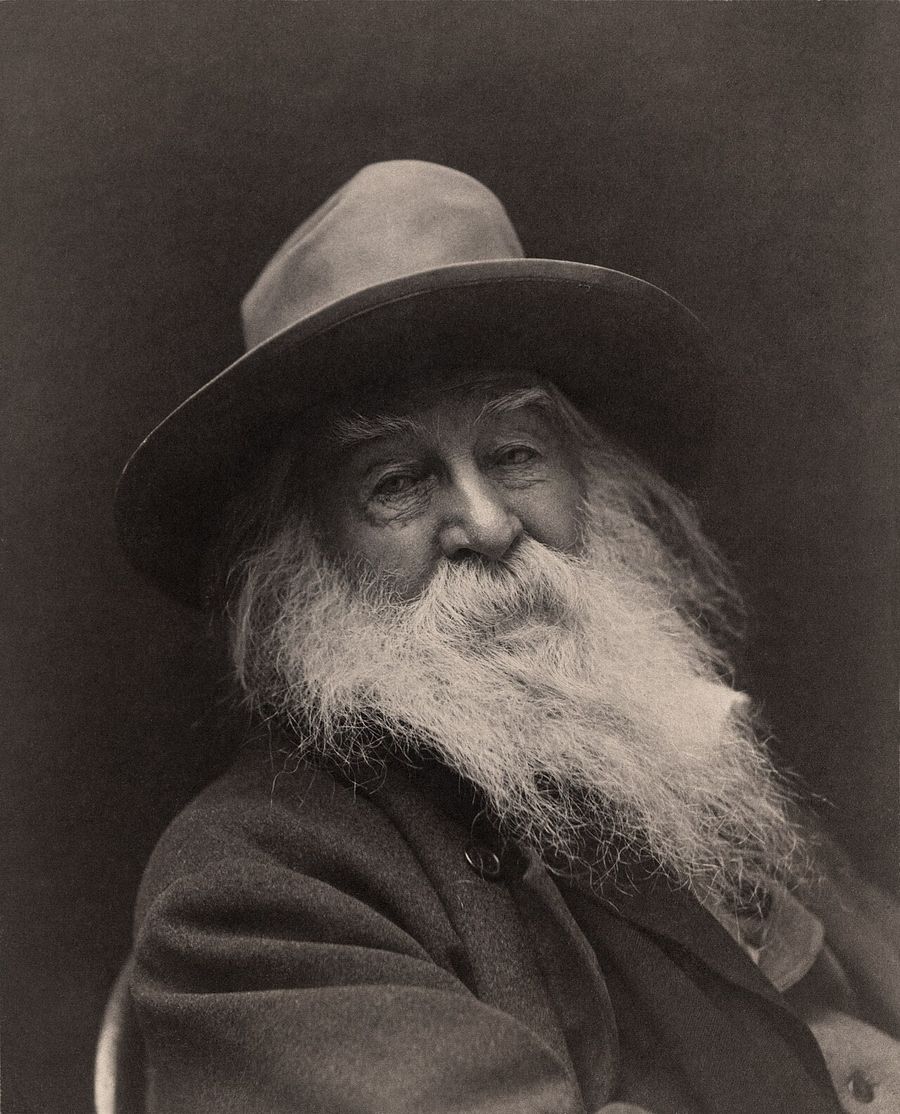
George Collins Cox / Adam Cuerden via Wikimedia Commons
"I am large, I contain multitudes."
Whitman's "Song of Myself," published in 1855 in the first edition of "Leaves of Grass" and revised continuously through the remainder of his life, is the founding document of American poetry — the poem that rejected the formal conventions of European verse and invented a new American mode: long, sprawling, democratic, ecstatic, cataloguing the diversity of American life with the specific energy of a country that had not yet decided what it was.
The line above — "Do I contradict myself? / Very well then I contradict myself, / (I am large, I contain multitudes.)" — is the most quoted passage in Whitman and the one that most directly states his poetic and philosophical project. The American self that Whitman constructs is not a unified, consistent personality but a containing vessel — large enough to hold contradiction, diversity, and the full range of human experience without requiring resolution.
The free verse that Whitman developed — lines whose length and rhythm follow the breath and the thought rather than a predetermined formal scheme — was the specific technical innovation that made the containing self possible. You cannot contain multitudes in a sonnet. The sprawling line, the expanding catalogue, the anaphoric repetition that builds momentum without closing — these are the formal expressions of a self that refuses to be smaller than the world it is describing. Every American poet since Whitman has had to decide how to position themselves relative to this formal inheritance.
3 / 20
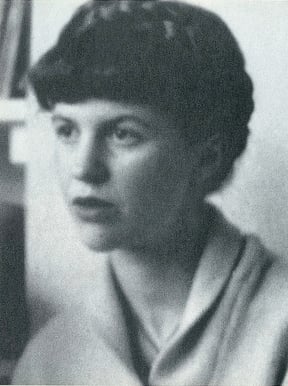
Giovanni Giovannetti/Grazia Neri via Wikimedia Commons
"Dying / Is an art, like everything else. / I do it exceptionally well."
Sylvia Plath's "Lady Lazarus" — the poem from which these lines come — is one of the most formally controlled and most emotionally volatile poems in the English language, and the combination of those two qualities is the specific achievement that makes Plath irreplaceable. The poem speaks in the voice of a woman who has been repeatedly resurrected from death, and who addresses her survival with the specific irony of someone who has been turned into a spectacle.
Plath's confessional mode — the use of autobiographical material in poetry with a directness that the poetry of her time did not permit — was a transformation of what poetry was allowed to say and how it was allowed to say it. The earlier confessional poets (Robert Lowell, John Berryman) had opened this door; Plath walked through it with a formal control and an emotional intensity that produced poetry whose tonal range — from savage irony to pure lyric beauty — remains extraordinary.
The line above is not simply dark. The darkness is delivered with the precision of a scalpel and the timing of a comedian — "I do it exceptionally well" is the line that makes the reader simultaneously flinch and recognize the specific heroism of a self that can observe itself this clearly. Plath died in 1963, at 30, and her posthumously published "Ariel" is among the small number of poetry collections that can fairly be described as changing the literary landscape permanently.
4 / 20
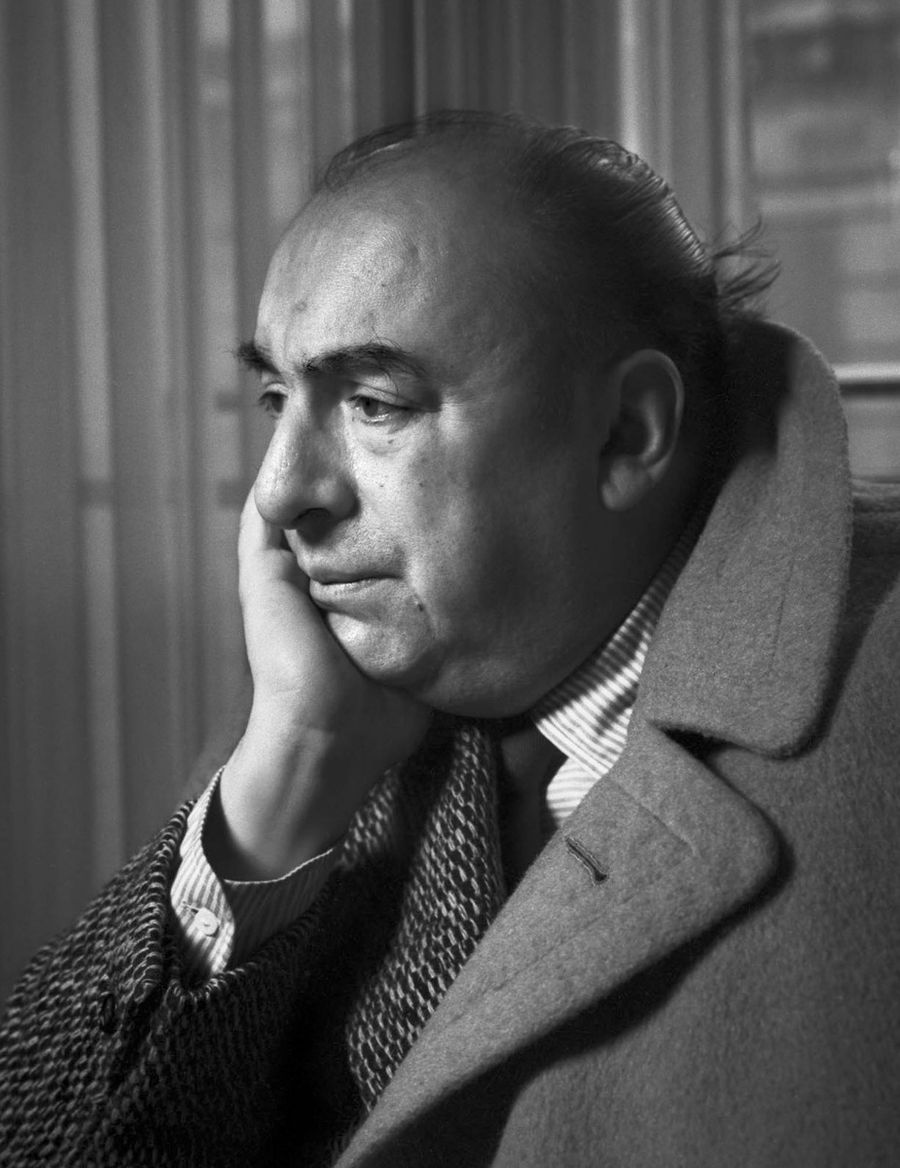
Annemarie Heinrich / Wikimedia Commons
"I want to do with you what spring does with the cherry trees."
Pablo Neruda — the Chilean poet who received the Nobel Prize in 1971 — wrote in Spanish, and the line above comes from his "Twenty Love Poems and a Song of Despair," published in 1924 when he was 19. The translation (by W.S. Merwin and others) preserves the essential quality of the original: an erotic metaphor of extraordinary delicacy that describes love as a natural transformative force rather than as a possession or a conquest.
Neruda's range across his career was remarkable — from the intimate love poems of his early work, through the epic political poetry of "Canto General" (which attempts to give voice to the entire history of Latin America), to the late "Elemental Odes" in which he wrote poems about onions, tomatoes, socks, and artichokes with the same reverence and craft he brought to political history. This breadth — the refusal to confine poetry to the elevated, the spiritual, or the formally prestigious — is the specific legacy of Neruda's work.
The cherry tree line is the right entry point because it demonstrates what Neruda's best love poetry does that most love poetry does not: it finds the natural world metaphor that is both perfectly accurate and perfectly new, that has not been used before and could not be improved upon, and that makes the reader recognize their own feeling in a way they had not been able to before reading it.
5 / 20
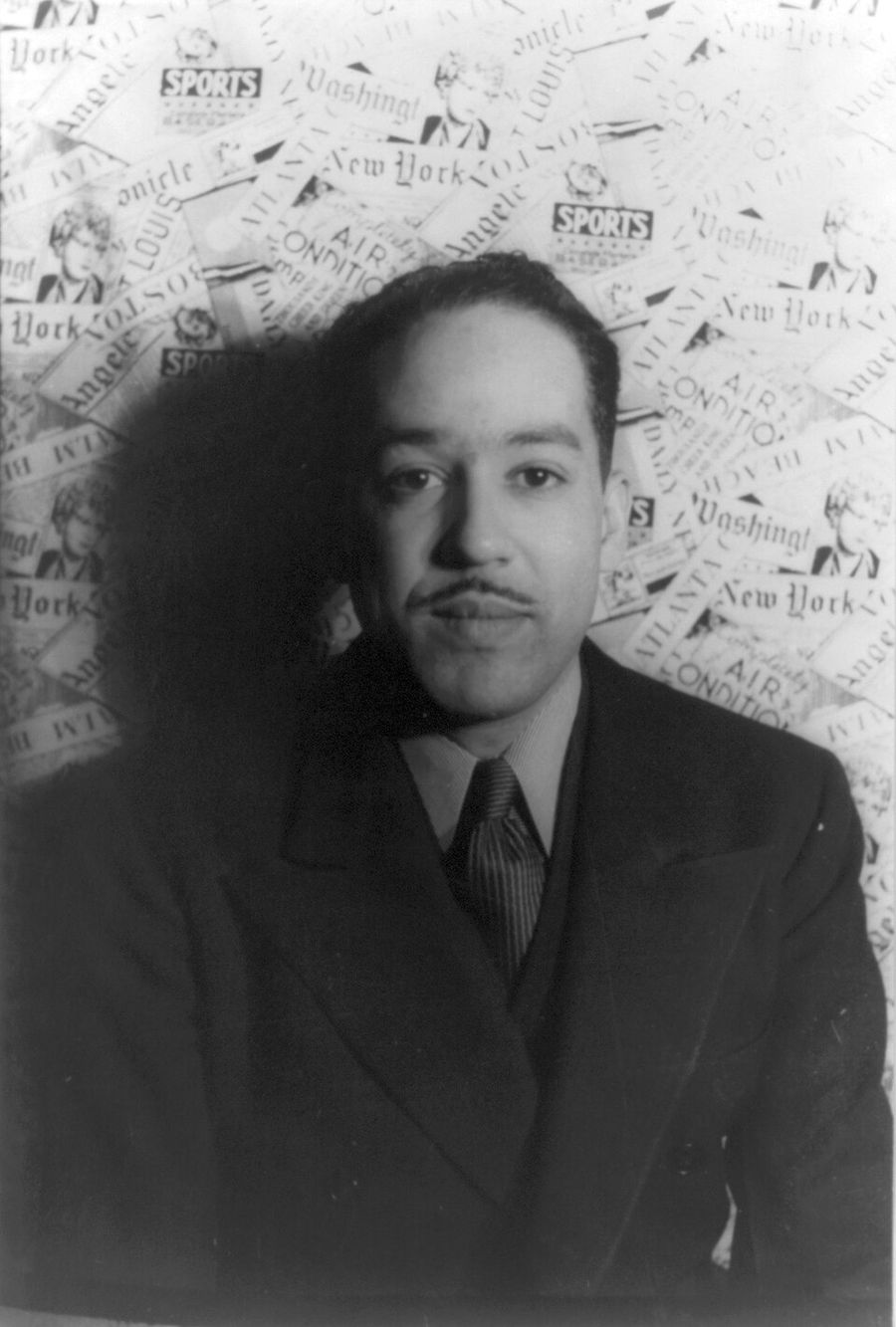
Carl Van Vechten / Wikimedia Commons
"Life is for the living. / Death is for the dead. / Let life be like music. / And death a note unsaid."
Langston Hughes was the central figure of the Harlem Renaissance, the poet who gave Black American vernacular speech its place in American literary tradition and who insisted, throughout a career from the 1920s to the 1960s, that poetry was not an elite form requiring an educated audience but a democratic one that belonged to the people whose lives it described.
The line above comes from "Life is Fine," a poem that demonstrates Hughes's specific gift: the blues structure, the repetition and variation, the refusal of sentimentality, the specific courage of ending on the unsaid note. Hughes drew on the blues and jazz traditions of Black American music to develop a poetic mode that had rhythm without the formal constraints of European verse, that used the repetition and call-and-response structures of oral tradition without being merely folk form.
His "The Negro Speaks of Rivers" — written when he was 17, on a train journey to visit his father — remains one of the most powerful short poems in the American literary tradition, locating Black identity in a history that precedes American history and connects it to the deep time of the Nile and the Euphrates. Hughes never won the Nobel Prize, an omission that later critics have treated as one of the more significant lapses in that institution's literary judgment.
6 / 20
Credit: Wikimedia Commons
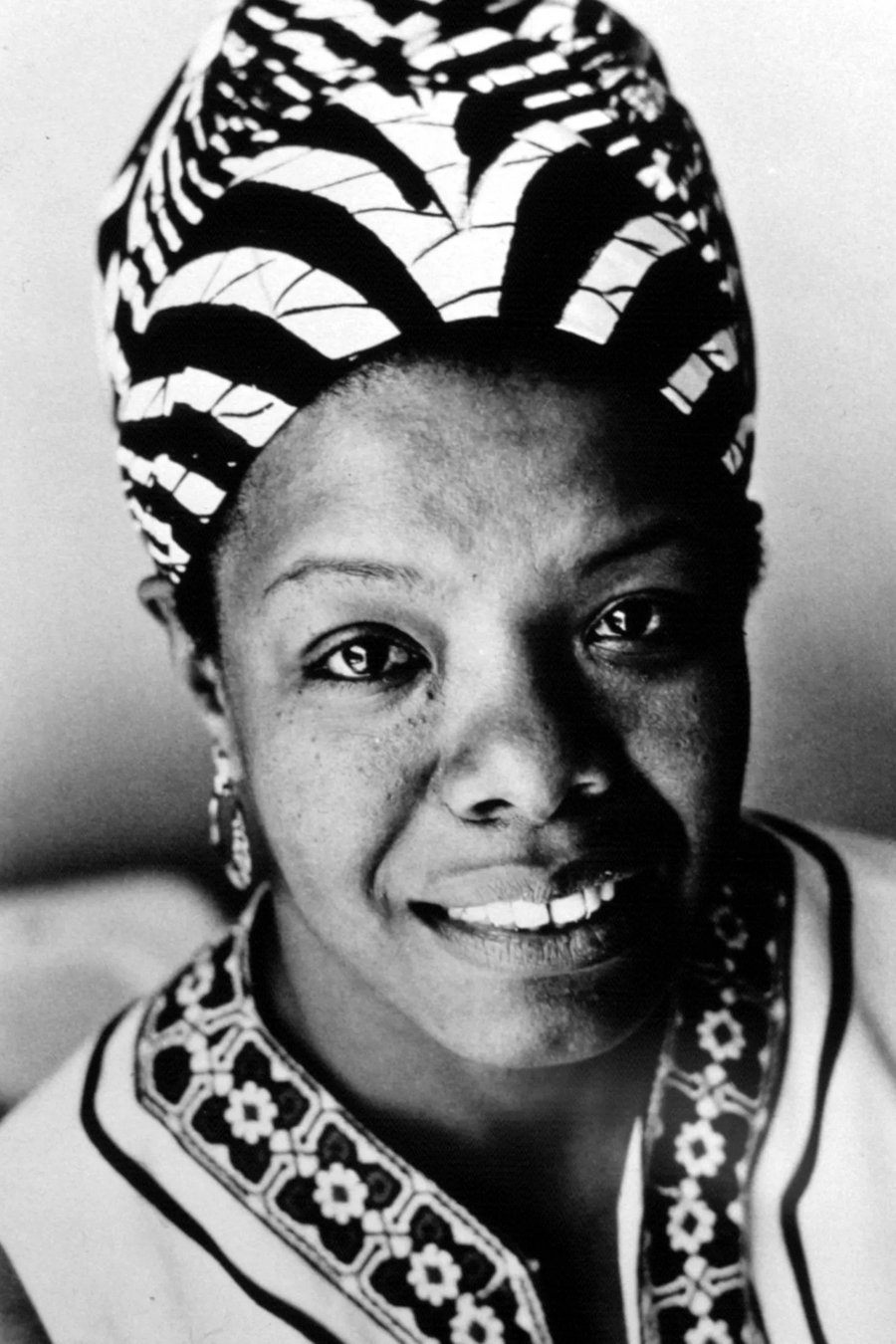
"You may write me down in history / With your bitter, twisted lies, / You may trod me in the very dirt / But still, like dust, I'll rise."
Maya Angelou's "Still I Rise" — from which these lines come — is among the most widely read poems in the English language and one of the most directly political, written as an assertion of Black dignity against the specific historical forces of oppression, slavery, and denigration. Angelou wrote it in the voice of collective pride rather than individual injury, which is what gives it its specific power: it is not a personal statement but a historical one.
Angelou's position in American literary culture is unusual: she is simultaneously one of the most celebrated and most widely read poets in America, read at inaugurations and taught in schools, and one whose academic critical reputation has sometimes been treated as less serious than her popular reach would suggest. This misreads what she was doing. The accessibility of her best poems is a technical achievement, not a limitation — producing lines that can be understood immediately and felt deeply is a harder craft problem than producing lines that require unpacking.
Her memoir "I Know Why the Caged Bird Sings" is the prose complement to the poetry — the specific historical material (childhood in the Jim Crow South, sexual trauma, survival and recovery) that the poems process through a different kind of compression. Both operate as testimonies to the same central insight: that survival with dignity is a form of art.
7 / 20
George Charles Beresford - National Portrait Gallery / Wikimedia Commons
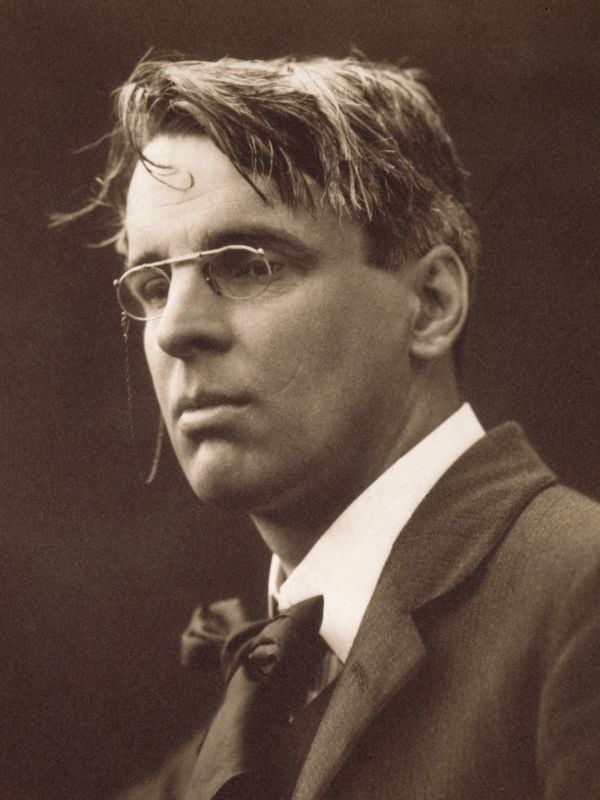
"Things fall apart; the centre cannot hold"
William Butler Yeats is the poet whose work most consistently rewards re-reading at every stage of a reader's life — the poems that seemed beautiful at 18 are revealed at 40 to be also philosophically precise, historically embedded, and technically extraordinary. The line above, from "The Second Coming" (1919), written in the aftermath of the First World War and the Irish War of Independence, has become perhaps the most quoted line of 20th-century poetry, reproduced in political contexts that its author could not have anticipated and that it fits with uncanny accuracy.
"The Second Coming" is a poem about historical collapse — the feeling that the organizing principles of civilization have failed and that whatever emerges to replace them will be monstrous. The "rough beast, its hour come round at last, / Slouches towards Bethlehem to be born" — the poem's final image — has been applied to every subsequent historical crisis with such consistency that it has become a kind of universal template for civilizational dread.
Yeats's technical range — from the early Celtic twilight symbolism of his first collections, through the hard political clarity of his middle period, to the difficult mythological system of his late work — is extraordinary. His formal mastery was such that he could write the same poem as a conventional ballad, as a Romantic ode, and as a modernist lyric and produce a different but equally successful result in each mode. "The Second Coming" is the poem that most people know; "Sailing to Byzantium," "Among School Children," and "The Circus Animals' Desertion" are the poems that reveal the full extent of the achievement.
8 / 20
Credit: Wikimedia Commons
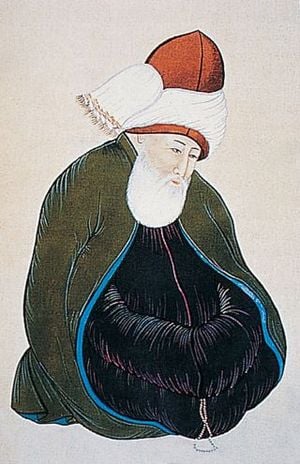
"Out beyond ideas of wrongdoing and rightdoing, / there is a field. I'll meet you there."
Jalal ad-Din Rumi — the 13th-century Persian Sufi poet and mystic — is, by volume of copies sold in translation, the best-selling poet in the United States. This is a remarkable achievement for a medieval Persian mystic, and it reflects something specific about the quality of the poems that survives translation: the directness of the mystical insight, the spatial and sensory precision of the metaphors, and the warmth of a voice that addresses the reader as a friend rather than as a student.
The field beyond wrongdoing and rightdoing — the space beyond moral categories, where the soul's essential nature can be encountered directly — is a precise description of the mystical state that the Masnavi and the Divan-i Shams-i Tabrizi spend thousands of lines approaching from different directions. The line works because the image is immediate and sensory (a field, a meeting, the possibility of going there together) rather than abstract, making the metaphysical accessible through the physical.
Rumi's poems are not simple, despite their accessibility. The mystical tradition they emerge from — the Sufi practice of dissolving the ego in the experience of divine love — is philosophically sophisticated, and the poems are simultaneously devotional, erotic, philosophical, and playful in ways that most poetry manages only one or two of at a time. The translations of Coleman Barks, which produced Rumi's American readership, have been criticized for their looseness by scholars of Persian literature; reading Rumi in the original, or in more literal translation, reveals additional dimensions that the Barks versions approximate.
9 / 20
-500x500.jpg)
Lady Ottoline Morrell / Wikimedia Commons
"April is the cruellest month"
T.S. Eliot's "The Waste Land," published in 1922, is the most discussed and most debated poem of the 20th century — a 433-line collage of literary allusions, multiple languages, fragmented voices, and discontinuous scenes that was immediately recognized as a radical departure from what poetry had previously done and has been argued about ever since. The opening line — "April is the cruellest month, breeding / Lilacs out of the dead land" — inverts the conventional association of spring with renewal and hope, establishing from the first syllable that this poem will refuse comfort.
The specific technical innovation of "The Waste Land" is the use of fragmentation as a structural principle — the poem proceeds not through narrative or argument but through juxtaposition, placing fragments of different languages, time periods, and registers against each other without transition or explanation, leaving the reader to make the connections or to experience the disconnection as the poem's subject. This technique, borrowed partly from modernist painting (Cubism, collage) and partly from the rhythmic and associative structures of music, was new in poetry and remains influential.
Eliot's critical influence was as large as his poetic influence: his essays establishing the importance of tradition, of impersonality, of the "objective correlative" — the specific external object or situation that produces a particular emotional state — shaped the way poetry was taught and evaluated for most of the 20th century. His later work, particularly the "Four Quartets," is argued by many critics to surpass "The Waste Land" in depth and formal achievement.
10 / 20
-900x1141.png)
William Blake / John Linnell via Wikimedia Commons
"Tyger Tyger, burning bright, / In the forests of the night"
William Blake — the English poet, painter, and printmaker who worked at the end of the 18th century and was almost completely ignored during his lifetime — is now recognized as one of the most original minds in English literary history: a visionary who created his own mythological system, his own printing technique, and his own poetic form, and who wrote with equal brilliance at the level of the nursery rhyme and the epic philosophical poem.
The "Tyger" — from "Songs of Experience," the companion volume to "Songs of Innocence" — is one of the most anthologized poems in the English language, and the opening lines demonstrate why: the sound is perfect, the image is visually immediate, and the question the poem is asking — who could have made such a creature? — reaches simultaneously toward theology, ethics, and the sublime. The poem asks whether the God who made the lamb also made the tiger, and leaves the question open with the specific courage of a poet who refuses easy consolation.
Blake's work was so different from the conventions of his time that he was understood by most contemporaries as eccentric at best and insane at worst. The recovery of his reputation, led by Alexander Gilchrist's biography in 1863 and consolidated by 20th-century scholarship, revealed the full system of his mythological poetry — "Jerusalem," "Milton," the "Prophetic Books" — as one of the most ambitious poetic projects in the language.
11 / 20
_(cropped)-500x500.jpg)
K. Kendall / Wikimedia Commons (CC BY 2.0)
"A thinking woman sleeps with monsters."
Adrienne Rich's "Snapshots of a Daughter-in-Law," published in 1963, was the poem that marked her transition from technically accomplished formalist poet to the explicitly feminist, politically committed voice of her mature work — a transition that cost her some of the critical approval she had earned with her earlier, more conventionally praised collections and that produced the poetry that made her genuinely important.
The line above — from a poem that catalogues, with controlled fury, the diminishments that society imposes on women's intellectual and creative lives — carries the compressed argument of the entire poem: that a woman who thinks fully, who refuses to contain her mind to the roles assigned to her, will find herself in conflict with the structures that produced her, and that this conflict is the condition of any serious woman's intellectual life.
Rich's subsequent development — "Diving into the Wreck," "Twenty-One Love Poems," "The Dream of a Common Language" — traced the consequences of the argument "Snapshots" made: the wreck that has to be dived into is the accumulated damage of patriarchal culture; the common language is what women's poetry might be if it were written from women's actual experience rather than from the experience that culture tells women they should have. Rich's poetry is argument as much as lyric — it knows what it thinks and says it directly, which is its own form of courage.
12 / 20
Bernard Gotfryd / Wikimedia Commons
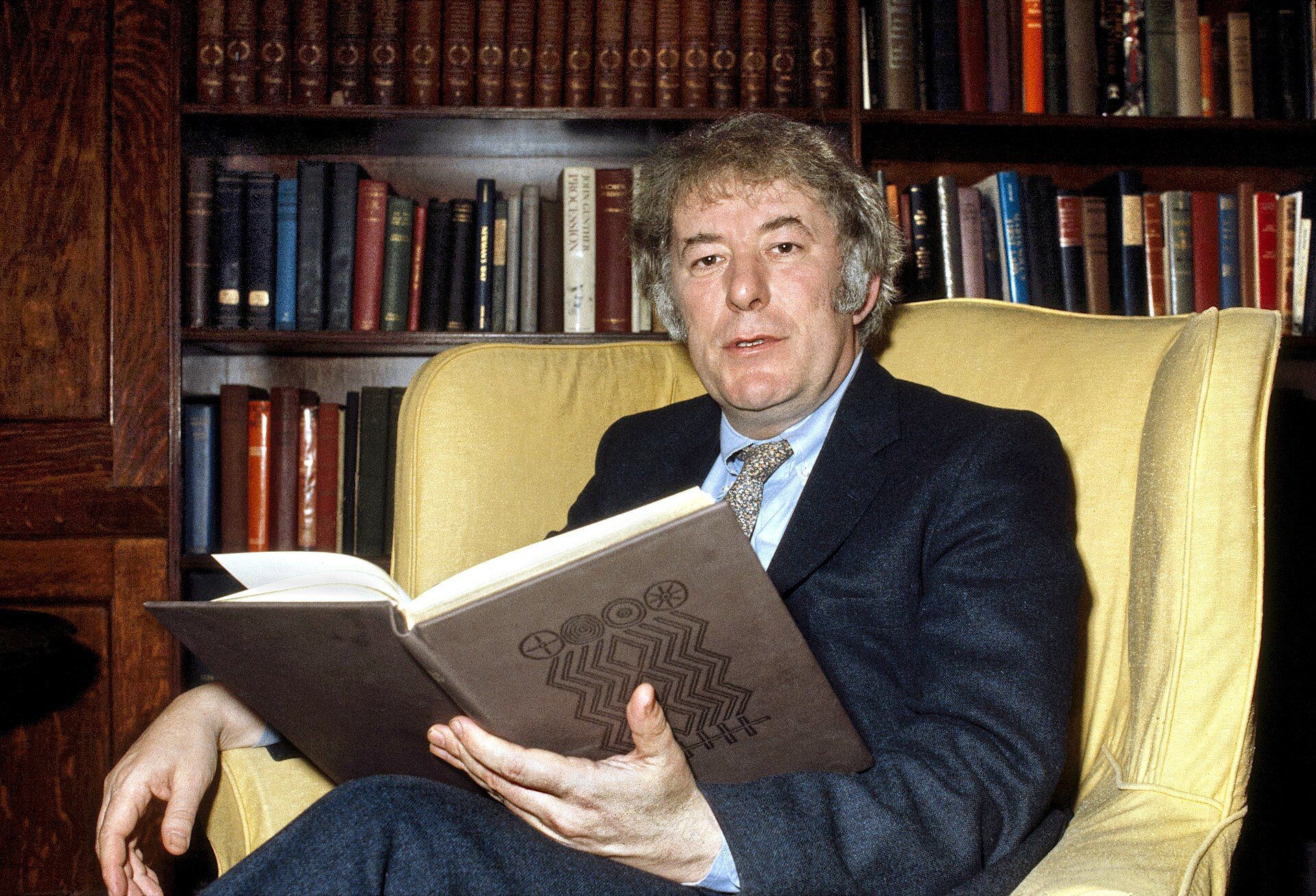
"Between my finger and my thumb / The squat pen rests; snug as a gun."
Seamus Heaney, the Irish poet who received the Nobel Prize in 1995, wrote about the landscape and community of rural Northern Ireland with the specific gravity that comes from knowing exactly what is at stake in choosing words — he grew up Catholic in the Protestant-dominated North of Ireland during the Troubles, and his poetry negotiates, with great delicacy and great precision, the relationship between private experience and public history.
The opening lines of "Digging" — his first significant published poem, from his first collection "Death of a Naturalist" (1966) — establish the program of his entire career: the pen held "snug as a gun" is not a comfortable metaphor. It places the poet in a landscape where the choice between violence and language is a real choice that has been made by people he knows, and the poem goes on to trace his father and grandfather digging potatoes and peat, locating the poet's work in a manual labor tradition while insisting that the instrument is different.
Heaney's technical accomplishment — the density of his syllables, the precision of his sound effects, the way his consonants carry weight — is best experienced aloud, where the Northern Irish vowels and the specific texture of his language become audible. His prose, collected in "Preoccupations" and "The Government of the Tongue," is among the finest literary criticism of the 20th century and explains his own poetic method with a clarity that most poets cannot achieve about their own work.
13 / 20
Credit: Wikipedia
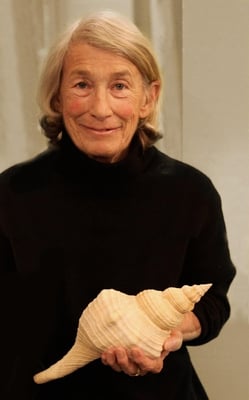
"Tell me, what is it you plan to do / with your one wild and precious life?"
Mary Oliver, who died in 2019, was the best-selling poet in America for the final decades of her career — a status achieved without academic institutional support, without major critical acclaim in the literary establishment, and without the prizes that typically confer prestige. Her readership found her directly, and the directness of the poems explains how: they are about the natural world, observed with extraordinary attention, and they ask their questions — the ones above come from "The Summer Day" — with the specific urgency of someone who means them.
The question is the right line because it is Oliver's entire project in two sentences: the poet who has spent the morning watching a grasshopper, who has been describing that attention with precision, turns to the reader and asks what they are doing with the same attention, the same aliveness, the same singular existence. The question is not rhetorical. It is genuinely open, and it is addressed to the reader as a peer rather than a student.
Oliver's reputation among academic critics has been contested: her work has been criticized as insufficiently complex, as consolation poetry rather than serious literary achievement. This criticism misreads the poems, whose simplicity is a technical achievement rather than a limitation and whose questions are more honest and more difficult than the complexity of more ornate verse sometimes permits. The millions of readers who have found her work transformative are responding to something real in it.
14 / 20
Hans van Dijk for Anefo / Wikimedia Commons (CC0)
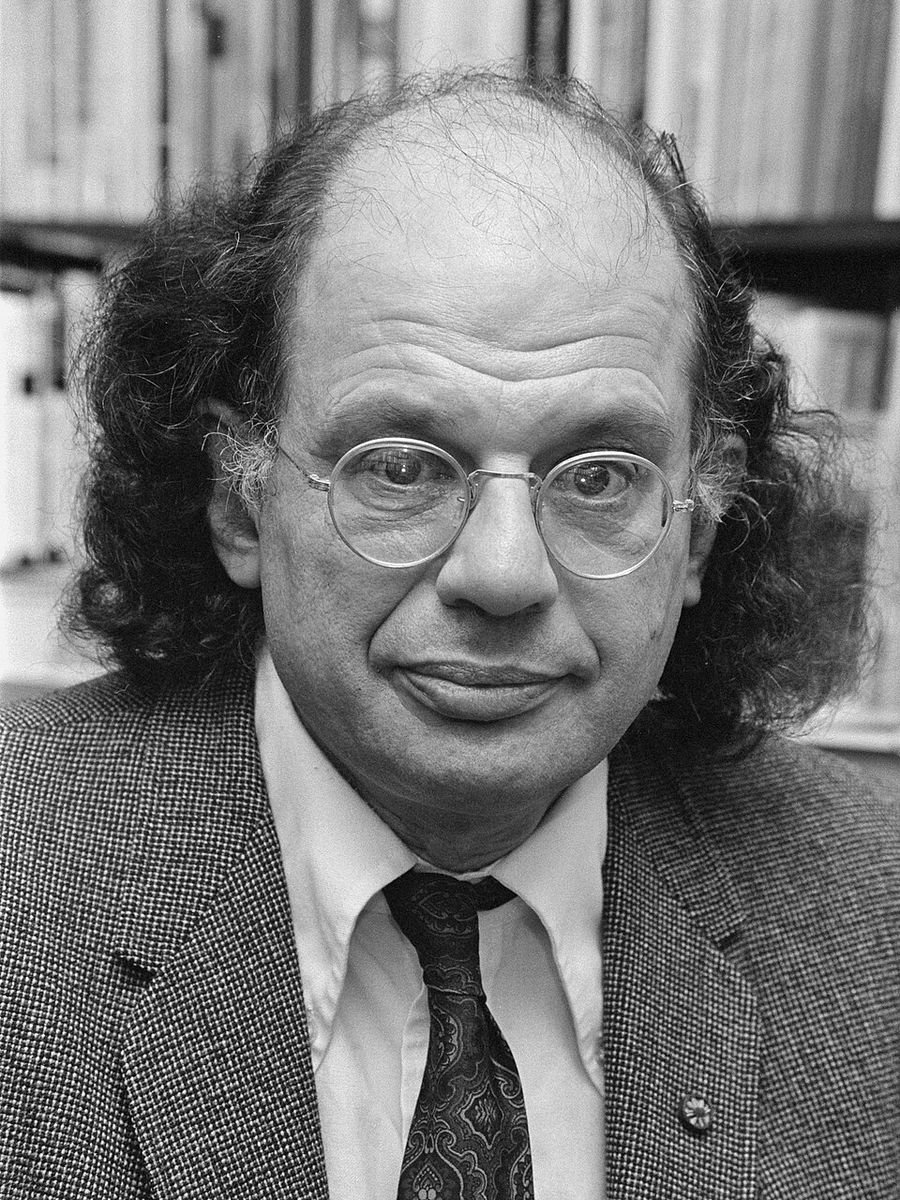
"I saw the best minds of my generation destroyed by madness"
Allen Ginsberg's "Howl," first performed at the Six Gallery in San Francisco in October 1955 and published by City Lights Books in 1956, is the poem that defined the Beat Generation and the one that most clearly positions itself as an indictment — the long first section, whose lines all begin with "who," catalogues the specific destructions visited on Ginsberg's peers by conformity, mental institutions, addiction, and the machinery of Cold War American society.
The opening line — which continues "starving hysterical naked, / dragging themselves through the negro streets at dawn looking for an angry fix" — announces a poetry of witness rather than aestheticism, a poetry that takes the specificity of contemporary American life as its subject and refuses the distance that literary prestige typically requires. Ginsberg learned from Whitman the long line and the cataloguing impulse; he brought to them a specificity of downtown New York and San Francisco bohemia that Whitman's democratic vistas had not included.
"Howl" was the subject of an obscenity trial in 1957, when San Francisco police seized copies of the book and charged publisher Lawrence Ferlinghetti with obscenity. The acquittal — based on Judge Clayton Horn's finding that the poem had redeeming social importance — established a legal precedent for literary work that has been cited in subsequent obscenity cases. The specific combination of legal history and literary history around "Howl" makes it one of the few poems that changed not just what poetry could do but what the law permitted it to say.
15 / 20
-300x400.jpg)
Mariusz Kubik / Wikimedia Commons (CC BY 3.0)
"I prefer the absurdity of writing poems / to the absurdity of not writing poems."
Wisława Szymborska — the Polish poet who received the Nobel Prize in 1996 — is one of the great ironists in 20th-century poetry: a poet whose apparently modest, conversational poems conceal a philosophical seriousness and a precision of observation that rewards re-reading with increasing respect. She wrote about ordinary things — photographs, conversations, the act of seeing — with the specific quality of attention that makes the ordinary reveal its strangeness.
The line above comes from "Possibilities," a poem structured entirely around things the speaker prefers — movies, cats, the color green, rivers, the absurdity of writing poems to the absurdity of not writing them. The preference for the absurdity of writing rather than not writing is both a joke and a precise philosophical statement: poetry is absurd, the speaker acknowledges, and so is everything else, and the choice is not between the absurd and the non-absurd but between which absurdity to inhabit.
Szymborska's poems work through the mechanism of a modest, curious intelligence encountering the world and finding it consistently stranger and more difficult than it appears. Her Nobel lecture — "The Poet and the World," in which she argues that the most important quality of a poet is not knowing — is one of the finest prose statements about poetry and about intellectual humility available in any language.
16 / 20

Jorge Mejía Peralta / Wikimedia Commons (CC BY 2.0)
"The sea is history."
Derek Walcott, the Saint Lucian poet who received the Nobel Prize in 1992, wrote about the Caribbean with the ambition and the formal precision of a poet who understood that his subject — the specific history of colonialism, slavery, and the cultures that survived and transformed — required the full resources of the English literary tradition he had inherited alongside that history.
The line above — the entirety of the opening of his poem "The Sea Is History" — announces the poem's argument with the compression that is the poem's specific formal achievement: the Caribbean sea that looks simply like beautiful water is actually saturated with history, carrying in its depths the bodies of enslaved people and the wrecks of slave ships, and the poem proceeds to dredge that history from the apparently empty water.
Walcott's masterwork, "Omeros" (1990), transposes the Homeric epic to the Caribbean — the fishermen Achille and Hector and the island woman Helen carrying the names and something of the functions of their Homeric predecessors in a story about colonial history, identity, and the possibility of a Caribbean epic tradition. The ambition of the project — claiming for the Caribbean the form that Western civilization regarded as its founding literary monument — is characteristic of Walcott's refusal to accept that the literary tradition and the colonial legacy are separable things.
17 / 20
Credit: Wikimedia Commons
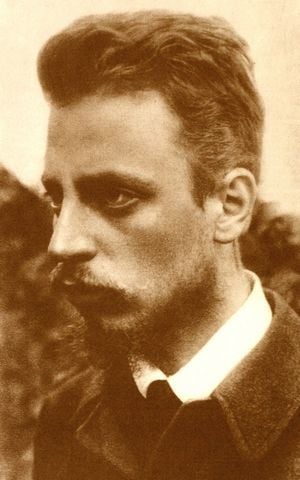
"Beauty is nothing but the beginning of terror"
Rainer Maria Rilke — the German-language poet born in Prague in 1875, who spent most of his adult life moving between European cities in search of the solitude he required to write — produced in the "Duino Elegies" (begun in 1912, completed in 1922) one of the most ambitious philosophical poem sequences in European literary history: ten elegies meditating on the human condition, on angels and mortality, on the relationship between beauty and terror, on what it means to be a conscious creature in an indifferent universe.
The line above — from the First Elegy, in Stephen Mitchell's translation — explains the terror: beauty is the beginning of terror because beauty is what the angel represents, and the angel is terrifying because it exists in a register of being that the human cannot endure. The "angel" in Rilke's system is not a religious figure but a philosophical one — the embodiment of a more complete, more intense form of existence that the human, by contrast, reveals as partial and temporary.
Rilke's prose, particularly "Letters to a Young Poet" — written in correspondence with a 19-year-old military student who had asked for his assessment of the student's poems — is widely read as an account of the creative life that has the quality of wisdom rather than advice. His instruction to "live the questions" rather than seeking premature answers is among the most quoted and most genuinely useful pieces of literary counsel available.
18 / 20
ACME Newspictures / Wikipedia
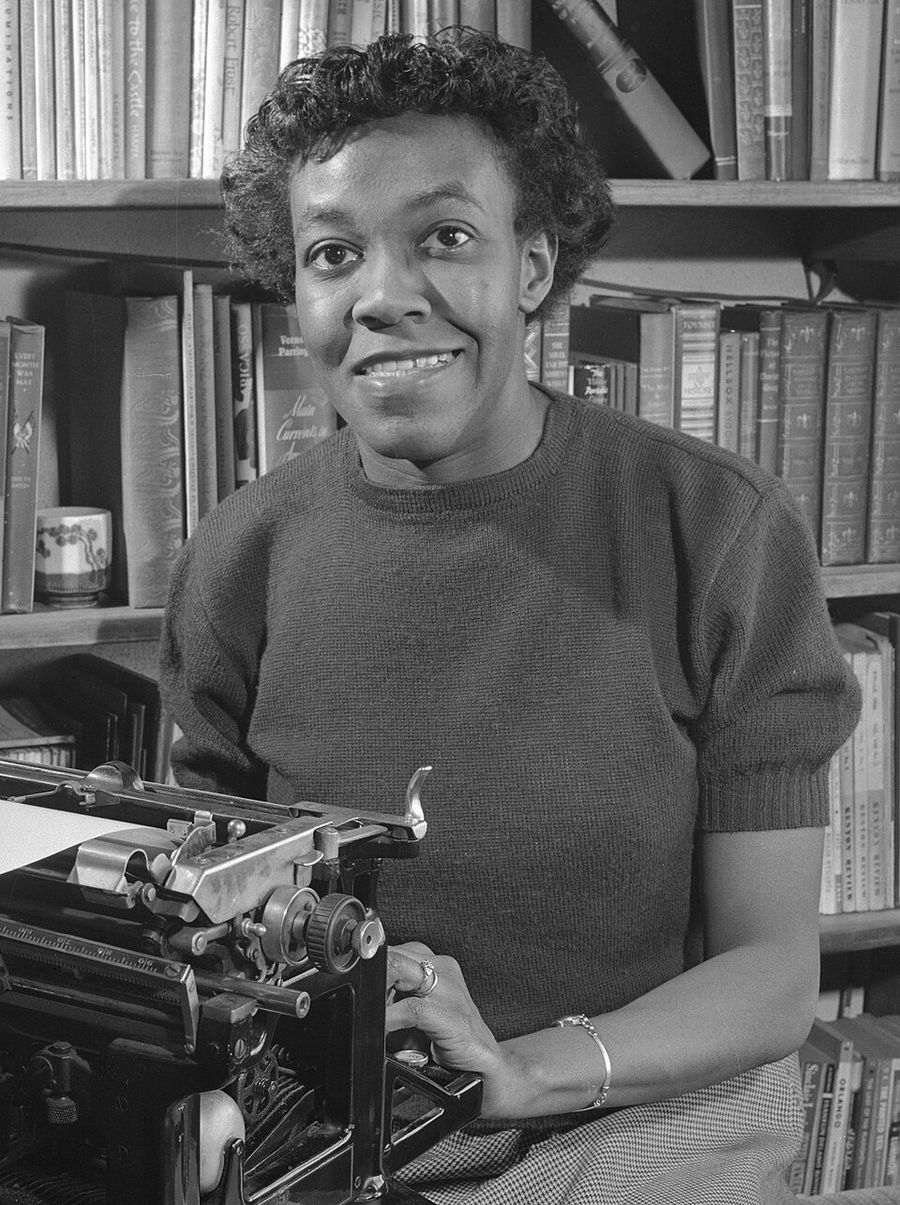
"We real cool. We / Left school."
Gwendolyn Brooks — the first African American to win the Pulitzer Prize, which she received in 1950 for her collection "Annie Allen" — wrote in formal verse structures (sonnets, ballads, terza rima) and in vernacular free verse with equal command, and her work across both modes insists on the full humanity of Black American life in ways that the literary tradition of her time consistently attempted to deny.
The lines above, from "We Real Cool" (1959), are the entire opening of a poem spoken by pool players in a Chicago bar who know, by the poem's end, that they will "die soon." The placement of "We" at the end of each line — "We / Left school. We / Lurk late." — produces a rhythmic stutter that enacts the specific self-interruption of a voice that asserts and then pauses, as if reconsidering whether the assertion will stand. The coolness is real; the danger is real; the poem holds both without resolving them.
Brooks's career divided, after her encounter with the Black Arts Movement in the late 1960s, between her earlier formal work and a later, more explicitly political poetry. Both periods are significant; the earlier formal work shows that she was one of the finest technicians of the 20th century, and the later work shows that technique in service of a specific historical urgency.
19 / 20

U.S. Air Force / Airman 1st Class Stephany Miller via Wikimedia Commons
"Black love is Black wealth"
Nikki Giovanni — whose collections "Black Feeling Black Talk" (1968) and "Black Judgement" (1968) made her one of the most prominent voices of the Black Arts Movement — wrote poetry that was explicitly political, explicitly oral, and explicitly addressed to a Black audience rather than to the predominantly white literary establishment. Her work claimed the right to speak directly, to be angry, to be celebratory, to be Black without apology or explanation.
The line above, from "Nikki-Rosa," is part of an argument that the external markers of poverty — the shared baths, the overcrowded houses — that white sociologists identified as deprivation were also the sites of Black love and Black community, and that this love constituted a wealth that the sociologists were not equipped to measure. The poem asserts the terms on which it will be read rather than accepting the terms that the literary establishment imposed.
Giovanni's directness — the colloquial language, the specific references to Black American life and history, the explicit political positions — was the specific quality that the literary establishment often treated as a limitation and that her readers treated as the entire point. Her work established a model for politically committed, community-addressed poetry that influenced subsequent generations of Black American poets and of spoken word and slam poetry traditions.
20 / 20

Shaniqwa Jarvis / The Guardian
"I have my mother's mouth and my father's eyes; / on my face they are still together."
Warsan Shire — the British-Somali poet born in Kenya in 1988, who became the first Young Poet Laureate of London and whose work appeared in Beyoncé's "Lemonade" visual album in 2016 — writes about displacement, diaspora, and the experience of being caught between cultures with a precision and an emotional directness that makes her one of the most significant voices to emerge in British poetry in the 21st century.
The lines above, from "In Love and in War," locate identity in the body — the mouth and the eyes that carry both parents — and locate the parents' relationship in the face of the child who holds them together after they have separated. It is a poem about inheritance, about the way parents live on in their children's faces, and about the specific grief of carrying people who are no longer together in a body that cannot put them apart.
Shire's poems about refugees — "Home," which begins "no one leaves home unless / home is the mouth of a shark" — have circulated widely in the context of the European refugee crisis and the global conversation about displacement, because they do what statistics and journalism cannot: they make the individual experience of flight legible to people who have not had it. Her debut collection "Teaching My Mother How to Give Birth" (2011) and her subsequent work established her as a poet whose emotional range and technical assurance are extraordinary for any poet, let alone one in her 30s.
