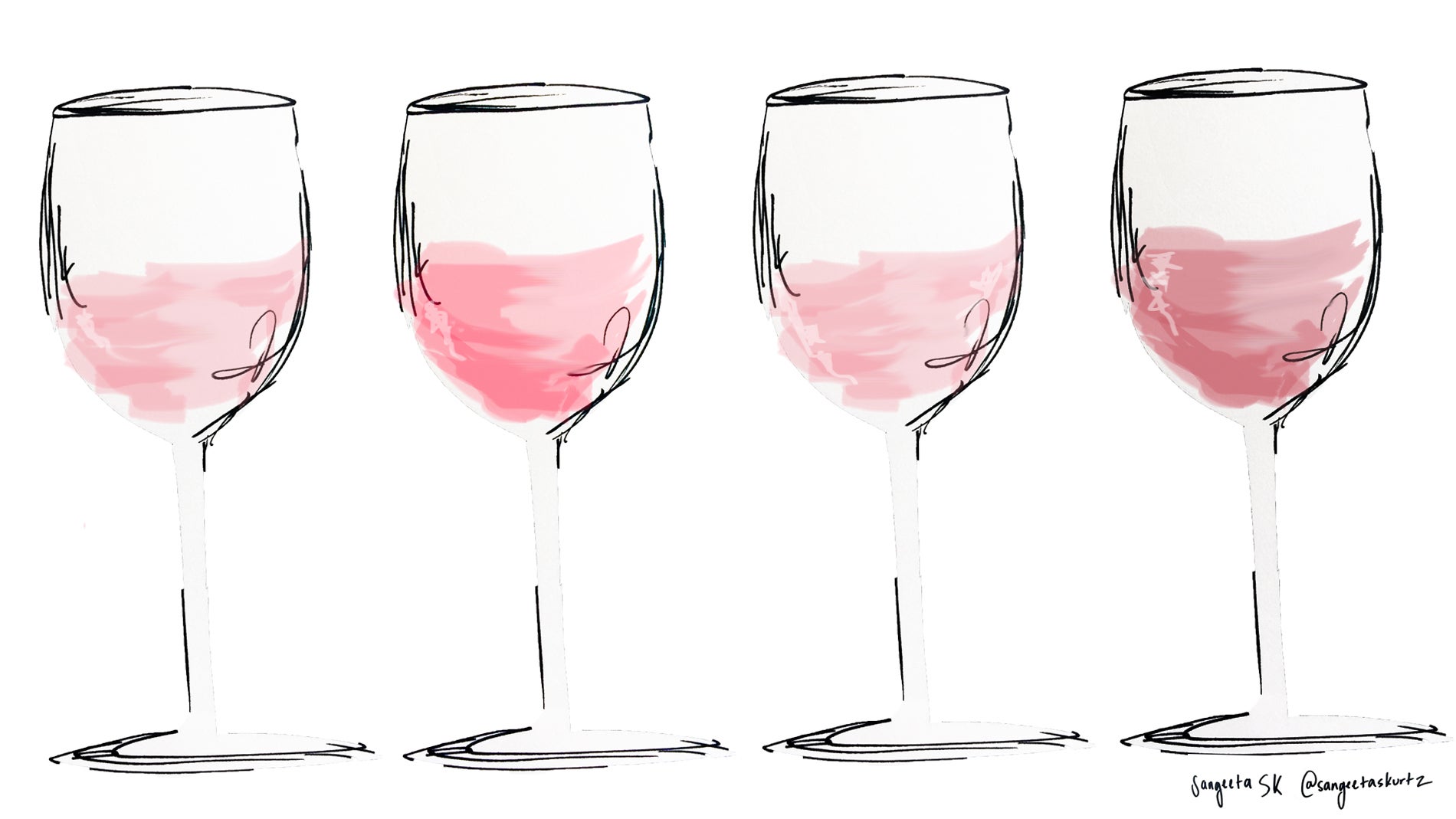
The weather is warm and that cold, pink wine you passed up all winter is starting to look very appealing. Rosé season has come as it always does—first as a trickle, and then a tidal wave.
Yet you’re not sure where to start. You have questions: Is all rosé created equal? Is it really just overpriced boxed wine? Can you drink it out of a can?
First off, it’s worth noting that rosé has come a long way since the cloying Sutter Home white zin of the 1970s and ’80s. It’s even starting to shed its identity as a silly brunch drink and evolve into something a bit more sophisticated (this is in spite of the advent of Instagram-friendly rosés that evoke a sloshy, sorority-girl sensibility.)
Rosé sales began to boom in 2014 and have continued to tick up. According to market-research provider Euromonitor, the category that includes Champagne and other sparkling wines was overtaken by rosé as the top-selling wine subcategory in 2017. The category continues to outpace the entire spirits industry in terms of sales growth. According to Nielsen, it s growing by more than 40% per year—the fastest growth rate of any alcoholic beverage category.
Before we get to picking the perfect rosé, get something straight: Rosé isn’t just red and white wine mixed together. (At least, it shouldn’t be: This practice is generally frowned upon and actually illegal in most of France.)
Most rosés are made by leaving the skins in the juice of crushed grapes and letting them steep for less than 48 hours in a process called maceration. Rosé doesn’t need to age like red wine, for which the skins are left on much longer. That’s part of what makes rosé largely affordable. (A good bottle is usually about $25. Never pay more than $40.) And the fact that many of the “interesting things” about grape skins—like flavors and tannins—aren’t imbued because of the quick turnaround, is what makes rosé deliciously easy on the tongue.
Quartz spoke with experts and sommeliers about a spectrum of rosés one might encounter in the wild:
(Their comments have been edited for clarity and conciseness.)
Lichine Look for bottles light in style and color—very pale hues of pink, signature of the dry Provence style of rosé. Typically, the lighter the rosé, the dryer it will taste. Darker pinks tend to be sweeter.
Doody Always look for a rosé from a reputable winery or winemaker, hopefully one that has experience making rosé. Buying or ordering an imported rosé actually can be easier than a buying or ordering a domestic one because the labeling laws in the US require all imported wines to identify the name of the importer on the label. Anytime you have a good bottle of imported wine, turn the bottle around and look for the importer. Once you know that, you can visit the importer’s website and find other wines that they offer. You can also ask your waiter, sommelier or retail wine steward for other wines from an importer you like.
Babe It’s pretty simple. Order the wine that’s the most fun to drink with the highest alcohol by volume.
Lichine Rosés from Provence—the preeminent region in France for producing rosé wine.
Doody Defining the “best” is purely a matter of taste. So, defining the “best” rosé region is also a matter of taste. There are great rosés being made all over the world: Germany, Spain, New Zealand, Australia, South Africa, and the US are all making fantastic rosé wines. That said, you can never go wrong with a rosé from France and in particularly Provence.
Babe America.
Lichine In addition to the taste indicators listed above, the color is a sign of how long the juice has been in contact with the grape skins. The juice inside of all grapes is clear—even red grapes. The color comes from the skin. So our style of rosé is made with very little skin contact.
Doody The color of a rosé doesn’t tell you all that much, other than how much skin contact the wine had with the grapes and perhaps its freshness. Rosés can be made from nearly any grape and can range in color from a very light pink or salmon to a much deeper pink that is nearly red. That said, I would caution against drinking any rosé that is overly brown in color. A rosé that is overly brown is probably a bit past its prime. A bit of a copper hue can be nice. But brown isn’t a good color for rosé.
Lichine Appropriate as an aperitif, followed by extraordinary food-pairing possibilities and continued enjoyment after lunch or dinner. Rosé is wonderful any time of the day—it’s joyful and festive, and goes well with nibbles.
Doody Rosé is a very versatile wine because it generally has qualities from both white wines and red wines. Well-made rosés are exceptionally food-friendly. I love rosé with anything with a bit of spice, such as Thai food, Korean BBQ and American BBQ. But it really pairs well with just about anything you might be eating—vegetables, fish, steak, etc.
Babe We pride ourselves on the fact that Babe pairs well with literally everything: barbecue, huge mediocre lunch salads, string cheese, mindlessly flipping through Instagram, breakfast, etc.
Lichine Rosé should be enjoyed chilled at 46-57°F and I would never recommend adding ice, so as not to dilute the flavor.
Doody Definitely drink rosé chilled. There aren’t too many things worse than warm rosé. I prefer rosé served at slightly higher than refrigerator temperature—somewhere around 50˚F. As for the ice, it’s never a great idea to put ice in a glass of wine. As the ice melts, it dilutes the flavors and aromas of the wine and throws them out of balance. If you have no other alternatives, pour one glass of the rosé from the bottle and add the smallest ice cube you can find to the glass. Put the rest of the bottle in a bucket of iced water and drink your glass while you wait for the bottle to chill.
Babe The colder the better.
