
Here are the quietest vehicles on the market
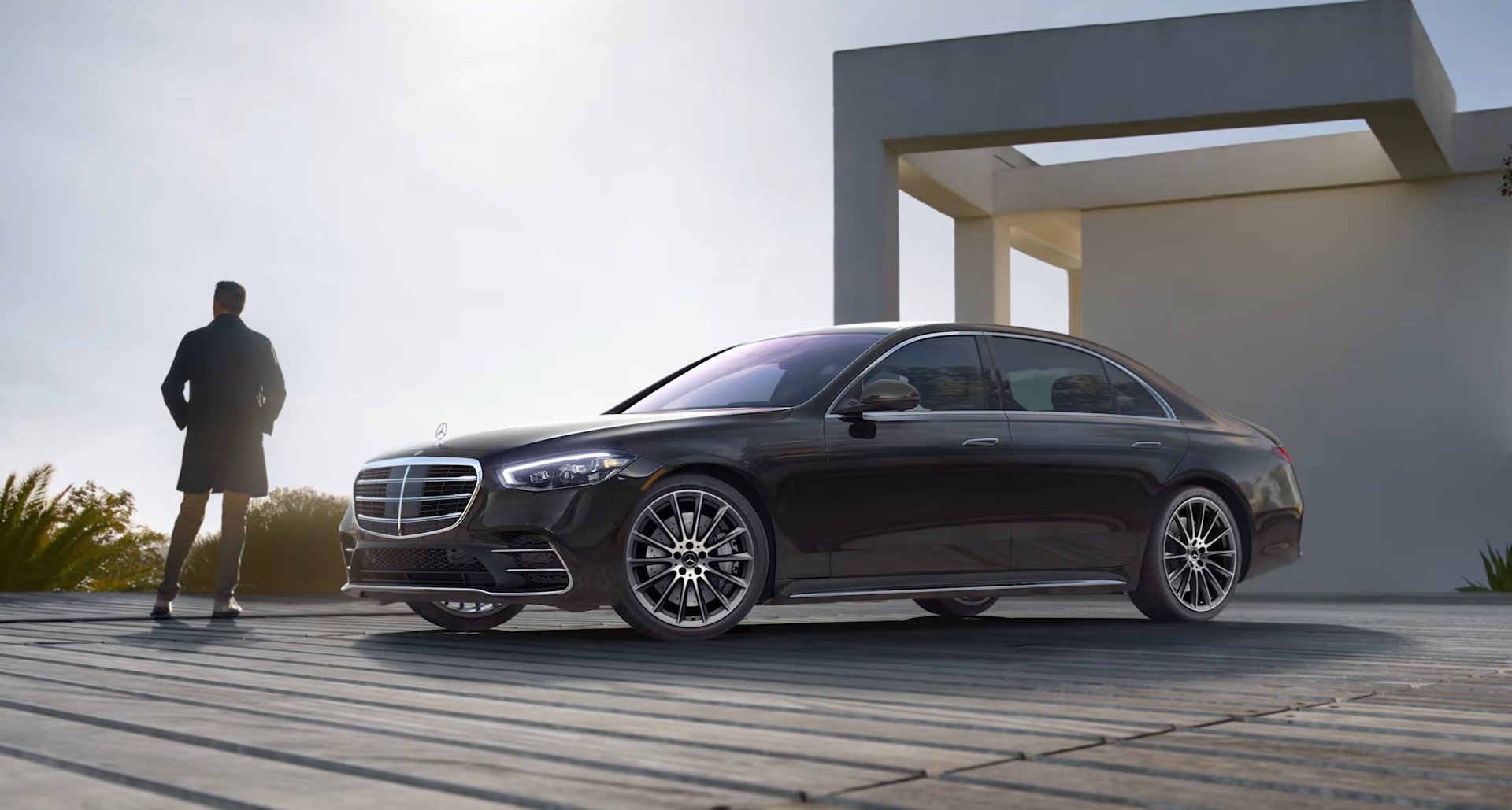
From the Mercedes-Benz S-Class's 9.9 interior score to a Ram 1500 with a cabin that rivals luxury SUVs, the quietest vehicles you can buy
Credit: Mercedes-Benz
Cabin noise is one of those vehicle qualities that only becomes noticeable once it crosses a threshold in the wrong direction. A quiet cabin is simply the environment the driver occupies: pleasant, unremarkable, conducive to thought and conversation. A loud one imposes itself on every moment behind the wheel. Road noise from the tires, wind rushing past the pillars, the engine’s effort audible through the firewall — these sounds accumulate across a commute or a road trip in ways that produce a driver who arrives fatigued rather than refreshed. The physical difference between a well-insulated cabin and a poorly insulated one is measurable in decibels, but the experiential difference is felt in how a driver feels at the end of a day of driving.
Achieving a quiet cabin requires investment across multiple systems simultaneously. Door seals, window glass thickness, firewall insulation, acoustic headliners, and suspension tuning all contribute. Electric vehicles have a structural advantage here because they eliminate the combustion engine’s contribution to cabin noise entirely, which is why several EVs and plug-in hybrids appear on this list. But the quietest vehicles are not merely those that lack an engine. They are those whose manufacturers have deliberately invested in every element of the acoustic environment, from the materials lining the door panels to the way the exterior design manages airflow past the windows at highway speeds. A vehicle can have an electric powertrain and still have a loud cabin if the structural investment is insufficient; a combustion vehicle can be exceptionally quiet if the insulation, sealing, and suspension work together at the highest level.
The vehicles below appear in U.S. News & World Report, ranked by U.S. News interior score with overall rating as the tiebreaker. The list spans luxury sedans, electric SUVs, a plug-in hybrid sedan, a mainstream hybrid crossover, a three-row midsize SUV, and a full-size pickup, covering the quietest options across the full range of vehicle categories available in 2026.
1. Lucid Gravity earns a perfect 10 overall with a 9.8 interior score
Credit: Lucid
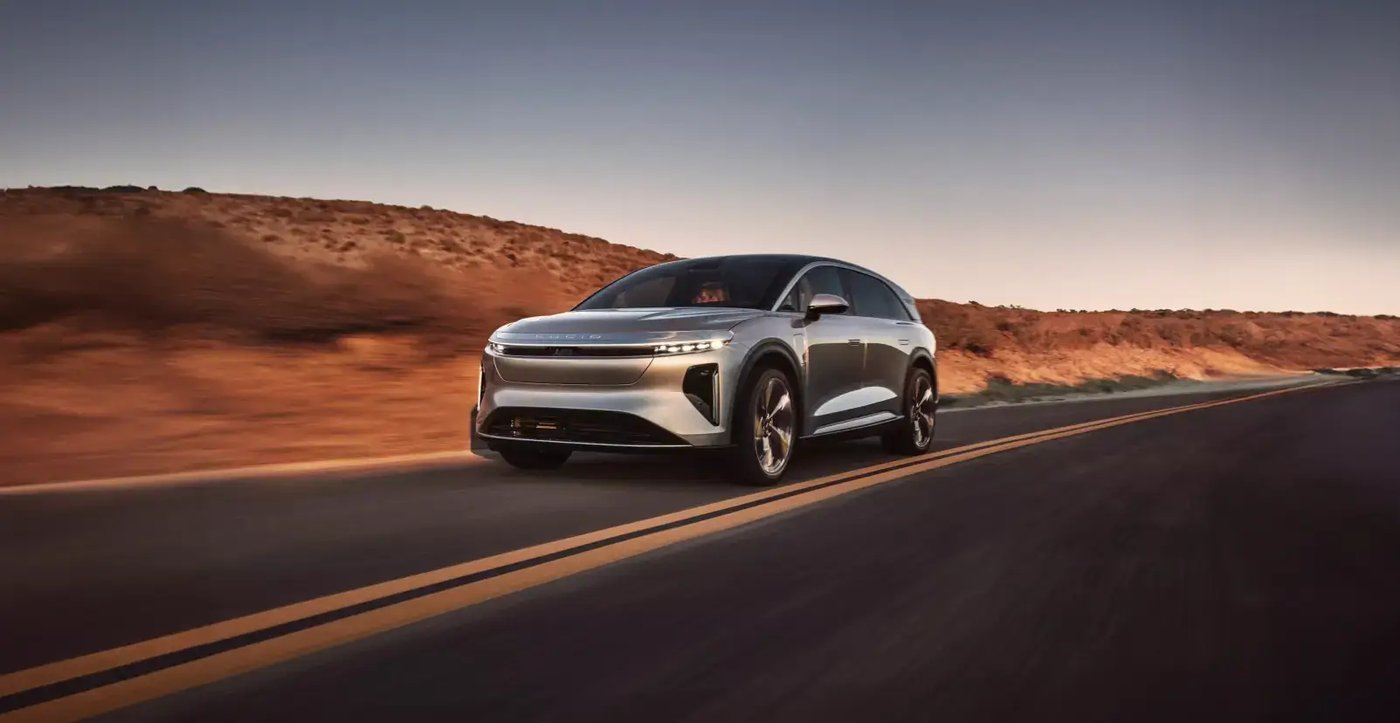
The Lucid $LCID Gravity earns a perfect 10 U.S. News overall rating and a 9.8 interior score, the highest combination on this list. Senior Vehicle Testing Correspondent John M. Vincent describes the Gravity as raising the bar for luxury electric SUVs, and the breadth of what the vehicle delivers gives that assessment its specific weight: quick acceleration, agile handling, a smooth ride, up to 450 miles of range, quick charging, a roomy cabin available in two- and three-row configurations, and a long standard features list are all present in the same vehicle. A perfect overall rating reflects the judgment that no vehicle currently on the market matches the Gravity across all the dimensions of a comprehensive evaluation.
The quiet interior is a direct result of the electric powertrain and deliberate acoustic investment. With no combustion engine contributing to the noise environment, the cabin’s insulation needs to manage only road and wind noise, which the Gravity does effectively at both city and highway speeds. The interior is well-built and exceptionally roomy, giving occupants across all rows the space to appreciate the quiet environment rather than feeling compressed by it. Vincent’s description of the cabin as world-class reflects the vehicle's material quality, spatial generosity, and the acoustic standard it maintains simultaneously.
The Gravity debuted in 2025 as the second model in Lucid’s lineup alongside the Air sedan, and the electric SUV format gives the brand a vehicle type with broader market appeal than a sports sedan alone. The 450-mile range is among the longest available from any electric SUV, which removes the range anxiety that limits the appeal of shorter-range EVs for buyers who take longer trips. The only limitation the source identifies is software that has occasionally been finicky, a category of issue that over-the-air updates can address without requiring a dealership visit. For buyers whose budget extends to the luxury electric SUV segment, the Gravity’s scores place it unambiguously at the top of the 2026 quiet vehicle rankings.
2. Mercedes-Benz S-Class earns the highest interior score on the list at 9.9
Credit: Mercedes-Benz
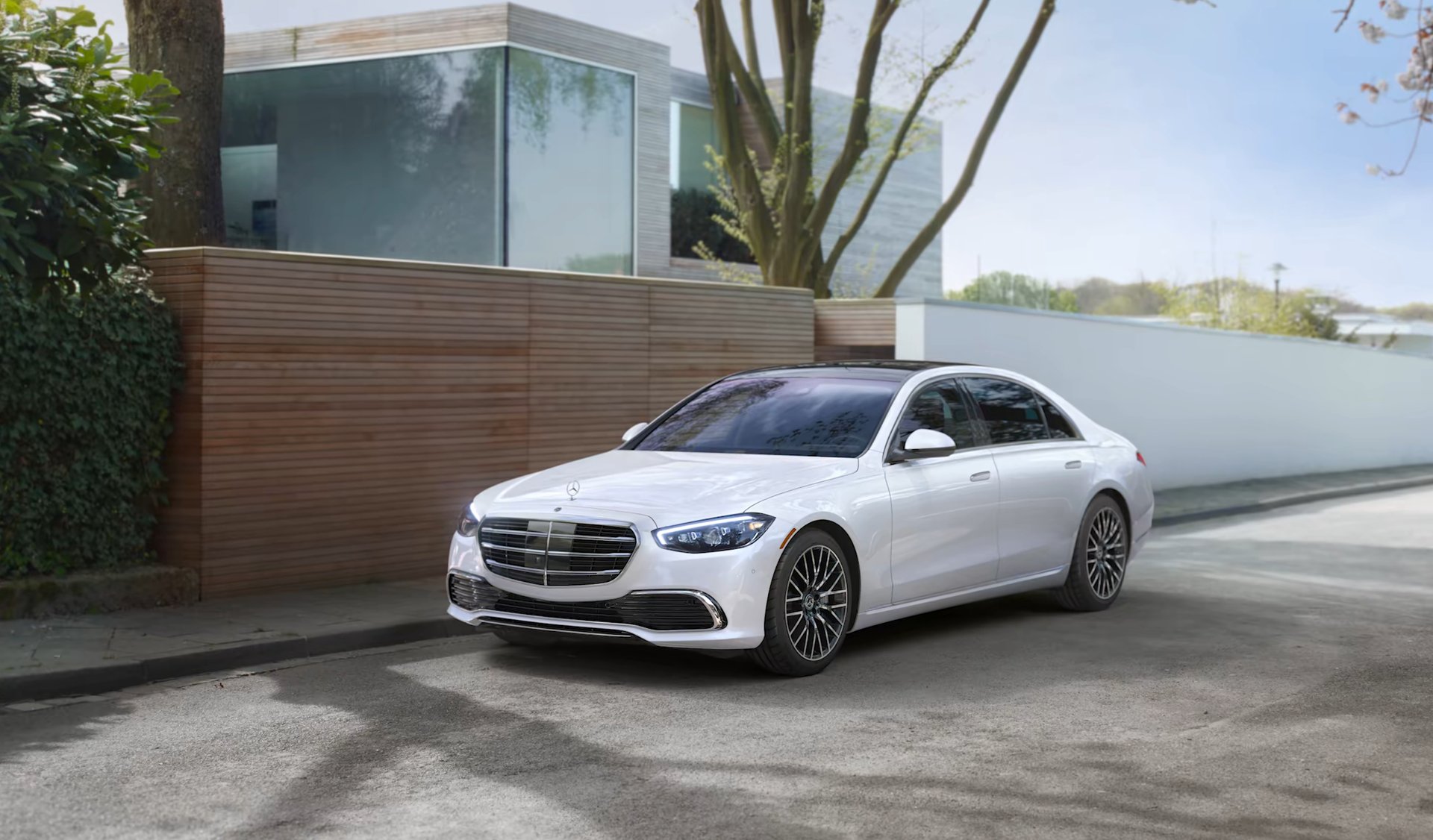
The Mercedes-Benz S-Class earns the highest interior score on this list at 9.9 out of 10 and a 9.6 overall rating, placing it second only to the Gravity’s perfect overall score. The S-Class is the flagship sedan of one of the world’s most recognized luxury brands, and the level of interior refinement it delivers reflects decades of investment in defining what a luxury cabin should be. The seats are palatial in size and support quality; the construction is impeccable throughout every visible and touchable surface; and the combination of standard and available features covers essentially any comfort or technology preference a buyer might bring to the purchase.
The suspension absorbs road imperfections with a thoroughness that insulates the driver from the surface below, making rough pavement feel like a theoretical concern rather than a physical reality. The sound insulation the S-Class achieves at highway speeds is among the most effective of any production vehicle: the combination of thick glass, dense door seals, acoustic underbody panels, and active noise cancellation systems delivers a measured quietness that competitors strive to match. The ample power across the S-Class engine lineup and the vehicle's adroit handling give the vehicle a driving engagement that the vehicle's extreme cabin comfort does not compromise.
The 9.9 interior score reflects the totality of the S-Class cabin experience, in which quietness is one dimension of a comprehensive acoustic, material, and comfort environment that no other sedan on this list matches. Buyers who want the quietest enclosed environment available in a passenger vehicle will find the S-Class delivers that alongside the other qualities that the flagship designation implies: the most advanced safety technology available, the most comprehensive feature set, and the brand prestige that decades of S-Class production at the top of the luxury sedan segment has accumulated. The active noise cancellation systems in current S-Class models add an electronic dimension to the passive insulation provided by physical materials, helping cancel low-frequency road noise that structural solutions alone cannot fully suppress. The result is a cabin that feels removed from the road in a way that passive insulation only approaches rather than achieves.
3. Genesis G90 matches the S-Class overall rating at a more accessible starting point
Credit: Genesis
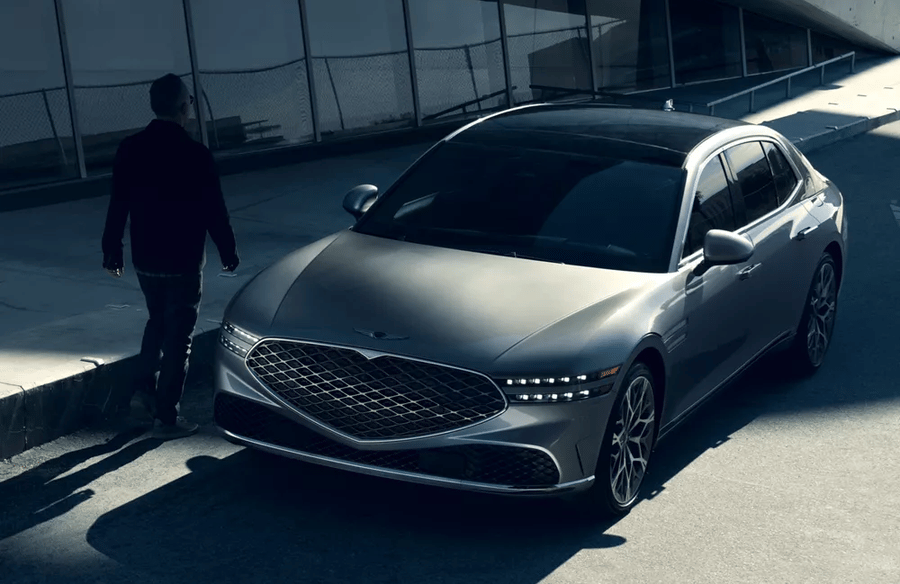
The Genesis G90 earns a 9.7 interior score and a 9.6 overall rating, matching the S-Class in the latter while sitting below it in the former. The G90 offers a large luxury sedan with comfortable seats, a premium feature set, and a quiet cabin at a starting price that undercuts comparable German alternatives significantly. The comparison to established European luxury brands is the context in which the G90’s value argument is most clearly made: the interior quality and refinement are competitive with those brands without requiring the premium their heritage commands, which gives buyers who evaluate vehicles on interior merit rather than nameplate a strong reason to consider the Korean alternative seriously.
The G90 prioritizes ride quality over handling, which suits the large luxury sedan’s most common use cases. Daily urban driving, highway cruising, and chauffeured passenger transport all benefit from the suspension’s smooth, cushioned character over varied road surfaces, and the ride quality is the reviewer’s primary area of praise. The handling capability on curvy roads is adequate rather than engaging, which is an appropriate emphasis for a vehicle whose cabin appointments and acoustic refinement are its primary differentiators from the competition.
Fuel economy ratings are low for the luxury sedan class, which the powerful engines explain rather than justify for buyers whose primary concern is running costs. The powertrain’s performance delivers the G90's dynamic capability appropriate to its size, but the efficiency trade-off is real and worth factoring into a total cost of ownership calculation. For buyers who want large-luxury-sedan space and quietness, with the value proposition of a Korean brand competing on quality rather than heritage, the G90 delivers an interior experience without the European-brand premium that the S-Class and comparable German flagships require. The acoustic insulation that gives the G90 its 9.7 interior score is not a byproduct of heavy construction but a deliberate engineering priority, reflecting Genesis’s understanding that quietness is the primary dimension on which flagship luxury sedans compete in daily use.
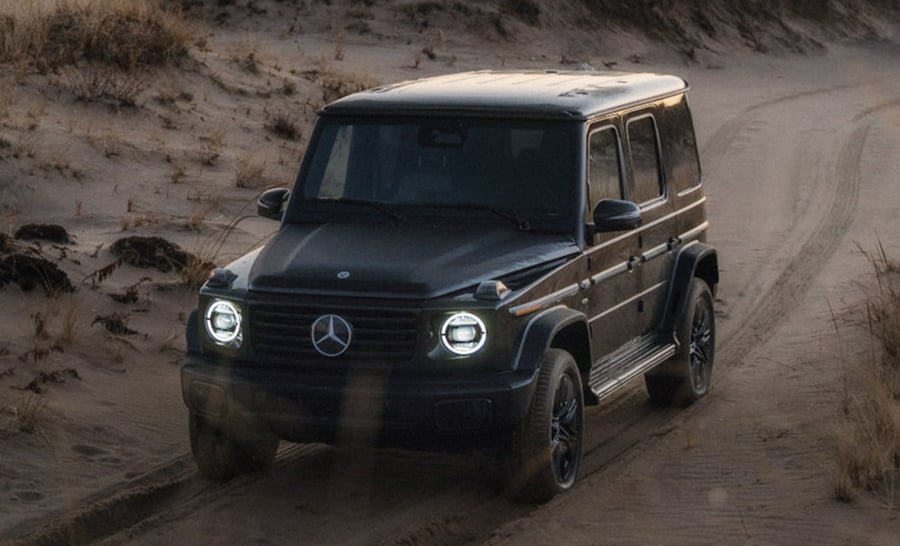
4. Mercedes-Benz G-Class EV wraps military origins in a quiet luxury cabin
Credit: Mercedes-Benz
The Mercedes-Benz G-Class EV earns a 9.6 interior score alongside the G-Class nameplate’s decades of association with rugged luxury. Senior Editor Tony Markovich describes a cabin built to the highest standards of durability, with top-notch materials and switchgear, and the electric powertrain’s quietness provides additional acoustic room to appreciate. The wide infotainment screens are described as appropriately modern rather than cutting-edge, reflecting an interior design that prioritizes the quality of the physical environment and the occupant’s comfort over the latest display technology for its own sake. The seats are supportive, roomy, and comfortable, and standard features are plentiful across the lineup.
The electric powertrain gives the G-Class EV the smooth, quiet power delivery characteristic of EVs, applied in a body style that has historically been powered by loud combustion engines. The contrast between the G-Class’s exterior identity as a utilitarian off-road vehicle and the electric version's quiet interior gives the EV a character the gas models cannot replicate: the rugged appearance now houses a cabin whose acoustic quality rivals that of vehicles that have never been near unpaved roads. Markovich finds the electric G-Class more enjoyable to drive than the gas version because its smooth, responsive power delivery gives the vehicle’s feedback a quality that combustion noise and vibration obscure.
Off-road capability is genuine rather than aspirational, which distinguishes the G-Class EV from most electric SUVs, whose off-road credentials are limited by their drivetrains and ground clearances. The quad-motor powertrain delivers 579 horsepower with a specific torque-vectoring capability that genuine off-road terrain rewards. The 239-mile range is modest for a luxury EV, reflecting the efficiency trade-off imposed by the powerful drivetrain and heavy construction. Handling on pavement could be more engaging than the vehicle’s size allows, but buyers who choose the G-Class EV for its cabin refinement and off-road access will find both delivered at a level appropriate to its position in the luxury market. The combination of a world-class, quiet interior and genuine off-road capability is available in very few vehicles on the market, giving the G-Class EV a distinct identity that its interior score alone cannot fully capture.
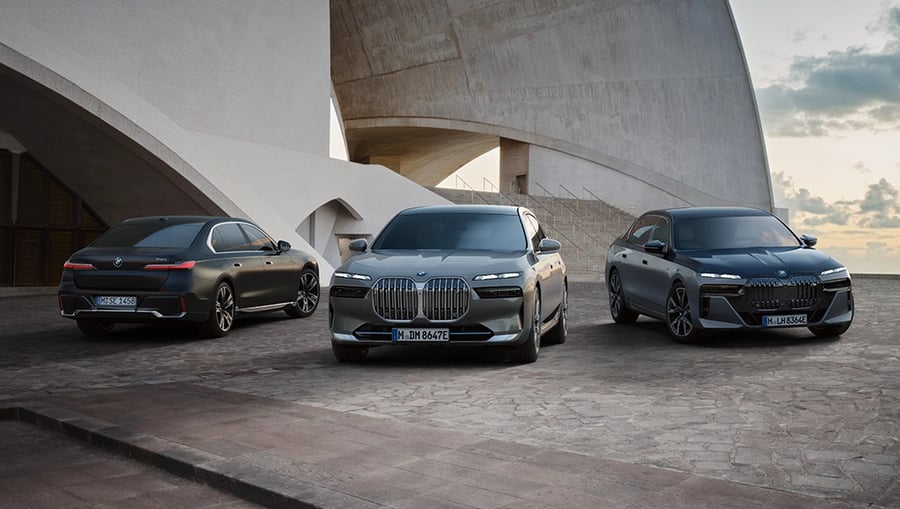
5. BMW 7 Series puts passenger comfort first in BMW’s flagship sedan
Credit: BMW
The BMW 7 Series earns a 9.6 interior score and a 9.3 overall rating, described by Managing Editor Alex Kwanten as a rare BMW that prioritizes passengers over the driver. The cashmere-blend seat option represents a specific material investment that Kwanten identifies as genuinely special, stopping just short of Bentley-level bespoke in a characterization that gives the 7 Series’s interior a precise competitive position within the luxury sedan hierarchy. The first-rate standard materials across the base configuration give buyers who do not select premium options a cabin that already exceeds what most luxury competitors provide at equivalent starting points.
Despite its size, the 7 Series handles well and accelerates quickly across all available powertrain options, with the slowest variant covering the standard acceleration benchmark in just over five seconds. The air suspension gives the ride a smooth character that the athletic driving profile does not compromise, delivering the driving engagement that BMW’s identity implies and the passenger comfort that its flagship position demands. The combination of driver-appropriate handling and passenger-appropriate comfort gives the 7 Series a breadth of appeal that single-focus vehicles optimized for one or the other cannot match.
The 7 Series occupies a specific competitive position on this list: it is the quietest vehicle here that delivers both genuine dynamic engagement and genuine passenger comfort in equal measure. The S-Class and G90 prioritize the passenger experience more thoroughly and ride more softly, but neither delivers the driving involvement that the 7 Series maintains alongside its cabin refinement. For buyers who want to drive the car rather than be driven in it, while still delivering exceptional interior quality to passengers, the 7 Series makes the strongest argument of any vehicle on this list. The acoustic insulation that gives the 7 Series its 9.6 interior score operates alongside active noise cancellation technology, which the current generation employs to address low-frequency road noise that passive materials alone cannot fully manage at highway speeds.
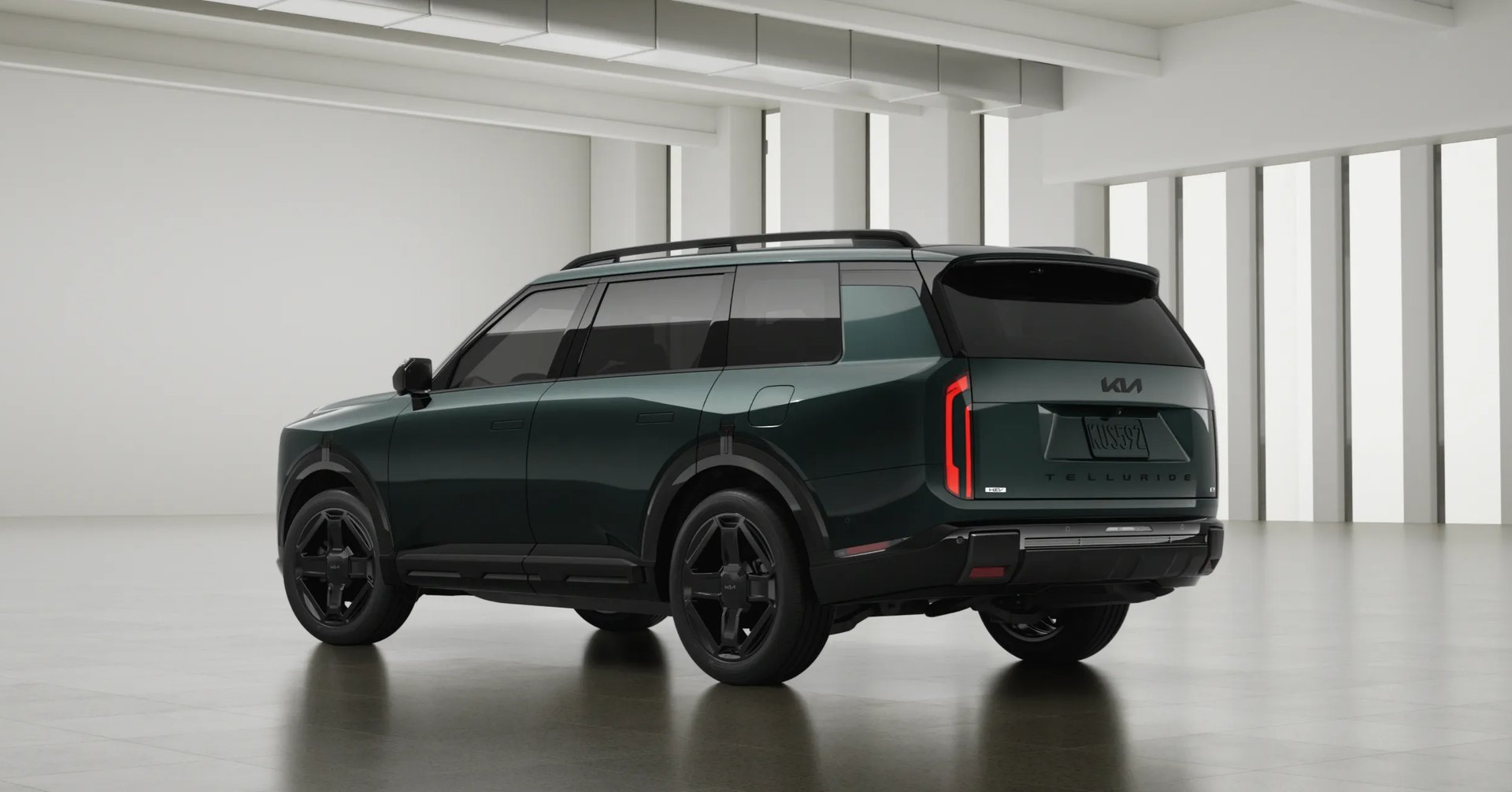
6. Kia Telluride leads non-luxury SUVs after a full 2027 redesign
Credit: Kia
The 2027 Kia Telluride earns a 9.5 interior score and a 9.5 overall rating after a full redesign for the model year, with Managing Editor Alex Kwanten describing it as roomier, better equipped, and more capable off-road than its predecessor while retaining the qualities that made the original the benchmark non-luxury three-row SUV from its debut. The cabin looks great and has impeccable build quality, with high-end materials and comfort and convenience technology that give the interior a luxury-adjacent character at a starting price significantly below that of the luxury vehicles higher on this list. Ample room for people and cargo, and comfortable seats throughout the three rows, give the Telluride the family-vehicle practicality it targets.
The powertrain delivers capable performance that complements the Telluride’s smooth ride and composed handling for a large SUV. The quiet cabin is the result of acoustic investment in the new generation’s design rather than the incidental byproduct of a heavy vehicle with thick doors: the materials, sealing, and structural choices that give the Telluride a 9.5 interior score reflect deliberate attention to the occupant’s acoustic environment. A new hybrid version joins the lineup for 2027, giving buyers who want improved fuel efficiency a Telluride option that the previous generation did not offer.
Kwanten’s summary that the redesigned Telluride improves the family-friendly three-row recipe in many ways reflects the specific enhancements the new generation delivers: more interior space, more standard equipment, and improved off-road capability in the X $TWTR-Pro configuration, all on top of the core qualities that gave the original Telluride its market-leading position. For buyers who need three-row SUV space and family-oriented practicality in a vehicle that delivers luxury-adjacent interior quietness without the luxury segment’s starting point, the redesigned Telluride is the strongest non-luxury option on this list. The 9.5 interior score places it ahead of vehicles that cost two or three times as much to purchase, reflecting how thoroughly Kia has invested in cabin quality as a primary competitive dimension rather than a secondary consideration behind powertrain and feature specifications.
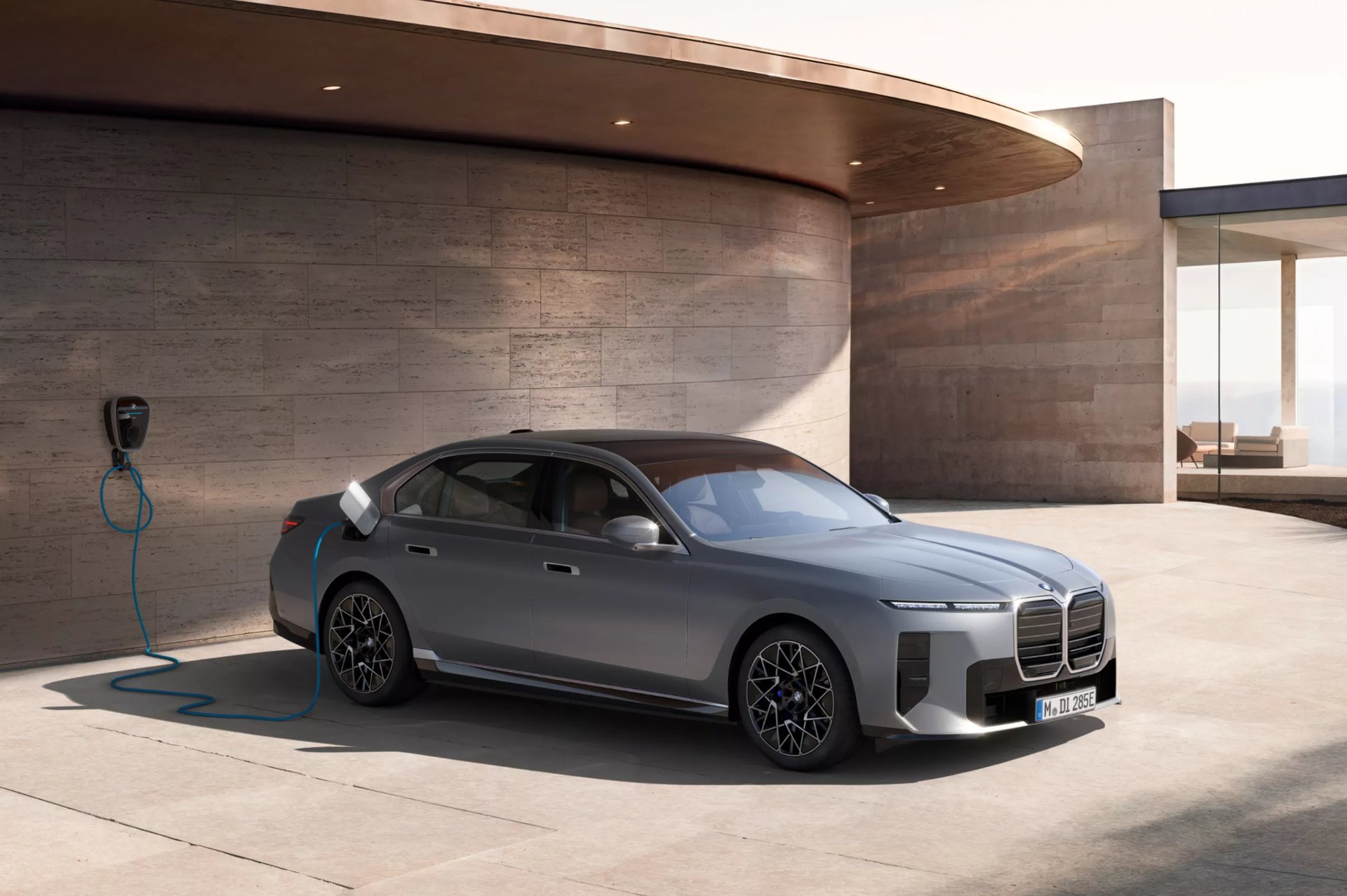
7. BMW i7 brings electric silence to the 7 Series cabin formula
Credit: BMW
The BMW i7 earns a 9.5 interior score and a 9.1 overall rating as the electrified expression of the 7 Series luxury sedan. The opulent interior, spacious and supple seats, and near-silent acceleration give the i7 a specific acoustic character that Managing Editor Alex Kwanten describes with precision: the cabin can be left in pure silence, or augmented with synthetic engine sounds for drivers who prefer some sense of mechanical activity to absolute quiet. Both options reflect the i7’s understanding that luxury electric driving involves choices about the acoustic environment rather than simply eliminating engine noise. The option itself is a product design decision that gives the i7 a flexibility that most EVs do not consider.
Quick acceleration and the near-noiseless power delivery of the electric motors give the i7 a refinement that the gas 7 Series can only approach. Kwanten notes that the i7 handles well for its size, though the battery pack’s substantial weight is perceptible when compared to the lighter gas-powered variants on demanding twisting roads. Few buyers will make that specific comparison in daily use, and for the commuting, highway cruising, and city driving that constitute most luxury sedan use cases, the i7’s ride and handling are entirely appropriate to its character.
The 314-mile range is adequate for typical ownership patterns, though charging times and efficiency ratings are modest compared to the most efficient luxury EVs. The i7 occupies a specific position on this list: it is the electric alternative for buyers who want the 7 Series cabin experience with an EV powertrain, and the quietness that combination produces gives it an acoustic advantage over the combustion version that no amount of acoustic treatment in the gas model fully compensates for. For buyers who already know the 7 Series and want to experience what the same cabin sounds like without the engine running, the i7 answers that question at a price point below the S-Class, while delivering interior quality that the 9.5 interior score places among the best available in a production vehicle.
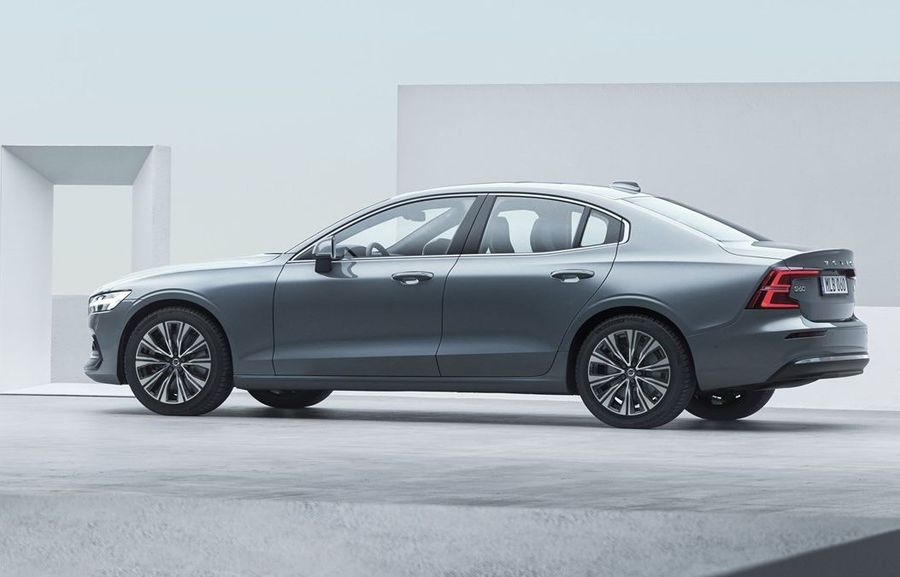
8. Volvo S60 Plug-In Hybrid earns a 9.5 interior score as an accessible luxury sedan
Credit: Volvo
The Volvo S60 Plug-In Hybrid earns a 9.5 interior score and an 8.9 overall rating, with Senior Vehicle Testing Correspondent John M. Vincent recommending it specifically to buyers who want a luxury sedan with strong performance and a low-profile design that draws less attention than comparable German performance sedans. The cabin is well-crafted with the Scandinavian design aesthetic and quality materials that Volvo has maintained as its interior identity, and the seats are among the most comfortable the source identifies across any vehicle it reviews. Cabin quietness is a standard Volvo trait, built into the S60 PHEV through acoustic investments that reflect the brand’s long-standing prioritization of interior serenity over other attributes.
Quick acceleration and a cushioned ride give the S60 PHEV a driving experience that its quiet cabin complements naturally. The plug-in hybrid powertrain’s electric mode eliminates engine noise in the operating range most commonly used for daily commuting, giving the cabin an acoustic quality in the first several miles of each trip that a standard hybrid, which uses the engine at lower speeds, cannot match. The combination of Scandinavian design, material quality, and plug-in hybrid efficiency gives the S60 PHEV a package that the source characterizes as an all-around winner without qualification.
The S60 PHEV is the most accessible entry point into the truly quiet luxury sedan category on this list, positioned significantly below the S-Class, G90, and 7 Series while delivering interior quality that the 9.5 interior score confirms as competitive with those more expensive alternatives. For buyers whose budget falls between the mainstream compact sedan segment and full-luxury sedan pricing, the S60 PHEV offers access to the acoustic and material standards of the luxury category at a starting price that the European flagships above it do not approach. The Scandinavian design philosophy that Volvo applies prioritizes the functional quality of the materials the occupant touches, and the sounds the occupant hears, above visual complexity or conspicuous display of expense, which gives the S60 PHEV a cabin character that rewards time spent inside rather than simply impressive photographs.
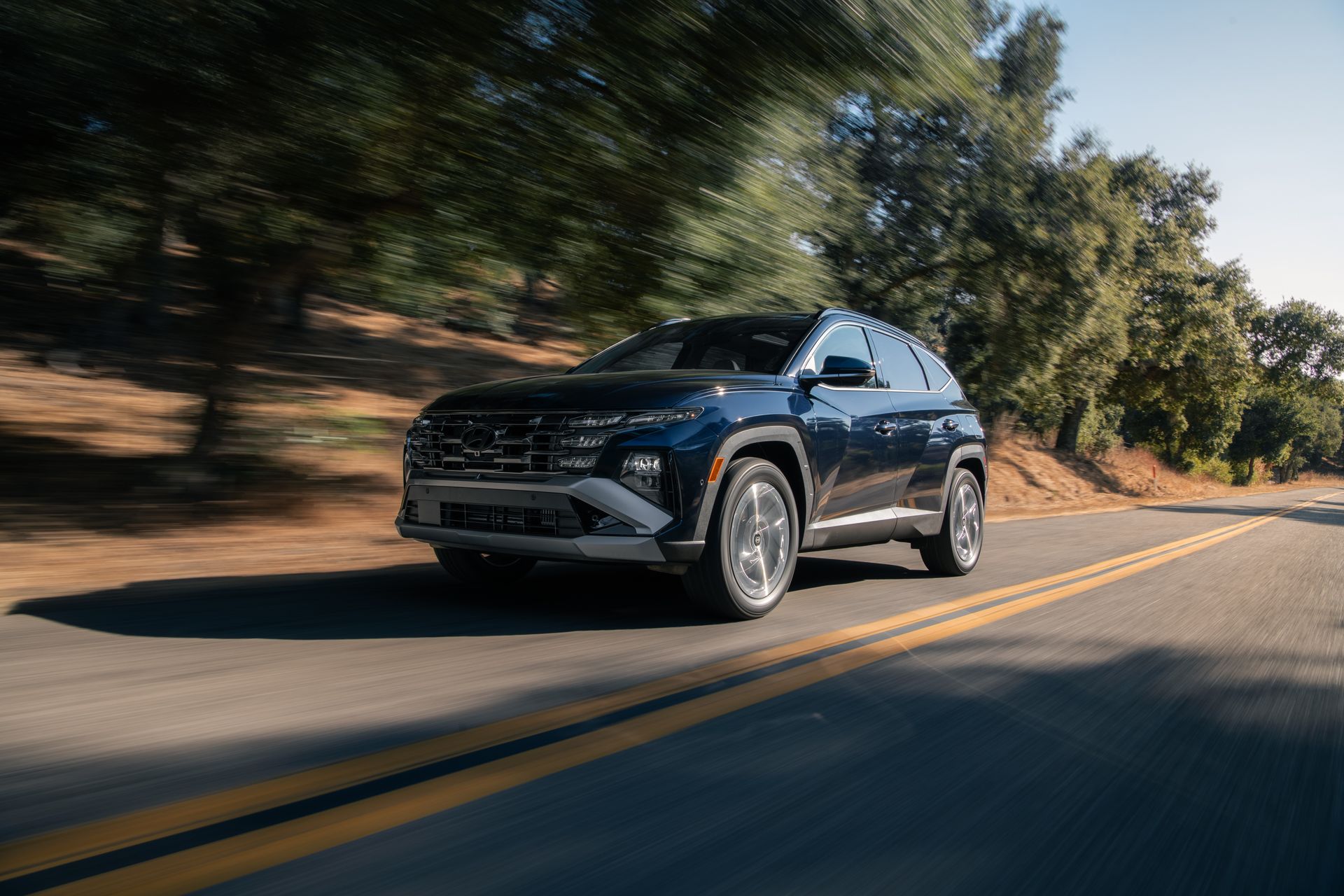
9. Hyundai Tucson Hybrid leads affordable compact SUVs for cabin quietness
Credit: Hyundai
The Hyundai Tucson Hybrid earns a 9.3 interior score and a 9.4 overall rating, giving it the best combination of interior quality and overall quality among the accessible vehicles on this list. Test driver Robert Duffer’s specific description of the Tucson Hybrid as capable of comfortably seating five people, with cargo volume for each passenger to carry two carry-ons, gives the vehicle’s practicality a concrete, usable frame of reference that abstract cargo volume numbers do not provide in the same way. The cabin is built with high-end materials for a compact SUV at its price point, and the infotainment system is easy to use with no learning curve that pulls attention from the road.
The hybrid powertrain contributes to the Tucson Hybrid’s cabin quietness in the same way hybrid and electric powertrains always do: by allowing the engine to shut off at lower speeds and in stop-and-go traffic, reducing the noise a continuously running combustion engine would introduce. The composed handling and cushioned ride that the Tucson Hybrid delivers suit the compact SUV’s family-oriented daily use, and the AWD standard equipment gives the powertrain confidence in weather conditions that front-wheel-drive alternatives require winter tires to handle.
The Tucson Hybrid’s position as the most affordable vehicle on this list gives it a specific value case worth stating clearly: buyers who want a meaningfully quiet cabin in a practical compact hybrid SUV, with the safety score and overall quality that U.S. News’s ratings reflect, will find the Tucson Hybrid the most directly accessible vehicle the list provides for that combination of requirements. The gap between its starting point and the nearest luxury vehicles on this list is substantial, and the interior quality gap that separates them, while real, is far smaller than the price gap suggests. The 9.3 interior score reflects genuine investment in the cabin’s acoustic and material quality rather than merely a competitive result against other mainstream compact SUVs, which gives the Tucson Hybrid a standard of interior refinement that its segment neighbors do not consistently match.
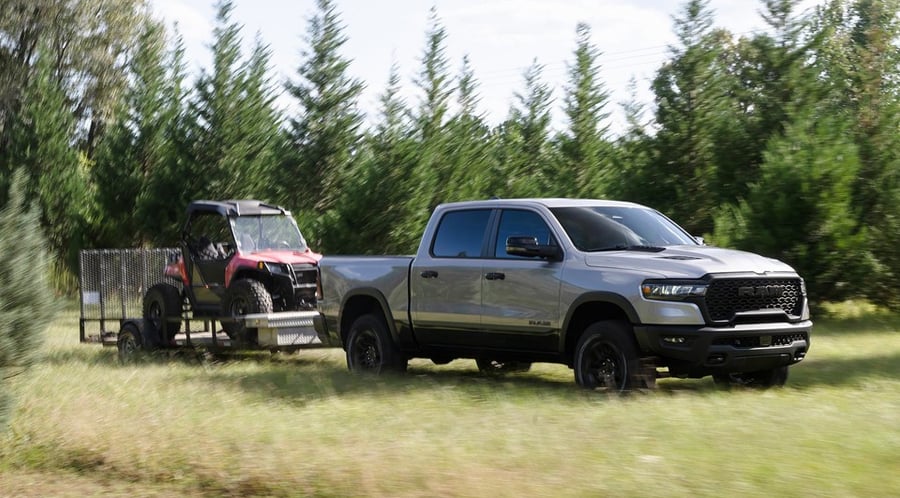
10. Ram 1500 delivers the quietest cabin of any full-size pickup truck
Credit: Ram
The Ram 1500 earns a 9.4 interior score and a 9.5 overall rating, with a cabin quality that Senior Vehicle Testing Correspondent John M. Vincent ranks among the best in full-size pickups. The cabin quality rivals luxury SUVs, and the interior’s insulation from outside noise is exceptional for a body-on-frame pickup truck, a vehicle type that the structural requirements of a separate body and frame have historically made difficult to insulate effectively. The roomy, supportive seats and user-friendly infotainment system complete a package that the smoothest ride of any full-size pickup in the class reinforces: the Ram prioritizes interior refinement and ride quality in a way that the truck category’s working-vehicle origins would not have predicted a decade ago.
The suspension tuning that gives the Ram 1500 its smooth ride does not come at the expense of capability. Towing and payload capacity are adequate for most buyers’ requirements, though not class-leading for buyers who specifically need maximum hauling numbers. The specific tradeoff the Ram makes in favor of comfort and quietness over maximum towing figures is one that buyers who spend significant time in the cab, whether commuting or on road trips, will find worthwhile. The handling is respectable for the size, and the combination of ride quality, cabin refinement, and acoustic insulation gives the Ram a daily-use experience that compact and midsize sedan buyers would not find disappointing.
The Ram 1500’s presence on a quiet vehicle list reflects a broader truth about what the full-size pickup truck category has become: the best examples now deliver interior environments that sedan and luxury SUV buyers would not find disappointing, which represents a transformation in what buyers can expect from the segment. For buyers who need a full-size truck’s capability but spend enough time in the cab to care about the acoustic environment, the Ram 1500 is the only truck whose interior belongs in this company. The specific investments Ram has made in acoustic insulation, ride tuning, and seat quality reflect a deliberate strategy to compete on interior refinement as a differentiator within the full-size truck segment, and the 9.4 interior score confirms that it has been executed at a level that validates the strategy.