20 ideas that were considered radical when proposed and are now completely mainstream
From handwashing to the weekend to same-sex marriage, these once-mocked or banned ideas crossed the line from heresy into the ordinary defaults we live by

Credit: Annie Spratt / Unsplash
Every widely accepted idea was once a minority position. The things a society treats as obvious — that surgeons should clean their hands, that workers deserve a day off, that the planet moves around the sun — arrived as disruptions to some earlier consensus. They were mocked, banned, litigated, or simply ignored before they hardened into common sense.
The pattern repeats across medicine, science, economics, and social life. A person notices something the established authorities have missed. Those authorities push back, sometimes with ridicule and sometimes with real consequences for the person proposing the change. Adoption is slow. Then a threshold is crossed, and within a generation the once-radical claim becomes the default that no one questions.
This list collects 20 examples of that shift. Some are scientific, like the theory that continents move across the Earth's surface. Some are medical, like the practice of putting patients to sleep before cutting into them. Others are social and economic — the weekend, the pension, the public library, the right of women to cast a ballot. A few are recent enough that the resistance is still within living memory.
Reading them together makes the mechanism visible. Resistance to a new idea is rarely about evidence alone. It involves money, status, habit, and the discomfort of admitting that a long-held practice was wrong. Ignaz Semmelweis had data showing that handwashing saved mothers' lives, and his colleagues rejected it anyway. The evidence did not change minds on its own. Time, repetition, and a new generation did.
There is a practical reason to study these cases. The debates that feel settled today were once open. The debates that feel impossible today may not stay that way. Knowing how mainstream ideas became mainstream is a check against two errors: assuming that whatever is normal now was always accepted, and assuming that whatever sounds strange now must be wrong. The history below is a record of consensus being rebuilt, one contested idea at a time.
1 / 20
Doctors washing their hands before treating patients
Credit: Annie Spratt / Unsplash
In the 1840s, the Vienna General Hospital ran two maternity clinics. One was staffed by physicians and medical students. The other was staffed by midwives. Mothers giving birth in the doctors' clinic died of puerperal fever, also called childbed fever, at a much higher rate than mothers in the midwives' clinic.
Ignaz Semmelweis, a Hungarian physician working there, looked for the cause. He noticed that the doctors and students often came to the delivery room directly from performing autopsies. The midwives did not do autopsies. Semmelweis proposed that the physicians were carrying something deadly from the corpses to the mothers on their unwashed hands.
In 1847 he required staff to clean their hands with a chlorinated lime solution before examinations. Deaths in the doctors' clinic fell sharply. The result was measurable and repeatable.
His colleagues rejected the idea. Germ theory did not yet exist, so Semmelweis could not explain the mechanism. Many doctors were also offended by the suggestion that their own hands were killing patients. The medical establishment treated the claim as an insult rather than a finding.
Semmelweis grew increasingly frustrated and combative in defending his work. He was pushed out of his hospital position. His mental and physical health declined, and he was committed to an asylum, where he died in 1865 at age 47.
Within two decades, the work of Louis Pasteur and Joseph Lister supplied the missing explanation. Invisible microorganisms cause infection, and clean hands and instruments interrupt their spread. Semmelweis was vindicated after his death.
Hand hygiene is now the first thing taught in clinical training. Hospitals audit it, post reminders at every sink, and treat lapses as serious errors. The practice that ended one man's career is the baseline of safe medicine, and the failure to follow it is now the radical, indefensible position.
2 / 20
The Earth revolves around the sun

Credit: Zelch Csaba / Pexels
For most of recorded history, educated people in Europe placed the Earth at the center of the universe. The sun, moon, planets, and stars were thought to circle a stationary Earth. This geocentric model came from the ancient astronomer Ptolemy and fit the philosophy of Aristotle. The Catholic Church endorsed it as consistent with scripture.
Nicolaus Copernicus, a Polish astronomer, worked out a different arrangement. In his model the sun sits at the center and the Earth is one of several planets moving around it. He published the full account, "On the Revolutions of the Heavenly Spheres," in 1543, the year he died.
The claim was treated as absurd and, later, as dangerous. It contradicted both common sense — the ground does not feel like it is moving — and religious authority.
Galileo Galilei gathered evidence for the sun-centered model using the newly invented telescope. He observed moons orbiting Jupiter, which showed that not everything circled the Earth. He saw the phases of Venus, which matched the Copernican prediction. He argued the case publicly and forcefully.
The response was severe. The Roman Inquisition tried Galileo in 1633, forced him to recant, and placed him under house arrest for the rest of his life. His book defending the model was banned.
The evidence kept accumulating. Johannes Kepler showed that the planets move in ellipses, not perfect circles, which made the model far more accurate. Isaac Newton's law of gravitation then explained why the planets move as they do.
The sun-centered solar system is now taught to young children as settled fact. The controversy that once carried the threat of imprisonment is a standard chapter in the history of science. The Church formally acknowledged its error in the Galileo case centuries later, closing a dispute that had once defined the limits of acceptable thought.
3 / 20
Germ theory of disease

Credit: CDC / Unsplash
Before the late 1800s, the dominant explanation for illness was miasma — the idea that disease came from foul air rising off rot, sewage, and swamps. Bad smells were thought to be the danger itself. This belief shaped how cities were built and how doctors treated patients.
The competing idea was that specific, invisible living organisms cause specific diseases. It sounded far-fetched. How could something too small to see fell a grown adult?
Louis Pasteur, a French chemist, built much of the case. His experiments showed that microorganisms drive fermentation and spoilage, and that these organisms come from the environment rather than arising on their own. This undercut the older notion that life could spontaneously generate from decay. His work led to pasteurization, the mild heating that kills microbes in milk and other liquids.
Robert Koch, a German physician, provided rigorous proof that particular microbes cause particular diseases. He identified the bacteria responsible for anthrax, tuberculosis, and cholera. He laid out a set of criteria, later called Koch's postulates, for linking a specific organism to a specific illness.
The theory faced resistance from established doctors who had trained under the older framework. Accepting germ theory meant discarding much of what they had been taught and admitting that their own practices had spread disease.
The consequences of acceptance were enormous. Surgeons began sterilizing instruments. Cities invested in clean water and sanitation. The search for microbes led to antibiotics and to vaccines targeted at named pathogens.
Germ theory now underlies nearly all of modern medicine and public health. The idea that you should wash a wound, refrigerate food, or isolate a contagious patient all follows from it. Diagnosis itself changed once doctors could name the organism behind an illness and target it directly. Entire fields, from microbiology to epidemiology, grew out of the shift. What was once a fringe hypothesis about invisible creatures is the foundation of how societies stay alive.
4 / 20
Evolution by natural selection
Credit: Eugene Zhyvchik / Unsplash
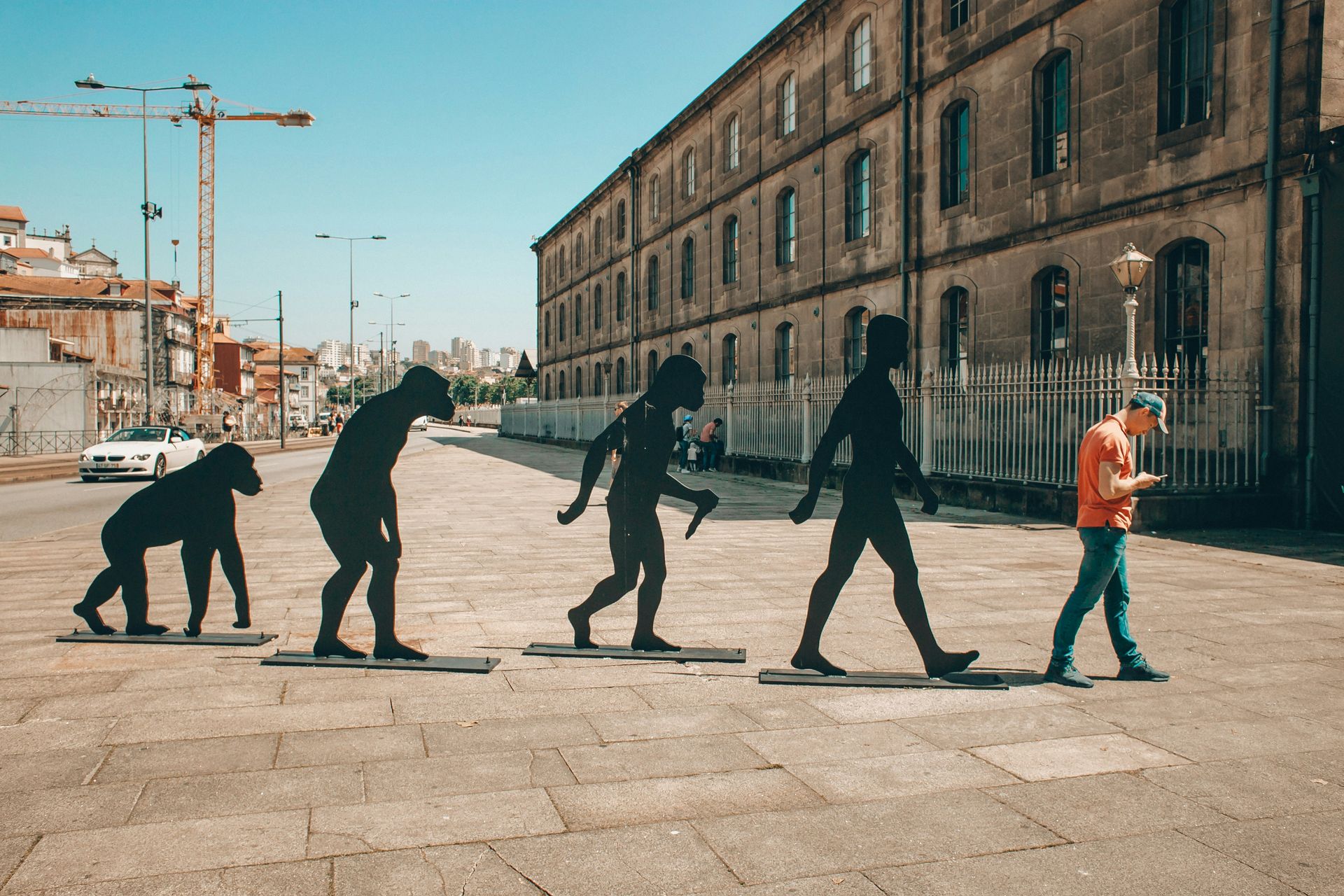
Before Charles Darwin, the common view in the West held that each species had been created separately and had not changed since. Some naturalists had floated ideas about species transforming over time, but no one had offered a convincing mechanism.
Darwin supplied one. Individuals within a species vary. Some variations help an organism survive and reproduce in its environment. Those traits become more common in later generations. Over long stretches of time, this process — natural selection — can produce new species. He published the argument in "On the Origin of Species" in 1859.
Alfred Russel Wallace had arrived at a similar idea independently, which pushed Darwin to publish. The two men's work was presented together before Darwin's book appeared.
The reaction was intense. The theory challenged the special status of humans and conflicted with a literal reading of creation. It provoked public disputes between scientists and religious figures. The tension persisted into the 20th century. The 1925 Scopes trial in Tennessee prosecuted a teacher for presenting evolution in a public school classroom.
The scientific evidence continued to build from many directions. Fossils showed change over time. Comparative anatomy revealed shared structures across different animals. Much later, genetics and DNA analysis confirmed the relationships Darwin had inferred and explained how variation is inherited.
Evolution is now the organizing framework of modern biology. It explains antibiotic resistance in bacteria, guides the development of crops, and underpins the study of viruses and disease. Medical and agricultural research rely on it daily.
Public acceptance still varies by country and community, and the topic remains sensitive in some education debates. Within the scientific community, though, evolution moved long ago from radical proposal to the settled core of the field, the lens through which the living world is understood. Researchers now use it to trace the origins of diseases and to predict how populations will change.
5 / 20
Continental drift and moving plates

Credit: NASA / Unsplash
The continents look like they might fit together. The bulge of South America seems to nest into the curve of Africa. For centuries this was treated as coincidence.
Alfred Wegener, a German meteorologist, argued it was not. Around 1912 he proposed that the continents had once formed a single landmass and had drifted apart over vast stretches of time. He pointed to matching coastlines, to identical fossils found on continents now separated by oceans, and to rock formations that lined up across those gaps.
Geologists rejected the theory, often harshly. The central objection was mechanical. Wegener could not explain what force could push entire continents through solid ocean floor. Without a mechanism, most experts dismissed the matching evidence as chance. Wegener died in 1930 on an expedition in Greenland, his idea still on the margins.
The missing mechanism arrived decades later. In the 1960s, studies of the ocean floor revealed that new crust forms at underwater ridges and spreads outward, a process associated with the geologist Harry Hess. Magnetic patterns frozen into the seafloor rock recorded this spreading in symmetrical stripes on either side of the ridges.
These findings assembled into the theory of plate tectonics. The Earth's outer shell is broken into rigid plates that move slowly, carrying the continents with them. The plates collide, pull apart, and grind past one another.
The theory explained a wide range of previously separate puzzles at once. It accounts for where earthquakes strike, why volcanoes cluster along certain lines, and how mountain ranges rise where plates crash together.
Plate tectonics is now the foundation of geology, taught in every earth science course. The idea that got Wegener ridiculed — that the ground beneath us is on the move — is the framework scientists use to read the planet's structure and to map its hazards.
6 / 20
Vaccination

Credit: Mika Baumeister / Unsplash
Smallpox was one of history's deadliest diseases, killing a large share of those it infected and scarring or blinding many survivors. For centuries there was no reliable defense.
An earlier practice called variolation offered partial protection. It involved deliberately infecting a person with material from a mild smallpox case, hoping to produce a survivable illness and lasting immunity. It worked often enough to spread, but it sometimes caused the full disease and could transmit it to others.
Edward Jenner, an English physician, tested a safer approach in 1796. He had observed that milkmaids who caught cowpox, a mild related disease, seemed protected from smallpox. Jenner deliberately exposed a boy to cowpox, then later to smallpox, and the boy did not fall ill. He called the method vaccination, from the Latin word for cow.
Objections came quickly and never fully stopped. Some people found the idea of introducing animal disease material into humans repellent. Others resisted early mandates as an intrusion on personal liberty. Organized opposition to vaccination existed from the beginning and continues in various forms.
The results were hard to argue with. Widespread vaccination drove smallpox into retreat across continent after continent. A coordinated global campaign in the 20th century pursued the disease into its last strongholds. In 1980 the World Health Organization declared smallpox eradicated. It remains the only human disease ever eliminated worldwide.
The same principle was extended to many other diseases. Vaccines now protect against polio, measles, tetanus, and dozens more.
Routine childhood immunization is a standard part of pediatric care in most of the world. Schools, employers, and governments build programs around it. Vaccines are now credited with preventing millions of deaths each year. The concept that once struck people as unnatural — training the body to fight a disease it has not yet met — is now one of the most established tools in medicine.
7 / 20
Anesthesia during surgery

Credit: mohamad azaam / Unsplash
For most of history, surgery meant conscious agony. Patients were held down or strapped to the table while surgeons cut, sawed, and stitched. Speed was the main mercy a surgeon could offer, because the patient felt everything. Many people avoided operations until a condition became fatal, preferring death to the ordeal.
The change came in the 1840s. On October 16, 1846, the dentist William Morton publicly demonstrated ether as a surgical anesthetic at Massachusetts General Hospital in Boston. A patient underwent an operation without feeling the pain. The room where it happened is still known as the Ether Dome.
Chloroform soon followed as another option. The Scottish physician James Young Simpson introduced it for use in surgery and childbirth.
The idea met a strange kind of resistance. Some argued that pain served a purpose, or that suffering during childbirth was ordained and should not be avoided. Others worried the practice was unsafe or interfered with the natural course of illness.
Public acceptance turned in part on a royal example. Queen Victoria used chloroform during the birth of her son in 1853. Her choice helped normalize anesthesia and blunted the moral objections.
Once patients could be kept unconscious and still, surgery itself transformed. Operations no longer had to be rushed. Surgeons could work carefully, attempt more complex procedures, and reach parts of the body that had been off limits when the patient was thrashing in pain.
Anesthesia is now assumed. No one expects to be awake and screaming during an appendectomy. An entire medical specialty exists to manage it safely, monitoring patients throughout an operation and adjusting the dose minute by minute. The tools have grown precise enough that patients can be kept unconscious for many hours with a wide margin of safety. The proposition that once drew moral objections — that surgical pain could and should be switched off — became the precondition for nearly all of modern surgery.
8 / 20
Women's right to vote

Credit: Edmond Dantès / Pexels
For most of the history of representative government, voting was reserved for men. The exclusion of women was defended as natural and proper. Opponents claimed women lacked the temperament for politics, or that a husband's vote already represented the household.
Campaigns for women's suffrage built over the 19th and early 20th centuries. Activists organized, petitioned, marched, and in some places went to prison. They faced ridicule in the press and physical hostility in the streets.
New Zealand became the first self-governing country to grant women the right to vote in national elections, in 1893. Other countries followed at different speeds.
In the U.S., the 19th Amendment, ratified in 1920, barred states from denying the vote on the basis of sex. In practice, many women of color remained blocked from voting for decades afterward through other means, a gap later addressed by civil rights legislation.
In the U.K., a 1918 law gave the vote to some women over 30 who met property conditions. Full equality with men, at age 21, came in 1928.
The arguments used against women voting now read as relics. The claim that half the adult population could not be trusted with a ballot has no serious defenders in democratic countries.
Women's suffrage is a settled feature of every functioning democracy. Universal adult suffrage is treated as a basic marker of legitimate government. Candidates court women's votes, and turnout among women often exceeds that among men.
The shift also reshaped policy. Once women could vote, the issues they prioritized gained weight in legislatures. Candidates began tailoring their platforms to appeal to female voters, and parties competed for their support. The idea that once provoked mobs and jail sentences — that a woman should choose her own representatives — is now so ordinary that its absence would mark a country as undemocratic.
9 / 20
The eight-hour workday and the weekend
Credit: Library of Congress / PICRYL
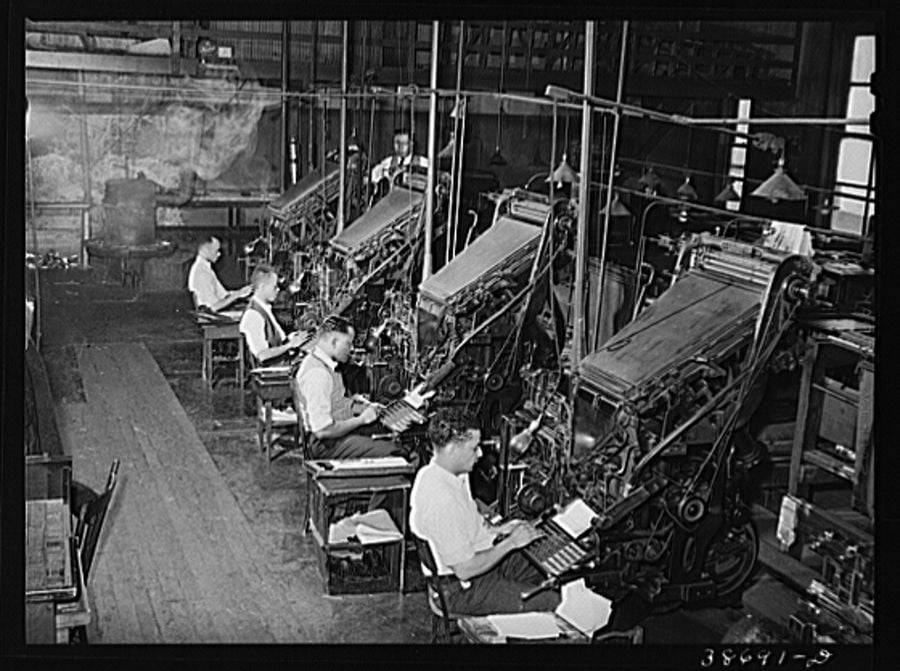
Early industrial work had no fixed limit. Factory workers, including children, often labored 12 to 16 hours a day, six or even seven days a week. Rest was whatever an employer chose to allow.
Labor movements pushed back over the 19th century. A widely used slogan captured the demand: eight hours for work, eight hours for rest, eight hours for what we will. Workers organized, struck, and campaigned for legal limits on hours.
Employers and many commentators warned that shorter hours would ruin businesses and coddle workers. The demands were framed as radical threats to industry and to the work ethic itself.
A turning point came from an unlikely source. In 1914, the automaker Henry Ford $F cut his factory's shifts to eight hours and roughly doubled the daily wage to five dollars. He did it partly to reduce turnover and partly because rested workers were more productive. In 1926, Ford moved to a five-day, 40-hour week. His scale and prominence made the change hard to ignore.
In the U.S., the Fair Labor Standards Act of 1938 established the 40-hour week in federal law, requiring extra pay for hours beyond it. The two-day weekend gradually became the norm across industries.
The results contradicted the warnings. Shorter, more predictable hours did not collapse the economy. Productivity and consumer spending grew, in part because workers had both money and time to spend it.
The 40-hour week and the weekend are now the assumed shape of working life across much of the world. People plan their lives around Saturday and Sunday. Entire industries, from travel to entertainment, are built around the leisure time the weekend created. The idea that once looked like a dangerous concession to idleness became the baseline expectation, and debates now push in the other direction, toward even shorter weeks. Several countries have run trials of a four-day week without cutting pay.
10 / 20
Free public education for all children

Credit: BOOM 💥 Photography / Pexels
For most of history, schooling was a privilege. Formal education went to the children of the wealthy, to those training for the clergy, or to those whose families could pay tutors. Most children worked instead of studying, and widespread literacy was not expected.
The idea that every child, regardless of family income, deserved a free education paid for by the public was contentious. Critics objected to the cost, questioned whether the poor needed schooling, and worried about who would control what was taught.
In the U.S., the reformer Horace Mann became a leading advocate in the 1830s and 1840s. As Massachusetts' first secretary of education, he championed "common schools" open to all children and funded through taxes. He argued that shared public education would strengthen society and give children a common foundation. His model spread to other states.
Compulsory attendance laws followed, requiring children to be in school up to a certain age. These laws also served to pull children out of factories and fields, reinforcing separate efforts to end child labor.
Opposition faded as the benefits became visible. A literate population could participate in civic life, adapt to new kinds of work, and pass knowledge to the next generation. Employers came to rely on a workforce that could read, write, and calculate.
Free public education is now treated as a basic function of government across most of the world. National budgets devote large sums to it. International organizations track school enrollment as a core measure of a country's development.
The debate has shifted entirely. The argument is no longer whether the public should fund schooling for all children, but how to fund it, how to run it, and how to raise its quality. Universal access itself is the assumed starting point. Countries now measure their progress in part by how many children finish school and how well they can read.
11 / 20
Retirement and public pensions

Credit: Alex Boyd / Pexels
For most of history, there was no such thing as retirement for ordinary people. Most workers labored until they physically could not, then depended on family, charity, or the poorhouse. Old age without means was often a sentence to destitution.
The notion that the state should guarantee income to older people who had stopped working was once startling. It implied a collective responsibility for individuals who were no longer economically productive.
Germany created one of the first national systems. Under Chancellor Otto von Bismarck, the country introduced old-age insurance in 1889, providing pensions to workers who reached a set age. The program was partly a political move to blunt the appeal of more radical movements, but it established a model.
The U.S. came later. The Social Security Act of 1935, passed during the Great Depression, created a national system of old-age benefits funded through payroll taxes. It was contested at the time as an overreach of federal power and an intrusion into private life.
Critics warned that public pensions would sap self-reliance and burden the working population. Supporters argued that industrial economies had broken the older family structures that once supported the elderly, and that a shared system was the realistic replacement.
The programs became deeply embedded. Retirement turned into an expected life stage rather than a luxury. People began to plan for decades of life after work, saving and structuring their finances around it.
Public pension systems now exist in most countries and are among the largest items in national budgets. They are politically difficult to cut precisely because they are so widely relied upon. Aging populations have made their long-term funding one of the central policy problems of the era. The concept that once seemed like a strange new duty of the state — supporting people in old age — became one of the defining features of modern government.
12 / 20
Seatbelts in cars

Credit: Remy Lovesy / Unsplash
Early automobiles offered no restraint for passengers. In a crash, people were thrown against the dashboard, the windshield, or out of the vehicle entirely. As cars grew faster and more common, so did the toll of collisions.
The modern solution came from the automaker Volvo. In 1959, its engineer Nils Bohlin designed the three-point seatbelt, which secures both the chest and the hips. It was a marked improvement over earlier lap-only belts. Volvo made the patent freely available to other manufacturers so the design could spread and save lives.
Getting people to use seatbelts, and to accept laws requiring them, proved harder than building the device. Many drivers found belts uncomfortable or unnecessary. When governments moved to make their use mandatory, opponents framed the laws as government overreach, an intrusion on personal choice inside one's own car.
The U.S. saw a slow rollout. New York became the first state to require adult drivers and front-seat passengers to buckle up, in 1984. Other states followed, often against public grumbling.
The evidence on effectiveness was consistent. Seatbelts sharply reduce deaths and serious injuries in crashes by keeping occupants in place and spreading crash forces across the strongest parts of the body.
Public attitudes shifted over a generation. Buckling up went from an optional inconvenience to an automatic habit. Cars added chimes and warning lights to prompt it. Parents began strapping in children without a second thought.
Wearing a seatbelt is now the default behavior for most drivers and passengers, reinforced by law across most jurisdictions. The resistance that once cast the mandate as tyranny has largely evaporated. Public campaigns and decades of enforcement turned the habit into second nature for most people. The routine click of a belt, once dismissed as fussy or unmanly, is now simply what getting into a car means.
13 / 20
In vitro fertilization
Credit: Dr.jayesh amin / Wikimedia Commons (CC BY-SA 3.0)
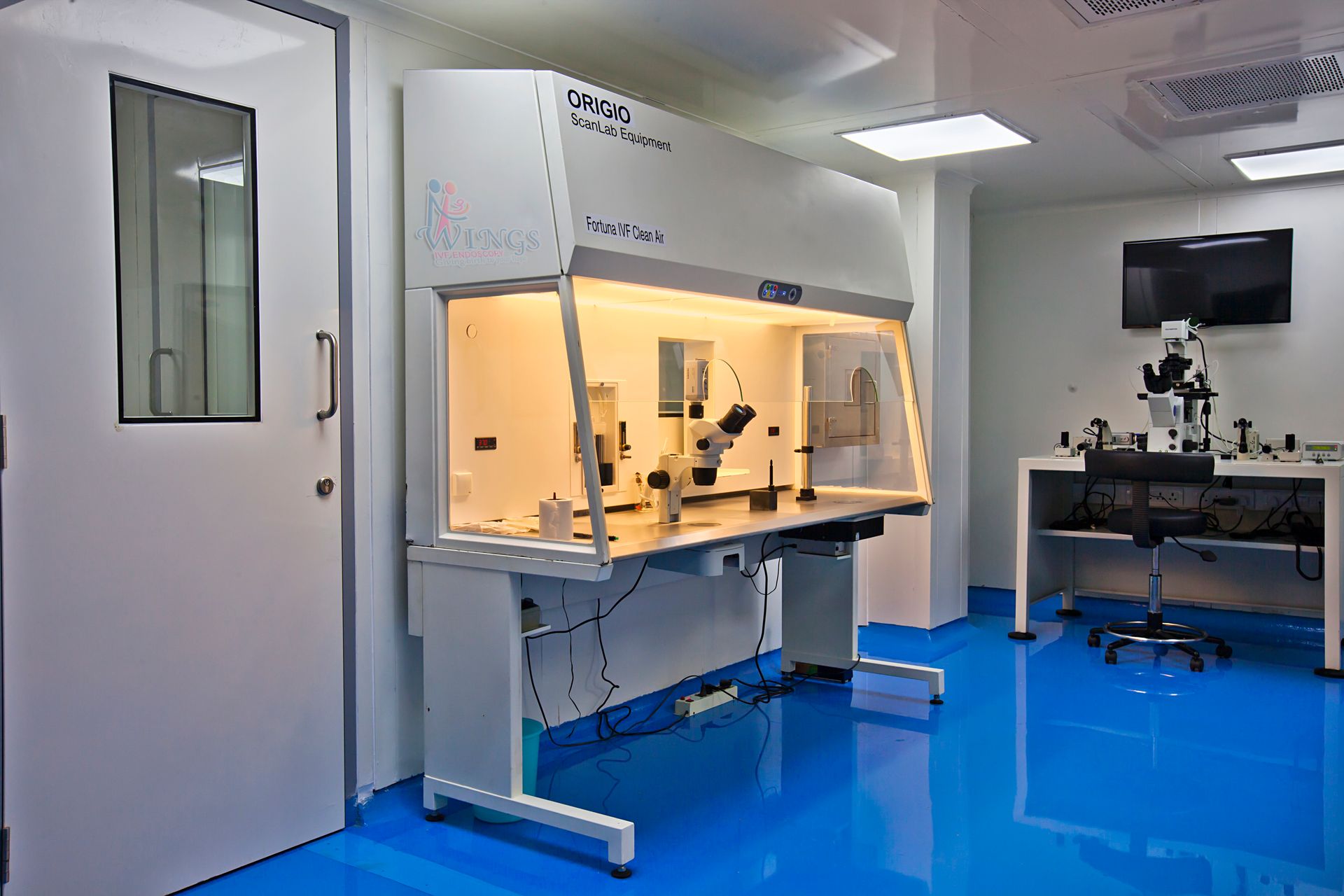
For couples unable to conceive, medicine long had little to offer. The idea of creating an embryo outside the body — fertilizing an egg with sperm in a laboratory and then placing it in the womb — sounded like science fiction and, to many, like a violation of nature.
The breakthrough came in England. The physiologist Robert Edwards and the gynecologist Patrick Steptoe developed the technique over years of research. On July 25, 1978, Louise Brown was born, the first baby conceived through in vitro fertilization, known as IVF.
The reaction was loud and divided. Some hailed it as a gift to infertile couples. Others condemned it on religious and ethical grounds, warning that it was unnatural, that it would lead to the manufacture of children, or that it treated human life as a laboratory product. The phrase "test-tube baby" carried an edge of alarm.
The science advanced despite the controversy. Success rates improved. The procedure spread to clinics around the world. Robert Edwards was awarded the Nobel Prize in Physiology or Medicine in 2010 for developing the technique, a formal recognition of its importance.
Over the following decades, IVF moved from spectacle to routine medical service. Millions of children have since been born through it. The technology also enabled related advances, including the freezing of eggs and embryos and the screening of embryos for certain genetic conditions.
IVF is now a standard part of reproductive medicine, offered in clinics in most countries and covered by many insurance and health systems. It has reshaped how people think about family timing and fertility.
The ethical debates have not vanished, particularly around newer capabilities. But the core practice — conceiving a child outside the body — has crossed fully into the mainstream, so common that a birth by IVF is no longer remarkable. Families formed this way are now an ordinary part of communities everywhere.
14 / 20
Same-sex marriage

Credit: Kampus Production / Pexels
For nearly all of modern history, legal marriage was defined as a union between a man and a woman. The idea that two people of the same sex could marry, with the same legal standing as any other couple, was dismissed as impossible or condemned as an attack on the institution.
Same-sex relationships were criminalized in many countries for much of the 20th century. Even as those laws were repealed, the step from decriminalization to full marriage rights was treated as a distant, radical demand.
The Netherlands became the first country to open civil marriage to same-sex couples, in 2001. A handful of countries followed over the next decade, each amid fierce national debate.
In the U.S., the shift was rapid by historical standards. Individual states began recognizing same-sex marriage in the 2000s. In 2015, the Supreme Court's ruling in Obergefell v. Hodges established that same-sex couples have a constitutional right to marry nationwide.
Public opinion moved unusually fast. Within roughly two decades, majority sentiment in many countries flipped from opposition to support. Younger generations drove much of the change, but attitudes shifted across age groups.
The practical effects were concrete. Married same-sex couples gained access to spousal benefits, inheritance rights, hospital visitation, joint adoption, and the other legal protections that come with marriage.
Same-sex marriage is now legal in more than 30 countries and recognized as ordinary in much of the world. Weddings between same-sex partners appear in mainstream culture without special comment.
Opposition persists in some regions and communities, and legal status still varies widely across the globe. But in the countries that have adopted it, a demand once treated as unthinkable became, within a single generation, a settled and widely accepted part of the law. Major companies, sports leagues, and public figures now mark it openly, a sign of how far the ground has moved.
15 / 20
Consumer credit and the credit card

Credit: Blake Wisz / Unsplash
Borrowing to buy everyday goods was once viewed with suspicion. Debt carried a moral stain. Spending money you did not yet have was seen as a character flaw, a sign of living beyond your means. Respectable people were expected to save first and buy later.
That attitude softened over the 20th century as manufacturers sought ways to sell expensive goods to people who could not pay all at once. Installment plans let households buy items like cars and appliances over time. Store accounts let customers charge purchases at a single merchant.
The general-purpose card came next. Diners Club, launched in 1950, let members charge meals and other purchases at many establishments and settle the bill later. It began, according to its own origin story, after a businessman was caught without enough cash at a restaurant.
Banks expanded the concept. BankAmericard, introduced in 1958, offered revolving credit that customers could use at a wide range of merchants and pay off over time. It later grew into the network known as Visa $V. Competing networks followed.
Critics warned that easy credit would encourage reckless spending and trap people in debt. Those concerns were not baseless, and consumer debt has caused real harm. But the convenience and the purchasing power proved powerful, and adoption climbed steadily.
Credit cards reshaped commerce. They enabled the growth of catalog, phone, and eventually online shopping, where cash cannot change hands directly. They created new industries in payments, rewards, and lending.
Paying with credit is now ordinary across much of the world. Cards, and the digital wallets built on them, are a default method of payment. Whole economies have shifted toward cashless transactions, with some countries rarely using physical money at all. The behavior that earlier generations treated as imprudent or shameful — routinely buying things on borrowed money — became a standard feature of daily economic life.
16 / 20
Working from home

Credit: Windows / Unsplash
For most of the industrial and office era, work meant going somewhere. Employees commuted to a factory or an office, where managers could see them and where the tools of the job lived. Working from home was viewed as an exception, a perk for the trusted few, or a sign that someone was not fully committed.
Managers commonly assumed that productivity depended on physical presence. If workers could not be seen, the reasoning went, they would slack off. Company culture and collaboration were also thought to require everyone in the same building.
Technology chipped away at those assumptions over decades. Personal computers, email, high-speed internet, laptops, and video calls made it possible to do many jobs from anywhere. Some companies experimented with remote arrangements, but they remained a minority.
The abrupt change came in 2020. The COVID-19 pandemic forced offices to close, and vast numbers of employees began working from home almost overnight. What had been treated as impractical for many roles turned out to be workable at scale.
The experience reshaped expectations. Many workers found they preferred skipping the commute and having more control over their time. Many employers found that output held up, and that a wider talent pool became available when location mattered less.
Full and hybrid remote arrangements became a permanent feature of the labor market rather than a temporary emergency measure. Job listings began specifying whether roles were remote, hybrid, or in person. Cities and commercial real estate began adjusting to the change.
Debate continues over the balance between home and office, and some companies have pushed to bring workers back. But the baseline has shifted. Job seekers now weigh flexibility as heavily as salary, and employers advertise it to compete for talent. The idea that a person could do serious professional work from a kitchen table, once met with skepticism, is now an unremarkable part of how work is organized.
17 / 20
Commercial air travel

Credit: Brett Sayles / Pexels
The notion of ordinary people routinely flying through the sky in metal machines was, within living memory of the technology, treated as fantasy. Heavier-than-air flight itself was widely doubted until it happened.
The Wright brothers achieved the first sustained, controlled, powered flight on December 17, 1903, in North Carolina. Their first flights covered only short distances. The idea that this fragile invention would carry millions of passengers across oceans seemed remote.
Early aviation was dangerous and reserved for the daring. Flying was associated with barnstormers, military pilots, and record-setting adventurers, not with commuters and vacationers. Crashes were common, and passengers were few.
The technology matured through the following decades. Aircraft grew larger, more reliable, and more comfortable. The arrival of jet airliners, such as the Boeing $BA 707 entering service in 1958, cut travel times and expanded range. Flights that once took days by ship shrank to hours.
Costs fell over time, especially after deregulation and the rise of budget carriers opened flying to a much broader public. What had been a luxury for the wealthy became accessible to ordinary households.
Safety improved dramatically alongside the growth. Rigorous engineering, training, maintenance standards, and crash investigation turned commercial aviation into one of the safest ways to travel by distance covered.
Flying is now routine mass transportation. Enormous numbers of people board planes every day, treating a cross-continental trip as a manageable errand rather than an expedition. Airports function as major pieces of civic infrastructure.
The dream that skeptics once dismissed as impossible — that the average person would step onto an aircraft and be somewhere far away by the same evening — became so ordinary that its main frustrations are now delays and cramped seats, not the miracle of flight itself. Air travel now knits together global trade, tourism, and family life across continents.
18 / 20
The metric system
Credit: William Warby / Pexels
For most of history, systems of measurement were a patchwork. Units for length, weight, and volume varied from town to town and trade to trade. A measure might differ depending on the region, the good being sold, or local custom. This confusion complicated commerce, science, and taxation.
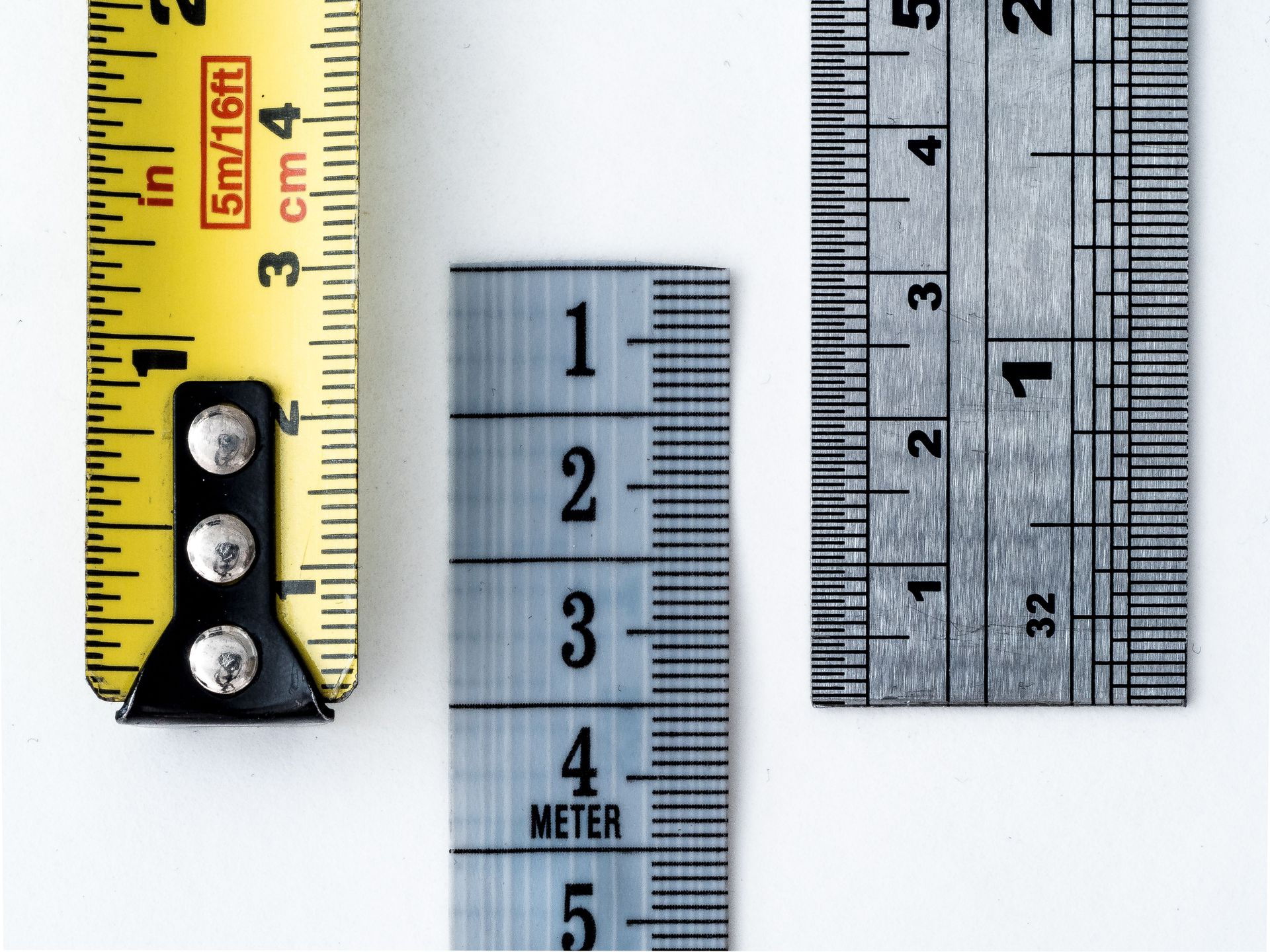
The push for a single, rational system came out of the French Revolution. In the 1790s, French scientists devised a decimal system built on consistent base units, with larger and smaller units defined by powers of 10. The meter, the gram, and the liter formed its core.
The logic was that measurement should be uniform, reproducible, and easy to convert. Instead of memorizing awkward relationships between old units, anyone could shift between scales by moving a decimal point.
Adoption was neither quick nor smooth, even in France. People were attached to familiar units, and merchants resisted relearning their trade. Rolling out the system took decades and, at times, government force.
Over the following two centuries, country after country adopted the metric system, drawn by its convenience for trade and its clarity for science. International standards bodies refined the definitions of the base units to make them precise and stable.
Today nearly every country uses the metric system as its official standard for commerce and daily life. The U.S. is the notable holdout for everyday measurement, still using miles, pounds, and gallons in ordinary contexts, though it relies on metric units in science, medicine, and much of industry.
Science and international trade are effectively unified around the metric system. Researchers worldwide report results in the same units, which allows work to be checked and combined across borders.
The idea that all of humanity could share one coherent set of measures — once a revolutionary abstraction imposed amid political upheaval — became the invisible standard underlying global commerce and research.
19 / 20
Free public libraries

Credit: Emil Widlund / Unsplash
The idea that anyone, regardless of wealth, could walk into a building and borrow books at no charge was not always obvious. Books were expensive and scarce for much of history. Collections belonged to churches, universities, private clubs, or wealthy individuals. Access was a privilege tied to status or membership fees.
The free public library, funded by the community and open to all, emerged as a deliberate reform. Advocates argued that giving ordinary people access to knowledge would improve society, strengthen democracy, and let anyone educate themselves regardless of income.
In the U.S., the Boston Public Library, established in 1848 and opened to the public in the following years, became an early large free municipal library. Other cities built their own. The movement framed the library as a public good, like roads or schools.
The industrialist Andrew Carnegie accelerated the spread. He funded the construction of more than 2,500 library buildings around the world, many of them in the U.S., often on the condition that local governments agree to maintain and stock them. His grants put libraries within reach of towns that could not have built them alone.
Some critics questioned spending public money on books for the general population, or worried about who would decide which books to stock. Those objections gave way as libraries proved their value.
Public libraries became civic fixtures. They lend books, provide quiet space, and serve as gathering points for communities. Over time they expanded well beyond books, offering computers, internet access, classes, and help for job seekers and new arrivals.
Free access to a public library is now a standard expectation in cities and towns across much of the world. The premise that once needed defending — that a society should give everyone free access to its accumulated knowledge — became a quiet, permanent part of civic life.
20 / 20
Paper money

Credit: adrian vieriu / Pexels
For thousands of years, money meant something with inherent value, usually coins made of gold, silver, or other metals. The worth of the coin came from the metal it contained. The idea that a slip of paper, worthless in itself, could stand in for that value struck many people as absurd or as an invitation to fraud.
Paper money first appeared in China. Precursors developed under the Tang dynasty, and true paper currency circulated during the Song dynasty, centuries before Europe adopted the idea. Chinese authorities issued notes that merchants accepted in place of heavy strings of coins.
When paper money reached Europe, it met deep suspicion. A banknote was a promise, a claim on gold or silver held elsewhere. People worried that issuers would print more notes than they could back, destroying the value of the paper. Episodes of runaway printing and collapse reinforced those fears.
Governments and banks gradually built the institutions needed to make paper money trustworthy. For a long time, currencies were tied to gold, with notes theoretically redeemable for a fixed amount of the metal. This link was meant to restrain overprinting and reassure the public.
The final step was cutting that tie. In 1971, the U.S. ended the direct convertibility of the dollar into gold, completing a global move toward fiat currency — money that holds value because a government declares it legal tender and because people accept it, not because it can be swapped for metal.
Today nearly all money is fiat, and much of it is not even paper but digital entries in bank systems. People trade value all day using notes, cards, and screens, rarely pausing to ask what backs it.
The concept that once seemed like a dangerous confidence trick — that intrinsically worthless tokens could serve as real money — became the foundation of every modern economy.
