
25 regional American dishes that are worth a special trip
Regional American food is more specific, more various, and more worth seeking out than most food writing suggests
Matheus Andrade / Pexels
American food culture is routinely underestimated by Americans most of all. The country is large enough to contain genuine regional food traditions that developed in specific places, from specific ingredients, through specific cultural histories, and that cannot be authentically reproduced anywhere else. The specific character of New Orleans food is inseparable from the specific culture and history of New Orleans. The green chile cheeseburger of New Mexico requires the Hatch green chile grown in one valley in one state — it is not the same vegetable when grown anywhere else. The Cincinnati chili served over spaghetti and covered in shredded cheddar cheese is not a variation on Texas chili; it is a different food with a different history, made by a different immigrant community for a different purpose.
This is the argument that most food writing about American cuisine fails to make: that American regional food is not a collection of variations on a national default but a genuine plurality of food cultures, each as specific and as irreducible to other regional traditions as the Italian regionalism that treats the food of Emilia-Romagna and the food of Naples as different cuisines sharing only a country.
The dishes in this list were selected for three qualities: geographic specificity (available in authentic form only in a specific region or city), culinary distinctiveness (genuinely different from anything available elsewhere), and travel worthiness (the experience of eating the dish in its authentic context is meaningfully better than any attempt to replicate it elsewhere). Each entry covers what the dish is, where it comes from, where to eat it, and what specifically makes it worth the trip.
A note on omissions: this is not a list of the best American food. It is a list of food that is specifically and irreducibly regional. The New York bagel and the Chicago deep-dish pizza are both real and regional but are also available in recognizable form nationwide. The dishes here are either unavailable outside their region or so diminished by the attempt that the version you can get at home is not worth knowing about.
Cincinnati chili — Cincinnati, Ohio
Valereee / Wikimedia Commons (CC BY-SA 4.0)
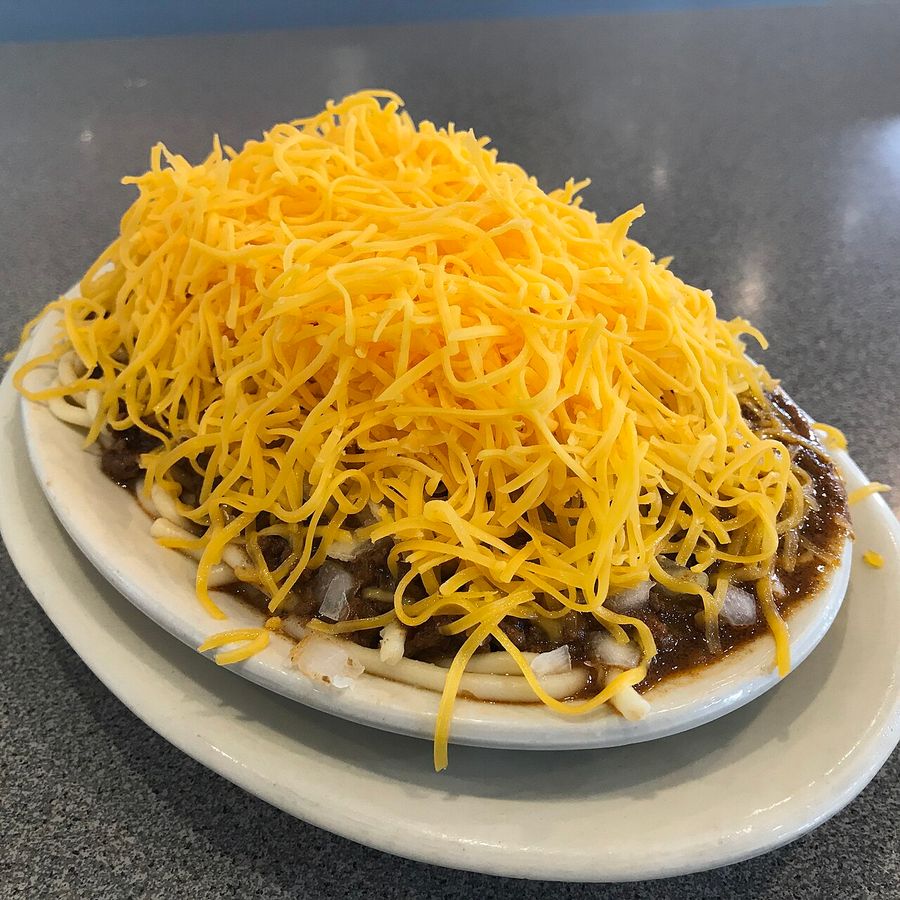
Cincinnati chili is not chili in the Texas sense. It is a thin, spiced meat sauce — seasoned with cinnamon, chocolate, allspice, and Worcestershire in addition to the expected cumin and chile — served over spaghetti and topped with a mound of finely shredded cheddar cheese. The combination sounds wrong and tastes right, and the specific taste is available only in Cincinnati, where the dish was invented by Macedonian immigrants Tom and John Kiradjieff at their Empress Chili parlor in 1922.
The ordering system is as specific as the dish: a "two-way" is chili over spaghetti; a "three-way" adds cheddar; a "four-way" adds onions or beans; a "five-way" adds both. The cheddar is shredded to a specific fineness particular to the Cincinnati chili parlor tradition and is not the same as grated cheese from a bag. The beans, if ordered, are served alongside rather than in the sauce.
The specific quality that makes Cincinnati chili impossible to replicate at home is the accumulated character of a sauce that has been made in continuous production for over a century in the same facilities: the Skyline and Gold Star recipes have been refined across generations of production in ways that a home cook starting from scratch cannot access. The best Cincinnati chili tastes like the history of a specific city's specific immigrant community.
Where to eat it: Skyline Chili (the dominant chain, with dozens of Cincinnati locations); Gold Star Chili (the main competitor); Empress Chili (the original). What to order: a five-way with extra cheddar. What surprises first-timers: the sweetness of the spice profile — the cinnamon and chocolate are not subtle.
Green chile cheeseburger — New Mexico
Chitrapa / Wikimedia Commons (CC BY-SA 4.0)
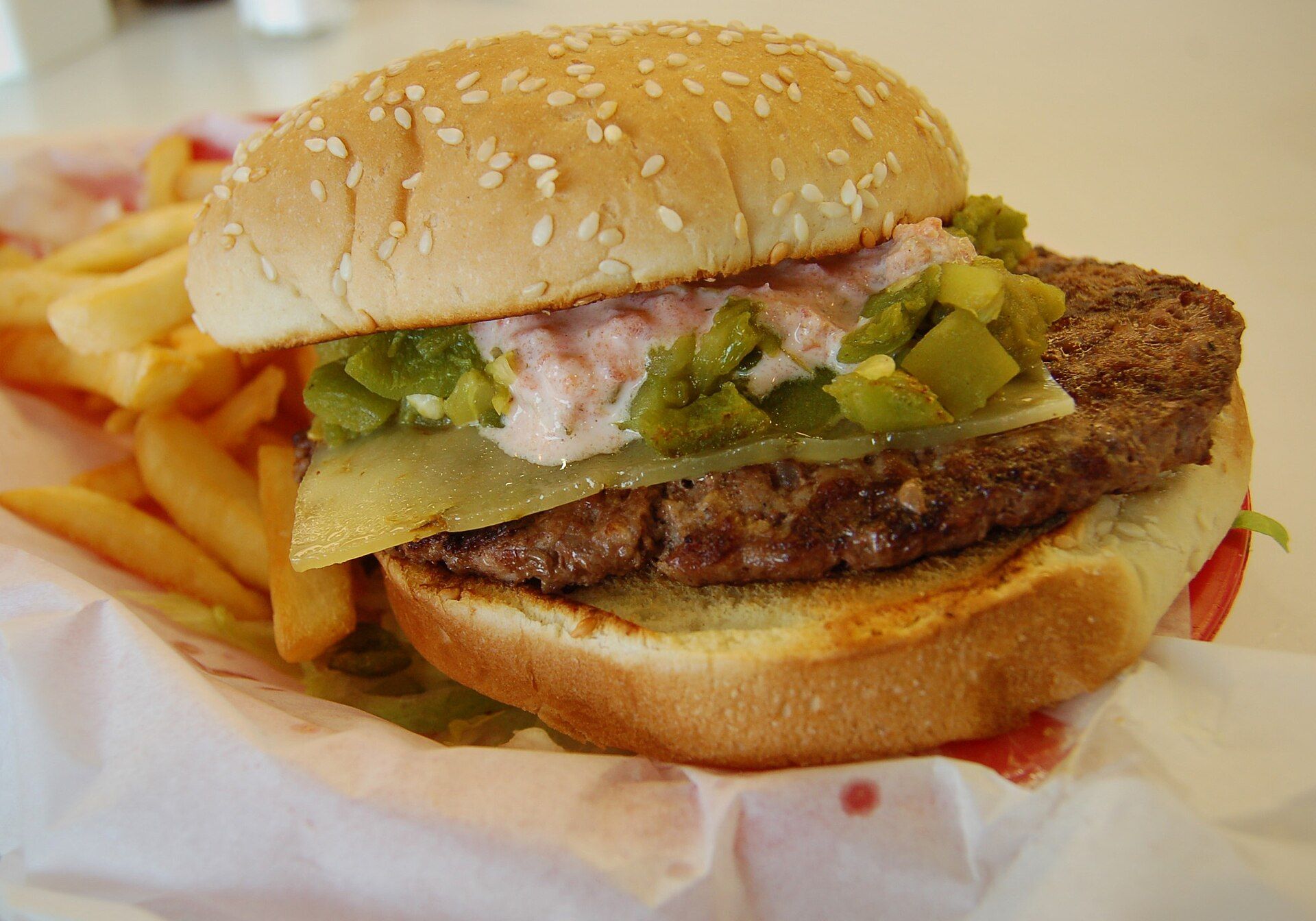
The New Mexico green chile cheeseburger — a beef burger topped with roasted Hatch green chile and melted cheese — is so culturally central to New Mexico that the state legislature passed a resolution in 2009 declaring it the state's signature food. The specific quality that makes it worth traveling for is the Hatch green chile: grown in the Hatch Valley of Dona Ana County, harvested in late summer, roasted over open flame in wire drums at roadside stands across the state, and available in a range of heat from mild to incendiary.
The Hatch chile is not replicated by Anaheim chiles or any other green chile grown outside the Hatch Valley. The specific combination of altitude, soil, and climate produces a flavor — fruity, vegetal, mildly smoky from roasting — that is specific to that geography. The green chile cheeseburger in Albuquerque tastes different from any version available outside New Mexico, and the difference is entirely in the chile.
Green chile season runs late July through October, when fresh-roasted chiles are available at every grocery store parking lot, gas station, and roadside stand in the state. The smell of roasting chiles is the specific olfactory marker of a New Mexico autumn, and eating a green chile cheeseburger during chile season — when the chile was roasted that morning — is the specific experience the dish was designed to produce.
Where to eat it: Blake's Lotaburger (the local fast food chain, better than most sit-down restaurants); the Owl Bar and Cafe in San Antonio, New Mexico; the Bobcat Bite in Santa Fe. Best time to visit: late August through October during the Hatch chile harvest.
Gumbo — New Orleans, Louisiana
stu_spivack / Wikimedia Commons (CC BY-SA 2.0)
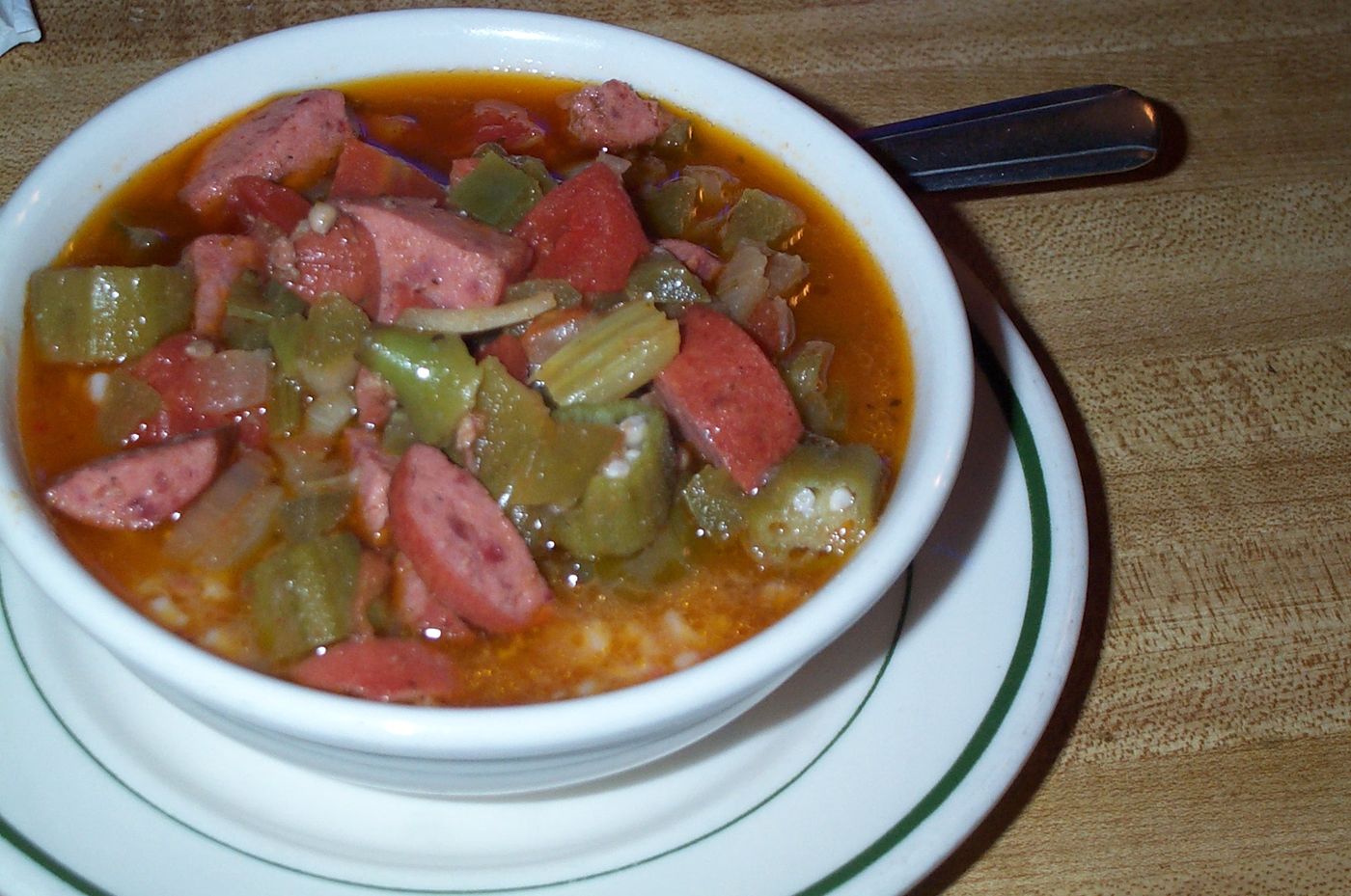
New Orleans gumbo — the thick, roux-based stew of okra, the holy trinity (onion, celery, bell pepper), and a combination of proteins (chicken, andouille sausage, shrimp, crab, oysters) served over rice — is the dish that most fully represents the specific cultural synthesis of New Orleans: French roux technique, West African okra tradition, Native American file powder, and Spanish and Caribbean spice influences, all combined in a dish that is simultaneously familiar and entirely unlike anything made anywhere else.
The specific quality that makes New Orleans gumbo worth traveling for is not the recipe but the ingredients: the andouille sausage from Creole butcher shops, the Gulf seafood available fresh that morning, and the cooking tradition refined across generations in a city that takes food more seriously than almost any other in the country. A gumbo made in New Orleans with local ingredients on a Tuesday afternoon by a cook who has been making it for 40 years is not the same dish as a gumbo made from the same recipe in Chicago.
The roux — the cooked mixture of flour and fat that gives gumbo its specific depth and its dark color — is the technical foundation that most home cooks underestimate. A proper dark roux requires 45 minutes to an hour of constant stirring over high heat, and a New Orleans cook who has made it thousands of times produces a more consistent and more deeply flavored result than a home cook producing it for the first time.
Where to eat it: Dooky Chase's Restaurant (the best chicken and andouille gumbo in the city); Willie Mae's Scotch House; any neighborhood restaurant in the Tremé or Seventh Ward that is not primarily tourist-facing. What to order: ask what protein is fresh that day.
Southern biscuits and gravy — the American South

Gatorfan252525 / Wikimedia Commons (CC BY-SA 4.0)
The Southern biscuit — made with White Lily flour (a soft winter wheat flour milled in Knoxville, Tennessee, with lower protein content than all-purpose flour) and lard or butter, cooked in a cast iron skillet — is a different food from any biscuit available outside its region of origin. The specific softness, the layered flake, the flavor of the fat used are the products of a specific flour, a specific technique, and a specific tradition that has been transmitted through family practice rather than recipes.
Served with sawmill gravy — a white sausage gravy made from pork breakfast sausage, flour, and milk, seasoned with black pepper — the combination is the definitive Southern breakfast food and is available in authentic form along a belt running from the Carolinas through Tennessee, Kentucky, Arkansas, and into the Ozarks. The biscuits and gravy served at a diner in Nashville or a truck stop in Arkansas on a Saturday morning is the specific experience that no brunch restaurant in a major city has successfully replicated.
The White Lily flour distinction is not marketing: the soft winter wheat from which it is milled produces less gluten development than hard winter wheat, resulting in a biscuit that is tender and flaky rather than chewy. Northern flour cannot produce the same result regardless of technique, which is why Southern bakers insist on ordering White Lily when they move north.
Where to eat it: Loveless Cafe in Nashville (the biscuits have been made the same way for 70 years); any small-town diner in the Ozarks; a coal-country diner in eastern Kentucky. What to order: biscuits with both gravy and butter.
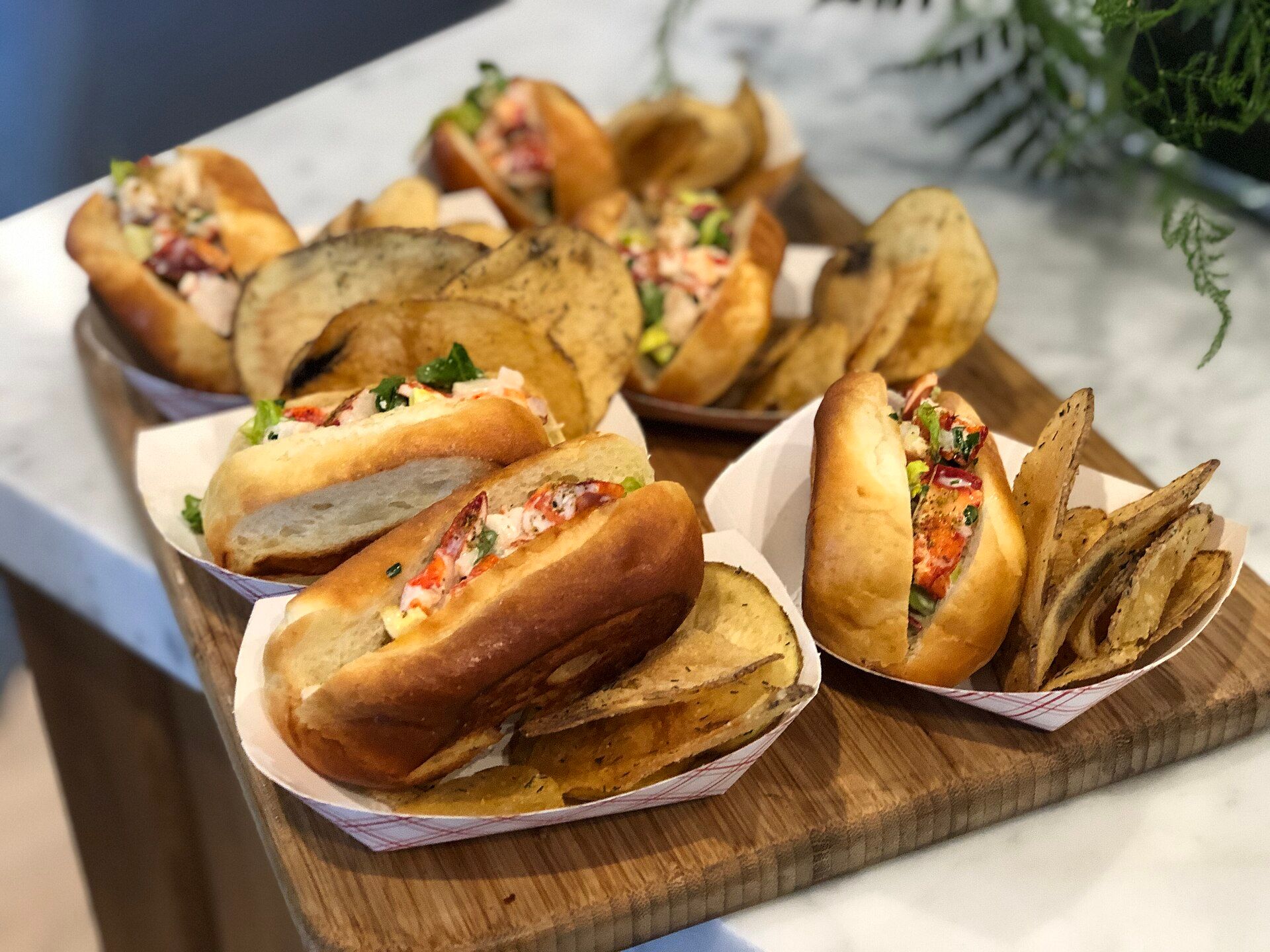
Lobster roll — coastal Maine
Missvain / Wikimedia Commons (CC BY 4.0)
The Maine lobster roll — cold, dressed with a small amount of mayonnaise, served in a split-top hot dog bun, accompanied by a dill pickle and kettle chips — exists in a specific window along the Maine coast where fresh-caught lobster, a specific roll, and a specific restraint of preparation combine to produce a version that no other region matches.
The restraint is the specific quality: the best Maine lobster roll contains approximately five ounces of fresh lobster, a small amount of Hellmann's mayonnaise, and nothing else that obscures the lobster. The roll is toasted in butter. The lobster was caught that morning. The combination costs between $25 and $45 depending on the season, and it is worth it specifically because freshness is the entire point — a lobster roll made with lobster that has been sitting for two days is not the same dish.
The Maine lobster's specific flavor — sweeter and more delicate than the spiny lobsters of warmer waters — is at its best in late summer, when the lobsters have shed their hard shells and are in the soft-shell stage that produces the sweetest meat. Ordering a soft-shell lobster roll in August in midcoast Maine is the specific experience the dish exists to provide.
Where to eat it: Red's Eats in Wiscasset (famous for the overstuffed roll); the Clam Shack in Kennebunkport; any lobster pound in Rockland, Thomaston, or Damariscotta. Best time: late July through September.
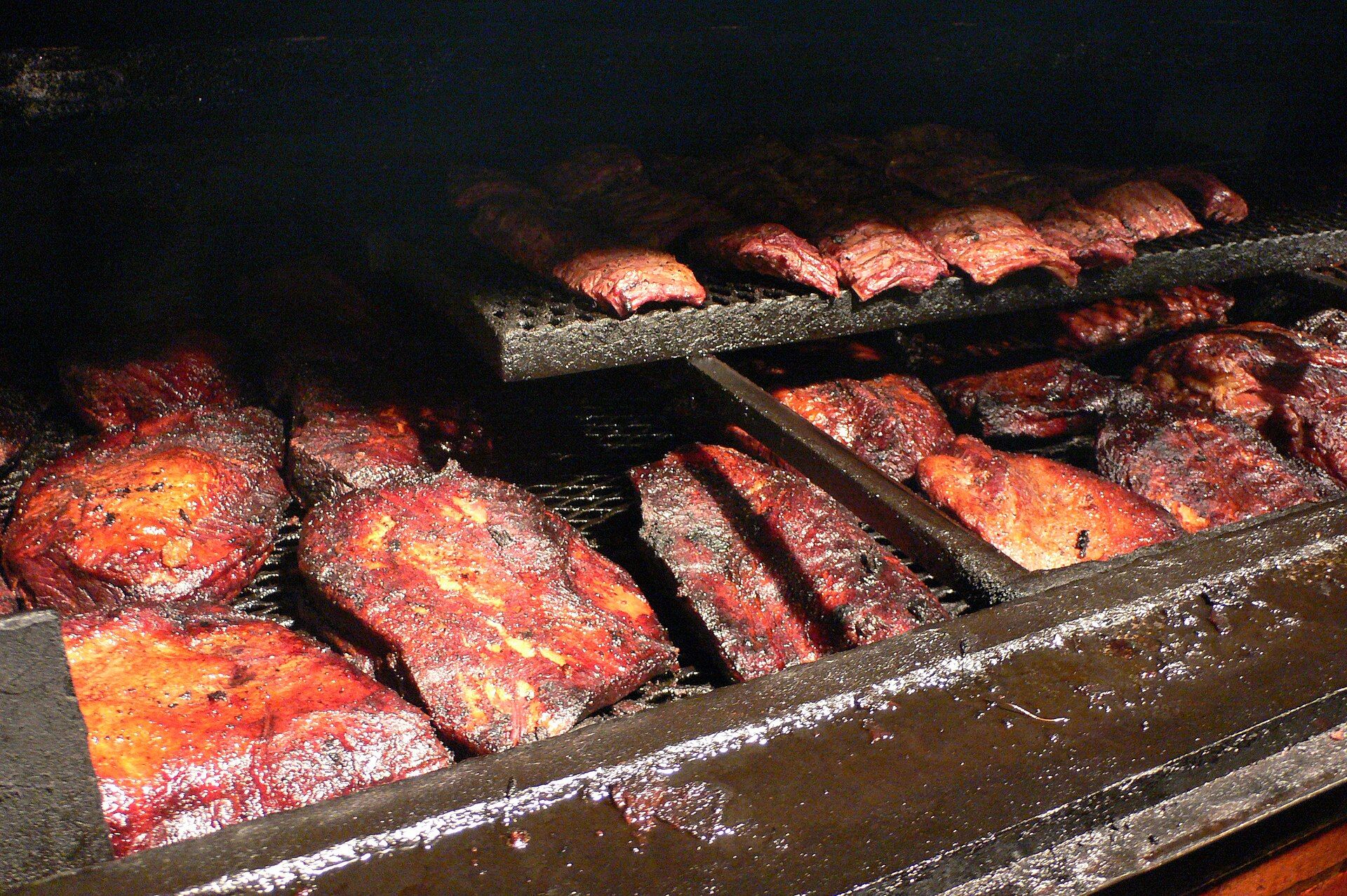
Central Texas barbecue brisket — Central Texas
Heather Cowper / Wikimedia Commons (CC BY 2.0)
Central Texas barbecue brisket — smoked over post oak for 12 to 18 hours, served sliced on butcher paper with white bread, pickles, and onion, with sauce available on the side but not applied by the pitmaster — is the most specific and most uncompromising of all American barbecue traditions. The post oak that grows in the limestone hills of Central Texas is not the same wood grown elsewhere, and its specific smoke character is the flavor that Central Texas brisket is built around.
The craft of Central Texas barbecue is the management of a long, low fire over many hours: maintaining a consistent temperature, managing the smoke, and reading the brisket's development are skills that take years to develop, and the best Central Texas pitmasters have been doing it for decades. The specific quality of a perfectly smoked brisket — the black bark, the smoke ring, the pull of the meat against the resistance of the rendered collagen — is available only at the best Central Texas barbecue restaurants, and only when the pitmaster has had a good day.
The butcher paper service format — no plates, meat weighed and sold by the pound, sides ordered separately, eating at communal picnic tables — is as much a part of the experience as the brisket itself. Franklin Barbecue in Austin, which requires arriving by 7am for an 11am opening and sells out every day, has defined the contemporary Central Texas barbecue experience for a generation of food travelers.
Where to eat it: Goldee's BBQ in Fort Worth (currently ranked by Texas Monthly as the best in the state); Franklin Barbecue in Austin (arrive early); Snow's BBQ in Lexington (open only Saturday mornings, sells out by noon).
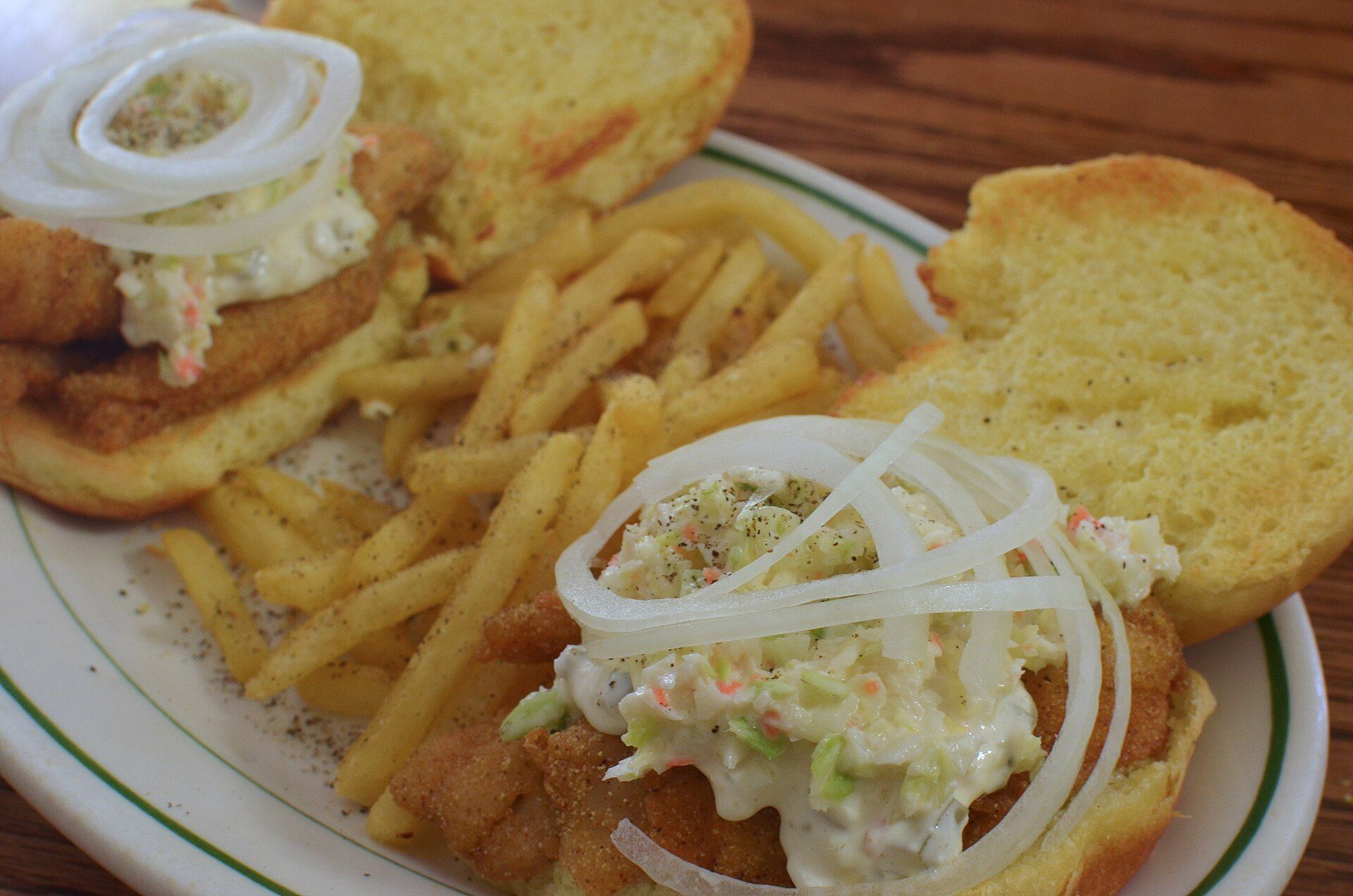
Pittsburgh fish sandwich — Pittsburgh, Pennsylvania
jeffreyw / Wikimedia Commons (CC BY 2.0)
The Pittsburgh fish sandwich — a large piece of battered fried fish served on a soft Kaiser roll with coleslaw and tartar sauce — is so specifically associated with Pittsburgh's Catholic working-class Friday lunch tradition that it exists in concentrated form only in Pittsburgh and its immediate environs. The combination of a large Polish, Slovak, and Italian Catholic population, a steel industry that produced working-class lunch culture, and the specific ecology of the Ohio River valley converged to make the fried fish sandwich a civic institution.
The specific quality that makes it worth traveling for is the roll-to-fish ratio and the coleslaw: the Pittsburgh fish sandwich uses a soft Kaiser roll that compresses slightly around the fish rather than the toasted buns of New England fish sandwiches, and the coleslaw is served on the sandwich rather than alongside it, creating a specific combination of textures not replicated in any other fish sandwich tradition. During Lent, Pittsburgh's fish sandwich culture reaches its full expression.
Church fish frys — held every Friday during Lent at Catholic churches throughout the Pittsburgh region — are the most authentic expression of the Pittsburgh fish sandwich tradition. The fish is freshly battered and fried in large batches, the coleslaw is made from scratch, and the social context (eating in a church hall with the congregation, bingo cards available, pierogies on the side) is part of what makes the experience specific to Pittsburgh.
Where to eat it: Wholey's Market in the Strip District; Pamela's Diner; any Catholic church fish fry during Lent (the schedule is published annually in the Pittsburgh Post-Gazette).
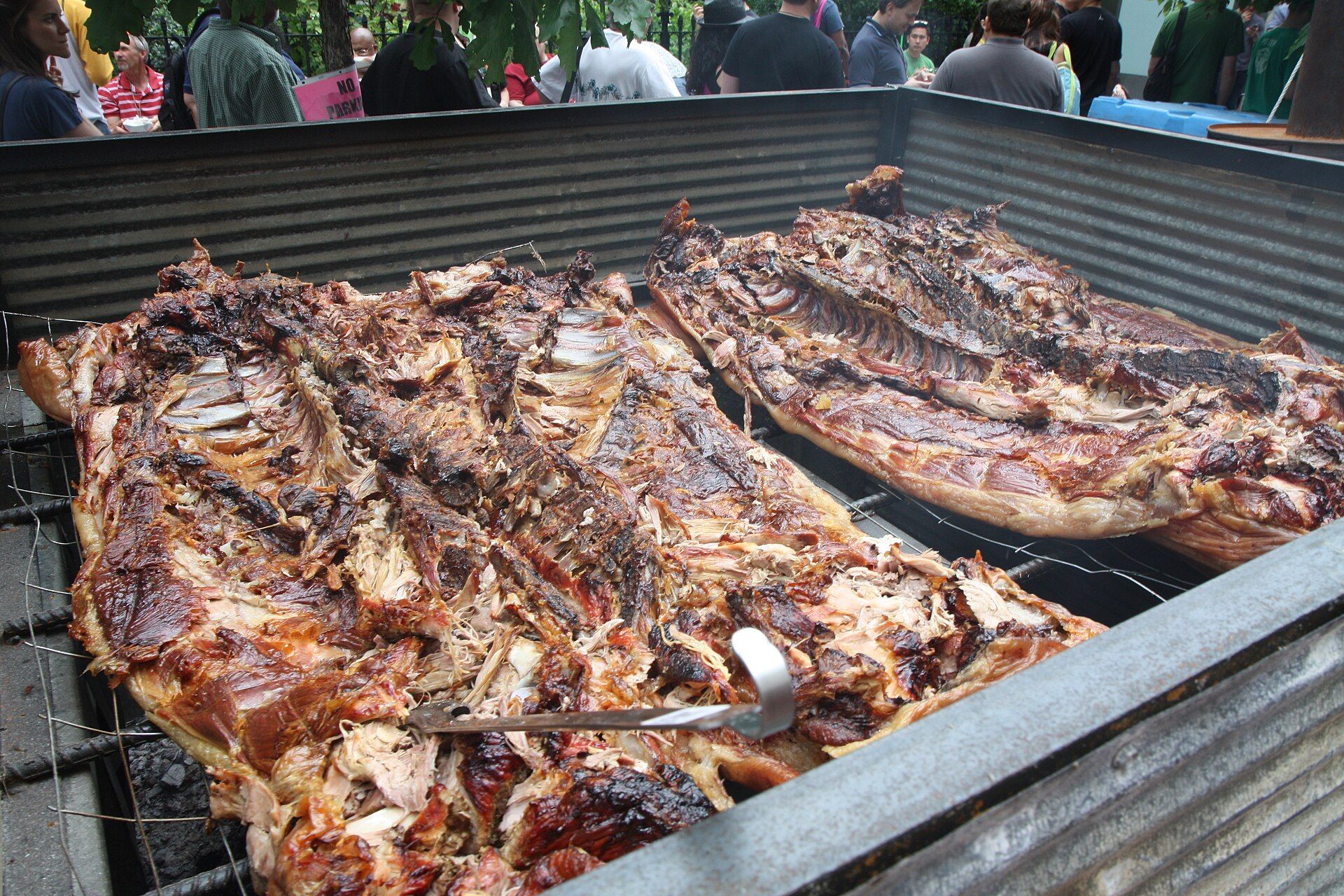
Eastern North Carolina whole hog barbecue — Eastern North Carolina
kowarski / Wikimedia Commons (CC BY 2.0)
Eastern North Carolina whole hog barbecue — the tradition of cooking an entire pig over wood coals for 12 to 18 hours, chopping the meat from the entire carcass together (mixing lean shoulder, fatty belly, and crispy skin), and dressing it with a thin, sharply acidic vinegar and black pepper sauce — is the oldest continuous barbecue tradition in North America and is unavailable in authentic form outside the flat coastal plain of eastern North Carolina.
The whole hog tradition requires a specific infrastructure: a large wood-fired pit, the knowledge of fire management that comes only from years of practice, and a supply of whole hogs rather than commodity pork cuts. The tradition is contracting — the number of genuine whole hog pits in eastern North Carolina is smaller than it was a generation ago — which makes the existing practitioners more worth seeking out while they are still operating.
The chopped whole hog produces a specific combination of textures and flavors that no barbecued pork shoulder or rack of ribs can replicate: the lean meat of the shoulder and ham mixed with the unctuous belly, the crispy skin adding texture to the chop, all dressed with a vinegar sauce that cuts the fat and brightens the smoke. The result is simultaneously the simplest and the most complex American barbecue tradition.
Where to eat it: Skylight Inn BBQ in Ayden (Pete Jones's restaurant, in continuous operation since 1947); Sam Jones BBQ in Winterville; B's Barbecue in Greenville (cash only, sells out by early afternoon).
Kentucky Hot Brown — Louisville, Kentucky
Shadle / Wikimedia Commons (CC BY-SA 3.0)
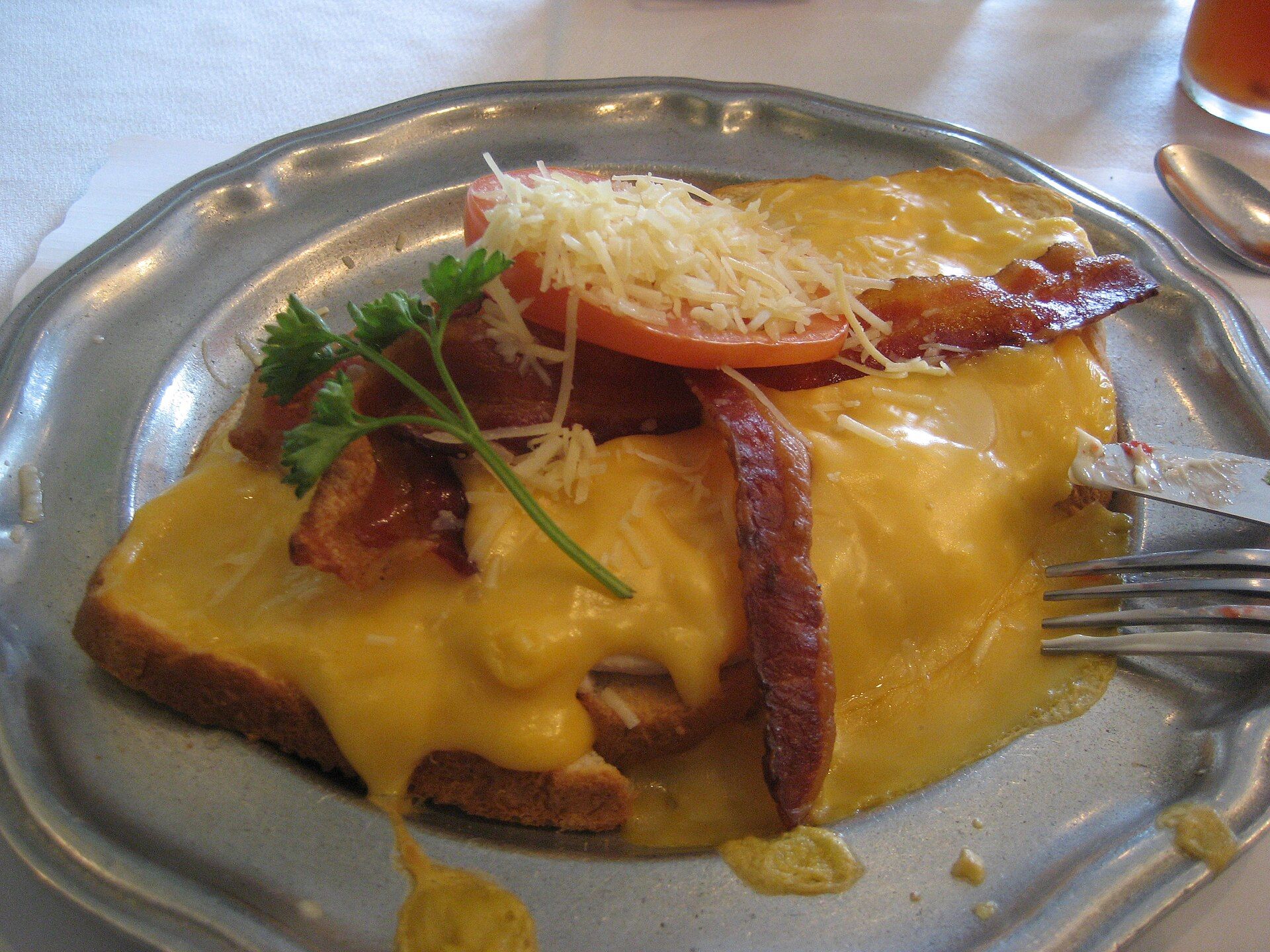
The Kentucky Hot Brown — an open-faced sandwich of roasted turkey on thick-cut white bread, covered with Mornay sauce (a bechamel with Parmesan), topped with bacon and a tomato half, and finished under the broiler until the sauce is browned and bubbling — was invented by Chef Fred Schmidt at the Brown Hotel in Louisville in 1926 as a late-night supper for the hotel's dance guests. It has been made at the Brown Hotel continuously since and is the specific dish most associated with Louisville's food culture.
The Hot Brown is available in restaurants throughout Louisville and appears on menus throughout Kentucky, but the specific version at the Brown Hotel — made from the original recipe, served in the original hotel dining room, with the weight of the sauce and quality of the turkey that the original specified — is the one worth traveling for. The dish is simple enough that quality of execution matters entirely, and the Brown Hotel's version is the standard against which all others are measured.
The specific appeal of the Hot Brown as a travel-worthy dish: it does not photograph well, it does not sound elegant, and it has never been fashionable outside Kentucky. It is a dish that rewards the eater who has no expectations and discovers that a broiled open-faced turkey sandwich with cream sauce is one of the most satisfying things ever served in an American hotel dining room.
Where to eat it: the Brown Hotel on West Broadway in Louisville; Proof on Main in Louisville for a serious contemporary version. Best time to visit: the week of the Kentucky Derby in early May.
Boiled peanuts — the American South
K. Kendall / Wikimedia Commons (CC BY 2.0)
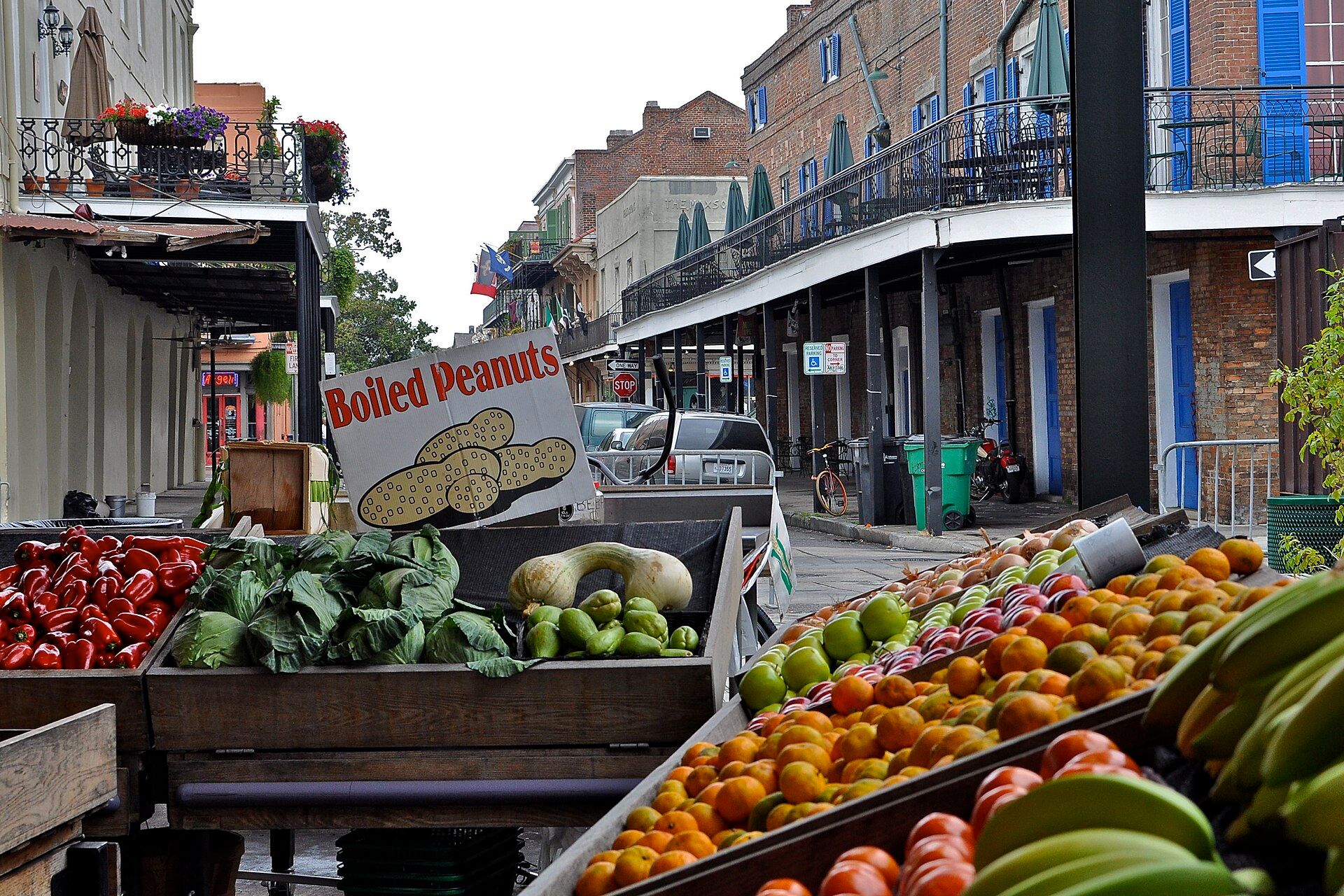
Boiled peanuts — raw green peanuts cooked in heavily salted water for hours until the shell softens and the peanut inside becomes a soft, warm, intensely salty legume — are available from roadside stands along state highways throughout Georgia, South Carolina, North Carolina, and Alabama from late summer through early fall, and are essentially unknown outside the South. They are one of the most regionally specific foods in the country.
The specific quality of roadside boiled peanuts that cannot be replicated elsewhere: they are made from green (fresh, undried) peanuts harvested before full maturity, which have a texture and flavor that dried peanuts — used in the canned version — do not fully replicate. The best boiled peanuts are soft but not mushy, aggressively salted, and eaten warm from a paper bag purchased from a farm stand on a South Carolina two-lane road in September.
The experience of eating boiled peanuts is as specific as the food itself: you are standing at a roadside stand or sitting in a truck cab, pulling the soft shell apart with your fingers, extracting the peanuts with your tongue, and discarding the shells out the window. It is a food designed for a specific context — rural, warm, unhurried — and it tastes best in that context.
Where to eat them: any roadside stand in coastal Georgia or the Carolina Lowcountry during August through October; the Georgia National Fair in Perry (October).
Cheese steak — Philadelphia, Pennsylvania
-1920x1080.jpg)
jeffreyw / Wikimedia Commons (CC BY 2.0)
The Philadelphia cheese steak — thinly shaved ribeye cooked on a griddle, served on an Amoroso roll (a specific Philadelphia Italian roll whose softness comes from Philadelphia water and Amoroso's specific recipe), topped with Cheez Whiz, provolone, or American cheese — is available in versions that approach the authentic in most American cities and fully authentic in only one.
The Amoroso roll is the specific regional quality: available only in the Philadelphia region, designed specifically for the cheese steak's requirements, its softness allows it to absorb the meat's fat without becoming soggy, and its slight sweetness complements the savory meat in a balance that a harder hoagie roll or a sourdough roll disrupts. The Cheez Whiz option, which sounds like a concession to low quality, produces a specific unctuous coating on the meat that provolone or American cheese do not replicate.
The specific experience of eating a cheese steak in South Philadelphia at midnight — standing at a window counter, eating a sandwich assembled in 45 seconds by a person who has assembled thousands of them that day — is the context for which the sandwich was designed. The best cheese steak in a sit-down restaurant is not as good as a decent cheese steak from Pat's or Geno's at the right hour.
Where to eat it: Pat's King of Steaks (the conventional tourist choice, open 24 hours); Jim's Steaks on South Street (the locals' preference); John's Roast Pork in South Philadelphia.
Sonoran hot dog — Tucson and Phoenix, Arizona
stu_spivack / Wikimedia Commons (CC BY-SA 2.0)
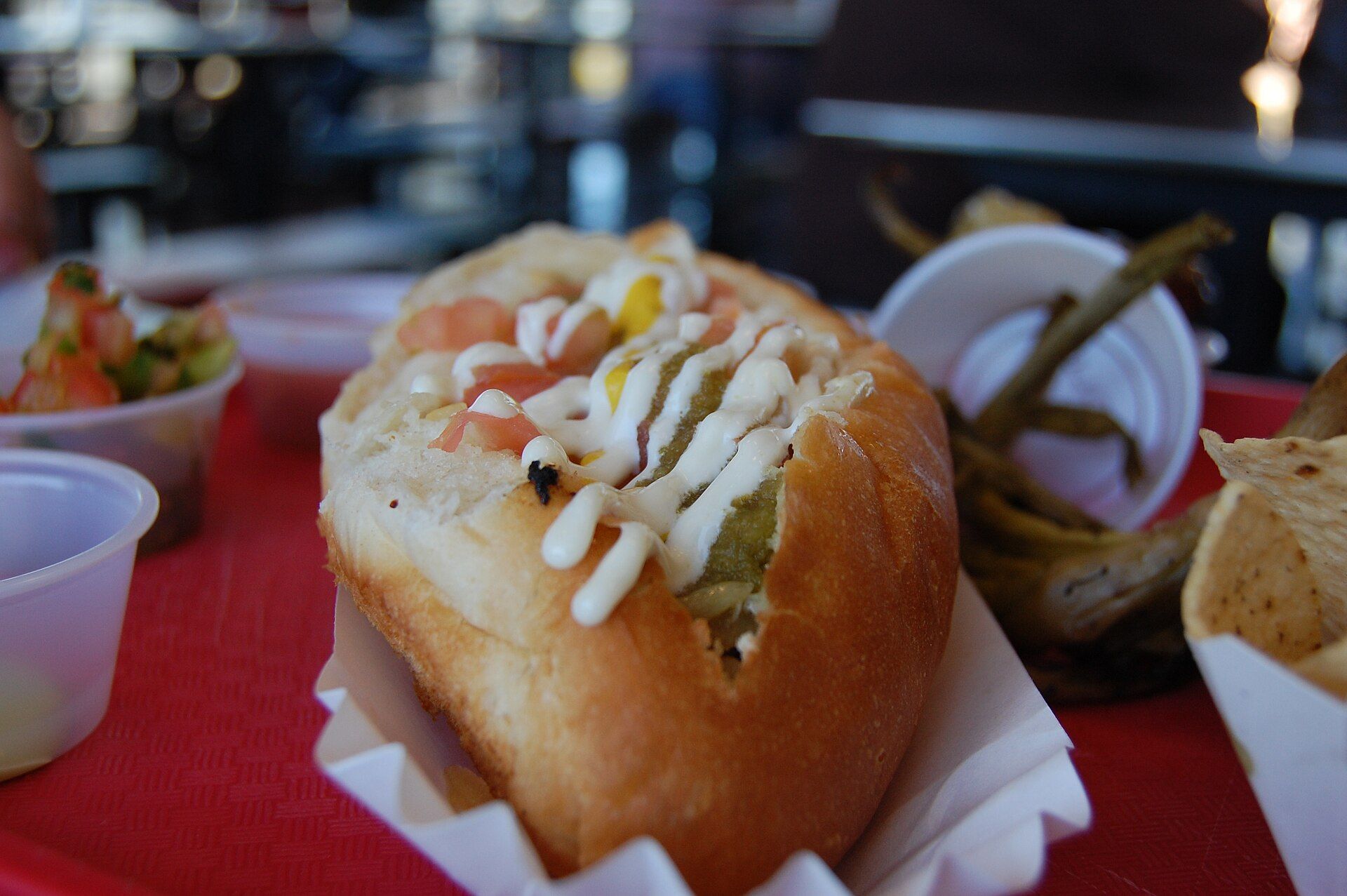
The Sonoran hot dog — a bacon-wrapped hot dog cooked on a charcoal grill until the bacon crisps, served in a soft bolillo-style bun with a closed top, topped with pinto beans, diced tomatoes, mayonnaise, mustard, and salsa cruda — is the product of the specific US-Mexico border food culture of southern Arizona and is available in authentic form primarily in Tucson and Phoenix.
The combination of ingredients sounds chaotic and produces a coherent, intensely flavored result whose specific register — the sweetness of the bun, the fat of the bacon, the earthiness of the beans, the acidity of the tomato, the creaminess of the mayo — is not replicated in any other hot dog tradition in the country. It is a food that requires tasting before judging, and the judgment after tasting is almost uniformly positive.
The street cart presentation — the Sonoran hot dog is most authentically sold from a cart or a small stand in a parking lot, often operating from late afternoon through late night — is part of the experience. El Guero Canelo in Tucson has a brick-and-mortar location and won a James Beard America's Classic award, but the parking lot cart version at 11pm remains the most authentic context.
Where to eat it: El Guero Canelo in Tucson (James Beard America's Classic recipient); BK Carne Asada and Hot Dogs in Tucson; Nogales Hot Dogs street carts throughout Phoenix.
Pupusa — Los Angeles and Washington D.C.
-1920x1440.jpg)
Ruth Hartnup / Wikimedia Commons (CC BY 2.0)
The pupusa — the thick handmade corn tortilla filled with cheese, beans, chicharron, or loroco and cooked on a griddle, served with curtido (fermented cabbage slaw) and salsa roja — is the national dish of El Salvador, but it has become so embedded in the specific Salvadoran immigrant communities of Los Angeles's Pico-Union neighborhood and Washington D.C.'s Columbia Heights that it functions as a regionally specific American food in those contexts.
The pupusa in Los Angeles or D.C. is not an approximation of Salvadoran food; it is made by Salvadoran cooks using the same technique, the same masa, and often the same family recipe as the pupusa of San Salvador. The curtido is fermented in-house. The loroco is imported. The experience of eating a freshly made pupusa at a pupuseria on Pico Boulevard in Los Angeles is as authentic to its tradition as eating it in Central America.
The specific quality of a well-made pupusa that makes it worth seeking out: the masa is pressed by hand around the filling in a motion that is a specific skill, and the result — a tortilla of even thickness that holds the filling without leaking, with a slight char from the griddle and a soft interior — is the product of that skill, not of a recipe. The curtido's fermented sourness and the salsa roja's heat are the required accompaniments.
Where to eat it: Koreatown and Pico-Union in Los Angeles; Columbia Heights and Mount Pleasant in Washington D.C.; Eden Center in Falls Church, Virginia.
Frogmore stew — South Carolina Lowcountry
A13ean / Wikimedia Commons (CC BY-SA 3.0)
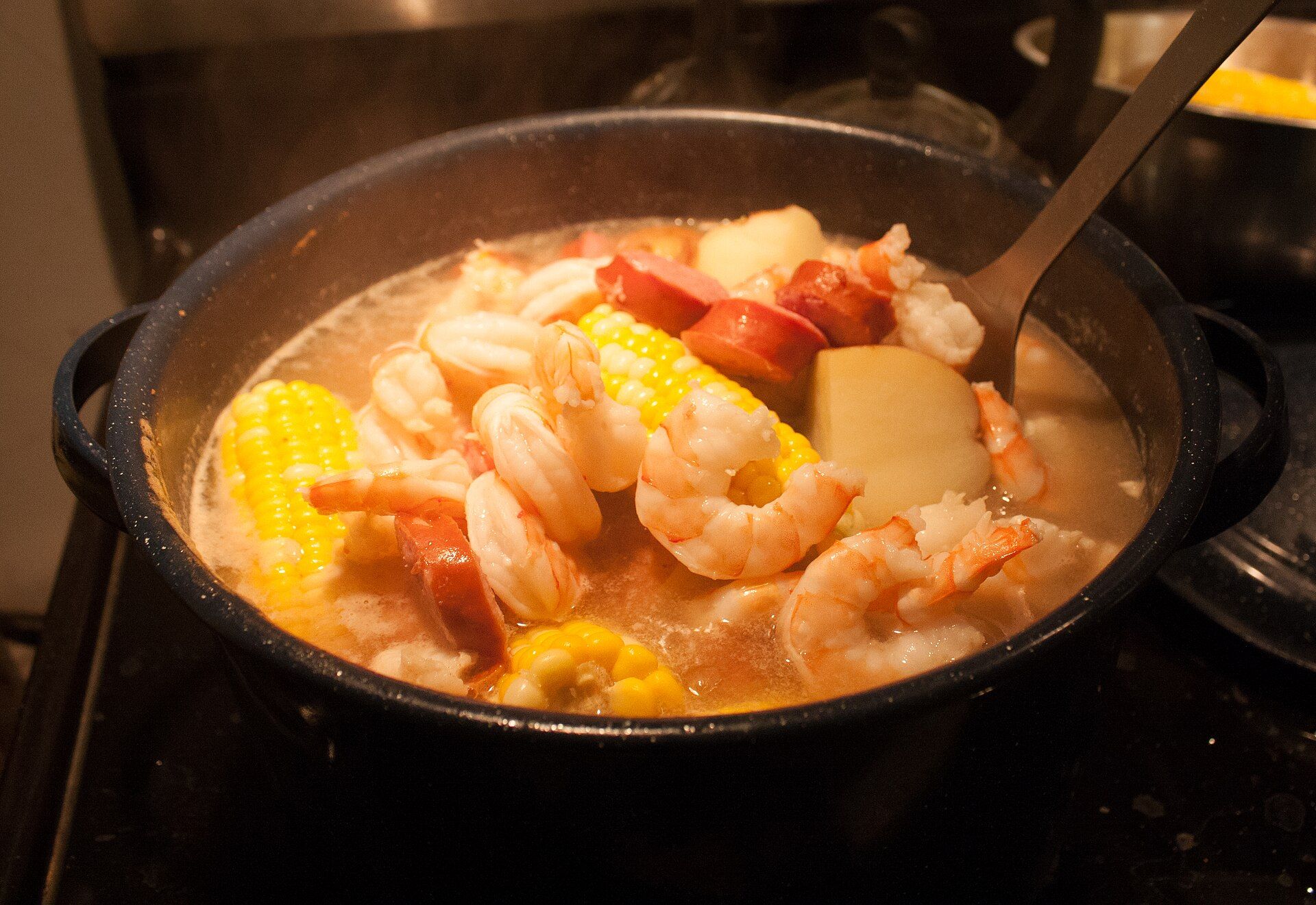
Frogmore stew — also called Lowcountry boil — is a one-pot seafood boil of shrimp, corn, smoked sausage, and new potatoes cooked together in seasoned court-bouillon and served dumped onto a newspaper-lined table for communal eating. The dish takes its name from Frogmore, a community on St. Helena Island, and its specific character is inseparable from the South Carolina coast's white shrimp.
South Carolina white shrimp — caught in the estuaries and tidal creeks of the Lowcountry, available fresh from late spring through fall — are sweeter, firmer, and more intensely flavored than the frozen imported shrimp available everywhere else. They are available at roadside shrimp stands along US 17 between Georgetown and Beaufort at prices that reflect local abundance rather than global commodity pricing, and the difference between a Frogmore stew made with fresh local shrimp and one made with frozen imported shrimp is the difference between a travel-worthy dish and a recipe.
The newspaper-on-the-table serving format is part of the experience — the food dumped directly onto the table surface, eaten with hands, the table itself becoming the serving vessel — and the communal eating context for which the dish was designed is most authentically experienced at a family gathering or community event rather than a restaurant.
Where to eat it: the Sea Islands of South Carolina during shrimp season (May through October); any Lowcountry restaurant that sources local shrimp. What to know: the dish is most authentic at a community gathering.
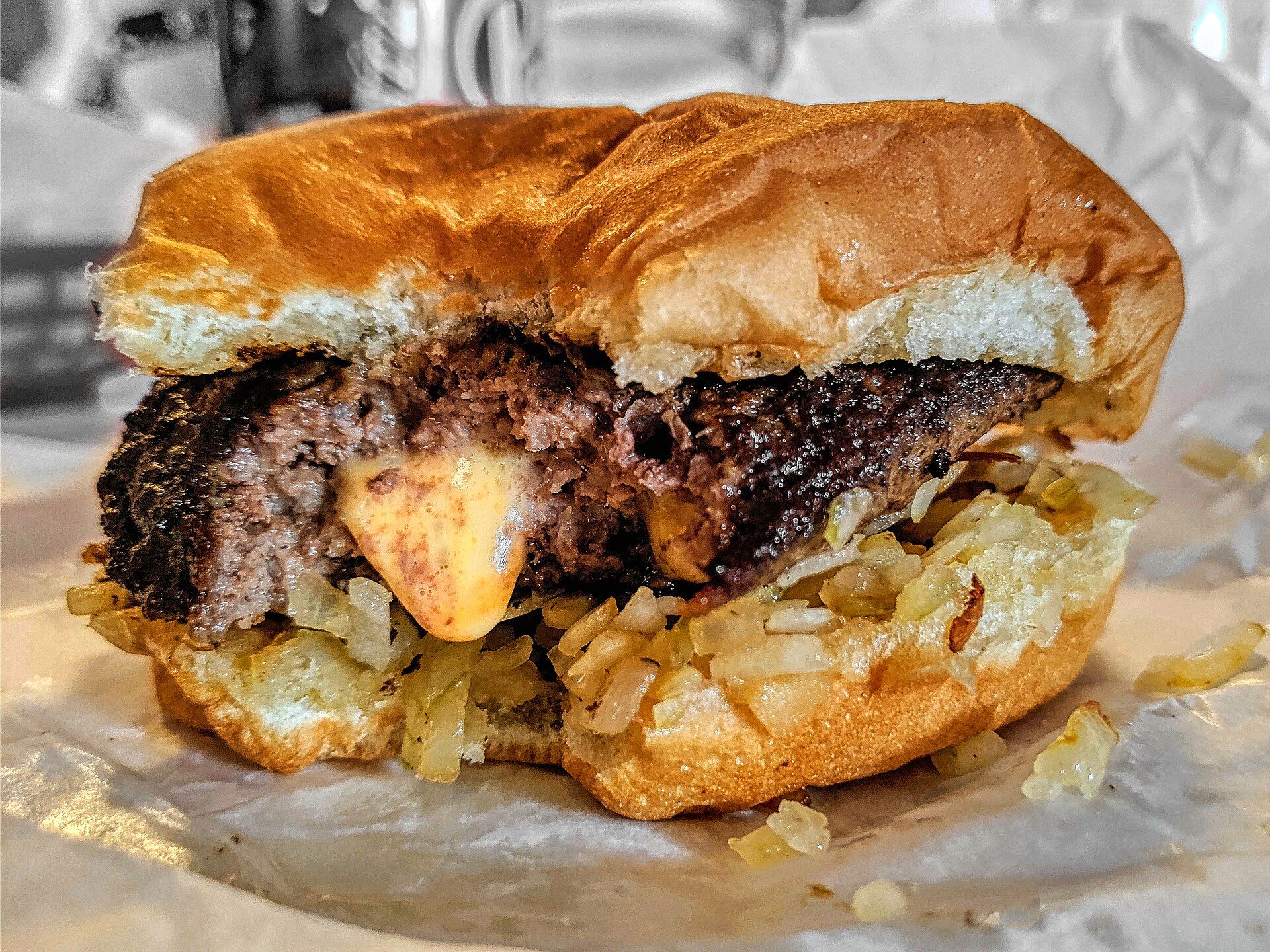
Juicy Lucy — Minneapolis, Minnesota
Dale Cruse / Wikimedia Commons (CC BY 2.0)
The Juicy Lucy — a burger in which the cheese is stuffed inside the patty rather than melted on top, producing a pocket of molten cheese that releases when bitten — is the specific dish most associated with Minneapolis and the subject of a civic rivalry between two South Minneapolis bars (Matt's Bar and the 5-8 Club) that each claim to have invented it.
The cheese inside the patty reaches a temperature significantly higher than melted surface cheese, producing a liquid state that flows into the meat as the burger is eaten. The menu at Matt's Bar warns "Be careful, it's hot" — not a liability disclaimer but practical advice from experience. First-time eaters consistently bite too soon and burn themselves; second-time eaters know to wait.
The Juicy Lucy has been replicated nationally, but the original versions at Matt's Bar and the 5-8 Club — served with no garnish beyond ketchup and pickles, in bar rooms that have not changed significantly since the 1950s — are the experience that inspired the replication. The charm is the combination of the technical novelty and the resolutely unglamorous presentation: this is a bar burger that happens to have an engineering innovation inside it.
Where to eat it: Matt's Bar on Cedar Avenue South (cash only, very small, the original); the 5-8 Club on Cedar Avenue South (the rival claim, slightly larger). What to order: the original with American cheese.
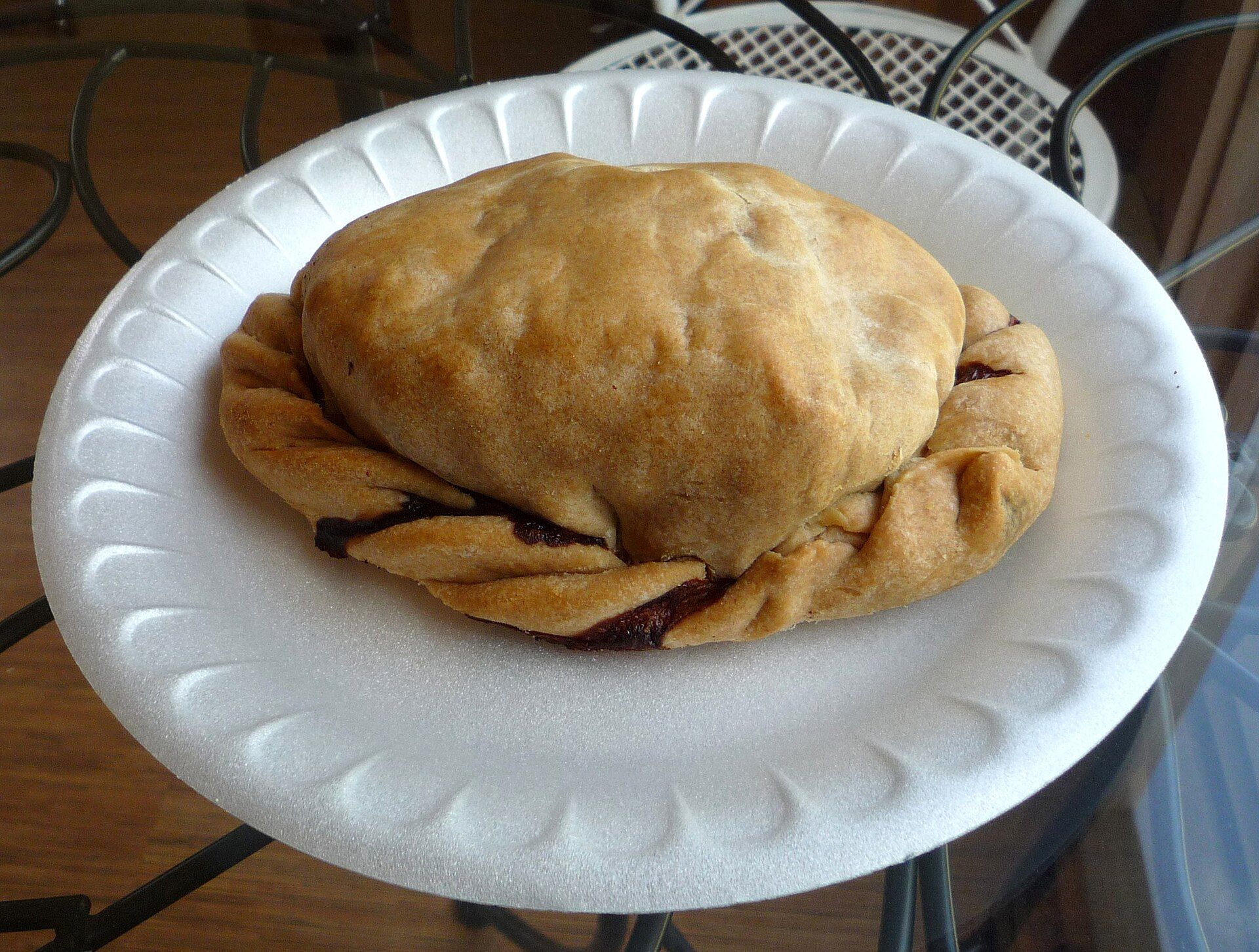
Pasty — Upper Peninsula of Michigan
Bobak Ha'Eri / Wikimedia Commons (CC BY-SA 2.5)
The Cornish pasty — a hand-crimped pastry filled with beef, rutabaga, potato, and onion, with the crimp on top rather than the side — arrived in the Upper Peninsula of Michigan with Cornish tin miners in the 19th century and has been made continuously in the same form in the U.P. ever since. It is the specific food most associated with the Upper Peninsula's distinct cultural identity and is unavailable in authentic form outside the region.
The filling is raw when the pasty is assembled, cooking inside the pastry during baking. The rutabaga (called "turnip" locally) is non-negotiable in the authentic version. The crimp-on-top style is specific to the Cornish Upper Peninsula tradition and distinguishes it from the crimped-on-the-side pasties of Cornwall itself.
The specific experience of eating a pasty in the U.P.: it is a substantial, filling food designed for physical laborers working in cold conditions, and eating one in the Upper Peninsula in October — at a small bakery in Marquette or Calumet, with a cup of coffee, before heading out into the autumn cold — connects the food to its context in a way that eating the same pasty in a different setting does not.
Where to eat it: Lawry's Pasty Shop in Marquette; Lehto's Pasties in St. Ignace; any of the family-owned pasty shops in the Keweenaw Peninsula. What to know: fierce local opinions exist about the correct rutabaga-to-potato ratio.
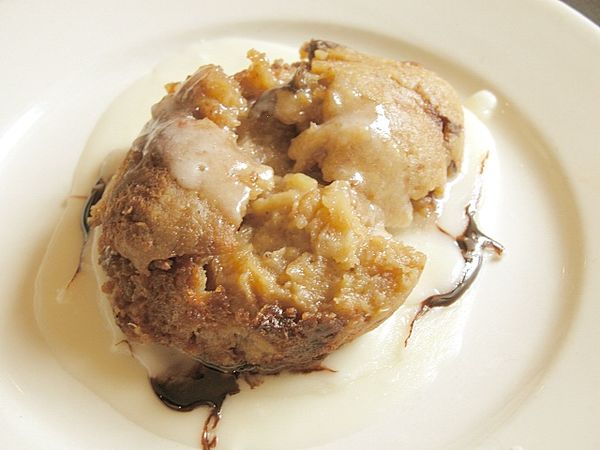
Bread pudding with whiskey sauce — New Orleans, Louisiana
Credit: Wikimedia Commons
New Orleans bread pudding with whiskey sauce is a dessert so specifically embedded in the New Orleans restaurant tradition that ordering it at a good New Orleans restaurant is not tourist convention but a genuine culinary experience. The dish is made from stale French bread — the specific New Orleans French bread, made by Leidenheimer Baking Company since 1896, with a lighter crumb and thinner crust than baguette-style bread — soaked in custard, baked, and served warm with a bourbon sauce.
The specific New Orleans French bread is the irreplaceable element: it stales and soaks differently from any bread available elsewhere, and the dessert's specific texture — simultaneously custardy and structured, soft and slightly resistant — is the product of this specific bread. A bread pudding made from baguette or brioche in the same recipe produces a different dish.
The bourbon sauce — made from butter, powdered sugar, egg, and bourbon, cooked until the egg sets into a creamy emulsion — is a sauce that requires practice to produce correctly. The versions served at Commander's Palace or Brennan's reflect generations of refinement. It is a dessert that sounds simple and is not.
Where to eat it: Commander's Palace (the definitive version); Brennan's; the Bon Ton Cafe. What to know: order it even if you are full. The meal is incomplete without it.
Whole roasted pig — Hawaii (kalua pig)
-600x600.jpg)
Arnold Gatilao / Wikimedia Commons (CC BY 2.0)
Hawaiian kalua pig — a whole pig slow-cooked in an imu (an underground oven of heated stones lined with banana leaves) for eight to twelve hours until the meat falls from the bone in a specific smoky, salty, pork-fat-saturated result that is the foundation of the Hawaiian luau — is the regional dish most specifically tied to its cooking method and its cultural context. Kalua pig made in a conventional oven or a smoker is not kalua pig in the same sense that the underground oven produces.
The imu cooking method is genuinely distinctive: the pig is salted, wrapped in banana and ti leaves, and placed on heated volcanic rocks in a pit that is then sealed with earth and allowed to cook through steam and radiant heat for most of a day. The result is a pork whose smokiness comes from the leaves rather than from wood smoke, whose fat has been rendered slowly over many hours, and whose texture — falling apart but not dried out — is specific to this method.
The most authentic kalua pig is available at family luaus rather than commercial luau experiences, but the commercial luaus at Old Lahaina Luau on Maui and the Polynesian Cultural Center on Oahu produce genuinely prepared kalua pig rather than the oven-cooked approximation served at most tourist-facing restaurants.
Where to eat it: Old Lahaina Luau on Maui (the best commercial luau on any island); Helena's Hawaiian Food in Honolulu (a James Beard America's Classic, family-operated for decades); any family gathering you are lucky enough to be invited to.
Tamales — San Antonio and South Texas

Nachtbel / Wikimedia Commons (CC BY-SA 4.0)
The tamale tradition of San Antonio and the Rio Grande Valley — a direct inheritance from the Mexican culinary tradition of the region, made in large family groups called tamaladas during the weeks before Christmas — produces a tamale specific to South Texas: masa prepared from dried nixtamal corn spread on a dried corn husk, filled with red chile-braised pork or beef seasoned with cumin and garlic, folded, and steamed.
The tamalada context — families making hundreds of tamales together in a single session, with specific family recipes unchanged for generations — is part of what makes the food what it is. The tamale is simultaneously a food and a cultural practice, and the cultural practice encodes the specific seasoning, the specific masa texture, and the specific filling that distinguish the South Texas tamale from the tamales of Mexico City or California.
The Christmas tamale tradition is specifically worth experiencing in San Antonio: the weeks before Christmas, when the city's West Side neighborhoods are producing tamales in every household and tamale orders are placed weeks in advance at the family operations that have been making them for generations.
Where to eat them: Tellez Tamales in San Antonio (three generations of the same family recipe); the tamaladas of San Antonio's West Side around Christmas; roadside tamale stands along US 83 in the Rio Grande Valley during the holiday season.
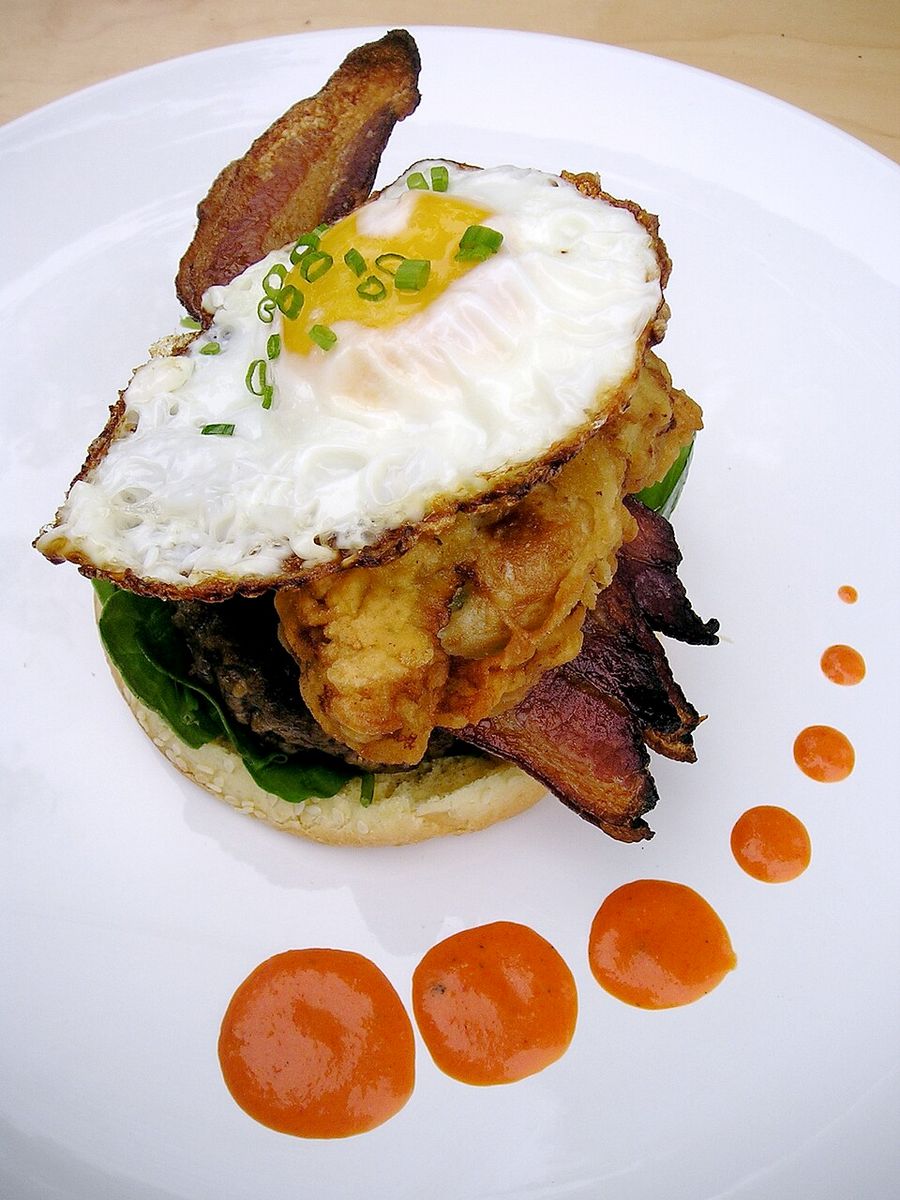
Hangtown fry — Placerville, California
John Herschell / Wikimedia Commons (CC BY-SA 2.0)
The Hangtown Fry — a pan-fried combination of eggs, bacon, and breaded fried oysters reportedly invented during the California Gold Rush in Hangtown (now Placerville, El Dorado County) as the most expensive meal a newly wealthy miner could order — is a Gold Rush-era dish so specifically associated with the California mining history of the Sierra Nevada foothills that it qualifies as a genuinely historical regional food.
The combination of eggs, oysters, and bacon sounds improbable and produces an extremely rich, deeply savory result — the oysters brine against the egg, the bacon fat coats the whole, and the breading of the oysters provides the textural contrast that holds the dish together. It has no equivalent in any other regional tradition and is not available in any form outside the Gold Rush country of the Sierra Nevada foothills.
The dish fell out of general production through most of the 20th century but has been revived by Placerville restaurants interested in Gold Rush culinary history. Eating it in the foothills — in the specific geography where California's gold rush history is still physically present in the landscape — is the specific experience the dish provides.
Where to eat it: the Cary House Hotel in Placerville; the Hangtown Grill in Placerville; the Sequoia Diner in El Dorado Hills.
Soul food — Atlanta and the American South
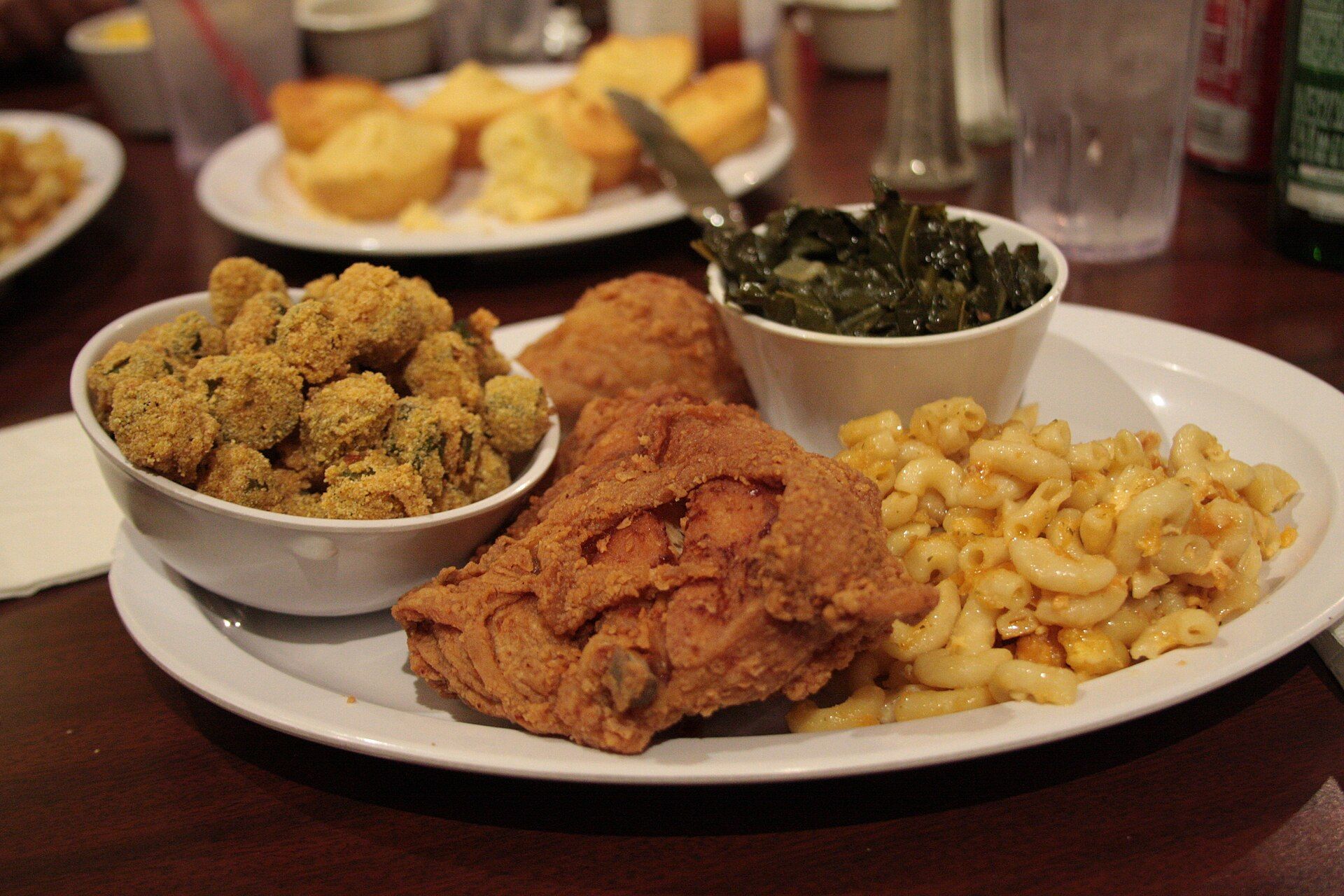
Jennifer Woodard Maderazo / Wikimedia Commons (CC BY 2.0)
Soul food — the Southern Black culinary tradition of fried chicken, collard greens cooked with smoked pork, black-eyed peas, candied yams, macaroni and cheese, cornbread, and banana pudding — is the most widely imitated and the most poorly imitated regional American cuisine, because its specific quality is inseparable from a cooking tradition developed in specific cultural conditions and transmitted through family and community practice rather than through recipes.
The specific quality of soul food in Atlanta or the smaller cities of the Black Belt — the arc of historically Black-majority counties from Virginia through the Carolinas, Georgia, Alabama, and Mississippi — is the cooking tradition: collard greens cooked low and slow for hours with smoked ham hocks until they reach a specific silkiness; fried chicken marinated overnight, dredged in seasoned flour, and cooked in cast iron with enough fat that the crust is properly crunchy; macaroni and cheese made with actual bechamel and multiple cheese varieties.
The restaurant soul food of Atlanta — at Paschal's, at Busy Bee Cafe, at the dozens of neighborhood restaurants that have been feeding the city's Black community for generations — is the most accessible entry point for a visitor. But the most authentic soul food in the American South is still the food made at home for church suppers, family reunions, and the homecoming gatherings that mark the Southern Black community's ritual calendar.
Where to eat it: Paschal's in Atlanta (a civil rights-era institution); Busy Bee Cafe in Atlanta (equally historic); any church supper in the Black Belt during homecoming season.
Pho — Houston, Texas
Houston's Bellaire Chinatown — the Vietnamese commercial corridor along Bellaire Boulevard southwest of downtown — contains one of the largest and most concentrated Vietnamese restaurant communities in the United States, and the pho available here is considered by Vietnamese-American food professionals to be among the most authentic in the country.
The Houston pho reflects the Southern Vietnamese style: a clear, sweet, deeply beefy broth; a generous serving of thinly sliced raw beef that cooks in the hot broth; a plate of bean sprouts, Thai basil, sliced jalapeño, and lime on the side. The concentration of Vietnamese restaurants in Houston has produced intense competition that drives quality upward, and the Vietnamese community's size supports the ingredient supply chains that make authentic pho possible.
The specific experience of eating pho in Houston's Vietnamese community: ordering at a restaurant where English is a second language, customizing the bowl for your specific preferences (tendon, tripe, or both; well-done or rare beef; extra broth), eating among the Vietnamese families who eat there because it is the food they grew up with — this is what makes Houston pho different from pho served in a Vietnamese-American restaurant in a city with a small Vietnamese population.
Where to eat it: Pho Binh on Bellaire Boulevard (a Houston institution); Crawfish and Noodles (the Vietnamese-Cajun fusion restaurant whose pho is as serious as its crawfish); any of the dozens of Vietnamese restaurants along Bellaire Boulevard.
Scrapple — Pennsylvania and the Mid-Atlantic
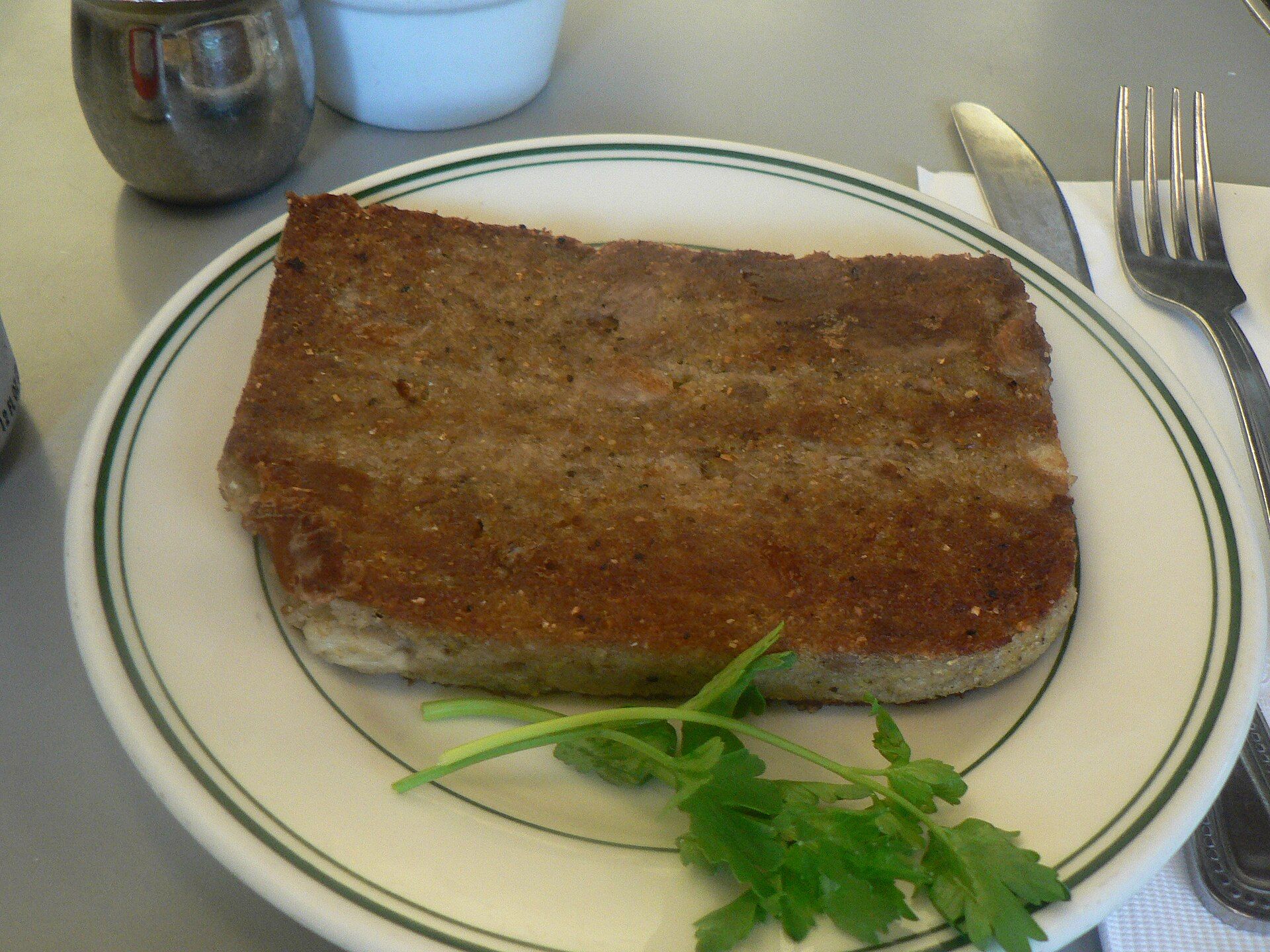
Stu Spivack / Wikimedia Commons (CC BY-SA 2.0)
Scrapple — a loaf made from pork scraps (the parts left after butchering), cornmeal, wheat flour, and spices (sage, thyme, black pepper), pressed into a loaf, sliced, and pan-fried until crispy on the outside and soft on the inside — is the specific breakfast food of the Pennsylvania Dutch country and the Delaware Valley, available in diners and supermarkets throughout eastern Pennsylvania, Delaware, Maryland's Eastern Shore, and southern New Jersey, and essentially unknown elsewhere.
The dish is a direct inheritance from the German and Dutch immigrant communities of the Pennsylvania interior, who developed it as a thrifty use of slaughterhouse scraps in a culture that wasted nothing. Its specific flavor — savory, slightly spicy, with the crunch of a fried exterior and the soft interior of a cornmeal mush — is something that its advocates find deeply satisfying and its detractors find inscrutable. It is not a dish that benefits from knowing its ingredients before tasting it.
Eaten at a Pennsylvania Dutch diner counter with eggs, toast, and coffee at 7am — the context for which it was designed — scrapple is a perfectly calibrated breakfast food. The version made by Habbersett, the dominant brand in the region, is available in supermarkets throughout the Mid-Atlantic and is the standard against which home-made and restaurant versions are measured.
Where to eat it: any diner in Lancaster County, Pennsylvania or the Delaware Valley; Habbersett brand from a Mid-Atlantic supermarket for the home version. What to know: order it without asking what it is made from until after you have tried it.
Garbage plate — Rochester, New York
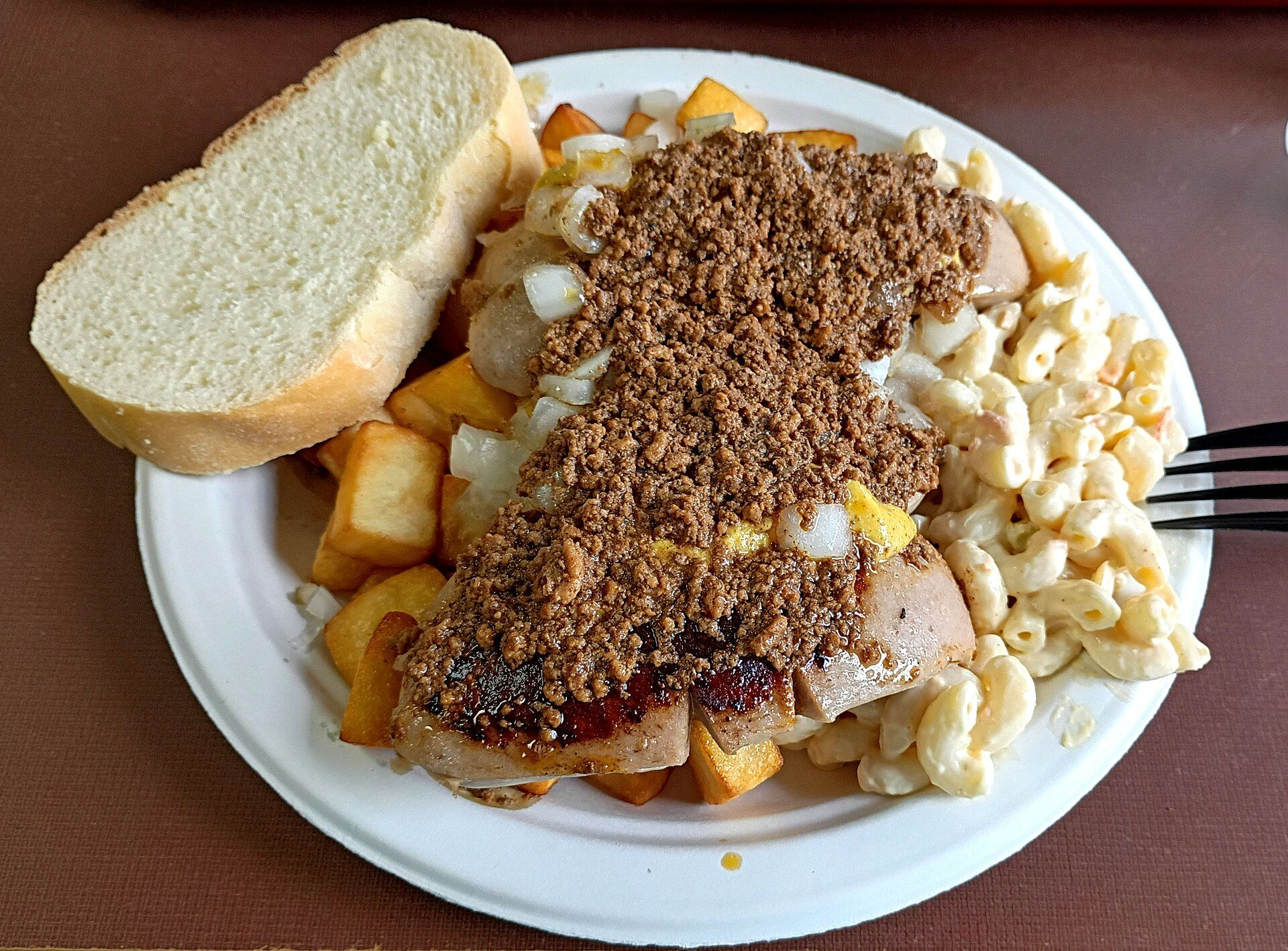
Paul Lowry / Wikimedia Commons (CC BY 4.0)
The garbage plate — invented by Nick Tahou Hots in Rochester, New York in 1918 and consisting of a combination of two "base" foods (any combination of macaroni salad, baked beans, home fries, or french fries) topped with your choice of protein (hamburger patties, hot dogs, white hots, Italian sausage), covered with a meat hot sauce (a specific Rochester-style meat sauce that is neither chili nor bolognese but something specific to this dish), and finished with mustard, onion, and ketchup — is the specific late-night food of Rochester and so regionally specific that Nick Tahou's has trademarked the name "Garbage Plate."
The dish is a model of caloric density, designed for the context of a late-night meal after a long shift or a long night out, and it works in that context in the specific way that foods designed for a purpose work: the combination of carbohydrates, protein, fat, and the umami depth of the meat sauce produces a satisfaction that its components individually do not. Other Rochester restaurants serve versions of the plate under different names (the trademark applies only to "garbage plate"), and the regional tradition of the combination plate is widespread throughout the Rochester area.
Where to eat it: Nick Tahou Hots on West Main Street in Rochester (the original, open late); Dogtown Hots in Rochester. What to know: order it for dinner, not lunch.
Nashville hot chicken — Nashville, Tennessee
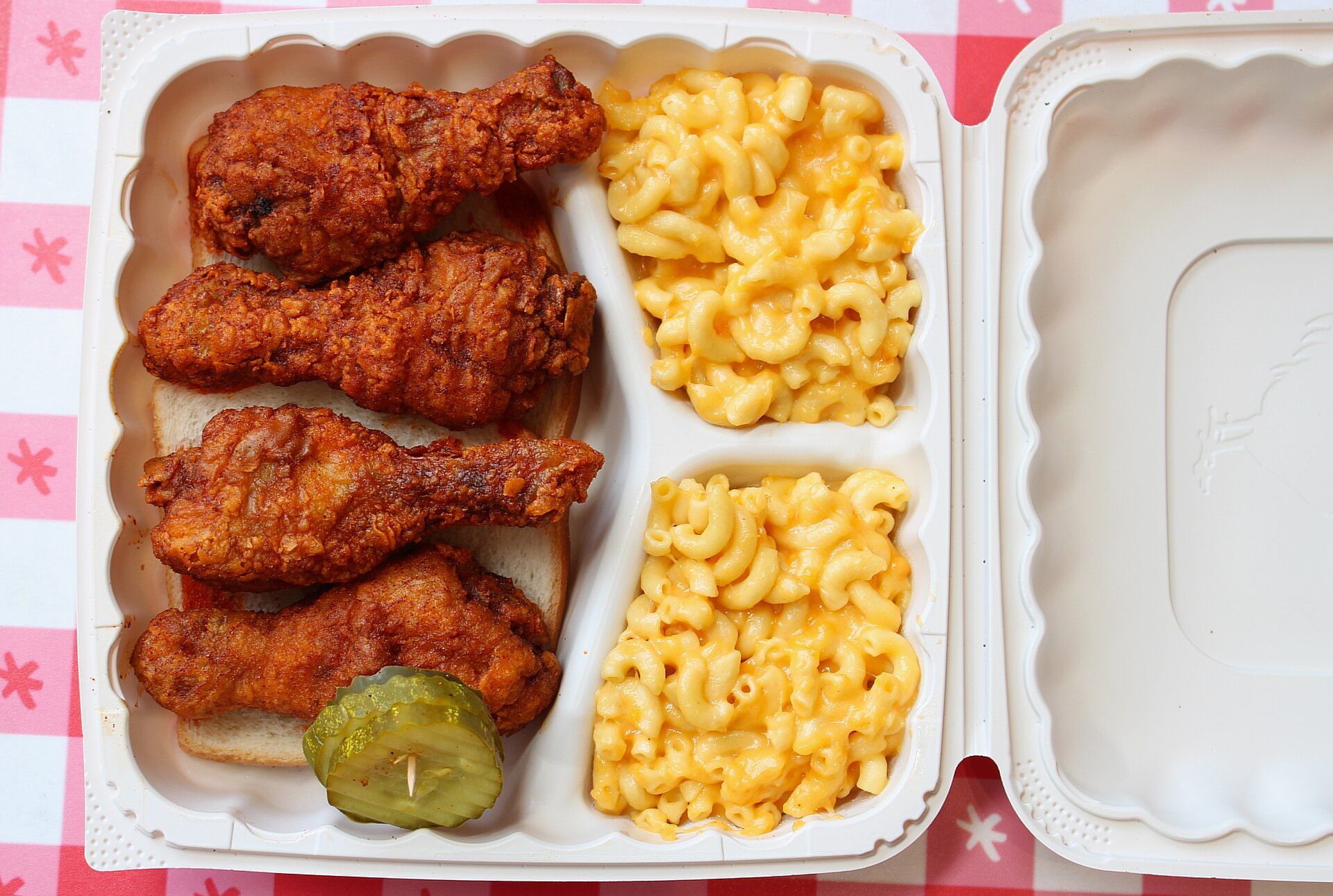
Myspiritanimalisamanatee / Wikimedia Commons (CC BY-SA 4.0)
Nashville hot chicken — fried chicken seasoned with a paste of cayenne and other spices applied after frying, served on white bread with dill pickle slices — was invented at Prince's Hot Chicken Shack in Nashville, where Thornton Prince's family has been making it since the 1930s, and has become the most exported regional American dish of the past decade, with chains attempting to replicate it in every American city. None of them do.
The specific qualities that make Nashville hot chicken worth eating in Nashville: the heat level system (mild, medium, hot, extra hot, XXX hot) at Prince's and its successors reflects a genuine calibration of capsaicin that the national chains have approximated but not matched; the white bread underneath the chicken soaks up the spiced fat and becomes its own component of the dish; and the specific character of Nashville's hot chicken — a dish that was originally made as a punishment (the story is that Thornton Prince's girlfriend made it too hot to teach him a lesson and he loved it) — is inseparable from its neighborhood context.
Where to eat it: Prince's Hot Chicken Shack on Ewing Drive in Nashville (the original, cash only, worth the wait); Hattie B's Hot Chicken (the version most accessible to visitors, with multiple Nashville locations); Bolton's Spicy Chicken and Fish on Main Street for the East Nashville perspective. What to order: at least one level hotter than you think you can handle.