
LAS VEGAS – For all of the talk about the rise of humanoid robots, the field still has a long way to go. Industrial robots might be able to handle repetitive tasks fairly easily, but this year's CES has demonstrated that people dreaming of having a mechanical servant like The Jetsons' Rosie are going to need to settle in and get comfortable.
If you just want to avoid yardwork, though, the robotic revolution is here.
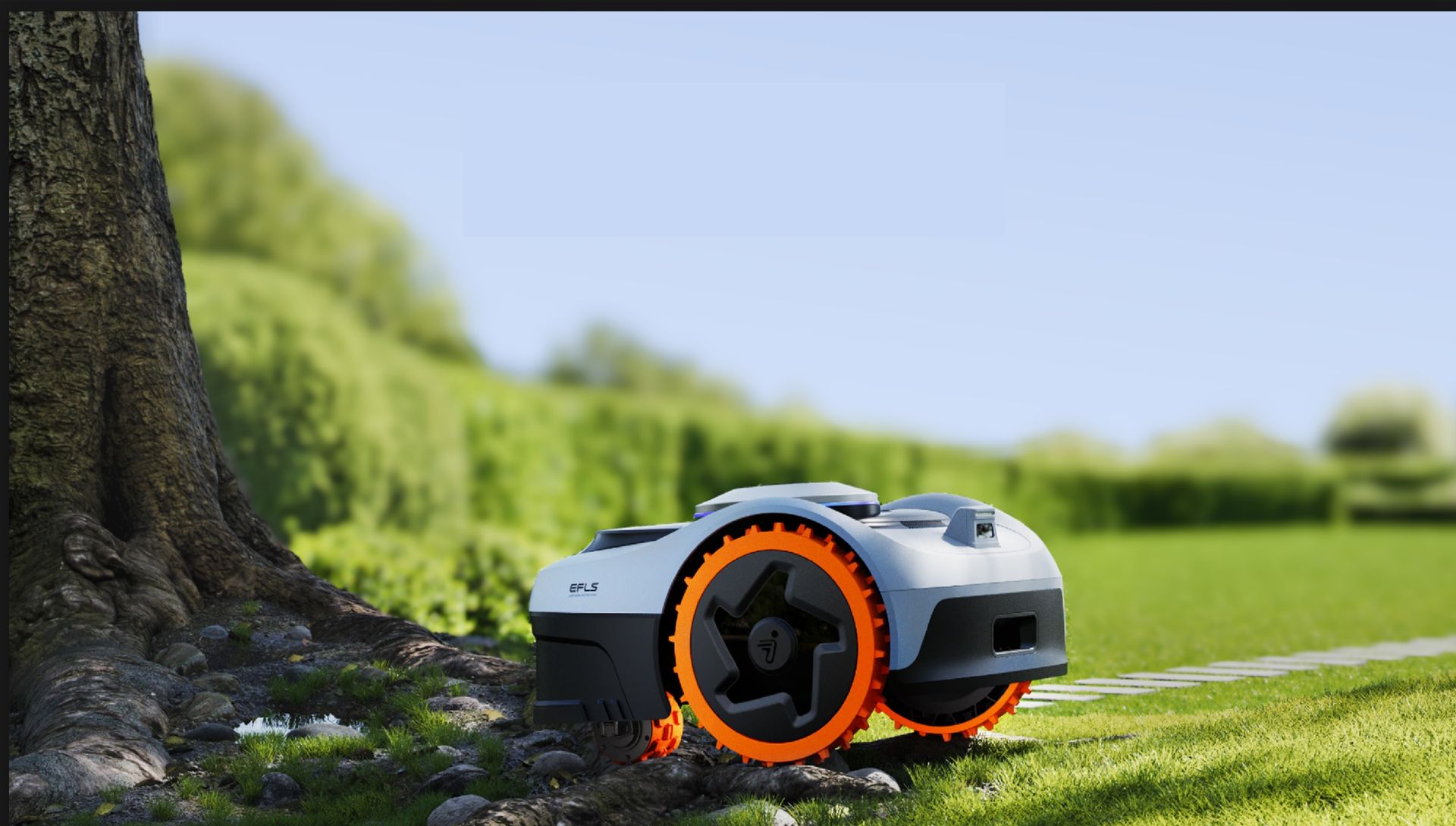
Robotic lawnmowers have had a presence at CES for a few years now, but they've blossomed in 2026. Longtime leaders in the industry, like Worx and Segway, are rolling out third and fourth generation models, while a number of other companies are looking to break into the market.
The latest crop of robot mowers have eliminated the headaches of early models. You no longer have to line the perimeter of your yard with boundary wire (which the mower would inevitably slice, causing it to malfunction). Nor do you have to define the parameters for where it cuts in any other method.
Using LiDAR, advanced cameras and other positioning technology, the new suite of robot lawnmowers can instantly determine where they should be mowing – and avoid obstacles and areas like flower beds.
Worx has unveiled the Cloud Vision Landroid, which uses satellite-guided mowing and vision-assisted auto-mapping to get a lay of your backyard's land. A new offset blade feature will also let you get as close as possible to the edge of the sidewalk, driveway and more, reducing the need to clean things up with a manual trimmer.
Segway, meanwhile, is launching several new Navimow models, including one with LiDAR and AI vision to avoid obstacles, even in darker shaded environments.
Other companies showing off robotic mowers include Goko's M6, which takes its design inspiration from a Tesla $TSLA Cybertruck; the Lymow One Plus; and the NexLawn NAVIA AWD Series.
The adoption rate for robot mowers in the U.S. has been fairly low to date, though there was a COVID spike in buying. In Europe, however, they have been popular for years. Prices for new models are roughly on par with that of a riding mower, but entry level units can run for less than $700 (though you won't find any drop and go models in that range).
The blades on the devices, which usually are small and spin in rapid succession, are tucked under the carriage, ensuring that if you happen to walk into the mower, the risk of injury is low. And if lifted, the mowers automatically shut down as an added safety feature. Grass is cut daily (or as frequently as you prefer), so there’s never any need to worry about bagging it or raking. And systems are quiet compared to push and rider mowers.
