
20 ways to use leftover rotisserie chicken
From tacos to grain bowls to hearty soups, here's how to turn a store-bought rotisserie chicken into a week's worth of meals
Credit: Nano Erdozain / Pexels
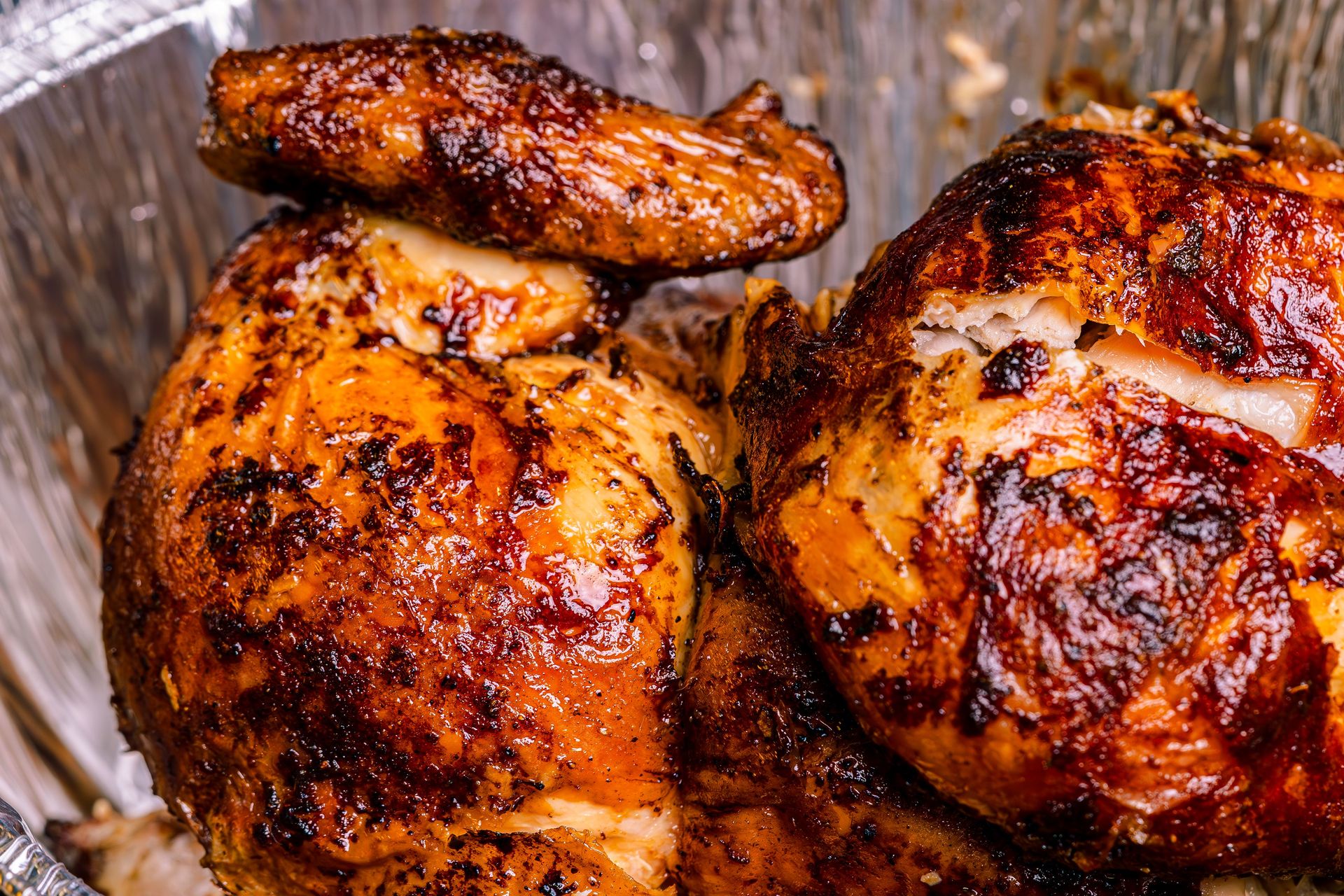
Rotisserie chicken is one of the most efficient purchases in a grocery store. For roughly the cost of a raw whole chicken — sometimes less — you get a fully cooked bird that's already been seasoned and roasted to a temperature safe for eating. Most households consume the breast meat at dinner, leave the rest in the fridge, and then struggle to find a use for it before it goes bad. That's a waste of both money and one of the most versatile proteins in a home kitchen.
The average rotisserie chicken yields considerably more than just two breast portions. The thighs are richer and more forgiving when reheated. The wings are small but flavorful. The carcass, often thrown out, contains enough collagen and residual meat to make a genuinely good stock with less than an hour of active cooking time. Approached methodically, a single bird can stretch across four to six meals, particularly when combined with pantry staples like canned beans, dried pasta, rice, or eggs.
Leftover chicken also comes pre-salted in most cases, which simplifies seasoning decisions considerably. Because the bird has already spent time in a hot oven, the fat has rendered and the skin — when crisped again in a pan — takes on a second life that raw chicken can't replicate. The meat pulls apart easily, which suits dishes built on texture and layering.
The culinary range here is broader than most people expect. The same shredded chicken can anchor a Vietnamese-style noodle soup, a Tex-Mex quesadilla, a Middle Eastern flatbread, or a classic American pot pie. It can be folded into an omelet or tossed with a high-acid dressing for a grain bowl that holds up in a lunch container. It scales down for a single-person meal or up for a dinner party.
What follows are 20 specific ways to use every part of a leftover rotisserie chicken — from the obvious to the less intuitive — with enough detail to actually cook each one without needing another recipe.
1 / 20
Chicken tacos with pickled onions
Credit: Betsai Ekmeiro / Pexels
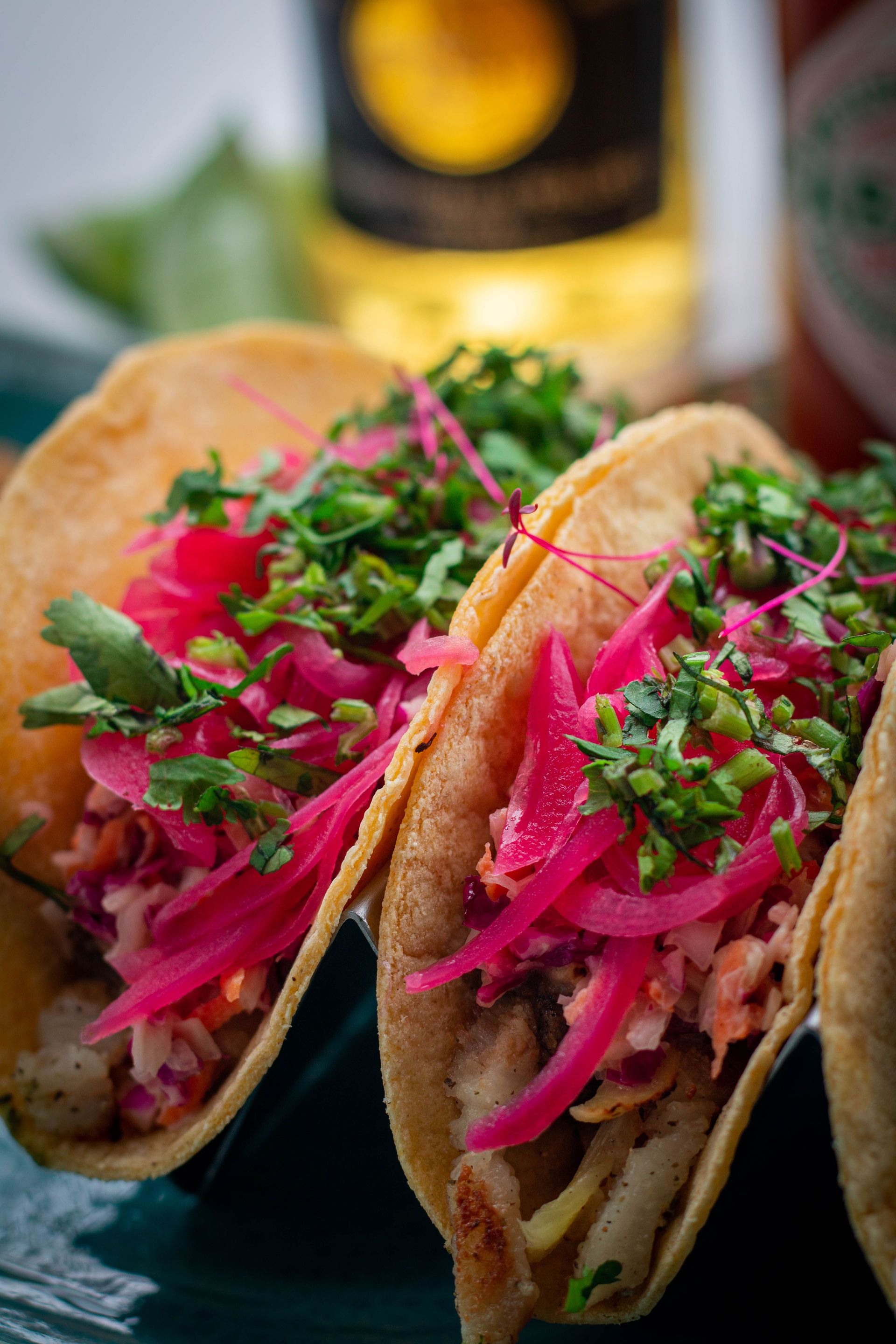
Tacos are the fastest path from cold rotisserie chicken to a satisfying dinner. The key is treating the chicken as a filling with its own distinct flavor profile, not just a protein placeholder. Start by pulling the meat from the thighs and breasts into medium shreds — not too fine, or the texture gets lost in the tortilla. Leave a few slightly larger chunks for contrast.
Warm the chicken in a skillet with a small amount of neutral oil. Add a pinch of cumin, smoked paprika, and a few drops of hot sauce or chipotle in adobo if you have it. The goal is a light coating that adds warmth without masking the chicken's natural flavor from the rotisserie seasoning. Cook until the edges of the chicken just begin to crisp, about four to five minutes over medium-high heat.
While the chicken warms, make a quick pickled onion. Thinly slice half a red onion, then submerge in a mix of white vinegar, a pinch of salt, and a small amount of sugar. Let it sit for at least ten minutes — the onion will turn pink and soften slightly while retaining a sharp bite that cuts through the fat of the chicken.
Serve in corn tortillas — two per taco to prevent splitting — with the pickled onion, a spoonful of sour cream or crema, and fresh cilantro if available. Lime wedges are not optional; the acid brightens everything. If you have avocado, slice it rather than mashing it into guacamole, so it holds its texture through the taco.
This meal comes together in under 20 minutes once the chicken is cold and the onion is pickling. It works equally well with dark meat or breast meat, though thigh meat holds up better under heat and has more fat, which keeps the filling from drying out. The dish is also flexible — substitute the corn tortillas with flour tortillas, a warm flatbread, or even large lettuce leaves for a lighter version. Scale up easily by adding a second round of chicken from the carcass, or bulk it out with warmed black beans folded into the skillet.
The pickled onion, once made, keeps in the refrigerator for up to two weeks and is useful across multiple recipes. Make a large batch at the start of the week and use it across grain bowls, sandwiches, and eggs.
2 / 20
Chicken noodle soup
Credit: Jana Ohajdova / Pexels
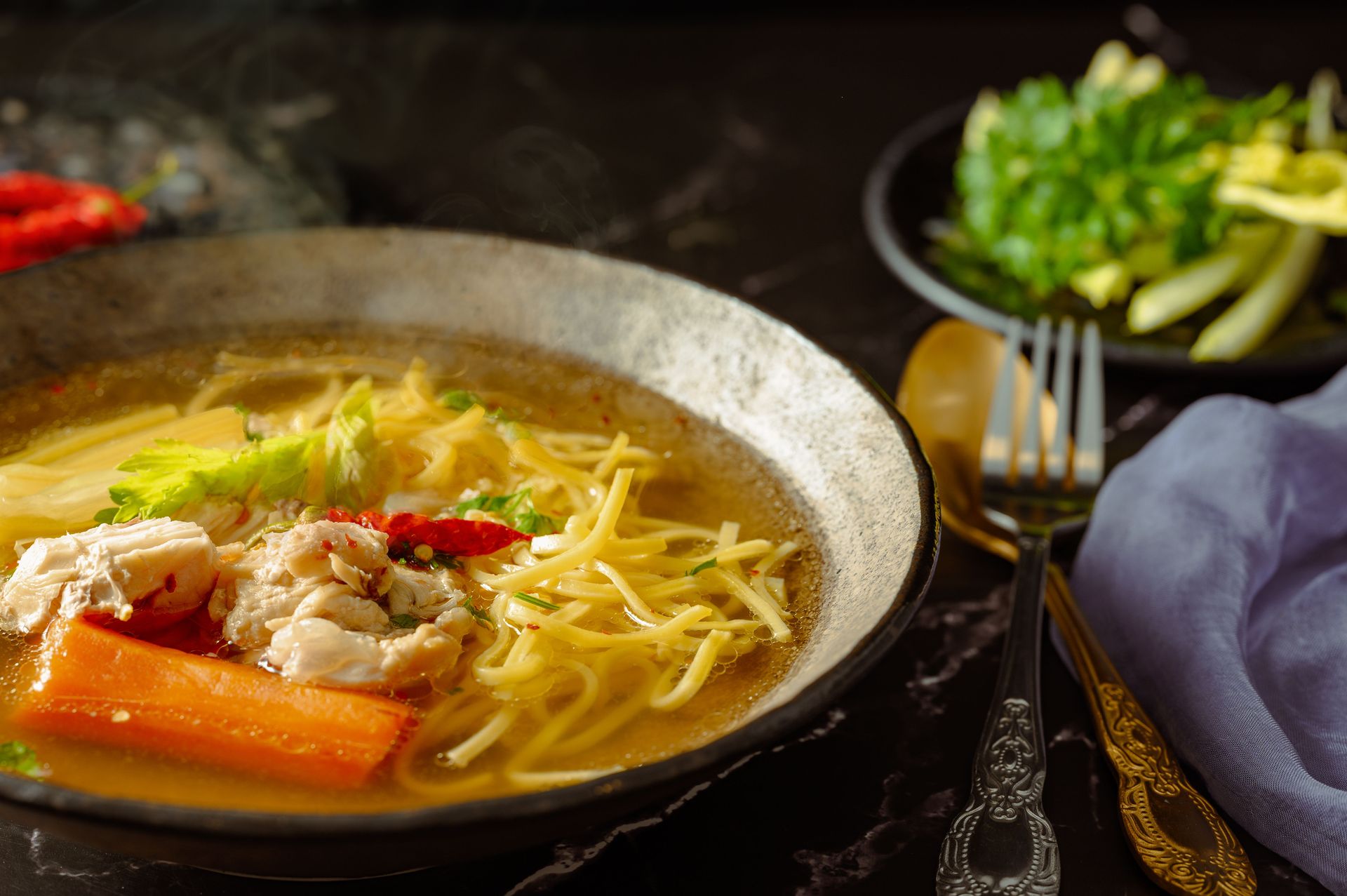
Chicken noodle soup made from a rotisserie carcass is substantially richer than a version built on boxed broth. The process is not difficult, but it does require planning, since the stock needs time to simmer before the soup comes together.
Begin with the carcass. After stripping the remaining meat from the bones, place the carcass — including the backbone, rib cage, and any skin — into a large pot. Cover with cold water, about three quarts. Add one quartered onion, two celery stalks broken in half, two carrots, a bay leaf, and a small handful of peppercorns. Bring to a boil, then reduce to a low simmer and cook uncovered for at least one hour, up to two. Skim any foam that rises in the first ten minutes.
Strain the stock through a fine mesh sieve and discard the solids. Return the liquid to the pot. Taste it — it should be savory and clean. If it tastes thin, simmer it uncovered for another 15 minutes to concentrate the flavor.
For the soup, dice two fresh carrots, two stalks of celery, and one medium onion. Sauté them in a separate pan with a small amount of butter until softened but not browned, about six minutes. Add them to the strained stock. Bring the soup to a gentle simmer, then add egg noodles — wide, flat ones work best — and cook according to package instructions, usually around eight minutes. Add the reserved shredded chicken meat in the final two minutes, just long enough to warm through without overcooking.
Season the finished soup carefully. Rotisserie chicken is often preseasoned, so taste before adding salt. A squeeze of lemon juice at the end adds brightness. Fresh parsley, added off heat, gives the soup a clean finish.
This soup improves after sitting for a few hours. The noodles will absorb broth and swell, which thickens the soup slightly. Store any leftovers with the noodles and broth together — they'll continue to hydrate in the refrigerator, which actually deepens the flavor. Reheat gently on the stove rather than in a microwave.
3 / 20
Chicken fried rice
Credit: Anna Tarazevich / Pexels
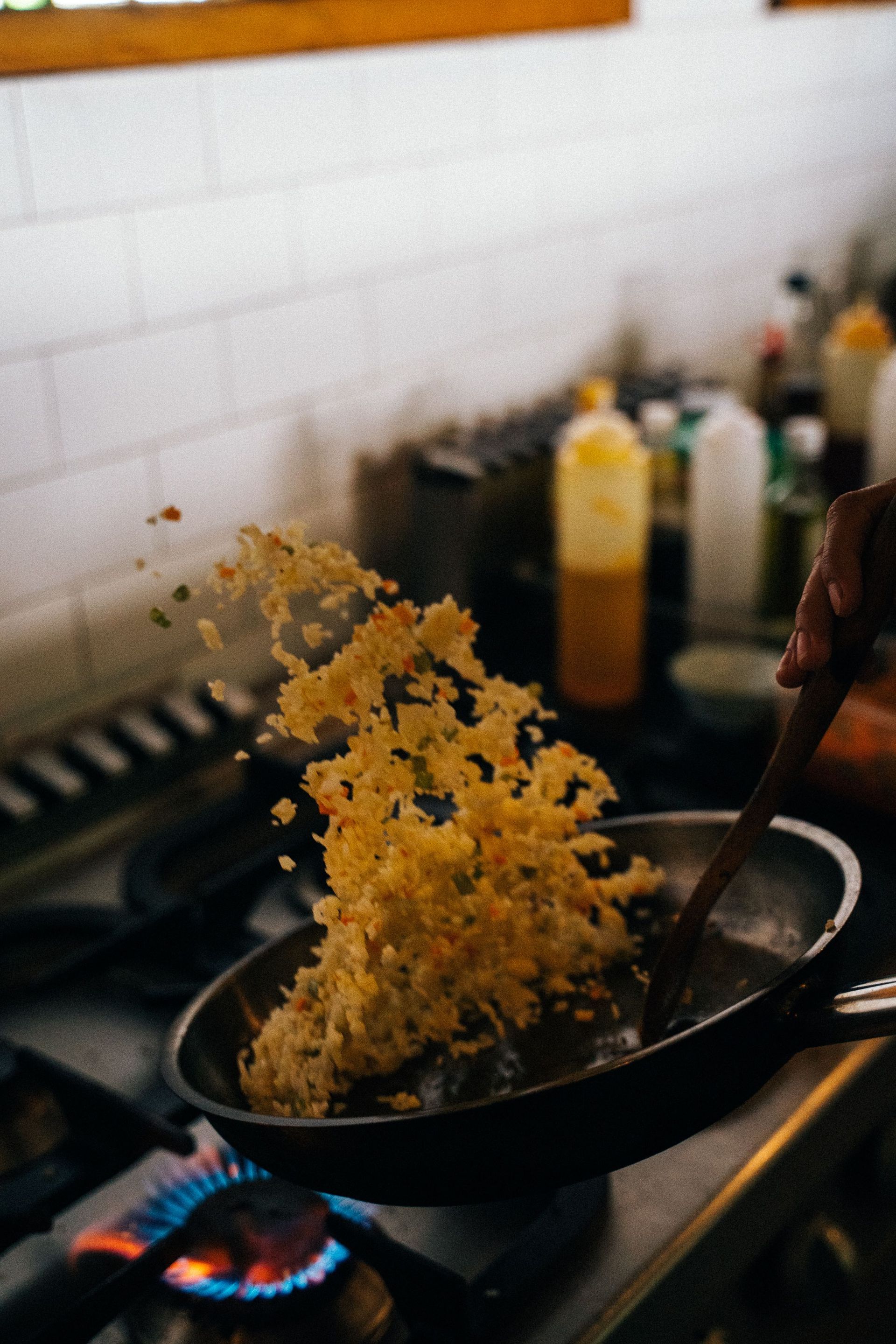
Fried rice is one of the best uses for cold leftover protein, and rotisserie chicken handles the high-heat cooking required better than freshly cooked chicken would. The critical rule: use day-old rice. Freshly cooked rice contains too much moisture and turns fried rice into mush. Leftover rice that has dried out slightly in the fridge fries properly — each grain stays separate and picks up the char from the pan.
Use a wok or the largest, heaviest skillet you have. Heat it over high heat until it's genuinely hot — hotter than you'd use for most cooking. Add a neutral oil with a high smoke point: vegetable oil, canola, or peanut oil. The oil should shimmer immediately.
Add the cold rice in a single layer and let it sit untouched for about 90 seconds. This allows the bottom layer to develop a light crust. Stir, then let it sit again. Meanwhile, push the rice to one side of the wok, crack two eggs into the empty space, and scramble them quickly before folding them into the rice.
Add shredded rotisserie chicken, letting it sit in the hot pan for a moment to get some color on the edges. Add a tablespoon of soy sauce and a few drops of sesame oil — the soy sauce should sizzle immediately on contact with the hot pan. Add any vegetables you have on hand: frozen peas, diced scallions, shredded cabbage, or corn. Toss everything together over high heat for two to three minutes.
Finish with sliced scallions and a drizzle of chili oil if you want heat. The fried rice should look glossy but not wet, with visible char on some grains of rice.
This dish is built for improvisation. The vegetable additions can change based on what's in the crisper. A spoonful of oyster sauce instead of soy sauce makes the flavor deeper and slightly sweet. Fish sauce, used sparingly, adds a fermented depth that's harder to identify but noticeable.
4 / 20
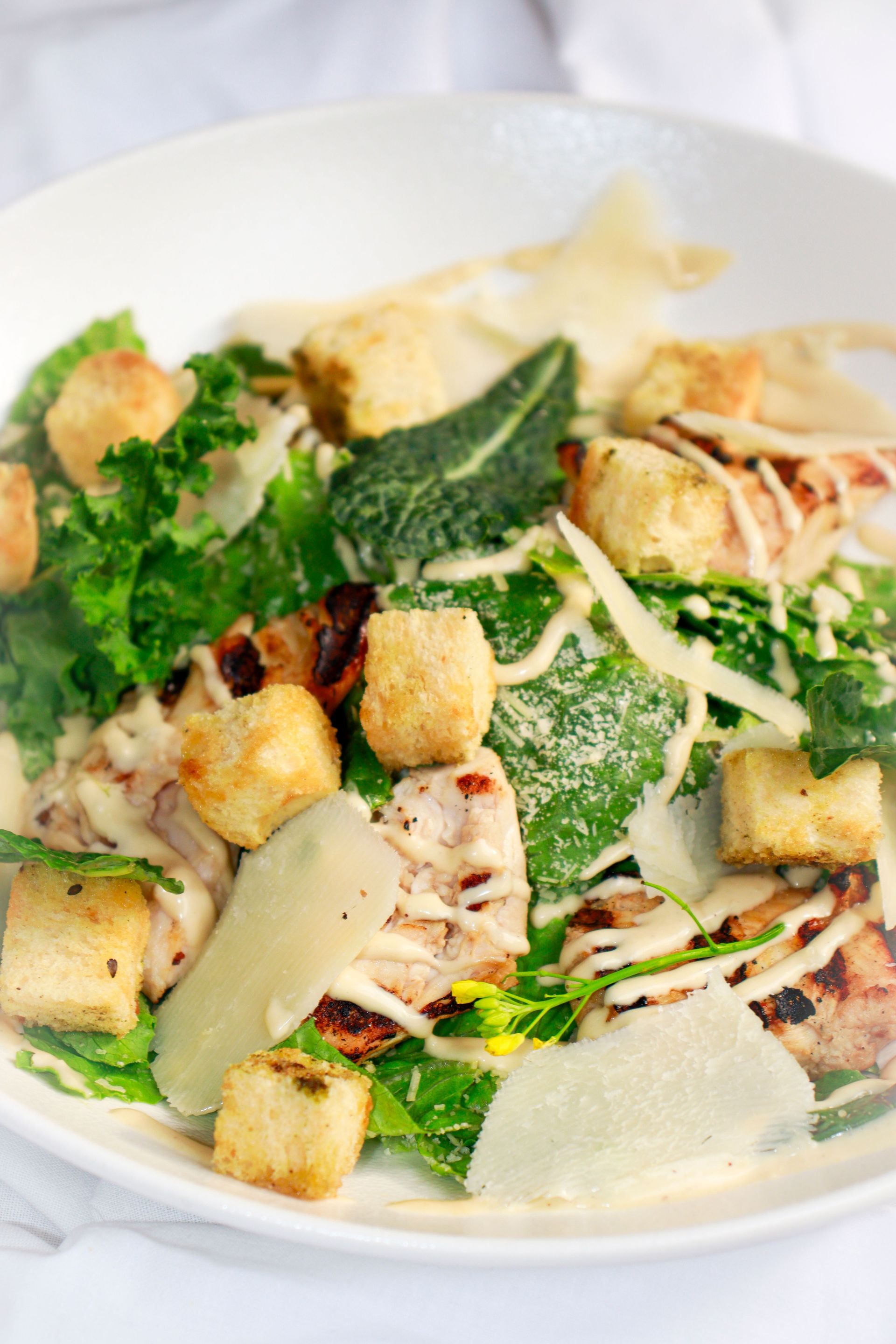
Chicken caesar salad
Credit: Adrian Camilo / Pexels
A caesar salad made with shredded rotisserie chicken is more practical than one made with a freshly grilled breast, and often more flavorful — the rotisserie seasoning adds complexity to the dressing interaction. Use romaine lettuce, which has the structure to hold up to the dressing without wilting immediately.
Make the dressing from scratch. A good caesar dressing requires anchovies, garlic, lemon juice, dijon mustard, egg yolk, worcestershire sauce, olive oil, and parmesan. Mince two anchovy fillets (canned in oil) with one small garlic clove until they form a paste. Whisk in one egg yolk, a teaspoon of dijon, and a tablespoon of lemon juice. Drizzle in olive oil slowly while whisking — about a quarter cup — until the dressing emulsifies. Fold in two tablespoons of finely grated parmesan. Season with pepper; the anchovies and parmesan provide enough salt for most palates.
Chop or tear the romaine into pieces large enough to spear with a fork but small enough to eat without cutting. Toss the leaves with enough dressing to coat them evenly — not so much that they pool at the bottom. Add the shredded chicken, either cold from the refrigerator or briefly warmed in a dry pan. Scatter croutons on top.
For croutons, cube day-old bread, toss with olive oil and a pinch of garlic powder, and bake at 375°F for about ten minutes until golden. Homemade croutons require minimal effort and make a noticeable difference.
Finish with a generous grating of parmesan directly over the assembled salad and a few grinds of black pepper. The salad should be assembled just before eating — it doesn't hold well once dressed.
One important note: raw egg yolk in the dressing is a standard part of traditional caesar, but some people prefer to skip it. A tablespoon of mayonnaise can replace the egg yolk and still produce a creamy, cohesive dressing. The result is slightly different in flavor but safe for people with concerns about raw eggs.
5 / 20
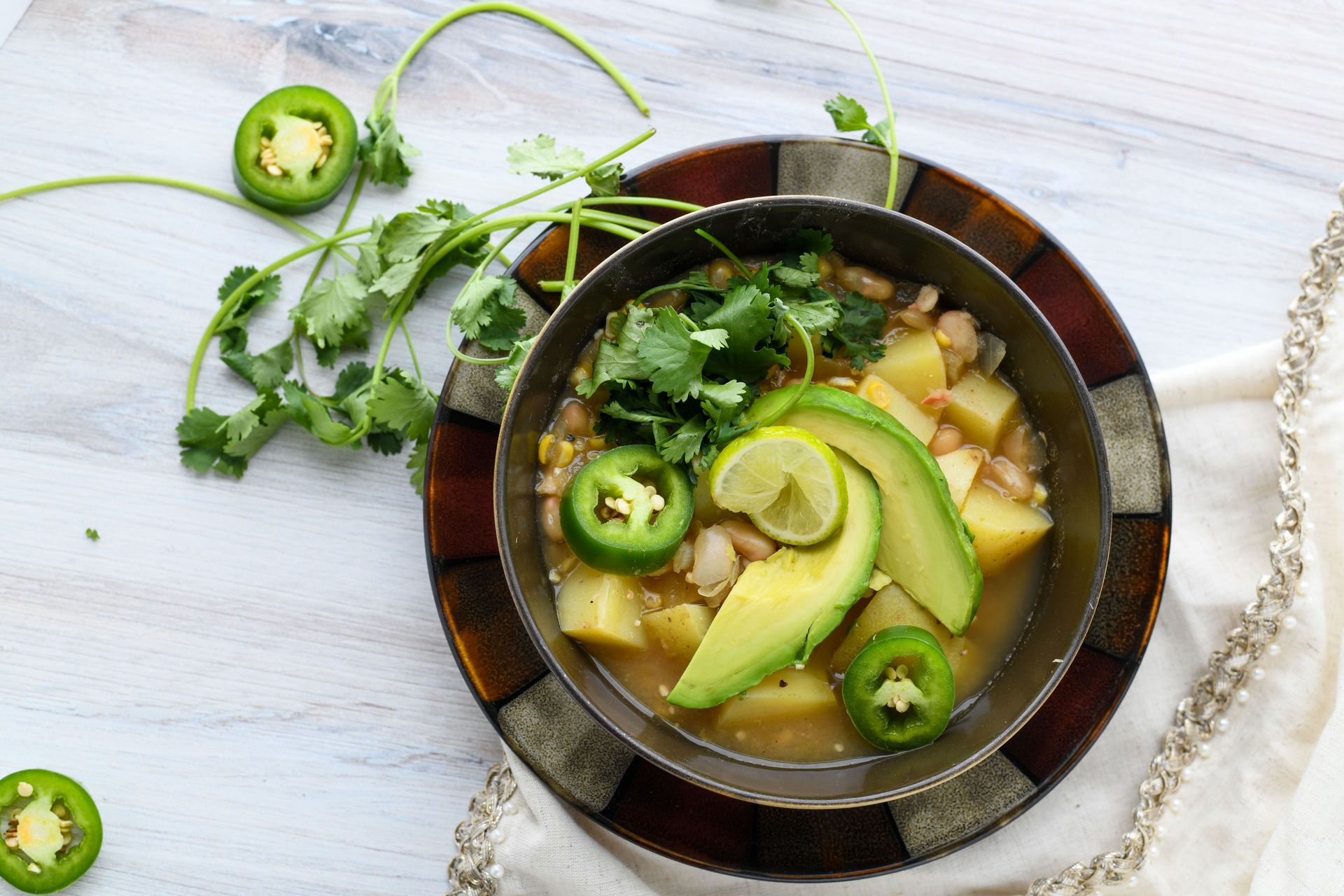
White chicken chili
Credit: Heather Brock / Pexels
White chicken chili uses cannellini or great northern beans, green chiles, and chicken stock instead of the tomato base and red beans found in traditional beef chili. The flavor profile is lighter and less heavy, which makes it more suited to year-round cooking rather than just cold weather.
Start by sautéing one diced white onion and three minced garlic cloves in a large pot with a tablespoon of olive oil. Cook over medium heat until the onion is soft and translucent, about five minutes. Add a four-ounce can of diced green chiles — mild or hot depending on preference — and cook for another two minutes.
Add one teaspoon each of ground cumin and dried oregano, then pour in three cups of chicken stock. Add two cans of drained and rinsed white beans. Bring the mixture to a simmer and cook for 15 minutes to allow the flavors to develop.
Use the back of a spoon or a potato masher to crush roughly a quarter of the beans against the side of the pot. This thickens the broth without adding starch or cream, and gives the chili a slightly creamy consistency. Add the shredded rotisserie chicken and cook for another five minutes over low heat.
Finish with a squeeze of lime juice and a handful of fresh cilantro. Adjust salt carefully — the chicken stock may already be seasoned, and the rotisserie chicken carries salt from the original roasting.
Serve with warm flour tortillas, cornbread, or plain white rice. Top with sliced avocado, shredded Monterey Jack cheese, sour cream, or pickled jalapeños. Each topping changes the experience of the dish in a meaningful way — the cheese adds richness, the avocado cools the heat, and the pickled jalapeños amplify it.
This chili holds well in the refrigerator for up to four days and freezes effectively. The beans continue to absorb liquid as it sits, which thickens the broth further.
6 / 20
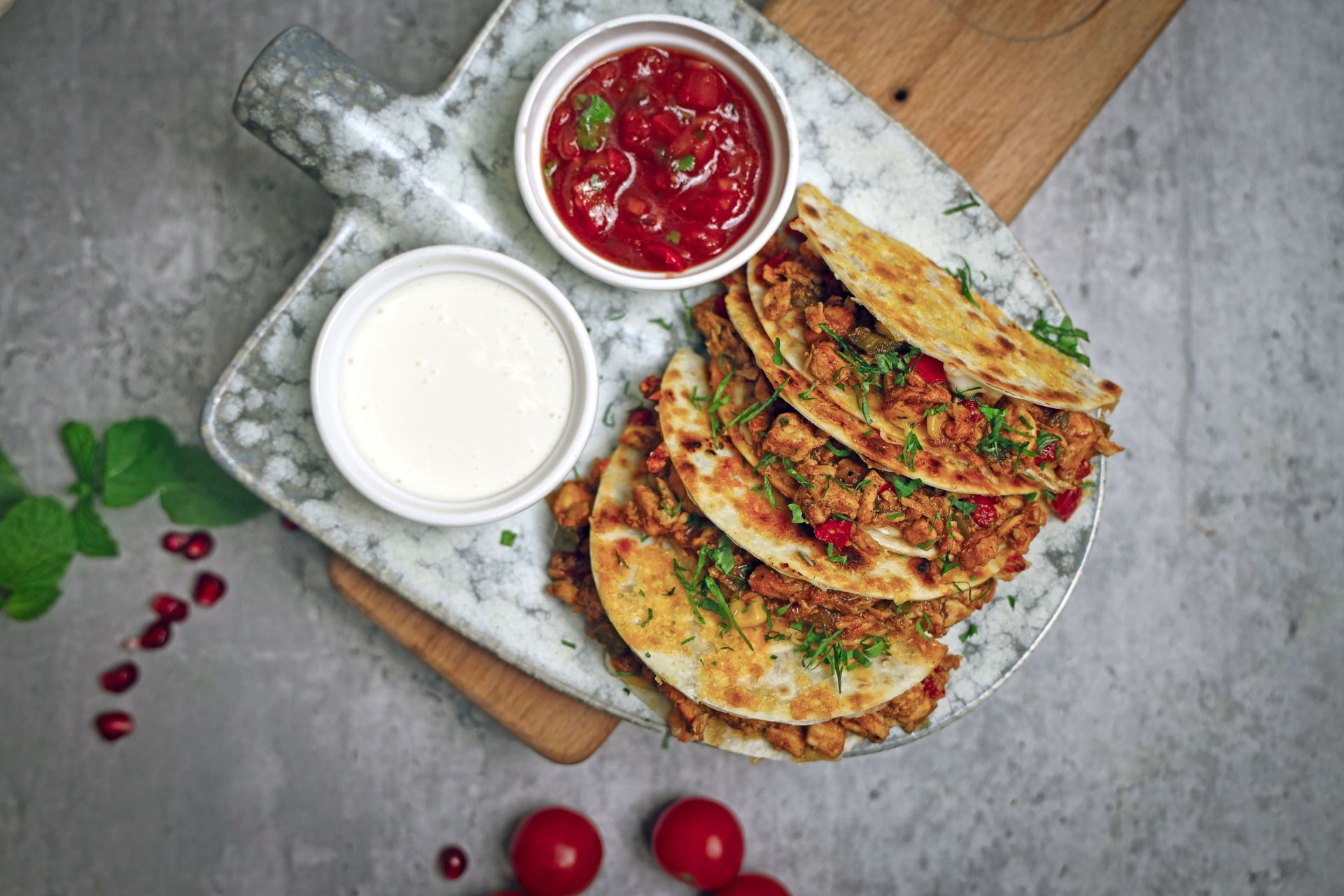
Chicken quesadillas
Credit: Shameel mukkath / Pexels
A quesadilla is not a complicated dish, but there's a reliable method for making one that's properly crisp on the outside and evenly melted inside rather than pale and rubbery. The technique matters.
Use a large flour tortilla — 10-inch works well. Heat a dry skillet or flat griddle over medium heat. Do not add oil to the pan. Place the tortilla flat in the pan and add shredded cheese to one half. Use a cheese that melts readily: Monterey Jack, Oaxacan cheese, or a mild cheddar. Add shredded rotisserie chicken on top of the cheese, then fold the empty half of the tortilla over the filled half.
Press down gently with a spatula. Cook for two to three minutes until the bottom is golden and the cheese begins to melt. Flip carefully and cook the second side for another two minutes. The outside should be visibly browned — not just warm — and the interior should be fully melted.
Remove from the pan and let it rest for 30 seconds before cutting. This matters: cutting immediately releases steam and makes the filling slide out. A well-rested quesadilla holds together when sliced.
Add-ins should be thoughtful. A small amount of thinly sliced scallion or diced green pepper adds flavor without releasing too much moisture. Roasted corn is another addition that works well. Avoid fresh tomatoes inside the quesadilla — they release water during cooking and make the inside soggy.
Serve with sour cream, salsa, and guacamole. For a dipping sauce that's a step above store-bought salsa, blend one can of fire-roasted tomatoes with a chipotle pepper in adobo sauce, a pinch of garlic powder, and lime juice. It takes three minutes and uses pantry staples.
Quesadillas are also an effective way to use the small amounts of chicken left after the main portions are gone — the dark meat from the carcass, for instance, or the bits that cling to the backbone.
7 / 20
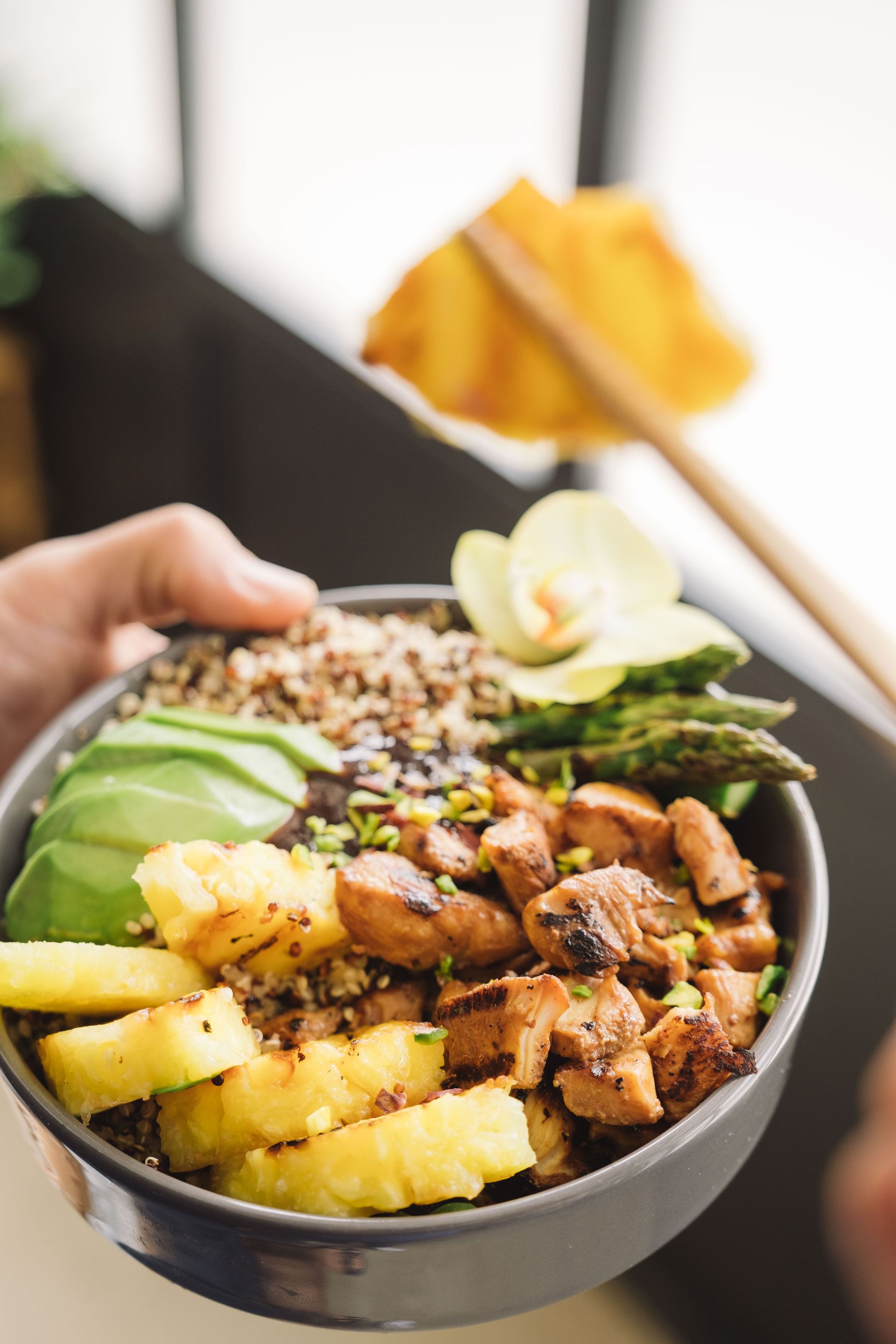
Chicken grain bowl
Credit: furkanfdemir / Pexels
Grain bowls rely on layering — a starchy base, a protein, vegetables, a sauce, and something with textural contrast. Rotisserie chicken fits this format without modification and benefits from a sharp, acidic sauce that cuts through the richness of dark meat.
Cook one cup of farro, quinoa, or brown rice according to package instructions. Season the grain lightly with salt and a small drizzle of olive oil after cooking. The grain should be warm but not hot when you build the bowl, so the other components don't wilt.
Roast vegetables alongside the grain prep. Slice a zucchini and half a red onion, toss with olive oil, salt, and pepper, and roast at 425°F for about 20 minutes until caramelized. Alternatively, shredded raw cabbage dressed with rice vinegar and a pinch of sesame oil gives the bowl a cooler element and requires no cooking.
For a sauce, tahini-lemon works well with chicken and grains. Whisk together three tablespoons of tahini, two tablespoons of lemon juice, one minced garlic clove, and enough water to reach a pourable consistency — roughly three tablespoons. Season with salt. The sauce will be thicker than you expect before adding water; keep adding water a tablespoon at a time.
Assemble the bowl: grain at the base, vegetables on one side, shredded chicken on the other. Drizzle the tahini sauce over everything. Add a soft-boiled egg if you have one. Scatter a tablespoon of toasted sesame seeds or pumpkin seeds over the top.
This bowl also works with a miso-ginger dressing, a spicy peanut sauce, or a simple vinaigrette. The architecture remains the same; the sauce determines the cuisine. Pack the components separately if carrying to lunch — dress immediately before eating to prevent the grain from absorbing all the sauce.
Farro has a pleasant chewiness and a nutty flavor that holds up better than quinoa under heavier sauces, while quinoa is faster and lighter. Brown rice is the most neutral option and disappears into the bowl rather than competing with the toppings. All three reheat well, though farro and brown rice are better reheated than quinoa, which can become gummy. Whatever grain you choose, make a double batch — it keeps in the refrigerator for four days and anchors multiple lunches without additional cooking.
8 / 20
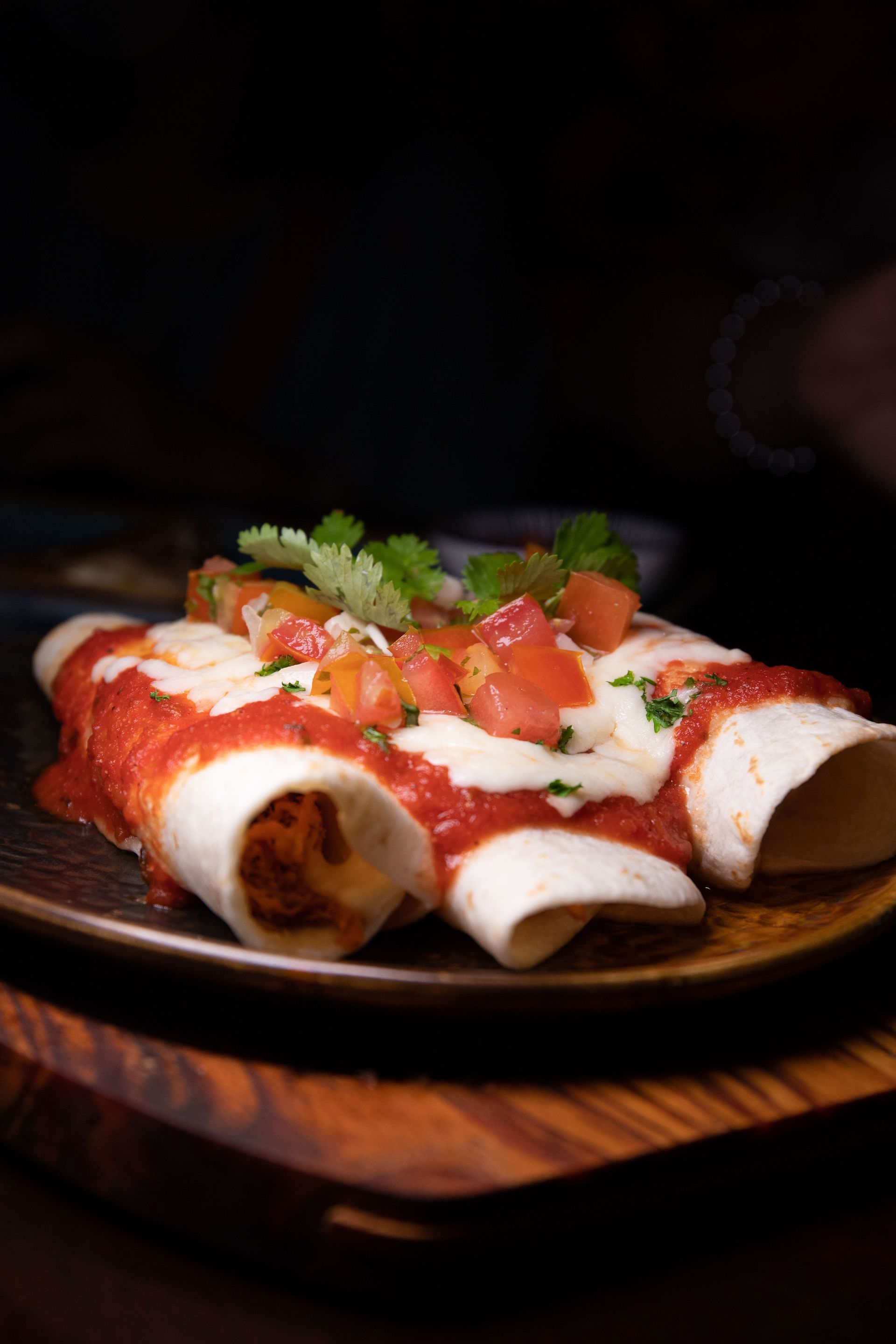
Chicken enchiladas
Credit: AMANDA LIM / Pexels
Enchiladas require more effort than some dishes on this list, but a pan of enchiladas from rotisserie chicken is faster to produce than most people expect, and it yields a meal substantial enough for four people from a single bird.
For the filling, shred about two cups of rotisserie chicken and mix it with one cup of shredded cheese — Monterey Jack or a mild Mexican blend — a small amount of diced onion, and a tablespoon of sour cream. This mixture should be moist but not wet. Season with cumin and a pinch of garlic powder.
Make or use a red enchilada sauce. A workable shortcut: blend one 15-ounce can of crushed tomatoes with one to two tablespoons of chili powder, one teaspoon of cumin, one teaspoon of garlic powder, a pinch of oregano, and half a cup of water. Simmer for ten minutes. Taste and adjust. This produces about two cups of sauce, which is enough for eight to ten enchiladas.
Warm corn tortillas briefly in a dry skillet or microwave — about 20 seconds — to make them pliable. Dip each tortilla in the enchilada sauce, lay it flat, add a few tablespoons of filling, roll it tightly, and place it seam-side down in a baking dish. Repeat until the dish is filled.
Pour the remaining sauce over the enchiladas. Top with shredded cheese. Bake at 375°F for 20 to 25 minutes until the cheese is melted and the sauce bubbles at the edges.
Finish with sliced scallions, a dollop of sour cream, and fresh cilantro. Serve immediately. Enchiladas do not hold up well as leftovers because the tortillas continue to absorb sauce — but they reheat reasonably well the next day if covered tightly.
A few variations are worth knowing. Green enchiladas — made with a tomatillo sauce instead of red — pair well with chicken because the tartness of the tomatillo cuts through the richness of the cheese. To make a quick green sauce, blend one can of tomatillos (drained) with a roasted poblano pepper, a clove of garlic, a handful of cilantro, and a splash of chicken stock. Cook it the same way as the red sauce. Mole, the complex chocolate-and-chile sauce, is a longer project but elevates the dish considerably for a special occasion. Store-bought mole paste, thinned with stock, is an acceptable shortcut that takes about five minutes.
9 / 20
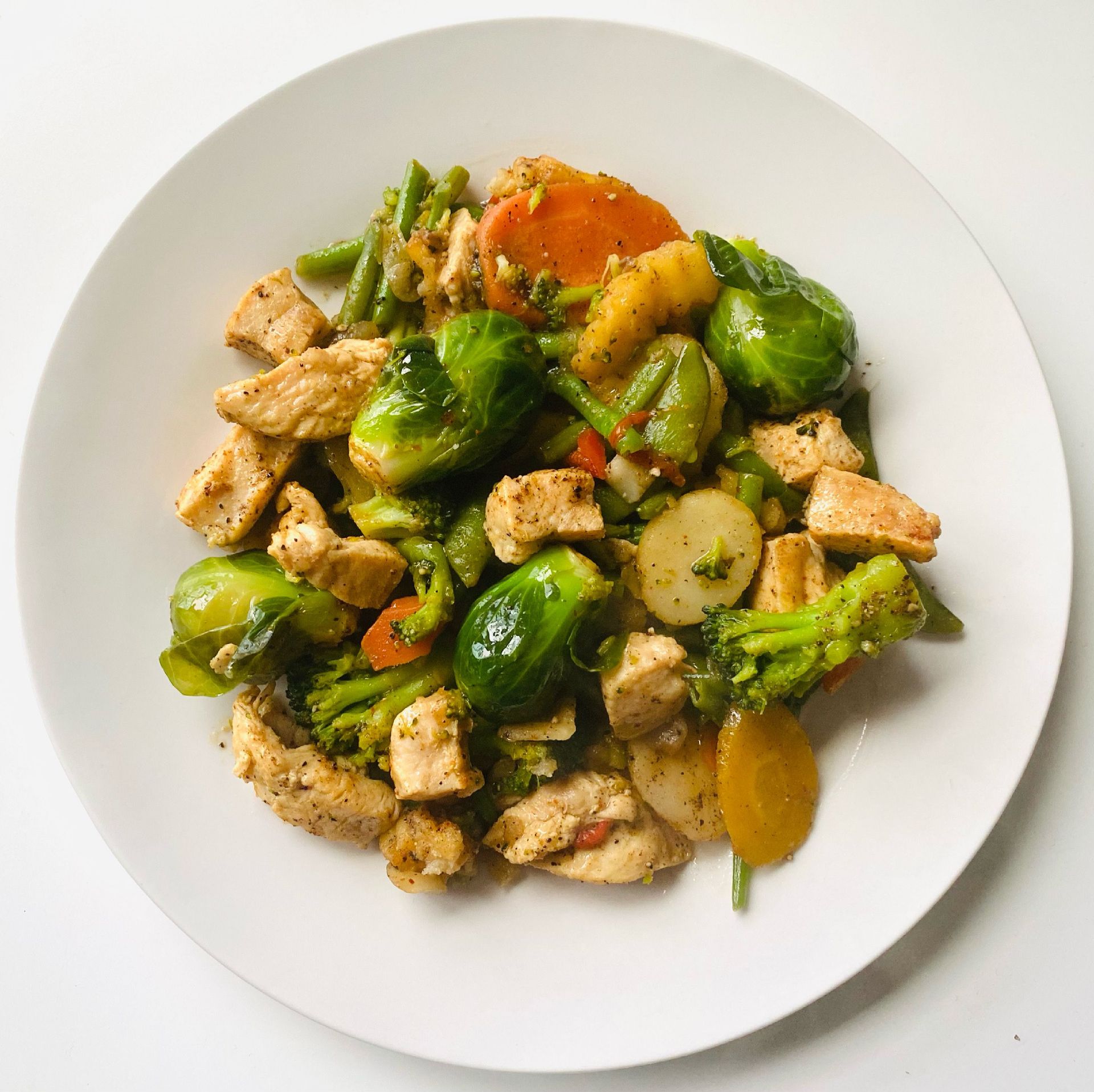
Chicken and vegetable stir-fry
Credit: I Own My Food Art / Pexels
A stir-fry is one of the few techniques that actually benefits from pre-cooked chicken rather than raw. Raw chicken needs time to cook through in the wok, which means it steams rather than sears if the pan is too crowded. Rotisserie chicken, already fully cooked, only needs to spend a short time in the pan — enough to heat through and pick up a bit of char at the edges.
Prepare all vegetables before heating the wok. Once you start stir-frying, there's no time to chop. Use a combination of textures: something crunchy, like sliced bell pepper, snap peas, or broccoli florets; something soft, like mushrooms or zucchini; and something aromatic, like garlic and ginger. Cut everything into roughly uniform sizes so they cook evenly.
Heat a wok or large skillet over the highest heat your stove produces. Add a tablespoon of high-smoke-point oil. Add the aromatics first — garlic and ginger — and cook for 30 seconds. Add the harder vegetables first (broccoli, carrots, bell pepper), then the softer ones after a minute or two. Keep everything moving.
Make the sauce separately before starting: combine two tablespoons of soy sauce, one tablespoon of oyster sauce, one teaspoon of sesame oil, a pinch of sugar, and a tablespoon of cornstarch dissolved in two tablespoons of water. This combination thickens quickly once added to the hot pan.
Add the shredded rotisserie chicken, then pour in the sauce. Toss everything together and cook for one to two minutes until the sauce coats and thickens. Remove from heat immediately.
Serve over white rice or noodles. Finish with sliced scallions and sesame seeds. The whole dish, once the prep is done, takes less than ten minutes to cook — which makes it one of the fastest hot meals on this list.
A few additions change the character of the stir-fry entirely. Cashews, added at the end and toasted briefly in the pan, add richness and crunch. A tablespoon of black bean paste, added with the aromatics, gives the sauce a fermented depth without adding heat. Swapping the oyster sauce for hoisin shifts the flavor toward something sweeter and slightly more complex. For a Thai-inflected version, replace the soy and oyster sauce with fish sauce and add a spoonful of peanut butter to the sauce base — the result is fuller and more fragrant. In all versions, the sauce quantity is the variable most worth adjusting to personal taste; start with the amounts listed and add more soy or oyster sauce directly from the bottle at the table.
10 / 20
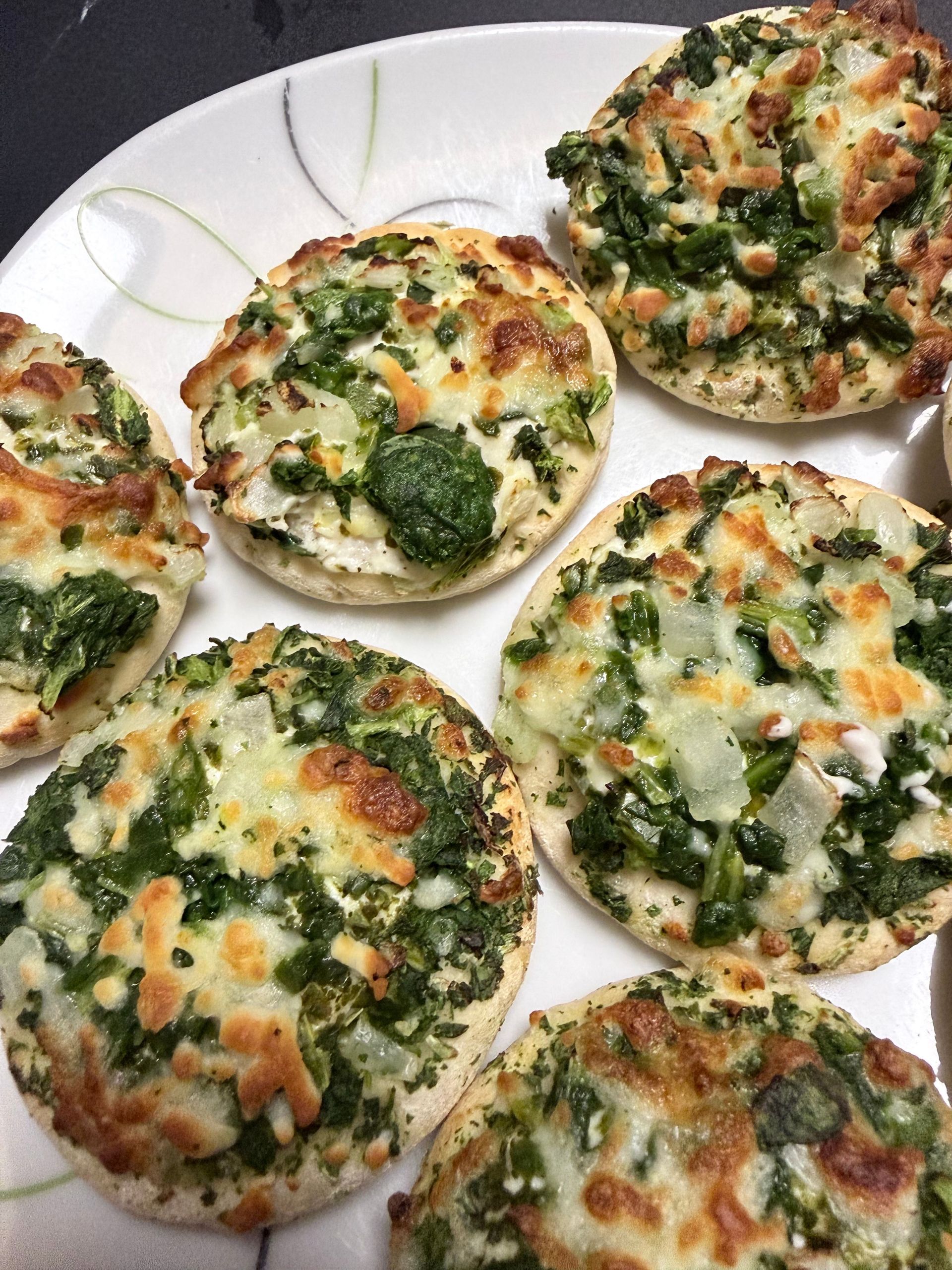
Chicken flatbread pizza
Credit: Nada Samir / Pexels
Flatbread pizza is a weeknight shortcut that produces a genuinely satisfying result when the toppings are handled carefully. It works with store-bought naan, lavash, pita, or homemade flatbread. The base is thinner and crispier than conventional pizza dough, which means toppings should be restrained — not piled on.
Preheat your oven to 425°F. Place the flatbreads on a baking sheet and brush them lightly with olive oil. This prevents the base from becoming soggy under the toppings and helps the edges crisp.
For the sauce, skip tomato if you're trying something different. A garlic white sauce works well: melt one tablespoon of butter in a small saucepan, add one minced garlic clove, cook for 30 seconds, then whisk in a tablespoon of flour. Add half a cup of whole milk, whisking constantly, and cook until thickened. Season with salt, pepper, and a pinch of nutmeg. Spread a thin layer across the flatbread.
Add shredded rotisserie chicken in small pieces distributed evenly across the surface. Layer on a few thin slices of red onion, a handful of shredded mozzarella, and a scattering of baby spinach. The spinach wilts quickly in the oven and contributes flavor without adding bulk.
Bake for 10 to 12 minutes until the cheese is melted and the edges of the flatbread are golden. Let the flatbread rest for two minutes before cutting — a sharp knife or pizza wheel works better than scissors for cutting clean slices.
Finish with red pepper flakes and a drizzle of good olive oil. A handful of fresh arugula placed on the finished flatbread after it comes out of the oven adds a bitter, peppery contrast to the richness of the cheese.
This is a flexible recipe. A barbecue chicken version — with a thin spread of barbecue sauce instead of white sauce, plus caramelized onions — is another direction that works well.
11 / 20
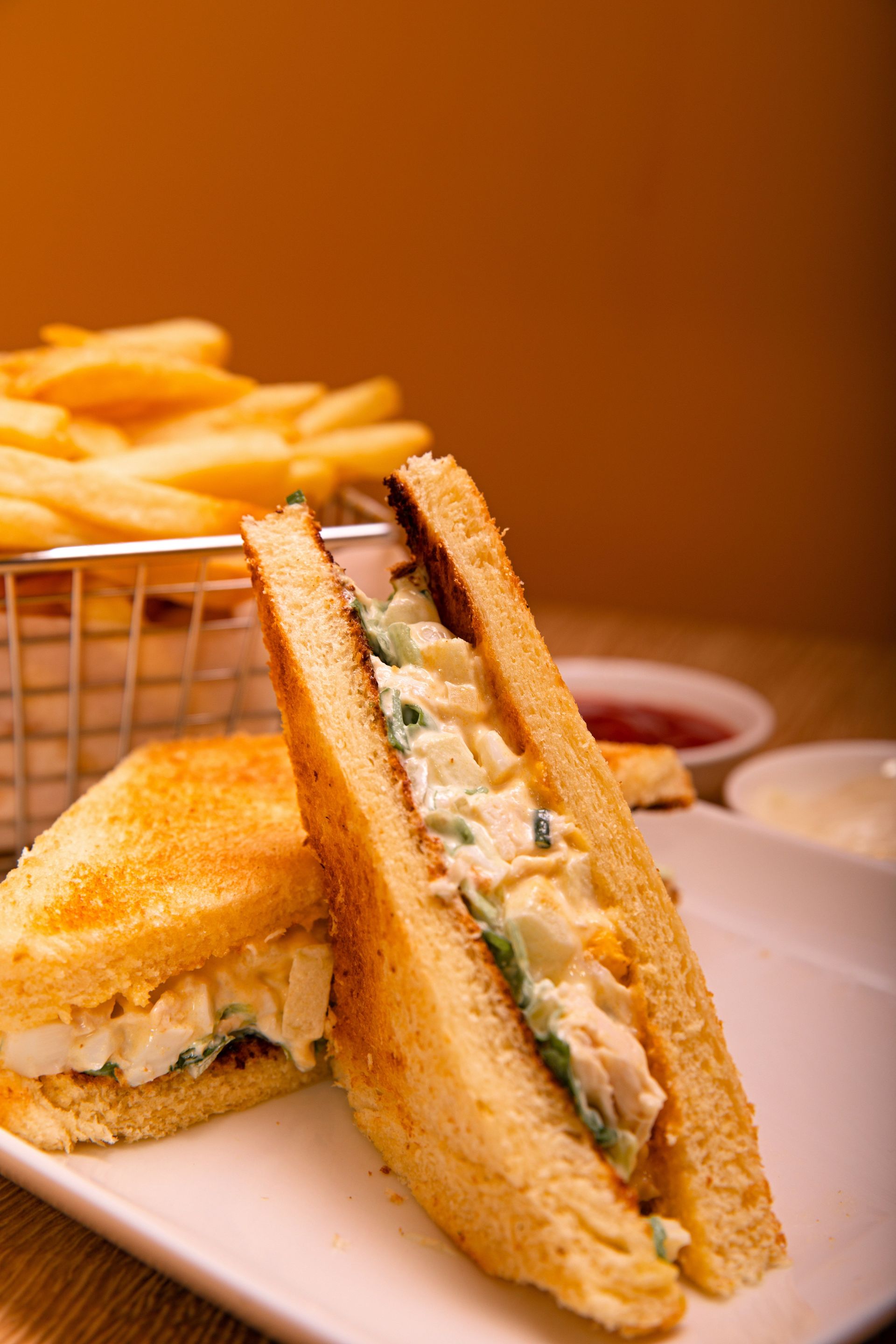
Chicken salad sandwich
Credit: Change C.C / Pexels
Chicken salad sandwiches span a wide range of quality, from the gluey deli-counter versions to well-balanced versions with real texture and flavor. The difference lies in the ratio of chicken to mayonnaise and the choice of add-ins.
Start with roughly two cups of finely chopped or shredded rotisserie chicken. Use a mix of breast and thigh meat — the thigh adds fat and flavor, the breast adds bulk. Don't shred the chicken too fine; it should have enough texture to hold together in a spoon without being stringy.
For the dressing, use a smaller amount of mayonnaise than instinct suggests — roughly three tablespoons for two cups of chicken. The salad should be moist but not creamy. Add one teaspoon of dijon mustard, a squeeze of lemon juice, and a pinch of celery salt. Mix well, then taste before adjusting.
Add-ins determine the character of the salad. Finely diced celery is almost mandatory — it provides crunch and a clean, slightly bitter note. Beyond that, the options branch: diced red onion and a tablespoon of capers make a sharper, more piquant version; halved grapes and a handful of toasted walnuts make a sweeter, more textured version popular in American diner-style cooking; finely chopped fresh tarragon gives a French inflection.
Season with salt and pepper at the end, after everything is combined, since the mayonnaise and the rotisserie chicken both contribute salt.
Serve on good bread — sturdy enough to hold the salad without getting immediately soggy. A slightly toasted sourdough, a buttered brioche bun, or croissant all work well. Butter the bread rather than adding more mayonnaise to the surface. A few leaves of butter lettuce between the bread and the salad add texture and help prevent sogginess.
The finished salad keeps refrigerated for up to two days, though the celery softens slightly overnight.
12 / 20
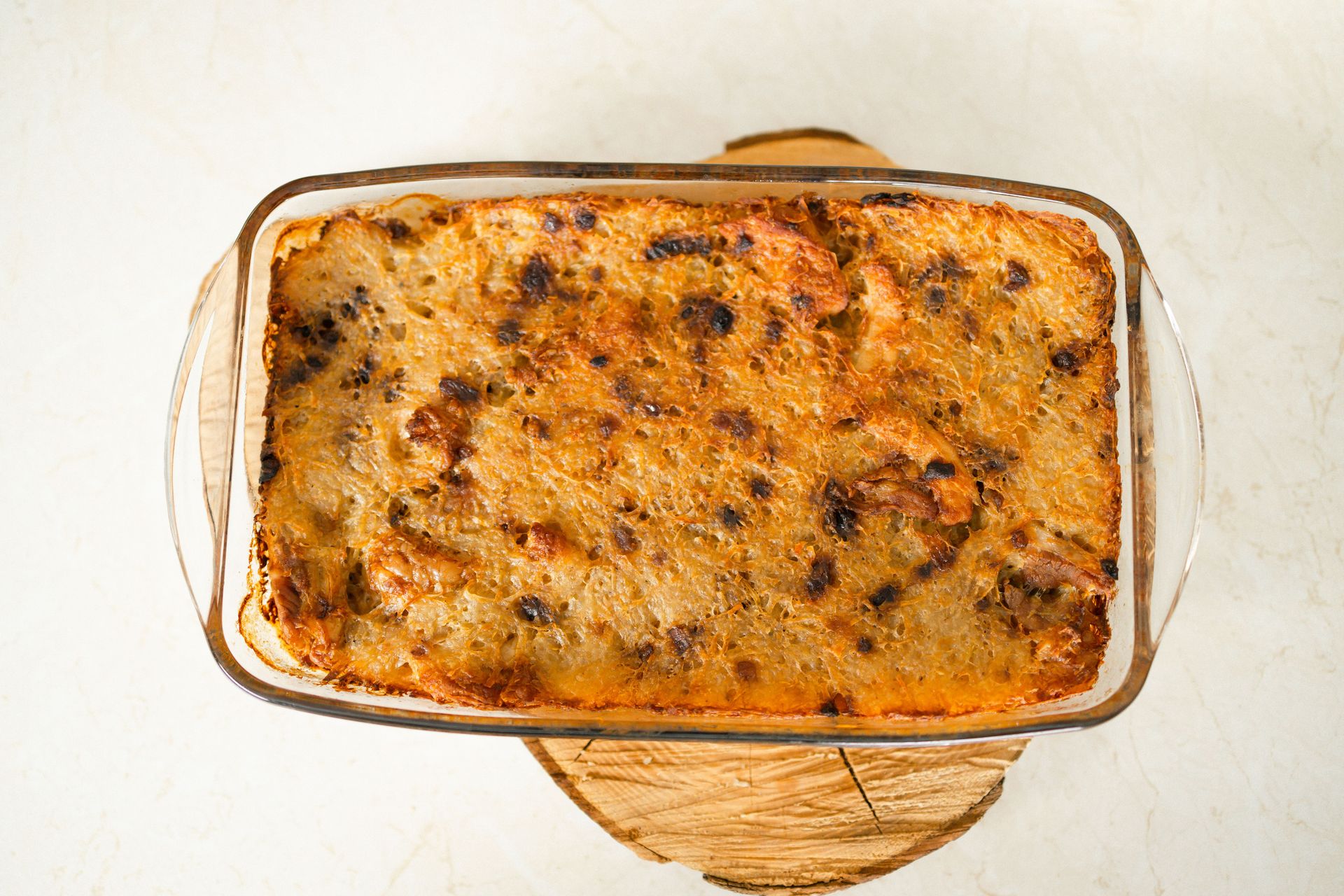
Chicken and rice casserole
Credit: Maksim Goncharenok / Pexels
Casseroles are efficient: they use one pan, require minimal supervision, and produce a self-contained meal. A chicken and rice casserole built on rotisserie chicken bypasses the usual problem of the chicken drying out in the oven, because the meat is already cooked and only needs to heat through.
Start with a base sauce. In a large oven-safe skillet or Dutch oven, melt two tablespoons of butter over medium heat. Add one diced onion, two minced garlic cloves, and two stalks of diced celery. Cook until softened, about five minutes. Stir in two tablespoons of flour and cook for one minute. Slowly add two cups of chicken stock, whisking constantly, then add half a cup of heavy cream. The sauce should be thick enough to coat a spoon. Season with salt, pepper, and dried thyme.
Add one cup of uncooked long-grain white rice directly into the sauce, stirring to combine. Transfer to a baking dish if not already using an oven-safe vessel. Cover tightly with foil and bake at 350°F for 25 minutes, until the rice has absorbed most of the liquid.
Remove the foil, stir in the shredded rotisserie chicken, and add one cup of frozen peas. Top with a layer of shredded cheddar. Return to the oven, uncovered, for 10 to 15 minutes until the cheese is melted and beginning to brown.
Let the casserole rest for five minutes before serving. The rice will continue to absorb liquid as it sits, which tightens the texture. Serve directly from the baking dish.
This dish tolerates substitutions. Brown rice can replace white, but the baking time increases to about 45 minutes for the covered stage. Broccoli florets, diced carrots, or mushrooms can be added with the chicken. A breadcrumb topping — panko mixed with melted butter — adds a crunchy contrast if you prefer texture over a cheese crust.
13 / 20
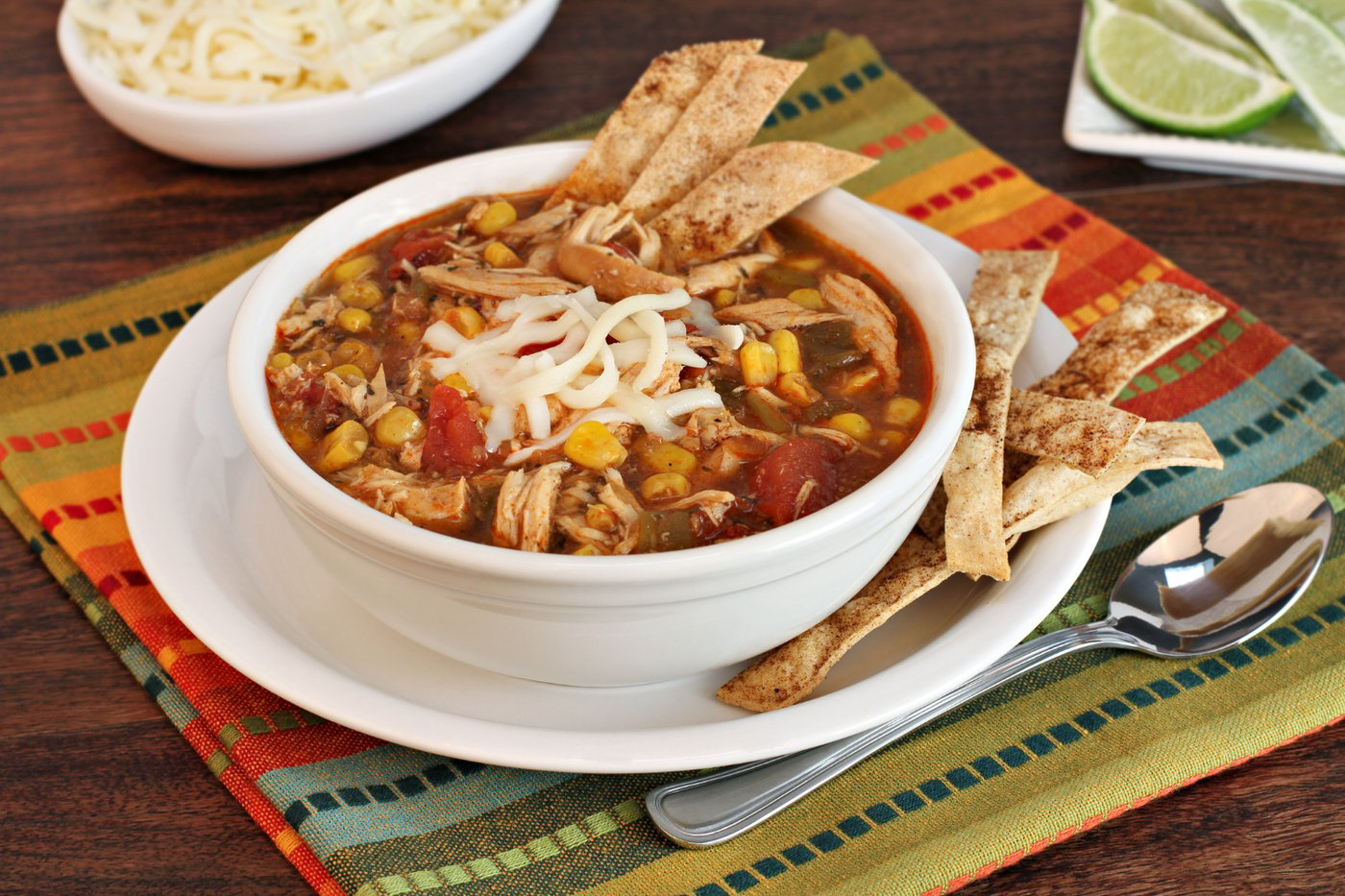
Chicken tortilla soup
Credit: Canva Images
Tortilla soup is distinct from other chicken soups in that it has a tomato-chile base rather than a clear broth, and it's served with fried tortilla strips as a structural element rather than just a garnish. The strips absorb broth as you eat and soften from crunchy to tender by the end of the bowl, which changes the texture of the soup throughout the meal.
Start by charring one large tomato, one jalapeño, and one small white onion directly over a gas flame or under a broiler until the skins are blackened. This adds a smoky depth that's foundational to the soup. Blend the charred vegetables with two cups of chicken stock until smooth.
In a large pot, heat a tablespoon of vegetable oil over medium-high heat. Add the blended tomato mixture and cook, stirring frequently, for five minutes. The mixture will sputter as it hits the hot oil — this frying step deepens the flavor and concentrates the sauce. Add two more cups of chicken stock, one teaspoon of ground cumin, one teaspoon of chili powder, and a pinch of dried oregano. Simmer for 15 minutes.
Add shredded rotisserie chicken and one can of drained black beans. Simmer for five more minutes to heat through. Season carefully — the rotisserie chicken brings salt, and the stock may as well.
For the tortilla strips, cut corn tortillas into thin strips and fry in half an inch of neutral oil at 350°F until crisp, about two minutes. Drain on paper towels and season with salt immediately.
Serve the soup in deep bowls topped with the tortilla strips, crumbled cotija cheese or shredded cheddar, sliced avocado, sour cream, and fresh cilantro. A squeeze of lime juice over the top is important — it lifts the deep, smoky flavors.
The garnishes in tortilla soup are not cosmetic; they change what the dish tastes like as you eat it. The avocado cools the heat of the jalapeño, the cotija adds sharp salinity, and the sour cream provides a dairy fat that rounds out the acidity of the tomatoes. Eating the bowl straight — without the toppings — produces a different, flatter experience. If you want to make the soup ahead, hold the tortilla strips separately and add them tableside. Stored in the refrigerator, they soften within 30 minutes of contact with the hot broth. The soup base itself keeps well for three days and improves slightly overnight as the flavors meld. Reheat on the stove over medium heat, adding a splash of stock if it has thickened too much.
14 / 20
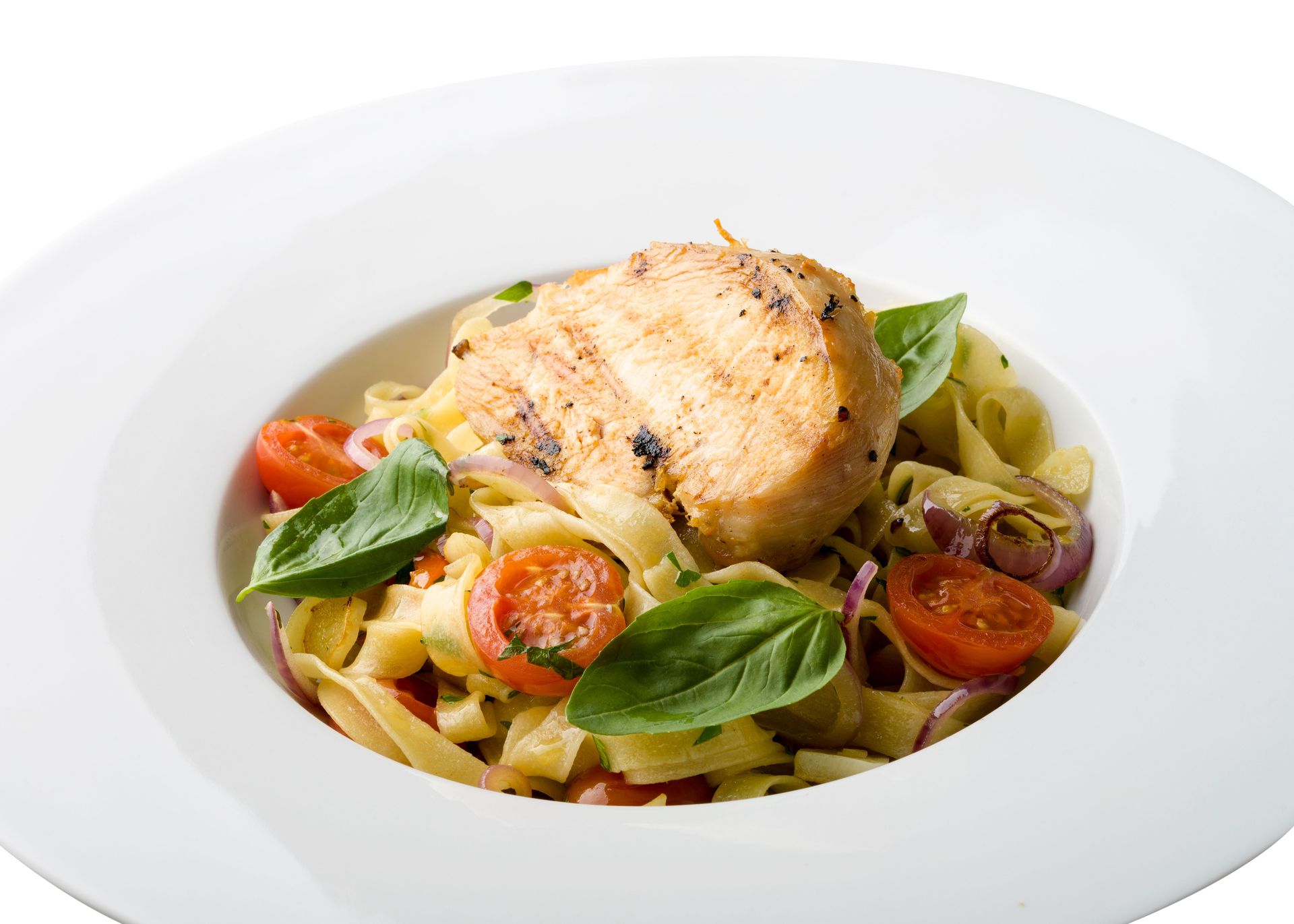
Chicken pasta with lemon and herbs
Credit: Vladimír Sládek / Pexels
Pasta with chicken doesn't need a heavy sauce to be satisfying. A version built around olive oil, lemon, fresh herbs, and parmesan comes together in the time it takes to boil the pasta and produces a dinner that's light but filling.
Bring a large pot of salted water to a boil. Use more salt than seems necessary — the water should taste slightly of salt, not just slightly different from plain water. Cook spaghetti, linguine, or rigatoni according to package instructions. Reserve about a cup of pasta water before draining.
While the pasta cooks, warm two tablespoons of good olive oil in a large skillet over low heat. Add three minced garlic cloves and a pinch of red pepper flakes. Cook gently — the garlic should soften and turn fragrant without browning. Browned garlic in this recipe will add bitterness rather than depth.
Add the shredded rotisserie chicken to the pan. Pour in a quarter cup of the reserved pasta water and the juice of one lemon. The mixture will sizzle and reduce slightly. The pasta water contains starch that helps the sauce cling to the pasta.
Add the drained pasta to the skillet and toss over medium heat for two minutes. The pasta should look glossy, not dry. If it looks tight, add more pasta water a tablespoon at a time. Add a generous handful of grated parmesan and toss again until it melts into the sauce.
Remove from heat and stir in a handful of fresh herbs — flat-leaf parsley and basil work well together, or use one or the other. Add the zest of the lemon you already juiced; zest has a more concentrated lemon flavor than juice and adds fragrance.
Plate and finish with more parmesan, a drizzle of olive oil, and a few grinds of black pepper. The dish should taste bright from the lemon, savory from the parmesan, and slightly spicy from the pepper flakes.
15 / 20
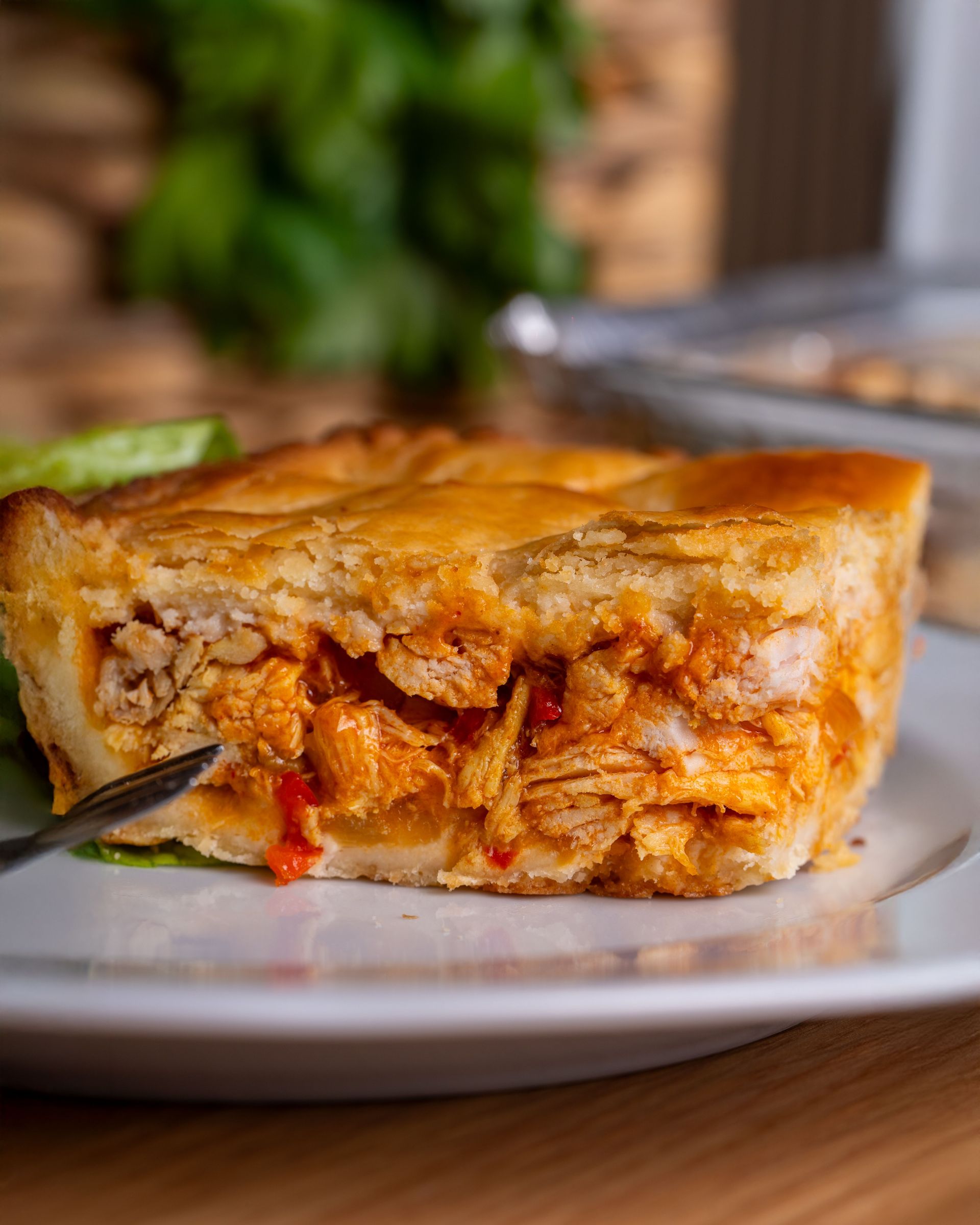
Chicken pot pie
Credit: Nano Erdozain / Pexels
A chicken pot pie is the most substantial dish on this list in terms of both time and yield. It also may be the best use of an entire leftover rotisserie chicken, because the filling benefits from a mix of dark and white meat, and the carcass can be used to make the stock for the sauce.
For the filling, melt three tablespoons of butter in a large saucepan. Add one diced onion, two diced carrots, and two diced stalks of celery. Cook over medium heat until the vegetables soften, about eight minutes. Add three minced garlic cloves and cook for one more minute. Stir in a third of a cup of flour and cook, stirring, for two minutes. Slowly pour in two and a half cups of chicken stock, whisking to prevent lumps. Add half a cup of whole milk or heavy cream. Bring to a simmer and cook, stirring often, until the sauce thickens, about five minutes. Add one cup of frozen peas, the shredded chicken, fresh thyme, salt, and pepper. Remove from heat.
For the crust, use store-bought refrigerated pie dough. It produces a flaky, buttery result with minimal effort. Roll out one sheet to fit a 9-inch pie dish. Press it into the dish. Pour in the filling. Top with the second sheet of dough, crimp the edges, and cut a few slits in the top to vent steam.
Brush the top crust with an egg wash — one beaten egg — to produce a golden-brown finish. Bake at 400°F for 30 to 35 minutes until the crust is deep golden and the filling is bubbling through the slits.
Rest for ten minutes before cutting. The filling needs to set slightly to slice cleanly.
Pot pie freezes well before baking. Assemble it in a disposable foil pan, wrap tightly, and freeze for up to three months. Bake from frozen at 375°F for about one hour.
16 / 20
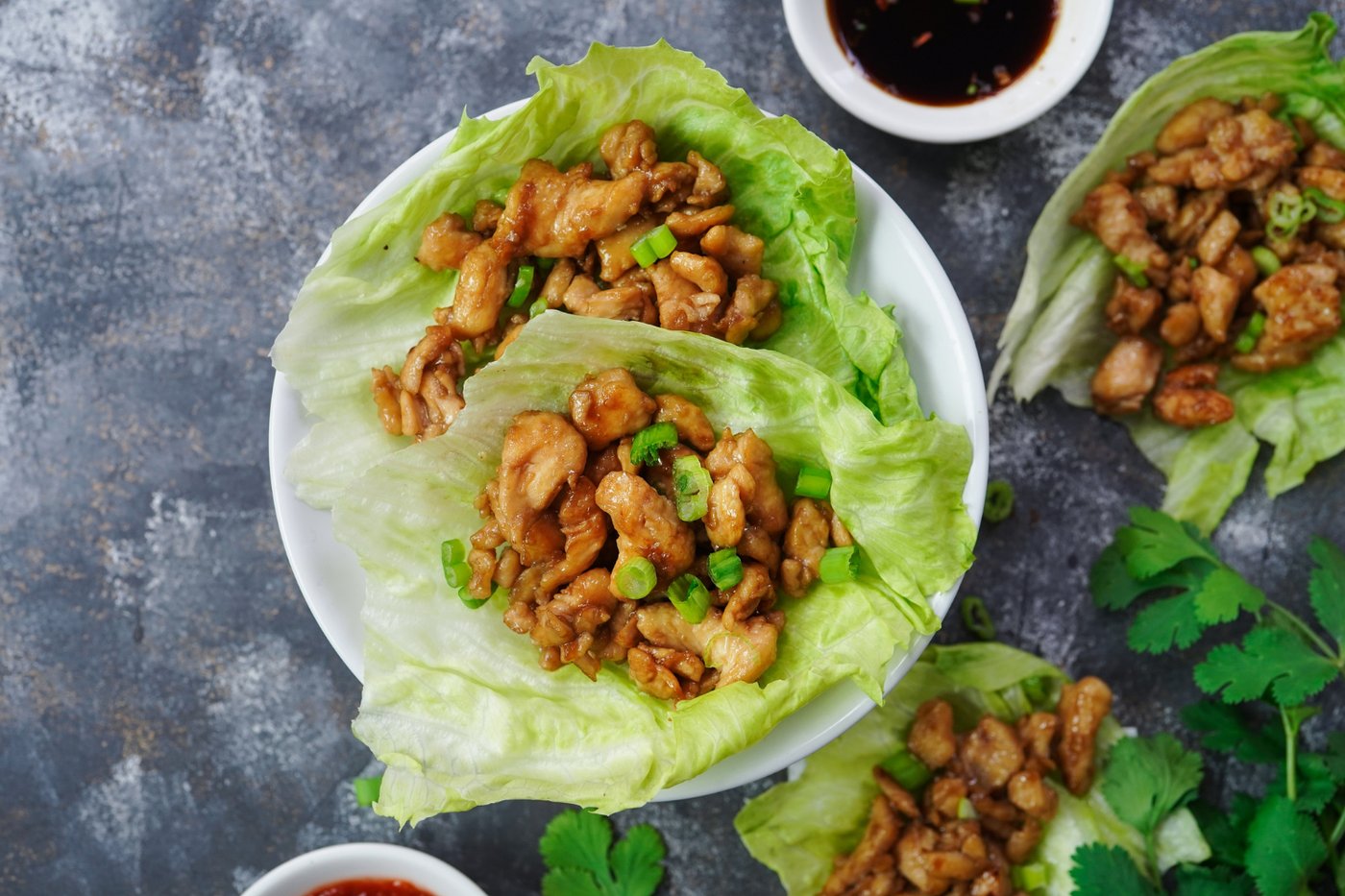
Chicken fried rice lettuce wraps
Credit: Canva Images
Lettuce wraps are a different format than the tacos listed earlier. They use butter or iceberg lettuce cups as a vessel, have a more complex, Asian-inspired filling with water chestnuts and a salty-sweet sauce, and are typically served at the table as a build-your-own dish rather than an assembled plate. The chicken filling is also prepared differently — chopped fine rather than shredded, which gives it a different texture.
Use a food processor or a knife to chop the rotisserie chicken into small, uniform pieces — roughly the size of a small pea. The goal is a minced texture rather than chunks. This allows the filling to hold together inside the lettuce leaf when picked up and bitten.
Sauté two minced garlic cloves and a tablespoon of minced fresh ginger in a tablespoon of neutral oil over medium-high heat for 30 seconds. Add the minced chicken and cook for two to three minutes. Add one can of drained and rinsed water chestnuts, roughly chopped, and half a cup of diced scallions.
Make the sauce: combine two tablespoons of hoisin sauce, one tablespoon of soy sauce, one tablespoon of rice vinegar, and a teaspoon of sesame oil. Add to the pan, toss to coat, and cook for one more minute.
Separate individual leaves from one head of butter lettuce. Spoon the chicken filling into each leaf. Set out small dishes of additional hoisin sauce, chili oil, and sliced scallions for the table.
The wraps should be eaten immediately — lettuce releases moisture quickly, and the crisp cup is a key part of the dish. Serve as an appetizer or as a light main course. The filling quantity from one half of a rotisserie chicken makes enough for six to eight lettuce cups.
What makes this dish work is the contrast between the cool, crunchy lettuce and the warm, savory filling. The water chestnuts are largely responsible for the texture inside the filling — they retain their crunch even after cooking, which prevents the filling from becoming a uniform paste. If water chestnuts aren't available, finely diced jicama or blanched bean sprouts are reasonable substitutes. The hoisin sauce carries most of the sweetness, while the soy and rice vinegar add salt and acid. Adjust the balance by adding more vinegar if the filling tastes too sweet, or a small amount of sugar if it tastes too sharp. The whole filling recipe takes under ten minutes to cook once the chicken is minced, which makes this one of the faster preparations on this list despite the interactive serving format.
17 / 20
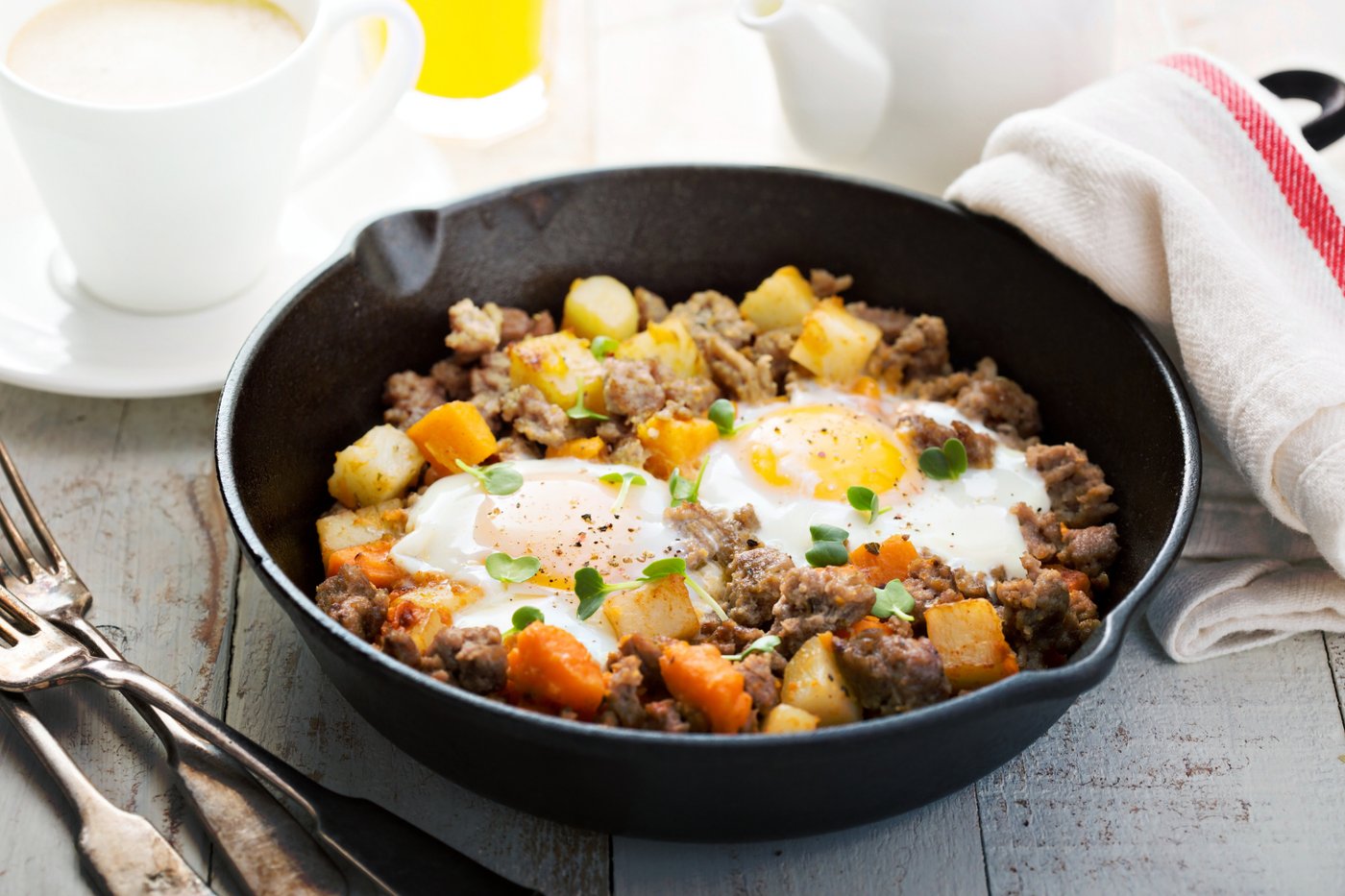
Chicken breakfast hash
Credit: Canva Images
Hash is a practical breakfast or brunch dish built on potatoes, onion, and a protein that crisps up in a cast-iron or stainless-steel skillet. Adding rotisserie chicken converts a simple side into a full meal with protein, starch, and fat.
Dice two medium Yukon Gold potatoes into half-inch cubes. Par-cook them first — either by microwaving on high for four minutes or by boiling in salted water until just tender, about eight minutes. The par-cook step ensures the potatoes crisp properly in the pan without burning on the outside before the inside is cooked.
Heat a cast-iron skillet over medium-high heat. Add two tablespoons of butter or olive oil. Add the par-cooked potatoes in a single layer and press them flat. Do not stir for two to three minutes — let the bottom develop a crust. Toss, press again, and cook for another two minutes.
Add one diced onion and one diced bell pepper. Toss everything together and cook until the vegetables soften and the potatoes are fully browned, about five more minutes. Season well with salt, pepper, smoked paprika, and garlic powder.
Add the shredded rotisserie chicken in the final two minutes, pressing everything flat and letting it sear briefly. The chicken should be in small pieces — not large shreds — so it integrates into the hash rather than sitting on top.
Make a well in the center of the hash. Crack two eggs directly into the skillet, cover with a lid, and cook until the whites are set but the yolks are still runny, about three minutes. Serve straight from the skillet.
Top with hot sauce, fresh herbs, or a spoonful of salsa. A hash made this way is a satisfying breakfast that requires only one pan. If feeding two people, scale up the potatoes and add more eggs.
18 / 20
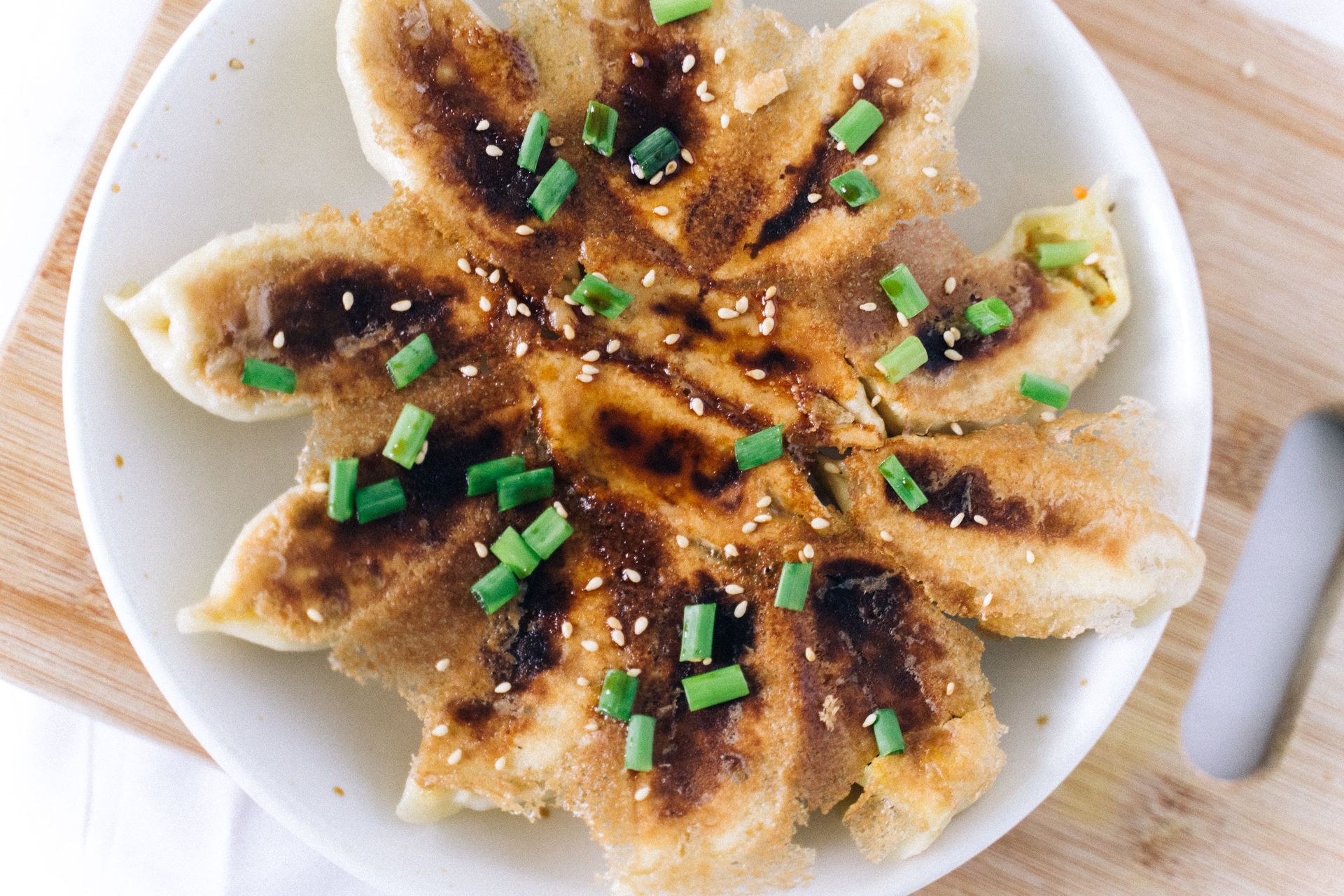
Chicken dumplings
Credit: Anna Tarazevich / Pexels
Homemade dumplings are a project, but a manageable one — especially if you use store-bought dumpling wrappers, which are widely available at most Asian grocery stores and increasingly at mainstream supermarkets. The filling is the work, and a rotisserie chicken filling comes together in about ten minutes.
Finely chop two cups of rotisserie chicken, then mix with two tablespoons of soy sauce, one tablespoon of sesame oil, one teaspoon of rice vinegar, a tablespoon of minced fresh ginger, two minced garlic cloves, and two finely chopped scallions. Mix in half a cup of finely shredded napa cabbage — salt it first, let it sit for five minutes, then squeeze out the excess water with a clean towel. This step is important; without it, the filling releases water during cooking and makes the wrappers soggy.
Place one wrapper flat on a clean surface. Add about a teaspoon of filling in the center — less than you think you need. Wet the edge of the wrapper with water using your finger. Fold the wrapper in half over the filling and pinch the edges together, working from the center out. Make small pleats along the sealed edge for a traditional look, or simply press the edges flat into a half-moon shape.
To cook: heat a thin layer of oil in a nonstick skillet. Place the dumplings flat-side down and cook uncovered over medium-high heat for two minutes until the bottoms are golden. Add a quarter cup of water, cover immediately, and steam for four to five minutes until the water evaporates. Remove the lid and cook for one more minute to re-crisp the bottoms.
Serve with a dipping sauce: two tablespoons of soy sauce, one tablespoon of rice vinegar, a few drops of sesame oil, and sliced scallions. Add chili oil if you want heat.
19 / 20
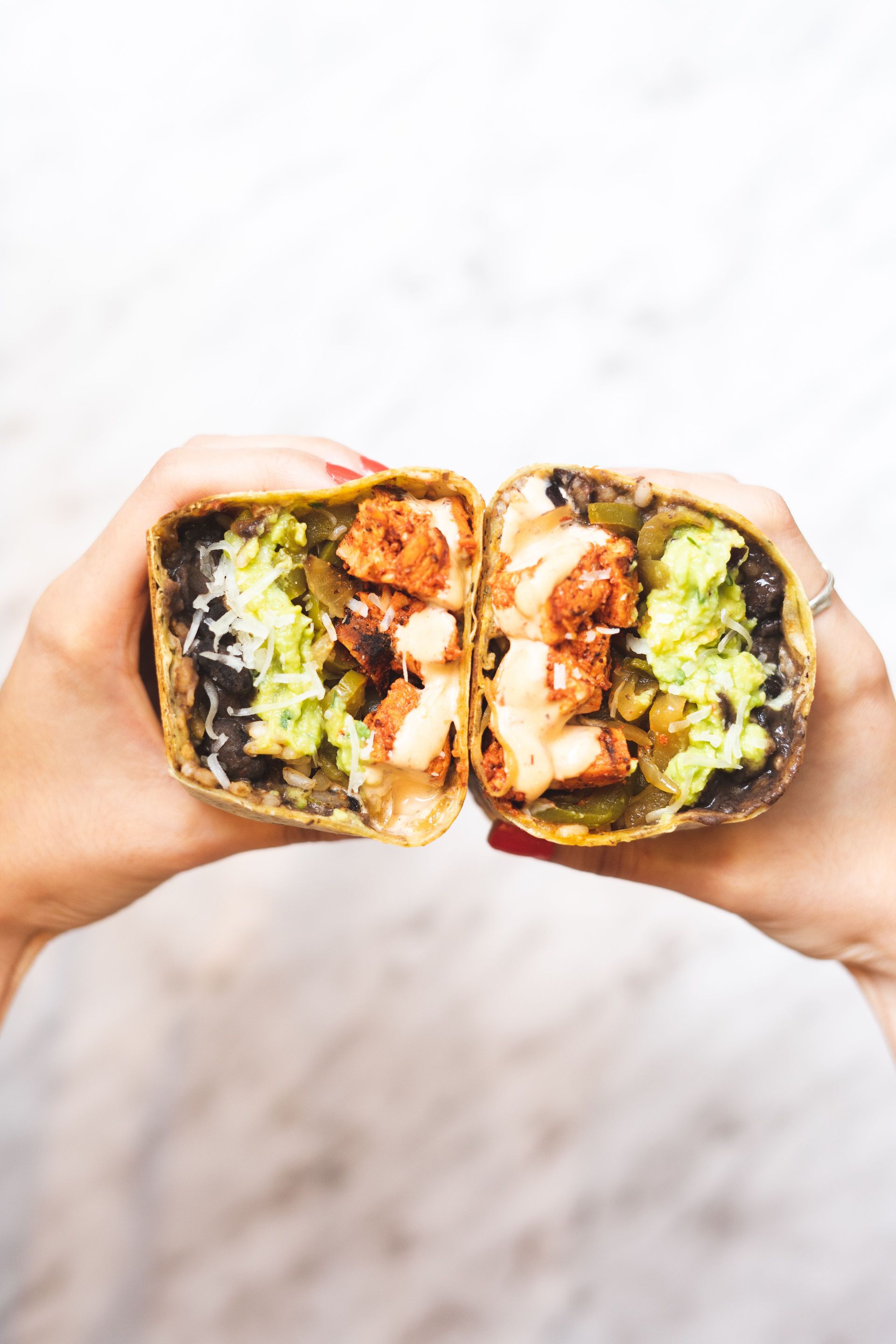
Chicken and black bean burritos
Credit: Gonzalo Mendiola / Pexels
A burrito is a more involved construction than a taco but handles more filling, which means it stretches a smaller amount of leftover chicken further. The structural integrity of a properly wrapped burrito — sealed and tight — also means it holds up well for lunch the next day.
Warm large (12-inch) flour tortillas briefly in a dry skillet or directly over a gas flame for about ten seconds per side. A warm tortilla folds without cracking; a cold one splits along the crease.
For the filling, warm the shredded chicken in a small skillet with a tablespoon of taco seasoning (or a mix of cumin, chili powder, garlic powder, and smoked paprika) and a splash of water to keep it moist. Prepare white rice seasoned with a lime juice and a small amount of salt. Open a can of black beans, drain and rinse, then warm in a small saucepan with a pinch of cumin and salt.
Lay the warm tortilla flat. Place a line of rice along the center — leaving three inches clear on each side and two inches clear at the top and bottom. Layer the chicken, black beans, shredded cheese, sour cream, and salsa on top of the rice. Add sliced jalapeño if desired.
Fold the sides of the tortilla in first, then roll the bottom edge up and over the filling, tucking it tightly, then continue rolling. The burrito should be tight enough that it doesn't unroll when set down.
For a burrito that will be eaten immediately, toast the outside in a dry skillet for one minute per side to seal it and add a light crust. For a burrito meant for lunch the next day, wrap tightly in foil and refrigerate. It reheats well in an oven at 350°F for 15 minutes or in a skillet.
This recipe yields burritos that hold well, travel easily, and are genuinely filling without requiring additional sides.
20 / 20
Chicken stock from the carcass
Credit: Canva Images
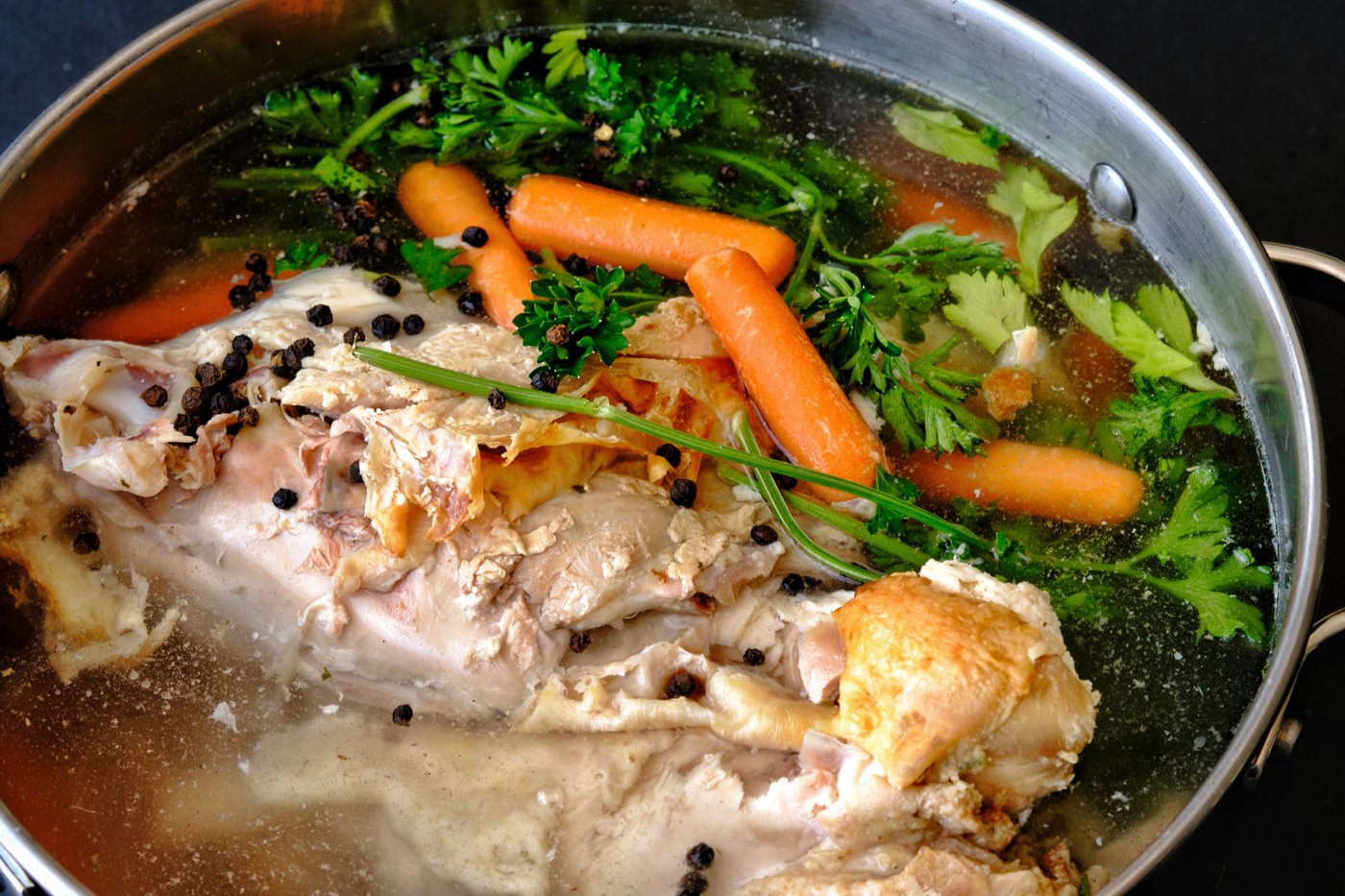
Making stock from a rotisserie carcass is listed last but belongs earlier in the week — ideally the day after you bring the chicken home. The carcass loses moisture as it sits, but it still makes good stock for two to three days after purchase.
Strip every piece of usable meat from the bones before making stock. The meat gets stringy during the long simmer and can't be used for other recipes afterward. Pull off whatever you missed — the oyster pieces near the backbone, the cartilage near the joints that softened from roasting, the small pieces along the rib cage. These go into the other dishes.
Place the carcass in a large stockpot. Add two quarts of cold water. Add one halved onion, two roughly chopped carrots, two stalks of celery, a bay leaf, ten peppercorns, and a handful of fresh parsley stems if you have them. Bring to a boil, skimming off any gray foam that rises in the first ten minutes.
Reduce to a gentle simmer and cook uncovered for one and a half to two hours. The stock is ready when it tastes savory and full — not watery or bland. If it still tastes thin after two hours, remove the carcass and simmer the liquid for another 15 to 20 minutes to concentrate it.
Strain through a fine-mesh sieve into a clean container. Discard the solids. Let the stock cool to room temperature, then refrigerate. A layer of fat will solidify on the surface overnight — skim it off before using or freezing.
The stock keeps refrigerated for five days and frozen for three months. Pour into ice cube trays for single-use portions, or store in one-cup and two-cup containers for recipe use. Use this stock in the chicken noodle soup, white chicken chili, or grain bowl sauce on this list.