
Credit: jessica olivella / Pexels
Good writing is not a talent. It is a set of decisions — and most bad writing fails not because the writer lacks ideas, but because the writer made careless decisions about sentences, words, and structure. The sentence is too long. The subject is buried. The verb is weak. The point that should open the paragraph appears at the end, after the reader has already moved on.
The rules that fix these problems are not mysterious. Many of them have been documented for decades, by editors, linguists, and working journalists who noticed the same patterns of failure appearing again and again in otherwise intelligent prose. What makes clear writing feel effortless to read is almost always the result of effort applied backstage — choices about where to place emphasis, how much information to pack into a single sentence, and which words carry genuine meaning versus which ones just fill space.
This matters more now than it ever has. The average adult reads hundreds of pieces of writing in a single day: emails, reports, articles, messages, instructions, proposals. Writing that is unclear does not just fail to communicate — it wastes time and erodes trust. A reader who has to work to understand what you are saying will stop reading. In professional contexts, that failure has real costs.
These 20 rules are drawn from the accumulated craft knowledge of editors and writers who spent careers diagnosing what goes wrong on the page and how to fix it. They apply to any kind of writing: journalism, business communication, academic work, fiction, email. None of them require you to be a natural. They require only that you pay attention to the choices you are making and push back against the lazy defaults the language offers you — the passive voice, the abstract noun, the sentence that goes on past the point where it should have stopped.
Some of these rules will feel counterintuitive at first. A few will require you to reread your own sentences with the cold eye of a stranger who owes you nothing. That is the work. Good writing is rewriting, and rewriting is the application of better judgment to earlier decisions. Apply these rules once and your writing improves. Apply them habitually and they become second nature — the kind of clarity that readers notice even when they cannot name what is making it work.

Credit: Canva Images
The single most reliable way to make a sentence easier to read is to put its grammatical subject and main verb close together, near the beginning. When subject and verb are separated by long clauses, the reader holds a mental placeholder — waiting, in effect, for the sentence to begin — while processing material that would land harder if it came after the core claim.
Consider the difference between these two sentences: "The report, which had been commissioned by the board in response to a series of complaints from staff over the past two years, was released on Friday." Versus: "The board released a long-awaited report on Friday." In the first version, the reader gets through 23 words before encountering the main verb. In the second, the verb arrives in the fourth word.
This is not merely a matter of elegant style. It reflects how readers process language. The subject-verb pairing is the anchor of a sentence, the unit that tells you what is being said about what. Delaying that pairing forces the reader to keep more information in short-term memory while scanning ahead for the verb that will make everything cohere. Short-term memory has limits, and long sentences that delay the verb push against those limits.
The most common causes of separated subjects and verbs are parenthetical clauses dropped between them, strings of adjectives or adverbs, and attributions placed in the middle of a claim rather than at the end. The fix is usually to move the interrupting material to the end of the sentence, or to break the sentence in two. Neither change is complicated. Both require the writer to ask, on every sentence: where is my subject, and where is my verb, and what is between them?
This rule has a useful corollary for paragraphs. Just as subject and verb should arrive early in a sentence, the topic should arrive early in a paragraph. Paragraphs that open with context, background, or qualification before naming their subject make the reader wait, too. Put the point first. Let the evidence and context follow.

Credit: Canva Images
In an active sentence, the subject performs the action: "The committee approved the budget." In a passive sentence, the subject receives the action: "The budget was approved by the committee." Active sentences are shorter, more direct, and easier to follow. The agent — the who or what causing the action — is named up front, not buried in a prepositional phrase at the end, or omitted entirely.
The passive voice is not always wrong. There are situations where it is the honest choice. When the agent is genuinely unknown — "The window was broken overnight" — passive is appropriate because inventing a subject would be dishonest. When the receiver of the action is more important than the actor — in a sentence about a crime victim, for instance — the passive can serve emphasis. And in scientific writing, the passive has a long convention of use that carries professional weight.
But most passive voice in everyday writing does not serve any of these functions. It is a default — the path a sentence takes when the writer is not paying attention, or when the writer wants to soften responsibility. "Mistakes were made" is the classic political evasion: it names the mistakes without naming who made them. "It has been decided that your position is being eliminated" is a corporate evasion: it removes the decision-makers from the grammar of the sentence, where they might be held accountable.
The clearest test for passive voice is to ask: is there an agent, and if so, is it in the subject position? If the answer is no, ask whether the passivizing serves a genuine purpose. If it does not, rewrite the sentence with the agent as subject and the verb in its active form. The sentence will almost always be shorter and clearer as a result.
There is also a subtler category of semi-passive constructions — "There is growing concern about," "It should be noted that," "It is important to recognize" — that function like passive voice without technically being passive. They defer the subject and bury the verb behind it-is or there-is constructions. Rewrite them as active declaratives: "Concern about X $TWTR is growing." "Note that." "Recognize that."

Credit: Canva Images
Strong writing is not about using more words to be thorough. It is about using precisely the words you need to say what you mean, and no others. Every word in a sentence costs the reader something — a fraction of attention, a moment of processing. Words that do not contribute to meaning make readers pay that cost for nothing.
The most common categories of expendable words are: intensifiers that weaken the words they modify ("very unique" makes unique less emphatic, not more), hedges that dilute claims without adding accuracy ("somewhat," "rather," "in some ways"), filler phrases that delay the actual claim ("it is worth noting that," "it goes without saying that," "as a matter of fact"), and redundancies that say the same thing twice ("past history," "advance planning," "end result," "completely finished").
Take "in order to" — in almost every sentence, "to" alone does the same work. "In the event that" can become "if." "At this point in time" can become "now." "Due to the fact that" can become "because." None of these substitutions loses meaning. Each one cuts two to five words from the sentence. Over a 1,000-word piece, dozens of such cuts add up to a text that reads considerably faster and lands harder.
The habit to develop is rereading every sentence and asking: what is the minimum number of words that could carry this meaning? Then cut down to that number. This is not the same as writing tersely for its own sake. A sentence can be long and good. But every word in a long sentence should be there because it contributes, not because cutting it would require effort.
William Strunk put this as a rule in the early 20th century: "omit needless words." It remains one of the most useful instructions in the literature of writing. What makes it hard is that writers are often attached to their own words — the effort of producing them creates an illusion that they are all necessary. Editing requires overcoming that illusion.

Credit: cottonbro studio / Pexels
Information in a sentence has more impact when it is placed at the end. The end of a sentence is the position of greatest emphasis; readers naturally stress it, in their heads or aloud. This means that if you want a particular piece of information to land with force, you should put it last. The beginning of a sentence, by contrast, is the position of least emphasis — the point of departure, where the reader expects to find something already familiar.
This pattern — old information at the start, new information at the end — is called the "given-new" contract, and it is one of the most consistent findings in research on how people read. Sentences that open with unfamiliar material and close with what the reader already knows violate this contract. They make the reader work backward to understand what the sentence is about, and they waste the position of emphasis on information that does not need it.
In practice, the rule means that each sentence should open by linking back to something from the previous sentence — a repeated word, a synonym, a pronoun that refers back — before moving to the new claim. "The committee approved the budget. The budget covers salaries, infrastructure, and a small reserve fund." The second sentence opens with "the budget," which was just established, before introducing the new information about what it covers.
This structure also helps paragraphs cohere. When each sentence opens with a reference to what came before, a paragraph reads as a chain of connected ideas rather than a list of separate statements. Paragraphs that lack this coherence feel choppy, even when each individual sentence is well-formed. The sentences are not talking to each other.
The rule applies at the paragraph level, too. Each paragraph should end with the sentence that carries the most weight, the one whose information you want the reader to carry into the next paragraph. Burying the point in the middle of a paragraph — and ending on a housekeeping sentence — wastes the position where emphasis naturally falls.
Credit: Pixabay / Pexels
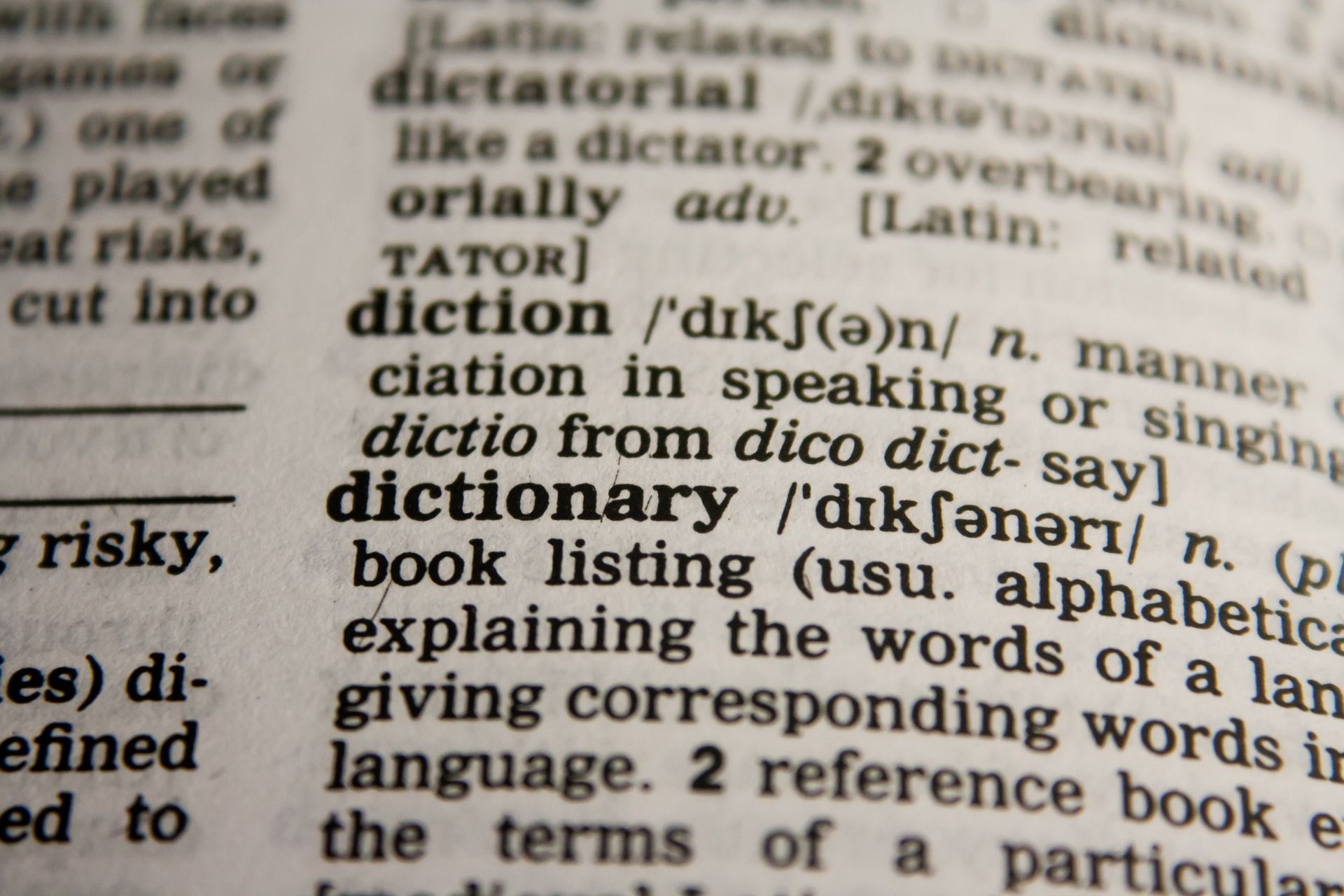
Abstract nouns — "implementation," "functionality," "utilization," "optimization," "leverage" — do not name things in the world. They name concepts that derive their meaning entirely from context. The more abstract a sentence, the more work the reader must do to translate it into something they can picture or verify.
Concrete words name things that exist in the physical or observable world, or at least in the specific world of the subject at hand. "The factory floor" is more concrete than "the operational environment." "She quit on Tuesday" is more concrete than "a departure decision was made." "The software crashed" is more concrete than "a system failure occurred." In each pair, the concrete version is shorter, clearer, and harder to misunderstand.
The pull toward abstraction is strong in professional and institutional writing, for a reason: abstraction diffuses responsibility and generalizes claims in ways that protect the writer from being held accountable for specific facts. "Certain challenges have been identified in the implementation process" says nothing that can be checked or disputed. "The rollout is three months behind and over budget" says something specific that invites scrutiny. Many writers reach for abstraction unconsciously, not from evasion, but from a habit of thinking that formal language requires distance from concrete detail.
The test for abstraction is to ask: what is this sentence actually referring to, in specific terms? Can I rewrite it to name those terms explicitly? If the answer is yes, do it. If the answer is unclear — if you realize you do not actually know what specific thing the abstract sentence refers to — that is a sign that the sentence is covering for a gap in thinking.
This does not mean eliminating all abstract language. Some ideas are genuinely abstract and require abstract language to describe accurately. But the proportion of abstract to concrete language in most professional writing is far out of balance. Tipping it back toward the concrete — even slightly — tends to make writing easier to read and more persuasive.

Credit: DS stories / Pexels
A sentence becomes difficult to read not simply because it is long, but because it carries too many ideas at once without giving the reader a place to register each one. The solution is to break the sentence at what might be called the seam: the point where one idea ends and another begins.
This seam is often marked by a relative clause introduced by "which" or "that," a participial phrase, a coordinating conjunction like "and" or "but," or a subordinating clause beginning with "because," "although," or "while." These grammatical devices can link ideas within a single sentence, but they can also serve as the cutting points when the sentence becomes too dense.
The technique is straightforward. Identify the point in the long sentence where you are introducing a second idea. Cut the sentence there. Make the second idea its own sentence. Often you will need to add a subject and verb to what was a clause, but that is usually a one-word addition — a repeated noun or a pronoun.
Long sentences are not inherently bad. A skilled writer can sustain a sentence through many clauses and keep it clear, as long as each clause adds precisely to what came before and the whole thing is grammatically stable. The problem is not length but overload — when a sentence is trying to do too many things, the reader cannot hold all of them at once. Breaking the sentence does not lose any of the information; it distributes it across two or more units that the reader can process one at a time.
One reliable test: read the sentence aloud. If you run out of breath before the period, or if you find yourself changing your interpretation of the sentence midway through reading it, it is too long. Spoken language forces the pauses that written language can bury.

Credit: Canva Images
George Orwell listed this as one of his rules for clear writing in his 1946 essay "Politics and the English Language," and it has lost none of its relevance. The pull toward long, latinate words in formal writing is a habit that tends to make prose more opaque, not more impressive. Readers do not experience long words as erudite — they experience them as friction.
The pattern is familiar: "utilize" instead of "use," "facilitate" instead of "help," "commence" instead of "start," "endeavor" instead of "try," "terminate" instead of "end," "methodology" instead of "method," "prioritize" instead of "rank." In each case, the longer word is derived from Latin or French, typically via the Norman influence on English; the shorter word is usually of Anglo-Saxon origin. The shorter word almost always reads as more direct, more honest, and more human.
This is not a rule against precision. If a long word carries a specific meaning that a short word cannot replicate, use the long word. "Antidisestablishmentarianism" cannot be simplified without loss. "Photosynthesis" has no shorter equivalent that carries the same meaning. The rule is against using long words as a substitute for short ones, not against long words that earn their place.
The deeper problem with long abstract words is that they can become a way of appearing to say something while saying nothing. "We are committed to proactively optimizing our cross-functional synergies to facilitate a more robust value proposition" is a sentence that sounds substantial and means almost nothing. It is not just unpleasant to read — it is dishonest. It performs meaning rather than communicating it. Short, direct words are harder to hide behind.

Credit: cottonbro studio / Pexels
The verb is the engine of a sentence. A strong, specific verb carries more meaning, more efficiently, than a weak verb propped up by a noun or adjective. When writers say a sentence is flat or lifeless, the verb is usually the problem.
The most common form of verb weakness is nominalization: converting a verb into a noun and then pairing it with a weak verb to get a predicate. "Give consideration to" instead of "consider." "Make a decision" instead of "decide." "Conduct an investigation" instead of "investigate." "Provide a description" instead of "describe." "Have an impact on" instead of "affect." In each case, the original strong verb has been buried in a noun, and a weak verb — "give," "make," "conduct," "provide," "have" — has taken its place.
Nominalization inflates sentence length and dilutes the force of the action. It also tends to produce passive-sounding sentences even when they are technically active. "The team made a decision about the proposal" sounds fuzzier than "The team decided on the proposal," even though both sentences are grammatically active.
The fix is to identify the noun that was once a verb — usually words ending in "-tion," "-ment," "-ance," "-ence," "-ity," or "-ism" — and convert it back. The nominalized sentence will almost always be longer; the de-nominalized version will almost always be more direct.
Specific verbs also do more work than generic ones. "She moved quickly" is weaker than "She ran" or "She sprinted" or "She bolted." "He said" can become "he argued," "he insisted," "he admitted," "he warned" — each of which carries information that "he said" does not. The specificity of the verb tells the reader more about the action in fewer words.

Credit: MESSALA CIULLA / Pexels
A paragraph is a unit of thought. It should develop one idea — introduce it, explain it, illustrate it, and close it — before moving on. Paragraphs that try to cover two or three ideas are harder to read because the reader must track multiple threads without knowing where each one begins and ends.
The discipline of one idea per paragraph forces a kind of intellectual clarity that benefits the writer as much as the reader. When you commit to a single idea per paragraph, you are forced to know what that idea is. Writers who habitually run multiple ideas into a single paragraph often discover, when they try to break the paragraph up, that they are not quite sure where one idea ends and another begins. That confusion is a symptom of unclear thinking, not just unclear writing.
Topic sentences make this principle visible. A strong topic sentence names the paragraph's idea in plain terms, usually in its first sentence. The rest of the paragraph explains, qualifies, or demonstrates that idea. When the topic sentence is missing or buried, the paragraph feels shapeless — a collection of related sentences rather than a developed argument.
Paragraphs should also be the right length for the idea they are carrying. A simple idea can be dispatched in three or four sentences. A complex one might require eight or ten. What paragraphs should not be is artificially long, padded with repetition to reach an imagined word count; or artificially short, cut off before the idea is fully developed. The test is completion: has the idea been stated, supported, and brought to a close?
Short paragraphs have a role, too. A single-sentence paragraph can function as emphasis — a way of signaling to the reader that the sentence deserves special weight. But this only works if the single-sentence paragraph is used sparingly. When every paragraph is two sentences, the rhythm flattens, and the emphasis disappears.

Credit: Ron Lach / Pexels
The opening sentence of any piece of writing is the most important sentence in it, and the most commonly wasted. Writers tend to warm up before getting to the point — to provide context, background, or qualification before making the claim that motivated the piece. The context often appears in the first sentence, the claim in the third or fourth, and the reader has already tuned out.
The instinct to warm up is understandable. Writers feel they owe the reader context before the claim. But the reader has not agreed to receive the context; they have agreed only to read the first sentence. If the first sentence does not hold their attention, they stop. Context can come after the opening claim — the reader who is already engaged will read it.
The same principle applies to the opening sentences of paragraphs, sections, and emails. Each of these units has an opening sentence that is either doing work or burning goodwill. The opening sentence should name the subject — concretely — and signal what is being said about it. "As you may be aware, there have been some developments in recent weeks related to the situation at the plant" is an opening that says almost nothing while using 23 words. "The plant shut down last Tuesday" says the thing.
This is the cure for what editors sometimes call "throat-clearing" — the prose equivalent of audibly preparing to speak before saying anything. Throat-clearing takes many forms: historical context the reader did not ask for, definitions of terms the reader probably knows, acknowledgment that the subject is complex or contested before engaging with it, and summaries of what the piece is about to say rather than saying it. Cut all of it and start with the claim.
The best opening sentence is almost always the sentence the writer originally planned to use as the second or third sentence. The warmup sentence that precedes it is almost always dispensable.
Credit: Canva Images
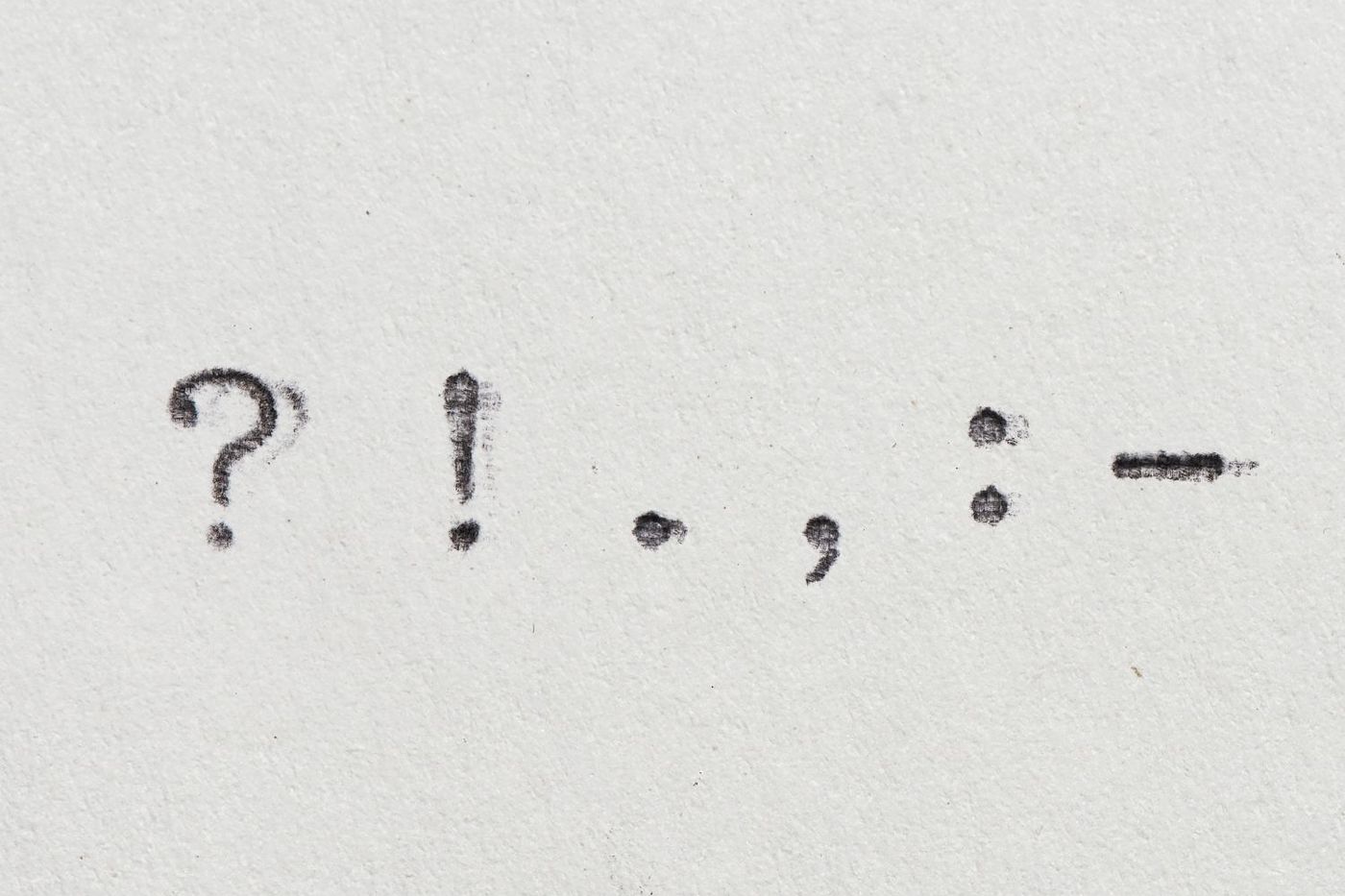
Punctuation is not decoration. It is a set of instructions to the reader about how to move through the sentence — where to pause, where to stop, where to speed up, how to weight one clause against another. A writer who uses punctuation skillfully can control the rhythm of prose in ways that reinforce meaning. A writer who punctuates carelessly produces sentences that readers must puzzle through.
The period is the strongest stop in the sentence. It signals that an idea is complete. Using periods more generously — breaking one sentence into two — tends to increase pace and emphasis. The period forces the reader to register each sentence before moving to the next.
The comma controls the smaller pauses within a sentence. It separates items in a list, sets off introductory clauses, and marks the boundary between independent and dependent clauses. Overusing commas creates sentences that feel hesitant; underusing them creates sentences that are hard to parse. The discipline is to use commas where a spoken pause would occur, and not to use them reflexively, as a way of stringing clauses together.
The em dash — which should have spaces on both sides in most style guides — signals a sharp pivot or an insertion. It works like a parenthesis but carries more emphasis. Used judiciously, it can add drama or specificity to a sentence. Overused, it becomes a verbal tic, a way of avoiding the cleaner construction that a comma or semicolon would provide.
The colon introduces: it announces that what follows is a direct development of what came before — a list, an explanation, or a specification. It is stronger than a comma for this function and signals a closer logical relationship.
One broader principle: when in doubt, use a period. A sentence that could be two sentences but is one is almost always harder to read. The option to break is always available, and readers rarely complain that sentences are too short.
Credit: Canva Images
This is a small rule, but breaking it consistently produces a category of ambiguity that accumulates across a text. "That" introduces a restrictive clause — one that identifies or defines the noun it modifies. "Which" introduces a non-restrictive clause — one that adds information about a noun that is already identified. The distinction affects meaning, not just grammar.
"The report that arrived on Tuesday was incorrect" means: the particular report — the one that arrived on Tuesday, not some other report — was incorrect. The Tuesday arrival clause is doing the work of identifying which report. "The report, which arrived on Tuesday, was incorrect" means: the report — already identified — arrived on Tuesday, and also it was incorrect. The Tuesday arrival is additional information, not a definition.
In the first sentence, removing the clause would change the meaning: "The report was incorrect" no longer specifies which report. In the second sentence, removing the clause leaves the meaning intact: "The report was incorrect" still works. This is the test: if the clause is essential to identifying what the noun is, use "that." If the clause is additional information about a noun already identified, use "which" and set it off with commas.
This distinction matters most when sentences are ambiguous without it. In many sentences, context makes the meaning clear regardless of which word is used. But in sentences where two or more things of the same type are being discussed, the choice between "that" and "which" — and the presence or absence of commas — can be the only signal to the reader about which thing you mean.
American English follows this distinction more consistently than British English, where "which" is commonly used in restrictive clauses. Writers working for American publications, or following U.S. style guides, should apply the distinction rigorously.

Credit: Zetong Li / Pexels
Prose written entirely in short sentences feels choppy and abrupt — machine-gun delivery that exhausts the reader's attention in a different way than long-windedness does. Prose written entirely in long sentences feels airless and hard to navigate. The solution is not to aim for a particular average length but to vary sentence length deliberately, in service of rhythm and emphasis.
The most common structure that skilled writers use is a long sentence followed by a short one. The long sentence develops an idea, carries qualifications, and establishes complexity. The short sentence lands. It hits. The contrast between the two lengths creates emphasis that neither would produce on its own. A two-word sentence after a 35-word sentence feels like a punch, even if the content is not particularly dramatic.
The reverse pattern also works. A series of short, fast sentences can build momentum and urgency. Then a longer sentence, stretching out to hold a more complex claim, slows the pace and signals to the reader that this idea requires more consideration.
What to avoid is mechanical uniformity — all sentences at roughly the same length, all paragraphs at roughly the same length, all sections at roughly the same length. Uniformity produces a drone-like quality, a flatness that reads as competent but forgettable. Variation creates the sense of a human mind working on the page — one that is choosing how long to take with each idea.
This is a principle that applies mainly to revision, not drafting. The first pass through a piece is not the moment to measure sentence lengths. But on revision, reading the text aloud — or examining a paragraph visually — will reveal patterns of uniformity that can be broken. The goal is not to force variation for its own sake, but to match the rhythm of the prose to the demands of the content.

Credit: Gabriel Hohol / Pexels
Transitions between sentences and paragraphs should convey a logical relationship, not just announce movement. "Additionally," "furthermore," "moreover," "in conclusion," "as mentioned above," "it is worth noting that" — these are throat-clearing transitions. They signal that the next thought is coming without doing any real work to connect it to the previous one.
A transition is only doing its job if it communicates the specific logical relationship between what came before and what comes next. "However" signals contrast. "Therefore" signals consequence. "For example" signals illustration. "As a result" signals causation. These are real connective words: they tell the reader something about how the two pieces of information relate.
"Additionally" and "furthermore" are different. They signal nothing except that more is coming — they are the verbal equivalent of a hand waving toward the next paragraph. They are also dishonest, in a small way: they imply an additive relationship, a sense that the next point is building on the previous one, even when the two are simply parallel, unconnected observations.
The strongest transitions are often no transition at all. If two sentences or two paragraphs have been written clearly — if the topic sentence of each paragraph names its subject, and if the paragraphs are in a logical order — the reader will follow the movement from one to the next without needing a traffic sign. The transition word is a fallback for writing that has not managed to create coherence through structure.
When a transition is necessary, use the most specific one available. If a contrast is being introduced, "but" or "however" will do. If the next point is a consequence of the previous one, "so" or "as a result" is more precise than "therefore." In general, the shorter the transition, the better. "But" is usually preferable to "however." "So" is usually preferable to "therefore."

Credit: www.kaboompics.com / Pexels
The ear catches what the eye misses. A sentence that looks fine on the screen — correctly punctuated, grammatically complete, logically coherent — can reveal itself as awkward, overlong, or ambiguous the moment it is read aloud. This is because the ear has different tolerances than the eye. Spoken language has rhythm, and prose that lacks rhythm sounds wrong when spoken even when it looks acceptable when read.
Reading aloud forces the writer to move through the text at a fixed pace, the pace of speech, which is slower than the eye's scanning pace. That slowness makes it impossible to skim over the awkward clause or the sentence that doubles back on itself. If you stumble over a sentence when reading aloud, a reader will stumble over it silently. If you lose the thread of a sentence before reaching its verb, so will the reader. If a paragraph feels rushed or airless when spoken, it needs more breathing room on the page.
Reading aloud also reveals problems with repetition. When the same word appears three times in two sentences, the eye often misses two of those occurrences. The ear does not. The same is true for rhythmic monotony — a pattern of sentences that all begin the same way, or all end at roughly the same stress — which the eye tolerates but the ear finds deadening.
The practice is simple to describe and requires only that the writer actually do it. This is the obstacle: most writers consider their text finished before reading it aloud, and by the time the reading-aloud stage would occur, they are too close to the material to hear it freshly. The solution is to read every draft aloud before calling it done, even quickly, even imperfectly. The reading will find problems that revision on screen would miss.
If reading aloud is not practical — in an open office, say — a text-to-speech tool can approximate the same effect. The key is to hear the text, not just see it.

Credit: Canva Images
The ending of any piece of writing is where writers are most likely to summarize what they have already said. Conclusions that restate the opening argument, emails that end with "please do not hesitate to reach out if you have any further questions," articles that close with a paragraph summarizing their main points — all of these are products of the impulse to round off, to signal completion, to reassure the reader (or the writer) that everything has been covered.
Most of these endings should be cut. The reader already read the piece; they do not need a summary of it. The person who received the email knows they can ask a follow-up question without being invited to. The article that cuts its final summary paragraph almost always ends more sharply, on a note that carries forward rather than closing down.
The stronger alternative to a summary ending is to end on the most resonant specific detail or claim in the piece — the sentence that leaves the reader with something to carry forward, not a checklist of what they have just absorbed. This is the "kicker" in journalism: the final sentence or brief paragraph that earns its place not by wrapping up but by leaving an impression.
The discipline required is to resist the impulse to close the loop. Readers do not need the loop closed for them. They are capable of understanding that the piece is over when it stops. What they remember is the last thing they read, so the last thing should be the strongest, most specific, most consequential claim the piece has to offer.
One practical test: after finishing a draft, delete the last paragraph and read the new ending. If the piece is stronger without the deleted paragraph, leave it out. Often it will be.

Credit: Cup of Couple / Pexels
"Very" is among the most commonly used words in English and among the least useful. It functions as an intensifier, implying that the adjective it modifies is stronger than it would be on its own. But because "very" is used so frequently, it has lost most of its intensifying force. It adds length without adding meaning.
The word draws attention to a problem in the sentence rather than solving it. If "very important" seems to need the intensifier, the solution is to replace "important" with a more specific word — "critical," "decisive," "urgent," "essential" — not to add "very" in front of it. The specific word is doing real work; the "very" is not.
The same reasoning applies to "really," "quite," "rather," "somewhat," and "fairly" — adverbs used to modify adjectives without adding specific information. "She was quite angry" does not tell the reader how angry she was. "She was furious" does. "The situation was fairly complicated" does not convey the degree or nature of the complication. "The situation took three departments and six weeks to resolve" does.
The deeper principle behind this rule is that vague intensifiers tend to cluster around weak adjectives. Writers reach for "very" when the adjective underneath it is not carrying its weight. The diagnosis is that the adjective needs to be replaced, not propped up. "A very big problem" can become "a serious problem" or "a crisis" or "a $2 million liability," depending on what the situation actually was.
Mark Twain's version of this rule was characteristically blunt: "Substitute 'damn' every time you're inclined to write 'very.' Your editor will delete it and the writing will be just as it should be." The point is that "very" is not doing useful work and its absence is never felt.

Credit: www.kaboompics.com / Pexels
Every piece of writing that uses specialized vocabulary — whether the specialty is technical, professional, or domain-specific — owes its reader a clear early definition of any term that might be unfamiliar or ambiguous. Waiting until the third mention of a term to define it leaves the reader guessing through the earlier mentions. Defining a term at the point of first use removes that guessing.
This is especially important when a word has different meanings in different contexts. "Platform," "protocol," "model," "framework," and dozens of other words in technology writing mean entirely different things depending on the field. A reader encountering "the platform" without context cannot be sure whether they are reading about a train station, a political manifesto, or a software architecture. Establishing the term early closes that ambiguity.
The rule does not require lengthy definitions. A phrase or a subordinate clause is usually enough. "The FICA tax — the payroll tax that funds Social Security and Medicare" does not interrupt the sentence significantly; it defines the term at the cost of a handful of words. "A variable annuity, which is an insurance product with an investment component" establishes the term before the sentence continues. These inline definitions are often better than footnotes or glossaries because they appear where the reader needs them, at the moment of first encounter.
Over-defining is also a problem. Defining a term the reader clearly knows — explaining "email" to a business reader, or defining "inflation" in a financial article aimed at professionals — is condescending and slows the text. The discipline is to define only the terms the target reader might not know, at the level of detail that reader would find useful rather than obvious.
The benefit of establishing terms early extends beyond avoiding confusion. It signals to the reader that the writer has thought about who they are writing for and what that reader needs. It is a form of respect.

Credit: Felicity Tai / Pexels
Register is the level and tone of language appropriate to a given context and audience. Formal register uses complex sentence structures, specialized vocabulary, and impersonal constructions. Informal register uses simpler sentences, colloquial vocabulary, and direct address. Most writing exists between these extremes, and the skill is in calibrating to the specific reader and situation.
A legal brief and a text message to a colleague are both forms of writing. They require completely different registers, and a writer who applies the register of one to the other will produce something that reads as bizarre, inappropriate, or incompetent. The legal brief written in text-message register lacks authority; the internal email written in legal-brief register is exhausting and alienating.
The failure of register calibration in professional writing almost always goes in the direction of over-formality. Writers default to formal constructions in professional contexts — "per our earlier discussion," "please find attached," "as per your request" — not because the formality serves the communication, but because they have absorbed a convention that professional writing requires formal language. It does not. Clear, specific, direct language is appropriate in nearly every professional context and will generally communicate more effectively than formal constructions.
The test for register is to read the draft and ask: would a thoughtful person, reading this in the context for which it was written, find the language appropriate? Too formal and the reader feels condescended to or processed; too informal and the reader may not take the communication seriously. The right register is the one that disappears — the one where the reader focuses on the content rather than the language delivering it.
Shifting register within a single piece is also a problem. A business memo that is formal for three paragraphs and then drops into casual language for one paragraph creates dissonance. Consistency of register, once calibrated to the audience and context, is as important as the initial choice.

Credit: cottonbro studio / Pexels
Most writing that appears effortless required multiple passes to reach that quality. The first draft is an argument with yourself about what you want to say. The second draft is the one where the argument becomes clear enough to communicate. Subsequent drafts refine the communication. Writers who submit or send first drafts — who do not revise — are producing work that reflects the thinking available to them in the moment of initial composition. That is rarely the best thinking available.
The first pass in revision should work at the level of the whole: is the structure correct? Does the piece open on its most important claim? Are the sections in the right order? Is there anything that belongs elsewhere, or anything that should be cut entirely? These are architectural questions, and they must be answered before working at the level of sentences. Editing sentences in a paragraph that needs to be cut is a waste of effort.
The second pass works at the level of paragraphs: does each paragraph have a clear topic? Is the topic sentence the first sentence? Are there any paragraphs that are doing two jobs? Are there any paragraphs that could be combined because they are doing the same job?
A third pass works at the level of sentences and words: applying the rules above. Are verbs active? Are unnecessary words cut? Are long sentences broken? Is concrete language preferred over abstract?
Each pass requires a degree of distance from the text. The writer who edits immediately after drafting is still too close to the material to see its problems clearly. Time between drafting and revising — even a few hours — tends to improve the quality of revision. If time is not available, reading the text aloud before revising achieves some of the same effect.
