
From a debut Hyundai Ioniq 9 with a perfect safety score to a Tesla Cybertruck with Top Safety Pick+ and five NHTSA stars
Credit: Honda
Buying an electric vehicle in 2026 involves more choices than it did even a few years ago. The market has expanded quickly, with new models arriving each year across segments that range from compact crossovers to full-size trucks. More options mean more to evaluate, and safety has become one of the primary filters through which buyers narrow an increasingly crowded field. The good news is that the technology available in even mainstream EVs has improved substantially: driver-assistance features that were optional equipment on premium vehicles a decade ago now come standard across a wide range of segments.
Two organizations produce the safety data that most buyers rely on when assessing a vehicle’s crash performance. The Insurance Institute for Highway Safety conducts a series of standardized crash tests and awards its highest recognition, Top Safety Pick+, to vehicles that meet stringent criteria across multiple test categories, including headlight quality. The National Highway Traffic Safety Administration runs its own independent program and assigns an overall star rating, with five stars representing the highest possible score. A vehicle that earns top marks from both organizations has demonstrated safety performance across two distinct testing methodologies, which provides more confidence than either program alone.
The rankings below are based on U.S. News & World Report, which assigns safety scores that incorporate both crash-test results and the availability of standard driver-assistance features. When two vehicles share the same safety score, the publication uses its overall vehicle rating as a tiebreaker. The list covers the 10 highest-scoring electric vehicles for 2026, spanning SUVs, crossovers, a sedan, and a truck, with safety scores and the crash test results that underpin them noted for each.
Credit: Hyundai
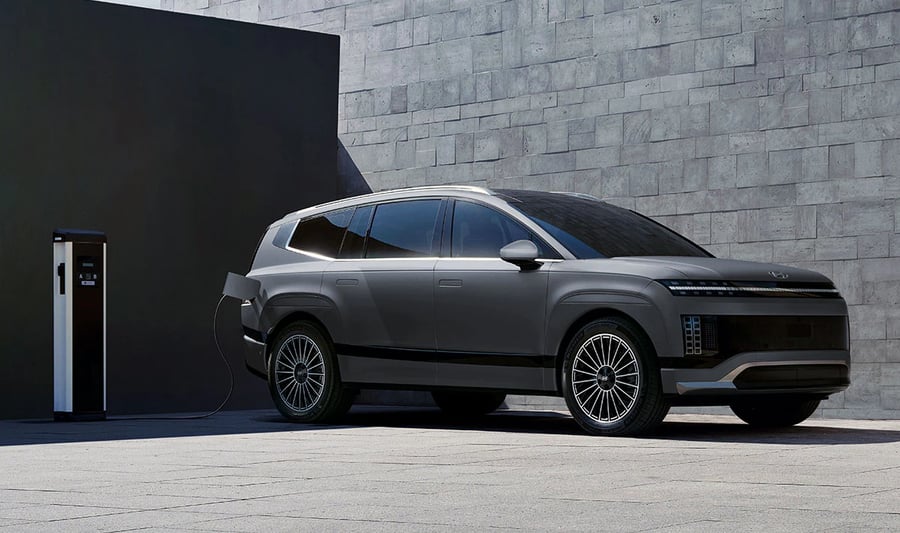
The Ioniq 9 is new for 2026, and its entry into the market has been consequential from the start: it earns a perfect safety score, a Top Safety Pick+ designation from the IIHS, and a five-star overall rating from the NHTSA, all in its first model year. The IIHS award represents the organization’s highest recognition, placing the Ioniq 9 among a select group of vehicles that meet the full criteria across crash tests and headlight evaluation simultaneously. For a debut model to achieve this standard is unusual, and the result places it at the top of U.S. News’s safety rankings for electric vehicles.
The Ioniq 9 also won the 2026 Best Midsize Electric SUV for Families award and ranks near the top of the electric SUV rankings overall, making its safety performance one element of a broader package that also covers practicality and driving dynamics. Senior Vehicle Testing Correspondent John M. Vincent describes a sleek, tapered body with a roomy, airy, and comfortable interior that, with the right powertrain, delivers quick performance. The maximum range reaches 335 miles, which positions the Ioniq 9 among the more capable EVs in its class on a single charge.
The standard driver-assistance suite is among the most comprehensive on this list. It includes lane-keep assist, adaptive cruise control, automatic emergency braking with detection for junctions, pedestrians, and cyclists, blind-spot collision avoidance, rear cross-traffic collision avoidance, front and rear parking sensors, lane-centering assist, evasive-steering assist, driver-attention monitoring, forward-attention monitoring, safe exit assist, rear-seat alert, speed limit recognition, and a hands-on semi-automated highway driving system. The depth of this standard feature set gives the Ioniq 9 a safety foundation that goes well beyond the minimum required to earn high crash test scores.
Credit: Honda
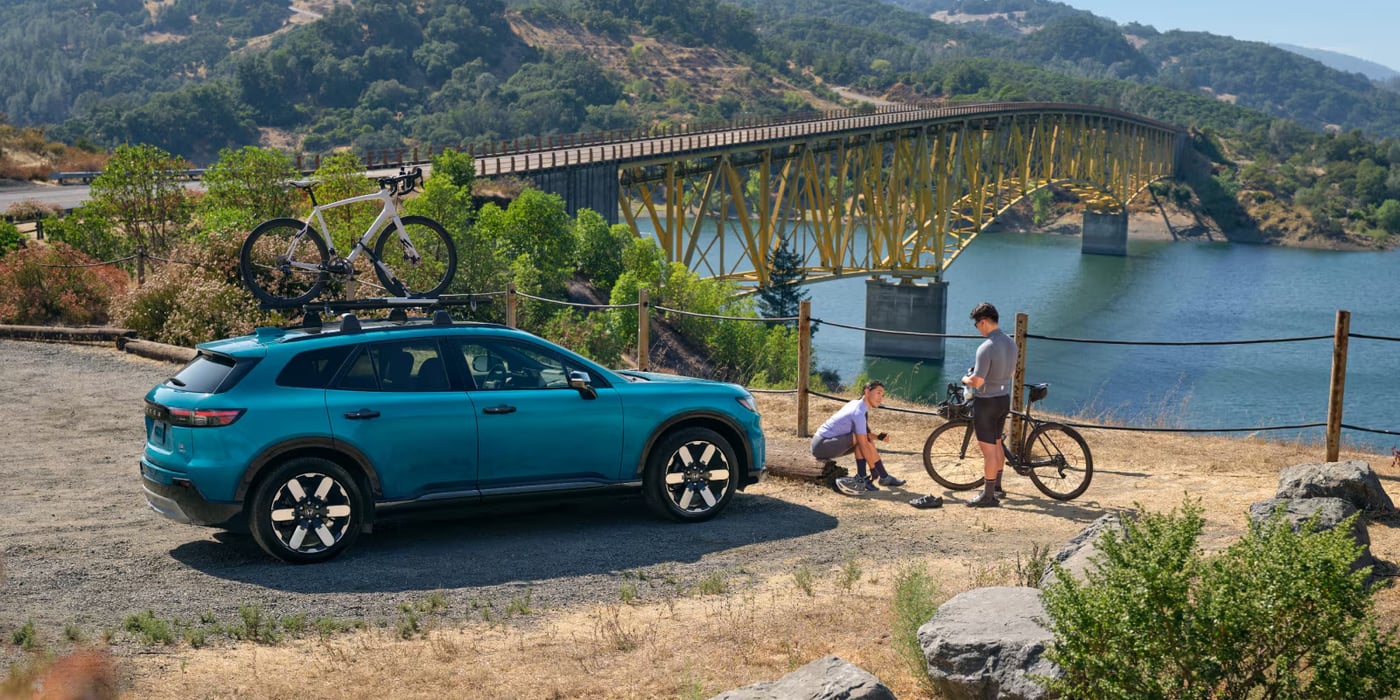
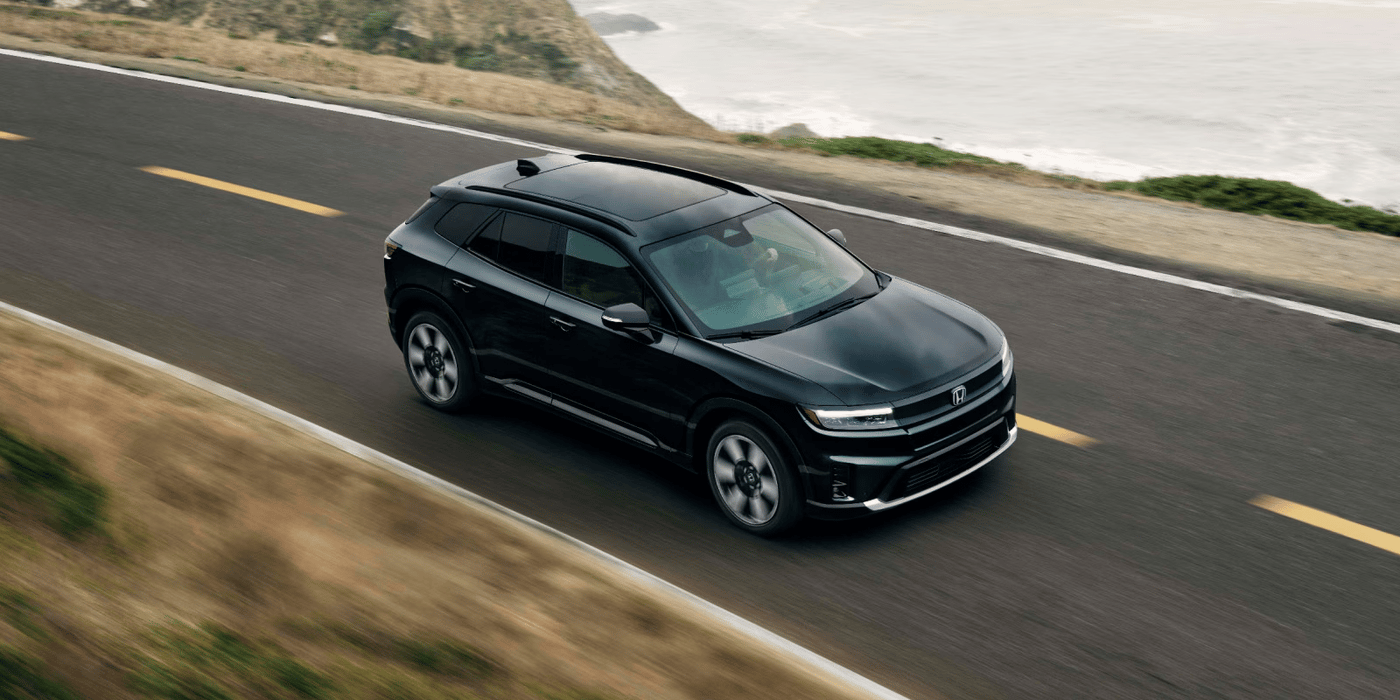
The Honda $HMC Prologue scores 9.8 out of 10 on U.S. News’s safety scale, supported by a five-star overall rating from the NHTSA and solid IIHS crash test performance. The IIHS awarded its highest rating of Good in two crash tests, with an Acceptable rating in the small overlap front test, which keeps the Prologue from earning a Top Safety Pick designation for 2026. The NHTSA result, however, reflects strong crash protection that the five-star rating confirms across the agency’s testing program.
Beyond the safety credentials, the Prologue delivers driving dynamics that reviewer Perry Stern describes as a smooth, confident ride with capable handling on winding roads, despite not qualifying as sporty. The range extends to just over 300 miles, which meets the threshold that the current EV market considers the baseline for competitive long-distance capability. The cabin feels roomy and comfortable, though the material quality leans toward hard plastics, which the review notes as a shortcoming relative to the vehicle’s other strengths.
The standard driver-assistance package covers the core bases: forward and reverse collision warning, forward and reverse automatic emergency braking with pedestrian detection, blind-spot monitoring, rear cross-traffic alert, lane-departure warning, lane-keep assist, automatic high-beam headlights, rear parking sensors, and a rear-seat alert. Available features further extend the capability with a surround-view camera system, a head-up display, traffic-sign recognition, and front parking sensors. The Prologue’s practical SUV format and accessible starting point make it a strong option for buyers who want strong safety performance without the premium that luxury-segment competitors require.
Credit: Cadillac
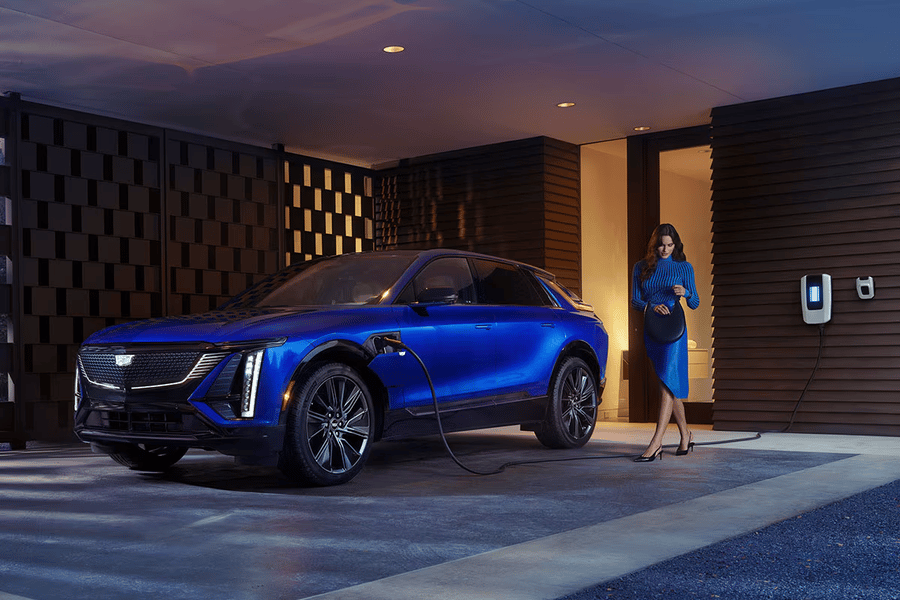
The Cadillac Lyriq also earns a 9.8 safety score, with both the NHTSA and IIHS confirming its top-notch crash-test performance. The one qualification is that the IIHS found the Lyriq’s headlight illumination insufficient to earn a Top Safety Pick designation despite the strong crash test results, a distinction that reflects the IIHS’s headlight evaluation criteria rather than any deficiency in structural crash protection. The NHTSA result stands on its own, and the breadth of the Lyriq’s standard safety technology places it among the better-equipped vehicles on this list.
U.S. News Autos Managing Editor Alex Kwanten describes the Lyriq as an impressive luxury cruiser that is easy to live with, a characterization that fits a vehicle built around comfort rather than outright performance. The rear-wheel-drive range of 326 miles gives the Lyriq competitive standing in the long-range EV category, and the smooth ride over rough pavement that the review notes suggests real-world comfort that range figures alone do not convey. The interior delivers the spaciousness and refinement that the Cadillac brand positions as its primary value proposition, with a futuristic feature set that rewards familiarity over time.
The standard driver-assistance suite includes forward and reverse collision warning, forward automatic emergency braking with pedestrian and cyclist detection, including cyclists approaching from the side, intersection assist, lane-departure warning, lane-keep assist, blind-spot monitoring, rear cross-traffic alert, adaptive cruise control, Super Cruise for partially automated highway driving, front and rear parking sensors, a surround-view camera system, park assist, rain-sensing wipers, a teen driver mode, a safety alert seat that vibrates to warn of hazards, and automatic high-beam headlights. The depth of this standard package, particularly the inclusion of Super Cruise and the safety alert seat, gives the Lyriq a technology foundation that matches its luxury positioning.
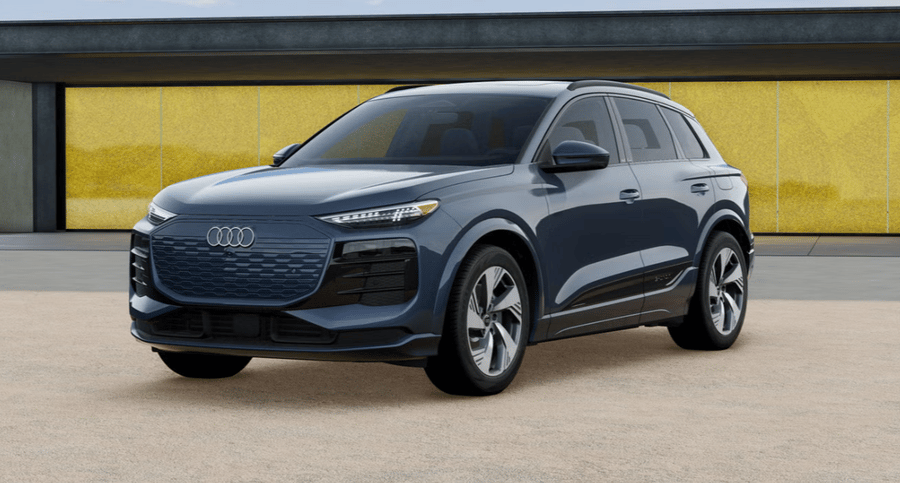
Credit: Audi
The Audi Q6 e-tron, new for 2025 and entering the 2026 market with a 9.8 safety score, demonstrates that its strongest performance comes in crash testing rather than in the competitive evaluations that U.S. News’s broader vehicle rankings capture. The NHTSA awarded five stars overall, and the IIHS named it a Top Safety Pick+, placing the Q6 e-tron among the most crash-safe vehicles in the electric SUV segment regardless of how it compares on other dimensions. Senior correspondent John M. Vincent’s observation that the Q6 e-tron lacks a special something to stand out in a crowded segment is a competitive assessment, not a safety one.
The practical case for the Q6 e-tron is substantial despite the competitive context. The maximum driving range exceeds 320 miles, quick charging capability reduces the time and cost of long-distance travel, the upgraded powertrain delivers strong performance, and the cabin offers quiet, comfortable surroundings for daily use and longer trips. The build-quality concern the review raises relates to material and assembly standards that buyers accustomed to Audi’s established reputation may find surprising, given the vehicle’s positioning.
Standard driver-assistance features include adaptive cruise control, safe exit assist, evasive steering assist, forward automatic emergency braking, traffic-sign recognition, driver-attention monitoring, rear cross-traffic alert, rear-seat alert, intersection assist, and front and rear parking sensors with automated parking assist. The suite is thorough at the standard level, and available features add an augmented-reality head-up display, enhanced adaptive cruise control, and a surround-view camera system for buyers who want the full technology package.
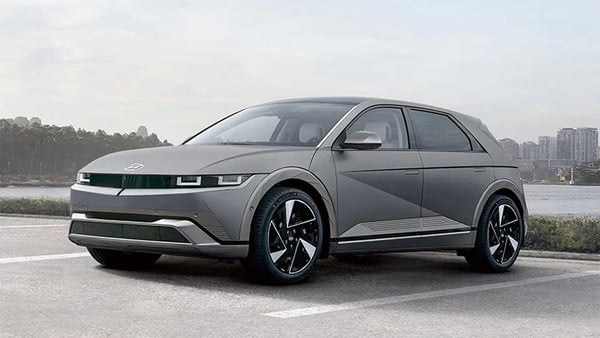
Credit: Hyundai
The Ioniq 5 shares the perfect safety score of its larger sibling, the Ioniq 9, while entering at the most accessible starting point of any vehicle in this ranking. The IIHS awarded it a Top Safety Pick+, the organization’s highest recognition, and while the NHTSA has not completed full testing of the 2026 model, the IIHS result alone reflects strong structural crash protection across the testing that has been completed.
The Ioniq 5’s retro-modern hatchback design and broad powertrain range give buyers significant flexibility within a single model. The Long Range variants offer up to 318 miles of range, while the Ioniq 5 N performance specification prioritizes a different set of priorities within the same platform. The vehicle comes well-equipped across trims, and the driver-assistance standard package covers forward and side collision warning, forward automatic emergency braking, pedestrian and cyclist detection, stop-and-go adaptive cruise control, lane-keep assist, lane-centering assist, blind-spot monitoring, rear cross-traffic alert, vehicle exit warning, rear-seat alert, traffic-sign recognition, driver-attention monitoring, automatic high-beam headlights, front and rear parking sensors, and a rearview camera.
The combination of a perfect safety score, an IIHS Top Safety Pick+ award, and an accessible entry point makes the Ioniq 5 the strongest value proposition on this list for buyers whose primary criteria are safety and affordability. It is one of only three vehicles in this ranking that start below the mid-forties in price, and the only one of those three to achieve a perfect safety score.
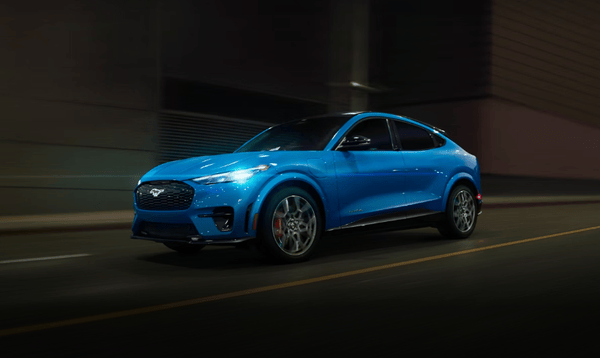
Credit: Ford
The Ford $F Mustang Mach-E earns a 9.7 safety score, supported by top marks from the NHTSA and a Top Safety Pick designation from the IIHS. The distinction between Top Safety Pick and Top Safety Pick+ is relevant here: the Mach-E achieves the former rather than the latter, which reflects the IIHS’s assessment across its full testing criteria. The NHTSA result confirms structural crash performance at the highest level the agency awards.
The Mach-E’s competitive case extends well beyond its safety credentials. The five-seat crossover offers 240 to 320 miles of range depending on trim and configuration, and the higher-performance Mach-E Rally variant covers the sprint from a standing start in 3.3 seconds. The interior quality and user-friendly technology interface highlighted in the review give the Mach-E a daily usability that the safety numbers represent only one dimension of. The name carries associations that Ford deliberately chose to attach to an EV rather than a sports car, a decision the review acknowledges without objection.
Standard driver-assistance features include stop-and-go adaptive cruise control, forward collision warning, forward automatic emergency braking with pedestrian detection, automatic high-beam headlights, blind-spot monitoring, rear cross-traffic alert, rear parking sensors, evasive-steering assist, lane-keep assist, lane-departure warning, and BlueCruise, a subscription-based semi-autonomous highway driving mode that manages steering, acceleration, and braking on compatible roads. The inclusion of BlueCruise as standard equipment gives the Mach-E semi-automated driving capability that many competitors offer only as an optional upgrade.
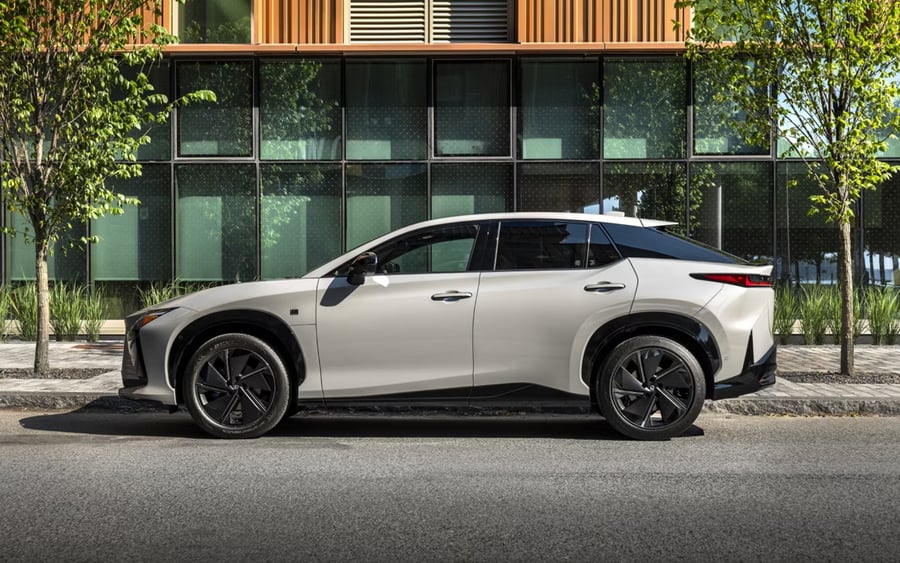
Credit: Lexus
The Lexus RZ earns a 9.7 safety score and five-star overall ratings from the NHTSA, with the IIHS also awarding top marks for crash safety, though it does not issue a formal Top Safety Pick designation. The crash-test performance is the vehicle’s clearest strength: the structural protection the RZ provides places it among the safest vehicles in the luxury electric crossover category, regardless of the competitive limitations the review identifies in other areas.
Reviewer Mike Hagerty’s assessment is direct: the RZ underperforms relative to the baseline expectations Lexus and its parent company, Toyota $TM, have established across their respective histories. The shortcomings in range, charging speed, and acceleration represent real competitive disadvantages in a segment where rivals have aggressively pushed each of those metrics. The 300e base model extends to 266 miles of range, while the top 450e reaches only 196 miles with its 20-inch wheels, a result that falls short of most vehicles on this list and well below what the competitive segment now offers at comparable prices.
The upscale interior, the relative value within the luxury segment, the sharp exterior styling, and the well-equipped feature list represent genuine strengths that buyers with lower mileage requirements and a preference for Lexus’s brand values will find worth weighing against the range limitations. The standard driver-assistance package covers forward collision warning, forward automatic emergency braking, pedestrian detection, intersection assist, lane-departure warning, lane-keep assist, adaptive cruise control, lane-centering assist, traffic-sign recognition, blind-spot monitoring, rear cross-traffic alert, automatic high-beam headlights, vehicle exit warning, a rearview camera, front and rear parking sensors, and rain-sensing wipers.
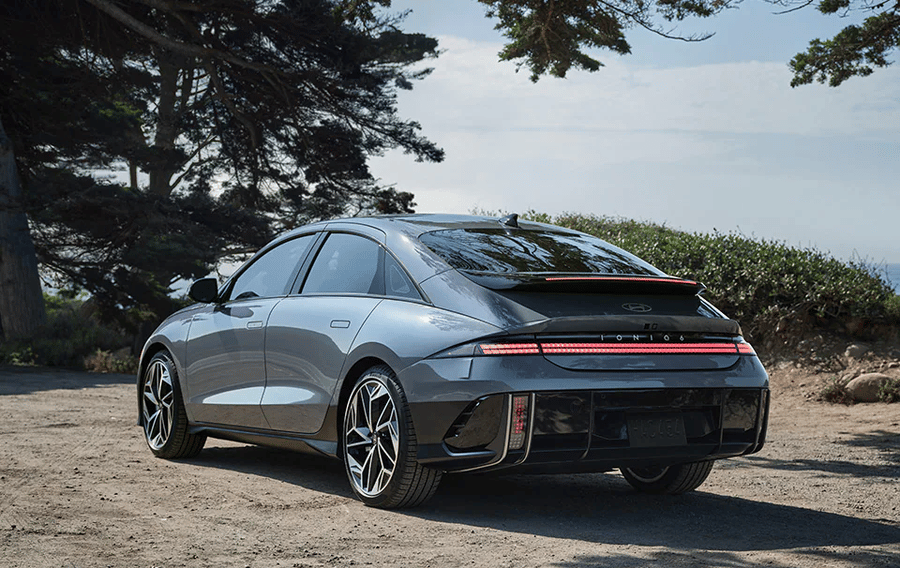
Credit: Hyundai
The Ioniq 6 scores 9.6 on U.S. News’s safety scale, earning a five-star overall rating from the NHTSA and a Top Safety Pick+ from the IIHS, the latter representing the organization’s highest recognition. The sedan’s range spans 240 to 342 miles, depending on configuration, with the upper end of that range surpassing every other vehicle on this list. The Ioniq 6 also charges quickly and handles well regardless of powertrain choice, and the rear-wheel-drive base can be upgraded to all-wheel drive for buyers who need it.
U.S. News describes the Ioniq 6 as a vehicle that would almost certainly be the top EV in any other manufacturer’s lineup. Within Hyundai’s own electric portfolio, it ranks third, behind the Ioniq 9 and Ioniq 5, in the broader rankings, despite achieving the highest non-luxury rating and offering exceptional value relative to its performance and safety credentials. The sedan body style’s design tradeoffs, specifically reduced trunk space and rear-seat headroom compared to crossover alternatives, represent practical considerations for buyers who carry cargo or passengers regularly.
Standard driver-assistance features include forward collision warning, forward automatic emergency braking, pedestrian and cyclist detection, blind-spot monitoring, rear cross-traffic alert, lane-keep assist, lane-trace assist, stop-and-go adaptive cruise control, automatic high-beam headlights, driver-attention monitoring, speed limit recognition, vehicle exit warning, rear-seat alert, front and rear parking sensors, and a rearview camera. The comprehensiveness of this standard package, paired with the IIHS Top Safety Pick+ recognition, gives the Ioniq 6 a safety foundation that its position on this list at a non-luxury starting point makes particularly notable.
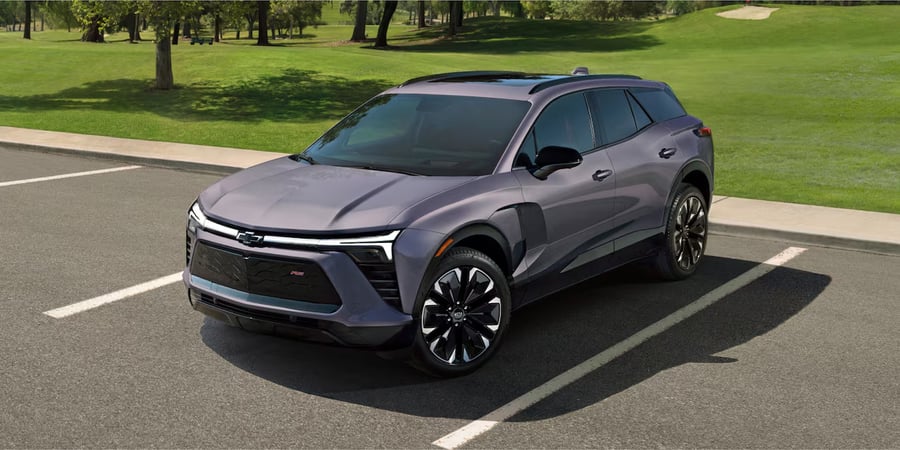
Credit: Chevrolet
The Chevrolet Blazer EV scores 9.6 and earns a five-star overall safety rating from the NHTSA, a strong result that reflects the underlying platform’s structural integrity. The IIHS results paint a mixed picture: ratings of Good and Acceptable across its crash tests place the Blazer EV below the Top Safety Pick threshold, a result partially offset by the NHTSA rating. The shared platform with the Honda $HMC Prologue, which appears higher on this list, gives the Blazer EV a structural foundation, as confirmed by the five-star NHTSA rating.
John M. Vincent’s assessment notes that, regardless of powertrain choice, the Blazer EV delivers surprisingly sedate and refined road manners, a characterization that suggests a driving experience that does not match the aggressive visual styling the Blazer name historically implied. The cabin is roomy and serene, and the more than 300 miles of range across three powertrain configurations gives buyers flexibility in balancing performance and efficiency. The infotainment system works well for Android users but carries some hang-ups that the review notes without characterizing as severe.
The standard driver-assistance package includes forward collision warning, forward and reverse automatic emergency braking covering intersections, pedestrians, and cyclists, adaptive cruise control, a safety alert seat, rear-seat alert, rear parking sensors, rear cross-traffic braking, traffic-sign recognition, a following-distance indicator, blind-spot monitoring with steering assist, reverse pedestrian alert, lane-departure warning, lane-keep assist, a side cyclist alert, a surround-view camera, automatic high-beam headlights, and a teen driver mode. The breadth of this standard suite, particularly the inclusion of the safety alert seat and the side cyclist alert, distinguishes the Blazer EV’s safety technology package from several competitors at similar price points.
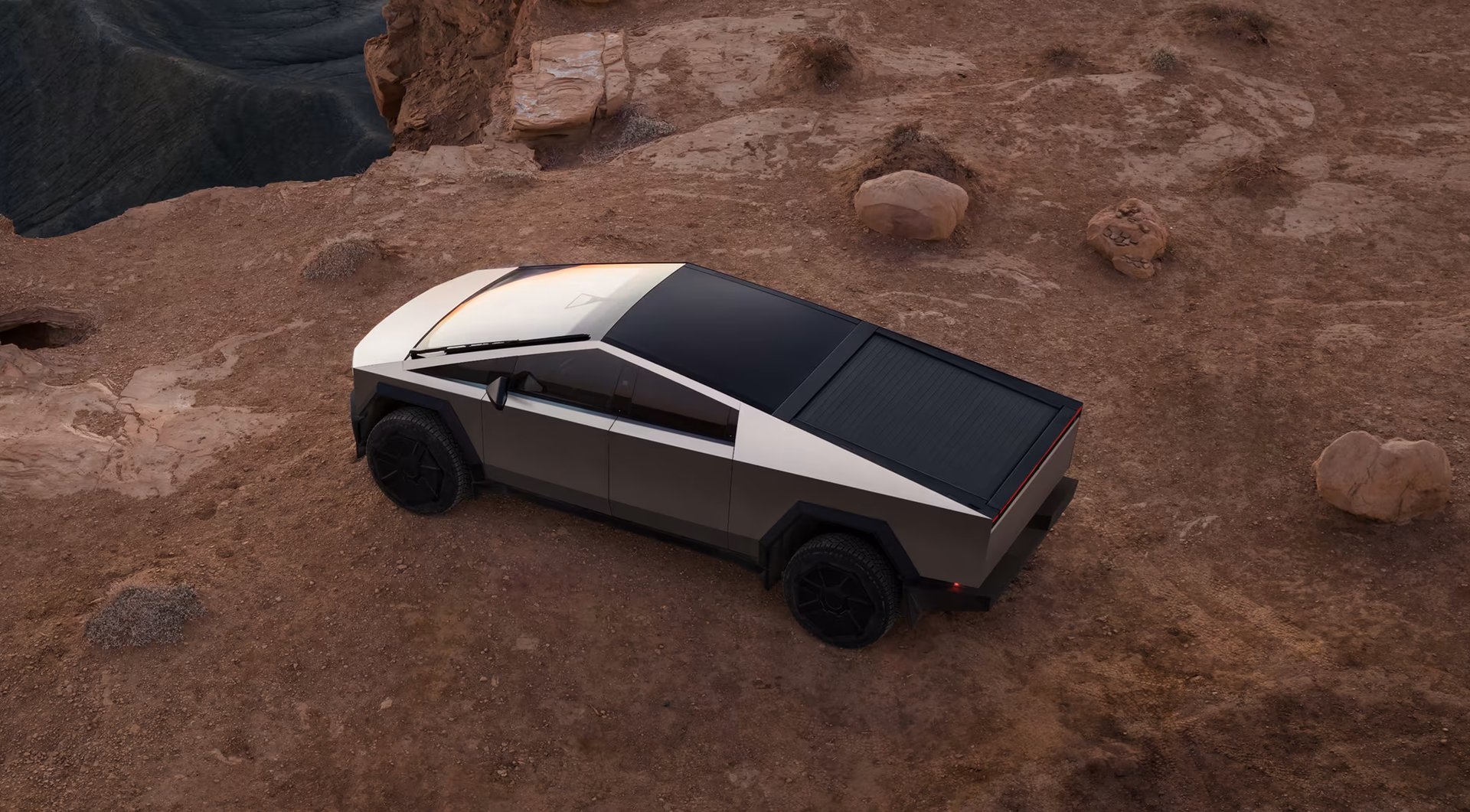
Credit: Tesla
The Tesla $TSLA Cybertruck scores 9.5 and earns both a Top Safety Pick+ from the IIHS and a five-star overall rating from the NHTSA, placing it among the crash-safest vehicles on this list despite a competitive profile that U.S. News’s Vehicle Testing Editor Zach Doell describes with qualified enthusiasm. The steering, which Doell characterizes as overly responsive, feeling nervous and twitchy, represents a driving dynamics concern that the safety scores do not capture, since crash test ratings measure structural protection and detection technology rather than handling composure.
The Cybertruck’s predicted reliability score of 86 out of 100 on the J.D. Power scale falls within the Great category, defined as the 81-to-90 range. Among the vehicles on this list, that reliability standing gives the Cybertruck a distinction that safety scores alone do not confer, since a vehicle’s predicted durability represents a different dimension of ownership quality than its crash performance. The 325 miles of maximum range is competitive in the broader EV market but falls below most other electric trucks, a comparison that matters more to buyers evaluating the Cybertruck within its own segment than against the broader EV field.
The roomy cabin and comprehensive feature set give the Cybertruck practical strengths beyond the safety credentials. Standard driver-assistance features include forward and side collision warning, forward automatic emergency braking, pedestrian detection, adaptive cruise control, blind-spot monitoring, rear cross-traffic alert, lane-departure warning, lane-keep assist, a surround-view camera system, automatic high-beam headlights, rain-sensing wipers, and a rearview camera. Full Self-Driving capability is available as an optional feature for buyers who want the most extensive automated driving Tesla currently offers.