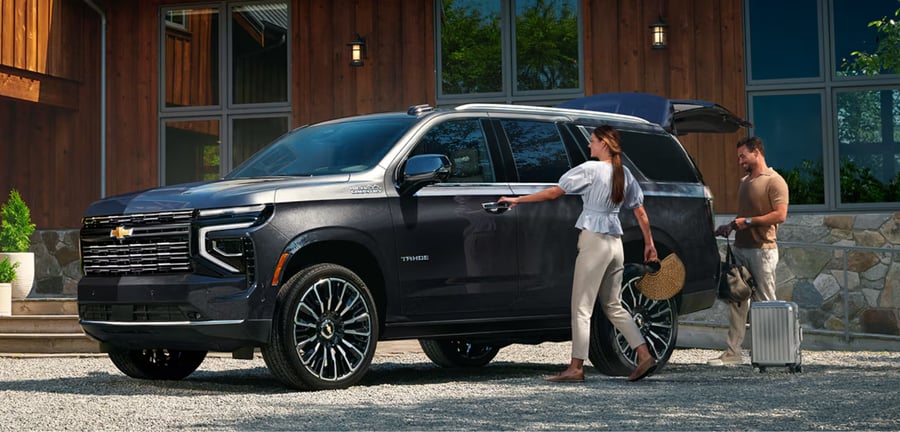
Credit: Chevrolet
A large SUV’s imposing presence can create a misleading sense of security. The visual mass of a full-size body-on-frame vehicle suggests protection, but size alone does not determine safety outcomes. Oversized dimensions can actually increase collision risk in certain situations, and heavy steering that resists driver input can prevent the rapid maneuvering required for avoidance. The vehicles that rank highest for safety are not simply the biggest or the most expensive. The safest ones carry technology that helps prevent crashes and mitigates damage when prevention fails.
The safety technology landscape in large and three-row SUVs has advanced substantially in the past decade. Features that were once optional accessories on luxury trim levels — forward collision warning, automatic emergency braking, blind-spot monitoring — now appear as standard equipment on base configurations across mainstream and luxury brands. The difference between a safe SUV and an unsafe one increasingly comes down to the comprehensiveness of the standard safety suite, the quality of crash-test performance across the various testing protocols run by the National Highway Traffic Safety Administration and the Insurance Institute for Highway Safety, and the availability of partially automated driving assistance features that reduce driver workload on long trips.
The eight vehicles below come from U.S. News & World Report, which evaluated large and three-row midsize SUVs based on U.S. News safety scores that incorporate standard safety features and crash-test data from the NHTSA and IIHS. The source divides the list into a large SUV category — for which sufficient safety score data exists — and a three-row midsize SUV category, included because safety score data for some large SUVs remains incomplete. The source notes that scores and rankings may update throughout the year as new testing data becomes available.
1 / 8
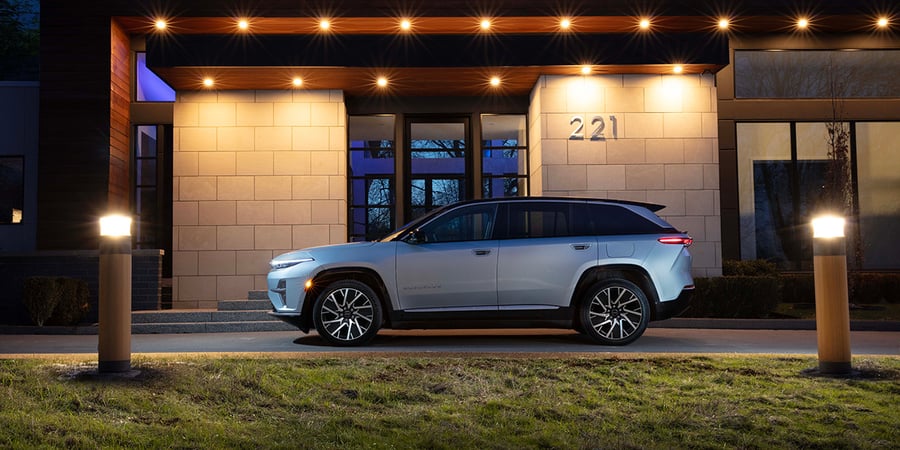
Credit: Jeep
The 2025 Jeep Wagoneer earns the top safety score of 8.9 out of 10 among large SUVs in this evaluation and tows up to 10,000 pounds, the highest tow rating in the large SUV class. The 2025 model year adds more standard and available safety features to a vehicle that already excels in interior space and design, and the cabin offers comfortable, adult-sized seating across all three rows. With the second and third rows folded, cargo capacity reaches 116.7 cubic feet. The Wagoneer’s ability to balance a family-hauler interior with maximum tow capacity prompted reviewer Kristin Shaw to compare it to a Swiss Army knife for families who road-trip, camp on rough terrain, or transport large groups with their gear.
The Wagoneer does not match the off-road readiness of some other Jeep models, and its large footprint creates maneuvering challenges in confined spaces. Neither limitation affects its core safety credentials. The crash-test record shows solid numbers despite some mixed results: the NHTSA awarded it four out of five stars for overall safety, while the IIHS gave it its highest “Good” rating in two crash tests but the second-lowest “Moderate” rating in a third.
The standard safety feature list is extensive for the large SUV class. Rain brake support — a system that periodically pumps brake pads in wet conditions to maintain their dry effectiveness — addresses a weather-specific scenario that most competitors do not cover at the standard level. Hill-start assist prevents unintended rollback on inclines. Pedestrian detection with automatic emergency braking, adaptive cruise control, blind-spot monitoring, rear cross-traffic alert, and front and rear parking sensors round out the standard suite. Available features include a surround-view camera system, driver-attention monitoring, intersection assist, and a head-up display. The Wagoneer’s highest large-SUV safety score on this list, its 10,000-pound tow capacity, and three rows of adult-friendly seating together make it the most comprehensively capable vehicle in the category.
2 / 8
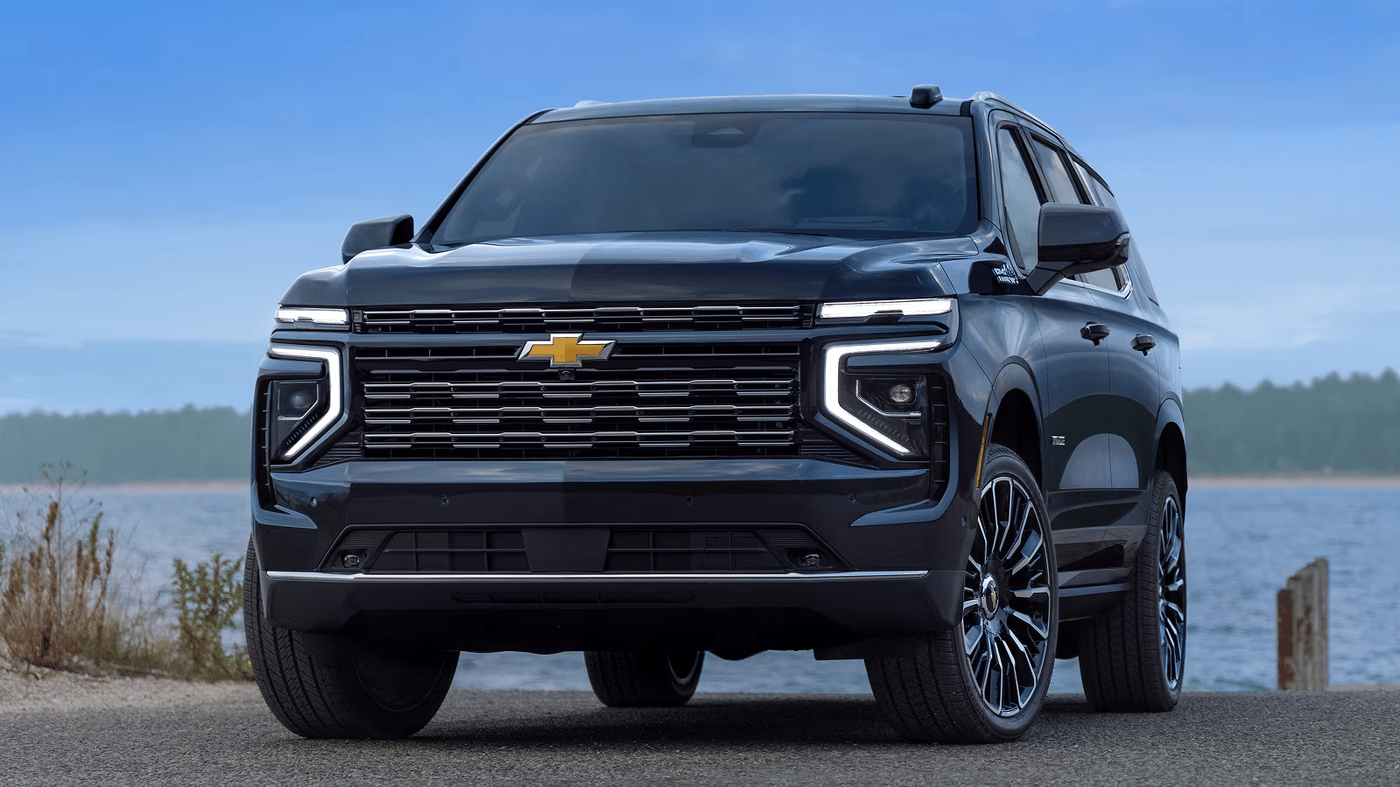
Credit: Chevrolet
The 2025 Chevrolet Tahoe carries a safety score of 8.7 out of 10 and arrives with a meaningful 2025 refresh that adds a 17.7-inch infotainment touchscreen, a retuned suspension, and additional power for its available turbodiesel engine. The infotainment screen earns specific praise from reviewers for its readability and intuitive operation, a meaningful distinction in a segment where large screens often sacrifice usability for visual impact. The Tahoe’s interior space and powertrain capability are standard strengths of the platform.
The crash-test record reflects a genuine disagreement between the two major testing organizations. The NHTSA awarded the Tahoe five out of five stars for overall safety, its highest possible rating. The IIHS gave it a “Good” score in one crash test, an “Acceptable” grade in a second, and a “Poor” score in a third. The source acknowledges the divergence and concludes that the Tahoe remains one of the safest large SUVs available, credit given to its broad standard safety feature list.
The Tahoe’s standard safety suite is among the most comprehensive on this list. Teen Driver allows secondary drivers — typically teenagers — to have speed and audio volume limits set for their profiles, a feature aimed at reducing risky behavior. Buckle to Drive prevents the vehicle from shifting out of Park until the driver’s seat belt — and the front passenger’s, if present — clicks into the buckle. The Safety Alert Seat vibrates the driver’s seat to warn of detected hazards. A rear-seat alert prompts the driver to check the back seat before exiting. The standard suite also includes a surround-view camera, forward collision warning with enhanced automatic emergency braking, pedestrian detection, adaptive cruise control, lane-departure warning, lane-keep assist, rear cross-traffic alert, automatic high-beam headlights, and rain-sensing wipers. Available features include Super Cruise, which enables partially automated driving on designated roadways, and a rear-camera mirror that streams a live view of what is behind the vehicle to the rearview mirror display.
3 / 8
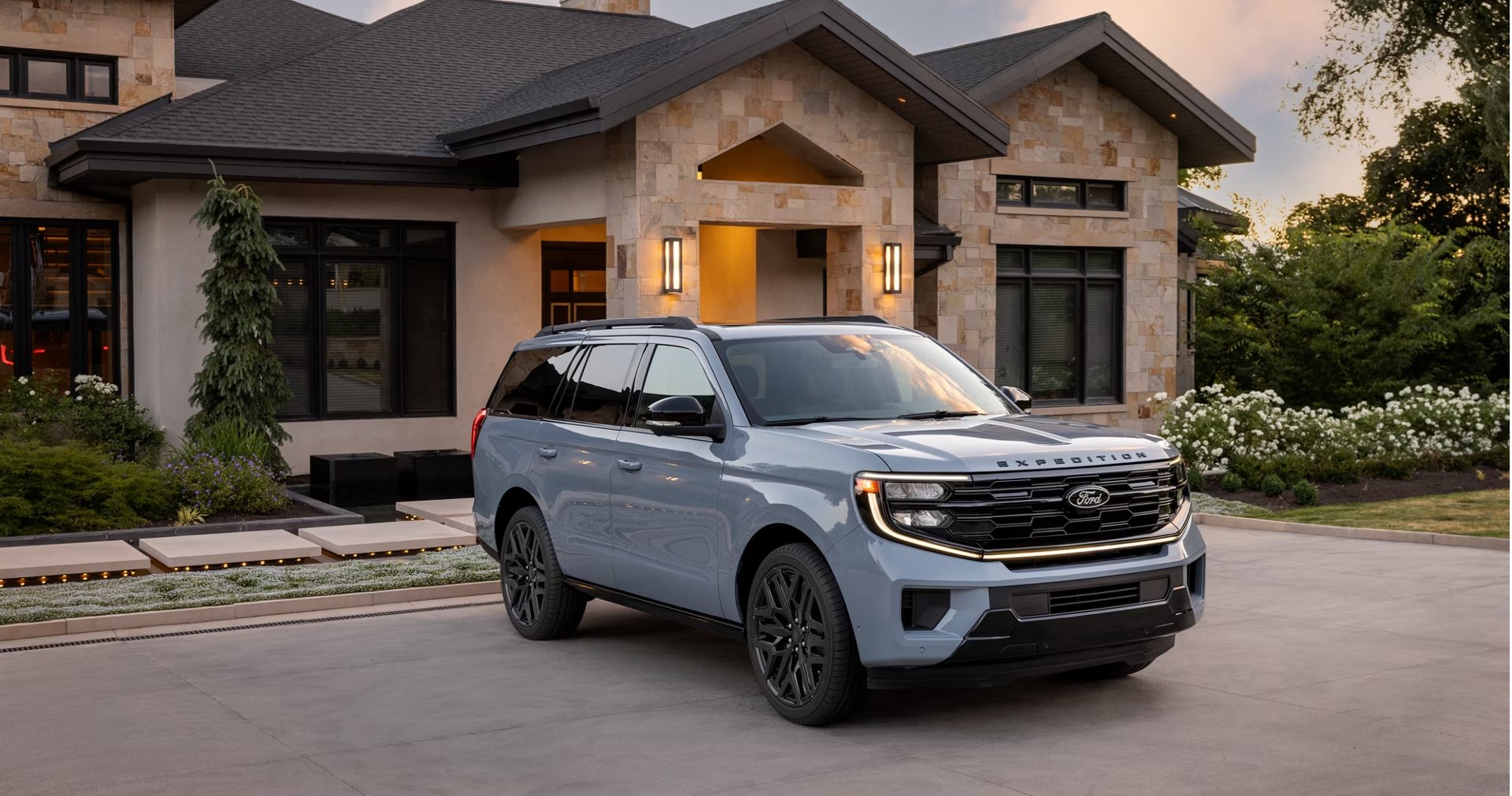
Credit: Ford
The 2026 Ford $F Expedition holds a safety score of 8.4 out of 10 among large SUVs and earns the highest overall U.S. News rating of any vehicle on this list at 9.2 out of 10, which gives it the top spot in the class rankings and the 2026 Best Large SUV for the Money award. Vehicle Testing Editor Zach Doell praised the Expedition’s interior quality and layout, though he noted that hard-plastic elements, awkward steering-wheel controls, and an unrefined stop-start system detracted from the overall experience.
The Expedition’s crash-test results show a different split from the Tahoe’s. The NHTSA gave it five out of five stars for overall safety, consistent with the NHTSA’s assessment of the other vehicles at the top of this list. The IIHS awarded the Expedition a “Good” grade in one side crash test but “Marginal” grades in two front crash tests. The safety score reflects this result, but that does not displace the Expedition from its position as the top-ranked large SUV in the broader class evaluation.
Standard safety equipment includes Pro Trailer Hitch Assist and Pro Trailer Backup Assist, two trailer-management systems that address the practical challenge of reversing a tow setup by automatically managing speed, steering, and braking. Both features are standard on the Expedition, not optional add-ons, giving buyers who tow trailers a meaningful advantage over competitors who charge extra for similar technology. Additional standard items include a surround-view camera, blind-spot camera system, forward collision warning with pedestrian detection, automatic emergency braking, lane-departure warning, lane-keep assist, adaptive cruise control with lane centering, rear cross-traffic alert, and automatic high-beam headlights. BlueCruise, the available partially automated highway driving mode, handles steering, lane changing, acceleration, and braking on compatible roads. The Pro Trailer systems and the BlueCruise availability together give the Expedition a towing and long-distance driving convenience package that no other large SUV on this list matches in its standard or available feature set.
4 / 8
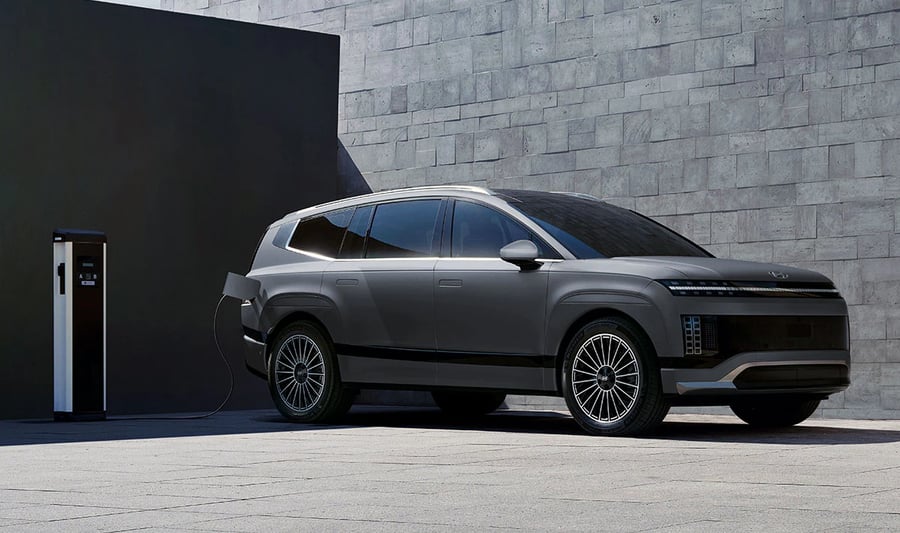
Credit: Hyundai
The 2026 Hyundai Ioniq 9 achieves a perfect safety score of 10 out of 10, the highest on this entire list and a distinction that places it in a category by itself among three-row SUVs. The electric vehicle earns a Top Safety Pick+ designation from the IIHS, the institute’s highest honor, and a five-star overall safety rating from the NHTSA. No other vehicle on this list earns the Top Safety Pick+ award. The Ioniq 9 seats seven occupants with adequate room for each, and the rear cargo area provides meaningful storage alongside the passenger capacity.
The powertrain is a single electric motor that delivers the power the source describes as pleasing, with a maximum range of 335 miles per charge. The source suggests this figure is sufficient to address most drivers’ concerns about electric vehicle range. Dual 12.3-inch interior screens come standard, along with wireless Android Auto and Apple $AAPL CarPlay. Hyundai’s Highway Driving Assist 2, a semi-autonomous system, is standard on the base trim level, so buyers do not need to upgrade to access it.
The standard safety feature list includes several items that do not appear on any other vehicle in this group. Safe exit assist prevents the doors from opening if sensors detect an approaching vehicle from behind. The feature addresses a collision scenario that standard blind-spot monitoring typically does not cover. Evasive steering assist actively steers the vehicle to help avoid collisions that automatic emergency braking alone may not fully prevent. Forward-attention monitoring adds a second monitoring layer to the driver-attention system. The full standard suite also includes lane-keep assist, adaptive cruise control with pedestrian and cyclist detection, automatic high-beam headlights, blind-spot collision-avoidance assist, rear cross-traffic collision-avoidance braking, front and rear parking sensors, lane-centering assist, rear-seat alert, and speed limit recognition. The Ioniq 9’s perfect safety score, Top Safety Pick+ status, and the breadth of its standard safety feature list give it the strongest safety case of any vehicle on this list.
5 / 8
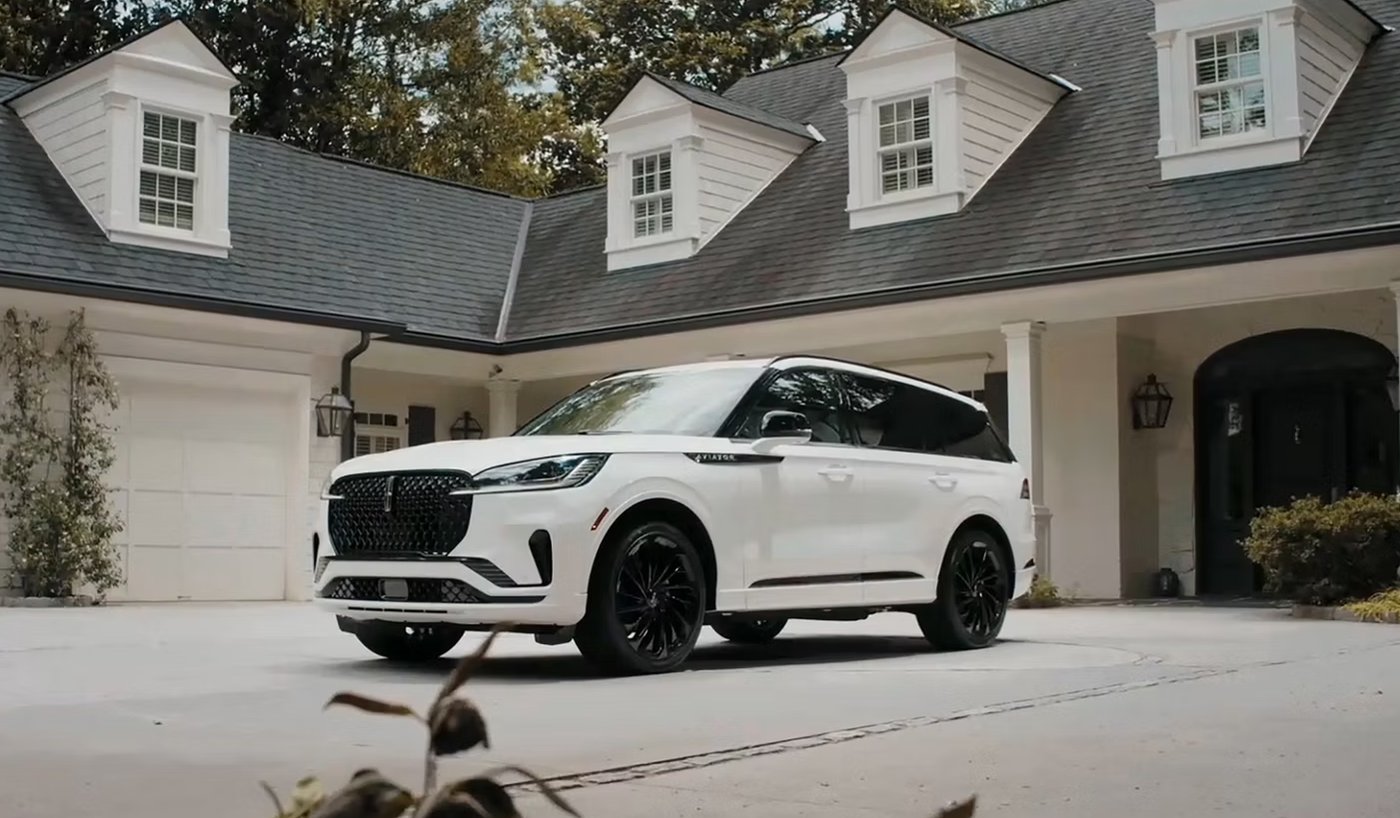
Credit: Lincoln Aviator
The 2026 Lincoln Aviator carries a safety score of 9.8 out of 10 among three-row midsize SUVs and includes BlueCruise, a partially automated hands-free highway driving mode, as a standard feature, an inclusion that Lincoln’s competitors in the luxury midsize SUV space do not universally offer at the base trim level. The NHTSA gives the Aviator five out of five stars for overall safety. The IIHS awards it the highest “Good” rating in three crash tests and in a pedestrian collision prevention test, though it does not award the Aviator either of its Top Safety Pick designations.
The interior is well-appointed with high-quality materials, power-adjustable seats, a heated steering wheel, synthetic leather upholstery, and tri-zone automatic climate control. The third row is the Aviator’s primary practical limitation: the source describes it as exceptionally tight and best suited for children, with less padding than the first two rows. The twin-turbo V6 engine is powerful, and fuel economy estimates are strong for the segment.
The standard safety suite is notable for its post-collision technology. Post-collision braking, a post-collision crash alert system, and post-collision assist address what happens in the critical seconds after an initial impact, a set of features that most competitors do not include at the standard level. Intersection assist uses sensors to help prevent accidents at intersections, another feature not universally available as standard. Additional standard items include a surround-view camera, front and rear parking sensors, forward and reverse automatic emergency braking, pedestrian detection, blind-spot monitoring, rear cross-traffic alert, lane-departure warning, evasive steering assist, adaptive cruise control with lane centering, automatic high-beam headlights, rearview camera, and the BlueCruise system. The Aviator’s 9.8 safety score, its NHTSA five-star rating, and the post-collision safety technology set together make it the most forward-thinking safety package among the luxury vehicles on this list. The BlueCruise inclusion as standard equipment also reduces driver workload on extended highway trips, a feature that competitors who charge extra for similar semi-autonomous systems cannot match at equivalent trim levels.
6 / 8
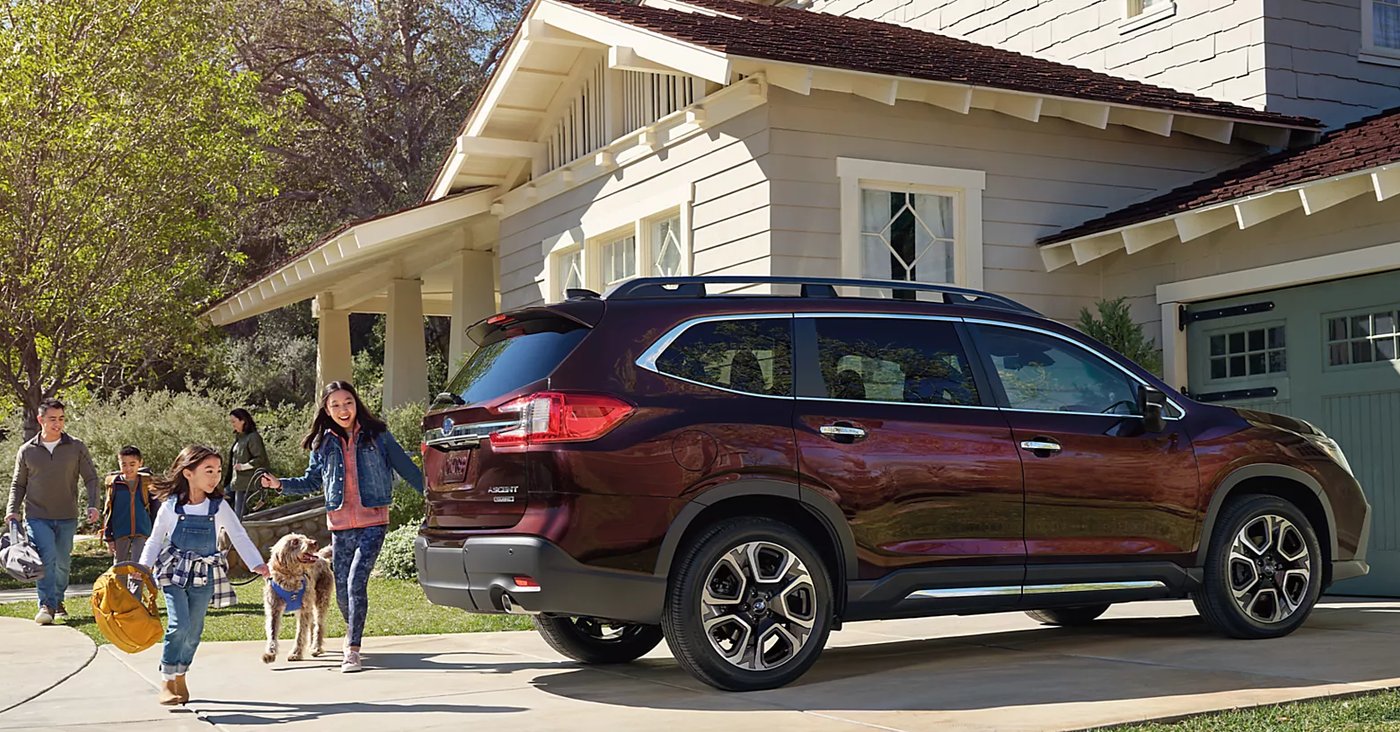
Credit: Subaru
The 2026 Subaru Ascent carries a safety score of 9.8 out of 10 and earns a Top Safety Pick+ award from the IIHS. It is one of only two vehicles on this entire list to receive that designation, alongside the Hyundai Ioniq 9. The NHTSA gives it five stars for overall safety. The Ascent’s exterior styling is straightforward, and its interior uses more plastic than those of luxury-oriented competitors, but neither compromises the vehicle’s safety performance or its practicality.
All three rows accommodate even tall adults, a capability the source highlights as notable for an eight-passenger midsize SUV. The source also notes that filling the Ascent to its full eight-person capacity may not provide optimal comfort for every occupant, though the three-row spaciousness extends across all seating positions, not just the first two rows. The Subaru’s capability on intermediate off-road terrain extends the Ascent’s utility beyond typical suburban family use.
The standard safety feature list covers forward and reverse collision warning, forward and reverse automatic emergency braking, pedestrian and cyclist detection, adaptive cruise control, lane-departure warning, lane-keep assist, lane-centering assist, blind-spot monitoring, rear cross-traffic alert, adaptive headlights with automatic high beams, rearview camera, and a rear-seat alert. The adaptive headlights, which adjust their angle based on steering input and vehicle speed, provide illumination in curves that standard fixed headlights cannot match, and they come standard on the Ascent, where competitors often charge extra. The Ascent’s Top Safety Pick+ award, five-star NHTSA rating, three rows of adult-capable seating, and standard adaptive headlights together make a strong case for it as the best value for safety-focused three-row buyers on a budget. The Ascent’s rugged platform also provides intermediate off-road capability that no other vehicle on this list offers, aside from the Wagoneer, extending its practical utility beyond the school-run and highway-trip duties that define most three-row family SUV use cases.
7 / 8
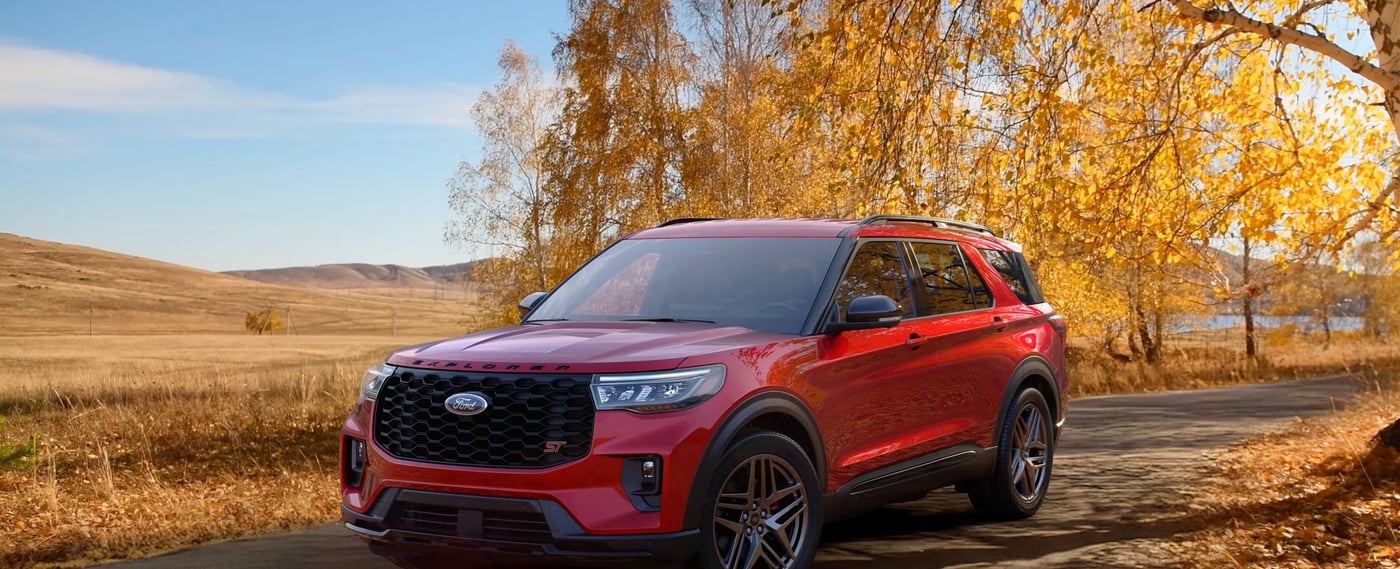
Credit: Ford
The 2026 Ford $F Explorer carries a safety score of 9.8 out of 10 and gives Ford three vehicles on this eight-vehicle list. The count also reflects the Lincoln Aviator, given Ford’s ownership of the Lincoln brand. The Explorer earns five stars for overall safety from the NHTSA and a Top Safety Pick designation from the IIHS, the institute’s second-tier recognition. Its safety credentials exceed those of vehicles ranked higher in the broader three-row midsize class, even though cabin materials quality and a tight third row limit its overall competitive position.
The powertrain options are powerful, and the ride quality suits the Explorer’s dimensions well. The cargo hold is spacious, which the source presents as a practical trade-off for families who need hauling capacity more than seven-passenger seating at all times. A 13.2-inch standard touchscreen supports wireless smartphone connectivity and earns positive marks for usability.
Standard safety equipment includes a rearview camera, rear parking sensors, forward collision warning with pedestrian detection, automatic emergency braking, lane-departure warning, lane-keep assist, adaptive cruise control with lane-centering assist, blind-spot monitoring, rear cross-traffic alert, and automatic high-beam headlights. Available features include a surround-view camera, front parking sensors, BlueCruise semi-autonomous driving, and adaptive headlights. The Explorer’s IIHS Top Safety Pick — one step below the Top Safety Pick+ that the Ioniq 9 and Subaru Ascent earn — and its NHTSA five-star rating give it a crash-test credibility that holds despite the standard material quality limitations. Three Ford-platform vehicles in the top eight across both categories demonstrate how consistently the automaker’s safety engineering performs across its SUV lineup. The Explorer’s spacious cargo hold also gives it a practical edge for buyers who load gear but do not need seven occupied seats, and BlueCruise availability extends the active safety story into assisted highway driving, which the Aviator includes at the standard trim level without any upgrade cost.
8 / 8
Credit: Buick
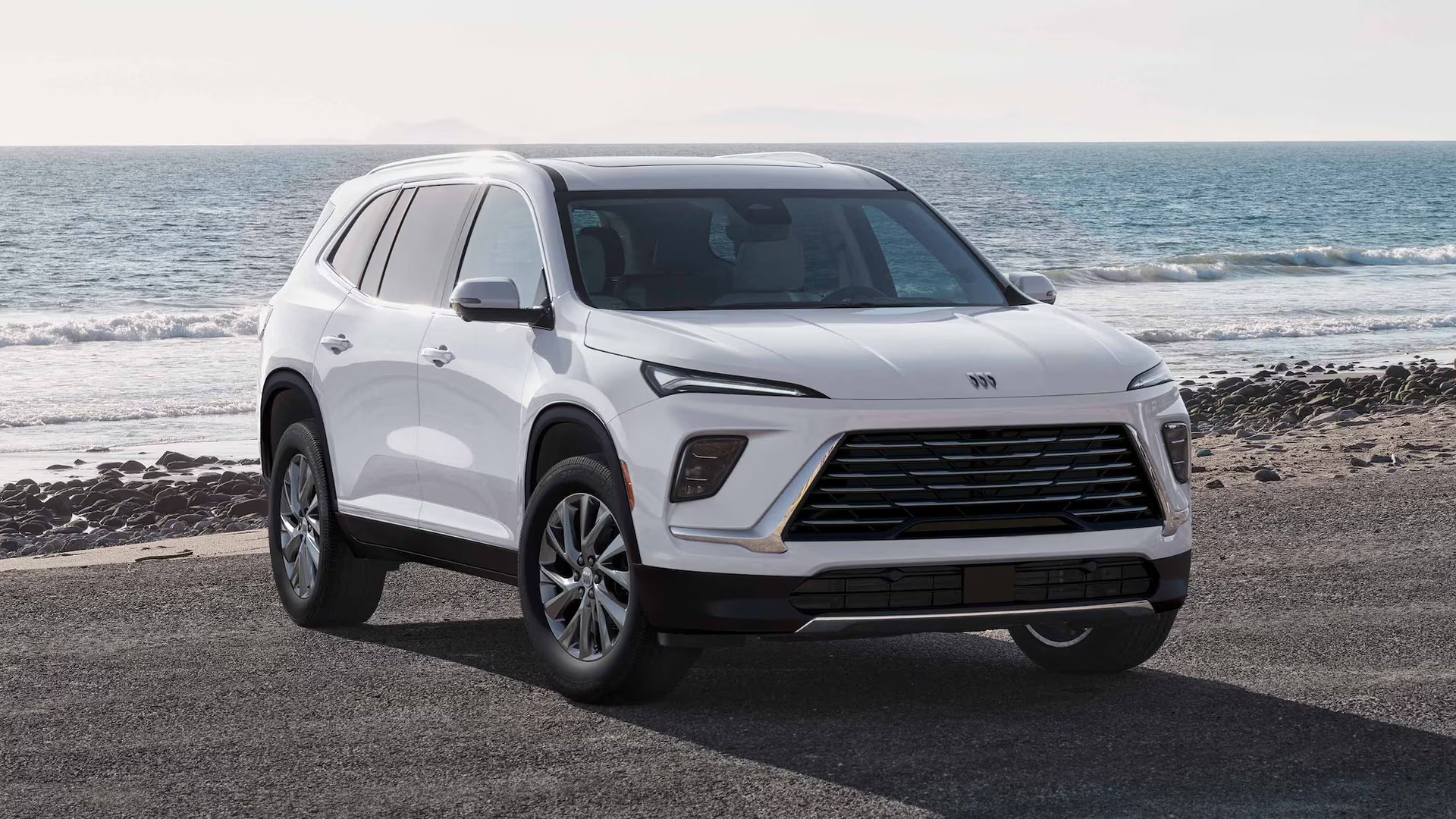
The 2026 Buick Enclave carries a safety score of 9.8 out of 10 and earns a Top Safety Pick award from the IIHS for 2026. The NHTSA gives it five stars for the side crash test and four stars in the rollover test. This differs slightly from the five-star overall ratings that some other vehicles on this list achieve. The Enclave’s defining claim among safety-conscious buyers is its third-row seating: the source describes the Enclave’s third-row padding as better than most other midsize SUVs, which makes extended third-row use more practical for adults and more comfortable for children across any trip length.
The first two rows are roomy and supportive, and cargo space is ample alongside the passenger accommodation. The standard four-cylinder engine is powerful enough for typical use but generates noise and hesitation that diminish the Enclave’s otherwise composed ride character. The overall ride quality is smooth and comfortable when the engine isn't working hard, positioning the Enclave well for highway-focused family driving.
Standard safety technology includes a surround-view camera, automatic high-beam headlights, forward and reverse collision warning, automatic emergency braking, pedestrian and cyclist detection, adaptive cruise control, lane-departure warning, lane-keep assist, blind-spot monitoring, rear cross-traffic alert, traffic-sign recognition, Teen Driver, the Safety Alert Seat, and a rear-seat alert. Available features include Super Cruise for semi-autonomous highway driving, a head-up display, hands-free park assist, a rear-camera mirror, and driver-attention monitoring. The hands-free park assist is a practical active safety feature that no other vehicle on this list offers at any trim level, giving the Enclave a parking-specific safety capability that matters most for drivers who regularly navigate tight urban spaces. The Enclave’s superior third-row seating, the comprehensive standard safety suite, and the hands-free parking capability give it occupant comfort and active-safety advantages that competitors in the safety-focused three-row midsize SUV segment do not fully replicate in a single vehicle.
