
The 5 midsize American cities with the highest safety scores in 2026
Some midsize cities feel far more secure than others for good reason. SmartAsset ranked the five safest by crime, crashes, and disaster risk

Steve Wrzeszczynski on Unsplash
Ask most people what makes a place feel livable, and safety tends to come up before schools, jobs, or restaurants ever do. Parents want a street where kids can walk to a friend's house without a second thought. Retirees want a town where a late-night grocery run doesn't require checking the neighborhood forum first. Renters and buyers alike weigh crime statistics right alongside square footage, even when nobody says so out loud. The trouble is that most safety talk stays vague, built on gut feeling, cable news, or a single bad headline about a city that doesn't always reflect daily life on the ground there.
Midsize cities complicate that picture even further. They're too big to feel like everyone knows everyone, yet too small to show up in most national crime rankings that focus on the biggest metros. A place with 60,000 or 150,000 residents can post crime numbers that rival the safest small towns in the country, and most house hunters would never find that out without digging through county-level data themselves. Add in the risk of floods, wildfires, or earthquakes, a factor that rarely enters the conversation until after a family has already moved somewhere, and the full safety picture gets even harder to piece together on a Saturday afternoon of house hunting, let alone from a listing photo or a quick drive through downtown.
SmartAsset examined more than 300 cities with populations between 65,000 and 250,000 to find the ones that combine low crime, safe roads, and manageable disaster risk into a single composite score. The findings draw on FBI crime data, CDC traffic fatality records, and FEMA's disaster risk index, giving a fuller picture than crime statistics alone ever could. The five cities at the very top of that list prove that real safety often shows up in places most national rankings never think to check.
Broomfield, Colorado
Andreas Miller / Unsplash
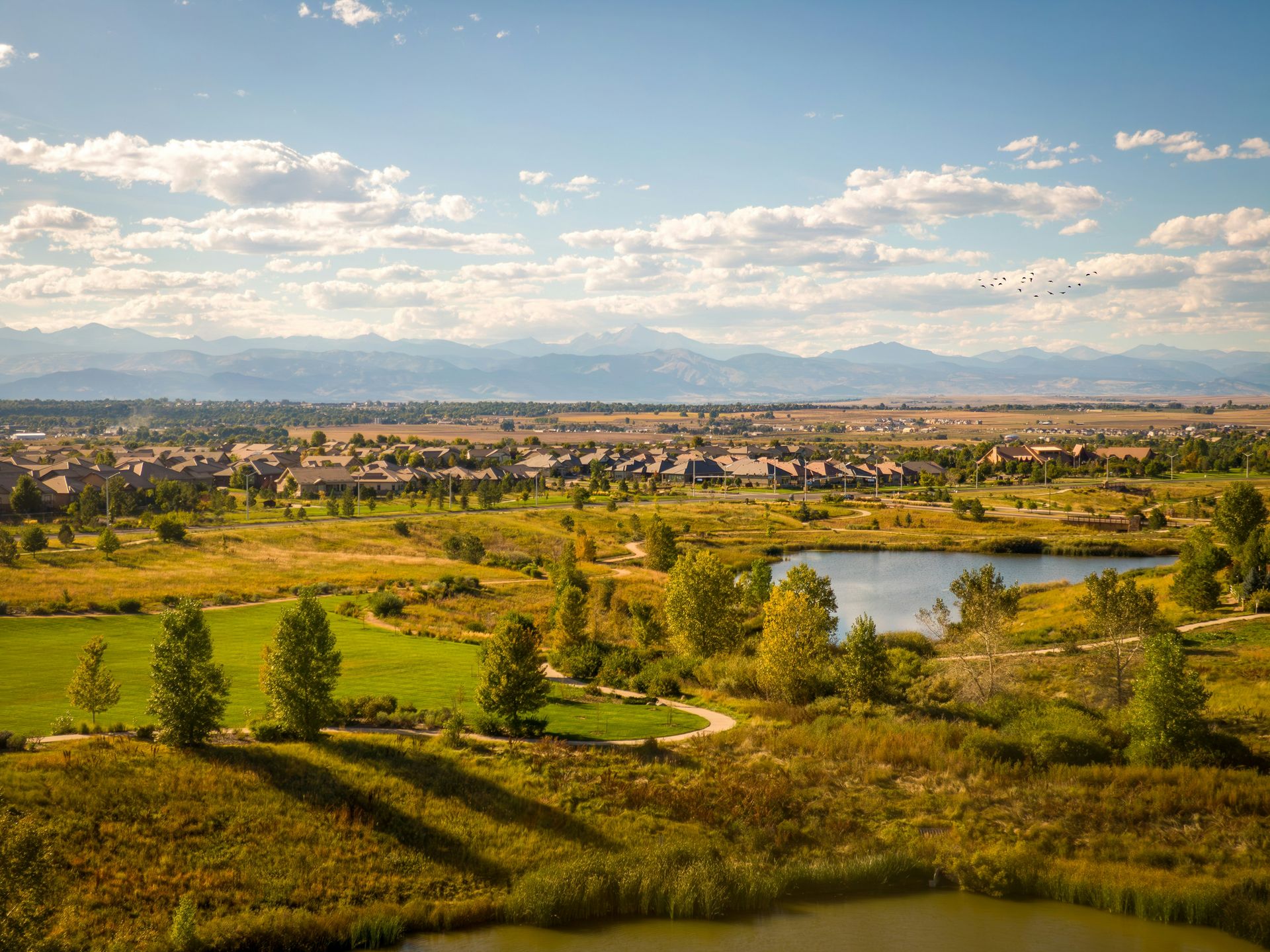
Broomfield, Colo., sits between Denver and Boulder, and it tops SmartAsset's safety ranking for a reason that shows up in nearly every category the study measured. The city's violent crime rate runs at 1.48 incidents per 1,000 residents, and its property crime rate sits at 18.56 per 1,000, both well below the typical midsize city. Add a modest auto fatality rate of about 5.02 per 100,000 residents, and Broomfield already looks like a safe bet before disaster risk even enters the equation.
The disaster risk category is where Broomfield truly stands apart. It's the only city in the entire study to post the lowest possible disaster-risk score on FEMA's scale. The score factors in projected losses from floods, wildfires and severe storms, along with how vulnerable local residents are and how well the community tends to recover once a disaster hits. Wildfires, floods, and severe storms all pose some risk almost everywhere in the country, so a rating this clean puts Broomfield in a category by itself among the 300-plus cities SmartAsset evaluated.
The city's structure helps explain some of that stability. Broomfield is Colorado's only consolidated city-county. The setup streamlines everything from policing to emergency response under one roof instead of splitting authority across overlapping jurisdictions. The city has grown to about 78,200 residents, and household income there runs well above the national median. Higher incomes tend to track with lower crime and stronger public services. Steady, well-funded local government paired with a low-risk location goes a long way toward explaining why Broomfield keeps outperforming much larger and more famous Colorado cities on measures of everyday safety.
None of this means Broomfield is risk-free. No place earns a perfect score across every measure SmartAsset tracked. What it does mean is that a resident in Broomfield faces a meaningfully lower chance of violent crime, property crime, a fatal car crash, or a catastrophic natural disaster than someone living in almost any other midsize city in the country, and the data behind that claim holds up across four entirely different categories of risk.
State College, Pennsylvania
Sourajit Karmakar / Unsplash
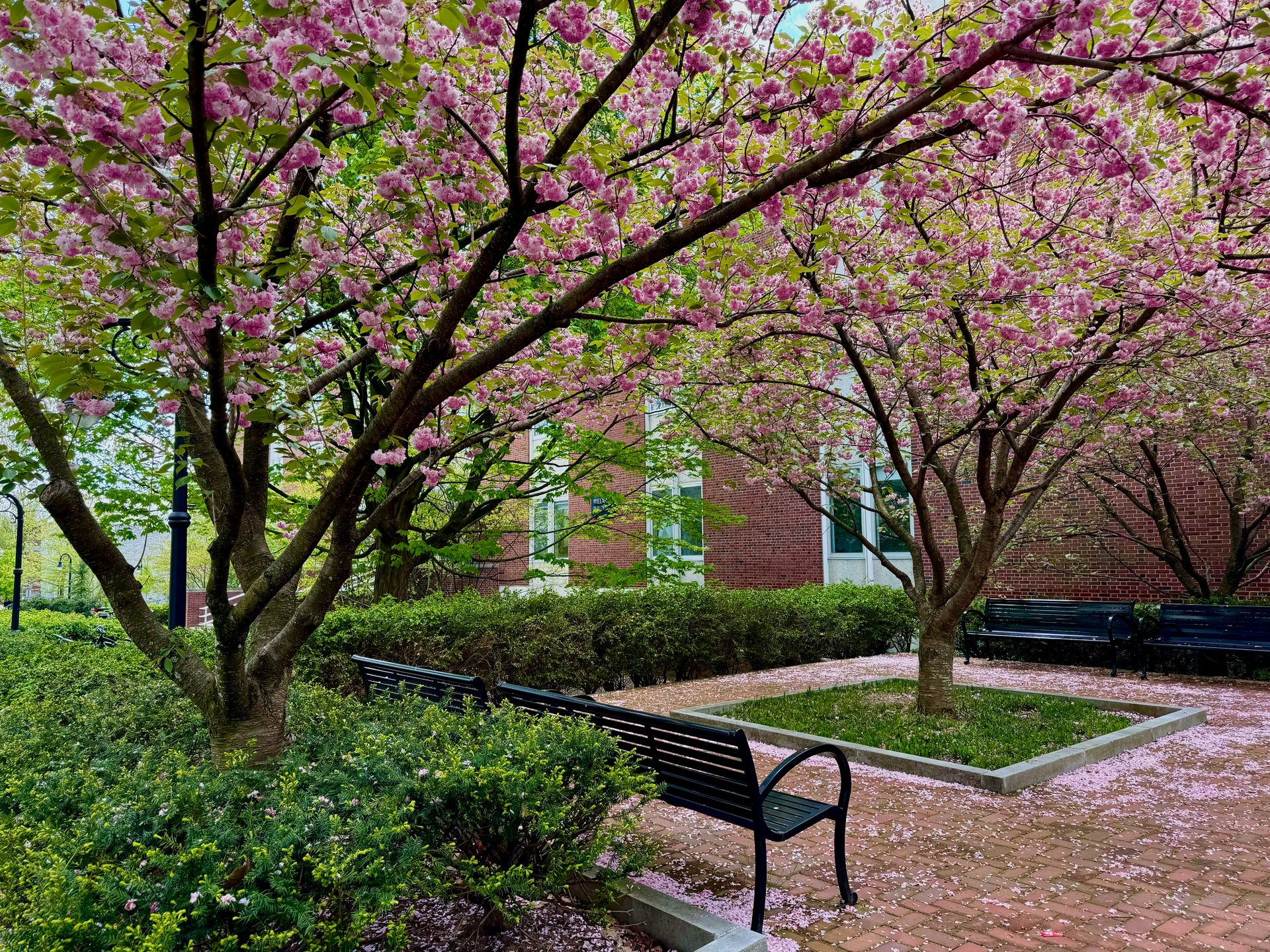
State College, Pa., lands second on SmartAsset's list, and the borough known locally as Happy Valley backs up that ranking with strong numbers across the board. Its violent crime rate comes in at 1.53 per 1,000 residents, barely above Broomfield's mark, while its property crime rate of 7.64 per 1,000 ranks among the lowest of any city in the entire study. FEMA rates the surrounding area's natural disaster risk as relatively low, rounding out a safety profile with no obvious weak point.
The one number that stands out is the auto fatality rate, which sits at 7.63 per 100,000 residents, noticeably higher than Broomfield's. A college town with heavy foot and bike traffic downtown, seasonal game-day crowds, and students still learning to navigate unfamiliar roads tends to see more crashes than a typical suburb, and State College fits that pattern. Even with that one softer metric, the borough's overall composite score still lands it comfortably in the top five nationally.
Pennsylvania State University's University Park campus dominates both the local economy and the town's identity, and Niche notes that education, health care and technology now drive much of the surrounding job market. Downtown State College runs along College Avenue, packed with restaurants, bars and shops that serve both students and longtime residents, and the borough sits inside the Nittany Valley, surrounded by ridgelines that offer hiking and cycling within a few minutes of downtown. The Central Pennsylvania Festival of the Arts draws well over 100,000 visitors to the area each summer. The same qualities that make State College a lively place to visit also make it a stable place to settle down.
A college town built around one dominant employer can be a risky bet in plenty of ways, but safety doesn't appear to be one of them here. State College pairs a young, transient population with crime numbers that would be the envy of far quieter towns. The pairing shows up in this ranking precisely because the underlying data holds up year after year.
Warwick, Rhode Island

Thomas Werneken / Unsplash
Warwick, R.I., ranks third nationally, and its violent crime rate of 0.79 per 1,000 residents is the lowest of any city among the top five SmartAsset identified. Property crime sits at 11.47 per 1,000, and the auto fatality rate comes in at 7.39 per 100,000, both solidly in line with the other safest cities in the study. FEMA classifies the surrounding area's natural disaster risk as relatively low, giving Warwick a clean sweep across every category the researchers measured.
Warwick's low violent crime rate carries particular weight given the city's size and role in the region. It's the second-largest city in Rhode Island, with a population above 83,000, and it sits at the center of the state's transportation network. The city's own economic profile points to Rhode Island T.F. Green International Airport as a major reason why. The airport functions as a regional hub and brings a steady flow of travelers, workers and commuters through the city every day. Cities built around airports and transit hubs often carry elevated crime risk simply because of the volume of people passing through, which makes Warwick's numbers stand out even more.
The city stretches across 39 miles of coastline and holds more marinas and moorings than any other community in Rhode Island, giving residents boating and beach access that most cities Warwick's size can't match. Warwick traces its roots back to 1642, when it was founded as a haven for religious freedom, and more than 30 distinct villages now make up the modern city, each with its own small commercial center and neighborhood feel. The patchwork of villages helps explain the low crime numbers, since residents tend to identify with a specific neighborhood rather than the city as one undifferentiated whole.
Providence sits just a short drive north, and Boston is close enough for an easy day trip, yet Warwick keeps its own crime numbers well below what a city with that kind of regional pull would typically post. A high-traffic airport, a long coastline, and a big-city address within reach all describe Warwick, and none of them come with the safety tradeoff most buyers would expect.
Ames, Iowa

Kyle Kempt / Unsplash
Ames, Iowa, takes fourth place, and the college town matches Broomfield's violent crime rate of 1.48 per 1,000 residents while posting the lowest auto fatality rate of any city in the top five, at just 4.51 per 100,000. Property crime sits at 15.06 per 1,000, a bit higher than some of the other top finishers but still well within the range SmartAsset flagged as safe. FEMA lists the surrounding county's natural disaster risk as relatively low, rounding out a profile with no serious weak spot.
Iowa State University shapes nearly every part of life in Ames, and the numbers back that up. Britannica traces much of the city's economic base back to the university, pointing to spinoff research firms and a diversified manufacturing sector that grew up alongside the campus over the decades. Roughly 30,000 students attend Iowa State, close to half of the city's total population, yet Ames still posts one of the lowest auto fatality rates in the entire study despite all that extra foot and bicycle traffic near campus.
The city sits about 30 miles north of Des Moines, close enough for an easy commute but far enough to keep its own identity and its own economy. Federal research adds even more stability on top of the university. Ames is home to the Ames Laboratory, a Department of Energy facility, and the National Animal Disease Center, both of which bring steady, well-paying research jobs that don't disappear when the broader economy slows down. A stable, well-paying employment base tends to track with lower property crime, since fewer residents face the financial strain that often drives theft and burglary.
A midsize college town built around agricultural research doesn't sound like a natural fit for a top-five safety ranking, yet Ames earns its spot the same way Broomfield and State College do, through numbers that hold up across crime, traffic and disaster risk all at once. Few cities manage to combine a young, transient student population with crime rates this low, and Ames does it while also keeping drivers safer than almost anywhere else on this list.
Logan, Utah
Michael Hart / Unsplash
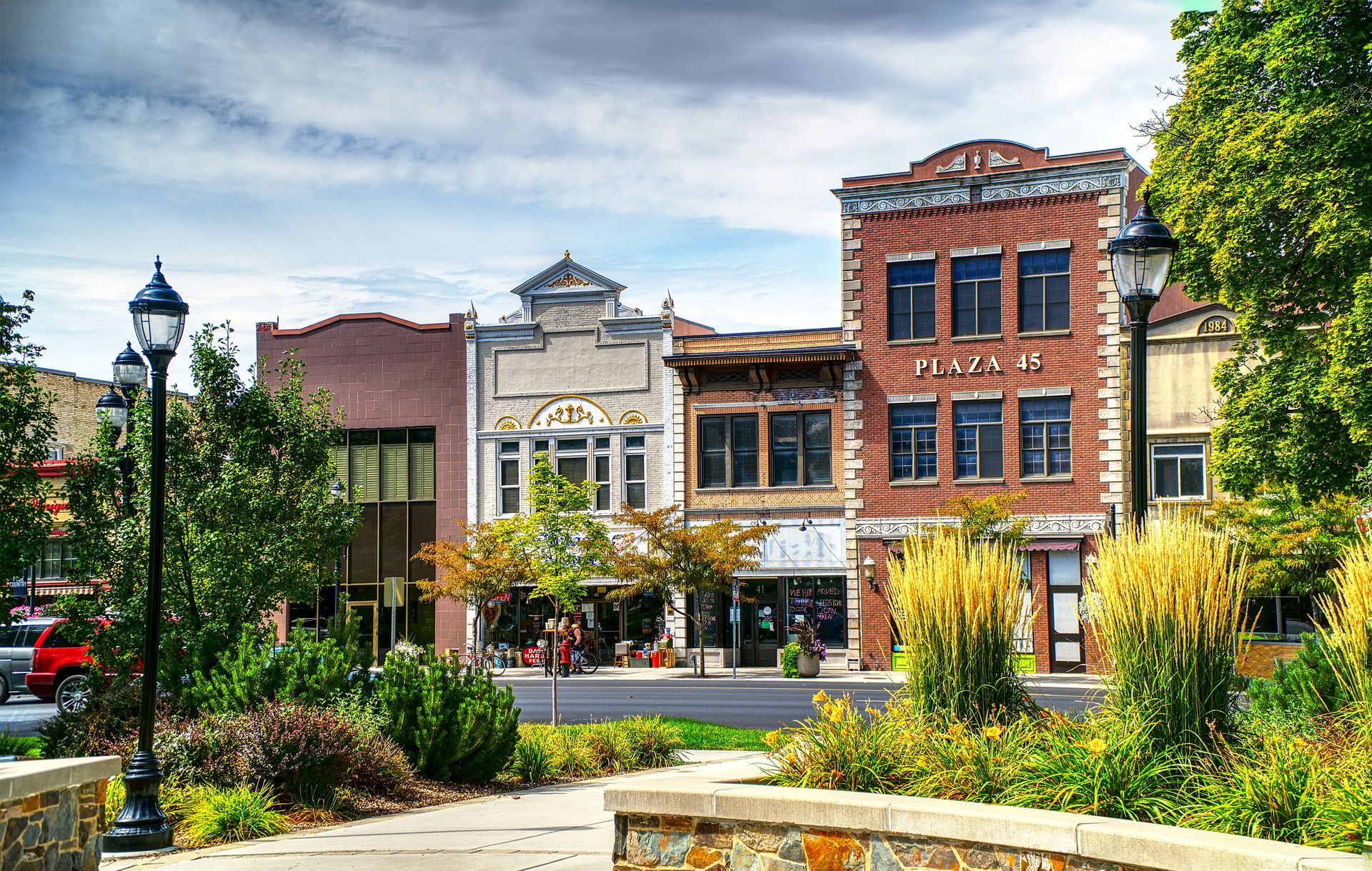
Logan, Utah, rounds out the top five, and its numbers show that fifth place in this study still means genuinely safe. The violent crime rate comes in at 1.37 per 1,000 residents, and property crime sits at 11.3 per 1,000, both comfortably better than the typical midsize city nationwide. FEMA rates the surrounding area's disaster risk as relatively low, matching the other four cities on this list.
The one number that stands out is the auto fatality rate, which reaches 8.68 per 100,000 residents, the highest among the top five, though still far from alarming on its own. Utah State University drives much of the local economy and much of the local traffic, and USU's own data shows the campus enrolls tens of thousands of students in a city of roughly 56,000 people. Winding mountain roads, seasonal weather, and heavy student commuter traffic all likely contribute to that higher fatality number, even as every other safety measure in Logan stays strong.
Logan sits 81 miles northeast of Salt Lake City in a section of northern Utah known as Cache Valley, ringed by mountains that turn Logan Canyon into a year-round draw for hikers, anglers and skiers. Four ski resorts sit within about an hour's drive of downtown, and the valley's agricultural roots still show up in the local economy alongside newer manufacturing and research jobs tied to the university. A mix of steady institutional employment and outdoor access tends to produce the kind of community where people stay for decades instead of passing through.
Logan proves that a top-five safety ranking doesn't require perfection in every column. A slightly elevated traffic fatality rate here still adds up to one of the five safest midsize cities in the country once crime and disaster risk get factored in alongside it, and that combination is exactly what SmartAsset's composite score was built to capture.