
From compact sedans under $25,000 to electric SUVs, these are the vehicles that earned the highest crash-test ratings from the industry's most rigorous safety tester
Paul Esch-Laurent / Unsplash
Car safety ratings have become more demanding — and more meaningful — than at any point in the history of consumer testing. The Insurance Institute for Highway Safety, a nonprofit funded by the insurance industry, has spent three decades developing crash tests that push vehicle structures and emergency technology well beyond what regulators require. Consumer Reports, the independent product-testing nonprofit, incorporates IIHS results into its own Overall Scores alongside its evaluations of braking, handling, control usability, and whether proven crash-prevention technology comes standard on base trims. Together, the two organizations provide the most rigorous independent picture of new-car safety available to U.S. buyers.
For 2026, the IIHS raised the bar again. Vehicles seeking either of its two awards — Top Safety Pick and the higher-tier Top Safety Pick Plus — now need a Good rating in an updated moderate-overlap front crash test that, for the first time, places a dummy in the rear seat to assess how well the back of the cabin holds up. Before this change, automakers could earn recognition even if their back-seat occupants fared poorly.
The results filtered out a number of models that had won in prior years and rewarded the brands that had invested most heavily in structural engineering and crash-prevention software. Sixty-three vehicles made the 2026 list. Of those, 45 earned TSP Plus, the designation reserved for vehicles that also pass a new vehicle-to-vehicle crash prevention test at highway speeds, including scenarios involving motorcycles and semi-trailers. The other 18 earned the standard TSP, which still requires Good ratings across the full battery of frontal and side crash evaluations, along with acceptable or better performance in pedestrian braking and headlight assessments.
No minivans made the list. That is a notable gap given that the segment markets itself as the definitive family vehicle. The IIHS noted that minivans lagged in rear-seat crash protection. "It's disappointing that minivans continue to struggle to provide the best-available protection for passengers in the back, considering that these are supposed to be family vehicles," IIHS President David Harkey said.
The list spans sedans priced under $23,000, hybrid crossovers, three-row SUVs, and large electric trucks. Mazda earned eight TSP Plus awards for the third year running, and Hyundai and Kia together claimed more than a dozen designations across their shared platform families. Meanwhile, some of the industry's most popular vehicles, including the Tesla $TSLA Model 3 and Model Y, did not appear on the 2026 list.
Picking the safest car is not simply a matter of finding the one with the most awards. The IIHS ratings tell buyers how a vehicle performs in controlled crash scenarios. Real-world safety also depends on the standard availability of proven crash-prevention technology, headlight quality across all trim levels, and the ease with which drivers can actually use the systems. Consumer Reports has documented patterns in which automakers win safety awards while still requiring buyers to upgrade past base trims to access the features that most directly prevent crashes. Several TSP Plus winners do exactly that.
This list covers 15 vehicles that stand out not just for their ratings but for what those ratings represent about the engineering decisions manufacturers made before these cars went on sale.
Credit: Kia
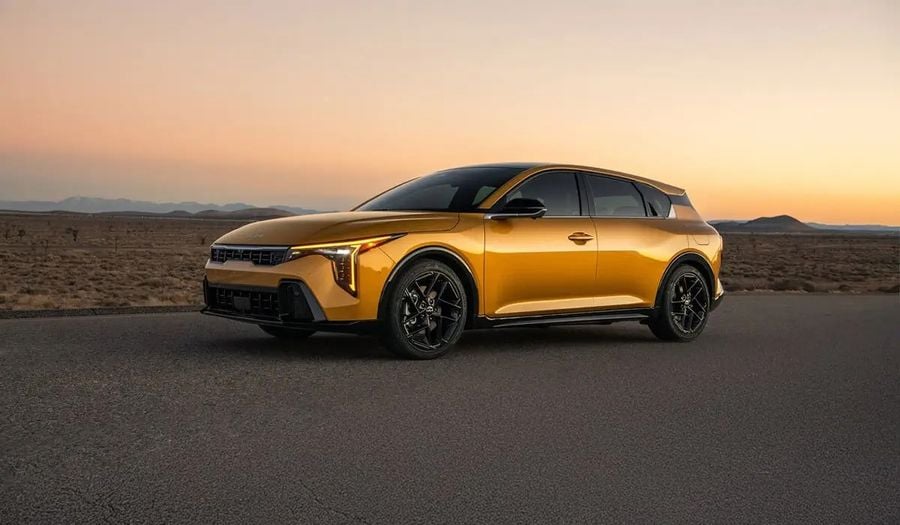
The Kia K4 holds the distinction of being the least expensive vehicle to earn the IIHS Top Safety Pick Plus award for 2026. Its base price starts at $22,290, which makes it one of the few compact sedans where buyers do not have to choose between price and safety credentials. It earned TSP Plus alongside five-star marks from NHTSA, two of the most rigorous independent evaluations available to U.S. car buyers.
The K4 replaced the Forte in Kia's lineup and brought a more aggressive design to a segment that had grown predictable. Under the hood, the base model uses a 2.0-liter four-cylinder producing 147 horsepower paired with a continuously variable transmission. A turbocharged 1.6-liter option is available on the GT-Line Turbo trim, bringing output up to 201 horsepower. The sedan is joined for 2026 by a hatchback variant that starts around $25,000 and offers a more practical cargo profile.
The standard safety suite includes adaptive cruise control, lane-keeping assist, automatic high-beam headlights, and automatic emergency braking. All of that comes regardless of trim level. There is one notable caveat the Consumer Reports evaluation flags directly. Blind-spot monitoring — which both Consumer Reports and the IIHS consider a technology with demonstrated real-world crash-prevention value — is not included on the base LX trim. Buyers have to move to the LXS, starting around $23,390, to get it. "Buyers shouldn't have to pay extra for proven safety features," said Emily Thomas, manager for auto safety at Consumer Reports. "Safety should be standard." For buyers willing to step up one trim, the full package comes together at a price that remains well below the segment average.
The K4 also includes a 12.3-inch touchscreen with wireless Apple $AAPL CarPlay and Android Auto across all trims. The interior quality improved significantly compared to the Forte it replaced, with better materials and more logical control placement. In independent evaluations, the adaptive cruise control system performed well in stop-and-go traffic, and the lane-centering function integrated smoothly on highway stretches.
For buyers shopping in the compact sedan space, the K4's safety record sets a high bar. Mazda's 3 sedan also earns TSP Plus, and the Toyota $TM Camry and Hyundai Sonata cover the midsize tier. But at its price point, no other TSP Plus winner this year comes close to the K4's value proposition.
Credit: Toyota
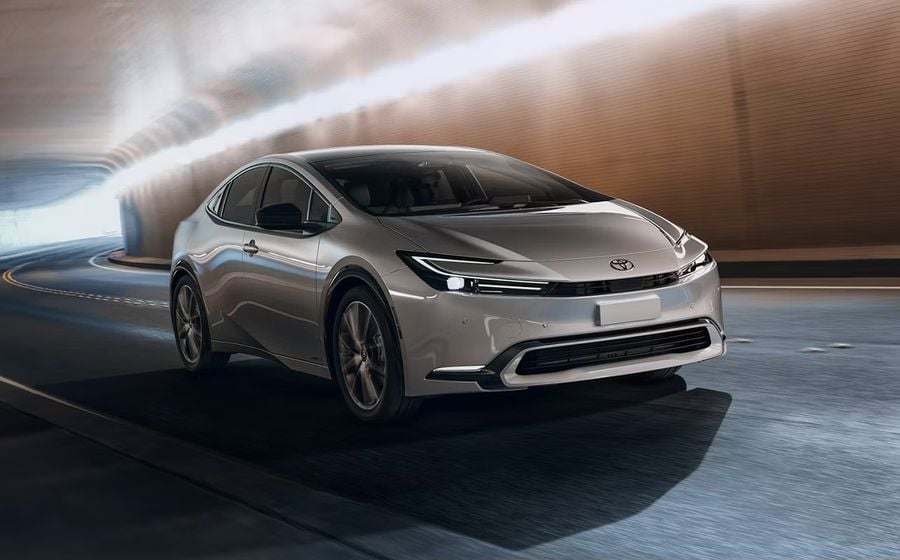
The Toyota $TM Prius has earned IIHS Top Safety Pick Plus recognition for multiple consecutive generations, and the 2026 model — now in its fourth year of this body style — continues that record. The third-generation redesign that launched for 2023 brought significant structural changes alongside a restyled exterior that moved the car away from its utilitarian origins. The 2026 version carries forward that platform essentially unchanged, with IIHS ratings from crash tests of the 2023 model applying across the generation.
Toyota's Safety Sense 3.0 package comes standard on every Prius trim, without exception. The system bundles pre-collision warning with automatic emergency braking that detects vehicles, pedestrians, and cyclists. It also includes adaptive cruise control with lane-centering capability, lane departure alert with steering assist, automatic high beams, and a safe exit warning that alerts occupants if a cyclist or vehicle is approaching when a door is about to open. That last feature is particularly relevant in urban environments where door-zone collisions are a genuine risk.
The fifth-generation hybrid system in the Prius delivers up to 57 miles per gallon in city driving and 56 on the highway for front-wheel-drive models, making it among the most efficient non-plug-in vehicles on the market. A plug-in hybrid variant — the Prius Prime, now sold as the Prius Plug-in Hybrid — adds an electric-only range of around 44 miles before the hybrid system takes over. Both configurations share the same safety ratings and standard technology suite.
NHTSA gave the Prius a five-star overall rating, with five stars in frontal and side crash tests and four in rollover resistance. That four-star rollover score is common among lower-riding passenger cars and reflects the geometry of a car designed for aerodynamic efficiency rather than ground clearance.
Pricing starts around $30,000 for the base LE trim, placing the Prius in a competitive band for the compact hybrid segment. The XLE and Limited trims add features including a larger 12.3-inch touchscreen and upgraded audio. Parking sensors with low-speed automatic braking — an underrated safety feature for urban driving — are standard on all but the base LE, where they are available as a $35 option. That is a small sum for a demonstrably useful safety technology, and buyers selecting the LE would be well served to include it.
Credit: Hyundai
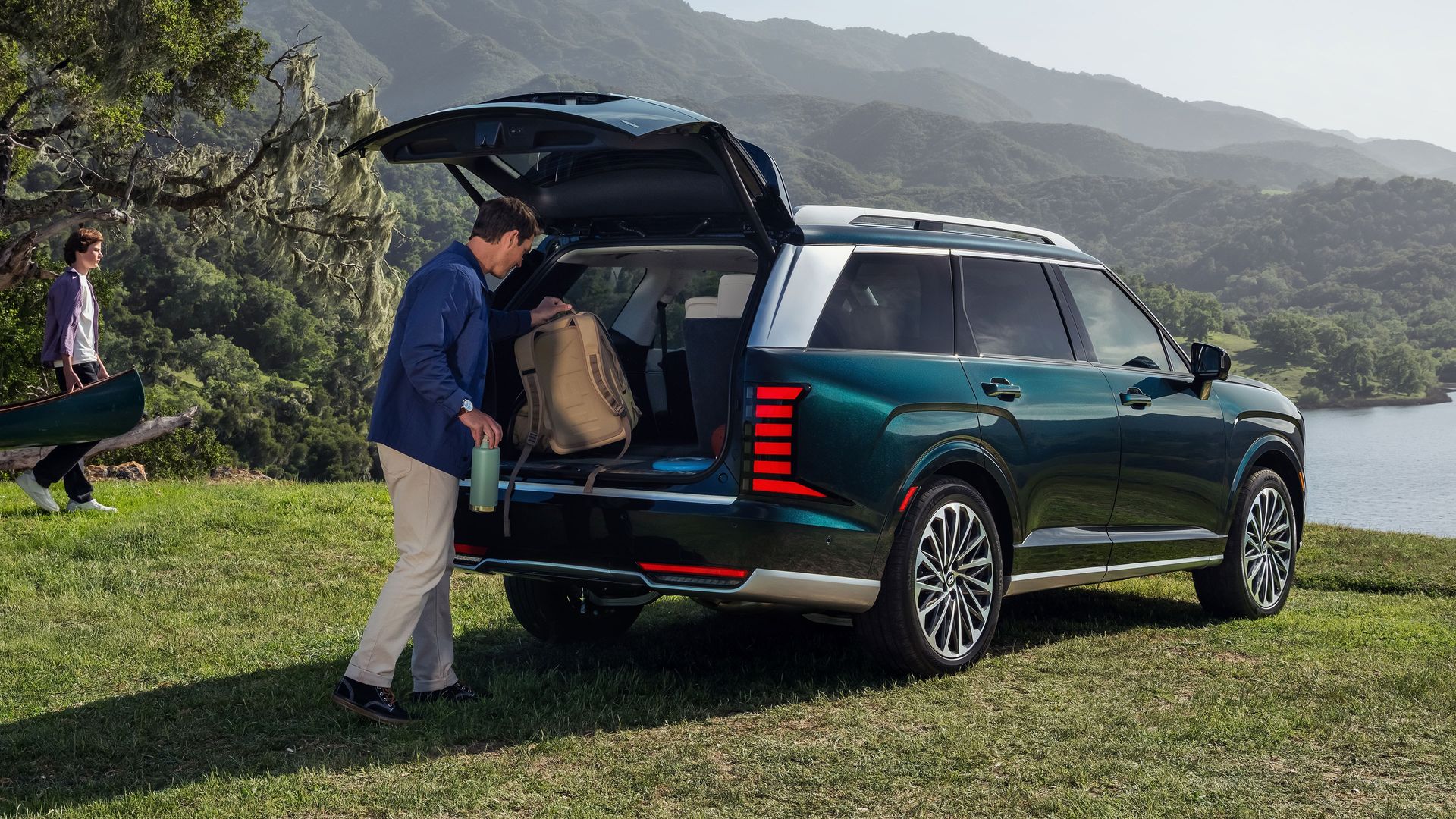
The 2026 Hyundai Palisade earned TSP Plus under the updated IIHS testing criteria, the same framework that specifically raised the bar for rear-seat crash protection. That matters more for a three-row SUV than for almost any other vehicle category. The Palisade is designed explicitly as a family hauler, and the people most likely riding in its rear seats are children and second-row passengers who depend entirely on the structure around them.
The IIHS's updated moderate-overlap front crash test now uses a rear-seat dummy to evaluate occupant protection for passengers sitting behind the driver. The 2026 Palisade earned a Good rating — the highest possible score — in that test . Consumer Reports specifically incorporates IIHS rear-seat results into its Overall Score, and the Palisade's performance in the updated moderate-overlap test contributed directly to its standing in CR's safety verdict for the model year. The Palisade also cleared the new vehicle-to-vehicle front crash prevention criteria, which tests how well the car's automatic braking responds at highway speeds, including to motorcycles and semi-trailers — scenarios that more closely reflect the kinds of crashes that end fatalities on U.S. roads.
The Palisade comes standard with forward collision avoidance, lane-keeping assist, driver attention warning, blind-spot monitoring, and rear cross-traffic alert. Those last two features — absent from many budget-tier vehicles — are standard across all trim levels, not reserved for upgrade packages. Hyundai's Highway Driving Assist 2 system, available on higher trims, provides hands-on-wheel lane centering and adaptive cruise functionality on limited-access highways.
In terms of interior space, the Palisade offers one of the more practical three-row configurations in the segment. The second row slides forward easily for third-row access, and Hyundai has done more than most brands to make the third row genuinely habitable for adults on shorter trips. Cargo space behind the third row is adequate for grocery runs though not generous.
Pricing for the Palisade starts around $37,000 and climbs toward $55,000 for the Calligraphy trim, which adds quilted Nappa leather, a 12.3-inch driver's display, and a panoramic sunroof. The core safety package does not require buyers to reach those higher trims. For families who need three rows and want the reassurance of the strongest IIHS rating available, the Palisade is one of the few options that delivers both.
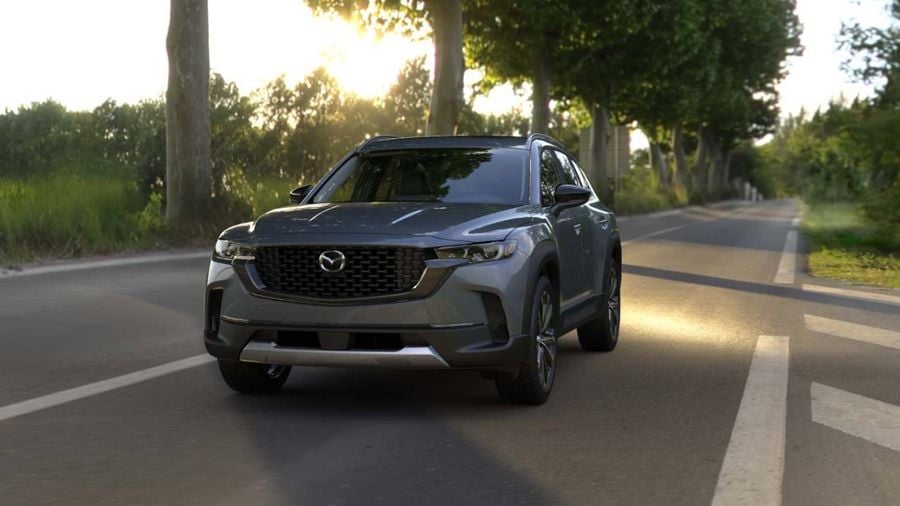
Credit: Mazda
Mazda earned eight IIHS Top Safety Pick Plus awards for 2026 — more than any other brand — and the CX-50 is one of those eight. It represents the clearest case study in what Mazda's approach to standard safety equipment actually looks like at the point of purchase.
Every CX-50 comes with blind-spot monitoring, rear cross-traffic alert, lane departure warning with lane-keep assist, automatic emergency braking with pedestrian detection, and driver attention alert. These are not optional add-ons tied to premium trims. They are standard on every configuration of every CX-50, regardless of which powertrain or price level the buyer selects. That distinction matters because the IIHS and Consumer Reports have both documented patterns in which automakers win safety awards while still requiring buyers to upgrade past base trims to access the features that most directly prevent crashes.
The CX-50 slots into Mazda's lineup between the smaller CX-30 and the midsize CX-70. It shares the brand's Skyactiv platform and is available with a 2.5-liter naturally aspirated four-cylinder or a 2.5-liter turbocharged version producing 256 horsepower. A hybrid variant is also offered. All-wheel drive comes standard — another feature that competes as a safety element in markets with snow and ice — and starting prices fall around $29,900, placing it in a competitive band for the small SUV segment.
Mazda's design philosophy has leaned into what the brand calls Jinba Ittai — a concept roughly translating to "horse and rider as one" — emphasizing driver feedback and vehicle balance as intrinsic to safety. Whether that philosophy translates into measurable real-world advantages is difficult to quantify, but the structural and technology results speak clearly enough. The CX-50's Good IIHS rating across every evaluated category, combined with the standard availability of every major crash-prevention feature, puts it at the top of the small SUV field for buyers prioritizing comprehensive protection without compromise.
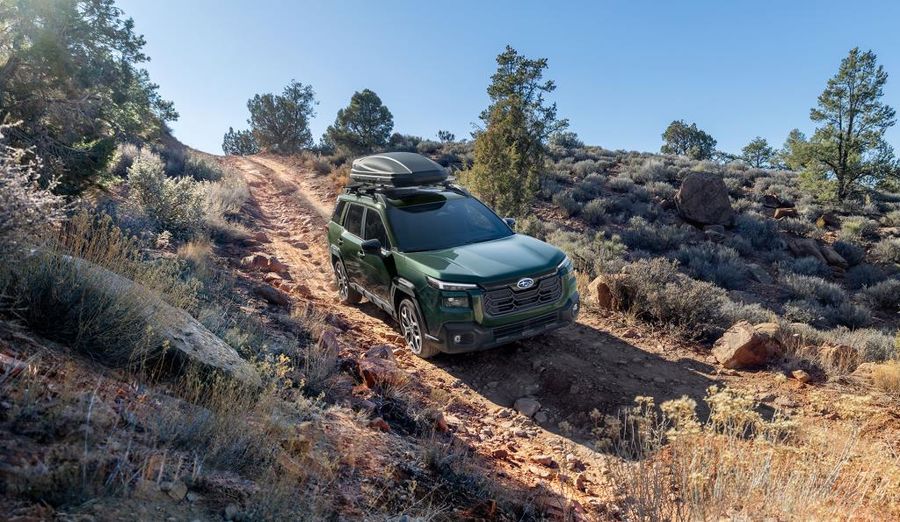
Credit: Subaru
The 2026 Subaru Outback was redesigned this model year, and the timing aligned with the IIHS's toughened 2026 criteria. It earned TSP Plus, its most recent recognition in a long string of them. Subaru has accumulated 78 IIHS Top Safety Pick Plus awards since 2013, more than any other brand over that span. The Outback has been part of that record across multiple generations.
The structural changes for 2026 are substantive. Subaru increased the proportion of high-strength steel in the body and applied advanced structural adhesives in key areas. The redesigned Outback also uses chassis-bolted seats, a specific engineering choice that reduces head movement and provides a more stable connection to the car's structure during impact. These are the kinds of decisions that determine whether a vehicle earns Good or Acceptable in a crash test, and they reflect a company building to pass tests rather than around them.
EyeSight, Subaru's driver assistance suite, now uses a triple-camera system for 2026. The third camera improves the system's ability to detect pedestrians and cyclists at earlier distances compared to the dual-camera setup used in prior generations. EyeSight has been standard on Outback models for years and covers pre-collision braking, adaptive cruise control with lane centering, lane departure warning, and steering-responsive headlights on higher trims.
The Outback's appeal is partly its uniqueness. It is one of the few mainstream wagons still sold in the U.S. market, offering roof rails, standard all-wheel drive, up to 9.5 inches of ground clearance on the Wilderness variant, and 75 cubic feet of cargo space with the rear seats folded. Starting prices sit around $34,995, with the Wilderness and Touring XT trims pushing toward $45,000. The Touring and Touring XT trims for 2026 add Highway Hands-Free Assist, which allows hands-off-wheel driving at speeds up to 85 mph on supported limited-access highways. It also makes the upgraded Outback one of the more capable semi-autonomous vehicles in its price range.

Credit: Rivian
The 2026 Rivian $RIVN R1S earned IIHS Top Safety Pick Plus for the third time — in 2023, 2025, and now 2026. It is the only large SUV built by an American automotive company to earn TSP Plus this year, and it earned it under the toughened criteria that added rear-seat protection requirements and new vehicle-to-vehicle crash prevention testing at highway speeds.
The R1S is an all-electric seven-seat SUV with a starting price around $75,000. It is not a mass-market vehicle, but its safety record is relevant because large electric vehicles present engineering challenges that have tripped up other manufacturers. The weight of a large battery pack affects crash dynamics in ways that do not always favor occupants, and the structural demands of integrating a floor-mounted skateboard platform with a vehicle capable of carrying seven passengers are significant. The R1S has passed those tests repeatedly.
Off-road capability is a defining characteristic of the R1S. Air suspension provides up to 15 inches of ground clearance in its highest setting. The vehicle can ford up to 43 inches of water and is rated for serious trail use. In its Max Dual motor configuration, EPA-estimated range reaches around 410 miles. These capabilities come alongside a full standard suite of driver assistance technology including forward collision warning with automatic emergency braking, blind-spot monitoring, lane-keeping assist, and a 360-degree camera system.
One caveat: NHTSA has never crash-tested a Rivian under its New Car Assessment Program. The IIHS rating is the only standardized crash-safety data point available for any R1S of any model year. Buyers who place weight on NHTSA five-star ratings — which are common reference points in discussions about safety — will find a gap in the data here. That does not diminish the IIHS result, but it is worth acknowledging.
For buyers who genuinely use large SUVs in demanding environments and want the best available crash-test standing, the R1S is currently without domestic competition at its tier.
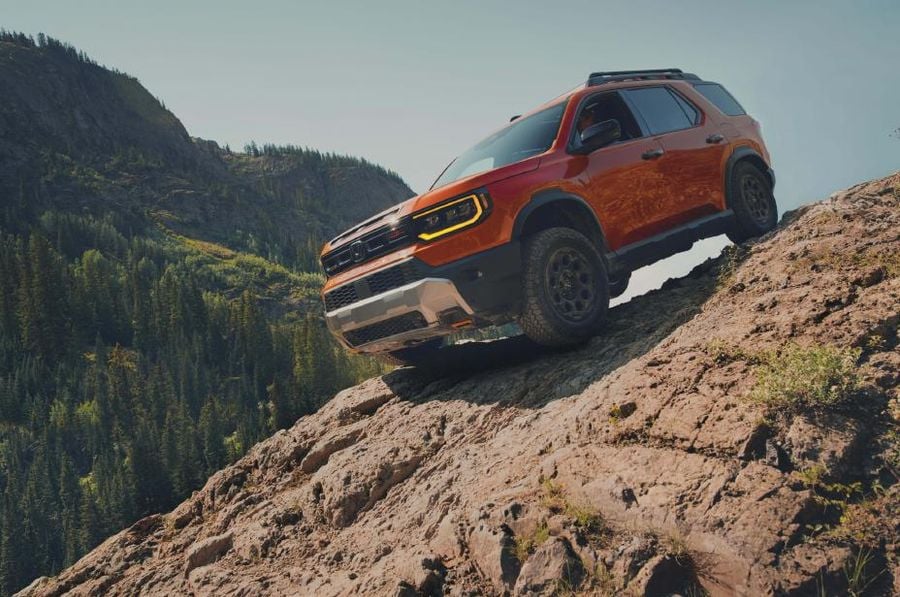
Credit: Honda
The 2026 Honda $HMC Passport earned IIHS Top Safety Pick Plus, making it one of the stronger options in the two-row midsize SUV segment. It comes equipped with Honda Sensing as standard across all trim levels, a suite that includes collision mitigation braking, road departure mitigation, adaptive cruise control with low-speed following, lane-keeping assist, and traffic sign recognition.
The Passport sits between the CR-V and Pilot in Honda's lineup. It uses a 3.5-liter V6 engine producing 285 horsepower and pairs with an available all-wheel drive system that includes a torque vectoring function on trail trims, directing power to individual rear wheels in low-traction conditions. Towing capacity reaches 5,000 pounds when properly equipped, which puts it in a practical range for light trailer use.
One of the straightforward advantages of the Passport — one Consumer Reports specifically highlights in its evaluation — is that Honda Sensing does not cost extra on any trim. Buyers do not have to choose between the base model and safety technology. That consistency mirrors Mazda's approach and becomes more significant when comparing vehicles in the same price range where some brands still stratify crash-prevention features by trim level. Consumer Reports factors standard availability of crash-prevention technology directly into its safety verdict, which means vehicles that charge extra for proven features score lower regardless of their IIHS crash-test performance.
The 2026 Passport received a design refresh that sharpened its exterior, updated the interior with a larger 9-inch touchscreen, and added wireless Apple $AAPL CarPlay and Android Auto. Interior quality improved noticeably over prior generations, with better material choices in the door panels and instrument cluster area. The back seat offers enough room for two adults without crowding, and the rear cargo area is among the most usable in its class for the two-row configuration.
Pricing starts around $42,000 for the Sport trim and reaches approximately $50,000 for the TrailSport variant, which adds the torque vectoring rear differential, all-terrain tires, and lifted ride height. For buyers who want TSP Plus, standard safety tech across all trims, and a V6 engine that does not require premium fuel, the Passport represents a well-balanced option in a competitive segment.
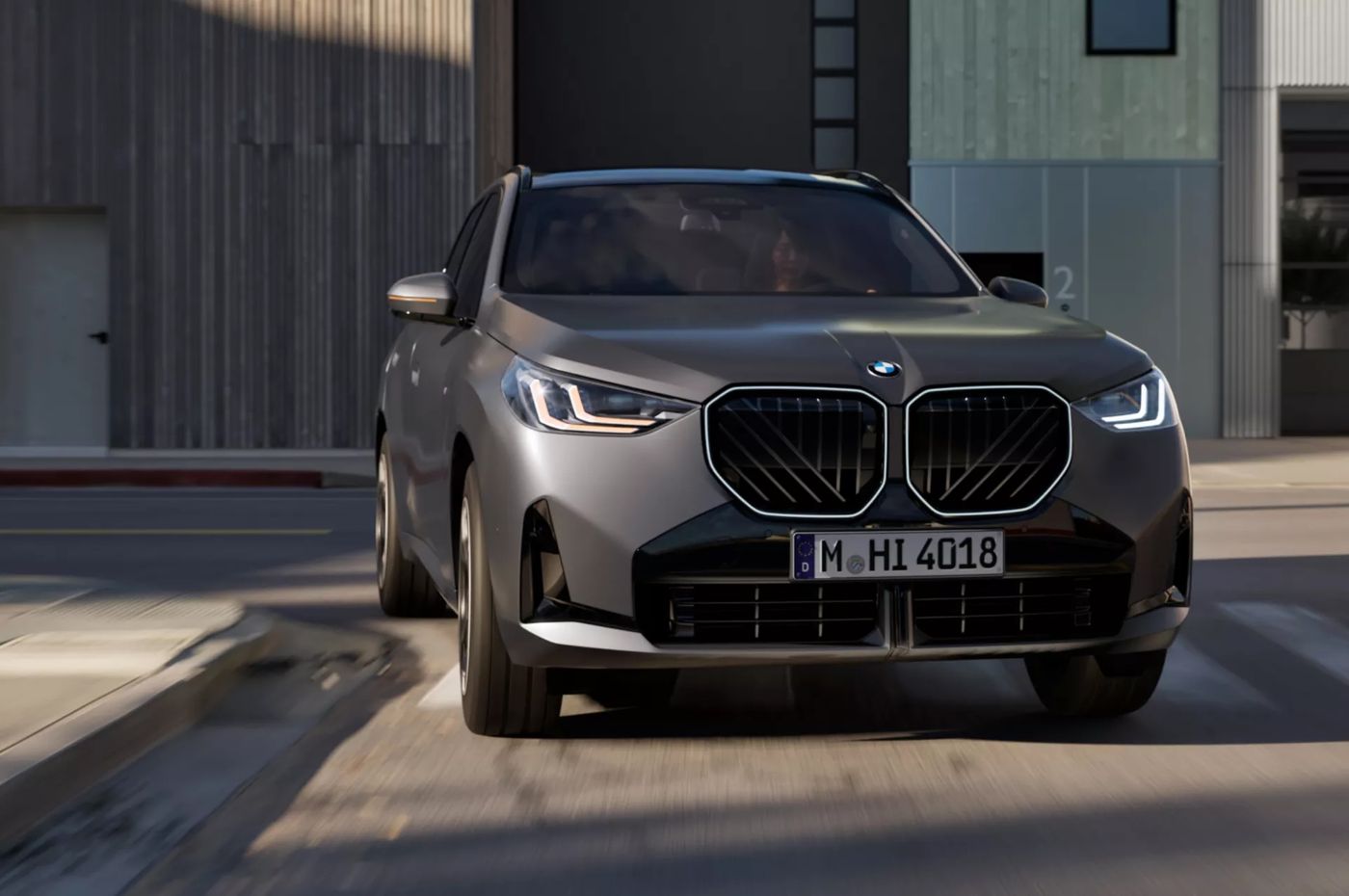
Credit: BMW
The 2026 BMW X3 earned IIHS Top Safety Pick Plus, placing it among the strongest performers in the midsized luxury SUV category. BMW has prioritized consistent crash-test performance across this model's generations, and the X3 now enters a new generation that has maintained that standing under the stricter 2026 criteria.
Standard across the X3 lineup is a suite of active safety systems that includes forward collision warning with automatic emergency braking for vehicles and pedestrians, lane departure warning with active lane-keeping, blind-spot detection, rear collision warning, and a driver drowsiness alert. These features do not require an upgrade trim in the U.S. market, though BMW does reserve some more advanced functions — such as parking assistance and highway lane-change assist — for packages that add to the base price.
The 2026 X3 uses a 2.0-liter turbocharged four-cylinder engine producing around 255 horsepower in the base sDrive30i and xDrive30i configurations. A more powerful M50 xDrive variant delivers 398 horsepower. All-wheel drive is standard on the xDrive variants that make up the majority of U.S. sales. BMW's xDrive system is fully variable and can distribute torque between front and rear axles continuously, which contributes to handling stability in adverse conditions.
The interior has been substantially updated for the new generation, with a larger curved display integrating the driver's instrument cluster and central touchscreen into a single unit. BMW's iDrive 8 interface, which supports both touchscreen interaction and voice commands, is now the standard interface. This is relevant to safety because infotainment systems that are easier to operate reduce the cognitive load on drivers and minimize time spent looking away from the road.
Pricing starts around $48,000 for the base X3 and climbs well past $70,000 for the M50 variant. For buyers in the premium segment looking for the combination of TSP Plus recognition and German engineering, the X3 competes directly with the Audi Q5, which also earned TSP Plus this year.

Credit: Genesis
The 2026 Genesis GV70 earned IIHS Top Safety Pick Plus, and it does so at a price point that undercuts comparable German luxury SUVs by a meaningful margin. Starting around $47,000, the GV70 competes against the BMW X3, Audi Q5, and Mercedes-Benz GLC — all of which also earned TSP Plus this year — while typically pricing several thousand dollars below them.
Genesis equips the GV70 with a comprehensive driver assistance package it calls Genesis Driver Assistance. Standard across trims, it covers forward collision avoidance with pedestrian and cyclist detection, lane departure warning with active steering assistance, lane-following assist for highway use, blind-spot monitoring, rear cross-traffic collision avoidance, driver attention warning, and high-beam assist. The standard availability of all these features is notable in a segment where some brands price out blind-spot monitoring to upper trims.
The GV70 is available with two turbocharged four-cylinder engines: a 2.5-liter unit producing 300 horsepower and a 2.5-liter twin-scroll version producing 375 horsepower. An electrified version — the Genesis Electrified GV70 — also earned TSP Plus separately, offering EV performance on the same platform. The standard GV70 is rear-wheel or all-wheel drive, and the all-wheel drive system uses an electronic limited-slip rear differential on higher trims.
Interior materials and design are genuine strengths. Genesis has positioned itself on build quality and tactile detail, and the GV70 delivers on that promise more consistently than some competitors twice its size. Physical controls for the climate system remain alongside the central touchscreen, which reduces the number of swipes required to adjust temperature or fan speed while driving.
The GV70 is manufactured in Gwangju, South Korea, and carries an industry-leading warranty of five years or 60,000 miles bumper to bumper, with 10 years or 100,000 miles on the powertrain. For buyers skeptical of premium pricing detached from verifiable quality markers, the GV70 offers TSP Plus credentials, well-reviewed safety technology, and a warranty that benchmarks well against any competitor in its class.
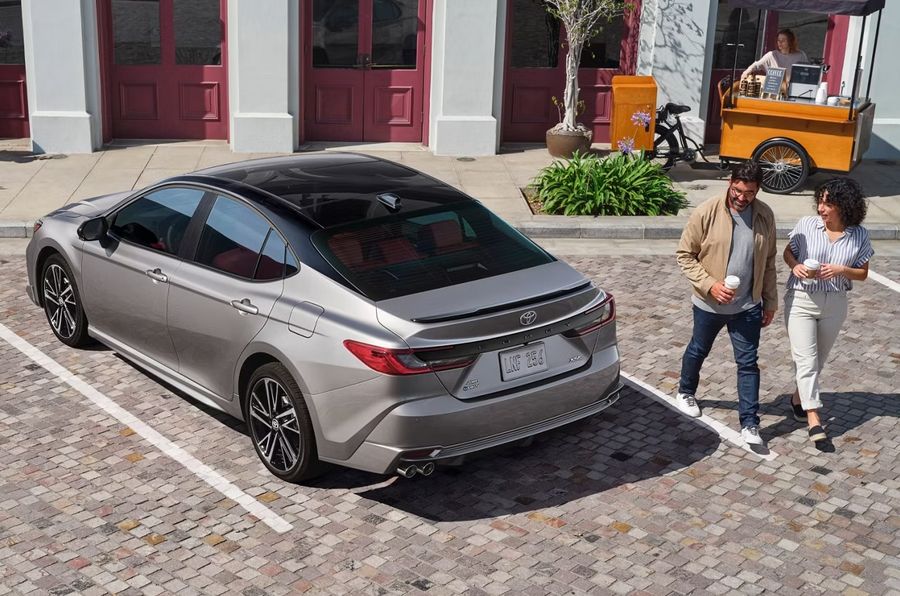
Credit: Toyota
The 2026 Toyota $TM Camry earned IIHS Top Safety Pick Plus, continuing what has become a near-continuous record of top-tier safety recognition for Toyota's flagship midsize sedan. The Camry is now sold exclusively as a hybrid — Toyota discontinued the non-hybrid version for the U.S. market — so every new Camry comes with a combined gas and electric powertrain as a baseline.
Toyota Safety Sense 3.0 is standard on every Camry trim. The package covers pre-collision warning with automatic emergency braking for vehicles, pedestrians, and cyclists, full-speed range dynamic radar cruise control with lane centering, lane departure warning, automatic high-beam control, and rear cross-traffic alert. The system's pre-collision function has been updated in TSS 3.0 to extend detection range and improve performance in low-light conditions.
The hybrid powertrain uses a 2.5-liter four-cylinder paired with an electric motor producing a combined 225 horsepower in standard front-wheel-drive configuration, or 232 horsepower in the all-wheel-drive XSE and XLE models. Fuel economy reaches 51 miles per gallon in combined driving, making the Camry one of the most efficient midsize sedans on sale in the U.S. The hybrid system requires no plug-in charging and recovers energy through regenerative braking.
Pricing starts around $28,000 for the base LE trim, making the Camry one of the more affordable TSP Plus vehicles in the midsize segment. Higher trims add features including a 12.3-inch touchscreen, a digital instrument cluster, wireless charging, and ventilated front seats. Blind-spot monitoring is available starting on the SE, one trim above the base, which is a mild gap given how thoroughly the rest of the standard safety suite is equipped.
Long-term reliability data for the Camry is extensive. It consistently ranks near the top of owner-reported reliability studies for the midsize car segment, which matters because active safety systems that malfunction or deactivate unexpectedly undermine the protection they are supposed to provide. A system that works consistently throughout the vehicle's service life is more protective in practice than a technically superior system with worse dependability.

Credit: Hyundai
The 2026 Hyundai Ioniq 5 earned IIHS Top Safety Pick Plus, making it one of the few mainstream electric vehicles to earn the designation this year. The Tesla $TSLA Model 3 and Model Y — two of the best-selling EVs in the U.S. — did not appear on the 2026 TSP or TSP Plus lists. The Ioniq 5 did, which gives buyers who want an EV with strong independent safety credentials a clear option at a sub-$50,000 price point.
Hyundai's standard safety package for the Ioniq 5 includes forward collision avoidance with pedestrian and cyclist detection, lane departure warning with lane-keeping assist, blind-spot monitoring, rear cross-traffic collision avoidance, and safe exit warning. Driver attention monitoring is also standard. The vehicle's architecture — an 800-volt electrical system built on Hyundai's E-GMP platform — supports ultra-fast charging and allows the battery from around 10% to 80% charge in approximately 18 minutes when connected to a 350-kW DC fast charger.
EPA-estimated range for the 2026 Ioniq 5 extends beyond 300 miles in the long-range rear-wheel-drive configuration. The dual-motor all-wheel-drive variant trades some range for quicker acceleration, reaching 60 mph in approximately 5.1 seconds. Vehicle-to-load capability, which allows the Ioniq 5's battery to power external devices or other electric vehicles, is a standard feature that has practical uses beyond convenience. It can, for example, supply power to a location during an outage.
The interior design departs significantly from traditional automotive layouts. The dashboard is minimal, seats slide forward and backward more than typical to create a living-space effect when parked, and a flat floor — enabled by the skateboard EV platform — eliminates the center tunnel that typically divides the front cabin in conventional vehicles.
Pricing starts around $42,000 for the standard range rear-wheel-drive variant. For EV buyers who weigh safety data heavily in purchase decisions and want the combination of TSP Plus, fast charging capability, and a well-regarded OEM warranty, the Ioniq 5 is a meaningful option in a category where the safety picture is uneven.

Credit: Nissan
The 2026 Nissan Murano earned IIHS Top Safety Pick Plus following a full redesign that brought it back to the market after a multi-year hiatus. The prior-generation Murano had aged out of the segment before Nissan replaced it, and the new model's TSP Plus standing signals that the brand committed to meeting the IIHS's updated 2026 criteria in the redesign process rather than retrofitting an existing platform.
Nissan's Safety Shield 360 comes standard on all Murano trims. The suite includes automatic emergency braking with pedestrian detection, blind-spot warning, rear cross-traffic alert, lane departure warning, rear automatic braking, and high-beam assist. The inclusion of rear automatic braking — which can halt the vehicle if the system detects an object while reversing — adds a layer of protection in parking environments that is absent from some competing vehicles' standard configurations.
The 2026 Murano uses a new turbocharged four-cylinder engine producing around 241 horsepower, a shift from the previous generation's V6. A continuously variable transmission handles gear ratios, and all-wheel drive with active torque vectoring is available. Front-wheel drive is standard on entry trims. The CVT on Nissan's turbocharged four-cylinder has been specifically tuned to reduce the artificial engine-braking sensation that many drivers find intrusive in earlier CVT applications.
Interior quality improved significantly in the redesign. The prior Murano's cabin had not kept pace with segment developments, but the 2026 version offers more contemporary materials, a standard 12.3-inch touchscreen, wireless Apple $AAPL CarPlay and Android Auto, and better ambient lighting integration. The rear seat is particularly spacious, with enough legroom to accommodate most adults without discomfort on longer trips.
Pricing starts around $38,000 for the base S trim. For buyers who specifically want a two-row midsize SUV with TSP Plus and a fresh platform over a vehicle in the late stages of a product cycle, the redesigned Murano arrives at a point where its safety architecture was purpose-built to meet the current standards.

Credit: Kia
The 2026 Kia EV9 earned IIHS Top Safety Pick Plus, making it one of a small number of three-row electric SUVs with that designation. It is also one of the few vehicles on this list that required passing the new vehicle-to-vehicle crash prevention test, which evaluates automatic braking performance at speeds ranging from 31 mph to 43 mph against obstacles including motorcycles and semi-trailers. The EV9 cleared those tests with a result that earned it the Plus tier over the standard TSP.
Kia's suite of standard driver assistance technology on the EV9 covers forward collision avoidance, lane departure warning with active steering, lane following assist, blind-spot monitoring, rear cross-traffic collision avoidance, safe exit warning, and parking collision avoidance. Highway Driving Assist 2, which provides hands-on-wheel lane centering and adaptive cruise on limited-access highways, is standard on higher trims.
The EV9 uses a 99.8-kWh battery in its long-range configurations and supports 350-kW DC fast charging, bringing it from 10% to 80% charge in around 24 minutes at compatible stations. EPA-estimated range is approximately 304 miles for the rear-wheel-drive long-range variant. The dual-motor all-wheel-drive model delivers around 379 horsepower and reaches 60 mph in approximately 5 seconds.
Three rows are offered with seating for six in the two-row captain's-chair configuration or seven in the bench-second-row layout. Third-row space is notably better than in most three-row SUVs, providing a more realistic option for adults on trips of moderate length. The flat floor enabled by the EV platform makes second-row entry and exit easier than in many conventional three-row SUVs.
Pricing starts around $57,000 and reaches approximately $75,000 for the fully loaded GT-Line trim with the dual-motor powertrain. Vehicle-to-load capability is standard, allowing the EV9 to power external devices at up to 3.6 kW. For families who need three rows and want the combination of TSP Plus recognition, fast charging, and the operating economics of an electric vehicle, the EV9 is currently the most established option in the segment.

Credit: Audi
The 2026 Audi Q5 and Q5 Sportback both earned IIHS Top Safety Pick Plus, maintaining a consistent record of top-tier safety recognition for the brand's best-selling model in North America. The Q5 competes directly with the BMW X3 and Genesis GV70, both of which also earned TSP Plus this year, and the three form a useful comparison set for buyers in the midsized luxury crossover segment.
Standard on all U.S.-market Q5 models is Audi's Pre Sense City system, which provides automatic emergency braking for vehicles and pedestrians at urban speeds. Adaptive cruise control, lane departure warning, and traffic sign recognition are also standard. The Driver Assistance Package — which adds features including active lane assist, predictive adaptive cruise control, and side assist blind-spot monitoring — is optional on entry trims and standard on higher configurations. That optionality is worth checking at the trim level of interest, as some buyers may find themselves paying extra for features that come standard on non-luxury competitors.
The Q5 is powered by a 2.0-liter turbocharged four-cylinder producing 261 horsepower in base configuration, paired with a seven-speed dual-clutch automatic transmission and Audi's Quattro all-wheel drive system. A plug-in hybrid variant — the Q5 TFSI e — is available, offering around 23 miles of EV-only range before the hybrid system engages. A Q5 Sportback variant offers the same mechanical package in a coupe-roofline body style that reduces rear headroom but improves drag coefficient.
Interior quality is a traditional strength of the Q5, with available materials including Valcona leather, real wood trim, and ambient lighting that adjusts through the MMI interface. The second-generation MMI system in the 2026 Q5 uses a central touchscreen supplemented by physical climate controls, which Audi retained after customer feedback on the all-touchscreen interior of its earlier 2020s models.
Pricing starts around $48,000. The Q5 sits in a class defined by strong competition — every major German and Korean luxury brand offers a TSP Plus competitor at similar prices — but its combination of Quattro all-wheel drive, strong crash ratings, and build quality has sustained its position as one of the segment's volume leaders.

Credit: Volvo
The 2026 Volvo EX90 earned IIHS Top Safety Pick Plus, and it did so under the criteria that specifically test for crash avoidance at highway speeds. Volvo's brand identity has been built around safety for decades. The three-point seatbelt was a Volvo invention, introduced in 1959 and eventually licensed to every other manufacturer without charge. The EX90 represents the company's most technically ambitious expression of that legacy to date.
The EX90 is built on a new architecture designed from the ground up as a battery-electric platform. It uses a dual-motor powertrain producing 402 horsepower and is rated for around 300 miles of EPA-estimated range. DC fast charging is supported at up to 250 kW, enabling an estimated 10-to-80-percent charge in around 30 minutes at a compatible station.
Volvo's suite of standard safety systems on the EX90 is among the most comprehensive in the industry. A LiDAR sensor — a three-dimensional ranging technology more commonly associated with autonomous vehicle development — is integrated into the roof and feeds into the collision avoidance system alongside radar and camera-based inputs. The system can detect objects, pedestrians, cyclists, and large animals in conditions where camera-only systems may struggle. Standard features include automatic emergency braking, blind-spot monitoring, run-off road protection that pre-tensions seatbelts and adjusts the seat if the vehicle leaves the road, and a driver monitoring system that tracks eye movement and head position to detect distraction.
Three-row seating accommodates six or seven passengers depending on configuration. Second-row captain's chairs are standard. The flat EV floor improves interior space efficiency across all three rows compared to a conventional rear-drive platform. Interior materials lean toward sustainability, with no animal leather offered as standard and a focus on recycled and responsibly sourced fabrics throughout.
Pricing starts around $80,000, placing the EX90 firmly in the premium segment. For buyers who prioritize the combination of verified crash-test performance, manufacturer-installed LiDAR, and the organizational credibility of a brand that has structured its entire product strategy around occupant protection, the EX90 is in a category largely by itself.

Credit: Tesla
The 2026 Tesla $TSLA Cybertruck earned IIHS Top Safety Pick Plus, making it the only pickup truck to hold the highest IIHS designation this year. That result carries a specific context worth unpacking. The Toyota $TM Tundra crew cab earned the standard TSP, and the Rivian $RIVN R1T, which held TSP Plus in 2025, did not earn the designation under 2026's tightened criteria. The Cybertruck did.
The TSP Plus criteria for 2026 require a Good rating in the updated moderate-overlap front test, plus a Good result in pedestrian front crash prevention and Acceptable or Good in the new vehicle-to-vehicle crash prevention evaluation. That last test, which includes scenarios at higher speeds involving motorcycles and semi-trailers, is the hardest new requirement added for this cycle. The Cybertruck cleared it.
Tesla's standard driver assistance suite on the Cybertruck includes automatic emergency braking, lane departure warning, blind-spot monitoring, forward collision warning, and parking sensors. Full Self-Driving, Tesla's more advanced driver assistance package, is available as a subscription or purchase add-on and enables more automated lane-change and navigation capabilities on highways. The IIHS ratings reflect the vehicle's performance in crash and crash-avoidance tests and do not evaluate the FSD system's performance or reliability.
The Cybertruck's stainless steel exterior panel structure is structurally different from the high-strength steel and aluminum configurations used by most competitors. The vehicle's rigid exoskeleton is integral to its crash performance characteristics, and the absence of crumple zones in the traditional sense is replaced by engineered deformation in the frame structure.
The Cybertruck starts around $70,000 for the Rear-Wheel Drive variant and climbs past $100,000 for the Cyberbeast tri-motor configuration. Range varies from approximately 250 miles to 320 miles depending on configuration. As the only pickup on the 2026 TSP Plus list, it occupies a distinct position for truck buyers who weight safety testing data heavily — and does so in a vehicle class that has historically been harder to protect given the structural geometry involved.