
The safest small SUVs — from budget to luxury
From the Mazda CX-30's perfect Top Safety Pick+ score to a BMW X3 with a semi-automated parking system standard, the safest small SUVs you can buy
Credit: Kia
Small SUVs dominate new vehicle sales in the U.S., and the reasons are straightforward. They offer more cargo room and a higher seating position than sedans without the bulk and fuel penalty of a full-size truck or body-on-frame SUV. For families, daily commuters, and solo drivers alike, the compact crossover has become the default choice for a new vehicle. But within the segment, safety performance varies enough to matter. The crash-test results and standard driver-assistance feature counts that separate the top vehicles from the rest of the class are not marginal differences. They represent genuinely different levels of protection in the scenarios that real-world accidents most often produce.
The safety evaluation of a small SUV draws from two primary sources. The National Highway Traffic Safety Administration conducts a battery of crash tests and issues five-star overall safety ratings. The Insurance Institute for Highway Safety runs its own crash-test program and awards its highest recognition, Top Safety Pick+, to vehicles that meet a demanding set of standards across multiple test types and headlight evaluations. The two organizations do not always agree: a vehicle can earn five stars from the NHTSA while receiving a lower designation from the IIHS, and vice versa. The most credibly safe vehicles earn strong marks from both simultaneously.
These 10 vehicles come from U.S. News & World Report’s ranking of the safest small SUVs in 2026, which draws on U.S. News safety scores incorporating crash-test data from the NHTSA and IIHS alongside the count of standard driver-assistance features in each model. No pricing figures appear in this article. Safety scores may change throughout the year as new data becomes available, and the source recommends checking full vehicle reviews for the most current figures.
1. Mazda CX-30 earns the highest safety score on this list
Credit: Mazda
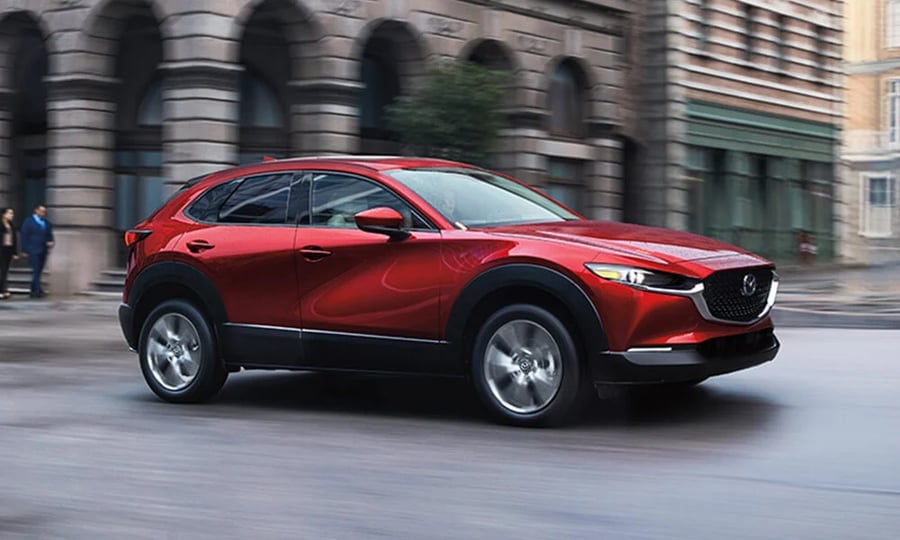
The 2026 Mazda CX-30 achieves a safety score of 9.8 out of 10, the highest of any vehicle on this list, and backs it with a five-star overall safety rating from the NHTSA and a Top Safety Pick+ designation from the IIHS, the institute’s highest recognition. Vehicle Testing Editor Zach Doell describes the CX-30 as having sporty driving dynamics and an upscale cabin that make it well worth the money, combining safety performance with the kind of driving engagement that most safety-first buyers do not expect to find at this price point.
The standard driver-assistance suite is extensive for the subcompact class. Safe exit assist alerts exiting passengers when a vehicle approaches from behind before they open the door. This addresses a crash scenario that standard blind-spot monitoring typically does not cover. Stop-and-go adaptive cruise control, driver-attention monitoring, lane-departure warning, lane-keep assist, forward collision warning with automatic emergency braking, blind-spot monitoring, and rear cross-traffic alert all come standard. A rear-seat alert reminds drivers to check the back seat before exiting, a feature relevant for families with young children or pets.
Available upgrades include a surround-view camera system, front and rear parking sensors, reverse automatic emergency braking, adaptive pivoting headlights that turn with the steering wheel to illuminate corners, a head-up display, and traffic-sign recognition. The adaptive pivoting headlights are an available feature worth noting: standard headlights illuminate in a fixed forward direction, while pivoting units follow the vehicle's path through curves, meaningfully improving visibility on winding roads at night. The CX-30’s highest safety score on this list, its IIHS Top Safety Pick+ award, and the sporty driving character that the source highlights together make it the strongest overall safety case in the subcompact SUV category. The CX-30’s top safety score, Top Safety Pick+ status, and accessible pricing make it the only vehicle on this list to hold both the highest safety score and the source’s value designation.
2. Mazda CX-50 fits an upscale cabin into a compact body
Credit: Mazda
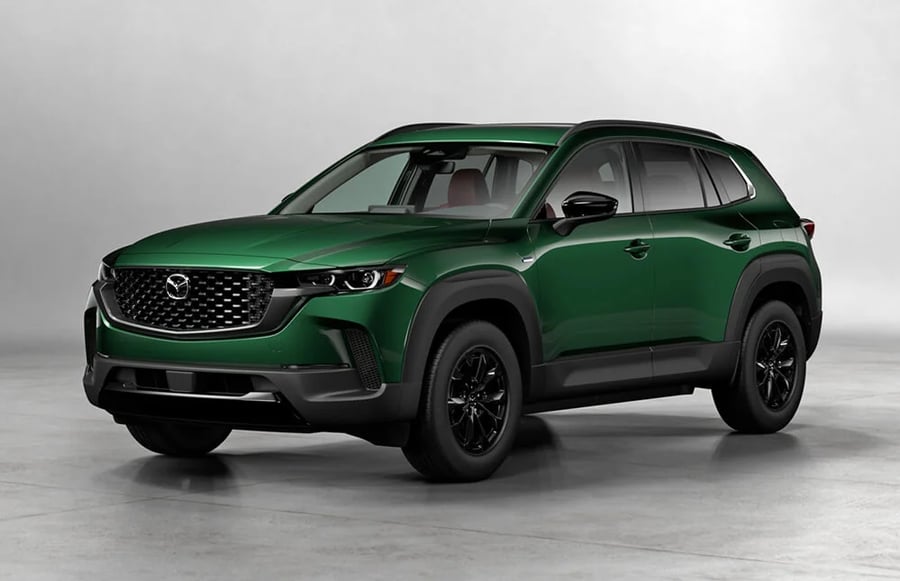
The 2026 Mazda CX-50 earns a safety score of 9.5 out of 10, a Top Safety Pick+ from the IIHS, and a five-star overall safety rating from the NHTSA, matching the CX-30’s dual-organization recognition at a slightly lower composite safety score. Vehicle Testing Editor Zach Doell describes the CX-50’s interior as upscale enough to feel at home in an entry-level luxury vehicle, with snappy steering, buttoned-down handling, and eager four-cylinder engines that give it a driving character the source characterizes as a joy.
The CX-50 is larger than the CX-30, giving buyers who want more interior space a Mazda option that retains the brand’s safety credentials and driving dynamics, with a modest step-up in size. The standard driver-assistance package covers the same core technologies as the CX-30: forward collision warning with automatic emergency braking, adaptive cruise control, lane-departure warning, lane-keep assist, blind-spot monitoring, rear cross-traffic alert, automatic high-beam headlights, driver-attention monitoring, and a vehicle exit warning that serves the same function as the CX-30’s safe exit assist.
Available features on the CX-50 extend beyond the CX-30’s list in one notable area: traffic-jam assist, which provides low-speed adaptive cruise control with steering assistance, is available on the CX-50 but not listed for the CX-30. The feature manages braking, acceleration, and steering in stop-and-go traffic, reducing driver workload in the congested conditions where urban commuters spend a significant portion of their driving time. A front cross-traffic alert is also available on the CX-50, adding a forward-facing version of the rear cross-traffic protection that both Mazdas include as standard. The CX-50 gives buyers who want more interior room and the traffic-jam assist technology a step up from the CX-30 without sacrificing the safety credentials that make both Mazdas the top two vehicles on this list. The traffic-jam assist availability also gives CX-50 buyers a low-speed highway automation option that reduces urban commute fatigue.
3. Hyundai Kona delivers the best fuel economy on this list
Credit: Hyundai
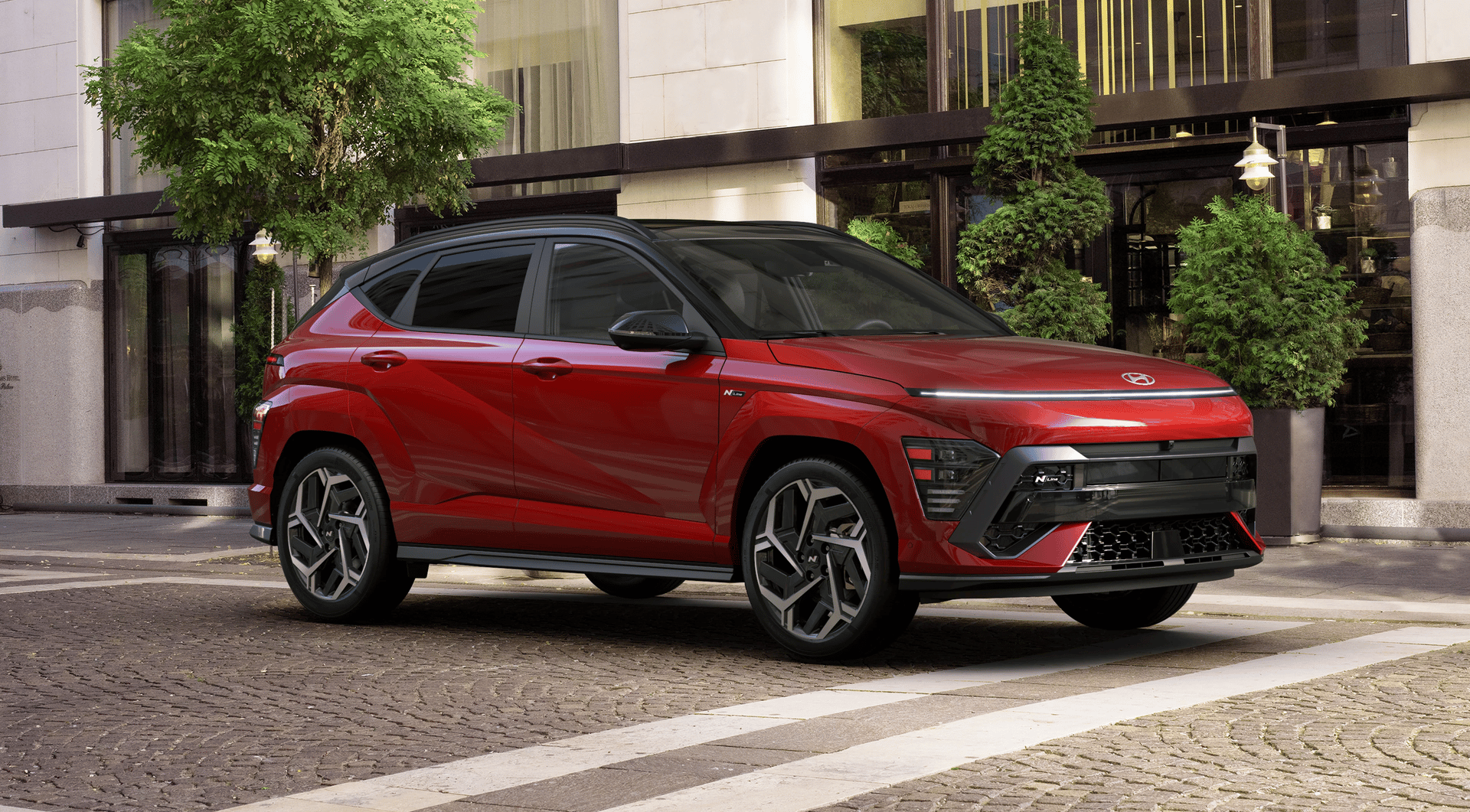
The 2026 Hyundai Kona earns a safety score of 9.3 out of 10, a Top Safety Pick+ from the IIHS, and four out of five stars from the NHTSA, the only model in the top five of this list to receive a four-star NHTSA rating. The source positions it as the best budget option among the vehicles ranked here and identifies it as the most fuel-efficient model in the group. Reviewer Mike Hagerty describes the Kona as a great all-around city car with easy maneuverability and finds it an excellent package for budget-conscious buyers who want a capable vehicle without the compromises of a stripped-down economy car.
The Kona is surprisingly spacious for a subcompact crossover, offering interior room that exceeds what its exterior dimensions suggest. Junction turning detection is a standard feature that the source highlights specifically: the system detects oncoming traffic as the driver turns left at an intersection and applies the brakes if necessary, addressing a collision type that most standard safety suites do not specifically target. Safe exit assist, which stops the doors from opening when a vehicle approaches from behind, is also standard on the Kona.
Available features include highway driving assist, which uses steering and braking inputs to keep the vehicle centered in its lane while maintaining a safe following distance from the vehicle ahead. Navigation-based stop-and-go adaptive cruise control is also available, adjusting speed automatically based on upcoming speed limit changes and curves registered in the map data. The Kona’s junction-turning detection, as a standard feature, gives it a crash-prevention capability for a specific and common driving scenario — the left-turn intersection collision — that competing vehicles at this price point do not universally address with dedicated technology. The Kona’s highway driving assist availability further closes the gap with higher-positioned vehicles in this segment, offering hands-free lane-centering on highways as an upgrade.
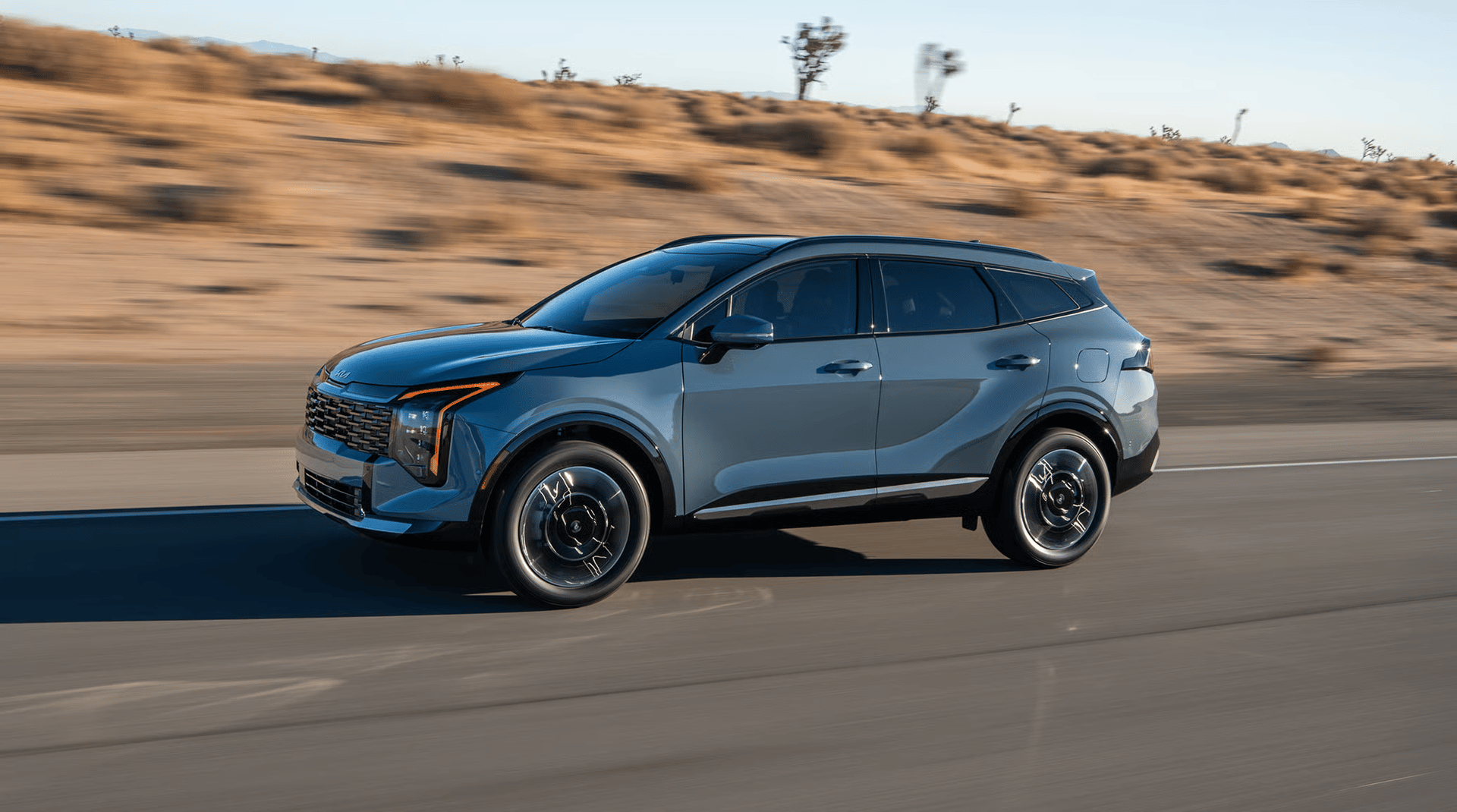
4. Kia Sportage posts an 84 out of 100 reliability score
Credit: Kia
The 2026 Kia Sportage earns a safety score of 9.6 out of 10, a Top Safety Pick+ from the IIHS, and a five-star overall rating from the NHTSA. Its J.D. Power predicted reliability score of 84 out of 100 falls in the “Great” tier of the J.D. Power scale, which defines scores of 81 to 90 as Great and reserves the “Best” designation for scores of 91 and above. The 84 ties the Kona for the highest predicted reliability score on this list, reflecting a design that owners expect to hold up over time.
U.S. News Managing Editor Alex Kwanten identifies the Sportage’s back-seat and cargo space as class-leading, and the infotainment system as attractive and easy to use, including over-the-air update capability that keeps the software current without a dealer visit. Kwanten also notes the Sportage carries one of the best factory warranties in the compact SUV segment, which extends the reliability advantage beyond what the J.D. Power score alone captures.
Standard safety equipment includes forward collision warning with pedestrian and cyclist detection, automatic emergency braking, lane-departure warning with lane-keep assist, stop-and-go adaptive cruise control, driver-attention monitoring, automatic high-beam headlights, front and rear parking sensors, and a rear-seat alert. Available features include blind-spot monitoring with rear cross-traffic alert, a blind-spot camera system that displays a video feed of the adjacent lane when the turn signal activates, safe exit assist, and Highway Driving Assist for lane-centering on highways. The Sportage’s class-leading back-seat and cargo space, over-the-air infotainment updates, warranty strength, and 84-point reliability score together give it the most complete ownership value proposition of any vehicle on this list. The blind-spot camera system available on the Sportage — which streams a live video feed of the adjacent lane when the turn signal activates — also addresses lane-change safety more directly than static mirror-based monitoring alone in typical driving.
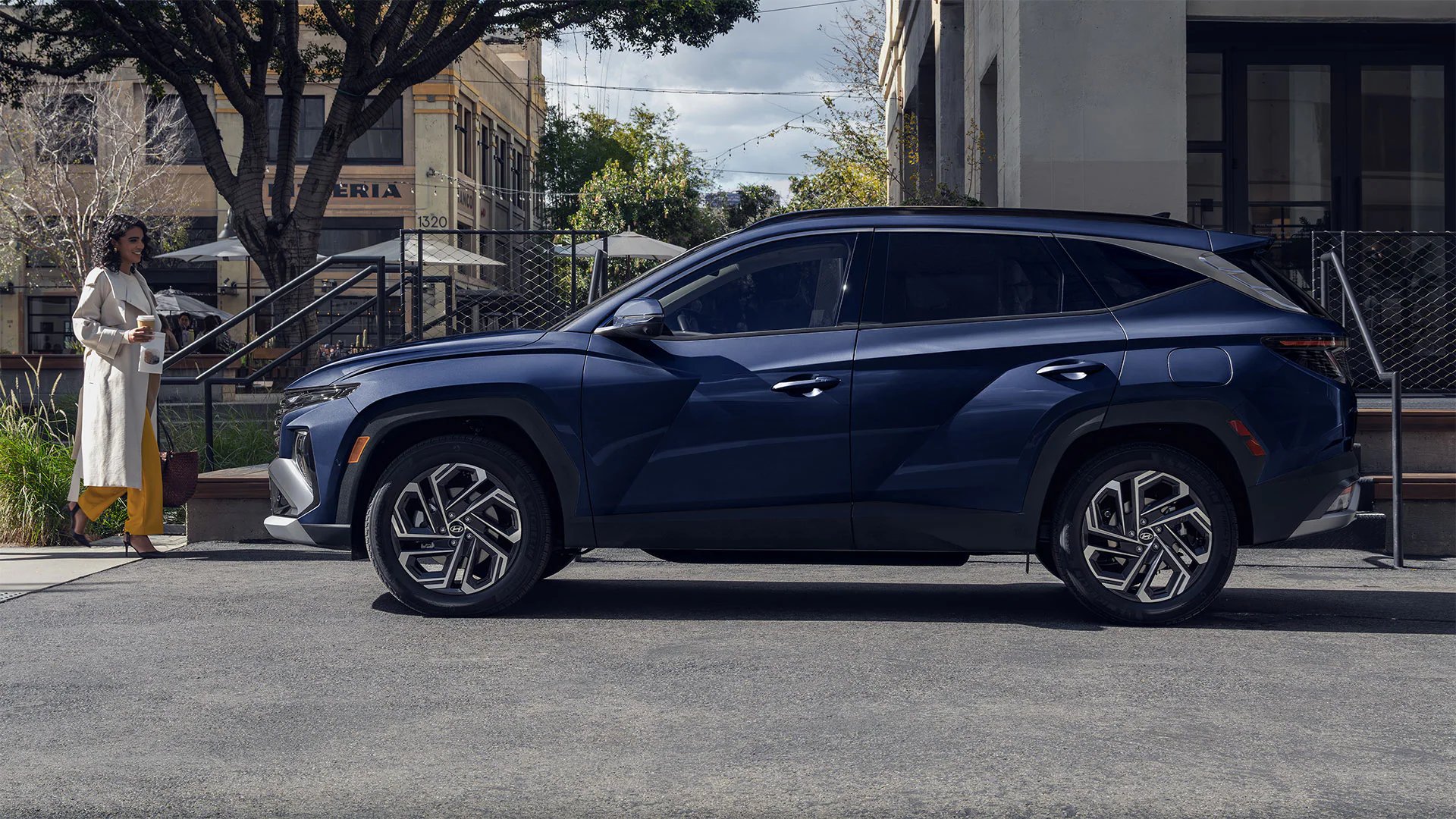
5. Hyundai Tucson wins 2 Best Compact SUV awards for 2026
Credit: Hyundai
The 2026 Hyundai Tucson earns a safety score of 9.7 out of 10, a five-star overall safety rating from the NHTSA, and a Top Safety Pick+ from the IIHS. It also holds two distinct U.S. News awards for 2026: Best Compact SUV for the Money and Best Compact SUV for Families. Reviewer Mike Hagerty notes that the Tucson’s suspension absorbs all but the worst road imperfections at a ride quality level the source describes as truly impressive for the class, reinforcing the family-focused award.
Lane-centering assist is a standard feature on the Tucson, distinguishing it from vehicles that include lane-keep assist but require a separate upgrade for lane centering. Lane-centering assist actively steers the vehicle toward the center of the lane, while lane-keep assist only intervenes when the vehicle drifts toward a lane marker. The difference matters in highway driving, where lane centering reduces the micro-corrections a driver makes continuously and reduces fatigue on longer trips. Safe exit assist, which prevents doors from opening when sensors detect an approaching vehicle, is also standard.
Available features include a head-up display, reverse automatic emergency braking, front, rear, and side parking sensors, a surround-view camera system, a blind-spot camera, remote park assist, rain-sensing windshield wipers, and navigation-based adaptive cruise control that adjusts speed based on upcoming road conditions in the map data. Remote park assist — available on the Tucson but not listed for most competitors here — allows the driver to move the vehicle in and out of parking spaces from outside the car using a smartphone or key fob. The Tucson’s dual award status, standard lane-centering assist, and availability of remote park assist give it the most family-forward feature set of any vehicle on this list. The navigation-based adaptive cruise control available on the Tucson also adjusts speed based on upcoming road geometry stored in map data, a capability that standard adaptive cruise systems cannot provide.
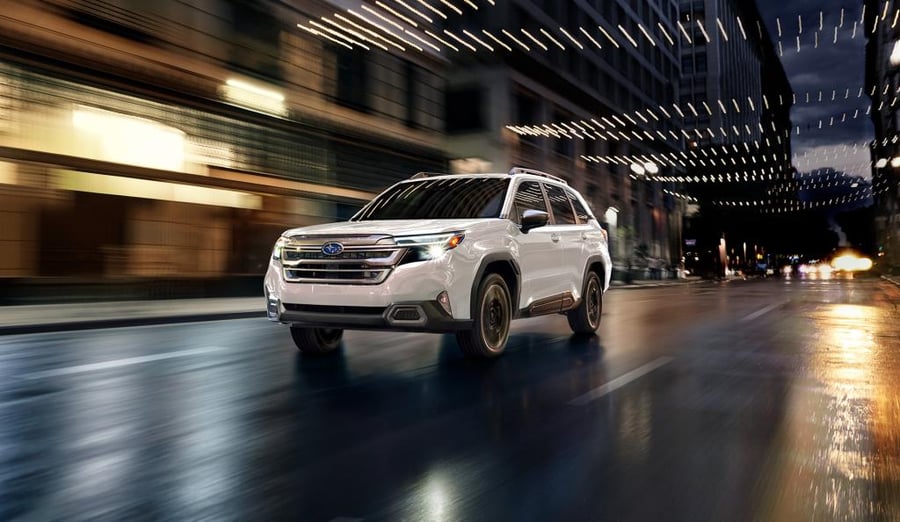
6. Subaru Forester ships emergency stop assist as standard
Credit: Subaru
The 2026 Subaru Forester earns a safety score of 9.7 out of 10, five stars from the NHTSA, and a Top Safety Pick+ from the IIHS. The Forester underwent a full redesign one year before the 2026 model year, giving it a fresh interior and exterior that reviewer James Gilboy describes as a refined and comfortable SUV with strong driving dynamics and an outdoors-tailored interior. The redesign also gives the Forester a competitive position in a segment where several rivals operate on aging platforms.
Emergency stop assist is a standard feature the source specifically identifies: the system can slow and stop the vehicle if the driver becomes unresponsive, addressing a medical emergency or incapacitation scenario that no other standard safety feature directly addresses. Evasive-steering assist, intersection assist, cyclist and pedestrian detection, forward automatic emergency braking, lane-centering assist, lane-departure warning, adaptive cruise control, automatic high-beam LEDs, and a rear-seat alert all come standard. The intersection assist system uses sensors to help prevent collisions at intersections, providing the Forester with active protection in one of driving’s most collision-prone environments.
The Forester also offers genuine off-road capability, unlike most compact crossovers. The source explicitly identifies true off-road ability as a Forester strength, alongside its road performance, giving buyers who occasionally drive unpaved roads or encounter winter conditions a vehicle that handles those conditions with greater capability than the typical front-wheel-drive or all-wheel-drive crossover. Available features include reverse automatic emergency braking, blind-spot monitoring, lane-change assist, rear cross-traffic alert, driver-attention monitoring, and a surround-view camera. The emergency stop assist standard feature, the IIHS Top Safety Pick+ recognition, and the off-road capability together give the Forester a safety profile that extends beyond crash-test scores into the scenarios that happen before a crash. The Forester’s Lane-change assist, available as an upgrade, also adds active steering guidance during lane changes, a capability that lane-keep assist systems do not provide.
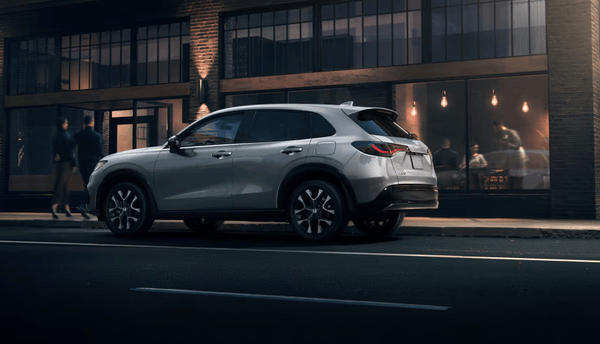
7. Honda HR-V overachieves on safety at a bargain price
Credit: Honda
The 2026 Honda $HMC HR-V earns a safety score of 9.4 out of 10, a Top Safety Pick+ from the IIHS, and a five-star overall safety rating from the NHTSA. Managing Editor Alex Kwanten describes the HR-V as an overachiever in many areas and a bargain, noting that even the base model represents a strong buy. The HR-V falls into a specific category: a vehicle whose value exceeds what its price point typically delivers.
Traffic-jam assist is a standard feature on the HR-V, giving it a low-speed highway automation capability that several other vehicles on this list offer only as an upgrade. The system manages braking, acceleration, and steering in congested conditions, reducing drivers' physical and cognitive load in stop-and-go traffic. Traffic-sign recognition, which reads and displays posted speed limits, is also standard, alerting drivers to speed changes without requiring them to read every sign. The core standard suite also includes forward collision warning with automatic emergency braking, adaptive cruise control, lane-departure warning, lane-keep assist, automatic high-beam headlights, driver-attention monitoring, rearview camera, and a rear-seat alert.
The HR-V keeps its available features focused and targeted: blind-spot monitoring, rear cross-traffic alert, and front and rear parking sensors cover the most commonly sought safety upgrades without a long list of niche technologies. This simplicity reflects the HR-V’s positioning as an accessible, no-fuss vehicle where the standard package already delivers strong safety performance. The HR-V’s IIHS Top Safety Pick+ award and its five-star NHTSA rating confirm that the source’s “overachiever” characterization reflects genuine safety performance, not just perceived value. The HR-V earns both organizations’ highest recognitions at a price point below most of its competitors on this list. The HR-V’s traffic-jam assist, a standard feature, gives it a daily-driving efficiency advantage that buyers in congested urban environments will notice over a typical week of commuting.
8. Acura ADX debuts as the first luxury SUV on this list
Credit: Acura
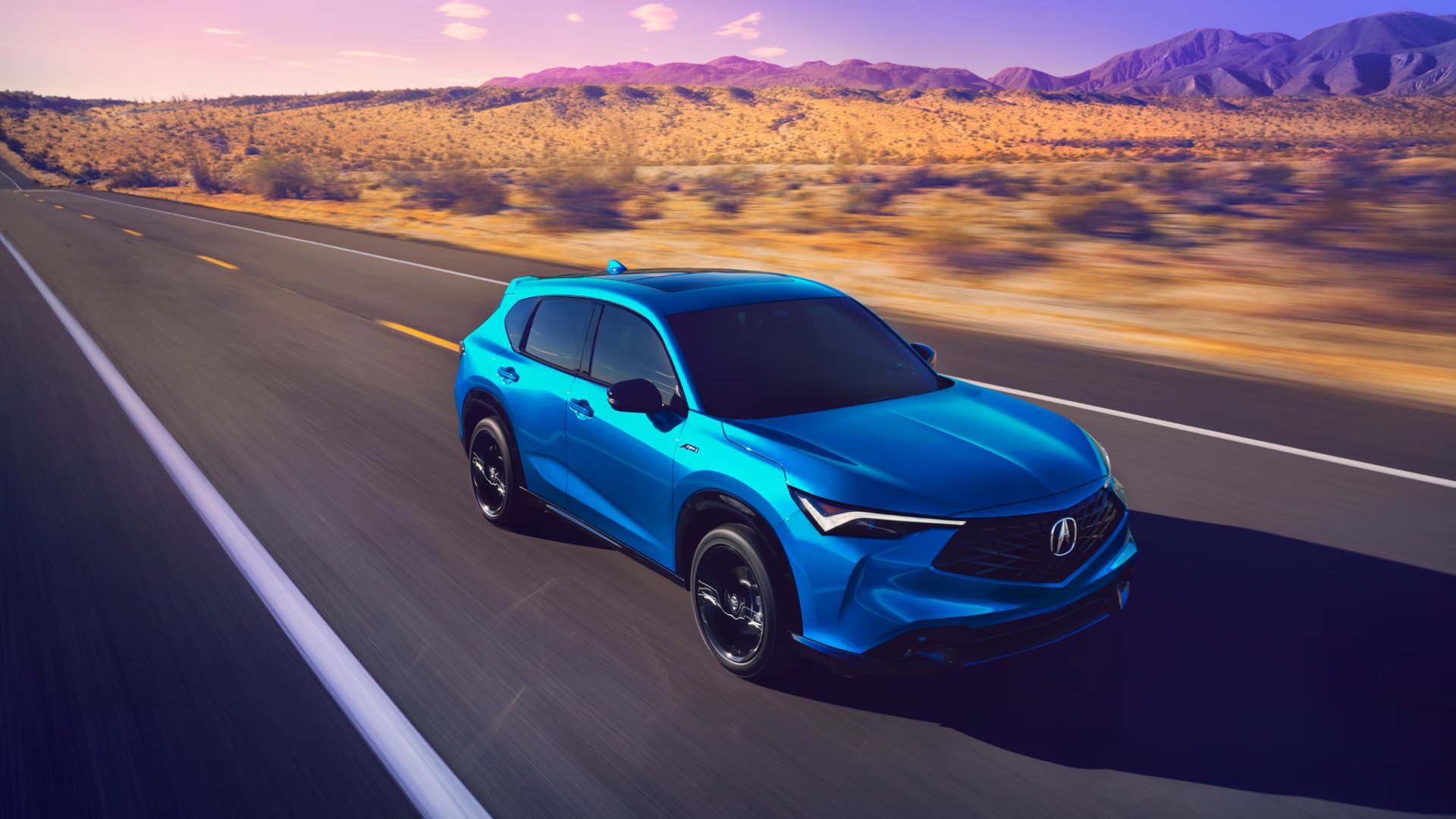
The 2025 Acura ADX is a brand-new model and the first luxury SUV on this list, earning a safety score of 9.4 out of 10 and five stars from the NHTSA. The IIHS awarded it a Top Safety Pick designation, one tier below the Top Safety Pick+ that most other vehicles on this list hold. The ADX balances agile handling and a smooth ride, delivers ample cabin space and intuitive technology, and comes in at a lower price than many luxury SUV competitors. The source notes that acceleration is not the ADX’s strongest attribute, and neither is cabin insulation from road noise.
Road departure mitigation is a standard feature that distinguishes the ADX from many competitors. The system actively works to prevent the vehicle from leaving the roadway, adding a layer of crash prevention for the scenario in which a distracted or impaired driver drifts off the pavement. Traffic-jam assist, which manages braking, acceleration, and steering in slow traffic, also comes standard. The full standard suite includes forward collision warning with automatic emergency braking, pedestrian detection, lane-departure warning, lane-keep assist, adaptive cruise control, blind-spot monitoring, rear cross-traffic alert, traffic-sign recognition, a rear-seat alert, a rearview camera, and automatic high-beam headlights.
The ADX’s entry into the safety rankings as the only luxury model to make the list before the two BMW entries gives it a specific positioning. Buyers who want a premium interior, a luxury badge, and strong safety performance in a compact footprint will find the ADX meets all three requirements. The caveats are that the IIHS designation falls one level short of the plus award and that acceleration is an acknowledged limitation. The road departure mitigation and traffic-jam assist as standard features give the ADX active safety technology beyond what many non-luxury competitors include at their base trim levels. The ADX’s balance of agile handling and smooth ride quality also gives it the daily-use refinement that an entry-level luxury positioning requires to justify the premium over non-luxury competitors.
9. BMW X1 combines captivating driving with 4 NHTSA stars
Credit: BMW
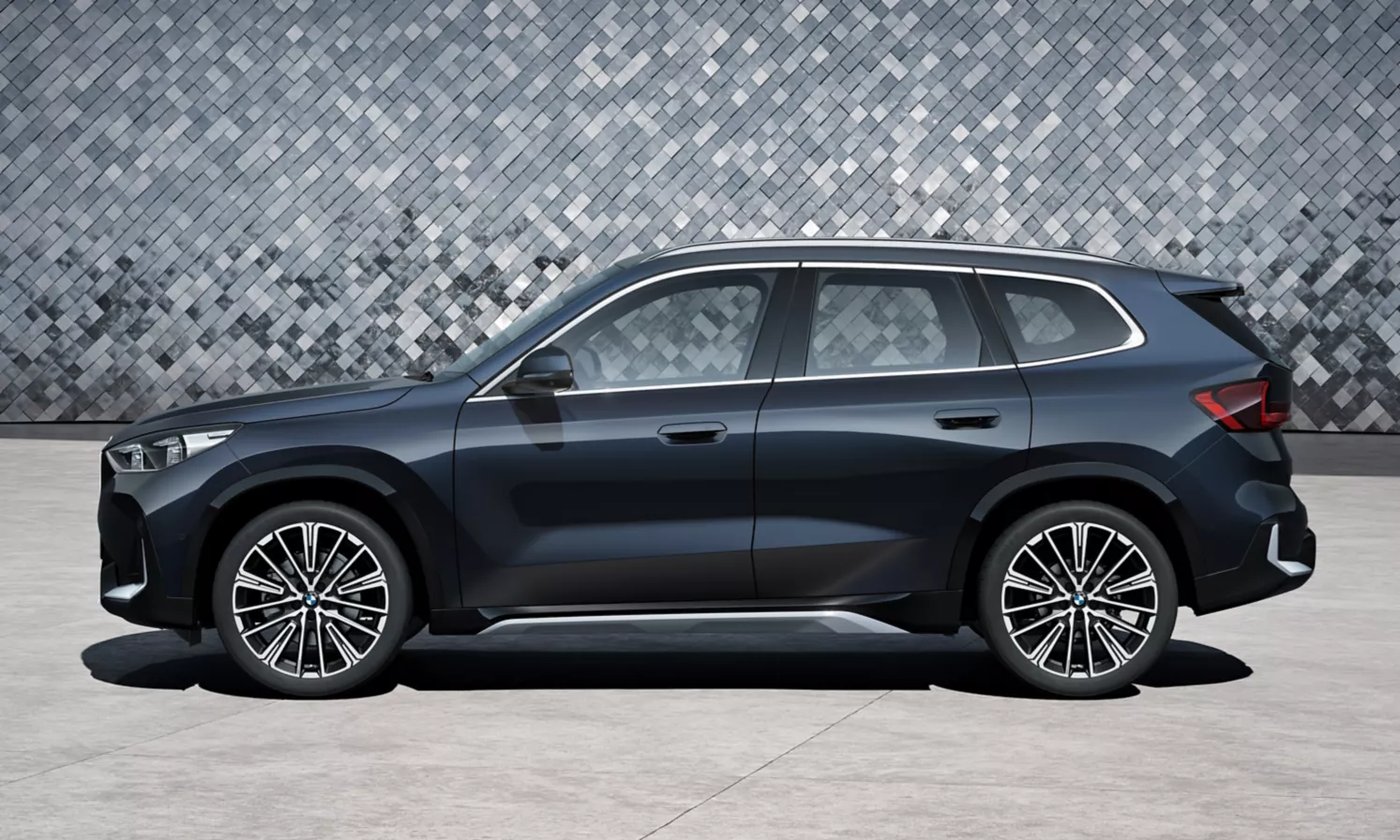
The 2025 BMW X1 earns a safety score of 9.4 out of 10 alongside a U.S. News Rating of 9.2 out of 10, the second-highest overall rating on this list behind the Tucson’s score. Senior Vehicle Testing Correspondent John M. Vincent calls the X1 a standout performer among luxury subcompact SUVs, with a driving experience he describes as captivating and confidence-inspiring, and adds that its excellent fuel economy will make drivers seek out longer routes. The X1’s crash-test record requires some context: the IIHS issued a Top Safety Pick designation for the closely related 2024 model, which the source notes is nearly identical to the 2025 X1. The X1 earned a “Good” rating in two IIHS crash tests, but a “Marginal” score in the whiplash prevention test, and the NHTSA gave it four out of five stars overall.
The standard safety feature list includes blind-spot monitoring, forward automatic emergency braking with forward collision warning, front and rear parking sensors, lane-departure warning, lane-keep assist, LED headlights with automatic high beams, park assist, pedestrian detection, rear cross-traffic alert, a rearview camera, and speed limit recognition. Park assist is a standard feature worth noting: the system identifies suitable parking spaces and manages the steering inputs needed to enter them, leaving the driver to control the pedals.
Available features include adaptive cruise control, a head-up display, front cross-traffic alert, evasive-steering assist, lane-centering assist, a surround-view camera system, and traffic-jam assist. The X1’s four-star NHTSA rating and the whiplash test score reflect a crash safety profile that falls short of the five-star and Top Safety Pick+ credentials that most vehicles higher on this list hold. Buyers who prioritize driving dynamics, fuel economy, and the BMW brand in the luxury subcompact category will find the X1 a compelling option, with the safety trade-off clearly defined. The X1’s overall U.S. News Rating of 9.2 out of 10 exceeds most vehicles higher on the safety list, which reflects how the X1 compensates for its lower crash-test scores with exceptional driving dynamics and efficiency.
10. BMW X3 bundles a semi-automated parking system standard
Credit: BMW
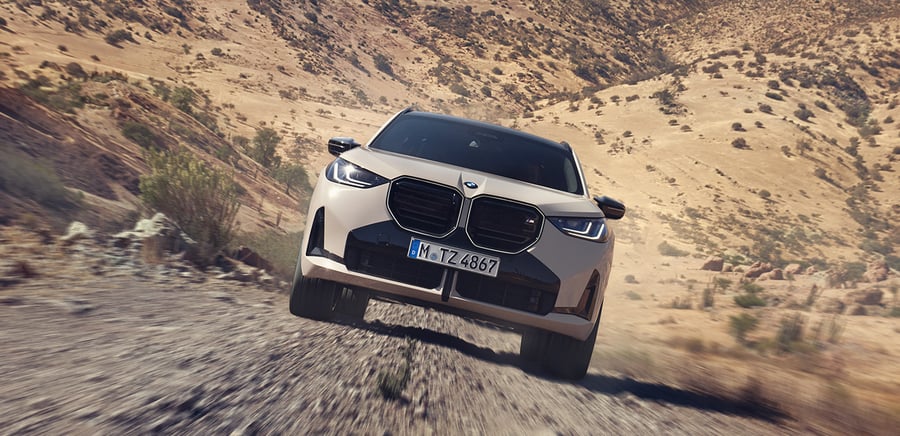
The 2026 BMW X3 earns a safety score of 9.3 out of 10, a Top Safety Pick+ from the IIHS, and four out of five stars from the NHTSA, the same result as the X1 but with the higher IIHS recognition. Reviewer Mark Takahashi calls the X3 his personal choice in the class. The source acknowledges that some interior materials do not match the vehicle’s premium price point and that the infotainment controls are complex, but positions both as manageable trade-offs for what the X3 delivers in power, agility, fuel efficiency, cabin comfort, and cargo space.
The X3 is the most expensive vehicle on this list by a meaningful margin. Its standard equipment reflects the premium positioning: forward collision warning with automatic emergency braking, a rearview camera, lane-keep assist, blind-spot monitoring, rear cross-traffic alert, driver-attention monitoring, speed-limit recognition, automatic high-beam headlights, front and rear parking sensors, and a semi-automated parking system. The parking system actively steers the vehicle into parking spaces while managing speed, giving the X3 a hands-on parking automation capability at the standard trim level that competitors typically offer only as optional upgrades.
Available features include adaptive cruise control with lane centering, lane-change assist, traffic-jam assist, a surround-view camera system, and a head-up display. The X3 IIHS Top Safety Pick+ award gives it stronger IIHS recognition than the X1, despite the lower NHTSA score shared by both BMW models on this list. The semi-automated parking system, the Top Safety Pick+ designation, and the power and fuel efficiency, the source identifies as X3 strengths, give buyers who can afford the premium a vehicle the source’s reviewer considers the class’s best overall pick. The X3’s position as the most expensive vehicle on this list also reflects that safety and overall quality can coexist, and that the premium it commands is attributable to a breadth of attributes that the source’s reviewer found compelling enough to recommend above all alternatives.