Credit: Akshata Bablad / Pexels
Salads have a reputation problem. For decades, the word conjured a bowl of iceberg lettuce, a few pale tomato wedges, and a drizzle of ranch — something you ate alongside a real meal, or reluctantly in place of one. That reputation was mostly earned. A pile of raw leaves with minimal fat and protein will not keep you full, and the people who abandoned salads for more substantial food were not wrong to do so.
But a salad is not a category of ingredients. It is a structure — a bowl of components assembled together — and the components are entirely up to the cook. When you build a salad around whole grains, legumes, roasted vegetables, eggs, fish, meat, cheese, or nuts, you get something that behaves nutritionally like a full meal. Fiber from the vegetables and grains slows digestion. Protein from meat, eggs, legumes, or dairy triggers satiety hormones. Fat from olive oil, avocado, nuts, or cheese keeps you from feeling hungry again 40 minutes later.
The salads that actually satisfy tend to share a few structural features. They have at least one source of protein — ideally around 20 grams or more per serving. They have enough fiber to slow gastric emptying, which means plenty of vegetables and usually a whole grain or legume. They have fat, because fat delays stomach emptying and makes the meal feel complete. And they have enough volume to feel like a real portion. A salad that hits all four of those criteria is genuinely more satisfying than many hot meals.
The 20 salads in this list were chosen for exactly that reason. They span multiple cuisines — Mediterranean, Mexican, Japanese, Middle Eastern, American, Southeast Asian — and they use a wide range of proteins and base ingredients. Some are warm. Some are room temperature. Some are cold. A few are technically salads only by the loosest definition, which is fine, because the goal here is meals that work, not meals that fit a narrow category.
Each one is designed to hold up as a main course, not an afterthought. The recipes here are descriptions and frameworks, not precise formulas — salads are among the most forgiving dishes to cook, and small substitutions rarely hurt. What matters is the architecture: enough of the right ingredients to make a bowl that keeps you full until your next meal.
If you have been skeptical of salads as a meal, the entries in this list are worth reconsidering. They are built differently from the iceberg wedge, and they perform differently too.
1 / 20

Credit: Canva Images
Niçoise salad comes from Nice, on the French Riviera, and the classic version is built around tuna, hard-boiled eggs, olives, green beans, tomatoes, and anchovies. It is one of the most protein-dense salads in the French culinary canon, and it achieves satiety through redundancy: multiple protein sources working together rather than a single centerpiece.
The foundation is usually crisp romaine or Boston lettuce, but the greens are almost beside the point nutritionally. What matters is everything layered on top. A standard niçoise includes two hard-boiled eggs per serving, which contribute about 12 grams of protein and a significant amount of dietary fat. The tuna — canned or seared fresh — adds another 15 to 20 grams of protein depending on the portion. The anchovies add a small additional hit of protein and a large hit of umami.
Green beans are the primary vegetable component, briefly blanched so they retain their snap. Blanching them takes about three minutes in boiling salted water, then a quick dip in ice water to stop the cooking. They should be tender but not soft. Niçoise olives — the small, dark, slightly bitter variety from the south of France — are traditional, but kalamata olives work if niçoise are unavailable.
The dressing is a simple vinaigrette: good olive oil, red wine vinegar or lemon juice, Dijon mustard, garlic, salt, and pepper. The mustard acts as an emulsifier, holding the oil and vinegar together long enough to coat each component evenly. A well-made vinaigrette with extra virgin olive oil adds meaningful fat to the dish, which extends satiety considerably.
Some versions of niçoise include small boiled potatoes, which add starch and bulk. If you are building this as a main course, the potatoes are worth including — they add volume and slow-burning carbohydrate energy. New potatoes or fingerlings, halved and boiled until just tender, work well. They should be dressed while still warm so they absorb the vinaigrette rather than repelling it.
The assembly is the final step. Everything is typically arranged separately on the plate rather than tossed together, which makes for a better visual and also means each component maintains its texture. Dressed greens as a base, then the remaining ingredients in clusters. Eggs quartered. Tuna broken into chunks rather than flaked too finely. Anchovies draped on top. A final drizzle of vinaigrette over everything, and the dish is done.
2 / 20
Credit: Shuvalova Natalia / Pexels
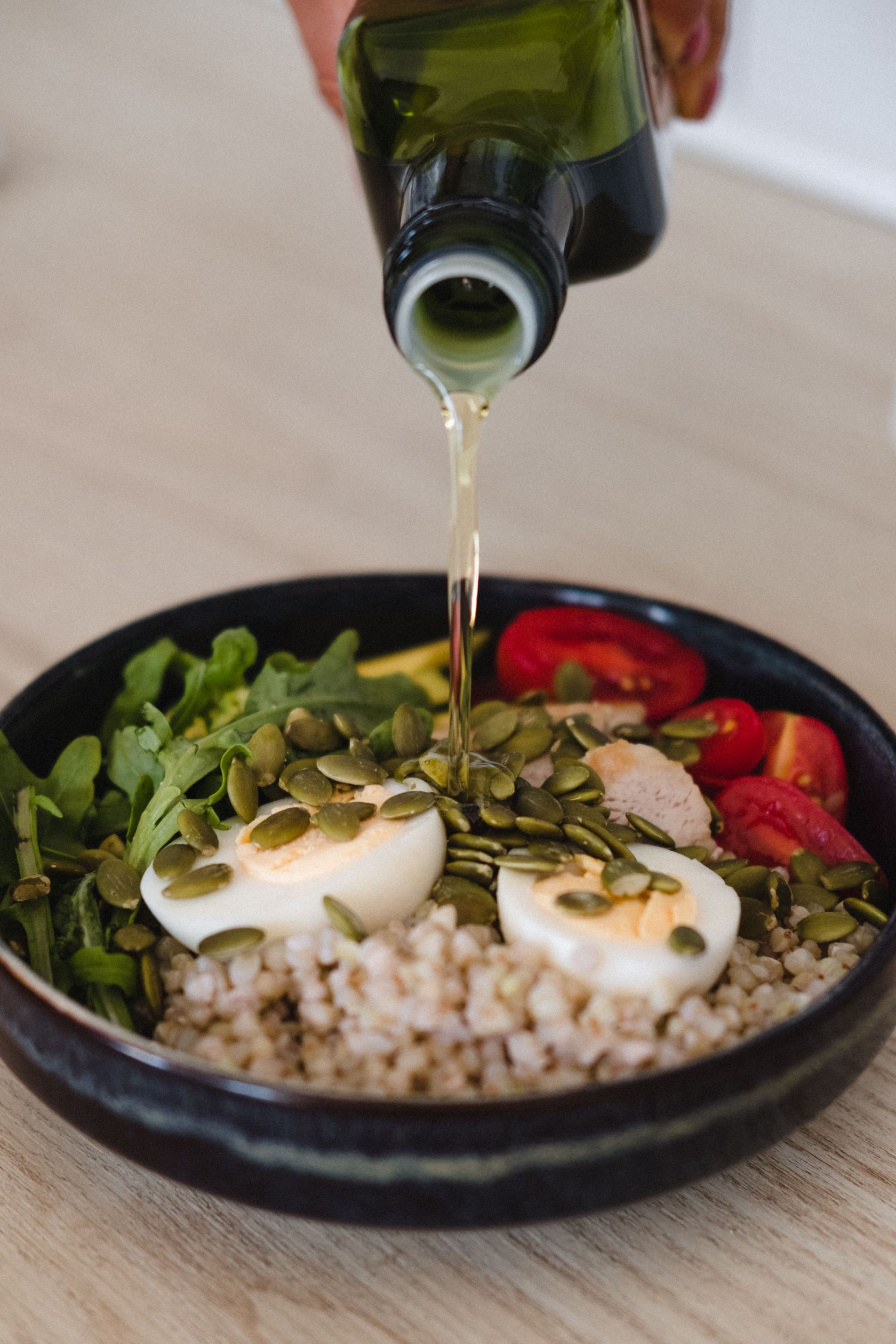
A grain bowl is not one dish — it is a method. The core idea is a base of whole grains topped with roasted or raw vegetables, a protein, and a sauce substantial enough to tie everything together. When built with enough of each component, it is one of the most consistently filling formats in modern cooking.
Farro is one of the best grain choices for this purpose. It is a hulled wheat variety that originated in the Fertile Crescent and has been eaten in Italy for centuries. Cooked farro has a chewy, nutty character that holds up well under warm toppings, and a one-cup cooked serving provides around six grams of protein and five grams of fiber. Quinoa is a valid alternative and cooks faster, with slightly more protein and the advantage of being gluten-free. Brown rice works too, though it has a softer texture that absorbs sauces differently.
The roasted vegetables are where the bowl gets its depth. Almost any vegetable can be roasted and used here — the key is cutting them to roughly uniform sizes so they cook evenly, tossing them in olive oil, and roasting at high heat. A temperature of around 425°F (220°C) is hot enough to caramelize the exterior of the vegetable without steaming it. Broccoli, cauliflower, sweet potato, red onion, beets, and bell peppers are all strong choices. Roasted chickpeas can be added to the vegetable tray to add protein and crunch.
Tahini dressing transforms the bowl from a grain side dish into a complete meal. Tahini is sesame seed paste — nutty, slightly bitter, and dense with fat and protein. To make a dressing from it, whisk together two tablespoons of tahini with one tablespoon of lemon juice, a small clove of garlic, a pinch of salt, and enough water to bring it to a pourable consistency. The result should coat a spoon lightly. It is rich enough that a modest amount goes a long way.
A soft-boiled egg or a scoop of hummus can be added for additional protein. A handful of leafy greens — arugula or baby spinach — wilts slightly under the warm grain and vegetables, adding color and micronutrients without overwhelming the bowl. A sprinkle of toasted seeds or za'atar finishes the dish.
The practical advantage of this format is that all components can be prepared in batches and assembled throughout the week. Cooked grains keep refrigerated for up to five days. Roasted vegetables last three to four days. Tahini dressing keeps for a week. The bowl comes together in minutes once the components exist.
3 / 20
Credit: Hybrid Storytellers / Unsplash
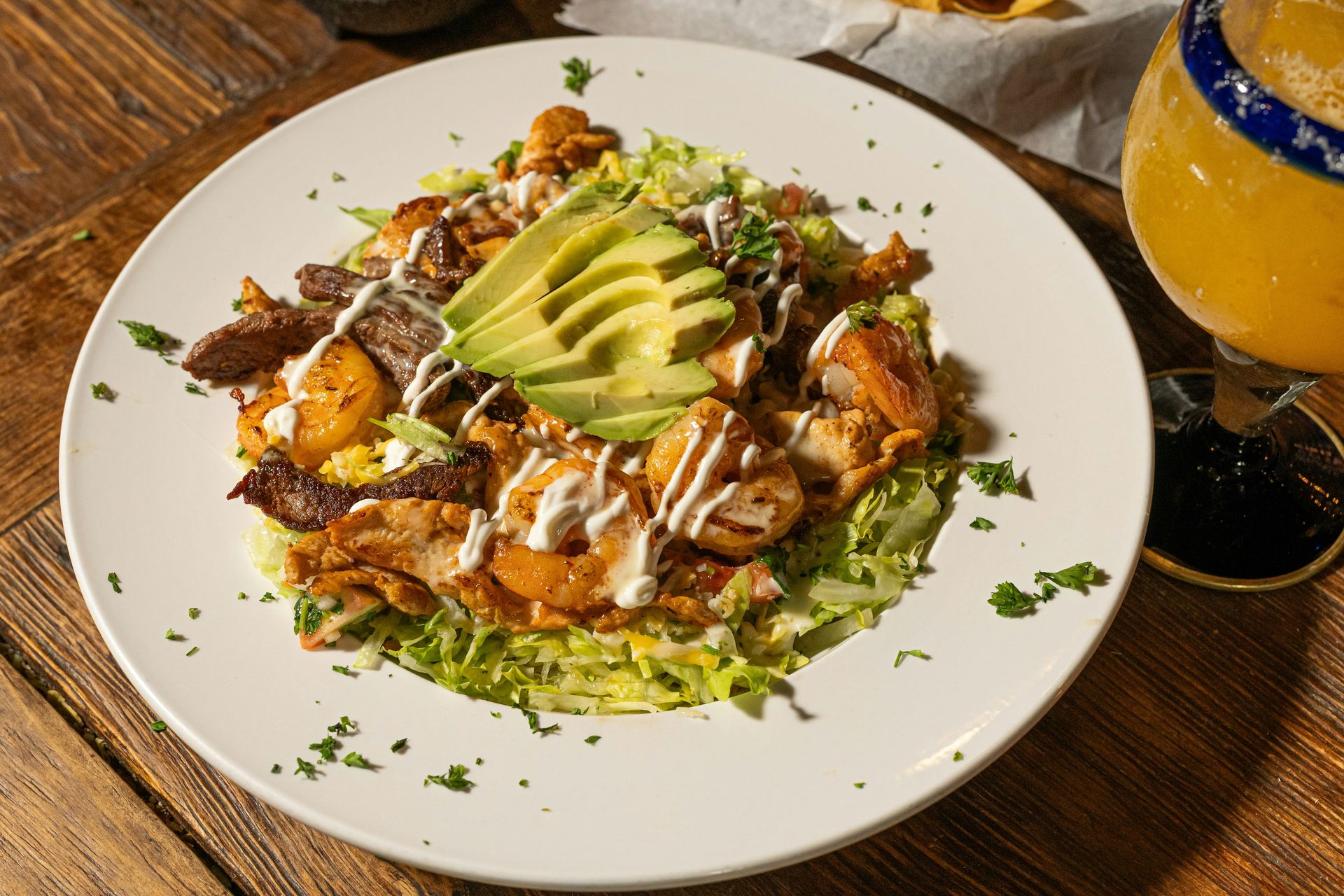
The southwest chicken salad sits at the intersection of Tex-Mex flavors and composed salad structure. It is built around grilled or roasted chicken, black beans, corn, avocado, and a base of chopped romaine, with a dressing that bridges the gap between a ranch and a lime vinaigrette. The result is a bowl with enough protein, fiber, and fat to function as a full meal.
The chicken is the protein anchor. A typical serving uses about 100 to 150 grams of cooked chicken breast or thigh per person, which provides roughly 25 to 35 grams of protein. Thigh meat has more fat and a more forgiving texture — it stays juicy when reheated, which matters if you are making this for meal prep. A simple marinade of lime juice, cumin, garlic powder, smoked paprika, and olive oil gives the chicken a seasoning that coheres with the rest of the bowl's flavors.
Black beans contribute both protein and fiber. A half-cup of canned black beans, rinsed and drained, adds about eight grams of protein and seven grams of fiber. Combined with the chicken, the salad's total protein content per serving lands well above 30 grams, which is a meaningful threshold for satiety. Corn — either grilled, roasted, or simply defrosted from frozen — adds sweetness and texture contrast.
Avocado is essential to this salad's staying power. It adds monounsaturated fat, which slows digestion and extends the window of fullness after a meal. About half an avocado per serving is the right proportion — enough fat to matter without overwhelming the other components. Diced is generally better than sliced here, so it distributes evenly through the bowl.
The dressing is typically based on lime juice and olive oil, often with a spoonful of sour cream or Greek yogurt for creaminess, along with cumin, garlic, and a small amount of honey. Some versions use a chipotle pepper blended into the dressing for smokiness and mild heat. A handful of shredded cheddar or crumbled cotija cheese adds dairy fat and a sharp flavor contrast.
Crispy tortilla strips — baked, not fried — can be scattered on top for crunch. They do not add meaningfully to the salad's nutritional profile, but texture variety improves the experience of eating. Chopped fresh cilantro and thinly sliced jalapeño finish the bowl.
4 / 20
Credit: Jacques Bopp/ Unsplash
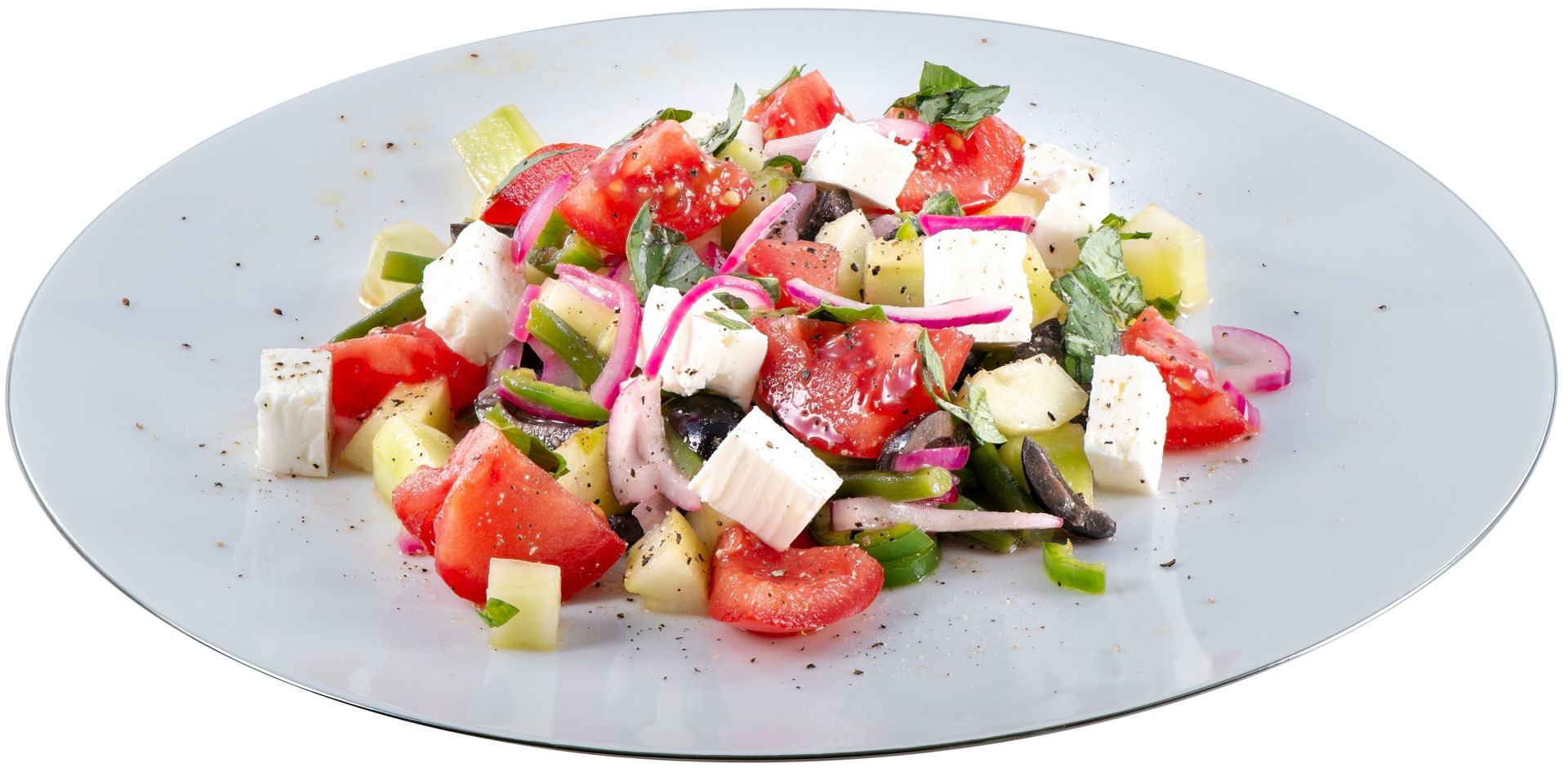
The traditional Greek salad — what Greeks call horiatiki — does not include lettuce. It is a plate of chunked tomato, cucumber, red onion, green pepper, olives, and a slab of feta cheese, dressed with olive oil and dried oregano. It is a summer salad built around vegetables at peak ripeness, and it is genuinely good eaten as a side. To make it a meal, you add protein.
Grilled chicken is the most common addition. Thinly sliced or chunked chicken breast works well with the salty, acidic profile of the salad. Season it simply — olive oil, lemon juice, garlic, dried oregano, salt, pepper — and grill or roast until cooked through. The chicken should be warm or at room temperature when served, not cold from the refrigerator, which mutes its flavor.
Chickpeas are the vegetarian path to the same end. A three-quarter cup serving of cooked chickpeas provides around 12 grams of protein and 10 grams of fiber. Roasted chickpeas, tossed in olive oil and dried herbs and roasted at high heat until crispy, have a better texture than the canned version used straight from the can. They hold up in the salad without turning mushy.
Feta cheese is not optional in this context — it is one of the primary fat sources in the salad and contributes to satiety in a meaningful way. Use a proper block of feta rather than pre-crumbled, which tends to be drier and less flavorful. A 30-gram serving adds about six grams of fat and five grams of protein.
The tomatoes should be ripe and chunky — not cherry tomatoes, though those work in a pinch. Heirloom varieties are ideal in summer. The cucumber should be English or Persian, which have thinner skins and less water content than standard American cucumbers. Thinly sliced red onion can be soaked in cold water for ten minutes before adding to mellow its sharpness.
The dressing is simply extra virgin olive oil and a splash of red wine vinegar or lemon juice. No emulsification needed — the components are robust enough to hold their own. Dried oregano is essential; fresh oregano has a different, grassier flavor that does not work as well here.
5 / 20
Credit: Valeria Boltneva / Pexels
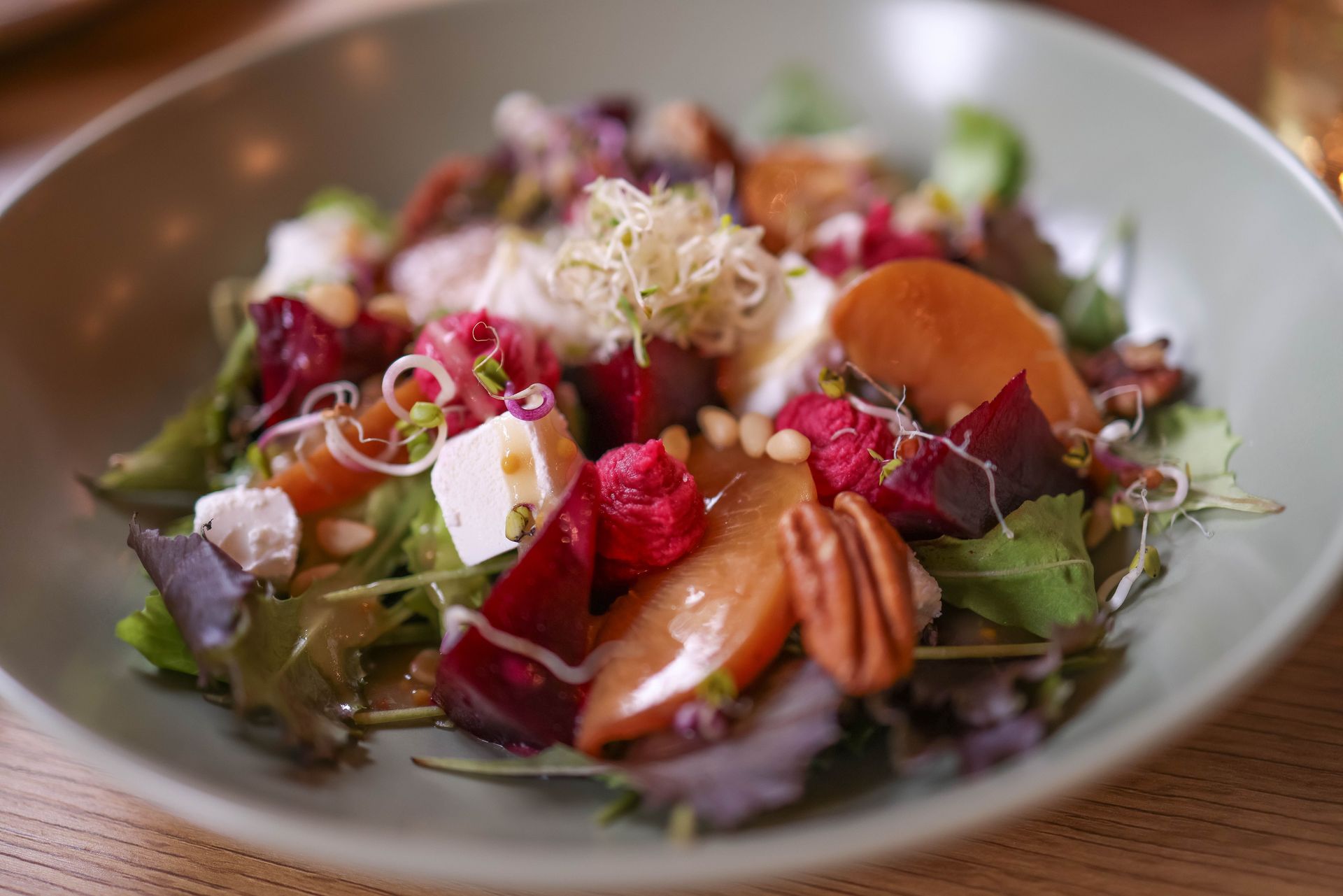
Lentils are among the most nutrient-dense legumes available, and they are underused in salad contexts. A half-cup of cooked French green lentils — the small, slate-colored variety known as lentilles du Puy — contains around nine grams of protein and eight grams of fiber. They have a firm, peppery character that holds up well under dressing and pairs particularly well with earthy roasted vegetables.
Beets are the natural partner. They take about 45 minutes to roast whole in the oven at 400°F (200°C), wrapped in foil, after which the skins slip off easily. Roasted beets have a concentrated sweetness that contrasts well with the mineral earthiness of the lentils and the acidity of a good vinaigrette. They should be cooled to room temperature before combining with the lentils.
Goat cheese is the standard dairy addition to this combination, and it earns its place. Its tanginess cuts through the sweetness of the beet, and its fat content — higher than most fresh cheeses — adds to the salad's staying power. Crumble it over the top just before serving rather than mixing it in, so it stays in distinct pieces.
The dressing for this salad should lean acidic to balance the sweetness. A shallot vinaigrette works well: finely minced shallot macerated in red wine vinegar for ten minutes to soften its bite, then whisked with olive oil, Dijon mustard, salt, and pepper. The vinegar-forward profile cuts through both the beet's sweetness and the goat cheese's richness.
Walnuts add texture and fat. A small handful of roughly chopped walnuts, toasted in a dry pan, provides crunch and a slightly bitter note that rounds out the bowl. Walnuts are also one of the better plant-based sources of omega-3 fatty acids, which is a nutritional bonus.
A bed of baby arugula or watercress provides the leafy component. Both have a peppery quality that complements the beet and lentil without going limp under the dressing the way softer greens might. The lentils and beet can be warm or room temperature — they do not need to be cold, and slightly warm lentils absorb dressing better than cold ones.
6 / 20
Credit: adrian vieriu / Pexels
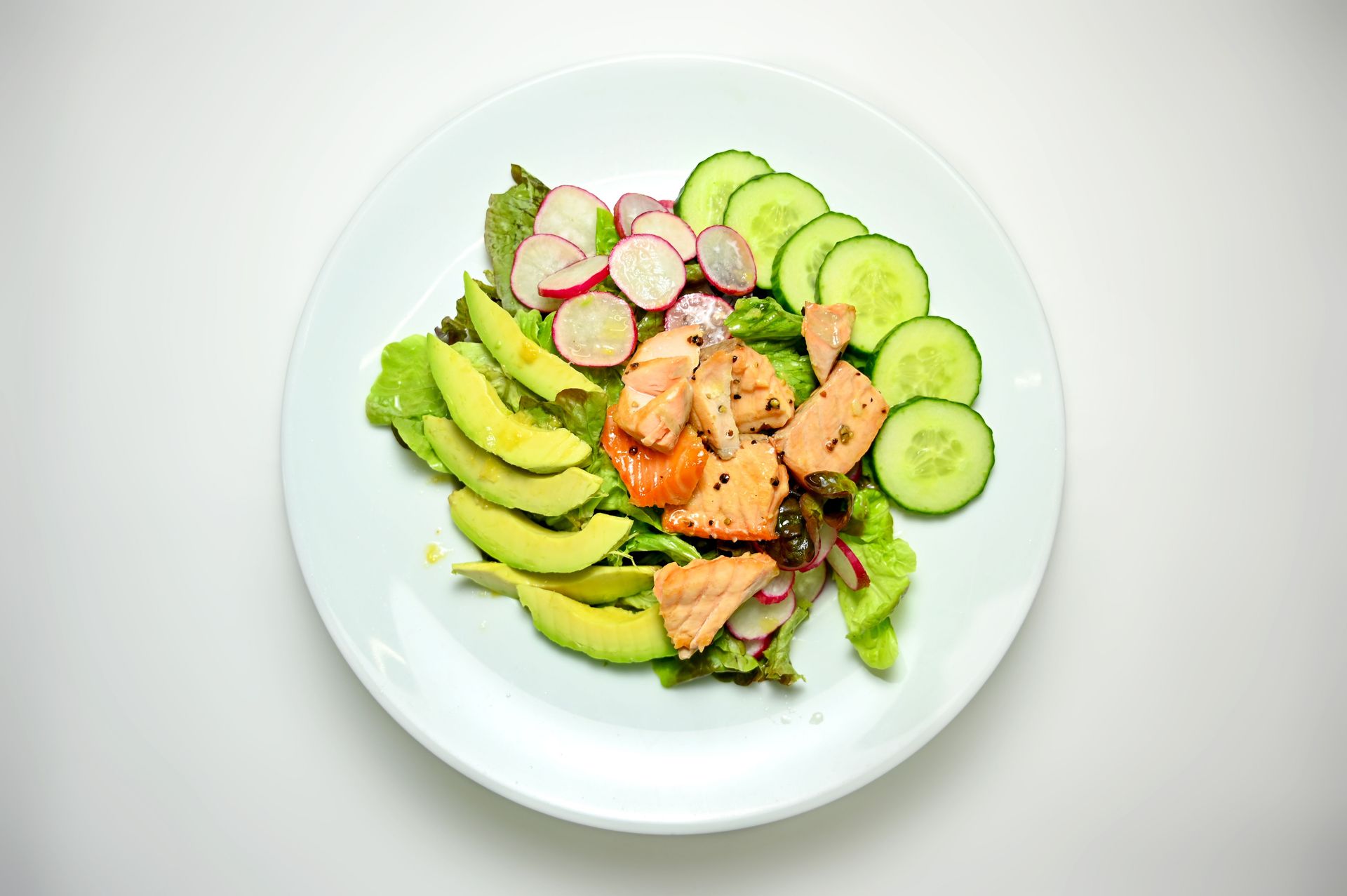
Smoked salmon is one of the most efficient protein sources in a salad context. An 85-gram serving provides about 16 grams of protein along with a significant amount of omega-3 fatty acids. Combined with avocado — which adds monounsaturated fat and about three grams of fiber per half — this salad achieves satiety through fat and protein rather than bulk.
The base is typically butter lettuce or mixed greens, chosen for their mild flavor, which lets the salmon's smokiness come through without competition. Baby spinach is a reasonable alternative. The greens should be minimal compared to the other components — this is not a salad where the leaves do the heavy lifting.
Cucumber adds coolness and crunch. Thinly sliced, it distributes through the bowl without overwhelming it. Capers are the traditional accompaniment to smoked salmon and belong here — their briny, acidic pop punctuates the fat of both the salmon and the avocado. A tablespoon per serving is about right.
Thinly sliced red onion adds sharpness. As with the Greek salad, a ten-minute soak in cold water reduces the raw onion's bite to a pleasant level. Some versions include pickled red onion instead, made from raw red onion soaked in equal parts red wine vinegar and water with a pinch of salt for at least 30 minutes. The pickled version adds acid to the salad, which reduces the amount of additional vinegar needed in the dressing.
The dressing is simple: lemon juice, olive oil, a small amount of Dijon mustard, salt, and pepper. Crème fraîche or a light cream cheese can be used as a dressing base for a richer result. Some versions use a dill-forward green goddess dressing, which works well but should be made with real dill rather than dried herb, which has a muted and slightly musty flavor.
A soft-boiled or poached egg added to this salad pushes it firmly into main-course territory. The yolk adds additional fat and protein, and its richness bridges the salmon and the greens. The salad does not need bread alongside it, but a slice of rye or pumpernickel on the side is a reasonable addition if more carbohydrate energy is needed.
7 / 20
Credit: Canva Images
A steak salad is not a compromise between wanting a steak and wanting to be healthful. It is its own dish — one where the beef is the centerpiece and the greens exist to provide contrast rather than to dilute the experience. When built with a proper portion of beef and a well-calibrated dressing, it is one of the most satisfying salads in this list.
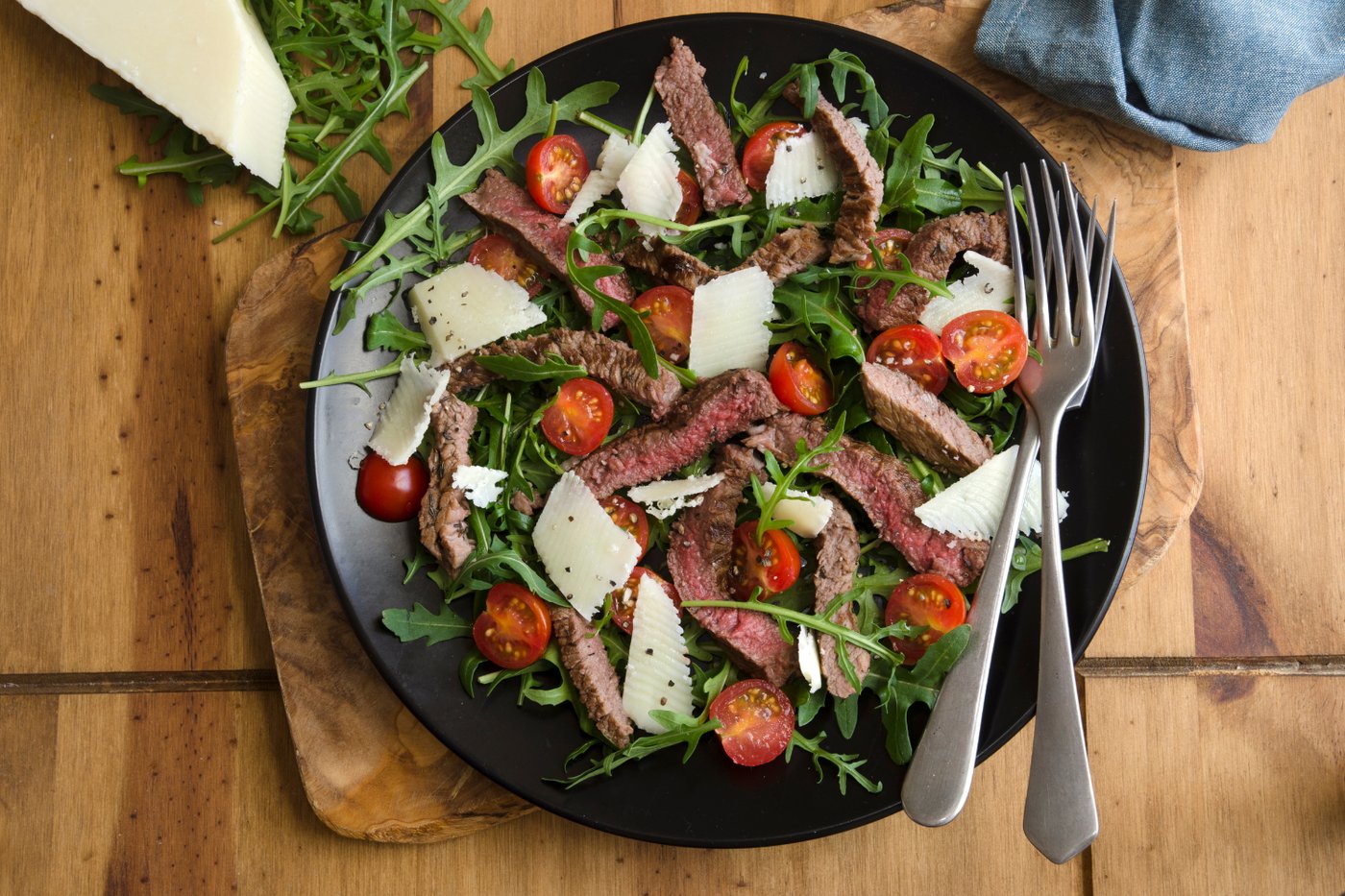
The cut matters. Flank steak, skirt steak, and sirloin are all well-suited to this application because they slice thinly and don't require long cooking times. A six-ounce portion of sirloin contains roughly 38 grams of protein and about 12 grams of fat, enough to anchor a meal. The steak should be seared to medium-rare — an internal temperature of around 130°F (54°C) — and allowed to rest for five minutes before slicing. Slicing against the grain is non-negotiable for tenderness; cutting with the grain produces chewy, stringy meat.
The greens should be robust enough to hold up against the warm steak. Arugula and watercress are both good choices — peppery and assertive. Romaine hearts work if you want something milder. Baby spinach wilts slightly under the warm meat, which some people prefer.
Blue cheese is the classic pairing. Gorgonzola, Roquefort, and Maytag blue are all strong choices. Blue cheese adds fat, sharpness, and a funkiness that complements the beef in a way that milder cheeses don't. A 20-gram crumble per serving is enough to make its presence known without overwhelming the other components.
Cherry tomatoes, halved, add acidity. Thinly sliced red onion adds sharpness. Marcona almonds or candied walnuts add sweetness and crunch. The dressing should be straightforward: red wine vinegar, olive oil, a touch of Dijon, and a small amount of the blue cheese blended in for added creaminess and flavor cohesion.
The plate comes together quickly once the steak is cooked. Toss the greens and tomatoes with dressing, arrange on a plate, lay the steak slices on top, crumble the blue cheese over everything, scatter the nuts, and serve immediately. The steak's residual warmth slightly wilts the greens, which is the desired outcome.
8 / 20
Credit: Ivan Vi / Pexels
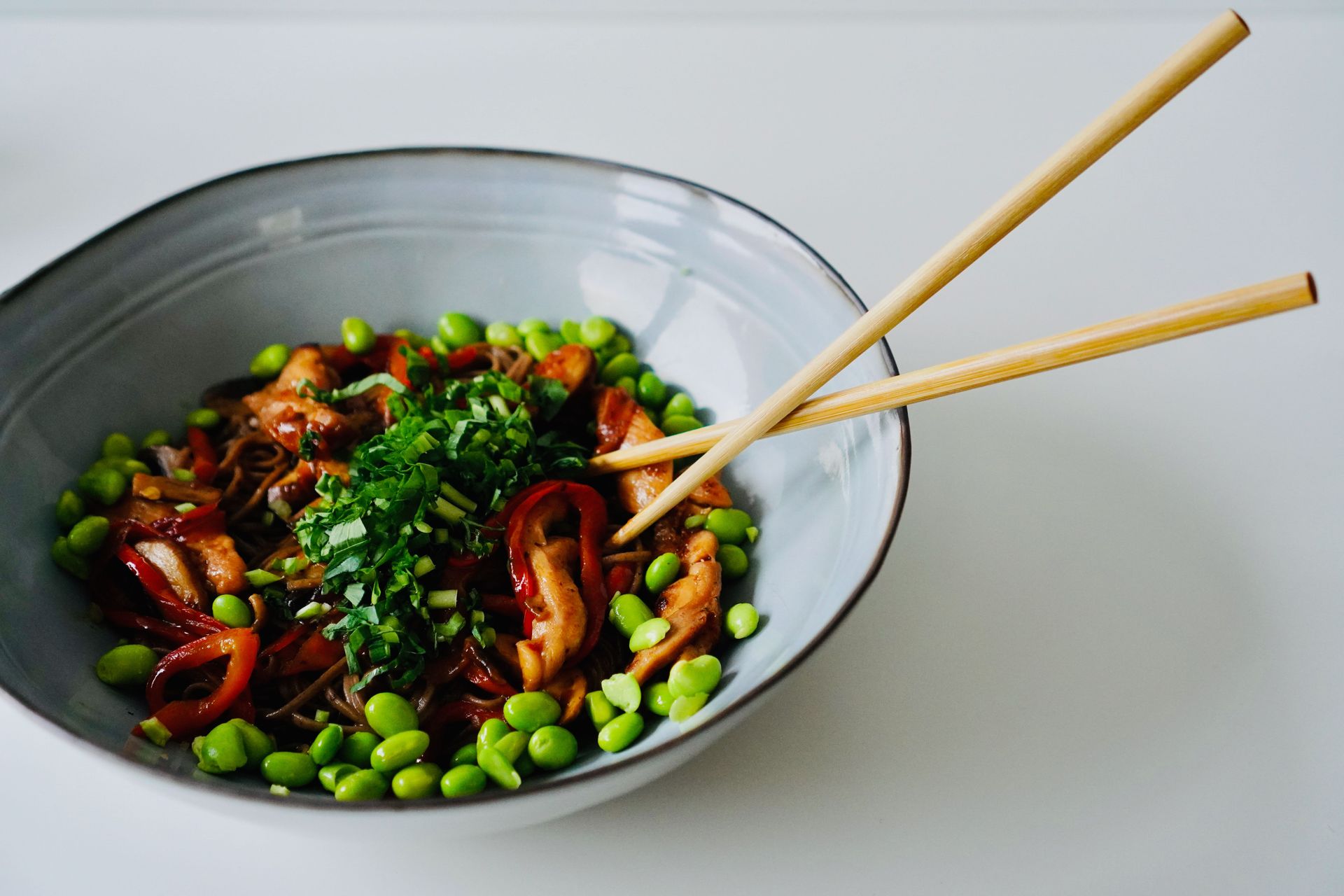
Soba is a Japanese buckwheat noodle that works equally well served hot or cold. Chilled soba is a standard summer dish in Japan, served with a dipping broth, but it translates naturally into a Western salad format when tossed with vegetables and a sesame dressing. The result is a room-temperature noodle salad with substantial protein from both the noodles and the edamame.
Buckwheat is not a grain — it is the seed of a broadleaf plant related to sorrel and rhubarb. It is naturally gluten-free in its pure form, though most commercial soba noodles include some wheat flour for texture; check the label if gluten is a concern. Buckwheat provides more protein than most grains — about six grams per 100-gram serving — and a meaningful amount of resistant starch that slows digestion.
Edamame are immature soybeans, typically sold frozen, either shelled or in the pod. Shelled edamame thaws quickly in cold water and adds about 11 grams of protein per half-cup serving. Their mild, slightly sweet flavor works with the sesame dressing without competing. They also add a satisfying chew.
The dressing is the soul of this salad: sesame oil, soy sauce or tamari, rice vinegar, fresh ginger, a small amount of honey or maple syrup, and a clove of garlic. Tahini or smooth peanut butter can be whisked in for a creamier, richer result. The ratio of sesame oil to neutral oil matters — sesame oil is intense, and too much makes the dressing overwhelming; one part sesame to two parts neutral oil is a reasonable starting point.
Shredded purple cabbage adds color and crunch. Julienned cucumber adds coolness. Thinly sliced scallions add sharpness. Shredded carrots add sweetness. All of these hold up well at room temperature and even after a night in the refrigerator, which makes this salad ideal for packed lunches.
A sprinkle of sesame seeds — white, black, or a mix — finishes the dish. Some versions include a soft-boiled egg or a few slices of cucumber-marinated tofu for additional protein. The noodles should be cooked, drained, rinsed under cold water to stop cooking and prevent clumping, and dressed while still slightly damp.
9 / 20
Credit: Canva Images
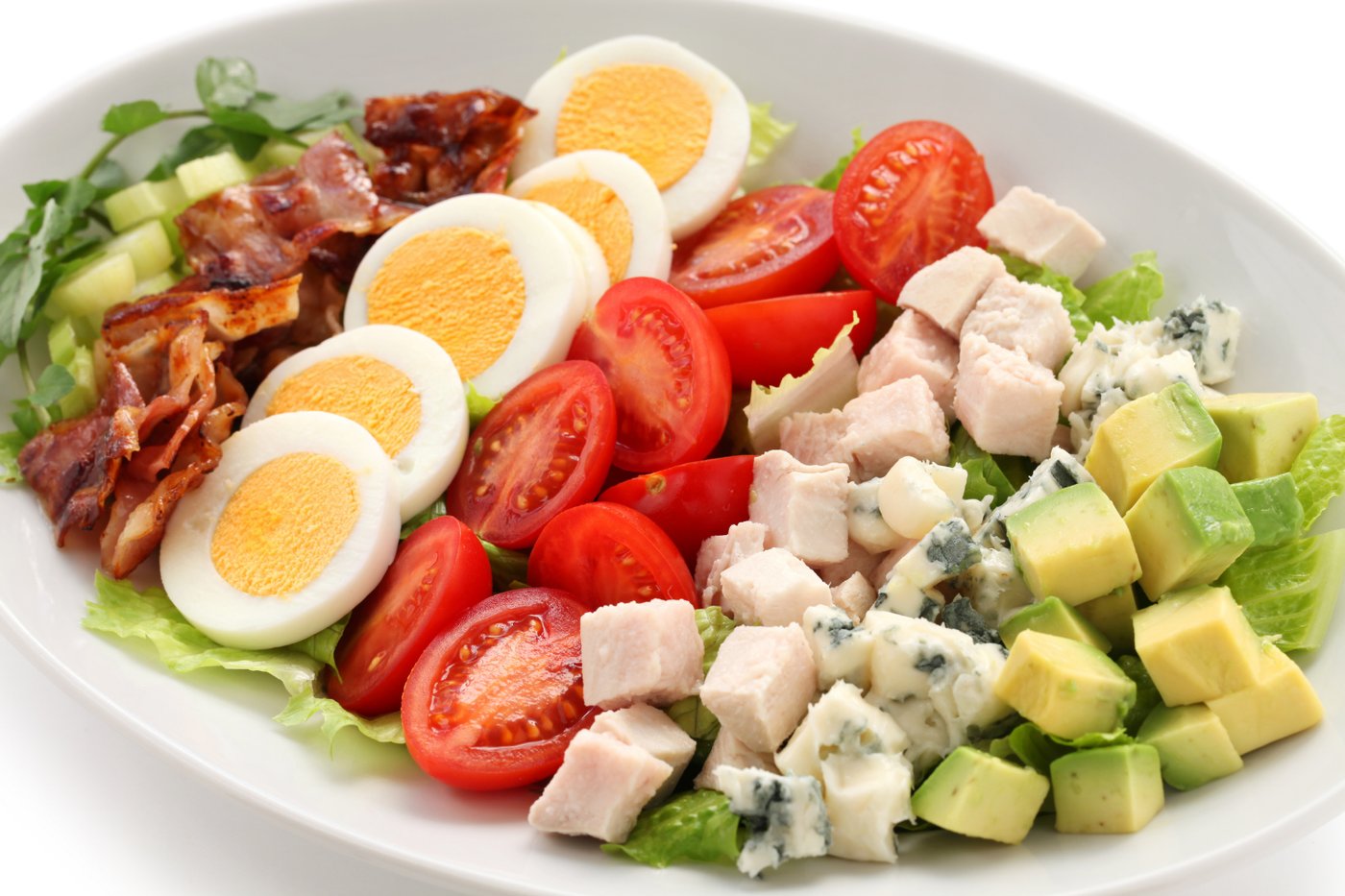
The Cobb salad has a clear origin: it was created at the Brown Derby restaurant in Los Angeles in 1937 by owner Robert Cobb, who assembled it from leftovers for a late-night snack and liked the result enough to put it on the menu. Whether or not that account is precisely accurate, the Cobb's architecture — chicken, bacon, egg, avocado, tomato, blue cheese, and chopped romaine — has been stable for nearly 90 years for good reason. It is a genuinely balanced meal.
Chopped romaine provides the base. Unlike many salads where the greens are subordinate to the toppings, the Cobb is typically made with enough romaine to give real volume. It is chopped, not torn, which is characteristic of the format.
Grilled or roasted chicken contributes the primary protein. About 100 to 120 grams per serving is standard. Crispy bacon — two or three strips, crumbled — adds fat, salt, and a textural contrast to the soft chicken and avocado. The combination of chicken and bacon gives the salad a dual-protein structure that contributes to its staying power.
Hard-boiled eggs are sliced and arranged in a row across the salad in the traditional presentation, which lays each component out in parallel stripes before tossing. Two eggs per serving adds another 12 grams of protein. Avocado adds fat. Cherry tomatoes add acid and juice. Blue cheese — the original used Roquefort — adds fat and sharpness.
The dressing is usually a red wine vinaigrette, not a creamy one, which keeps the overall richness in balance. The fat in the avocado, cheese, and bacon already makes the salad rich; a vinaigrette provides the necessary acidity to cut through it.
The full Cobb comes in at well over 40 grams of protein per serving. Its reputation as a diner or restaurant salad that actually fills you up is entirely justified, and making it at home is straightforward once the individual components are cooked.
10 / 20
Credit: Alesia Kozik / Pexels
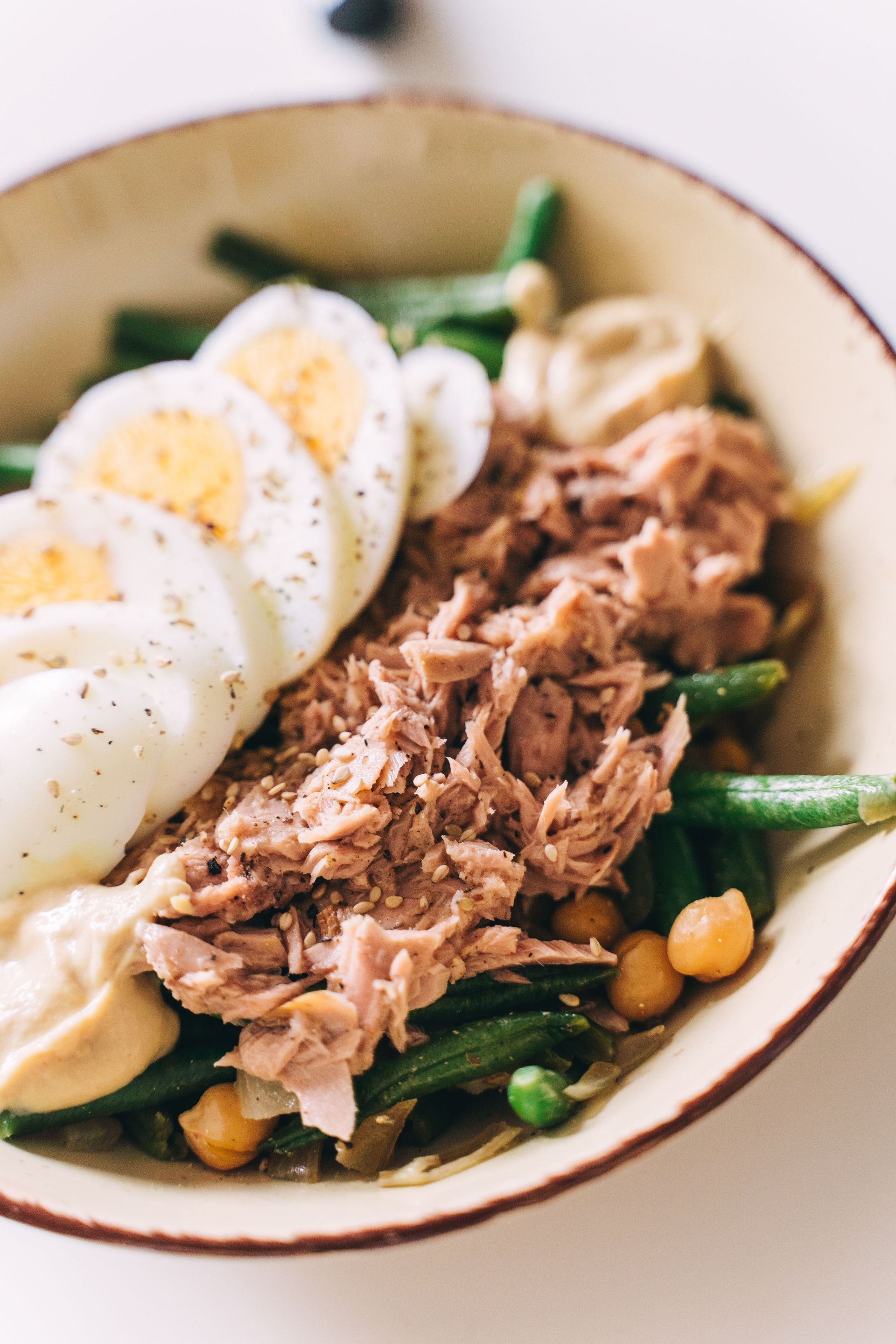
Canned tuna and white beans are a staple pairing in Italian cooking, particularly in Tuscany, where the combination is called fagioli e tonno. It is one of the most economical high-protein combinations available — both ingredients come from cans, require no cooking, and assemble in under five minutes. With a good olive oil and some aromatics, the result is a salad that eats like a full meal.
The white beans in the traditional version are cannellini — large, creamy, mild. A half-cup serving contains about nine grams of protein and six grams of fiber. They should be rinsed well from the can to remove the starchy liquid they're packed in. Rinsed and dried on a paper towel, they absorb dressing more readily.
The tuna should be oil-packed if possible. Oil-packed tuna is more flavorful than water-packed and has a better texture that breaks into chunks rather than shredding. It is also slightly higher in fat, which contributes to satiety. Italian brands packed in olive oil are a worthwhile investment for this dish. A 140-gram can per person provides roughly 25 grams of protein.
Red onion, thinly sliced and soaked briefly in cold water, adds sharpness. Celery, thinly sliced, adds crunch. Fresh flat-leaf parsley, roughly chopped, adds brightness. A few cherry tomatoes add acidity. Capers are optional but add a pleasant briny note.
The dressing is the olive oil the tuna is packed in, supplemented with a squeeze of lemon juice and a little extra virgin olive oil, salt, and pepper. There is no vinegar in the traditional version — lemon provides the acid. The result is a dressed salad that is soft in flavor, with the oil and lemon as a backdrop for the tuna and beans.
This salad can be eaten on its own, on top of arugula or romaine for additional volume, or spooned onto toast. Room temperature is better than cold from the refrigerator, so if storing it for lunch, let it sit at room temperature for 15 minutes before eating.
11 / 20
Credit: Melissa Walker Horn / Unsplash
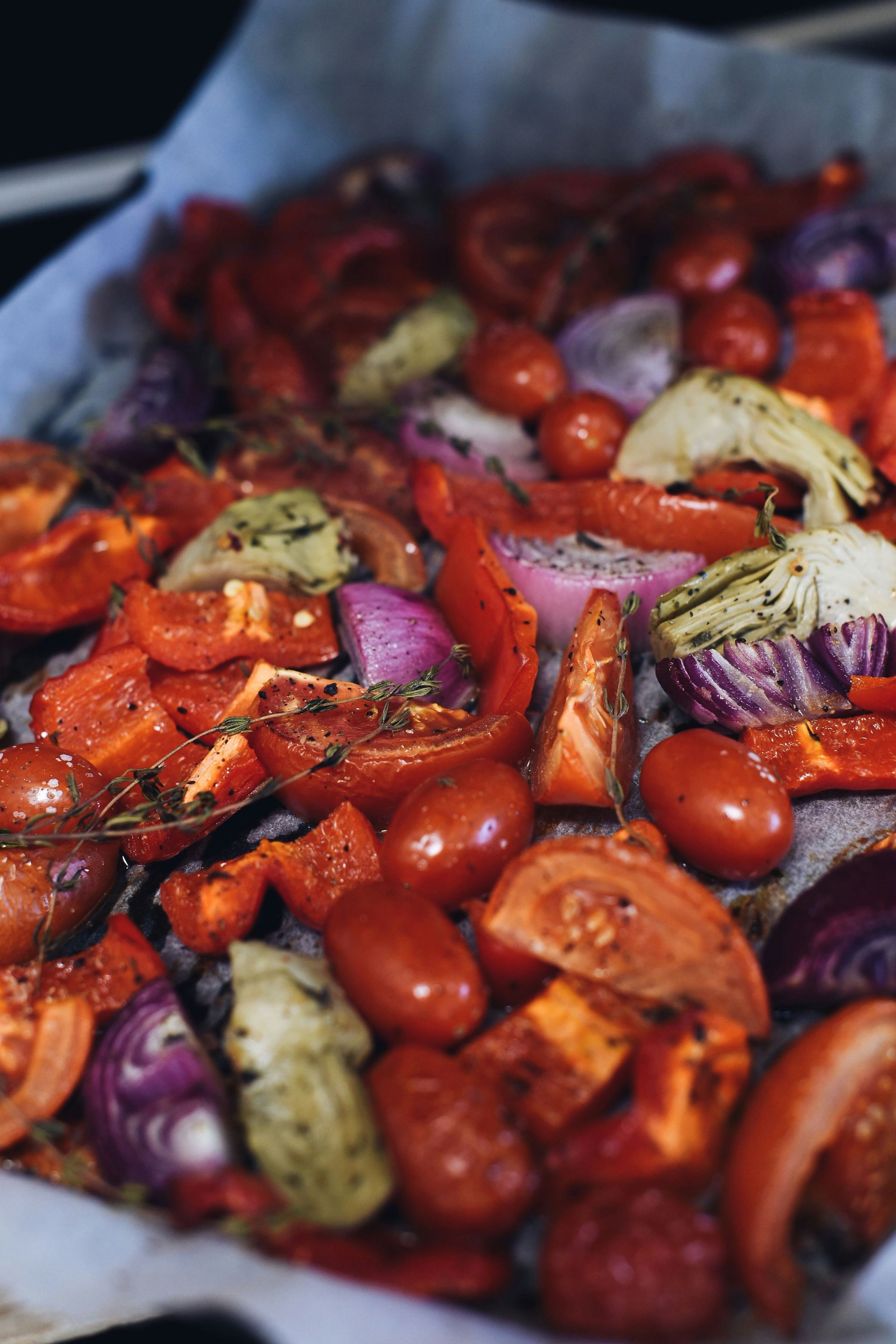
Roasting vegetables concentrates their flavor and changes their texture in ways that make them substantially more satisfying to eat than their raw versions. A bowl of roasted vegetables and feta over greens is a warm salad that can hold its own as a main course, especially when it includes enough volume and a protein element beyond the cheese.
The vegetables are the first decision. Zucchini, eggplant, cherry tomatoes, red bell peppers, and red onion are a strong Mediterranean combination. Spread them in a single layer on a sheet pan, toss with olive oil, salt, pepper, and dried oregano or thyme, and roast at 425°F (220°C) for 20 to 25 minutes, until caramelized at the edges. They should not be crowded on the pan — crowding creates steam rather than caramelization.
Chickpeas can be roasted alongside the vegetables. They take about 25 to 30 minutes at the same temperature, tossed in olive oil and a pinch of cumin and smoked paprika, and they emerge crispy and flavorful. Adding chickpeas nearly doubles the protein content of the dish.
Feta cheese, crumbled over the hot vegetables, softens slightly and becomes creamy at the edges. A 40-gram serving adds meaningful fat and a salty, tangy contrast to the sweetness of the caramelized vegetables. Authentic Greek feta, made from sheep's milk or a blend of sheep and goat milk, has a creamier texture and more complex flavor than most domestic alternatives.
A handful of baby spinach or arugula laid at the base of the bowl provides a green element. The warm roasted vegetables will wilt it slightly, which improves the texture. Cooked farro or quinoa stirred into the base would push this dish firmly into grain bowl territory, adding more protein and sustained energy.
The dressing is simple: the roasting oil on the vegetables combined with a drizzle of lemon juice and a few fresh herb leaves — basil, flat-leaf parsley, or mint depending on the vegetable combination. The dish should be served warm, not after the vegetables have cooled to room temperature.
12 / 20
Credit: Canva Images
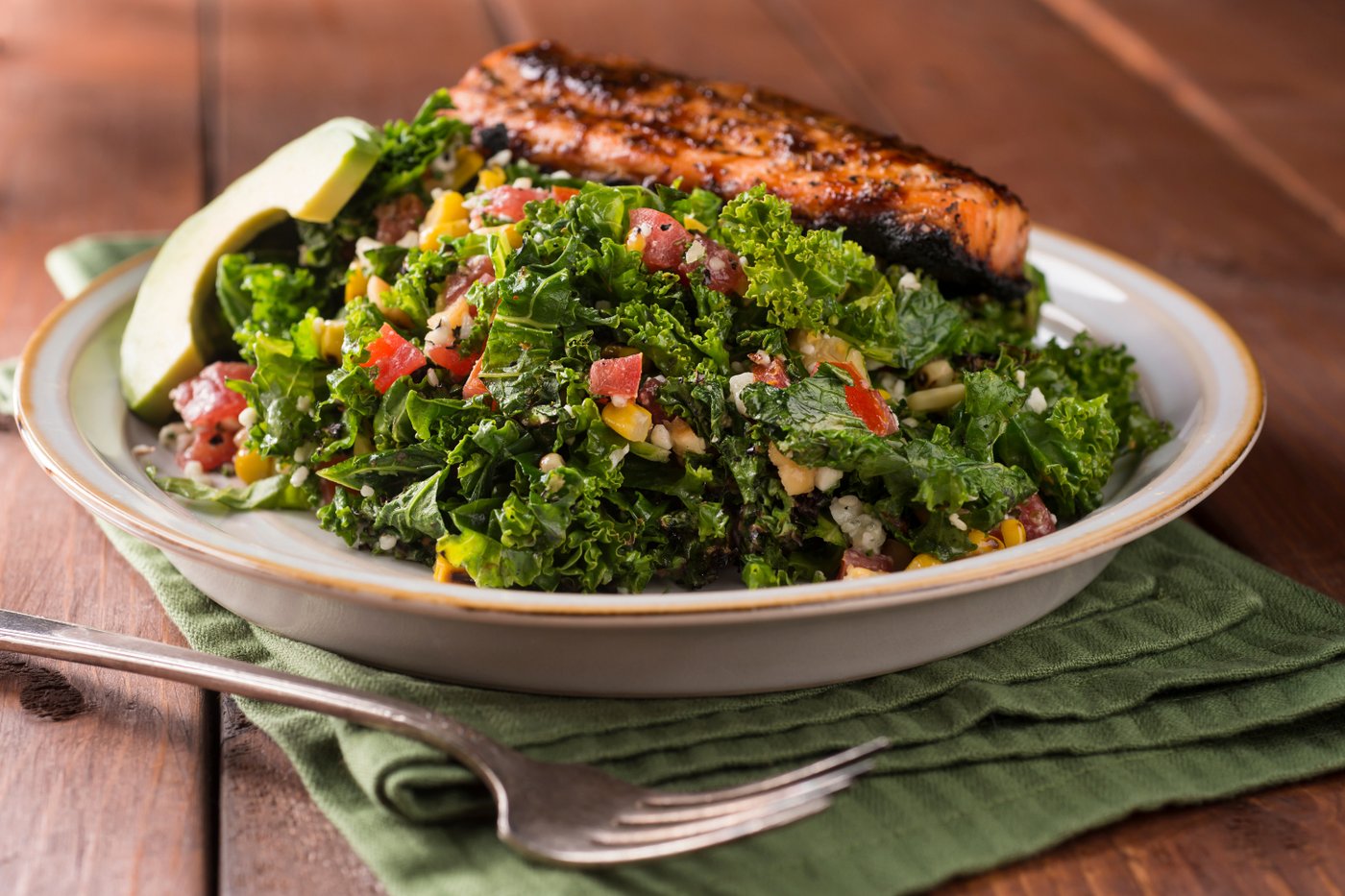
A kale Caesar is a sturdy variant on the original that replaces romaine with lacinato kale — also called Tuscan kale, cavolo nero, or dinosaur kale. Kale holds up much better under dressing than romaine, meaning it can be dressed an hour or more in advance without going limp. The combination of kale and salmon makes this one of the most protein- and omega-3-rich salads on this list.
Lacinato kale has dark, nearly black-green leaves with a slightly bumpy texture. It should be massaged before use — a technique that breaks down some of the leaf's fibrous structure and makes it more tender. Drizzle a small amount of olive oil over the chopped kale and work it with your hands for two to three minutes until the leaves darken slightly and reduce in volume. This step genuinely matters; un-massaged kale is significantly tougher.
Salmon can be used in several ways here. Pan-seared salmon fillet is the premium option — a six-ounce fillet cooked skin-side down until the skin is crisp, then finished on the other side, provides about 34 grams of protein. Canned wild salmon works well too and takes no cooking time. Smoked salmon is a third option, with a different flavor profile but good protein content.
The Caesar dressing here does not need to follow the traditional formula exactly. A classic Caesar includes anchovies, garlic, lemon juice, Worcestershire sauce, egg yolk, olive oil, and Parmesan. For a lighter version, Greek yogurt can replace some or all of the egg yolk, adding protein while reducing fat. The anchovy component should not be eliminated — it is the source of the dressing's depth — but it can be reduced to one or two fillets rather than the usual four.
Shaved Parmesan over the top, toasted breadcrumbs or croutons for crunch, and a halved hard-boiled egg alongside complete the dish. Some versions add roasted cherry tomatoes, which add acidity and color without disrupting the Caesar profile.
13 / 20
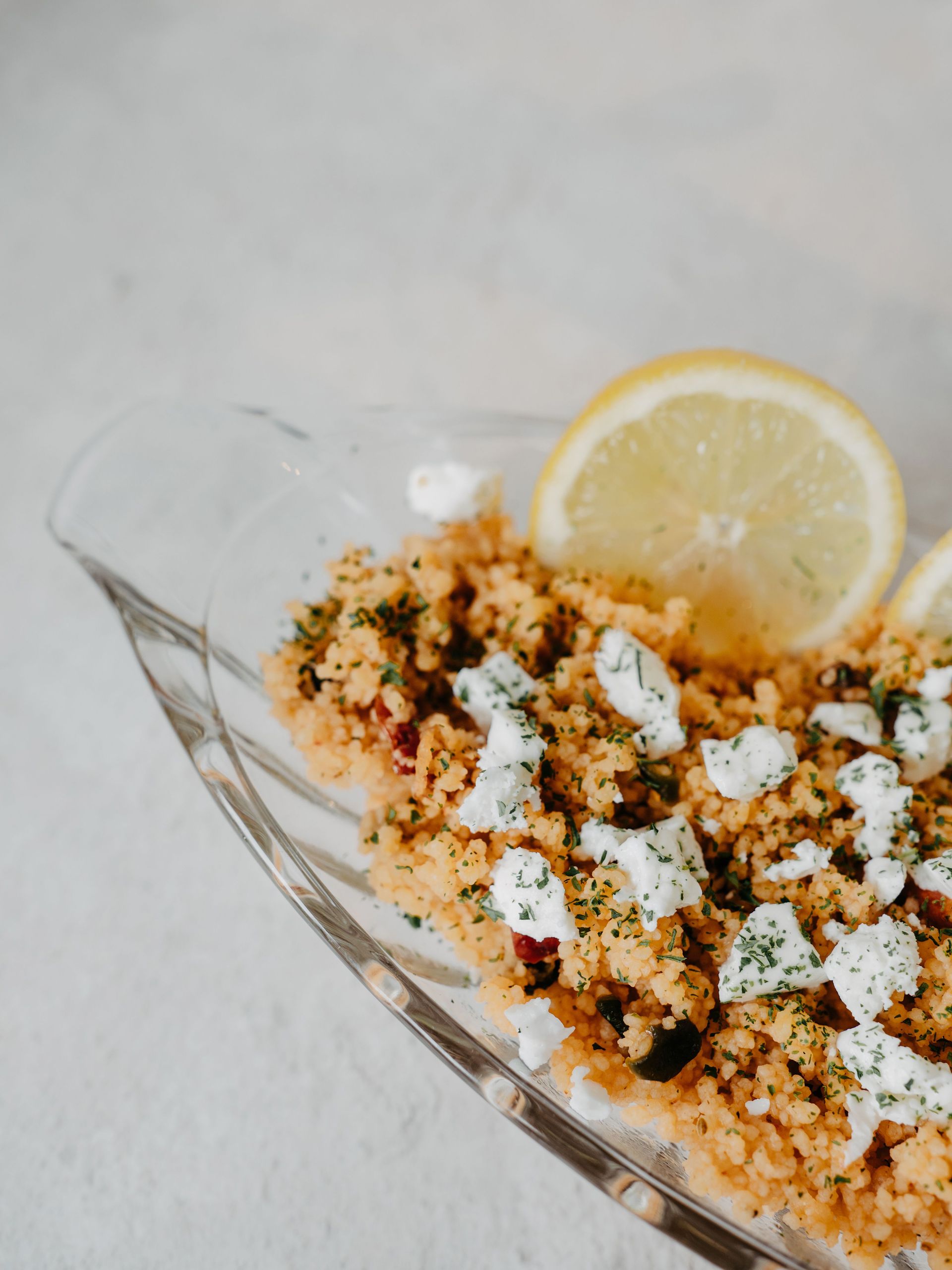
Credit: Lisa from Pexels / Pexels
This is a warm grain salad built around ground or diced lamb, Israeli couscous, and a spice profile borrowed from North African cooking. It is substantial and fragrant, and the combination of lamb fat, couscous, and vegetables means it does not need much else to constitute a full meal.
Ground lamb is the most practical choice here. Sauté it in a pan with olive oil over medium-high heat, breaking it into small pieces, and season generously with cumin, coriander, cinnamon, allspice, smoked paprika, and salt. The lamb's fat renders as it cooks, so no additional oil is needed once the meat is in the pan. A 100-gram serving of cooked ground lamb provides about 22 grams of protein.
Israeli couscous — also called pearl couscous — is larger than the fine semolina couscous common in North African cooking, and it has a chewier, more pasta-like texture. Toast it briefly in a dry pan before adding water; the toasting adds a nuttiness that improves the finished dish. Simmer in salted water or chicken stock until tender, about 10 minutes, and drain.
Roasted cherry tomatoes, halved cucumber, fresh mint, flat-leaf parsley, and thinly sliced red onion provide the vegetable and herb components. Pomegranate seeds, if available, add bursts of tartness and visual interest. Toasted pine nuts add crunch and additional fat.
The dressing is lemon juice, olive oil, garlic, and a pinch of the same spice blend used on the lamb — cumin and coriander in particular — to create coherence between the components. A spoonful of harissa stirred into the dressing adds heat and complexity.
Crumbled feta or a few spoonfuls of labneh — strained yogurt with a cream-cheese-like consistency — can be added on top. Either dairy element adds tanginess and additional protein to the bowl. The dish can be assembled while the lamb and couscous are still warm, which allows the flavors to meld before serving.
14 / 20
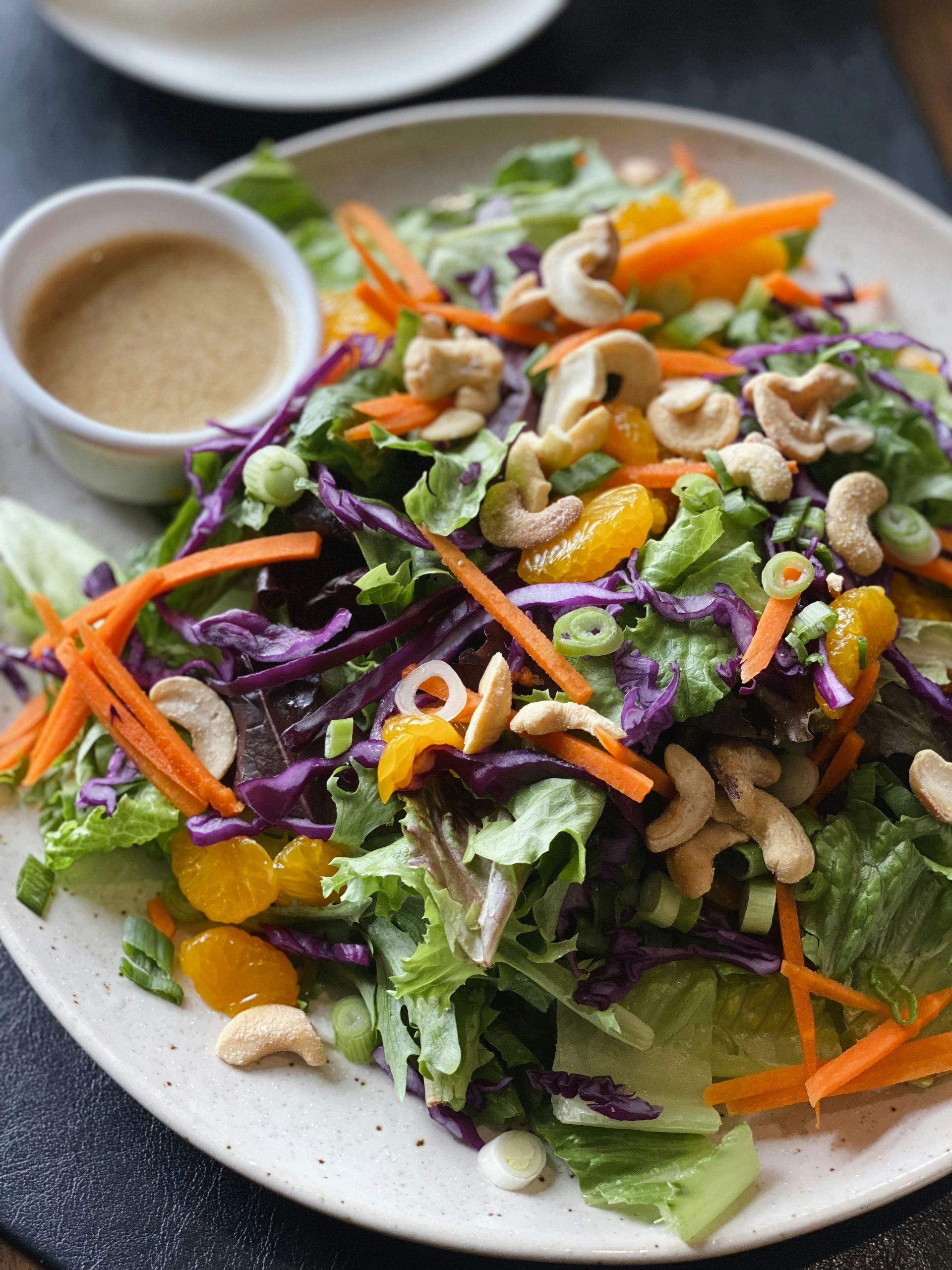
Credit: Sara Nichols / Unsplash
The chopped Thai salad is a genre unto itself — bright, crunchy, acidic, and built from raw vegetables tossed in a peanut-based dressing. It draws on the flavors of Thai cuisine without being a direct translation of any specific traditional dish, and it works as a main course when supplemented with a protein.
The base is a mixture of finely shredded napa cabbage and red cabbage. Napa is milder and softer; red adds color and a more assertive flavor. Shredding them finely — either with a knife or on a mandoline — makes them easier to eat and helps them absorb the dressing. A 50/50 ratio is standard, but either variety alone works.
Julienned carrots, thinly sliced bell pepper, shelled edamame, and sliced scallions round out the vegetable component. Mango, when in season, adds sweetness that plays well against the spicy peanut dressing. Fresh cilantro and mint, roughly torn rather than chopped, add herbal brightness.
The peanut dressing is the defining element. Smooth natural peanut butter thinned with lime juice, rice vinegar, soy sauce or tamari, sesame oil, fresh ginger, garlic, and a small amount of honey forms the base. Sriracha or sambal oelek adds heat. The dressing should be slightly sweet, noticeably sour, moderately salty, and gently spicy. Thin it with water until it pours smoothly but is not watery.
For protein, grilled chicken thighs are the most common addition. Sliced thin and laid over the top, they complement the salad's bold flavors. Shrimp, seared quickly over high heat with garlic and a splash of fish sauce, is another strong option. Baked tofu, marinated in soy sauce and sesame oil, works for a plant-based version.
Crushed roasted peanuts scattered over the top add fat and crunch. Crispy fried shallots, available in Asian grocery stores, add an additional layer of texture. The salad can be dressed in advance and refrigerated for a few hours without compromising texture significantly, because the cabbage base is robust enough to handle the acid.
15 / 20
Credit: Akshata Bablad / Pexels
This salad requires no animal protein to be genuinely filling. Chickpeas, when roasted until crispy, are almost addictively good in a way that plain canned chickpeas are not, and combined with avocado and a citrus dressing over sturdy greens, they form a plant-based meal with enough protein, fiber, and fat to satisfy well into the afternoon.
The chickpea preparation is the most important step. Drain and rinse a can of chickpeas, then dry them thoroughly — really dry them, pressing between towels — before tossing in olive oil. Any moisture on the surface prevents crisping. Spread them in a single layer on a baking sheet and roast at 425°F (220°C) for 25 to 30 minutes, shaking the pan halfway through, until they are golden and have a crunch. Season with smoked paprika, cumin, garlic powder, and salt either before or after roasting.
A half-cup of roasted chickpeas contains about eight grams of protein and seven grams of fiber. Combined with the fat from avocado, the total satiety profile of this salad is meaningfully better than its simple ingredient list suggests.
The base can be arugula, kale, or mixed greens. Roasted chickpeas are warm when they come from the oven, which wilts the greens slightly — a pleasant effect. Halved cherry tomatoes, thinly sliced cucumber, and pickled red onion add acid and freshness.
Avocado should be ripe — yielding to gentle pressure but not soft — and sliced into wedges rather than cubed, so it stays visible rather than disappearing into the salad. Half an avocado per serving is enough.
The dressing is a lemon-tahini vinaigrette: tahini, lemon juice, garlic, water to thin, olive oil, salt. It is rich and nutty, and it coats the greens without weighing them down. A sprinkle of pumpkin seeds or hemp hearts adds additional protein and a satisfying crunch that complements the chickpeas.
16 / 20
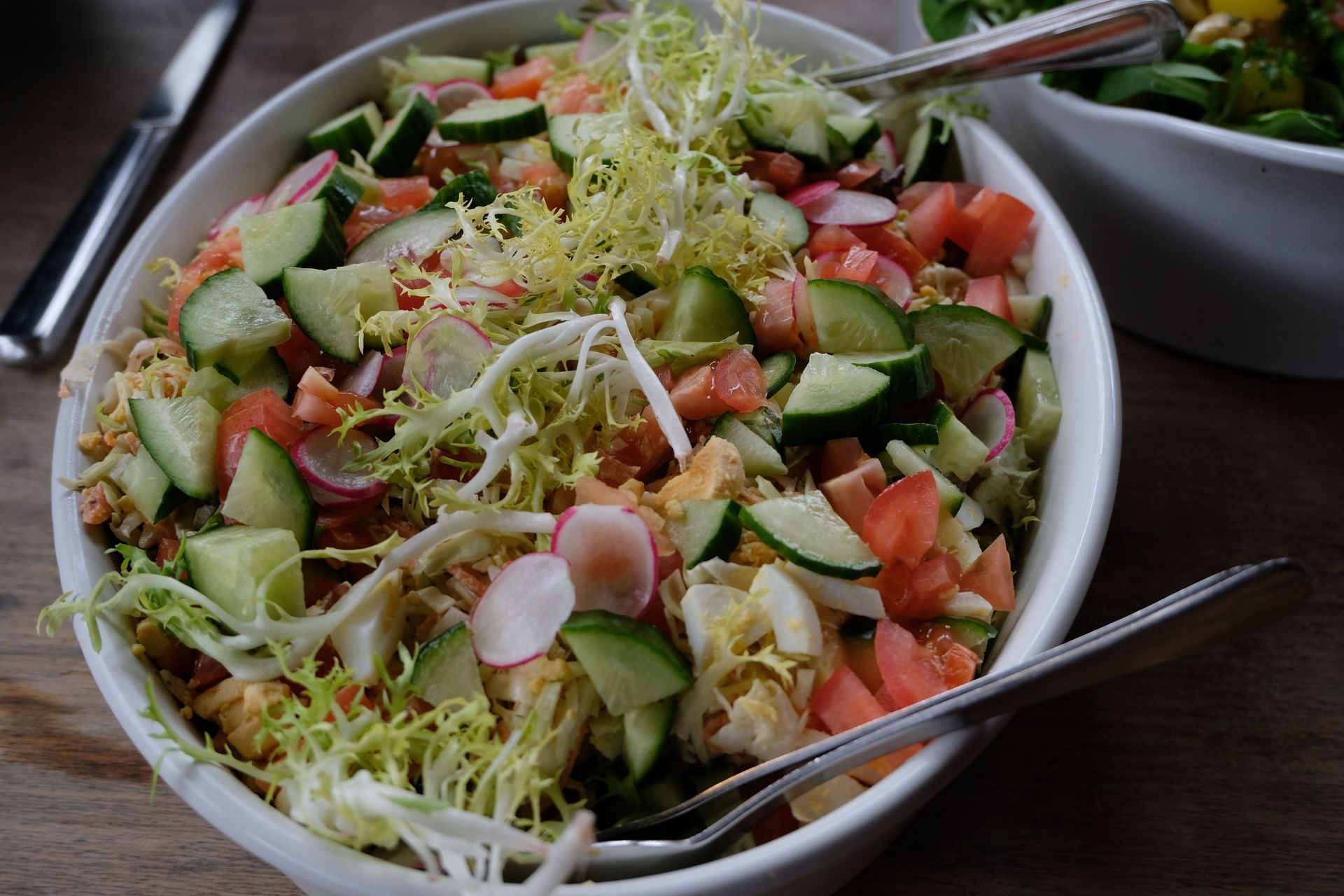
Credit: Ocko Geserick / Pexels
Chopped salads have a long history in Italian-American cooking, particularly in the context of deli-style restaurants in cities like New York and Chicago. The format is simple: everything is chopped to roughly uniform pieces, which means each forkful contains a bit of everything. When built with cured meats and cheese, it becomes a satisfying meal without any cooking at all.
Romaine is the standard base. It is chopped to about half-inch pieces — not shredded, but genuinely diced. The uniform cut means the dressing coats every component evenly and the texture is consistent throughout.
Salami is the protein anchor. A thinly sliced, dry-cured pork salami — Genoa, pepperoni, or soppressata — provides fat, salt, and protein in a dense form. About 60 grams per serving is enough. Provolone cheese, diced to match the scale of the other ingredients, adds mild dairy fat and body. Some versions include ham or capicola alongside the salami.
Pepperoncini peppers, thinly sliced, add a mild vinegary heat that is characteristic of Italian-American salads. Chickpeas can be added for additional protein and bulk. Halved cherry tomatoes, sliced cucumber, and thinly sliced red onion round out the vegetable components.
The dressing is a red wine vinaigrette with Italian seasonings: dried oregano, garlic, red pepper flakes, red wine vinegar, olive oil, salt, and a small amount of Dijon. Some versions include a touch of honey to balance the acid. The dressing should be made in advance so the flavors have time to meld.
The salad can be assembled fully in advance — unlike most dressed salads, the chopped format actually benefits from a few minutes of sitting after dressing, which softens the romaine slightly and allows the flavors to integrate. It holds well in the refrigerator for a day, though the romaine will soften further. If packing it for lunch, store the dressing separately and add it an hour or so before eating to control the texture. The chopped format also makes it easy to eat without a large plate or a lot of effort, which is part of why it became a fixture in working lunches across Italian-American neighborhoods in U.S. cities throughout the 20th century.
17 / 20
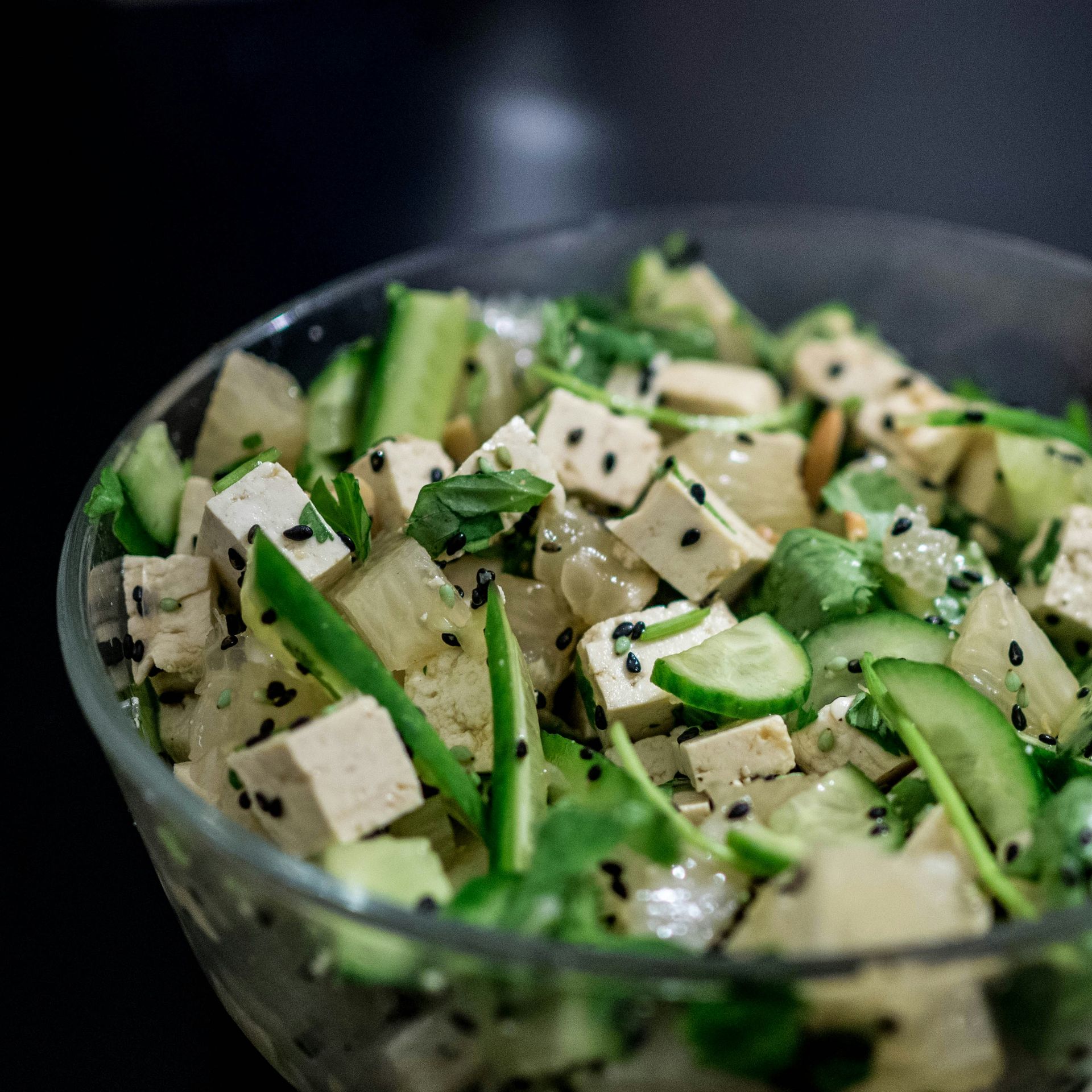
Credit: Yoav Aziz / Unsplash
Tofu has a reputation for blandness that is almost entirely a function of how it is handled rather than what it is. Extra-firm tofu, pressed to remove excess water, seasoned aggressively, and baked or pan-fried until golden, is a genuinely satisfying protein source with a texture that holds up in a dressed salad without falling apart.
Pressing tofu is the first critical step. Wrap a block of extra-firm tofu in several layers of paper towel or a clean kitchen towel, set a heavy pan on top, and let it sit for at least 20 minutes. The goal is to remove as much water as possible, which allows the surface to brown rather than steam during cooking. After pressing, cut the tofu into cubes of about three-quarter-inch size.
For baking: toss the cubed tofu in a mixture of soy sauce, sesame oil, rice vinegar, garlic powder, and cornstarch. The cornstarch creates a light coating that crisps in the oven. Spread on a parchment-lined baking sheet and bake at 400°F (200°C) for 25 to 30 minutes, flipping halfway, until golden and firm. A half-block of tofu — about 200 grams — provides approximately 16 grams of protein.
The salad base is a combination of shredded napa cabbage, matchstick carrots, sliced snap peas, and thinly sliced scallions. All of these are crunchy and hold up well under the dressing.
The sesame ginger dressing is the same general profile as the peanut dressing from the Thai chopped salad, minus the peanut butter: sesame oil, soy sauce, rice vinegar, fresh ginger, garlic, a touch of honey, and sriracha for heat. It should be balanced — salty, tangy, slightly sweet, and gently spiced.
The warm tofu is added on top, along with a scatter of toasted sesame seeds and a handful of fresh cilantro. A few segments of mandarin orange are an optional addition that adds sweetness and acidity. The combination is clean, bright, and satisfying without heaviness.
18 / 20
Credit: Raphael Loquellano / Pexels
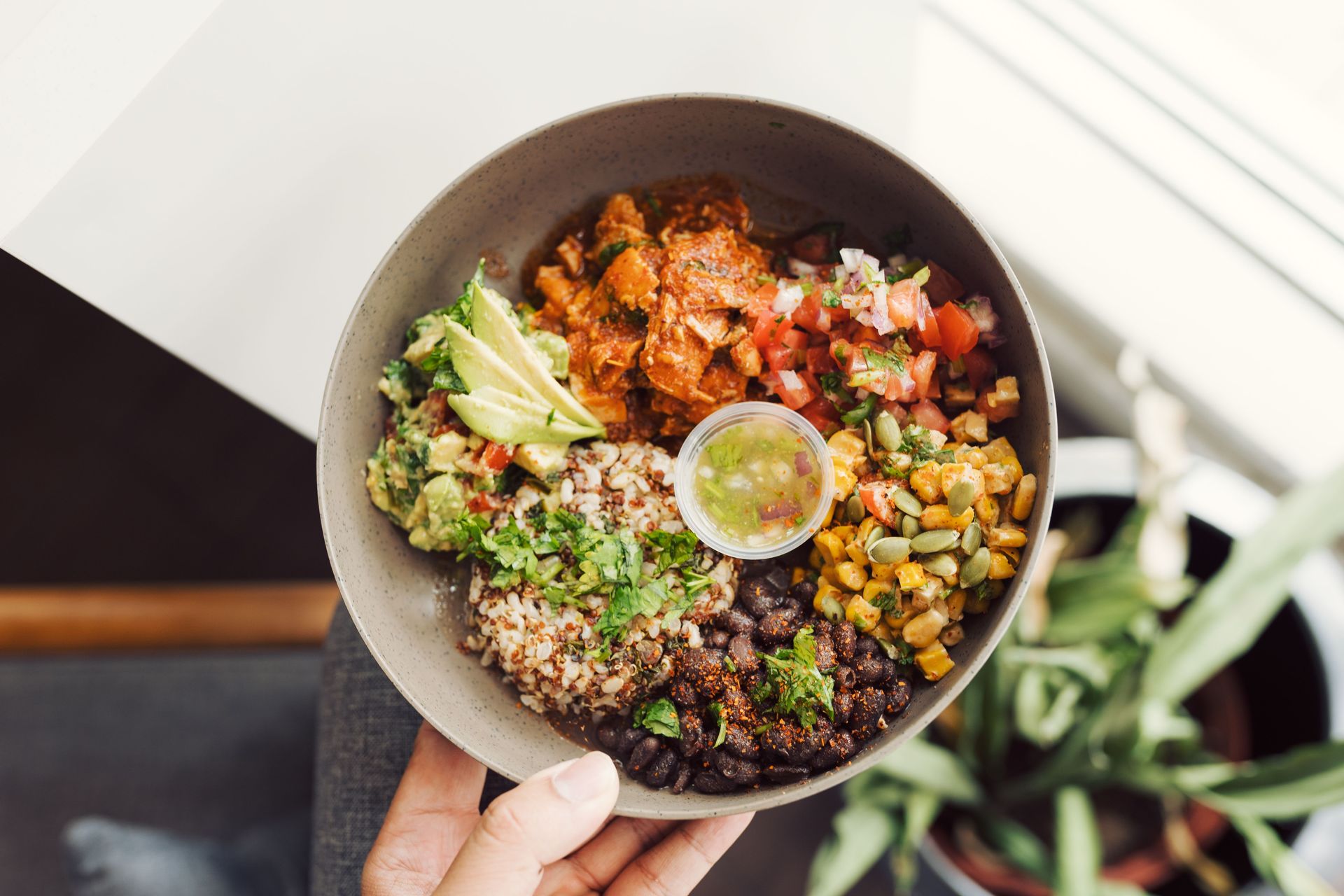
Quinoa is a seed — technically a pseudo-cereal — native to the Andean region of South America, where it has been cultivated for thousands of years. It contains all nine essential amino acids, which makes it one of the few plant-based complete proteins. A cup of cooked quinoa contains about eight grams of protein and five grams of fiber, which forms a solid foundation for a plant-based salad bowl.
The combination of quinoa with black beans is a protein pairing that goes beyond simple additive math. Black beans provide about eight grams of protein and seven grams of fiber per half-cup. Together, quinoa and black beans supply more than 15 grams of protein per serving before any additional ingredients are added.
Corn — either fresh, frozen and thawed, or roasted — adds sweetness and texture. If using fresh corn cut from the cob, a quick char in a dry hot pan adds smokiness that lifts the whole dish. Diced red bell pepper adds crunch and vitamin C. Cherry tomatoes add juice and acid. Diced red onion adds sharpness.
The dressing is a lime-cumin vinaigrette: lime juice, olive oil, cumin, garlic, a small amount of honey, salt, pepper, and a pinch of smoked paprika. It is simple and coherent — all of the flavors point in the same direction, which makes the salad taste more composed than its component list suggests.
Fresh cilantro, roughly chopped, is essential unless cooking for someone with the cilantro aversion linked to a specific olfactory receptor variant that makes it taste like soap. Fresh jalapeño, finely diced, adds heat without overpowering. Avocado, diced, adds fat and creaminess.
This salad is excellent for meal prep because it improves slightly after a few hours as the flavors meld, and all of its components are robust enough to hold up in the refrigerator for up to four days. It can be eaten cold, at room temperature, or warmed briefly in the microwave.
19 / 20
Credit: Canva Images
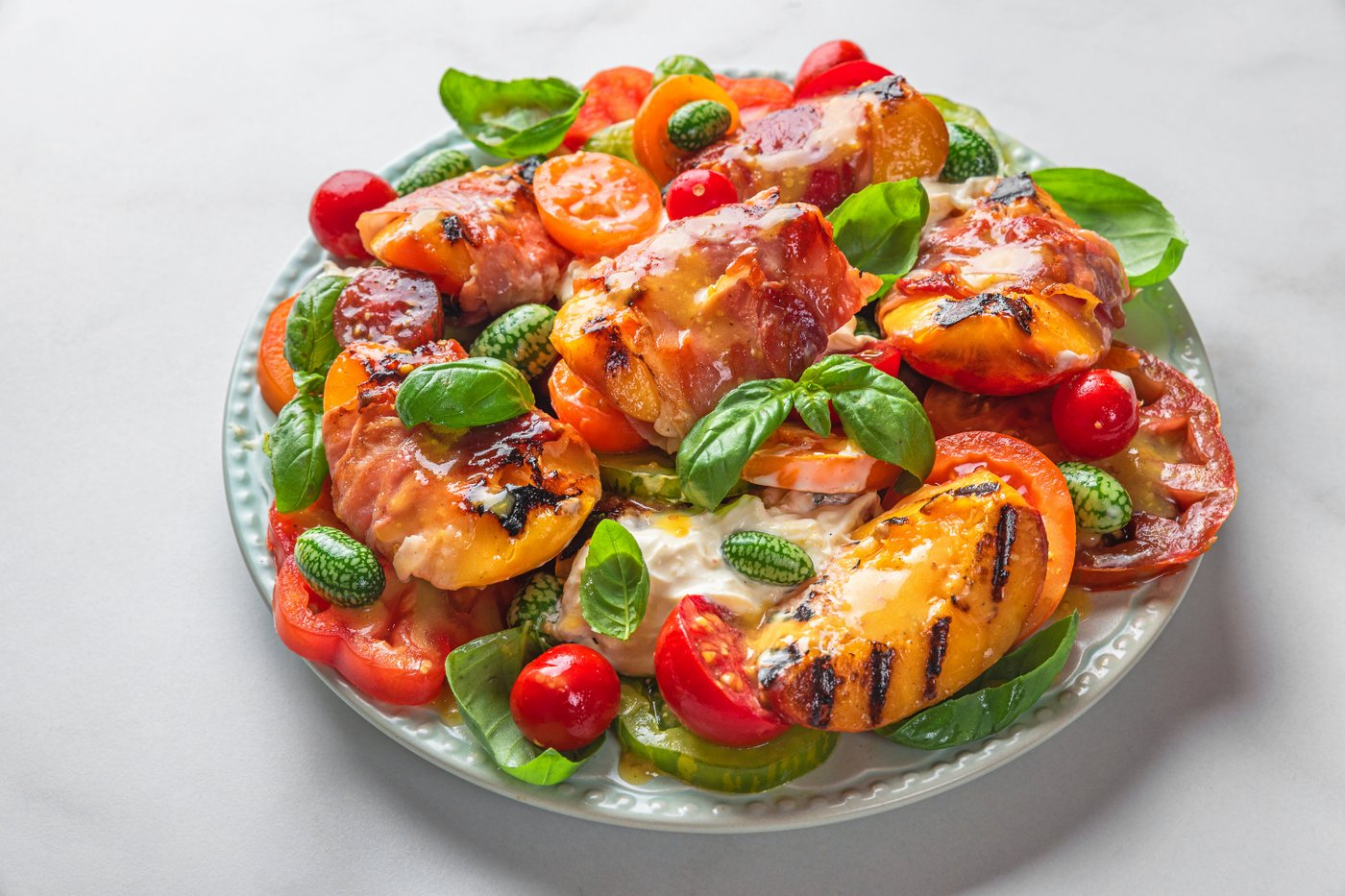
This salad belongs to the summer. Grilled or roasted stone fruit — peach, nectarine, or plum — provides sweetness and a faint caramelized bitterness at the cut edges that contrasts with salty cured meat and creamy cheese. It is a salad that manages to feel light while being genuinely substantial.
Prosciutto is the traditional Italian cured ham made from the hind leg of a pig, aged for at least a year. Its fat is silky and mild, and it provides about 18 grams of protein per 60-gram serving. Because it is already cured, it requires no cooking — it is laid over the salad raw, where it softens slightly against the warm fruit.
To grill the peaches: halve them, remove the pit, brush the cut side with a small amount of olive oil, and grill cut-side down over medium-high heat for three to four minutes until grill marks appear and the flesh just starts to soften. Avoid overcooking — the peach should hold its shape. A grill pan on the stovetop achieves the same result.
The greens base is typically arugula or a peppery mesclun mix, which provides contrast to the sweetness of the fruit. Baby spinach works but is milder. The greens should be dressed lightly with a balsamic reduction or a simple honey-lemon vinaigrette before assembly.
Burrata or fresh mozzarella provides the dairy component. Burrata — a fresh mozzarella shell filled with cream and soft curd — has a richness that works particularly well with the fruit and prosciutto. A 60-gram serving of burrata adds meaningful fat and about five grams of protein.
Toasted walnuts or candied pecans add crunch and sweetness. A drizzle of high-quality balsamic vinegar — not a cheap acidic version, but a proper aged balsamic that is thick and slightly sweet — finishes the dish. The combination of fruit sweetness, salty meat, rich dairy, and acidic balsamic is one of the more complete flavor profiles in salad cooking.
20 / 20
Credit: Anh Nguyen / Unsplash
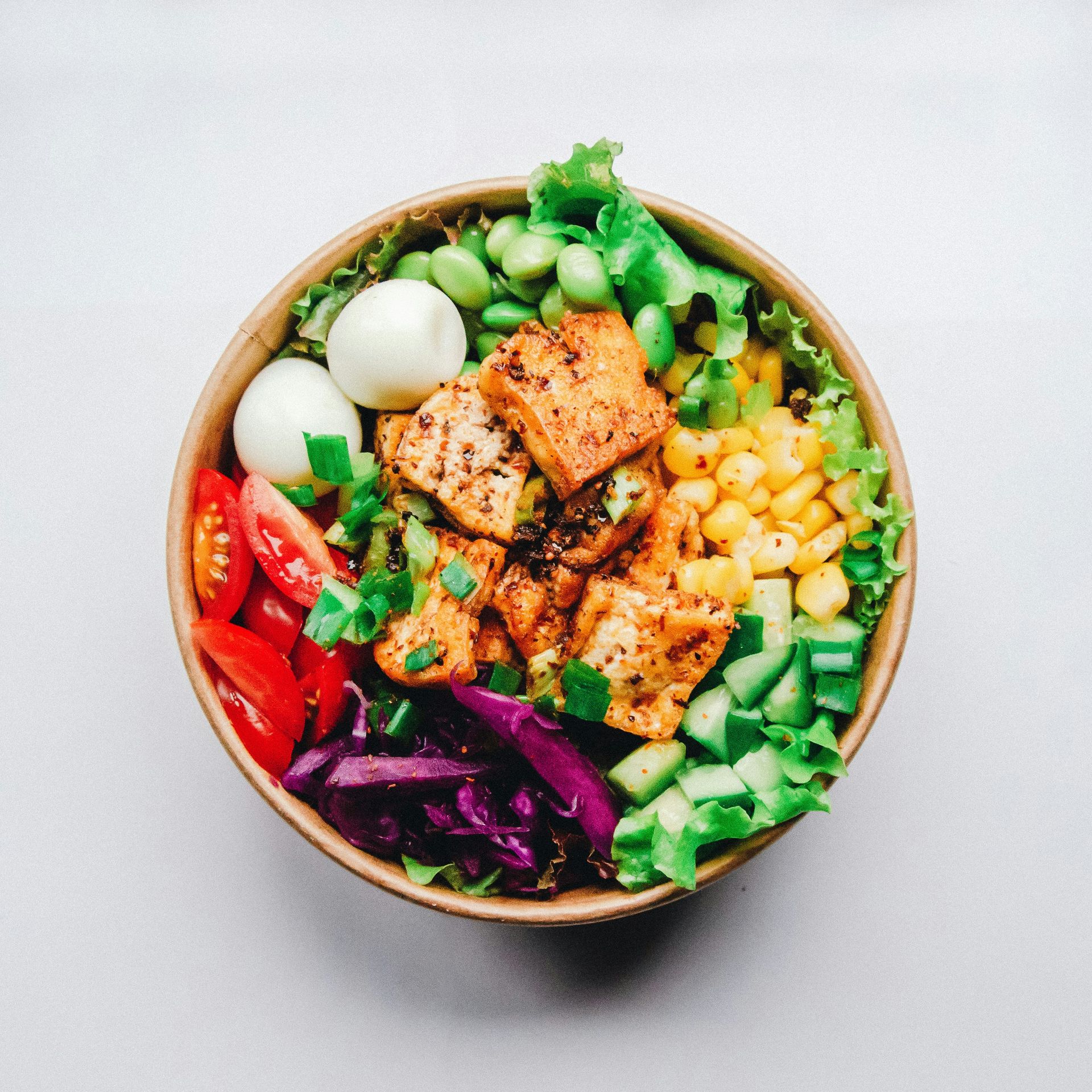
Some salads work because of their restraint. This one works because of its excess — it is the salad version of a loaded bowl, built on the premise that more distinct components means more textural variety and a more interesting eating experience. The "big salad" concept, familiar from the Seinfeld era of American food culture, is a legitimate format when executed with care.
The base is mixed greens — a combination of arugula, baby spinach, and chopped romaine. The three different greens provide different textures and flavor profiles: the peppery arugula, the mild spinach, the crisp romaine. Together they form a base with more character than any single green alone.
Salmon is the primary protein here, either pan-seared, baked, or purchased as smoked salmon or gravlax. A six-ounce portion of cooked salmon provides about 34 grams of protein and significant omega-3 content. It should be placed on top of the assembled salad rather than mixed in, so it stays in identifiable pieces.
The toppings are where the salad earns its name. Hard-boiled egg, quartered. Avocado, sliced. Cherry tomatoes, halved. Thinly sliced cucumber. Roasted chickpeas for crunch. Shaved fennel for an anise note. Pickled red onion for acid. Sunflower seeds or pumpkin seeds for additional crunch. A crumble of feta or a few shavings of Parmesan for dairy.
The dressing should be simple enough to tie all these components together without competing with them: lemon juice, olive oil, a small amount of Dijon, a pinch of garlic, salt, and pepper. Toss the greens in the dressing first, then arrange the toppings over the dressed base.
The completed bowl, assembled generously, is a full meal by any reasonable measure. The protein comes from multiple sources. The fiber comes from the vegetables, seeds, and chickpeas. The fat comes from the avocado, olive oil, and salmon. The volume is enough to feel substantial. This is the salad that converts people who have never been convinced that a salad can actually be dinner.
