
On the sidelines of the World Economic Forum annual meeting in Davos, Switzerland, two very different visions of the future unfolded, courtesy of OpenAI chief Sam Altman and musician-turned-activist-turned-Davos-regular Will.i.am.
The OpenAI chief and the musician-activist both spoke on the sidelines of the World Economic Forum
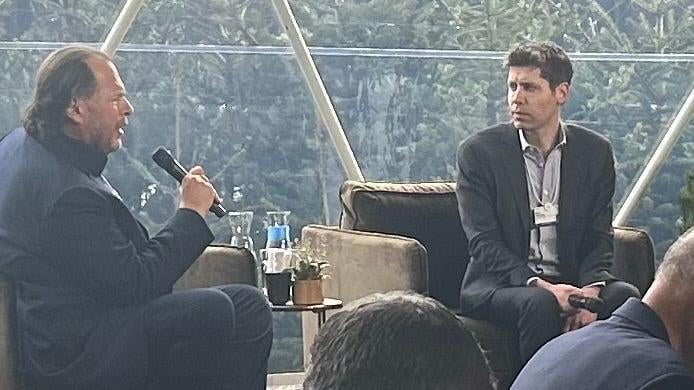
On the sidelines of the World Economic Forum annual meeting in Davos, Switzerland, two very different visions of the future unfolded, courtesy of OpenAI chief Sam Altman and musician-turned-activist-turned-Davos-regular Will.i.am.
As the surprise guest at a Salesforce $CRM lunch emceed by Marc Benioff, the Salesforce co-founder asked Altman to describe the implications of silicon-based intelligence. Altman’s detailed answer to the question is worth pondering.
I think one of the most important quests humanity is on, or should be on even more than we are, is to deliver technological prosperity to the world. And you know, there was, like, I think at Davos in some years past, there was this whole de-growth conversation going on. I think that is not something people actually want, or only a very fringe thing. What most people want is for the world to get better, for our lives to get better. And the only long-term, sustainable way to do that is technology, scientific discovery, and I think the two most important areas for that are intelligence and energy. Those are the inputs to everything else in the techno-prosperity mission.
And so as we bring the cost of intelligence down, its capability up, its abundance up, as cognitive services come down in cost by a factor of 1,000 or 1 million or whatever, think about what can happen for the world. Every kid can have a great one-on-one, personalized tutor; every kid on Earth can get a better education than the best a kid can get today. We can all get great healthcare when you discover new drugs. We can all be more productive—you’re already seeing this with programmers today. We can be way more creative; I think the quality of media and entertainment is going to go nuts in a really wonderful way ... Eventually we can all have, like, a whole company’s worth of cognitive ability and we can create whatever we imagine.
I think this will be the most powerful tool humans have yet created. And what it will let us do is to create, imagine things, to translate, to imagine things into reality ... I think we will have never seen anything quite like it, even though it’s always tempting to say, “This time it’s different.”
It was, perhaps, the high point of an interview that offered plenty of inspiration to an audience that hung onto the Silicon Valley entrepreneur’s every word. But after Altman left the stage, his vision of the future was quickly challenged by Will.i.am, who along with fellow musician Sting and the anthropologist Jane Goodall took part in a panel discussion about AI and the future more broadly. Benioff tossed the first question to the Black Eyed Peas founder, asking him how he sees the next few years unfolding.
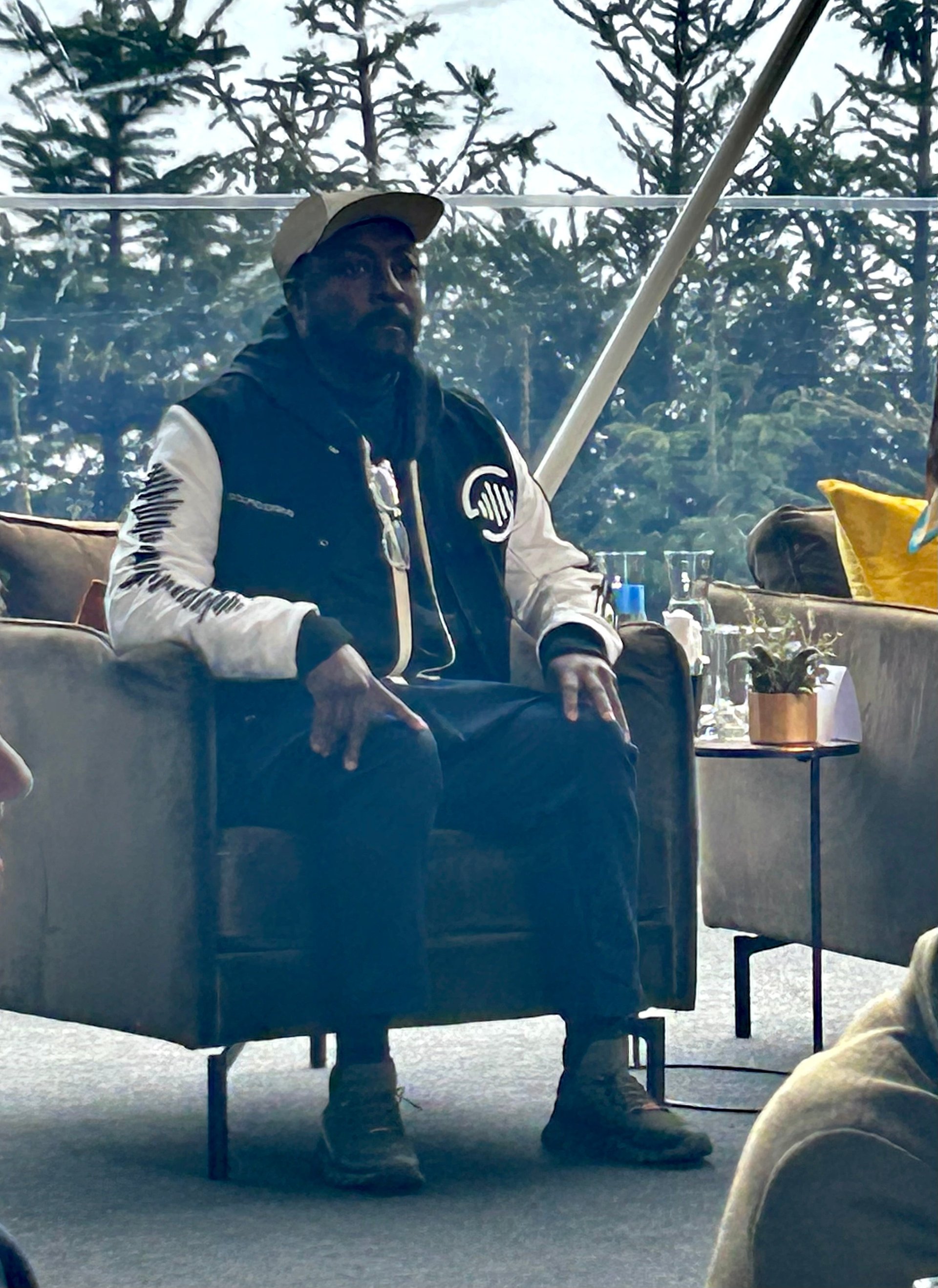
Very soon, “products will have self-awareness and be smarter than the people consuming the product,” Will.i.am said. He continued:
That’s kind of inhumane, how we can have a world where items have more funding to be intelligent than humans. So that’s what I work on with our foundation, and [I] find, every year, raising money for AI is easier than raising money for “HI”—for human intelligence. For some reason, people don’t seem to find it urgent to bring people up to speed. So that’s troubling. As much as I love technology ... it just breaks my heart that we’re not uploving. We have to reskill, and we have to upskill. But no one’s talking about uploving, and how we could lead with empathy and not lead with greed.
It was a provocative message at a conference where business and government leaders have been talking all week about the potential of AI—occasionally acknowledging the risks to privacy, security, jobs, and political discourse, but without examining the prioritization of investments in machines over humans.
Join 500,000+ readers who start their day with Quartz.
By subscribing, you agree to our Terms of Service and Privacy Policy.