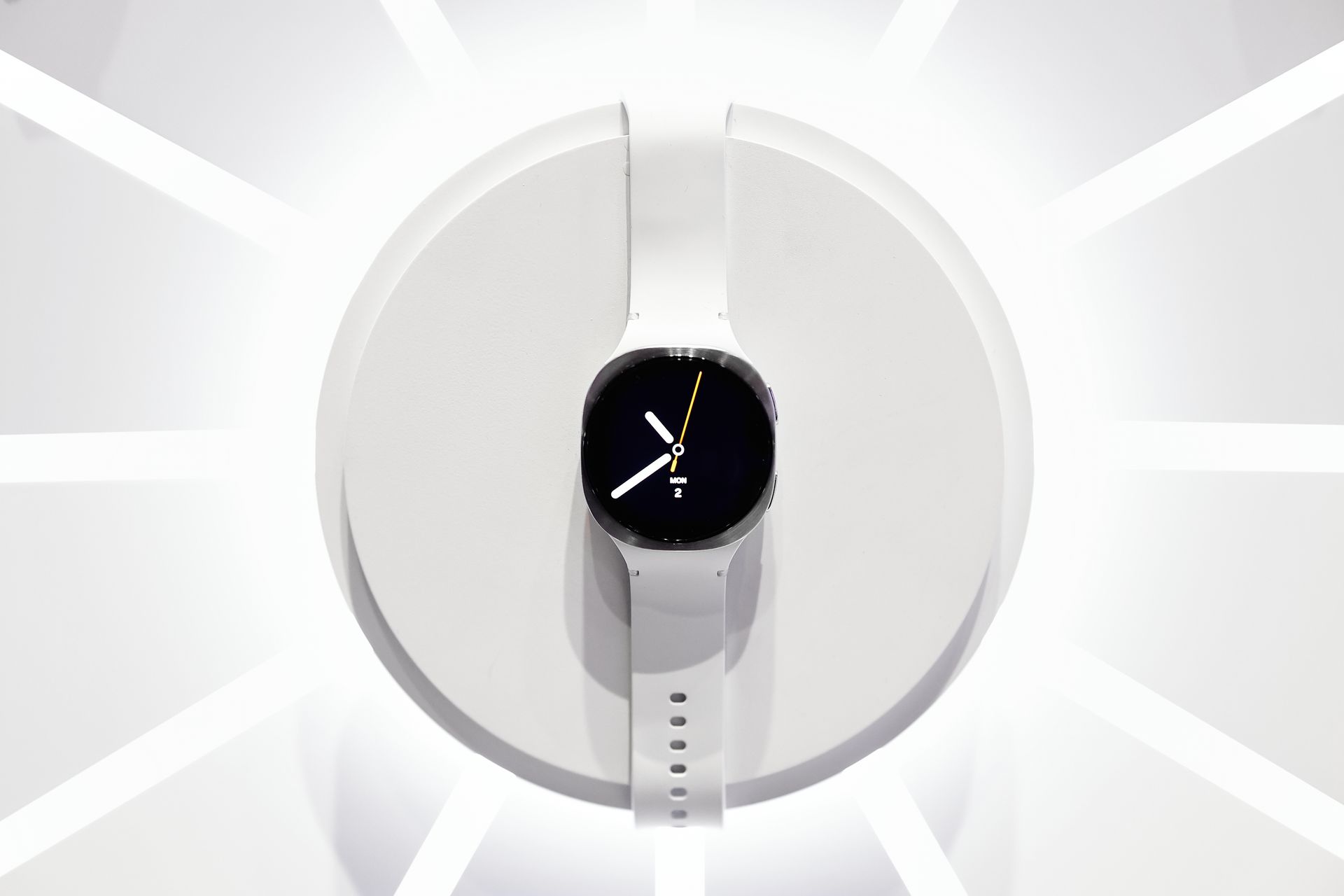
Samsung announced that a clinical study has validated the ability of its Galaxy Watch 6 to predict fainting episodes up to five minutes before they occur, with 84.6% accuracy.

A clinical study found the watch's AI algorithm detected vasovagal syncope with 84.6% accuracy, at a sensitivity of 90%
NurPhoto / Getty Images
Samsung announced that a clinical study has validated the ability of its Galaxy Watch 6 to predict fainting episodes up to five minutes before they occur, with 84.6% accuracy.
The study was done with Chung-Ang University Gwangmyeong Hospital in South Korea. Vasovagal syncope is the most common type of fainting and happens when heart rate and blood pressure suddenly drop, often due to stress or physical strain. The study included 132 patients with suspected VVS symptoms. The watch measured heart rate variability using its sensor, and this data was analyzed by an AI algorithm trained to spot early signs of fainting. Samsung said the algorithm had 90% sensitivity and 64% specificity at a level considered meaningful for clinical use.
The findings were published in the European Heart Journal – Digital Health.
Vasovagal syncope affects up to 40% of people over their lifetimes, and a third of those experience recurring episodes, according to Professor Junhwan Cho of the Department of Cardiology at Chung-Ang University Gwangmyeong Hospital, who led the research team. While a vasovagal episode rarely poses a direct medical threat, the secondary injuries sustained during an unexpected collapse — including broken bones and head trauma — can be serious. "An early warning could give patients advance time to get into a safe position or call for help, which would dramatically reduce the incidence of secondary injuries," Junhwan Cho said in a statement.
Jongmin Choi, head of Samsung's Health R&D Group, framed the study as part of a broader shift in how wearable technology can be used. "This study is an example of how wearable technology can help shift healthcare from being designed for post-care to a model of preventive care," Jongmin Choi said in a statement.
No timeline or commitment has been announced for bringing fainting-prediction capabilities to consumers, according to Engadget. Samsung described its broader ambition as deepening ties with hospitals and research partners to advance individualized approaches to health monitoring.
Join 500,000+ readers who start their day with Quartz.
By subscribing, you agree to our Terms of Service and Privacy Policy.