
The Securities and Exchange Commission proposed two sets of rule changes on Monday designed to make it easier and less expensive for companies to go public and remain listed, the agency said.
The proposals would expand shelf offering access, raise the large accelerated filer threshold to $2 billion, and ease disclosure requirements for most public companies
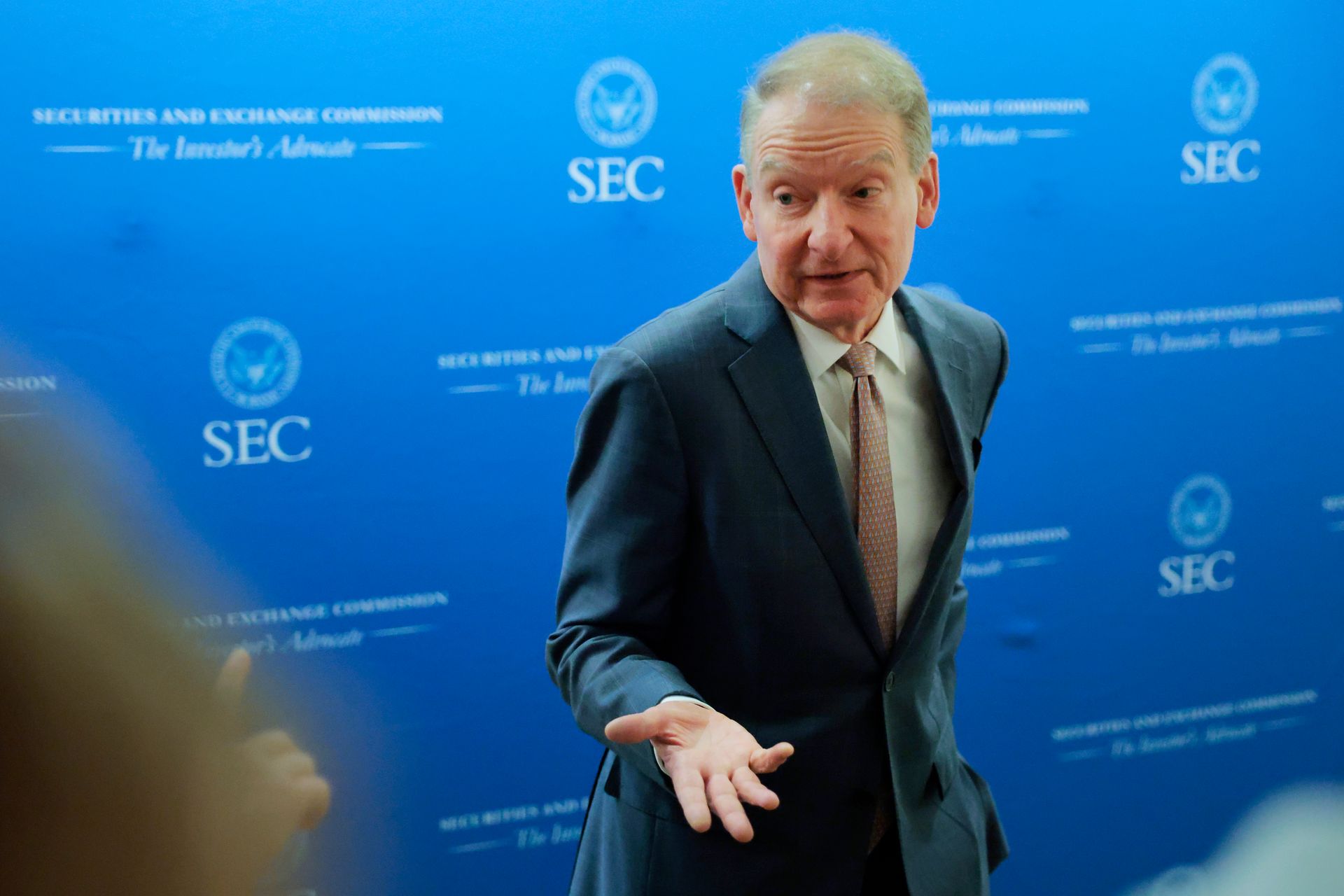
Anna Moneymaker / Getty Images
The Securities and Exchange Commission proposed two sets of rule changes on Monday designed to make it easier and less expensive for companies to go public and remain listed, the agency said.
The registered offering reform proposal, if adopted, would be the most significant update to the registered offering framework in more than 20 years, the SEC said. A broader set of public companies would gain access to shelf offerings, which allow firms to pre-register securities and sell them when market conditions are favorable. Current eligibility for shelf offerings requires a minimum $75 million public float and a full year of SEC reporting history — two conditions the new proposal would do away with, according to Reuters.
More companies would also be able to use registration and communication flexibilities currently reserved for "well-known seasoned issuers," a designation tied to large public floats. The proposal would additionally preempt state securities law registration requirements for all registered offerings, reducing the cost and complexity of multi-state listings, the SEC said.
The second proposal would raise the threshold at which a company becomes a "large accelerated filer" — a designation that triggers stricter reporting requirements and mandatory auditor attestation on internal financial controls — from $700 million to $2 billion in publicly traded shares. No company would reach that classification for at least 60 months following its IPO regardless of its public float, the SEC said.
Every company outside the large accelerated filer category would fall into a single non-accelerated filer classification, freeing them from the obligation to have an outside auditor certify the adequacy of their internal financial controls. Taken together, the reforms would make the reduced-disclosure framework available to around 81% of publicly traded companies. A subcategory covering the bottom 18% of public companies ranked by assets would gain extra filing time — 30 additional days for annual reports and five additional days for quarterly filings. Despite the narrower pool of large accelerated filers, those remaining companies — approximately a fifth of all listed firms — would represent 90% of total market capitalization, Reuters reported based on anonymous SEC officials.
"Today, the Commission proposed two rulemakings that serve as the foundation for my agenda to Make IPOs Great Again," SEC Chairman Paul S. Atkins said in a statement.
The proposals drew criticism from Better Markets, a group that advocates for stricter Wall Street oversight. Ben Schiffrin of Better Markets contended that the rule changes would expose investors to greater corporate misconduct risks, and pointed to the growth of private markets — where companies can meet their capital needs without a public listing — as evidence that regulatory incentives for IPOs are misplaced, according to Reuters.
Tuesday's announcements follow a series of related SEC actions. The agency proposed in early May allowing public companies to file earnings reports twice a year rather than four times, giving firms the option to replace quarterly 10-Q filings with a new semiannual form. Both sets of proposals are open for public comment for 60 days following publication in the Federal Register.
Join 500,000+ readers who start their day with Quartz.
By subscribing, you agree to our Terms of Service and Privacy Policy.