
Quartz
Subscribe
Quartz
Subscribe
Edition
Business News
A.I.
Technology
Money & Markets
Leadership
Lifestyle
Latest

Get Quartz in your inbox

Free daily briefing on global business news.

Business News
AirlinesAutomobilesFoodPharmaceuticalsPolitics & GovernmentRetail & EcommerceSpace & AerospaceEarnings
Technology
A.I.ComputingConsumer TechSpace & AerospaceEarnings
Money & Markets
Economic IndicatorsMarketsPersonal FinanceEarnings
Lifestyle
Cars & BikesCollectingEntertainmentFood & Fine DiningHealth and FitnessReal EstateTravel
Quartz

Global business news for a smarter world

Topics

  • Business News
  • Money & Markets
  • Tech & Innovation
  • Generation A.I.
  • Lifestyle
  • Leadership

Products

  • Daily Brief
  • Weekly Digest
  • Member Benefits
  • Quartz Pro

Legal

  • Sitemap
  • About
  • Accessibility
  • Privacy
  • Terms of Service
  • Advertising

© 2026 Quartz Media, Inc. All rights reserved.

Business News

Why is semiconductor manufacturing central to U.S.-China tensions?

Chips underpin modern weapons, AI systems, and economic output — making their supply chains a focal point of great-power rivalry

By Ambia Staley·2 min read·Updated July 17, 2026
Add QZ to Google
Why is semiconductor manufacturing central to U.S.-China tensions?

Advanced semiconductor chips have become a geopolitical flashpoint as the United States restricts China's access to the technology powering modern militaries and artificial intelligence.

Semiconductor manufacturing sits at the center of U.S.-China tensions because chips are the foundational input for modern military systems, artificial intelligence, and economic competitiveness — and because the global supply chain for producing them is extraordinarily concentrated and difficult to replicate.

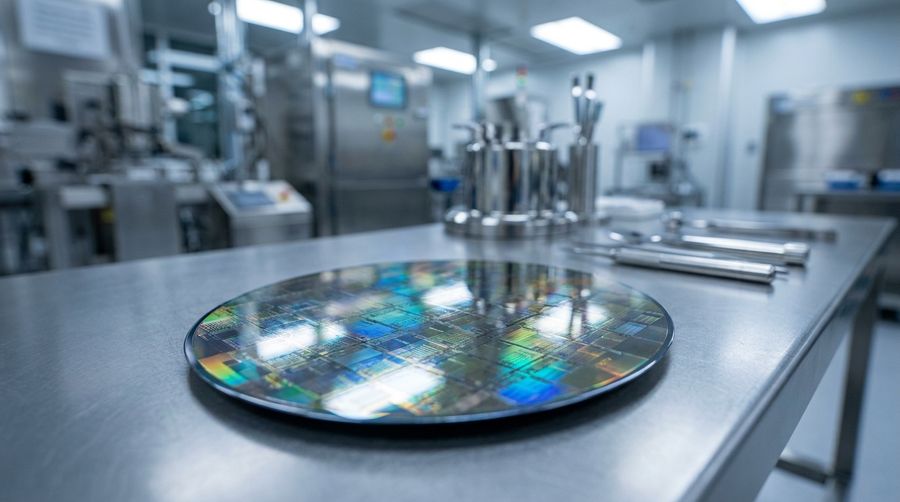
A semiconductor, or microchip, is an integrated circuit etched onto a slice of silicon. These circuits process and store data, and every digital device depends on them: smartphones, data center servers, missile guidance systems, satellites, and AI models alike. The more advanced the chip — measured by the size of the transistors it contains, now as small as a few nanometers — the more capable the system it powers.

The manufacturing of leading-edge chips is dominated by a small number of firms, most critically Taiwan Semiconductor Manufacturing Company, or TSMC $TSM, which produces chips for most of the world's top chip designers, including those used in AI accelerators for the largest technology companies. This concentration means that whoever can access — or deny access to — advanced chipmaking effectively controls the pace of technological development for everyone downstream.

The U.S. government has concluded that allowing China to acquire advanced chips, or the equipment to manufacture them, would accelerate China's military and AI capabilities in ways that threaten U.S. national security. That logic underlies export controls restricting the sale of high-end semiconductors to Chinese buyers, including rules designed to close workarounds that allowed Chinese firms to obtain Nvidia $NVDA AI chips through third countries.

China, in turn, views dependence on foreign chips — particularly those designed in the U.S. and manufactured in Taiwan — as a strategic vulnerability. Its government has committed hundreds of billions of dollars to building a domestic semiconductor industry, though it remains years behind the frontier in the most advanced process nodes.

The rivalry also shapes corporate decisions globally. Chip designers are expanding their product lines while navigating an environment in which their customer base, supply chains, and regulatory exposure all run through the same geopolitical fault line. Because chips cannot easily be sourced from alternative suppliers once access to the leading manufacturers is restricted, the technology functions less like a commodity and more like a strategic chokepoint — which is precisely why both governments treat control over it as a first-order policy priority.

Daily Brief

The essential business news, delivered fresh every morning.

Join 500,000+ readers who start their day with Quartz.

By subscribing, you agree to our Terms of Service and Privacy Policy.

Related

Business NewsWalmart is replacing its U.S. operations chief as leadership overhaul continues
Politics & GovernmentEpstein victims called acting attorney general "abrasive" after DOJ meeting
FoodKopi Kenangan, backed by Serena Williams and Jay-Z, is meeting with banks as Indonesia's biggest coffee chain eyes an IPO
AutosZoox is recalling its entire robotaxi fleet after one drove into a smoke-filled fire scene
Cloud ComputingAnthropic is in talks to lease AI computing power from Meta in a $10 billion deal