From Socrates to Sun Tzu, these 25 sentences that changed the world reshaped how people reason about the self, power, ethics, language, and reality

Credit: Leonidas Drosis / Wikimedia Commons (CC BY-SA 4.0)
A single sentence can outlast the person who wrote it, the language it was written in, and the debate that first produced it. The sentences that changed the world gathered here did more than describe reality — they handed people new tools for seeing it. Once a phrase like "I think, therefore I am" or "the personal is political" enters wide use, it stops being a quotation and becomes a lens. People start noticing things the sentence taught them to notice.
What makes these particular lines durable is compression. Each one packs a large argument into a form short enough to carry in memory and repeat in conversation. That portability is the point. A treatise stays on a shelf, but a sentence travels through classrooms, protest signs, courtrooms, and search bars. The idea spreads faster than the book that houses it, and it reaches people who will never read the original.
This list spans more than 2,000 years and several continents, from Athens and ancient China to Enlightenment France, Victorian Britain, and 20th-century America. Some of these sentences launched entire fields, such as utilitarian ethics or media theory. Others named a problem so precisely that the name itself became a permanent part of the language, as with "the banality of evil" or "the tragedy of the commons."
A few carry a history more tangled than their fame suggests. "Survival of the fittest" was coined by a philosopher, not the biologist it is tied to. "The greatest happiness of the greatest number" predates the thinker who made it famous. Where the record is messy, this list says so, because the real story is usually more interesting than the myth.
Read together, these 25 lines form a rough map of how modern people learned to question authority, doubt their senses, measure right and wrong, and imagine a fairer world. Each slide covers one sentence, where it came from, and why it still shapes thought today.
Credit: Leonidas Drosis / Wikimedia Commons (CC BY-SA 4.0)
Socrates spoke this line at his trial in Athens in 399 BCE, as recorded in Plato's Apology, while defending himself against charges of impiety and corrupting the young. Facing a death sentence, he refused to stop questioning his fellow citizens. The statement turned self-scrutiny into the core duty of a thinking person.
The claim is radical in its context. Socrates was telling a jury that a life spent without questioning one's own beliefs, values, and assumptions had no real worth — even if that questioning cost him his life. He chose execution over exile because exile would have meant giving up philosophy.
The sentence established a whole method of thinking that still carries his name. The Socratic method works by relentless questioning rather than lecturing, exposing the gaps and contradictions in what people assume they know. A teacher who answers a student's question with another question is working in this tradition.
Its influence runs through Western education and therapy alike. Cognitive behavioral therapy, for instance, asks patients to examine the automatic thoughts driving their distress, a practice with clear Socratic roots. Modern critical thinking curricula rest on the same premise — that beliefs should be tested, not merely inherited.
The line also reframed the goal of philosophy itself. Before Socrates, much Greek thought focused on the nature of the cosmos. He pulled the focus inward, toward ethics and the question of how a person should live. That shift is sometimes called the Socratic turn.
There is a warning folded into the phrase. An unexamined life is not just less rich, in this view, but hollow at its center. The sentence asks people to treat their own minds as territory worth exploring, and it has kept that demand alive for nearly 25 centuries. Its endurance suggests the challenge never fully resolves, since each generation faces its own unexamined assumptions.
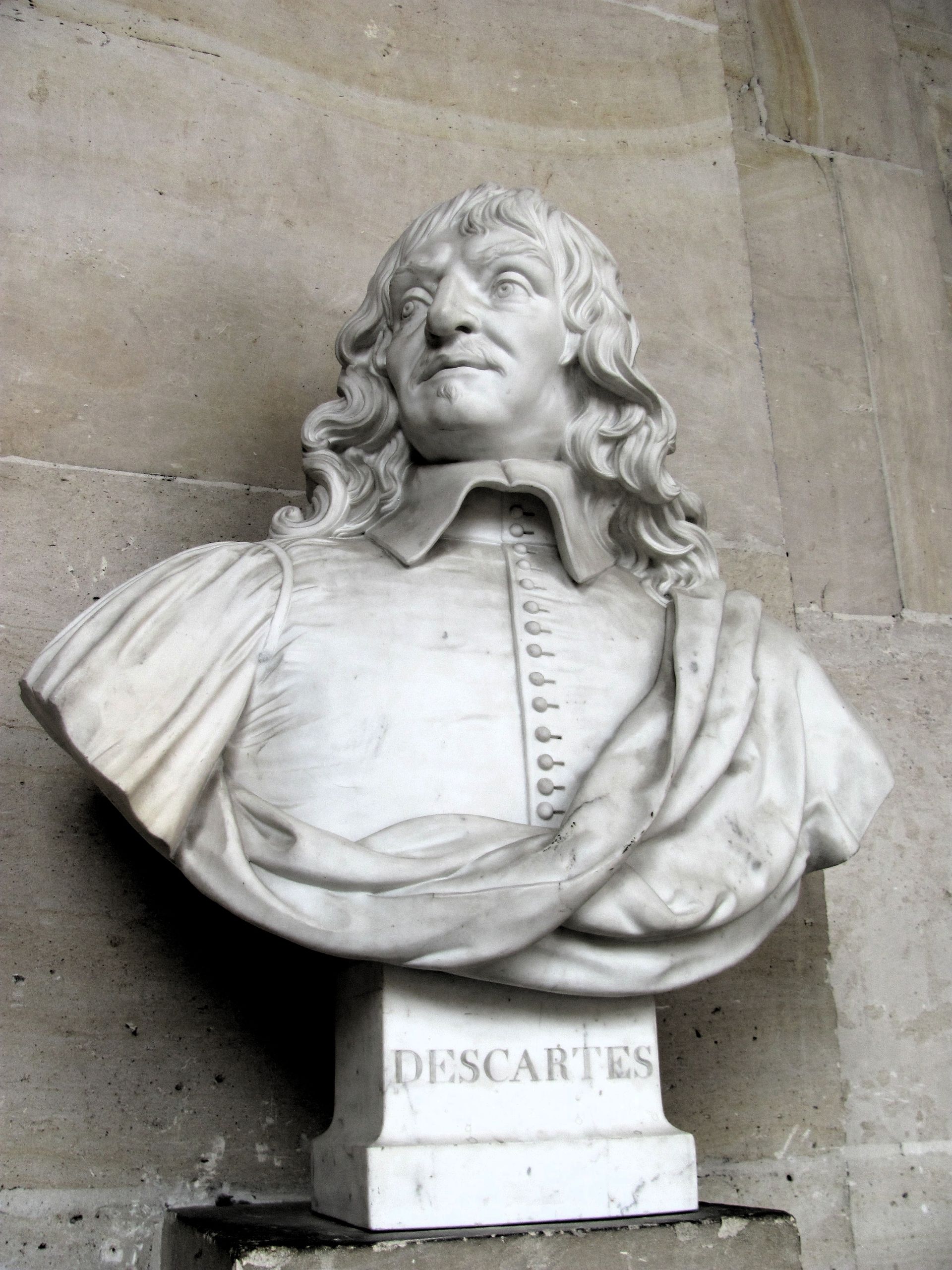
Credit: MotherForker / Wikimedia Commons (CC BY-SA 3.0)
René Descartes published this sentence, in French as "Je pense, donc je suis," in his Discourse on the Method in 1637, later rendering it in Latin as "Cogito, ergo sum." It marks the moment modern philosophy took the individual thinking mind as its starting point rather than tradition or scripture.
Descartes reached the line through a deliberate experiment in doubt. He tried to reject every belief that could possibly be false — his senses, the physical world, even mathematics — to see whether anything survived. One thing did. The very act of doubting proved that a doubter existed. He could not think himself out of existence.
The argument gave philosophy a foundation that did not depend on outside authority. Instead of building knowledge on what priests, kings, or ancient texts asserted, Descartes built it on a truth each person could verify from the inside. This is why he is often called the father of modern philosophy.
The sentence also created a problem that thinkers still wrestle with. By treating the mind as the one certain thing and the body as something doubtful, Descartes split reality into two substances — thinking mind and physical matter. That divide, known as Cartesian dualism, shaped centuries of debate about consciousness.
Neuroscience and philosophy of mind still argue over how a physical brain produces the felt sense of a self. Many of those arguments are, in effect, attempts to answer or dissolve the split Descartes opened.
The cogito lends itself to caricature, and Descartes has plenty of critics who say the reasoning smuggles in more than it proves. Yet the deeper move endures. He made personal certainty, tested by radical doubt, the bedrock of inquiry. Every later demand to question authority and start from first principles owes something to this one line.
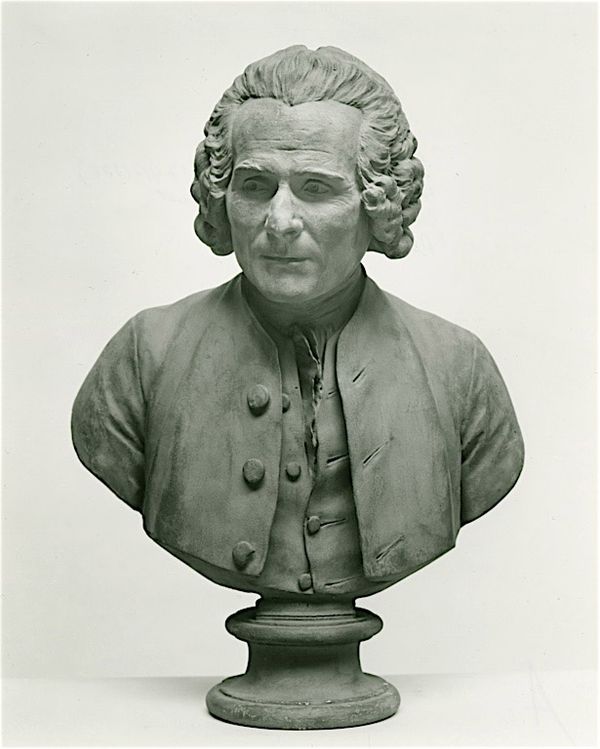
Credit: Bode Museum of Berlin / PICRYL
Jean-Jacques Rousseau opened his 1762 book The Social Contract with this sentence, framing the central puzzle of modern politics. Human beings are born with natural freedom, yet they live inside laws, rulers, and social rules that constrain them. Rousseau wanted to know what could make those constraints legitimate.
His answer reshaped how people think about government. Political authority is justified, he argued, only when it rests on the consent of the governed and expresses what he called the general will — the shared interest of the people as a whole. A ruler who governs against that will has no rightful claim to power.
This idea fed directly into the revolutions that followed. The language of popular sovereignty in the French Revolution drew heavily on Rousseau, and echoes of his thinking appear across later democratic movements. The notion that legitimate power flows upward from citizens, rather than downward from a crown, was not obvious before writers like him made the case.
The sentence also carries a sharp diagnosis. The chains Rousseau names are not only prisons and armies. They include social conventions, inequality, and the way people become dependent on one another's opinions. He believed civilization had corrupted a natural human goodness, a theme that runs through much of his work.
Critics have long noted the tension inside his system. The general will can be read as a route to freedom or, in the wrong hands, as a justification for forcing people to conform in the name of the collective. Both democratic and authoritarian readers have claimed him.
That ambiguity is part of why the line still provokes. It states a promise — freedom as our birthright — and a grievance — the constant fact of constraint — in the same breath. Anyone arguing about the limits of state power is standing on ground Rousseau mapped.
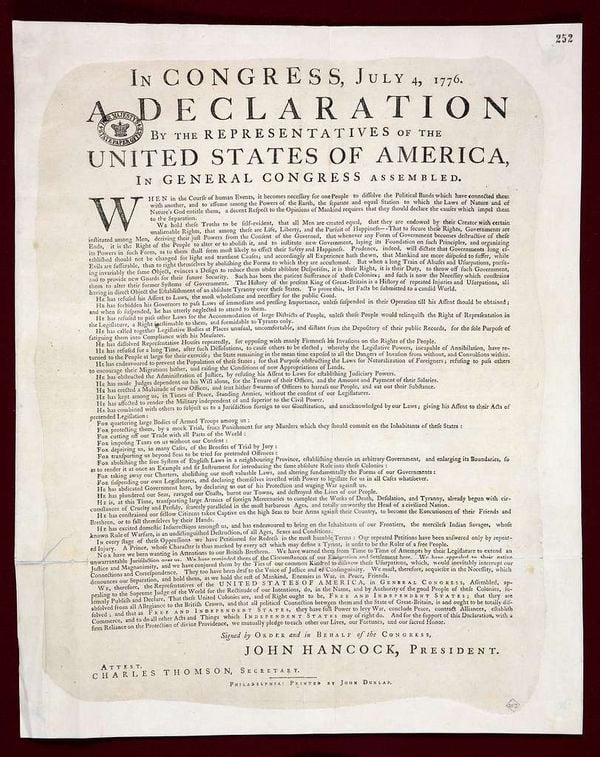
Credit: The Declaration of Independence / Wikimedia Commons / PICRYL
The U.S. Declaration of Independence, adopted on July 4, 1776, and drafted chiefly by Thomas Jefferson, declared it self-evident "that all men are created equal." The sentence turned a philosophical idea about natural equality into the founding claim of a new nation and a benchmark the country has been measured against ever since.
The line drew on Enlightenment thinking, especially John Locke's arguments about natural rights. Jefferson's phrasing placed equality and unalienable rights — life, liberty, and the pursuit of happiness — before any government, meaning no government could rightly take them away. Rulers existed to protect those rights, not to grant them.
The gap between the words and the reality was immediate and vast. The men who signed the document held enslaved people, denied women legal standing, and excluded many from citizenship. Jefferson himself enslaved hundreds of people. The sentence promised something the society that produced it did not deliver.
That contradiction became a tool for change. Abolitionists, suffragists, and civil rights leaders quoted the line back to the nation as an unpaid debt. Frederick Douglass and later Martin Luther King Jr. both invoked the promise of the founding to demand that it finally be kept.
The phrase spread far beyond the U.S. Independence movements and constitutions around the world borrowed its logic that legitimate government rests on equal rights and popular consent. The idea proved more exportable than almost any other from the period.
Read today, the sentence works as both a foundation and an indictment. It states an ideal clear enough that any failure to meet it stands out plainly. The history of American reform can be told, in large part, as a long argument over who counts as included in the word "men" — an argument the sentence itself set in motion.
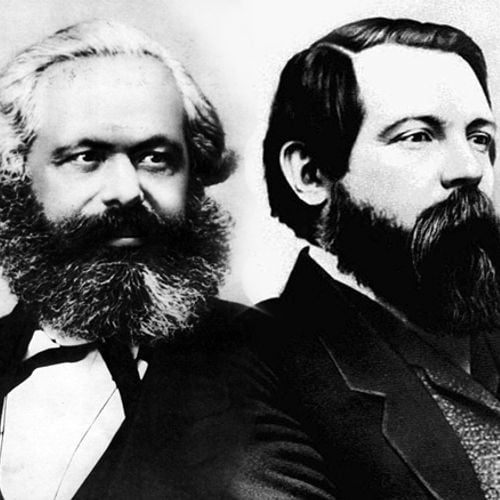
Credit: Wikimedia Commons / PICRYL
Karl Marx and Friedrich Engels ended The Communist Manifesto in 1848 with a rallying cry usually translated as "Workers of the world, unite! You have nothing to lose but your chains." The line compressed an entire theory of history and class conflict into a call for collective action across national borders.
The Manifesto argued that history is driven by struggle between economic classes. In the industrial age, that meant the conflict between the owners of factories and capital and the workers who sold their labor. Marx and Engels predicted the workers would eventually overturn the system that exploited them.
The closing sentence gave that theory an emotional charge. It told workers their national and ethnic divisions were less important than their shared position, and that their true allegiance lay with one another. Internationalism — solidarity across countries — became a defining feature of the movements that followed.
The practical reach of the line is hard to overstate. It shaped labor unions, socialist parties, and revolutions across Europe, Russia, China, and beyond through the 20th century. Governments were built and toppled by people carrying versions of this idea. At its peak, roughly a third of the world's population lived under states that claimed Marxist inspiration.
The results were bitterly contested and often brutal. Regimes that invoked Marx presided over mass repression and famine, and critics argue the theory itself contained the seeds of that outcome. Defenders counter that those states betrayed the original vision.
Whatever one's verdict, the sentence changed how people analyze society. Concepts it helped popularize — class, exploitation, the idea that economic structures shape culture and politics — are now standard vocabulary far outside socialist circles. Even those who reject Marx's conclusions often reach for his questions when they ask who benefits from a given arrangement.
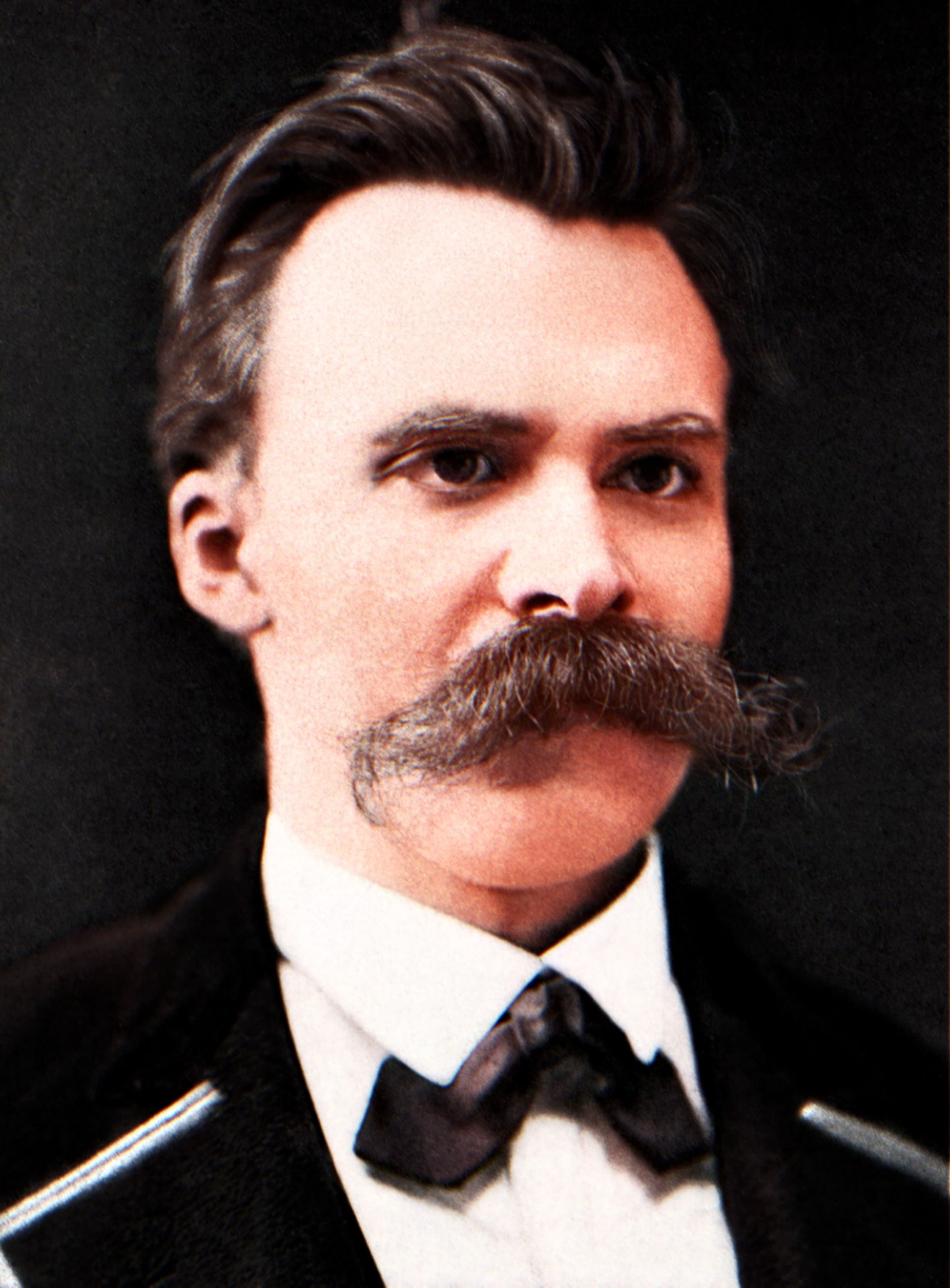
Credit: Vitor Osório / Wikimedia Commons (CC BY-SA 4.0)
Friedrich Nietzsche first wrote "God is dead" in his 1882 book The Gay Science, most memorably in the parable of a madman who runs into a marketplace announcing the death of God. The line was not a boast of atheism but a warning about a crisis Nietzsche saw coming for European civilization.
His point was cultural, not literal. He meant that belief in the Christian God had lost its grip as the foundation of Western values, morality, and meaning. Science, philosophy, and secular life had hollowed out that faith, even among people who still called themselves believers. The old source of purpose was, in effect, no longer alive.
The madman in the parable is horrified rather than triumphant. He asks how humanity could survive cutting itself loose from its moral anchor, and he senses that people have not yet grasped what they have done. Nietzsche feared a coming age of nihilism — a collapse of values into meaninglessness.
His response was to challenge people to create new values themselves. If no external authority guaranteed meaning, then human beings had to take responsibility for making it. This idea fed directly into existentialist philosophy in the next century.
The sentence became one of the most quoted and misused lines in modern thought. It has been read as celebration, lament, and provocation, and Nietzsche's later misappropriation by nationalist and fascist movements distorted his actual arguments, which were often hostile to such politics.
The phrase endures because it names a condition many people recognize without a name. It captures the disorientation of a world where traditional religious authority no longer settles questions of right and wrong for everyone. Debates about secularism, moral relativism, and where meaning comes from in a scientific age all circle back to the problem Nietzsche stated in three words.
%20(1)-500x500.jpg)
Credit: Government Press Office (Israel) / Wikimedia Commons (CC BY-SA 3.0)
Simone de Beauvoir wrote this sentence in her 1949 book The Second Sex, and it became the intellectual foundation for distinguishing biological sex from socially constructed gender. Her claim was that womanhood, as her society defined it, was not a natural given but a role imposed and learned over a lifetime.
De Beauvoir argued that societies treat man as the default human being and woman as the "Other" — defined only in relation to men rather than on her own terms. Femininity, in her analysis, was a set of expectations and constraints girls absorbed, not an essence they were born carrying.
The distinction was philosophically explosive. If being a woman is something one becomes rather than simply is, then the traits long called feminine — passivity, domesticity, dependence — are products of upbringing and power, not biology. That opened the door to changing them.
The book helped launch second-wave feminism. Later thinkers built on her separation of sex and gender to analyze how social roles are made and enforced, and the idea now underlies much of gender studies as an academic field. Her framing shaped how a generation understood the difference between bodies and social categories.
De Beauvoir worked within existentialist philosophy, which held that existence precedes essence — people are not born with a fixed nature but make themselves through their choices and circumstances. Her sentence applied that principle directly to the situation of women.
The line remains a live reference point in current debates about gender identity, some of which extend her logic and some of which contest it. Its staying power comes from a simple reversal. By moving womanhood from the category of nature to the category of things a culture produces, de Beauvoir made it something that could be questioned, resisted, and remade.
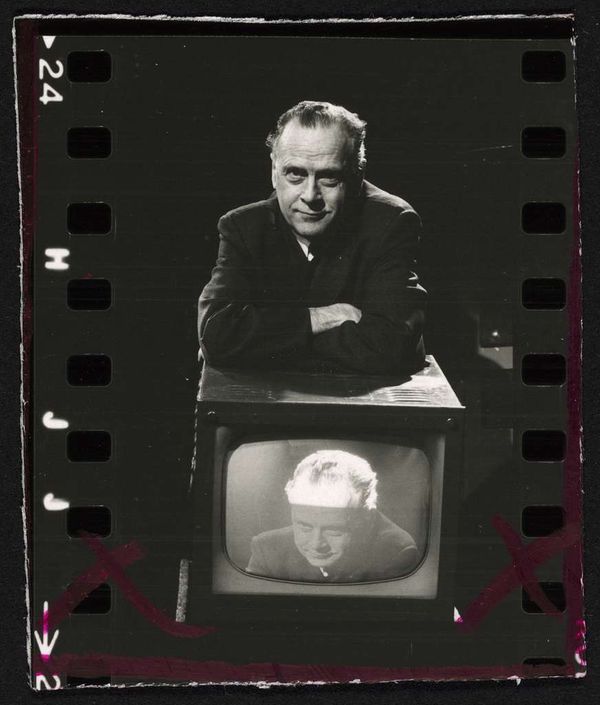
Credit: Library of Congress / PICRYL
Marshall McLuhan coined "the medium is the message" in his 1964 book Understanding Media, arguing that the form of a communication technology shapes society more profoundly than any content it carries. How we receive information, in his view, matters more than the particular information itself.
His claim inverted common sense. People usually focus on the content of television, print, or radio — the specific show, article, or broadcast. McLuhan told them to look instead at what the medium itself does to human perception, attention, and social organization, regardless of what it happens to be transmitting.
A telephone, for example, changes human relationships by making distant instant conversation normal, whether the callers discuss trivia or matters of state. The printed book reshaped Europe not through any single text but by standardizing knowledge and encouraging private, linear reading. The medium restructured how people thought.
McLuhan wrote decades before the internet, yet his framework became a standard tool for understanding it. Analysts who argue that social media rewires attention, or that smartphones alter how people relate, are working in his tradition. He also coined the "global village" to describe how electronic media would shrink the world.
His work was often gnomic and hard to pin down, and critics complained he offered slogans rather than rigorous argument. He seemed to court that reaction, treating provocation as a way to jolt readers out of habitual thinking about technology.
The sentence changed media studies from a discipline focused on messages into one focused on systems. It gave people permission to ask what a technology does to us as a condition of using it, separate from any intent behind its content. In an era shaped by algorithms and screens, that question has only grown sharper, which is why a line from 1964 keeps resurfacing in current arguments about digital life.
-1400x930.jpg)
Credit: Patty Mooney / Wikimedia Commons (CC BY 2.0)
"The personal is political" became a defining slogan of second-wave feminism around 1970, attached to an essay by activist Carol Hanisch, though the essay's title was supplied by its editors rather than Hanisch herself. The phrase argued that private experiences women had been told were individual problems were in fact shaped by political power.
The insight cut against the idea that some parts of life lie outside politics. Housework, marriage, sex, child-rearing, and personal appearance had all been treated as private matters. Feminists argued that these arenas were structured by unequal power, and that changing them required political analysis, not just personal adjustment.
The slogan reframed everyday frustrations as evidence of systemic patterns. A woman's exhaustion from unpaid domestic labor was not a personal failing to manage her time. It reflected a wider arrangement in which such work fell disproportionately on women and went unrecognized. Naming the pattern was the first step to challenging it.
This gave rise to consciousness-raising groups, where women shared private experiences and discovered how many were common. The realization that "I thought it was just me" was often "it happens to us all" turned isolated grievances into collective political demands.
The idea spread well past its origins in feminism. Movements around race, disability, and sexuality adopted the same logic, treating private suffering as a window onto public injustice. The phrase remains a standard way of arguing that structures shape intimate life.
It also drew pushback, including from those who worried that treating everything as political left no space for private life at all. That tension is part of the phrase's ongoing work. By erasing the assumed boundary between the personal and the political, the slogan forced a lasting argument about where, if anywhere, that line should be drawn.
-900x1306.jpg)
Credit: Anefo / Dutch National Archives / Wikimedia Commons (CC BY-SA 3.0 nl)
Jean-Paul Sartre wrote "Hell is other people," in French "L'enfer, c'est les autres," in his 1944 play No Exit. The line captures his view that other people's perceptions can trap and define us, turning social life into a source of torment even without any physical punishment.
The play stages the idea literally. Three characters are locked together in a room for eternity, expecting fire and devils, only to find that their punishment is one another's constant gaze. Each is forced to see himself through the judgments of the others, unable to escape or control how he is perceived.
Sartre later clarified that the line is often misread. He did not mean that all relationships are hellish or that other people are simply awful. He meant that when we depend on others' opinions to know who we are, we hand them power over our self-image, and that dependence can become a prison.
The idea sits at the heart of his existentialist philosophy. Sartre held that each person is radically free and responsible for creating their own meaning. The judging look of another can freeze us into a fixed object — a coward, a bore, a failure — and threaten that freedom.
This analysis of "the look," or le regard, influenced later thinking about shame, surveillance, and social identity. It offers a vocabulary for the modern anxiety of living under constant observation and evaluation.
The sentence has taken on new resonance in the age of social media, where people curate themselves for an audience and measure their worth in reactions. That environment turns Sartre's abstract point into a daily experience. His line endures because it names a discomfort that grows sharper the more visible we become to one another, and it does so without letting us off the hook for needing that visibility.
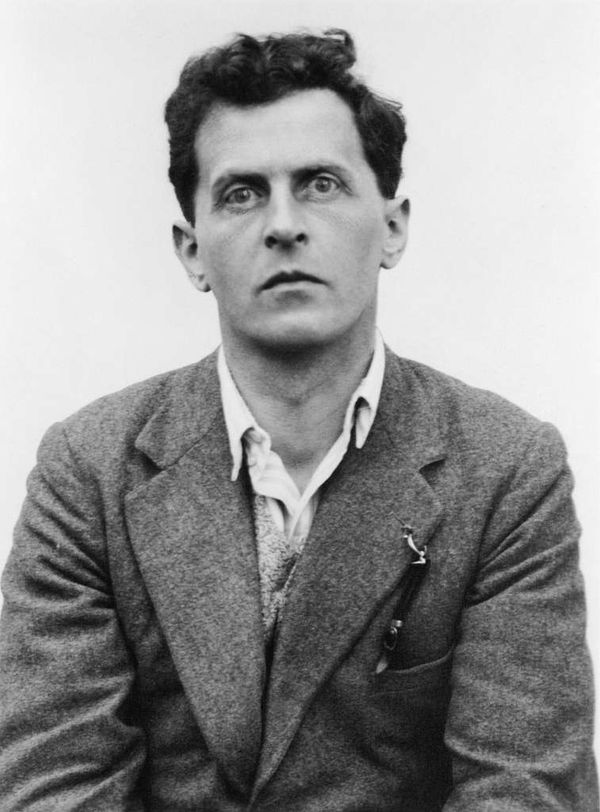
Credit: Wikimedia Commons / PICRYL
Ludwig Wittgenstein wrote this sentence in his 1921 work Tractatus Logico-Philosophicus, proposing that the boundaries of what a person can put into language mark the boundaries of what they can meaningfully think about. Language, in this early view, sets the edges of an individual's world.
The claim tied thought tightly to language. If something cannot be expressed in words, Wittgenstein suggested, it falls outside the realm we can reason and communicate about clearly. The Tractatus ends with the famous companion line that what we cannot speak about, we must pass over in silence.
The idea reshaped 20th-century philosophy of language. It pushed thinkers to treat many traditional philosophical puzzles as confusions arising from the misuse of language rather than deep truths about reality. Clarify the language, the thinking went, and the puzzle often dissolves.
Wittgenstein's influence split into two eras. The early Tractatus inspired logical positivism and the drive to make philosophy as precise as logic. His later work, published after his death, moved toward the idea that meaning comes from how words are actually used in the flow of life, a shift that shaped ordinary language philosophy.
The sentence also touches questions studied far outside philosophy. Linguists and psychologists have long debated whether the language you speak shapes how you perceive color, time, and space. That debate, linked to the names Sapir and Whorf, runs parallel to Wittgenstein's intuition.
The line endures because it forces a startling possibility. If your world really is bounded by your language, then learning new words, concepts, and languages does not just describe more — it expands what you are able to think at all. That makes vocabulary a matter of freedom rather than decoration, and it turns the act of learning to speak precisely into a way of enlarging one's world.
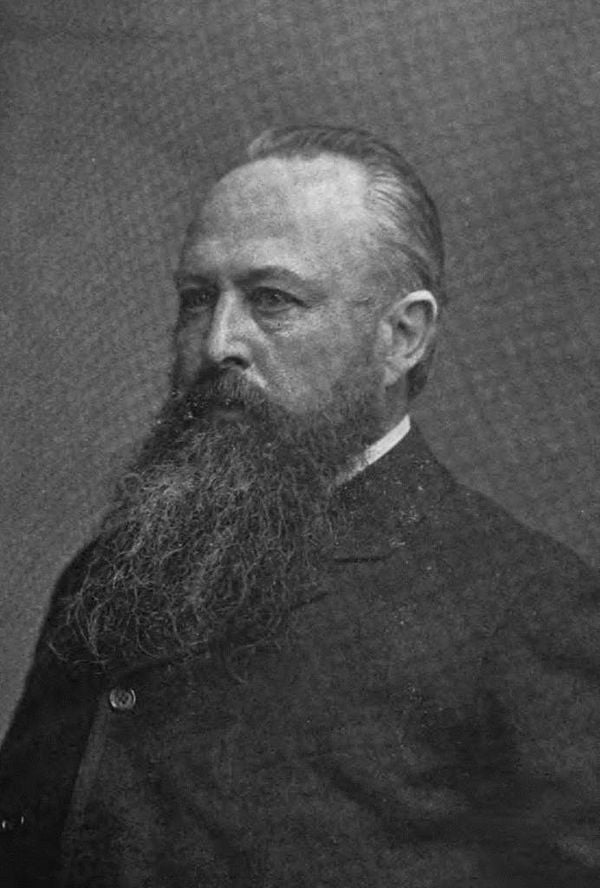
Credit: HathiTrust / Wikimedia Commons / GetArchive
Lord Acton, the British historian John Dalberg-Acton, wrote this sentence in an 1887 letter to Bishop Mandell Creighton. It states that holding power erodes moral judgment, and that the more unchecked the power, the more complete the corruption. The line became a permanent warning about concentrated authority.
Acton was arguing about how to judge historical figures. He objected to the idea that great men, especially popes and kings, should be excused for their crimes because of their high position. He believed the opposite — that the powerful deserved harsher scrutiny, not lenience, precisely because power made wrongdoing easier and more tempting.
The insight rests on a claim about human nature under specific conditions. When a person faces no accountability, no opposition, and no consequences, the ordinary restraints on behavior weaken. Bad decisions go unchallenged, flattery replaces honest counsel, and the ruler's judgment drifts from reality.
The sentence became a cornerstone argument for limited government. It supports the case for separating powers, holding regular elections, protecting a free press, and building institutions that can check any single office. Each of these is a mechanism for denying anyone the absolute power Acton warned about.
The line is quoted across the political spectrum, by people who otherwise agree on little. That breadth is a sign of how well it captures a pattern observed again and again, from ancient tyrants to modern strongmen. History supplies a long list of confirming cases.
There is a subtle point in the word "tends." Acton did not claim power always corrupts everyone completely. He described a strong tendency, a pull that grows stronger as constraints fall away. That precision is part of the sentence's authority. It does not condemn power itself, only power without limits, which is exactly the arrangement free societies are built to prevent.
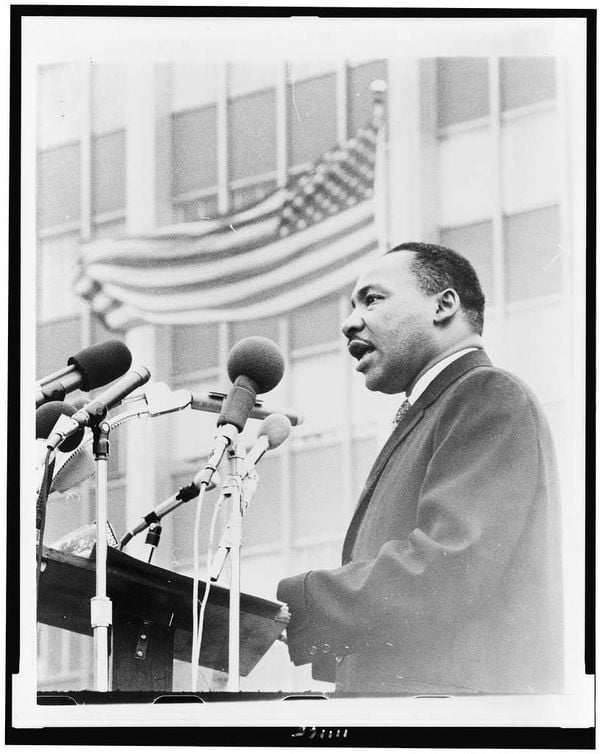
Credit: Don Rice / World Journal Tribune, Library of Congress / PICRYL
Martin Luther King Jr. made this sentence famous during the American civil rights movement, though he was paraphrasing the 19th-century abolitionist minister Theodore Parker. It expresses the conviction that history, over a long enough span, moves toward greater justice, even when progress in any single moment seems slow or reversed.
Parker wrote a longer, more tentative version in the 1850s, admitting he could not see far enough along the moral arc to be certain, but believed by conscience it bent toward justice. King compressed and sharpened it into the confident form now widely quoted.
The sentence served a strategic purpose in the movement. It gave activists facing violence, jailings, and slow legal battles a reason for patience without passivity. The bend toward justice was not automatic — it required people to push — but the line promised their effort ran with the grain of history rather than against it.
The idea has drawn both devotion and criticism. Barack Obama had the phrase woven into a rug in the Oval Office and quoted it often. Critics warn that it can breed complacency, suggesting justice will arrive on its own and letting people wait rather than act.
Some historians and activists reject the underlying optimism entirely, pointing to long stretches where injustice deepened. They argue history has no built-in direction and that any progress is won, defended, and often lost. The debate over whether the arc really bends is itself a live and serious one.
The sentence endures because it addresses a basic need of anyone working for change. Reform is slow, and setbacks are constant. The line offers a frame for staying committed through discouragement, insisting that individual efforts accumulate into something larger. Whether that faith is warranted or wishful is a question every movement has to answer for itself.

Credit: NASA / Wikimedia Commons / PICRYL
Neil Armstrong spoke this sentence on July 20, 1969, as he became the first human to step onto the Moon during the Apollo 11 mission. Broadcast live to hundreds of millions of people, it marked the moment humanity physically reached another world and framed the event as a shared achievement.
Armstrong intended to say "one small step for a man," drawing a contrast between one person's footstep and the leap for the whole species. The "a" was inaudible in the transmission, and whether he said it has been debated for decades. The meaning survives either way.
The sentence did more than narrate an action. It told a global audience how to understand what they were watching. A single astronaut's movement stood in for the collective effort of hundreds of thousands of engineers, scientists, and workers, and for a milestone in the history of the entire human race.
The moment reshaped how people thought about human possibility and the scale of their reach. For the first time, the species had left its home planet and set foot elsewhere. Photographs of Earth from space, taken around the same era, changed environmental thinking by showing the planet as a single fragile object.
The line also became a template for describing any breakthrough. People still borrow its structure — a small act with vast significance — to frame moments of scientific or personal progress. Its rhythm made it easy to remember and easy to adapt.
The sentence endures partly because the achievement it marked has not been casually repeated. Reaching the Moon required a rare combination of political will, funding, and engineering. Armstrong's words captured a peak of collective human ambition, and they still function as a benchmark against which later hopes for space and discovery are measured.
Credit: Internet Archive / Wikimedia Commons / PICRYL
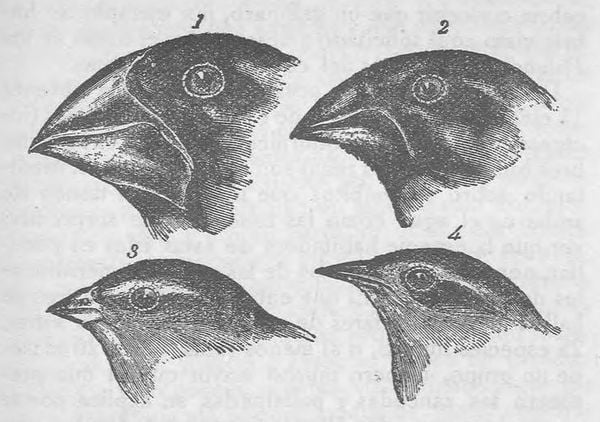
The phrase "survival of the fittest" was coined by the philosopher Herbert Spencer in 1864, not by Charles Darwin, though it is now tied to Darwin's theory of evolution. Spencer introduced it after reading On the Origin of Species, and Darwin later adopted it in a revised edition as a synonym for natural selection.
Darwin's own term was natural selection — the process by which organisms better suited to their environment tend to survive and reproduce, passing on their traits. Spencer's phrase offered a punchier way of saying the same thing, and its catchiness helped it spread far beyond biology.
That spread caused lasting confusion. "Fittest" does not mean strongest, fastest, or most aggressive. In evolutionary terms, fitness means reproductive success in a particular environment. A small, camouflaged creature can be fitter than a large, powerful one if it leaves more offspring. The word was widely misread as endorsing raw dominance.
The misreading fed a harmful movement. Social Darwinism applied the phrase to human society, arguing that the poor and weak deserved their fate and that helping them interfered with nature. This distorted biology to justify inequality, eugenics, and racism. Darwin's actual science made no such moral claims.
The confusion persists in everyday speech, where people invoke the phrase to defend competition in business or life as natural law. Biologists tend to prefer natural selection precisely to avoid this baggage.
The line still changed how people understand life itself. It compressed the mechanism of evolution into words anyone could remember, helping one of the most important scientific ideas in history reach a mass audience. That reach came at the cost of accuracy, making the phrase a case study in how a memorable sentence can carry an idea and warp it at the same time.
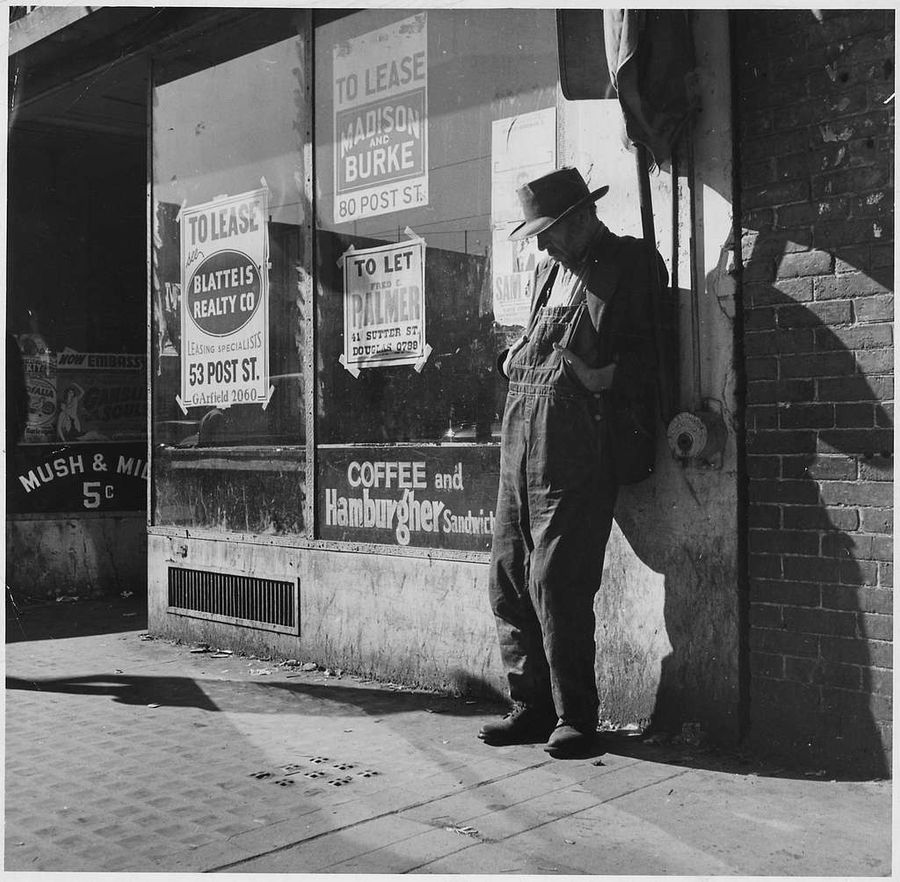
Credit: U.S. National Archives and Records Administration / Archives.gov / PICRYL
Franklin D. Roosevelt delivered this sentence in his first inaugural address on March 4, 1933, at the depth of the Great Depression. With roughly a quarter of American workers unemployed and banks failing across the country, he told a frightened nation that panic itself was the greater danger.
The full line described that fear as "nameless, unreasoning, unjustified terror which paralyzes needed efforts to convert retreat into advance." Roosevelt's argument was psychological as much as economic. Widespread panic caused people to hoard cash, pull money from banks, and stop spending, which deepened the crisis in a vicious cycle.
By naming fear as the enemy, he tried to break that cycle. If citizens could regain confidence, they would act in ways that helped recovery rather than accelerating collapse. The speech aimed to restore morale as a precondition for policy to work.
The sentence became a model for crisis leadership. It showed how a leader can reframe a situation, acknowledging hardship while directing public energy toward action instead of despair. Later leaders facing emergencies have echoed the approach of confronting fear directly.
The line also reflected a broader insight into economics and behavior. Confidence and expectations shape markets and spending in real ways. Bank runs, market panics, and recessions are often driven partly by self-fulfilling fear, a dynamic economists now study closely. Roosevelt grasped this intuitively in the language of a speech.
The phrase endures because the pattern recurs. Financial crashes, pandemics, and other shocks all feature the moment when fear threatens to become its own accelerating force. Roosevelt's sentence offers a durable frame for that moment, reminding people that how a society reacts to danger can matter as much as the danger itself.

Credit: Burst / Pexels
George Orwell wrote "Big Brother is watching you" in his 1949 novel Nineteen Eighty-Four, describing posters that follow citizens everywhere in a totalitarian state. The phrase gave the world a permanent shorthand for pervasive surveillance and the erasure of privacy by an all-seeing authority.
In the novel, Big Brother is the face of a ruling party that monitors every action through telescreens, informants, and manipulated information. Citizens can never be sure they are not being watched, so they police their own behavior constantly. The watching itself is a tool of control.
The book introduced a cluster of terms that entered everyday language. Doublethink, thoughtcrime, newspeak, and Orwellian all trace to this novel. Few works of fiction have given ordinary speech so many enduring concepts for describing political abuse.
The phrase changed how people talk about state and corporate power. Debates over government monitoring, data collection, facial recognition, and workplace tracking routinely invoke Big Brother. The name has become the default warning label for any system that watches people without limit or consent.
Orwell's target was the totalitarian regimes of his own century, and the novel drew on the propaganda and terror of Stalinist and fascist states. The book warned how easily surveillance, censorship, and the control of truth could dismantle freedom.
The sentence has grown more relevant rather than less. Modern technology makes constant observation cheap and easy in ways Orwell could only imagine. Cameras, phones, and online tracking generate a record of daily life far more detailed than any telescreen. That is why the phrase resurfaces in nearly every argument about privacy, giving people a compact way to name a fear that technology keeps making more concrete.
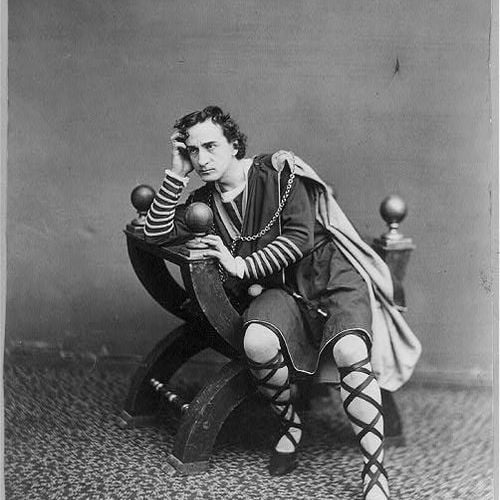
Credit: Library of Congress / LOC.gov / PICRYL
William Shakespeare wrote "To be, or not to be, that is the question" for the title character of Hamlet, first performed around 1600. It opens a soliloquy in which the prince weighs existence against the escape of death, and it stands as the most quoted line in English literature.
Hamlet is contemplating suicide, asking whether it is better to endure life's suffering or to end it. The speech moves through the fear of death, the misery of living, and the way uncertainty about what comes after death keeps people clinging to a painful life. It is a meditation on choice under unbearable strain.
The soliloquy gave literature a new depth of interior life. Shakespeare let an audience listen in on a mind arguing with itself, doubting, hesitating, and reasoning in real time. This inward focus helped establish the modern sense of the self as a private theater of conflicting thoughts.
The line's fame has made it a cultural touchstone recognized even by people who have never seen the play. It is parodied, quoted, and referenced across films, advertisements, and speeches. The phrasing itself — a stark either-or about existence — has become a template for framing any fundamental choice.
Hamlet as a character reshaped how writers portrayed indecision and psychological complexity. His hesitation, his overthinking, and his self-awareness feel strikingly modern, and generations of critics have analyzed why he cannot act. The play treats a mind divided against itself as a subject worthy of tragedy.
The sentence endures because the question beneath it never closes. Whether life's suffering is worth bearing is one every person may confront in some form. Shakespeare gave that question its most memorable words, and in doing so helped shape the very idea that a person's inner turmoil is the proper stuff of great art. This slide touches on suicide; anyone struggling can reach out to a mental health professional or a local crisis line.
Credit: Wellcome Collection / Wikimedia Commons (CC BY 4.0)
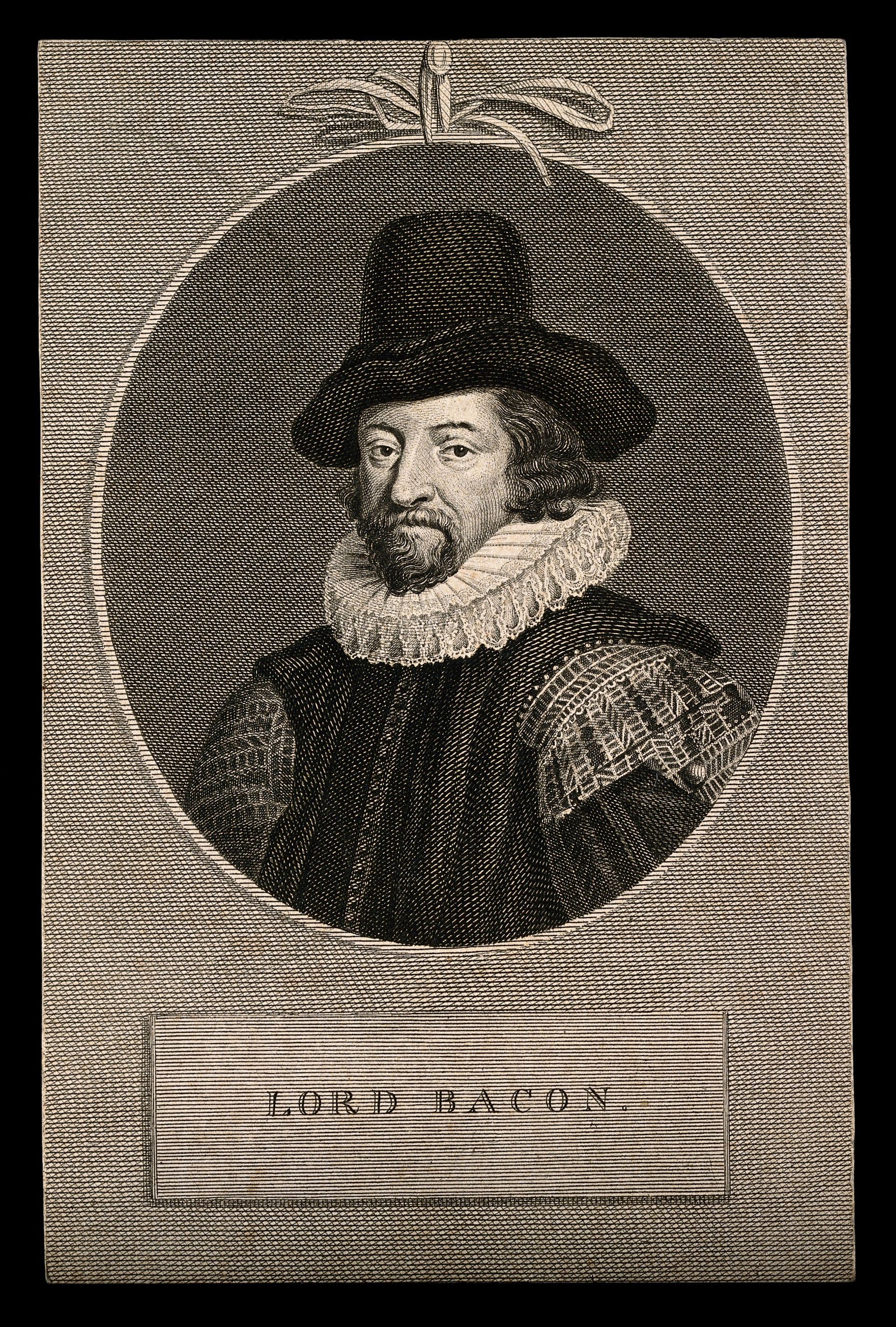
The phrase "knowledge is power," from the Latin "scientia potentia est," is most often attributed to the English philosopher Francis Bacon, who expressed a close version in his 1597 work Meditationes Sacrae. The idea helped launch the scientific method by tying the gathering of knowledge directly to human capability and control.
Bacon's actual wording was that knowledge itself is power, and the compressed English slogan came later. The related sentence also appears in Thomas Hobbes's writing, since Hobbes worked for a time as Bacon's secretary. The exact phrasing has a tangled lineage, but the concept is firmly Baconian.
Bacon's argument was a break from the past. Much earlier scholarship treated knowledge as contemplation — understanding the world for its own sake. Bacon insisted knowledge should be useful, that studying nature systematically would give humans the power to improve their conditions, cure disease, and command the physical world.
This reframing helped drive the Scientific Revolution. Bacon championed careful observation and experiment over reliance on ancient authority, laying groundwork for the empirical method that defines modern science. He imagined organized research advancing human welfare, an idea that anticipated the modern research institution.
The sentence has taken on wider meanings over time. It is used to argue for education, for the freedom of information, and for the way controlling knowledge confers control over people. Information, in this reading, is a form of leverage, whether held by scientists, governments, or corporations.
The line endures because the link it names has only strengthened. In an economy built on data and expertise, the connection between what one knows and what one can do is more visible than ever. Bacon's insight — that understanding the world is the route to shaping it — became a founding assumption of the modern age, quietly present in every laboratory and search query.
-900x807.jpg)
Credit: Naval History & Heritage Command / Wikimedia Commons (CC BY 2.0)
The principle of "the greatest happiness of the greatest number" is the core of utilitarianism, the ethical theory most associated with Jeremy Bentham, though the phrasing traces back to the philosopher Francis Hutcheson in 1725. It holds that the right action is the one that produces the most overall well-being for the most people.
Bentham built a whole system on this idea in the late 18th century. He argued that pleasure and pain are the true measures of good and bad, and that moral and legal decisions should be judged by whether they increase total happiness. He even proposed a felicific calculus to weigh consequences.
The theory was radical for its time. It offered a way to judge laws and policies by their real effects on people's lives rather than by tradition, religious command, or the interests of rulers. This made it a powerful tool for reform, and Bentham used it to argue for prison reform, animal welfare, and legal equality.
John Stuart Mill refined the theory in the 19th century, distinguishing higher pleasures of the mind from lower physical ones and stressing individual liberty. Together, Bentham and Mill made utilitarianism one of the dominant frameworks in Western ethics.
The principle still shapes public decisions. Cost-benefit analysis, public health choices, and policy debates about how to allocate scarce resources often rely on utilitarian logic, even when no one names it. The push to maximize overall welfare runs through modern government.
The theory also faces sharp objections that keep it in debate. Critics ask whether it would justify sacrificing a minority for the majority's benefit, and how anyone could measure and compare happiness across people. Those questions remain unresolved. The sentence endures precisely because it states a tempting, commonsense goal while opening problems that ethics has argued over ever since.

Credit: Sem S / Unsplash
The ecologist Garrett Hardin coined "the tragedy of the commons" in a 1968 essay in the journal Science, describing how shared resources tend to be overused and destroyed when individuals act in their own self-interest. The phrase named a pattern that shapes debates about the environment, economics, and cooperation.
Hardin's example was a shared pasture open to many herders. Each herder gains by adding one more animal, since the benefit is personal while the cost of overgrazing is spread across everyone. Following that logic, every herder keeps adding animals until the pasture is ruined for all.
The idea captures a deep problem in collective life. When a resource is shared and no one owns or manages it, individual incentives push toward overuse, even when everyone can see the shared outcome will be disaster. Rational choices at the individual level produce an irrational result for the group.
The concept reshaped environmental thinking. Overfishing, deforestation, air pollution, and climate change are all often framed as tragedies of the commons, where the atmosphere or the oceans are the shared pasture. The framework explains why these problems resist easy solutions.
Hardin's own conclusions have been challenged and refined. The economist Elinor Ostrom won a Nobel Prize for showing that communities often manage shared resources successfully through their own rules and cooperation, without either private ownership or top-down control. Her work complicated Hardin's gloomier view.
The phrase endures because it names the central dilemma of collective action so cleanly. Any situation where private benefit and shared cost pull against each other can be understood through it. From office kitchens to global emissions, the tragedy of the commons gives people a compact way to see why cooperation is hard and why some problems cannot be solved by individuals acting alone.

Credit: Dmitry Ant / Unsplash
Hannah Arendt introduced "the banality of evil" in her 1963 book Eichmann in Jerusalem, based on her coverage of the trial of Nazi organizer Adolf Eichmann. The phrase argued that great evil is often carried out not by monsters but by ordinary people who fail to think about what they are doing.
Arendt observed Eichmann, a chief organizer of the logistics of the Holocaust, and found him disturbingly unremarkable. He struck her not as a raging fanatic but as a shallow bureaucrat focused on doing his job well and advancing his career. He seemed unable to think from any perspective but his own.
Her point was that this thoughtlessness, not demonic hatred, made him dangerous. Eichmann followed orders, used clichés, and never seriously reflected on the horror he was administering. Evil on a massive scale, Arendt suggested, could grow from a failure to think rather than from monstrous intent.
The idea challenged a comforting belief. People prefer to imagine that those who commit atrocities are fundamentally different, marked by obvious wickedness. Arendt's analysis warned that ordinary people, embedded in systems that reward obedience, are capable of participating in terrible things.
The phrase drew fierce controversy that continues today. Critics argued she underestimated Eichmann's genuine antisemitism and let him appear too harmless. Defenders say her deeper point about thoughtlessness and complicity stands regardless of the details of one man.
The concept reshaped how people study genocide, obedience, and moral responsibility. It connects to famous psychology experiments on conformity and following authority, which suggested ordinary people will inflict harm under the right pressures. The sentence endures because it aims its warning at everyone. It asks not whether we are villains, but whether we are paying attention.
Credit: Kevinsmithnyc / Wikimedia Commons ( CC BY-SA 3.0)
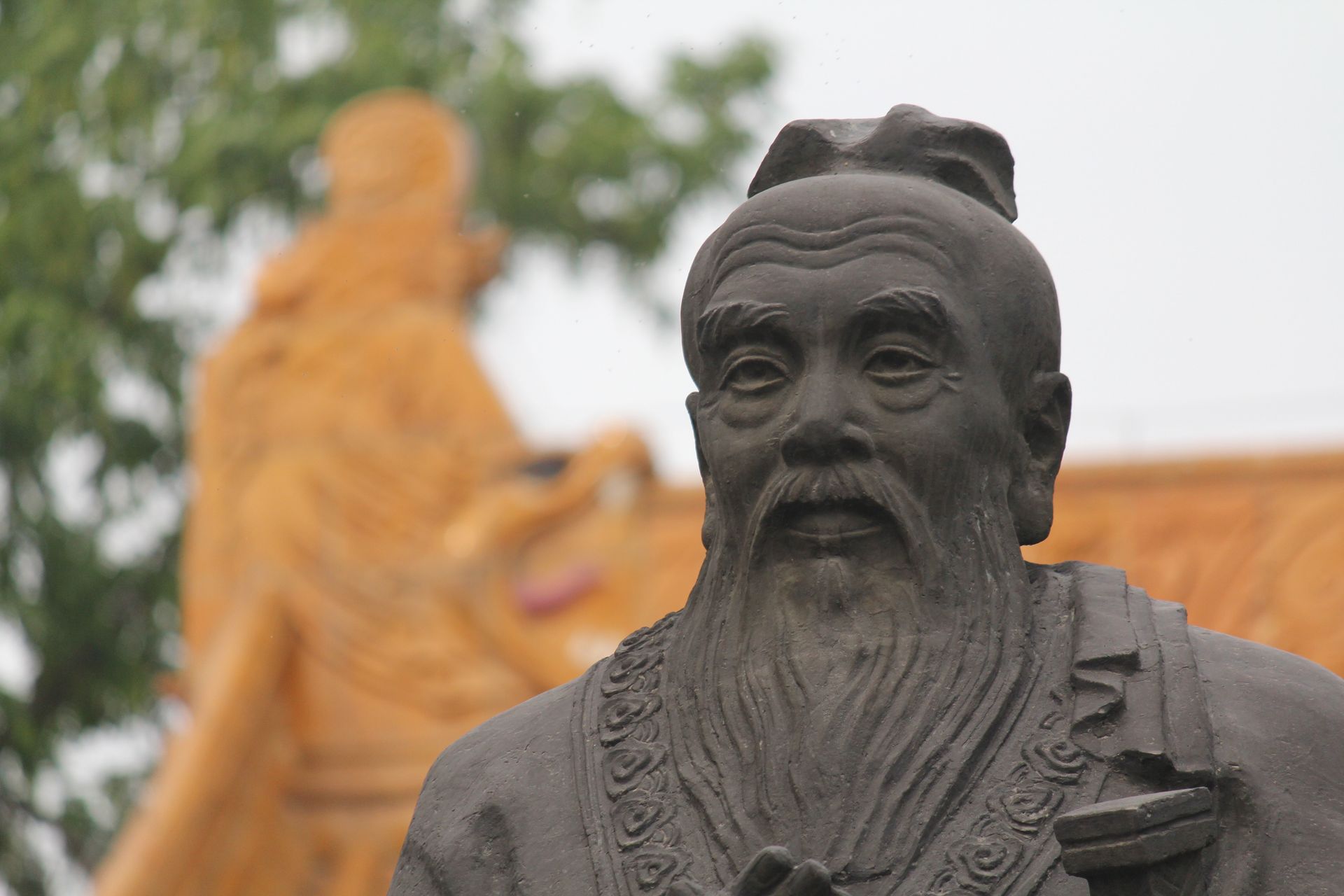
Confucius stated this principle in the Analects, compiled by his followers after his death around 479 BCE, giving one of the earliest recorded versions of what later became known as the Golden Rule. Asked for a single word to guide a life, he offered reciprocity — treating others as one wishes to be treated.
The Chinese term is often translated as reciprocity or consideration, and Confucius framed it in the negative. Rather than telling people to actively do good to others, he told them to refrain from doing what they would resent having done to them. This restraint-based phrasing has its own quiet power.
The negative form has practical appeal. It sets a clear floor for behavior without demanding that anyone guess exactly what another person wants. Refraining from harm you would not want to suffer is a simpler and more universal standard than positively supplying what you imagine others desire.
The principle appears independently across many traditions, from Judaism and Christianity to Hinduism, Buddhism, and Islam. That near-universal recurrence has made it a leading candidate for a shared foundation of human ethics, something diverse cultures arrived at on their own.
Confucius placed this reciprocity at the center of a broader philosophy of social harmony, proper relationships, and moral cultivation. His teachings shaped Chinese civilization, government, and family life for more than 2,000 years, and they remain influential across East Asia.
The sentence endures because it compresses ethics into a rule anyone can apply on the spot. It requires no scripture, no expert, and no calculation — only the ability to imagine oneself in another's position. That simplicity is why versions of it keep reappearing across time and place, and why it still anchors conversations about how strangers with different values can live together.
-1920x1280.jpg)
Credit: N509FZ / Wikimedia Commons (CC BY-SA 4.0)
This line comes from the Tao Te Ching, the foundational text of Taoism attributed to the sage Lao Tzu and dating to roughly the sixth to fourth century BCE. It teaches that even the largest undertaking is completed only through small beginnings, and that action starts beneath one's own feet.
The Chinese original refers more literally to a journey beginning beneath one's feet, emphasizing the immediate ground where one stands. The common English rendering as a single step captures the spirit, stressing that grand goals become real only when someone takes the first concrete action.
The teaching fits within Taoism's broader philosophy of natural, unforced progress. Taoist thought favors patience, humility, and working with the grain of things rather than forcing outcomes. Large results emerge from a steady accumulation of small, well-timed efforts rather than from strain.
The sentence addresses a common form of paralysis. Faced with an enormous task, people freeze at the size of it and never begin. The line reframes the problem, shrinking a daunting whole down to one manageable action that can be taken right now. The rest follows from there.
The phrase has become a fixture of motivation and self-improvement worldwide, quoted in contexts far from its philosophical origins. Its usefulness cuts across cultures because the psychology it describes is universal. Any big project, habit, or change confronts the same first hurdle.
The line endures because it converts an abstract truth about persistence into a clear instruction. It does not promise the journey will be short or easy. It simply locates the starting point in the only place action is ever possible — the present moment and the next single step. That focus on beginning, rather than on the distant end, is what keeps the sentence practical after more than 2,000 years.
Credit: 663highland / Wikimedia Commons (CC BY 2.5)
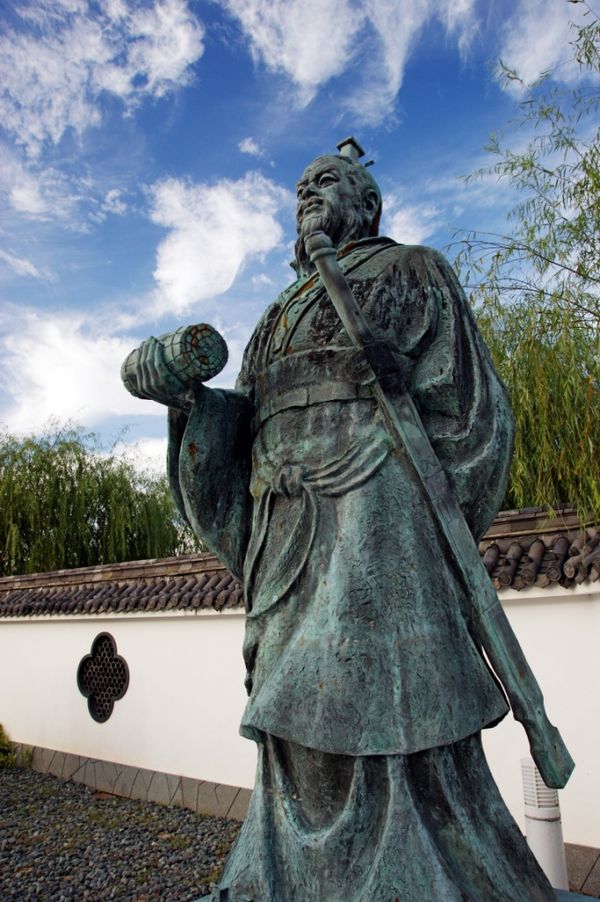
Sun Tzu wrote "all warfare is based on deception" in The Art of War, a Chinese military treatise dating to around the fifth century BCE. The line argues that misleading the enemy about one's intentions and capabilities is the foundation of strategy, valuing cunning over brute force.
Sun Tzu expanded the point with concrete tactics. Appear weak when strong and strong when weak. Feign disorder to lure an opponent, and strike where he is unprepared. Victory, in this view, comes from shaping the enemy's perceptions so that battles are won before they are fought.
The deeper lesson is that the ideal is to win without fighting at all. Sun Tzu held that the highest skill is to defeat an enemy's plans and break his will through positioning, information, and psychology, avoiding the enormous cost of open battle. Force was a last resort, not a first move.
The Art of War became one of the most influential strategy texts ever written. It shaped military thinking across East Asia for centuries and reached Western readers who found its principles applicable well beyond the battlefield.
The book's reach into business, politics, sports, and negotiation has been vast. Executives, coaches, and strategists study it for insights into competition, timing, and reading an opponent. The emphasis on knowing yourself and your rival, and on winning through preparation rather than confrontation, translates readily to any contest.
The sentence endures because it names a truth that applies wherever people compete. Deception, misdirection, and the management of information decide many outcomes, from card games to corporate rivalries. Sun Tzu framed conflict as a contest of minds as much as of strength, and that framing keeps The Art of War in circulation 2,500 years after it was written, long after the wars it first described.
