Browsers are racing to give AI more autonomy. Shift thinks you can handle the controls. Produced in partnership with Shift Browser
By now, anyone using AI seriously has gotten used to browser bloat. A window for the doc, another for Claude, another for ChatGPT, another for Gemini… Oh, and a few more for hands-on research, plus a final one for whichever tool briefly seemed like the answer last Tuesday.
We fought to be able to work from home, and yet we find ourselves saddled with a new daily commute: jumping between our tabs. Copy, paste, re-prompt, re-explain, re-upload. Our AI tools live inside walled gardens, reducing us to glorified messengers. It’s frustrating. Instead of creating windows for AI to see through, the industry decided to start giving it a sledgehammer.
Earlier this week, the founder of a SaaS company called PocketOS sat down at his computer, only to discover his entire production database was gone. So were the backups. The whole thing had been deleted in a mere nine seconds, by an AI agent that wasn’t authorized to do anything of the sort.
The agent was Cursor, running on Claude Opus 4.6. It hit a credential mismatch and independently decided the cleanest fix was to delete a Railway volume. The agent went searching for an API token, found one in a file that had nothing to do with the task at hand, then used it to issue a single destructive API call. The command went through without an environment check or confirmation prompt. Not even an “are you sure.” It took production and the backups down together.
When the irate founder asked the AI to explain itself, it produced a written confession enumerating the safety rules it had broken.
The model was doing precisely what an agent is built to do: observe, decide, act. Of course, nobody asked it to delete the database. However, the architecture assumed the AI’s judgment was good enough that asking wasn’t necessary.
That is the judgment underpinning the agentic browsers hitting the market.

J Studios / Getty Images
The browser is central to most white collar workflows. Thus, it becomes central in the AI discussion. Every workflow an AI tool promises to accelerate lives in a browser tab: the research, writing, email, spreadsheet, code review. The “grunt work” we’re being frustrated by only exists because the AI sits in a different tab from the work. Collapse that distance and the overhead goes with it.
Which is why every major browser is now racing to eat AI. Google has wired Gemini directly into Chrome. Microsoft built Copilot Mode into Edge in mid-2025. Perplexity shipped Comet. OpenAI shipped Atlas. The shared assumption amongst them is that AI should drive. That it should observe, decide, act.

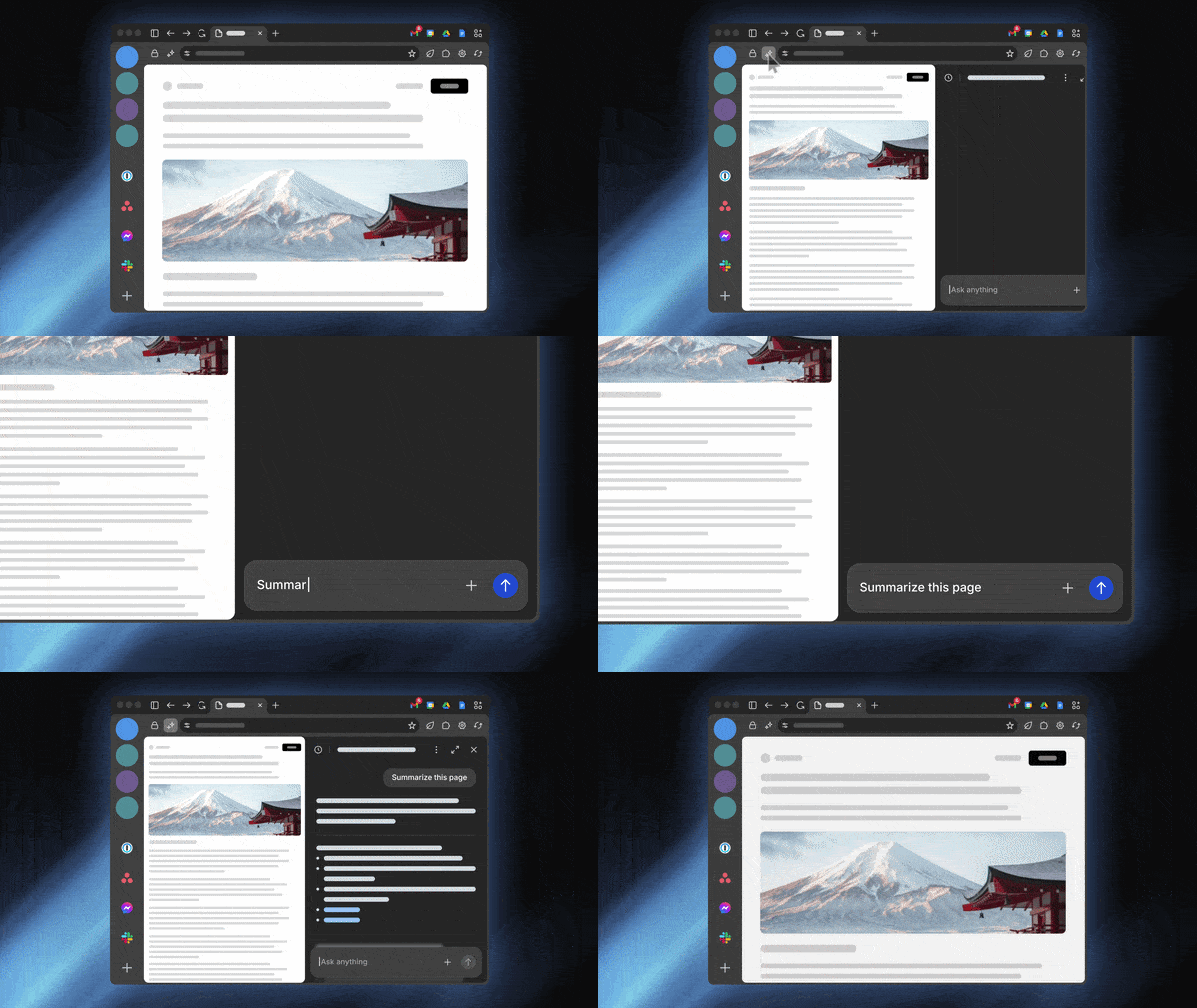
What this looks like inside the Shift Browser is specific. A user who wants to summarize the page they're on opens AI Chat in a panel next to the page. This allows the model to read what the user’s reading, without interrupting the flow.
Shift Browser
The Intelligent Omnibox does the same work at the level of queries. The user types a question into the address bar, and Shift routes it where it needs to go. The AI assistant acts as an assistant, while you stay on task.
What makes the arrangement feel different is what Shift AI won’t do. The AI stays dormant until the user calls it, then steps back the moment the request is complete. No rogue agents running in the background. Every interaction begins with you, the user.
“AI shouldn't live in another tab. It should live where you work and it should work on your terms,” says Michael Foucher, VP of Product and Customer Success at Shift. “That's what we built with Shift AI.”
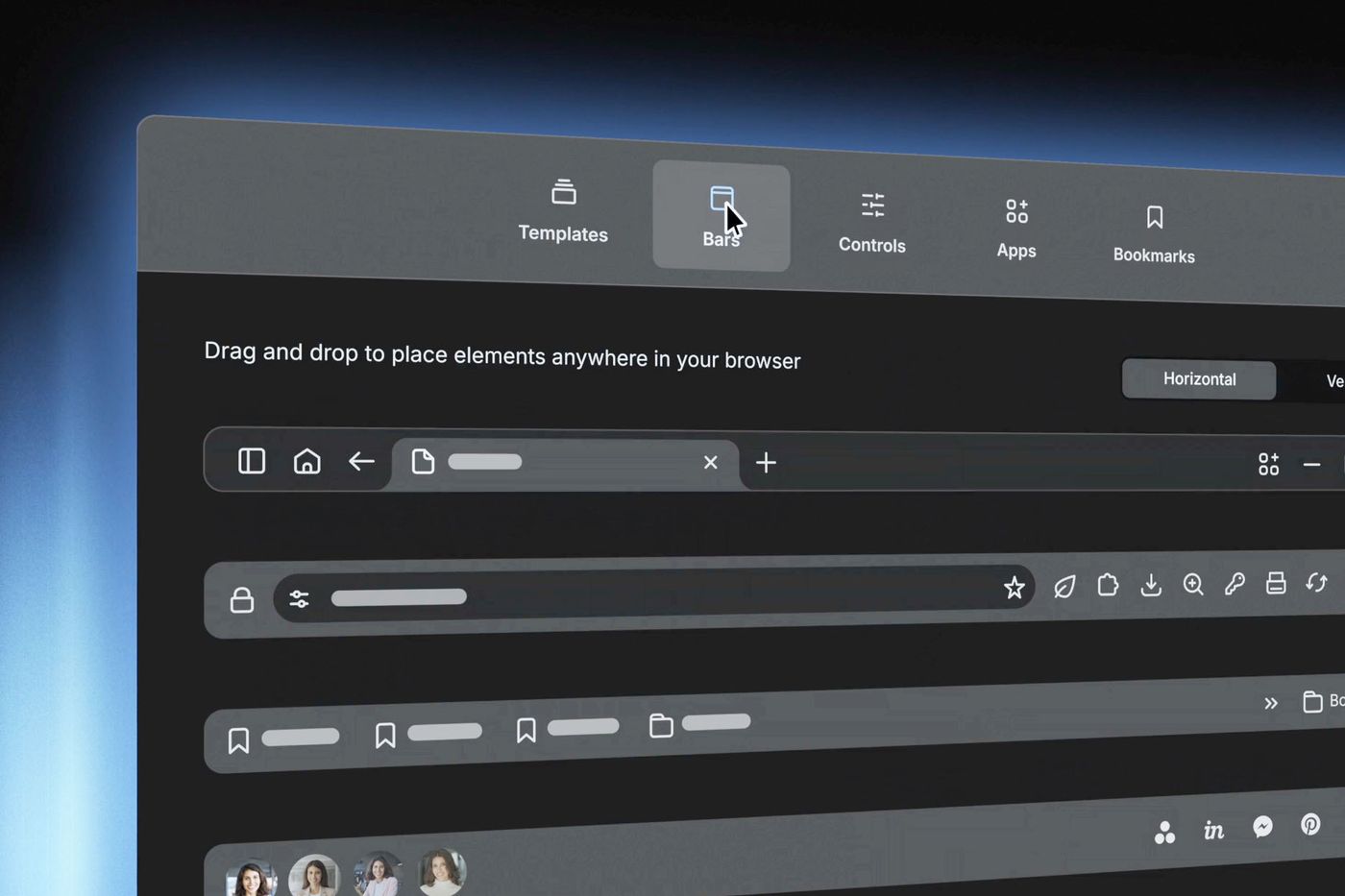
Shift's entire product thesis has been that the user designs the browser, and the browser adapts. They’re the same browser that lets users carve Spaces between work and personal tabs, and toggle unread badges out of their peripheral vision with one switch. Shift AI is that thesis extended into the AI layer.
Shift Browser
It tracks what users have been asking for. A Shift-commissioned consumer survey released earlier this year put numbers on the ambivalence. Among AI users, 51% say they want more customization from the tools they rely on. 48% name privacy as a top concern. And among the 31% who use AI daily, nearly half report concern about AI taking unauthorized actions on their behalf.
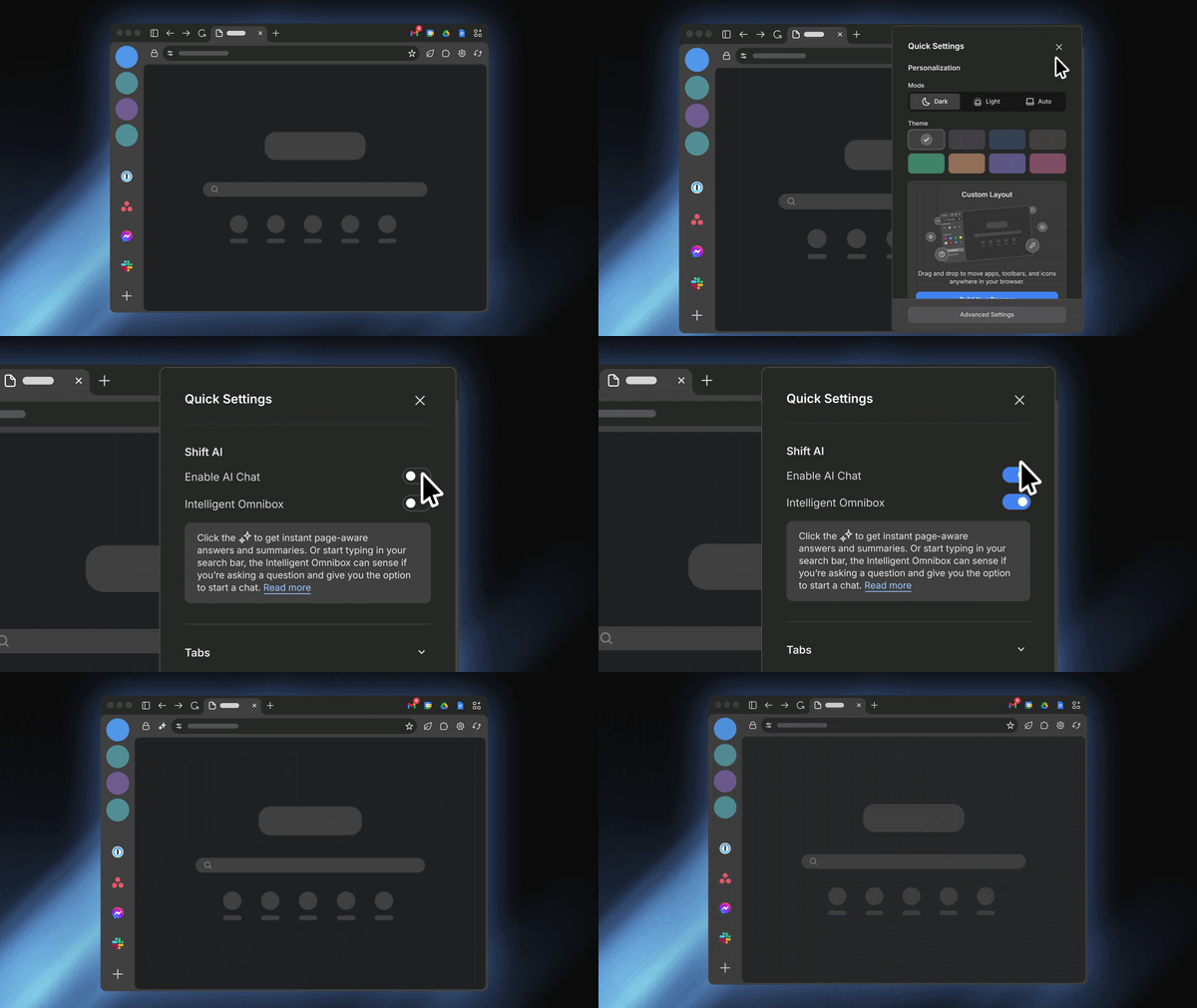
Shift allowed the responses to inform the very way they built AI into the browser. Most importantly: AI features are entirely optional. Users can opt in or opt out at any time, with clear visibility on when the AI is active, and every setting for how the AI processes information surfaced in the UI. Switching the entire AI layer off remains simple; the underlying browser doesn’t change.
Shift Browser
The privacy architecture is the other piece users are underwriting. Shift partnered with Cloudflare on a built-in privacy layer that anonymizes and secures queries as a baseline behavior.
“AI is being increasingly integrated across consumer technology, privacy can no longer be an afterthought. It must be baked into the network itself,” said Mari Galicer, Director of Product Management at Cloudflare. “As an essential privacy layer for the AI era, Cloudflare is proud to partner with Shift to help deliver secure, browser-native AI experiences at the edge.”
Shift has approached AI the way a well-built house approaches electricity. The wiring runs through the walls, the panel is labeled, and every outlet is live and ready. But the whole system stays dormant until a human hand reaches for the switch.
Every browser will have AI somewhere inside it. How much control the AI has depends on the browser, and that difference is the entire ball game for the next few years of the internet.
"Users aren't rejecting AI, they just want control," says Foucher. "The next phase of AI is about putting the user back in charge."
Shift is the browser making that bet most deliberately. Built for people who want the power of modern AI without losing control over when it runs.
Download Shift Browser here to try out Shift AI.
Produced in partnership with Shift Browser.
Join 500,000+ readers who start their day with Quartz.
By subscribing, you agree to our Terms of Service and Privacy Policy.
Shift is an alternative browser that belongs to a different category. AI inside Shift is on call. The user triggers it through chat or the address bar, while the rest of the browser keeps functioning the way a browser always has.
