
7 things short-term rental hosts need to know about seasonality
Short-term rental profits hinge on timing more than hosts expect. AirDNA studied 15 million listings across seasons to identify what works year-round

Anchiy / Getty Images
Every short-term rental host watches occupancy drop and has to decide whether to cut prices, hold firm, or pivot to a different kind of guest. That decision gets easier — or harder — depending on how well the host understands what's actually driving demand in their specific market. Seasonality shapes revenue at every property, but the patterns are not universal, and acting on the wrong assumptions is one of the most reliable ways to leave money uncollected. A mispriced peak and a misread off-season each drain revenue in their own way.
The stakes are not abstract. A host who assumes summer is always peak season will price correctly in some markets and incorrectly in others. One who treats the shoulder season as a brief, unremarkable transition between busy and quiet periods will miss an increasingly valuable window. Demand patterns in the short-term rental market have shifted since the pandemic, creating genuine opportunity for hosts paying close attention and real losses for those who are not. Understanding these shifts is no longer optional for hosts who want to compete effectively across the full calendar year.
AirDNA drew on a dataset covering more than 15 million properties across both Airbnb $ABNB and Vrbo, spanning 80,000 regions worldwide, to examine how seasonality shapes rental performance across the U.S. The analysis identified which markets experience the most and least seasonal swings in demand, how local conditions invert the national calendar in some destinations, and what tactical adjustments hosts can make in each phase of the year to protect and grow their revenue. The list below covers every major lever the data identified, from how to read your local peak timing correctly to what to do when the season works against you.
1. Peak season timing varies and can mislead hosts

Sophia Korzen / Getty Images
July is the peak season for the country's short-term rental market as a whole, with RevPAR — revenue per available rental — reaching its highest monthly point. That national pattern aligns with traditional summer vacation behavior, when warm-weather destinations attract the largest volume of travelers. Hosts in beach towns, lakeside communities, and most of the country's leisure markets can plan around a summer peak.
The problem is that the national pattern is a composite of markets with very different rhythms. Aspen and Snowmass, Colo., follow none of the summer logic. Winter is the peak there, and hosts in ski season can earn upwards of $1,000 per night. That figure reflects not just high demand but the willingness of guests at premium resort destinations to pay for access at the moment that matters to them. A host in Aspen who priced for a July peak would be badly positioned through the months that actually drive the bulk of annual revenue.
Market-specific knowledge matters more than national intuitions here. A host entering a market or setting annual pricing in one they already operate in should start with their location's own historical RevPAR and occupancy data before drawing any conclusions. What the national pattern says about July has no bearing on a market where February and March are the months guests compete for listings.
This matters most at the start of each pricing cycle, when hosts make baseline decisions about rates. A host who correctly identifies their peak and sets prices accordingly is positioned to earn substantially more during those months than one who defaults to a generalized seasonal calendar. The gap between market-aware and generic rate-setting is widest precisely during the high season, when demand allows for substantially elevated rates, but only for hosts who have planned for it.
Understanding peak timing also shapes decisions about minimum-stay requirements, listing optimization, and maintenance scheduling. A ski market host who waits until December to update their listing or address deferred repairs has already missed the booking window for the most valuable nights of the year. Preparation is tied to knowing when the peak actually arrives.
2. Shoulder season has gained value since the pandemic

Marc Guitard / Getty Images
The shoulder season — the transition months between peak and off-season — used to be a brief, low-priority window that hosts managed around, not planned for. That framing is increasingly outdated. Post-pandemic data from the Jersey Shore reveals a measurable change in when guests choose to travel, and the direction of that change runs directly toward the shoulder.
Before the pandemic, August was the clear peak for Jersey Shore vacation rentals, with an average occupancy rate of 76.7% in 2019. October occupancy fell below 30%, and November and December sat around 35%. The pattern was consistent with a market driven by traditional summer vacation schedules tied to school calendars and employer norms.
By 2025, the August peak had softened to 75.2%. Not a dramatic drop, but a signal. More significant is what happened to the fall shoulder. October occupancy grew by approximately 40% between 2019 and 2025. November and December each rose by almost 20% over the same period. Guests who previously would not have considered the Jersey Shore in October are now booking it, and in substantially higher numbers.
Two forces are behind this change. Remote work has decoupled travel timing from the traditional nine-to-five schedule and school calendar for a growing share of guests. A family with location flexibility has no structural reason to crowd into August alongside everyone else. The second force is the deliberate avoidance of peak conditions: some travelers are now choosing the shoulder specifically to escape the crowds and higher prices that define the high season. They want the experience, not the peak-season premium attached to it.
For hosts in markets where this trend is active, it means the shoulder is no longer just a buffer between revenue periods. It is a revenue period. A host who maintains competitive pricing and strong occupancy through October in a market like the Jersey Shore collects income that simply did not exist for them in 2019. The caveat, as the source notes, is that this pattern varies by location, and hosts should monitor their own market's data over time to confirm whether the trend applies to them.
3. Off-season timing can flip the national calendar

Andrew Merry / Getty Images
The off-season is when demand and prices hit their lowest points. But that statement is only meaningful relative to a specific market's calendar. In some U.S. destinations, the months that define the national off-season are the peak, and vice versa. Hosts who don't account for this can find themselves underpriced during their most valuable months or caught off guard by demand that arrives in what they assumed was a slow period.
Myrtle Beach, S.C., follows a curve close to the national pattern. RevPAR peaks in June and July, consistent with the coastal summer dynamic. The market gets a secondary lift in March and April — Spring Break travelers extending the active period before the summer surge — and then the off-season sets in clearly from November through February, when RevPAR falls to its lowest levels.
Phoenix/Scottsdale, Ariz., runs the opposite schedule. Peak RevPAR there reaches upwards of $245 in February and March, when the weather is mild and the region draws visitors escaping winter conditions elsewhere. The off-season runs from June through September, with RevPAR falling to around $100. Average summer temperatures in the Phoenix area exceed 100 degrees Fahrenheit, which effectively closes the market to leisure travelers during months that are prime season for most of the country.
The implications for hosts are direct. A Phoenix-area property treated as if summer were a viable revenue period is set up for failure. Maintenance projects, capital improvements, and any downtime should be concentrated in summer, when guests are not competing for listings. Conversely, the winter and early spring months warrant the same level of attention and pricing discipline that summer commands in beach markets.
This inversion is not unique to Phoenix. Any market shaped primarily by weather extremes — whether heat, cold, or precipitation — may follow a calendar that diverges sharply from national averages. Hosts entering these markets should map their specific RevPAR pattern across all 12 months before setting any pricing strategy, because the assumptions that apply elsewhere will be wrong.
4. Highly seasonal markets carry more financial risk
Curt Apduhan / Getty Images
High-seasonality markets can be lucrative. A short but intense peak, concentrated into a few months, can outperform a steadier market on an annual basis. Many of the most seasonal destinations in the U.S. are traditional resort areas where guests book larger homes at premium prices. These are the listings that generate the highest nightly rates in the country when the conditions are right.
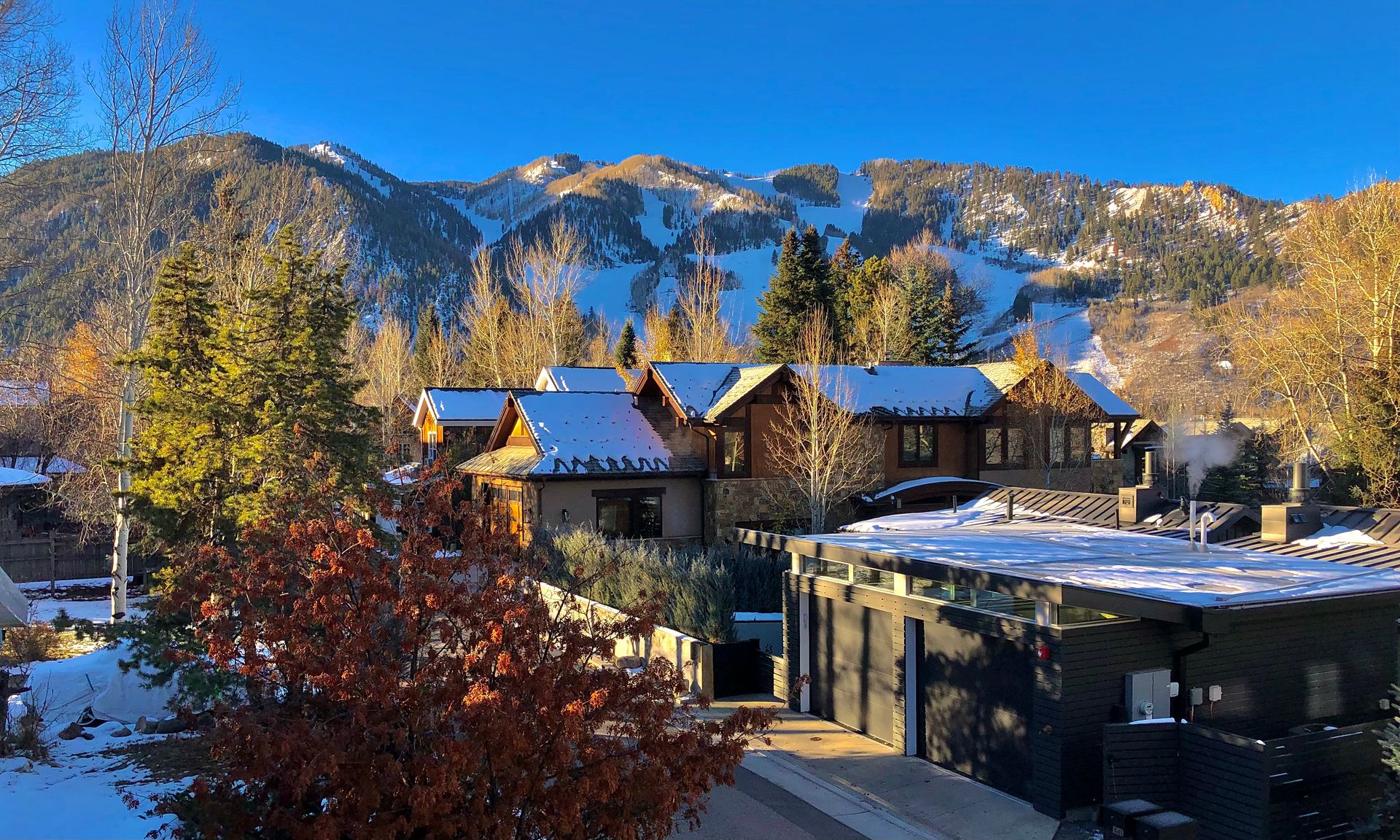
The most seasonal markets in the U.S. include Crested Butte and Steamboat Springs in the Colorado Rockies, the Outer Banks in North Carolina, Vail/Avon and Telluride further west, Long Island in New York, Park City and Moab in Utah, and Jackson Hole in Wyoming and Mammoth Lakes in California. The Colorado destinations and Park City are ski resort markets where winter demand is highly concentrated. The Outer Banks and comparable coastal destinations are busy in summer and quiet in winter. That pattern is driven by their dependence on water access for visitor appeal.
High risk comes with the high peak. A luxury home in a ski resort town is dependent on snow. A poor snow season can reduce bookings significantly, for an extended period, through no action or inaction on the host's part. The same factors that make the peak valuable are the ones that, when absent, eliminate the premium. Someone in a high-seasonality market is making a bet on environmental consistency that a Las Vegas or Atlanta property owner is not.
Success in these markets requires pricing effectively during both the peak and the low season. During the peak, hosts must capture the full value the market will bear. During the off-season, the strategy shifts to minimizing vacancy and covering fixed costs, not chasing rate. Hosts who manage only one phase of the calendar — riding the peak without planning for the quiet — face the same structural vulnerability each year. The market rewards those who treat the full year as the unit of analysis.
5. Low-seasonality markets trade peak gains for consistency

Las Vegas Review-Journal / Getty Images
Markets with consistent year-round demand don't deliver the peak-season windfalls that ski resort towns or summer beach markets can produce. What they offer instead is predictability: revenue that remains relatively stable across months, without the dramatic dips that force hosts in highly seasonal markets to make emergency pricing decisions or accept extended vacancy.
Las Vegas is a reliable example of what low-seasonality demand looks like in practice. The market draws a steady stream of visitors throughout the year — summer vacationers, winter sun-seekers, and international gamblers — and the indoor nature of its primary attractions makes it largely indifferent to temperature extremes. RevPAR in Las Vegas holds relatively stable regardless of the season, which translates to more predictable income for hosts operating there.
The least seasonal markets in the U.S., according to AirDNA data, include Fort Wayne, Ind., Oakland, Calif., Las Vegas, El Paso, Texas, San Francisco, Las Cruces, N.M., San Jose/Palo Alto, Calif., Atlanta, Riverside, Calif., and McAllen, Texas. Several patterns are visible across this list. Markets with significant business traffic tend to have more consistent demand because corporate booking schedules don't track the leisure calendar. Markets in the Bay Area, such as San Francisco, Oakland, and San Jose/Palo Alto, benefit from relatively mild temperatures throughout the year, removing weather as a driver of seasonal swings. Las Cruces attracts visitors year-round through its mountains, desert terrain, and a near-continuous schedule of festivals and events.
A host choosing between a high-seasonality and low-seasonality market is making a tradeoff between peak opportunity and baseline stability. The right answer depends on investment goals, risk tolerance, and management style. A host who can manage the off-season vacancy in a ski resort may earn more annually than one in a stable destination. A host who needs consistent cash flow to cover mortgage and operating costs may find the predictability of a low-seasonality market more suitable. Both can be profitable with the right approach.
6. High season calls for advance rates and minimum stays

Jessie Casson / Getty Images
During peak periods, demand is at its highest and guests are willing to pay elevated rates. Capturing that value requires acting before the season arrives, not reacting to it as it unfolds. The hosts who earn the most during high season are not necessarily those with the best properties. They are the people who set the right price at the precise moment that matters.
AirDNA's Pacing Data, available through its dashboard tools, lets hosts look ahead to specific dates and see their competition's median booked rate, how many listings in the market are already booked, and what occupancy levels look like. This forward-looking view makes it possible to set prices in advance with confidence, not guessing at what the market will bear as the dates approach. Monitoring booking trends and setting prices well ahead of the peak reduces the risk of underpricing during the highest-demand window of the year.
Minimum-stay requirements are a complementary tool. During holiday weekends or periods with significant local events, a three-night minimum prevents short bookings from occupying prime calendar dates without generating the revenue a longer stay would produce. A single two-night booking at full rate during a peak holiday weekend can block adjacent dates that would otherwise have sold as part of a longer reservation. Setting a minimum stay disciplines the calendar and reduces turnover costs.
Listing differentiation becomes more valuable during high season because competition is at its most intense. Hosts who can point to distinctive features — a view, specific amenities, a location advantage — are in a better position to justify a premium rate and hold it when comparable listings discount. High-quality photos and detailed descriptions are the mechanism for communicating that value to guests who are comparing multiple options. During the shoulder and off-seasons, a listing can attract guests on price alone. During peak season, differentiation matters most because guests are willing to pay a premium for the right property.
7. Low season rewards hosts who resist reflexive discounting

Cavan Images / Getty Images
The instinct when occupancy falls is to lower rates. That instinct is sometimes correct. It is also sometimes wrong, and the way to tell the difference is to check booking lead times before making any pricing changes.
Short booking lead times — guests reserving close to the date of their stay — indicate willingness to pay market rates for last-minute access. A host who drops rates in response to soft early occupancy, without checking lead time data, may be discounting for guests who would have booked at full price regardless. AirDNA's Pacing Data shows average booking lead time for any market, and hosts who review it before adjusting rates make better pricing decisions than those who react to vacancy alone.
For extended-stay discounts, the logic is different. A meaningful reduction for stays of one week or longer can attract remote workers, retirees, and people in temporary relocations: guests who are less influenced by vacation seasonality and who provide stable occupancy during months when leisure travelers are absent. This approach keeps a reasonable nightly rate intact while filling calendar gaps with guests who are easy to host and unlikely to leave negative reviews.
Shifting marketing focus is equally important. Business travelers, digital nomads, and people between permanent residences follow booking patterns that track neither summer peaks nor holiday schedules. Attracting them during low season requires adjustments to the listing: emphasizing fast Wi-Fi, a dedicated workspace, and proximity to business districts signals that the property fits the needs of guests who are working, not vacationing.
Beyond guest targeting, adding value to the listing can make it more attractive at any rate. Guided tour arrangements, local attraction passes, or meal packages make a stay more distinctive. Partnerships with local businesses for exclusive experiences give guests a reason to choose one listing over another when price alone doesn't differentiate. For markets where local festivals and attractions occur in the off-season, pricing around those dates and creating occasion-specific offers can turn low-demand periods into unexpected revenue windows.