These eight signs your dog is happy reveal the everyday body language cues that show real comfort, trust and contentment in dogs
Credit: Skyler Ewing / Pexels
Dogs don't have words for contentment, so they show it through posture, motion and small physical cues that are easy to miss if you don't know what to look for. A wagging tail is often treated as shorthand for happiness, but tail position, speed and looseness actually tell very different stories, and the same is true for a dog's ears, mouth and even the way it chooses to sleep. Learning to read these signs your dog is happy gives owners a more accurate picture of how a dog is actually feeling, moment to moment, rather than relying on a single gesture that can mean several things depending on context.
This matters beyond simple curiosity. A dog that consistently shows relaxed, open body language is a dog whose physical and emotional needs are being met, enough exercise, enough mental stimulation, a secure environment and a trusted relationship with the people around it. Spotting the absence of these signals can be just as useful as spotting their presence, since a dog that rarely play bows, never sleeps in an exposed position, or keeps a stiff tail even during calm moments may be dealing with stress, pain or an environment that doesn't feel fully safe.
Body language in dogs is also a shared, largely instinctive system, refined over thousands of years of domestication and still visible in wolves and other canids. Because of that, many of these signals are consistent across breeds, ages and living situations, even though individual dogs vary in how expressive they are. A greyhound and a golden retriever won't wag identically, but the underlying grammar, loose versus stiff, open versus closed, forward versus retreated, holds up across both.
The eight signs below cover the tail, face, posture, sleep habits and play behavior of a genuinely content dog, each one grounded in how dogs actually communicate rather than in guesswork. Read together, they offer a practical way to check in on a dog's wellbeing using nothing more than close observation.
Credit: Anastassia Anufrieva / Unsplash
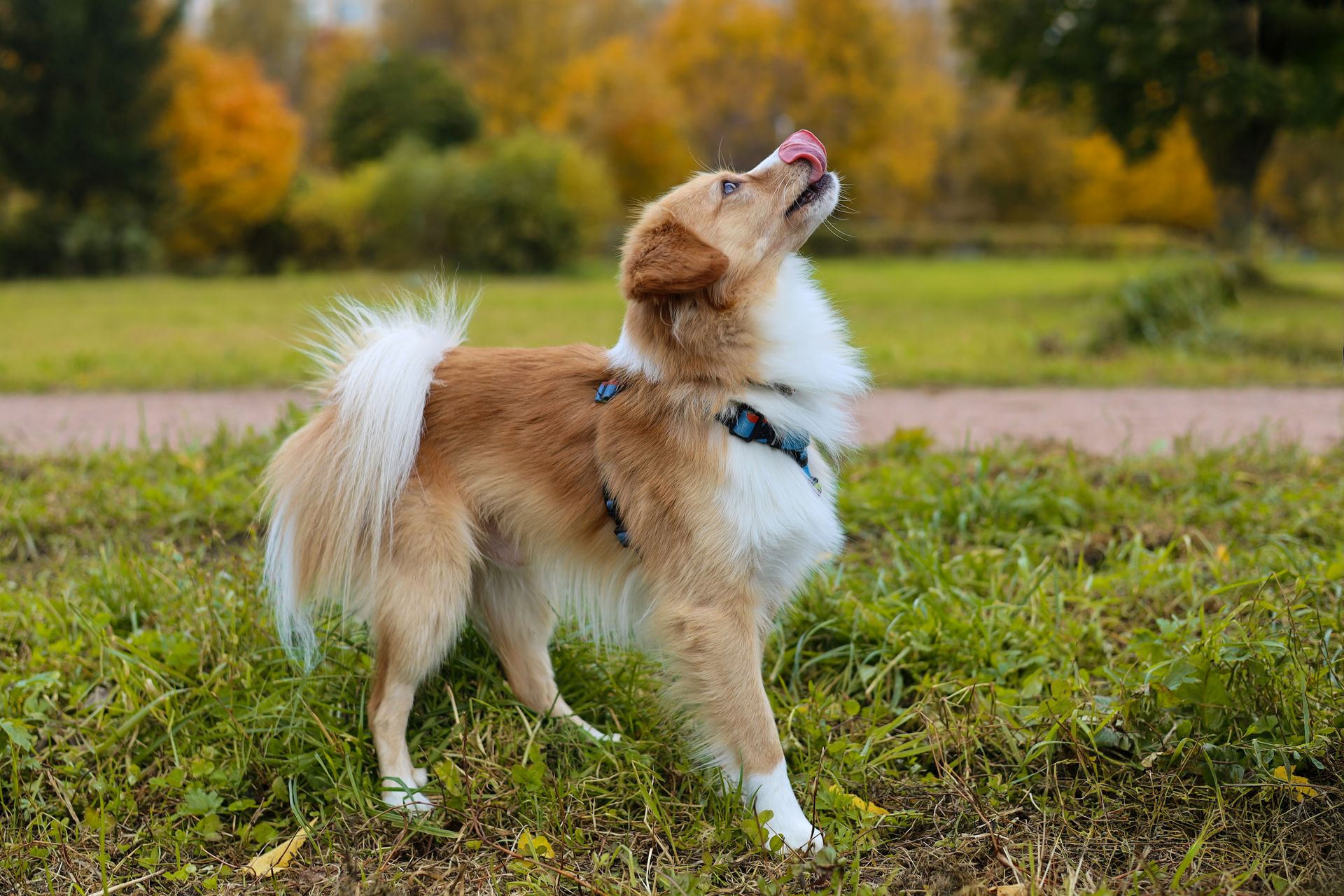
A happy dog's tail swings in broad, loose sweeps roughly level with its spine, often pulling the whole rear half of the body side to side along with it. This is different from a tail held high and stiff, which usually signals alertness or arousal, or a tail tucked low against the body, which signals fear or submission. The looseness matters as much as the direction: a relaxed tail moves like a flag in a light breeze, not like a metronome ticking with tension.
The most extreme version of this is sometimes called a helicopter tail, where the wag is so broad and fast that the tail circles rather than swings side to side. This tends to show up in moments of intense joy, such as a reunion with an owner after time apart. It's a reliable sign of strong positive emotion precisely because it takes total muscular looseness to produce; a stressed or fearful dog can't physically replicate it.
Tail language also depends on the individual dog. Breeds with naturally curled tails, like pugs or Akitas, or docked tails, like some Boxers and Rottweilers, can't offer the same range of motion as a dog with a long, low-set tail, so context and the rest of the body matter more for those dogs. A greyhound's naturally low tail carriage, for instance, isn't a sign of fear on its own, it's simply how the breed is built.
Speed alone is a weaker signal than most owners assume. A fast wag can accompany excitement, but it can also accompany anxiety or overstimulation if the tail is held high and stiff while it moves. The most trustworthy version of a happy wag combines three things at once: a mid-height or slightly lowered position, a loose, swinging motion, and a relaxed body everywhere else, from the shoulders down through the hips. When all three line up, the tail is doing exactly what it looks like it's doing.
Credit: Alexey Demidov / Pexels
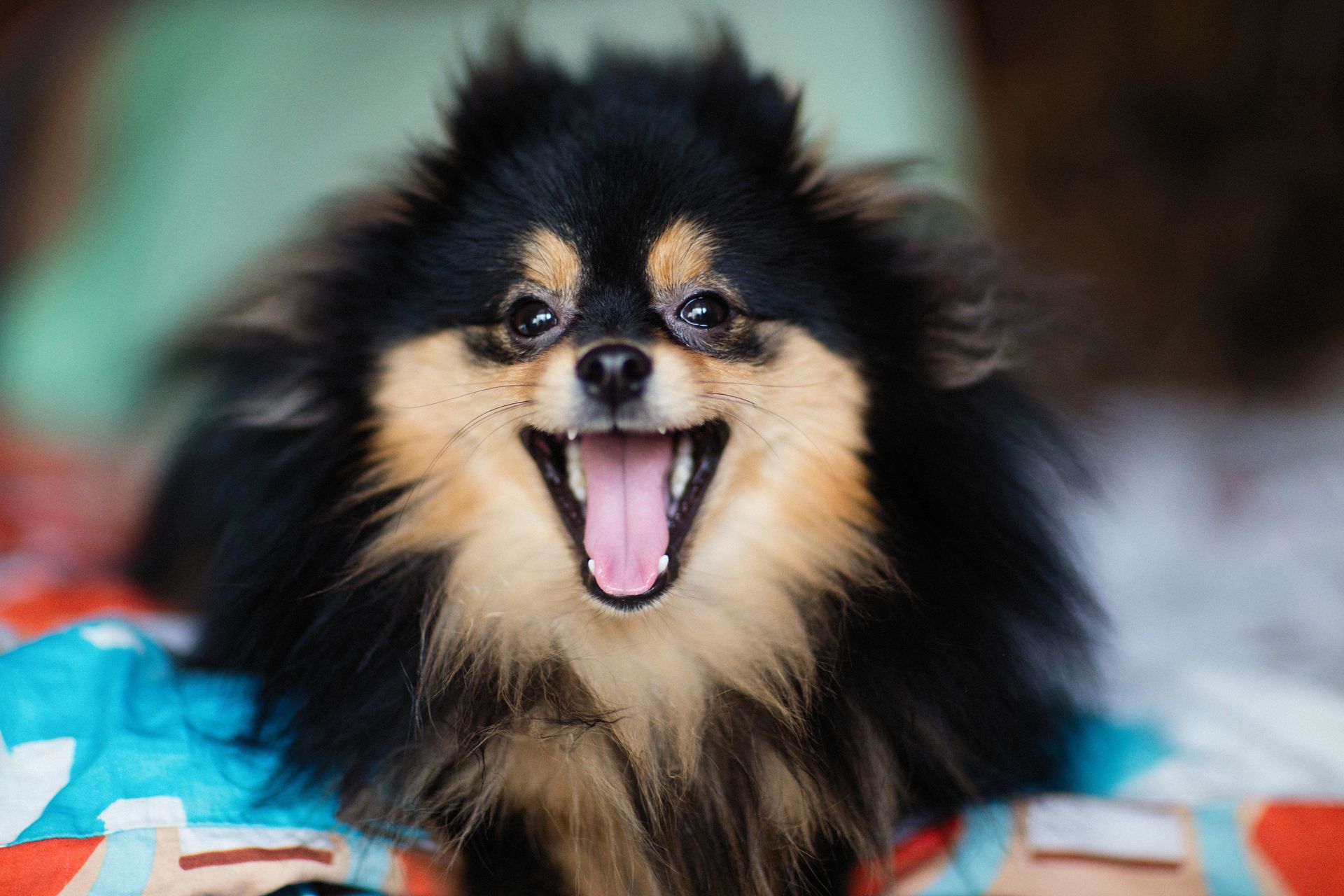
A content dog's mouth hangs slightly open with the tongue loose and the corners pulled back gently, an expression close to what many owners describe as a dog smile. It isn't a smile in the human sense, since dogs don't use facial muscles to express joy the way people do, but the loose, open jaw is a genuine physical marker of a relaxed nervous system rather than a tense one.
The contrast is easiest to see next to a stressed or anxious dog, whose mouth is often closed tightly, with lips pulled back thin against the teeth or held in a hard, straight line. A dog that's uncomfortable may also pant in short, shallow bursts through a narrow mouth opening, which looks different from the slow, wide-mouthed panting of a dog that's simply warm or has just finished playing.
Panting itself is not automatically a sign of stress, and it's easy to misread. Dogs pant to regulate body temperature, so a dog panting after a walk on a warm day is behaving normally, not anxiously. The distinction lies in the shape of the mouth and the rest of the face. Relaxed panting comes with a wide, loose jaw and a tongue that lolls out to the side. Stress panting tends to come with a tighter mouth, pulled back lips, and often widened eyes.
The corners of the mouth, known as the commissures, are worth watching specifically. When they're pulled back and slightly up, without tension in the surrounding muscles, that's consistent with a relaxed emotional state. When they're pulled back and drawn tight, especially alongside a lowered head or a stiff body, that's more likely to reflect discomfort or submission rather than contentment.
Because facial muscles are subtle, this sign is most reliable when read alongside the rest of the body. A soft mouth paired with soft eyes, loose ears, and a relaxed tail gives a much clearer picture than the mouth on its own, but it remains one of the fastest cues to check, since it's visible even when a dog is sitting still.
Credit: Brixiv / Pexels
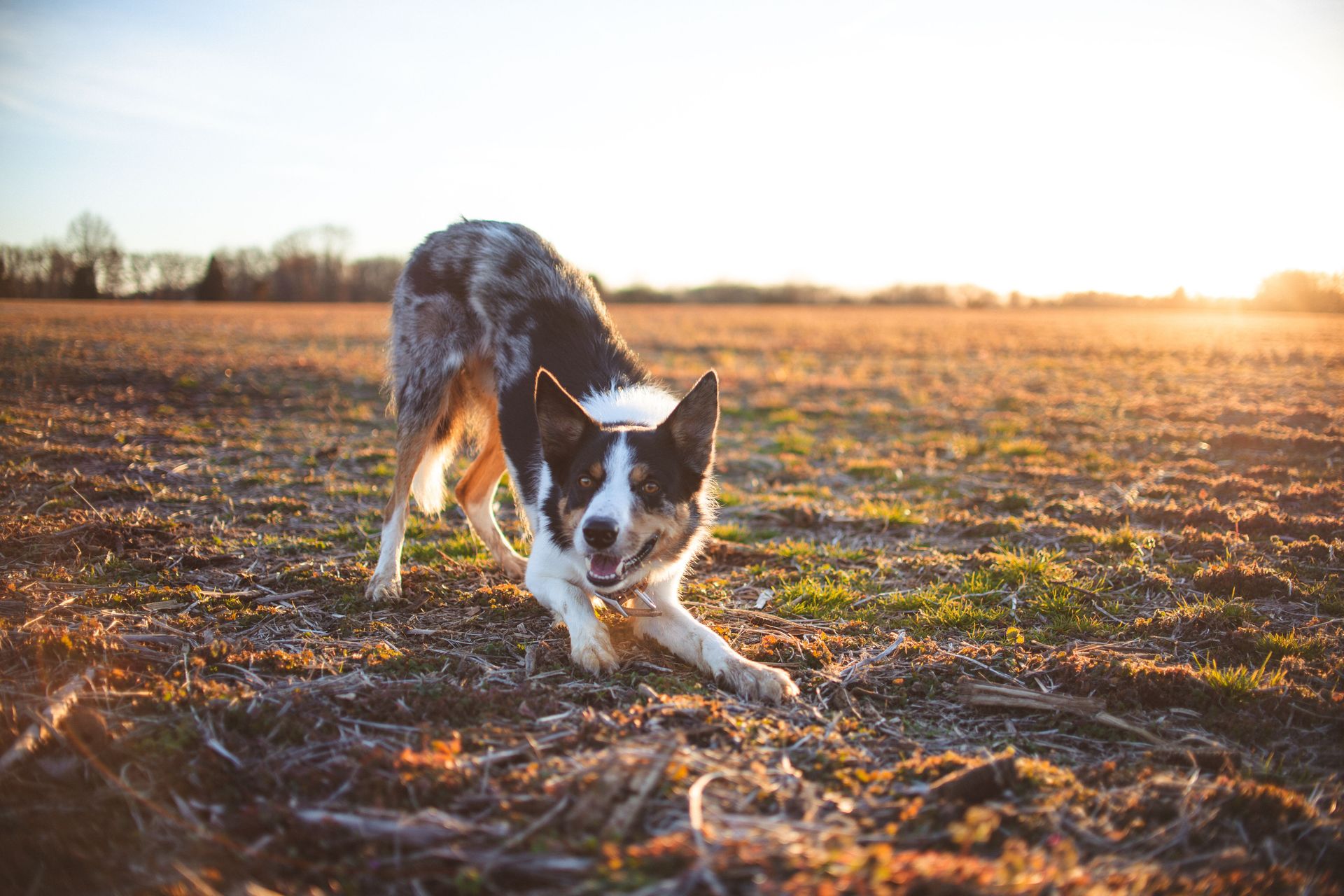
A play bow is the clearest, most universally recognized signal in canine body language: front legs and chest lowered to the ground, rear end raised in the air, tail often up and wagging. Dogs use it specifically to say they want to play and that whatever comes next, chasing, mouthing, or mock wrestling, is meant in a friendly spirit rather than a real conflict.
The gesture works as a kind of punctuation mark in dog communication. Researchers who study canine play have documented how dogs use the play bow both to initiate play and to reset the mood mid-session if things get too rough, essentially signaling that the interaction is still a game. That dual function, an invitation and a course correction, is part of why the play bow shows up so consistently across breeds, ages and even between dogs that don't know each other well.
Context matters for reading it correctly. A play bow aimed at another dog, a person, or even a favorite toy is a positive sign that a dog is engaged, comfortable and looking for interaction. It's rarely seen in dogs that are stressed, fearful or in pain, since the posture requires the same kind of physical looseness and confidence found in a loose tail wag or a soft facial expression.
Puppies tend to play bow more frequently and sometimes clumsily as they learn to coordinate the movement, while older dogs may use a smaller, quicker version of the same gesture. Some dogs, particularly those with short legs or long backs, adapt the bow to their own build rather than performing a textbook version of it, but the intent behind the posture stays the same regardless of how precisely it's executed.
Because the play bow is such a deliberate, communicative gesture rather than an incidental one, seeing it regularly is a good sign that a dog feels secure enough in its environment and relationships to actively seek out play, which is itself one of the clearest indicators of overall wellbeing in dogs.
Credit: Magda Ehlers / Pexels
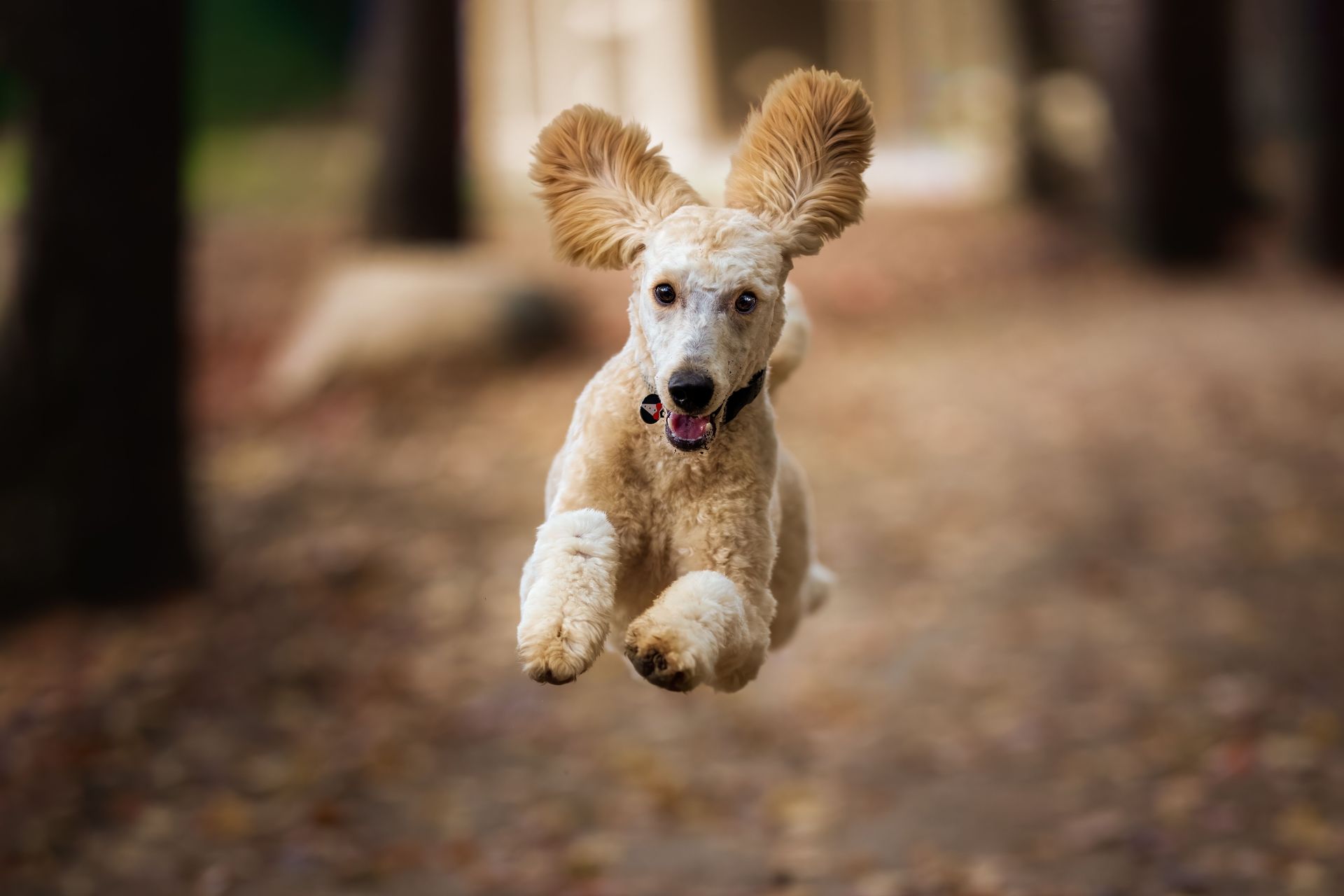
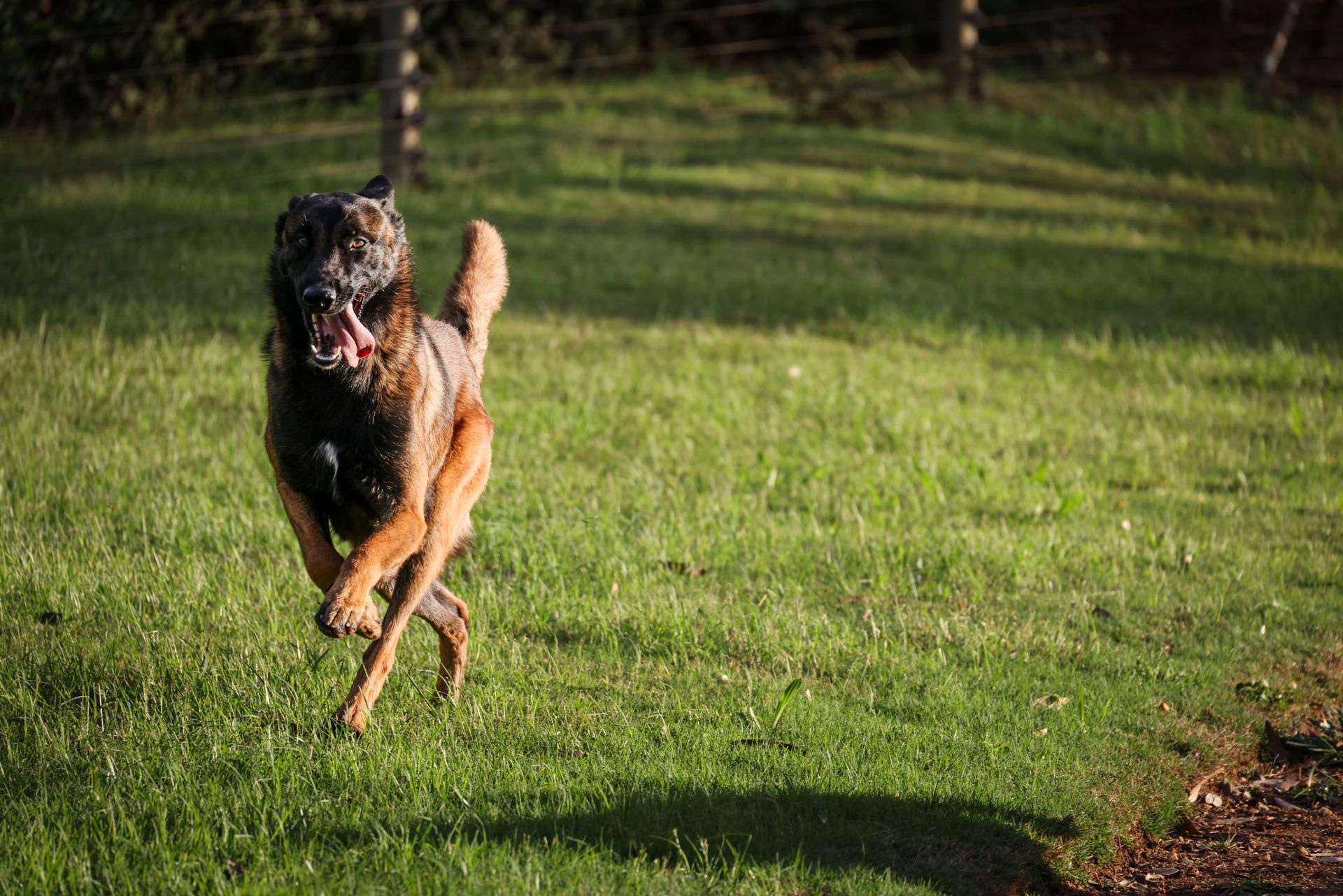
Sudden bursts of running, spinning or frantic looping around a room or yard, often called zoomies, are a normal release of built-up energy and a common sign of a dog that feels good. The technical term for this behavior is frenetic random activity periods, or FRAPs, and they tend to appear right after a burst of excitement, relief or stimulation, such as finishing a bath, being let outside after a long car ride, or reuniting with a favorite person.
Zoomies are most common in puppies and younger dogs, whose energy reserves are higher and whose self-control is still developing, but healthy adult dogs experience them too, particularly breeds bred for speed or endurance, like Border Collies, Whippets and other working and sporting types. The behavior typically lasts less than a minute and ends on its own once the dog has burned off the surge of energy that triggered it.
The context around zoomies is what separates them from something more concerning. A dog that zooms after a joyful trigger, then settles back into normal, relaxed behavior, is showing a healthy physical response rather than a symptom of anxiety. Zoomies that appear alongside other signs of distress, such as panting with a tight mouth, pinned ears or an inability to settle afterward, are worth watching more closely, since frantic movement can occasionally reflect overstimulation or stress rather than pure excitement.
Indoor zoomies can be startling for owners unfamiliar with the behavior, especially when a dog suddenly tears through the house at full speed, but it isn't a sign of a behavioral problem on its own. It's closer to what happens when a person feels a rush of adrenaline and needs to physically move to release it. Giving a dog space and a safe surface to run on, rather than trying to stop the behavior mid-burst, is usually enough to let it run its natural, brief course.
Seeing zoomies regularly, especially tied to clear, positive triggers like playtime or a favorite routine, is a sign that a dog has enough energy, enough opportunity to release it, and enough comfort in its surroundings to let loose without hesitation.
Credit: Fabio Martinelli / Pexels
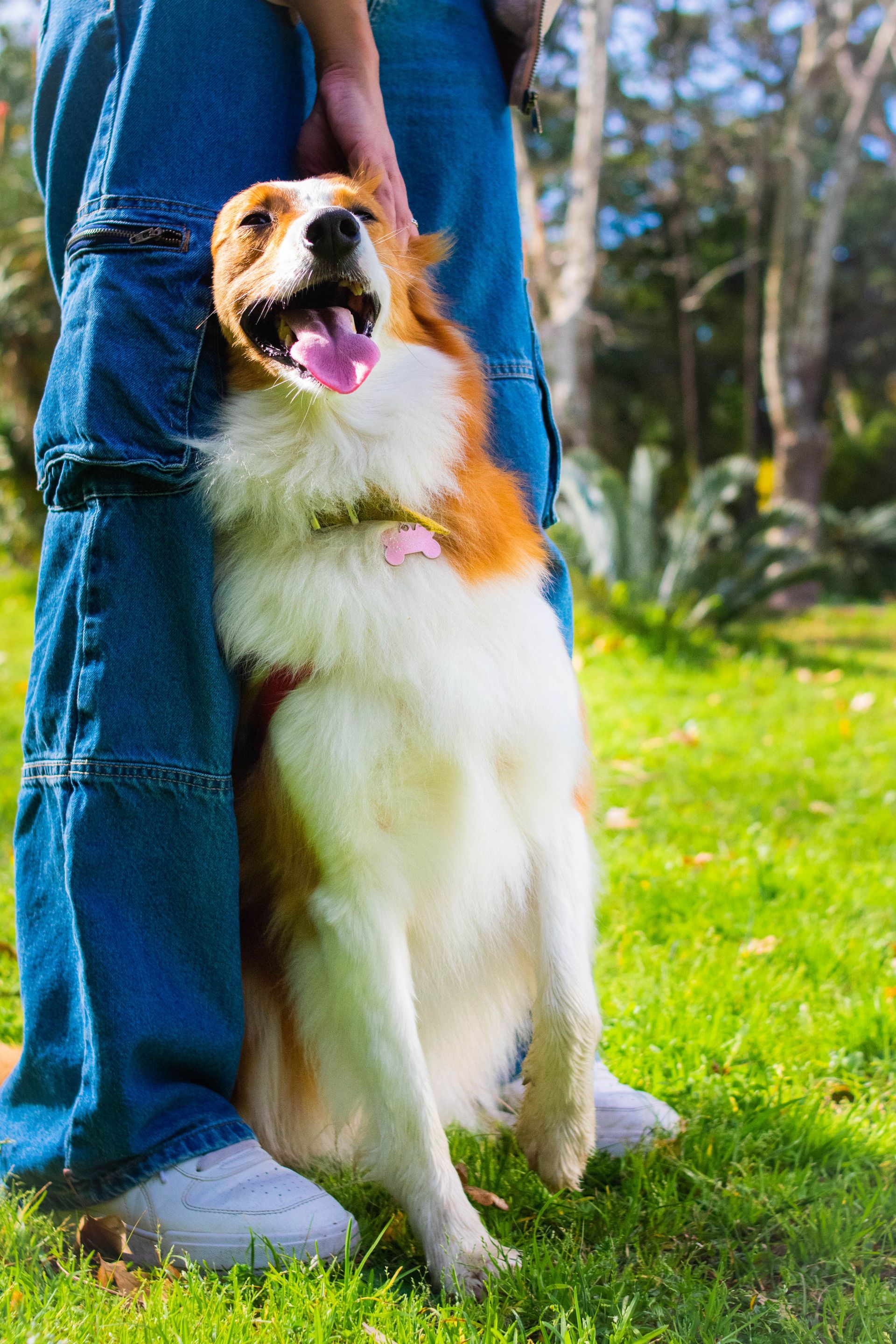
A dog that leans its full body weight against your legs, or presses against you while sitting, is showing a deliberate bid for closeness rather than an accidental bump. This kind of sustained physical contact is common in dogs that feel securely attached to their owner and comfortable in the environment they're in, and it tends to happen more during calm moments than during high-energy play.
Leaning is different from a dog simply standing nearby. It involves actual transferred weight, often with a relaxed body, a loose tail, and no attempt to move away. Some dogs extend this into full-body contact while lying down, resting their head, back or hip directly against an owner's leg or side. Both are physical expressions of trust, since a dog that feels uneasy is far more likely to keep distance and stay alert to an exit route than to settle its weight onto someone.
This behavior can look similar to anxious clinginess, so context is important. A dog leaning in a relaxed, low-key way, with soft eyes and slow breathing, is behaving differently than a dog trembling, pacing, or pressing against an owner's legs while trying to hide from a specific trigger like thunder or fireworks. The physical contact is the same, but the emotional state driving it is not, and the rest of the dog's body language is what tells the two apart.
Breed and individual temperament also shape how often a dog leans. Some breeds, including many in the retriever and hound families, are especially prone to seeking physical closeness, while more independent breeds may express contentment through proximity, staying in the same room, rather than direct contact. Neither pattern is more or less happy than the other; it reflects a difference in how individual dogs express the same underlying trust.
Consistent, relaxed leaning over time is one of the more reliable indicators of a strong, secure bond between a dog and its owner, since it requires the dog to feel safe enough to lower its guard and physically commit its weight to another creature.
Credit: FOX ^.ᆽ.^= ∫ / Pexels
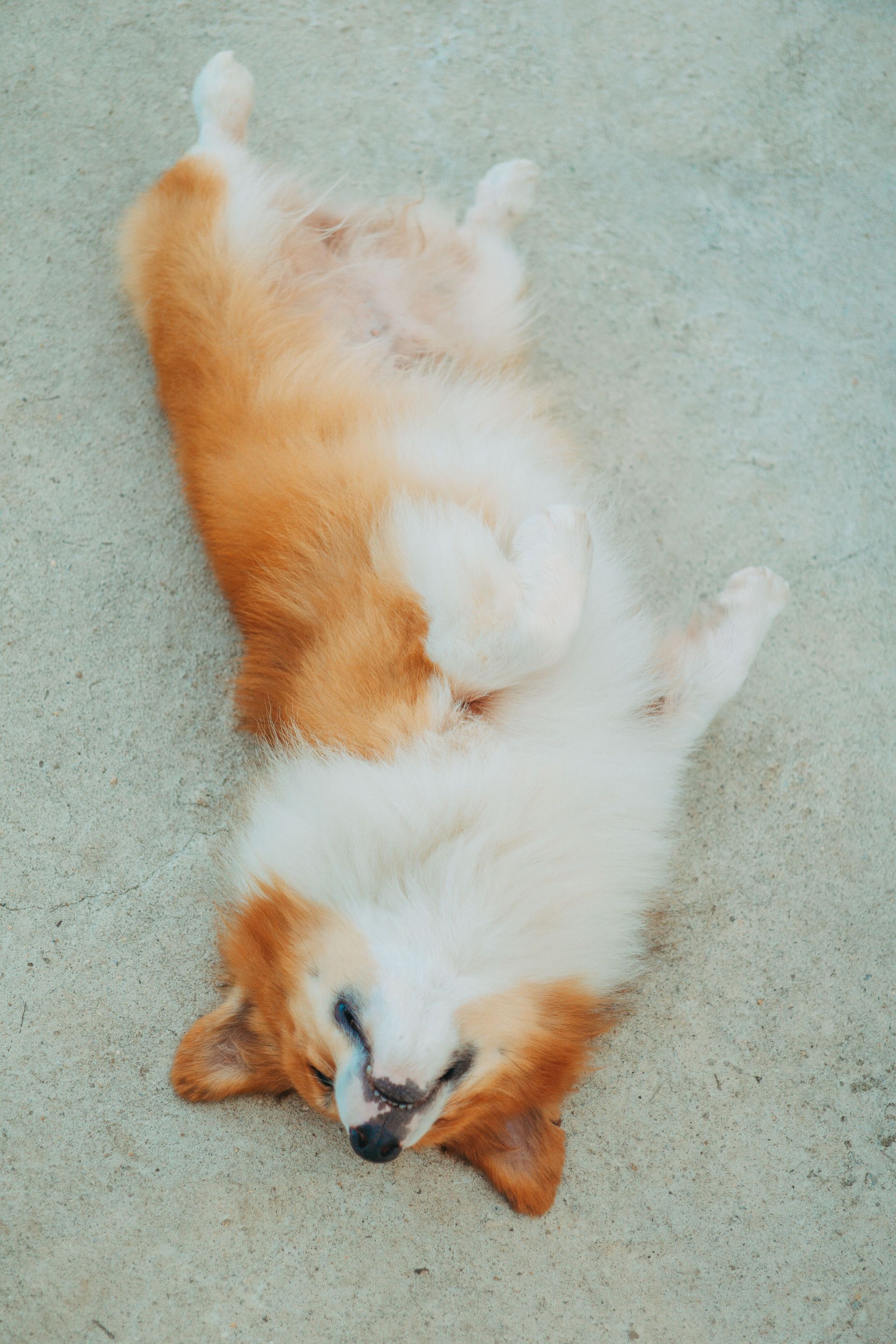
A dog that sleeps belly-up with its legs splayed, or fully stretched out on its side rather than curled tight, is showing one of the clearest physical signs of feeling safe. Exposing the belly and throat, the most vulnerable parts of a dog's body, is not a position a dog will hold in an environment that feels uncertain or unsafe, so seeing it regularly is a strong signal of comfort and trust.
This is different from a tightly curled sleeping position, tail wrapped around the body and nose tucked in, which is a more protective, self-contained posture. Curled sleeping isn't a sign of unhappiness on its own; it's a normal, common position, especially in colder environments where a dog is also conserving body heat. But dogs that regularly choose the more exposed, sprawled-out positions, sometimes nicknamed the starfish or dead bug pose when on their backs, are demonstrating a level of physical relaxation that a wary or stressed dog typically won't show.
Where a dog chooses to sleep matters alongside how it sleeps. A dog that sleeps in open, central parts of a room, rather than tucked into corners or under furniture, is generally signaling the same kind of security. Dogs that feel unsettled in a space often seek out smaller, more enclosed areas that limit exposure and offer a quicker sense of control over their surroundings.
Sleep depth is another marker worth watching. A deeply relaxed dog will often twitch, move its paws, or make small vocalizations during sleep, consistent with entering the deeper stages of the sleep cycle, including rapid eye movement sleep. A dog that startles awake at the smallest sound, or never seems to fully settle, may be sleeping in an environment that doesn't feel entirely secure, even if the posture looks relaxed on the surface.
Taken together, an exposed, sprawled-out sleeping position, chosen consistently and in an open part of the home, is one of the most dependable indicators that a dog feels physically and emotionally safe in its environment.
Credit: Christopher Welsch Leveroni / Pexels
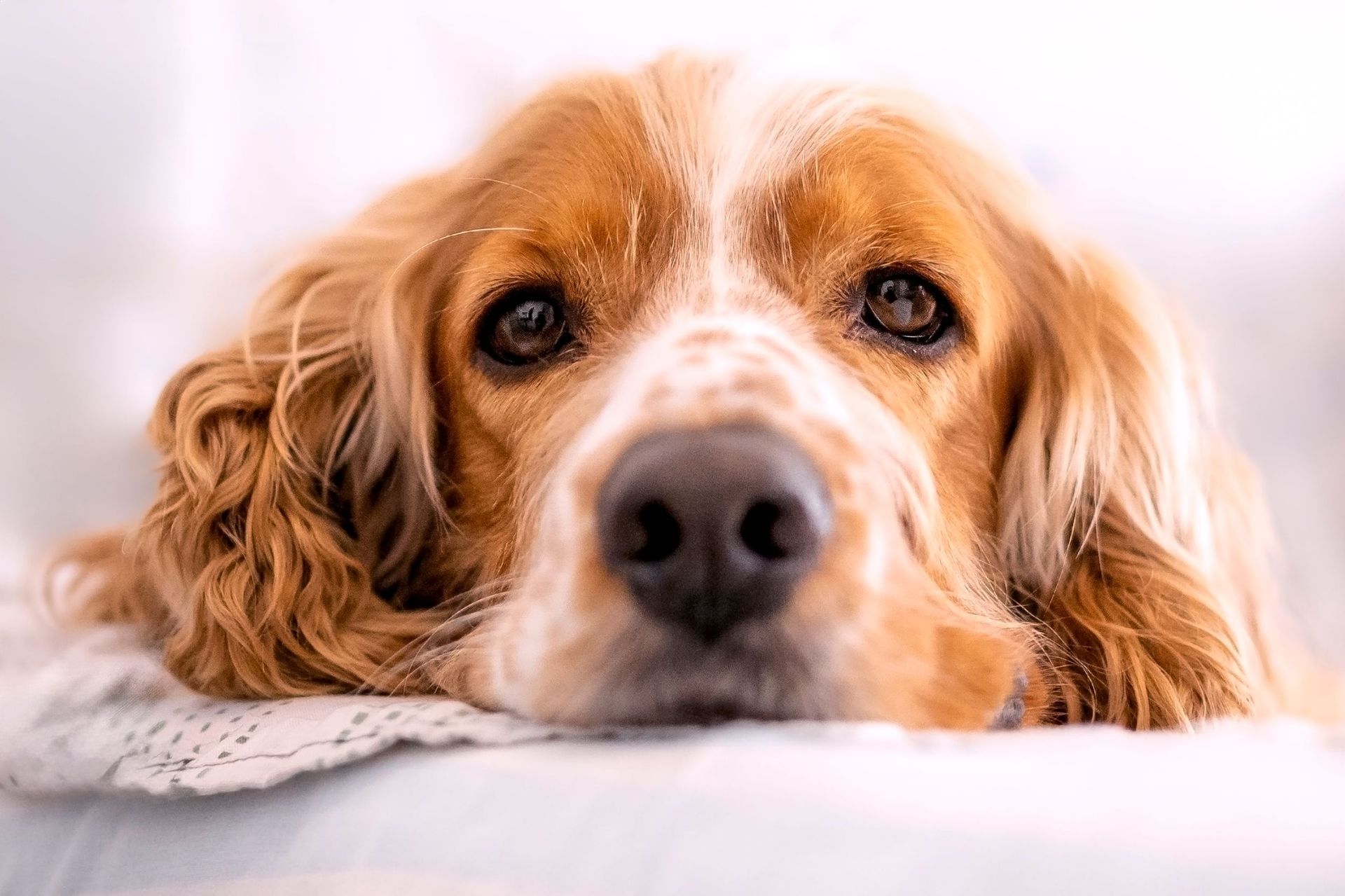
A happy dog's eyes appear soft and slightly almond-shaped, without the whites showing around the edges, and often include slow, deliberate blinking directed at a person or another dog. This soft-eyed look is the opposite of a wide-eyed stare with visible whites, sometimes called whale eye, which usually signals discomfort, fear or tension rather than ease.
Slow blinking in particular functions as a kind of calming signal. Dogs use it in situations similar to how cats do, offering a slow blink toward a trusted person as a way of communicating comfort and low arousal. Some trainers and behaviorists describe returning a slow blink to a dog as a way of reciprocating that signal, since it mirrors a gesture dogs already use with each other in calm, non-threatening interactions.
Eye contact itself varies by context. Soft, relaxed eye contact held briefly, then broken off naturally, tends to accompany a relaxed state. A hard, fixed stare, especially one held for an extended period without blinking, is a very different signal and can indicate tension, guarding behavior or an attempt to assert control over a situation, particularly between two dogs that don't know each other.
The area around the eyes is also worth watching. Furrowed brows, tightened muscles above the eyes, or a permanently raised inner brow can indicate stress even when the rest of the face looks neutral. A relaxed dog's forehead is smooth, without the tight creasing that shows up when a dog is anxious, alert to a threat, or in pain.
Because the eyes are a small, sometimes overlooked part of a dog's expression compared to the tail or the mouth, they're easy to miss during a quick glance, but they tend to be one of the more honest signals a dog gives, since eye muscles are harder to consciously control than posture or movement. A dog with soft, relaxed eyes and the occasional slow blink toward its owner is showing a quiet, low-key version of the same contentment that shows up more visibly in a loose tail or a play bow.
Credit: Jay Brand / Pexels
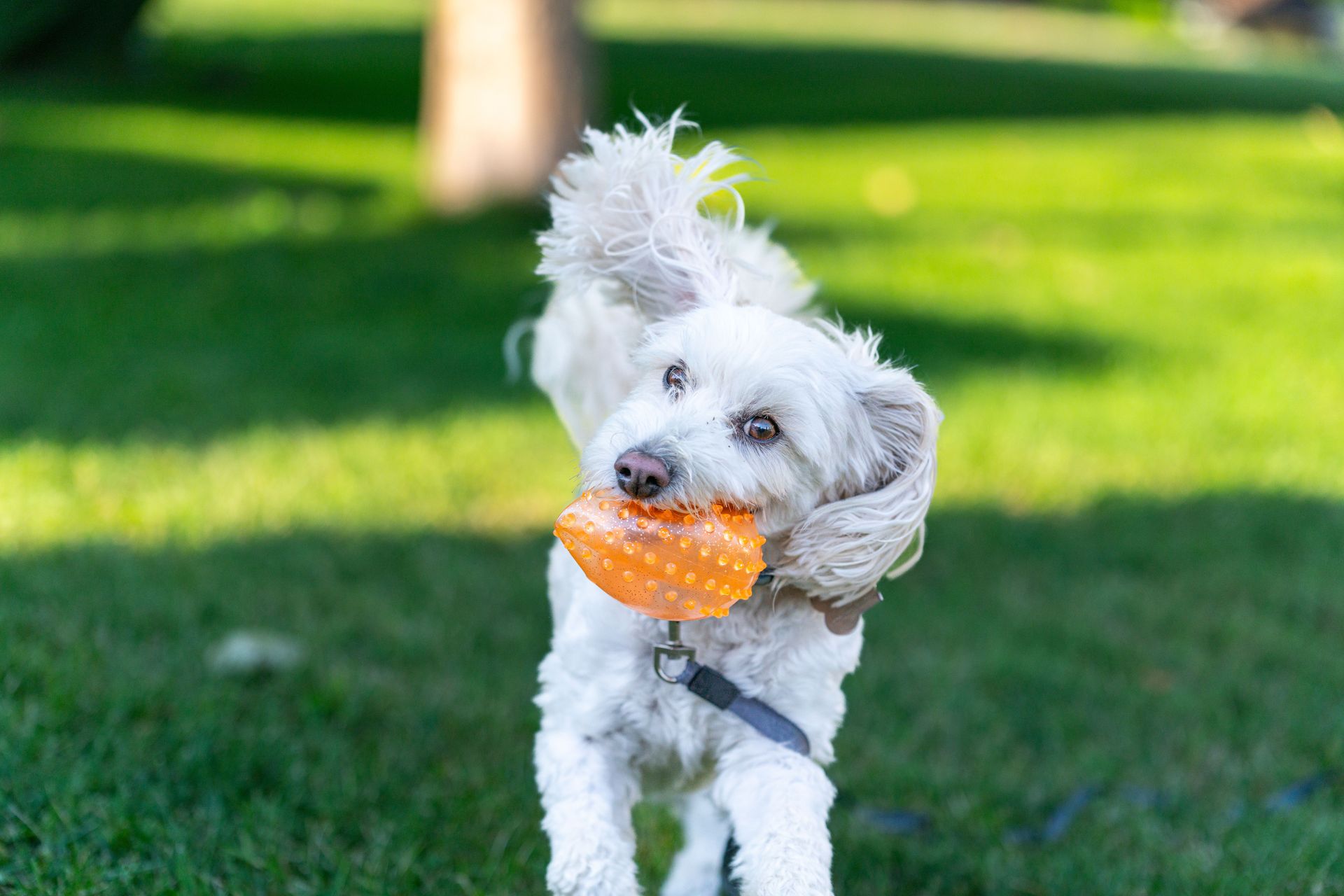
A dog that regularly brings a toy, ball or other object directly to a person is engaging in a social, affiliative behavior rooted in a desire to interact rather than simply offloading an item. This kind of object-sharing is common in dogs that feel comfortable initiating contact and confident that the interaction will be a positive one, whether that means starting a game of fetch or tug, or just showing off a favorite possession.
The behavior is closely tied to play and trust. A dog is unlikely to willingly approach a person with a valued object, something it would otherwise guard or avoid sharing, unless it expects a friendly response. This is especially notable in dogs with a strong resource-guarding instinct, where offering up an item rather than protecting it reflects a level of security in the relationship and the environment. Puppies raised with regular, positive handling around toys and food often carry this openness into adulthood more consistently than dogs with a history of competition over resources.
Context and body language around the behavior matter. A dog that brings a toy with a loose, wagging tail, a relaxed posture and an eager, bouncy approach is behaving very differently than a dog that drops an item and immediately backs away, which can sometimes indicate uncertainty about how the object will be received. The difference lies less in the act of bringing the toy and more in everything surrounding it.
Some dogs extend this behavior beyond toys, bringing household objects, shoes or other items as a way of initiating interaction, particularly when they want attention or are excited about a person's arrival. While this specific version can be inconvenient for owners, it stems from the same underlying instinct: using an object as a bridge to social contact.
Consistently offering to share toys or objects, especially paired with a relaxed body and enthusiastic movement, is a reliable sign that a dog associates its owner with positive, low-stress interaction, which is itself one of the clearer behavioral expressions of a secure, contented relationship between a dog and the people around it.
