Morsa Images / Getty Images
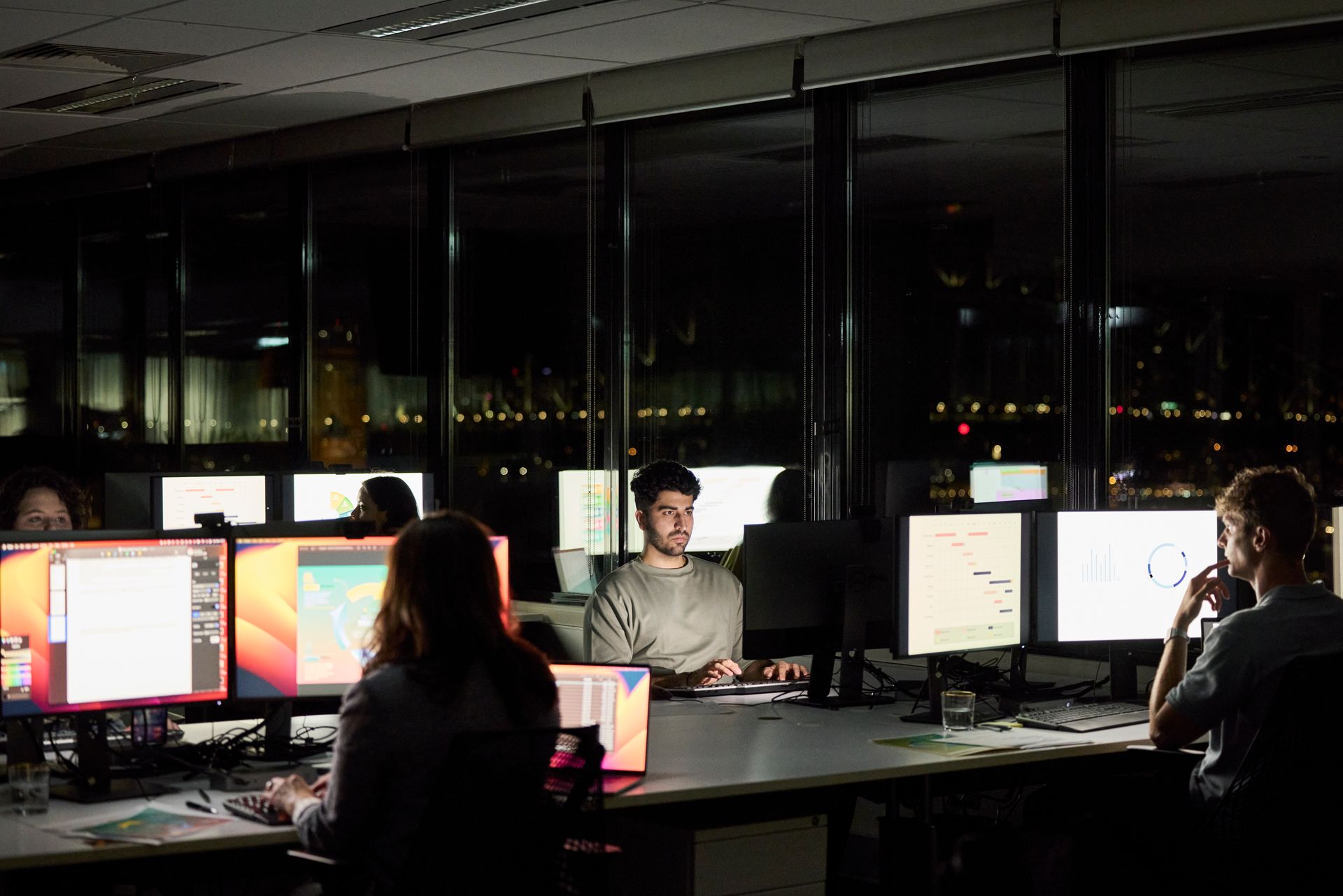
Silicon Valley once sold the dream of AI making us work smarter, not harder. Now, tech startups are trying to revive a brutal 72-hour workweek that’s banned in China for resembling modern slavery. And in San Francisco, they’re succeeding.
The so-called 996 schedule means working 9 a.m. to 9 p.m., six days a week. It’s been all over startup social media since Martin Mignot, a partner at venture capital firm Index Ventures, wrote in a LinkedIn post earlier this year that it has “quietly become the norm across tech”.
New research suggests he is right. Spending data from payments firm Ramp points to a noticeable uptick in company card transactions on Saturdays this year, compared with previous years. Most of the rise was in restaurants, delivery services, and office catering — spending that usually serves as a proxy for being on the clock.
A change like this is “extremely surprising,” said Ara Kharazian, an economist at the firm. “Most people's habits — whether it is when they work, how they eat, where they spend their money — don't [show] much deviation year-to-year, especially averaged across a large economy like San Francisco.
“And it's not happening anywhere else. It's not happening in New York. It's not happening in LA, Austin, or Miami. This is an SF thing,” he added. In other words, Kharazian said, the 996 culture now has a “measurable signature” in Silicon Valley spending data.
The 996 schedule is an import from mainland China, where tech companies’ excessive work hours were once seen as the secret to their success, endorsed by moguls such as Alibaba founder Jack Ma.
But it sparked protests and accusations of modern slavery. A spate of workers’ deaths was even linked to the practice. In 2022, China’s top court told companies to cut it out, ruling that the schedule was illegal and violated overtime laws.
In San Francisco, it’s a different story. Job ads warning of long work hours are increasingly commonplace. Software biology firm LatchBio specifies on its listings that employees work Monday to Saturday in the office. Corgi, an insurance startup backed by Y Combinator, gives new starters a mattress as a welcome gift.
Inaki Berenguer, a tech founder and partner of AI venture fund LifeX Ventures, recounted a recent Sunday lunch with friends to celebrate his birthday. “We finished eating, and instead of staying to relax and chat, almost everyone left to go back to the office,” he said. “Nobody questioned going back; it was simply assumed.”
In 2016, Berenguer founded insurance startup CoverWallet. Then, long hours were reserved for founders and “a small circle of early or senior employees,” he said. “Now, in many AI startups, Sunday is the day for in-person meetings, all-hands, product roadmap reviews, pipeline discussions — not just for the senior team, but for everyone.”
Dominic McGregor, who cofounded the media agency Social Chain alongside podcaster Steven Bartlett, said there is growing pressure for employees to work founders’ hours. “The weekend is disappearing in tech,” he said. “The key question is whether workers are being compensated fairly for it.”
He added: “If Saturday work comes with share options, strong salaries, and a clear path to reward, then some employees may choose to take on that intensity. If not, it’s a recipe for attrition and burnout.”
But even for founders, the relentless hustle can become a liability. In a 2023 survey of more than 400 founders, 72% reported that overwork hurt their mental health, and more than a third suffered from burnout.
The weekend schedule also skews against women, who are disproportionately more likely to be caregivers, either for children or aging parents. This bears out starkly in data from Pitchbook, which says women-only-founded U.S. startups raised just 2% of all venture capital funding in 2024.
Amelia Miller, co-founder of Ivee, a marketplace connecting women returning to work with businesses seeking talent, recently told The Times that 996 culture “implies that success is only possible if you fit a certain mould: a young, white male with an Ivy League education.”
AI was supposed to give us less work, not more. Why, then, in Silicon Valley, are hours piling up so much?
It could be that the tech isn’t living up to its promise. Building real-world products still requires lots of engineers and endless trial and error. McKinsey recently said that 80% of firms using generative AI see no material impact on earnings. Demis Hassabis, CEO of DeepMind, warned last year that the industry's investment surge brings “a whole attendant bunch of hype. … We’re talking about all sorts of things that are just not real.”
Berengeur blames the hyper-competitive, “noisy” environment where dozens of AI startups are racing to ship nearly identical products. Some founders believe sheer speed — and the grueling hours that come with that — is the only edge they have. “These are winner-take-most markets where speed matters above everything,” he said.
That still doesn’t explain why 996 culture only seems to be taking hold now, however. The AI boom started in 2023 — but the Saturday spending data only started showing up this year.
Ramp’s Kharazian thinks the culture’s rise is tied to return-to-office mandates, which have seen corporates summon employees back to work in growing numbers. In San Francisco, demand for commercial office space is ticking up, with AI startups accounting for about 15% of all office leases in the first half of 2025.
Another potential answer is the job market. The unemployment rate for recent graduates now hovers at 4.8%, above the overall average. Postings for junior roles fell 7% over the past year, even as senior listings ticked up, according to Indeed. With fewer opportunities to go around, employees may simply be more willing to accept punishing schedules in the hope of getting ahead.
“The headline is that if you’ve felt the city’s weekend hustle returning, it’s now quantifiably true,” Kharazian said. “As for whether it's good for you, it's a conversation between you, your doctor, and maybe your founder.”
