
20 skills that take less than an hour to learn and pay off for decades
Most valuable skills take years to develop. These 20 are the exceptions — things you can genuinely get to a useful level of competence in a single session

Castorly Stock / Pexels
Most skills worth having take a long time to acquire. Speaking a language fluently takes years. Playing an instrument to any meaningful level takes thousands of hours. Writing well, thinking clearly, managing people effectively — these are capabilities that compound across a lifetime without ever feeling finished. The investment required is real, the timeline is long, and the improvement is incremental.
This list is about the other category: skills whose learning curve is front-loaded enough that a single focused session of 30 to 60 minutes produces a genuinely useful level of competence. Not mastery — mastery in almost any domain requires far more than an hour. But competence: the point at which the skill becomes practically available, at which you can do the thing well enough for the situation at hand rather than defaulting to helplessness or to paying someone else.
The selection principle is specific. To qualify, a skill has to be genuinely learnable to a useful level in under an hour — not just introduced, but usable. It has to have a wide range of practical applications, recurrent enough that the investment is paid back many times over. And it has to be the kind of thing that most people have not learned, either because it seemed too minor to pursue or because nobody told them how short the learning curve was. Skills that are technically learnable in an hour but require significant practice to become reliable at — parallel parking, certain cooking techniques — are not here, because the claim of the list is not that an hour gets you started but that an hour gets you somewhere genuinely useful.
The 20 skills here span the practical, the social, the physical, the financial, and the technological. Some of them most people learn eventually, at varying points and in varying ways. Some of them a surprising number of adults never learn at all, and carry a low-grade impracticality for the rest of their lives as a result. All of them are worth an hour if you have not learned them yet, and the hour required to learn them will produce returns across decades of situations in which the skill is useful and available.
Touch typing

Szabó Viktor / Pexels
Touch typing — typing without looking at the keyboard, using all ten fingers in the standard home row position — is the skill on this list with the highest cumulative return for most people in modern professional life, because the hours spent typing in a lifetime are enormous and the efficiency gap between touch typing and hunt-and-peck typing is substantial and never closes without deliberate correction.
The average hunt-and-peck typist types at approximately 27 to 37 words per minute. The average touch typist types at approximately 50 to 70 words per minute. For a professional who spends three hours per day typing — a conservative estimate for most knowledge workers — the difference over a year is approximately 160 hours of additional time available at the touch typist's productivity level. Over a 40-year career, the cumulative time saved is years.
An hour with a free typing tutor — TypingClub, Keybr, or Typing.com — is enough to learn the home row position and the correct finger assignments for every key. That hour will not produce speed; the speed comes from weeks of practice. But the hour produces the foundation without which the practice cannot be effective, and the correct foundation learned in one session prevents the permanent formation of bad habits that make relearning necessary.
The investment is specifically worth making for anyone under 30 who has not yet touch typed for long enough that the hunt-and-peck habit is deeply ingrained. For anyone over 40 with a deeply established alternative method that produces adequate speed, the relearning cost may exceed the benefit — the hour is not the constraint but the weeks of reduced productivity while the new habit forms.
The Heimlich maneuver
The Heimlich maneuver — the abdominal thrust technique for clearing a foreign object from the airway of a choking person — takes approximately 15 minutes to learn from a video or from a basic first aid guide, and the situations in which it is useful are both unpredictable and genuinely urgent. Choking is a leading cause of accidental death; approximately 5,000 people in the United States die from choking each year, and many of those deaths occur in the presence of people who did not know what to do.
The technique is specific and learnable in a single session: stand behind the choking person, make a fist with one hand and place it thumb-side in against the abdomen between the navel and the breastbone, cover the fist with the other hand, and deliver firm inward-and-upward thrusts until the object is expelled. For a pregnant person or someone too large to wrap your arms around, chest thrusts are substituted. For an infant, the technique is different — back blows followed by chest thrusts — and worth learning separately.
The Heimlich maneuver requires no equipment, no prior training, and no preparation beyond having learned it. The knowledge is available for immediate application at any dinner table, any restaurant, any family gathering for the rest of one's life. The specific hour — or 15 minutes — spent learning it is among the highest-leverage health and safety investments available, because the alternative to knowing it in a choking emergency is standing helplessly while someone dies from a preventable cause.
Basic negotiation

Pavel Danilyuk / Pexels
Negotiation — the skill of reaching agreement in situations where interests are not fully aligned — is applicable in salary discussions, in purchasing decisions, in contractor relationships, in interpersonal conflicts, and in hundreds of other situations that recur throughout adult life. It is also one of the most systematically undertaught practical skills, with most people defaulting either to capitulation (accepting whatever is offered) or to aggression (demanding without conceding) rather than to the principled negotiation that research consistently finds produces better outcomes for both parties.
The foundational framework — developed by Roger Fisher and William Ury in "Getting to Yes," first published in 1981 — can be understood and applied at a useful level after an hour's reading. Its four principles: separate the people from the problem (negotiate the issue, not the relationship); focus on interests rather than positions (understand what the other party actually needs, not just what they are asking for); invent options for mutual gain (generate possible solutions before evaluating them); and insist on using objective criteria (refer to market rates, precedent, or independent standards rather than willpower).
The specific application that produces the largest immediate return for most people is salary negotiation, covered in the career mistakes piece — but the same framework applies to negotiating the price of a car, the terms of a freelance contract, the scope of a renovation, and the resolution of a conflict with a neighbor. The hour spent understanding these principles is not theoretical preparation; it is practical capability that can be deployed in the next negotiating situation encountered.
Reading a nutrition label

Kampus Production / Pexels
Nutrition labels appear on virtually every packaged food product sold in most countries and contain specific information about the caloric content, macronutrient composition, and key micronutrient content of the food they describe — information that is directly relevant to dietary decisions but that is rendered almost illegible by the combination of small print, unfamiliar units, and specific conventions that most people have never been taught to interpret correctly.
An hour spent learning to read a nutrition label produces a capability that is used multiple times per day for the rest of one's life. The specific skills required: understanding that serving sizes are the reference unit for all other numbers and are frequently set at implausibly small quantities; distinguishing between total fat and its subcategories of saturated, unsaturated, and trans fat, and understanding which of these are relevant to which health considerations; interpreting the percent daily value column as a rough guide (5% or less is low, 20% or more is high) rather than as a precise prescription; recognizing added sugars as distinct from total sugars; and understanding that the ingredients list is ordered by weight, making the first three to five ingredients the primary composition of the product.
The practical benefit is not becoming a nutrition expert. It is having enough information to make meaningfully better food purchasing decisions — to recognize when a product marketed as healthy contains more sugar than a dessert, when a serving size has been manipulated to make a high-calorie food appear low-calorie, or when the ingredients list of a simple food product contains 30 items that suggest a level of processing inconsistent with the natural imagery on the packaging.
Changing a tyre

Frans van Heerden / Pexels
Changing a flat tyre is a skill that most people have either already learned through necessity or have never learned and hope never to need. Its absence from the practical capabilities of a significant proportion of adult drivers reflects the combination of widely available roadside assistance services and the assumption that someone else will handle it — an assumption that fails predictably at 11pm on a motorway hard shoulder with no mobile signal.
The procedure is specific and learnable from a 15-minute video: loosen the lug nuts while the flat tyre is still on the ground (when the tyre can resist the rotation), position the jack under the vehicle's designated jack point (marked in the owner's manual), raise the vehicle, remove the lug nuts and the flat, mount the spare, hand-tighten the lug nuts in a star pattern, lower the vehicle, and torque the lug nuts fully with the vehicle weight on the wheel. Find the spare tyre and the jack — both typically located in the boot — before attempting this in a real emergency.
The specific knowledge that most distinguishes people who have done this from those who have not is the location of the jack point and the instruction to loosen lug nuts before jacking. Both are specific to the vehicle and both are readily available in the owner's manual. Spending 15 minutes with the owner's manual, locating the spare and the jack, and watching a video of the procedure is the minimum preparation that converts this from an emergency learned under pressure to a skill available in advance.
Basic sewing and repairs

Pavel Danilyuk / Pexels
The ability to sew on a button, repair a simple seam, and hem a garment to a basic functional standard is the kind of practical skill that most adults encounter the need for regularly and most adults lack entirely, defaulting to either discarding the garment, paying for a repair, or living with a missing button or a trailing hem indefinitely.
The three repairs that cover the majority of household clothing maintenance — sewing a button, closing an open seam, and hemming trousers or a skirt — can each be learned from a single demonstration to a functional level in 20 to 30 minutes. Sewing a button requires threading a needle, attaching the button with several loops of thread through each hole, and finishing with a knot that will not come undone. Closing a seam requires either a slip stitch for invisible repairs or a simple overcast stitch for hidden seams. Hemming requires measuring and pinning before sewing, which is 80% of the work.
The practical return on this skill — in money saved on tailoring, garments not discarded due to minor damage, and the specific independence of being able to deal with a clothing emergency without depending on someone else — accumulates steadily across an adult lifetime. It also requires the establishment of a basic sewing kit: a few needles, thread in white, black, and a neutral grey, a small pair of scissors, and safety pins. The kit costs under £10 and lasts indefinitely.
CPR basics
Tahir Xəlfə / Pexels
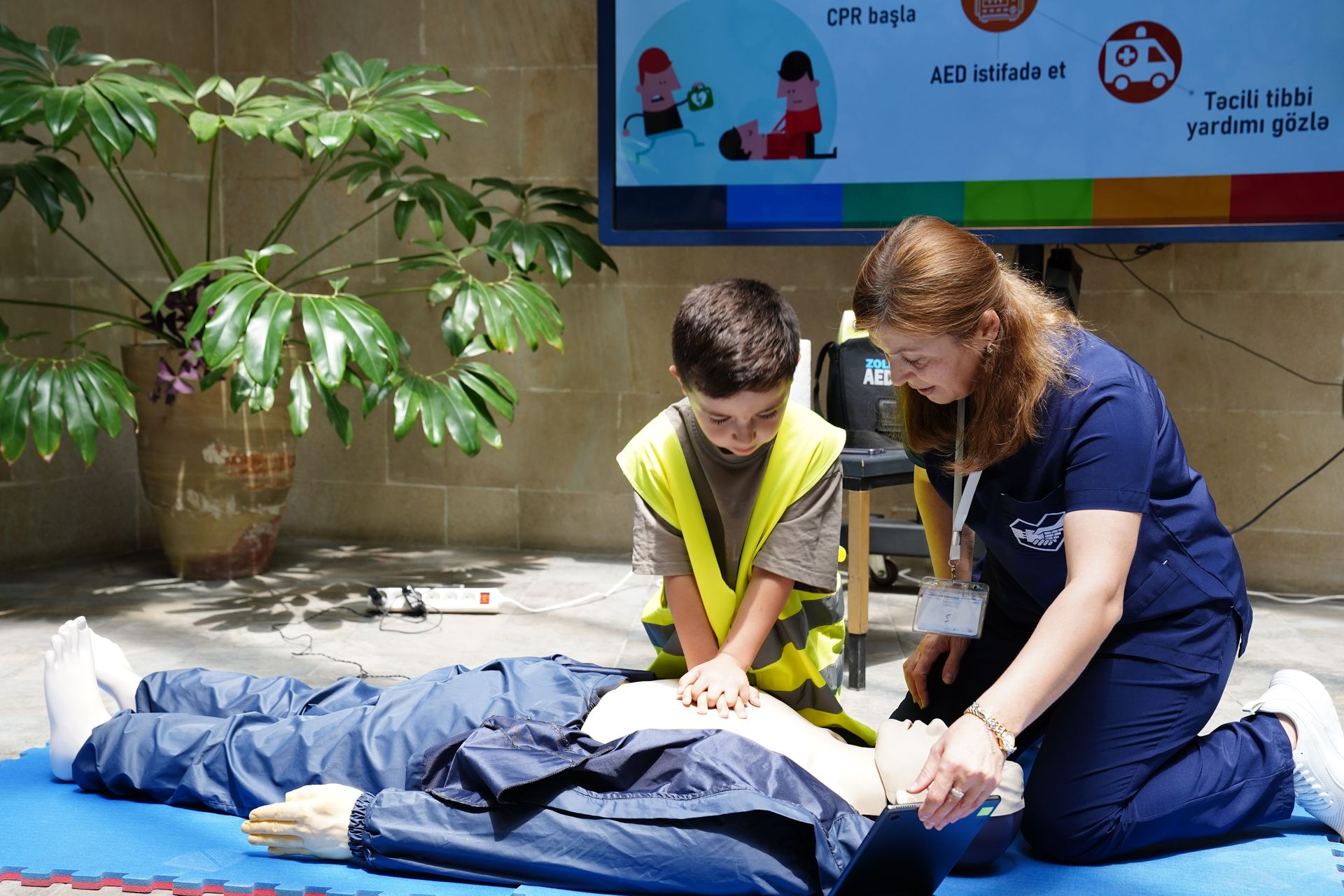
CPR — cardiopulmonary resuscitation, the combination of chest compressions and rescue breaths used to maintain circulation in a person whose heart has stopped — is taught in formal first aid courses that take several hours, but the compression-only CPR technique recommended for bystanders with no formal training can be learned from a single video of approximately 15 minutes to a level sufficient to be useful in a cardiac emergency.
Cardiac arrest outside a hospital has a survival rate of approximately 10% when no bystander intervention occurs. When bystander CPR is initiated before the arrival of emergency services, survival rates are approximately three times higher. Every minute without CPR after cardiac arrest reduces survival probability by 7 to 10%. The skill gap between trained and untrained bystanders is therefore directly measurable in lives.
The compression-only technique: place the heel of one hand on the center of the chest, place the other hand on top, and deliver compressions at a depth of approximately 5 to 6 centimeters at a rate of 100 to 120 per minute — approximately the beat of the Bee Gees' "Stayin' Alive," which is not coincidental, the song being recommended by the British Heart Foundation as a timing aid for this reason. Continue until the person recovers or professional help arrives.
The addition of an AED (automated external defibrillator) — the devices installed in public spaces including airports, shopping centers, and sports facilities — doubles survival rates again and requires no more than following the spoken instructions the device provides. Knowing where the nearest AED is in regularly frequented public spaces takes two minutes of attention and costs nothing.
How to give and receive feedback

Artem Podrez / Pexels
Feedback — the specific practice of providing honest assessment of someone's work or behavior in a way that is useful to them, and receiving such assessment without defensiveness — is one of the most practically important interpersonal skills in professional and personal life and one of the most consistently underdeveloped. Most people's default feedback behavior is either too vague to be useful ("that was great"), too harsh to be received without defensiveness, or avoided entirely.
The specific framework that can be learned and applied in a single session is the SBI model: Situation, Behavior, Impact. Describe the specific situation in which the behavior occurred, describe the observable behavior (not the intention or the character of the person), and describe the specific impact the behavior had. "In yesterday's client presentation, when you interrupted the client's question, they seemed to close down and stop engaging for the rest of the meeting" is feedback that is specific, actionable, and unlikely to produce defensiveness. "You're bad at listening to clients" is not.
The receiving side of feedback — the discipline of hearing critical feedback without immediately defending, explaining, or dismissing — is equally learnable and equally important. The specific practice: listen completely without interrupting, ask clarifying questions before responding, and acknowledge the observation before either accepting or disagreeing with it. The instinct to explain the reasons for the behavior before acknowledging its impact consistently prevents the feedback from being genuinely heard.
Speed reading fundamentals

George Milton / Pexels
Speed reading — specifically the elimination of subvocalization (the habit of internally pronouncing each word while reading, which limits reading speed to approximately speaking speed) and the development of broader eye fixation patterns — can be introduced and practiced to useful effect in a single session, producing reading speed improvements of 30 to 50% that are sufficient to make a measurable difference in the amount of material that can be processed in a given time.
The average adult reads at approximately 200 to 300 words per minute, limited primarily by subvocalization — the internal "voice" that pronounces each word as it is read, limiting speed to approximately the rate of speech. Eliminating subvocalization entirely is difficult and counterproductive for dense material that requires full comprehension; reducing its influence is achievable in a single session.
The two most practical techniques: chunking (training the eye to take in groups of two to three words per fixation rather than one word at a time, reducing the number of fixations per line) and pointer reading (using a finger or a pen to guide the eye at a consistent pace slightly faster than comfortable, which prevents regression — the habitual re-reading of words already seen). Both can be practiced with any text in a 30-minute session.
The caveat: speed reading trades comprehension for throughput at the extreme end of the speed range, and the appropriate technique depends on the material. Speed reading a novel or a news article is a different proposition from speed reading a legal contract or a scientific paper. The skill is most valuable for identifying which parts of a text require slow careful reading and moving efficiently through the parts that do not.
Using keyboard shortcuts

Tugay Kocatürk / Pexels
Keyboard shortcuts — the key combinations that trigger commands in computer software without navigating through menus — are among the most purely time-saving skills available to anyone who works regularly with a computer, and the time required to learn the 20 to 30 most commonly used shortcuts across the applications used daily is approximately 30 to 60 minutes, producing a persistent daily time saving that accumulates significantly over a career.
The most valuable shortcuts are those used most frequently: Cut (Ctrl/Cmd + X $TWTR), Copy (Ctrl/Cmd + C), Paste (Ctrl/Cmd + V), Undo (Ctrl/Cmd + Z), Find (Ctrl/Cmd + F), Select All (Ctrl/Cmd + A), Save (Ctrl/Cmd + S), New Tab (Ctrl/Cmd + T), Close Tab (Ctrl/Cmd + W), and Switch Applications (Alt/Cmd + Tab). These ten shortcuts alone, applied consistently, save the approximately 0.5 to 1 second of menu navigation they replace multiple times per hour across a working day — adding up to several minutes per day and dozens of hours per year.
The second tier of shortcuts — specific to the applications used most heavily, whether word processing, spreadsheets, email, or browser-based tools — is most efficiently learned by spending 20 minutes with the keyboard shortcuts list of each primary application, identifying the five to ten most relevant, and using them exclusively for the following week until they are automated.
The barrier to building the habit is the initial slowdown: the first uses of a keyboard shortcut are slower than the mouse-based alternative, because the shortcut requires recall while the menu requires only recognition. The investment pays off after approximately 20 to 30 uses of each shortcut, at which point the shortcut is faster than the menu without requiring conscious recall.
Parallel parking

Mario Amé / Pexels
Parallel parking is a skill that approximately 40% of drivers avoid consistently, routing around it by choosing less convenient but more easily accessible spaces, despite the maneuver being teachable to a reliable level in 45 minutes of deliberate practice with a clear method.
The method: pull up alongside the car in front of the target space, with your rear axle aligned with the rear bumper of that car. Begin reversing, turning the wheel sharply toward the curb. When your car is at approximately 45 degrees to the curb, straighten briefly and then turn sharply away from the curb to bring the front of the car in. Adjust forward and backward to center in the space.
The failure mode that produces anxiety about parallel parking is the absence of a systematic method — attempting the maneuver through intuition rather than through a reproducible sequence. Intuition-based parking produces inconsistent results that reinforce avoidance; method-based parking produces consistent results that reinforce confidence. The method above works for standard parallel parking spaces in standard-sized vehicles; the specific reference points vary slightly by vehicle and require calibration in an empty car park before deployment in traffic.
The practical return is the permanent availability of a significantly larger portion of on-street parking, the elimination of the time spent routing around tight spaces, and the specific confidence of knowing that a maneuver other drivers find difficult is reliably within capability.
Basic financial spreadsheet

Artem Podrez / Pexels
The ability to build a simple personal budget or financial tracking spreadsheet in Excel or Google $GOOGL Sheets — using basic formulas for summing columns, calculating percentages, and creating running totals — is a skill that most adults who have used spreadsheets for any professional purpose have the foundational knowledge to develop in an hour, but that many have never applied to their own personal finances.
The specific spreadsheet that produces the most immediate practical benefit is a monthly budget: columns for income categories, expense categories, and the comparison between budgeted and actual amounts. The formulas required — SUM, subtraction, percentage calculation — are among the simplest in any spreadsheet application and require at most 20 minutes to learn from any beginner spreadsheet tutorial.
The value of the spreadsheet is not in the technology but in the behavior the technology supports: the deliberate, explicit accounting of where money comes from and where it goes, which most people have never done in a structured form. Research on financial behavior consistently finds that people who track their spending differ systematically from those who do not — not primarily in income level but in the degree to which their spending reflects their actual priorities rather than their unconsidered defaults.
The alternative approaches — budgeting apps, banking app categorization, envelope systems — all have their merits, but a custom spreadsheet has the advantage of being entirely tailored to the individual's specific financial situation and requiring no third-party service or subscription.
Recognizing manipulation tactics

Towfiqu Barbhuiya / Pexels
The ability to recognize common manipulation tactics — the specific techniques used in advertising, political messaging, interpersonal persuasion, and online content to produce beliefs or behaviors that do not reflect the target's genuine interests — is a form of practical critical thinking that is teachable in a single session and applicable in every domain of adult life.
The most frequently encountered tactics, and their recognition signatures: the false urgency technique (the "limited time offer," the countdown timer, the "only three left in stock" notification), which activates loss aversion and suppresses deliberate evaluation; the social proof manipulation (the fake review, the inflated download count, the testimonial from an unverifiable source), which exploits the heuristic of looking to others' behavior to guide one's own; the authority appeal (the expert endorsement, the credential display, the confident assertion without supporting evidence), which exploits deference to expertise regardless of its relevance; and the reciprocity trap (the unsolicited gift, the free consultation, the favor designed to create an obligation), which activates the social norm of reciprocity in contexts where it should not apply.
The recognition of these tactics does not require cynicism about all persuasive communication. It requires the specific habit of asking, when a persuasive impulse arises, whether the impulse is based on genuine evaluation of the relevant information or whether it has been manufactured by one of the above techniques. The 15 seconds required to ask and answer that question consistently produces better decisions than the impulse would have generated.
The basics of first aid

RDNE Stock project / Pexels
Beyond CPR and the Heimlich maneuver, a foundational knowledge of basic first aid — the immediate response to burns, cuts, sprains, fractures, allergic reactions, and fainting — is a practical capability with recurrent application across a lifetime and a learning requirement of approximately one hour with any standard first aid guide.
The specific knowledge most useful for non-medical adults covers: wound management (clean the wound with water, apply pressure to stop bleeding, cover with a clean bandage and monitor for infection signs); burn treatment (cool running water for 20 minutes, do not apply butter or toothpaste, cover loosely with cling film, seek medical attention for burns larger than the palm of the hand or on the face, hands, or genitals); sprain management (Rest, Ice, Compression, Elevation — the RICE protocol); recognition of the signs of a serious allergic reaction (hives, swelling of the face and throat, difficulty breathing) requiring immediate emergency services; and the recovery position for an unconscious, breathing person.
The British Red Cross, the American Red Cross, and equivalent national organizations all offer free online first aid guides and courses. A one-hour familiarization with any of these produces a first aid capability that is practically available in the household medical emergencies that occur multiple times across a lifetime — and that prevents the specific harm of well-intentioned but counterproductive responses (cold water on a burn rather than cool water, tight bandaging of a sprain rather than compression).
How to write a better email

Khwanchai Phanthong / Pexels
Email is one of the primary media of professional and personal communication, and the ability to write emails that are clear, concise, appropriately toned, and structured to produce the desired response is a practical skill with daily application that most people have acquired only through unguided practice — developing whatever habits accumulated without deliberate attention to what works.
An hour studying the principles of effective email writing — not as an abstract communication exercise but as a specific craft with learnable rules — produces improvements in clarity and efficiency that pay off in every subsequent email written. The principles that produce the largest improvements: leading with the action required (not with background context that forces the recipient to read to the end before understanding what is being asked), being specific about deadlines and deliverables, keeping the body under 150 words for routine requests, using subject lines that convey the topic and the action required ("Q3 report — needs your approval by Friday" versus "Re: report"), and matching formality to the relationship and the context.
The specific failure mode that wastes the most professional time is the email that buries the request in context, producing a response that addresses the context rather than the request, followed by a clarifying email, followed by a further response — a three-message exchange that should have been one. The discipline of writing the action request in the first sentence, then providing the necessary context, eliminates this pattern at the cost of approximately one minute of additional thought per email.
Reading a map
Kseniia Bezz / Pexels
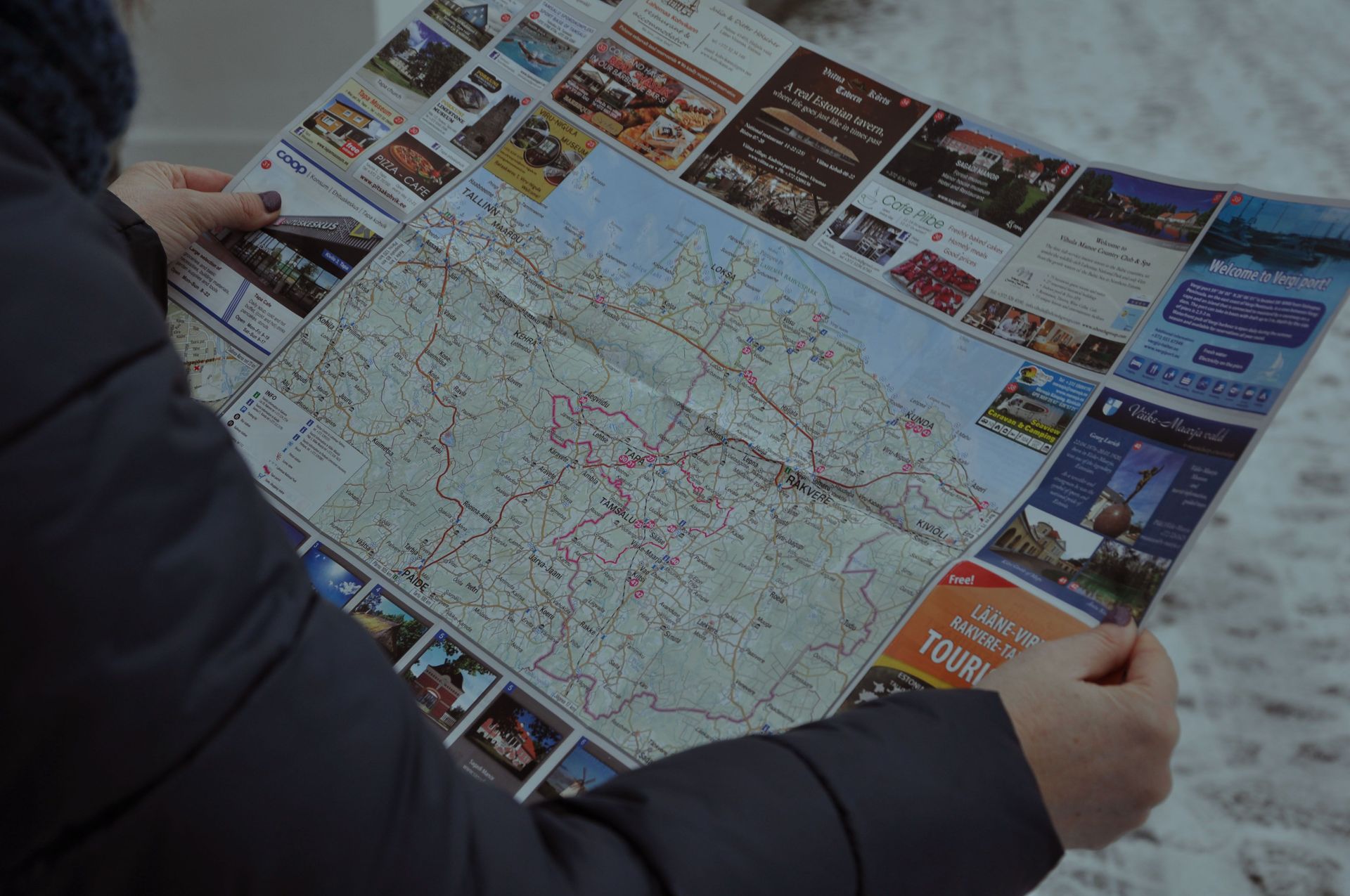
Map reading — specifically the ability to orient a physical or digital map to match the real-world environment and to navigate from one point to another using it — is a skill that GPS navigation has made practically optional in most circumstances and practically important in the specific circumstances where GPS is unavailable, unreliable, or counterproductive.
The foundational map reading skills learnable in a single session: orienting the map (rotating it so that the map's north aligns with actual north, which can be determined by compass, by the sun, or by identifying a known landmark and finding it on the map); identifying scale and estimating distances; reading contour lines to understand topography; and using a grid reference or coordinate system to identify and locate specific points.
For urban navigation, the skill that produces the most immediate practical benefit is the ability to read a street map and plan a walking or driving route without GPS — useful when phone battery fails, in areas with poor signal, or in foreign countries where data roaming is unavailable or expensive. For outdoor navigation — hiking, cycling, or any activity that takes place in terrain without clear street addresses — the ability to read a topographic map and use a compass is a safety skill as well as a navigational one.
The specific 30-minute investment: download a topographic map of a familiar local area, identify several known landmarks, practice reading the contour lines to understand the terrain, and plan a route between two points. The familiarity with map conventions produced by this exercise is sufficient to navigate basic situations without GPS.
Basic cooking techniques

Andrea Piacquadio / Pexels
Not a specific recipe but a set of foundational techniques — how to properly dice an onion, how to manage heat when sautéing, how to know when oil is hot enough, how to season appropriately — is the knowledge that separates cooking that produces reliably good results from cooking that produces inconsistent ones. An hour spent on the fundamentals produces more improvement in cooking quality than the same hour spent on new recipes.
The specific techniques with the highest leverage: knife skills (the pinch grip for knife control, the curl grip for the fingers holding the food, the rocking motion for efficient chopping, which produces faster and more consistent cuts than any other technique); heat management (the distinction between the Maillard reaction at high heat and the gradual softening at low heat, and why choosing the wrong heat level for the intended result is the most common cause of food that is cooked but not delicious); seasoning (why salt added at the beginning of cooking produces different results from salt added at the end, and why taste-as-you-go is a technique rather than a preference); and resting meat (why proteins need to rest after cooking, and what happens to the juices if they do not).
These four elements — knife control, heat management, seasoning, and resting — underlie the success or failure of most home cooking. They are not techniques confined to a specific cuisine or a specific set of recipes; they are fundamental to all cooking, and their application immediately elevates the results produced by any recipe the cook attempts.
Cold-weather layering

Gustavo Fring / Pexels
Dressing appropriately for cold and wet conditions — specifically the three-layer system of base layer, mid layer, and outer layer, and the specific properties required of each — is a skill with immediate application for anyone who spends time outdoors in variable weather and specific life-or-death relevance for anyone who hikes, climbs, cycles, or works outdoors in winter conditions.
The three-layer system: the base layer sits against the skin and must manage moisture — synthetic fabrics or merino wool move sweat away from the skin and continue to insulate when wet, while cotton absorbs moisture and loses insulating properties when wet, making it the wrong choice in conditions where hypothermia is a risk. The mid layer provides insulation — fleece or down, with down being warmer per weight in dry conditions and synthetic insulation being better in wet conditions. The outer layer provides wind and water protection — a shell that is either waterproof and breathable (Gore-Tex and similar membranes) or water-resistant and windproof.
The practical benefit of understanding the system is the ability to dress correctly for variable conditions rather than either overdressing (producing sweating and wet base layers) or underdressing (producing cold and wet outer layers). The system is modular — layers are added and removed as conditions change — and the specific combination of materials chosen for each layer determines the system's effectiveness.
The knowledge is learnable in 30 minutes from any outdoor clothing guide and has direct application in any country with variable or cold weather.
How to spot a scam

SHVETS Production / Pexels
The ability to recognize common scam patterns — the specific techniques used in phone fraud, email phishing, investment fraud, and online scams to produce trust and compliance before the deception is apparent — is a practical protective skill that prevents specific financial and personal harm, and its core patterns are learnable in a single session.
The most widely deployed scams share structural features: artificial urgency (the problem requires action now, before you have time to verify or consult); authority impersonation (a government agency, a bank, a technology company, a healthcare provider requires immediate action or information); fear activation (something has gone wrong with your account, your tax return, your computer, your parcel delivery); and isolation (do not discuss this with anyone, do not contact the bank, do not tell family members).
These four features appear in virtually every significant telephone and email fraud: the HMRC or IRS tax fraud call, the bank fraud call, the computer support scam, the parcel delivery phishing email, the romance scam, the investment fraud. The recognition rule is simple: any communication that creates urgency, claims authority, activates fear, and asks for isolation should be treated as a probable fraud until independently verified — by hanging up and calling the organization directly on a known number, by checking the sender address against the official domain, by consulting a trusted person before taking any action.
The basics of negotiating a car purchase

Vitaly Gariev / Pexels
Buying a car — new or used — is one of the largest individual financial transactions most people make, and the negotiating practices of car dealerships are specifically designed to extract maximum value from buyers who do not know the counterstrategies. An hour spent learning the basic tactics of car purchase negotiation produces a specific financial benefit — typically several hundred to several thousand pounds or dollars saved — that is available immediately in the next car purchase.
The key principles: never negotiate monthly payment before establishing the total price (the monthly payment can be lowered by extending the loan term while the total cost increases); know the market price of the specific vehicle before entering the dealership (using AutoTrader, Carwow, Edmunds, or equivalent services to establish what similar vehicles are selling for); separate the new car negotiation from the trade-in negotiation (combining them allows the dealer to move money between the two transactions in ways that obscure the true price of each); and be genuinely willing to walk away (dealerships respond to negotiating leverage, and the willingness to leave is the most credible leverage available).
The used car version requires the additional skills of identifying inspection red flags — mismatched paint indicating accident repair, uneven panel gaps, rust in the wheel arches, unusual smells in the interior — and insisting on a full independent mechanical inspection before purchase. The hour investment in learning these basics converts a high-stress, high-stakes transaction into a manageable one with better financial outcomes.