
27 things to learn in your 20s that pay off for decades
From managing money to reading a room, these 27 skills learned early can shape your career, relationships, and financial future for decades

Credit: Canva Images
Your 20s are not a rehearsal. They are the decade in which the habits, skills, and mental models you build will either compound quietly in your favor — or quietly against you — for the next 40 years. The choices you make now about how to manage money, communicate, maintain your body, and navigate relationships carry a disproportionate weight that most people don't fully appreciate until they're in their 40s looking back.
This is not because your 20s are uniquely special in some mystical sense. It's because of how compounding works. A skill practiced for 30 years becomes fluent in ways it simply cannot if you start at 40. A financial habit started at 25 has 15 more years of runway than the same habit started at 40. The brain's neuroplasticity — its capacity to wire new circuits efficiently — is still high in your 20s, which means skill acquisition is both faster and cheaper in terms of effort than it will be later.
The 27 items on this list were chosen because each one transfers across contexts. Learning to negotiate doesn't just help you ask for a raise — it helps you settle disputes with landlords, navigate contracts, and advocate for yourself in medical settings. Learning to cook well doesn't just save money — it shapes your health outcomes, your social life, and your relationship with your own daily rhythms. These are not niche professional skills. They are operating system upgrades.
Some of these will feel familiar. You may have heard "start investing early" before. But familiarity is not the same as execution. Most people know the right things to do. Far fewer have actually installed those things as habits. The goal of this list is not novelty — it's to give you a clear-eyed, practical account of what each skill actually involves, why it matters more than you might realize, and how to start.
A few things this list deliberately avoids: vague exhortations to "network more" or "find your passion." Those phrases have been repeated so often they've lost meaning. Instead, every item here is specific enough to act on — something you can begin practicing this week.
If you're in your 20s, you're holding a window of time that won't reopen. The best use of it isn't optimizing every hour. It's building skills that do their best work slowly, over years — so that by the time you need them, they're already there.
How to manage a personal budget

Credit: Canva Images
Money management is the skill most people wish they had learned a decade earlier. The frustrating part is that the mechanics aren't complex — what makes budgeting hard is consistency, which is a behavioral problem rather than a mathematical one.
A personal budget is simply an intentional plan for where your money goes each month. Without one, spending defaults to whatever feels acceptable in the moment, and "whatever feels acceptable" tends to expand to fill available income regardless of how much income you have. This phenomenon — called lifestyle creep — is why many people earning twice what they earned five years ago feel just as financially strained.
The most durable budgeting system is one simple enough that you'll actually use it. The 50/30/20 framework — allocating roughly 50% of after-tax income to needs, 30% to wants, and 20% to savings and debt repayment — gives most people a workable starting structure. It's a starting point, not a rigid rule. Your actual percentages will depend on where you live, your income, and your goals. The value isn't in the specific numbers but in the discipline of having numbers at all.
Track every expense for at least two months before you try to optimize anything. Most people wildly underestimate what they spend on food, transportation, and subscriptions. The tracking exercise tends to be more clarifying than any advice anyone can give you, because it shows your own patterns rather than abstract averages.
Separate your fixed expenses from your variable ones. Fixed expenses — rent, insurance, loan payments — are predictable and largely within your control only at the point when you sign a lease or take out a loan. Variable expenses — groceries, entertainment, clothing — are where most of the day-to-day spending decisions happen and where behavioral change actually lands.
Automate whatever you can. Setting up automatic transfers to savings on the day you get paid removes the decision entirely. Money you don't see doesn't get spent. This single habit — automating savings before you have a chance to spend — has a larger effect on long-term financial outcomes than most investment decisions.
Review your budget once a month, not once a year. An annual review is too infrequent to catch drift. Monthly reviews also make budgeting feel less punishing because you're adjusting small variances rather than confronting a year's worth of accumulated drift.
The goal isn't to restrict your life. It's to make sure the money you earn is doing what you actually want it to do — not what happens by default.
How to cook a small set of meals well

Credit: Pavel Danilyuk / Pexels
Cooking is one of the most consistently underrated skills a person in their 20s can develop. Its returns are not dramatic or single-moment — they're diffuse, daily, and cumulative. People who cook regularly eat better, spend less on food, and have a practical social skill that most adults quietly wish they had.
The error most people make is trying to learn too broadly, too fast. Cooking dozens of different dishes before mastering any of them produces someone who can produce mediocre versions of many things. A better approach is to learn a small repertoire — maybe ten to 15 recipes — and learn them so thoroughly you could make them half-asleep. Those anchor dishes will serve you for the rest of your life.
Start with technique rather than recipes. If you understand how to properly sauté, roast, and braise, you can produce good food from almost anything. Sautéing — cooking food quickly in a hot pan with a small amount of fat — is the single most versatile technique in a home kitchen. Learn to control heat. Learn when a pan is properly hot before you add food, and learn what the difference between medium and high heat actually looks like and sounds like.
Knife skills matter more than any other equipment-related skill. A sharp knife, used correctly, is faster, safer, and less fatiguing than a dull knife. Most home cooks never learn proper knife grip or cutting technique, which means every session in the kitchen takes longer than it should and carries unnecessary risk.
Build a small pantry that lets you cook without a planned grocery run. Olive oil, garlic, onions, canned tomatoes, dried pasta, rice, a few spices, and eggs will get you through a surprising number of meals. Knowing how to improvise from a pantry rather than requiring a specific ingredient list is a marker of genuine cooking competence, not just recipe-following ability.
The social dimension of cooking is easy to underestimate. Being able to host a dinner — even a simple one — creates a different kind of social currency than meeting people at bars or restaurants. The shared meal, made by your hands, tends to produce more genuine connection than most other social formats.
How to read and understand a contract

Credit: Keira Burton / Pexels
Most people sign contracts — leases, employment agreements, loan documents, service terms — without reading them carefully or understanding what they're agreeing to. This habit creates real, compounding financial and legal exposure over time.
You don't need to be a lawyer to read a contract. You need to slow down and treat the document as information rather than a formality. Most contracts are written in plain enough language that a patient, careful reader can extract the essential terms. The parts that matter most are the obligations imposed on you, the conditions under which either party can exit the agreement, and the consequences of non-performance.
Learn to identify the key clauses in every type of contract you commonly encounter. In a lease, understand what you're responsible for repairing, what happens if you leave early, and whether the landlord can increase rent before the term ends. In an employment contract, understand what you're agreeing to around intellectual property — some agreements assign ownership of work created on personal time to the employer. In a loan document, understand the interest rate, the compounding frequency, and the prepayment terms.
Pay particular attention to automatic renewal clauses. These appear in gym memberships, software subscriptions, leases, and many service contracts. They renew the agreement at the end of its term unless you take a specific action to cancel — often within a narrow window. Missing that window can lock you into another year of a contract you wanted to exit.
Understand the difference between arbitration and litigation clauses. Many consumer contracts now include mandatory arbitration clauses, which require you to resolve disputes outside the court system. This is worth understanding before you sign, because it affects your options if something goes wrong.
When something in a contract is unclear, ask for clarification before you sign — not after. Asking questions before signing is normal and professional. Asking for changes to a contract is also acceptable; the worst a counterparty can say is no.
Getting comfortable reading contracts in your 20s, when the stakes are relatively low, prepares you to do it well when the stakes are high — buying a house, signing a business agreement, or negotiating a major employment package.
How to have a difficult conversation

Credit: Zechen Li / Pexels
Difficult conversations — about money, performance, relationship problems, personal grievances, family tensions — are unavoidable. People who have developed the skill to have them well move through life with a significant advantage over those who avoid them or handle them poorly.
The core of the skill is separating the problem from the person. Most difficult conversations feel threatening because they involve someone's identity, not just their behavior. When you tell a colleague their work is falling short, they may hear that they are falling short as a person. Framing the conversation around specific behaviors and their concrete consequences — rather than assessments of character — makes the exchange easier for both parties and more likely to produce change.
Prepare before a difficult conversation. Know what outcome you're hoping for. Know what you're willing to accept. Know what you're not willing to accept. Having this clarity beforehand prevents you from being redirected by emotional intensity in the moment.
Use "I" statements rather than "you" statements. "I felt dismissed in that meeting when my suggestion wasn't acknowledged" lands differently than "You always ignore my ideas." The first is a report about your experience. The second is a prosecution. The first invites response; the second invites defense.
Timing and setting matter enormously. A conversation about a serious problem should not happen at the end of a long workday, over text message, or in front of other people. Give the conversation the conditions it needs to go well — a private space, adequate time, and a moment when neither party is already overwhelmed.
Learn to tolerate the silence after you've said something hard. The impulse to fill silence by softening or retracting what you said is strong, but it undercuts the conversation. Say the hard thing, then let it land.
The people who handle difficult conversations with skill tend to have better relationships, stronger professional reputations, and lower chronic stress levels — because unaddressed problems accumulate over time, and avoidance has a cost.
How to negotiate

Credit: fauxels / Pexels
Negotiation is not confrontation. It is the process of reaching an agreement that works for both parties when their initial positions differ. People who understand this — and who develop the practical skill to do it — consistently get better outcomes on salaries, prices, contracts, and disputes than those who either accept the first offer or antagonize the other party.
The most important thing to understand about negotiation is that asking is normal. Every professional setting has a range of acceptable outcomes built into it, and the first offer is rarely the best available one. Employers expect candidates to negotiate salary. Vendors expect buyers to push back on price. Landlords often have more flexibility on terms than their initial offer suggests. The fear of asking — of seeming greedy or presumptuous — is one of the most expensive emotional responses a person can have over a lifetime.
Know your BATNA before any significant negotiation: Best Alternative to a Negotiated Agreement. This is what you'll do if the negotiation fails. The strength of your BATNA determines your actual leverage. If your alternative is strong — another job offer, another apartment, another vendor — you can walk away, and the other party knows it. If your alternative is weak, you need to recognize that too, and negotiate accordingly rather than bluffing.
Anchor the opening. In most negotiations, whoever sets the first number shapes the range that gets discussed. If you anchor high (or low, depending on your position), the eventual settlement tends to land closer to your anchor than it would have if you'd let the other party name a number first.
Listen more than you talk. Understanding what the other party actually needs — as distinct from their stated position — often reveals paths to agreement that neither party initially saw. A landlord who won't reduce rent might be willing to include parking or add a lease extension. A client who won't raise the project fee might be willing to reduce the scope.
Negotiation is a skill, and like any skill it improves with repetition. Practice it in low-stakes settings — at markets, with vendors, in informal agreements — so that by the time it matters, you've done it dozens of times.
How to invest for the long term

Credit: TabTrader.com app / Pexels
The principle of long-term investing is simple enough to state in one sentence: put money into diversified assets regularly and leave it alone for decades. Executing that requires understanding a few fundamentals and, more importantly, the discipline to do nothing when every instinct says to act.
Compound growth is the central concept. When an investment earns a return, that return gets added to the principal, and in the next period the whole larger sum earns a return. Over 30 or 40 years, this produces results that feel counterintuitive until you see the math. The critical variable is not the annual return rate — which you have limited control over — but time, which you have complete control over in your 20s and no control over in your 50s.
The vehicle matters less than people think. A low-cost index fund — a fund that tracks the performance of a broad market index rather than trying to beat it — gives most people a better long-term outcome than actively managed funds, primarily because of fees. A 1% annual fee compounded over 30 years removes a substantial portion of your final portfolio value. Keeping fees low is one of the few things you can genuinely control.
Understand your account types before choosing your investments. In the U.S., a 401(k) and an IRA both offer tax advantages that a standard brokerage account does not. A Roth IRA — contributions made with after-tax money, withdrawals in retirement tax-free — is particularly well-suited to people in their 20s who are likely in a lower tax bracket now than they will be at retirement.
Volatility is not risk — at least not over a long horizon. Markets go down. Portfolios lose value temporarily. The people who treat temporary declines as permanent losses and sell tend to crystallize losses that would otherwise have recovered. The most reliable investment strategy is the one you can stay with when markets are falling.
Start small if necessary. Investing $50 a month is vastly better than waiting until you have $5,000, because time in the market is what produces long-term results. The amount matters less than the habit.
How to maintain your physical health proactively

Credit: Ketut Subiyanto / Pexels
The body you build habits around in your 20s is the body you're managing in your 60s. This is not a scare tactic — it's physiology. The lifestyle patterns established in young adulthood, including sleep, exercise, diet, and alcohol use, have measurable effects on cardiovascular health, bone density, metabolic function, and cognitive aging decades later.
The single most valuable physical habit to establish is regular aerobic exercise. The research on this is consistent and strong: people who sustain regular cardiovascular activity throughout their lives have lower rates of heart disease, type 2 diabetes, and cognitive decline. You don't need a formal program. Walking briskly for 30 minutes five days a week meets the general health guidelines and requires no equipment or gym membership.
Strength training, started in your 20s, pays dividends in your 60s and 70s. Muscle mass peaks in early adulthood and declines gradually after that. People who build a solid muscle foundation and maintain it through regular resistance training age with substantially better functional capacity — strength, balance, and independence — than those who don't.
Sleep is not optional recovery time. It is when the body consolidates memory, regulates hormones, and repairs cellular damage. Chronic sleep deprivation — fewer than seven hours a night over months and years — has compounding effects on metabolic health, immune function, and mental health. The habit of prioritizing sleep, rather than treating it as what happens after everything else is done, is one of the most protective behaviors available.
Learn to read your own body's signals. Fatigue, chronic pain, digestive problems, and mood shifts are information, not inconveniences. People who develop the habit of paying attention to these signals and taking them to a doctor when warranted tend to catch problems earlier, when they're more treatable.
Preventive care — regular checkups, dental visits, screenings appropriate for your age — costs far less in money, time, and suffering than reactive care. The systems for staying healthy are much less expensive than the systems for getting healthy once something has gone wrong.
How to write clearly

Credit: cottonbro studio / Pexels
Clear writing is clear thinking made visible. People who can organize and express ideas in writing have a competitive advantage in almost every professional context — because writing is how proposals get approved, arguments get made, and records get created.
The most common writing problem is writing to sound smart rather than to be understood. Academic training, in particular, tends to reward complexity and length in ways that are counterproductive in professional and public-facing writing. The shift from academic to professional writing requires unlearning the habit of padding sentences with qualification and abstraction.
Start with your main point, not with context. The instinct to set up an argument before stating it — to explain the background before getting to the claim — produces writing that makes readers work to find what matters. State your main point in the first paragraph, even the first sentence. Let the supporting material follow.
Use short sentences for emphasis. A long, clause-heavy sentence distributes emphasis evenly across its parts, which is another way of saying it has no emphasis. When you want something to land, say it briefly.
Concrete language beats abstract language. "Revenue declined 12% in Q3" is clearer than "there was a period of underperformance." "She arrived at 9 a.m." is clearer than "she arrived in the morning." Abstract language forces the reader to do interpretive work that concrete language eliminates.
Edit your own work with a cooling-off period. A draft read immediately after writing it appears clearer than it is, because you're reading what you intended to say rather than what's actually on the page. Come back to a piece after an hour, or a day, and cut anything that doesn't carry weight.
Good writing also requires a willingness to cut. First drafts are almost always 20 to 30% longer than they need to be. The editing process — cutting repetition, collapsing paragraphs, removing hedges — is where writing becomes clear.
How to save for an emergency fund
Credit: Canva Images
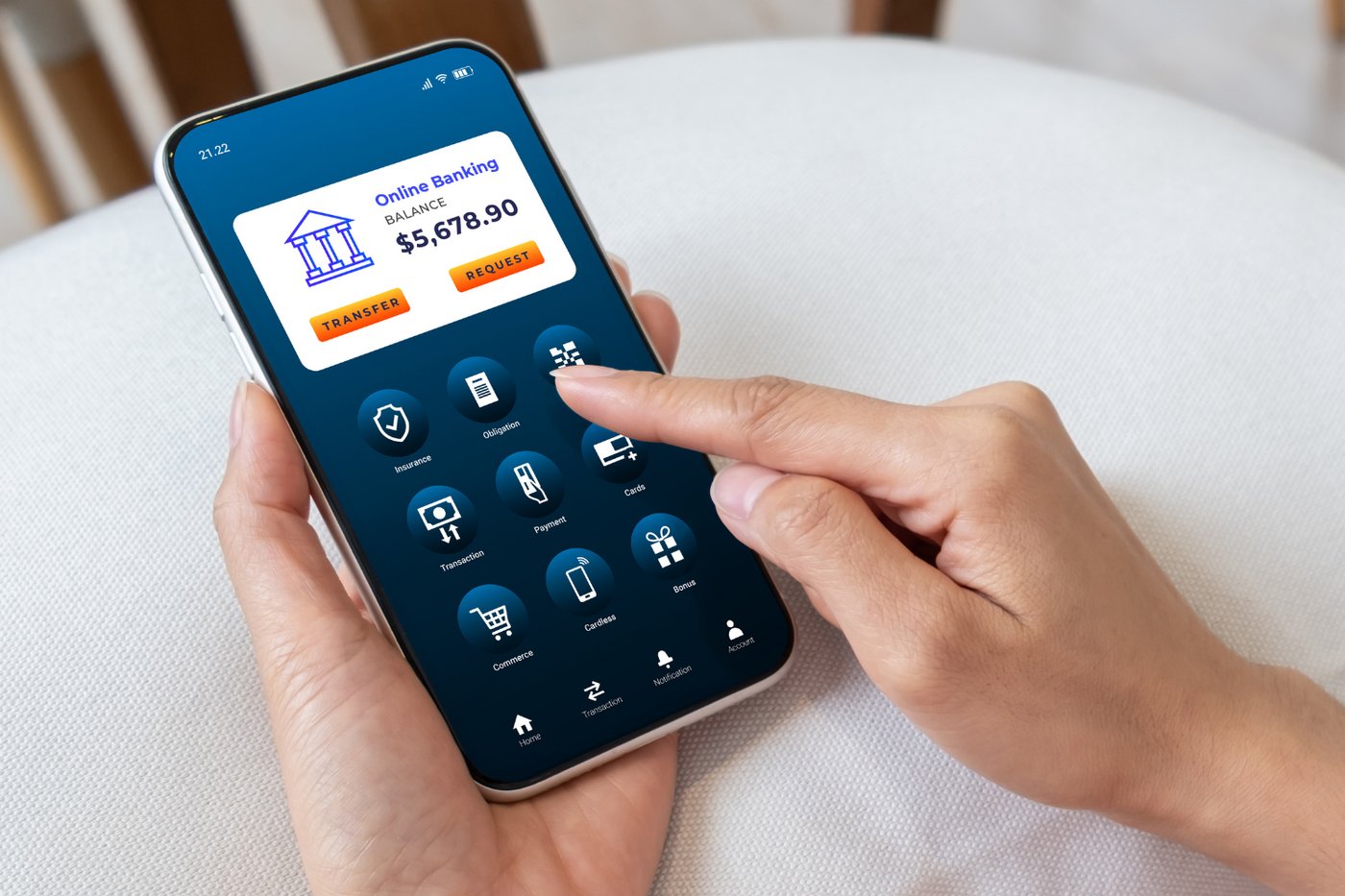
An emergency fund is the financial buffer that keeps an unexpected expense — a car repair, a medical bill, a sudden gap in income — from becoming a debt spiral. Without one, any disruption to income or a significant unplanned expense forces borrowing, often at high interest rates, which compounds the financial damage.
The standard guidance is to accumulate three to six months of essential living expenses in liquid savings — meaning money that can be accessed immediately without penalty. Essential expenses means the minimum you need to cover rent, food, utilities, and transportation — not your current spending level, but the level you could sustain if you needed to cut everything non-essential.
The most common mistake is treating emergency savings as an investment. Emergency funds should sit in a high-yield savings account or money market account — something safe, liquid, and earning a modest return. They should not be in stocks or other volatile assets, because the moment you need emergency funds is often a moment when markets are down and selling would crystallize a loss.
Build your emergency fund before aggressively investing beyond any employer match. The logic is that the interest rate on consumer debt is almost always higher than realistic long-term investment returns. Carrying high-interest debt while investing is a net negative — you're paying 20% interest on one side while earning 7% to 8% on the other.
Automate the accumulation. Set up a recurring transfer from your checking account to a designated savings account on payday. Even $50 to $100 per month adds up to a meaningful buffer over two or three years. The goal is to make the accumulation a background process rather than a periodic act of discipline.
Replenish the fund as soon as possible after you use it. An emergency fund that gets used and not replaced is just a loan to yourself — one that leaves you vulnerable again the next time something goes wrong. Rebuilding it should become an immediate financial priority after any withdrawal.
How to build and maintain meaningful relationships

Credit: RDNE Stock project / Pexels
Adult friendships require more deliberate effort than most people expect. Childhood and school friendships happen naturally, structured by proximity and shared circumstance. Adult friendships have to be built and maintained against the headwinds of distance, competing demands, and the general busyness of adult life.
The most important thing to understand about adult friendships is that they are sustained by small, regular contact rather than by occasional large gestures. A text message asking how someone's job interview went, a shared article, a brief call — these accumulate into the sense of being known and cared for. The friend who remembers and follows up is the one who retains the relationship.
Reciprocity is fundamental. Relationships that flow consistently in one direction — where one person does most of the initiating, most of the listening, most of the supporting — tend to become exhausting and eventually lapse. Building the habit of noticing when a relationship has become imbalanced and actively rebalancing it is a practical skill, not just an ethical one.
Be willing to be honest with people you care about. Relationships that lack the capacity for honesty tend to stay shallow, because the connection depends on never saying anything that might be unwelcome. Developing the ability to tell a friend a hard truth, kindly and at the right moment, deepens a relationship in ways that consistent agreement never can.
Relationships with people who are different from you — different ages, backgrounds, professions, perspectives — are worth investing in deliberately. The social tendency to cluster with people like us is natural, but a network that is entirely homogeneous tends to recycle the same information, the same worldview, and the same blind spots.
Loneliness in adulthood is a genuine health risk — one that research links to elevated rates of cardiovascular disease, depression, and earlier mortality. The investment in relationships is not sentimental. It is, among other things, an investment in health.
How to read financial statements

Credit: Mikhail Nilov / Pexels
You don't need to be an accountant to read a financial statement. But understanding the basics — what a balance sheet shows, what an income statement measures, what cash flow tells you that earnings don't — gives you a meaningful edge in evaluating businesses, employers, and investments.
Every publicly traded company is required to publish audited financial statements. These documents are dense, but three core statements contain most of what a non-specialist needs: the income statement, the balance sheet, and the cash flow statement.
The income statement (also called the profit and loss statement) shows revenue, expenses, and profit over a period of time. Revenue is what the company brought in. Net income is what remained after all costs. But net income can be manipulated by accounting choices in ways that cash flow cannot, which is why professional investors look at both.
The balance sheet shows what a company owns (assets), what it owes (liabilities), and the difference (equity) at a single point in time. A company with large debt relative to its equity is more financially fragile — more vulnerable to an earnings decline or interest rate increase — than a company with the same assets and little debt.
The cash flow statement shows the actual movement of cash into and out of the business. A company can be profitable on paper while consuming cash — this happens when customers haven't paid their invoices yet, or when the company is investing heavily in equipment. Cash flow from operations is the cleanest measure of whether a business is actually generating money from its core activity.
Understanding these documents also helps you evaluate your own employer's health. A company with declining cash flow and rising debt is a different employment risk than a company with the opposite profile. People who can read the signs tend to make better decisions about where to work and when to leave.
How to manage stress effectively

Credit: Polina Tankilevitch / Pexels
Stress is not the problem — it is the physiological response to a perceived demand. Short-term stress, well-managed, improves focus and performance. Chronic, unrelenting stress that never fully resolves has documented negative effects on immune function, cardiovascular health, sleep quality, and decision-making.
The first skill is distinguishing between stressors you can act on and stressors you cannot. Spending significant mental energy on situations you have no capacity to influence — global events, other people's decisions, outcomes already determined — produces the physiological costs of stress without any of the benefits. This is not a call to be passive about problems. It's a call to direct your attention and energy where it can actually produce change.
Physical exercise is one of the most consistently effective stress-management tools available. It metabolizes stress hormones, improves sleep, and produces neurochemical changes that reduce anxiety. The mechanism is physiological, not psychological — meaning it works whether or not you believe it will.
Develop a practice of deliberate disengagement from work. People who cannot stop thinking about work problems outside of work hours do not recover fully between demands. Recovery — real cognitive and physiological recovery — requires putting problems down, not just carrying them more quietly. A regular boundary between work and non-work time, whether a walk, a meal without a phone, or a consistent end-of-day ritual, is a structural tool for managing chronic stress.
Identify your own early stress signals. Most people have characteristic early signs — sleep disruption, irritability, physical tension in specific areas, changes in appetite — that precede a more serious stress response. Learning to recognize your own signals early, and respond to them before they escalate, is a practical form of self-management.
Avoid coping methods that appear to relieve stress but actually increase it over time: excessive alcohol, avoidance, compulsive phone use. These provide short-term numbing while adding complications — health costs, avoided problems that grow larger, and reduced capacity to tolerate discomfort.
How to learn how to learn

Credit: Kindel Media / Pexels
Learning efficiently — not just accumulating information, but retaining it and applying it in new contexts — is a meta-skill that multiplies the value of everything else you try to learn. People who have developed deliberate learning strategies make faster progress across every domain they enter.
The core finding from cognitive science research on memory and learning is that passive review doesn't work. Re-reading notes, highlighting text, and re-watching lectures feel productive but produce poor retention because they create an illusion of familiarity rather than genuine retrieval. The methods that actually work are more effortful and less comfortable.
Active recall — closing your notes and trying to retrieve what you just studied from memory — is substantially more effective than re-reading. The effort of retrieval, including the failure to remember something and then looking it up, strengthens the memory trace in ways that passive review cannot.
Spaced repetition spreads learning sessions out over time rather than massing them together. Studying something on Monday, reviewing it on Wednesday, reviewing it again the following Monday, and once more two weeks after that produces far more durable memory than studying for four hours in a single session. This is counterintuitive because massed practice (cramming) feels more productive. It produces short-term performance, not long-term retention.
Interleaving — mixing different topics or problem types within a single study session rather than focusing exclusively on one — improves both retention and the ability to transfer knowledge to new problems. It is harder than blocked practice, but that difficulty is the mechanism of learning.
Teaching something to another person, even a hypothetical explanation, surfaces gaps in your own understanding that reading alone doesn't reveal. If you can't explain a concept simply, you don't fully understand it. Trying to produce an explanation forces you to confront what you actually know versus what you only think you know.
How to build professional credibility early

Credit: Pavel Danilyuk / Pexels
Professional credibility isn't given to you. It's constructed, over time, through a series of small actions — consistent quality of work, reliability, the willingness to be honest even when it's inconvenient, and the habit of following through on commitments.
The most important driver of early credibility is being someone people can count on. This sounds obvious, but it is rarer than it seems. The person who consistently delivers what they promised, on time, builds a reputation faster than someone with equivalent talent who is unpredictable. Reliability is a skill, not just a character trait — it involves learning to set realistic expectations, communicate early when you're behind, and close loops explicitly.
Ask good questions rather than performing confidence you don't have. In most professional environments, the person who asks clarifying questions early and acts on the answers does better work than the person who assumes they understand and proceeds incorrectly. The willingness to say "I want to make sure I understand what you need" is a sign of professional competence, not weakness.
Build the habit of documenting your work and your decisions. A record of what you did, what you decided, and why you decided it protects you when memories diverge and demonstrates that you think carefully rather than impulsively.
Seek feedback actively and specifically. "How did I do?" generates vague responses. "What's one thing I could have handled better in that presentation?" generates actionable information. People who seek specific feedback and visibly act on it develop faster than those who wait for feedback to be offered.
Be aware of how you're perceived in informal settings. Professional credibility is not built only in formal reviews or high-stakes moments. How you behave in meetings, how you treat administrative staff, whether you give credit to others — these accumulate into a reputation that precedes you into rooms you haven't entered yet.
How to be comfortable with solitude

Credit: Thought Catalog / Pexels
The capacity to be alone with yourself — without distraction, without the validation of social interaction, without the company of a phone screen — is a skill that most people in their 20s have underdeveloped. This isn't a moral failing. It's partly a consequence of living in an era designed to ensure you're never without stimulation.
Being comfortable with solitude matters for practical reasons. People who can tolerate time alone think more clearly, make decisions with less susceptibility to social pressure, and have a more stable internal reference point from which to evaluate what they actually want. They are less dependent on others for mood regulation, which makes them easier to be in relationship with — not harder.
Solitude is where long-term creative and intellectual work happens. Almost every significant piece of work — a business plan, a creative project, a complex decision — requires extended, uninterrupted time with your own thoughts. People who cannot tolerate that time cannot do that work.
Build a practice of doing something alone and without screens — walking, sitting quietly, cooking, drawing, writing — for some portion of each week. The discomfort you feel at first is normal. The brain, trained by years of constant stimulation, will produce restlessness, boredom, and the impulse to reach for your phone within minutes. Staying with the discomfort, repeatedly, is how the capacity builds.
Solitude is also where the questions you genuinely need to answer — about what you want, who you are, what you believe — actually get addressed, rather than indefinitely deferred. The noise of constant social engagement is very effective at keeping those questions at bay. The cost is paid later, when the questions become more urgent and harder to answer.
How to communicate across difference

Credit: Tiger Lily / Pexels
The professional world requires working effectively with people who have different cultural backgrounds, communication styles, generational assumptions, and professional norms. This is not a peripheral skill — it is increasingly central to functioning well in most organizations.
Start by examining your own communication defaults. Most people have implicit assumptions about directness, hierarchy, silence, and conflict that feel universal but are actually shaped by their specific cultural and family background. Someone raised in a context where disagreement is expressed directly will misread someone raised in a context where it's expressed obliquely — and vice versa.
High-context and low-context communication styles differ in how much meaning is carried by the words themselves versus by context, tone, and implication. In a low-context communication style, meaning is largely explicit — what's said is what's meant. In a high-context style, meaning is partly carried by what's not said, by relationship history, and by tone. Neither style is superior. But collisions between them are the source of a large proportion of workplace misunderstandings.
When working across a communication difference, seek clarity actively. Ask more questions. Summarize your understanding of what was agreed and invite correction. Avoid filling in silence or ambiguity with your own assumptions. The cost of asking "I want to make sure I understood correctly — can you walk me through what we decided?" is essentially zero. The cost of proceeding on a wrong assumption can be significant.
Generational communication differences are as real as cross-cultural ones. Preferences around response time, meeting formats, written versus spoken communication, and hierarchy vary across age cohorts in ways that generate friction when they go unexamined.
The person who can adapt their communication style to different contexts — without losing their own voice — operates in a much larger world than the person who requires everyone else to meet them where they are.
How to speak in public

Credit: Henri Mathieu-Saint-Laurent / Pexels
The ability to speak clearly and confidently to a group is one of the most consistently valuable skills across every professional field. It is also one of the skills that most people actively avoid developing, because the anxiety associated with public speaking keeps them from accumulating the repetitions needed to become competent.
Public speaking anxiety is normal. The physiological response — elevated heart rate, heightened alertness — is the same mechanism the body uses for any high-stakes performance. The experience of that response as terrifying rather than activating is partly a matter of interpretation, and interpretation is changeable with practice.
The most important public speaking principle is knowing your material rather than memorizing your script. Word-for-word memorization creates fragile performance — a single missed word can derail the whole thing. Knowing your content deeply, and speaking from that understanding, produces more resilient and more natural delivery. You are explaining something you understand, not reciting something you've memorized.
Structure matters as much as delivery. An audience can follow a clear structure even through imperfect delivery. A perfectly delivered talk with a confusing structure leaves people unable to recall what was said. The three-part structure — tell them what you're going to tell them, tell them, tell them what you told them — is a cliché because it works.
Make eye contact with specific individuals in the room, not with the back wall or the middle distance. Brief, genuine eye contact with different individuals creates the experience of a conversation rather than a broadcast. It also makes you more conscious of how your audience is responding.
Record yourself presenting, then watch it back. This is uncomfortable, but it is the single fastest way to identify speech habits — filler words, dropped endings, pacing problems — that you don't notice in the moment.
How to manage your digital life and privacy

Credit: Jakub Zerdzicki / Pexels
The digital habits you build in your 20s shape your data footprint, your security posture, and the degree to which your information remains within your control for decades. Most people treat digital hygiene as a technical subject for specialists. It is not.
Password security is the foundation. Reusing passwords across multiple accounts means that one data breach — and data breaches are routine — can expose every account where you used that password. A password manager generates and stores a unique, long, random password for each service you use, requiring you to remember only one master password. This single change eliminates the most common vector of account compromise.
Two-factor authentication adds a second layer of verification to account login — usually a code sent to your phone or generated by an app — that makes account takeover significantly harder even if a password is compromised. Enable it on every account that offers it, particularly email, banking, and social media.
Your email account is the master key to your digital life. Most account recovery flows go through email. A compromised email account gives an attacker access to every other service you use that offers password reset by email. Treat your email password and security settings as the most important in your entire digital life.
Understand what the apps on your phone have access to. Camera, microphone, location, contacts, and health data are valuable to companies in ways that aren't always disclosed in the terms of service you agreed to without reading. A periodic review of app permissions — deleting apps you don't use, restricting access for apps that don't need it — is a simple, low-cost form of digital self-defense.
Separate your professional and personal digital lives where possible. A work email or device may be subject to monitoring by your employer. Using personal accounts for personal communications is not paranoia — it's a reasonable recognition of how institutional and personal interests can diverge.
How to develop financial literacy beyond the basics

Credit: RDNE Stock project / Pexels
Financial literacy is not just knowing how to budget. It involves understanding how the larger financial system works — how debt is structured, how taxes affect investment decisions, how inflation erodes savings, how interest compounds — in ways that inform every major financial choice you make across a lifetime.
Understand what your marginal tax rate means. Many people think of taxes as a flat percentage of income. The U.S. tax system, like most developed country systems, is progressive — higher income is taxed at higher rates only on the portion above each threshold, not on all income. Understanding this prevents the mistaken belief that a raise can make you "worse off" by bumping you into a higher bracket.
Inflation is money's silent cost. A dollar today will buy less in 20 years. This is why holding large amounts of cash savings over the long term — beyond what you need for an emergency fund and near-term goals — represents a slow, certain loss of purchasing power. Understanding inflation helps explain why long-term savings should be invested rather than held.
Understand the difference between good debt and expensive debt. Debt used to acquire an asset that appreciates — a mortgage on a home in a stable market — is structurally different from debt used to finance consumption — a credit card balance for everyday spending. The cost of carrying high-interest consumer debt typically exceeds any realistic investment return available to a retail investor.
Understand how credit works and how it affects your options. A credit score is a summary of your borrowing behavior — how reliably you pay on time, how much of your available credit you use, how long you've had accounts, how many new accounts you've recently opened. Maintaining good credit — which primarily means paying bills on time — keeps your borrowing costs lower across every future transaction that involves a credit check.
Financial literacy is not about being wealthy. It's about making the decisions available to you with full information rather than partial information.
How to set and pursue long-term goals
Credit: ines bahr / Pexels
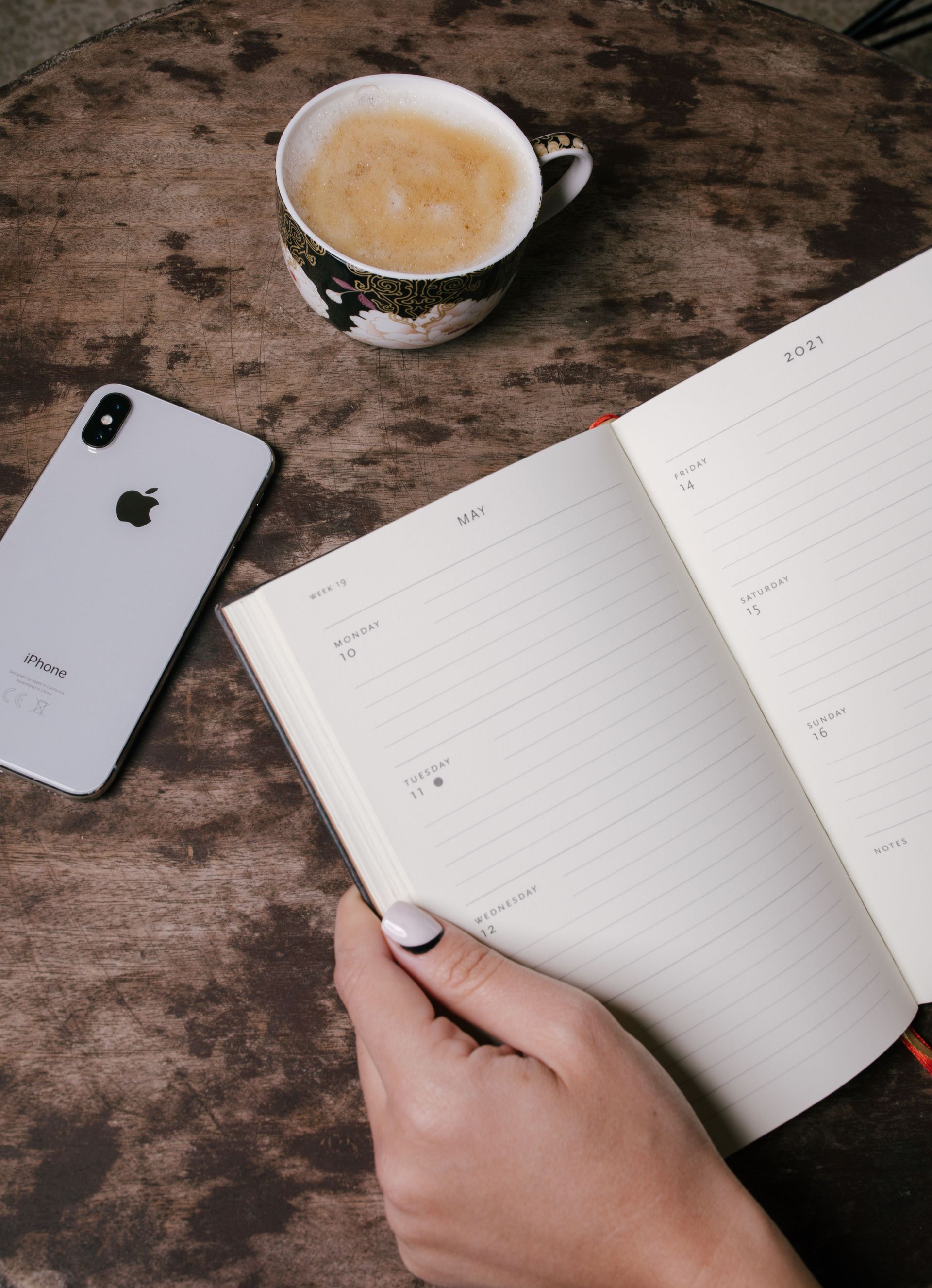
Goal-setting sounds simple enough that many people don't treat it as a skill. It is. The gap between knowing what you want and reliably moving toward it involves a set of practices that most people have not developed — not from lack of ambition, but from lack of method.
The first principle is specificity. "I want to get healthier" is not a goal — it's a direction. "I will run three miles without stopping by the end of April" is a goal. The distinction matters because a vague intention doesn't generate clear action. A specific goal does.
Work backward from the goal to the current moment. What would you need to accomplish in the next three months for the goal to be on track? What would you need to do next week for that to happen? What would you need to do tomorrow? This decomposition turns a distant goal into an immediate next action, which is the only unit of a goal that can actually be executed.
Distinguish between outcome goals and process goals. An outcome goal — "get promoted" — is often partially outside your control. A process goal — "have a substantive conversation with my manager about my development plan before the end of this quarter" — is within your control. Attaching yourself to outcomes you don't fully control creates frustration. Attaching yourself to processes produces both the best chance of the outcome and a more sustainable engagement with the work.
Review your goals regularly. A goal set and then forgotten is not a goal — it's an aspiration. A monthly review, even brief, keeps goals from drifting out of your working attention. It also allows you to update goals that circumstances have made obsolete.
Be willing to revise goals that no longer fit. Persistence is a virtue, but so is the ability to recognize when a goal was set with incomplete information and when changing course is the intelligent response.
How to manage your time and attention

Credit: RDNE Stock project / Pexels
Time management is not really about time. It is about attention. The problem most people face is not that they don't have enough hours — it's that their hours are persistently colonized by low-priority demands, notifications, and the path of least resistance.
The most important time management habit is protecting blocks of uninterrupted time for your most important work. Deep, cognitively demanding work — writing, analysis, complex problem-solving — requires sustained focus that is incompatible with frequent interruption. Checking email every 20 minutes, responding to messages as they arrive, and keeping every notification enabled are structural barriers to producing high-quality work.
Distinguish between urgent and important. Many things that feel urgent — an email that arrived this morning, a request for a quick response — are not actually important. Many things that are genuinely important — long-term professional development, relationship maintenance, health habits — produce no immediate urgency signal. Systematically attending to urgent things over important ones is a recipe for being perpetually busy while making slow progress on what matters.
Plan your day before it starts. A five-minute review of what you need to accomplish and when you'll do it prevents the day from being entirely dictated by whoever sends you a message first. It doesn't need to be elaborate. A short list of three to five priorities, with rough time blocks, is enough.
Understand your own peak performance hours. Most people have a window of several hours — often in the morning — when cognitive performance is at its highest. Using those hours for demanding work and routine tasks for off-peak hours is a structural adjustment that improves output without requiring more total time.
Attention is a depletable resource within a day. Tasks that require decision-making draw on the same cognitive reserve as tasks that require focus. Minimizing low-stakes decisions — what to eat, what to wear — reduces the cognitive drain they impose and leaves more attention available for decisions that matter.
How to understand and set personal boundaries

Credit: Canva Images
A boundary is a clear statement of what you will and won't accept in how you're treated — and, more importantly, a practice of maintaining that standard when it's tested. Most people understand the concept. Far fewer have developed the practical capacity to set and hold boundaries effectively, especially with people who push against them.
The difficulty with boundaries is that they create short-term discomfort. Saying no to a request, declining to extend a favor, or naming a behavior that you won't tolerate typically generates a moment of friction. The path of least resistance is to avoid the friction by tolerating whatever is being asked. The long-term cost of this is accumulated resentment, exhaustion, and relationships that exploit the path of least resistance indefinitely.
Effective boundaries are stated in terms of your own behavior rather than the other person's. "I won't respond to work messages after 7 p.m." is a boundary you can maintain. "You need to stop messaging me after 7 p.m." requires the other person's compliance and turns the boundary into a negotiation. The difference is significant.
Saying no is a complete sentence. Most people over-explain their refusals in ways that invite negotiation. "I can't come to dinner because I have a lot going on this week and I also need to rest because I've been tired" is an invitation to argue that the dinner won't take long and you can rest afterward. "I can't make it this time" is not.
Boundaries with family are often the hardest to establish because the relationships carry the longest history and the deepest attachment. But the same principles apply. What you allow in any relationship is what that relationship will normalize over time.
People who lack effective boundaries don't only suffer personally — they tend to create problems in professional settings too, because boundary-related issues around workload, professional roles, and communication often become management and team-culture problems.
How to read widely and think critically

Credit: Vitaly Gariev / Pexels
Reading broadly — across disciplines, cultures, periods, and genres — builds a kind of mental furniture that specialized education doesn't provide. It exposes you to different ways of reasoning, different assumptions about how the world works, and different registers of language that narrow reading doesn't produce.
The most valuable books to read in your 20s are not necessarily the ones on best-seller lists or the ones cited most frequently on the internet. The books that tend to produce the most durable thinking are the ones that give you a new conceptual framework — a new way of seeing something — rather than simply new information. Information becomes outdated. Frameworks endure.
Critical thinking is the practice of examining claims, evidence, and arguments rather than accepting conclusions based on their source or their emotional resonance. It involves asking: What is the claim? What evidence supports it? What would have to be true for it to be false? What alternative explanations exist? Who has an interest in me believing this?
These questions are not expressions of cynicism. They are habits of intellectual self-defense. The media environment in which most people currently live is saturated with claims, many of which are poorly supported, many of which are designed to produce a specific emotional response, and many of which are simply wrong. The ability to evaluate claims rather than simply absorb them is not a niche academic skill — it is a basic competence for navigating contemporary life.
Reading fiction specifically builds the capacity for perspective-taking — the ability to inhabit a point of view different from your own — in ways that non-fiction typically doesn't. This has practical consequences for empathy, for leadership, and for the quality of your reasoning about situations involving other people.
Build the habit of reading before building the habit of reading the right things. A person who reads 20 books a year — of any kind — develops intellectual habits that a person who reads two books a year simply doesn't have access to.
How to build a professional network intentionally

Credit: Henri Mathieu-Saint-Laurent / Pexels
The phrase "networking" produces immediate discomfort in most people because it calls to mind transactional, inauthentic interaction — the conference room business card exchange, the LinkedIn connection request from a stranger who wants something. That version of networking is as ineffective as it is unpleasant.
A useful professional network is built from genuine relationships — with colleagues, collaborators, mentors, former managers, people you've learned from or worked alongside. These relationships develop through actual work done together, shared interests, genuine curiosity about what other people do and how they think. They are maintained through the same small-contact habits that sustain personal friendships.
The most reliable networking strategy in your 20s is to be genuinely excellent and genuinely generous. People who do excellent work get referred. People who help others without immediately expecting something in return accumulate goodwill that eventually comes back in ways they can't predict.
Identify people whose work you respect and find ways to engage with it genuinely — commenting thoughtfully on their writing, attending events they're involved with, asking specific questions that demonstrate you've actually engaged with what they're doing. This is not manipulation. It is how genuine professional relationships begin.
Maintain relationships through your network even when you don't need anything. The person who only surfaces when they need a job or a referral has a thin network regardless of how many connections they have. The person who stays in contact — sharing relevant information, congratulating accomplishments, checking in — has a deep one.
Your network in your 20s is unlikely to be the most powerful one you'll ever have, but the habits you build now determine the network you'll have in your 40s, when its value is highest.
How to handle failure and setbacks productively

Credit: Piotr Arnoldes / Pexels
Failure is not an aberration in a productive life. It is a structural feature of any life lived with ambition and risk. People who treat every failure as a verdict on their worth, rather than as information about what didn't work, tend to either stop taking risks or spiral into extended self-recrimination that doesn't produce learning.
The practical skill is separating the failure from its lessons. After something goes wrong, the useful questions are: What specifically happened? What could I have done differently? What information do I now have that I didn't have before? What would I change? These questions direct attention toward the future. Self-recrimination — "I can't believe I did that," "I'm so stupid," "I always mess things up" — directs attention toward a story about you rather than a plan for improvement.
Resilience is not the absence of emotional response to failure. It is the capacity to have the response, process it, and continue. Suppressing the emotional dimension — pretending the setback didn't affect you — tends to produce avoidance rather than genuine processing. Acknowledging that something was genuinely disappointing or painful, then deliberately redirecting attention toward what comes next, is more effective.
Other people's failures are a largely underused learning resource. Reading about high-profile business failures, studying cases where talented people made catastrophic errors in judgment, and examining the specific conditions under which intelligent people got things badly wrong is one of the most efficient ways to build judgment without paying the tuition yourself.
Distinguish between failure that resulted from bad process and failure that resulted from bad luck. A decision that was well-reasoned but produced a bad outcome — because of factors you couldn't have known — is not the same as a poorly-reasoned decision that happened to have a bad outcome. Conflating these produces either false confidence (if bad process sometimes works, it must be good) or excessive self-criticism (if the outcome was bad, the process must have been wrong).
How to understand your own psychology

Credit: Canva Images
Self-knowledge — accurate understanding of your own patterns, motivations, reactions, and defaults — is not a luxury or a form of self-indulgence. It is a practical competence. People who understand their own psychology make fewer predictable errors, manage their relationships more effectively, and make career and life decisions that are more congruent with what they actually want and value.
Start by noticing your automatic reactions. In what situations do you become defensive? In what situations do you withdraw? What types of people consistently produce friction for you? What kinds of feedback do you receive consistently across different contexts and relationships? These patterns are information about how you process the world.
Understand your defaults under stress. Most people have a characteristic stress response — conflict, withdrawal, control-seeking, people-pleasing — that activates when they're overwhelmed or threatened. Knowing your pattern allows you to recognize when it's active and to make a conscious choice rather than acting it out automatically.
Cognitive biases are systematic errors in thinking that affect everyone. Confirmation bias — the tendency to weight evidence that supports existing beliefs more heavily than evidence that challenges them — is one of the most pervasive. Understanding the major biases and watching for them in your own thinking doesn't eliminate them, but it reduces their unchecked influence.
Therapy is a tool for developing self-knowledge, not just for addressing clinical problems. Working with a therapist, even briefly, to examine recurring patterns in relationships, work, or emotional life produces more concrete self-knowledge than years of unaided introspection for many people — because a trained outside observer notices things that proximity prevents you from seeing.
The work of self-understanding is not finished in your 20s. But beginning it then, and treating it as a genuine ongoing project, gives you decades of advantage over someone who starts examining their own patterns in their 40s.
How to live below your means

Credit: Ron Lach / Pexels
Living below your means — spending less than you earn — sounds like obvious advice. The difficulty is executing it over time against a continuous current of social pressure, clever marketing, and the natural tendency to define "enough" by whatever slightly exceeds what you currently have.
Lifestyle inflation is the primary enemy of wealth accumulation. As income rises, spending tends to rise to match it. The person who earns $60,000, saves $10,000, and lives on $50,000, and then receives a raise to $80,000 and expands their spending to $70,000, has not improved their savings rate or their trajectory. They've upgraded their lifestyle while their financial position changes proportionally less than their income change suggests.
The practical alternative is to increase your savings rate whenever your income increases, before your lifestyle has a chance to adapt. When a raise arrives, divert a substantial portion of it to savings immediately — before it becomes part of your spending baseline. This is the single most reliable way to translate income growth into actual wealth accumulation.
Distinguish between assets and expenses dressed as status. A car is almost always a depreciating expense, not an investment. A luxury apartment in a market where renting is financially equivalent to buying is an expensive consumption choice, not a wealth-building one. Furniture, clothing, and electronics that provide status without generating income or appreciating in value are consumption.
This is not an argument for austerity. Spending money on things that genuinely enrich your life is rational. Spending money to maintain a lifestyle that looks a certain way, or to avoid the social discomfort of appearing to have less than your peers, is a form of expenditure that tends to produce neither happiness nor wealth.
The people who build substantial financial security over a lifetime are rarely those who earned the most. They are the ones who consistently kept a gap between what they earned and what they spent.