
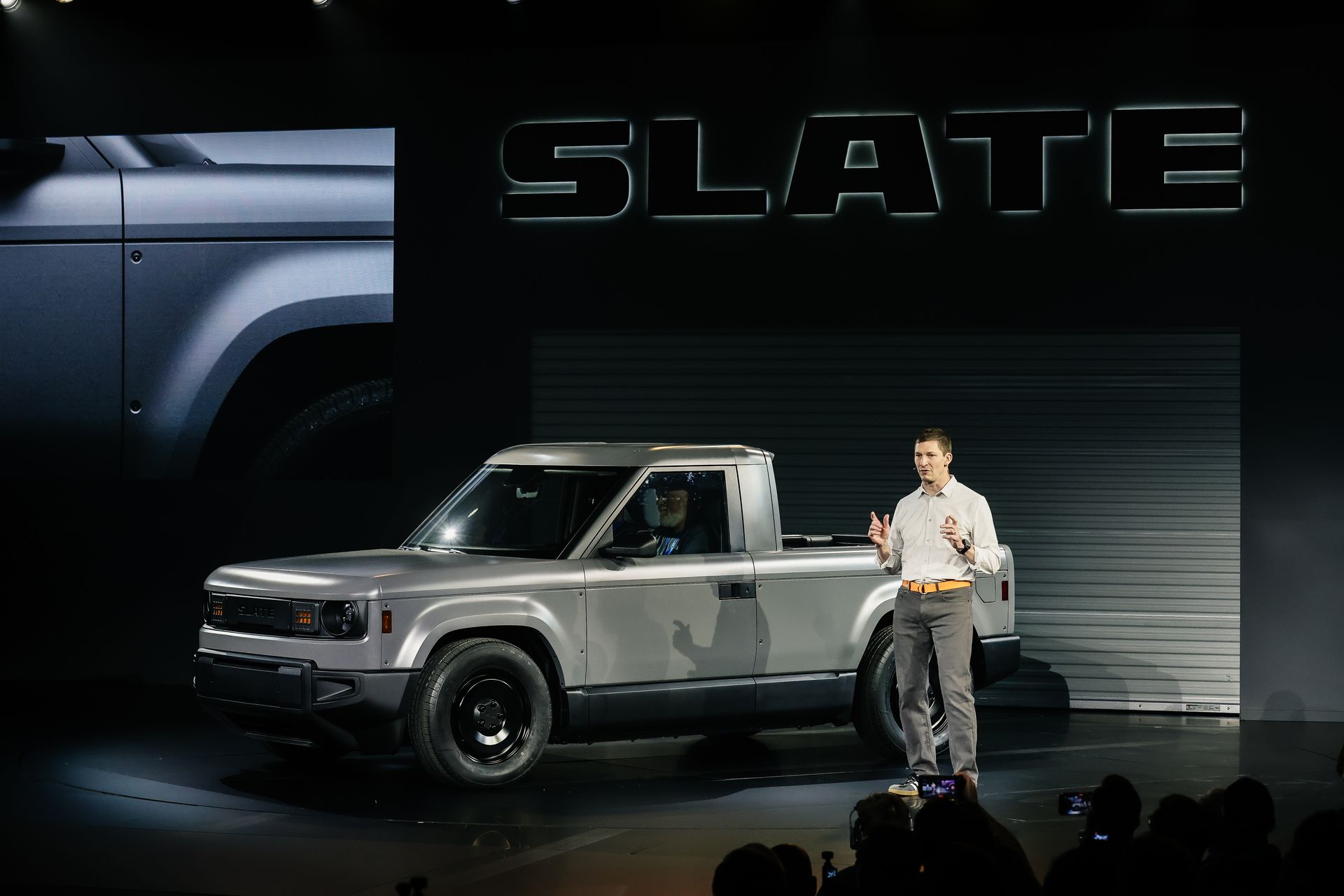
Slate Auto CEO Peter Faricy said the company's $24,950 bare-bones electric pickup truck will be profitable, with a goal of reaching positive free cash flow and earnings before taxes, depreciation, and amortization by 2027.
CEO Peter Faricy says every vehicle will be gross margin positive, with a break-even point of roughly 80,000 units a year
Greg Doherty / Getty Images
Slate Auto CEO Peter Faricy said the company's $24,950 bare-bones electric pickup truck will be profitable, with a goal of reaching positive free cash flow and earnings before taxes, depreciation, and amortization by 2027.
"It's an ambitious goal," Faricy said. "No other automotive company has been able to do that before. So it's ambitious. It's going to take a lot of work. Nothing's guaranteed in life, but you have to have ambitious goals if you want to achieve big things."
Gross margin positivity on every unit shipped is achievable, Faricy said, pointing to how the stripped-down product and streamlined manufacturing keep costs in check. At roughly 80,000 units annually, the company would cover its costs — a threshold that amounts to little more than half the 150,000-vehicle annual output capacity being built into the Warsaw, Indiana plant, according to CNBC.
Faricy said Slate's stripped-down design and direct-to-consumer sales model give it a different cost structure than other automakers. Rather than paint, the composite body panels are engineered to accept vinyl wraps — sidestepping the paint shop entirely, a facility that typically represents one of the largest capital expenditures in vehicle manufacturing. The base model also forgoes an infotainment screen and uses hand-crank windows. Slate opened preorders for the truck on Wednesday at $300 down, with first deliveries expected in the fourth quarter of 2026. The company said it has received more than 180,000 reservations.
Wednesday's preorder launch was accompanied by revised technical figures. The projected range now stands at 205 miles, up from an earlier 150-mile estimate, while payload and towing ratings have been set at 1,550 and 2,000 pounds, respectively. Buyers who want five-seat capacity can opt for the SUV conversion package, priced at $29,950. Chris Barman, who leads vehicle development at Slate, anticipates that version will account for roughly six in ten purchases.
With its $650 million Series C now closed, Slate has pulled in more than $1.3 billion in total investment. Mark Walter's TWG Global anchored that round and the one before it; a Bezos family office vehicle was behind the first. The company is converting a former printing facility in Warsaw, Indiana into a manufacturing plant at an estimated cost of $400 million.
An IPO remains an open question. Faricy said that a public offering before the production ramp is complete would be premature, saying: "We'll want to really make sure that we're launching and scaling the business well."
Join 500,000+ readers who start their day with Quartz.
By subscribing, you agree to our Terms of Service and Privacy Policy.