
From cash flow to legal structure, these 20 lessons cover the fundamentals every first-time business owner needs to understand before opening day

Credit: Credit: Vitaly Gariev / Unsplash
Starting a small business is one of the most financially and emotionally demanding things a person can do — and most people do it without enough preparation. The failure rate is often cited loosely, but the U.S. Bureau of Labor Statistics has tracked it directly: roughly 20% of private-sector businesses close within their first year, and about half don't survive to their fifth year. That's not a reason to stay on the sidelines. It is a reason to go in with clear eyes.
The people who make it through those early years tend to share a few traits. They understand their numbers before they spend money. They are honest about what they don't know and hire or partner to fill those gaps. They don't confuse passion for a product with a sustainable business model. And they treat their business as a separate legal and financial entity from the very first day, not as an extension of their personal finances.
The idea phase feels exciting. The execution phase — registering a business, opening a separate bank account, filing quarterly taxes, tracking accounts receivable — feels tedious by comparison. Most people who start businesses are motivated by the thing they're good at: baking, building websites, landscaping, consulting, retail. Very few of them dreamed of reconciling a balance sheet. But the administrative and financial infrastructure of a business is not optional. It is the business.
This guide covers 20 of the most important things to understand before you start — not platitudes about following your passion or betting on yourself, but the specific, practical knowledge that determines whether a business survives its first few years. Some of it is financial. Some of it is legal. Some of it is strategic. A few items are the kind of lessons most first-time owners only learn after making an expensive mistake.
Each slide is written to stand on its own. You don't have to read them in order. If you're already incorporated and have your EIN, skip to the slides on cash flow or pricing. If you're still in the idea stage, start from the beginning. Wherever you are in the process, something here will be worth knowing.

Credit: Canva Images
The first test any business idea must pass is not whether you love it. It's whether enough other people will pay for it, at a price that covers your costs and leaves something over.
That gap — between loving an idea and validating that a market exists — is where many first attempts fail. A person who bakes excellent bread for friends may find that professional bakers already saturate their city's market, or that the economics of a small bakery (rent, equipment, labor, ingredients, licensing, waste) make it nearly impossible to turn a profit at any price a local customer will pay. The passion is real. The business model isn't.
Market validation doesn't require expensive research. It requires honest inquiry. Start by identifying who your customer is, specifically. "Everyone" is not a customer base. The more precisely you can define who would buy from you, the more useful your analysis becomes. A 45-year-old homeowner in a mid-size city who spends money on home improvement and values local contractors is a customer profile. "People who need plumbing" is not.
Once you have a customer in mind, ask whether there is already demand for what you're selling. Are there competitors? That's actually a good sign — it means the market exists. The question then becomes whether you can serve a segment of that market better, differently, or at a price that works for both you and the buyer.
Talk to potential customers before you spend a dollar on inventory, equipment, or a website. Not to sell them anything, but to understand what they actually want, what they currently use, what frustrates them, and what they would pay to solve a problem. These conversations are free. The information they provide is often more useful than any formal research.
A few questions worth asking yourself honestly: Would people pay for this if they didn't know me personally? Is there a version of this business that would still exist if I weren't the one running it? Am I solving a real problem, or creating a solution to something people can already handle? If you can't answer those questions clearly, the idea needs more work before it becomes a business.
Credit: Canva Images
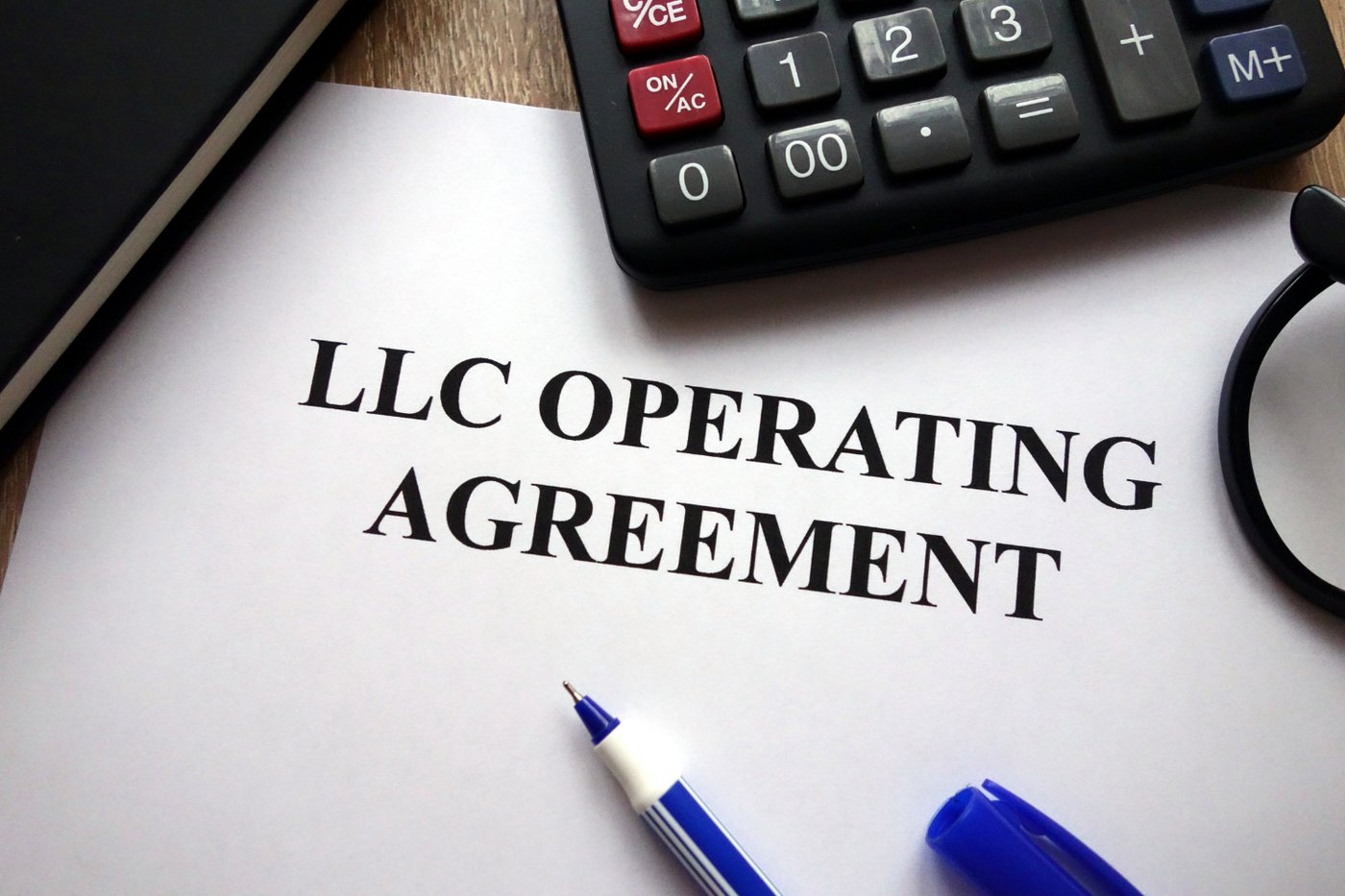
The legal structure of your business determines how you pay taxes, how much personal liability you carry, and how complicated it is to bring in partners or investors later. Choosing the wrong structure at the start doesn't always end in disaster, but changing it later costs time, money, and paperwork that could have been avoided.
The most common structures for a new small business are sole proprietorship, limited liability company (LLC), S corporation, and C corporation. Each has different implications.
A sole proprietorship is the default — if you start selling a service without registering anything, this is what you are. It's simple and costs nothing to set up. The problem is that there's no legal separation between you and the business. If someone sues your business, they can come after your personal assets.
An LLC creates that separation. Your personal home, car, and savings are protected from most business liabilities. LLCs are relatively inexpensive to form in most U.S. states, usually requiring a filing fee and an annual report. They also offer flexibility in how profits are taxed — you can choose to be taxed as a sole proprietor, a partnership, an S corp, or a C corp, depending on what makes sense.
An S corporation is a tax election, not a separate entity. It allows business owners who are also employees of their business to pay themselves a salary and take additional profits as distributions, potentially reducing self-employment tax. It comes with more administrative requirements than a basic LLC — payroll taxes, corporate formalities, restrictions on ownership — and is worth the complexity only once your income reaches a level where the tax savings justify it.
A C corporation is what you form if you plan to raise outside investment from venture capital or issue multiple classes of stock. For most small businesses, it's unnecessary overhead.
The right choice depends on your business, your income level, your state, and your long-term plans. An accountant or business attorney can walk you through the options in an hour-long conversation that is worth far more than the fee.

Credit: Canva Images
This is not optional, and it is not something to do once the business gets going. Open a separate business bank account before you make your first transaction. Use it exclusively for business income and expenses. Do not mix personal and business money.
The reasons are practical, legal, and financial. On the practical side, it becomes nearly impossible to track whether your business is actually profitable if your personal and business expenses are tangled together. Every transaction requires you to remember whether it was personal or business — and over time, you will stop remembering.
On the legal side, mixing funds is one of the primary ways that business owners lose the liability protection that an LLC or corporation is supposed to provide. Courts can "pierce the corporate veil" — a phrase that means treating the business and the owner as the same entity — when there's evidence that the owner treated the business as a personal slush fund. If that happens, the legal protection you paid to establish disappears.
On the financial side, clean books make tax season dramatically less painful. Your accountant charges by the hour. Handing them a clean bank statement with every transaction clearly categorized is far less expensive than asking them to sort through a mixed account.
Beyond a separate checking account, get a dedicated business credit card. Use it for every business expense that can be paid by card. The statement becomes an automatic record of your expenses, which simplifies categorization and provides documentation in case of an audit. A card that earns cash back or travel points is a bonus, but the real value is the clean paper trail.
Some business owners also open a separate savings account specifically for taxes. Self-employed people in the U.S. pay estimated quarterly taxes. Setting aside a portion of every payment you receive — a common approach is 25 to 30% of net income — into that account means the quarterly bill doesn't come as a shock.

Credit: Canva Images
Most first-time business owners underestimate startup costs. This is one of the most consistent patterns in small business failure, and it's easy to understand why. When you're excited about an idea, you focus on the revenue potential. The costs, especially the unexpected ones, don't feel real until you're writing the checks.
Before you start, build a startup cost estimate — not an optimistic one, but an honest one. Include every cost you can think of: business registration fees, a website, initial inventory or equipment, licenses and permits, any required insurance, your first month of rent if you're leasing a space, marketing to launch, and any professional fees for an accountant or attorney.
Then add a contingency of at least 20%. Startup costs almost always come in higher than the initial estimate. Equipment costs more than the quote. The permit process takes longer, requiring an extra month of personal income while the business isn't yet running. The website needs more work than expected.
Beyond startup costs, calculate how much money you need to cover your personal expenses for the time it will take the business to break even. For most service businesses, break-even comes within the first year if the business is working. For product businesses, especially those requiring inventory, manufacturing, or retail space, it often takes longer.
If you need the business to pay you from month one to cover rent and groceries, that's important information. It changes which businesses are viable for your situation right now, and it changes how you structure the financing. Going in undercapitalized — with less money than you need to reach sustainability — is one of the most common causes of early business failure. The business isn't necessarily bad. It just ran out of runway before it had a chance to find its footing.
Be specific. A line-item budget, even a rough one, forces you to think about costs you'd otherwise ignore.

Credit: RDNE Stock project / Pexels
Revenue is the money coming in. Profit is what's left after everything is paid. These are not the same thing, and confusing them is expensive.
A business can have strong revenue and still lose money. A contractor who bills $200,000 a year might spend $90,000 on materials, $40,000 on subcontractors, $20,000 on equipment and insurance, and $15,000 on accounting, marketing, and miscellaneous overhead. That leaves $35,000 in profit before the owner pays income tax. The revenue number sounds good. The profit number, after years of running a demanding business, may not justify the risk and effort.
This is why gross margin matters. Gross margin is the percentage of revenue left after paying the direct costs of delivering your product or service. A business with high gross margins — software, consulting, many professional services — has more room to cover overhead and still generate profit. A business with thin gross margins — most retail, food service, construction — has very little room for error.
Before you start, calculate what your gross margin will be, honestly. If you're selling a product, add up the cost of the product, packaging, shipping, and any direct labor. Subtract that from your selling price. What's left is your gross profit per unit. Then ask whether the volume you can realistically sell, multiplied by that gross profit, will be enough to cover your overhead and pay you.
Don't build a business model around the assumption that volume will solve a margin problem. Selling more of something that barely covers its costs doesn't fix the underlying issue — it often creates more complexity without generating more net income. Margin problems need to be solved at the pricing or cost level, not the volume level.

Credit: Canva Images
Pricing is one of the most consequential decisions a new business owner makes, and one of the most commonly made wrong. Most people set prices too low. They do it because they're worried about losing customers to cheaper competitors, because they're uncertain about what the market will bear, or because they're comparing their prices to what they would pay as a consumer — not what their cost structure actually requires.
The right price for your product or service is the one that covers all your costs, including your own labor valued at a reasonable rate, leaves a margin for overhead, generates profit, and is sustainable over time. Start there.
Calculate what it costs you to deliver one unit of your product or service — all-in, including materials, labor, overhead allocated per unit, and payment processing fees if applicable. Then determine the minimum price that covers those costs and generates a meaningful margin. That number is your floor. Your price should be above it.
From there, look at what the market will bear. What do competitors charge? What do customers in your segment expect to pay? What positioning do you want — value, mid-market, premium? Premium pricing is not just for luxury goods. In many service businesses, higher prices signal quality and attract clients who are less likely to be difficult, more likely to respect your work, and more likely to refer others.
Underpricing is a trap that's hard to escape. Once you've trained customers to expect a low price, raising it requires careful communication and sometimes costs you those clients. It's far easier to come in at a defensible price from the start and justify it with quality and reliability.
Review your prices at least once a year. Costs change. Your skill level and reputation change. The market changes. A price that was right two years ago may no longer reflect the value you deliver or the costs you carry.

Credit: George Milton / Pexels
A business plan does not have to be a formal document with financial projections out to five years and a competitive analysis section. For most small businesses, the value is in the thinking, not the document.
Writing down your business model forces you to test whether it makes sense. It requires you to answer, in plain language: What am I selling? To whom? At what price? Through what channels? What are my costs? What are my revenue assumptions? How long will it take to break even?
Many people discover problems with their model in the process of writing it down. The numbers don't add up at a price anyone would pay. The target customer is too narrow to support a full-time business. The plan requires capabilities or resources the owner doesn't have and can't easily acquire.
Finding those problems in a document is cheap. Finding them after six months of operation is expensive.
A useful one-page business plan for a small business covers: the problem you're solving and who has it, your solution, your revenue model (how you make money), your cost structure (what you spend money on), your go-to-market approach (how you'll find customers), and your financial goals for the first year.
That's it. You can make it more detailed if you're raising money from a bank or investor, because they will want to see projections and research. But even in that case, the one-page version is the foundation.
Revisit the plan every six months during your first two years. Update it based on what you've learned. A plan that never changes is a plan that hasn't been used.

Credit: Canva Images
Operating without required licenses or permits isn't just a technical violation. It can mean fines, forced closure, or personal liability for damage that would otherwise be covered. The requirements vary by industry, city, county, and state, and the responsibility to know them falls on the business owner.
Most businesses need at least a general business license from the city or county where they operate. Many industries require additional licenses. A contractor needs a contractor's license. A food business needs food handler certifications and inspections. A childcare provider needs state licensing. A financial advisor needs registrations with state and federal regulators. A cosmetologist needs a state license. And so on.
Zoning is a separate issue. If you plan to operate from home, your local zoning code may restrict business activity in residential areas — limiting the number of employees you can have on site, prohibiting customer traffic, or restricting certain types of work. If you're leasing commercial space, verify that the space is zoned for your type of business before signing the lease.
Sales tax is another layer. If you're selling physical goods in the U.S., you are generally required to collect and remit sales tax for sales to customers in states where you have "nexus" — a legal presence. The rules have expanded significantly since the U.S. Supreme Court's 2018 ruling in South Dakota v. Wayfair, which allowed states to require sales tax collection from out-of-state sellers who meet certain volume thresholds. If you're selling online, this affects you.
The simplest path through all of this is to spend a few hours on your city and state government websites, or to ask an attorney or accountant familiar with your industry to walk you through the requirements. Getting this right at the start is far less painful than dealing with a compliance issue after the fact.

Credit: Canva Images
Employees have taxes withheld from every paycheck. Self-employed people don't. The bill comes later — and it's larger than most first-time business owners expect.
In the U.S., employees pay 7.65% of their wages toward Social Security and Medicare, and employers pay a matching 7.65%. When you're self-employed, you pay both sides — 15.3% in self-employment tax, on top of regular income tax. This applies to net self-employment income above $400.
The self-employment tax rate applies to 92.35% of your net earnings from self-employment (a calculation that accounts for the deductible portion of the tax). You can deduct half of self-employment tax from your gross income when calculating income tax, which provides some offset. But the combined effective tax rate for a self-employed person — federal income tax plus self-employment tax, before state taxes — is often significantly higher than people coming from salaried employment expect.
The IRS requires self-employed people to pay estimated taxes quarterly, using Form 1040-ES. The due dates fall in April, June, September, and January for the prior year. Missing these payments results in underpayment penalties, even if you pay the full amount owed at the end of the year.
A practical approach: when you receive any payment, immediately transfer a portion — commonly 25 to 30% of net income — into a dedicated savings account for taxes. Don't touch it. When quarterly estimates are due, you'll have the money ready.
This system isn't complicated, but it requires discipline from the very first payment. Starting this habit from day one is far easier than trying to reconstruct it after you've already spent money that was meant for the IRS.

Credit: Canva Images
Personal insurance policies — homeowner's, auto, health — generally do not cover business activities. If you're running a business from your home and a client trips on your front step, your homeowner's insurance may not cover it. If you use your personal car for business deliveries and cause an accident, your personal auto policy may not cover the damages.
Business insurance is a separate category, and the type you need depends on what your business does.
General liability insurance covers claims of bodily injury, property damage, and advertising injury (such as copyright infringement in marketing materials) arising from your business operations. It's the baseline coverage most businesses should carry, and it's often required by landlords or clients before they'll work with you.
Professional liability insurance, sometimes called errors and omissions insurance, covers claims that your professional services caused financial harm to a client. Consultants, designers, attorneys, accountants, engineers, and other service providers typically need this. General liability doesn't cover it.
If you have employees, you're almost certainly required by law to carry workers' compensation insurance, which covers medical costs and lost wages if an employee is injured on the job. Requirements vary by state, but most states require it for businesses with at least one employee.
Business property insurance covers the physical assets of your business — equipment, inventory, furniture — against loss from fire, theft, or certain other events.
If you're a sole proprietor working from home and have no employees, your insurance needs are simpler. But they're not zero. Talk to an independent insurance broker who works with small businesses. Describe exactly what you do and who you work with. Let them tell you what you need. The annual cost of appropriate coverage is almost always much smaller than the cost of a single uninsured claim.

Credit: Canva Images
Profit and cash flow are related but different. A business can be profitable on paper and still run out of cash. Understanding the difference — and planning for it — is essential for staying solvent in the early years.
Profit is an accounting concept. It measures revenue minus expenses over a given period. Cash flow measures the actual movement of money in and out of your bank account. The gap between them is created by timing.
If you send an invoice on the first of the month and a client pays it on the 45th day, your books show profit in month one, but you don't have the cash until month two. Meanwhile, rent, payroll, and supplier payments don't wait for your client to pay. If you're running multiple jobs or clients on similar terms, these gaps compound.
For product businesses, inventory creates a similar problem. You pay for inventory upfront, often before you've sold it. That cash is tied up until the sale happens. The faster your inventory moves, the better your cash position. Slow-moving inventory is cash sitting on a shelf.
The tool for managing this is a cash flow projection — a simple spreadsheet that maps when you expect to receive money and when you expect to spend it, week by week or month by month. It doesn't have to be elaborate. The goal is to see, in advance, when your cash position might go negative — so you can act before it becomes a crisis.
Cash flow problems are often fixable with planning. Invoice early. Set clear payment terms and enforce them. Negotiate with suppliers for longer payment windows. Keep a cash reserve for slow months. Line up a business line of credit before you need it, not after. A line of credit you never draw on costs very little and is invaluable when timing mismatches create a short-term gap.

Credit: Dylan Gillis / Unsplash
Running a business requires competence across more areas than most people have. Marketing, sales, operations, finance, customer service, legal compliance, technology — most business owners are strong in one or two of these and weak in several others.
The temptation is to handle everything yourself, especially at the start when money is tight and asking for help feels like an admission of weakness. This is one of the more costly instincts a new business owner can indulge.
Start with an honest inventory. What can you do well? What do you enjoy? What do you do slowly, badly, or reluctantly? The tasks in that last category are the ones that will get delayed, done poorly, or avoided altogether — often with expensive consequences.
For critical functions you're not good at, there are three options: learn them, hire someone who is, or outsource them to a professional. Which one makes sense depends on the task. Tax accounting is probably worth outsourcing to a CPA — the risk of errors is high, and a good accountant often saves more in taxes than their fee costs. Graphic design for a logo is worth hiring out if you have no visual skills and the logo matters to your brand. Customer follow-up emails are worth learning if you're a service business where relationships drive revenue.
Be especially careful about finances. Many small business owners who aren't comfortable with numbers avoid looking at their books until something goes wrong. By then, the problem is usually larger than it needed to be. At minimum, spend 30 minutes a week reviewing your bank account, your outstanding invoices, and your upcoming expenses. You don't need to love it. You need to do it.
Building a team — even a loose network of freelancers, contractors, and advisors — is how a small business grows beyond what one person can do.

Credit: Pavel Danilyuk / Pexels
Almost every business projection underestimates how long it takes to build a customer base. The first clients are the hardest to get. Until you have a track record, testimonials, and word-of-mouth working for you, acquiring customers requires more effort per conversion than it will at any later stage of your business.
Most businesses don't experience overnight growth. They experience a slow, sometimes frustrating ramp-up over months or years, punctuated by occasional bigger wins. The businesses that make it through this period are almost always the ones whose owners had enough financial runway to sustain the ramp-up — and enough patience not to abandon the effort too early.
Plan for a longer sales cycle than you expect. For a business-to-business service, where you're selling to other companies, the time from first contact to signed contract can range from a few weeks to many months, depending on the client's size and the complexity of the decision. For a consumer product, it depends on how quickly you can get in front of the right buyers and convince them to try something new.
While you're waiting for the customer base to develop, use the time productively. Build relationships. Ask every early customer for a referral or a review. Collect testimonials. Document your process. Create content — a newsletter, social media posts, case studies — that demonstrates your expertise. These assets compound over time and make subsequent customer acquisition easier.
One practical move: identify five to ten potential clients or customers before you officially launch. Reach out, build relationships, let them know you're opening. Having even a few customers lined up for day one is far better than launching to silence and hoping someone finds you.

Credit: Pavel Danilyuk / Pexels
Not every customer is a good customer. Early in a business's life, when you're trying to learn, build a reputation, and manage cash flow simultaneously, the customers you take on have an outsized effect on how the business develops.
A client who pays late, demands more than the contract specifies, undermines your confidence, or requires you to price below what's sustainable is not just a bad deal in isolation. They take up time that could be spent on better opportunities. They set a precedent for pricing if they refer others at the same rate. And they can demoralize you during a period when morale matters enormously.
The instinct at the start is to say yes to everything — because you need the money, because turning down work feels reckless, because you're not sure better work is coming. That instinct is understandable. But the ability to say no to work that doesn't fit, even early on, is one of the most valuable skills a business owner develops.
There are a few signals that a potential customer is likely to be difficult. They push aggressively on price before they've seen your work. They're vague about what they want. They describe bad experiences with every prior provider. They want to start without a contract. They communicate only at odd hours and expect immediate responses. None of these are certainties — every business owner has had pleasant surprises — but taken together, they're worth taking seriously.
Decide in advance what your minimum standards are. What's the lowest price you'll work for, and under what circumstances? What are the scope boundaries you won't cross without renegotiation? What behavior from a client would cause you to end the relationship? Having clear answers to these questions before you're in the room with a difficult client makes it much easier to hold your ground.

Credit: Canva Images
You don't need sophisticated accounting software to start. You do need a system — a consistent, regular method of recording what you've earned and what you've spent, so that you always know where you stand.
At the simplest level, this means recording every transaction. Every payment you receive. Every expense you pay. Categorized in a way that lets you see what you're spending money on and what your income actually looks like. Many solo business owners start with a spreadsheet and it works fine, provided they actually use it.
From the very first transaction, assign every expense to a category. Common categories include cost of goods sold, marketing, professional services, software and subscriptions, travel, meals and entertainment (typically 50% deductible in the U.S.), home office (if applicable), and miscellaneous. These categories map to the lines on your tax return, which makes year-end reporting much faster.
Track your accounts receivable — money owed to you — separately. Know which invoices are outstanding, how old they are, and when you last followed up. An aging report, even a simple one, tells you who owes you money and for how long. Following up on overdue invoices isn't optional: cash you've earned but haven't collected is useless.
Most small business owners eventually migrate from spreadsheets to accounting software. QuickBooks and FreshBooks are common choices, with varying levels of complexity. The right time to upgrade is when the spreadsheet starts creating more work than it saves — typically when you have multiple revenue streams, employees, or inventory to track.
Whether you do your own bookkeeping or hire someone to do it, the non-negotiable is that it gets done consistently and that you review the results regularly. Numbers you look at once a year, at tax time, are not information. Numbers you review weekly or monthly are a management tool.

Credit: Kindel Media / Pexels
Every business agreement of consequence should be in writing. This applies to contracts with clients, agreements with vendors, partnerships, leases, and employment arrangements. A handshake deal is a misunderstanding waiting to happen.
A basic service contract needs to cover a handful of things clearly. What is the scope of work — what are you doing, and, equally important, what are you not doing? What is the price, and how is it structured — a flat fee, an hourly rate, a retainer, a percentage? When and how does payment happen? What happens if the client wants changes to the scope? What are the conditions under which either party can end the agreement? Who owns the work product when the engagement is done?
That last question — intellectual property ownership — is one that many service providers overlook and some clients exploit. If you're creating something original — software, design work, written content, photographs — the default rule in the U.S. is that the creator owns it unless there's a written agreement transferring ownership. Some clients will ask you to sign a contract assigning all intellectual property to them as part of the engagement. Whether you agree to that, and under what conditions, is a business decision. But it should be a conscious one.
For recurring vendor relationships, review the terms of any contract before you sign. Payment terms, auto-renewal clauses, liability limitations, and dispute resolution provisions all matter. An auto-renewal clause on a software or service contract can lock you into another year of a tool you no longer need.
You don't need an attorney to review every contract you encounter. But having an attorney review your standard client contract once, before you use it, is worth the investment. The cost of a contract dispute — in time, money, and stress — dwarfs the cost of getting the contract right at the start.

Credit: Canva Images
The working conditions you establish in the first few months of your business tend to become permanent. If you answer emails at 11 p.m. from the first week, clients will expect it. If you accept scope changes without renegotiating the contract, clients will keep asking. If you always turn things around in 24 hours regardless of complexity, that becomes the baseline expectation.
This matters because small business ownership, especially in service businesses, has a well-documented tendency to consume all available time if you don't deliberately limit it. The flexibility that draws many people to self-employment — setting your own hours, working where you want — only materializes if you're the one setting the terms, not just accommodating everyone else's preferences.
Define your working hours before you start communicating with clients. You don't have to be rigid about it, but having a stated norm — "I work Monday through Friday, 9 to 6, and typically respond to messages within one business day" — sets expectations that most clients will respect. Clients who can't accept reasonable boundaries are, in many cases, clients you don't want.
Scope creep — the gradual expansion of a project beyond its original terms without corresponding payment — is one of the most common profit problems in service businesses. It usually happens incrementally. A client asks for one small addition. Then another. Each one seems minor. The project ends up consuming 50% more time than estimated, while the invoice stays the same.
The fix is to treat scope changes as business decisions in the moment, not as favors. When a client asks for something outside the original scope, you have three choices: include it and explain that you're doing so as a courtesy this once, quote the additional cost and get approval before doing the work, or explain why it's outside scope and decline. All three are appropriate in different circumstances. What's not appropriate is silently absorbing the extra work and resenting it later.

Credit: Christina Morillo / Pexels
Scalability is the ability to grow revenue without a proportional increase in costs. A software company that sells the same product to one customer or a million customers at roughly the same cost per unit is highly scalable. A consultant who bills by the hour is not — there are only so many hours in a day.
Not every business needs to scale. A solo service business that provides a comfortable income for its owner, with manageable hours and no desire to manage employees, is a successful business. The obsession with scaling and growth at all costs is a perspective imported from the venture capital world, where investors need exponential returns. Most small business owners don't have investors and have no obligation to maximize growth.
That said, understanding the scalability of your business model matters because it affects what you can earn and how you can grow if you want to. A service business that bills by the hour has a natural ceiling. To earn more, you either raise rates, work more hours, or hire other people to work for you — each of which has limits or complexity.
Businesses with higher scalability include those with productized services (where you sell a defined package rather than custom work), digital products (where the same course, template, or software can be sold repeatedly), or subscription models (where clients pay recurring fees for ongoing access or service).
If you want to grow beyond what you can personally do, you'll need to systematize your operations. Document your processes. Build templates. Create training materials. The goal is to make your business something that could function — at least partially — without you in every role. That work feels premature when you're just getting started, but the businesses that grow do it early.

Credit: Canva Images
One of the most significant financial transitions in going from employed to self-employed is the loss of employer-provided benefits. Health insurance, retirement contributions, paid leave, and disability coverage are all things that employees often receive as part of their compensation package, and which self-employed people must arrange and pay for themselves.
Health insurance is usually the biggest concern. In the U.S., individual health insurance purchased through the ACA marketplace can be expensive, particularly for a healthy 35-year-old who doesn't qualify for subsidies. If you're in a family where a spouse has employer-sponsored insurance, staying on that plan may be the simplest bridge. If you're going out on your own without that safety net, budget carefully for health insurance before you leave your job.
Retirement is a separate issue. Without an employer match, the responsibility for funding retirement falls entirely on you. Self-employed people have access to several tax-advantaged retirement accounts. A Simplified Employee Pension IRA, commonly called a SEP-IRA, allows contributions of up to 25% of net self-employment income each year, with a cap that adjusts annually. A Solo 401(k) allows for both employee and employer contributions, potentially enabling higher total contributions for high earners. Both allow pre-tax contributions that reduce your taxable income.
Paid leave doesn't exist automatically in self-employment. If you take a week off, you typically don't get paid unless you've built that into your pricing or have a passive income component. Building a cash reserve before you launch — enough to cover a few weeks of personal expenses during slow periods or vacations — is part of planning for this reality.
Make these arrangements before you quit, not after. Lining up insurance and understanding your retirement options in advance removes significant financial uncertainty from the early months of your business.

Credit: Canva Images
Many of the resources a new business owner eventually needs — referrals, subcontractors, advisors, investors, collaborative partners — come through relationships built over time. Waiting until you need them to start building them is too late.
Relationships in business tend to be long-lead. A connection you make at an industry event in January may not result in anything for 18 months. A mentor you ask for coffee once a quarter may eventually introduce you to someone who changes the trajectory of your business — but that introduction comes years in, not weeks.
This means relationship-building has to be a habit, not a project. Attend industry events, local business groups, and professional associations regularly — not to pitch yourself, but to get to know people and understand the landscape you're operating in. The relationships that are most valuable are often the ones you didn't have a specific agenda for when you first made them.
Be useful to others before you ask anything. Share information, make introductions, offer help. The people in your professional network who give before they take tend to be the ones who get the most out of the network over time.
Identify a few specific types of relationships that would benefit your business and be intentional about building them. A good accountant who works with businesses like yours. An attorney who handles small business contracts in your state. A peer in a complementary but non-competing business who might refer clients to you. A more experienced person in your industry who is willing to share what they've learned.
None of these relationships has to be formal. Some of the most valuable professional relationships are casual ones — a connection you check in with twice a year, a former colleague you call when you have a question outside your expertise. The network doesn't have to be large. It has to be real.