From transistors to touchscreens, the smartphone required centuries of breakthroughs in physics, chemistry, manufacturing, and global trade to converge at exactly the right moment
-1920x1280.jpg)
Credit: Ross Sneddon / Unsplash
The smartphone in your pocket is easy to take for granted. It fits in a hand, costs less than a month's rent in most places, and performs tasks that would have required a roomful of equipment — and a roomful of specialists — just 60 years ago. But the device did not emerge from a single invention or a single company. It required the slow accumulation of breakthroughs across physics, chemistry, materials science, telecommunications, software engineering, and manufacturing logistics, many of them developed without any thought of a pocket-sized computer as the destination.
The story of the smartphone is really a story about infrastructure — physical, intellectual, and economic. The transistor had to be invented. Then it had to be made smaller. Then billions of them had to be made cheaply enough to put in a consumer device. The same logic applies to the battery, the display, the cellular antenna, the operating system, and the GPS receiver. Each of those components has its own long prehistory, its own chain of preconditions.
There is also a less celebrated layer of prerequisites: the legal and regulatory frameworks that allocated radio spectrum, the international trade agreements that made it economical to manufacture in one country and sell in another, the fiber-optic cables laid under oceans that carry the data a smartphone depends on, the mapping projects that digitized the physical world so that a navigation app could exist.
None of this happened in a straight line. The transistor was invented in 1947 and the first commercial smartphone arrived in the mid-1990s. In between, there were decades of parallel progress that had nothing to do with each other until, suddenly, it all did. A lithium-ion battery chemistry developed for laptop computers ended up powering mobile phones. Touch-sensing technology developed for industrial applications became the interface paradigm for a generation of devices. Military satellite navigation opened to civilian use and found its killer app in a mapping application that didn't exist yet when the satellites were launched.
The smartphone is the product not of one eureka moment but of roughly 25 of them. Here, in no particular order of importance, are the things that had to be true before it could exist.

Credit: Lech Pierchała / Pexels
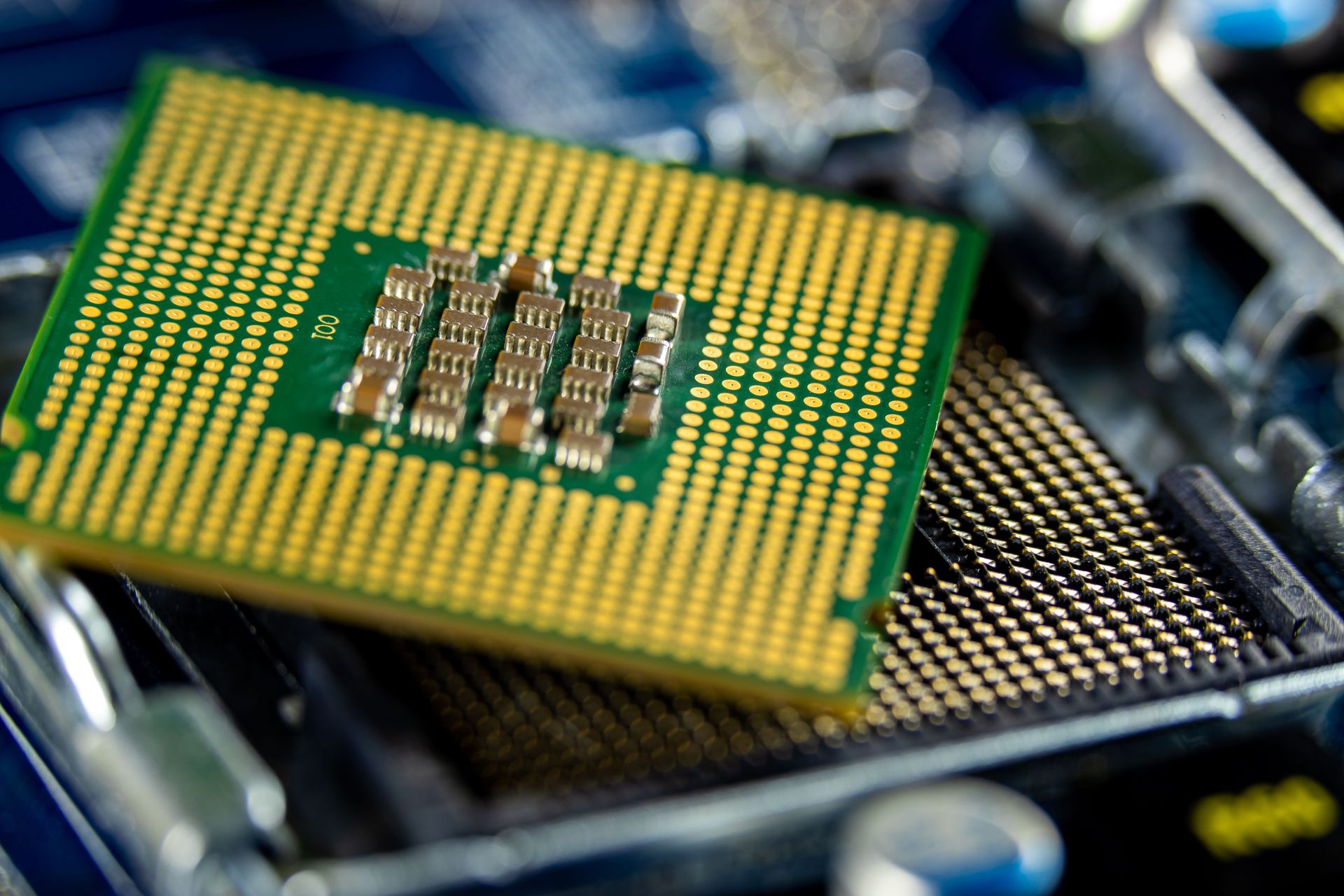
Before the smartphone — before any modern computing device — there was the transistor. Invented at Bell Laboratories in December 1947 by John Bardeen, Walter Brattain, and William Shockley, the transistor is a semiconductor device that can amplify or switch electronic signals. It replaced the vacuum tube, which was large, fragile, hot, and power-hungry, with something that was small, durable, and efficient enough to eventually fit billions of copies onto a chip the size of a fingernail.
The transistor works by exploiting the electrical properties of semiconductor materials, typically silicon or germanium, which can conduct electricity under some conditions and block it under others. By applying a small voltage to a control terminal, a transistor can turn a larger electrical current on or off — functioning as a switch — or use a small signal to control a proportionally larger one, functioning as an amplifier.
The implications of this basic function are vast. A transistor acting as a switch is the fundamental unit of digital logic. Set enough transistors in the right arrangements, and you can perform any computation. The binary arithmetic that underlies all modern software — the 0s and 1s — maps directly onto transistors being off or on.
In 1947, the first transistors were about the size of a human palm. That was already vastly smaller than the vacuum tubes they replaced. But what made the transistor truly world-altering was what came next: the discovery that transistors could be miniaturized, combined with other components, and manufactured in enormous quantities on a single slice of semiconductor material.
The transistor won Bardeen, Brattain, and Shockley the Nobel Prize in Physics in 1956. By that point, the technology was already spreading beyond Bell Labs into the commercial electronics industry. Texas Instruments $TXN produced the first transistor radio in 1954. The era of portable, battery-powered electronics had begun. Every smartphone contains billions of transistors. The entire edifice of modern computing rests on the proof of concept demonstrated in a Bell Labs laboratory on a December afternoon.
Credit: Sergei Starostin / Pexels
The transistor solved the vacuum-tube problem, but it created a new one. A computer built from discrete transistors still required each component — transistors, resistors, capacitors, the wires connecting them — to be individually manufactured and soldered together. The resulting devices were smaller than vacuum-tube computers but still far too bulky and expensive for any consumer application.
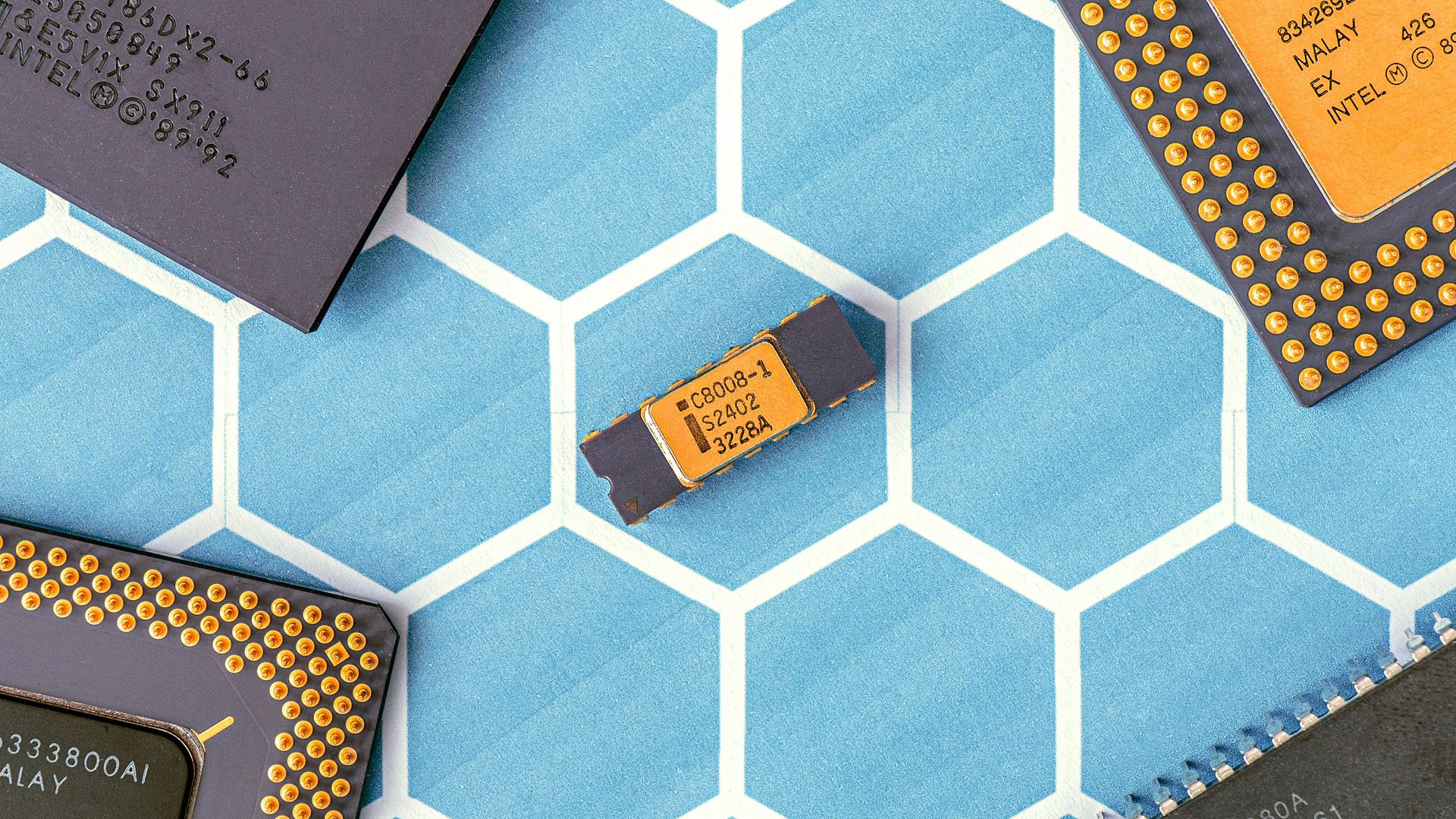
The integrated circuit solved this. Developed independently by Jack Kilby at Texas Instruments $TXN and Robert Noyce at Fairchild Semiconductor in 1958 and 1959, the integrated circuit placed multiple electronic components on a single piece of semiconductor material, with the connections between them etched rather than wired.
The difference in scale is difficult to overstate. A discrete transistor circuit might require dozens of soldered connections, each a potential point of failure. An integrated circuit could replicate that circuit in a space smaller than a postage stamp, with no solder and far fewer failure points. As manufacturing techniques improved, more and more components could be packed onto a single chip.
Noyce's version of the integrated circuit, built on silicon using a process called the planar process, proved more manufacturable than Kilby's germanium design and became the basis for the modern semiconductor industry. Noyce went on to co-found Intel $INTC. Kilby won the Nobel Prize in Physics in 2000 for his role in the invention.
The integrated circuit made it possible to think about computing power not as something measured in rooms or racks but as something that could be scaled, duplicated, and sold. It is the reason the central processor in a smartphone contains more computing power than the computers that guided the Apollo missions, packed into a sliver of silicon a few millimeters on each side.
Credit: Jonas Svidras / Pexels
In 1965, Gordon Moore — then working at Fairchild Semiconductor, later a co-founder of Intel $INTC — published a paper observing that the number of transistors on an integrated circuit was doubling roughly every year. He later revised this to every two years. The observation became known as Moore's Law, and it turned out to describe the actual trajectory of the semiconductor industry for roughly half a century.
Moore's Law is not a law of physics. It is an empirical observation that became a target. Chip manufacturers invested heavily in the lithography and manufacturing processes needed to keep shrinking transistors, in part because the industry had come to expect the doubling and built roadmaps around it. The result was a sustained, compounding improvement in computing power per unit of cost and energy that has no precedent in the history of technology.
For mobile computing, this sustained improvement was essential. The first personal computers required wall-outlet power and desktop-sized enclosures. As transistors shrank, power consumption per operation fell and performance per dollar rose. By the early 2000s, chips powerful enough to run a useful mobile operating system could fit in a device small enough to hold in one hand and run on a battery small enough to carry.
The smartphone as a mass-market product became possible only because chipmakers had been doubling transistor density for four decades by the time Apple $AAPL released the first iPhone in 2007. A device with that performance profile would have been physically impossible to build in 1987 and prohibitively expensive to build in 1997. The timing was not accidental — it reflected the accumulated work of thousands of engineers over decades, each generation of chips enabling the next generation of applications.
Moore's Law has slowed in recent years as transistors approach atomic scale. The industry has responded with new chip architectures, three-dimensional stacking, and specialized processors. But the half-century during which it held provided the foundation on which the smartphone was built.

Credit: Hilary Halliwell / Pexels
A smartphone without a battery is a paperweight. The battery is one of the most mundane-seeming components of the device and one of the most technically demanding. It needs to store enough energy to power a processor, a display, a cellular radio, and multiple sensors for many hours, in a package light and flat enough to fit inside a slim enclosure, and it needs to do this through hundreds of charge cycles without degrading to the point of uselessness.
Lithium-ion batteries, the chemistry that makes modern smartphones possible, were decades in development. The fundamental chemistry was identified in the 1970s. M. Stanley Whittingham demonstrated the basic electrochemical principle at Exxon in 1976. John Goodenough at the University of Texas developed the lithium cobalt oxide cathode in 1980 that dramatically improved energy density. Akira Yoshino at Asahi Kasei developed the first commercially viable lithium-ion cell in 1985. All three shared the Nobel Prize in Chemistry in 2019.
Sony $SONY commercialized the lithium-ion battery in 1991, initially for camcorders. The technology then migrated into laptop computers, where its combination of high energy density, low self-discharge, and rechargeability made it the clear choice over earlier chemistries like nickel-cadmium and nickel-metal hydride.
What made lithium-ion suitable for smartphones specifically was its energy density — more stored energy per unit of weight than any previous consumer battery chemistry — combined with the absence of the "memory effect" that plagued nickel-cadmium batteries, which degraded if not fully discharged before recharging. Lithium-ion cells could be topped up at any point without penalty.
The chemistry also allowed cells to be manufactured in flexible form factors, enabling the thin, rectangular packs that define modern smartphone design. Without lithium-ion, a smartphone with the performance profile of a 2007 iPhone would have required a battery the size of a thick paperback book. The entire portable electronics industry depends on the electrochemical insight developed over a decade in three different laboratories.

Credit: Nicolas Arnold / Unsplash
The screen is the smartphone's most attention-consuming component — both for the user and for the device's battery. A bright, sharp, responsive display is what distinguishes a smartphone from a dumb phone, and producing one in a package thin and efficient enough for mobile use required decades of materials science and manufacturing development.
Liquid crystal displays, or LCDs, work by using electrical fields to manipulate the orientation of liquid crystal molecules sandwiched between polarizing filters and a backlight. By controlling which crystals align and which do not, a display can produce an image. The liquid crystal effect was discovered in 1888 by Austrian botanist Friedrich Reinitzer, but practical LCD displays did not appear until the late 1960s and early 1970s, when RCA and Hoffmann-LaRoche developed the first usable configurations.
Early LCDs were slow, low-contrast, and monochrome — fine for a calculator or digital watch, useless for a general-purpose computer display. Over the following decades, the technology improved through a series of advances: twisted nematic displays in the 1970s, active-matrix addressing in the 1980s, in-plane switching technology in the 1990s, which dramatically improved color reproduction and viewing angles.
The thin-film transistor LCD, which uses a separate transistor for each pixel to allow faster switching and higher resolution, became the dominant technology for laptop screens in the 1990s and for mobile phones in the early 2000s. By the time the smartphone era arrived, LCD panels could be manufactured at mobile-phone dimensions with sufficient brightness, resolution, and power efficiency to serve as primary interfaces.
Later smartphones moved to OLED displays, which produce light directly from organic compounds and eliminate the need for a separate backlight, improving contrast and efficiency further. But the path to OLED ran through decades of LCD development that established the manufacturing ecosystems, the pixel-level control techniques, and the supply chains that the display industry still relies on.
Credit: Liliana Drew / Pexels
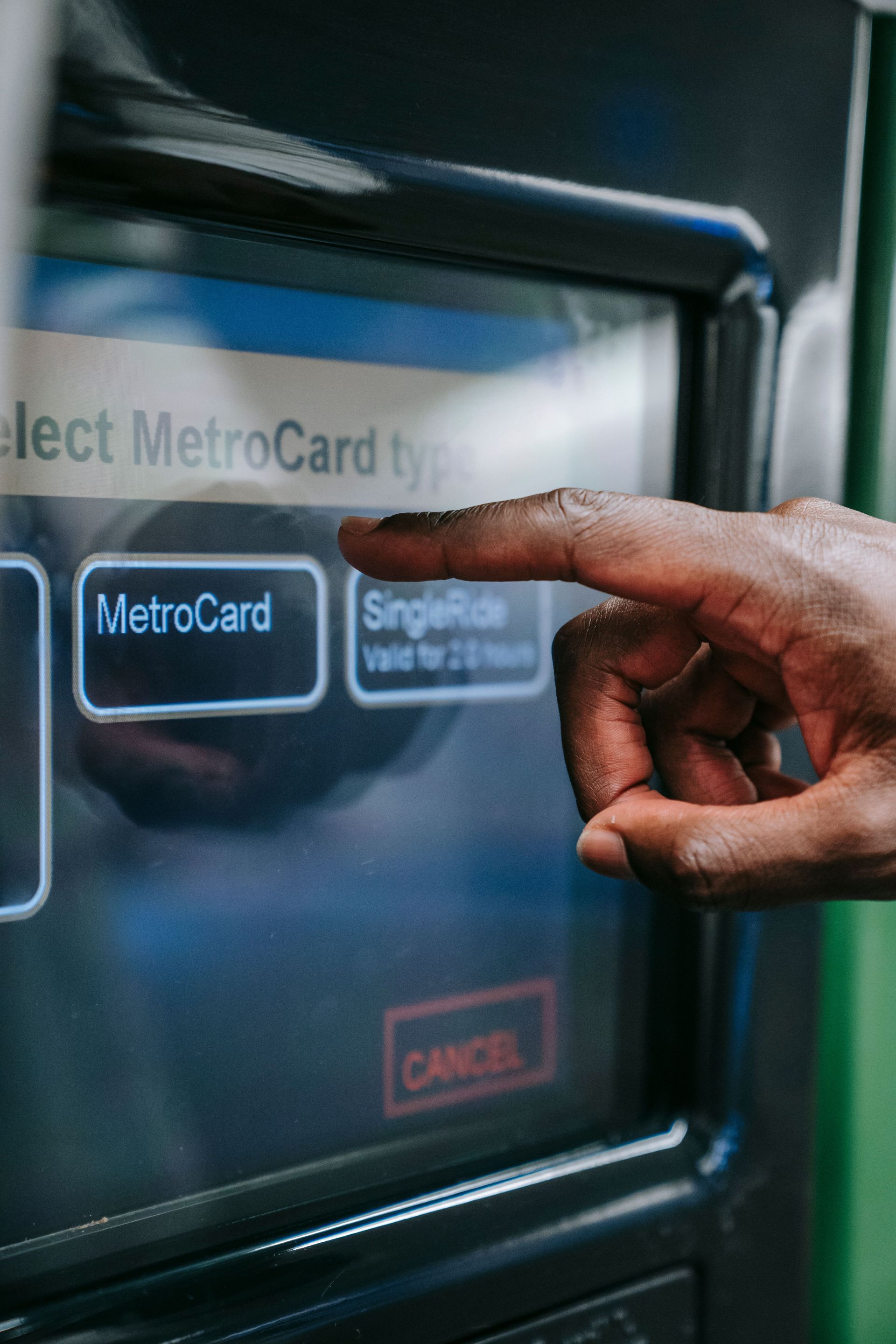
Touch-sensitive screens existed before the smartphone. Resistive touchscreens — which detect pressure by sensing when two flexible conducting layers are pressed together — were common in ATMs, kiosk terminals, and early PDAs through the 1990s and 2000s. They worked, but they required a stylus or a deliberate, forceful press and were poorly suited to the fluid, multi-touch interactions that define the smartphone experience.
The capacitive touchscreen, which detects the electrical conductivity of a human finger rather than physical pressure, changed this. Capacitive sensing was not new — the technology had been used in industrial controls and other applications for decades — but the engineering required to apply it to a large, high-resolution, multi-touch display suitable for a consumer device took substantial development.
Researchers at the University of Delaware, including Wayne Westerman and John Elias, developed multi-touch capacitive sensing technology in the late 1990s. Their company, FingerWorks, was acquired by Apple $AAPL in 2005, and the technology formed the basis of the iPhone's touchscreen. The key innovations were not simply detecting touch but detecting multiple simultaneous touches and using that information to recognize gestures — pinching to zoom, swiping to scroll — that made the touchscreen interface intuitive enough to replace a physical keyboard.
The difference between resistive and capacitive touch is not merely technical; it determined whether a touchscreen could be the primary interface for a general-purpose device. Resistive screens required pointing; capacitive screens responded to natural hand movements. That difference shaped the entire visual language of mobile software, which is built around gestures that would be impossible to execute on a resistive panel.
Manufacturing capacitive touchscreens at smartphone scale and cost required advances in indium tin oxide deposition, the conductive coating applied to the glass surface, and in the sensor arrays that detect touch location. Both have since become mature, high-volume manufacturing operations — but they were not, in 2007, when they were first deployed at smartphone scale.
Credit: Maxence Pira / Unsplash
Not all semiconductors are equal, and the choice of silicon as the foundation of the modern electronics industry was not inevitable. Germanium, which Bardeen, Brattain, and Shockley used in the first transistor, was the initial material of choice. Gallium arsenide offered better electron mobility. But silicon won, and that outcome shaped everything that followed.
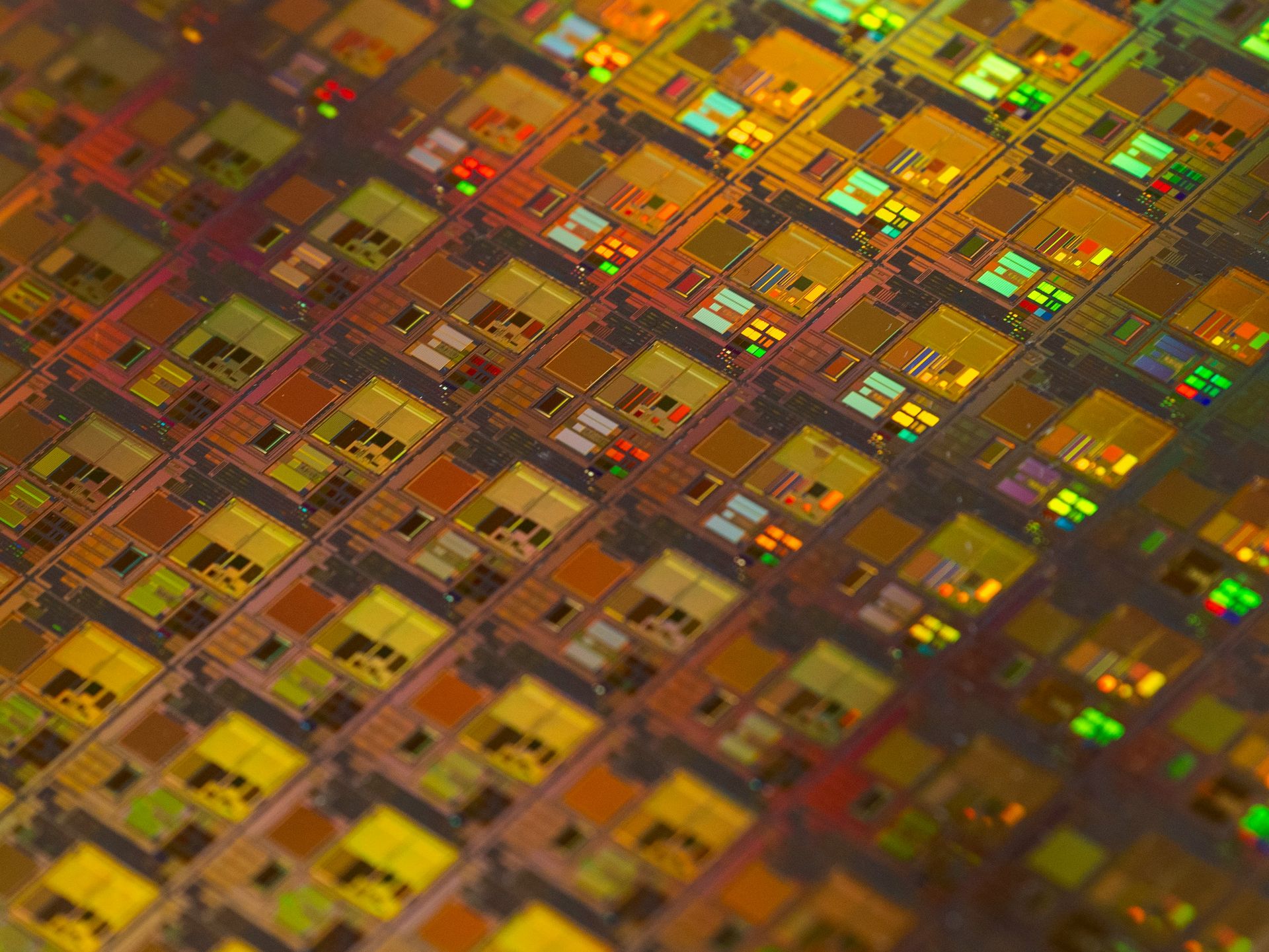
Silicon's advantages were practical rather than purely electrical. It is the second most abundant element in Earth's crust, making raw materials cheap. Its oxide — silicon dioxide, essentially glass — forms naturally on its surface when heated in air, and silicon dioxide is an excellent electrical insulator. This property proved crucial for the planar manufacturing process developed by Robert Noyce and Jean Hoerni at Fairchild, which uses layers of oxide to isolate transistors from one another on the chip surface.
Silicon also has a wider bandgap than germanium, meaning it can operate at higher temperatures without the semiconductor properties breaking down. Early germanium transistors had to be carefully managed to prevent thermal runaway. Silicon transistors were more robust, which simplified device design and improved reliability in commercial applications.
The consequence of silicon's dominance is a global manufacturing infrastructure of enormous scale and sophistication. Semiconductor fabrication plants, known as fabs, are built around silicon wafer processing. The chemicals, gases, equipment, and expertise accumulated over 70 years of silicon manufacturing are what enable a modern smartphone chip to be produced at a cost measured in dollars. If the industry had bifurcated across multiple semiconductor materials, the economies of scale that make mobile chips affordable would not exist in the same form.
Silicon is not the optimal material for every function in a smartphone — gallium nitride and other compound semiconductors appear in some components — but it is the reason the core logic chips are manufacturable at the price points that make smartphones accessible to billions of people.

Credit: Avinash Katkar / Pexels
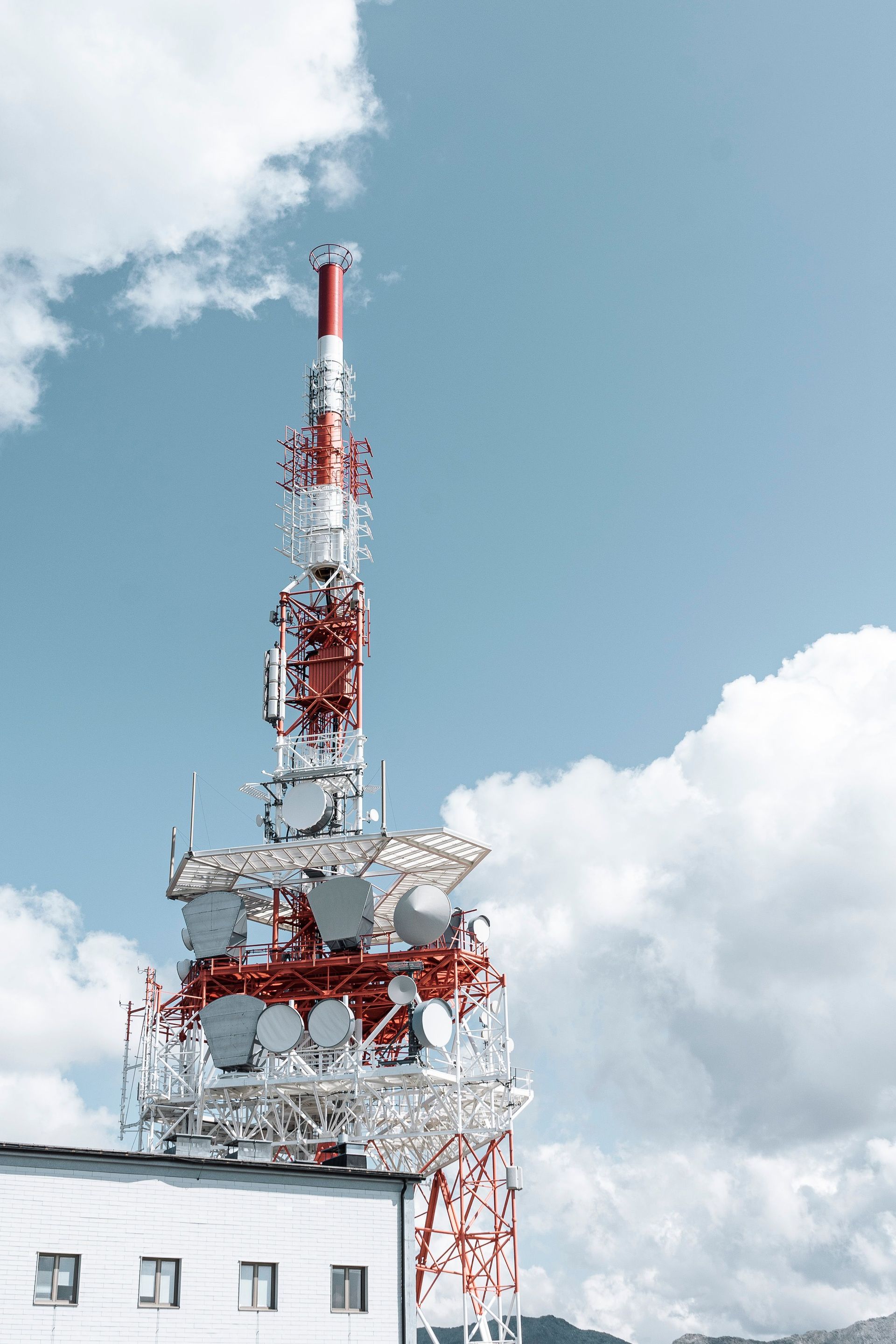
A smartphone without network connectivity is a capable but limited device. What makes it transformative is the ability to reach the internet, send messages, and make calls from nearly anywhere, wirelessly. That capability depends on an infrastructure investment — towers, antennas, switching systems, and spectrum licenses — that preceded the smartphone by decades.
The first commercial cellular telephone network launched in Japan in 1979, operated by Nippon Telegraph and Telephone. The U.S. launched its first commercial cellular network in 1983 in Chicago, operated by Ameritech. These first-generation networks used analog signals and could carry voice only. But they established the fundamental architecture: geographic areas divided into cells, each served by a base station, with calls handed off between cells as users moved.
Second-generation, or 2G, networks introduced digital transmission in the early 1990s, which improved voice quality, added limited data capabilities, and dramatically increased network capacity. The GSM standard, developed in Europe and adopted globally, became the dominant 2G system. It is the reason SIM cards exist — GSM required a subscriber identity module to identify users on the network.
Third-generation, or 3G, networks, which arrived in the early 2000s, increased data speeds enough to make mobile internet browsing practical. Without 3G, the iPhone's browser, email client, and app ecosystem would have functioned at speeds that made them nearly unusable. The smartphone as we know it was designed around the assumption of broadband wireless access.
Building that infrastructure required regulatory cooperation — governments had to allocate radio spectrum, which is a finite and contested resource — and massive capital investment by operators who were building for a future demand they could only estimate. The smartphone did not create the cellular network; it depended on one that had been under construction for 25 years before the iPhone arrived.
Credit: Linda Gschwentner / Pexels
The cellular network could not exist without radio spectrum — the ranges of electromagnetic frequencies used to carry wireless signals. Spectrum is a finite natural resource. Without regulation, transmitters operating on the same frequency in the same area interfere with each other, degrading or destroying the signals of both. Managing spectrum so that cellular networks, Wi-Fi, GPS, television broadcasts, and emergency services can all operate without chaos required international coordination and domestic regulation that began long before the smartphone era.
The International Telecommunication Union, founded in 1865 as the International Telegraph Union, is the UN agency responsible for allocating radio spectrum globally. Its Radio Regulations, revised periodically at World Radiocommunication Conferences, divide the spectrum into frequency bands and assign each to specific uses. The cellular bands that carry smartphone voice and data traffic were designated through this process.
Within those international allocations, national regulators — the FCC in the U.S., Ofcom in the U.K., and equivalents in other countries — license specific spectrum bands to specific operators, typically through auctions. The proceeds of spectrum auctions have become significant government revenue; U.S. spectrum auctions have raised hundreds of billions of dollars in total.
The smartphone era required not just spectrum allocation but spectrum liberation. Many cellular bands in use today were previously occupied by analog television broadcasters, land-mobile radio systems, or other users. Clearing that spectrum for broadband cellular use required regulatory processes that took years. The 700 MHz band in the U.S., which provides excellent indoor coverage and long-range propagation, only became available for 4G LTE after the digital television transition in 2009 freed it from analog TV broadcasting.
Without the international spectrum governance framework, a smartphone would transmit into a chaotic fog of interference. The regulatory infrastructure is invisible to users but as essential to the smartphone experience as any component in the device itself.

Credit: SpaceX / Pexels
The navigation application is among the most-used features on a smartphone. Turn-by-turn directions, location tagging, ride-hailing, food delivery, and dozens of other services depend on knowing where the device is, to an accuracy of a few meters, anywhere on Earth. That capability rests on the Global Positioning System, a network of satellites originally built and operated by the U.S. military.
GPS was developed by the Department of Defense beginning in the 1970s and reached initial operational capability in 1993. The system works by having receivers calculate their position based on timing signals from multiple satellites simultaneously. With four or more satellites in view, a receiver can determine latitude, longitude, and altitude with high accuracy.
The military initially degraded the accuracy available to civilian GPS receivers through a feature called Selective Availability, which introduced deliberate timing errors. Civilian GPS was accurate to roughly 100 meters — useful for navigation but not precise enough for many applications. President Bill Clinton ordered Selective Availability turned off in May 2000, improving civilian accuracy to roughly 10 to 20 meters. That decision opened GPS to the commercial location-services industry.
Even with accurate GPS signals available, integrating a GPS receiver into a smartphone required miniaturization. Early GPS devices were handheld units the size of a large walkie-talkie. Making the receiver small enough and power-efficient enough to embed in a phone alongside a cellular radio, a camera, and a display required years of chip development. Companies like SiRF Technology developed GPS receiver chips that consumed milliwatts of power and fit on a chip smaller than a thumbnail.
The combination of accurate, freely available GPS signals and miniaturized receivers is what made location services possible at smartphone scale. Without the political decision to turn off Selective Availability, the location features that define modern smartphone use would not exist in the form they do.

Credit: Georgie Devlin / Pexels
The smartphone is, among other things, a device for accessing the internet. Email, web browsing, social media, streaming, and cloud storage all depend on internet connectivity. That connectivity in turn depends on the existence of the internet itself — a global packet-switched network that did not exist as a public infrastructure until the early 1990s.
The internet's origins lie in ARPANET, a U.S. Defense Department research network that went live in 1969 and demonstrated the viability of packet switching — the technique of breaking data into discrete packets, routing them independently across a network, and reassembling them at the destination. Packet switching was more efficient and resilient than the circuit-switched architecture of telephone networks and became the foundation of the internet's design.
The protocols that make the internet function as a unified network — TCP/IP, developed by Vint Cerf and Robert Kahn in the 1970s — provided a common language that allowed networks built by different organizations to communicate. The World Wide Web, developed by Tim Berners-Lee at CERN in 1989, added the hypertext layer that made internet content navigable by non-specialists.
The privatization and commercial expansion of the internet in the early 1990s, when the National Science Foundation lifted restrictions on commercial traffic on the network's backbone, is what made the internet a mass-market infrastructure rather than an academic and governmental one. By the time the smartphone arrived, the internet carried commercial email, e-commerce, news, search engines, and early social networks — a rich ecosystem of services for a mobile device to access.
The smartphone did not create internet services; it moved access to them from the desktop to the pocket. Every app that communicates over a network is using an infrastructure built over two decades before the device was designed.

Credit: Kindel Media / Pexels
When a smartphone in Manila loads a webpage hosted on a server in Virginia, the data travels — in part — through fiber-optic cables laid on the floor of the Pacific Ocean. The global internet depends on undersea cables in ways that are largely invisible to users but essential to function. Without this physical infrastructure, international data transmission would be limited to satellite links with higher latency and lower capacity.
Undersea telegraph cables date to the 1850s, when the first transatlantic telegraph cable was laid in 1858. But the cables relevant to the smartphone era are the fiber-optic cables laid beginning in the late 1980s. The first transatlantic fiber-optic cable, TAT-8, went into service in 1988, carrying 40,000 telephone calls simultaneously — far more than the coaxial cables it supplemented.
Fiber-optic transmission works by carrying data as pulses of light through glass fibers. The fiber's bandwidth — the amount of data it can carry — is orders of magnitude greater than copper wire, and data travels at the speed of light through the fiber with minimal degradation over long distances.
The cable-laying boom of the late 1990s, driven by optimistic projections of internet growth, resulted in a large network of undersea fiber connecting major cities on every continent. When the dot-com bubble burst, many cables were lit below capacity, which drove down the cost of international bandwidth and inadvertently provided the infrastructure needed for the internet expansion of the 2000s and 2010s.
Today, a large network of undersea cables carries more than 95% of international internet traffic. Cloud services, streaming platforms, and the data centers that power smartphone applications all depend on this physical infrastructure. The latency a smartphone user experiences on an international connection reflects, in part, the time it takes light to travel through thousands of kilometers of glass fiber on the ocean floor.
Credit: Opt Lasers from Poland / Pexels
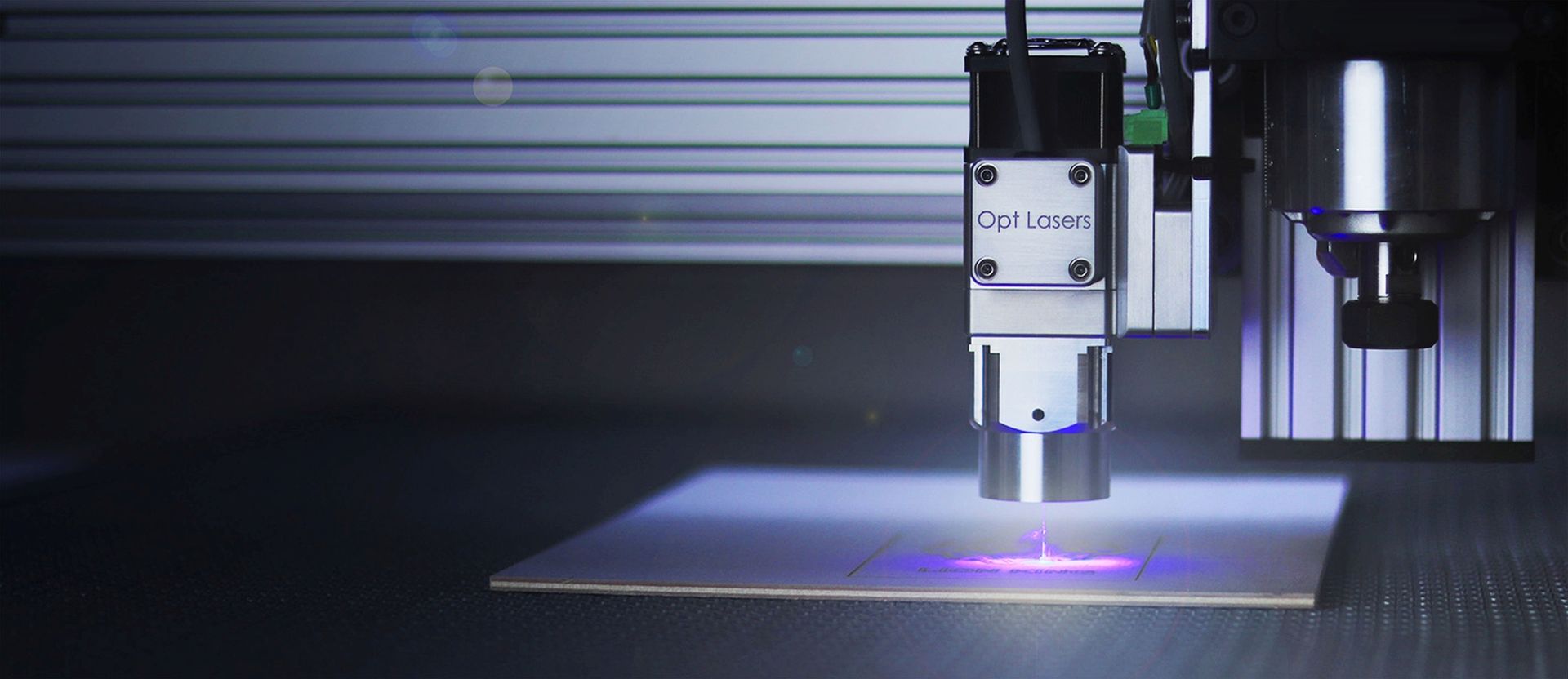
Making transistors smaller required the ability to draw increasingly fine patterns on silicon wafers. The technique used to do this is photolithography — essentially a photographic process applied to semiconductor materials. A light-sensitive chemical called a photoresist is applied to the wafer surface, exposed through a mask that carries the circuit pattern, and then chemically developed to etch the pattern into the semiconductor or depositing material beneath.
The resolution of photolithography — the smallest feature it can reliably produce — is limited by the wavelength of the light used to expose the photoresist. Shorter wavelengths allow finer patterns. The history of chip miniaturization is, in large part, the history of shifting to ever-shorter light wavelengths: from visible light to ultraviolet to deep ultraviolet to extreme ultraviolet, or EUV.
EUV lithography, which uses light with a wavelength of 13.5 nanometers — far shorter than visible light, which ranges from 380 to 700 nanometers — is the technique that has enabled transistors at the 7-nanometer and 5-nanometer nodes used in modern smartphone processors. EUV machines, made by the Dutch company ASML $ASML, cost roughly $150 million each and took decades of development. A single machine weighs 180 tonnes.
The engineering required to produce EUV light — essentially by firing a laser at tiny droplets of liquid tin — and to use it to expose patterns on silicon wafers in a high-throughput manufacturing environment represents one of the most complex precision manufacturing achievements in human history. It is also largely unknown outside the semiconductor industry.
Without EUV lithography, the chips in current smartphones could not be manufactured at their current transistor densities. The performance and power efficiency of a modern mobile processor depends directly on the ability to draw patterns at scales that would have been considered physically impossible 30 years ago.
Credit: _Karub_ / Pexels
A processor without software is inert. The smartphone required not just capable hardware but an operating system designed to run on battery-powered hardware with limited memory, expose the hardware capabilities to application developers, and provide a user interface accessible to non-technical users. That required a decade of mobile OS development that preceded the modern smartphone.
The Palm OS, first released in 1996, showed that a useful computing environment could run on a handheld device with far less memory and processing power than a desktop computer. Windows CE and its successors brought a version of the Windows computing model to handheld devices in the late 1990s. Nokia's Symbian, which combined elements of EPOC — an OS originally developed for the Psion Series 3 organizer — dominated smart feature phones through the early 2000s.
None of these platforms achieved the combination of usability and capability that the smartphone era required. The breakthrough came from two directions simultaneously. Apple $AAPL's iOS, derived from Mac OS X $TWTR and ultimately from BSD Unix, was engineered specifically for the iPhone's hardware and touch interface. Google $GOOGL's Android, based on the Linux kernel and developed by a team later acquired by Google in 2005, provided a platform that could be adapted to a range of hardware.
Both platforms shared a key architectural insight: the operating system should provide a secure, sandboxed environment in which applications from third-party developers could run without being able to damage the core system or each other. This model — formalized in the app store model that Apple introduced in 2008 — made it possible for a global ecosystem of developers to extend the smartphone's capabilities without requiring device manufacturers to anticipate every possible use case.
The mobile operating system is what turns a collection of components into a platform. The hardware sets the ceiling; the OS determines how much of it can be accessed and by whom.
Credit: Czapp Árpád / Pexels
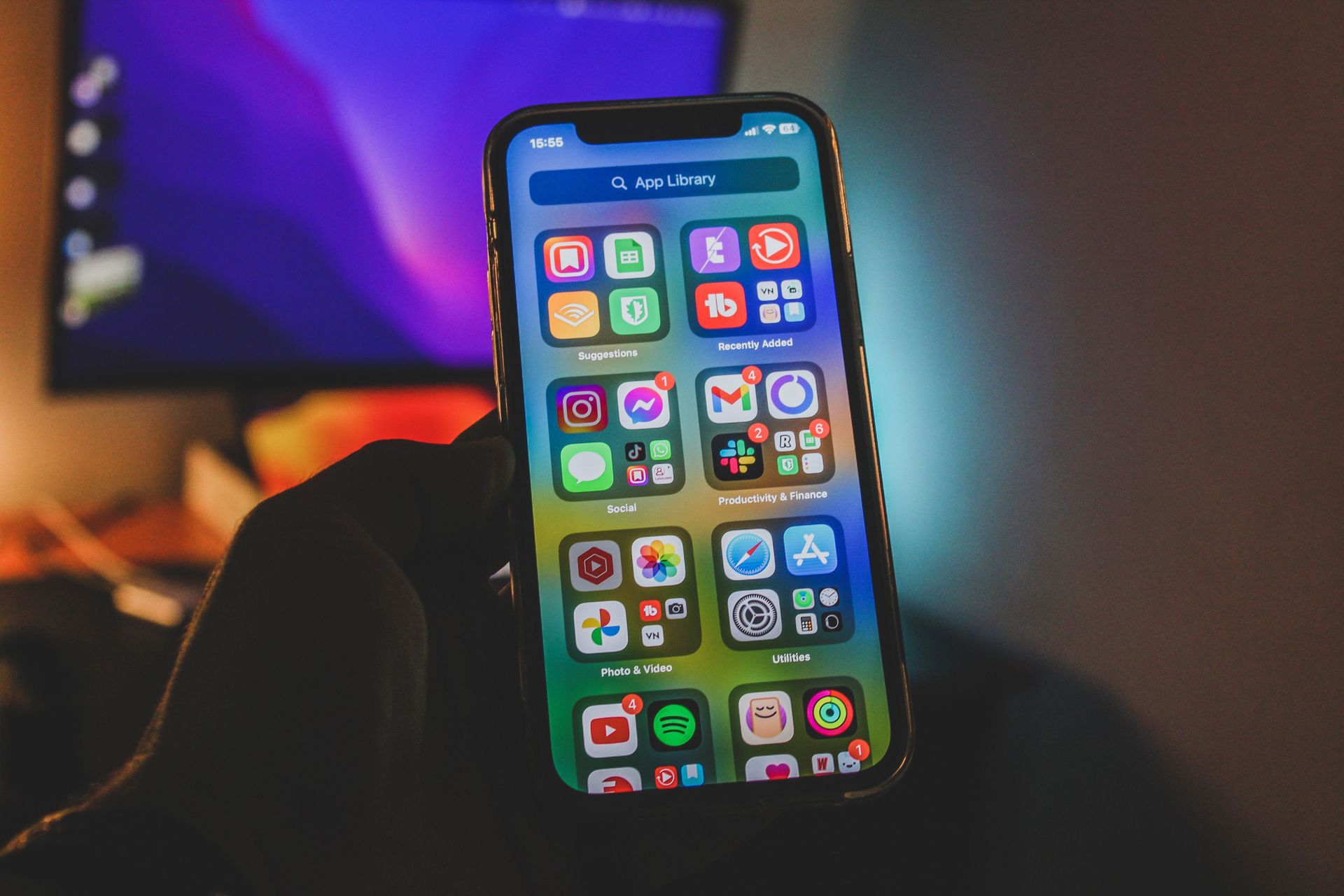
A smartphone is only as useful as what runs on it. The hardware and operating system provide a platform; the applications provide the reasons to use it. The app ecosystem — the model in which third-party developers write software distributed through a centralized marketplace — was not inevitable. It emerged from specific decisions about platform architecture and developer access that shaped the smartphone era.
Before the iPhone's App Store, which launched in July 2008, mobile software distribution was fragmented and difficult. Developers could write applications for mobile platforms, but reaching users required navigating carrier approval processes or manufacturer agreements that were slow, expensive, and unpredictable. The "walled garden" wasn't a metaphor — mobile operators actively controlled what software could run on handsets on their networks.
Apple $AAPL's App Store changed this by creating a direct channel between developers and users, with Apple acting as a single gatekeeper. This was both more restrictive and more open than what came before: developers faced Apple's review process, but they no longer needed carrier approval. The economic terms — Apple taking 30% of paid app and in-app purchase revenue — established a business model that generated enormous developer interest.
Google $GOOGL's Play Store, launched alongside Android, introduced a competing model with somewhat less restrictive curation. The competition between the two platforms drove investment in mobile software development that rapidly expanded what smartphones could do.
The app ecosystem model required the internet infrastructure to distribute software at scale, the payment systems to handle micropurchases, and the developer tools to make mobile software engineering accessible to individuals and small teams. The global pool of smartphone applications is the product of millions of developers working within the frameworks that Apple and Google built. Without the app store model, the smartphone would have remained a closed device with a fixed feature set rather than a general-purpose platform.
Credit: Shivam Gurjar / Pexels
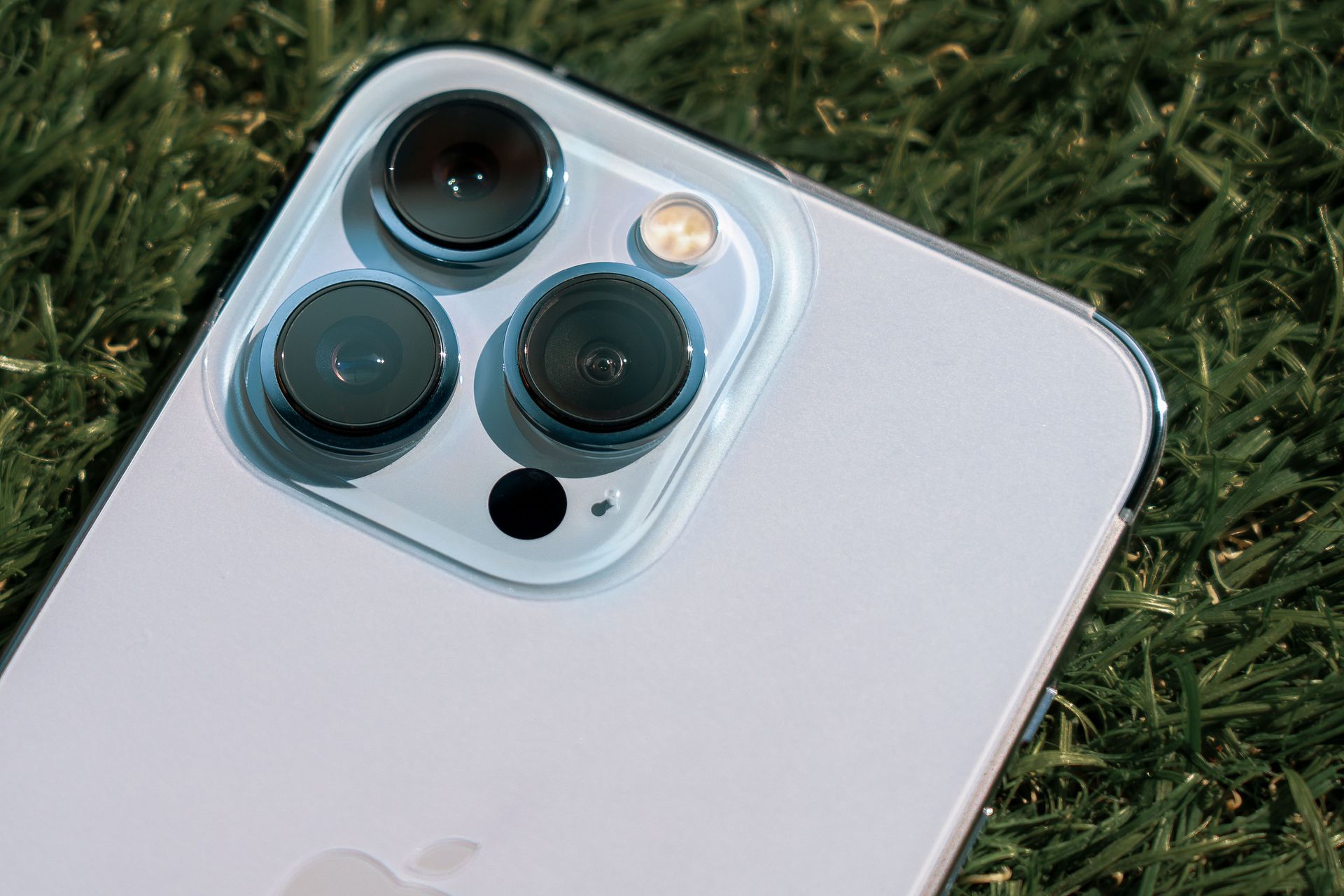
No hardware feature has done more to embed the smartphone into daily life than the camera. Modern smartphone cameras produce images and video that professional photographers would have used dedicated equipment for a decade ago. But putting a useful camera into a phone required dramatic miniaturization of image sensor technology.
The image sensors in smartphone cameras are CMOS sensors — Complementary Metal-Oxide-Semiconductor — which convert light into electrical signals using the same silicon manufacturing processes used to make logic chips. CMOS sensors had existed since the 1960s, but for decades they produced lower-quality images than CCD (Charge-Coupled Device) sensors, which were the dominant technology in digital cameras and camcorders.
A breakthrough came in the early 1990s when Eric Fossum and colleagues at NASA's Jet Propulsion Laboratory developed the CMOS active pixel sensor, which integrated amplifiers into each pixel and dramatically improved signal quality. The technology was patented, licensed, and then commercialized by a series of companies, eventually making CMOS sensors the standard for mobile cameras because of their lower power consumption and compatibility with standard chip manufacturing.
Miniaturizing the sensor small enough for a phone while maintaining usable image quality required advances in lens optics — specifically, designing lens systems small enough to fit a few millimeters deep while still focusing light accurately — and in computational processing. The sensors in smartphone cameras are tiny compared to those in dedicated cameras, which means they collect less light. Computational photography — using the processor to combine multiple exposures, reduce noise, and enhance detail — compensates for physical limitations that optics alone cannot overcome.
Apple $AAPL, Google $GOOGL, and others have invested heavily in the image signal processors and machine learning algorithms that do this computational work. The quality of a modern smartphone photograph reflects both the sensor hardware and the software that processes its output — a combination that neither hardware nor software alone could achieve.
Credit: Fotografia Lui Vlad / Pexels
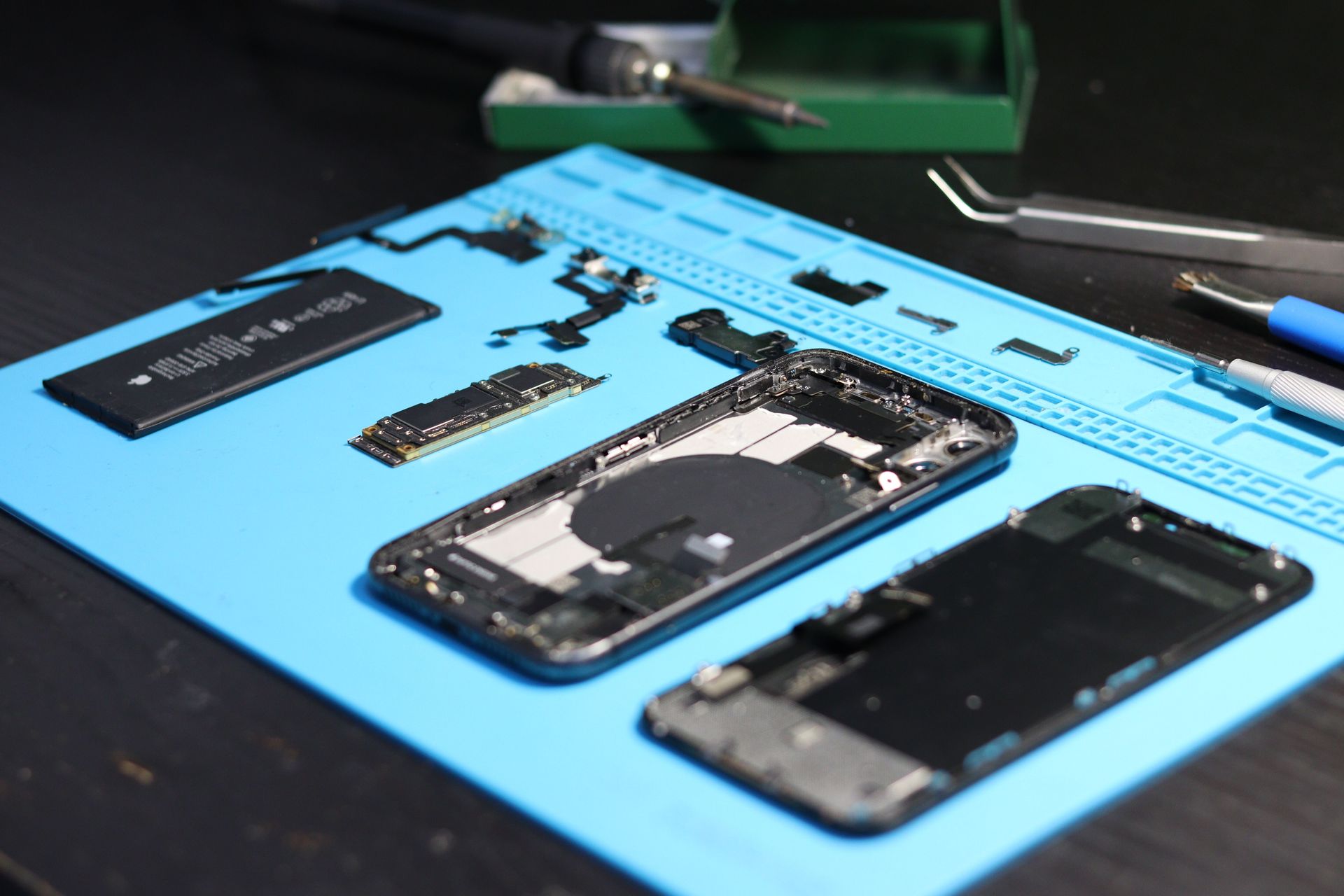
Not all processor architectures are created equal, and the architecture that powers nearly every smartphone on Earth was designed not for maximum performance but for minimum power consumption — a design priority that, when smartphone chips were being designed in the 1990s and 2000s, set it apart from the dominant approaches of the desktop computing world.
The ARM architecture — Advanced RISC Machine, originally Acorn RISC Machine — was developed by Acorn Computers in the U.K. in the mid-1980s. It is based on the Reduced Instruction Set Computing philosophy, which simplifies the processor's instruction set to allow each instruction to execute quickly and with low energy overhead, as opposed to Complex Instruction Set Computing designs that can perform more in a single instruction but require more transistors and power to do so.
ARM Holdings, the company that designs and licenses the ARM architecture, does not manufacture chips. It licenses its processor designs to chip manufacturers — Apple $AAPL, Qualcomm $QCOM, Samsung, MediaTek, and others — who integrate them into custom system-on-chip designs optimized for their specific applications. Apple's A-series chips, which power iPhones, are ARM-based. Qualcomm's Snapdragon processors, which power a large proportion of Android devices, are also ARM-based.
The licensing model was unusual in the semiconductor industry, where vertically integrated companies typically both designed and manufactured their chips. ARM's decision to license its architecture rather than manufacture chips meant that many companies could build ARM-based products, creating an ecosystem of compatible software and tools. It also meant ARM chips appeared in devices — PDAs, set-top boxes, embedded controllers — long before the smartphone era, building a body of software and engineering experience.
The power efficiency that ARM designs prioritize was exactly what mobile computing needed. Desktop processors could afford to consume 100 watts because they were plugged into a wall. A smartphone processor has to run on the milliwatts available from a battery and still leave power for a cellular radio, a display, a GPS receiver, and sensors running simultaneously.
Credit: Patrick / Pexels
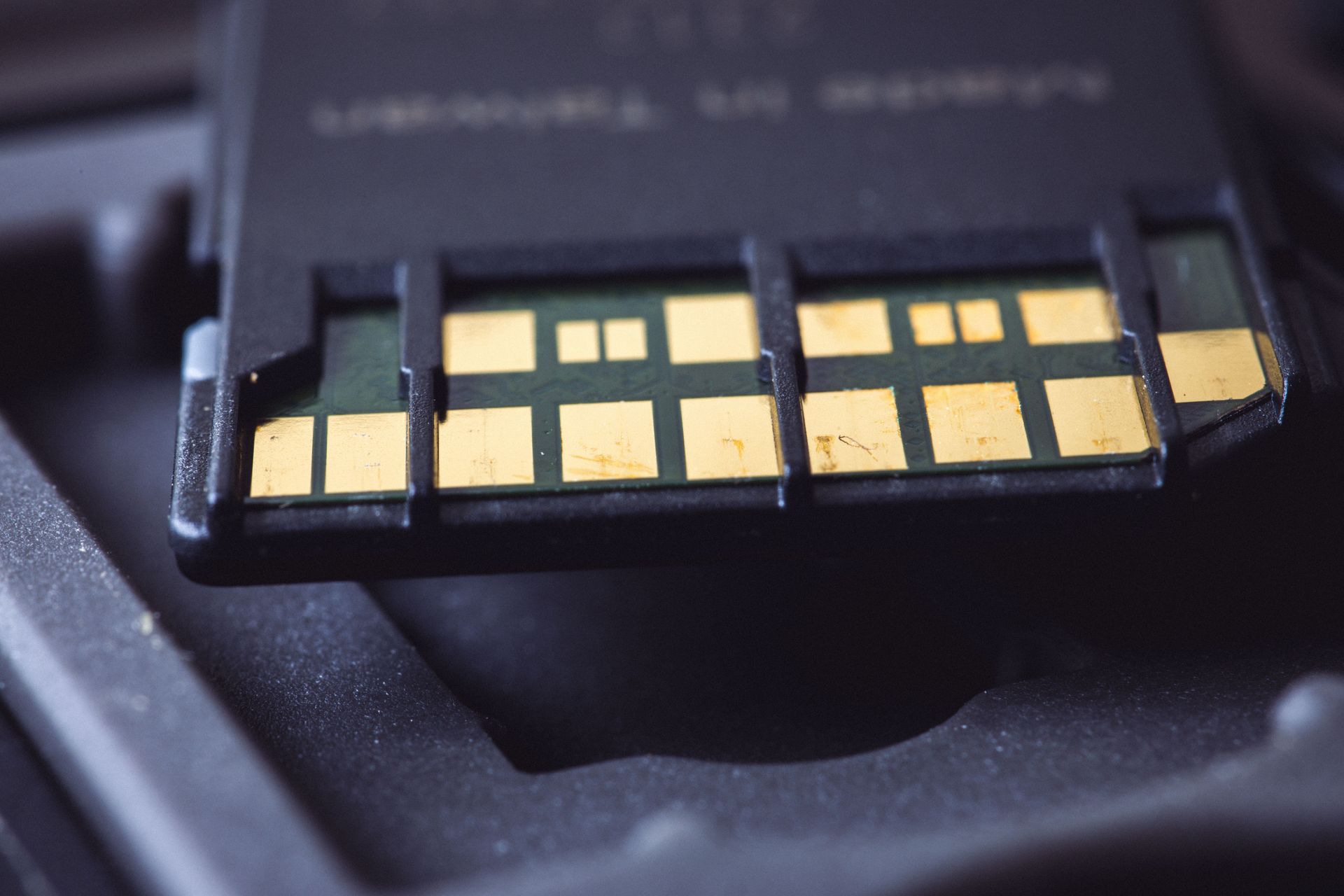
A smartphone needs to store its operating system, its applications, its user data, and the media the user creates and downloads. That storage needs to be compact, fast, power-efficient, and durable — it cannot have moving parts, because a phone is dropped, shaken, and carried in pockets. The technology that meets all of these requirements is NAND flash memory.
Flash memory was invented by Fujio Masuoka at Toshiba in the early 1980s. Masuoka presented the invention at an IEEE symposium in 1984, where Intel $INTC's engineers recognized its potential. Intel licensed the technology and brought the first commercial flash memory chips to market in 1988. The specific architecture that became dominant — NAND flash, so named for the logic gate structure it uses — proved more suitable for high-density storage than the NOR flash alternative.
NAND flash works by trapping electrons in the floating gate of a transistor, where they remain even without power, providing non-volatile storage. The trick to making it useful for smartphones was making it dense enough to store gigabytes of data in a chip the size of a fingernail and fast enough to support operating system boot and application loading without perceptible delay.
The cost of NAND flash fell dramatically through the 2000s as manufacturers moved to smaller process nodes and developed three-dimensional stacking techniques, which stack memory cells vertically to increase density without requiring larger chips. By 2007, it was economically feasible to include 4 to 8 gigabytes of NAND storage in a consumer smartphone — enough to store the OS, several dozen apps, and a library of music and photographs.
Without NAND flash, smartphone storage would require miniaturized hard drives — which exist, in the form of 1.8-inch drives used in early iPods — but are slower, more power-hungry, more fragile, and thicker than flash. The migration of storage from spinning disks to flash was a prerequisite for the thin, durable smartphone form factor.
Credit: Jakub Zerdzicki / Pexels
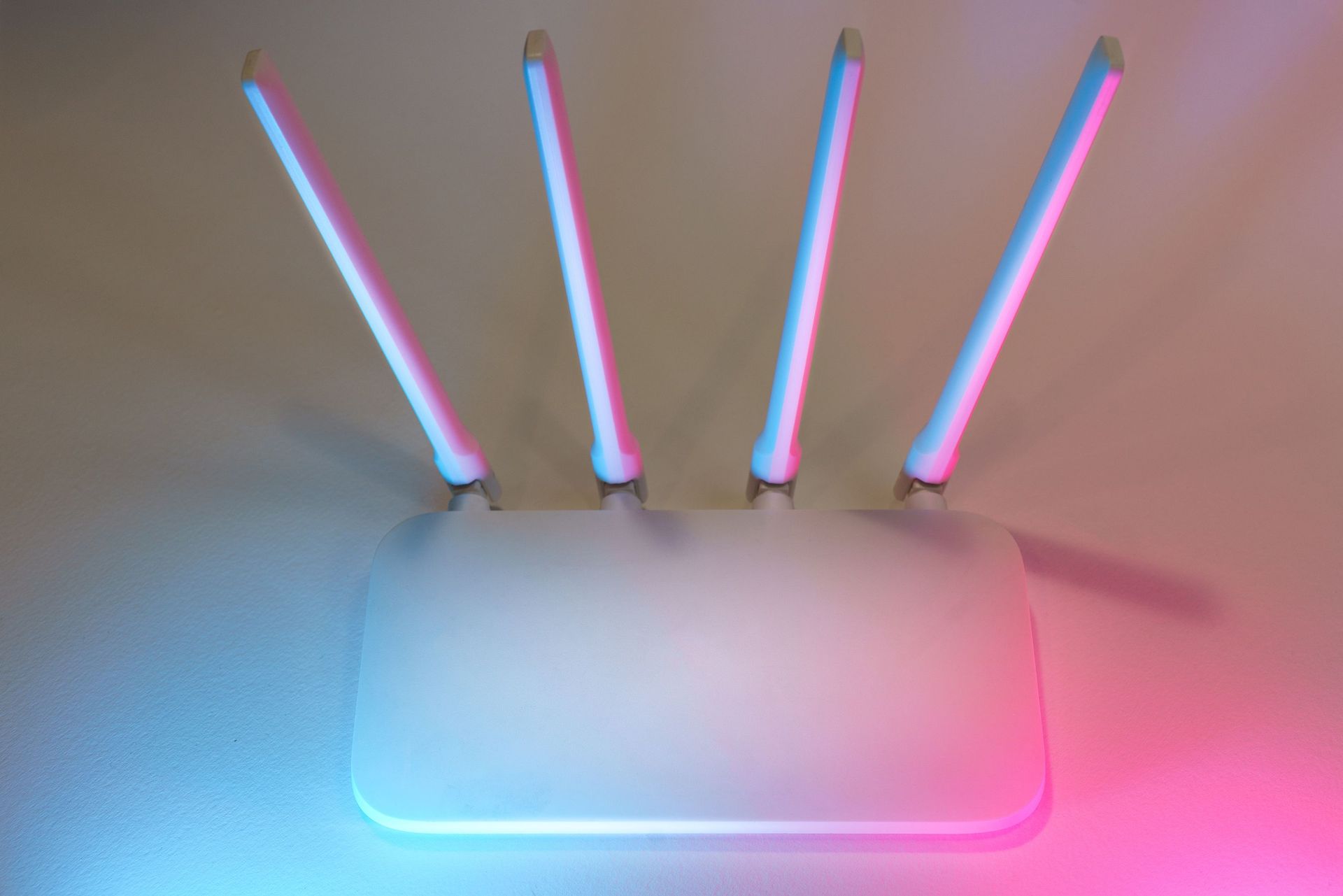
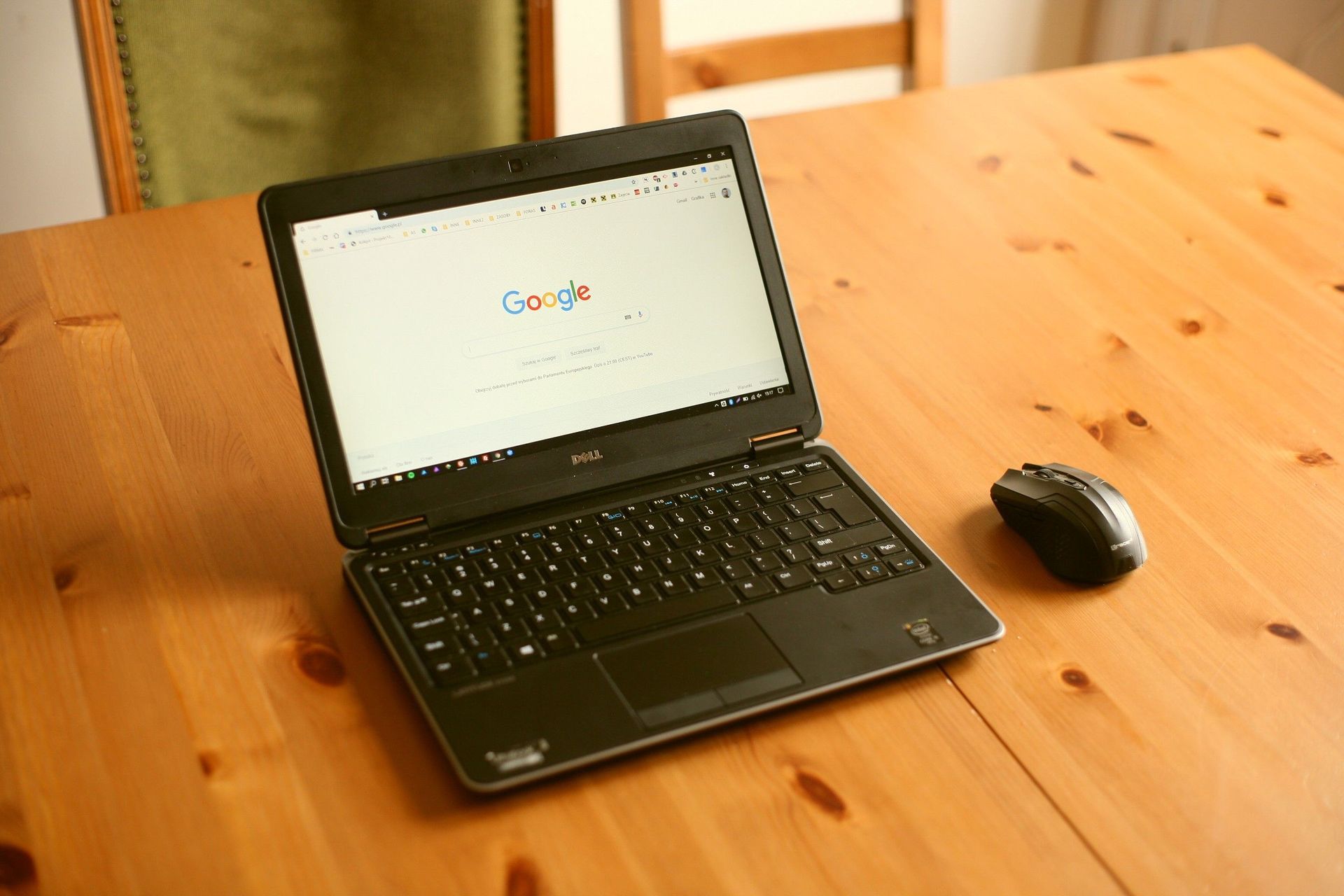
Cellular networks handle smartphone communication when a device is away from a fixed location, but a large share of smartphone data traffic moves over Wi-Fi — the wireless local area network technology that provides high-speed internet access at home, in offices, in cafes, in airports, and in public spaces. Wi-Fi was not invented for smartphones; it was standardized for laptops. But the infrastructure built for laptop users became a critical component of the smartphone experience.
The IEEE 802.11 standard, which defines Wi-Fi, was first published in 1997. The 802.11b revision in 1999 increased speeds to 11 megabits per second and was the first version to achieve widespread commercial adoption. The Wi-Fi Alliance, formed in 1999 to certify interoperability between products from different manufacturers, gave the technology its brand name and ensured that a laptop from one company could connect to an access point from another.
The ubiquity of Wi-Fi in homes and businesses by the mid-2000s meant that smartphone designers could count on high-speed wireless connectivity being available in the environments where users would spend most of their time. This allowed smartphone cellular radios to handle the gap between fixed locations rather than carrying the full burden of data transmission, which would have required faster cellular networks sooner and put more demand on battery life.
Wi-Fi also enabled capabilities that cellular networks could not efficiently support at launch — high-definition video streaming, large file downloads, software updates — by providing a local high-bandwidth connection. The practice of restricting large downloads to Wi-Fi, which most smartphone operating systems enforce by default, reflects the continued role of Wi-Fi as the high-capacity complement to the cellular connection.
The 802.11 standard has been revised repeatedly, with each revision increasing speeds. The 802.11n, 802.11ac, and 802.11ax (Wi-Fi 6) revisions have expanded bandwidth to hundreds of megabits per second, keeping Wi-Fi ahead of cellular speeds for local connections even as 4G LTE and 5G have dramatically increased cellular data rates.
Credit: Adam Sondel / Pexels
The internet provides the pipes; the World Wide Web provides the content. A smartphone browser opens web pages. A smartphone app frequently uses web technologies to display information retrieved from web servers. The web — the system of hyperlinked documents identified by URLs and formatted in HTML — is the content layer on which much of the smartphone's utility depends.
Tim Berners-Lee developed the three core technologies of the Web at CERN in 1989 and 1990: HTML, the markup language for web documents; HTTP, the protocol for transferring them between servers and clients; and URLs, the addressing scheme that identifies each document. He implemented the first web server and browser on a NeXT computer at CERN, and the web went public in August 1991.
The commercial expansion of the web through the 1990s, driven by graphical browsers — first Mosaic, then Netscape Navigator, then Internet Explorer — created the ecosystem of websites, search engines, and eventually e-commerce platforms that smartphones would access. Google $GOOGL, founded in 1998, organized this growing body of content through search in ways that made it useful to navigate from a mobile device.
The evolution of web standards through the 2000s added capabilities that made web-based applications more powerful: JavaScript for interactivity, CSS for presentation, XMLHttpRequest for loading data without refreshing the page. These advances, grouped under the label Web 2.0, made it possible to build application-like experiences in a browser and eventually in the WebView components embedded in mobile apps.
Without the web, a smartphone would have access to data networks but no organized, navigable body of content to access. The web is what gave the internet a user-facing experience that justified the effort of accessing it from a pocket-sized device.

Credit: Thomas Parker / Pexels
A smartphone is a genuinely global product. The rare earth elements in its magnets and screen come from mines predominantly in China. Its aluminum chassis may be formed in China from Australian bauxite. Its glass is made by companies in the U.S. and Japan. Its chips are designed in California and fabricated in Taiwan. It is assembled in China, Vietnam, or India and sold globally. This supply chain did not assemble itself; it reflects 40 years of trade liberalization, logistics development, and industrial policy.
The framework that made global electronics manufacturing economical began with the General Agreement on Tariffs and Trade, the precursor to the World Trade Organization, which progressively reduced tariffs on manufactured goods through successive rounds of negotiations beginning in 1948. The Information Technology Agreement, concluded under the WTO in 1996, eliminated tariffs on computers, semiconductors, and telecommunications equipment among major trading economies — a deal that significantly reduced the cost of the components that go into smartphones.
Container shipping, standardized after Malcolm McLean's innovation in the 1950s and 1960s, made it economical to manufacture components in different countries and assemble them in a third. A container loaded with display panels in South Korea can be unloaded at a port in southern China, trucked to an assembly facility, and the finished phones loaded into containers for shipment to retail markets worldwide, with logistics costs low enough not to price the device out of the market.
China's integration into the global manufacturing economy after its WTO accession in 2001 provided a combination of large-scale manufacturing capacity, improving infrastructure, and labor costs that made it the dominant location for consumer electronics assembly through the 2000s and 2010s. The smartphone supply chain as it existed in 2007 was the product of all of this — trade agreements, shipping infrastructure, and industrial development — converging to make global assembly economical.

Credit: MART PRODUCTION / Pexels
Smartphones are personal computers in the most literal sense — computing devices owned and operated by individuals rather than institutions. But the idea that ordinary people would own and operate computing devices, rather than submitting work to institutional machines staffed by specialists, was not self-evident in 1970. It required the personal computer revolution of the late 1970s and 1980s to establish computing as a consumer activity.
The Apple $AAPL II, introduced in 1977, and the IBM $IBM PC, introduced in 1981, were the devices that brought computing into homes and businesses in large numbers. The IBM PC's open architecture — which allowed other manufacturers to build compatible machines using the same components — drove down prices and accelerated adoption. By the late 1980s, personal computers were a standard fixture in offices and increasingly common in homes.
The PC established several things that the smartphone depended on. It normalized the idea that non-specialists should interact directly with computing hardware. It created a market for packaged software, establishing the commercial infrastructure for software distribution. It trained a generation of users in basic computing concepts — file systems, applications, operating system concepts — that translated to mobile devices. And it built the software industry that would eventually produce mobile applications.
The PC also contributed specific technologies to the smartphone: the GUI, developed at Xerox PARC and popularized by the Apple Macintosh, became the visual model for mobile operating systems. Word processing, spreadsheet, and other application categories established on the PC migrated to mobile platforms. The smartphone is, in important ways, the PC refined and miniaturized — and the PC's 30 years of cultural normalization made the smartphone's adoption far faster than it might otherwise have been.
Credit: 🇻🇳🇻🇳Nguyễn Tiến Thịnh 🇻🇳🇻🇳 / Pexels
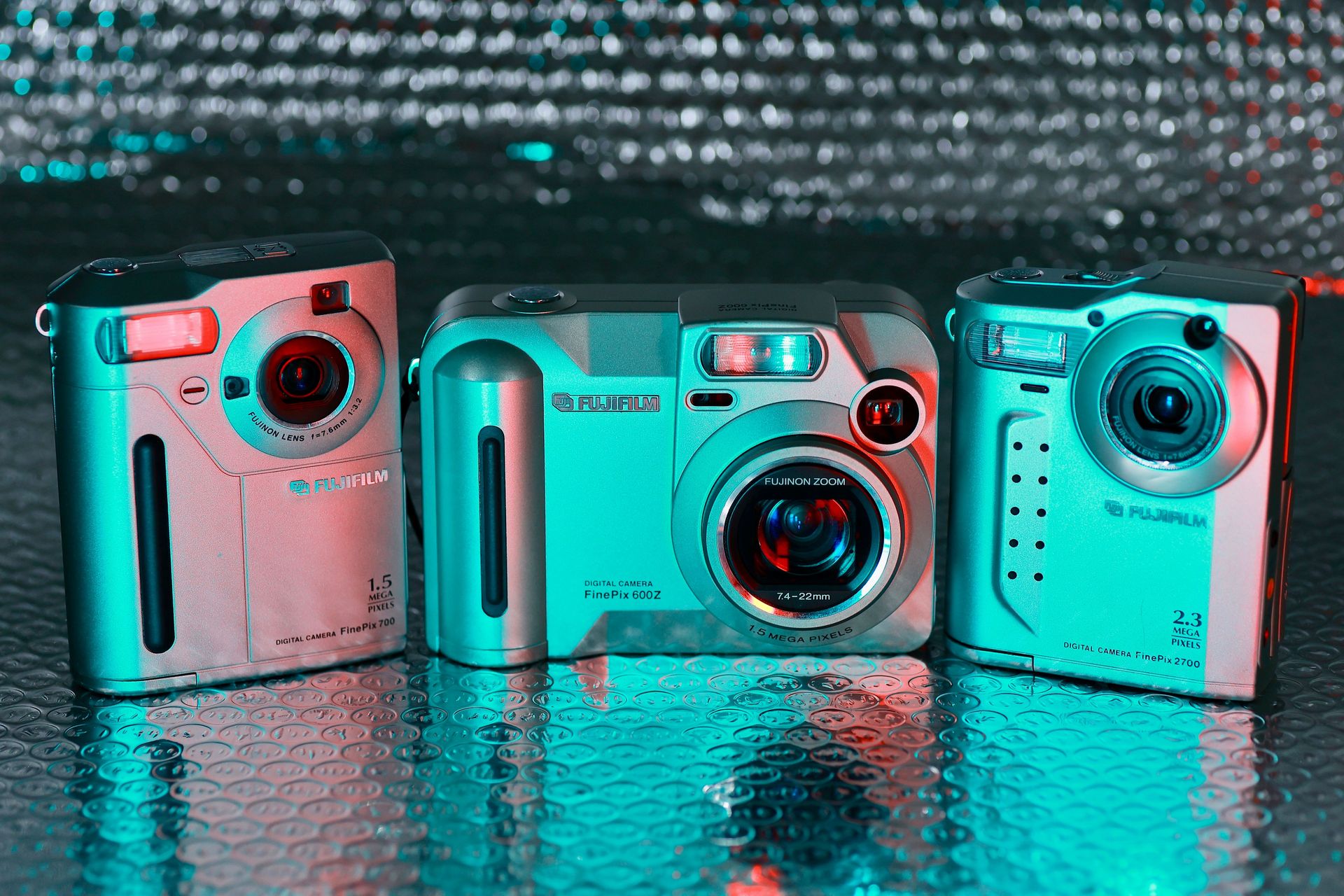
Before smartphones contained cameras, cameras were standalone devices — first film, then digital. The shift from film to digital photography in the consumer market during the 1990s and early 2000s did more than produce better photographs; it established the expectation that photographs could be instantly reviewed, stored digitally, shared electronically, and managed in software. Those expectations shaped what a smartphone camera needed to deliver.
The first commercial digital camera for consumers, the Apple $AAPL QuickTake 100, was released in 1994. It produced images at 0.3 megapixels, stored them on the camera with no memory card, and retailed for $749. The Casio QV-10, released the same year, introduced the rotating LCD screen that allowed users to see themselves while taking a picture — a feature that anticipated the selfie camera decades later.
Digital camera quality and affordability improved rapidly through the late 1990s, driven by the same CMOS sensor improvements that would later power smartphone cameras. By the early 2000s, consumer digital cameras had largely displaced film compacts in the casual photography market. The management of digital photos — downloading to a PC, organizing in software, sharing via email and then via early social photo sites like Flickr, launched in 2004 — created the workflows that smartphone cameras would then streamline by eliminating the intermediate step.
The market signal provided by the digital camera boom told phone manufacturers that consumers wanted camera capability in their pocket devices. Nokia's N95, released in 2007, included a 5-megapixel camera — competitive with entry-level digital compacts at the time. By demonstrating that mobile cameras could produce genuinely useful images, it shifted the competitive benchmark for smartphone photography and set expectations that Apple and others then competed to exceed.
Credit: Jonas Vandermeiren / Unsplash
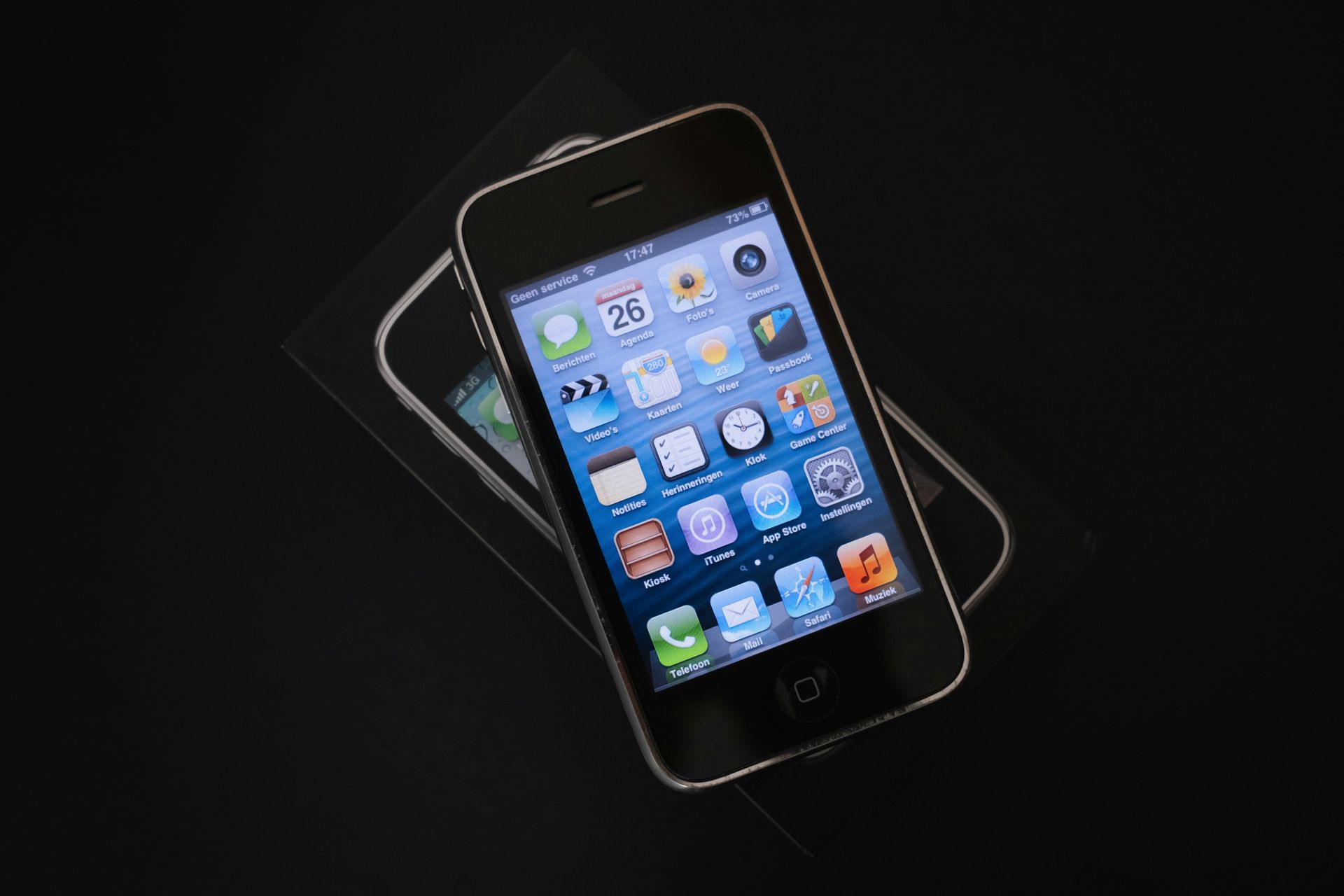
The smartphone is a convergent device — it combines functions previously distributed across multiple separate products: a phone, a music player, a camera, a calendar, an email client, a GPS navigator, a web browser, a games console. Convergence as a product strategy was debated extensively in the electronics industry in the 1990s, and its eventual acceptance by consumers was not guaranteed.
The cellular industry's early thinking about data services produced WAP — the Wireless Application Protocol — a standard designed in the late 1990s to adapt internet content for mobile phone screens. WAP worked but provided a degraded experience: slow, expensive, with limited content. It was not the full internet; it was a mobile-optimized subset of it. Users tried it, found it unsatisfying, and largely abandoned it. The lesson drawn in some quarters was that consumers did not want internet access on their phones.
The opposite lesson was drawn by those who noted that the problem was execution, not concept. Consumers wanted the same internet on their phones that they had on their desktops, not a stripped-down simulacrum of it. The iPhone's browser, in 2007, rendered desktop websites — the actual web — at full fidelity, adjusting to the small screen through zooming rather than reformatting. This distinction was central to Apple $AAPL's pitch and to consumers' response.
Carriers also had to accept convergence. Mobile operators had invested in building proprietary content and service platforms — ringtone stores, carrier-operated portals, WAP sites — that generated revenue and which they were reluctant to bypass. Apple's decision to deal directly with consumers over carriers, including by taking control of the software distribution channel, was a significant shift in the industry's power structure. AT&T $T's agreement to offer the iPhone on an exclusive basis in the U.S., accepting Apple's terms, signaled that the carrier grip on the device ecosystem was breakable.

Credit: Sasun Bughdaryan / Unsplash
A smartphone is a financial instrument. It authenticates users for banking, processes payments through services like Apple $AAPL Pay and Google $GOOGL Pay, stores passwords and credentials, and communicates sensitive information over wireless networks. None of this would be possible — or prudent — without robust cryptographic infrastructure protecting the data in transit and the device itself.
The cryptographic foundations of smartphone security were largely established before the smartphone era. The RSA algorithm, developed in 1977 by Ron Rivest, Adi Shamir, and Leonard Adleman, provided the mathematical basis for public-key cryptography — the method by which two parties can establish a secure communication channel without having previously shared a secret key. Public-key cryptography is used in TLS, the protocol that secures web browsing (the "S" in HTTPS), and in the certificate infrastructure that allows a device to verify that it is talking to a legitimate server rather than an impersonator.
Symmetric encryption algorithms — AES (Advanced Encryption Standard), standardized by NIST in 2001 — provide the high-speed encryption used to protect data stored on the device and transmitted over networks. AES is fast enough to run on mobile hardware without perceptible performance impact, which was not true of earlier strong encryption algorithms on the processing hardware available in mobile devices.
Device security — the PIN, password, fingerprint, or face recognition that prevents unauthorized access — is also a form of cryptography: biometric data is stored as a mathematical representation rather than a raw image, and the stored representation cannot be reversed to reconstruct the biometric. The secure enclave, a dedicated hardware security module that stores cryptographic keys in isolation from the main processor, was introduced in the iPhone 5s in 2013 and provides security guarantees that software-only approaches cannot.
Without trusted cryptographic infrastructure, the smartphone could not function as a secure communications device or financial instrument. Every HTTPS connection, every tap-to-pay transaction, and every app store authentication depends on cryptographic protocols developed and standardized over decades before the smartphone existed.
