
The Social Security Administration said Tuesday that its retirement trust fund could run dry as soon as 2032 — a year earlier than last year's projection — leaving beneficiaries with payments cut to 78 cents on the dollar.
The trustees' report moves the insolvency date one year earlier than last year's projection, with benefits cut to 78% upon depletion
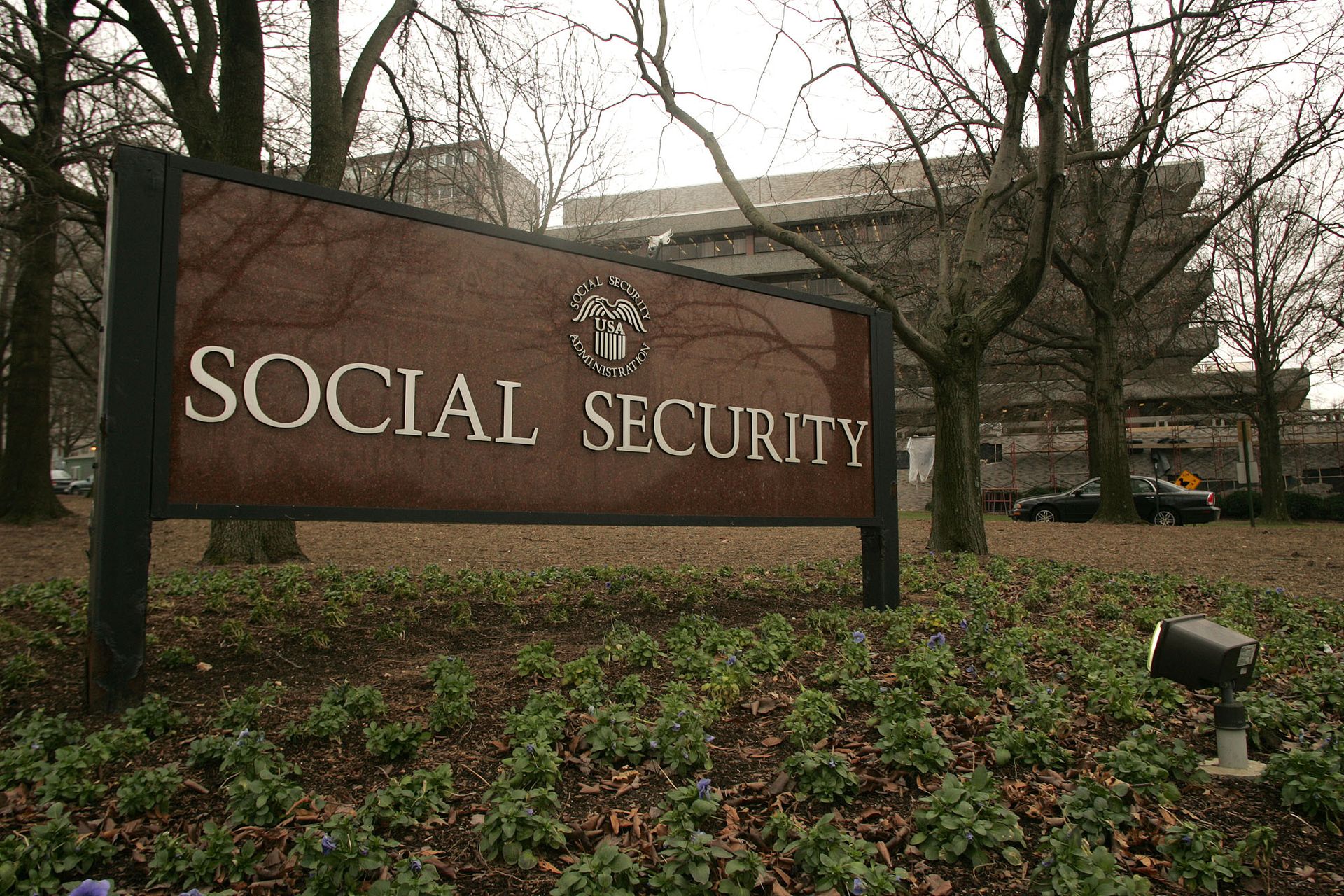
Bloomberg / Getty Images
The Social Security Administration said Tuesday that its retirement trust fund could run dry as soon as 2032 — a year earlier than last year's projection — leaving beneficiaries with payments cut to 78 cents on the dollar.
Social Security's chief actuary attributed the earlier date in part to President Donald Trump's "One Big Beautiful Bill Act," which the actuary warned would carry material consequences for the trust funds by changing how Social Security benefits are taxed as income.
Under a scenario in which the OASI fund — which covers retirees, survivors, and dependents — were merged with the disability insurance trust fund, full payments could be sustained through 2034; after that point, payable benefits would drop to 83%, the trustees report found. The disability insurance fund, on its own, is expected to remain solvent across the full 75-year projection window.
Exhaustion of the trust fund would not mean the end of Social Security checks. Payroll taxes collected from workers and employers continuously feed revenue into the program, which taps its trust funds only when outgoing benefit payments outpace that incoming stream.
A benefit reduction would nonetheless be substantial for millions of Americans. Research from the Committee for a Responsible Federal Budget, estimated that a typical retiree could lose roughly $500 a month. For context, the Social Security Administration had forecast the average 2026 monthly retirement benefit at $2,071.
Roughly 71 million Americans collect Social Security each month, and AARP data show the program accounts for more than half of total income for nearly four in ten seniors.
Combining the two trust funds has been discussed as a potential short-term measure, but Shai Akabas, vice president of economic policy at the Bipartisan Policy Center, cautioned against treating it as a solution. "That solution is merely a band-aid," Akabas said. "It'll delay the point at which Congress would have to tackle the broader problem."
AARP CEO Dr. Myechia Minter-Jordan called on Congress to act. "Americans have worked hard and paid into Social Security their entire lives, and they deserve to count on it when they retire," Minter-Jordan said in a statement. "No family should see any cuts to what they've earned in Social Security."
A prior funding crisis, in 1983, was resolved when lawmakers passed a package of reforms — among them subjecting benefits to income tax and phasing in a higher retirement age — that kept the program solvent for decades.
Join 500,000+ readers who start their day with Quartz.
By subscribing, you agree to our Terms of Service and Privacy Policy.