
Quartz
Subscribe
Quartz
Subscribe
Edition
Business News
A.I.
Technology
Money & Markets
Leadership
Lifestyle
Latest

Get Quartz in your inbox

Free daily briefing on global business news.

Business News
AirlinesAutomobilesFoodPharmaceuticalsPolitics & GovernmentRetail & EcommerceSpace & AerospaceEarnings
Technology
A.I.ComputingConsumer TechSpace & AerospaceEarnings
Money & Markets
Economic IndicatorsMarketsPersonal FinanceEarnings
Lifestyle
Cars & BikesCollectingEntertainmentFood & Fine DiningHealth and FitnessReal EstateTravel
Quartz

Global business news for a smarter world

Topics

  • Business News
  • Money & Markets
  • Tech & Innovation
  • Generation A.I.
  • Lifestyle
  • Leadership

Products

  • Daily Brief
  • Weekly Digest
  • Member Benefits
  • Quartz Pro

Legal

  • Sitemap
  • About
  • Accessibility
  • Privacy
  • Terms of Service
  • Advertising

© 2026 Quartz Media, Inc. All rights reserved.

Markets

The S&P 500 closes above 7,000 for the first time, erasing all Iran war losses

The index topped its January record after 11 days of nearly uninterrupted gains, with the Nasdaq also hitting record territory, even as gas prices remain painfully high for most Americans

By Cris Tolomia·3 min read·Updated April 20, 2026
Add QZ to Google
The S&P 500 closes above 7,000 for the first time, erasing all Iran war losses

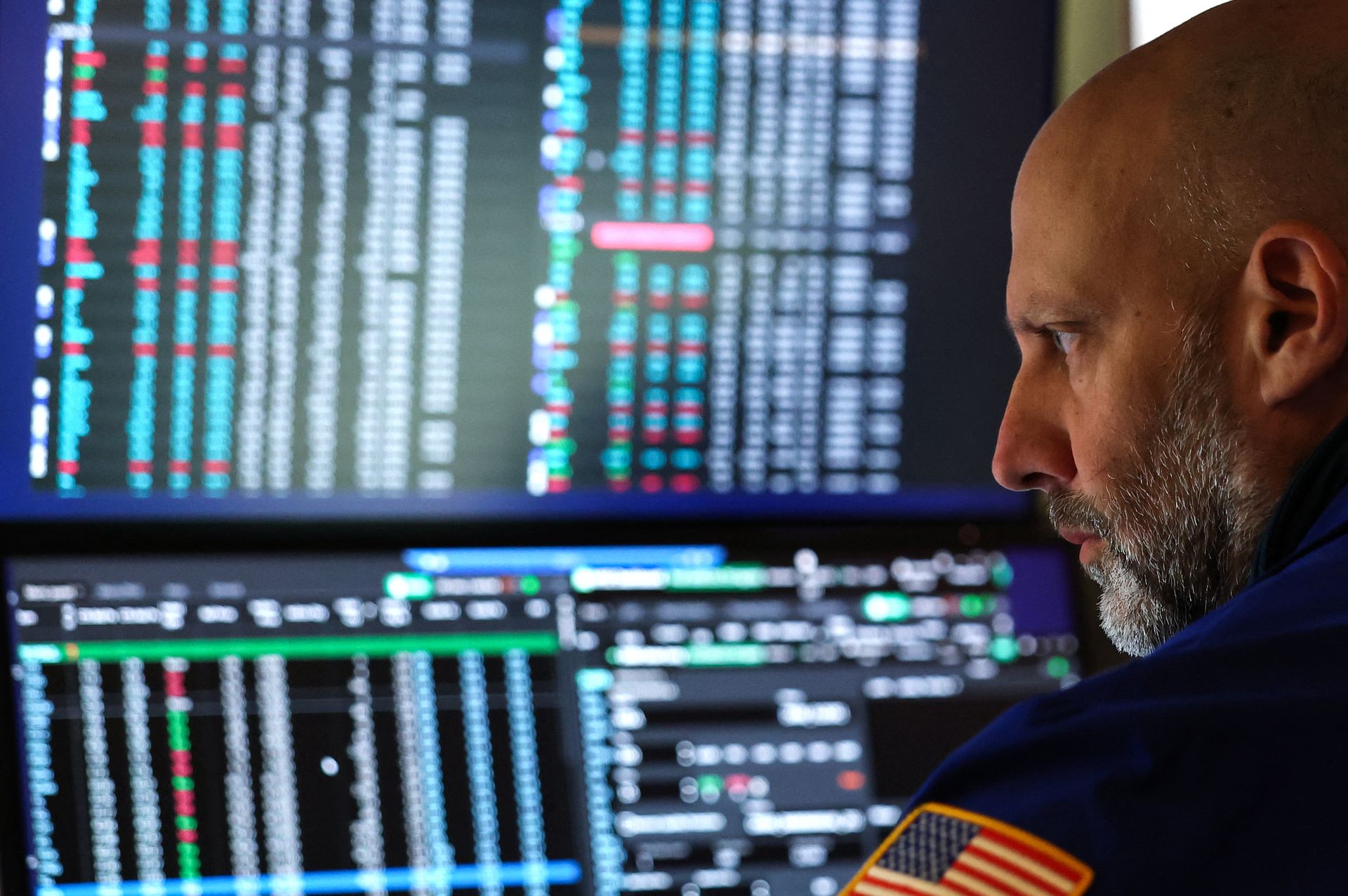
TIMOTHY A. CLARY / Getty Images

Wednesday marked a milestone for the S&P 500, which notched an all-time closing high of 7,022.95 — wiping out every point lost since fighting between the U.S., Israel, and Iran broke out in late February and topping the January peak that had stood as the prior record. The index rose 0.8% on the day.

The Nasdaq $NDAQ Composite joined the S&P in record territory, finishing at 24,016.02 for a gain of 1.59% on the day. Since bottoming out in late March, the index has surged over 15%, enough to clear its October high-water mark and formally end the correction phase it had been mired in. The Dow Jones Industrial Average fell 72 points, or 0.15%, on Wednesday, though it remains up about 5% this month.

Across the past 11 trading days, the S&P 500 posted advances in all but one session, accumulating gains exceeding 10% over that run. The back-to-back milestones — CNBC noted that Thursday also produced a record close — leave the S&P 500 roughly 2% above where it stood when the war began.

Analysts point to a trio of tailwinds: cautious optimism that the U.S.-Iran ceasefire will hold, some relief in oil prices after their March surge, and an earnings season that has so far exceeded expectations. Sentiment gauges reflect the shift — CNN's Fear and Greed Index clawed back from "extreme fear" territory in March to a "neutral" reading, while the VIX, which tracks expected market swings, has declined in 10 of the last 12 sessions.

Ed Yardeni of Yardeni Research described the move in a research note as "yet another V-shaped buy-the-dip recovery in the S&P 500." Piper Sandler's chief market technician Craig Johnson offered a cooler read, writing that the advance "appears to be built on hope" given that crude remains above $90 a barrel and no one can say how long the conflict will last.

The rebound has come despite unresolved tensions. The gains have come even as peace negotiations in Islamabad over the weekend collapsed without a deal and President Trump moved to impose a blockade on the Strait of Hormuz. Vice President JD Vance said U.S. officials walked out of talks in Pakistan after Iran refused to commit to not developing a nuclear weapon. In a research note, Citi analysts wrote that while the ceasefire sparked an initial relief rally, "uncertainty remains unusually elevated, especially following the US' announced blockade of the Strait of Hormuz."

The ceasefire that triggered the market's initial relief rally came on April 7, when Pakistan brokered an agreement under which President Trump agreed to suspend bombing operations against Iran in exchange for Tehran reopening the Strait of Hormuz. The conflict began Feb. 28 when the U.S. and Israel attacked Iran; Iran's response was to throttle tanker traffic through the Strait of Hormuz — a passage that carries about a fifth of global oil and gas — triggering what was widely called the most severe supply disruption the oil market had ever seen and briefly sending prices past $114 a barrel.

For many households, the stock market's recovery has not translated into relief at the pump — gasoline and diesel prices across the U.S. are still well above what Americans paid before the war started.

Daily Brief

The essential business news, delivered fresh every morning.

Join 500,000+ readers who start their day with Quartz.

By subscribing, you agree to our Terms of Service and Privacy Policy.

Related

PharmaBristol Myers Squibb is deploying NVIDIA's most powerful AI computing system to speed drug discovery
Money & MarketsOil spikes as Trump says Iran will pay "many times over" for killing three US soldiers
RetailE.U. hits AliExpress with a record €550 million fine for allowing illegal product sales
MarketsJersey Mike's is kicking off its IPO roadshow, targeting up to $1.09 billion
A.I.Head of U.S. federal AI testing institute resigned after just three months