
SpaceX joined the Nasdaq $NDAQ-100 Index on Tuesday, automatically exposing millions of investors to the rocket and satellite company through the mutual funds and ETFs that track the benchmark.
Funds tracking the Nasdaq-100 must now buy SpaceX stock, but a small float limits its initial weight to around 1%
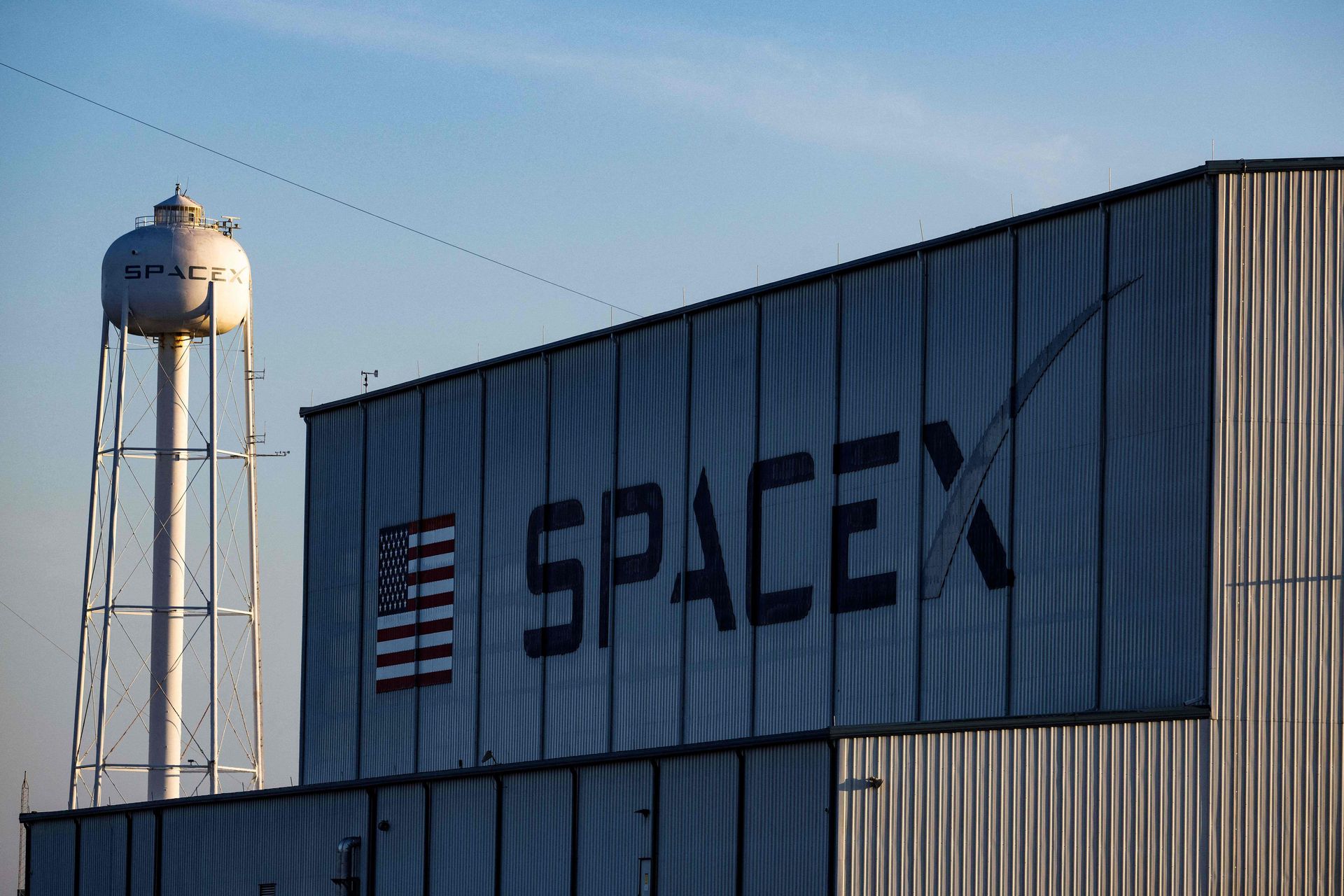
JIM WATSON / Getty Images
SpaceX joined the Nasdaq $NDAQ-100 Index on Tuesday, automatically exposing millions of investors to the rocket and satellite company through the mutual funds and ETFs that track the benchmark.
The Nasdaq-100 underpins a universe of more than 200 investment products collectively holding around $800 billion, all of which are obligated to hold SpaceX now that it is a benchmark constituent. JPMorgan $JPM estimated the inclusion could generate $4.3 billion in passive inflows, according to Reuters. The Invesco QQQ ETF, among the largest funds tracking the index, is one of the products now required to hold SpaceX.
Despite SpaceX's market capitalization exceeding $2 trillion, its initial weight in the index will be well below what that valuation might suggest. Because only a thin slice of SpaceX's total share count was released in the offering, the publicly tradeable pool is a small fraction of the company's overall equity, and Nasdaq anchors index weights to that freely circulating supply. To prevent a distorted impact from the limited float, Nasdaq is scaling SpaceX's effective market capitalization to three times its float-adjusted figure, a calculation that lands the company closer to $300 billion in index terms rather than its headline valuation of more than $2 trillion, according to The Wall Street Journal. JPMorgan put the resulting index weight at roughly 1.3%.
Investors holding Nasdaq-100 products who want to avoid SpaceX have limited options. The S&P 500 remains out of reach for now: Unlike Nasdaq, S&P Dow Jones Indices chose not to revise its entry criteria, and SpaceX cannot yet satisfy the index's requirement of four consecutive profitable quarters and a minimum one-year listing history, according to CNN.
Nasdaq revised its eligibility rules earlier this year, shrinking the seasoning window that once kept newly listed stocks out of the Nasdaq-100 for a minimum of three months down to just 15 trading days for large qualifying offerings, clearing the path for SpaceX's rapid inclusion. SpaceX began trading on June 12 under the ticker SPCX and entered the Nasdaq-100 just 15 days later. The company priced its IPO at $135 per share and carries a dual-class share structure that gives CEO Elon Musk approximately 82.4% of voting power. SpaceX reported a net loss of $4.94 billion in 2025 alongside revenue of $18.67 billion.
Analysts expect volatility to persist. At the same time, employee lockup agreements are unwinding in stages across the coming months, a dynamic that analysts say could weigh on the share price by releasing additional supply into a market already absorbing the buying generated by index rebalancing, according to CNBC. Heading into Tuesday's open, SpaceX shares had slipped roughly 1.8% in premarket trading. The stock's post-IPO range has stretched from a peak of $225.64 to a trough of $147.11.
Join 500,000+ readers who start their day with Quartz.
By subscribing, you agree to our Terms of Service and Privacy Policy.