Joel Camelot / Pexels
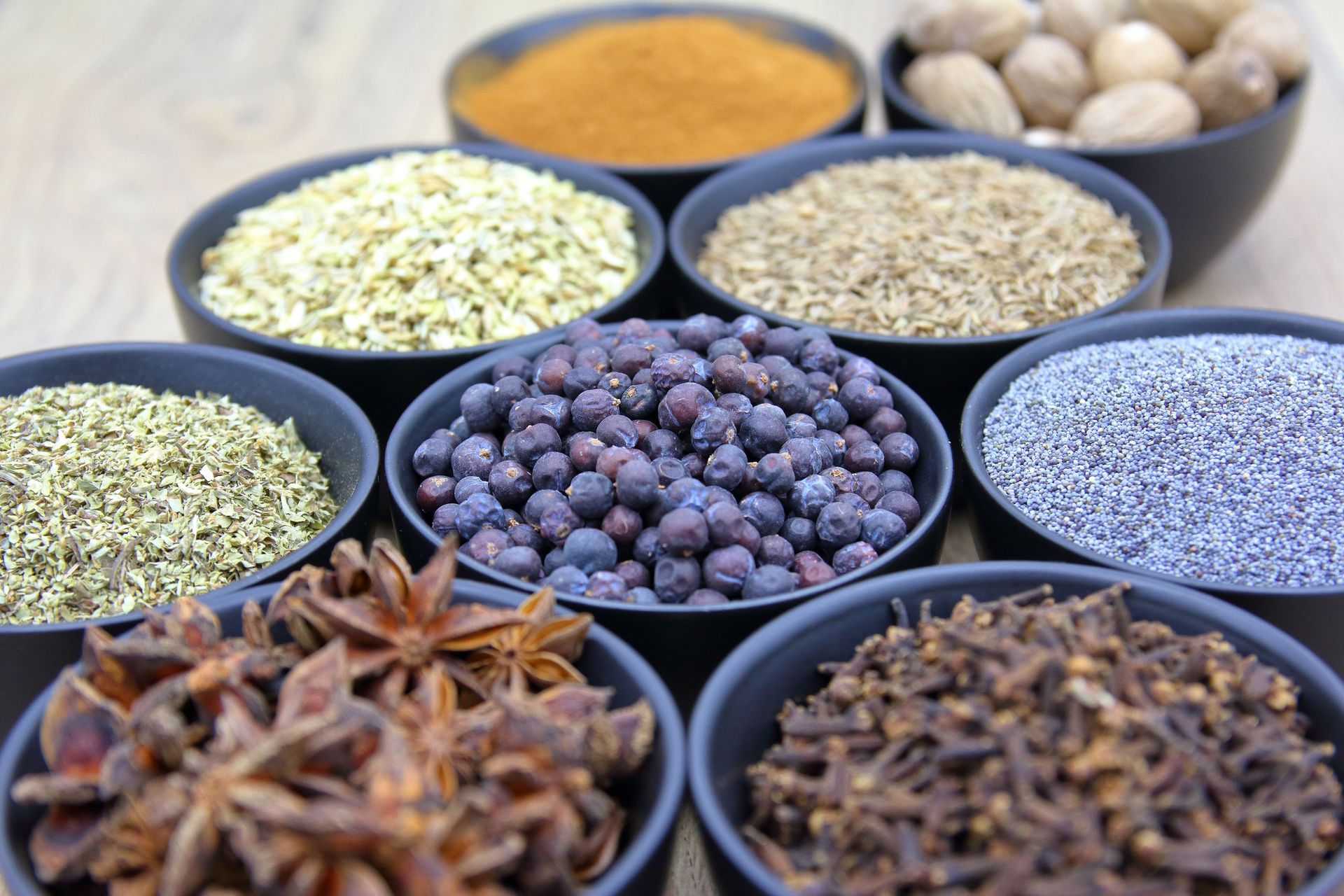
The spice blend is the most efficient unit of culinary knowledge available. A good spice blend encodes centuries of a cuisine's flavor development into a formula that can be applied in seconds — it is the distilled understanding of which spices complement each other, in what proportions, for what purposes, in what cuisine. The cook who understands a cuisine's signature spice blend is already most of the way toward cooking that cuisine authentically, because the blend carries the flavor logic that everything else follows from.
Most Western home cooks have access to a fraction of the world's spice blends — typically whatever the spice aisle of a supermarket stocks, which tends toward generic curry powder, Italian seasoning, and perhaps an all-purpose barbecue rub. The specific blends that define some of the world's great cuisines — Moroccan ras el hanout, Ethiopian berbere, Georgian khmeli suneli, Persian advieh, Japanese shichimi togarashi — are largely absent from this selection, despite being available online and from specialty stores at reasonable prices and despite producing, when used correctly, food that tastes noticeably different from food made without them.
This list covers 20 spice blends from 20 different culinary traditions. Each entry covers what the blend is and where it comes from, what spices go into it (and which are most important), and specifically how to use it — what dishes it belongs in, what cooking techniques activate it best, and what ingredients it pairs with most naturally. The blend recipes given are guidelines rather than formulas: most of these blends have regional and family variations, and the proportions can be adjusted to preference.
A note on toasting: most dry spice blends benefit significantly from toasting whole spices before grinding, or from brief blooming in warm oil before the other ingredients are added. The specific application instructions in each entry indicate when this step is particularly important.
1 / 20
Holger Casselmann / Wikimedia Commons (CC BY-SA 4.0)
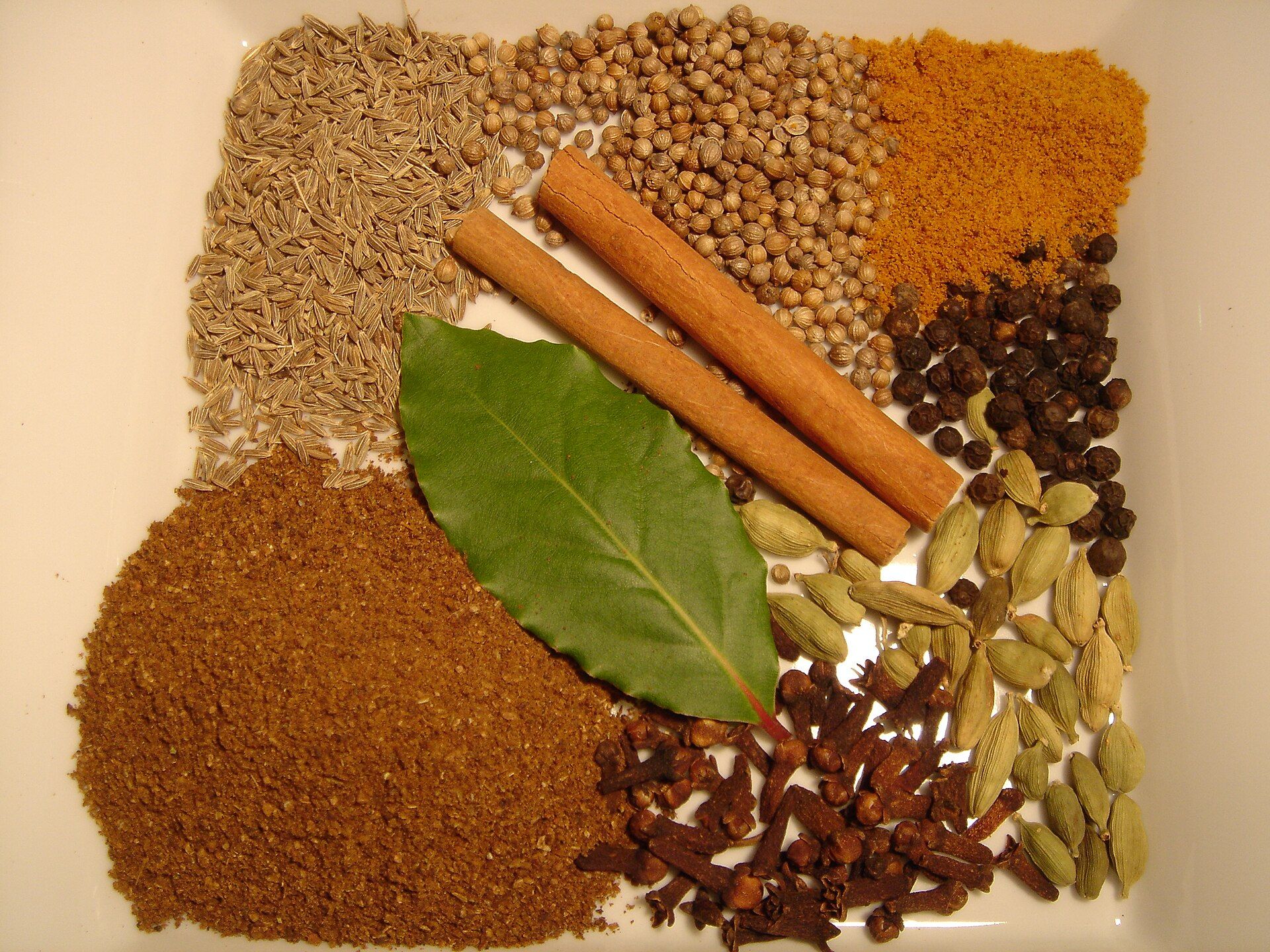
Garam masala — "warming spice blend" in Hindi — is the finishing spice blend of northern Indian cooking, added toward the end of cooking or as a garnish rather than as a base spice, to preserve the volatile aromatic compounds that high heat would destroy. It is one of the most complex and most variable spice blends in the world: virtually every family in northern India has its own formula, and commercial versions vary enormously in character.
The core spices are warm aromatics rather than hot spices: cardamom (both green and black), cinnamon, cloves, black pepper, cumin, coriander, and nutmeg. Some versions add dried bay leaves, mace, fennel seeds, and star anise. The characteristic warmth comes from the combination of cardamom, cinnamon, and cloves — the blend is not primarily about heat (chilli is not a component) but about depth and aromatic complexity.
How to use it: sprinkle over the finished dish — a chicken tikka masala, a dal, a vegetable curry, a biryani — in the final minute of cooking or after plating. Use approximately half a teaspoon per serving as a finishing spice. Can also be added early in cooking with other spices; early addition produces depth, late addition produces fragrance. Excellent stirred into plain yogurt for a marinade, or combined with oil and garlic as a rub for lamb.
To make your own: toast 2 tbsp cumin seeds, 2 tbsp coriander seeds, 1 tbsp black peppercorns, 6 green cardamom pods, 4 cloves, one 5cm cinnamon stick, and 1 dried bay leaf in a dry pan until fragrant. Cool and grind. Add half a nutmeg, grated. Store in an airtight jar.
2 / 20
Credit: Wikimedia Commons (CC BY-SA 1.0)
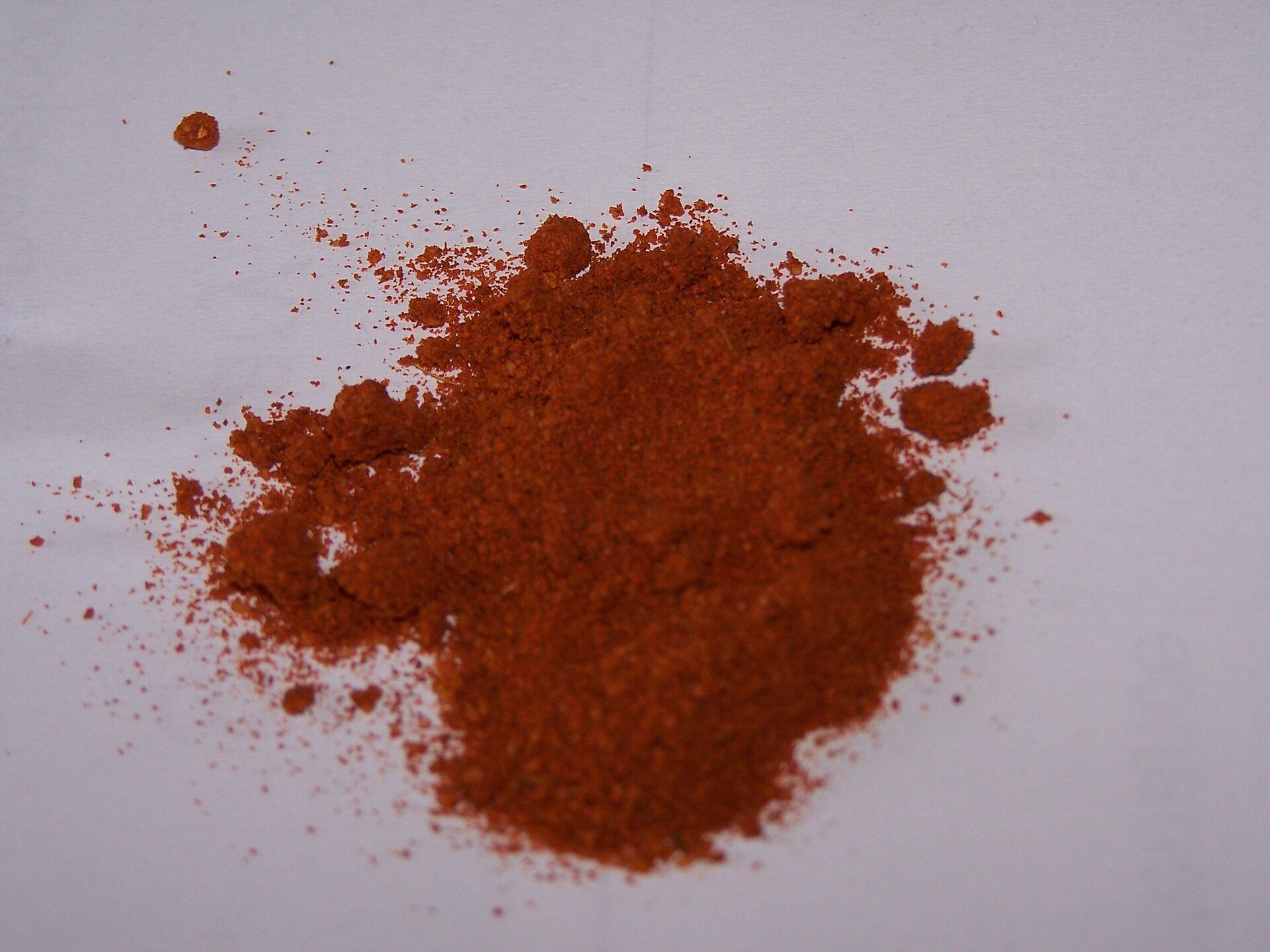
Ras el hanout — "top of the shop" in Arabic, implying the finest spices the vendor has — is the master spice blend of Moroccan cuisine, used in tagines, couscous dishes, and as a rub for lamb and chicken. Unlike most spice blends, which have a recognizable core formula, ras el hanout is genuinely variable: traditional Moroccan spice merchants compose their own versions from anywhere between 12 and 30 individual spices, and the blend reflects the specific judgment and inventory of the person making it.
The typical components include cumin, coriander, cinnamon, ginger, turmeric, black pepper, cardamom, allspice, and paprika, with more unusual additions in premium versions: dried rose petals, lavender, orris root, grains of paradise, long pepper, and ash berries. The dried rose petals are the most distinctive ingredient — they give good ras el hanout a floral note that distinguishes it from generic curry powder more than any other single component.
How to use it: rub generously onto lamb shoulder or chicken thighs with olive oil and leave for at least two hours before roasting or braising. Add a tablespoon to the base of a vegetable tagine with onions, tomatoes, and chickpeas. Season couscous by stirring it into the cooking liquid. Sprinkle over roasted carrots, cauliflower, or butternut squash before roasting.
To make a basic version: combine 2 tsp cumin, 2 tsp coriander, 1 tsp cinnamon, 1 tsp ginger, 1 tsp turmeric, 1 tsp sweet paprika, ½ tsp black pepper, ½ tsp allspice, ¼ tsp cardamom, ¼ tsp cayenne, and 1 tsp dried rose petals (ground). Adjust heat with cayenne.
3 / 20
Elke Wetzig /Wikimedia Commons (CC BY-SA 3.0)
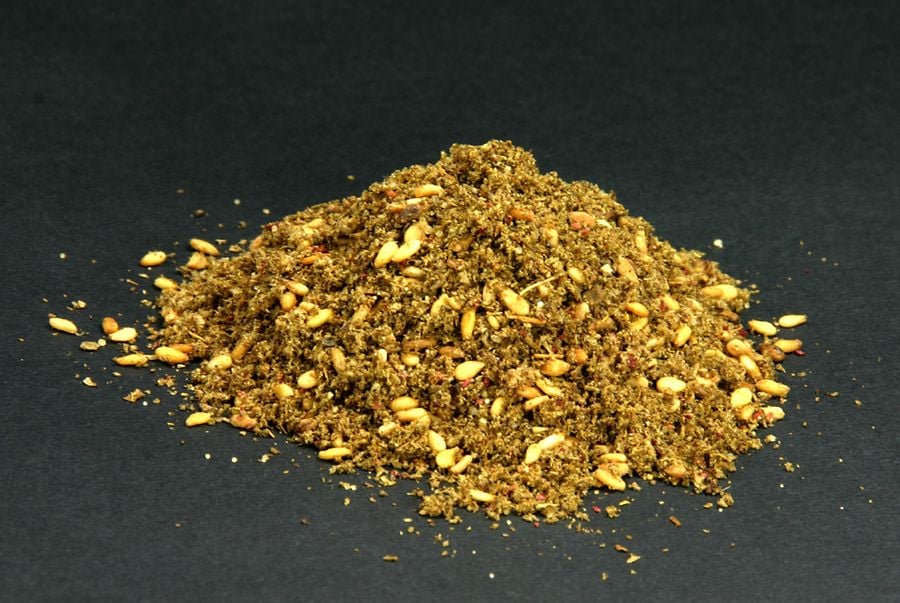
Za'atar is simultaneously the name of a wild herb (a variety of thyme or oregano-like herb native to the eastern Mediterranean) and the name of the spice blend built around it, used throughout Lebanon, Syria, Israel, Palestine, and Jordan as an all-purpose seasoning for bread, olive oil dips, grilled meats, and vegetables. The blend is one of the most ancient in the world — za'atar appears in the Old Testament, and its use in the Levant predates the Arab conquest of the region.
The blend combines dried za'atar herb (or a combination of dried thyme, oregano, and marjoram as a substitute) with toasted sesame seeds, sumac (the tart red berry that gives the blend its characteristic sourness), and salt. Some versions add dried marjoram, cumin, or caraway. The sumac is the component that most distinguishes za'atar from European herb blends — the tart, slightly fruity acidity it provides is unlike any other spice and gives the blend its distinctive brightness.
How to use it: mix generously with good olive oil to make a dipping paste for warm flatbread — this is the most fundamental za'atar application and the best demonstration of the blend's character. Sprinkle over labneh (strained yogurt). Rub onto chicken under the skin before roasting. Add to the dough of flatbread before baking. Sprinkle over fried or scrambled eggs. Use as a finishing seasoning for roasted vegetables, particularly tomatoes and courgette.
To make your own: combine 3 tbsp dried thyme, 1 tbsp dried oregano, 2 tbsp toasted sesame seeds, 2 tbsp sumac, and 1 tsp sea salt. The sumac quantity can be increased for more tartness.
4 / 20
Badagnani / Pexels
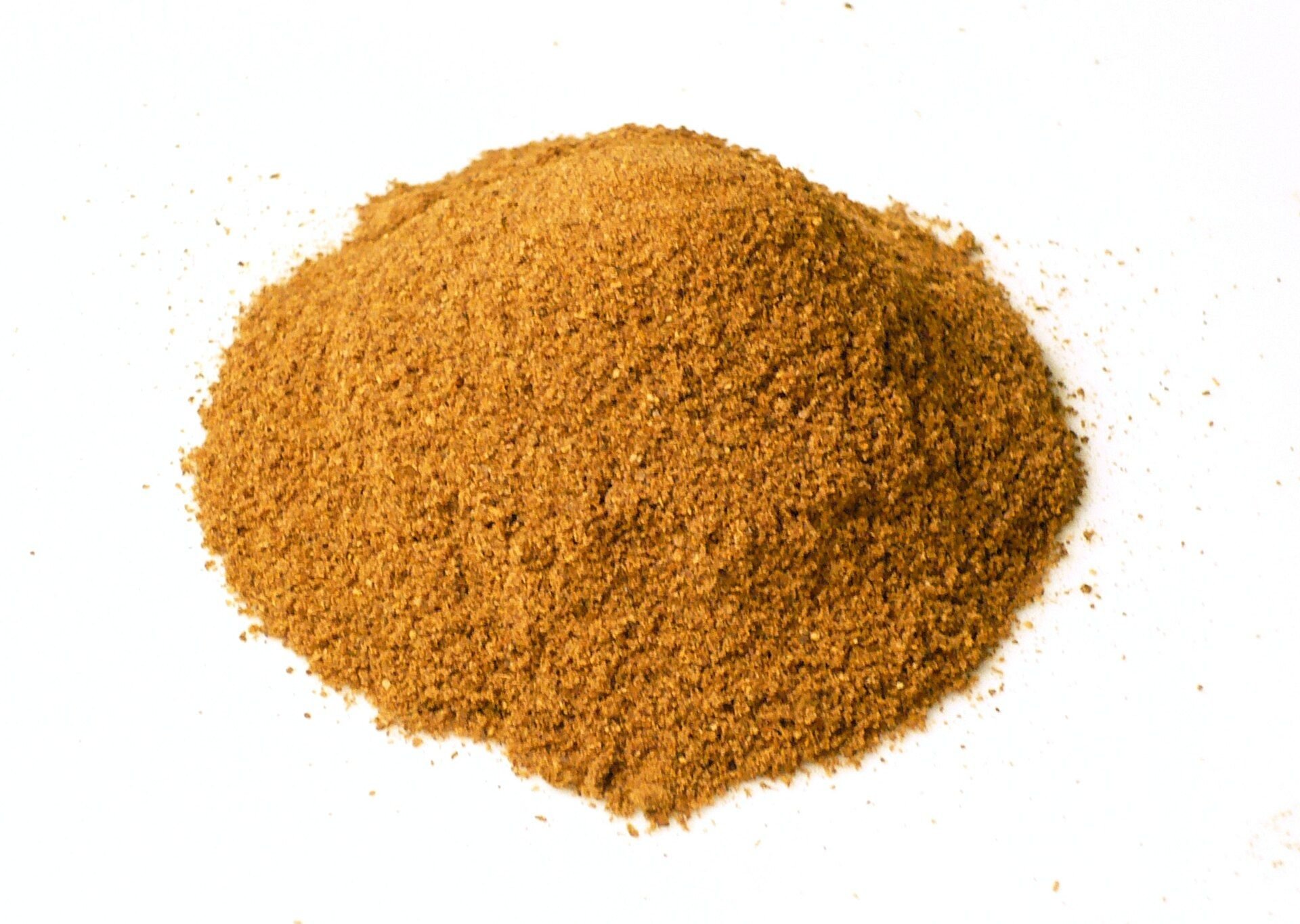
Berbere is the foundational spice blend of Ethiopian cooking — the complex, deeply red, warmly spiced blend that defines the flavor of Ethiopian stews (wats), lentil dishes, and grilled meats. It is one of the most complex and most rewarding spice blends in the world, and one of the least represented in Western kitchens despite the quality of the cuisine it defines.
The base of berbere is a combination of dried red chillies (which provide both heat and color) with the warm aromatic spices common to many East African and Indian Ocean–influenced cuisines: fenugreek, coriander, cardamom, black pepper, and allspice. The distinctive elements that set berbere apart are rue (a bitter herb), bishop's weed (ajwain), korarima (Ethiopian cardamom), and black cumin — components that give it a specific complexity unavailable from any substitute. Commercial berbere available outside Ethiopia varies significantly in quality; the best versions are from Ethiopian specialty stores.
How to use it: bloom two to three tablespoons in melted niter kibbeh (Ethiopian spiced clarified butter) or neutral oil at medium heat for two to three minutes before adding onions and meat to make a chicken or lamb wat. Add to lentil stews (misir wat) for depth and heat. Use as a dry rub for lamb chops or chicken wings before grilling. Stir into hummus or yogurt for a dipping sauce.
To make a basic version: toast and grind 4 dried red chillies, 1 tbsp coriander seeds, 1 tsp fenugreek seeds, 1 tsp black peppercorns, 6 cardamom pods, and 4 allspice berries. Add 1 tsp each of ground ginger, cinnamon, and turmeric, and ½ tsp each of cloves and nutmeg.
5 / 20
Tim Sackton / Wikimedia Commons (CC BY-SA 2.0)
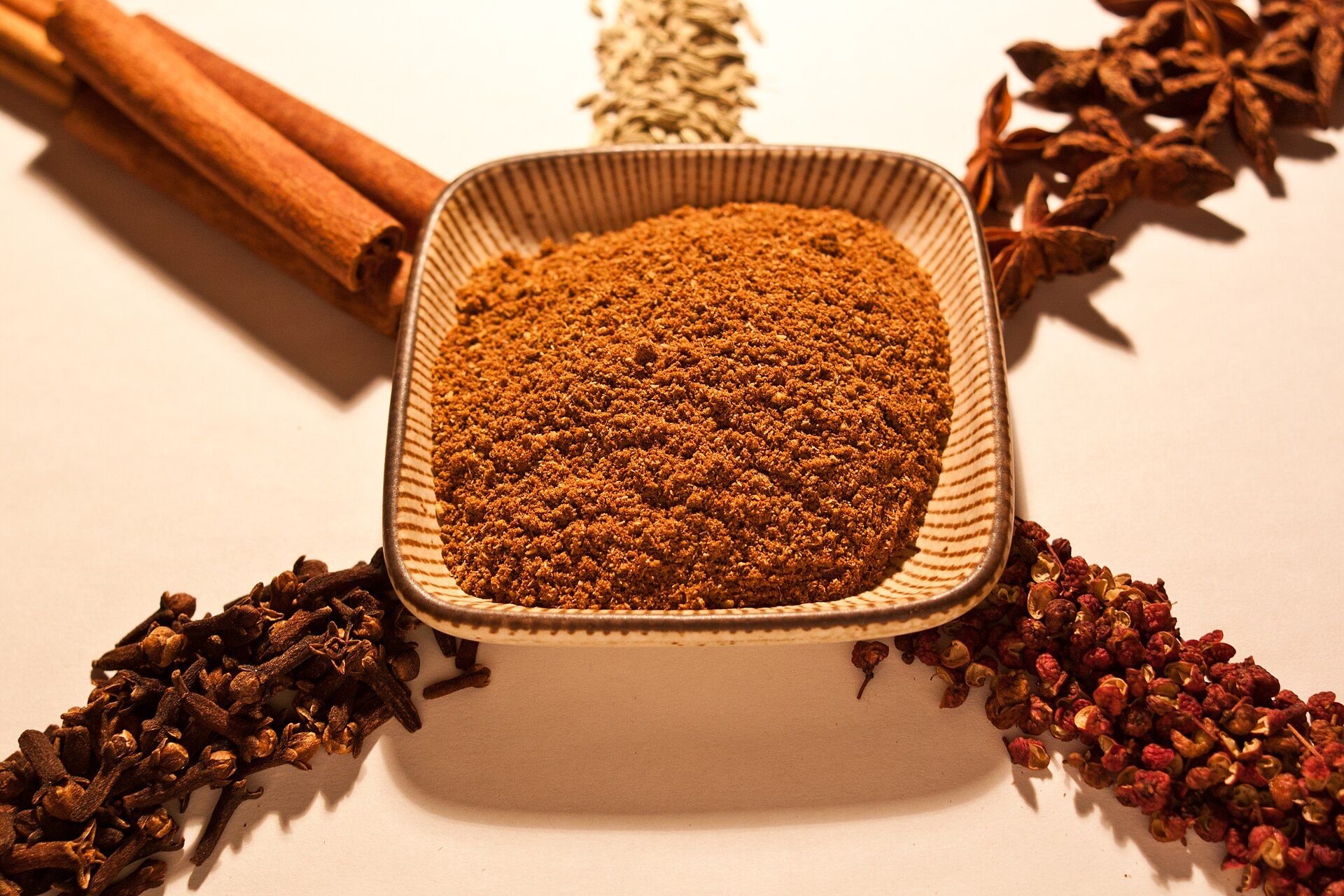
Chinese five spice powder — wǔ xiāng fěn — is the aromatic blend at the center of Chinese roasting and braising traditions, particularly for pork and duck. The five components correspond to the five flavor principles of Chinese culinary philosophy (sweet, sour, bitter, salty, umami) and the five elements of Chinese cosmology, though the exact ingredients vary by region and application.
The classic combination: star anise (the dominant flavor, providing the deep anise/licorice character), cloves (sharp, pungent), cinnamon or cassia bark (sweet, woody), Sichuan peppercorns (numbing, aromatic — distinctly different from black pepper), and fennel seeds (sweet, anise). Some versions substitute fennel seeds with Chinese cinnamon (cassia), or add dried tangerine peel and dried ginger. The star anise and Sichuan peppercorn are the two most distinctive components — without them, the blend loses its specifically Chinese character.
How to use it: rub onto pork belly, pork shoulder, or duck legs with soy sauce, rice wine, and a little sugar before roasting or braising — this combination is the foundation of char siu pork and red-braised pork belly. Add a small amount (quarter teaspoon maximum) to stir-fries at the aromatic stage. Use in the braising liquid for soy sauce eggs or tofu. Add to the dipping sauce for Peking duck. A very small amount goes a long way — five spice is powerful and can overwhelm if overused.
6 / 20
deccanheffalump / Flickr via Wikimedia Commons (CC BY 2.0)
Baharat — "spices" in Arabic — is the all-purpose spice blend used throughout the Arab world from Lebanon through the Gulf states, with regional variations that reflect the specific culinary traditions of each area. It is the workhorse spice blend of Arab cuisine, used in rice dishes, meat dishes, and soups, and the blend that gives Middle Eastern rice pilaf (kabsa) and meat-stuffed vegetables its characteristic warmth.
The core of baharat is similar to garam masala but with a distinctly different character: black pepper, coriander, cumin, cinnamon, cloves, and cardamom form the base, with the addition of dried lemon (noomi basra, dried Omani limes with a distinctive sour mustiness) in Gulf versions and rose petals in Levantine versions. The key difference from garam masala is the relative prominence of black pepper and allspice, which give baharat a slightly more assertive, less sweet character.
How to use it: add a tablespoon to the meat and onion filling for stuffed vegetables (mahshi), along with rice and pine nuts. Season rice pilaf by stirring into the cooking water. Rub onto lamb kofta mixture before grilling. Add to the broth for harira (Moroccan lamb and chickpea soup). Combine with olive oil and lemon juice for a marinade for chicken.
To make your own: combine 2 tsp black pepper, 2 tsp coriander, 1 tsp cumin, 1 tsp cinnamon, 1 tsp allspice, ½ tsp cardamom, ¼ tsp cloves, and ¼ tsp nutmeg.
7 / 20
Recipe Lab / Wikimedia Commons (CC0)
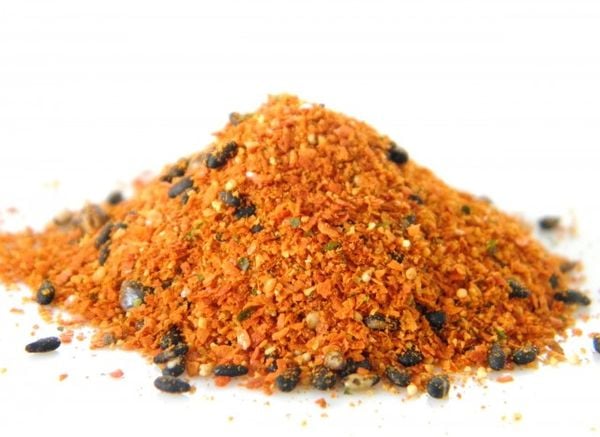
Shichimi togarashi — "seven flavor chilli pepper" — is the Japanese spice blend used as a table condiment and finishing seasoning throughout Japanese cuisine. Unlike most spice blends, which are added during cooking, shichimi is typically sprinkled over finished dishes at the table — it is the Japanese equivalent of chilli flakes or hot sauce, providing heat, texture, and complexity as a garnish.
The seven components are: red chilli flakes (providing the heat), sansho pepper (related to Sichuan peppercorn, providing a numbing, citrusy tingle), dried orange or yuzu peel (providing citrus brightness), black and white sesame seeds (providing nuttiness and texture), nori flakes (providing umami depth), and poppy seeds or hemp seeds (providing additional textural interest). The sansho pepper and yuzu/orange peel are the most distinctive components, giving shichimi its specifically Japanese character.
How to use it: sprinkle over ramen, udon, or soba noodles before eating. Garnish yakitori (grilled chicken skewers) or gyoza. Add to the dipping sauce for tempura. Sprinkle over grilled salmon or mackerel. Stir into the sauce for Japanese fried chicken (karaage). Use as a finishing seasoning for edamame. Add to rice balls (onigiri) for flavor and visual interest.
8 / 20
Arnaud 25 / Wikimedia Commons (CC BY-SA 4.0)
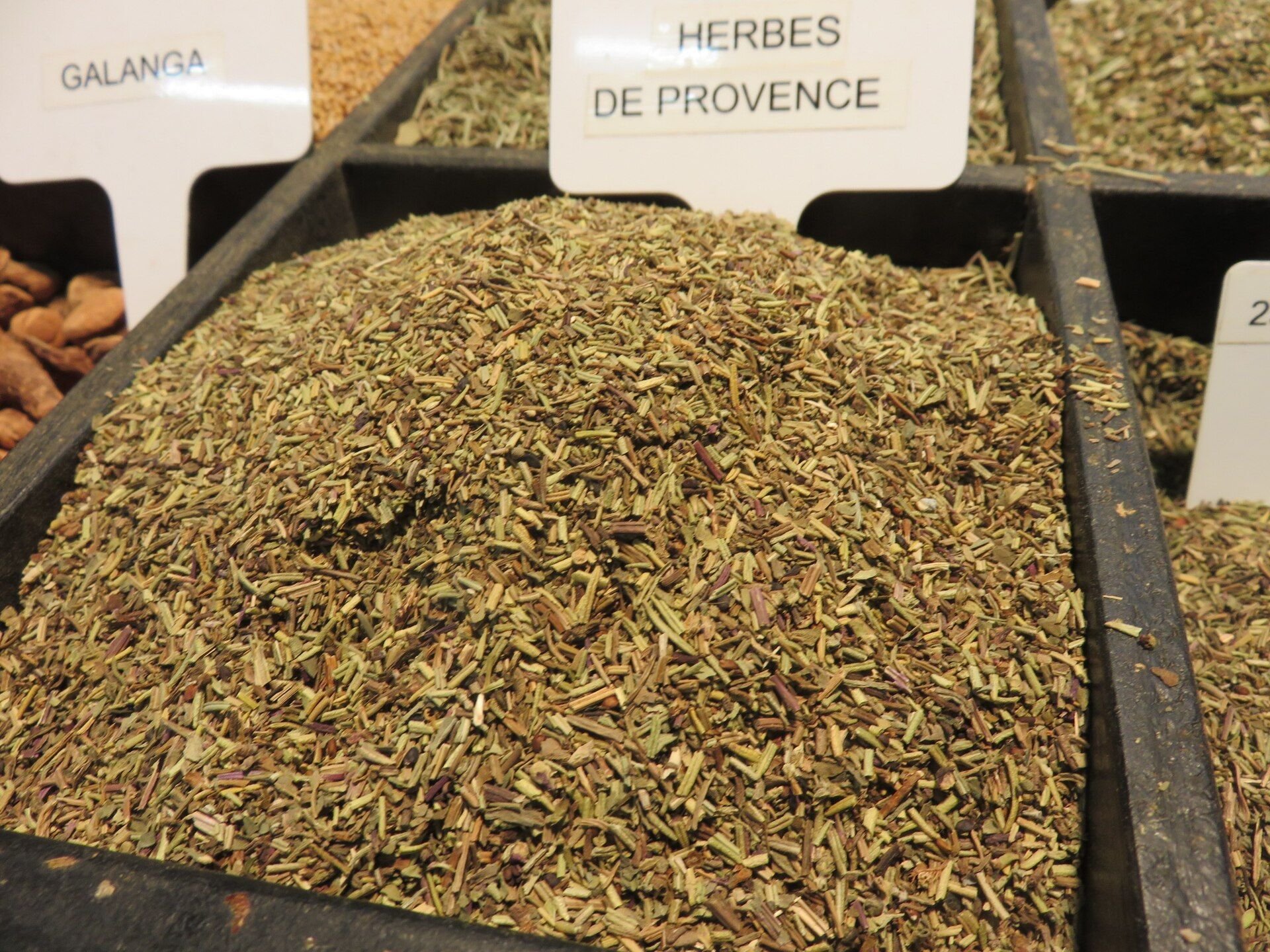
Herbes de Provence is the dried herb blend of the French Riviera and Provence — the combination of Mediterranean herbs that defines the flavor of Provençal cooking: roasted lamb, grilled fish, ratatouille, and the olive oil-drenched cooking of coastal southern France. The blend captures the specific aromatic character of the garrigue — the wild scrubland of Provence — where these herbs grow together naturally.
The traditional blend combines dried thyme, rosemary, savory (sarriette), marjoram, and oregano. American versions frequently include lavender (the commercial variety most widely available outside France), which is not traditional in Provençal cooking and which, in excess, produces a soapy quality — if using lavender-containing herbes de Provence, use approximately half the quantity the recipe suggests and adjust to taste.
How to use it: press generously onto a leg of lamb or rack of lamb with garlic and olive oil before roasting — this is the canonical application. Add a tablespoon to the ratatouille base along with tomatoes and olive oil. Sprinkle onto focaccia dough before baking. Add to the olive oil for dipping with good bread. Rub onto chicken thighs with lemon zest and olive oil before roasting. Combine with olive oil as a marinade for grilled fish.
To make your own (without lavender): combine 2 tbsp dried thyme, 1 tbsp dried rosemary, 1 tbsp dried savory, 1 tbsp dried marjoram, and 1 tbsp dried oregano.
9 / 20
_-_Egyptian_spice_mix-1400x929.jpg)
Abissada / Wikimedia Commons (CC BY-SA 4.0)
Dukkah — from the Arabic word for "to pound" — is an Egyptian blend of nuts, seeds, and spices that is used primarily as a dipping condiment: bread is dipped in olive oil and then in dukkah, with the nut-and-spice crust adhering to the oil-coated bread. Unlike most spice blends, dukkah contains a significant proportion of whole or roughly crushed nuts and seeds, giving it a texture that is as important as its flavor.
The base is hazelnuts or pistachios (or a combination), combined with sesame seeds, coriander seeds, cumin seeds, and black pepper. Some versions add fennel seeds, dried mint, or dried thyme. The nuts should be toasted to a deep golden color before use; the seeds should be dry-toasted separately (they toast faster than the nuts). The mixture is pounded or processed to a rough, uneven texture — not a fine powder, not a paste, but a mixture that retains distinct pieces.
How to use it: dip warm flatbread in good olive oil, then in dukkah — the definitive application. Sprinkle over labne or Greek yogurt as a topping. Press onto salmon fillets before roasting. Sprinkle over roasted carrots or cauliflower after cooking. Add to the crust of a rack of lamb. Scatter over avocado on toast in place of everything bagel seasoning. Add to the grain bowl as a topping for texture and flavor.
10 / 20
Samin Raminrad / Uniqop
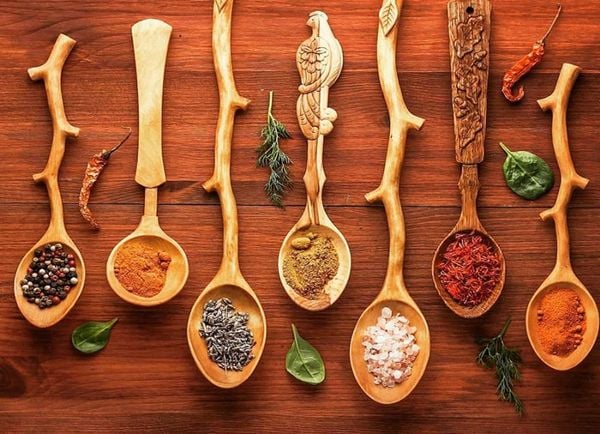
Advieh is the Persian spice blend used in rice dishes (polo), stews (khoresht), and as a seasoning for meat and poultry throughout Iran. It is a gentle, floral blend whose character reflects the Persian aesthetic preference for aromatic complexity rather than heat — advieh contains no chilli.
The core spices are turmeric, cinnamon, cardamom, dried rose petals, and cumin, with some regional versions adding saffron, dried barberries, and dried orange peel. The dried rose petals are the most distinctive and most important element, giving advieh a floral, softly perfumed quality that immediately distinguishes Persian food from neighboring cuisines. Good dried rose petals are available from Middle Eastern grocery stores.
How to use it: stir two teaspoons into the butter used to cook Persian rice (polo) — advieh-scented rice with a golden tah-dig (crispy bottom crust) is one of the great dishes of Persian cooking. Add to the braising liquid for fesenjan (pomegranate and walnut chicken stew). Season lamb meatballs by mixing into the meat before forming. Add to the vegetable base of ash (Persian thick herb soup).
To make your own: combine 1 tbsp ground cinnamon, 1 tbsp turmeric, 2 tsp ground cardamom, 2 tsp ground cumin, 1 tsp black pepper, and 1 tbsp dried rose petals (ground or finely crumbled).
11 / 20
А. Кабанов / Wikimedia Commons (CC0)
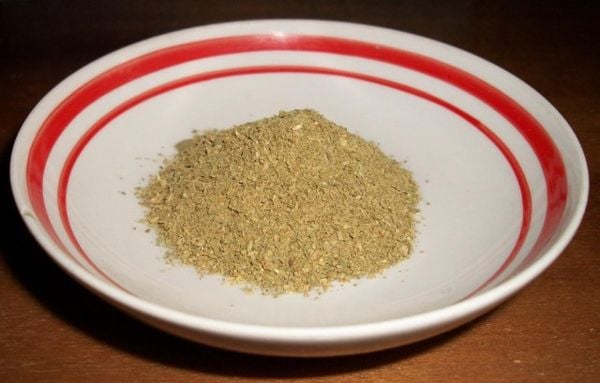
Khmeli suneli — "dried spices" in Georgian — is the spice blend at the heart of Georgian cooking, used in the walnut-based sauces, meat dishes, and vegetable preparations of one of the world's most distinctive and least-known cuisines. Georgian food sits at the intersection of Iranian, Turkish, and Eastern European culinary influences, and khmeli suneli reflects this position.
The blend combines fenugreek (the most important and most distinctive component, giving khmeli suneli its slightly bitter, curry-like depth), coriander, blue fenugreek (utskho suneli, a Georgian variety distinct from regular fenugreek — dried marigold petals can substitute), dried marigold petals (imeruli zafrana), black pepper, paprika, and dried herbs including dill, parsley, and celery. The fenugreek and dried marigold petals are the components most specific to Georgian cooking and least replicable from standard Western pantry ingredients.
How to use it: stir generously into walnut sauce (bazhe) for chicken, vegetables, or bread — the combination of khmeli suneli and walnuts is the defining flavor of Georgian cuisine. Season chakhokhbili (Georgian chicken stew with tomatoes and herbs). Rub onto pork shoulder or lamb for roasting. Add to lobiani (Georgian bean-filled bread). Stir into the seasoning for pkhali (Georgian vegetable pâtés made with walnuts and herbs).
12 / 20
Thomas Steiner / Wikimedia Commons (CC BY-SA 3.0)
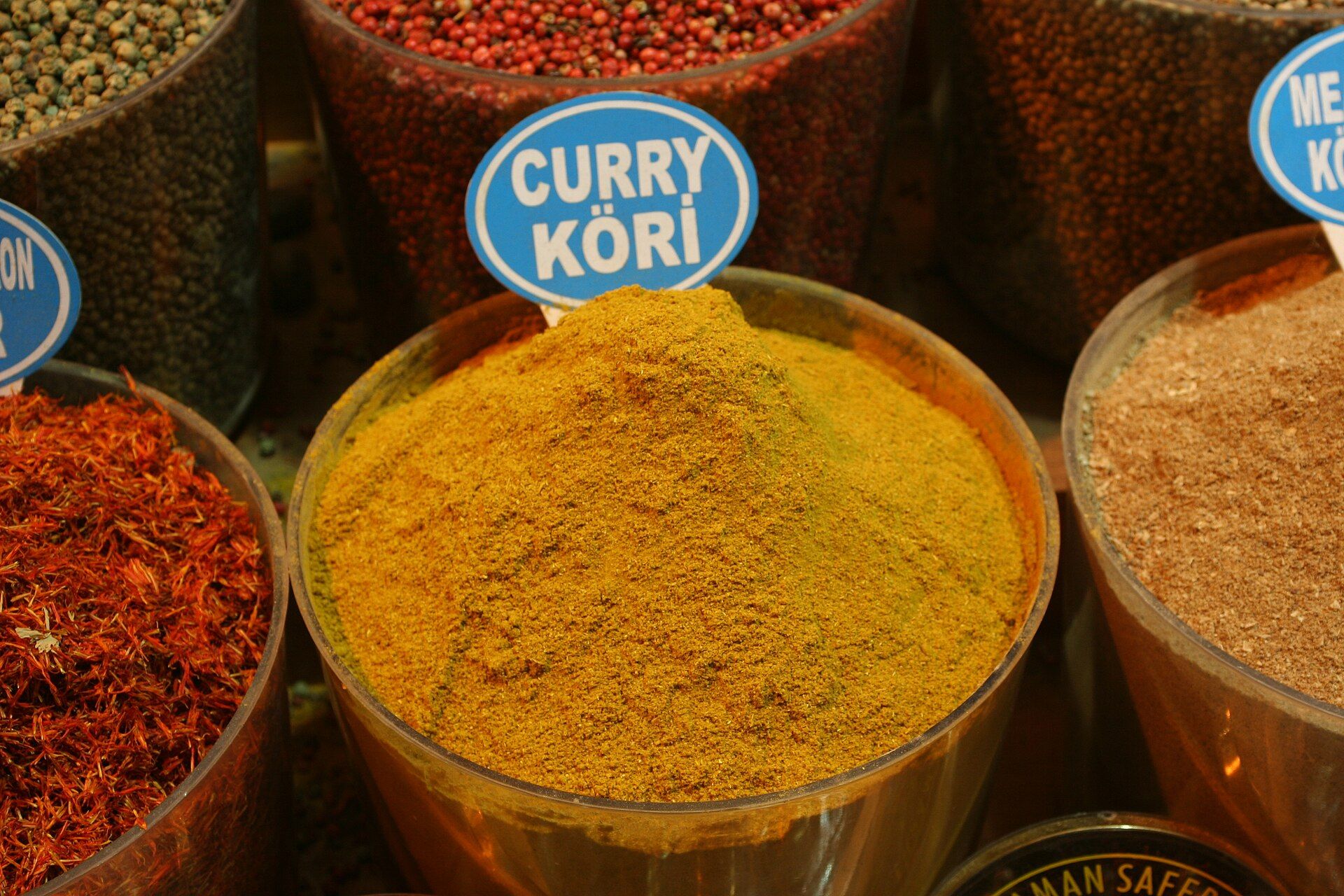
Curry powder — the standardized, shelf-stable blend of Indian-inspired spices developed by British manufacturers for the domestic market in the 19th century — is not an Indian blend. No equivalent standardized blend exists in Indian cooking; the specific combination of turmeric, coriander, cumin, fenugreek, chilli, and various other spices that constitutes commercial curry powder was developed to provide a convenient approximation of Indian flavors for the British market.
The distinction matters because understanding it changes how curry powder is used. Treated as a genuine Indian spice blend, it produces a one-dimensional result — everything tastes the same. Treated as a convenient approximation that works best in dishes specifically designed around it — Anglo-Indian dishes like mulligatawny soup, kedgeree, coronation chicken, and British-style chicken curry — it produces excellent results.
How to use it: bloom two tablespoons in butter or oil over medium heat for two to three minutes before adding onions — this is the essential activation step that most home cooks skip, and skipping it produces the raw, harsh flavor that gives home curries their characteristic quality. Use in kedgeree (spiced smoked haddock rice), coronation chicken, and curried vegetable soup. Combine with mayonnaise for a curry dip for chicken skewers.
13 / 20
Credit: Yucatan Today
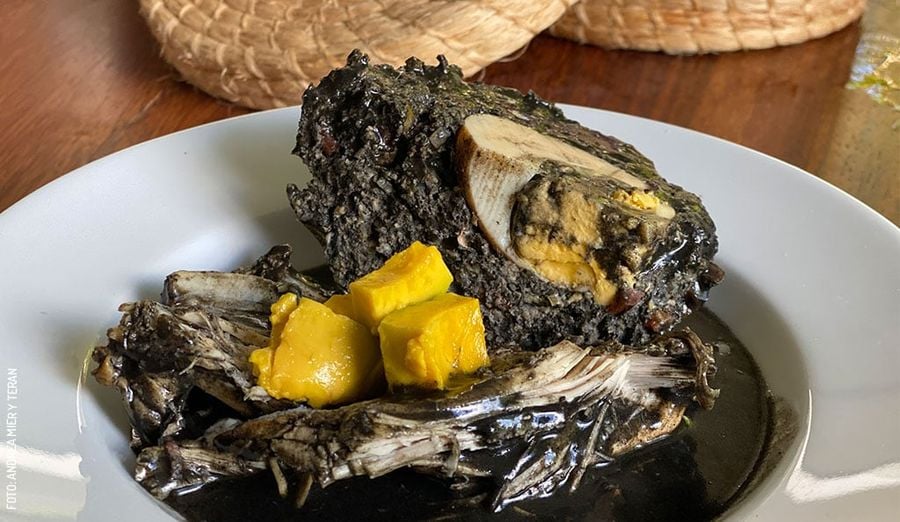
Recado negro — or chilmole — is the dramatic black spice paste of the Yucatán Peninsula, made from charred dried chillies and spices and used to color and flavor the distinctive black stews and marinades of Yucatecan cooking. Unlike most spice blends, recado negro is deliberately burnt — the chillies are charred to blackness over an open flame, contributing a deep, slightly bitter smokiness that is the defining flavor of dishes like relleno negro (stuffed turkey in black sauce).
The base is dried mulato or ancho chillies charred until completely black, combined with toasted whole spices (cumin, allspice, black pepper, cloves), charred tomatoes and onion, garlic, and dried Mexican oregano. The result is a paste rather than a powder — deeply dark, intensely flavored, and genuinely unlike any other spice preparation in the world.
How to use it: dissolve a tablespoon in chicken or turkey broth as the base for relleno negro, the Yucatecan black turkey stew served at celebrations. Use as a marinade paste for chicken or pork before grilling — the charred chilli coating produces a remarkable crust. Add to black bean soup for depth. Combine with sour orange juice and garlic for a Yucatecan-style achiote paste substitute.
14 / 20

Jason Lam / Wikimedia Commons (CC BY 2.0)
Old Bay seasoning — developed by Gustav Brunn, a German immigrant, in Baltimore in 1939 and named after the Old Bay Line steamship company that served the Chesapeake Bay — is the signature spice blend of the American Mid-Atlantic and Chesapeake Bay cooking tradition, synonymous with Maryland blue crab and the specific flavor of steamed seafood from that region.
The formula (proprietary to McCormick, which has owned it since 1990) is known to contain celery salt, black pepper, red pepper, and paprika as the primary components, with additional spices including bay leaf, mustard, cardamom, cinnamon, cloves, allspice, mace, nutmeg, and ginger in lesser amounts. The celery salt is the dominant flavor — Old Bay is immediately identifiable, and its character is unlike any European seafood seasoning.
How to use it: add generously to the cooking water for steamed blue crabs, shrimp, or crawfish — the canonical application, used throughout the Chesapeake region. Season fried chicken by adding two tablespoons to the flour coating. Sprinkle over popcorn, fries, or potato chips for an American-flavored snack. Add to the butter for lobster or crab dipping. Season chowder or fish stew at the beginning of cooking.
15 / 20
Credit: World Spice Merchants
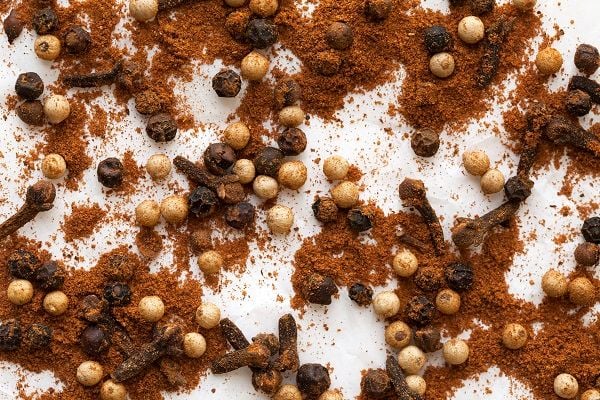
Quatre épices — "four spices" — is the classic French charcuterie and pâté spice blend, used throughout French cooking to season forcemeats, terrines, and the braised dishes of classic French bourgeois cooking. It is one of the most discreet and most distinctive spice blends in any cooking tradition — a background flavor that is immediately recognizable in French charcuterie but that most people cannot name.
The four spices are white pepper (the dominant flavor — not black pepper, which would be too assertive), nutmeg, ginger, and cloves. Some versions substitute allspice for the ginger. The proportions heavily favor white pepper — typically 70% white pepper to 30% of the other three combined — making quatre épices more of a refined peppering agent than a complex spice blend. The white pepper's sharpness, rounded by the warmth of the nutmeg and cloves, is the specific character of French pâté and country terrine.
How to use it: add one teaspoon per kilogram of meat mixture for pâté de campagne, terrine, or saucisson. Season the braising liquid for pot-au-feu or blanquette de veau. Add a small pinch to béchamel sauce. Use in pain d'épices (French spice bread, the French equivalent of gingerbread).
16 / 20
Billjones94 / Wikimedia Commons (CC BY-SA 4.0)
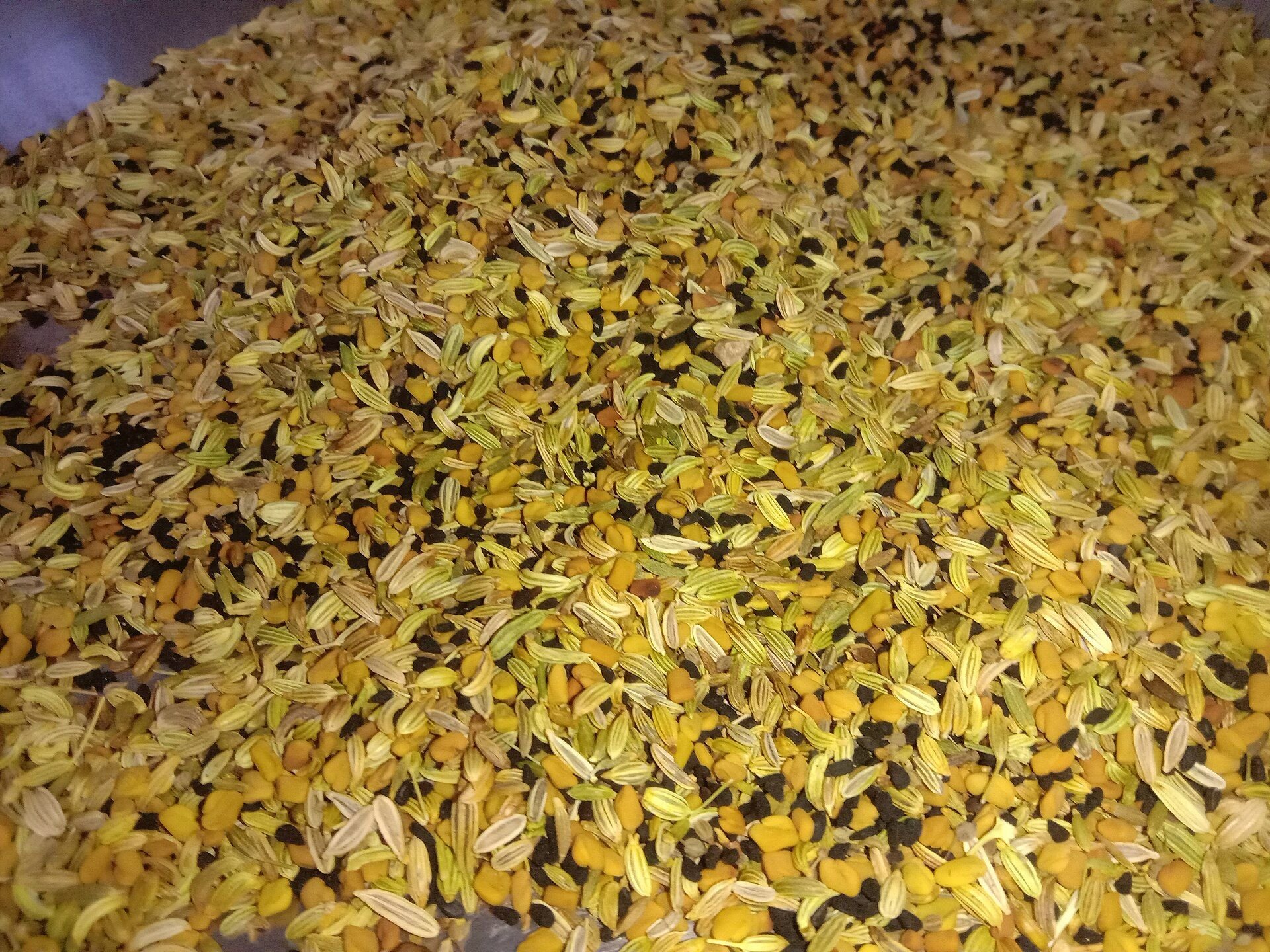
Panch phoron — "five spices" in Bengali — is the whole-seed spice blend of Bengali cooking, used exclusively as a tempering spice (fried briefly in hot oil or ghee at the beginning of cooking to release volatile compounds) rather than as a ground seasoning. It is one of the few spice blends consisting entirely of whole seeds rather than ground spices.
The five seeds in equal proportions: fenugreek seeds, nigella seeds (kalonji), cumin seeds, black mustard seeds, and fennel seeds. Each contributes a distinct character — the slight bitterness of fenugreek, the onion-like pungency of nigella, the earthiness of cumin, the sharp heat of mustard, and the sweetness of fennel — and the combination produces a complexity impossible to achieve with any single spice.
How to use it: heat two tablespoons of mustard oil, ghee, or vegetable oil until very hot (for mustard seeds, which require high heat to pop). Add one teaspoon of panch phoron and stand back — the seeds will pop and crackle immediately. As soon as the popping subsides, add the onions or other vegetables. The whole seeds remain in the dish and provide textural interest as well as flavor. Use in Bengali fish curry, mustard fish, dal tadka, and vegetable dishes including aloo poshto (potato with poppy seeds).
17 / 20
Mx. Granger / Wikimedia Commons (CC0)
Hawaij — the Yemeni spice blend that is used in two distinct forms, one for coffee and one for savory cooking — is one of the least-known major spice blends in the Western world and one of the most immediately distinctive. The name means "mixture" in Arabic, and both versions of the blend have migrated with the Yemeni diaspora to Israel, where they are widely used in Jewish-Yemeni cooking.
Savory hawaij combines black pepper, cumin, turmeric, and cardamom in a blend that is used to season lamb and beef dishes, soups, and the Yemeni rice dish called zurbian. Coffee hawaij — a completely different blend used in Yemeni coffee (qishr) — combines cardamom, ginger, cinnamon, and sometimes cloves and fennel seeds, stirred into coffee grounds before brewing.
How to use it: add one tablespoon of savory hawaij to lamb broth or bone broth as a seasoning for lamb soup (a fundamental Yemeni dish). Season the spice mixture for Yemeni mandi (slow-roasted lamb over rice). Stir into the braising liquid for oxtail or lamb shanks. For coffee hawaij, add half a teaspoon to ground coffee before brewing for a warmly spiced Middle Eastern-style coffee. Stir into warm milk with honey as a bedtime drink.
To make savory hawaij: combine 2 tbsp black pepper, 1 tbsp cumin, 1 tsp turmeric, and 1 tsp cardamom. For coffee hawaij: combine 2 tsp cardamom, 1 tsp ginger, ½ tsp cinnamon, and ¼ tsp cloves.
18 / 20
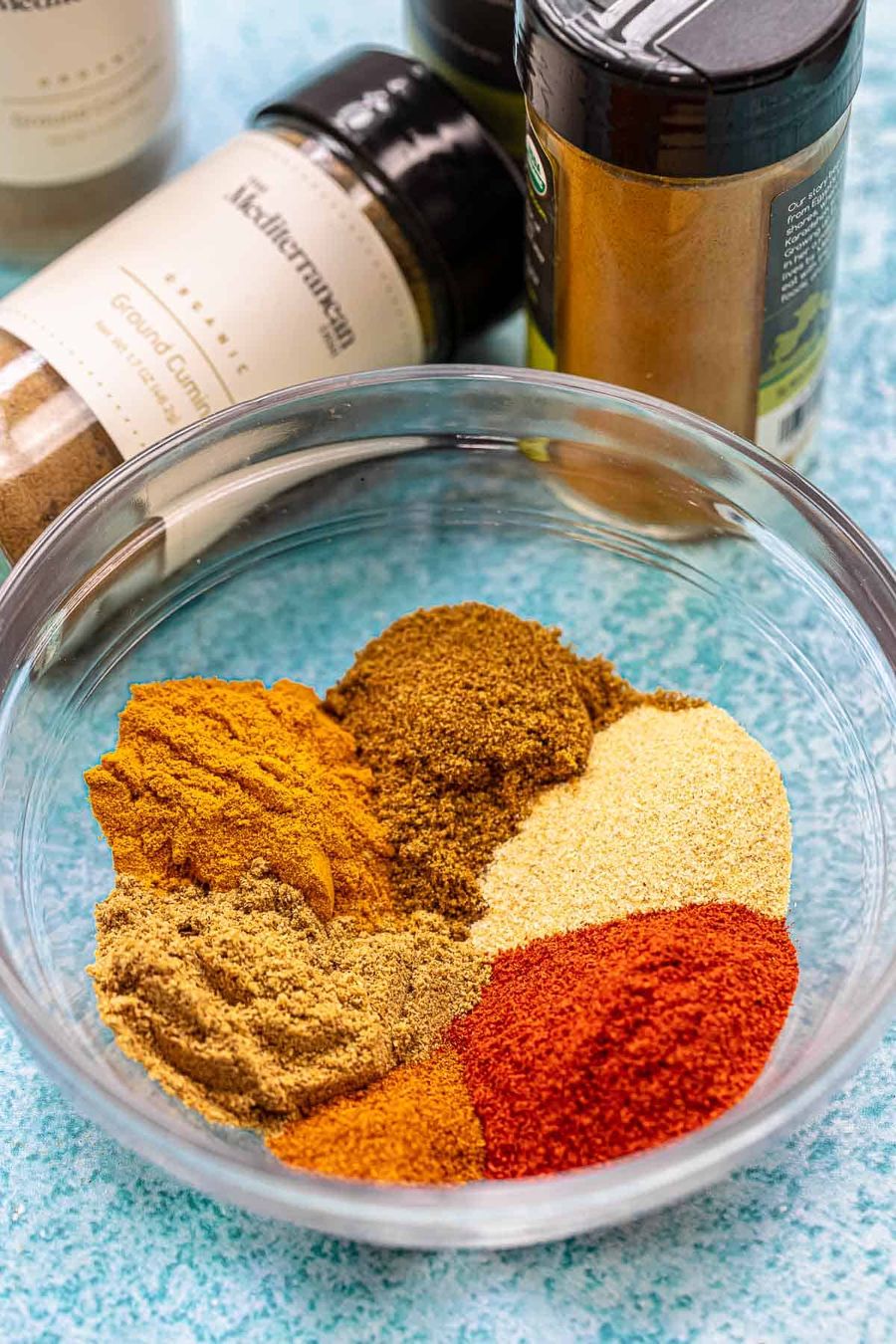
Suzy Karadsheh / The Mediterranean Dish
Shawarma spice — the blend used to marinate the stacked, slowly rotating meat that is the original street food of the eastern Mediterranean — is the specific combination of warm spices and sour elements that gives shawarma its distinctive flavor, one that is simultaneously exotic and deeply familiar to anyone who has eaten street food in the Middle East, Israel, or their global diasporas.
The blend combines cumin, coriander, turmeric, cinnamon, allspice, black pepper, and cardamom with dried lemon (or sumac for sourness) and sometimes cloves and paprika. The turmeric gives the marinade its golden color; the allspice and cinnamon provide the specific warm sweetness that distinguishes shawarma spice from generic Middle Eastern spice blends.
How to use it: combine three tablespoons with olive oil, lemon juice, and garlic to make a marinade for chicken thighs or lamb shoulder — leave for at least four hours and ideally overnight before roasting at high heat. The spice blend is also excellent on cauliflower (whole roasted cauliflower with shawarma spice is one of the best contemporary vegetarian dishes); on salmon fillets before pan-frying; and stirred into hummus as a topping with warm chickpeas and olive oil.
To make your own: combine 2 tsp cumin, 2 tsp coriander, 1 tsp turmeric, 1 tsp cinnamon, 1 tsp allspice, 1 tsp black pepper, ½ tsp cardamom, ½ tsp sumac, and ¼ tsp cloves.
19 / 20
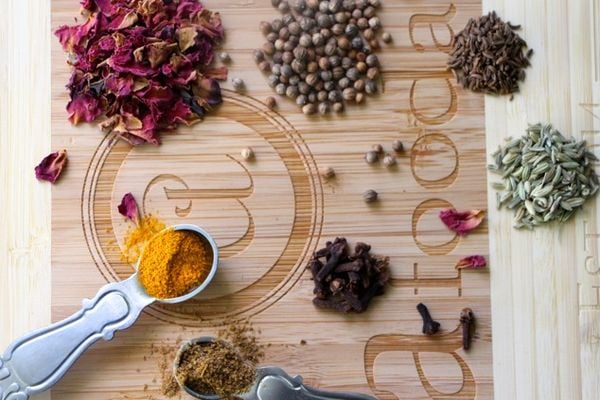
Credit: Afooda
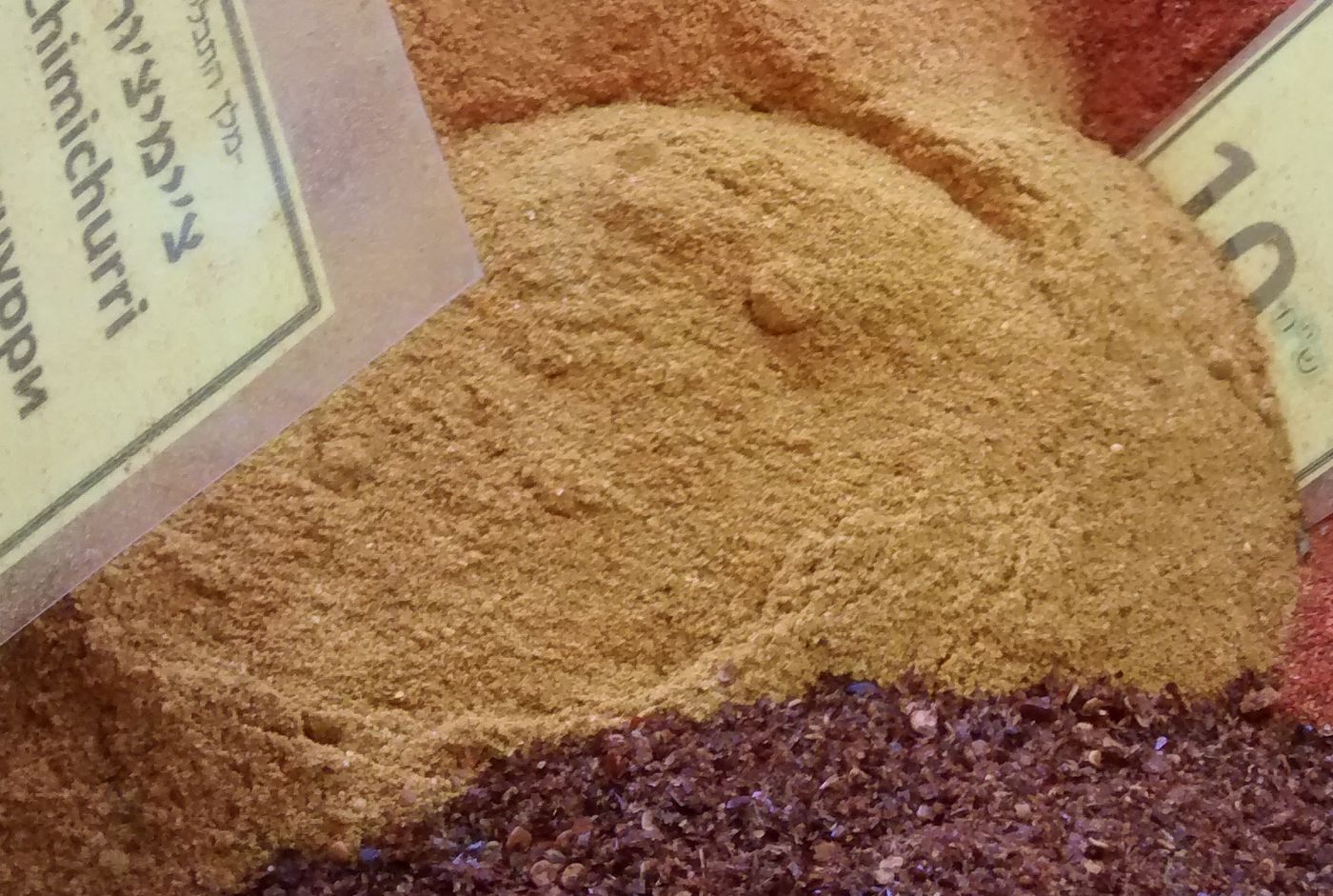
Tabil — the foundational spice blend of Tunisian cooking — is less well known internationally than the hot sauce harissa with which it is often paired, but it is the more versatile seasoning and the one that most specifically defines the character of Tunisian food. The name derives from the Arabic word for coriander, which is its dominant component.
The blend combines large quantities of ground coriander with caraway seeds (the second most important component), garlic, and red chilli — a combination that immediately announces itself as North African but distinctly different from Moroccan ras el hanout or Egyptian dukkah. The caraway-coriander combination is specifically Tunisian; no other North African cuisine uses caraway as prominently.
How to use it: season the lamb or beef for merguez sausages — tabil is the defining spice of merguez. Add to the braising liquid for lamb shanks or beef short ribs. Stir into the chickpea base of lablabi (Tunisian chickpea soup) along with harissa. Use as a rub for lamb chops before grilling. Add to the filling for brik (Tunisian fried pastry with egg and tuna).
To make your own: combine 4 tbsp ground coriander, 2 tbsp ground caraway, 2 tsp garlic powder, 2 tsp sweet paprika, and 1 tsp cayenne. Adjust heat with cayenne.
20 / 20
Troy Mckaskle / Wikimedia Commons (CC BY-SA 2.0)
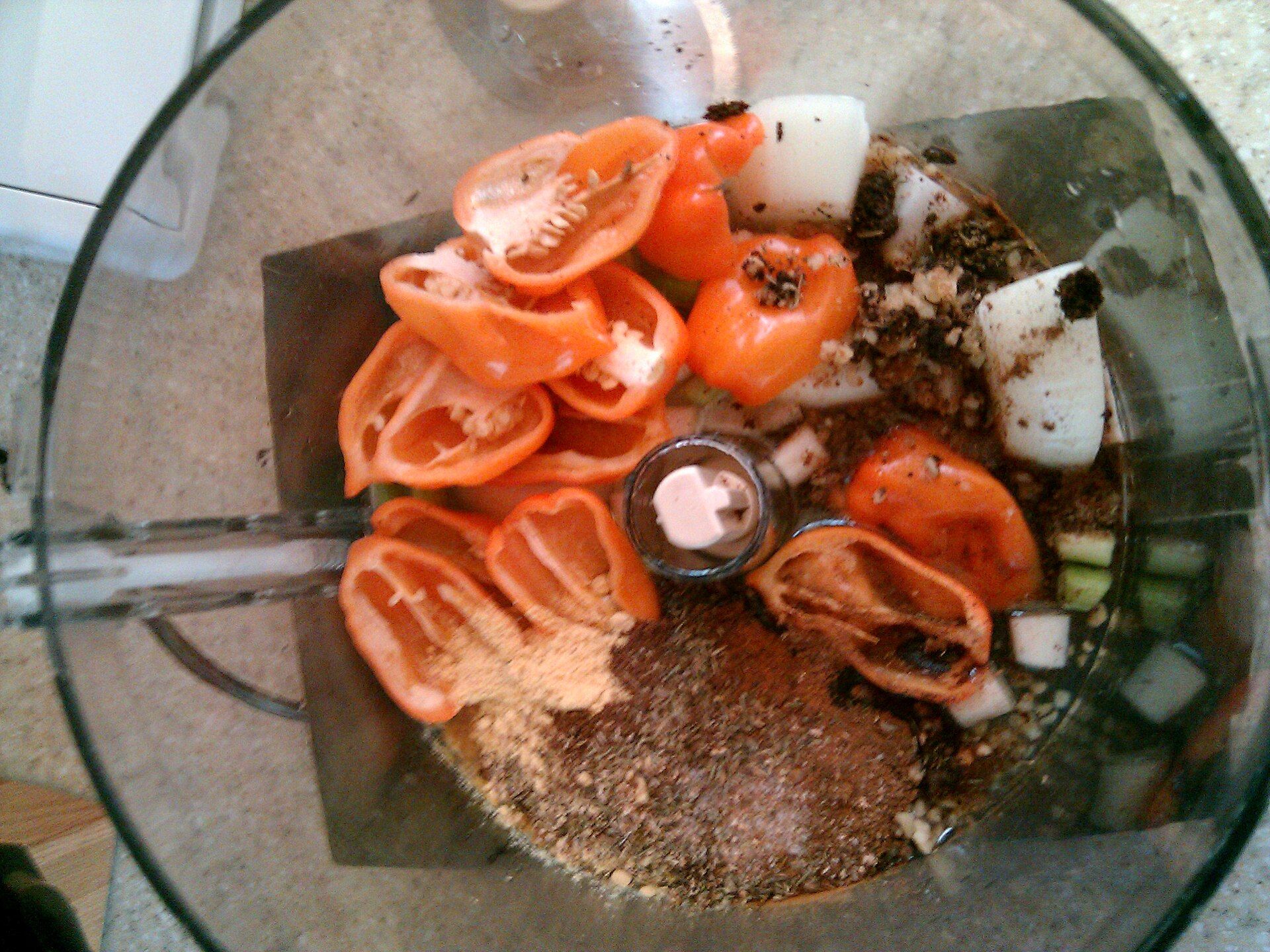
Jerk seasoning — the spice blend and marinade used to prepare Jamaican jerk pork and chicken — is one of the most complex and most fire-dependent spice preparations in the world, originating with the Maroon communities of rural Jamaica who developed it as a method of preserving and seasoning hunted game over slow-burning pimento (allspice) wood fires.
The core flavors are allspice (pimento) and Scotch bonnet chilli — both indigenous to the Caribbean — combined with thyme, garlic, ginger, scallions, black pepper, cinnamon, nutmeg, and cloves. The dried spice blend and the wet marinade (which also includes browning sauce, soy sauce, and often brown sugar) are both used; most Jamaican cooks prefer the wet version for its better adhesion to the meat.
How to use it: make a wet paste by blending all ingredients with oil and apply generously to chicken quarters or pork shoulder, leaving for at least eight hours and ideally 24 hours before cooking. The authentic cooking method is slow-smoking over pimento wood (or a combination of charcoal and pimento wood chips); oven-roasting at high heat produces a different but good result. The dry blend can be used as a seasoning for roasted corn, rice and peas, and as a finishing spice for grilled fish.
