
U.S. stocks fell on Wednesday as Donald Trump threatened renewed strikes against Iran and a government inflation report showed consumer prices climbing at the fastest annual rate in three years.
Consumer prices rose 4.2% annually in May, the fastest pace since 2023, as energy costs driven by the U.S.-Iran conflict surged
Tom Williams / Getty Images
U.S. stocks fell on Wednesday as Donald Trump threatened renewed strikes against Iran and a government inflation report showed consumer prices climbing at the fastest annual rate in three years.
Among the major indexes, the S&P 500 shed 0.8% and the Nasdaq $NDAQ Composite gave up roughly 1.1%, while the Dow Jones Industrial Average lost approximately 650 points, equivalent to a 1.3% decline.
The Bureau of Labor Statistics reported that the Consumer Price Index rose 4.2% over the 12 months ending in May, up from a 3.8% annual gain in April. On a monthly basis, the CPI rose 0.5% in May on a seasonally adjusted basis, after a 0.6% increase in April. Energy prices were the primary driver, rising 3.9% for the month and 23.5% over the past year. Gasoline prices jumped 7.0% in May and were up 40.5% from a year earlier.
Stripping out food and energy costs, the core CPI measure came in at a monthly gain of 0.2%, a tick under the 0.3% that analysts had projected, CNBC reported. The 12-month core reading settled at 2.9%, which still exceeds the Federal Reserve's 2% inflation objective.
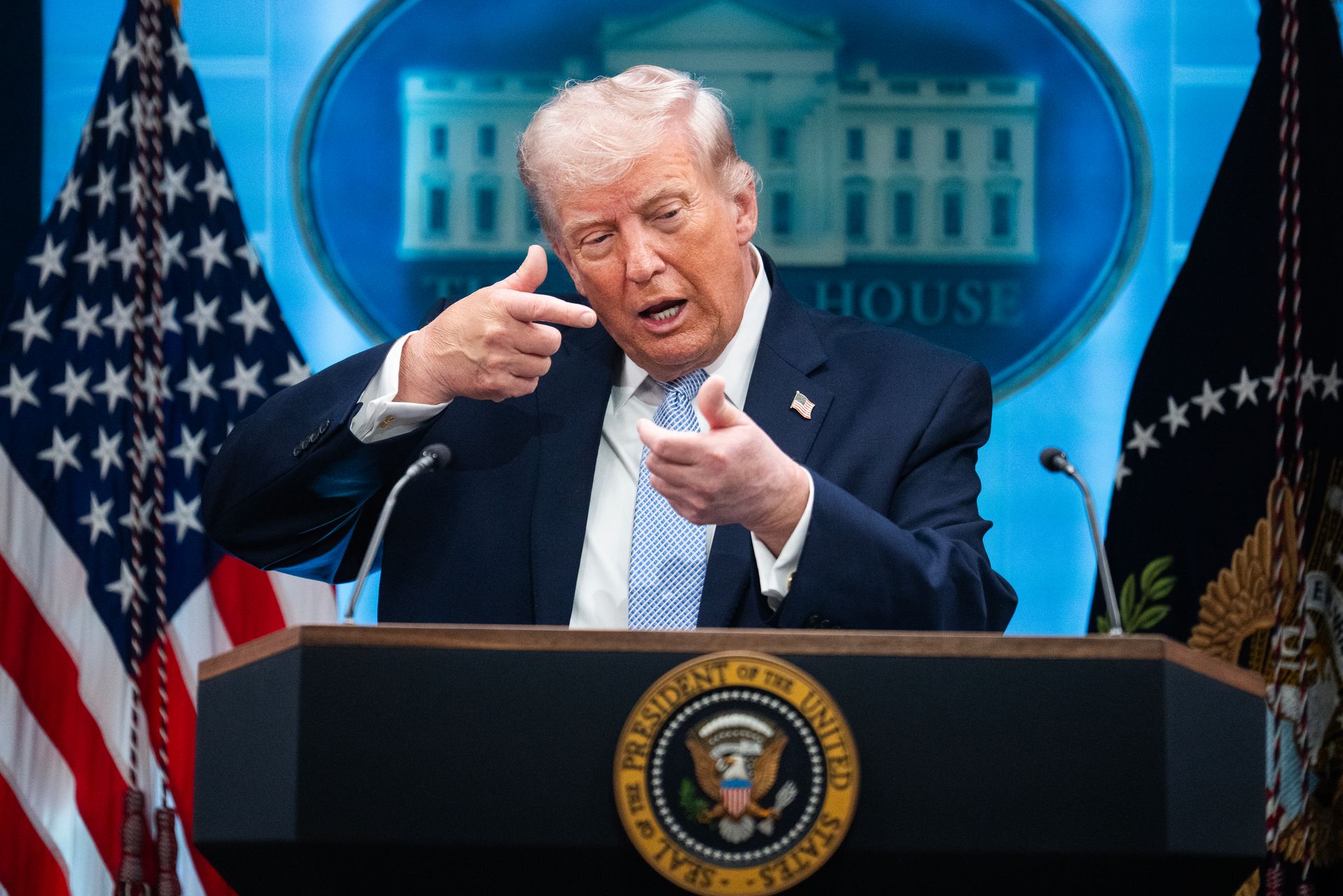
Markets were also unsettled by an escalation in hostilities between the U.S. and Iran. In a Wednesday post, Trump declared that Iran had forfeited its chance at a favorable deal, writing that the country would now "have to pay the price!!!" and vowing that American strikes would resume. Those threats came after fighting intensified in the Persian Gulf on Tuesday night, when U.S. forces conducted strikes that were a response to an earlier incident in which an American Apache helicopter was shot down. Oil markets moved higher on the news, with Brent crude crossing above $94 a barrel on gains of roughly 3%, and WTI contracts trading around $89, up more than 1%.
Jed Ellerbroek, a portfolio manager at Argent Capital Management, captured the market's uncertainty in comments to CNBC. "The Iran war story is really consequential," he said. "Either investors are going to be proven right, that there's nothing to worry about, Trump will take care of it, we'll get a deal with Iran and the strait will open up, but if not, it feels like oil prices are going to have to go up a lot."
Technology stocks added further pressure. Semiconductor names continued to struggle, with Micron $MU Technology, Advanced Micro Devices, and Broadcom $AVGO each posting losses in four of the past five trading days. Despite a brutal single-session drop of 10% for the iShares Semiconductor ETF the previous Friday, the fund has still managed to nearly double in value over the course of the year, retaining gains exceeding 87%.
Join 500,000+ readers who start their day with Quartz.
By subscribing, you agree to our Terms of Service and Privacy Policy.