
Energy markets surged and U.S. equities fell sharply Thursday after Trump's nationally televised address Wednesday night threatened intensified strikes against Iran for weeks ahead and gave no indication of how the conflict might wind down.
The president's prime-time address reversed a two-day rally in U.S. stocks that had been driven by optimism over a possible end to the war
Alex Brandon/AP Photo/Bloomberg via Getty Images
Energy markets surged and U.S. equities fell sharply Thursday after Trump's nationally televised address Wednesday night threatened intensified strikes against Iran for weeks ahead and gave no indication of how the conflict might wind down.
U.S. West Texas Intermediate crude futures rose as much as about 13%, to almost $112 a barrel. Brent crude futures climbed about 8% to almost $109 a barrel. The Dow Jones Industrial Average fell more than 550 points, or 1.2%, while the S&P 500 also dropped 1.2% and the Nasdaq $NDAQ $NDAQ +1.59% lost 1.7%.
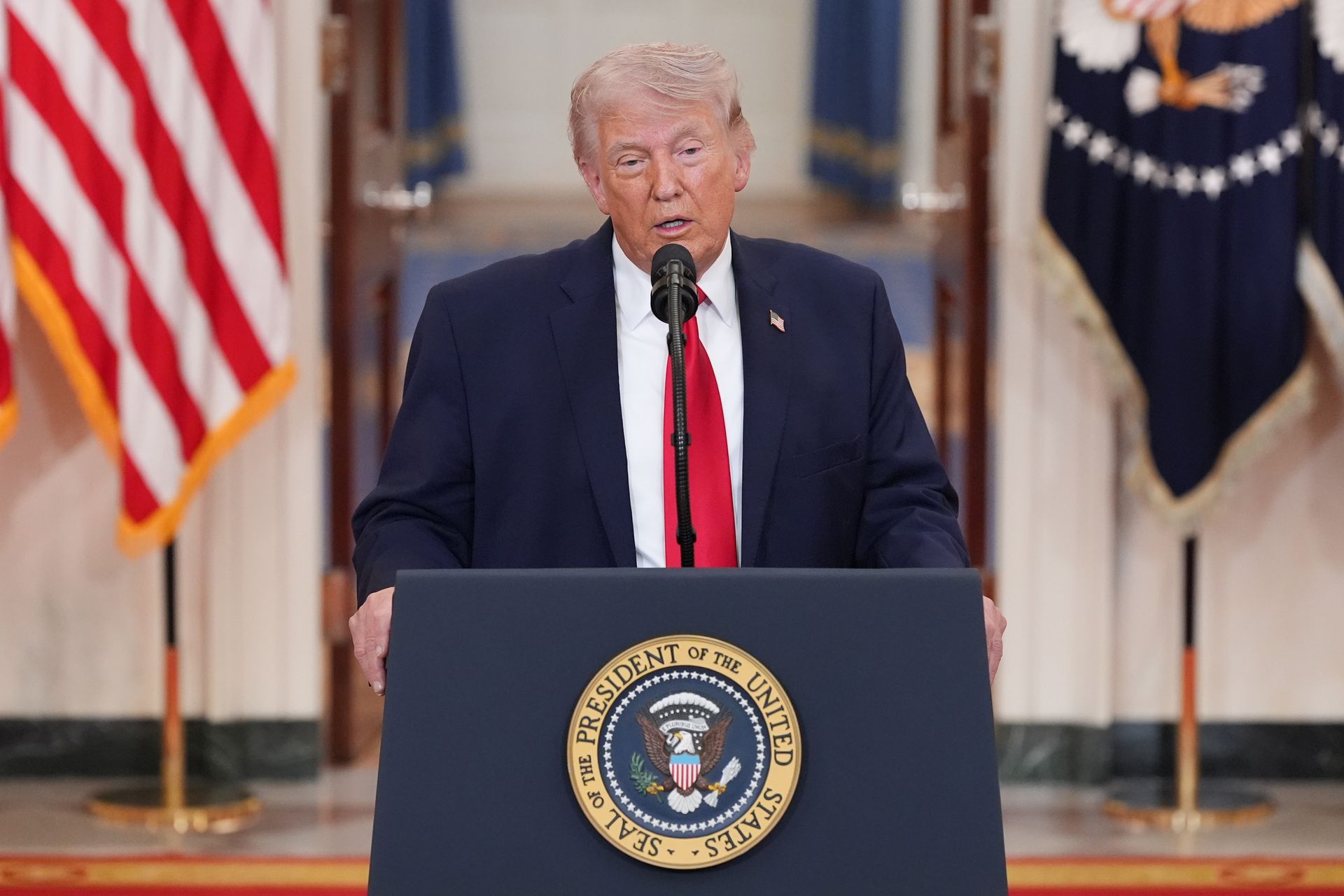
In a nationally televised address from the White House, Trump promised a swift conclusion to the military campaign while pledging to reduce Iran to rubble — using vivid language about bombing it back to the Stone Ages — and said the U.S. would "finish the job." He maintained that military operations would conclude quickly and that diplomatic channels with Tehran remained open, but outlined no specific conditions or timeline for ending hostilities. Iran has denied that talks are occurring.
The address reversed a two-day rally in U.S. stocks that had been driven by optimism over a possible end to the war. Earlier Wednesday, a Trump post on Truth Social claiming Iran's leadership had requested a ceasefire briefly drove oil prices lower, but Iran's foreign ministry rejected the characterization, prompting a quick reversal. Trump set reopening of the Strait of Hormuz as the precondition for any ceasefire consideration, demanding it be "open, free, and clear."
Commercial shipping through the waterway has been largely shut down since U.S. and Israeli forces launched their campaign against Iran on Feb. 28. In 2024, 84% of crude oil and 83% of liquefied natural gas shipped through the strait went to Asian markets, according to the U.S. Energy Information Administration.
Trump suggested again in his address that reopening the waterway was a problem for other countries to resolve. "This is now something for those who take oil through the Strait to sort out for themselves," Giles Alston, a political risk analyst at Oxford Analytica, said on CNBC, characterizing the administration's position.
Investors had positioned themselves for a decisive statement from Trump in either direction, said George Efstathopoulos, a portfolio manager at Fidelity International. "Clearly we seem to be on the latter path right now," he told CNBC's "Squawk Box Asia," referring to further escalation and prolonged uncertainty.
Markets are closed Friday for Good Friday. The March jobs report is set for release that morning.
Join 500,000+ readers who start their day with Quartz.
By subscribing, you agree to our Terms of Service and Privacy Policy.