
From a tree that bleeds red sap to a flower with no roots or leaves, these 15 plants are more extreme than most science fiction could imagine
Credit: Andrea Schieber, Flickr
Plants occupy the background of human consciousness. They line streets, fill grocery stores, and sit quietly on windowsills — so familiar that most people stop noticing them. That familiarity is deceptive. The plant kingdom contains organisms so structurally bizarre, so chemically extreme, and so unlike anything in ordinary experience that they challenge the basic intuitions most people carry about what a living thing can be.
This is not a list of merely exotic species. Every entry here represents a genuine departure from the template — something that evolved a strategy so unusual, a form so alien, or a mechanism so counterintuitive that it reads more like invention than natural history. Some of these plants eat animals. Some look like rocks. One has been growing the same two leaves for more than a thousand years. One produces a seed so large it was once mistaken for a mythical undersea coconut. One causes pain so severe and so persistent that researchers who study it take extraordinary precautions before going anywhere near it.
The geographical range here is broad. These plants grow on every inhabited continent, from the Namib Desert to the cloud forests of Borneo, from the arid scrublands of Baja California to the rainforests of southeastern Australia. What they share is not geography but a quality of improbability — each one represents an evolutionary path so divergent from the ordinary that it seems to contradict what a plant should be.
Understanding these plants has consequences beyond curiosity. Many of them represent evolutionary solutions to problems — drought, nutrient scarcity, predation, competition — that researchers are actively working to decode. Some have chemical properties of direct relevance to medicine and agriculture. Others serve as ecological keystones, supporting species found nowhere else on Earth.
The plant kingdom contains more than 390,000 known species, with thousands more formally described each year. Most remain poorly studied. The 15 plants collected here represent not the outer limit of strangeness but a sample of it — evidence that the natural world, examined carefully, is consistently more extreme than anything invented.
Credit: Derek Keats, Flickr
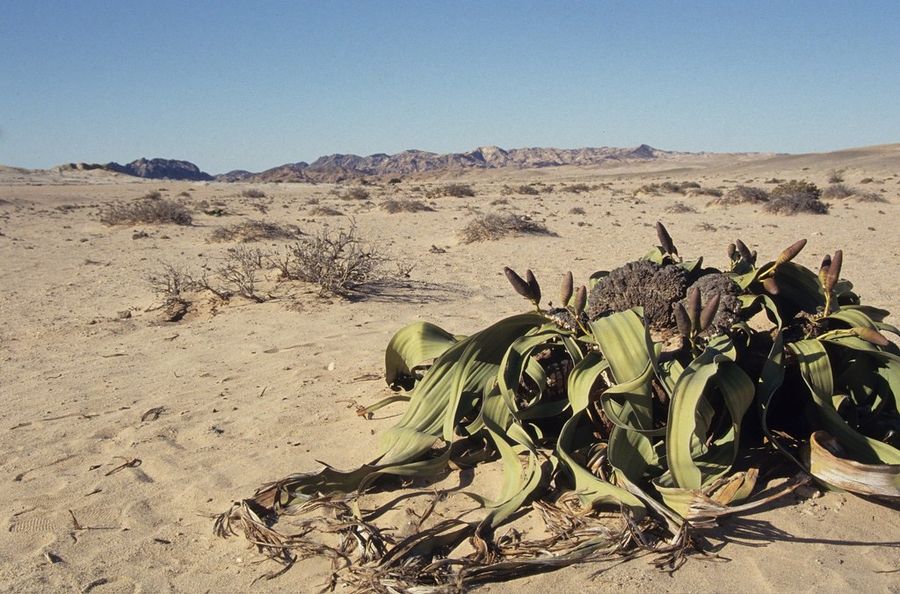
Welwitschia mirabilis grows in one of the driest places on Earth — the Namib Desert of Namibia and Angola — and it grows there very, very slowly. A single plant produces exactly two leaves over the course of its entire life. Not two leaves per season. Two leaves, total, ever. Those leaves split and shred over time into dozens of strap-like ribbons, giving mature specimens the appearance of something that has come apart. But each ribbon is still, botanically, part of one of those original two leaves. The plant never grows more.
Carbon dating of large specimens places some individuals at between 1,000 and 2,000 years old. A plant alive in the desert today may have germinated when Viking settlements were still active in Greenland. It has spent that entire span producing the same two leaves, which continue to grow from their base as their tips die and tear across the centuries.
The taxonomy of welwitschia is almost comically awkward. It belongs to a division of plants called Gnetophyta, which contains only three genera, and welwitschia is so unlike the other two that it sits in its own family, its own order, and its own genus — Welwitschia — with a single species. It is not a cactus, not a conventional succulent, not a cycad, not a palm. It is its own category, occupying a branch of the plant evolutionary tree with no close living relatives.
The plant survives the desert largely through an unusual water source: coastal fog. The Namib receives almost no rainfall, but Atlantic fog rolls inland most mornings, and the welwitschia absorbs moisture through stomata on its leaves — thousands of tiny pores that open to collect what little humidity the air provides. Some research sites have also documented water uptake through roots accessing deep subsurface sources, depending on the specific location.
The leaves themselves are among the toughest plant material known. They are leathery, fibrous, and resist decomposition to a degree that has allowed fossil fragments of welwitschia relatives to survive for millions of years in identifiable form. The modern welwitschia is considered a living fossil — its lineage stretches back to the Jurassic period, when it coexisted with dinosaurs.
Animals in the Namib, including oryx and springbok, eat the leaves during extreme droughts, even though the leaves contain bitter compounds that normally deter herbivores. The plant tolerates this intermittent grazing without dying in most cases, though heavy sustained browsing can eventually kill an individual.
The species was formally described in 1859 by the Austrian botanist Friedrich Welwitsch, who reportedly fell to his knees when he first encountered it. The plant was named in his honor — Welwitschia mirabilis — where mirabilis is Latin for "wonderful" or "strange." It remains, more than 160 years later, one of the most genuinely unusual plants formally known to science, and not one that later discoveries have managed to make seem ordinary.
Credit: Martin Heigan, Flickr
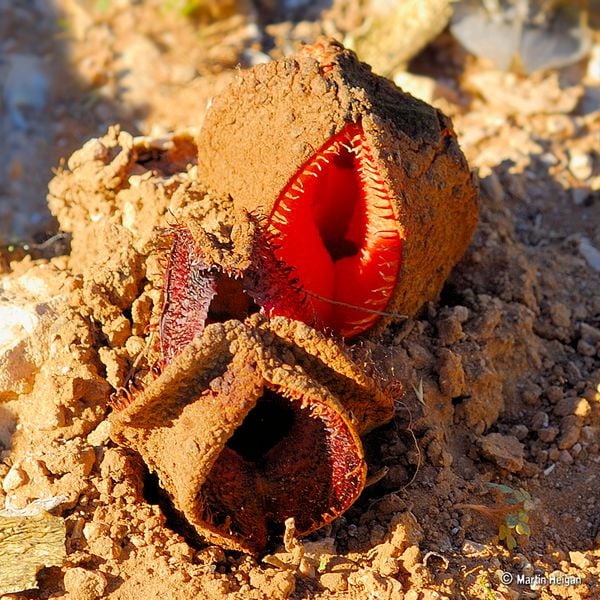
Hydnora africana looks, on first encounter, like something excavated from another planet. The plant grows entirely underground — no leaves, no stem, no chlorophyll, no visible green tissue of any kind. What emerges from the soil is a fleshy, orange-brown flower that opens its thick lobes like a mouth, releasing a smell precisely engineered to attract dung beetles and carrion beetles. That smell is, by most accounts, indistinguishable from excrement.
The reason for the smell is functional. Hydnora is a parasite. It attaches to the roots of Euphorbia shrubs using specialized structures called haustoria, which penetrate the host's root tissue and extract water and nutrients directly. Because it performs no photosynthesis, hydnora has no need for light — which explains why the entire organism lives underground until the flower emerges to reproduce.
The flower's interior is engineered to trap pollinators temporarily. When a dung beetle or similar insect enters, the flower's inner chambers — which are warm and moist — close briefly around the visitor, detaining it long enough for pollen transfer to occur. The insect is then released, unharmed, to carry that pollen to another hydnora flower. This kind of temporary imprisonment of pollinators is documented in a small number of plant species worldwide, but hydnora executes it with particular structural efficiency.
The fruit that follows is large — roughly the size of a potato — and develops underground over an extended period. Local communities in southern Africa have eaten the fruit for generations. It has a starchy interior and a somewhat sweet flavor. In areas of Namibia and South Africa where the plant grows, it is considered a food source worth actively seeking after rains, when the flowers — and eventually the fruits — push through the surface.
Hydnora africana belongs to the family Hydnoraceae, a small family of parasitic flowering plants. Its relatives include a handful of similarly underground-dwelling parasites found in Africa and South America. The family was taxonomically difficult for decades — its evolutionary relationships with other plants were genuinely contested because the plant is so reduced in form that standard morphological comparisons fail. Molecular analysis eventually placed it in the order Piperales, which also includes black pepper, an assignment that surprised many botanists at the time.
The genus was formally described by Carl Peter Thunberg in 1775 from specimens collected in southern Africa. It has attracted sustained botanical interest not only because of its appearance and lifestyle but because it represents an extreme example of parasitic reduction — a plant that has shed nearly every visible feature associated with being a plant, and yet remains a flowering plant in full botanical standing.
Credit: Martin Sercombe, Flickr
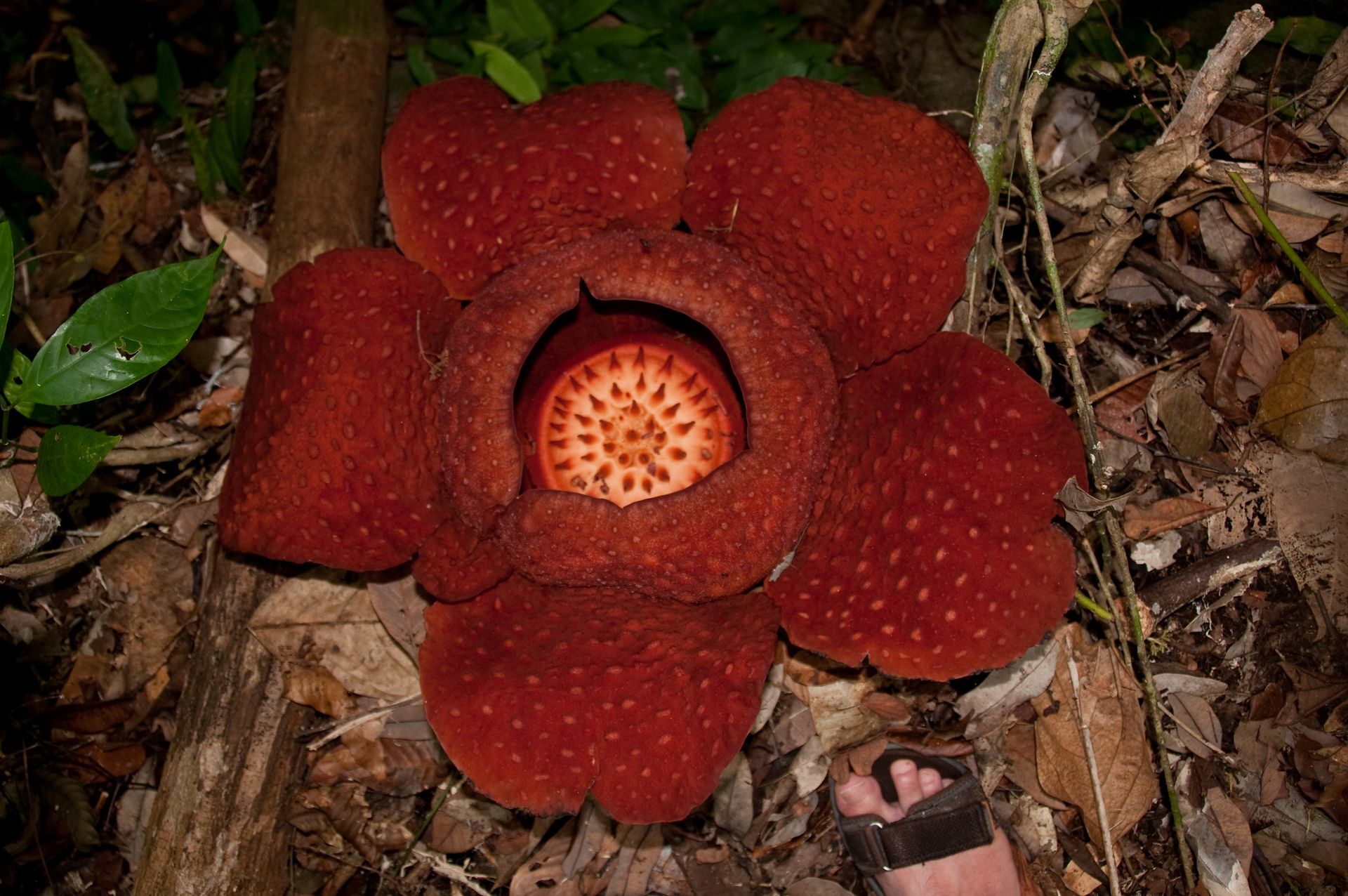
Rafflesia arnoldii produces the largest individual flower of any plant on Earth. A mature bloom can reach one meter in diameter and weigh up to 10 kilograms. It has no stem, no leaves, no roots, and no visible vegetative body at any stage of its life. The entire organism, apart from its flower, exists as thin threads of tissue woven through the roots and stems of its host vine — a Tetrastigma species. Rafflesia is a parasite so thoroughly integrated into its host that it is effectively invisible until the moment it blooms.
The flower takes months to develop. It begins as a small bud on the host vine, slowly expands beneath a set of brown, cabbage-like bracts, and then opens over the course of a few days into an enormous five-lobed structure, deep red with pale wart-like tubercles across its surface. The bloom lasts four to seven days, then collapses and rots. That brief window is the only evidence that a rafflesia was present at all.
The flower is pollinated by carrion flies, which it attracts with a smell widely described as that of rotting flesh — earning the plant one of its common names, the corpse lily. The smell is particularly intense during the first day of blooming. The plant generates heat as part of the process, which helps volatilize the odor compounds and carry them over a wider area of forest floor.
Rafflesia is found across Sumatra, Borneo, the Philippines, and peninsular Malaysia, always within rainforest and always on Tetrastigma vines. Several species are classified as critically endangered because they depend entirely on primary forest. Logged or degraded forest does not support the host vines in sufficient density, and without the vine, the parasite cannot exist.
The reproductive biology of rafflesia is not fully understood. How the seeds move from plant to plant — how a germinating seed locates a host root and initiates infection — remains only partially resolved. Some researchers propose that small mammals or ground-dwelling invertebrates carry seeds to roots accidentally. Direct observation of this process in the wild is extremely rare.
The plant was formally described following an 1818 expedition in Sumatra led by Sir Stamford Raffles and the botanist Joseph Arnold, after whom the species was jointly named. It has attracted scientific attention ever since — not just as a botanical curiosity but as a case study in how extreme parasitism can reduce a plant body plan to almost nothing while leaving the reproductive structures fully intact and functional.
Credit: Rod Waddington, Flickr
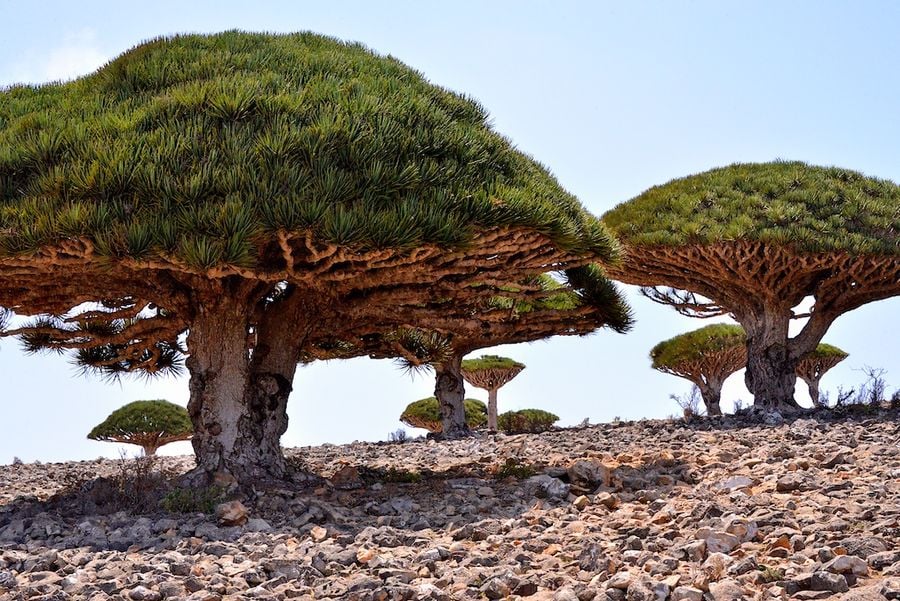
The dragon blood tree grows on Socotra, an archipelago of four islands in the Arabian Sea belonging to Yemen. Its shape is unlike that of any other tree: the canopy is dense and flat, shaped almost exactly like an open umbrella, with branches that divide at precise angles to create a circular horizontal plane. Seen from a distance, a grove of dragon blood trees looks like a collection of enormous mushrooms. Seen up close, the trunks are smooth, pale grey, and geometrically symmetrical in a way that appears almost designed.
The common name comes from the tree's resin. When the bark is cut, it produces a deep red sap — the color of arterial blood — that thickens on contact with air. This resin, called dragon's blood, has been traded for at least 2,000 years. Ancient Romans used it as a pigment. Medieval painters used it as a lacquer and dye. Alchemists attributed medicinal properties to it. Modern analysis has confirmed it contains compounds with antimicrobial activity, and it remains in use in some traditional medicine practices across the region.
The umbrella shape is not arbitrary. Socotra is extremely dry, receiving very little rainfall. The flat canopy acts as a condensation surface, capturing fog and dew. Moisture collects on the leaves and drips down toward the roots below — a form of passive self-irrigation that supplements the negligible annual rainfall. The dense, overlapping canopy also shades the ground beneath the tree, reducing evaporation from the soil and keeping the root zone cooler than the surrounding terrain.
Socotra as a whole is sometimes called the Galápagos of the Indian Ocean. Approximately 37% of its plant species are found nowhere else on Earth. The dragon blood tree is one of the most iconic of these endemic species. It can live for several hundred years, and some forests on the island contain trees estimated at over 500 years old.
The tree is considered vulnerable in the wild. Climate change is altering the fog patterns that Socotra's vegetation depends on. Coastal areas of the island are receiving less fog than historical records indicate, which affects both the trees' water intake and seedling survival. Young dragon blood trees require shade to germinate successfully — in degraded forest where the canopy has thinned, seedling establishment rates fall sharply.
Dracaena cinnabari belongs to the family Asparagaceae, making it a distant relative of common garden asparagus. It was formally described in the scientific literature in 1880, though it was known to Arab traders and travelers for many centuries before European contact.
Credit: Dick Culbert, Flickr
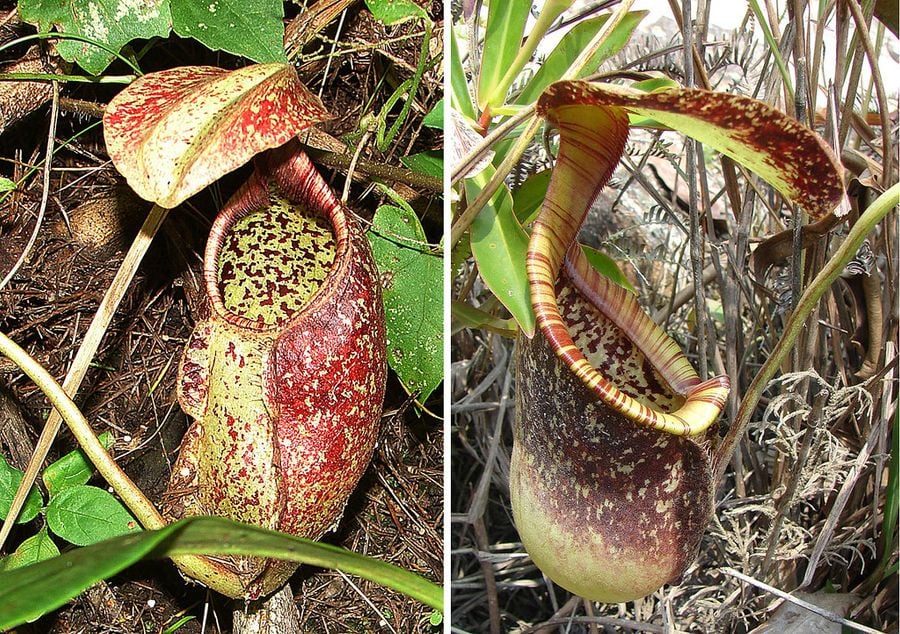
Nepenthes rajah is a carnivorous pitcher plant from the cloud forests of Borneo, specifically from the slopes of Mount Kinabalu and Mount Tambuyukon in Malaysia's Sabah state. Its pitchers — the modified leaves that function as digestive traps — are the largest of any carnivorous plant in the world. A single pitcher can hold up to 3.5 liters of fluid. They are large enough to have been found containing drowned rats and small frogs that fell in and could not escape.
The pitchers are not passive containers. They are lined with a slippery, waxy inner surface that prevents animals from gaining purchase once they fall inside. Below that surface lies a pool of viscoelastic digestive fluid that traps struggling prey efficiently — the more an animal moves, the more quickly it sinks. The fluid contains enzymes and associated microorganisms that break down organic matter. A drowned rat, left in the pitcher, will be fully digested within weeks.
The plant has evolved a mutualism with mountain tree shrews. The shrews, attracted by nectar produced at the pitcher's lid, perch on the rim and defecate into the pitcher while feeding. The pitcher's design — its position, angle, and the precise location of the nectar glands — appears to be optimized to position the shrew directly over the opening. The feces provide the plant with a significant source of nitrogen and phosphorus. This arrangement means the plant gains nutrition from a mammal without ever needing to capture and kill it.
A parallel mutualism exists with woolly bats. The bat species Kerivoula hardwickii roosts inside the pitcher itself, and its droppings provide the plant with a measurable fraction of its nitrogen intake. The pitcher's dimensions are closely matched to the bat's body size, and the plant produces reduced digestive fluid in pitchers that house a resident bat — a response some researchers interpret as evidence that the mutualism is genuinely adaptive from the plant's perspective.
Nepenthes rajah grows at elevations between roughly 1,500 and 2,650 meters, in ultramafic soil — soil derived from rock types unusually high in magnesium and iron but low in nutrients like calcium, potassium, and phosphorus. Carnivory in pitcher plants is generally understood as a response to low-nutrient growing conditions: where the soil cannot supply what the plant requires, the plant extracts it from animals instead.
The species was first formally described in 1859 by botanist Joseph Dalton Hooker, based on specimens collected during earlier expeditions. It remains one of the most studied carnivorous plants in the world, partly because of its size and partly because of the sophistication of its animal partnerships.
Credit: Keoki Seu, Flickr
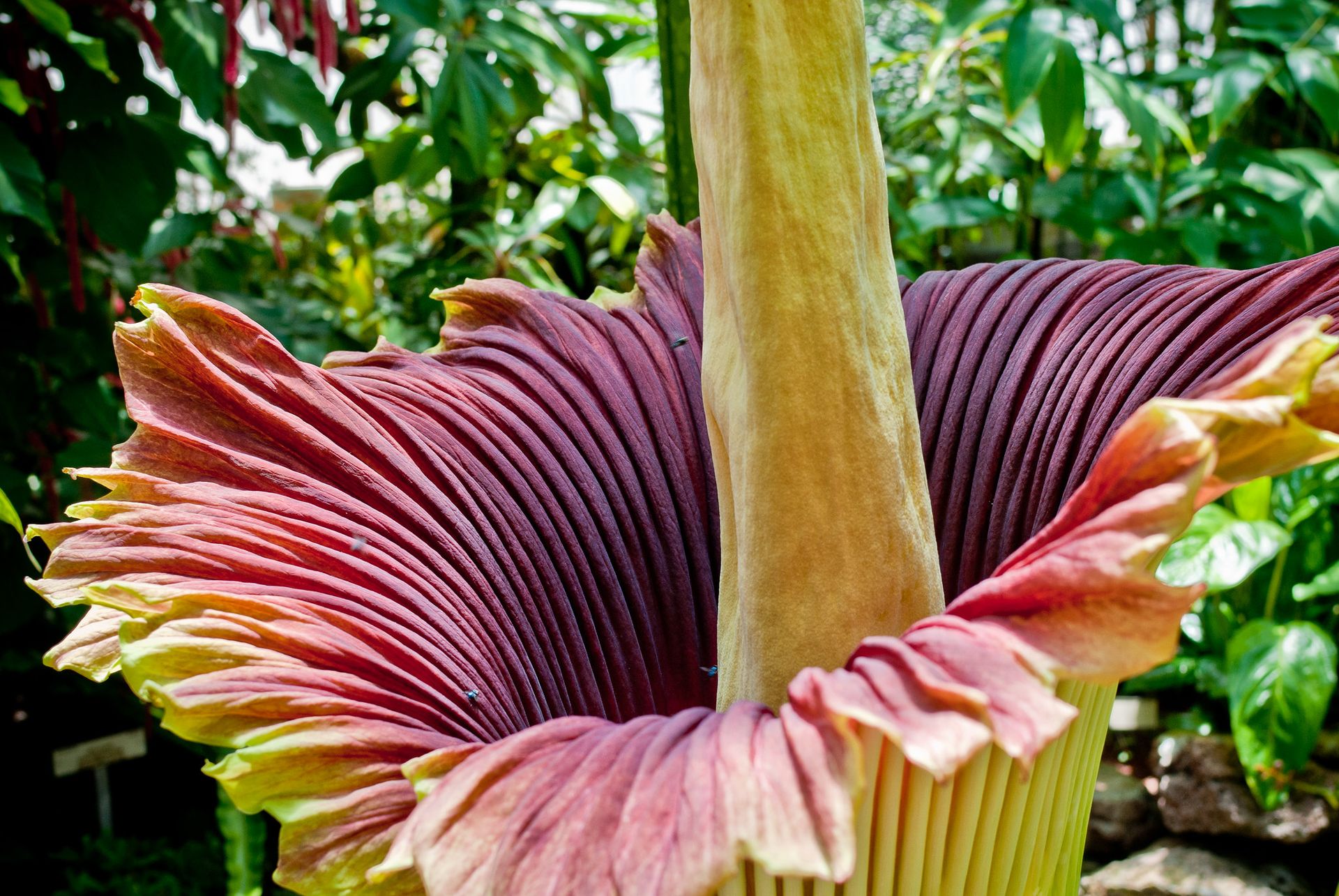
Amorphophallus titanum — the titan arum — produces the largest unbranched inflorescence of any plant on Earth. The structure, which consists of a central spike called the spadix surrounded by a large modified leaf called the spathe, can reach heights of over three meters. When it blooms, it generates one of the strongest biological odors documented in the plant kingdom — a combination of compounds including dimethyl trisulfide, also found in rotting flesh, and trimethylamine, also present in decomposing fish.
The bloom is brief, lasting approximately 24 to 48 hours. During this window, the spadix generates heat, reaching temperatures close to 37 degrees Celsius — roughly human body temperature — which helps volatilize and disperse the smell across a wide area of forest. The combination of heat, odor, and the deep red-purple interior of the spathe creates a remarkably accurate simulation of a decomposing large mammal. Carrion insects, principally sweat bees and flesh flies, enter the inflorescence in large numbers, pick up pollen, and transfer it to other titan arums.
The plant is native to the lowland rainforests of Sumatra, where it grows from an underground corm — a swollen stem base — that can weigh more than 70 kilograms in mature individuals. Between blooms, the plant produces a single large leaf that can reach several meters in height, which it uses to photosynthesize and rebuild the corm's energy reserves. This process takes years. The corm then drops the leaf, enters a dormant period, and eventually produces the inflorescence — a cycle that may not repeat for seven to 10 years or longer.
A single plant may bloom only a handful of times across its lifetime. When a titan arum blooms at a botanical garden — where the plant is commonly cultivated outside its native range — it typically draws large crowds over the brief window of the bloom.
The name Amorphophallus means "misshapen penis" in Greek, a reference to the shape of the spadix. The species was described in 1878 by Italian botanist Odoardo Beccari. The species name, titanum, refers to its scale.
Outside Sumatra, the titan arum faces no immediate conservation concern, as it is widely cultivated. In Sumatra itself, its habitat — lowland rainforest — is under significant pressure from palm oil expansion and logging. The status of the wild population has not been comprehensively assessed.
Credit: Peter Dyllong, Pexels
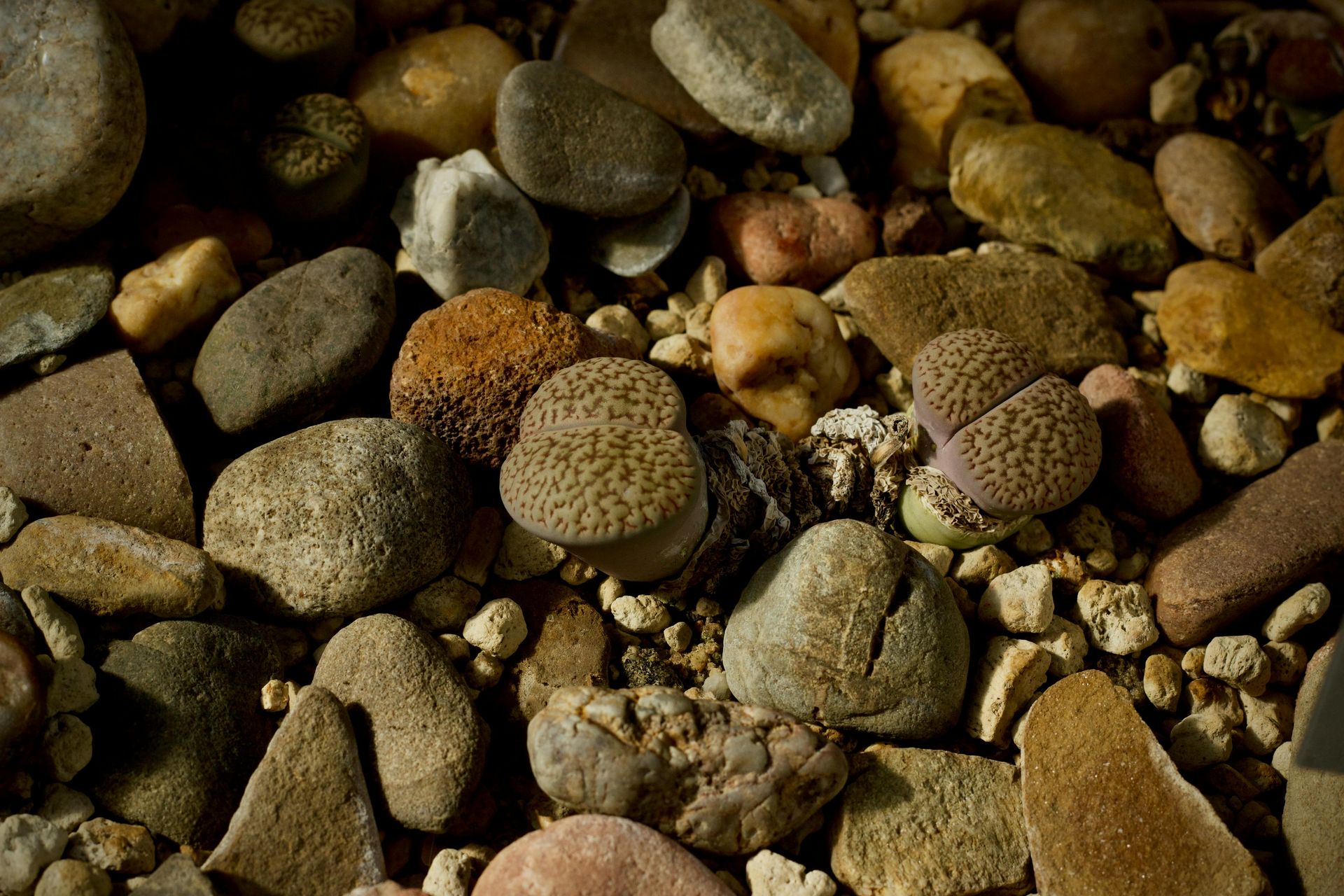
Lithops are succulent plants that have evolved to look exactly like the pebbles and rocks around them. They grow in the arid regions of southern Africa — primarily South Africa and Namibia — where harsh sunlight, rocky substrate, and browsing pressure have produced one of the most thorough examples of camouflage in the plant kingdom. From above, a lithops plant is nearly indistinguishable from the surrounding gravel.
Each plant consists of two fused, swollen leaves that emerge just above the soil surface. The leaves are truncated at the top, creating a flat or slightly convex surface that is patterned, textured, and colored to match the specific rock type of the habitat where each species lives. Different species have evolved to mimic different substrates — some are grey and granular, some are brown and veined like quartz, some are mottled pink and white. The match is often extraordinarily precise, and only close inspection at ground level reveals them as plants.
The mimicry functions primarily as predator deterrence. In a dry, nutrient-scarce environment, a small, fleshy plant would be immediately eaten by tortoises, insects, and small mammals if it were conspicuous. By disappearing visually into the substrate, lithops avoid most of this predation. Their low, flat profile also reduces exposure to desiccating wind and minimizes the surface area available for water loss.
The interior of the leaf pair is packed with water-storing tissue, which gives the plant its swollen appearance and allows it to survive months without rainfall. In prolonged drought, the leaves shrink and the plant withdraws slightly into the soil, further reducing its profile above the surface.
Once a year, typically in autumn in the southern hemisphere, a single flower emerges from the groove between the two leaves. The flowers are white or yellow, open only in the afternoon, and are pollinated by small bees. After flowering, a new pair of leaves forms inside the old pair. The outer leaves gradually dry out and are reabsorbed — their water and nutrients recycled to support the new growth. This means a mature lithops plant is continuously replacing its visible parts while presenting the same stone-like exterior to the world.
More than 90 species of lithops have been formally described, varying substantially in color, pattern, and texture. The genus has become widely cultivated outside its native range. In the wild, populations face pressure from illegal collection and from habitat degradation across the succulent Karoo biome, which is one of the most botanically diverse arid regions on Earth.
Credit: KrishNick, Pixabay
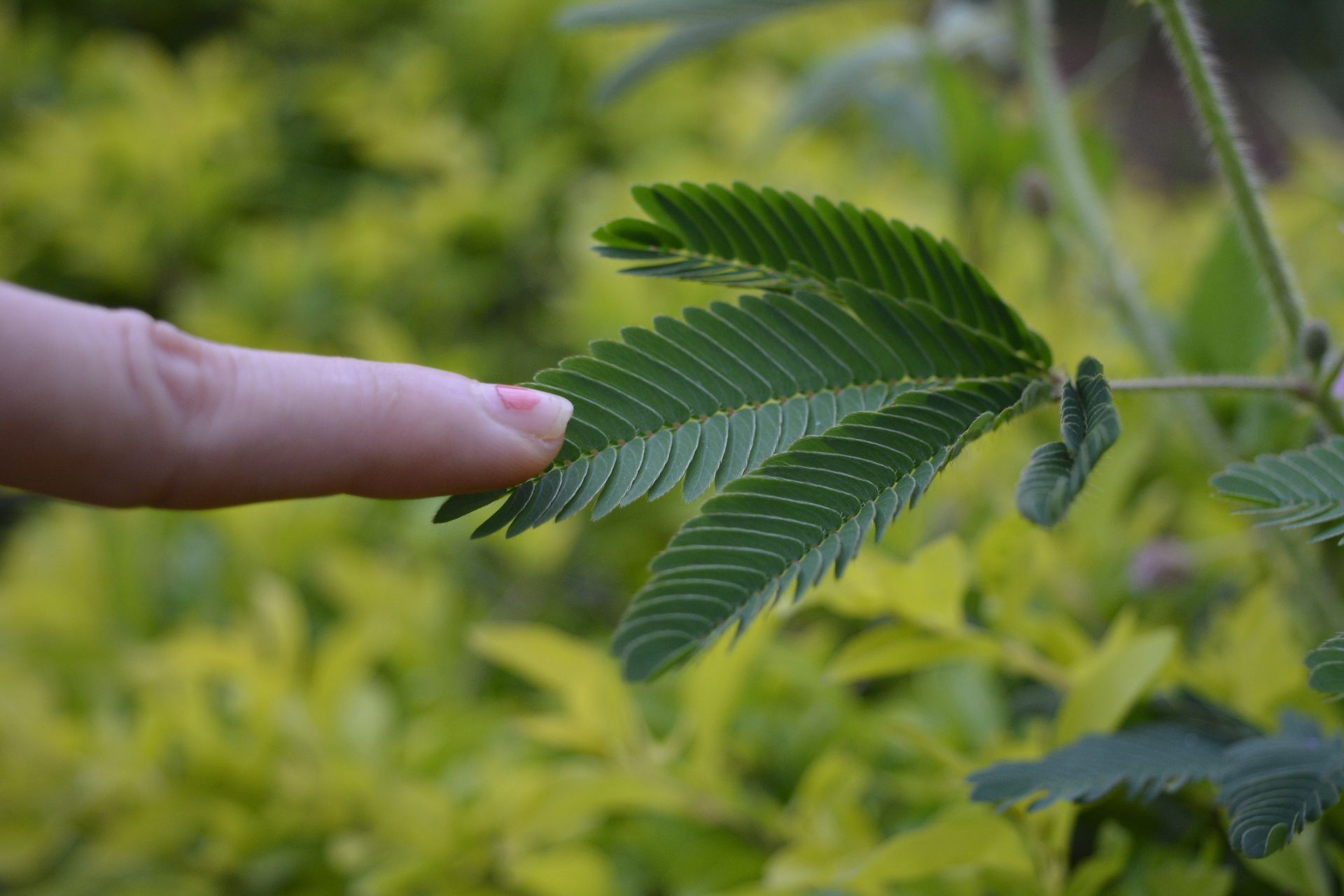
Mimosa pudica collapses its leaves when touched. The response is fast enough to be visible in real time: brush a leaflet and the entire compound leaf folds shut within seconds, while the leaf stalk droops toward the stem. The movement is not performed by muscle but by a rapid change in turgor pressure in specialized cells at the base of each leaflet and leaf stalk — cells called pulvini, which deflate suddenly when stimulated, causing the mechanical collapse.
The collapse travels down the plant. Touch one leaflet and the signal propagates — within about one to two seconds — along the stem, causing adjacent leaves to fold as well. Stronger stimulation, such as shaking the whole plant, causes the response to spread to leaves far from the point of contact. The mechanism involves a rapid loss of potassium ions from the pulvini, which drives water out of the cells osmotically, causing them to deflate. The process reverses on its own within minutes as the ions are pumped back and the cells refill.
The adaptive purpose of this behavior has been a subject of ongoing investigation, but the leading explanation is predator deterrence. When a caterpillar or other herbivore steps onto the plant, the collapse of leaves disrupts the insect, potentially dislodging it. The movement may also expose thorns on the stem that were previously concealed by foliage. A secondary hypothesis is that the collapse mimics wilting — making the plant appear dead or unattractive to herbivores seeking fresh tissue.
Research published in the early 2010s suggested mimosa pudica can habituate to repeated non-harmful stimuli. When plants were repeatedly dropped from a height — a stimulus that initially triggered the defensive collapse — they eventually stopped responding to the drop, as though the plant had recognized the signal as non-threatening. The habituation persisted for several weeks and was not erased by exposure to other stressors. This is consistent with a rudimentary form of learned behavior, a finding that generated substantial debate among biologists.
The plant is native to South and Central America but has become a significant weed in tropical and subtropical regions worldwide. It fixes nitrogen through root bacteria, making it a competitive colonizer of disturbed soils. In parts of Southeast Asia, South Asia, and Australia, it forms dense mats in agricultural land and is difficult to eradicate once established. The flowers are spherical pink-purple pompoms that appear in clusters, belying the plant's reputation as aggressive.
Credit: David Stanley, Flickr
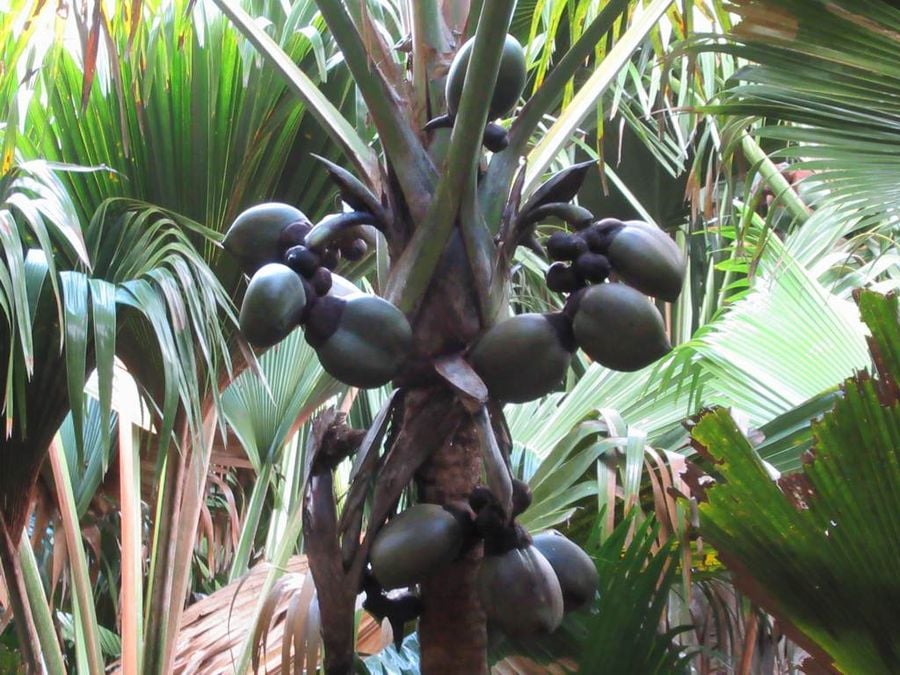
The coco de mer palm, Lodoicea maldivica, produces the largest seed of any plant on Earth. A single seed can weigh up to 25 kilograms and reach half a meter in length. It develops inside the largest fruit of any wild plant — a fibrous green structure that takes seven years to mature on the tree and may take another two years to germinate after falling. The tree itself takes 25 years to reach reproductive maturity.
The palm is endemic to two small islands in the Seychelles — Praslin and Curieuse — making it one of the most geographically restricted large plants on Earth. Before European settlement of the Seychelles in the 18th century, the seed was known only from examples that occasionally washed ashore on the coasts of India, the Maldives, and East Africa. Because no one knew where they came from, the seeds were assumed to grow on a mysterious underwater tree. The seed was named the coconut of the sea — coco de mer — and treated as an object of considerable monetary and symbolic value in Asian trade networks.
The seeds were acquired by royalty across Asia and the Middle East. Holy Roman Emperor Rudolf II reportedly offered a large sum for a specimen. They were carved into drinking vessels and decorative objects, and were believed to offer protection against poison. This value persisted until the 1740s, when the actual source — an island in the Indian Ocean — was finally identified by European explorers.
The shape of the seed has generated persistent folklore. The bilobed seed, viewed from below, bears a distinct resemblance to human buttocks. British general Charles Gordon visited Praslin in 1881 and became convinced the coco de mer grove was the original Garden of Eden. He argued this position in writing with considerable seriousness.
The tree is now protected under Seychelles law. Export of seeds is regulated, and each legitimate seed carries a certificate of provenance. Poaching remains a problem, as a single seed can command a high price on international markets. The wild population on Praslin has been subject to periodic fires, which represent a significant threat given that the species exists in the wild only on two small islands and nowhere else.
Credit: Victoria, Wikimedia Commons / CC BY-SA 4.0
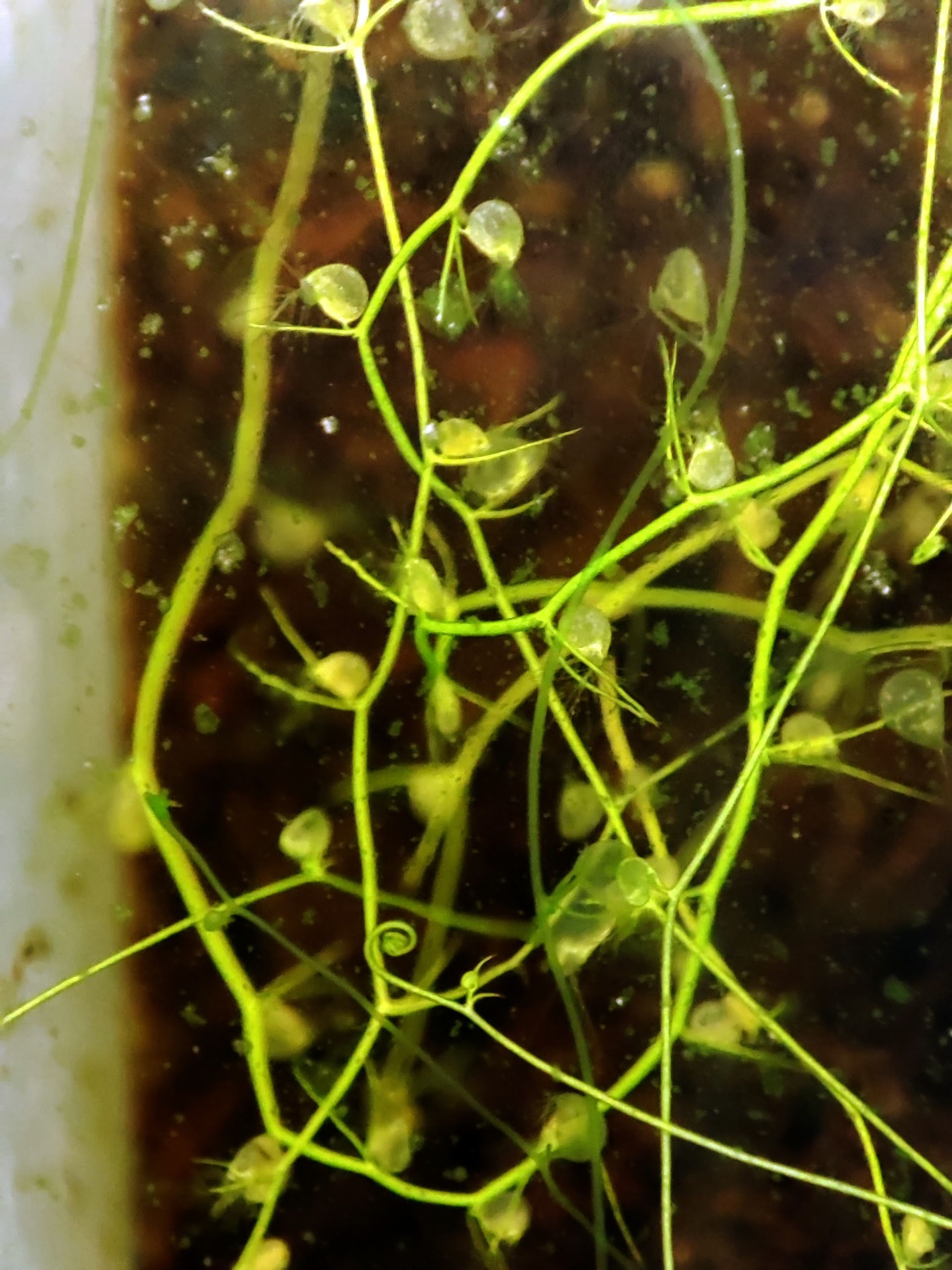
Bladderworts — plants of the genus Utricularia — are the most mechanically sophisticated carnivorous plants known. They catch prey not with passive pitfall traps or sticky surfaces but with active suction devices: tiny bladders, each equipped with a trapdoor, that maintain a state of negative pressure and fire in response to trigger hairs. When a small aquatic organism brushes against those hairs, the trapdoor opens, the bladder expands to its unpressurized state in less than a millisecond, and the prey — along with the surrounding water — is sucked inside. The trapdoor then snaps shut.
The speed of this mechanism places it among the fastest movements in the plant kingdom. The entire capture event takes roughly one millisecond. The prey has essentially no opportunity to react. Inside the bladder, glands secrete digestive enzymes that break down the captured animal, and the resulting nutrients are absorbed through the bladder walls. After digestion, the bladder pumps out water, resets to negative pressure, and is ready to fire again.
Bladderworts grow on every continent except Antarctica, in habitats ranging from open water to wet soils to the fluid-filled cups of bromeliad plants. Some species are entirely free-floating in ponds and lakes, with no root system at all. Others grow in waterlogged soil, with only their flowers — delicate and often bright yellow, resembling small orchids — visible above the surface. The trapping machinery is entirely submerged or buried.
The genus is large: more than 230 species have been formally described, making Utricularia one of the largest genera of carnivorous plants. Individual traps range from microscopic — too small to catch anything visible to the naked eye — to a few millimeters in diameter, large enough to capture small tadpoles and fish larvae alongside the usual prey of rotifers, nematodes, and water fleas.
Bladderworts have a highly reduced genome for flowering plants. Without roots or structural stems, and with a body largely dedicated to producing trapping structures, the genome has contracted to contain only what is functionally essential. Studies of Utricularia genomes have found evidence of large-scale deletion of non-coding DNA sequences, along with repeated cycles of genome duplication followed by reduction. This makes bladderworts an active area of research in plant evolutionary genomics — a plant that hunts by suction and has an unusually compact genetic blueprint.
Credit: David Hernandez, Flickr
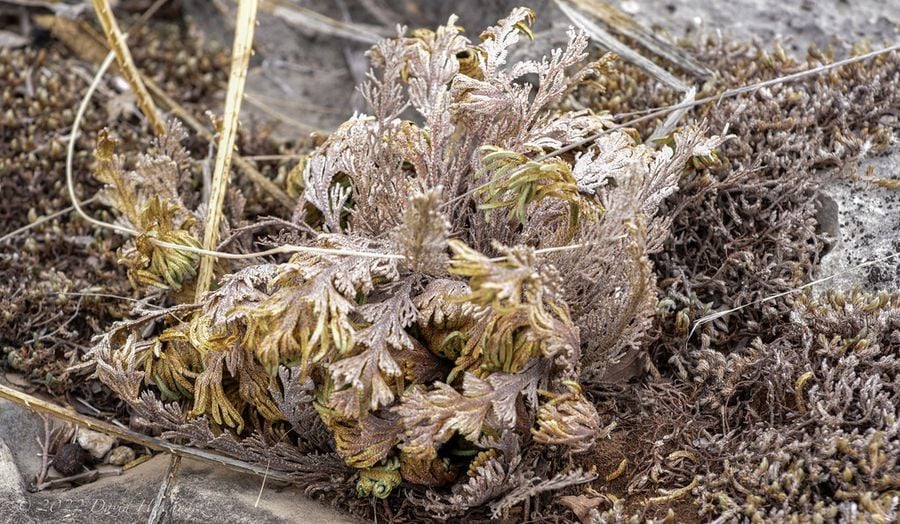
Selaginella lepidophylla can lose more than 95% of its water content, curl into a dry, brown, apparently dead ball of tissue, and then fully revive when water is reintroduced — sometimes after spending years in a desiccated state. The cells and metabolic machinery of the plant survive this process largely intact.
The plant is native to the Chihuahuan Desert of Mexico and the U.S. Southwest, where extended drought is a regular feature of the climate. During dry periods, the stems curl inward from the outer edges, forming a tight sphere. Photosynthesis stops. Metabolic activity drops to an almost unmeasurable level. The plant is not dead in the cellular sense, but it is not functioning in any meaningful way — it is in a state of metabolic suspension.
When rain arrives, the sphere reopens within hours. The stems spread back out, chlorophyll becomes active again, and the plant resumes normal growth. The full recovery — from compressed ball to fully extended, photosynthesizing plant — takes two to three hours for initial reopening, with metabolic activity resuming over the following hours. The speed and completeness of this recovery makes it one of the most thoroughly documented examples of desiccation tolerance in a vascular plant.
The mechanism behind this tolerance remains a subject of active research. The plant accumulates large quantities of trehalose — a disaccharide sugar — which appears to protect cellular membranes and proteins from the damage that dehydration would otherwise cause. Cell walls in desiccation-tolerant plants also contain specific proteins that prevent them from collapsing irreversibly as water is lost. The plasma membranes are unusually stable during drying and repair rapidly once water returns.
Selaginella is not a flowering plant — it belongs to an ancient group of vascular plants called lycophytes, which diverged from the ancestors of modern ferns and seed plants more than 400 million years ago. The genus has roughly 700 species, most of which are not desiccation-tolerant. Selaginella lepidophylla is one of the few members of the group to have developed this extreme capacity.
In tourist markets in the U.S. and Mexico, the dried plant is commonly sold under the name "rose of Jericho." The actual rose of Jericho — Anastatica hierochuntica — is an entirely different plant from a different family, native to the Middle East and North Africa. The name is applied loosely to any plant that demonstrates this drying-and-reviving behavior, which has contributed to a long-running confusion between two unrelated species.
Credit: Merryjack, Flickr
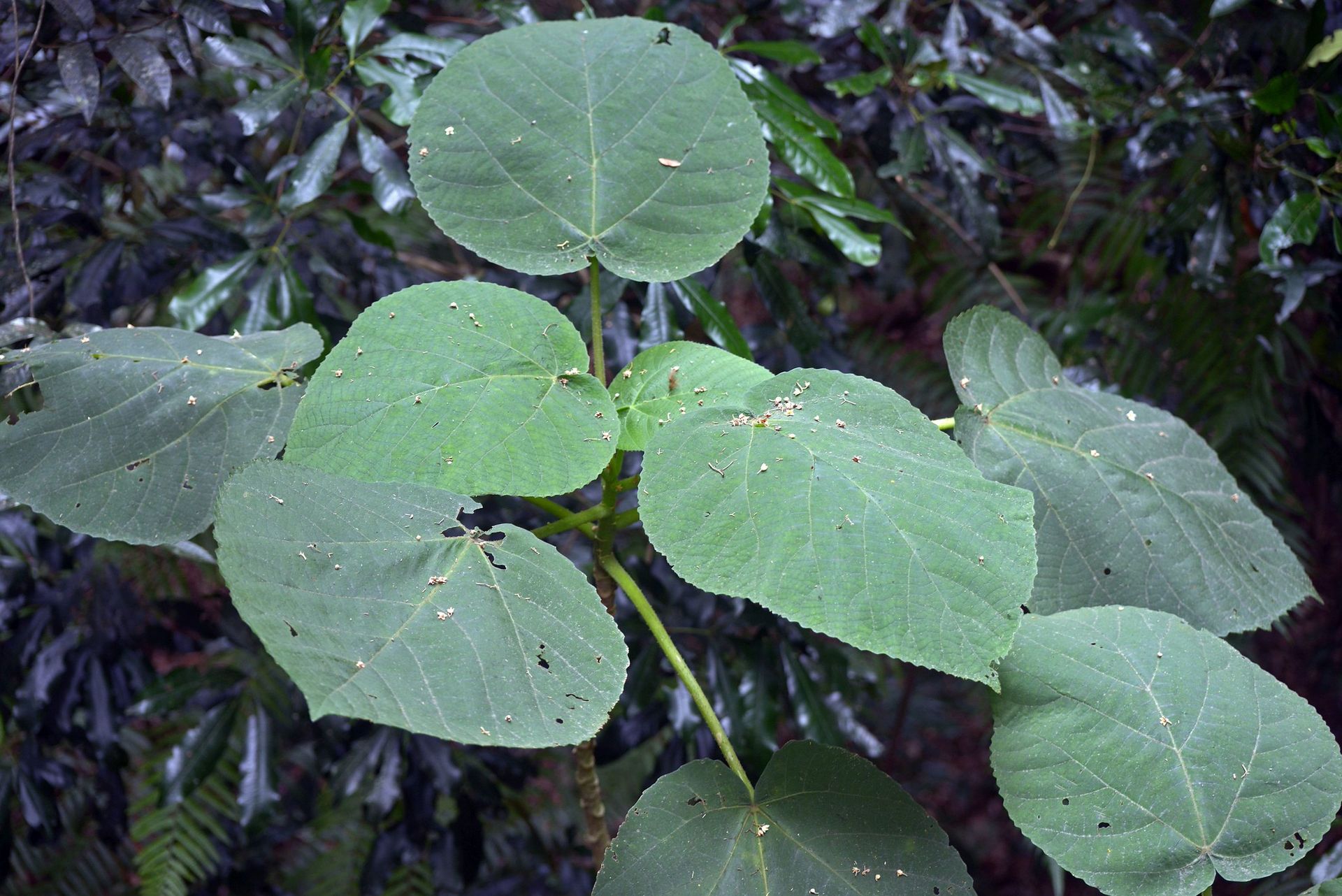
The gympie-gympie, Dendrocnide moroides, is a large-leaved plant native to the rainforests of northeastern Australia, particularly Queensland, and parts of Indonesia. It belongs to the nettle family and produces stinging hairs — called trichomes — across virtually all of its surface: leaves, stems, fruit, and seeds. Contact with the plant causes pain that has been described consistently, by researchers and others who have encountered it accidentally, as unlike any other sting produced by a plant.
The trichomes are silica-reinforced hollow needles, each a fraction of a millimeter in diameter, that break off on contact and embed in skin. Each needle injects a complex mixture of compounds. Research published in 2020 identified a class of previously unknown peptides — named gympietides — as the primary pain-causing agents. These peptides bind to sodium channels in pain-sensing neurons in a way that causes sustained, repetitive firing. Unlike most plant toxins, the effect does not simply fade as the compound is metabolized. The embedded needles can remain active in skin for months or years.
The pain is described as initially severe and burning, then evolving into a strong, repetitive sensation that worsens with temperature changes, water contact, or physical pressure on the affected area. Cold — including air conditioning or wind — reliably intensifies the pain for as long as the needles remain embedded. Accounts from people who have been badly stung describe pain recurring intermittently for more than a year.
Animals in the gympie-gympie's native range generally avoid the plant. Dogs and horses have died following severe exposure. Forest workers in Queensland are trained to identify and avoid it. Researchers who study the plant in the field wear full-face respirators in addition to thick gloves and protective suits, because shed trichomes can become airborne and cause pain and respiratory irritation without any direct contact with the plant itself.
Despite its properties, the gympie-gympie is not without ecological function. Its large leaves — up to 20 centimeters across — make it a pioneer species in disturbed rainforest; it grows rapidly in clearings and along stream banks where light is available. Its fruit, which is also dangerous to handle, is consumed by birds, which appear to be physiologically immune to the sting. The plant also supports caterpillars of certain native moth species that have evolved specific resistance to the trichomes, making it a food source for those species that nothing else in the forest is using.
Credit: Jean & Nathalie, Flickr
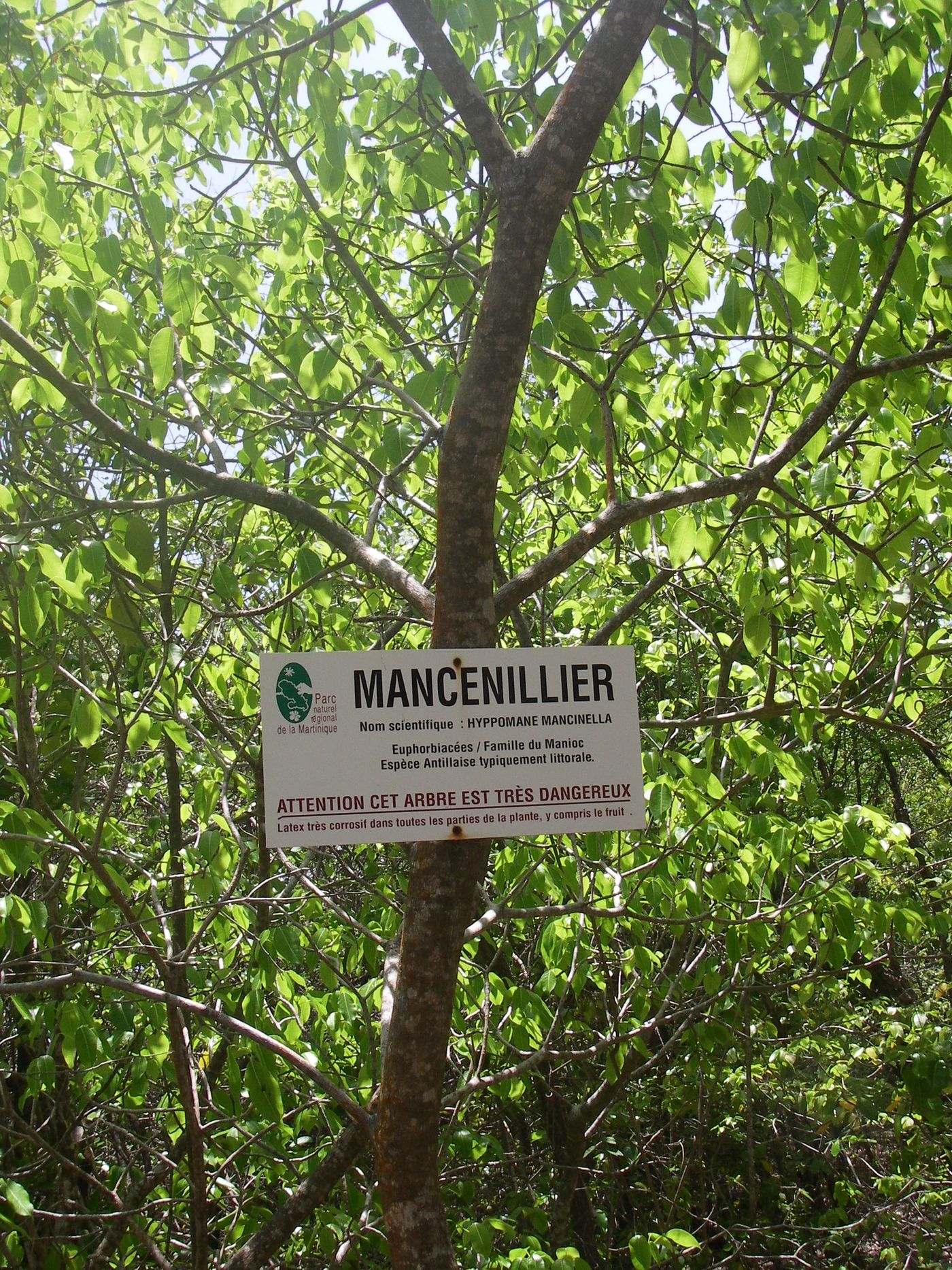
The manchineel tree, Hippomane mancinella, is native to the Caribbean coasts and islands, Central America, and northern South America. It grows at the edge of beaches and in coastal wetlands, producing smooth grey-green bark, small yellow-green flowers, and a fruit that resembles a small green apple. Every part of the plant — bark, leaves, sap, and fruit — contains caustic toxic compounds. It holds a persistent reputation as one of the most dangerous trees in the world.
The sap, which flows freely when bark is cut or branches broken, is a milky latex containing phorbol esters and several other irritants. Contact with skin causes severe chemical burns within minutes. Rainwater dripping through the leaves carries dissolved compounds onto anyone standing below. Historical accounts from Caribbean settlers and indigenous peoples consistently describe that brief shelter under a manchineel during rain produces significant blistering of exposed skin. Burning the wood releases fumes that can cause temporary blindness and severe respiratory irritation.
The fruit — called manzanilla de la muerte in Spanish, "little apple of death" — is attractive in smell and mildly sweet on first taste. Consumption causes a burning sensation that quickly intensifies, leading to severe swelling of the throat, digestive tract damage, and severe gastrointestinal symptoms. In several documented historical cases, people who consumed the fruit unknowingly required hospitalization. Death from manchineel poisoning has been reported historically, though documented modern fatalities are rare, as awareness of the tree is widespread in the regions where it grows.
Individual manchineel trees in some areas of Florida and the Caribbean carry posted warning signs, which is unusual enough for a tree to merit mention on its own. The manchineel is a protected species in Florida, where it grows across a limited range and is considered an important component of coastal ecosystems. Its root system stabilizes sandy and coastal soils against erosion. Several iguana species consume the fruit without harm, as they appear to be physiologically immune to the toxic compounds that affect mammals.
The toxicity of the manchineel is not arbitrary — it is a defense system. The phorbol esters in the sap act as powerful irritants that deter browsing by most mammals. This is a common mechanism in the plant family Euphorbiaceae, which includes many species with latex saps containing irritating compounds. The manchineel takes this defense to an extreme that has made it notable in botanical and medical literature for centuries, well before any formal scientific description.
Credit: Linda De Volder, Flickr
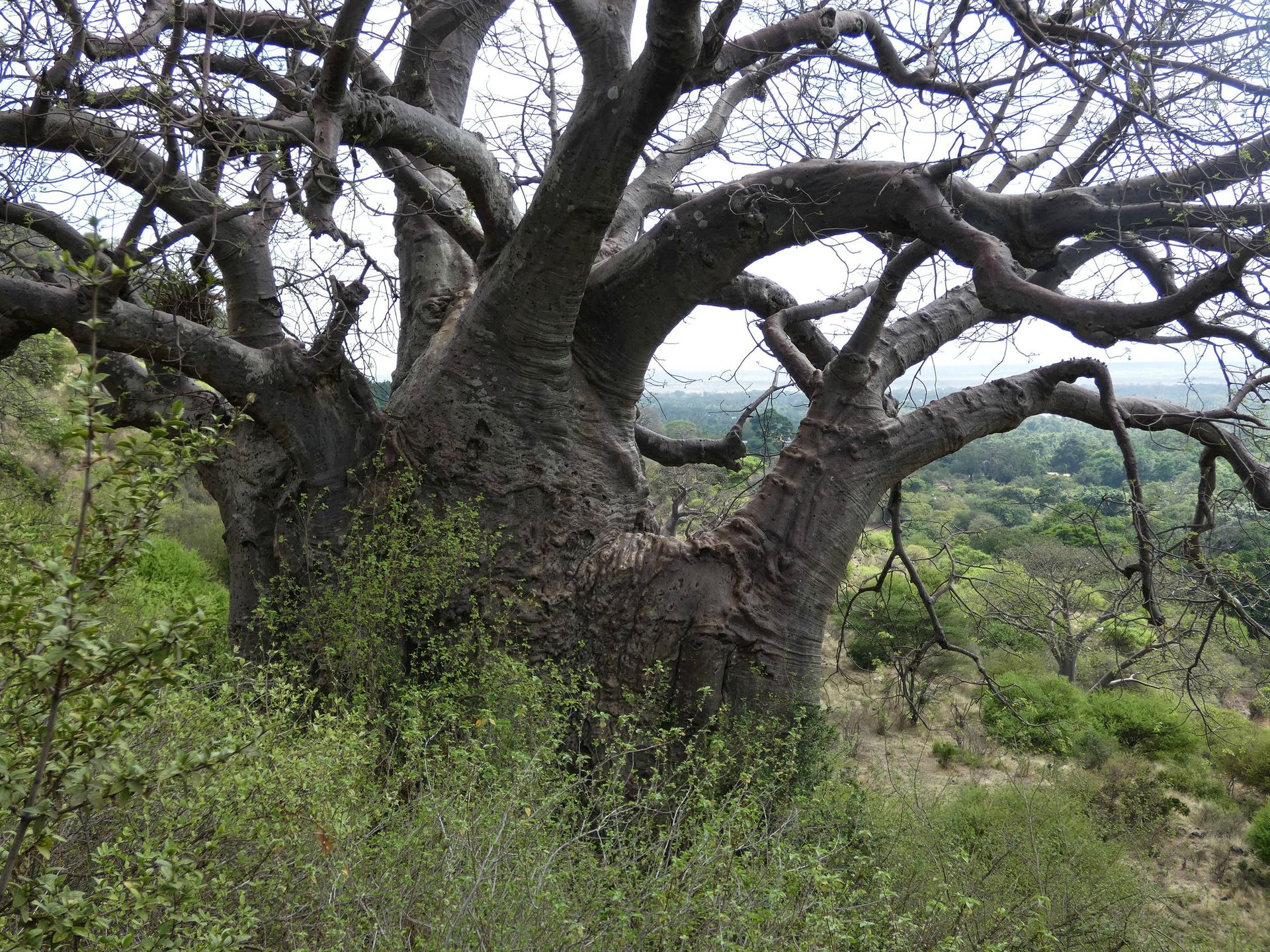
The baobab — most commonly Adansonia digitata in Africa, though the genus contains eight species, six of them endemic to Madagascar — is a tree with dimensions that read as implausible. The trunk can reach diameters of more than 10 meters. The interior of a large specimen may be entirely hollow, and African baobabs have historically been used as shelters, storerooms, and, in at least one documented case in South Africa, as an actual bar. A single tree can store tens of thousands of liters of water in its fibrous, spongy trunk tissue during the wet season.
The appearance is the feature most often remarked on: a baobab in the dry season, when it has shed its leaves, looks like a tree that has been pulled out of the ground and replanted upside down, with its roots in the air. The sparse, thick branches extending from the top of the trunk resemble a root system more than a canopy. This observation has produced a persistent legend in parts of Africa that the baobab was planted upside down as punishment by a displeased deity.
The ecological role of the baobab in the African savanna is substantial. Its hollow trunk provides shelter for dozens of species of birds, bats, small mammals, and reptiles. The fruit — a hard-shelled pod containing a chalky, tart pulp — contains significant quantities of vitamin C, calcium, and fiber. The pulp is eaten directly, dissolved in water as a drink, or processed for export. The leaves are cooked and eaten across much of sub-Saharan Africa. The bark can be stripped without killing the tree and used for rope, cloth, and basketry.
Baobabs are among the longest-lived trees on Earth. African specimens have been carbon-dated to more than 2,000 years old. Several ancient, monumental African baobabs died between 2005 and 2017, and a research team that documented these deaths concluded the losses were associated with rising temperatures and changes in precipitation patterns across southern Africa — a loss of organisms that had been alive for longer than most human civilizations have existed.
The genus Adansonia is named for Michel Adanson, a French botanist who studied the trees during his time in Senegal in the 1750s. He measured one large specimen and estimated it was more than 5,000 years old — now considered a significant overestimate, but indicative of how the tree's scale can produce instinctive associations with deep time.
Credit: Andrea Schieber, Flickr
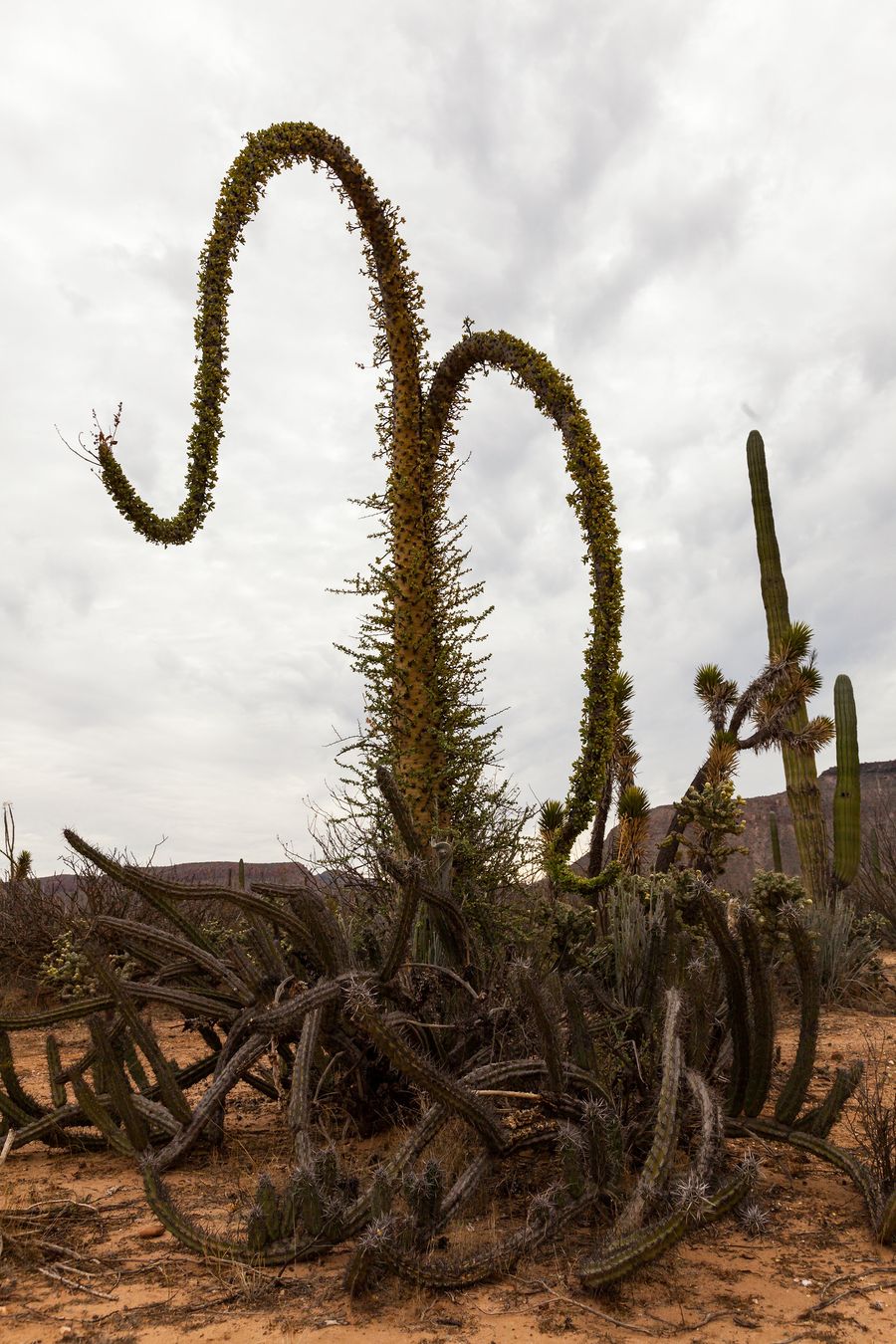
The boojum tree grows in the central portion of the Baja California Peninsula in Mexico and in a small area of the adjacent state of Sonora. Its shape is unlike any other tree: a single thick, tapering trunk rising up to 18 meters, covered in short, stubby lateral branches that project outward at odd angles and bear small leaves only when recent rain has occurred. The trunk tapers toward the top and often bends or curves with age, giving mature specimens a vaguely sinuous profile. In a landscape already defined by unusual plants, the boojum consistently looks out of place.
The plant is slow-growing and long-lived. Specimens established before European contact with Baja California are still alive and measurably growing. The trunk has a high water content — the species is a succulent — and its bark is pale, almost white, which reflects heat during the intense desert summers that define the region for most of the year.
Leaves appear quickly after rain and drop within weeks as the soil dries out again. The plant spends much of the year leafless, relying on limited photosynthesis through the green tissue of its bark to maintain basic function. The small, cream-colored tubular flowers appear at the tips of the branches during the summer monsoon season and are pollinated by insects and, to some extent, by hummingbirds.
The common name "boojum" was given by the botanist Godfrey Sykes, who encountered the tree for the first time in 1922 and named it after a fictional creature from Lewis Carroll's 1876 poem "The Hunting of the Snark." The name has stuck across a century of scientific literature, which is unusual for a common name. The formal name, Fouquieria columnaris, refers to its columnar shape and to the French physician Pierre Édouard Léon Fouquier, after whom the genus is named.
The boojum belongs to the family Fouquieriaceae, which also includes the ocotillo — a more familiar desert plant of the U.S. Southwest and Mexico. The two are the most structurally striking members of a small plant family that evolved in the hyperarid conditions of North American deserts.
Within its range, the boojum's population is considered stable. The central Baja California desert where it grows is sparsely inhabited and has not experienced the agricultural or industrial development pressure that threatens other desert ecosystems. It is protected under Mexican environmental law. The forests of boojum trees on the Pacific-facing slopes of the central peninsula — thousands of tilting, tapering columns rising from the desert floor — represent one of the most singular plant communities in the Americas, and one that exists nowhere else on Earth.