These are the functional strength benchmarks that indicate whether your body can do what daily life, emergencies, and aging will eventually ask of it
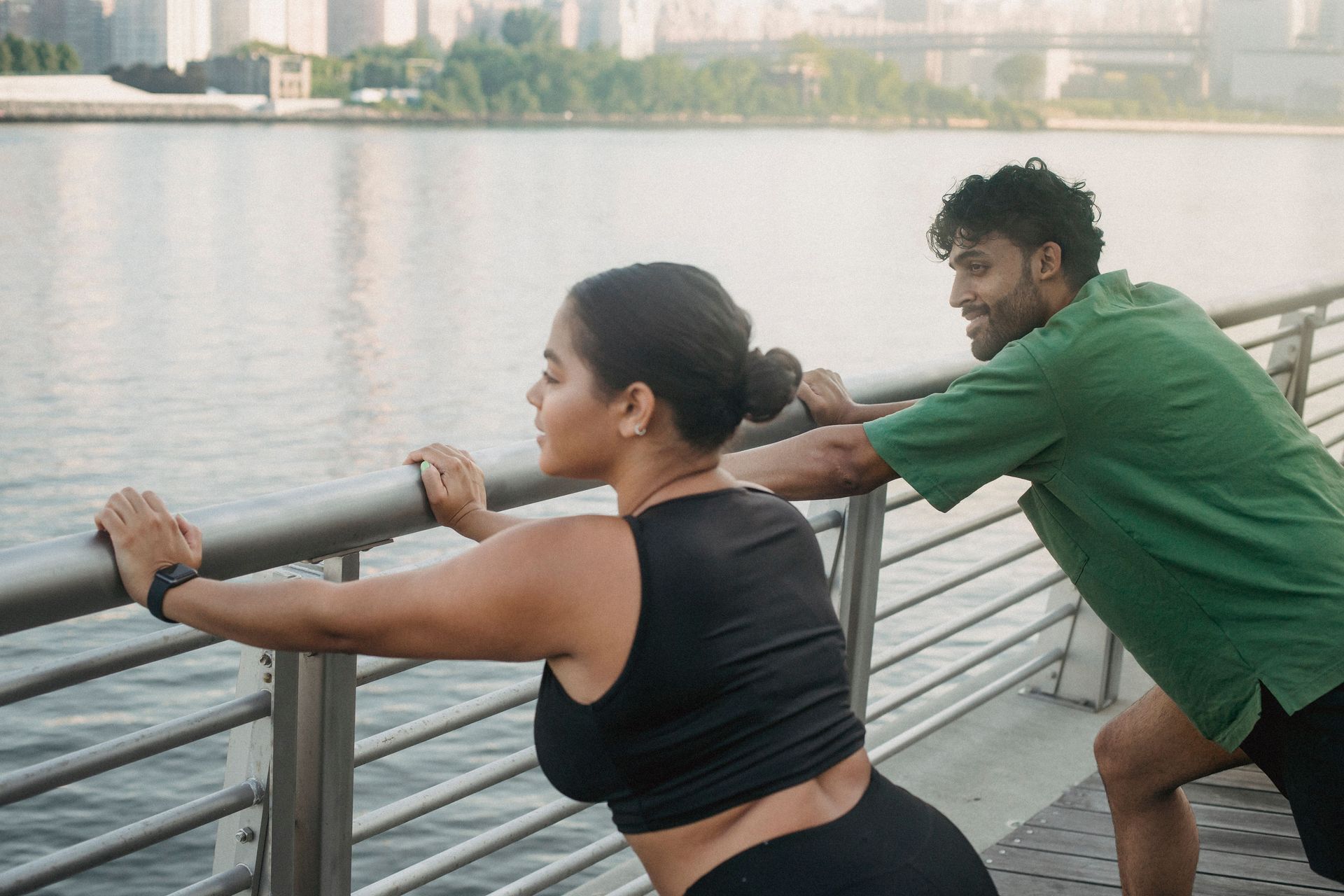
Ketut Subiyanto / Pexels
Strength is not one thing. The ability to bench press a large weight and the ability to get up off the floor without using your hands are both expressions of physical capacity, but they measure different things and predict different outcomes. The first predicts performance in a specific gym exercise. The second predicts the ability to recover from a fall, to get in and out of a vehicle without assistance, and to maintain the functional independence that most people take for granted until they lose it. They are not equally useful things to be able to do.
The exercises in this list are not selected for their impressiveness in a gym context. They are selected because they measure something real about how a body functions — or fails to function — in the contexts that actually matter. A person who can perform a single-leg squat on each side has demonstrated not just leg strength but the balance, stability, and neuromuscular coordination that prevent falls. A person who can hang from a bar for 60 seconds has demonstrated grip and shoulder strength that protects the rotator cuff, supports the spine, and makes carrying and climbing available options. A person who can perform a Turkish get-up has demonstrated the ability to move fluidly between the floor and standing — a capacity that becomes acutely relevant in the years when falling becomes a genuine risk.
None of the exercises here require a gym membership, specialist equipment, or an existing fitness background to attempt. Several require nothing but a floor. Several are genuinely difficult for people who have not trained them, and the difficulty is itself informative — it reveals specific capacity gaps whose correction produces meaningful improvements in functional ability. The goal is not to complete a checklist of achievements but to understand what each exercise measures and to use that understanding to identify where targeted work would produce the most return.
Each slide covers the exercise, what it measures, the standard that represents functional competence (not peak performance), and the specific physical qualities whose absence makes it difficult. The standards given are for healthy adults without injury or significant physical limitation; they are not appropriate benchmarks for people with joint conditions, injuries, or other health considerations, for whom individual assessment by a qualified professional is the correct starting point.
RDNE Stock project / Pexels
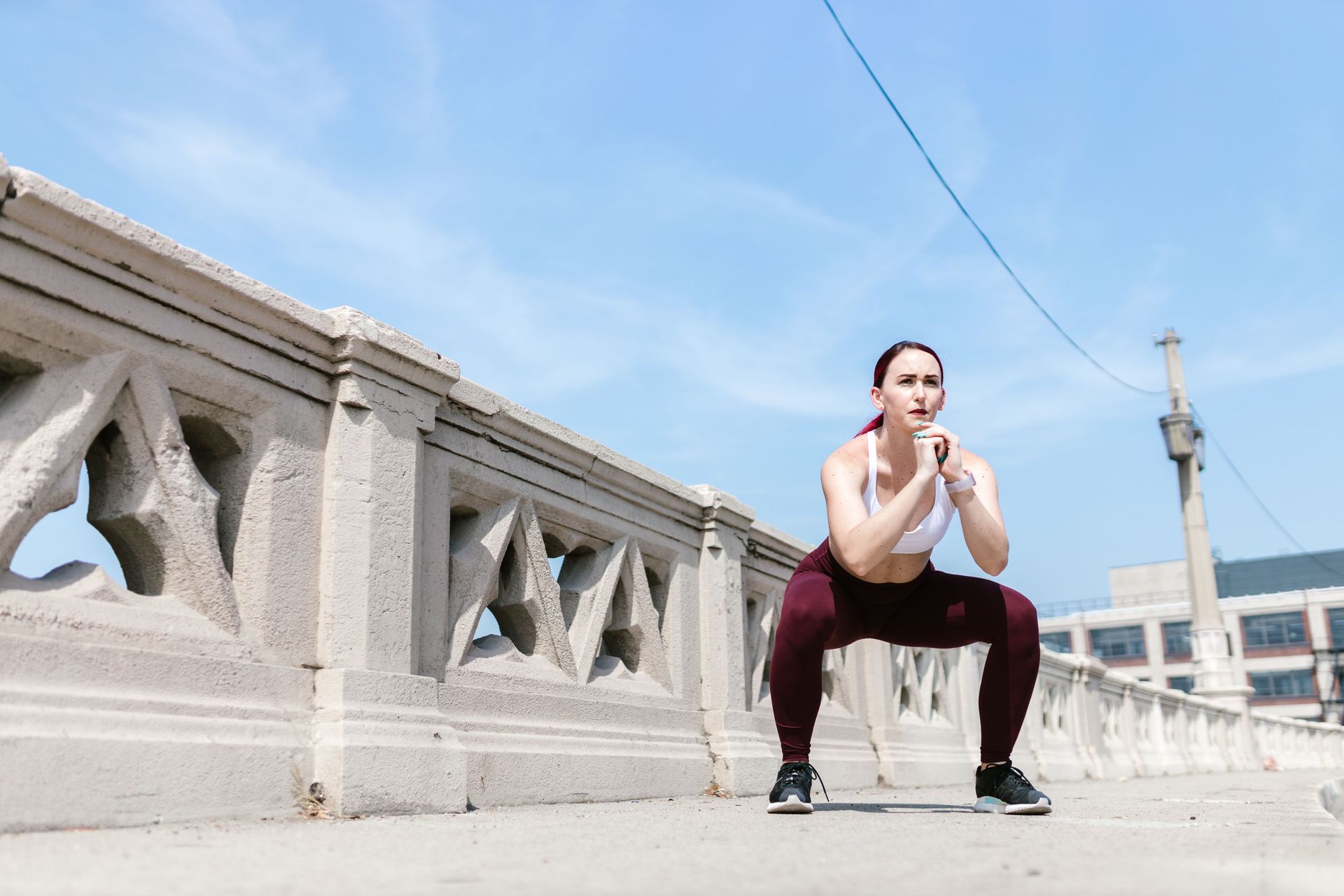
The bodyweight squat — standing with feet shoulder-width apart, toes slightly turned out, and lowering the hips until the thighs are at least parallel to the floor, then standing back up — is the foundational lower-body movement pattern and the exercise whose quality most directly reveals the functional state of the hips, knees, ankles, and the neuromuscular system that coordinates them. It is the movement involved in sitting down and standing up, in picking objects up from low positions, and in the deceleration and acceleration demands of most physical activities.
What the bodyweight squat measures: hip mobility (whether the hips can flex sufficiently to lower the torso without the pelvis tilting backward in a compensatory motion called butt wink), ankle mobility (whether the ankles can dorsiflex sufficiently to allow the knees to track over the toes without the heels rising), knee stability (whether the knees track appropriately over the toes or collapse inward in a valgus pattern), and the basic strength of the quadriceps, glutes, and hamstrings sufficient to control the descent and power the ascent.
The functional standard: 20 consecutive bodyweight squats with the thighs reaching parallel or below, heels remaining on the floor, knees tracking over the toes, and the torso remaining upright rather than leaning excessively forward. This standard is accessible to most healthy adults with no training and serves as the baseline from which loaded squat variations develop.
The most common failure modes — heels rising (ankle mobility limitation), knees collapsing inward (hip abductor weakness and foot pronation), forward torso lean (hip flexor tightness limiting forward shin angle) — each point to a specific physical quality whose training improves both the squat and the functional movements it underpins.
Miguel González / Pexels
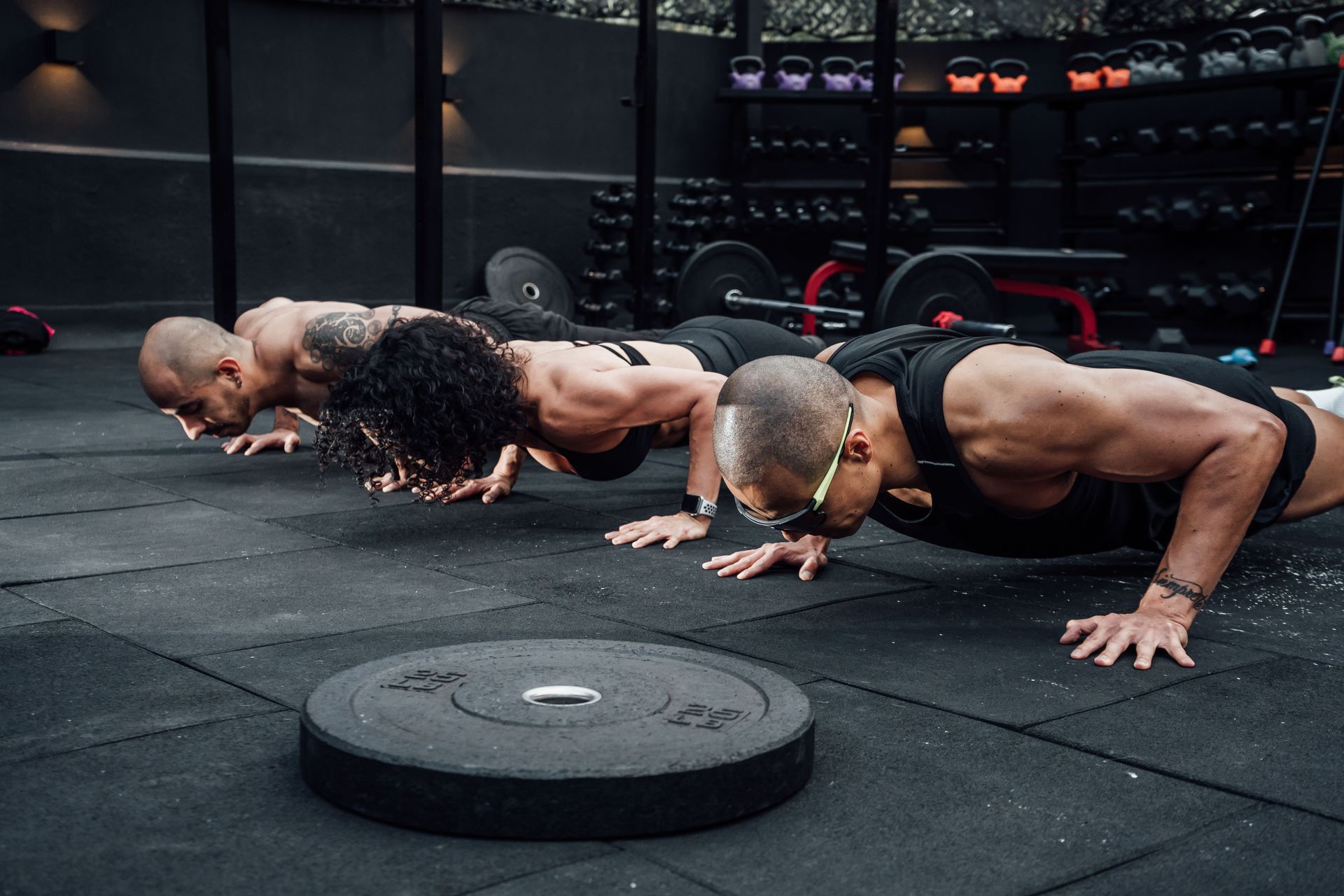
The push-up — a bodyweight pressing exercise performed from a plank position, lowering the chest to the floor and pressing back to full arm extension — is the most widely used upper-body strength test in physical fitness assessment and one of the best single-exercise indicators of overall physical fitness in adults. It requires upper-body pressing strength, shoulder stability, core stability, and the ability to maintain a rigid body position through the full range of motion.
The push-up's value as a diagnostic tool comes from what it simultaneously tests. The pressing movement assesses chest, shoulder, and tricep strength. The plank position assesses core stability — the ability to maintain a neutral spine against the load of the body's weight. The shoulder position assesses rotator cuff integrity and scapular stability. A push-up done correctly reveals all of these simultaneously; a push-up done incorrectly (sagging hips, flared elbows, partial range of motion) reveals which component is the limiting factor.
The functional standard: 10 full-range push-ups for women, 15 for men, from toes (not knees), with the chest touching the floor and the arms fully extending at the top. These standards are deliberately modest — they represent functional competence rather than athletic performance. Research by Stefanos Kales and colleagues at Harvard found that men who could complete 40 or more push-ups had a significantly lower risk of cardiovascular events over a ten-year follow-up than those who could complete fewer than 10, suggesting that push-up capacity is a meaningful indicator of broader health.
The most informative failure mode is the inability to maintain a plank position throughout the movement — the sagging or piking of the hips that indicates core weakness rather than upper-body pressing weakness and that produces the lower-back stress associated with poor push-up form.
Ketut Subiyanto / Pexels
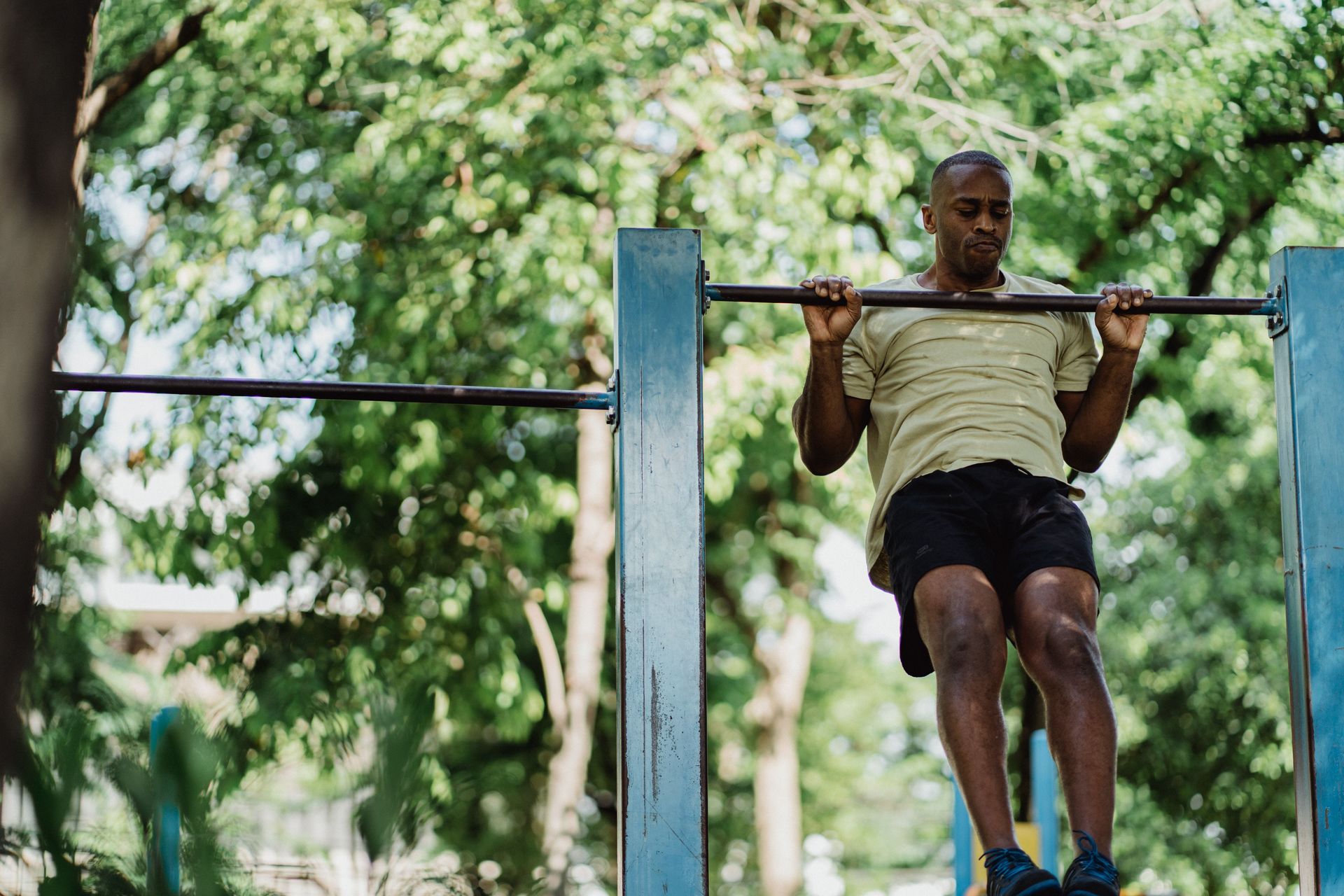
The pull-up — hanging from a bar with an overhand grip and pulling the chin above the bar — or chin-up (underhand grip, slightly easier due to greater bicep involvement) is the most demanding upper-body pulling exercise available without equipment other than a bar, and one of the most reliable indicators of relative strength — strength relative to body weight — in adults.
The pull-up is difficult for a substantial proportion of the adult population because it requires lifting the body's entire weight with the arms and back, and the strength-to-weight ratio required to do this is more demanding than for most common exercises. This difficulty is precisely why the exercise is informative: it reveals the relationship between upper-body pulling strength and body weight in a way that any loaded exercise cannot, because the load is fixed at bodyweight.
What the pull-up measures: lat, rhomboid, and bicep strength; shoulder stability under load; grip strength; and the core stability required to prevent swinging. The inability to perform a single pull-up typically reflects one of three things — insufficient upper-body pulling strength, unfavorably high body weight relative to strength, or both — and identifying which is the limiting factor guides the training response.
The functional standard: one full pull-up for women (chin clearly above the bar from a dead hang, with no kipping or swinging), three for men. These standards are lower than athletic performance standards but represent a meaningful functional baseline — the strength required to pull oneself up to a ledge, to climb, or to assist another person in an emergency situation.
Atlantic Ambience / Pexels
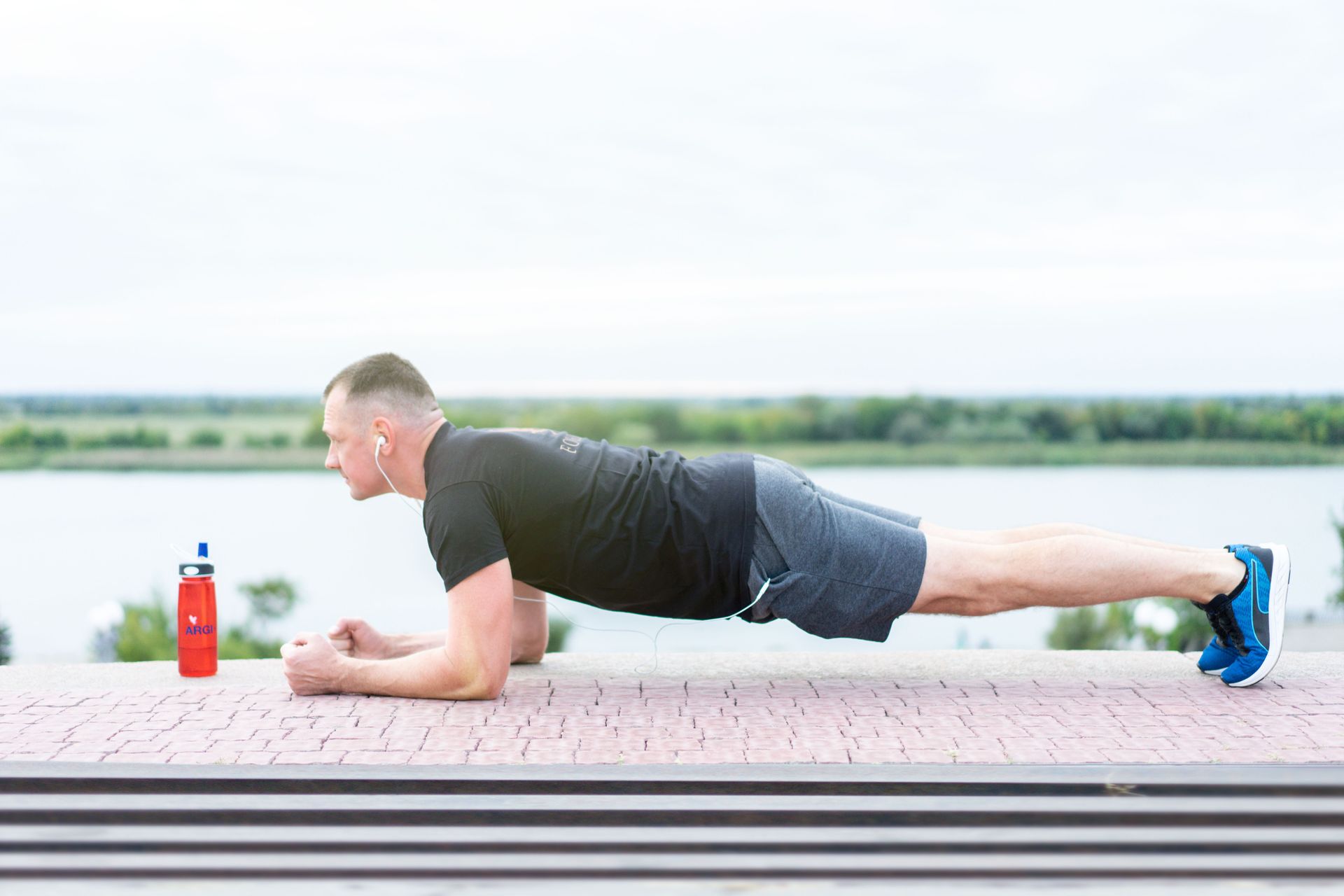
The plank — holding a push-up position (or forearm plank) with the body forming a rigid straight line from head to heels — is the most commonly used isometric core exercise and a reliable indicator of core endurance: the ability to maintain spinal stability under sustained load. It differs from dynamic core exercises in measuring endurance rather than strength, a quality that is arguably more relevant to the functional demands of daily movement than maximal core strength.
Core stability — the ability of the muscles surrounding the spine to maintain its position under load and movement — is the foundational physical quality that protects the lower back, enables efficient force transfer between the lower and upper body, and underlies the quality of virtually every other movement pattern. A plank hold is the most direct measurable expression of this quality in a standardized test.
The functional standard: a plank hold of 60 seconds with hips level (neither sagging toward the floor nor raised above the line of the body), core braced, and breathing maintained. Research on plank duration and lower back pain suggests that the ability to hold a plank for 90 to 120 seconds is associated with meaningful protection against low back injury, making 60 seconds a reasonable functional minimum rather than an ambitious goal.
The most informative failure mode is hip sag — the downward rotation of the pelvis and lower back under the sustained demand — which indicates that the hip flexors, abdominals, and lower back extensors are not providing the coordinated stabilization that the plank requires.
Ketut Subiyanto / Pexels
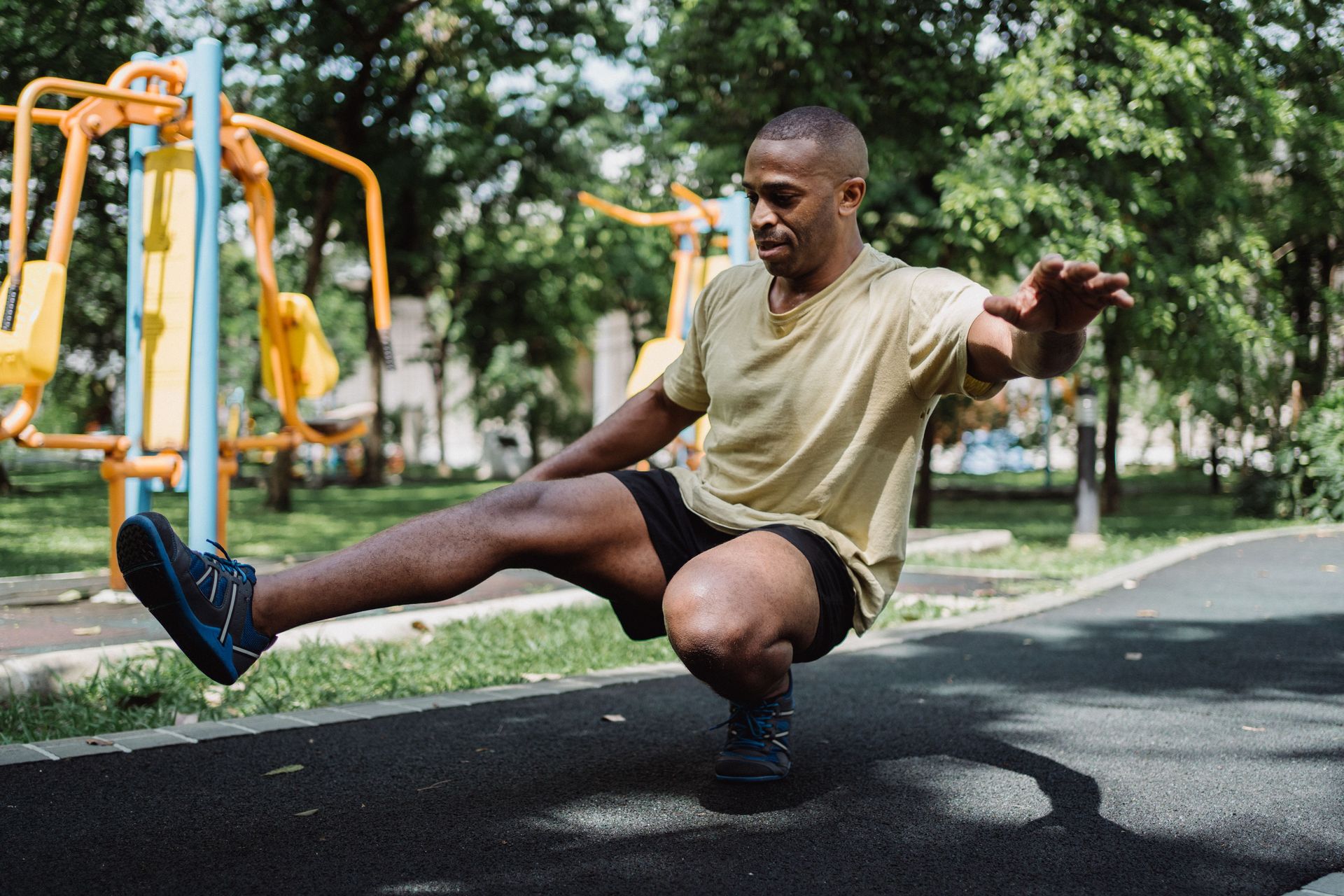
The single-leg squat — squatting on one leg while the other is held off the floor, lowering the hips until the standing leg's thigh approaches parallel, and standing back up — is significantly more demanding than a two-legged squat and measures qualities that the two-legged version cannot: single-leg stability, hip abductor strength, ankle stability, and the neuromuscular coordination required to perform lower-body movements on one limb.
The functional relevance of single-leg strength is direct. Every step in walking, every step in stair climbing, every landing from a jump, and every moment of single-leg support during running involves single-leg load bearing. A person whose single-leg strength and stability are insufficient for a controlled single-leg squat is a person whose single-leg loading during walking, stair climbing, and running is compensated by poor mechanics — typically hip drop, knee valgus, and trunk lean — that accumulate into the overuse injuries that are among the most common in physically active adults.
The functional standard: five controlled single-leg squats on each side with the standing knee tracking over the foot (not collapsing inward), the non-standing leg held forward (not used for balance), and the hip of the standing leg remaining level rather than dropping toward the non-standing side. This standard is genuinely challenging for most adults without specific training and reveals hip abductor weakness (particularly gluteus medius) that is one of the most common and most correctable functional deficits in the general population.
Cottonbro Studio / Pexels
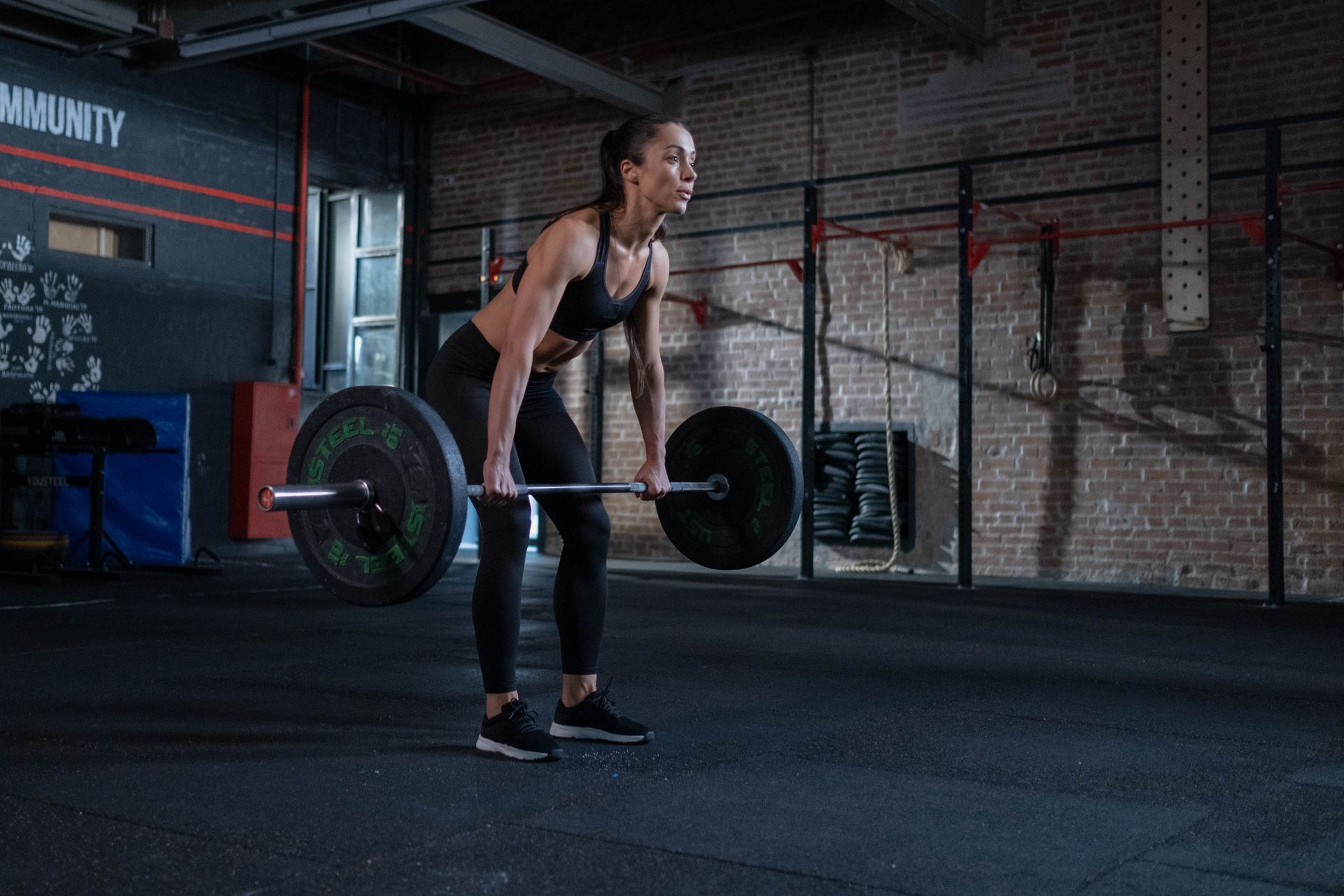
The deadlift — lifting a weight from the floor by extending the hips and knees from a hinged position — is the most direct expression of the hip hinge: the movement pattern involved in picking objects up from the floor, loading luggage into overhead compartments, lifting children, and any task requiring the application of force through an extended back. It is also the movement pattern whose absence from most people's physical practice is most directly responsible for the back injuries that occur when those same tasks are performed with poor mechanics.
The hip hinge is not the same as a squat. In a squat, the knees and hips flex simultaneously and approximately equally, with the torso relatively upright. In a hip hinge, the hips move backward as the torso lowers, with the back remaining rigid and the knees bending only slightly — the load is carried through the posterior chain (hamstrings, glutes, lower back) rather than through the quadriceps. Most adults who have not specifically trained the pattern default to a squat-like or rounded-back version of picking things up from the floor, loading the lumbar spine rather than the large posterior chain muscles that are designed to carry the load.
The functional standard: a Romanian deadlift with a load equal to bodyweight (or, for beginners, a hip hinge to touch the toes with neutral spine) — performed with flat back, hips hinging backward, and the bar (or hands) maintaining close contact with the legs throughout. The ability to pick up a bodyweight load from the floor with good mechanics is the practical expression of the posterior chain strength and movement pattern quality that the deadlift develops.
RDNE Stock project / Pexels
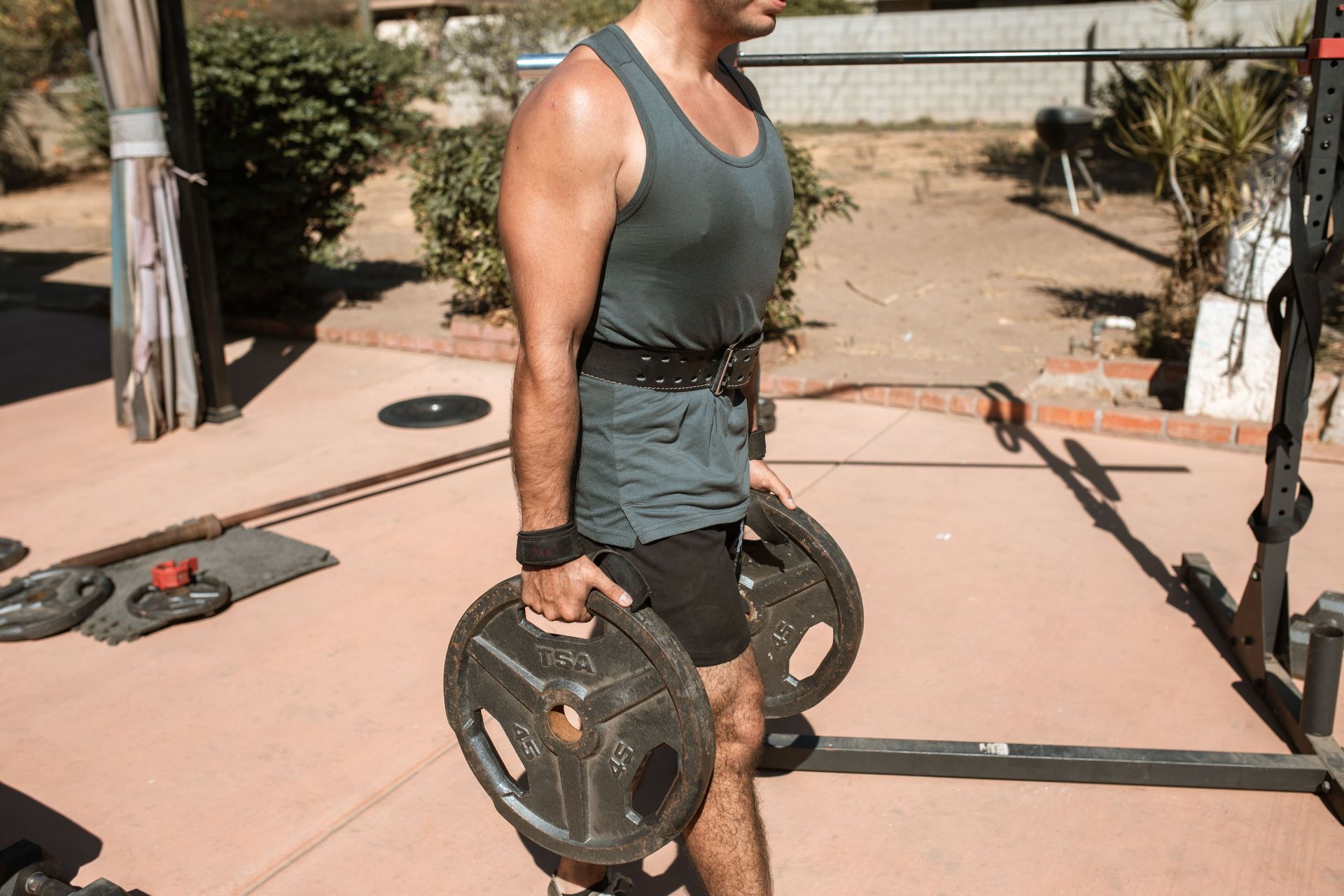
The farmer's carry — walking a distance while holding a weight in each hand, typically a kettlebell or dumbbell — is one of the most functionally applicable exercises available and one of the most revealing strength tests, because the grip, the shoulder, the core, and the lower body are all under load simultaneously in the exact configuration that carrying heavy objects requires.
The carry pattern is, quite literally, the act of carrying things. Groceries, luggage, furniture, children — the physical demands of daily life involve carrying objects at various weights over various distances, and the strength that makes this easy or difficult is exactly what the farmer's carry develops and tests. The exercise reveals grip endurance (how long the weight can be held before the hands give way), shoulder stability under sustained unilateral load, core stability against the lateral lean that an asymmetric or heavy load induces, and the cardiovascular fitness to sustain the effort.
The functional standard: a farmer's carry of half bodyweight per hand (so total load equal to bodyweight) for 30 meters. This standard requires significant grip and overall strength for most adults and represents a meaningful functional benchmark — the ability to carry substantial loads over a practical distance without compensatory movements (excessive trunk lean, shoulder drop, altered gait).
A single-arm variation — carrying one weight — adds an anti-lateral-flexion core demand that the bilateral version does not and is arguably more relevant to daily life, where most carried loads are unilateral (a shopping bag, a briefcase, a child on one hip).
Nataliya Vaitkevich / Pexels
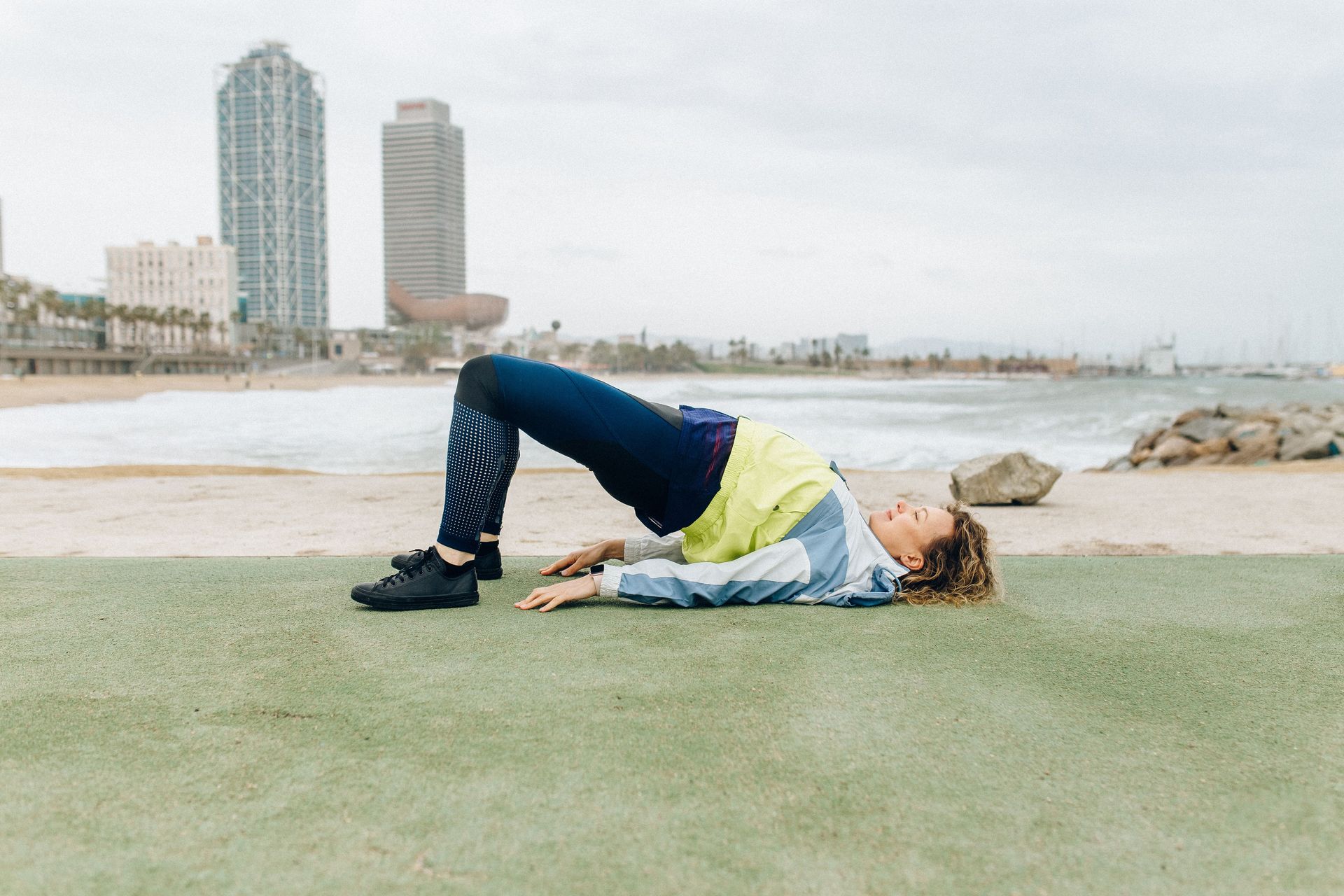
The glute bridge — lying on the back with knees bent, feet flat on the floor, and pressing the hips upward until the body forms a straight line from shoulders to knees — is the foundational glute activation exercise and a reliable indicator of the ability to extend the hips in isolation from the lower back, a distinction that is functionally important but frequently absent in people with chronic lower back pain and hip dysfunction.
The glutes — the gluteus maximus, medius, and minimus — are the largest and most powerful muscles in the body and the primary drivers of hip extension, the movement involved in standing from a squat, climbing stairs, running, and virtually every powerful lower-body movement. In many adults, the glutes are functionally inhibited — they do not activate efficiently during hip extension movements, with the hamstrings and lower back compensating — a pattern called gluteal amnesia, associated with prolonged sitting and the shortening of the hip flexors that reciprocally inhibits the glutes.
The glute bridge tests whether the glutes are activating correctly by placing them in a position where compensation by the hamstrings and lower back is minimized. A person whose glutes are firing correctly will feel the exercise primarily in the glutes and will be able to hold the top position with the hips fully extended and level. A person with gluteal amnesia will feel the exercise in the hamstrings or lower back and will struggle to maintain the hips at full extension.
The functional standard: 20 glute bridges with the hips reaching full extension and the core braced, progressing to a single-leg glute bridge (one leg extended straight, the other driving the bridge) as a more demanding variation that also tests single-leg stability.
Ron Lach / Pexels
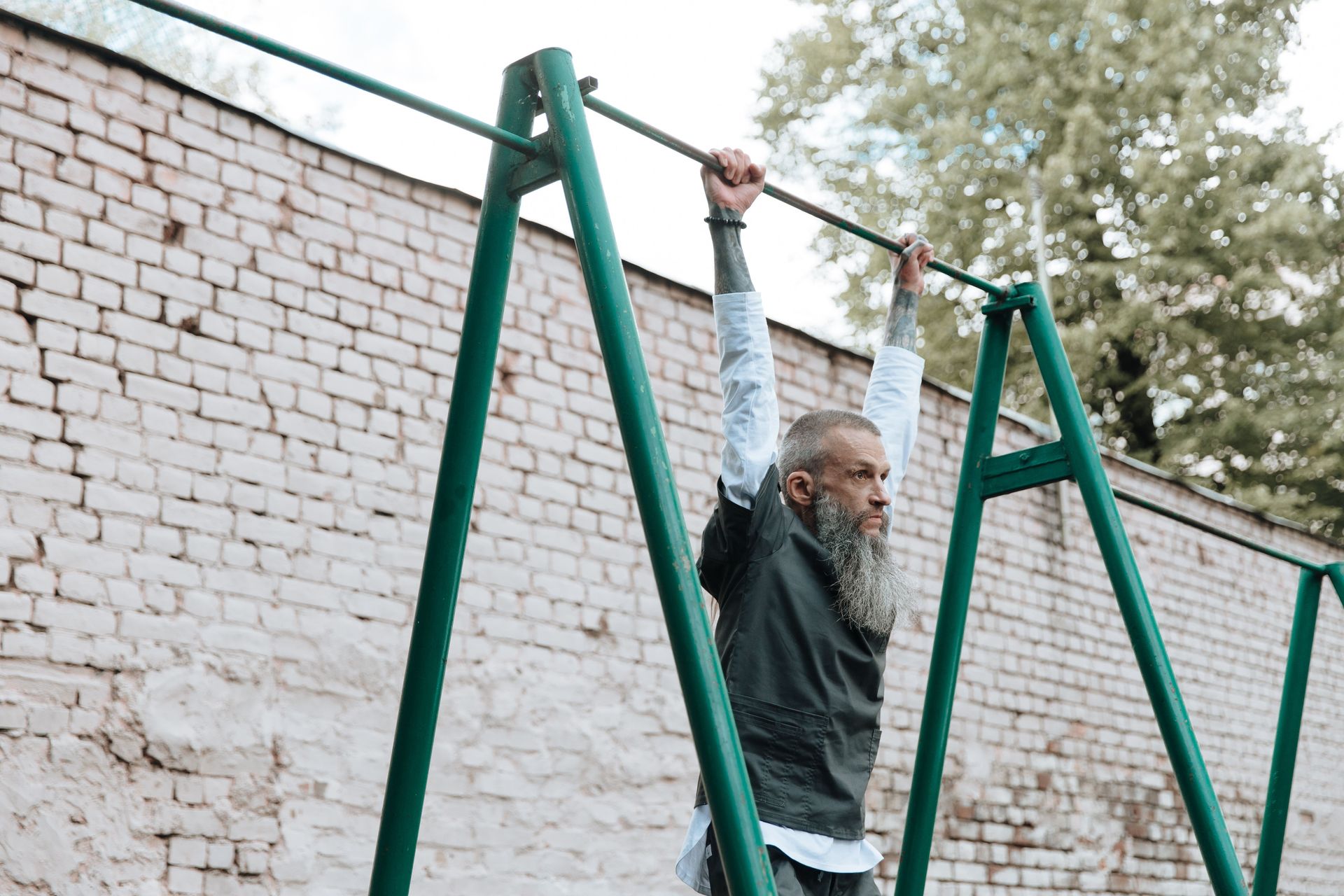
The dead hang — hanging from a bar with arms fully extended and the body relaxed — is one of the most underrated assessments in functional fitness, measuring grip strength, shoulder mobility, and shoulder girdle integrity in a position that decompresses the spine and reveals restrictions in shoulder overhead mobility that no other common test exposes.
The dead hang places the shoulder in full flexion and external rotation — the position of overhead reaching, of climbing, of helping someone up from the floor — and the ability to hang comfortably in this position indicates that the shoulder has the mobility, stability, and tissue capacity to function at end range. Many adults have restrictions in shoulder overhead mobility (from desk posture, previous injury, or simply disuse) that make the dead hang uncomfortable or impossible, revealing a limitation that contributes to shoulder impingement, rotator cuff dysfunction, and neck pain.
Grip strength — assessed by how long the hang can be sustained — is one of the most reliable predictors of all-cause mortality and functional decline in aging adults. A 2015 study in The Lancet found that grip strength was a stronger predictor of cardiovascular disease mortality than systolic blood pressure in a population of 140,000 adults across 17 countries. The dead hang loads grip in a sustained way that predicts the grip capacity relevant to carrying, climbing, and the physical demands of aging.
The functional standard: a dead hang of 30 seconds for women, 60 seconds for men. These standards are achievable for most healthy adults and represent a meaningful indicator of shoulder health and grip capacity.
Anna Shvets / Pexels
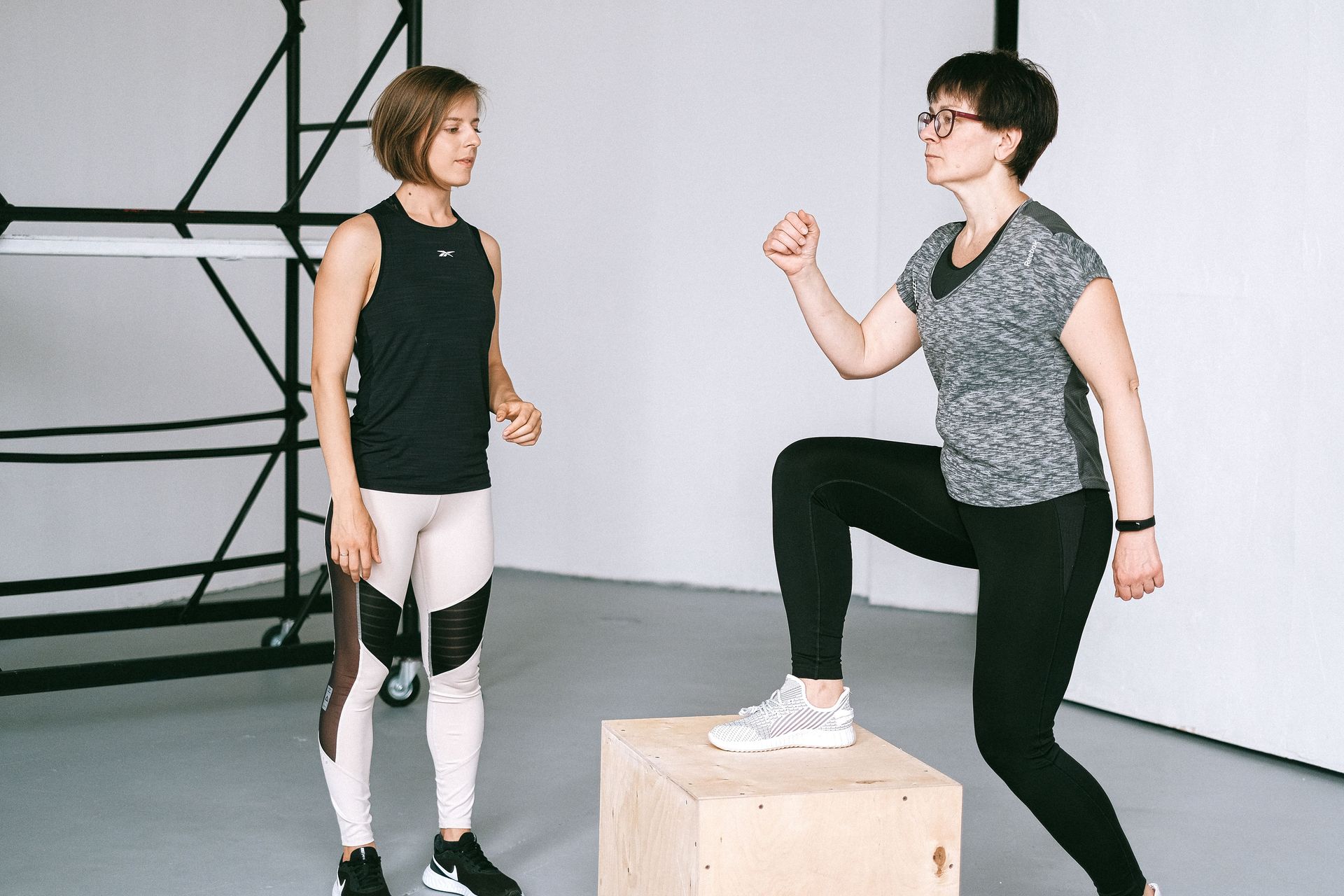
The box step-up — stepping onto a box or bench and driving to full hip and knee extension at the top before stepping back down — is the exercise that most directly replicates stair climbing and tests the single-leg pushing strength, balance, and hip stability required for it. It is less demanding than a single-leg squat while testing many of the same qualities, making it an appropriate assessment for people who are not yet ready for the single-leg squat standard.
What the step-up reveals is the quality of the transition between single-leg loading phases — the stability at the moment of weight transfer, the ability to drive to full extension on the standing leg, and the control of the descent. The most common failure modes are pushing off the trailing foot (using both legs rather than the standing leg alone), the forward trunk lean that indicates hip extensor weakness, and the knee valgus (knee collapsing inward) that indicates hip abductor insufficiency.
The functional standard: 15 step-ups on each leg using a box or bench at knee height, with the working leg doing all the work (trailing foot lifted from the ground before driving to the top) and the torso remaining upright throughout. The height of the box — at knee height — represents the approximate height of a standard stair, making the standard directly applicable to one of the most common physical demands of daily life.
Thiago / Pexels
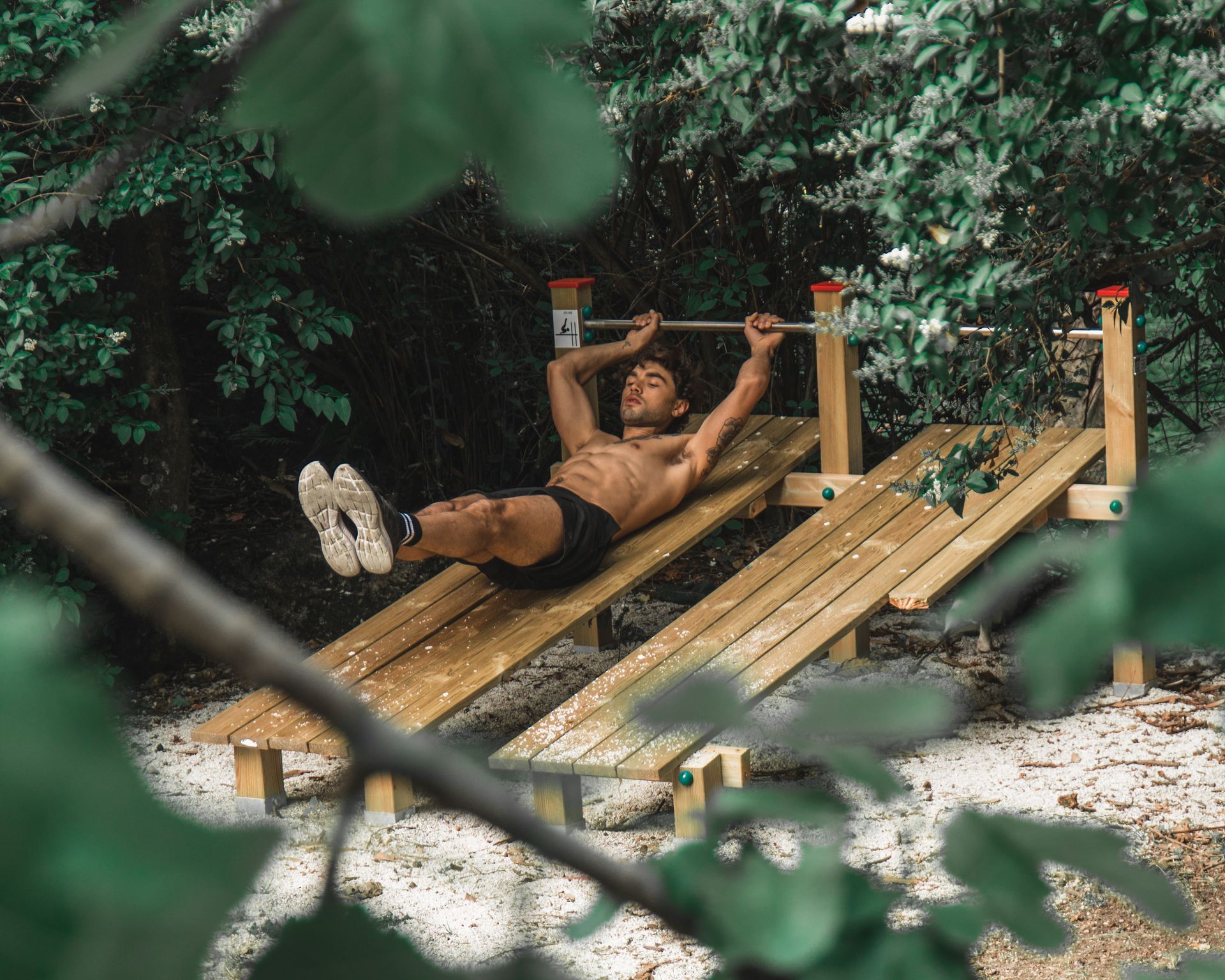
The hollow body hold — lying on the back with the lower back pressed into the floor, arms extended overhead, legs straight and raised a few inches off the floor — is the foundational gymnastic core exercise and a more demanding and more specific assessment of core stability than the plank, because it requires the anterior core (abdominals) to resist the extension load of the extended arms and legs simultaneously while maintaining lumbar contact with the floor.
The hollow body position is the fundamental body shape from which most gymnastic movements originate, but its relevance extends beyond gymnastics to any activity requiring the transfer of force through a stable midline. Running, throwing, carrying, climbing — all require the same anterior core engagement that the hollow body hold demands, and the inability to maintain the position reveals a core weakness that affects the efficiency and safety of these movements.
What makes the hollow body hold diagnostically valuable is the strictness of the standard — the lower back must be in contact with the floor throughout, which eliminates the lower back arching that allows people to pass a plank test with insufficient abdominal strength compensated by lumbar extension. The hold is honest in a way that the plank, which can be cheated by raising the hips slightly, is not.
The functional standard: a hollow body hold of 30 seconds with the lower back flat on the floor, arms extended overhead, and legs straight at approximately 30 to 45 degrees from the floor. Progressions involve lowering the legs toward the floor to increase the lever arm and the demand on the anterior core.
The Turkish get-up — moving from lying flat on the floor, arm extended, to standing, while maintaining a weight overhead throughout — is the exercise on this list most directly relevant to the ability to get up from the floor, a capacity that is among the most reliable predictors of mortality in adults over 50 and that declines significantly without specific training in the decades from 40 onward.
The get-up is not a single movement but a complex sequence of movements — rolling to the elbow, pressing to the hand, bridging the hips, sweeping the leg through, kneeling, and standing — that requires simultaneous expression of shoulder stability, hip mobility, core stability, and the ability to coordinate multi-joint movement through a full range of motion. Its diagnostic value comes from the number of physical qualities it assesses simultaneously: a failure at any point in the sequence reveals which quality is the limiting factor.
The Sitting Rising Test (SRT), developed by Brazilian physician Claudio Gil Araújo and published in the European Journal of Preventive Cardiology in 2012, found that the ability to sit on the floor and rise without using the hands, knees, or forearms was significantly associated with mortality in adults over 50 — those who scored lowest on the test had a mortality rate five times higher than those who scored highest, controlling for age. The Turkish get-up is a more controlled and more easily standardized version of the same fundamental assessment.
The functional standard: one full Turkish get-up on each side with a light weight (a shoe, a glass of water, a small dumbbell), moving through the full sequence without the weight dropping and without pain. The weight is intentionally light — the movement quality, not the load, is the assessment.
Polina Tankilevitch / Pexels
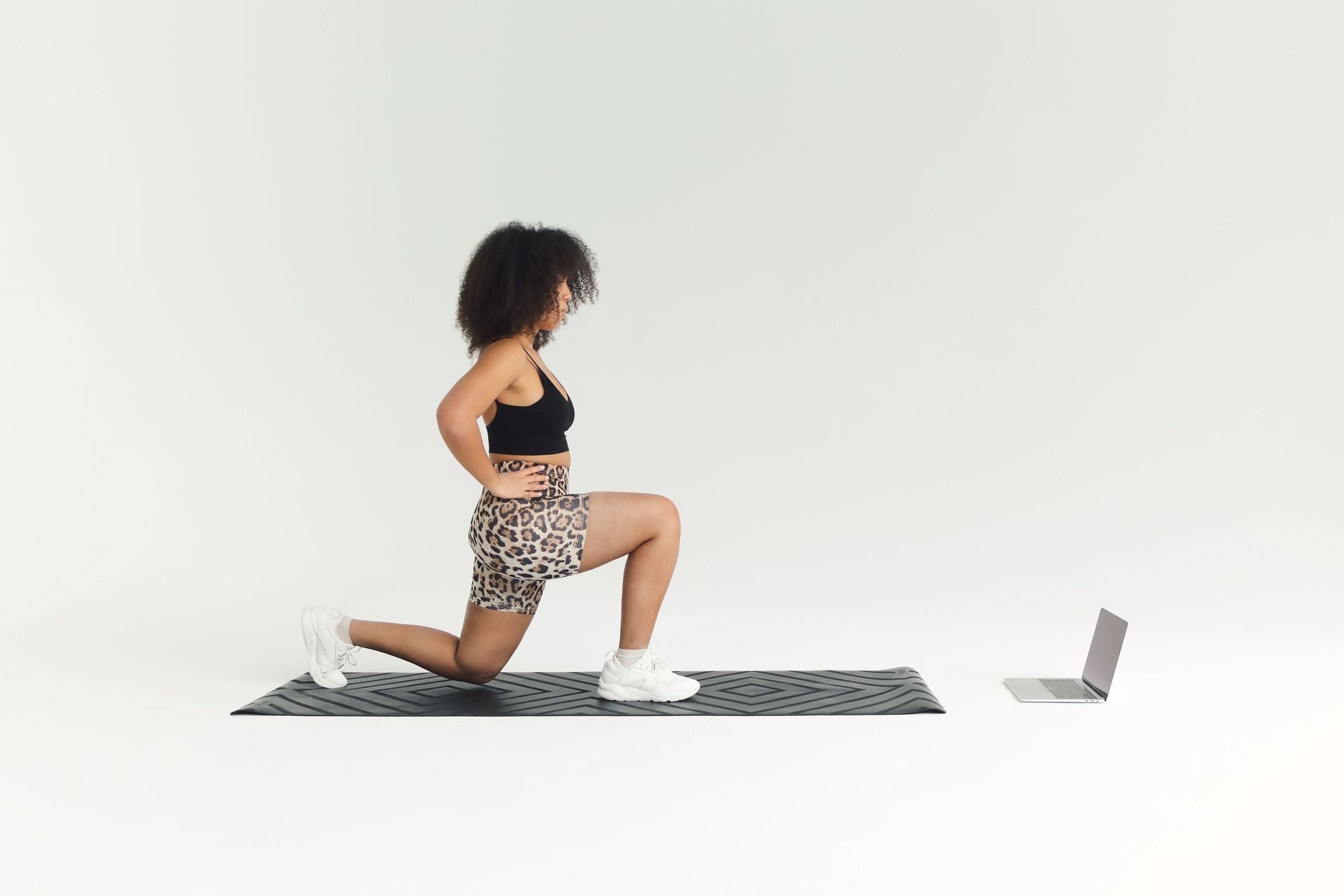
The hip flexor stretch — a deep lunge position with the rear knee on the floor and the pelvis posteriorly tilted (tucked under) to create a stretch in the front of the hip — is included not as a strength exercise but as a mobility assessment and corrective practice that has significant implications for lower back health, posture, and the quality of nearly every lower-body strength exercise on this list.
Tight hip flexors — particularly the iliopsoas, which attaches from the lumbar vertebrae to the femur and is the primary hip flexor — are among the most common movement restrictions in adults who sit for extended periods. When the hip flexors are shortened from prolonged sitting, they pull the pelvis into anterior tilt (forward tilt, increasing lumbar lordosis) and inhibit the gluteal muscles that are their functional antagonists. The combination produces the lower back pain, knee pain, and movement dysfunction that are among the most common complaints in physically active adults.
The hip flexor assessment: in a deep lunge with the rear knee on the floor and the pelvis tucked under, can the rear hip extend fully with the torso upright, without the lower back arching forward to compensate? The inability to achieve this position — the lunge position that resembles a genuine stretch rather than a shallow approximation of one — indicates hip flexor tightness that is functionally limiting.
The functional standard: the ability to hold a deep hip flexor lunge with the pelvis tucked under for 30 seconds on each side, without significant discomfort and without the lower back arching. Regular practice of this position, for two to three minutes per side per day, produces the hip extension mobility that makes the squat, deadlift, and single-leg exercises on this list both safer and more effective.
Vitaly Gariev / Pexels
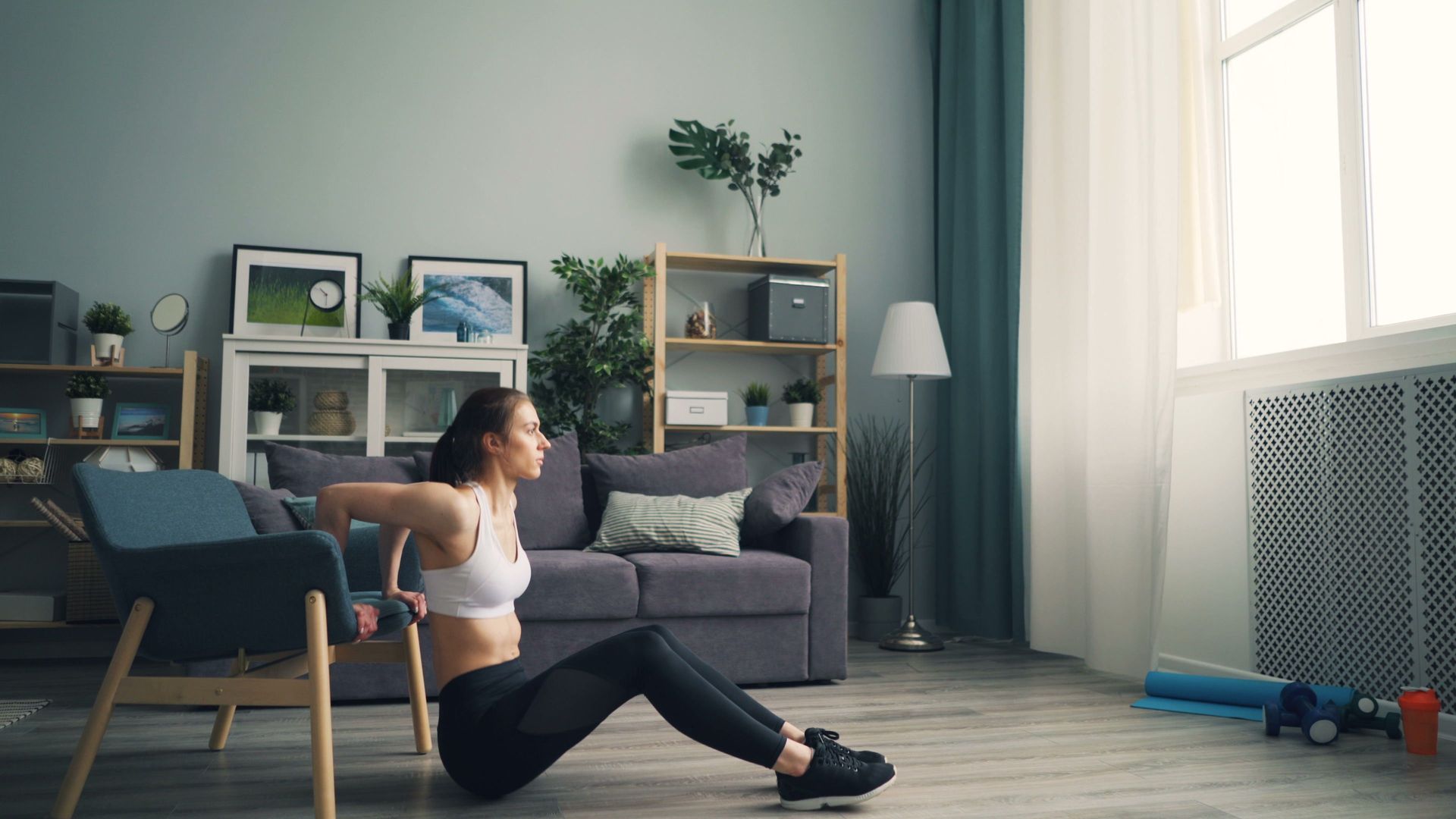
The dip — pressing the body up from a low position between two parallel bars or between two chairs, then lowering back down under control — is one of the most effective bodyweight exercises for the triceps, anterior deltoid, and chest, and a reliable indicator of shoulder stability and upper-body pressing strength at the end of the range of motion where most shoulder injuries occur.
The dip places the shoulder in a position of extension and external rotation — the position of pushing off a surface, of helping oneself up from a low seat, and of the pushing movements involved in many physical tasks — and the ability to control the load through the full range of motion indicates that the shoulder girdle is stable and strong enough to manage that position under bodyweight load.
The functional relevance of dip strength extends to the everyday acts of pushing off from armrests to stand, pushing open heavy doors, and the upper-body contribution to getting up from the floor. It measures a pressing quality at a body position — with the arms at or behind the torso — that the push-up does not address, making it a complementary rather than redundant assessment.
The functional standard: five full-range dips (chest at bar height at the bottom, arms fully extended at the top) without excessive forward trunk lean, which shifts load toward the chest at the expense of the triceps and is typically used to compensate for insufficient tricep strength. A chair dip variation — performed between two chairs at home — produces a comparable assessment in the absence of parallel bars.
The seated floor rise — sitting cross-legged on the floor and standing up without using the hands, knees, or forearms as support — is the direct expression of the physical quality that the Turkish get-up develops and that the Sitting Rising Test assesses: the ability to transition between the floor and standing without external assistance.
This ability is directly relevant to independence in aging, to recovery from falls, and to the confidence of physical mobility in daily life. Adults who cannot get up from the floor without assistance are adults whose range of safe movement is constrained in a specific way — they avoid sitting on the floor, they are anxious on low surfaces, and a fall produces a dependence on others for recovery that a person who can floor-rise independently does not experience.
The Sitting Rising Test score — on a scale of 0 to 5, where points are deducted for each use of a hand, knee, or forearm — predicts mortality with sufficient reliability that it has been proposed as a simple clinical screening tool for functional fitness in mid-life and older adults. The underlying physical qualities that the test measures — hip and ankle mobility, lower body strength, core stability, and balance — are the same qualities that decline earliest with sedentary aging and respond most reliably to specific training.
The functional standard: the ability to sit cross-legged on the floor and stand up without any support from hands, knees, or forearms — a score of 5/5 on the SRT. This is achievable for most healthy adults under 50 with no specific training, and its difficulty for those over 50 who have not maintained their mobility is a direct measure of the functional decline that sedentary aging produces.
The Pallof press — standing sideways to a cable machine or resistance band, pressing the handle away from the chest and resisting the rotational pull of the load — is not a pushing exercise but an anti-rotation exercise: it measures and develops the ability of the core to resist rotational forces, a quality that is fundamental to athletic performance and daily movement but that most common core exercises do not specifically address.
The core's primary function in most human movement is not to produce rotation or flexion but to resist them — to provide a stable platform against which the limbs can produce force. A golfer's swing, a tennis backhand, a throw, a punch, a step carrying a heavy load all require the core to resist the reactive rotational forces produced by the limbs while simultaneously transmitting force between the lower and upper body. The plank and hollow body hold test resistance to extension; the Pallof press tests resistance to rotation.
What the Pallof press reveals is whether the core can resist a rotational load without the hips or shoulders rotating toward the load source. The most common failure mode is the rotation of the torso toward the band or cable — the hips and shoulders turning in the direction of the pull — which indicates that the anti-rotation core muscles (obliques, transverse abdominis) are not providing the resistance required. This failure is visible and immediately correctable through appropriate load reduction.
The functional standard: a Pallof press hold of 30 seconds on each side at a moderate load, with the torso remaining perpendicular to the load source and neither rotating nor laterally flexing throughout. This standard is achievable for most adults with some basic fitness and represents a meaningful functional core capacity.
Gustavo Fring / Pexels
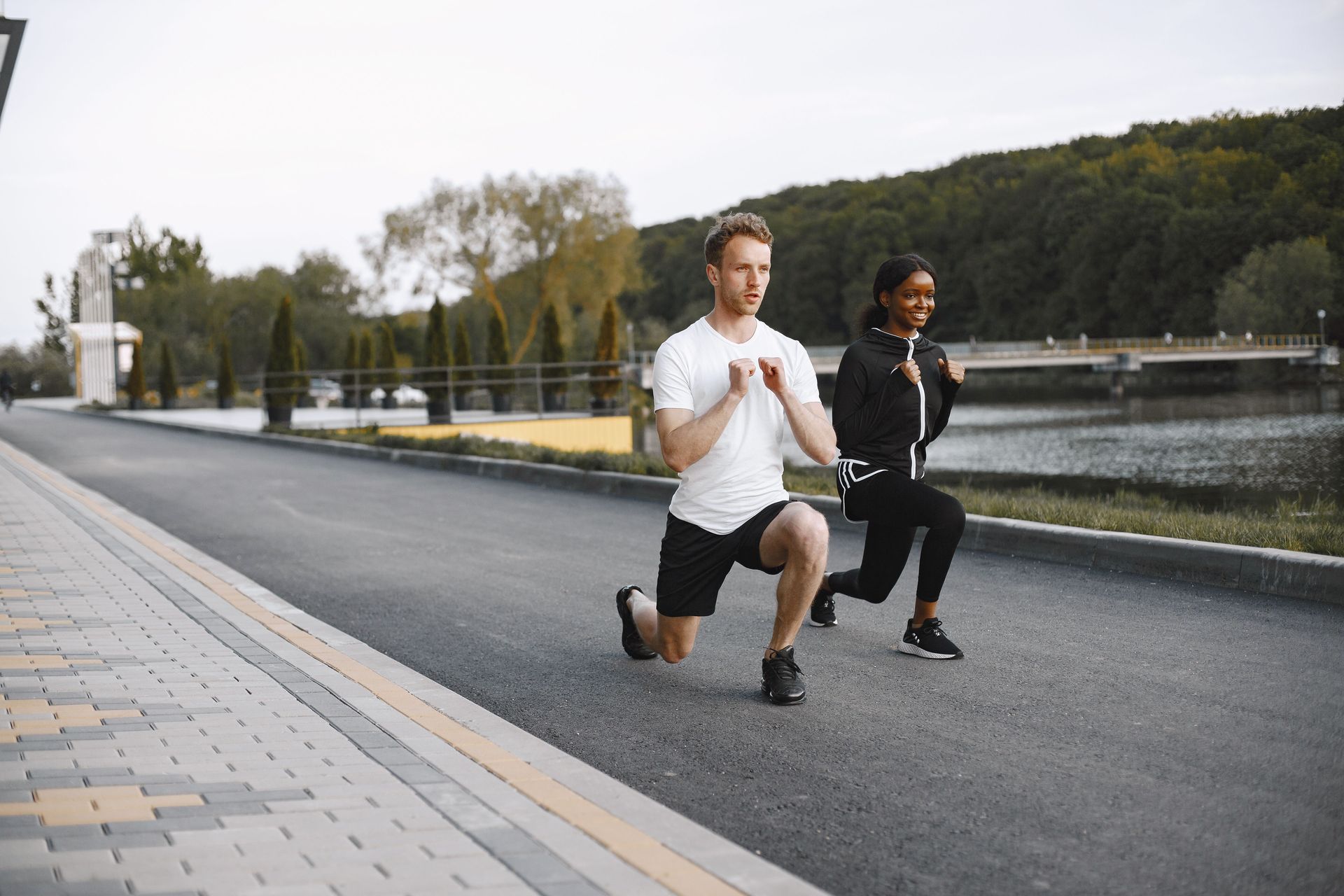
The reverse lunge — stepping backward into a lunge, lowering the rear knee toward the floor, and driving back to standing — is the most joint-friendly lunge variation and the one most directly applicable to the single-leg stability demands of descending stairs, stepping backward, and the reactive single-leg loading that occurs during most activities of daily life.
The reverse lunge is preferred over the forward lunge for its more favorable knee mechanics: stepping backward reduces the shearing force on the front knee compared to stepping forward, making it more appropriate for people with knee sensitivity and more reflective of the deceleration demands of descending stairs (where the body is lowering in a similar pattern). It also more effectively loads the glutes and hamstrings of the front leg, rather than distributing load primarily to the quadriceps.
What the reverse lunge assesses: hip flexor mobility of the rear hip (the ability to extend the rear hip fully without arching the lower back), single-leg stability of the front leg (resistance to knee valgus and trunk lean), glute and quadricep strength of the front leg, and balance. Each of these qualities is individually assessable from the movement, making the reverse lunge a diagnostic as well as a training tool.
The functional standard: 12 controlled reverse lunges on each leg, with the front knee tracking over the toes, the torso upright, and the rear knee lowering to within two to three centimeters of the floor without touching it. The control of the descent — not allowing the rear knee to drop suddenly — is the most informative element of the movement quality assessment.
The superman hold — lying face down on the floor and lifting the arms, chest, and legs simultaneously off the floor — is the bodyweight assessment of posterior chain endurance: the ability of the spinal erectors, glutes, and upper back muscles to hold the extended position against gravity. It is the complement to the hollow body hold and the plank, which test the anterior and lateral core respectively.
The posterior chain — the muscles running up the back of the body from the calves through the hamstrings, glutes, and spinal erectors to the upper back — is the body's primary force producer in extension movements (standing up, climbing, jumping) and the primary protector of the spine in loaded and unloaded positions. Its endurance, rather than its maximal strength, is the quality that most directly determines lower back health in daily life — the back goes wrong not typically because a maximum-effort lift is attempted but because the sustained low-level activity of maintaining posture, carrying objects, and moving through a day depletes posterior chain endurance before the day is over.
The superman hold assesses whether the posterior chain muscles can sustain an extended position for a practically relevant duration, and the failure of the hold — the gradual lowering of the limbs as the muscles fatigue — reveals the endurance limitation directly.
The functional standard: a superman hold of 30 seconds with the arms, chest, and legs held off the floor simultaneously. This standard is challenging for most adults without specific posterior chain training and reveals the same lower back endurance deficit that contributes to the end-of-day lower back fatigue common in people who stand or sit for extended periods.
Mikhail Nilov / Pexels
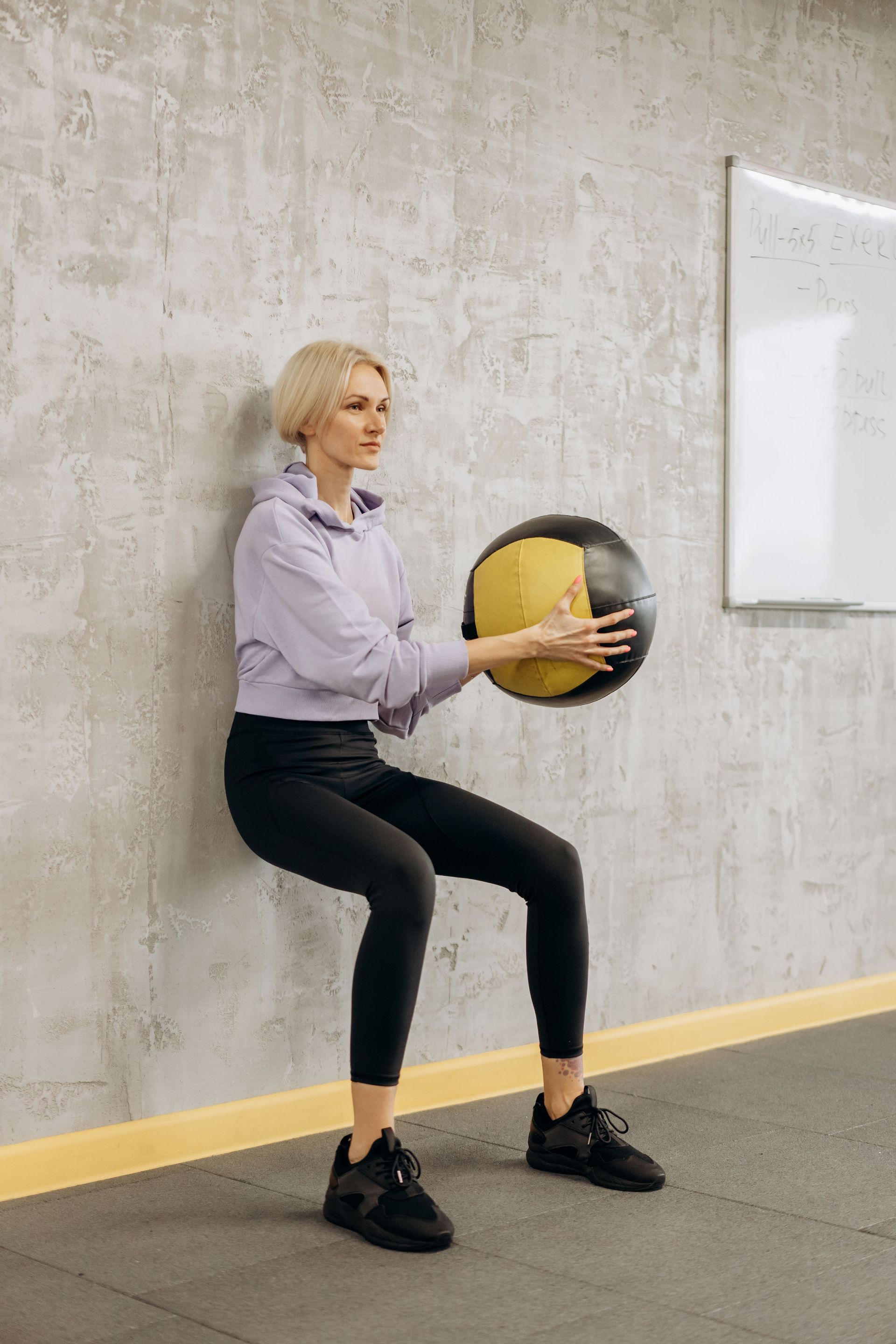
The wall sit — sliding down a wall until the thighs are parallel to the floor and holding the position — is a pure test of quadricep isometric endurance: the ability of the thigh muscles to maintain a loaded position without movement. It is the isometric equivalent of the squat and measures the endurance quality that underlies the ability to sustain lower-body effort over time — stair climbing, long walks, hiking, standing from a crouch.
Quadricep endurance is distinct from quadricep strength. A person with strong but low-endurance quads can produce a powerful single leg press but fatigues quickly during sustained activity. A person with high quadricep endurance maintains performance across repeated efforts and resists the fatigue that degrades movement quality and increases injury risk as an activity continues. The wall sit, which cannot be cheated by increasing effort momentarily, tests the endurance quality directly.
The functional standard: a wall sit of 60 seconds with the thighs parallel to the floor (not above parallel, which reduces the demand significantly) and the back flat against the wall. The thigh angle is the most commonly compromised element — allowing the thighs to rise above parallel reduces the range of motion and the demand on the quadriceps substantially, producing a comfortable position that does not assess the relevant quality.
Wall sits are also used clinically as an outcome measure in knee rehabilitation — the ability to hold a 60-second wall sit at a 90-degree knee angle is often a milestone in return-to-activity protocols following knee surgery, reflecting the clinical recognition that quadricep endurance at this angle is functionally meaningful.
Amar Preciado / Pexels
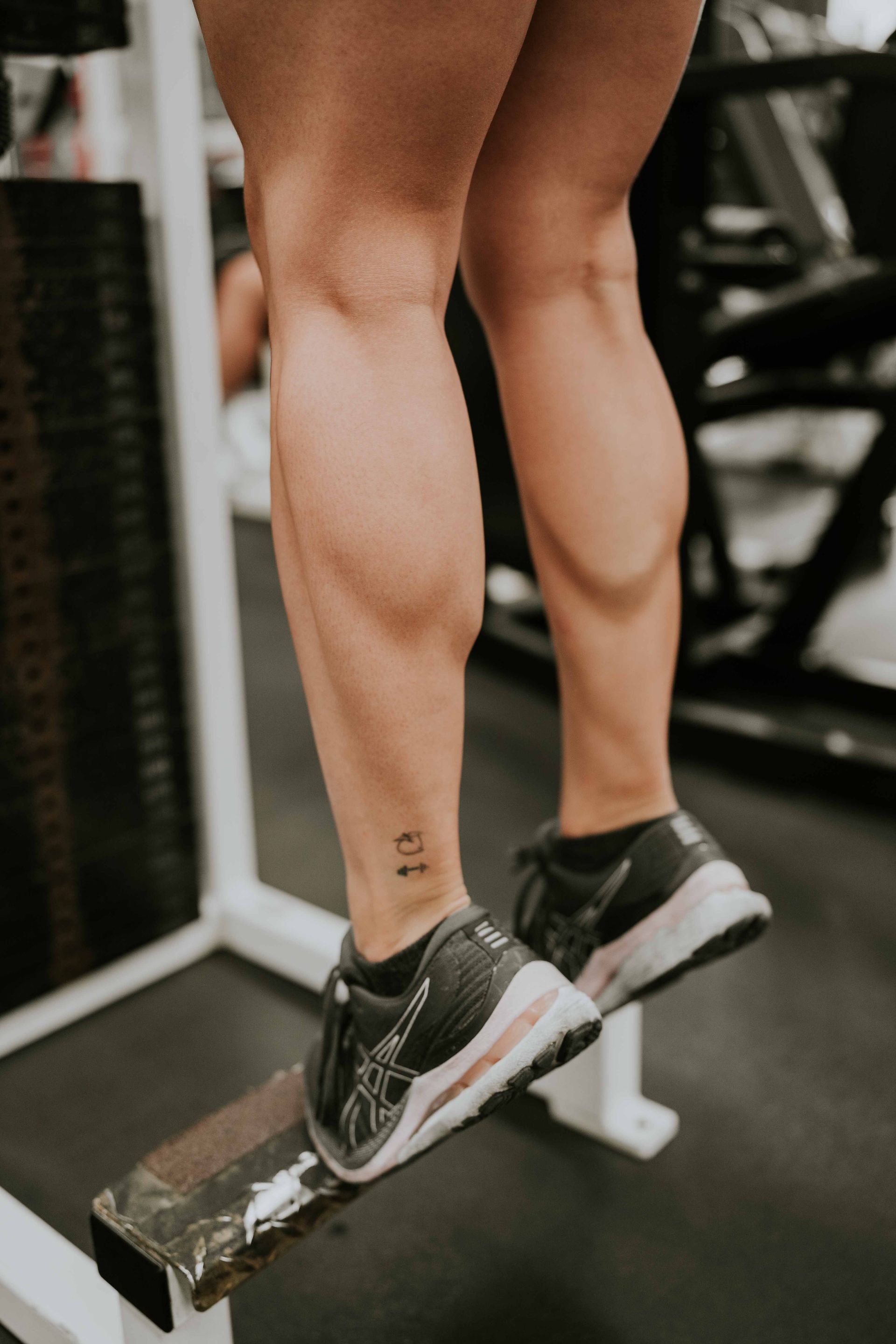
The calf raise — standing on one or both feet and rising to the toes, then lowering under control — is one of the most neglected strength exercises in general fitness programming and one of the most functionally relevant, particularly for running economy, ankle stability, and the resistance to the Achilles tendon and plantar fascia injuries that are among the most common in active adults.
The calf complex — the gastrocnemius and soleus — is the primary propulsive muscle of walking and running, generating the force that pushes the body forward with each step. Its strength and endurance determine the energy efficiency of locomotion, the ability to maintain pace and gait quality over extended distances, and the protection of the Achilles tendon and plantar fascia from the repetitive stress that accumulates over a walking or running lifetime.
Single-leg calf raises are the appropriate assessment because bilateral calf raises can be compensated by the stronger leg — the deficit in the weaker side is invisible. The single-leg version isolates the calf of the assessed leg and exposes the asymmetry that bilateral testing conceals.
The functional standard: 25 single-leg calf raises on each leg, performed through the full range of motion (heel lowering below the standing surface to the stretched position at the bottom, full rise to tiptoe at the top). This standard is achievable for most healthy adults and represents the calf endurance associated with normal walking and running mechanics. The inability to complete 25 single-leg raises indicates a calf strength deficit that is associated with increased Achilles tendon and plantar fascia injury risk.
The bear crawl — moving on all fours with the knees hovering just off the floor, maintaining a flat back and engaged core, coordinating opposite arm and leg movements — is a developmental movement pattern whose presence or absence reveals the quality of the contralateral coordination that underlies walking, running, and most human locomotion.
The bear crawl is not a strength exercise in the conventional sense but a movement quality assessment that reveals coordination, shoulder stability, hip stability, and the ability to maintain core position under the dynamic load of moving all four limbs simultaneously. It is one of the foundational movements in the Original Strength and Functional Movement Screen systems, included because the pattern it uses — opposite arm and leg moving together — is the same pattern used in walking and running, and its quality predicts the quality of those patterns.
What the bear crawl reveals: whether the shoulders can support load without winging (scapular instability), whether the hips can extend without the lower back arching (hip extensor and core stability), whether the core can resist rotation as the limbs move (anti-rotation strength), and whether the contralateral coordination pattern — right arm with left leg — is intact or requires conscious attention rather than being automatic.
The functional standard: 10 meters of bear crawl forward and 10 meters backward, maintaining the knees two to three centimeters off the floor throughout, with the back flat (no hip piking or sinking), and the movement fluid enough that the pattern does not require conscious counting of arm and leg coordination. The back-and-forth distance reveals whether the coordination holds or deteriorates with distance.
Nesrin art / Pexels
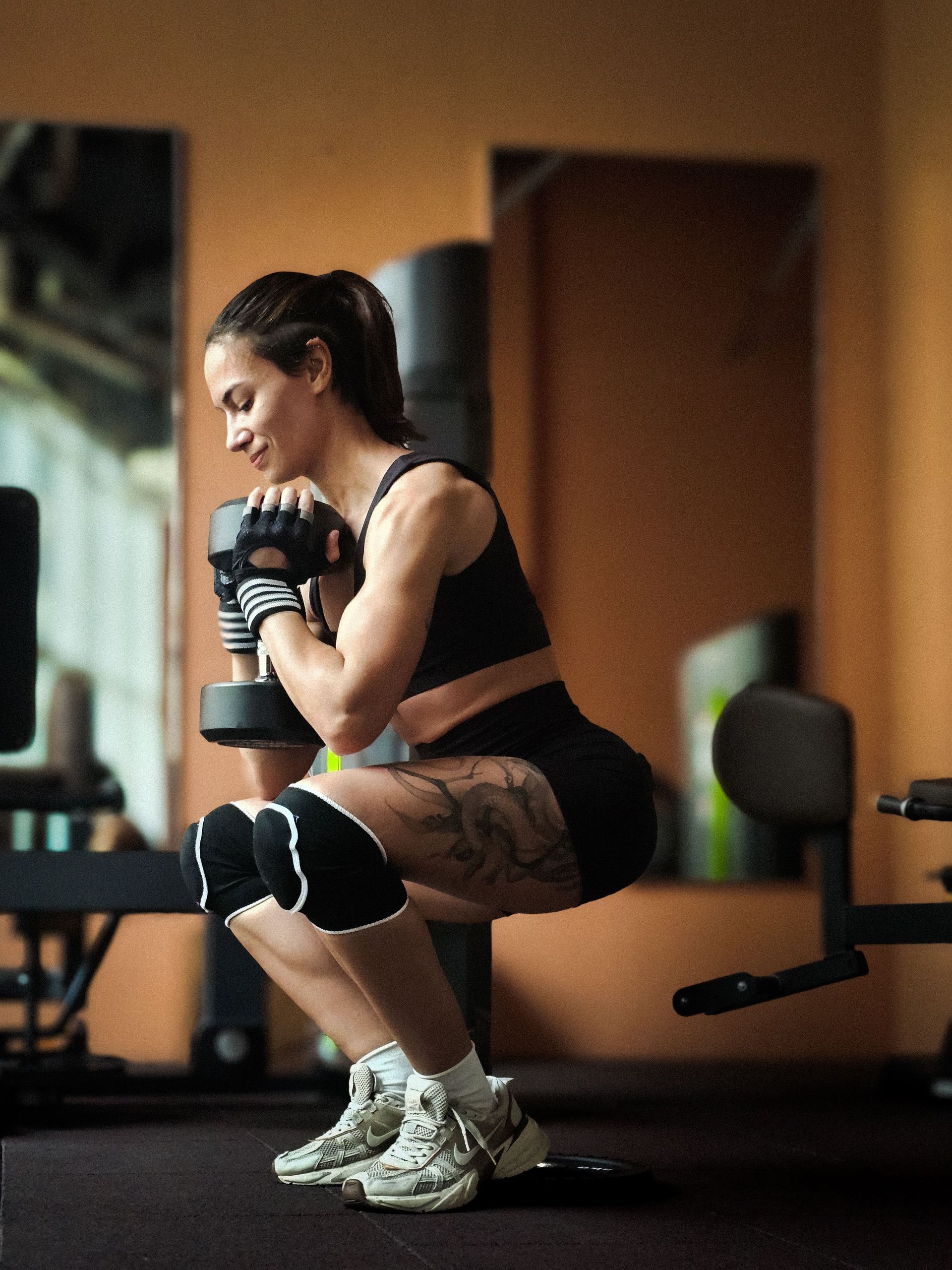
The goblet squat — holding a weight (kettlebell, dumbbell, or any weighted object) at chest height and squatting — is the most effective teaching tool for squat mechanics and a significant progression from the bodyweight squat, because the anterior load of the weight held at the chest counterbalances the body's tendency to lean forward during the squat, allowing a more upright torso position and facilitating the hip and ankle mobility required for a deep squat.
The goblet squat's diagnostic value complements the bodyweight squat. While the bodyweight squat reveals mobility limitations by showing where compensations occur under minimal load, the goblet squat shows whether those compensations persist or improve when the load provides a counterbalance. Many people who struggle to squat deeply with bodyweight squat deeper with a goblet load, because the weight in front counteracts the backward fall that restricted ankle or hip mobility would otherwise cause.
The goblet squat also teaches the elbows-inside-knees cue — using the elbows to push the knees outward during the descent — which activates the hip abductors and prevents the knee valgus collapse that indicates hip abductor weakness. This activation pattern, learned in the goblet squat, transfers directly to the barbell squat, the Bulgarian split squat, and the single-leg squat.
The functional standard: 15 goblet squats with a weight equal to approximately 25% of bodyweight (so 20kg for an 80kg person), reaching parallel depth or below with the torso upright and the heels on the floor. This standard represents the loaded squat capacity relevant to picking up and carrying loads from low positions in daily life.
KoolShooters / Pexels
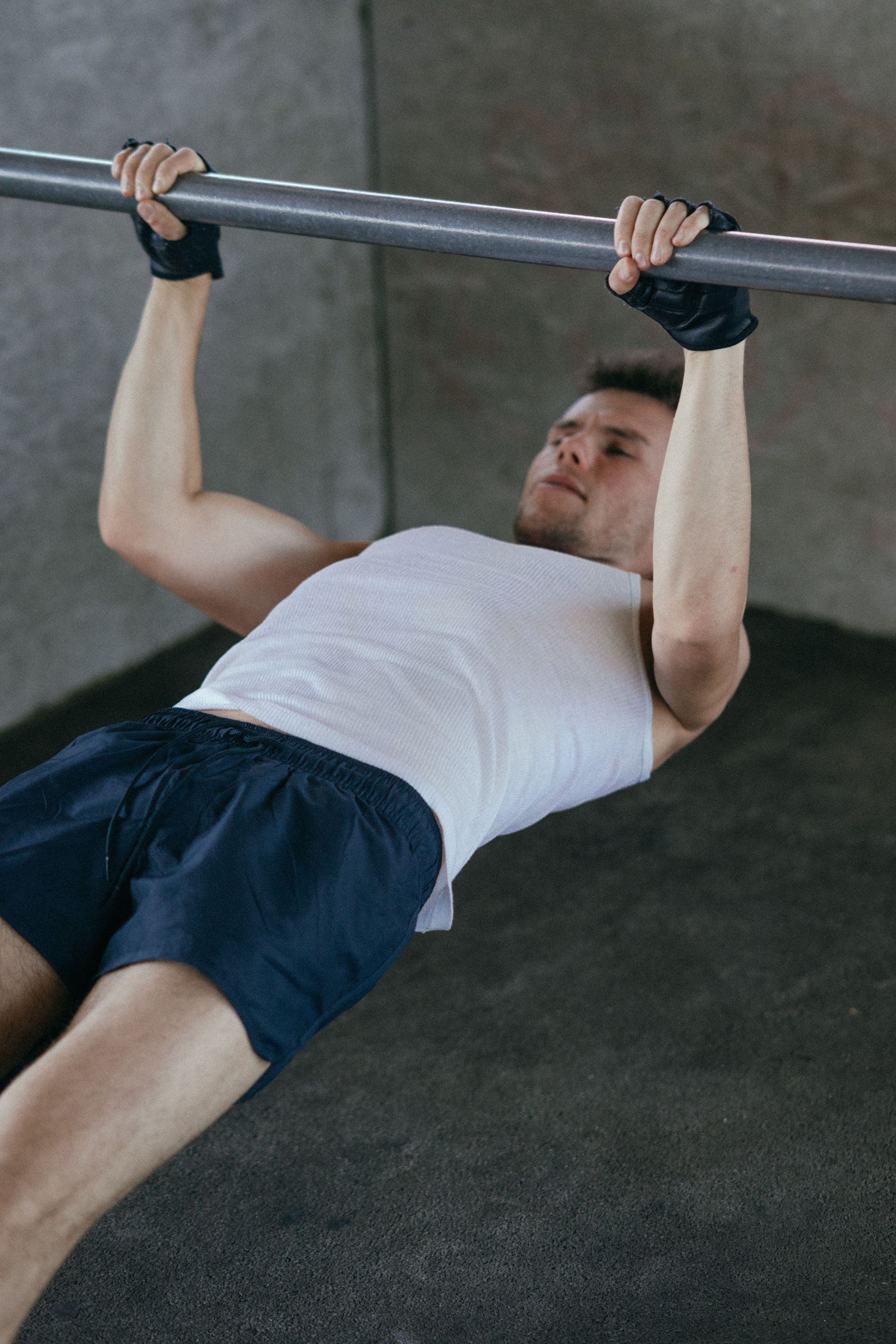
The inverted row — lying beneath a bar (or a table edge), gripping it with an overhand grip, and pulling the chest up to the bar — is a horizontal pulling exercise that tests the strength of the upper back (rhomboids, middle and lower trapezius, rear deltoids) in a plane of movement that most common exercise programs neglect. It is the horizontal counterpart to the vertical pull of the pull-up and measures the pushing-pulling balance that is fundamental to shoulder health.
Most adults in desk-based work have postural patterns characterized by forward head position, rounded shoulders, and thoracic kyphosis — the forward curvature of the upper back — that reflects weakness in the posterior shoulder muscles and excessive length in the upper back extensors. The rhomboids and lower trapezius, which retract and depress the shoulder blades, are specifically weakened by the rounded-shoulder postural position, and their weakness is both a consequence of and a contributor to the postural pattern.
The inverted row tests the strength of exactly these muscles in the pulling pattern that would correct the postural deficit. A person who cannot perform five controlled inverted rows has posterior shoulder weakness that contributes to shoulder impingement, rotator cuff irritation, and the neck and upper back pain associated with desk work posture.
The functional standard: 10 inverted rows with the body forming a straight plank from head to heels, the chest touching the bar at the top, and the arms fully extending at the bottom. The body-plank requirement is important — allowing the hips to sag reduces the demand on the core and allows the exercise to be completed with insufficient strength through compensation.
The suitcase carry — walking a distance while holding a weight in one hand at the side, maintaining a level pelvis and upright torso against the asymmetric load — is the single-arm variation of the farmer's carry and a more specific test of lateral core stability and hip stability than the bilateral carry. It is the exact mechanical demand of carrying a suitcase, a bag of shopping, or a child on one side, and it reveals whether the lateral core can resist the lateral lean that an asymmetric load induces.
The specific physical quality tested by the suitcase carry — the ability of the obliques and quadratus lumborum (the lateral core muscles) and the hip abductors (particularly gluteus medius) to maintain a level pelvis against an asymmetric load — is the quality that prevents the Trendelenburg gait pattern: the lateral pelvic drop that occurs when walking with insufficient hip abductor strength or lateral core endurance. The Trendelenburg pattern is associated with hip pain, knee pain, and lower back pain because it alters the loading patterns of all three joints.
The functional standard: a suitcase carry of 20 meters on each side with a weight equal to approximately 25% of bodyweight, maintaining a level pelvis, upright torso, and normal gait pattern throughout. The failure of the standard is visible as a lateral lean toward the loaded side (core failure) or a drop of the contralateral hip (hip abductor failure).
Polina Tankilevitch / Pexels
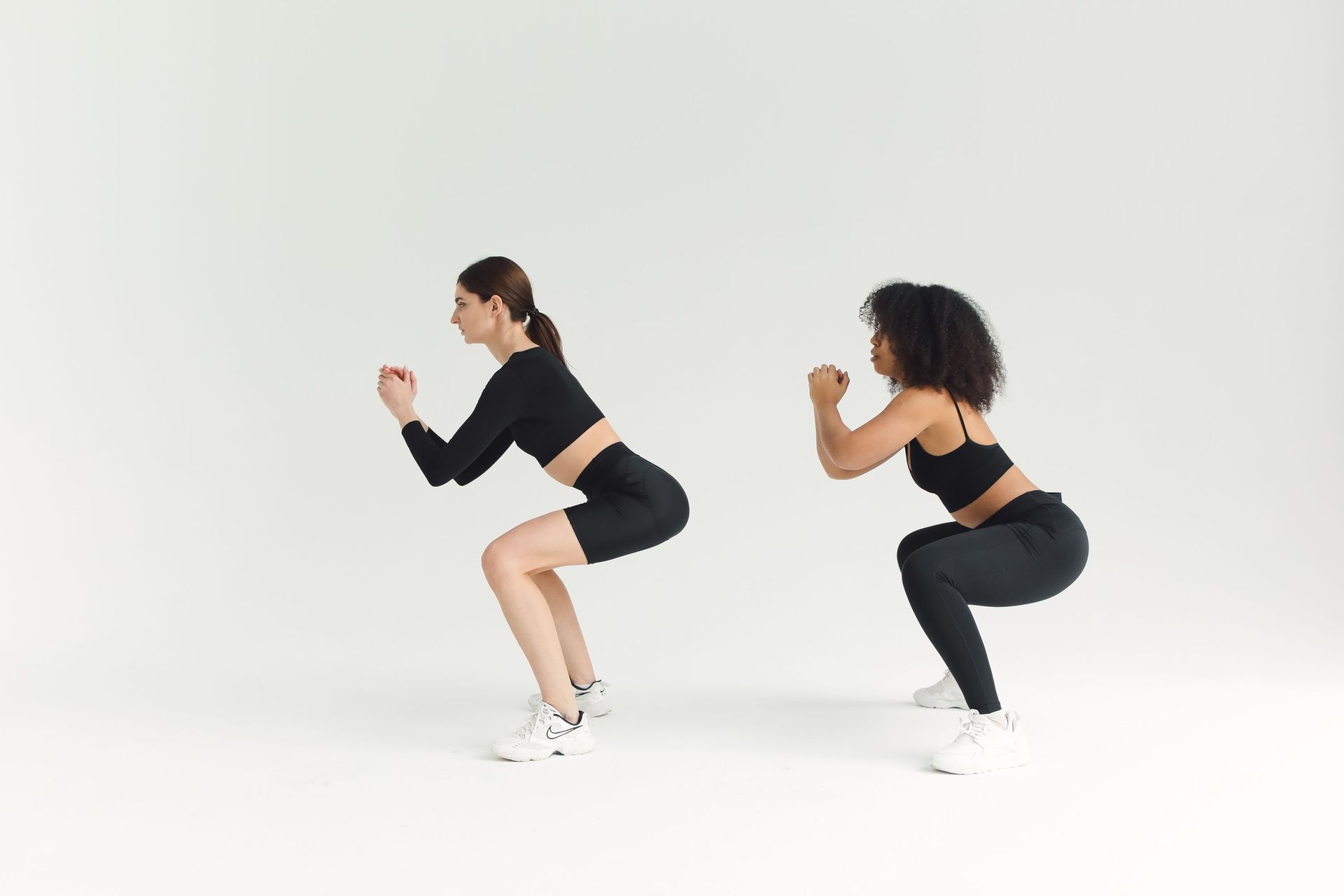
The deep squat hold — sitting in a full squat with the heels on the floor, thighs below parallel, and the torso upright — is the mobility assessment that most directly reveals the combined ankle, hip, and thoracic mobility required for a full squat pattern, and one of the most culturally revealing assessments in functional movement: in cultures where floor sitting is normal (much of Asia, Africa, and rural communities globally), the deep squat is maintained across the lifespan; in cultures where chair sitting is universal from childhood (much of North America and Europe), it is lost by early adulthood in a large proportion of the population.
The deep squat hold is not primarily a strength exercise but a mobility endpoint — the bottom position of the squat that, once achievable, makes loaded squat variations safer, more effective, and accessible to a greater range of people. Its loss is associated with the loss of ankle dorsiflexion range (the ankle can no longer flex sufficiently to keep the heels on the floor in a deep squat), hip flexion range, and the thoracic mobility required to maintain an upright torso in the deep position.
The functional standard: a deep squat hold of 60 seconds with heels flat on the floor, thighs below parallel, and the torso upright enough to hold a small object against the chest without it falling. This standard is achievable for most healthy adults under 40 who practice it regularly and represents the mobility baseline from which all lower-body loading patterns develop most safely.
