Feline anxiety manifests through quiet behavioral shifts, altered grooming patterns, and subtle changes in posture that require targeted environmental adjustments to resolve
A S / Unsplash
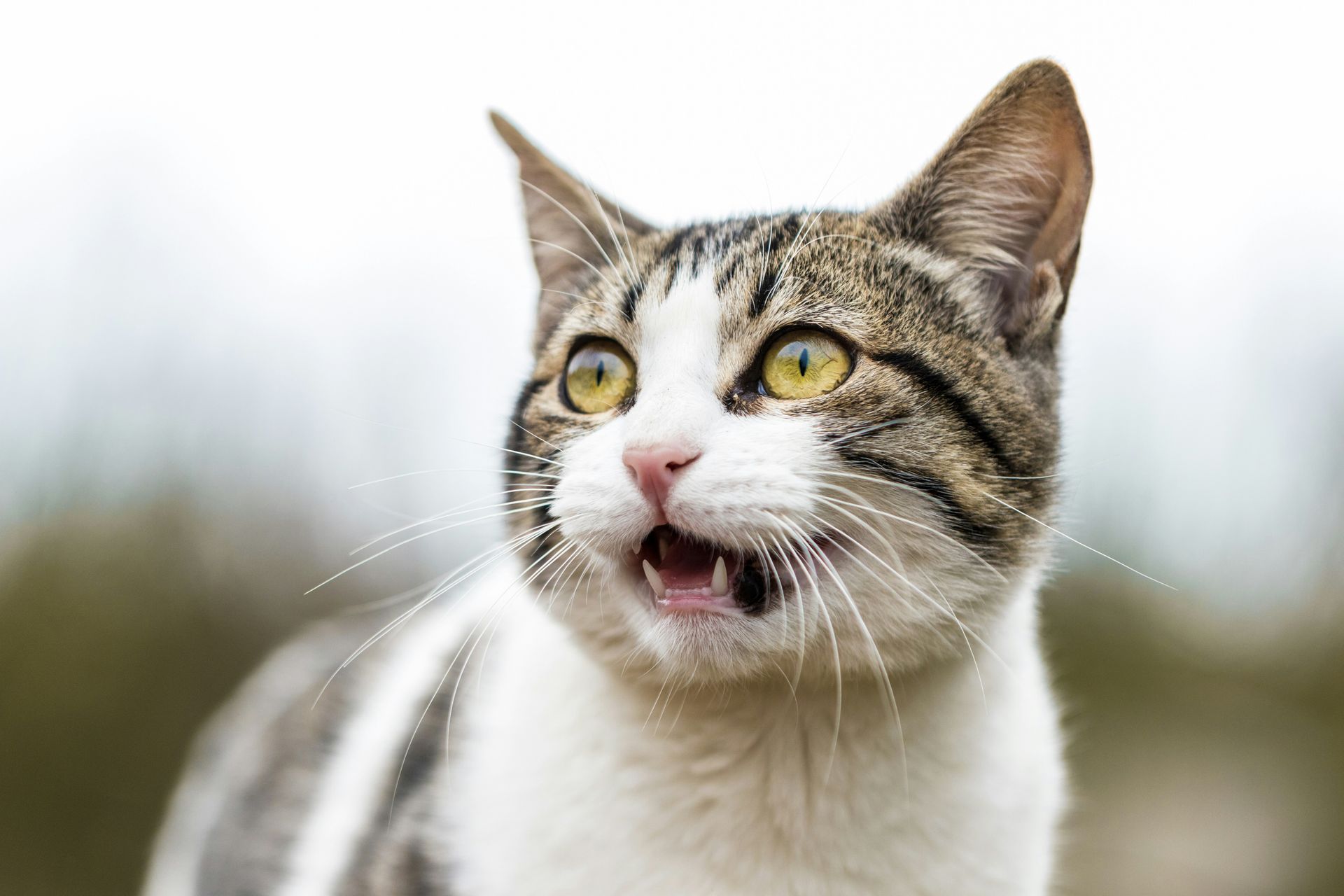
Cats are evolutionary masters at concealing vulnerability, physical discomfort, and psychological distress. In the wild, showing weakness or disorientation makes a predator an easy target for larger animals. As a result, modern domestic cats rarely express anxiety through obvious outward distress calls or dramatic behavioral outbursts. Instead, feline stress manifests through quiet, easily overlooked changes in daily routines, posture, bodily functions, and social interactions. When left unaddressed, chronic stress elevates circulating cortisol levels, depresses immune function, and frequently leads to severe medical conditions like idiopathic cystitis, compulsive self-mutilation, and persistent digestive failure.
Understanding how cats process stress requires looking at their environment through a territorial lens. Felines rely heavily on olfactory stability, predictable daily routines, and a sense of physical control over their surroundings. Minor household shifts that humans barely notice—such as moving furniture, introducing a new cleaning product, altering work schedules, or allowing a stray animal to wander near a window—can disrupt a cat's sense of environmental safety. Because cats lack the emotional processing tools to adapt quickly to rapid environmental changes, their internal anxiety builds silently until it spills over into physical symptoms or behavioral disruptions.
Resolving feline anxiety is rarely about giving affection or offering treats; in fact, forcing physical touch onto a stressed cat often amplifies their distress. Effective intervention requires systematic environmental modification, routine stabilization, and respecting feline autonomy. By identifying the subtle warning signs early and making precise, science-backed adjustments to their living space, owners can restore their cat's sense of security before acute stress turns into chronic health issues. Here are the most common signs that a cat is experiencing psychological stress, along with the exact steps needed to resolve each issue.
Neakasa / Unsplash
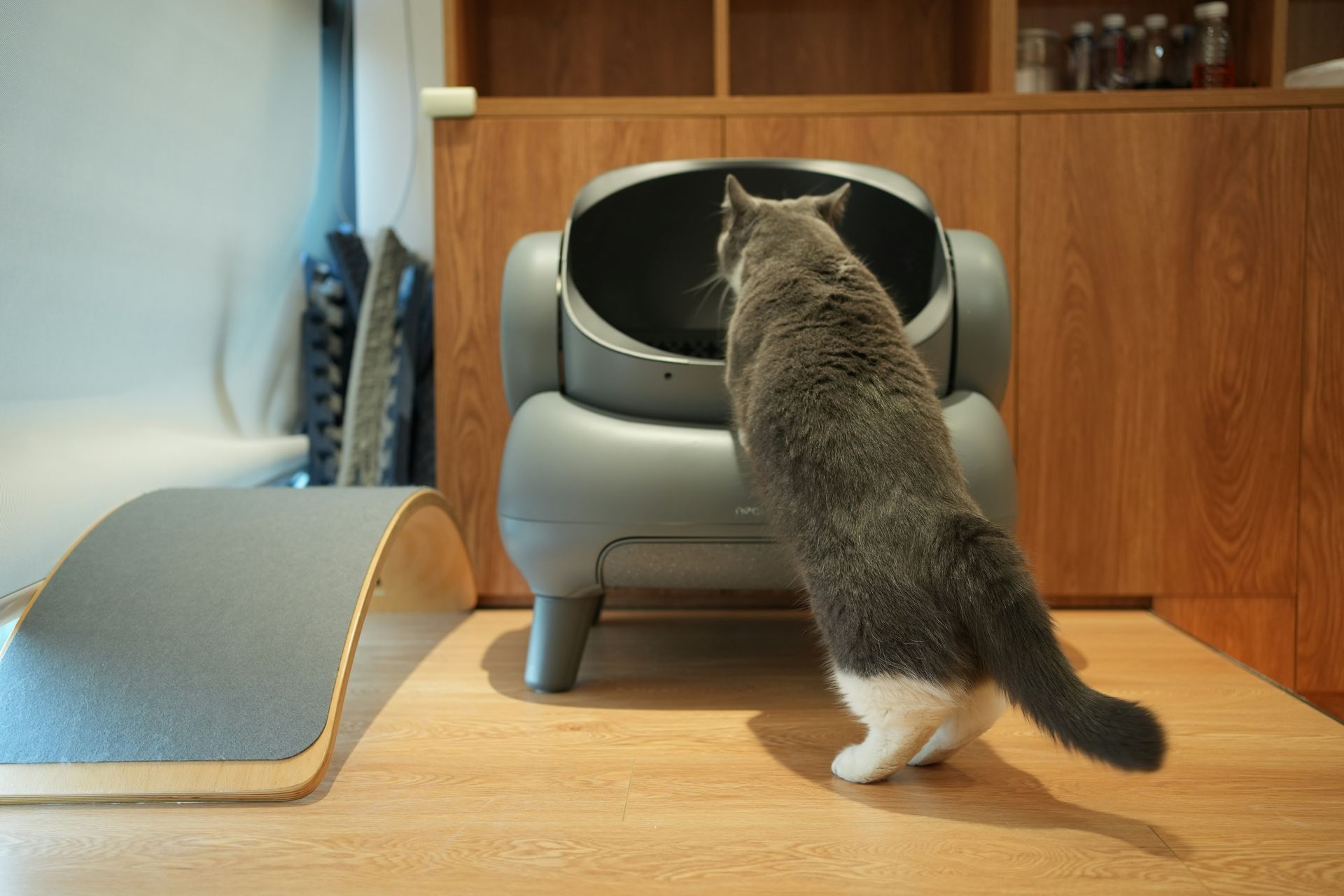
Inappropriate elimination is one of the most common signs of feline stress, often misconstrued by owners as spiteful behavior. When a cat feels anxious about its territory or safety, it uses urine marking or elimination outside the box as a coping mechanism to deposit its own scent, creating a reassuring olfactory boundary. To resolve this issue, first rule out medical conditions like urinary tract infections or bladder stones with a veterinarian. Once health issues are cleared, evaluate the litter box environment. Ensure you have one more box than the number of cats in the home. Place boxes in quiet, low-traffic areas with multiple escape routes, avoiding cramped closets or noisy laundry rooms. Switch to a soft, unscented, fine-grained clumping litter, and clean the box at least once daily. Never punish a cat for accidents, as anger increases anxiety and exacerbates the problem.
Karin Kim / Unsplash
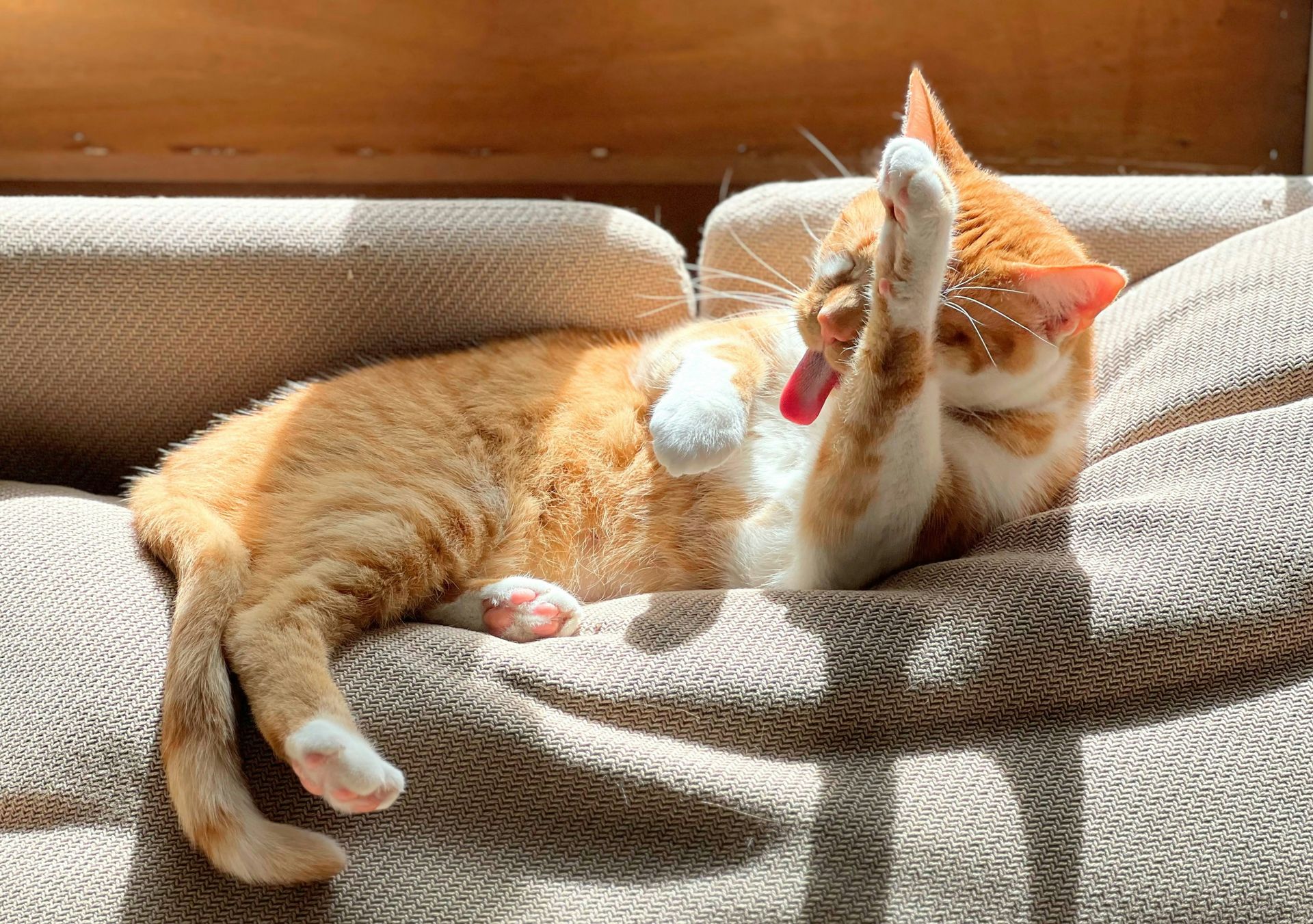
Grooming releases endorphins in the feline brain, providing a natural self-soothing mechanism during times of anxiety. However, when a cat experiences chronic stress, this normal behavior transforms into psychogenic alopecia, where the cat licks a specific area—typically the belly, inner thighs, or forearms—until the fur is gone and the skin is inflamed. After a veterinarian confirms the absence of fleas, skin mites, or food allergies, focus on reducing environmental anxiety. Establish a rigid daily routine for feeding, play, and attention, as predictability builds security. Increase vertical territory by installing cat trees, window perches, or wall shelves to give the cat a high, safe vantage point. Engage the cat in two 10-minute sessions of interactive play daily using a feather wand to drain nervous energy and boost confidence.
he gong / Unsplash
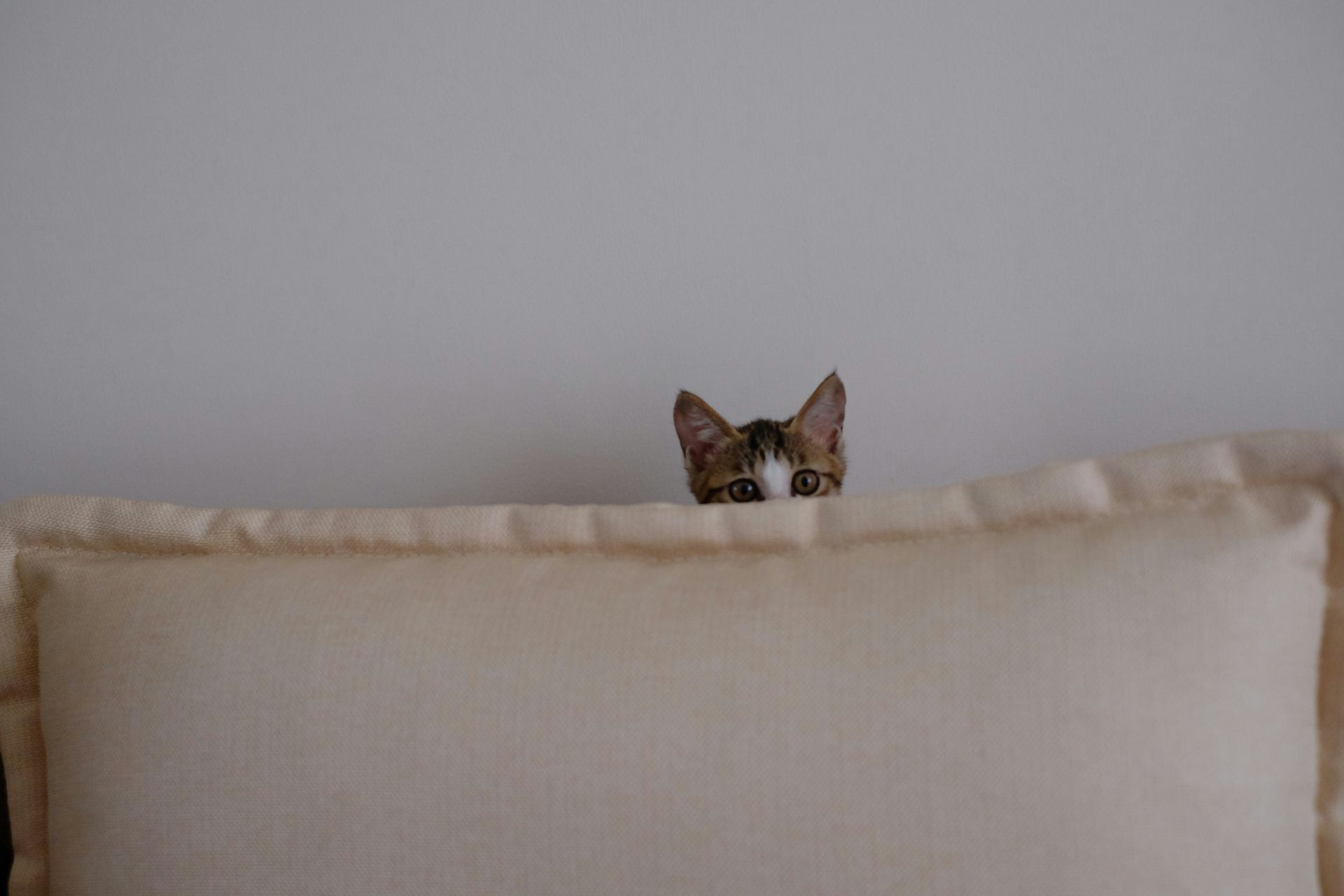
While hiding occasionally is normal feline behavior, a cat that spends days tucked under beds, inside closets, or behind appliances is experiencing significant fear. Forcing a hiding cat out into the open increases terror and damages trust. To address prolonged hiding, create a secure, accessible sanctuary room where the cat feels in control. Place their food, water, litter box, and bedding within this quiet space so they do not have to cross intimidating territory to meet basic needs. Add covered cat beds or cardboard boxes with soft towels in high, quiet locations. Plug a synthetic feline facial pheromone diffuser into the wall nearby; these diffusers mimic the reassuring scents cats rub onto safe objects. Allow the cat to emerge at its own pace without forcing interaction or making loud noises.
khaled khazna / Unsplash
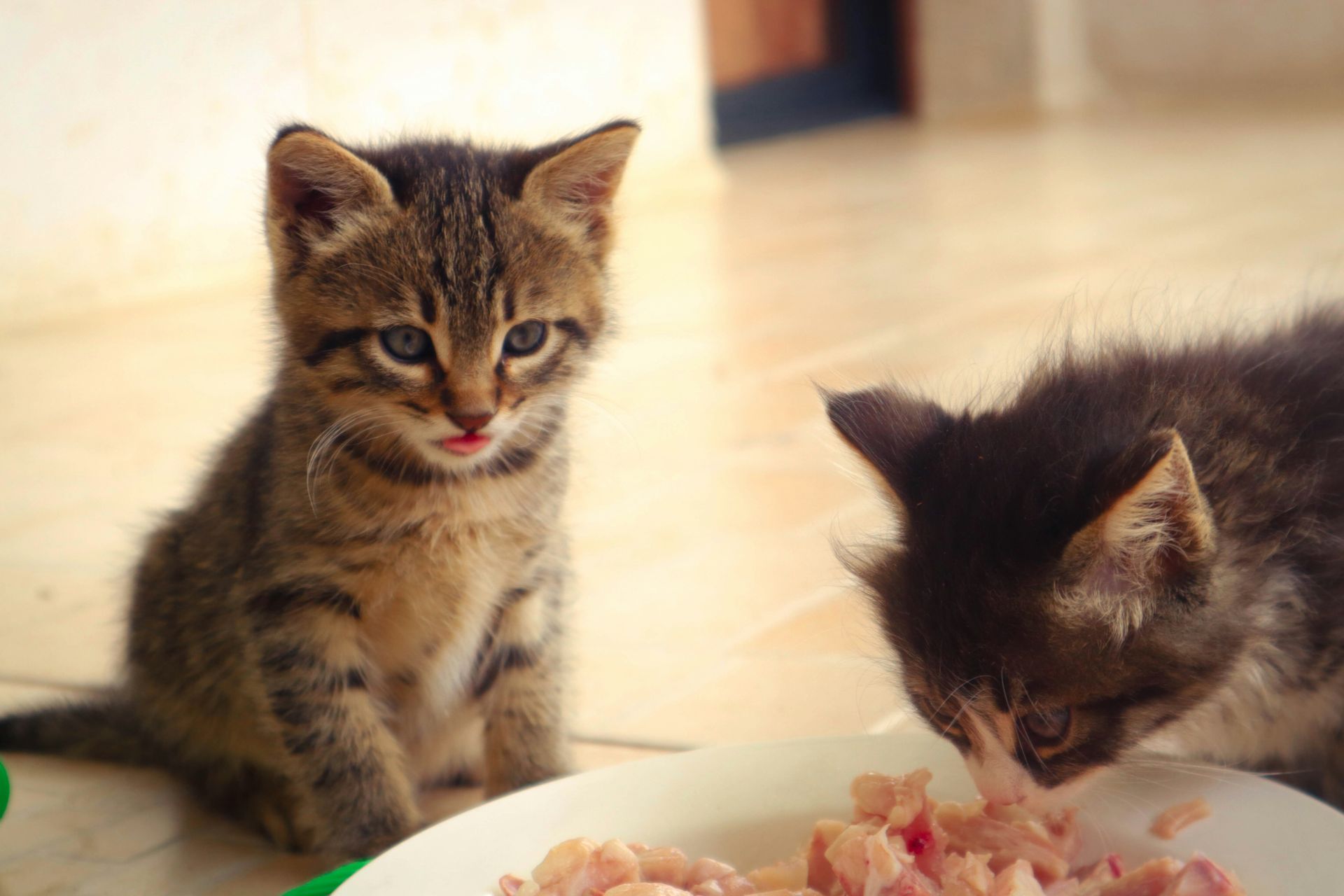
A sudden decrease in food intake or complete anorexia is a severe physiological reaction to stress. Because cats are prone to hepatic lipidosis—a life-threatening liver condition that develops rapidly when food intake drops—a lack of appetite requires immediate attention. Stress suppresses a cat's digestive drive, especially if the feeding station is located near noisy appliances, high-traffic corridors, or within line of sight of another household pet. Resolve this by relocating food and water bowls to a completely quiet, low-traffic room where the cat can eat without feeling cornered. Use wide, shallow ceramic or stainless steel dishes to prevent whisker fatigue. If multiple pets live in the home, feed them in entirely separate rooms with closed doors to eliminate competitive mealtime anxiety. Warm canned food slightly to enhance its aroma and stimulate the appetite.
Helena Lopes / Unsplash
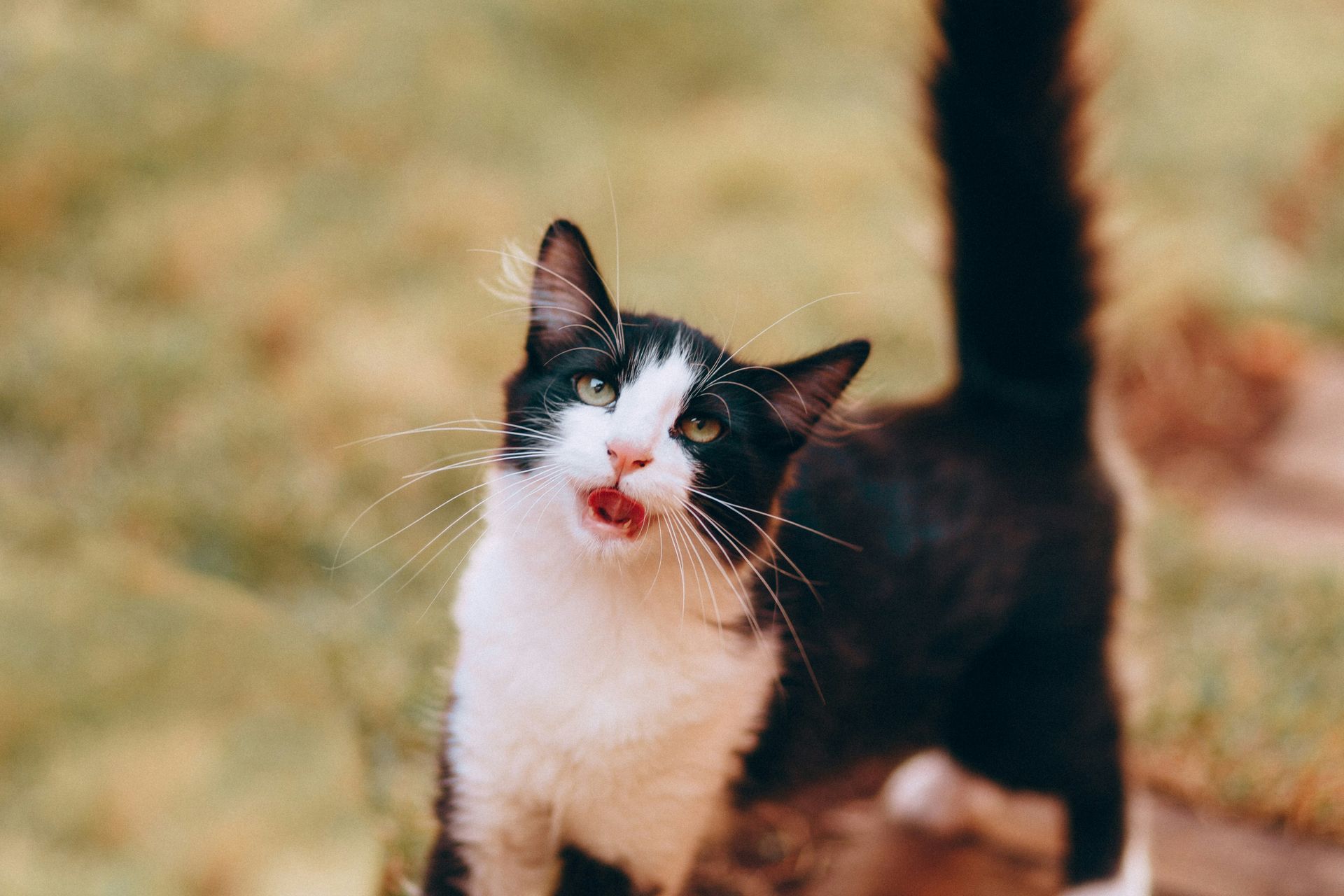
Unusual, persistent, or loud vocalizations—especially during late-evening hours—indicate confusion, disorientation, or heightened stress. Cats often vocalize excessively when their daily routine shifts unexpectedly, when a companion animal or human moves out, or when they feel insecure about their territory. To manage stress-induced vocalizing, refrain from giving attention, food, or scolding while the cat is actively crying, as any response reinforces the behavior. Instead, establish a consistent evening routine that mimics a cat's natural hunt-eat-groom-sleep cycle. Engage the cat in an intense interactive play session 30 minutes before bedtime, followed immediately by a high-protein meal. This sequence satisfies their predatory drive, triggers natural post-meal tiredness, and encourages quiet rest throughout the night.
Jim / Unsplash
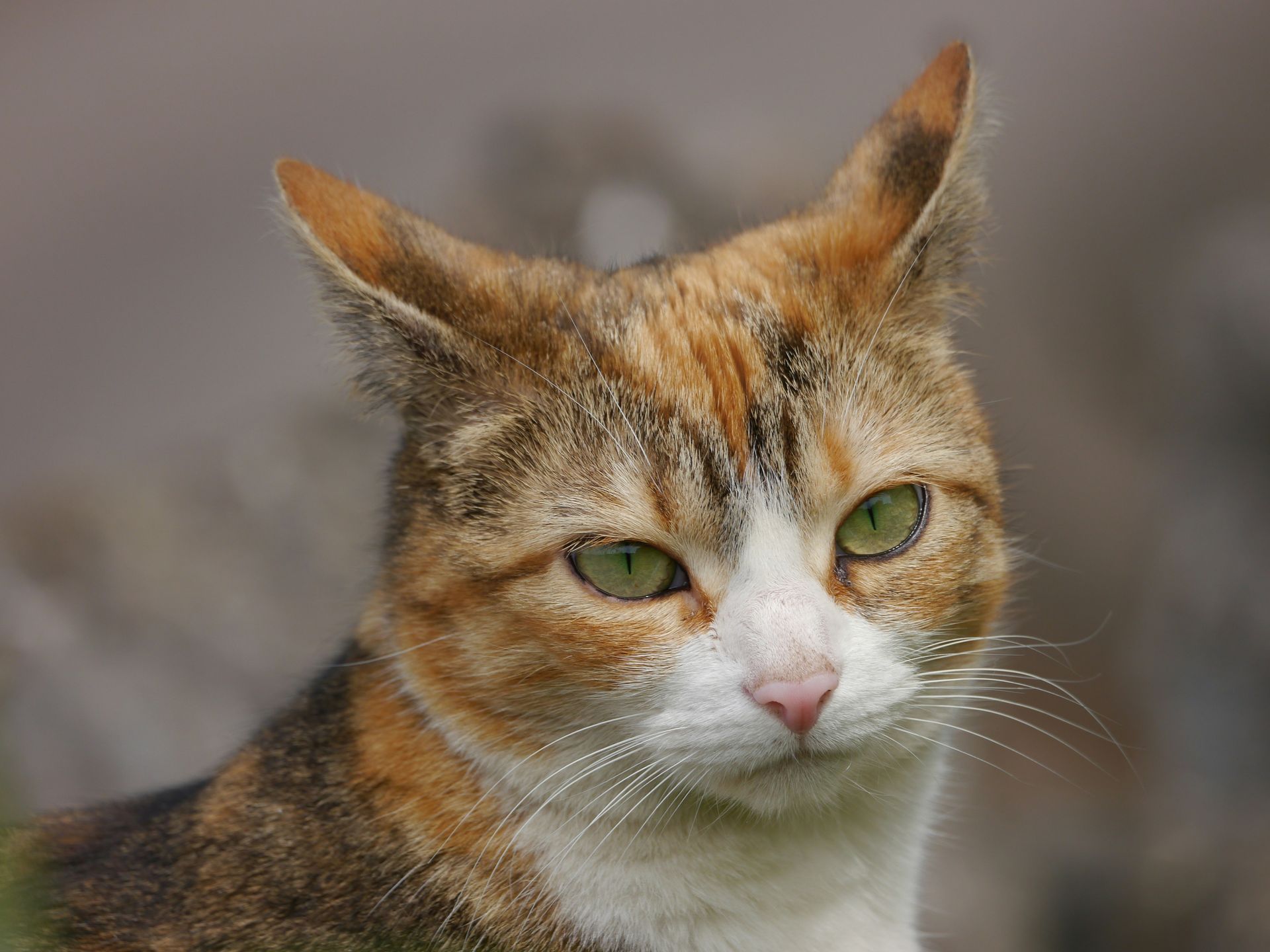
A cat's body language provides immediate real-time data regarding its internal stress state. When a cat holds its body rigid, tucks its paws tightly under its torso, dilates its pupils, and flattens its ears sideways or backward, it is experiencing acute fear and hyper-vigilance. To handle this immediate state of distress, lower the ambient stimulation in the room immediately. Dim bright overhead lights, turn off televisions or loud audio equipment, and ask children or visitors to leave the immediate area. Do not attempt to stroke, pick up, or comfort the cat, as physical contact during hyper-arousal can trigger defensive aggression. Instead, sit quietly nearby on the floor, avoid direct eye contact, speak in a soft, low tone, and allow the cat space to decompress safely on its own terms.
Shawn Rain / Unsplash
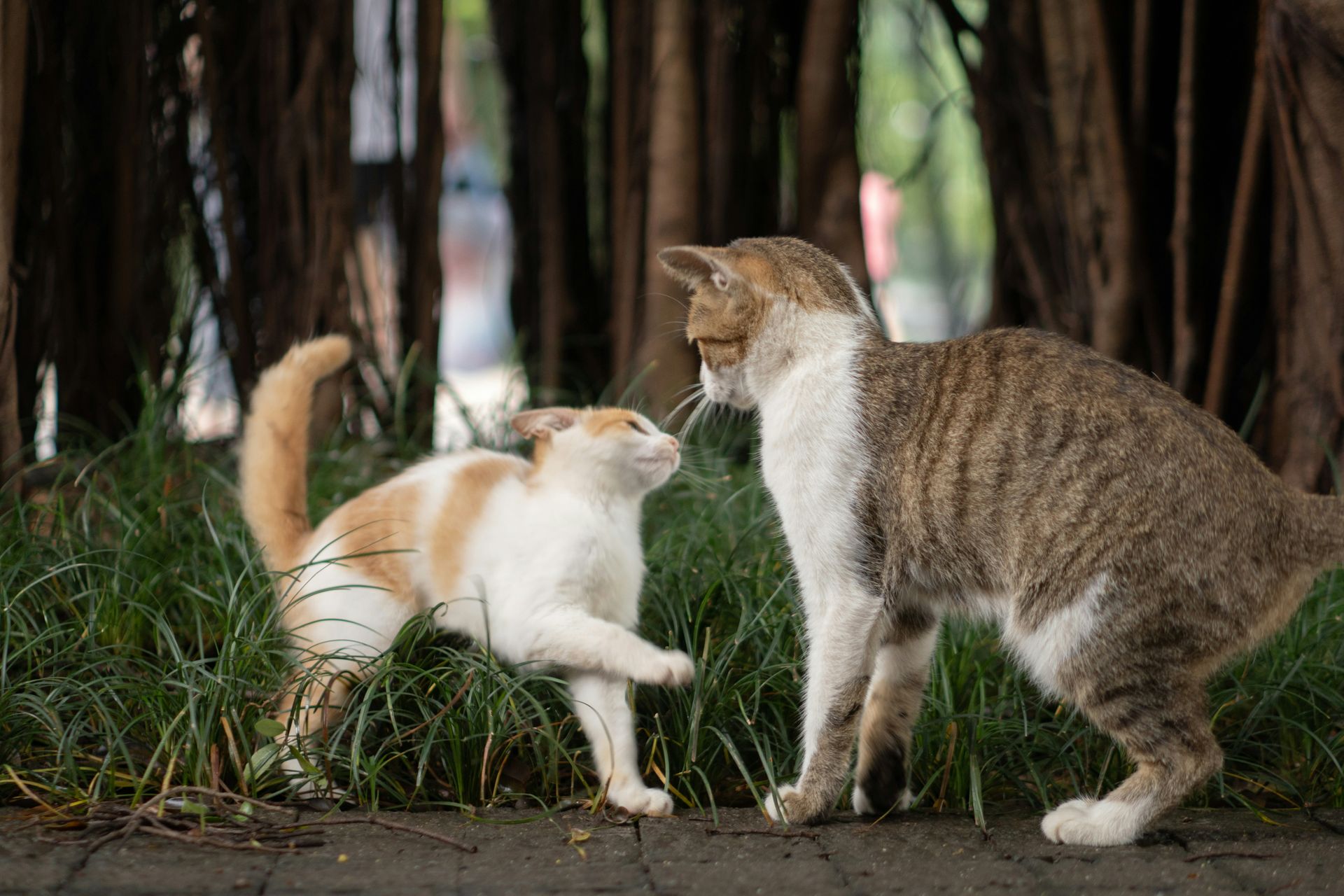
Redirected or territorial aggression—where a normally calm cat suddenly hisses, swats, or attacks another pet or family member—is a classic manifestation of severe stress. This often occurs when a indoor cat sees an unfamiliar neighborhood cat through a window, gets startled by a loud noise, or returns home carrying veterinary smells. When sudden aggression breaks out, separate the involved animals into distinct rooms immediately to prevent injury and stop negative emotional associations from solidifying. Do not attempt to reconcile them right away. Keep them completely separated for several days, providing each with its own food, water, and litter facilities. Reintroduce them gradually using scent swapping: rub a towel over one cat and place it in the other's area, associating the scent with positive experiences like mealtime before allowing controlled visual contact.
Taro Oliver / Unsplash
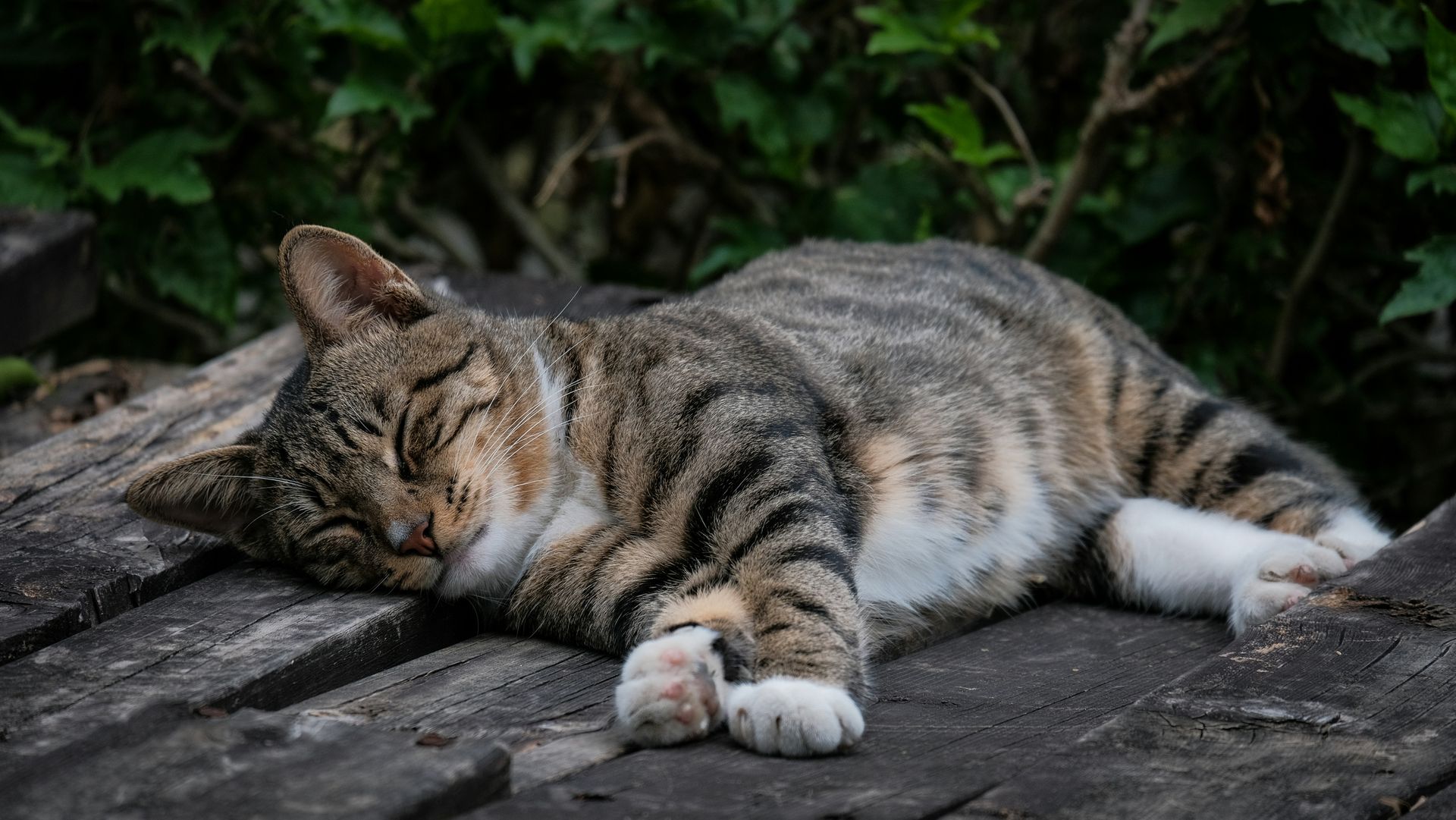
When stress becomes chronic, some cats shut down emotionally, exhibiting extreme lethargy, indifference to their surroundings, and a complete refusal to engage in play. This state of learned helplessness is often mistaken for contentment or old age, but it indicates significant psychological depression caused by an unstimulating or intimidating environment. Re-engaging an withdrawn cat requires introducing structured, low-pressure environmental enrichment. Rotate their toys weekly to maintain novelty, keeping self-play items like kicker toys and puzzle feeders available. Place bird feeders outside windows to provide visual stimulation, often referred to as "cat TV." Dedicate time each day to gentle, low-intensity play using wand toys, moving the attachment slowly behind furniture to trigger their natural curiosity without overwhelming them.
Marnhe du Plooy / Unsplash
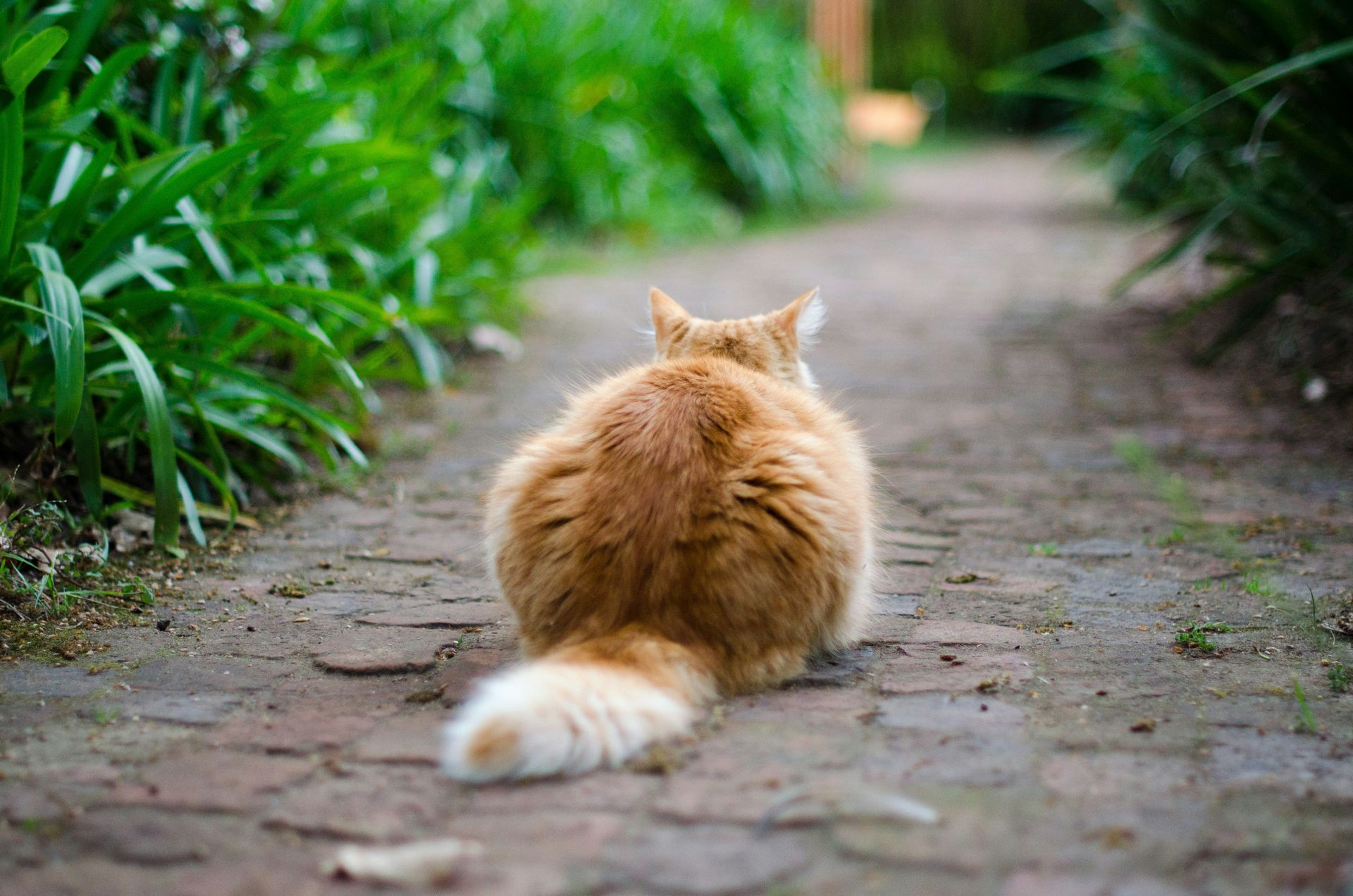
A cat experiencing high baseline anxiety lives in a state of constant guard duty, flinching at minor household sounds, pacing along room perimeters, and struggling to enter deep sleep. This hyper-vigilance often stems from unpredictable living environments, frequent loud noises, or unstable household schedules. To reduce startle responses, build a calmer acoustic environment. Play soft classical music, species-specific feline auditory tracks, or low white noise to mask sudden outside sounds like traffic, thunder, or construction. Ensure all family members adopt predictable movement patterns and avoid sudden loud movements near the cat's core resting zones. Providing stable, covered sleeping spots elevated off the ground helps the cat feel secure enough to disengage from constant environmental monitoring.
Thức Trần / Unsplash
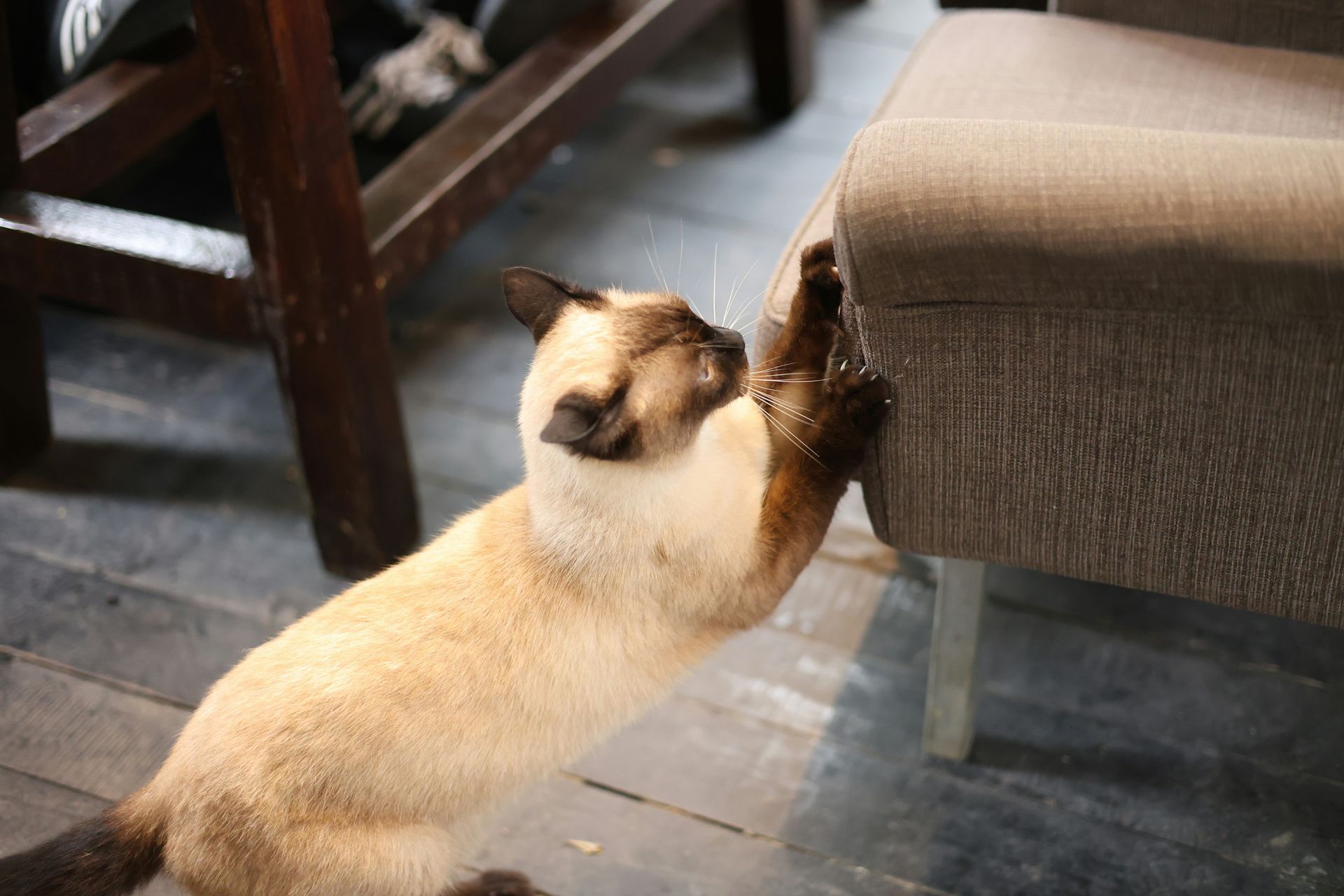
Scratching is a fundamental feline behavior used to shed claw sheaths, stretch muscles, and deposit scent from interdigital glands onto surfaces. However, when a cat suddenly begins destructively shredding doorway carpet, couch corners, or doorframes, it is often using scent marking to bolster its territorial confidence in response to stress. Combat destructive scratching by analyzing the texture and orientation of the targeted surfaces. If the cat scratches carpet, provide sturdy horizontal cardboard or sisal mat scratchers in that exact location. If it targets couch arms, place tall, solid vertical scratching posts wrapped in sisal rope right beside the furniture. Rub catnip or silvervine onto the new posts to encourage interest, and cover the damaged furniture temporarily with double-sided tape to make it unappealing.
