
From the internet to electric cars, these 15 technologies faced ridicule, indifference, or outright rejection before becoming the infrastructure of modern life

Credit: Pete Godfrey / Unsplash
The history of technology is not a clean arc of progress. It is interrupted, messy, and full of moments where the most consequential inventions were met with contempt or indifference. Engineers were fired. Patents sat unused. Investors walked out of meetings. Journalists mocked. And then, years or decades later, the very things that were dismissed quietly became the scaffolding of everyday life.
This pattern repeats because humans are not naturally good at imagining systems that don't yet exist at scale. A technology that looks impractical, expensive, or redundant at prototype stage can appear entirely different once infrastructure, manufacturing, and culture catch up. The people who rejected early electric cars weren't stupid — they were making reasonable judgments about the world as it existed at that moment. The problem is that breakthrough technologies don't fit the world as it exists. They fit the world as it will be.
There is also a social dimension to dismissal. New technologies often threaten existing power structures — established industries, investor preferences, professional identities. Some of the most ferocious resistance to new technologies came not from ignorance but from self-interest. The incumbents had every reason to argue that the new thing was dangerous, impractical, or unnecessary.
What distinguishes the technologies in this list from ordinary failed inventions is that their underlying principles were sound from the beginning. The problem was not the idea. The problem was timing, infrastructure, cost curves, or cultural readiness — all of which changed. In retrospect, it seems obvious that they would work. But the people who believed in them early did so in the face of real, organized, sometimes powerful resistance.
These are not stories of lone geniuses being ignored by fools. They are stories of ideas that were genuinely difficult to evaluate, surrounded by noise and competing claims, advancing through setbacks and reversals before eventually arriving at scale. Understanding why technologies get dismissed — and what eventually overcomes that dismissal — matters now more than ever. Across artificial intelligence, biotechnology, and energy, the same debates are playing out again.
Credit: Jerry Michalski's / Flickr (CC BY-SA 2.0)
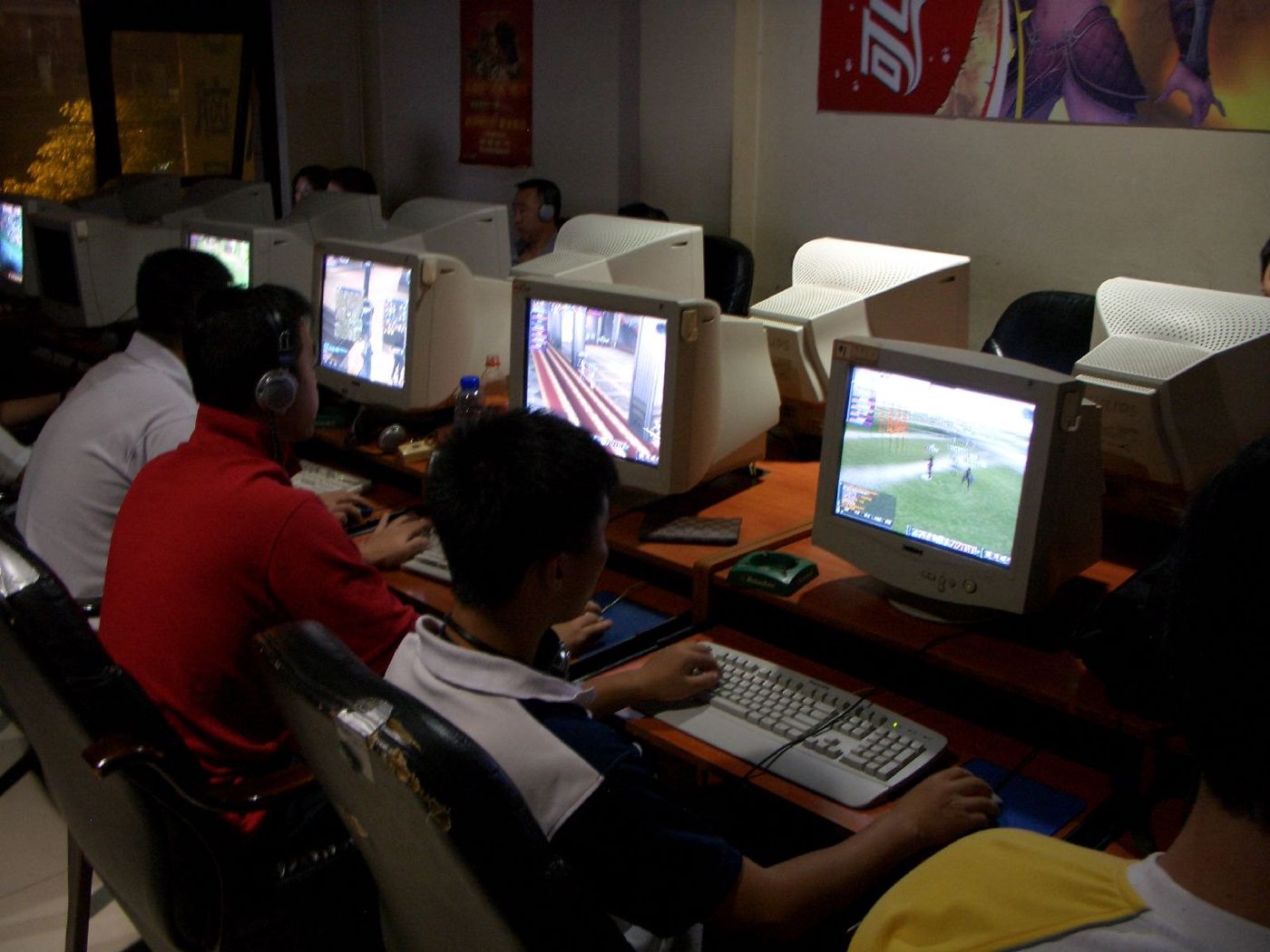
In the early 1990s, the internet existed mainly as an academic and government communication network. Its commercial potential was widely doubted, and some of the most prominent technology executives of the era said so publicly. Ken Olsen, the founder of Digital Equipment Corporation, made remarks in 1977 about seeing no reason why anyone would want a computer in their home — a statement that became one of the most-quoted dismissals in technology history, though context matters: he was referring to a specific concept of a home computer controlled by a centralized system, not computing generally. Still, the sentiment of skepticism was widespread.
Through the early and mid-1990s, as the World Wide Web began to emerge, many mainstream media outlets treated it as a curiosity or a fad. A 1995 Newsweek column by Clifford Stoll made an elaborate case that the internet would fail to transform commerce, education, or communication. He argued that no online database would replace a newspaper, that no computer network would change how government works, and that the technology would struggle to replicate the social experience of real-world interaction. Every single prediction aged badly.
The barriers to believing in the early internet were not unreasonable. Access was slow, interfaces were difficult, and the network effect hadn't taken hold. Most people in 1993 had never sent an email. The idea that within 15 years the internet would be the primary infrastructure for global commerce, news, social life, and political organizing required imagining not just one technology but a cascade of improvements in hardware, software, telecommunications infrastructure, and user behavior.
What changed was not the underlying idea — that networked computers could transform communication and commerce — but everything else around it. Modem speeds improved. Browsers appeared. Search engines arrived. Investment capital flooded in. And eventually the network effect compounded: the internet became more valuable the more people used it, which made more people use it. By the early 2000s, the same publications that had been skeptical were writing about the internet as the defining technology of the era.
The lesson here is not that the skeptics were foolish. It is that they were evaluating an early-stage system that genuinely didn't yet deliver on its promise — and then extrapolated from that early stage that the promise would never be delivered.

Credit: Giant Asparagus / Pexels
Electric vehicles were not invented in the 21st century. The first practical electric cars appeared in the 1880s and early 1890s, predating the dominance of internal combustion engines. For a brief period around 1900, electric vehicles outsold gasoline-powered ones in the United States. Then the combination of Henry Ford $F's mass-production techniques, the discovery of large oil reserves, the development of the electric starter motor (which eliminated the hand-crank that made early gas cars dangerous), and the expanding road network shifted the balance decisively toward gasoline.
Electric vehicles sat largely dormant as a mainstream commercial proposition for most of the 20th century. When General Motors $GM introduced the EV1 in 1996 — a purpose-built electric vehicle leased (never sold) to consumers in California — it was widely regarded as a compliance exercise to meet state emissions regulations rather than a serious product. The cars were ultimately recalled and crushed. The documentary "Who Killed the Electric Car?" (2006) captured the mood of that moment, but the mood itself was skeptical: electric cars were seen as underpowered, impractical, and expensive curiosities that couldn't survive without regulatory pressure.
When Tesla $TSLA began producing the original Roadster in 2008, the prevailing reaction among automotive analysts and established manufacturers was polite skepticism at best. Many argued that battery costs would never fall far enough, that range anxiety was an insurmountable consumer concern, and that a startup had no credible path to building and selling cars at scale.
The decade that followed dismantled most of those objections. Battery costs fell dramatically as manufacturing scaled up, a trajectory that had been predicted by proponents of the technology but doubted by the mainstream. Range improved. Charging networks expanded. Legacy manufacturers entered the market. By the mid-2020s, electric vehicle sales accounted for a substantial and growing share of new car sales globally, with most major markets setting targets to phase out new internal combustion engine vehicles within decades.
The story of the electric car is partly about battery economics and partly about the way established industries can suppress or ignore alternatives that threaten their core business — a dynamic that played out at multiple points in the technology's long history.

Credit: Alex Andrews / Pexels
When Alexander Graham Bell offered to sell the patent for the telephone to Western Union in 1876 for $100,000, Western Union declined. An internal memo from the company, often cited in accounts of that era, reportedly described the telephone as having too many shortcomings to be seriously considered as a means of communication — the device was inherently limited to short distances, the argument went, and could never be a practical system of communication. Whether or not the specific memo is precisely worded as often quoted, Western Union's decision to pass is well-documented, and it stands as one of the most consequential rejections in business history.
The skepticism had logic behind it. In 1876, the telegraph was the established long-distance communication technology. It worked. It had infrastructure. Operators understood it. The telephone was novel, limited in range, difficult to use, and expensive to deploy. The idea that it would replace the telegraph for most communication purposes required imagining a nationwide (and eventually global) switching network that did not yet exist.
Western Union eventually recognized its error and tried to enter the telephone business, but by then Bell had established enough of a market position and patent protection to contest it. The company spent years trying to build a competing telephone system before eventually settling and withdrawing from the telephone market. The miscalculation cost it what might have been dominance of an entirely new communications industry.
The telephone also faced cultural resistance. Some people believed that speaking to someone who wasn't in the same room was unnatural or unsettling. Others worried about who might call and how to end a conversation with someone you couldn't see. Early telephone etiquette guides tried to address these anxieties, which indicates how genuinely strange the technology felt before it became routine. Within a generation, the telephone had transformed how families, businesses, and governments communicated — and Western Union had been displaced.
Credit: Ruben Boekeloo / Pexels
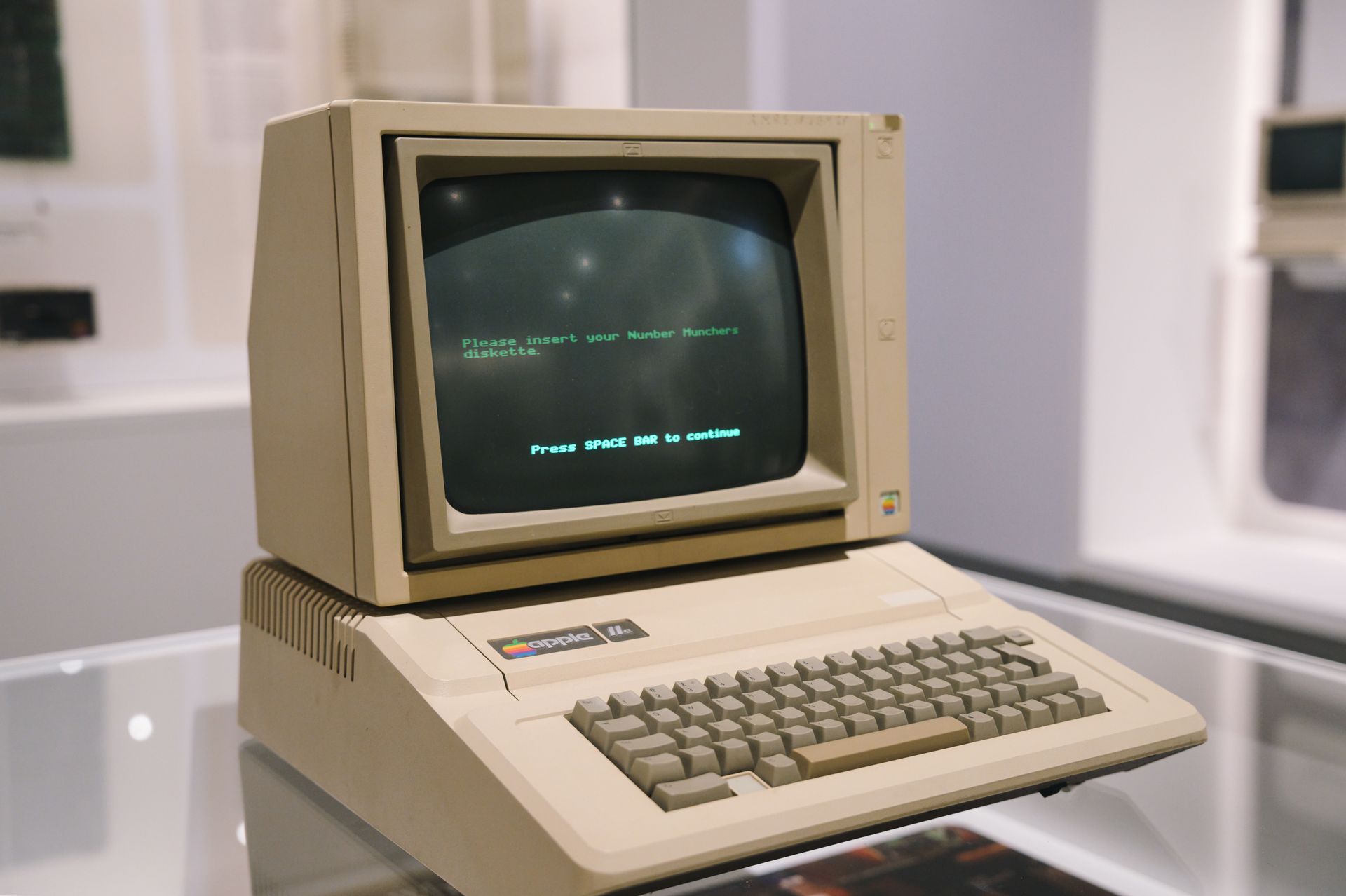
In 1977, Ken Olsen — then one of the most respected figures in computing as the founder of Digital Equipment Corporation — made remarks that were interpreted as dismissing the idea of a personal computer. DEC made powerful minicomputers that were sold to businesses and institutions, and the company's business model depended on computing being an expensive shared resource rather than a personal tool. Whether the dismissal was philosophically firm or more equivocal than the famous quote suggests, DEC did not pursue the personal computer market aggressively, and the company's eventual decline was tied in part to its failure to adapt to the shift it represented.
IBM $IBM, by contrast, entered the personal computer market in 1981 — but did so in a way that inadvertently ceded control of the market to others. By using an open architecture and licensing the operating system from a small company called Microsoft $MSFT, IBM made the PC a standard platform that others could clone. The decision allowed the market to grow rapidly but meant IBM could not dominate it. Microsoft, meanwhile, used the licensing arrangement as the foundation for a business that eventually made it one of the most valuable companies in the world.
Even after personal computers became clearly successful products, the nature of their future uses was widely underestimated. The idea that personal computers would become primary devices for communication, entertainment, commerce, and social life was not the mainstream view in the 1980s. They were primarily seen as productivity tools — word processors, spreadsheets, databases — for serious users. The consumer applications that now dominate computing were not obviously visible from that vantage point.
Steve Jobs and Steve Wozniak faced considerable skepticism when they founded Apple $AAPL and tried to raise investment. Multiple investors passed. The Homebrew Computer Club, where Wozniak first demonstrated what became the Apple I, was a community of enthusiasts who believed in personal computing — but even there, the idea of building a business on it required imagination about a market that didn't yet fully exist.

Credit: Gaspar Zaldo / Pexels
The Global Positioning System was built by the U.S. Department of Defense and became fully operational for military use in 1995. Its civilian applications were recognized in principle, but for many years the military deliberately degraded the accuracy of the civilian signal — a policy called Selective Availability — which limited its usefulness for consumer applications. The reasoning was that full-accuracy GPS could give adversaries a precision-navigation capability. In 2000, President Clinton ordered Selective Availability turned off, which immediately improved civilian GPS accuracy from around 100 meters to around 10–20 meters.
Even after Selective Availability was turned off, the consumer GPS navigation market developed slowly. Dedicated GPS devices were expensive and clunky. The idea that navigation-quality GPS would be embedded in every mobile phone, used to coordinate logistics at global scale, power ride-hailing services, guide autonomous vehicles, and enable precision agriculture was not obvious to most of the technology industry in the early 2000s.
The companies that built the first consumer GPS devices faced a genuine chicken-and-egg problem: without maps, the hardware was useless; without users, building maps wasn't commercially viable. Garmin and TomTom solved this through proprietary mapping, but the real transformation came when Google $GOOGL began building Google Maps and making it accessible on mobile phones with embedded GPS chips. The smartphone GPS combined with Google's mapping data and open API created a platform on which dozens of industries were built.
The military roots of GPS are worth noting. Much of the infrastructure that now powers consumer life — including the internet itself, which grew from ARPANET — was developed with public funding for non-commercial purposes. The dismissal of GPS's civilian potential came partly from the fact that its most important applications hadn't been invented yet when the system was being built.

Credit: cottonbro studio / Pexels
Touchscreen technology existed decades before the iPhone. Early touchscreens were developed in the 1960s and 1970s, with significant research done at institutions including CERN and the University of Illinois. ATMs with touchscreens appeared in the 1980s. Palm and other companies tried to build touchscreen-based personal digital assistants in the 1990s. Each iteration faced its own limitations — resistive screens that required a stylus, slow response times, high cost, poor durability — and skeptics had genuine technical objections.
When Apple $AAPL's Steve Jobs introduced the iPhone in January 2007, the reception among technology analysts included a notable strand of dismissal. Palm's then-CEO Ed Colligan said that PC guys (a reference to Apple's background) weren't going to just waltz in and figure out the phone business. Microsoft $MSFT's then-CEO Steve Ballmer, asked about the iPhone in an interview shortly after the announcement, laughed and called the price too high, arguing it would never get significant market share. These were experienced executives evaluating the product on the terms of the market as it existed — not as it was about to become.
What Jobs understood, and what the dismissers missed, was that the iPhone was not a better phone competing with existing phones. It was a pocket computer with a cellular connection competing with the possibility of pocket computers becoming ubiquitous. The interaction model — capacitive multitouch — was genuinely different from what came before, enabling a software ecosystem that resistive-screen PDAs couldn't support.
Within three years of the iPhone's launch, Apple's App Store had become a platform for hundreds of thousands of applications. Within five years, the smartphone had displaced the digital camera, the MP3 player, the GPS device, the physical map, the newspaper, and to a significant degree the laptop computer for millions of everyday tasks. The executives who dismissed it were evaluating an early version of a system, not the system it would enable.

Credit: Jakub Zerdzicki / Pexels
Wireless networking protocols existed before Wi-Fi, but they were expensive, slow, and proprietary. The standardization work that produced what became known as Wi-Fi — the IEEE 802.11 standard — began in the late 1980s and progressed through the 1990s. The standard that became commercially viable was 802.11b, ratified in 1999, which offered 11 megabits per second at short range.
For much of the early development period, wireless networking was seen as a niche technology for specific industrial and enterprise applications — warehouses where running cables was impractical, hospital settings where mobility mattered, specific use cases that didn't demand the same throughput as wired networks. The idea that wireless networking would replace wired connections as the primary means of internet access in homes, offices, airports, and coffee shops was not the mainstream expectation.
Early Wi-Fi hardware was expensive, difficult to configure, and subject to interference and range limitations that made it unreliable for many uses. IT professionals in large organizations were frequently skeptical about whether wireless networks could be secured adequately. The security concerns were legitimate — early Wi-Fi security protocols had real weaknesses that were exploited.
What changed the calculation was the laptop. As laptops became more powerful and more common, the limitation of being tethered to an Ethernet cable became more visible. Apple $AAPL's decision to include AirPort — its name for Wi-Fi — as a built-in option in the iBook G3 in 1999 was an early bet on the consumer Wi-Fi market. By the mid-2000s, Wi-Fi had become standard in laptops, and by the time smartphones arrived, it was embedded in essentially all mobile devices. The infrastructure — access points in homes, offices, and public spaces — had built up to match.

Credit: National Cancer Institute / Unsplash
The history of vaccine skepticism begins almost at the same moment as vaccination itself. Edward Jenner's smallpox vaccine, introduced in the late 1790s, was met with resistance from some physicians who doubted its mechanism, from clergy who considered it presumptuous to interfere with divine providence, and from members of the public who objected to the idea of being inoculated with material from an animal. Cartoons of the period depicted people growing cow parts after receiving the vaccine. The objections mixed genuine uncertainty about an unfamiliar biological process with social anxiety about new medical interventions.
The medical profession itself moved slowly toward acceptance. Germ theory — the understanding that specific microorganisms cause specific diseases — was not widely accepted until the late 19th century, after the work of Louis Pasteur and Robert Koch. Before germ theory, there was no convincing mechanistic explanation for why vaccines worked. Physicians who recommended them were working on empirical evidence without a complete theoretical framework, which made institutional resistance more defensible than it might seem in retrospect.
Louis Pasteur developed vaccines against chicken cholera, anthrax, and rabies in the 1870s and 1880s. His rabies vaccine demonstration in 1885 — administering the vaccine to a boy who had been severely bitten by a rabid dog — was a high-risk public demonstration that drew both acclaim and criticism. Some physicians opposed the use of the vaccine on the boy. Had the boy died, the history of vaccination might have been different.
The 20th century saw vaccines eliminate or dramatically reduce diseases that had killed or disabled millions of people for centuries. Polio, measles, diphtheria, tetanus, and eventually smallpox — the only human infectious disease ever declared eradicated — fell to vaccine programs. The dismissal of vaccination as impractical, dangerous, or theologically problematic gave way, gradually and unevenly, to recognition of what it could do. But the early resistance shaped the trajectory of public health in ways that are still visible.
Credit: Ra Boe / Wikipedia / Wikimedia Commons (CC BY-SA 3.0 DE)
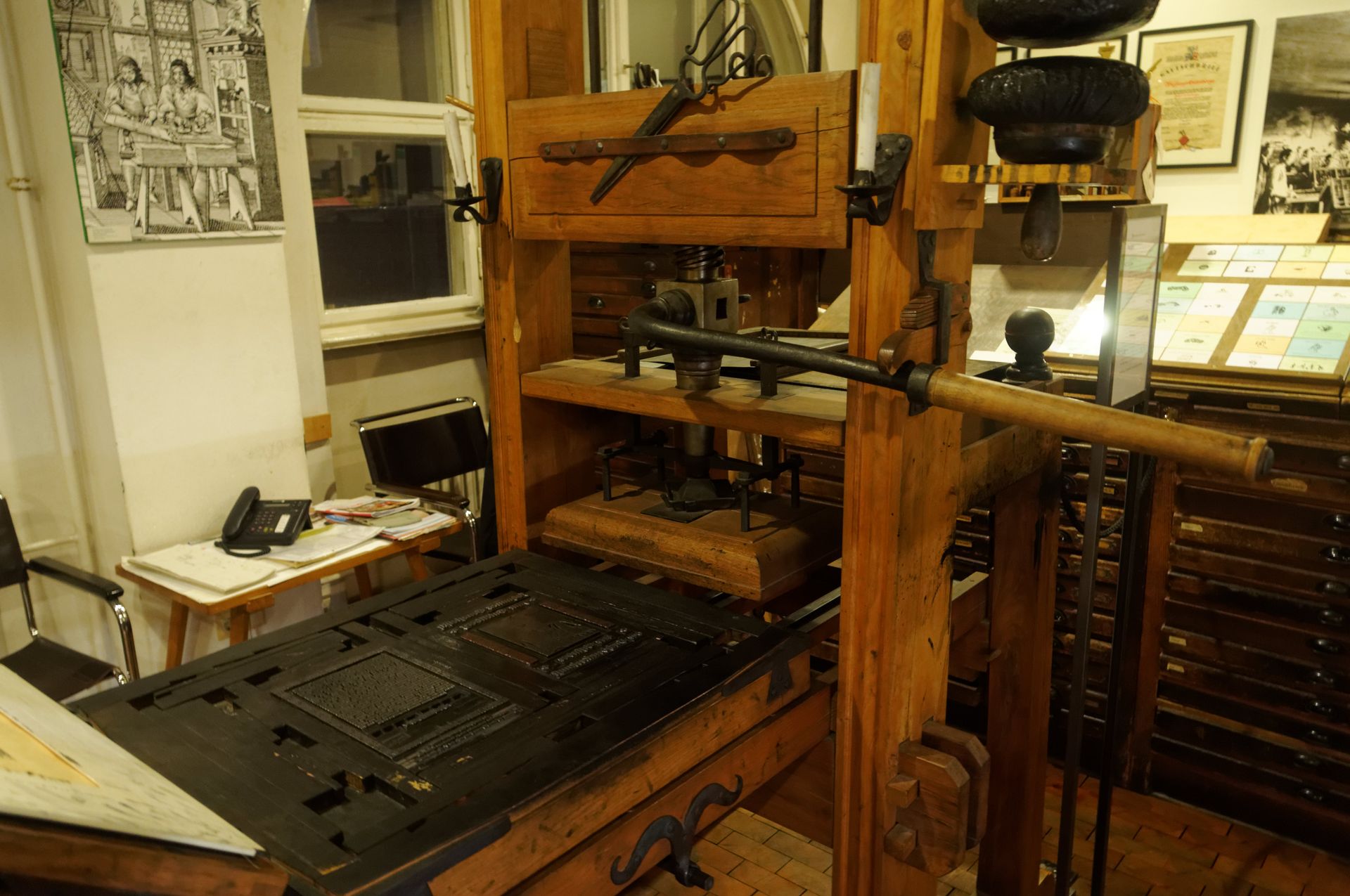
Johannes Gutenberg's movable-type printing press, developed in the 1440s, is one of the most consequential technologies in human history. But its emergence was not universally welcomed. Scribes who copied manuscripts by hand faced economic displacement. Some church officials worried about the circulation of texts outside clerical control. Rulers and monarchies understood, correctly, that widely distributed printed materials could undermine their control of information.
The Venetian Senate, responding to the rapid spread of printing in the 1470s and 1480s, passed laws regulating the book trade. Similar controls appeared across Europe as political authorities attempted to manage what printed materials could be produced and distributed. The anxiety was not irrational: the printing press did eventually enable the Protestant Reformation by allowing Martin Luther's ideas to spread across German-speaking territories faster than any previous technology could have supported. It contributed to the scientific revolution by allowing researchers to share findings and build on each other's work across long distances.
The economic model of the scribal system — skilled labor producing expensive, unique manuscripts for wealthy patrons — was disrupted quickly. Many scribes lost their livelihoods. But the volume of text in circulation increased so dramatically that the total demand for literacy-related skills grew, even as the specific craft of manuscript copying declined.
What the printing press illustrates is that the resistance to new information technologies is often about control as much as capability. Those who controlled the production and distribution of knowledge before Gutenberg had practical reasons to resist a technology that distributed that power more broadly. The same dynamic has played out repeatedly — with radio, television, and the internet — and it shapes how new technologies are received.
_01-1920x3413.jpg)
Credit: Donald Trung / Wikimedia Commons (CC BY-SA 4.0)
Mechanical refrigeration is now so fundamental to food supply chains, healthcare, and daily life that imagining opposition to it requires some effort. But the ice trade — harvested from frozen ponds and lakes in northern climates and shipped to cities and warm regions — was a significant industry in the 19th century, and it had every interest in opposing mechanical refrigeration.
Frederick Tudor, who built the New England ice trade into a global business in the early 19th century, faced enormous skepticism when he began — the idea of shipping ice to tropical climates and having it arrive usable seemed absurd to contemporaries. He eventually succeeded, building an industry that employed thousands of people and shaped global food and beverage trade. When mechanical refrigeration began to emerge in the second half of the 19th century, the ice trade lobbied against it, funded competing research, and argued that mechanical refrigeration was unsafe, unreliable, and dangerous.
The safety concerns were not entirely fabricated. Early refrigerants, including ammonia, sulfur dioxide, and methyl chloride, were toxic. Leaks could be deadly. The ice trade could argue, with some validity, that natural ice was a safer product. The mechanical refrigeration industry responded by developing safer refrigerants — eventually including chlorofluorocarbons, which solved the safety problem but introduced a different one, discovered decades later.
The transition from natural ice to mechanical refrigeration reshaped agriculture, medicine, and urban life in ways that were not fully anticipated even by the technology's advocates. Food could be stored, transported, and sold in ways that simply weren't possible before. The pharmaceutical cold chain — the system that keeps vaccines and other drugs refrigerated from production to patient — is a direct descendant of the refrigeration infrastructure built in the late 19th and early 20th centuries.

Credit: K / Pexels
The nuclear power industry was built in the 1950s and 1960s on a wave of optimism that electricity would become — in a phrase that became famous for its false promise — too cheap to meter. That forecast came from Lewis Strauss, chairman of the U.S. Atomic Energy Commission, in a 1954 speech. It was an exaggeration even then, and it contributed to a culture of overconfidence around a technology that turned out to be more complex, expensive, and dangerous to operate than its early advocates acknowledged.
But in its early decades, nuclear power faced significant skepticism from a different direction: the belief that it could never be made safe enough, or economically competitive enough, to be a serious energy source. The physical principles were sound — fission reactions release enormous amounts of energy — but translating that into a reliable, cost-effective power generation system required solving engineering problems that weren't obvious from the physics.
The accidents at Three Mile Island in 1979 and Chernobyl in 1986 hardened public and regulatory skepticism in many countries, and nuclear power's share of global electricity generation peaked and then declined through the 1980s and 1990s as new construction slowed. The U.S. did not commission a new nuclear plant for decades after Three Mile Island.
In the 2020s, attitudes have shifted again. The pressure to decarbonize electricity generation has renewed interest in nuclear power as a large-scale, low-carbon energy source. A new generation of reactor designs — including small modular reactors and advanced reactor concepts — has attracted significant investment. Countries including France, Japan, and the U.K. have revisited or reversed nuclear phase-out decisions. The technology dismissed as too dangerous or too expensive is being reconsidered on different terms.

Credit: KOSONGDANSATU / Pexels
The fax machine is now often cited as the quintessential obsolete technology — slow, cumbersome, still inexplicably in use at hospitals and government agencies — but its development and early dismissal is worth examining. The underlying technology, transmitting images over telephone lines, was developed in the 19th century. Alexander Bain demonstrated a version in the 1840s. But making it reliable, affordable, and fast enough to be genuinely useful took more than a century.
When fax technology reached commercial viability in the 1960s and 1970s, it was expensive, slow, and produced poor-quality output. Machines cost thousands of dollars. Sending a single page could take several minutes. The business case was limited to specific applications where transmitting a document faster than a courier could deliver it was worth the cost — stock quotes, weather maps, news photographs.
The fax market took off in the 1980s when manufacturers, particularly Japanese companies, drove down costs and improved quality dramatically. Within a few years, the fax machine moved from specialty item to office standard. It became the primary infrastructure for business document transmission at the precise moment — the late 1980s and early 1990s — when email was just beginning to reach business users. The fax was dismissed repeatedly before it reached mass adoption, and then was rendered obsolete surprisingly quickly by the technology that replaced it.
What the fax machine illustrates is that the timeline between a viable technology and mass adoption can be very long, and the period of mass adoption can be short. For decades, the conditions for mass fax adoption — affordable hardware, a widespread network of compatible machines, a critical mass of businesses equipped to receive faxes — were not met. Once they were, adoption was rapid. The same pattern of delayed network-effect adoption appears in many communication technologies.

Credit: Mads Leif Hansen / Unsplash
Alexander Fleming discovered penicillin in 1928, when he noticed that a mold contaminating one of his bacterial cultures was killing the bacteria around it. The discovery was published, recognized as interesting, and then substantially ignored for more than a decade. Fleming himself struggled to isolate penicillin in a stable, concentrated form. He reported that it might have limited clinical usefulness and returned to other research.
It was not until the early 1940s, when Howard Florey and Ernst Boris Chain at Oxford University took up the problem, that penicillin was developed into a clinical medicine. The timing was driven in part by World War II and the urgent need for something to treat infected wounds. Early clinical trials produced results that were extraordinary by any standard — patients dying of bacterial infections recovered. The U.S. and U.K. governments invested heavily in scale-up production.
The history of the decade-long gap between Fleming's discovery and clinical application is a story about the difficulty of chemical development, about institutional priorities, and about the way discoveries without obvious mechanisms or development pathways can sit on shelves. Fleming's observation that a mold was killing bacteria didn't immediately suggest a treatment, because the path from observation to stable, mass-producible medicine required solving problems that weren't visible from the initial discovery.
The antibiotic era that followed transformed medicine, agriculture, and demography. Bacterial infections that killed healthy adults — pneumonia, tuberculosis, sepsis from wounds — became treatable. The structure of hospitals changed. Surgery became safer. Life expectancy in many countries increased substantially during the antibiotic era. The decade of neglect between Fleming's discovery and clinical application is now studied as a case of a missed opportunity that cost lives that could have been saved.

Credit: K / Pexels
Photovoltaic cells — devices that convert sunlight directly into electricity — were first demonstrated in the 1950s. Bell Labs produced the first practical silicon solar cell in 1954. Early applications were limited to powering satellites, where the cost per watt was irrelevant compared to the impossibility of any other power source in orbit.
For decades, solar power was treated as a specialty technology unsuited to grid-scale electricity generation. The costs were orders of magnitude higher than coal, gas, or nuclear power. The intermittency problem — solar panels produce no electricity when the sun doesn't shine — was seen as a fundamental barrier to large-scale deployment. Skeptics argued that solar would remain a niche technology indefinitely, limited to off-grid applications and small-scale supplemental power.
The price decline that followed decades of manufacturing scale-up and technology improvement confounded most forecasts. The International Energy Agency's projections consistently underestimated how fast solar costs would fall and how much capacity would be deployed. By the early 2020s, solar power had become the cheapest source of electricity in history in most of the world, according to IEA analysis. The cost per watt of solar panels had fallen by more than 99% from the 1970s to the early 2020s.
The transformation did not happen on its own. Government subsidies in Germany, China, the U.S., and other countries supported the early market that allowed manufacturing to scale. China's investment in solar manufacturing capacity in the 2000s and 2010s drove down panel costs faster than almost any analyst had projected. The technology was dismissed as economically unviable based on its early-stage cost curve, at a point before the manufacturing scale that would change that cost curve had been achieved.

Credit: Sugden Guy sugden / Unsplash
The steam engine was not invented by James Watt — the machines that extracted water from mines using steam pressure existed before him — but Watt's improvements in the 1760s and 1770s, particularly the separate condenser, transformed the steam engine from a limited pump into a general-purpose power source. Even so, the full implications of what Watt had built were not immediately grasped.
Early steam engines were deployed primarily in mining, where they replaced horse-powered or human-powered pumping. The application to transportation — the idea that steam could move vehicles on land or water — was speculative and widely doubted. When Richard Trevithick demonstrated a steam-powered locomotive on rails in 1804, it was a novelty. When George Stephenson built the Rocket for the Liverpool and Manchester Railway in the late 1820s, he still faced critics who argued that metal wheels on metal rails would simply spin without traction, that trains moving faster than a horse trot would asphyxiate passengers, and that the noise and smoke would be intolerable.
The railway transformed the economic and social geography of the countries it reached. Journey times that had been measured in days became hours. Goods could be moved at a fraction of their previous cost. Cities that were not on major waterways, which had previously been limited in their growth, could expand once connected to rail networks. The concentration of industry in specific regions — the coal and steel regions of England, Wales, Germany, and the American Midwest — was enabled by rail.
The resistance to early railways was partly from vested interests — canal owners, stagecoach operators, innkeepers along established routes — and partly from genuine uncertainty about whether the technology would work as claimed. Both forms of resistance are familiar. The outcome was a technology that reshaped the industrial world so thoroughly that the 19th century is sometimes called the Railway Age.