
15 companies that owned their industry — and then didn't
These are stories about decisions, blind spots, and the ways that dominant companies misread the threats that eventually replaced them

Evan-Amos / Wikimedia Commons
Monopoly feels permanent when you are inside it. The company that controls the market sees its own dominance as proof that it has solved the problem its industry exists to solve — that its product is the best answer to the question its customers are asking, and that the barriers to competition (patents, scale, distribution, brand) are high enough to protect that position indefinitely. The view from outside the monopoly is different: what looks like an unassailable market position is often a specific answer to a specific question, and the question changes.
Kodak did not lose to a better film company. It lost to a world that stopped asking the question that film answered. Nokia did not lose to a better phone manufacturer. It lost to a world that stopped asking what a mobile phone was and started asking what a pocket computer should be. Blockbuster did not lose to a better video rental company. It lost to a world that stopped asking where to go to rent a movie and started asking why it needed to leave the house at all.
The pattern that connects these collapses is not stupidity or complacency, though both appear in some of the cases. It is the specific cognitive trap that Clayton Christensen described as the innovator's dilemma: the decisions that make a company successful in the present are often the decisions that make it vulnerable to displacement in the future. Serving existing customers well, investing in the products they are currently buying, and optimizing the business model that currently generates profit are entirely rational behaviors that collectively produce the conditions for disruption.
This list covers 15 companies — from the 19th century to the 2020s — whose monopoly positions collapsed through specific, identifiable mechanisms. Each entry covers what the company controlled, how it lost control, the specific decision or blind spot that made the loss possible, and what the story reveals about how technology monopolies actually work.
Kodak
Friedrich Haag / Wikimedia Commons (CC BY-SA 4.0)
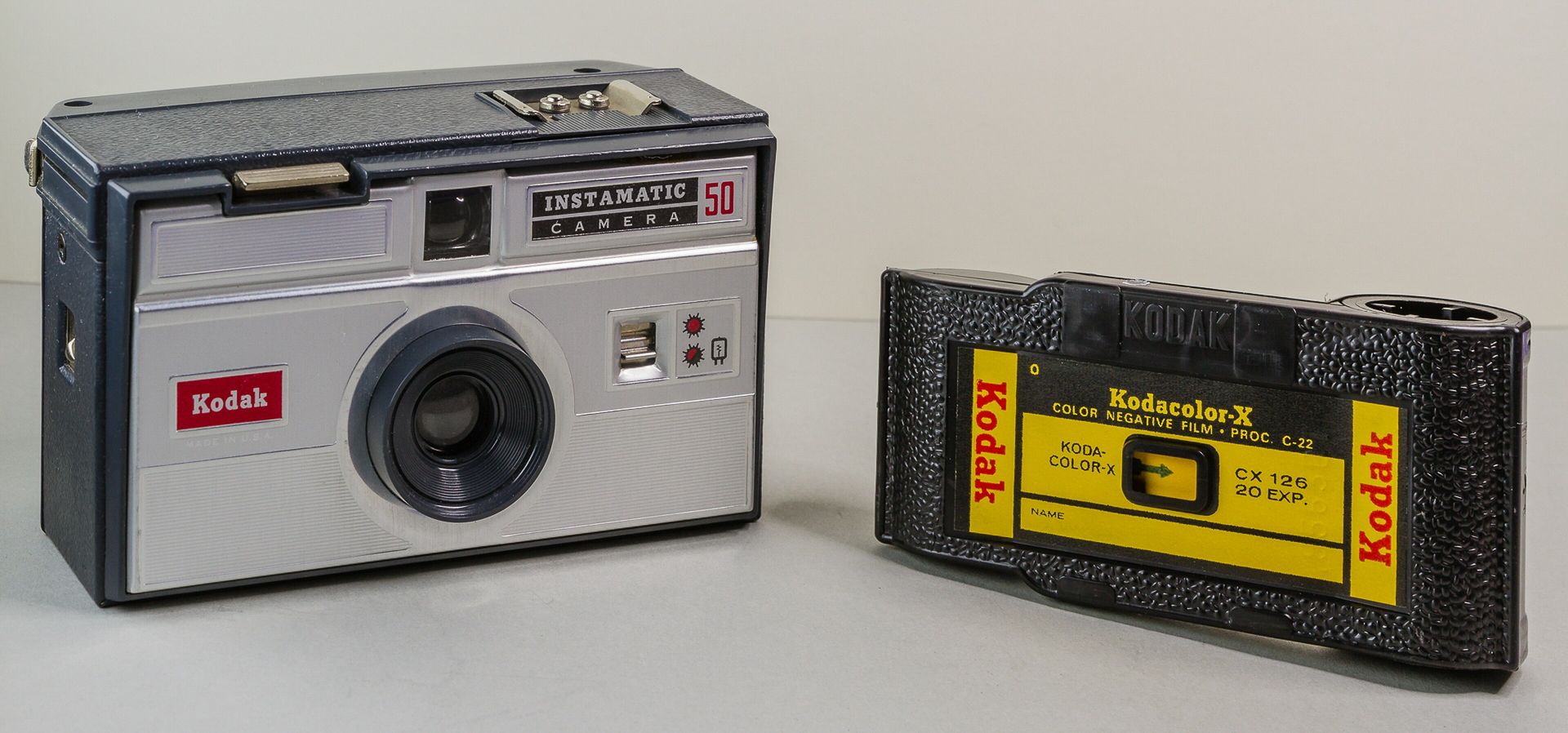
Kodak's monopoly on photographic film was so complete that it defined a color — Kodak yellow — and a cultural experience (the Kodak moment) in the same stroke. At its peak in the 1970s, Kodak held approximately 90% of the US film market and 85% of the US camera market. It employed approximately 145,000 people globally. It was, by every measure, one of the most dominant companies in American industrial history.
The specific irony of Kodak's collapse is that Kodak invented digital photography. A Kodak engineer, Steve Sasson, built the first digital camera in 1975. The company's management reviewed the technology and identified the threat precisely: digital photography would eventually replace film. Their response was to suppress it — not because they could not see what was coming, but because film was an extraordinarily profitable business and digital was a threat to that business, not an opportunity within it.
Kodak understood digital photography as a problem to be managed rather than an opportunity to be seized. When digital became unavoidable, the company attempted to transition — launching digital cameras, photo kiosks, digital printing services — but it was competing in markets where it had no structural advantage against companies that had built their businesses around digital from the beginning. Kodak filed for bankruptcy in 2012. The specific lesson: seeing a disruptive technology clearly is not the same as being able to respond to it rationally when the response requires cannibalizing your own most profitable business.
Blockbuster
Ad Acta / Wikimedia Commons (CC BY-SA 2.0)
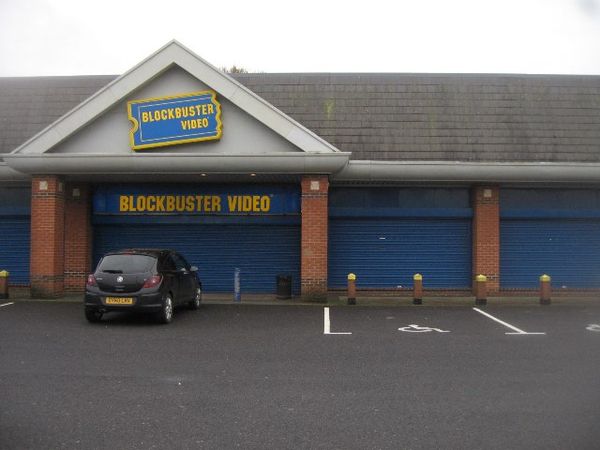
Blockbuster's dominance of the video rental market — approximately 9,000 stores at its peak in 2004, 60,000 employees, $6 billion in annual revenue — was built on the specific economics of physical media rental: studios supplied the tapes, customers came to the store, and Blockbuster's primary competitive advantage was the density of its store network and its relationship with the studios that supplied the inventory.
In 2000, Reed Hastings offered to sell Netflix $NFLX to Blockbuster for $50 million. Blockbuster declined. The specific reason the offer was declined — and the specific reason Netflix survived its early years — reveals the mechanism of Blockbuster's disruption: Blockbuster's revenue model depended significantly on late fees (approximately $800 million annually, roughly 16% of total revenue), which Netflix eliminated entirely. Netflix's no-late-fee model was not primarily a technology play; it was an attack on the most hated feature of Blockbuster's customer experience, enabled by the economics of a subscription model rather than a per-transaction model.
When Blockbuster eventually attempted to compete by eliminating late fees itself (2004) and launching an online service (Blockbuster Online, 2004), the parent company Viacom's debt load and shareholder short-termism made it impossible to sustain the transition. Blockbuster filed for bankruptcy in 2010. The specific lesson: the most profitable feature of a dominant company's model is often the thing that makes the model most vulnerable to a competitor willing to give it away.
Nokia

Annatsach / Wikimedia Commons (CC BY-SA 4.0)
Nokia controlled approximately 40% of the global mobile phone market in 2007 — the year the iPhone launched. It was the world's most valuable brand in 2000. Its research and development budget was larger than Apple $AAPL's entire revenue. Its distribution network covered the world. By any conventional measure of competitive position, Nokia was unassailable.
The specific mechanism of Nokia's collapse was not a failure to see the smartphone coming — Nokia had been developing touchscreen and internet-connected phone concepts since the early 2000s, and its internal research had produced prototypes that anticipated many iPhone features. The failure was organizational and strategic: Nokia's engineering organization was too large and too hierarchical to move at the pace the smartphone transition required; its software division (Symbian) was a consortium rather than an internally controlled asset; and its management culture had produced a specific fear of delivering bad news up the hierarchy that meant the reality of Nokia's competitive position was systematically understated internally.
Nokia's CEO Stephen Elop described the company as standing on a "burning platform" in a leaked internal memo in 2011 — a vivid and accurate description of a company that had recognized its crisis and was still unable to respond effectively. Microsoft $MSFT acquired Nokia's handset division in 2013 for $7.2 billion and wrote it down almost entirely within two years. The specific lesson: organizational capability, not strategic insight, is the binding constraint on the response to disruption.
BlackBerry
Kt38138 / Wikimedia Commons (CC BY-SA 4.0)
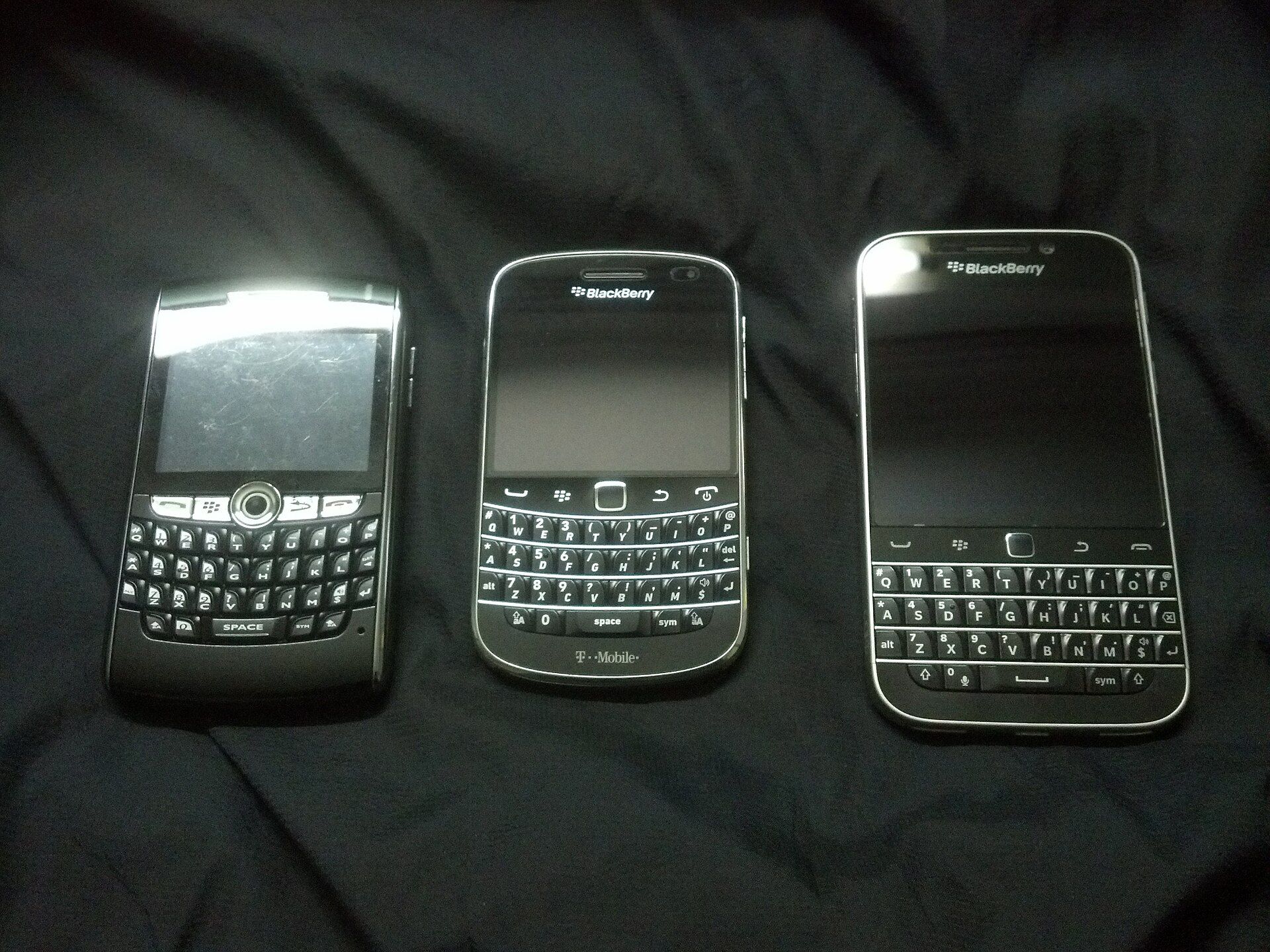
BlackBerry (Research In Motion) controlled the enterprise smartphone market so completely in the mid-2000s that "BlackBerry" was a synonym for mobile email and the phrase "CrackBerry" entered the language as a description of its addictive pull. At its peak in 2008, BlackBerry held approximately 20% of the global smartphone market and 50% of the US smartphone market. Its physical keyboard, its secure enterprise email infrastructure, and its BBM (BlackBerry Messenger) messaging service constituted a platform that enterprise IT departments trusted and individual users found indispensable.
The specific failure of BlackBerry was a misreading of what its customers valued. BlackBerry's management assumed that enterprise customers' primary concern was security and that consumers would never persuade enterprise IT departments to allow iPhones — with their less-controlled architecture — into corporate networks. Both assumptions proved wrong. The iPhone's consumer appeal was strong enough to produce a bring-your-own-device movement that IT departments eventually accommodated rather than resisted.
BlackBerry's response to the iPhone — maintaining the physical keyboard architecture that it believed was a core feature rather than a constraint, and releasing touchscreen devices that were neither as capable as the iPhone nor as keyboard-functional as its own flagship devices — produced a product lineup that satisfied neither market. Its market share fell from 50% to under 1% in five years. The specific lesson: platform advantages can be eroded from the consumer end even when the enterprise end appears secure.
MySpace
GoDawgs at English Wikipedia via Wikimedia Commons
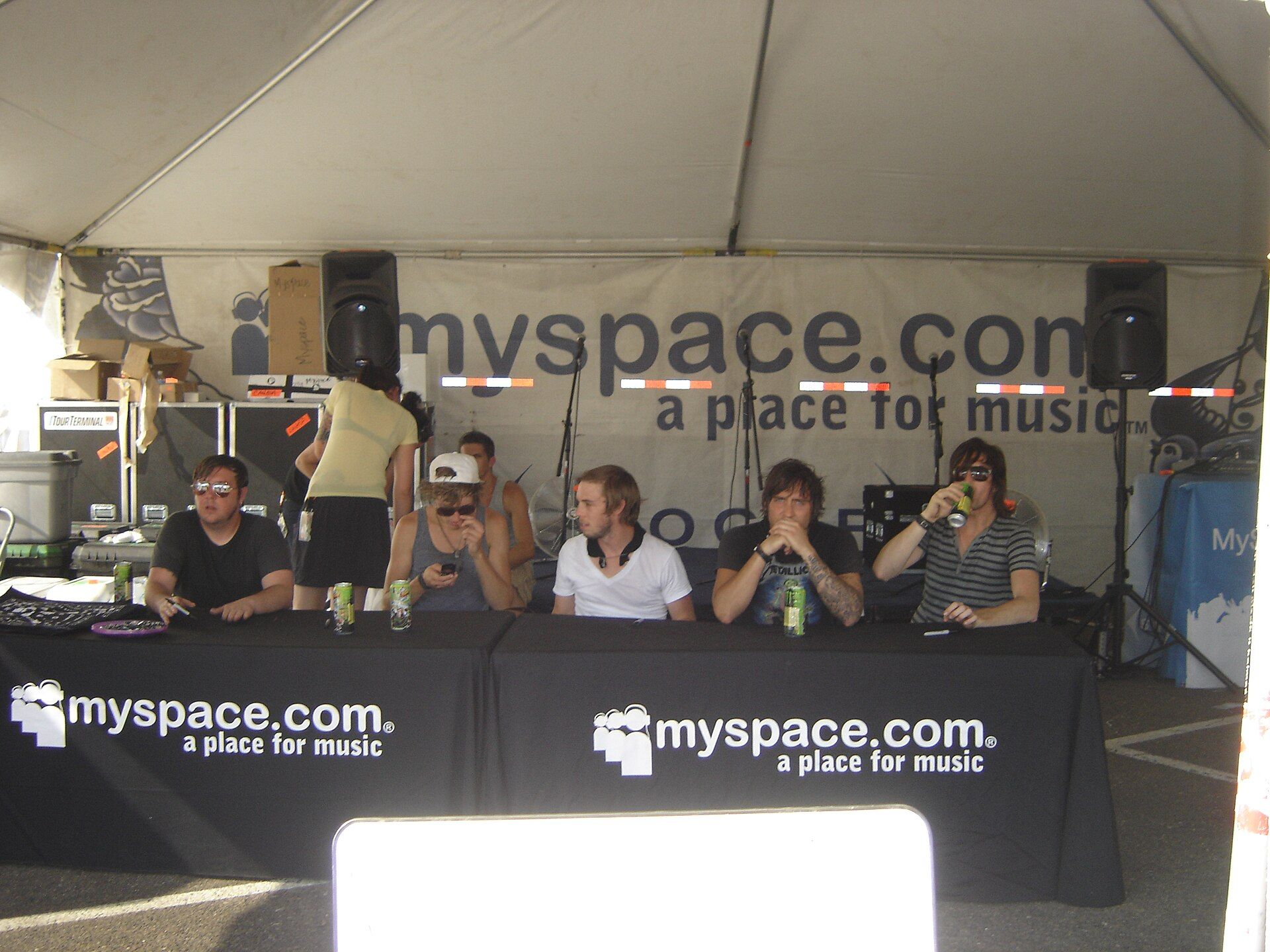
MySpace was the world's most visited website in 2006, exceeding Google $GOOGL. It had 100 million users. News Corporation had paid $580 million for it in 2005, a price that reflected the genuine dominance of the platform. By 2011, it was sold to a private equity group for $35 million.
The specific mechanism of MySpace's collapse was a product and culture failure rather than a technology transition. MySpace's page customization — the ability for users to design their own profile pages with custom HTML, backgrounds, and embedded music players — became the product's defining characteristic and simultaneously its primary failure: the pages were slow, garish, and inconsistent, and the platform's infrastructure was too centralized and too slow to improve the experience as Facebook $META's cleaner, faster, more uniform design attracted users who valued simplicity over customization.
MySpace's management culture under News Corporation prioritized advertising revenue over user experience in ways that compounded the product failure: the platform was loaded with advertisements, the spam problem was poorly managed, and the music industry focus that made MySpace relevant to a specific demographic did not extend to the broader social connection use case that Facebook served more effectively. The specific lesson: in platform businesses, product quality is not separable from product culture, and a product culture optimized for advertising revenue produces experiences that users leave.
Yahoo
Coolcaesar / Wikimedia Commons (CC BY-SA 3.0)
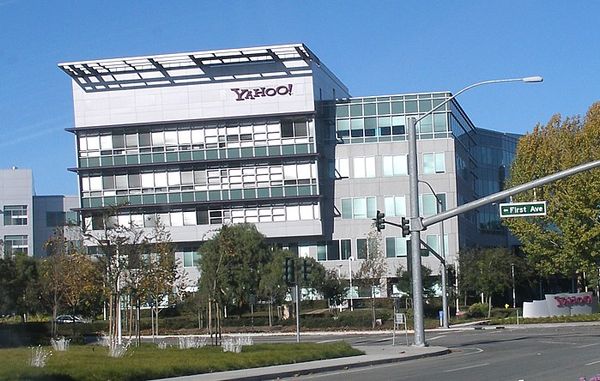
Yahoo was the internet's home page — literally, for millions of users who set it as their browser default and rarely navigated beyond it. At its peak in 2000, it was valued at approximately $125 billion. It was offered the opportunity to acquire Google $GOOGL for $1 million in 1998 (it passed), to acquire Facebook $META for $1 billion in 2006 (it offered, then reduced the offer, and Zuckerberg walked), and to acquire itself to Microsoft $MSFT for $44.6 billion in 2008 (its board rejected the offer). It was eventually sold to Verizon $VZ for $4.5 billion in 2017.
Yahoo's specific failure was an identity crisis that produced strategic paralysis: the company could not decide whether it was a media company, a technology company, or a platform, and the succession of CEOs who cycled through between 2001 and 2012 each brought a different answer to the question. The media company answer led to expensive content acquisitions. The technology company answer led to engineering investments that produced inferior versions of Google's search and Facebook's social graph. Neither answer was sustained long enough to produce a coherent competitive position.
The specific moment that most clearly illustrates Yahoo's failure: its rejection of Google's $1 million acquisition offer in 1998, followed by its $3 billion offer to acquire Google in 2002 (which Google declined), followed by its integration of Google search results into its own product — essentially distributing Google's product to its own users while paying Google for the privilege. The specific lesson: strategic confusion in platform businesses is self-compounding, because the platform's value to users depends on consistent investment in a single direction.
Xerox
Raysonho at Open Grid Scheduler / Grid Engine via Wikimedia Commons (CC0)
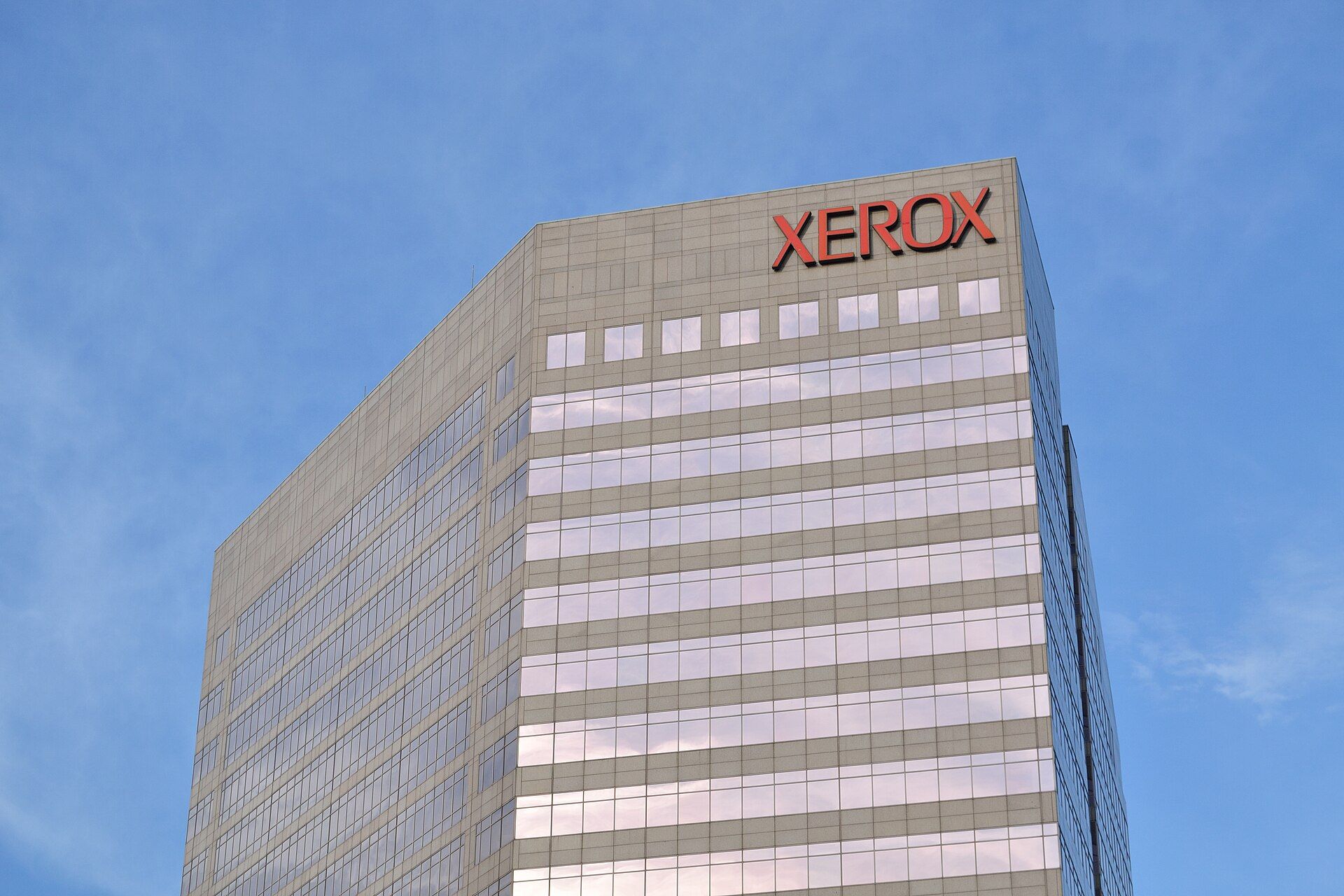
Xerox's monopoly on photocopying was so total that "Xerox" became a verb. Between 1959 and the early 1970s, Xerox's xerography technology was so completely protected by patents that no competitor could legally build a plain-paper copier, and the company grew from a small photography supply company to a Fortune 500 corporation in less than a decade. Its Palo Alto Research Center (PARC) invented, among other things, the graphical user interface, the computer mouse, ethernet networking, and the laser printer.
Xerox failed to commercialize most of these inventions — not because it lacked the resources or the engineering talent but because each invention represented a threat to the existing business model. The personal computer was a threat to the large institutional copier business; the graphical user interface was a feature for a product Xerox was not building; ethernet was infrastructure for a distributed computing architecture that Xerox's centralized equipment business was not positioned to exploit.
Apple $AAPL's Steve Jobs visited PARC in 1979 and saw the graphical user interface. Within three years, Apple had produced the Lisa, and within five years, the Macintosh. The specific lesson: a research organization that generates transformative technologies but exists within a company whose business model cannot accommodate them will consistently find that its inventions leave through the front door to competitors. Xerox did not fail to innovate; it failed to connect its innovation pipeline to its commercial strategy.
AOL

Coolcaesar / Wikimedia Commons (CC BY-SA 3.0)
AOL's dominance of the early consumer internet — its 30 million subscribers at peak, its ubiquitous installation CDs mailed to every household in America, its walled garden of content and services — represented the internet as a managed, curated, dial-up experience that the company's management believed was what consumers wanted. The $165 billion merger with Time Warner in 2001, the largest merger in history at the time, was premised on the assumption that AOL's internet access monopoly and Time Warner's content library were complementary assets that would dominate the internet era together.
The merger failed because both assumptions were wrong simultaneously: broadband was replacing dial-up at a pace that made AOL's per-hour pricing model obsolete; the open web was replacing walled gardens as the user preference; and the "synergies" between internet access and media content that the merger was designed to exploit never materialized because the two companies' cultures, technologies, and business models were incompatible. AOL was written down to near zero within a decade.
The specific lesson of AOL's collapse is about the definition of the competitive moat. AOL's moat was the friction of the early internet — the difficulty of the alternative, not the quality of the product. As soon as the alternative became easier (broadband, browser-based internet, free email), the moat disappeared. The specific lesson: friction is not a moat; it is a countdown.
IBM (personal computing)
Ruben de Rijcke / Wikimedia Commons (CC BY 3.0)
IBM $IBM's dominance of the mainframe and minicomputer markets in the 1970s was legitimate and enormous: IBM and its competitors (collectively referred to as "IBM and the Seven Dwarfs") controlled the entire enterprise computing market, and IBM's market position was so dominant that the phrase "nobody ever got fired for buying IBM" entered the business vocabulary.
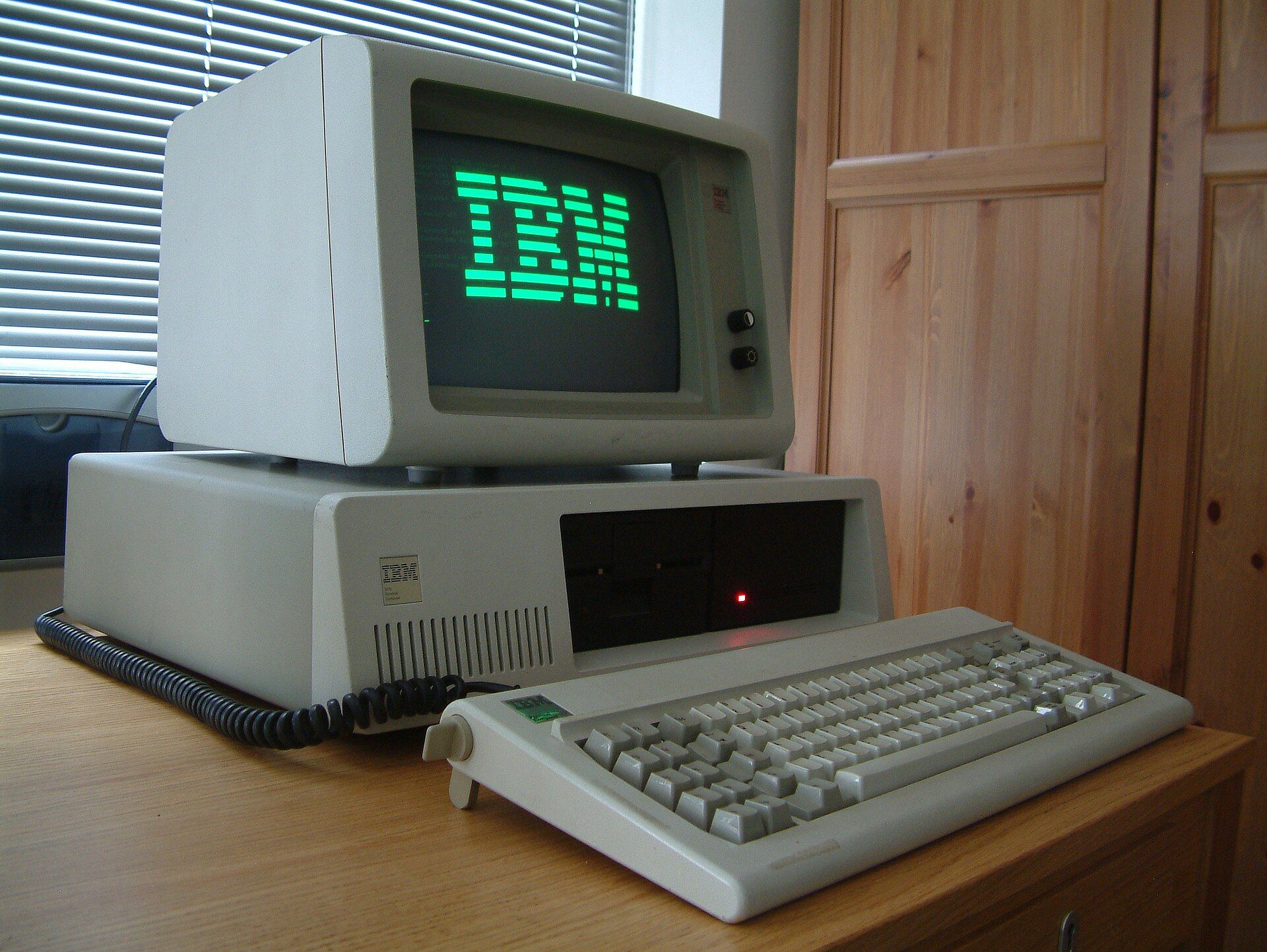
IBM's response to the personal computer — commissioning an internal skunkworks team to build the IBM PC, rushed to market in 1981 — was unusually fast and unusually successful by the standards of large company innovation. The IBM PC became the dominant personal computer platform within three years. The specific failure was the decision to build the PC with an open architecture using components from independent vendors — Intel $INTC's microprocessors and Microsoft $MSFT's operating system — rather than proprietary IBM technology.
This decision was rational given the timeline pressures: building proprietary components would have taken years and the window was closing. But it meant that the two most valuable components of the PC — the chip and the operating system — were owned by vendors who could and did license them to IBM clones. IBM's PC business was commoditized by its own architecture within five years, and the value that IBM intended to capture from the personal computing era was captured instead by Intel and Microsoft. The specific lesson: platform strategy determines who captures value in a technology ecosystem, and open architecture decisions are rarely reversible.
Netscape
Indolering / Wikimedia Commons (CC0)
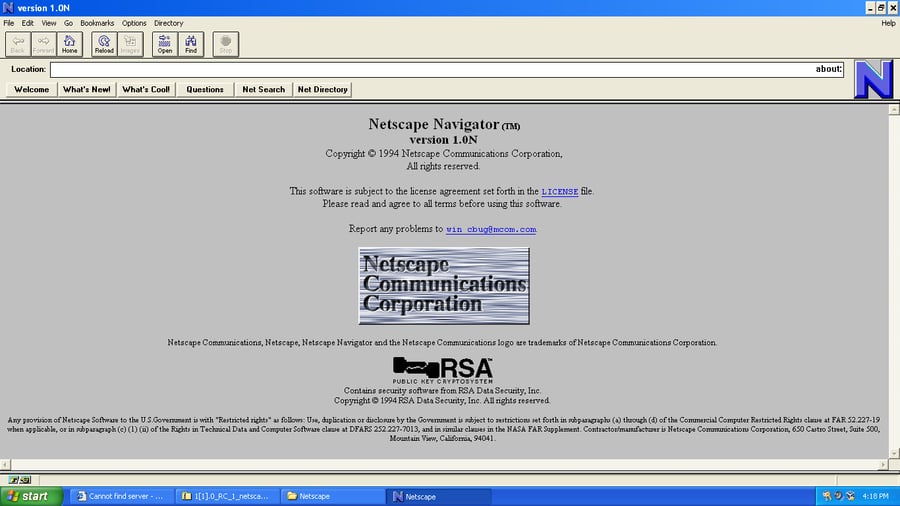
Netscape Navigator — the first commercial web browser, released in 1994 — controlled approximately 90% of the browser market at its peak and was the company that made the World Wide Web commercially legible to consumers and businesses. Netscape's IPO in 1995, which valued a company with no profits at $2.9 billion on its first day of trading, inaugurated the dot-com era and established the template for technology company valuations that persists today.
Microsoft $MSFT's response to Netscape's dominance — giving away Internet Explorer bundled with Windows, using its Windows monopoly to ensure that IE was the default browser on virtually every PC sold — was the basis for the landmark antitrust case United States v. Microsoft (1998). Microsoft was found to have illegally maintained its monopoly, but the remedy — requiring Microsoft to allow computer manufacturers to hide IE's icon — was sufficiently limited that it did not reverse Netscape's commercial collapse.
Netscape was acquired by AOL in 1998 for $4.2 billion. The specific lesson of Netscape's collapse was the power of distribution: a technologically superior product (Navigator was generally considered better than early versions of IE) can be defeated by a competitor that controls the distribution channel, particularly when the distribution is effectively free from the competitor's perspective.
Compaq
Brian R. Lueck / Wikimedia Commons
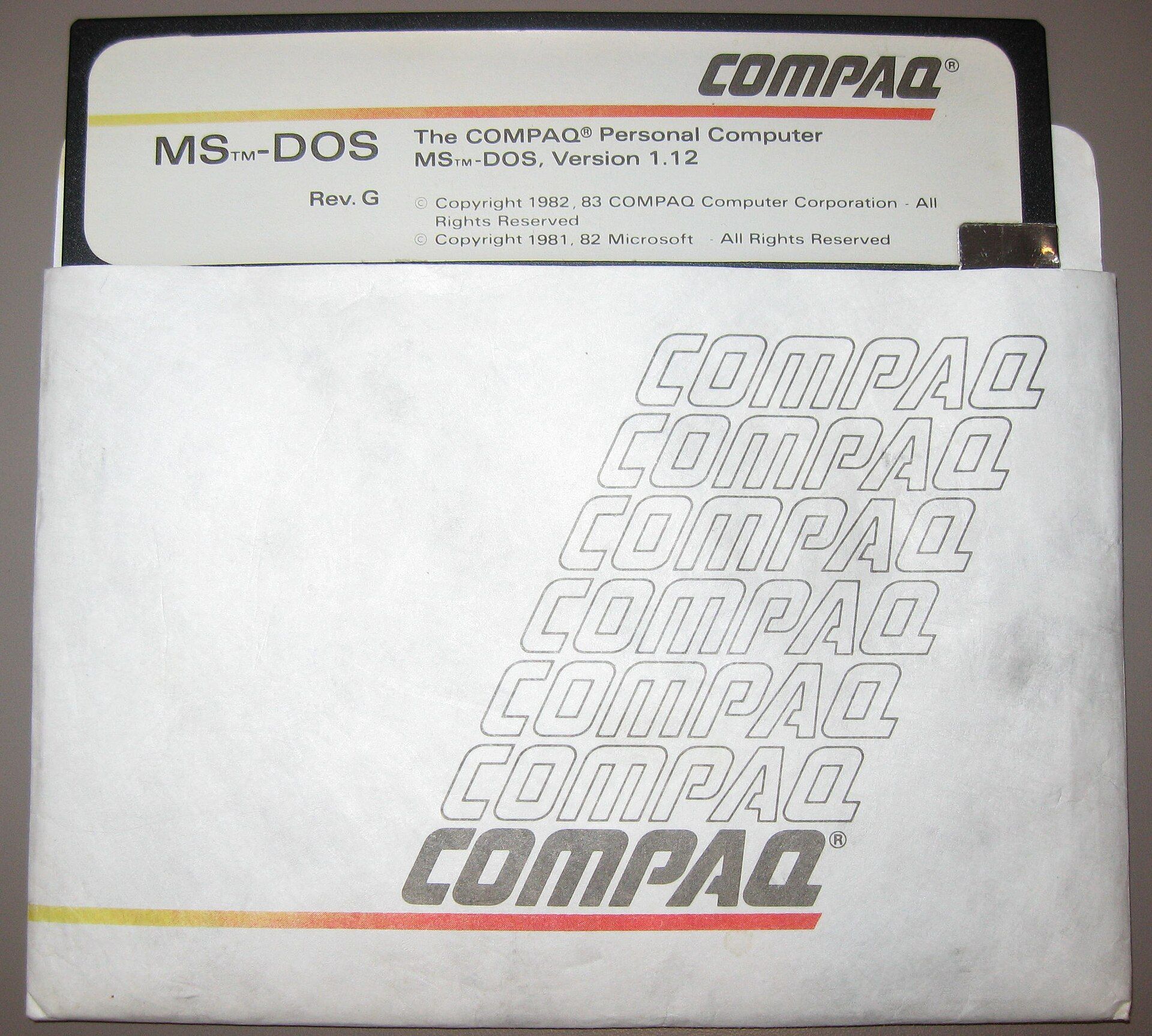
Compaq was the fastest company in history to reach $1 billion in sales (in its first four years), built the most successful IBM $IBM clone PC business of the 1980s, and acquired Digital Equipment Corporation (DEC) in 1998 for $9.6 billion — at the time the largest acquisition in technology history. It was acquired by HP $HPQ in 2002 for $25 billion, and within a decade the combined HP-Compaq personal computing business was a liability rather than an asset.
Compaq's specific failure was the inability to transition from a hardware-margin business to a services and software business as PC hardware margins collapsed. The PC clone business that Compaq had built was predicated on selling premium hardware at premium prices; as the PC market commoditized in the late 1990s, the premium evaporated and Compaq's cost structure — built for a higher-margin business — became unsustainable. Dell $DELL's direct-to-consumer model, which eliminated the distributor margin that Compaq's channel-based sales required, produced a cost advantage that Compaq could not match without restructuring its entire go-to-market approach.
The DEC acquisition, intended to move Compaq into the enterprise services market, added complexity and cost rather than capability. The specific lesson: scale in a commoditizing market is not an asset; it is overhead.
Tower Records
Caldorwards4 / Wikimedia Commons (CC BY-SA 3.0)
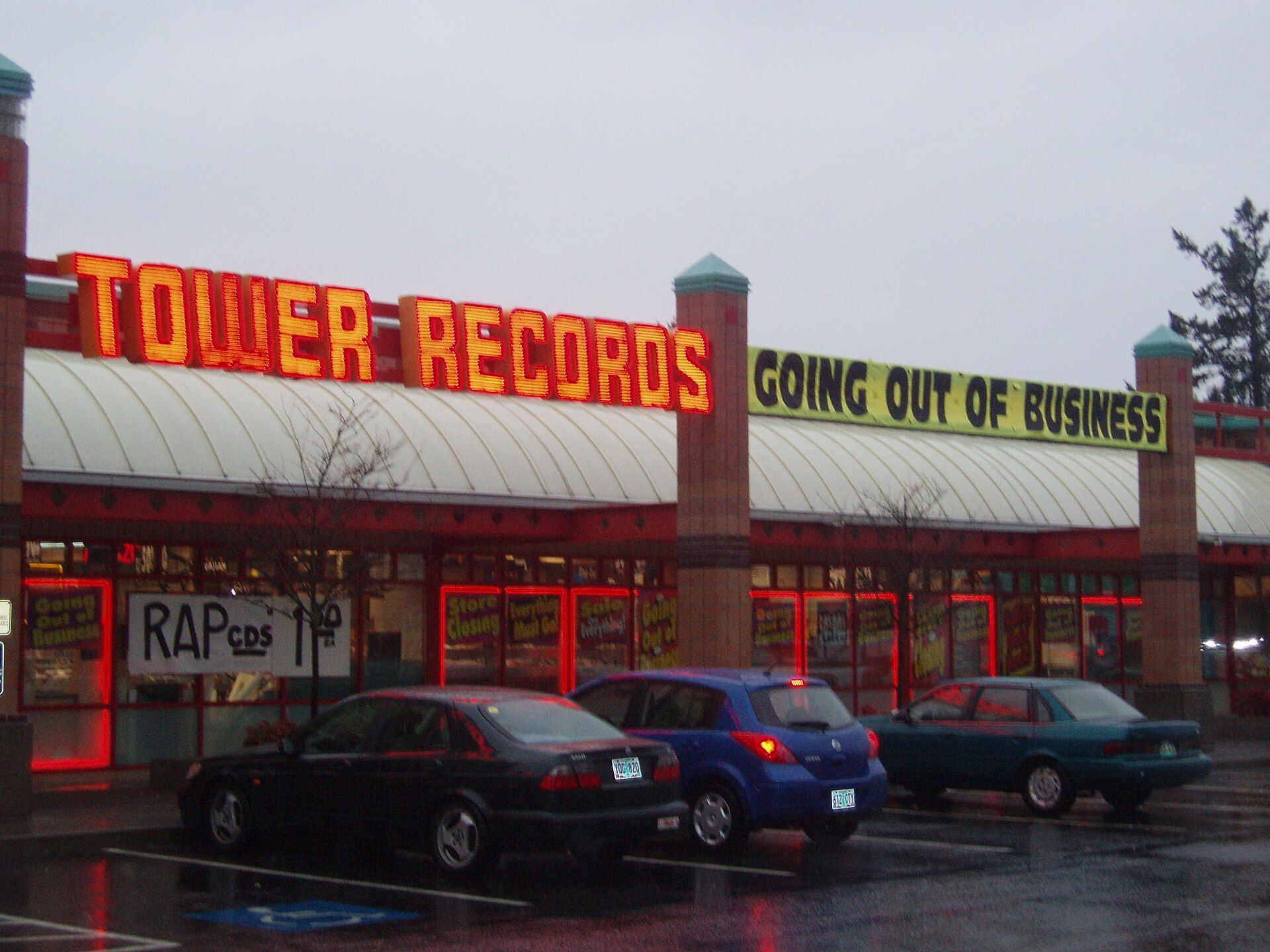
Tower Records' dominance of the music retail market — approximately 200 stores globally at its peak, the destination for serious music buyers in every major city in the world — was built on the combination of physical inventory depth (Tower stores carried comprehensive catalogs that no other retailer matched), the experiential quality of browsing physical music, and the cultural authority of a store that serious musicians and music professionals used themselves.
The digital download market did not replace Tower with a better physical retail experience; it replaced the experience of buying music with the experience of instantly owning any song ever recorded for $0.99. No physical retailer could compete with unlimited digital inventory and instant delivery at a fraction of the physical price. Tower filed for bankruptcy in 2006 and closed all stores by the end of that year.
The specific lesson of Tower's collapse is the difference between relative competition and absolute substitution: Tower was not defeated by a competitor who did physical music retail better; it was defeated by a technology that made physical music retail structurally obsolete. When the product category is eliminated rather than merely disrupted, no amount of competitive excellence in the existing format is relevant.
Encyclopædia Britannica

SEWilco / Wikimedia Commons (CC BY-SA 3.0)
Encyclopædia Britannica had been the prestige reference work in the English-speaking world since 1768 — a publishing monument whose set of volumes in a home library signaled education, aspiration, and the serious treatment of knowledge. Its door-to-door sales operation was one of the most effective in American consumer business history, generating $650 million in annual revenue at its peak in the early 1990s.
The specific mechanism of Britannica's disruption was the Microsoft $MSFT Encarta CD-ROM encyclopedia, released in 1993 at $99 for a license that included comparable reference content to Britannica's multi-volume set that sold for $1,500 to $2,200. Britannica's management initially dismissed CD-ROM reference as a toy, then attempted to price a CD-ROM version of Britannica at $1,000 to protect the print business, and eventually collapsed — the company changed hands multiple times and eliminated its print encyclopedia in 2012.
The Wikipedia phase of the disruption — which replaced both Britannica and Encarta with a free, continuously updated, collaboratively produced reference that was superior in coverage and approximately equal in accuracy for most topics — completed the substitution and eliminated the commercial opportunity for any paid reference product. The specific lesson: pricing decisions made to protect an existing product's margin can eliminate the possibility of competing in the replacement product's market entirely.
Polaroid
-900x894.jpg)
Joe Haupt / Wikimedia Commons (CC BY-SA 2.0)
Polaroid's instant photography technology — the self-developing film that Edwin Land invented in 1948 and that was protected by a patent portfolio so extensive that Kodak's attempt to enter the instant photography market resulted in a landmark patent infringement verdict of $909 million against Kodak in 1990 — was a genuine technological marvel that the company defended successfully against direct competition for 40 years.
What Polaroid could not defend against was the elimination of the use case that instant photography served. The specific value of the Polaroid photograph was its immediacy — you could see the result seconds after taking the picture, without waiting for film processing. Digital photography and then smartphone cameras eliminated this advantage not by doing instant photography better but by making instant photography redundant: a digital image is immediate, shareable, editable, and free to produce in unlimited quantities. Polaroid filed for bankruptcy in 2001 and again in 2008.
The specific lesson of Polaroid's collapse distinguishes it from Kodak's: Polaroid's patents successfully prevented direct competition from Kodak, demonstrating that legal protection of a monopoly can be complete and still insufficient. What patents protect is the specific technology; they cannot protect the underlying use case from being served by an entirely different technology.
Sears

Daniel Case / Wikimedia Commons (CC BY-SA 3.0)
Sears dominated American retail for most of the 20th century in a way that has no contemporary equivalent — it was simultaneously the country's largest retailer, its largest employer, and, through the Sears catalog, the primary mechanism by which rural and suburban Americans accessed consumer goods that geography would otherwise have made unavailable. At its peak, Sears controlled approximately 2% of the entire US economy. Its brands (Kenmore appliances, Craftsman tools, DieHard batteries) were the default choice in their categories for generations of American consumers.
The specific mechanism of Sears's collapse was not the internet — Amazon $AMZN did not destroy Sears; Sears had already lost most of its market position before Amazon became a serious retail competitor. What destroyed Sears was the emergence of category killers in the 1980s and 1990s: Home Depot $HD took the hardware and home improvement business, Best Buy $BBY took the electronics business, Walmart $WMT and Target $TGT took the general merchandise business. Each category specialist offered deeper inventory and lower prices in its specific category than Sears could match while maintaining a full-line department store.
Sears's management response to this competitive pressure was financial engineering rather than retail innovation: the 2005 merger with Kmart, executed by hedge fund manager Eddie Lampert, treated Sears's real estate portfolio as the primary asset and the retail operation as a secondary concern. The specific lesson: a general retailer that loses category after category to specialists cannot be rescued by financial restructuring of its real estate; the real estate's value depends on the retail operation, not the other way around.