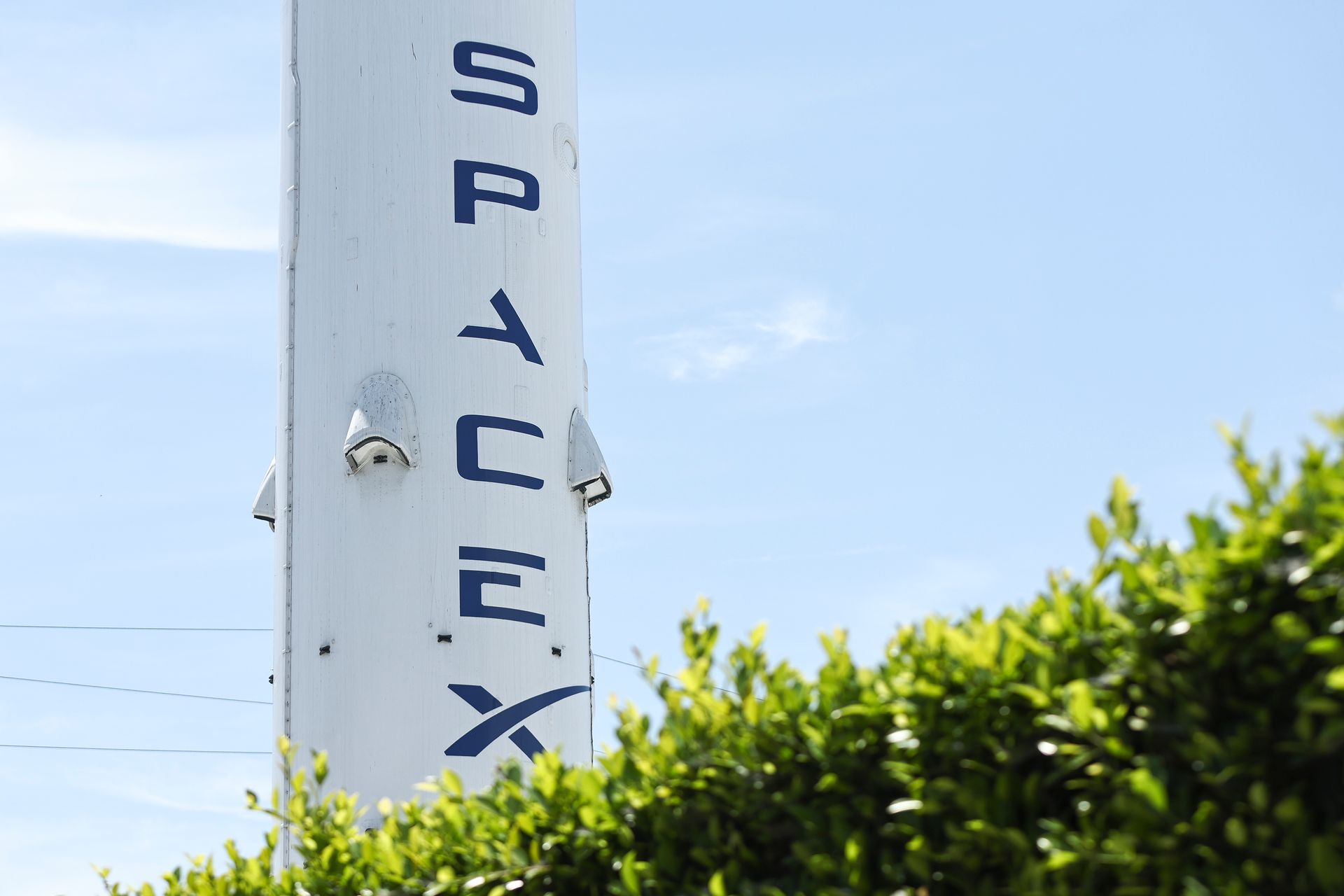
In December 2008, Tesla $TSLA closed a financing round at 6 p.m. on Christmas Eve. It was the last hour of the last day possible before payroll bounced. The same week, SpaceX had just squeaked through its fourth rocket launch after three consecutive failures. Both companies were weeks from death.
Seventeen years later, the argument for building AI data centers in space rests in part on the claim that CEO Elon Musk has taken technologies dismissed as economically irrational and made them work.
But the pattern was slower, more dependent on outside help, and harder to replicate than the shorthand suggests. Neither company did it alone, and neither did it quickly.
The question for orbital data centers isn't whether Musk can repeat the pattern. It's whether the target will hold still long enough for the economics to close.
Losses, government contracts, and a collapsing cost curve
Neither Tesla nor SpaceX survived on private capital alone. In January 2010, the Department of Energy issued Tesla a $465 million loan to produce electric vehicles and build out its Fremont, Calif., factory, arriving at a moment when private capital had all but dried up. In December 2008, NASA awarded SpaceX a $1.6 billion contract for 12 cargo flights to the International Space Station, followed by up to $2.6 billion in 2014 to develop crewed missions. These weren't grants. They were the guaranteed revenue streams that let both companies invest in the future rather than just survive the present.

The losses were real and lasted a long time. Tesla was incorporated in July 2003, began selling its first car in 2008, and didn't post a full year of net income until 2020. SpaceX was founded in 2002, achieved its first successful orbital launch in 2008, and didn't prove the economics of reusable rockets until March 2017, when a previously flown Falcon 9 booster carried a satellite to orbit for the second time. Both timelines run to roughly 15 years. Both required the companies to absorb losses that no purely commercial logic could justify.
What ultimately vindicated both was a collapsing cost curve. Lithium-ion battery pack prices fell 90% in real terms between 2010 and 2025, making electric cars viable at mass-market prices. From the Space Shuttle's first flight in 1981 to SpaceX's first successful booster recovery in 2015, launch costs fell by a factor of 20. Refurbishing a recovered booster now costs less than 10% of the price of a new one, according to Musk.
In both cases, the technology worked long before the price did. Government support bought the time for the price to fall.
Where the pattern holds and where it breaks
The pattern is consistent: absorb years of losses, ride a declining cost curve, and lean on government support to bridge the gap. For orbital data centers, the cost that needs to fall is launch price per kilogram. Industry estimates put the point at which orbital data centers become cost-competitive with ones built on the ground at around $200 to $500 per kilogram.
Falcon 9 runs about $2,700 per kilogram. Starship, SpaceX's next-generation rocket, is designed to carry far more cargo per flight — and because a rocket's launch costs don't scale proportionally with how much it carries, more cargo per flight means a lower cost per kilogram. That's the mechanism Musk is betting on to bring the price into range. But Starship is still ramping toward commercial operations, and SpaceX has invested more than $15 billion in the vehicle without yet proving the economics at scale.
The harder question is whether the target is standing still. Terrestrial data centers keep getting cheaper and faster to build. Uptime Institute research found that the largest and most efficient data centers can now be built in nine to 10 months at $7 million to $8 million per megawatt, roughly half the cost and three to four times faster than a decade ago. McKinsey projects $5.2 trillion in data center investment by 2030 for AI alone. That wall of capital will push terrestrial costs further down.
When Tesla was competing against petrol engines and SpaceX against disposable rockets, neither incumbent was getting meaningfully cheaper or better. That gave the new technology time to catch up. Terrestrial data centers don't offer the same opening. The bar that orbital data centers have to clear keeps rising.