
Credit: Canva Images
The financial industry sells a product unlike any other. You cannot hold it, test it, or return it. Its quality often cannot be judged for decades. That gap between what you pay and what you can verify creates room for practices that would not survive in markets where customers can compare products on a shelf. Banks, brokers, fund managers and insurers have built durable businesses inside that gap.
None of this requires a conspiracy. Most of what follows is legal, disclosed somewhere in a document you signed, and defensible in front of a regulator. The disclosure is the point. A fee described on page 47 of a prospectus is technically not hidden. It is simply placed where almost no one will read it. The industry's business model depends less on deception than on inertia, complexity and the reasonable human tendency to trust professionals who manage money for a living.
The costs are not trivial. Percentage points shaved from returns compound over a working lifetime into sums large enough to change when you retire and how you live afterward. A checking account that quietly charges maintenance fees, a credit card that structures minimum payments to stretch debt across decades, an exchange rate padded by a few percent — each is small on its own. Together they form a steady transfer from customers to institutions, and the direction of that transfer rarely reverses.
The good news is that most of these practices lose their power once you can see them. The industry counts on customers not asking how an advisor is paid, not reading the fee table, not questioning why a "free" service exists. This list covers 20 of those practices: how they work, why they persist and what the incentives behind them actually are. Some will be familiar. Others hide in products millions of people own without ever examining. Understanding them will not make you rich. It will make you significantly harder to profit from — which, in personal finance, is most of the battle.
1 / 20
Credit: Canva Images
Active fund management is sold on skill. Managers charge higher fees on the promise that research, experience and judgment will deliver returns above a plain index. The long-run evidence points the other way.
S&P Dow Jones Indices publishes a recurring report called the SPIVA scorecard, which compares actively managed funds against their benchmark indexes. Its findings have been consistent for years: over long periods, the large majority of active funds underperform the index they are trying to beat. The longer the time horizon, the worse the picture gets for active managers.
The reasons are structural, not personal. Markets price information quickly, so genuine mispricings are rare and hard to exploit at scale. Active funds also carry higher costs — management fees, trading costs, research budgets — and those costs come directly out of returns. A manager must beat the market by more than the fund's expenses just to break even against an index fund. Few clear that bar consistently.
Persistence is the other problem. A fund that ranks in the top quartile over one period rarely stays there in the next. Past outperformance tells you very little about future outperformance, which undermines the most common way funds are marketed: by showing you a strong recent track record.
The industry has little incentive to advertise any of this. Active management generates far more revenue per dollar invested than index funds do. A fund charging 1% annually earns 10 times the fee income of one charging 0.1%. That revenue funds the advertising, the sales commissions and the conference sponsorships that keep active products in front of investors.
None of this means every active fund is a bad choice, or that indexing is the only defensible strategy. It means the burden of proof sits with the expensive product, and the aggregate evidence says that burden is rarely met.
2 / 20

Credit: Canva Images
Fund fees look harmless on paper. One percent a year sounds like a rounding error. Compounding turns it into one of the largest expenses of your life.
The math works against you in two ways. A fee reduces your return every single year, and it also reduces the base on which all future returns compound. Money paid in fees does not just disappear once — it stops working for you forever.
Consider a simple comparison. An investment earning 7% annually grows about 15-fold over 40 years. The same investment earning 6% — identical performance, minus a 1 percentage point fee — grows only about 10-fold. That single point of annual cost consumes roughly a third of the final balance. On a retirement account, the difference can amount to hundreds of thousands of dollars.
The industry understands this arithmetic perfectly, which is why fees are almost never framed in dollar terms. A statement that says "expense ratio: 1.2%" lands very differently from one that says "this fund will cost you $340,000 over your career." Percentages feel abstract. Dollars feel like theft.
Fee disclosure also tends to fragment. A fund has an expense ratio, but investors may also pay an advisory fee on top, plus trading costs inside the fund that never appear in the expense ratio at all. Each layer looks modest. The stack does not.
The practical defense is to treat every recurring percentage fee as a serious expense and to demand something concrete in return for it. Index funds from major providers now charge a few hundredths of a percent. Any product charging 10 or 20 times that amount should be able to explain, specifically, what you are getting for the difference. Most cannot. Cost is one of the only factors in investing you fully control, and it is one of the most reliable predictors of long-term results.
3 / 20

Credit: Canva Images
Most people assume anyone called a financial advisor is legally obligated to put clients first. In the U.S., that assumption is often wrong, and the distinction is worth real money.
Registered investment advisers operate under a fiduciary standard. They must act in the client's best interest, disclose conflicts and put the client's needs ahead of their own compensation. Brokers historically operated under a weaker "suitability" standard — recommendations only had to be suitable for the client, not optimal. A broker could recommend the fund that paid the highest commission, as long as it broadly fit the client's situation.
The Securities and Exchange Commission's Regulation Best Interest, which took effect in 2020, tightened the rules for brokers. But it did not make them fiduciaries, and the practical differences between the two standards remain a subject of ongoing dispute among regulators, consumer advocates and the industry itself.
Titles make this harder to navigate, not easier. "Financial advisor," "wealth manager," "financial consultant" — none of these labels tells you which legal standard applies. The same person may act as a fiduciary for one account and as a commissioned salesperson for another, switching hats within a single relationship.
Compensation is the clearest signal. An advisor paid only by client fees — flat, hourly or a percentage of assets — has fewer reasons to steer you toward expensive products. An advisor paid through commissions, revenue sharing or sales bonuses has structural conflicts no disclosure form fully neutralizes.
The stakes compound over time, because conflicted advice tends to arrive in the form of higher-cost products whose fees quietly erode returns for decades. Two questions cut through most of the fog. Ask directly: are you a fiduciary at all times, for all of my accounts, in writing? And: how, exactly, do you get paid, including any money you receive from third parties? A trustworthy professional answers both without flinching. Hesitation is itself an answer.
4 / 20
Credit: Marga Santoso / Unsplash
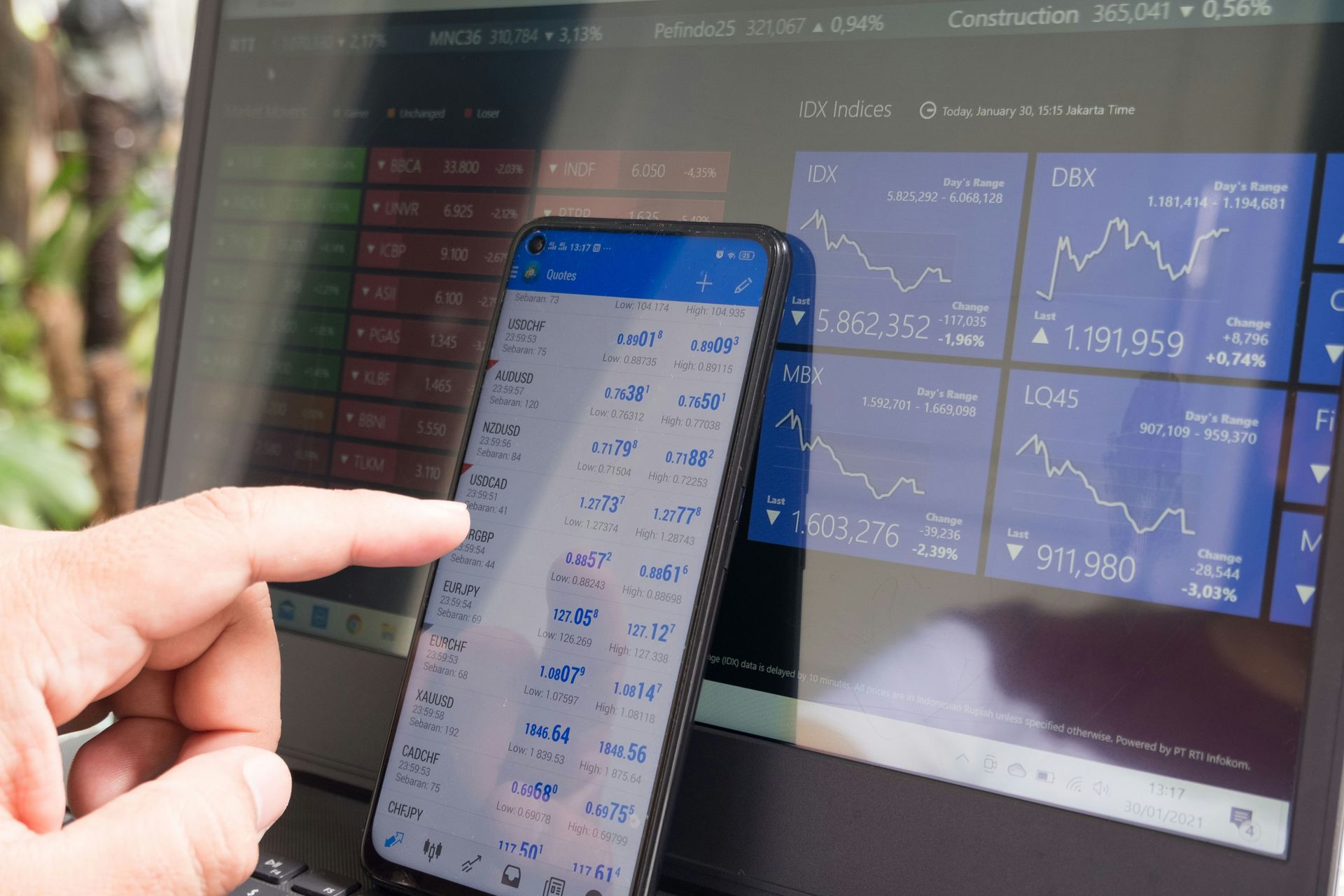
Commission-free stock trading feels like a gift from the brokerage industry. It is a business model, and understanding it explains why brokers were so eager to hand it out.
Many U.S. brokerages earn revenue through payment for order flow. Instead of sending your order directly to a public exchange, the broker routes it to a market-making firm, which pays the broker for the privilege of executing your trade. The market maker profits from the spread — the small gap between the price at which it buys and sells. Your "free" trade generates income at both ends; you simply do not see the line item.
Defenders note that retail investors often receive prices at or slightly better than the public quote, and that eliminating commissions genuinely lowered costs for small investors. Critics respond that the arrangement creates a conflict: the broker's customer is, in an economic sense, the market maker paying for the orders, not the person placing them. Regulators in other markets have taken the critics' side. The U.K. bans payment for order flow, and the EU has legislated a ban of its own.
There is a second, quieter cost. Free trading changes behavior. When each trade carried a commission, the fee acted as a speed bump. Removing it encouraged more frequent trading, and frequent trading is reliably associated with worse investor returns. Apps amplified this with notifications, streaks and confetti animations — design choices borrowed from games, applied to your savings.
The lesson is not that free trading is a scam. It is that no financial service is actually free. When you cannot find the price, you are usually paying it in a form that is harder to measure: execution quality, behavioral nudges or the sale of your order flow. Knowing where the money comes from tells you whose interests the product truly serves.
5 / 20

Credit: Alex Duffy / Unsplash
A savings account is a loan you make to your bank. The bank takes your deposits, lends them out or invests them at prevailing market rates, and pays you a fraction of what it earns. The difference — the spread — is one of the oldest profit engines in banking.
Nothing about the spread is improper. It is how banks work. What deserves attention is how slowly deposit rates move when market rates rise, and how quickly they move when rates fall. When central banks raise rates, banks can earn substantially more on their assets almost immediately. The interest paid on ordinary savings accounts tends to lag far behind, and at the largest institutions it may barely move at all.
Big banks can afford this because their customers rarely leave. Checking accounts, direct deposits, mortgages and mobile apps create switching costs that have little to do with interest rates. A customer who has banked somewhere for 15 years will often accept a near-zero savings yield without ever checking what competitors pay. The bank's pricing reflects that loyalty precisely.
The gap between institutions can be dramatic. Online banks, which carry no branch costs and must compete for deposits on rate alone, frequently pay many times what the largest traditional banks offer on comparable accounts. The products are equally insured up to federal deposit limits. The difference is purely a question of whether the customer bothered to look.
Idle cash inside brokerage accounts follows the same pattern. Uninvested balances are often swept into low-yielding default accounts, while higher-yielding money market funds sit one click away. The default earns the firm money. The alternative earns you money. Defaults are chosen carefully, and they are rarely chosen for your benefit.
Checking what your cash actually earns, once or twice a year, is among the highest-return habits in personal finance. The bank is counting on you not to.
6 / 20

Credit: Towfiqu barbhuiya / Pexels
Bank fees are not spread evenly across customers. They are concentrated, heavily, on the people least able to absorb them — and for years that concentration was a deliberate feature of retail banking economics.
Research by the Consumer Financial Protection Bureau has found that a small minority of account holders pays the great majority of overdraft fees. These are typically customers living close to zero, whose balances swing near empty between paychecks. A single mistimed debit can trigger a fee several times larger than the purchase that caused it. A $5 coffee that overdraws an account by a few dollars can effectively become one of the most expensive drinks ever sold.
The industry's historical practices made this worse. Some banks were found to reorder daily transactions from largest to smallest, draining accounts faster and maximizing the number of items that bounced. Several large institutions paid substantial settlements over the practice. Monthly maintenance fees follow a similar logic: they are commonly waived for customers who keep high balances, meaning the charge lands almost exclusively on those who cannot.
Public and regulatory pressure has changed some of this. A number of major U.S. banks have cut overdraft fees, added grace periods or eliminated the charges entirely, and regulators have pushed for further limits. The direction is positive. The underlying economics — fees as a revenue line concentrated on the financially fragile — have not disappeared, and they persist in account types and institutions that attract less scrutiny.
The practical defenses are unglamorous but effective. Opting out of overdraft coverage on debit transactions means a card is declined instead of triggering a fee. Low-balance alerts catch problems before they compound. And no one is obligated to stay with a bank that charges for the privilege of being poor. Free checking with no minimums exists at credit unions and online banks in nearly every market.
7 / 20

Credit: Canva Images
The credit score is often described as a grade for your financial health. That framing is convenient for the companies that produce scores, but it misstates what the number actually measures. A credit score is a prediction tool built to answer a lender's question: how likely is this person to repay borrowed money? It says nothing about wealth, income, savings or financial stability.
The distinction matters because the behaviors that optimize a score are not always the behaviors that optimize your finances. A person who avoids debt entirely — no credit cards, no loans, everything paid in cash — can end up with a thin file and a mediocre score, despite being in excellent financial shape. Meanwhile, someone carrying multiple cards and a car loan may score higher simply because they generate more repayment data.
The scoring system also shapes behavior in ways that serve the lending industry. It rewards keeping old credit accounts open, maintaining available credit lines and using credit regularly. Each of these habits keeps consumers embedded in the credit system, where interest and interchange revenue are generated. The score functions as both a measurement and an incentive structure, and the incentives point toward more borrowing, not less.
The bureaus themselves — Equifax, Experian and TransUnion in the U.S. — are private companies whose paying customers are primarily lenders, employers and insurers. You are not the client. You are the product being described. That arrangement helps explain why error correction has historically been slow and frustrating: fixing your file is a cost center, not a revenue source.
None of this makes the score irrelevant. It determines the price you pay for mortgages, car loans and sometimes insurance, so managing it has real value. But manage it as what it is — a lender's risk rating you are gaming for better prices — rather than a verdict on how well you handle money.
8 / 20

Credit: Canva Images
The same mutual fund is often sold in multiple versions — Class A, Class B, Class C and others — with identical holdings but very different costs. The share class system exists largely to compensate the people selling the fund, and it is one of the least understood cost structures in retail investing.
Class A shares typically carry a front-end load: a sales charge deducted from your money before it is invested. A 5% load on a $10,000 investment means only $9,500 goes to work. Class C shares usually skip the upfront charge but impose higher ongoing annual fees, which can cost more over long holding periods. Class B shares, now less common, charged exit fees that declined the longer you stayed.
Layered on top are 12b-1 fees, named for the SEC rule that permits them. These are marketing and distribution charges — up to 1% of assets annually — deducted from the fund itself and often used to pay ongoing compensation to the broker who sold it. Investors pay, every year, for the cost of having been sold the product. The fee appears inside the expense ratio, where few people think to look for a sales commission.
The structure creates obvious conflicts. A broker choosing between an index fund with no load and an actively managed fund paying a 5% commission plus trailing 12b-1 fees has a financial reason to prefer the second, regardless of which serves the client better. Regulators have brought numerous cases against firms for steering clients into expensive share classes when cheaper versions of the identical fund were available.
The defense is straightforward. Before buying any fund, find the expense ratio and ask whether a load or 12b-1 fee applies — the fee table in the prospectus lists both. Comparable no-load, low-cost funds exist for nearly every strategy. Paying a sales charge is almost always a choice, not a necessity.
9 / 20

Credit: Canva Images
Few financial products are pitched as persistently as permanent life insurance and annuities. The enthusiasm of the people selling them has a simple explanation: these products pay some of the largest commissions in retail finance.
Commissions on whole life and universal life policies are commonly a large share of the first year's premium — in many cases most of it. Complex annuities can pay the selling agent a meaningful percentage of the entire amount invested, upfront. A client who commits $200,000 to an annuity may generate a five-figure payday for the person who recommended it. No comparable commission exists for advising someone to buy a low-cost index fund or a term life policy, which helps explain which products get recommended.
The products themselves are not inherently fraudulent. Permanent insurance solves real problems for a narrow set of people, typically those with estate planning needs or maxed-out tax-advantaged accounts. Certain simple annuities can sensibly convert savings into guaranteed lifetime income for retirees worried about outliving their money.
The trouble is the gap between that narrow set and the broad population to whom these products are actually sold. For most families, term life insurance delivers far more coverage per premium dollar, and the difference invested elsewhere typically grows faster than a policy's cash value. Complex indexed and variable annuities layer surrender charges, caps, participation rates and rider fees into contracts that even professionals struggle to evaluate. Surrender periods can lock money up for many years, with steep penalties for leaving early.
A useful rule: the size of the commission tends to rise with the complexity of the product, and complexity tends to favor the seller. Before signing, ask the agent to state their compensation in dollars, and ask what the same money would look like in a term policy plus a plain investment account. The comparison is rarely offered voluntarily.
10 / 20

Credit: Mizuno K / Pexels
Financial products are often complicated for a reason, and the reason is rarely your benefit. Complexity serves the seller in at least three distinct ways, and recognizing them changes how you read any pitch.
First, complexity prevents comparison shopping. Two savings accounts can be compared in seconds: look at the rate. Two indexed universal life policies, each with its own caps, floors, participation rates and fee schedules, cannot be meaningfully compared by an ordinary customer at all. When products resist comparison, price competition weakens, and margins stay high. Simple products — index funds, term insurance, plain savings accounts — are cheap precisely because they are easy to compare.
Second, complexity manufactures dependence. A customer who cannot understand a product cannot evaluate the advice they receive about it. Jargon shifts power toward the professional. Terms like "mean reversion," "risk-adjusted alpha" or "tax-advantaged wealth transfer vehicle" often describe ideas that could be stated in one plain sentence. The translation is withheld because plain language would invite plain questions.
Third, complexity hides costs. A single visible fee invites negotiation. A dozen small charges spread across a contract — administrative fees, mortality and expense charges, rider costs, surrender schedules — invite fatigue. Most customers stop reading long before they finish adding.
The financial industry did not invent this playbook, but it applies it with unusual effectiveness because its products are already abstract. There is no engine to inspect, no fabric to touch. The document is the product, and the document can be made as opaque as its drafter wishes, within the limits of disclosure law.
The countermeasure is a habit, not a skill. Refuse to buy anything you cannot explain to another adult in two or three sentences. Ask the seller to explain it that simply and watch what happens. A professional who cannot — or will not — simplify a product is telling you something important about whom the complexity serves.
11 / 20

Credit: AlphaTradeZone / Pexels
Trading feels like the active ingredient in investing. Markets move, news breaks, and doing something feels more responsible than doing nothing. The evidence says the opposite: for individual investors, activity itself is expensive.
The landmark research here comes from economists Brad Barber and Terrance Odean, who analyzed tens of thousands of retail brokerage accounts. Their study, published under the title "Trading Is Hazardous to Your Wealth," found that the most active traders earned substantially lower net returns than the least active. Costs explain part of the gap — every trade carries spreads and, historically, commissions. Behavior explains the rest. Individual investors tend to sell winners too early, hold losers too long and buy stocks that catch their attention, which is a poor selection method.
The industry's incentives run directly against this finding. Brokerages earn more when customers trade more, whether through commissions, payment for order flow or margin lending. Trading platforms are accordingly designed to stimulate activity: price alerts, push notifications, lists of top movers, one-tap order screens. None of these features exists to improve your returns. They exist to increase engagement, which is the metric that drives brokerage revenue.
Margin accounts extend the pattern, letting customers borrow to trade more than they own, with the interest flowing to the broker regardless of how the positions perform. Financial media plays a supporting role. A channel or app that told viewers "nothing meaningful happened today, do not touch your portfolio" would be giving accurate advice and destroying its own business model in the same breath. Urgency is the product.
Long-term investors benefit from an uncomfortable truth: boredom is profitable. A diversified portfolio, funded automatically and reviewed occasionally, outperforms the typical active tinkerer over time, not through brilliance but through the absence of self-inflicted wounds. The industry cannot easily sell inactivity, because inactivity generates almost no revenue. That is exactly why it is worth so much to you.
12 / 20

Credit: Canva Images
The minimum payment on a credit card statement looks like guidance — a suggestion from the bank about a responsible amount to pay. It is better understood as a revenue optimization. Minimums are set low, often in the range of 1% to 3% of the balance plus interest and fees, because low minimums maximize the interest a balance generates over its lifetime.
The arithmetic is brutal. At typical credit card interest rates, a balance paid down only at the minimum can take decades to eliminate, with total interest ultimately rivaling or exceeding the original amount borrowed. The debt shrinks so slowly because most of each small payment goes to interest rather than principal, especially in the early years.
U.S. regulators recognized the problem explicitly. The Credit CARD Act of 2009 forced issuers to print a warning box on every statement showing how long repayment would take at the minimum, and what a three-year payoff would cost instead. The industry did not volunteer that disclosure. It was imposed, over objections, precisely because the gap between the minimum and a sensible payment was so large and so poorly understood.
There is a name inside the industry for customers who pay in full every month: some card executives have historically called them "deadbeats," because they generate no interest revenue. The most profitable customers are "revolvers" — people who carry balances month after month, reliably paying interest without defaulting. Product design, credit limit increases and promotional offers are calibrated with revolvers in mind.
Anchoring makes the minimum psychologically sticky. A number printed on the statement feels like a norm, and paying it feels like compliance. The defense is to ignore the anchor entirely. Treat the minimum as what it is — the smallest amount that keeps the account out of default — and set payments based on the payoff timeline you want, not the one the issuer profits from.
13 / 20

Credit: Sasun Bughdaryan / Pexels
Buried in the account agreements of most U.S. banks, brokerages and credit card issuers is a clause few customers ever read: mandatory arbitration. By opening the account, you typically agree that disputes will be resolved not in court but before a private arbitrator, and — critically — you often waive the right to join a class action.
Arbitration is faster and cheaper than litigation in some individual cases, which is the industry's standard defense. The class action waiver is where the real value to institutions lies. Most banking harms are small per person and enormous in aggregate: an improper $30 fee charged to two million customers is a $60 million problem for the bank but a $30 problem for each individual. No one arbitrates over $30. Class actions exist precisely to make such conduct expensive, and the waiver removes that deterrent.
The securities industry is nearly universal on this point. Standard brokerage account agreements require disputes to go through arbitration administered by FINRA, the industry's self-regulatory organization. Investors can and do win in that forum, but the arrangement is a condition of participation, not a choice.
The Consumer Financial Protection Bureau studied arbitration clauses for years and in 2017 finalized a rule restricting class action waivers in consumer financial contracts. Congress voted to overturn the rule before it took effect. The clauses remain standard across the industry.
Practical options are limited but real. A few institutions, particularly some credit unions, do not impose arbitration clauses. Some contracts allow new customers to opt out of arbitration within a short window — often 30 to 60 days — by sending written notice, a provision that survives precisely because almost no one uses it. Reading the dispute resolution section before signing takes five minutes. It is the section the institution most hopes you skip.
14 / 20

Credit: Jakub Zerdzicki / Pexels
Every fund advertisement in the U.S. carries some version of the same disclaimer: past performance does not guarantee future results. The industry prints that sentence because regulators require it, then builds entire marketing campaigns around the thing the sentence warns against. The contradiction is not an oversight. Past performance is advertised because it is the single most persuasive — and least predictive — piece of information a fund can show you.
Investors chase returns. Money flows heavily into funds after strong years and out of funds after weak ones. The industry knows this, so marketing budgets concentrate on whichever products happen to have shiny recent numbers. A fund family running dozens of funds will always have a few at the top of the rankings by chance alone. Those are the ones that get the advertisements. The laggards are promoted quietly or merged away, a practice that also flatters the firm's surviving track record.
The predictive problem is well documented. Top-performing funds in one period show little tendency to repeat in the next; SPIVA's persistence research finds that leadership among funds turns over routinely. Strong recent performance often reflects a style or sector that happened to be in favor — a tailwind that reverses without warning.
Return chasing carries a second cost: timing. Investors who buy after the good years and sell after the bad ones systematically earn less than the funds they invest in, because their money arrives late and leaves late. The gap between fund returns and actual investor returns is one of the most persistent findings in fund research.
The defense is to invert the marketing. Treat a fund's glowing three-year record as noise, and weigh instead the things that do predict outcomes: costs, diversification and whether the strategy fits your actual timeline. The industry leads with performance because it cannot compete on those.
15 / 20

Credit: Canva Images
Cash back and travel points feel like free money from your card issuer. They are financed by two revenue streams, and understanding both changes how generous the rewards actually look.
The first is interchange: a fee merchants pay to card networks and issuing banks on every transaction, typically a percentage of the purchase. Premium rewards cards generally carry higher interchange rates, which is how issuers fund richer perks. Merchants do not absorb that cost out of goodwill. It is built into retail prices, which means shoppers as a whole pay for the rewards system — including customers who pay with cash or debit and collect nothing. Economists have described this as a quiet transfer from non-rewards customers to rewards customers, since everyone pays the embedded cost but only cardholders with premium products get the payout.
The second stream is interest. Rewards programs are also loss leaders designed to drive card usage and, for a large share of customers, revolving balances. A cardholder earning 2% cash back while carrying a balance at a typical card interest rate is losing many times what the rewards return. The points are the lure; interest is the catch. Issuers can afford lavish sign-up bonuses because enough recipients will eventually carry balances that dwarf them.
Behavioral effects add a third, subtler cost. Card payments are less psychologically painful than cash, and rewards sharpen that effect by reframing spending as earning. Purchases justified by points are still purchases.
None of this means rewards cards are a bad deal. For people who pay in full every month and would spend the same amount regardless, the rewards are close to pure gain. That is exactly why issuers work so hard to convert full payers into revolvers with promotional rates, balance transfer offers and rising limits. The rewards are real. So is the machine behind them, and it is not built to lose money.
17 / 20

TIMOTHY A. CLARY / Getty Images
Turn on financial television or open a brokerage research page, and the stock ratings skew relentlessly positive. Buy and hold recommendations dominate; outright sell ratings on major companies are a small minority. This imbalance is not because most stocks are undervalued most of the time. It reflects the conflicted position sell-side analysts occupy.
Analysts at investment banks depend on relationships in several directions. Their firms may pursue lucrative underwriting and advisory business from the very companies the analysts cover, and a hostile rating can cost the bank a mandate. Analysts also rely on company management for access — earnings calls, guidance, meetings — and executives have long memories for negative coverage. An analyst who slaps a sell on a company may find questions ignored and doors closed. The institutional investors who consume the research often hold the stock in question and do not welcome downgrades either.
The dot-com era exposed the extreme version of this problem, when analysts publicly promoted stocks they privately disparaged. The resulting settlement between regulators and major Wall Street firms in 2003 forced structural separation between research and investment banking. The rules helped. The softer pressures — access, relationships, the career risk of pessimism — never went away, and rating distributions remain heavily tilted toward optimism.
Ratings inflation also degrades the meaning of the scale. When nearly everything is a buy, "hold" often functions as a polite sell, and professionals read it that way. Retail investors who take the labels at face value are reading a code without the key.
The practical response is to treat ratings as one weak signal among many. Price targets and upgrades tell you something about sentiment and momentum, little about long-term value. The most useful parts of analyst research are usually the industry data and the financial models — the raw material — rather than the conclusion stapled to the front.
18 / 20

Credit: Canva Images
Every December, major banks publish price targets for where the stock market will finish the following year. Strategists appear on television forecasting interest rates, currencies and recessions with impressive confidence. The record of these predictions is poor, and the industry publishes them anyway, because forecasts serve a commercial purpose that has little to do with accuracy.
Year-ahead index targets have missed by wide margins in both directions, and the misses cluster exactly where they matter most. Large market drops — the events investors most need warning about — are almost never in the consensus forecast. Forecasters as a group tend to project the recent past forward with modest adjustments, which works until the moment it matters.
The incentives explain the persistence. A forecast generates media appearances, client meetings and trading ideas. It positions the firm as an authority and gives salespeople a reason to call. A strategist who says "the honest answer is that no one can predict next year's market" produces none of those things, however correct the statement is. Accountability, meanwhile, is nearly absent. Wrong forecasts are quietly revised mid-year, and the December ritual begins again with no reckoning of the last one.
There is also an asymmetry in career risk that shapes what gets predicted. Extreme calls are memorable when right and forgivable when wrong, so pundits who once nailed a crash can ride the reputation for a decade of subsequent misses. Moderate, boring accuracy builds no brand.
For investors, forecasts are worse than useless when they prompt action. Portfolios positioned around a strategist's rate call or index target take on concentrated risk based on information with roughly the reliability of a weather forecast made a year out. A plan built to survive a range of outcomes — because the future is genuinely unknown — beats a plan optimized for someone's prediction. The industry sells certainty because certainty sells. It does not sell because it exists.
19 / 20

Credit: Pixabay / Pexels
Structured notes and similar engineered products are pitched with seductive framing: stock market upside with downside protection, enhanced yield, principal barriers. They are among the most profitable products banks sell to retail investors, and the profit comes from the same place the complexity does.
A structured note is essentially a package — typically a bond combined with derivatives — assembled by a bank and sold at a markup. U.S. issuers are now required to disclose an estimated value of the note in the offering documents, and that estimated value is routinely below the price investors pay. The gap represents the bank's built-in margin and distribution costs, an entry fee investors absorb on day one. Regulators, including FINRA and the SEC, have repeatedly published investor alerts warning about the costs, complexity and liquidity risks of these products.
The features that make the products attractive in a brochure often conceal unfavorable trade-offs. "Protection" frequently applies only down to a barrier, below which losses arrive all at once. "Participation" in an index's gains may be capped, and the index used often excludes dividends — a meaningful part of long-run stock returns that quietly stays with the issuer. Payoff formulas involving multiple conditions are difficult even for professionals to value, which is precisely why comparison shopping fails.
Liquidity is the trap least discussed at the point of sale. Many notes have no active secondary market. An investor who needs money before maturity may face a steep haircut, selling back to the issuing bank at a price of its choosing. Credit risk compounds the picture: the note is an unsecured promise of the issuer, a fact holders of Lehman Brothers notes learned in 2008.
A durable rule applies here. If a product's payoff cannot be explained in a few plain sentences, the complexity is the price tag. Whatever a structured note offers, some combination of plain bonds, index funds and cash usually replicates it more cheaply — without the edge built in against you.
20 / 20

Credit: Canva Images
The financial industry talks constantly about relationships. Its pricing tells a different story: across banking, insurance and lending, the best deals are systematically reserved for new customers, while longstanding ones quietly subsidize them.
Insurance is the clearest case. Insurers in several markets have practiced what regulators call price walking — raising premiums a little each year at renewal, not because risk has changed but because the customer has demonstrated a willingness not to shop around. The U.K.'s Financial Conduct Authority found the practice widespread in home and motor insurance and, in 2022, banned insurers from charging existing customers more at renewal than equivalent new customers. The rule exists because the loyalty penalty was real, measurable and large.
Banking runs on the same logic. Promotional savings rates expire and revert to minimal ones. Sign-up bonuses go to newcomers. Mortgage lenders offer their sharpest rates to borrowers they are trying to win, not the ones they already have. Telecommunications and financial firms alike model "customer inertia" explicitly: pricing teams estimate how much can be added before a customer bothers to leave, and price to just below that threshold.
Inertia is rational in small doses — switching takes time, and time has value. The industry's insight is that most people overestimate the hassle and underestimate the cost of staying. Switching a savings account can take minutes online. Requoting insurance annually often takes less than an hour and can recover years of accumulated markup. Even the threat works: retention departments exist because a credible statement that you are leaving frequently produces a better offer on the spot.
The uncomfortable conclusion is that in retail finance, the loyal customer is not the valued customer. The valued customer is the one about to walk out the door. Behaving like that customer — reviewing rates yearly, quoting competitors, moving when the numbers justify it — is the only loyalty program that reliably pays you.