25 things to know before investing in anything
From compound interest and diversification to fees, taxes and the traps your own brain sets, these 25 fundamentals apply to every kind of investment

Credit: Gantas Vaičiulėnas / Pexels
Most investing mistakes happen before any money changes hands. They happen when someone buys an asset they do not understand, commits money they will need next year, or chases a return without asking what risk is attached to it. The mechanics of opening a brokerage account take about 10 minutes. The knowledge that keeps that account from becoming a source of regret takes longer to build — but not as long as the finance industry would have you believe.
Investing is not a single skill. It is a set of interlocking concepts: how compounding works, why diversification protects you, what fees and taxes quietly take, how inflation erodes cash, and how your own psychology sabotages good plans. None of these concepts require advanced math. All of them apply whether you are buying index funds, rental property, bonds, a small business or anything else that promises a return. That universality is the point of this list. The specifics of any given asset change constantly. The fundamentals underneath them do not.
There is also a defensive case for learning this material. Financial products are sold, not just bought, and the people selling them do not always share your interests. Fraud thrives on ignorance of base rates — on people who do not know that a "guaranteed" 20% annual return is a contradiction in terms. Understanding what normal returns look like is one of the cheapest forms of self-protection available.
The 25 items that follow move roughly in order: first the groundwork you should lay before investing a single dollar, then the core mechanics of risk and return, then the practical machinery of accounts, fees and taxes, and finally the behavioral traps that undo investors who know all of the above and still lose money. None of this constitutes personalized financial advice. It is the shared vocabulary of investing — the things worth knowing before you put money into anything, anywhere, for any reason.
1 / 25
Know why you are investing before you choose what to invest in
Credit: Gantas Vaičiulėnas / Pexels
Every sound investment decision starts with a goal, not a product. Money for a house down payment in three years and money for retirement in 30 years should not be invested the same way, even by the same person. The goal determines the time horizon, the time horizon determines how much risk you can absorb, and risk tolerance determines which assets make sense. Skip that chain of reasoning and you are choosing investments at random.
Goals also determine how you measure success. A retirement portfolio should be judged over decades, not quarters. A short-term savings goal should be judged by whether the money is intact when you need it, not by whether it beat the S&P 500. Investors who lack defined goals tend to adopt whatever benchmark is in the news, which usually means comparing a conservative portfolio to a hot stock index and feeling like a failure.
Write goals down with three components: the amount you need, the date you need it, and what happens if you fall short. A shortfall on a vacation fund is an inconvenience. A shortfall on retirement savings is a different order of problem. That asymmetry should shape how aggressively you invest for each goal.
Separate goals deserve separate mental accounts, and often separate literal accounts. Mixing your emergency fund with your stock portfolio makes it likely you will sell stocks at a bad moment to cover a car repair. Keeping the buckets distinct makes each decision simpler.
Finally, goals change. A new job, a child, a health issue or a move can rewrite your timeline overnight. Revisit your goals at least once a year and after any major life event. The portfolio that made sense at 25 rarely makes sense at 45, and the only way to notice the mismatch is to keep asking what the money is for.
2 / 25
Build an emergency fund before you invest a dollar

Credit: Canva Images
An emergency fund is the foundation that makes everything else possible. Without cash set aside for surprises — a job loss, a medical bill, a broken furnace — any investment you make is one bad month away from a forced sale. Forced sales are how paper losses become permanent ones, because emergencies do not wait for markets to recover.
The standard guidance is three to six months of essential expenses, held somewhere safe and liquid: a high-yield savings account or a money market fund, not stocks. People with variable income, single earners and those in volatile industries should lean toward the higher end or beyond it. The point is not to maximize return on this money. The point is that it exists, in full, on the day you need it.
This money will feel unproductive, especially when markets are rising. That feeling is the cost of the insurance. The return on an emergency fund is not the interest it earns but the losses it prevents — the stocks you did not sell in a downturn, the credit card debt you did not take on at a 25% interest rate, the retirement account you did not raid and pay penalties on.
There is also a psychological dividend. Investors with a cash cushion behave better during market declines because a crash does not threaten their rent. Much of what looks like risk tolerance is really just financial slack. Building that slack first means you can take investment risk deliberately rather than having risk forced on you by circumstance.
Start smaller if the full target feels impossible. One month of expenses is dramatically better than zero, and the habit of automatic transfers matters more than the initial pace. Once the fund is full, redirect those same transfers into investments — the pipeline is already built.
3 / 25
Pay off high-interest debt first — it is a guaranteed return

Credit: Canva Images
Paying down a credit card charging 22% interest is economically equivalent to earning a guaranteed, tax-free 22% return. No legitimate investment offers that. Stocks have historically returned somewhere in the neighborhood of 7% to 10% annually over long periods, before inflation and with enormous year-to-year swings. A high-interest debt payoff beats that expected return without any risk at all.
This is why the order of operations matters. Investing in a brokerage account while carrying revolving credit card debt means borrowing at 20%-plus to invest at an uncertain 8%. Framed that way, almost no one would choose it, yet many people do it by default because investing feels like progress and debt repayment feels like standing still.
The calculation changes as interest rates fall. A mortgage at 4% or subsidized student loans at 5% sit in a gray zone where reasonable people disagree. Long-run market returns may exceed those rates, mortgage interest is sometimes tax-deductible, and low-rate debt paid back over decades gets cheaper in real terms as inflation erodes it. There is no single right answer for moderate-rate debt; there is a clearly right answer for high-rate debt.
One common exception: an employer match on a workplace retirement plan. If your employer matches contributions — say, 50 cents or a dollar per dollar you put in — that is an immediate 50% to 100% return on the matched amount. Capturing the full match generally makes sense even while paying down expensive debt, because the match beats even credit card interest rates.
A practical sequence many financial planners suggest: contribute enough to get any employer match, attack high-interest debt aggressively, build the emergency fund, then invest the rest. Debt freedom also raises your risk capacity, since fewer fixed obligations mean market losses hurt less. Momentum, once established, transfers cleanly from one goal to the next.
4 / 25
Risk and return are permanently linked

Credit: Mike M / Pexels
The most reliable rule in finance is that higher expected returns come attached to higher risk. Any offer that claims to break this link — high returns, no risk — is either mispriced, misunderstood or fraudulent. Understanding this single relationship inoculates you against most bad investments.
Risk shows up in different costumes. Stocks carry the risk of steep price declines; individual companies can go to zero. Bonds carry interest rate risk and the risk that the borrower defaults. Real estate carries leverage, liquidity and concentration risk. Cash carries the quiet risk that inflation outruns it. There is no risk-free option, only different risks to choose among.
The link between risk and return also explains why safe assets pay so little. A U.S. Treasury bill yields what it does precisely because default risk is negligible. A junk bond yields several percentage points more precisely because default is a real possibility. The extra yield is not a gift; it is compensation for the chance of losing money. When you see a yield far above the market norm, your first question should be what risk is being paid for.
This principle cuts the other way too: taking risk is how long-term investors get paid. Someone who keeps 40 years of retirement savings entirely in a savings account has not avoided risk — they have swapped market risk for the near-certainty of falling behind inflation. For long horizons, the volatility of stocks has historically been rewarded, which is why time horizon matters so much in deciding how much risk to take.
The practical takeaway is to always name the risk before admiring the return. If you cannot articulate specifically how an investment could lose money, you do not yet understand it well enough to buy it. Naming the risk turns a sales pitch back into a decision you actually control.
5 / 25
Compound interest is the engine of long-term wealth

Credit: Kindel Media / Pexels
Compounding means earning returns on your returns. Money invested at 7% doubles in roughly a decade, doubles again in the next, and again in the one after that. The growth is not linear — it accelerates, and the acceleration is concentrated at the end. That back-loaded shape is why starting early matters more than almost any other decision an investor makes.
A concrete comparison shows the mechanics. Someone who invests $5,000 a year from age 25 to 35 and then stops — 10 years of contributions — can end up with more at retirement than someone who invests $5,000 a year from 35 to 65, a full 30 years of contributions, assuming the same annual return. The first investor's money simply had more time to double. Time in the market is an input you cannot buy back later at any price.
Compounding also explains why early losses and early withdrawals are so expensive. A dollar pulled out of a retirement account at 30 is not just a dollar — it is that dollar plus every doubling it would have gone through over the following decades. The same math makes fees devastating, a subject that deserves its own slide.
A useful shortcut is the rule of 72: divide 72 by an annual return to estimate how many years money takes to double. At 8%, about nine years. At 4%, about 18. At 1% — roughly what ordinary savings accounts have often paid — 72 years. The rule is an approximation, but it makes the stakes vivid.
None of this requires picking winning stocks. Compounding works on boring, diversified, average-return portfolios. What it requires is contributions that start early, continue steadily and are left alone. Patience is the active ingredient; the math does the rest. Every year of delay quietly removes the biggest doubling from the far end of the sequence.
6 / 25
Diversification is the only free lunch in investing

Credit: TLK GentooExpressions / Pexels
Diversification means spreading money across investments that do not all move together, so no single failure can sink you. Economist Harry Markowitz, who won a Nobel Prize for the underlying theory, is widely credited with calling it the only free lunch in investing: done properly, it reduces risk without a proportional reduction in expected return.
The logic is simple. Any individual company can collapse from fraud, obsolescence, lawsuits or bad luck — outcomes that have hit household names throughout market history. A portfolio of one stock inherits all of that company-specific risk. A portfolio of thousands of stocks inherits almost none of it, because individual disasters get diluted to rounding errors. What remains is market risk, the risk that everything falls together, which is the risk investors are actually compensated for bearing.
Real diversification operates on several levels. Across companies, so no single business can ruin you. Across industries, because sectors move in cycles — energy, technology and banking each have their own booms and busts. Across countries, since any single national market, including the U.S., can stagnate for a decade or more. And across asset classes, because stocks, bonds, real estate and cash respond differently to growth, recessions and interest rate changes.
Beware of false diversification. Owning 10 technology stocks is not diversified. Owning three funds that all hold the same large U.S. companies is not diversified. Employees who hold company stock in the same firm that pays their salary are concentrated twice over — job and portfolio tied to one entity.
The convenient truth is that diversification has never been cheaper or easier. A single broad index fund can hold thousands of companies across dozens of countries for a fee measured in hundredths of a percent. The free lunch is available to anyone; you only have to take it.
7 / 25
Fees compound just like returns do

Credit: Caleb Oquendo / Pexels
Investment fees look trivial and behave like termites. A 1% annual fee sounds like almost nothing, but it is charged on your entire balance every single year, in good markets and bad, and its cost compounds for as long as you hold the investment. Over a multi-decade horizon, the difference between paying 1% and paying 0.05% can consume a very large share of your final wealth.
The arithmetic is unforgiving. If markets return 7% and you pay 1% in fees, you keep 6% — you have surrendered roughly a seventh of your annual return. Compound that gap over 30 or 40 years and the fee quietly claims a substantial fraction of what your portfolio would otherwise have grown to. The money does not vanish; it transfers from you to the fund company, every year, regardless of performance.
Fees come in many forms, and the visible ones are not always the largest. Mutual funds and exchange-traded funds charge an expense ratio, disclosed as a percentage. Financial advisors often charge around 1% of assets under management annually. Some funds add sales loads — commissions charged when you buy or sell. Trading itself carries costs through bid-ask spreads. Annuities and some insurance-based investment products layer several fees at once and can be among the most expensive products sold to retail investors.
The defense is straightforward: read the expense ratio before buying anything, and treat every fee as a hurdle the investment must clear before you earn a cent. Broad index funds from major providers now charge close to zero, which sets the benchmark. A fund charging 20 times more needs a compelling answer to the question of what you are getting for the money — and persistent outperformance, as a later slide explains, is rarely that answer. Unlike market returns, fees are one of the few variables an investor fully controls.
8 / 25
Inflation is the silent tax on idle money

Credit: Ray Suarez / Pexels
Inflation is the rate at which money loses purchasing power, and it never takes a year off. At 3% annual inflation, prices double in roughly 24 years, which means a dollar hidden under a mattress loses half its real value over that span. Cash that feels perfectly safe is, in real terms, guaranteed to shrink.
This reframes what "safe" means. A savings account paying 1% while inflation runs at 3% delivers a real return of roughly negative 2%. The account balance grows; what the balance can buy declines. Over short periods this is a minor leak. Over a working lifetime it is the difference between a comfortable retirement and a strained one, which is why holding decades of savings entirely in cash is itself a risky strategy, not a cautious one.
Inflation is also why investors care about real returns — returns after inflation — rather than nominal ones. A 10% return during a year of 9% inflation is a 1% real gain. A 5% return with 2% inflation is three times better in real terms. Historical stock returns look impressive partly because they have outpaced inflation by a wide margin over long periods; that gap, not the raw number, is what builds wealth.
Different assets handle inflation differently. Stocks have historically outrun it over long horizons because companies can raise prices. Fixed-rate bonds suffer when inflation rises unexpectedly, since their payments are locked in shrinking dollars. The U.S. Treasury sells inflation-indexed bonds, known as TIPS, whose principal adjusts with the consumer price index. Real assets such as property have their own inflation-linked characteristics.
The practical lesson: keep enough cash for emergencies and near-term goals, and put long-term money in assets with a realistic chance of beating inflation. Idle money is not resting. It is eroding. Real purchasing power, not the account balance, is the number that ultimately matters.
9 / 25
Your time horizon should drive your asset allocation

Credit: Eugenia Ai / Pexels
Time horizon — how long until you need the money — is the single most useful input for deciding how to invest it. Long horizons can absorb volatility; short ones cannot. Money needed within a few years generally belongs in cash or short-term bonds, because stocks can fall sharply and stay down longer than your deadline allows. Money not needed for decades can afford to ride out crashes in pursuit of higher returns.
History explains why. U.S. stocks have suffered many declines of 30% to 50%, and recoveries have sometimes taken years. Over one-year periods, stock returns are close to a coin flip with a favorable tilt. Over multi-decade periods, diversified stock portfolios have historically delivered positive real returns with far more consistency. Time does not eliminate risk, but it changes which risks dominate: over short spans, volatility is the threat; over long spans, inflation and insufficient growth are.
This is the reasoning behind the common pattern of holding more stocks when young and shifting toward bonds with age. A 30-year-old saving for retirement has decades to recover from any crash and decades of future contributions that will buy shares at depressed prices. A 68-year-old drawing on the portfolio next year has neither cushion. Target $TGT-date funds automate exactly this glide path, growing more conservative as a chosen retirement year approaches.
One person can have several horizons at once. A vacation next summer, a house in five years and retirement in 30 are three different problems deserving three different allocations. Lumping them into one portfolio guarantees the mix is wrong for at least one goal.
Horizons also shorten on their own. The aggressive allocation that suited a goal 15 years away no longer suits it at three years away. Revisit the match between each goal's deadline and its investments regularly. A quick annual check is usually enough to catch the drift before it matters.
10 / 25
Learn the major asset classes and what each one does

Credit: Jonathan Borba / Pexels
Asset classes are the basic food groups of investing, and each plays a distinct role. Stocks, also called equities, are ownership stakes in companies. They offer the highest long-run historical returns of the major classes and the wildest swings along the way. Shareholders profit through rising prices and dividends, and they stand last in line if a company fails.
Bonds are loans. You lend money to a government or corporation, collect interest and get your principal back at maturity, assuming the borrower stays solvent. Bonds generally return less than stocks over long periods but fluctuate less, which is why they act as ballast in a portfolio. Their prices fall when interest rates rise, a mechanic that surprises many first-time bondholders. Credit quality matters: U.S. Treasuries carry minimal default risk, while high-yield corporate bonds pay more because default is a genuine possibility.
Cash and cash equivalents — savings accounts, money market funds, Treasury bills — provide stability and instant availability at the cost of low returns that often trail inflation. Cash is for emergencies and near-term spending, not long-term growth.
Real estate generates rental income and potential appreciation, whether through direct ownership or through real estate investment trusts, known as REITs, which trade like stocks. Direct property adds leverage, illiquidity and maintenance to the equation.
Commodities such as gold, oil and agricultural products produce no income; returns depend entirely on price changes. Cryptocurrencies are a newer, extremely volatile category with a short track record and an ongoing debate about what fundamental value, if any, underpins them.
The classes matter because they respond differently to economic conditions — growth, recession, inflation, rate changes. Research on institutional portfolios has long found that the mix among asset classes explains most of the variation in a portfolio's returns. Get the mix right and the individual selections matter far less.
11 / 25
Index funds beat most professionals over time
Credit: Canva Images
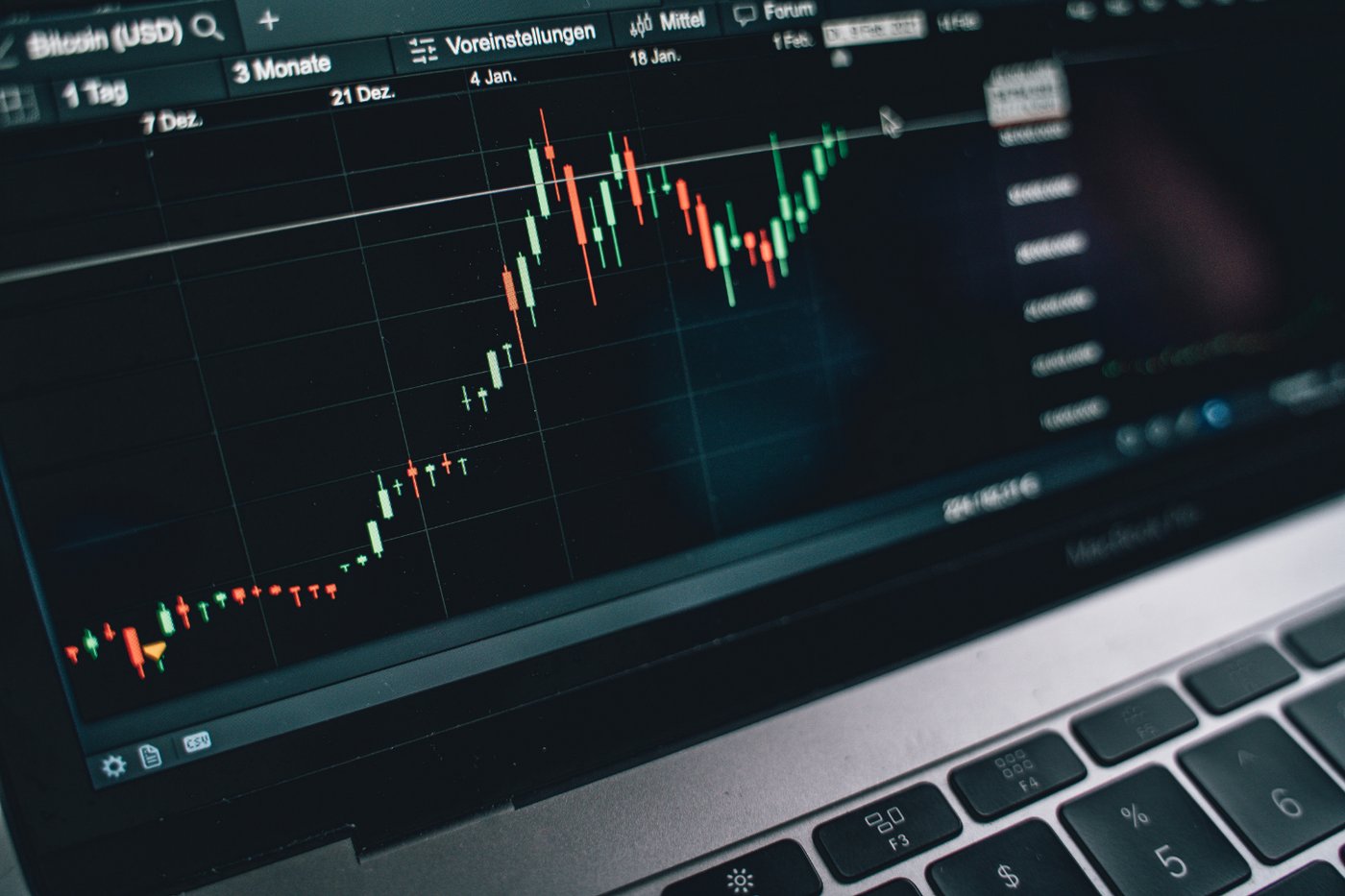
An index fund does not try to beat the market. It simply owns the market — every stock in a benchmark like the S&P 500 or a total-market index — at minimal cost. Active funds, by contrast, employ managers who research and trade in pursuit of market-beating returns, and charge accordingly. The uncomfortable finding, documented for decades, is that most active funds fail to beat their benchmark index over long periods, largely because their higher fees and trading costs eat the difference.
S&P Dow Jones Indices publishes a recurring scorecard, known as SPIVA, comparing active funds with their benchmarks. Across most categories and most long measurement windows, a substantial majority of active funds underperform. The pattern holds across countries and asset classes and has persisted through bull and bear markets alike.
The reason is arithmetic more than incompetence. All investors collectively earn the market return before costs. After costs, the average actively managed dollar must therefore earn less than the market — a point the economist William Sharpe formalized. Some managers do beat the market in any given period, but identifying in advance which ones will keep doing so has proved close to impossible, and past winners routinely fall behind.
This is why index funds have absorbed trillions of dollars and why figures from Warren Buffett to the late Vanguard founder John Bogle have recommended them for ordinary investors. Buffett famously won a public 10-year bet that an S&P 500 index fund would beat a selection of hedge funds, and he has directed that most of his own estate's cash be placed in an index fund for his wife's benefit.
None of this means indexing is the only defensible strategy. It means the burden of proof sits on any alternative. Before paying more for active management, ask what evidence suggests this particular manager will land in the persistent minority.
12 / 25
Dollar-cost averaging turns discipline into a strategy

Credit: Towfiqu barbhuiya / Pexels
Dollar-cost averaging means investing a fixed amount on a fixed schedule — say, $500 on the first of every month — regardless of what markets are doing. When prices are high, your money buys fewer shares; when prices fall, the same money buys more. The mechanism automatically tilts your purchases toward cheaper prices without requiring any forecast at all.
The deeper value is behavioral. The hardest moments to invest are exactly the moments when investing has historically paid best: during crashes, when headlines are grim and every instinct says to wait. A standing automatic transfer does not read headlines. It buys through the fear, accumulating discounted shares that a discretionary investor would have hesitated to touch. It equally prevents the opposite error — pouring extra money in at euphoric peaks because everything feels safe.
For most workers, dollar-cost averaging is not even a choice; it is the default. Contributing to a retirement plan from every paycheck is dollar-cost averaging in action, which is one reason workplace plans have built wealth for people who never think about markets. The paycheck schedule enforces the discipline.
A separate question arises when someone receives a lump sum — an inheritance, a bonus, a home sale. Vanguard research has found that investing a lump sum immediately has historically beaten spreading it out over months more often than not, simply because markets rise more often than they fall, so waiting usually means buying later at higher prices. Averaging into a lump sum is best understood as paying a modest expected cost for protection against the regret of investing everything right before a crash. For investors who would otherwise freeze entirely, that trade can be worth it.
Either way, the core principle stands: a schedule beats a mood. Automate the contributions and let the calendar, not your nerves, decide when you buy.
13 / 25
Liquidity determines how fast you can get your money back

Liquidity is the ease of converting an investment into cash at a fair price. It is one of the most overlooked dimensions of investing, right up until the moment you need money and discover you cannot reach it. Cash in a savings account is perfectly liquid. Publicly traded stocks and funds are highly liquid — sellable within seconds during market hours, with cash settling shortly after. From there, the spectrum descends steeply.
Real estate can take months to sell, and selling quickly usually means accepting a discount. Certificates of deposit lock money up for a term, with penalties for early exit. Private investments — startup equity, private real estate deals, many alternative funds — may lock capital for years with no exit at all. Retirement accounts add a legal layer: withdrawing from a 401(k) or traditional IRA before age 59½ generally triggers a 10% penalty on top of ordinary income tax, with limited exceptions.
Illiquidity is not automatically bad. Investors are often paid extra expected return for accepting it, sometimes called an illiquidity premium, and locked-up money is protected from your own panic selling. The danger is a mismatch: holding illiquid assets against near-term needs. Someone whose wealth sits entirely in home equity and retirement accounts can be simultaneously wealthy on paper and unable to cover a $10,000 emergency without borrowing.
Liquidity also evaporates when it is most needed. In severe market stress, buyers for niche assets — thinly traded bonds, collectibles, obscure funds — can vanish, and even normally liquid markets see prices gap downward. Plans that assume you can always sell at yesterday's price fail at the worst times.
The practical rule: match each investment's liquidity to the timeline of the money invested in it, and keep genuinely reachable reserves for the surprises that do not schedule themselves.
14 / 25
Taxes can take a bigger bite than bad picks

Credit: Leeloo The First / Pexels
Investment returns are taxed, and how you invest determines how much you keep. In the U.S., the tax system draws a sharp line between short-term and long-term capital gains. Sell an asset held one year or less and the profit is taxed as ordinary income, at rates that reach 37% at the top. Hold it longer than a year and the gain qualifies for long-term rates of 0%, 15% or 20% depending on income. Patience is literally subsidized.
Tax-advantaged accounts change the math further. Traditional 401(k)s and IRAs let contributions reduce your taxable income now; the money grows untaxed and is taxed as income when withdrawn in retirement. Roth versions flip the deal: contributions come from after-tax money, but qualified withdrawals — growth included — are tax-free. Both types shield investments from the annual drag of taxes on dividends and trading gains, which compounds meaningfully over decades. Contribution limits apply and are adjusted periodically, so check current figures.
Placement matters too, a concept known as asset location. Tax-inefficient holdings — those that throw off ordinary income, like bond interest or REIT dividends — generally do less damage inside tax-sheltered accounts. Tax-efficient holdings, like broad stock index funds that trade rarely and pay qualified dividends, tolerate taxable accounts better.
Two more mechanics are worth knowing. Tax-loss harvesting means selling losing positions in a taxable account to realize losses that offset gains, while respecting the wash-sale rule, which disallows the loss if you buy a substantially identical security within 30 days. And frequent trading is a tax machine working against you, converting would-be long-term gains into higher-taxed short-term ones.
Taxes should not dictate every decision — a bad investment held for tax reasons is still a bad investment. But ignoring them hands back a meaningful slice of your returns voluntarily. A little planning here compounds just as reliably as the returns themselves do.
15 / 25
Volatility is not the same thing as losing money

Credit: Mariya Muschard / Pexels
Volatility is the day-to-day, month-to-month fluctuation in prices. A loss is what happens when you sell for less than you paid, or when an asset's value is permanently impaired. Conflating the two is one of the costliest confusions in investing, because it turns temporary declines into permanent damage through panic selling.
Broad stock markets fluctuate constantly. Declines of 10% happen in most years; declines of 20% or more arrive regularly across decades; drops approaching or exceeding 50% have occurred several times in modern U.S. market history, including the dot-com bust and the 2008 financial crisis. Yet an investor who held a diversified U.S. stock portfolio through every one of those episodes ended up ahead, because the market as a whole has always eventually recovered to new highs. The declines were volatility. Selling at the bottom would have converted them into losses.
The distinction breaks down for concentrated bets. A single company's stock can fall and never recover — bankrupt firms do not bounce back, and shareholders can be wiped out entirely. That is permanent impairment, not volatility, and it is precisely the risk diversification exists to dilute. The reassurance that "it always comes back" applies, historically, to broad diversified markets, not to any individual stock, sector or speculative asset.
This reframing has practical uses. It explains why long-horizon investors can rationally hold volatile assets: fluctuations along the way do not matter if you do not have to sell during them. It explains why the emergency fund and time-horizon rules exist — their whole purpose is to ensure you are never forced to sell into a decline. And it suggests the right measure of risk for a long-term investor is not how much a portfolio wiggles, but the odds of a permanent shortfall when the money is finally needed. Investors who internalize the difference sleep better and, on the evidence, earn more.
16 / 25
Your own brain is the biggest risk to your portfolio

Credit: Anna Tarazevich / Pexels
Decades of behavioral finance research — a field associated with Nobel laureates Daniel Kahneman and Richard Thaler — has cataloged the systematic ways human judgment sabotages investing. The market is only the second-biggest threat to most portfolios. The investor is the first.
Loss aversion means losses hurt roughly twice as much as equivalent gains feel good, which drives people to sell falling assets at the worst moment and to hold losers too long hoping to break even. Overconfidence convinces investors they can pick winners and time markets, encouraging concentrated bets and excessive trading; research by economists Brad Barber and Terrance Odean found that the individual investors who traded most earned markedly worse returns than those who traded least.
Recency bias extrapolates the immediate past forever forward — after a boom, risk feels obsolete; after a crash, recovery feels impossible. Herding drives people to buy what everyone is buying, which mechanically means buying at high prices, and to sell amid collective panic, which means selling low. Confirmation bias filters information so you notice evidence supporting what you already own and dismiss warnings. Anchoring fixates on arbitrary reference points, like the price you paid, which has no bearing on what an asset is worth now.
You cannot delete these biases; they are standard human equipment. You can build systems that route around them. Automatic contributions remove timing decisions. A written investment plan, drafted in calm conditions, gives you instructions to follow when conditions are not calm. Checking your portfolio less often reduces the urge to react. Rules for rebalancing replace gut feel with arithmetic.
The investors who succeed over decades are rarely the smartest in the room. They are the ones who arranged things so their intelligence was never asked to outvote their emotions in real time. Good structure beats good intentions every time the market tests them.
17 / 25
Timing the market is a losing game

Credit: Canva Images
Market timing — selling before declines and buying back before recoveries — is intuitively appealing and empirically disastrous for nearly everyone who attempts it. The problem is that success requires being right twice: once on the exit and again on the re-entry. Getting either one wrong, even slightly, typically erases the benefit of getting the other right.
The market's structure makes timing especially punishing. A large share of the market's long-term gains comes from a small number of its best days, and those days cluster tightly around the worst ones — powerful rallies routinely erupt in the middle of bear markets, near the point of maximum fear. An investor who steps out during turbulence is therefore positioned to miss the rebound almost by design. Analyses by major fund companies repeatedly show that missing just the handful of best days over a couple of decades cuts final returns dramatically.
Morningstar's long-running "Mind the Gap $GPS" research documents the aggregate cost: the average dollar invested in funds earns noticeably less than the funds themselves report, because investors move money in after strong performance and out after weak performance. That gap — often around one percentage point or more annually — is the measured price of timing behavior across millions of real accounts.
Professionals fare no better. Forecasters' records on calling market turns are poor, and the persistent underperformance of tactical funds that shift between stocks and cash suggests the skill, if it exists anywhere, is vanishingly rare.
The alternative is time in the market: stay invested according to a plan matched to your horizon, keep contributing on schedule, and treat downturns as part of the deal rather than a signal. The phrase is a cliché precisely because the evidence behind it keeps piling up. Boring consistency has beaten clever forecasting for as long as records have been kept.
18 / 25
Never invest in something you cannot explain

Credit: Vitaly Gariev / Unsplash
Warren Buffett calls it the circle of competence: know what you understand, know what you do not, and stay inside the line. The practical test is simple. If you cannot explain, in a few plain sentences, how an investment makes money and how it could lose money, you are not investing in it — you are gambling on it with extra steps.
The test sounds trivial and fails constantly. Many people who bought complex structured products before 2008 could not explain them. Many buyers of leveraged exchange-traded funds do not know those products reset daily and can lose money even when the underlying index ends up flat. Many crypto investors during boom periods could not articulate what, specifically, their token did. Complexity is not a marker of sophistication in an investment; it is often a place for risk and fees to hide.
The explanation standard forces useful questions. Where does the return actually come from — profits, interest, rent, or purely from selling to a later buyer at a higher price? Who is on the other side of the trade, and why are they offering you this deal? What has to go right for this to work, and what single event would break it? An investment whose return depends entirely on finding a greater fool has a name, and it is not a compliment.
Staying inside your circle does not mean staying small forever. The circle expands with study. Read the prospectus, the annual report, the fee table. Understand a product's mechanics before its marketing. And take comfort in this: the most-recommended vehicles for ordinary investors — broad, low-cost index funds — are also among the easiest to explain. You own small slices of thousands of companies and share in their collective profits. Simplicity and soundness usually travel together. If a pitch resists plain language, treat the resistance itself as the answer.
19 / 25
If it sounds too good to be true, it is

Credit: Canva Images
Investment fraud has a recognizable anatomy, and knowing it is worth more than any stock tip. The classic structure is the Ponzi scheme: promised returns are paid to early investors using money from later ones, no real profits exist, and the scheme collapses when new money stops arriving. Charles Ponzi gave it a name in 1920; Bernie Madoff ran the largest known version for decades, defrauding investors of billions while reporting returns that were suspiciously smooth year after year.
The red flags repeat across a century of cases. Guaranteed high returns — anything promising, say, consistent double-digit gains with no risk — contradict the basic link between risk and return. Returns that never have a down period are a flag on their own; Madoff's steadiness was itself the tell that some analysts flagged years before his collapse. Pressure to act immediately, before an "opportunity" closes, exists to prevent due diligence. Secrecy about strategy, unregistered sellers, difficulty withdrawing money and recruitment bonuses for bringing in friends complete the pattern.
Affinity fraud deserves special mention: schemes that spread through churches, immigrant communities, professional circles and friend groups, exploiting trust to bypass skepticism. The pitch arriving from someone you know makes it more dangerous, not less.
Basic verification is free. In the U.S., you can check whether a seller is registered through the Financial Industry Regulatory Authority's BrokerCheck tool and the Securities and Exchange Commission's databases. Legitimate professionals expect to be checked and documented; resistance to verification is itself an answer.
The deepest protection is knowing base rates. Long-run diversified stock returns have historically landed in the high single digits annually, with painful interruptions. Anyone offering far more, far smoother, is claiming to have repealed the rules of finance. The safest assumption is that they have not. Skepticism costs nothing, and in this domain it pays better than optimism.
20 / 25
Rebalancing keeps your risk from drifting

A portfolio's mix does not stay where you set it. If you choose 70% stocks and 30% bonds, a strong bull market might push stocks to 85% of the total within a few years — meaning you now hold a riskier portfolio than you ever decided to hold, at precisely the moment markets have run up. Rebalancing is the maintenance task that fixes the drift: selling some of what has grown beyond its target and buying what has lagged, restoring the original proportions.
The primary purpose is risk control, not return enhancement. An investor who never rebalances lets the market choose their risk level, and the market always chooses more risk after rallies and delivers the consequences in the next downturn. Rebalancing enforces the opposite of crowd behavior — it is a mechanical rule that makes you trim assets after they have soared and add to assets after they have fallen, which is exactly the discipline most investors cannot summon on instinct.
Two common approaches work. Calendar rebalancing means checking on a schedule — once or twice a year is typical — and resetting to targets. Threshold rebalancing means acting whenever an allocation strays beyond a set band, such as five percentage points from target. Research on the question generally finds that the precise method matters far less than having any consistent method at all. More frequent rebalancing mostly adds trading costs and, in taxable accounts, tax bills.
Practical refinements reduce those costs. Inside retirement accounts, rebalancing triggers no taxes, so do the heavy lifting there. In taxable accounts, you can often rebalance without selling anything by directing new contributions and dividends toward the underweight asset. Target $TGT-date funds and many robo-advisors rebalance automatically, which for hands-off investors may be worth the convenience alone. A portfolio maintained on schedule stays the portfolio you actually chose to own.
21 / 25
Past performance does not predict future results

Credit: Jan Kopřiva / Unsplash
The disclaimer appears on every fund document because regulators require it, and regulators require it because ignoring it is the most common way investors choose badly. Picking funds, stocks or asset classes by looking at recent returns feels rigorous — it involves data, rankings, charts — and it reliably fails.
The evidence is extensive. S&P Dow Jones Indices runs a persistence scorecard tracking whether top-performing active funds stay on top. Overwhelmingly, they do not: funds in the top quartile over one period rarely remain there over subsequent periods, at rates often no better than chance would produce. Strong recent performance frequently reflects luck, a temporarily favored style or concentrated bets that later reverse, rather than durable skill.
Performance-chasing also carries a built-in penalty. Funds and sectors attract the most money right after their best stretches, which is often right before mean reversion — the tendency of unusually high returns to sag back toward average. Buying yesterday's winner frequently means buying at elevated prices. Morningstar's investor-return research shows this pattern costing real investors meaningful returns year after year, as money arrives late to rallies and departs after declines.
The same trap operates at the asset-class level. A decade of exceptional returns in one market — U.S. tech stocks, gold, real estate, crypto — convinces investors it is the permanent winner, right up until leadership rotates, as it has repeatedly across market history.
What deserves your attention instead: costs, which do predict relative results, since cheaper funds systematically outperform expensive ones within categories; diversification; the fund's strategy and whether it matches your plan; and your own allocation and savings rate. A fund's five-star past is a description, not a forecast. Treat every performance chart as history, because that is all it is. The chart tells you where a fund has been, never where it is going next.
22 / 25
Leverage magnifies everything, including ruin

Credit: Canva Images
Leverage means investing with borrowed money, and it is symmetric only in the arithmetic. Borrow to double your market exposure and a 20% gain becomes roughly 40%; a 20% loss becomes 40% too. But the practical consequences are not symmetric, because losses on borrowed money can exceed your original stake, and lenders have the right to force you out at the worst possible moment.
Margin lending is the clearest example. Brokers let investors borrow against their portfolios to buy more securities. If the portfolio falls enough, the broker issues a margin call demanding more cash. Fail to provide it and the broker liquidates your positions — automatically, at prevailing prices, in the middle of the decline. Margin calls are how volatility becomes permanent loss: the leveraged investor is forcibly sold out at the bottom and is not there for the recovery. Market history's great crashes, including 1929, were amplified by exactly this cascade.
Leverage hides in other packages. Leveraged ETFs promise two or three times an index's daily move and decay unpredictably over longer holding periods. Options can embed enormous effective leverage. Real estate is the leverage most households actually use: a 20% down payment means five-to-one exposure, which is why home equity can vanish in a regional downturn even when prices fall modestly. Crypto exchanges have offered leverage at extreme multiples, with liquidation engines that wipe out positions in minutes.
Borrowing costs raise the bar further — the investment must outearn the loan's interest before you profit at all.
Professionals with risk systems and cheap funding still blow up on leverage regularly; the hedge fund Long-Term Capital Management, staffed with Nobel laureates, collapsed in 1998 under exactly this weight. For individuals, the sober rule is that leverage is optional, and ruin is not recoverable. Survival comes first. An unleveraged investor can always wait out a storm; a leveraged one often cannot.
23 / 25
Concentration builds fortunes and destroys them

Credit: Биљана / Pexels
Every spectacular investing fortune involves concentration — a founder's equity, an early bet held for decades. This is precisely why concentration is dangerous: the same mechanism that produces outlier winners produces outright wipeouts, and there are vastly more of the latter. For someone investing savings they cannot afford to lose, the lottery-like distribution of concentrated outcomes is a bad trade.
Research on individual stocks shows why. Most stocks, held over their lifetimes, underperform the market; a small minority of huge winners generates the bulk of the market's overall return. Hendrik Bessembinder's study of nearly a century of U.S. stock returns found that a small fraction of companies accounted for essentially all net wealth creation above Treasury bills. Concentrated stock-picking is a hunt for needles in a haystack where buying the haystack has worked fine.
The most common concentration is accidental: employer stock. Employees accumulate shares through compensation and stock purchase plans while their salary, health insurance and career prospects already depend on the same company. If the firm stumbles, the job and the portfolio fall together. Enron's collapse in 2001 became the canonical case — employees lost careers and retirement savings simultaneously, many having held most of their 401(k) in company shares. A widely used rule of thumb caps any single stock, especially an employer's, at around 5% to 10% of a portfolio.
Concentration also creeps in through success. A holding that multiplies can quietly grow into half a portfolio, and selling feels like betraying a winner — an emotional trap with tax excuses attached. Trimming outsized positions is rebalancing's harder cousin.
Concentrated bets are how people get rich and how they stay rich are different strategies. Diversification is the second one. Once wealth exists, the rational move is usually to protect it rather than to keep betting it. Spreading a windfall across boring assets feels anticlimactic and works.
24 / 25
Know who is advising you and how they get paid

Credit: Canva Images
Financial advice is a product, and its quality depends heavily on the incentives behind it. The single most clarifying question you can ask anyone recommending an investment is how they are compensated, because the answer predicts whose interests the recommendation serves.
The key distinction in the U.S. is between a fiduciary standard and lesser ones. A fiduciary is legally obligated to act in your best interest. Registered investment advisers are held to this standard. Brokers historically were held to a looser suitability standard and now operate under a rule called Regulation Best Interest, which is stricter than suitability but which many consumer advocates consider weaker than full fiduciary duty. Titles like "financial advisor," "wealth manager" and "financial consultant" are largely unregulated marketing terms and tell you nothing by themselves.
Compensation models create predictable pulls. Commission-based advisors earn money when you buy particular products, which historically steered clients toward high-fee funds, annuities and insurance products paying the largest commissions. Fee-based advisors charging a percentage of assets — commonly around 1% annually — have cleaner incentives but still cost real money that compounds against you, and they benefit when you keep assets under their management rather than, say, paying off a mortgage. Fee-only advisors who charge flat or hourly rates for advice, selling nothing, carry the fewest conflicts. Credentials such as the Certified Financial Planner designation involve fiduciary commitments and examinable standards.
Verification is free: FINRA's BrokerCheck and the SEC's adviser database show registrations, employment history and disciplinary records.
Good advice has genuine value — on taxes, estate planning, insurance and behavior during crises, often more than on investment selection. The point is not to avoid advisors. It is to know exactly what you are buying, from whom, and what it costs. Ten minutes of checking records can save years of paying for conflicted recommendations.
25 / 25
Start now, start small, and keep learning

Credit: Hardik Jogani / Pexels
The final thing to know before investing in anything is that readiness is a moving target you will never fully hit. Markets will always look uncertain, because they always are. Your knowledge will always feel incomplete, because it always is. Waiting for confidence costs the one asset no strategy can replace: time. The math of compounding means modest money invested now routinely beats larger money invested later, and delay is the most expensive common mistake.
Starting small is not a compromise; it is the method. A first automatic contribution of $50 or $100 a month builds the pipeline, teaches the mechanics of accounts and funds, and lets you experience a market decline with stakes low enough to learn from rather than be scarred by. Fractional shares and zero-minimum index funds have removed the old barriers to entry. The habit, once installed, scales up with income far more easily than it starts from zero later.
Keep the learning practical and skeptical. A handful of durable books — John Bogle's "The Little Book of Common Sense Investing," Burton Malkiel's "A Random Walk Down Wall Street," Morgan Housel's "The Psychology of Money" — cover more useful ground than years of market commentary. Treat anyone selling urgency, secrets or guaranteed returns as a lesson in what to avoid. The fundamentals in this list change slowly; the noise changes daily; learn to tell them apart.
Expect to make mistakes anyway. Every investor buys something they later regret, panics at least once, and pays some tuition to experience. The goal is to make the mistakes small, early and survivable — which is exactly what starting now, with modest sums, inside a diversified low-cost plan, is designed to ensure. The best time to have started was years ago. The second-best time does not improve with waiting. Waiting only raises the price of the same lesson later.
