Most people approach a new language with the wrong expectations, the wrong tools, or both. Here's what research and experienced learners consistently say should come first

Leeloo The First / Pexels
Language learning has a dropout problem. The majority of people who begin learning a new language — who download the app, buy the textbook, sign up for the class — abandon the effort within weeks or months, typically blaming a lack of talent, a lack of time, or a vague sense that they are not the kind of person who can learn languages. Very few of these people were correct about the talent. Most of them were defeated by a combination of unrealistic expectations, ineffective methods, and a failure to understand what language learning actually requires.
The research on language acquisition is clearer than most people know, and the gap between what research says and what popular language learning products and cultural mythology suggest is large. Languages are not equally difficult. Some methods work significantly better than others. The critical period hypothesis — the idea that adults cannot learn languages as well as children — is partly true and substantially overstated. The apps are useful for some things and useless for others, and knowing which is which saves significant wasted effort.
This list covers 15 things that the research on language acquisition, the experience of polyglots, and the practical wisdom of effective language learners consistently identify as things that would have changed their approach if they'd known them at the start. Some are about setting realistic expectations. Some are about choosing effective methods over comfortable ones. Some are about the psychology of the learning process — the specific feelings of frustration, embarrassment, and plateauing that language learning reliably produces, and the specific responses to those feelings that keep successful learners on track while the majority quit.
None of the points here require a particular language learning product, a particular amount of money, or a particular amount of natural talent. They require honesty about what language learning involves and a willingness to organize around what works rather than what feels comfortable. The people who learn languages successfully are not the people with the most talent. They are the people who understood what the process required and built their practice around it.

Kaboom Pics / Pexels
The most damaging misconception about language learning is how long it takes. App marketing, language school advertising, and the mythology of the polyglot all conspire to suggest that fluency is achievable in weeks or months of moderate effort. The Foreign Service Institute of the United States government — whose research on language learning timelines is the most rigorous available, based on outcomes for professional diplomats — estimates that reaching professional working proficiency in a language closely related to English (Spanish, French, Italian, Portuguese) requires approximately 600 to 750 hours of study. For harder languages (Arabic, Chinese, Japanese, Korean), the estimate is 2,200 hours or more.
These numbers have specific implications. Six hundred hours at one hour per day is 600 days — roughly two years of consistent daily study to reach working proficiency in a relatively easy language. Most app-based learners spend 15 to 20 minutes per day, which extends the timeline to eight or more years. Most class-based learners attend two hours per week for a semester, accumulating perhaps 30 hours per year, which extends the timeline to 20 years or more.
The timeline is not a reason not to learn. It is a reason to calibrate expectations accurately, to choose a time investment that matches the goal, and to understand that the frustration of slow progress — the specific feeling of studying for months and still being unable to have a basic conversation — is not a sign of failure but a sign of being at the expected point in a long process. Most people quit at the point where they have invested too little time to feel capable of anything, because nobody told them they were supposed to feel incapable for a long time.
The practical implication is also about goal-setting. "Conversational fluency" in one year is a realistic goal at one to two hours of daily study in a language related to English, with significant immersion. It is not a realistic goal at 15 minutes of app use per day.

Jonathan Martin Pisfil / Pexels
Not all languages are equally difficult for a given learner, and choosing a language that is closely related to languages you already know produces significantly faster results than choosing a distant one. For native English speakers, the Foreign Service Institute's Category I languages — Spanish, French, Italian, Portuguese, Dutch, and Afrikaans — are estimated to require roughly a third of the study time that Category IV languages (Arabic, Chinese, Japanese, Korean) require. The choice of language is therefore also a choice about the length and difficulty of the journey.
This is not an argument against learning difficult languages. Mandarin Chinese and Japanese are two of the most valuable languages in the world for professional purposes, and Arabic's geographic and cultural range is extraordinary. But entering a Category IV language with Category I expectations — expecting the same rate of progress that Spanish produces — is a recipe for discouragement and dropout.
The specific features that make languages difficult for English speakers include: a non-Latin script (requiring additional learning before any reading is possible), a complex grammar system with cases, gendered nouns, or verb conjugations that English does not have, a tonal system (as in Mandarin, Vietnamese, and Thai), and a vocabulary with minimal overlap with English's predominantly Latin and Germanic roots. Japanese is particularly demanding because it requires mastering three writing systems simultaneously.
The honest question before choosing a language is: what is my actual motivation, and does that motivation match the time investment the language requires? Choosing Chinese because it sounds impressive is a different proposition from choosing Chinese because you have a genuine professional or personal need that the time investment serves.
Luis Quintero / Pexels
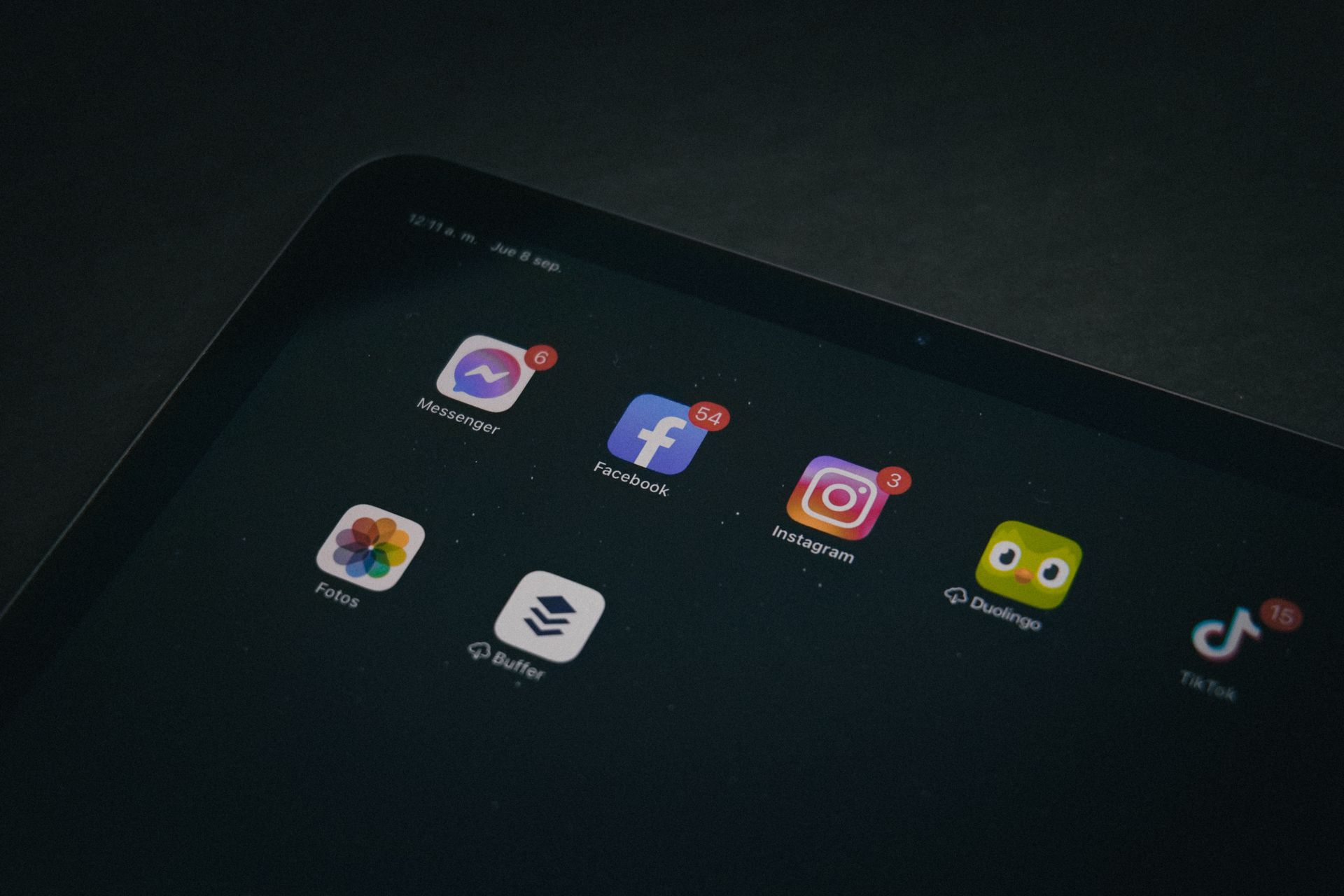
Duolingo, Babbel, Rosetta Stone, and their equivalents are useful tools for one specific phase of language learning — the early acquisition of vocabulary and basic grammatical patterns — and largely inadequate for the intermediate and advanced stages where actual fluency develops. Their business models incentivize daily engagement over genuine learning outcomes, and the gamification that keeps users returning does not reliably translate to the kind of deep processing that produces lasting language acquisition.
The research on app-based language learning is modest in its findings. Apps produce measurable gains in vocabulary recall and basic grammatical pattern recognition, particularly in the early stages. They do not produce the contextual language processing, the real-time comprehension, or the speaking and listening practice that functional fluency requires. A person who has completed a Duolingo Spanish course cannot have a conversation with a Spanish speaker and has not developed the listening comprehension to understand one — because Duolingo does not practice those skills.
The most effective use of apps is as a supplementary vocabulary and grammar tool — a way to expose the brain to new words and patterns at low cognitive cost during commutes or breaks — rather than as the primary learning vehicle. The primary learning vehicle for actual fluency is comprehensible input: listening to and reading material in the target language at a level just above current ability, in enough volume to produce the pattern recognition that fluency requires.
The specific strength of apps is their accessibility: they remove the friction of opening a textbook or organizing a study session, which means they are often the tool that actually gets used rather than the theoretically superior tool that requires more effort. This friction-reduction benefit is real and worth having, as long as the app is understood to be one tool among many rather than a sufficient learning vehicle.

Monstera Production / Pexels
Language acquisition — as distinct from language learning in the rote memorization sense — occurs primarily through exposure to comprehensible input: listening to and reading language that is slightly beyond the current level of understanding but whose meaning can be inferred from context. This is the mechanism by which children acquire their first language and by which adults most efficiently acquire additional ones, and it is the insight behind the most effective language learning methodologies.
Stephen Krashen's Input Hypothesis, developed in the 1980s, proposed that language acquisition occurs when learners encounter material at what he called "i+1" — one step beyond current ability, comprehensible enough to understand with context. The hypothesis has been supported and refined by subsequent research, and the practical implication is clear: the most efficient path to language fluency is massive exposure to the target language in comprehensible form, not drilling grammar rules or memorizing vocabulary lists in isolation.
The practical application looks different depending on level. At the beginner level, comprehensible input might be children's books, slow news podcasts designed for learners, or graded readers — materials specifically adapted to limit vocabulary to what the learner knows. At the intermediate level, it is television shows with subtitles, podcasts at normal speed, and novels written for native speakers. At the advanced level, it is any content in the target language: news, films, literature.
The counterintuitive implication is that grammar study — the typical focus of classroom language learning — is less efficient than input exposure as a route to fluency, particularly at early stages. Grammar rules are internalized more reliably through repeated exposure to correctly structured language than through explicit study of the rules, just as native speakers internalize the rules of their language without ever consciously studying them.

Yan Krukau / Pexels
Language learners who wait until they are "ready" to speak — who practice privately until they feel confident enough to risk speaking with other people — consistently take longer to develop spoken fluency than those who begin speaking early, badly, and without excessive concern for their errors. The fear of embarrassment in speaking is one of the primary barriers to language acquisition, and it is a barrier whose costs accumulate across months and years of missed speaking practice.
The research on speaking anxiety in language learning is extensive and consistent. Language anxiety — the specific nervousness associated with performing in a new language, being corrected, or appearing incompetent — is one of the strongest predictors of language learning rate, with high-anxiety learners consistently achieving lower proficiency than low-anxiety learners with equivalent aptitude and study time. The anxiety is a learned response to the social risk of speaking imperfectly, and it is reducible through the specific practice of speaking despite it.
The practical recommendation — which most language learners hear and few follow — is to begin speaking from the first week of study, in whatever simple, halting form is available, and to prioritize speaking practice as the most important and most uncomfortable element of the learning process. Language exchange partners (apps like Tandem or HelloTalk connect native speakers of different languages who want to practice each other's language), tutors on platforms like iTalki, and immersion environments all provide the speaking practice that produces the specific neural pathways of spoken fluency.
The specific reframe that helps most learners is the recognition that errors are not failures but evidence of progress: you cannot make errors in a language you cannot produce, and the ability to make errors is the ability to be corrected, which is how speaking improves.

Tima Miroshnichenko / Pexels
A learner who knows 1,000 of the most common words in a language can understand approximately 85% of everyday conversational speech. A learner who knows 2,000 words can understand approximately 90%. At 5,000 words, the figure is approximately 95% — the threshold at which most texts and conversations become comprehensible enough to acquire new vocabulary through context rather than through explicit study. Vocabulary, not grammar, is the primary determinant of language comprehension at every stage of learning.
The frequency distribution of language use means that a relatively small vocabulary covers the majority of all spoken and written language. The most common 1,000 words in English — words like "the," "be," "to," "of," "and," "a" — account for approximately 75% of all word use in everyday speech. The most common 3,000 words account for approximately 95%. This power-law distribution means that prioritizing the most frequent vocabulary — through frequency-based word lists, spaced repetition vocabulary systems, and input materials that focus on high-frequency words — produces the fastest improvement in comprehension per unit of learning effort.
The implication for grammar study is nuanced but important. Grammar rules matter for production — for speaking and writing correctly — but their absence does not prevent comprehension as severely as vocabulary absence does. A learner who knows many words but makes grammatical errors can still communicate and be understood; a learner who knows the grammar rules but has too small a vocabulary cannot construct or understand most sentences.
Anki — the free spaced repetition flashcard system — is the specific tool most consistently recommended by effective language learners for vocabulary acquisition, because it uses an algorithm that presents cards at the optimal moment for long-term memory consolidation, maximizing retention per unit of review time.

Nataliya Vaitkevich / Pexels
The intermediate plateau — the stage of language learning between the initial rapid gains of the beginner phase and the slow, incremental improvements of advanced study — is one of the most psychologically challenging experiences in language learning, and the failure to anticipate it causes a large proportion of the dropouts that occur at the intermediate level.
The plateau feels specific and demoralizing: the learner has invested months of effort, can manage basic conversations, understands some of what they hear and read, and then finds that progress seems to stop. New vocabulary does not stick as easily as it did at the beginning. Grammar errors that should have been corrected persist. Conversations with native speakers are exhausting and still produce frequent failures to understand. The learner who started with high motivation and experienced rapid early gains is now working harder for less visible progress.
The intermediate plateau is not an indication that the learner has reached their ceiling. It is an indication that the learning task has changed. At the beginner level, every new word and structure is genuinely new and produces visible comprehension gains. At the intermediate level, the remaining gaps are subtler and more specific, requiring more input, more exposure, and more time to fill. The learner who understands this in advance can interpret the plateau as a feature of the process rather than evidence of their limitations.
The specific response to the plateau that research supports is increasing input volume — reading and listening to more target language content at the current level — and expanding the range of material to expose the brain to the vocabulary and structures that remain unfamiliar. The plateau ends, gradually and without a clear marker, as the cumulative input fills the remaining gaps.

Pavel Danilyuk / Pexels
The critical period hypothesis — the idea that language acquisition is easier, and native-like proficiency more achievable, before puberty — is supported by evidence and is real in the specific sense that children who grow up bilingually acquire both languages more completely and with less accent than adults who begin studying a second language. But its popular interpretation — that adults cannot learn languages well — is substantially overstated and has discouraged large numbers of adult language learners from pursuing languages they could successfully acquire.
The evidence is more nuanced than the popular account suggests. Adults learn more efficiently in many respects than children: they have larger existing vocabularies to map new words onto, better metacognitive strategies for managing the learning process, and the specific motivation of having chosen to learn rather than simply being immersed. Children learn more completely in the long run in immersion conditions, acquiring native-like pronunciation and intuitive grammar that most adults do not achieve, but the adult learner who understands the trade-offs can achieve very high functional proficiency — sufficient for professional and social purposes — without native-like accuracy.
The specific limitation that is real is pronunciation: the phonological system of the first language exerts a strong influence on the production of sounds in subsequent languages, and native-like pronunciation in a language begun after puberty is rare, though not impossible with deliberate focused work. A French accent in English is not a failure of language acquisition — it is the expected outcome of learning English as an adult. Accepting this, and not conflating a foreign accent with linguistic incompetence, removes one of the most common sources of adult learner self-deprecation.

Vanessa Garcia / Pexels
One of the most underappreciated consequences of language learning is its effect on cognition — specifically, the growing body of evidence that bilingualism and the active management of two language systems produces cognitive benefits including enhanced executive function, better working memory, and a delayed onset of some symptoms of cognitive decline in aging.
The research on bilingual cognition, associated particularly with Ellen Bialystok and her colleagues at York University, finds that bilinguals consistently outperform monolinguals on tasks requiring attention control and the suppression of competing information — cognitive skills that the constant management of two language systems develops and reinforces. The bilingual brain must continuously select the appropriate language and suppress the other, and the executive function required for this selection generalizes to other attentional tasks.
The linguistic relativity hypothesis — the weaker version of the Sapir-Whorf hypothesis, which proposed that language determines thought — has found empirical support in specific domains. Studies have found that speakers of languages with grammatical gender assign human-like qualities to objects in gender-consistent ways, that speakers of languages with specific spatial vocabulary (using cardinal directions rather than relative positions) think about space differently, and that speakers of languages with future tense forms think about the future differently from speakers of languages that do not grammatically distinguish future from present.
These effects are modest but real, and they mean that learning a new language is not simply acquiring a new code for expressing the same thoughts but acquiring, to some extent, access to a different cognitive framework — a different way of organizing experience that is specific to the culture and conceptual system embedded in the language.

Towfiqu Barbhuiya / Pexels
Language learning is a long-horizon activity whose progress is more dependent on the consistency of practice over months and years than on the intensity of any individual study session. A learner who studies for 30 minutes every day for a year (182 hours) will achieve considerably more than a learner who studies for seven hours every weekend (182 hours) — despite the same total time investment — because language acquisition is driven by the repetition and spacing of exposure that daily practice provides.
The spacing effect — the finding that learning distributed over time produces better long-term retention than the same learning concentrated in fewer, longer sessions — is one of the most robust findings in cognitive psychology and applies directly to language learning. The brain consolidates language patterns during sleep, and each night's sleep following a study session contributes to the consolidation of what was studied that day. Daily study maximizes the number of sleep consolidation cycles per unit of study time.
The practical implication is that building a daily language practice — however short — is more important than occasional longer sessions. Fifteen to twenty minutes of daily practice, done consistently for a year, is more valuable than four-hour sessions done once or twice per month, even though the total time investment favors the longer sessions. The habit of daily engagement is the most important structural decision a language learner makes, and protecting it against the temptation to skip days (and then make up for it with a long session) is the specific discipline that distinguishes learners who eventually achieve fluency from those who perpetually restart.

George Pak / Pexels
Immersion — sustained exposure to and engagement with the target language in real communicative contexts — is the most effective language learning environment and the one that most consistently produces rapid, lasting progress. This is not surprising, since immersion is how all languages are initially acquired, but the degree to which even partial immersion accelerates progress compared to classroom or app-based study is often not appreciated by learners who have access only to the latter.
Full immersion — living in a country where the target language is spoken, with minimal use of one's native language — is the fastest route to fluency, not because immersion is inherently magical but because it provides the massive, contextually embedded input that the brain requires to internalize a language at the level of automatic processing rather than conscious translation. A person who moves to France and is required to function in French from day one will acquire more French in six months than years of classroom study would produce, because every interaction is both input and forced output practice.
Partial immersion strategies — specifically curated to maximize target language exposure without relocating — are available to most learners and significantly more effective than study alone. Changing phone and computer language settings to the target language, watching television and films in the target language (first with target language subtitles, not native language), following social media accounts in the target language, and using the language in online communities all increase exposure at low friction cost.
The specific environment design principle is: make it easier to encounter the target language than to avoid it. A learner whose phone is in Spanish, whose commute podcast is in Spanish, and whose lunchtime reading is in Spanish is in a partial immersion environment regardless of where they live.

Monstera Production / Pexels
The variable that most reliably predicts language learning success across the research literature is not aptitude, not method, not the specific tool used, but motivation — specifically, the clarity and strength of the learner's reason for learning the language. Learners with strong integrative motivation (a genuine desire to connect with the culture and people of the target language) and instrumental motivation (a specific practical need that the language serves) consistently outperform those who learn because the language seems like a useful thing to know.
The reason motivation matters so much is the timeline. Language learning requires months to years of consistent effort before the rewards of that effort are available in full — before conversations feel natural, before films are comprehensible without subtitles, before reading is effortless. The learner who lacks a specific, personally meaningful reason to persist through the intermediate plateau and the slow progress of advanced study is the learner who most often quits.
The specific question to answer before beginning language study is therefore not "which app should I use?" but "why do I actually want this language, and is that reason strong enough to sustain years of effort?" A reason that connects the language to something the learner genuinely values — a relationship, a professional goal, a cultural passion, a travel aspiration that is specific enough to feel real — is a reason that produces the sustained motivation that methods alone cannot provide.
Motivation that is artificially manufactured — "I should learn Mandarin because it's the language of the future" — is less durable than motivation that is genuinely personal, because the abstract should does not sustain the specific daily effort of study the way that the personal want does.

Shox Art / Pexels
Listening and reading in a new language (input) and speaking and writing in it (output) are different skills that develop through different practices, and improving one does not automatically improve the other. A learner who has spent a year listening to Spanish podcasts and reading Spanish novels will have a vocabulary and comprehension that far exceeds their ability to produce the language in conversation or writing — a gap called the input-output asymmetry that is one of the most common sources of frustration in intermediate language learning.
Output practice — speaking and writing — develops specific neural pathways that input practice does not. The ability to retrieve a word under the time pressure of conversation, to construct a grammatically adequate sentence in real time, and to manage the phonological demands of speaking a new language all require practice that cannot be replaced by input exposure, however massive. A learner who has never spoken the language cannot suddenly speak it because they have read enough of it.
The practical implication is that speaking practice should begin early, as noted in an earlier slide, and should be regular rather than occasional. Writing practice — keeping a diary in the target language, responding to posts in target language online communities, corresponding with language partners by text — develops the retrieval and construction skills that reading does not, and it has the additional advantage of being lower-pressure than speaking, since it allows time for reflection and correction.
The integrated approach — combining input exposure with regular speaking and writing practice — produces the fastest overall development because each practice mode supports the others: input provides the material that output practice retrieves and uses, and output practice reveals the specific gaps in input coverage that targeted input can address.

Võ Văn Tiến / Pexels
A language is not a neutral code that can be separated from the culture that produced it. The vocabulary, the idioms, the pragmatic conventions — when to be formal, when directness is appropriate, what is considered rude or polite — all reflect cultural values and assumptions that are inseparable from linguistic competence. A learner who acquires the grammar and vocabulary of a language without understanding its cultural context will speak grammatically but pragmatically incorrectly — saying the right words in the wrong way, offending where politeness was intended, creating distance where connection was sought.
Japanese learners who do not understand the cultural context of keigo — the formal register that marks social hierarchy in language — will inadvertently violate status relationships in ways that confuse or offend native speakers. Spanish learners who do not understand the cultural value of personalismo — the emphasis on personal relationships in Spanish-speaking cultures — may find their technically correct Spanish failing to build the connections that the same words in a culturally attuned speaker would produce. Arabic learners unfamiliar with the pragmatic conventions of indirect communication in Arab cultural contexts may interpret direct refusals where none were intended.
Cultural learning happens most naturally through engagement with authentic materials — films, novels, music, podcasts, and direct conversation with native speakers — rather than through explicit cultural instruction. The learner who approaches a language through its culture — genuinely curious about the films, the literature, the humor, the history of the people who speak it — acquires cultural competence as a byproduct of the engagement, in the same way that linguistic competence is acquired through exposure.

Ivan S / Pexels
Language learning practiced in isolation — studying alone, without regular contact with native speakers or other learners — is significantly harder to sustain and significantly less effective than learning embedded in a community of speakers. The social dimension of language — the fact that it exists to connect people — means that learning it in isolation from the people who speak it is working against the grain of how language is acquired and why it matters.
A language community provides several things that solo study cannot. It provides natural, contextually embedded input — conversation with native speakers produces the authentic vocabulary, idiom, and pragmatic use that textbooks and apps do not. It provides the social accountability that sustains practice through motivation dips — the language exchange partner waiting for your call on Thursday is more motivating than an app notification. It provides the emotional engagement with the language that makes it feel real rather than abstract — a language attached to specific people and specific relationships is a language worth continuing to learn.
Finding a language community is easier than it has ever been. Online language exchange platforms (HelloTalk, Tandem, iTalki) connect learners with native speakers globally at low or no cost. Discord servers, Reddit $RDDT communities (r/languagelearning, and dozens of language-specific communities), and language exchange meetups in most cities connect learners with other learners. Online tutors available by video call for conversation practice make regular speaking practice accessible regardless of geography.
The specific recommendation is to build social connections in the target language from the earliest possible stage — not waiting until "ready" to speak, but beginning to meet speakers and other learners as soon as any productive interaction is possible. The learner who has a network of people connected to the language will find motivation, accountability, and a reason to persist through the stages where solo study would not be enough.
