
15 things most cat owners do that cats actually hate
These are 15 things cats hate that owners do every day, often without realizing how much stress it causes their cat
Credit: Helena Lopes / Pexels
A cat's affection looks nothing like a dog's, and most of the friction between cats and the people who love them starts right there. Owners raised on dog body language tend to read a cat's stillness or tolerance as contentment. It is often the opposite: restraint, mild alarm, or a cat quietly waiting for an unwanted interaction to end. Cats evolved as both predator and prey, wired to value control over their own space and a clear route to escape above almost everything else. A hug, a belly rub, or a scoop-up from behind can all read as affectionate to a person while registering to a cat as being cornered.
None of this makes cats difficult or ungrateful. It makes them a different species with a different rulebook, one that veterinary behaviorists have spent decades translating. The gap between what a cat is communicating and what an owner assumes it means is where most so-called bad cat behavior comes from, including scratching, biting, hiding, and house-soiling. Often the cat is not malfunctioning. The cat is responding, predictably, to something the owner is doing without realizing it.
This list covers 15 things cats hate that otherwise attentive, loving owners do every day. It covers how they pet, hold, and discipline a cat, and what they clean with, feed it, and change around the house. Some of these habits carry no real cost beyond a stressed cat. Others, including how litter boxes are set up and how a cat is physically restrained, connect directly to published veterinary guidelines on feline welfare. Each item below explains what to stop doing, and the behavior science behind why a cat reacts that way. The goal is a fix that makes sense instead of feeling arbitrary. Small adjustments, most of which cost nothing and take no extra time, tend to produce a calmer, more trusting cat within days.
Hugging or holding a cat tightly against its will
Credit: Helena Lopes / Pexels
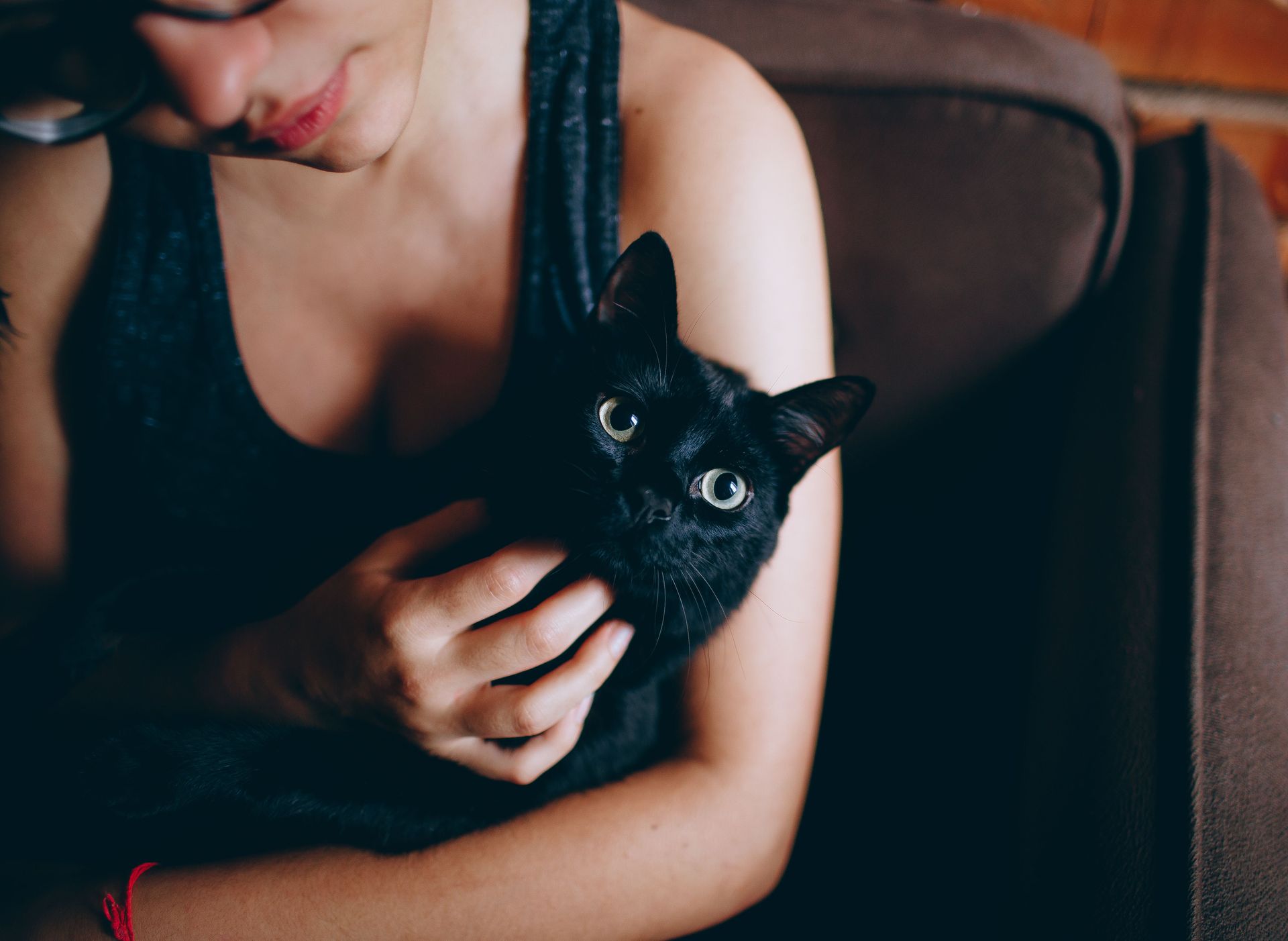
Hugging is a human gesture of affection that most cats read as being trapped. A cat's sense of safety depends on two things: seeing a threat coming and having a way out. A tight hug removes both, pinning the front legs and blocking the exit at the same moment a person leans their face in close.
Dogs descend from wolves, a species built around group living and physical closeness, so many dogs adapt easily to being held and squeezed. Cats descend from the African wildcat, a solitary hunter that survived by controlling its own space and retreating from anything unfamiliar. That instinct did not disappear during domestication. It just went quiet in cats that trust their owner completely, which is why some cats do tolerate, or even enjoy, being held snugly. That tolerance is usually built through years of gentle handling, not something to assume on day one, or ever, with a cat that has shown no interest in it.
A cat being hugged against its will usually gives warning signs before it reacts defensively. Ears rotated back or flattened, a tail thumping or lashing, a low growl, and front paws braced against a person's chest are the most common ones. Ignoring those signals long enough can end in a scratch or bite. That is not the cat being aggressive. Physical struggle became its only remaining way to end the interaction.
A simpler approach works better for almost every cat. Sit or lie down near the cat and let it decide whether to climb into a lap or press against a leg. That choice is what makes the contact feel safe rather than imposed. Cats that are picked up should be supported under the chest and back legs, never dangled or squeezed, and set back down the moment they start to squirm. Kittens handled gently between two and seven weeks old, a key window for social development, tend to grow into adults more comfortable with human touch. Even they should always have the option to leave.
Rubbing a cat's belly the way you would a dog
Credit: Atlantic Ambience / Pexels
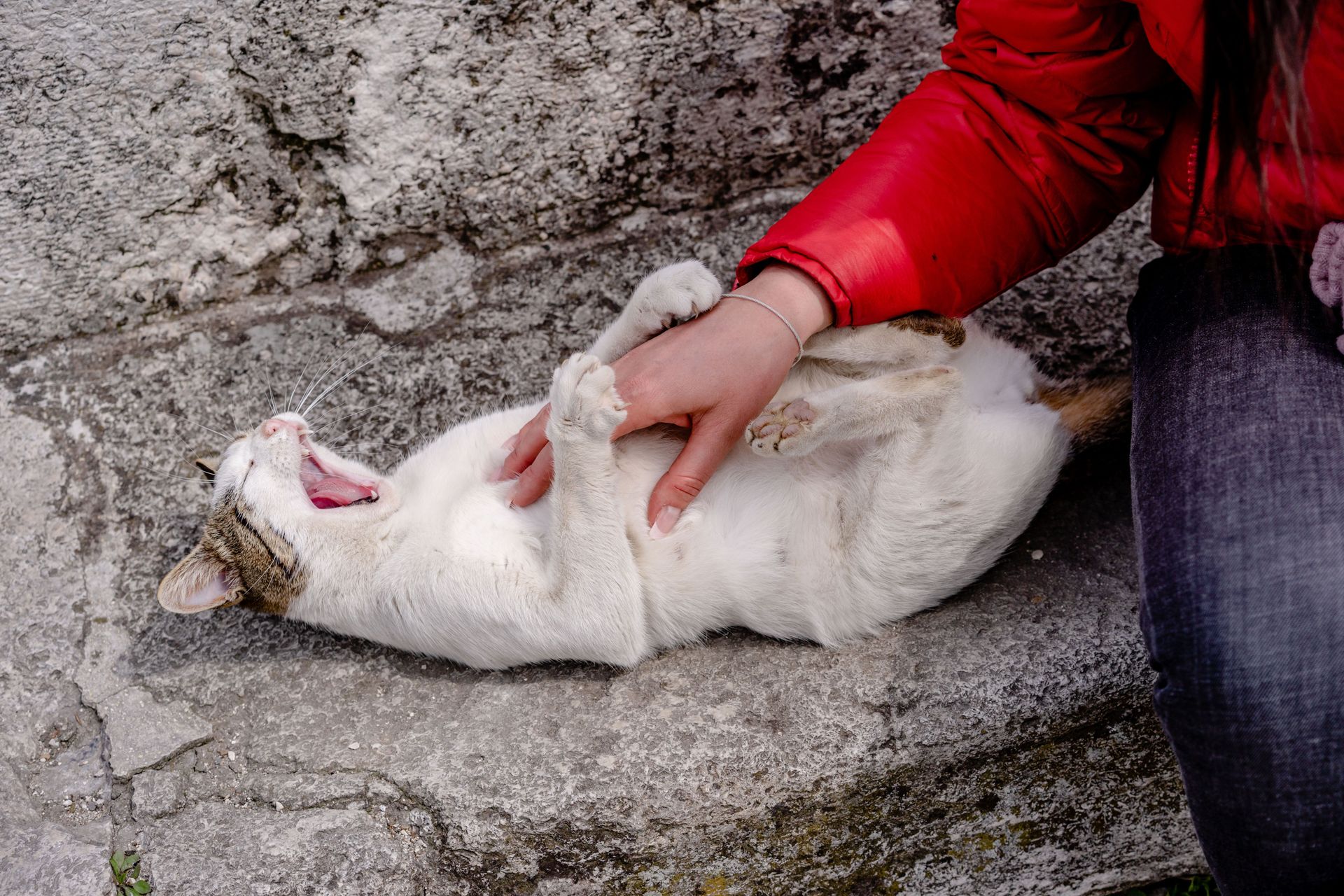
Touching a cat's exposed stomach usually triggers a defensive reflex, not relaxation, even when the cat rolled onto its back on its own. That rollover is worth reading correctly. It is often a stretch, or a sign of trust, or a way of showing it feels safe enough to expose a vulnerable spot for a moment. It is rarely an invitation to touch the belly itself.
Dog owners are used to this move meaning something different, because many dogs actively solicit belly rubs and relax fully into them. Cats are built around a different set of instincts. The stomach holds the vital organs, and a cat's nervous system treats contact there as a potential attack, whether the hand belongs to a predator or a favorite person. The response is often a quick grab with the front paws combined with a kick from the back legs, sometimes called the bunny kick. It is the same defensive move a cat would use against a threat that got past its claws in a real confrontation.
Some individual cats genuinely enjoy a belly rub, and a small number will lie there and ask for more. The way to tell the difference is simple: watch what happens after one gentle touch. A cat that rolls further into it or keeps presenting the belly again is the exception. A cat that grabs the hand, kicks, or gets up and walks away is giving a clear answer, and it is the more common one.
The rollover itself is still worth appreciating. It usually means the cat feels comfortable enough in that moment to expose its most vulnerable area, which is closer to a compliment than an invitation. A better response is to acknowledge it without testing the belly directly. Cheeks, the base of the ears, the chin, and the area between the shoulder blades are safer bets, and nearly every cat has a strong preference among them worth learning.
Staring directly into a cat's eyes for too long
Credit: Marian Cosnete / Pexels
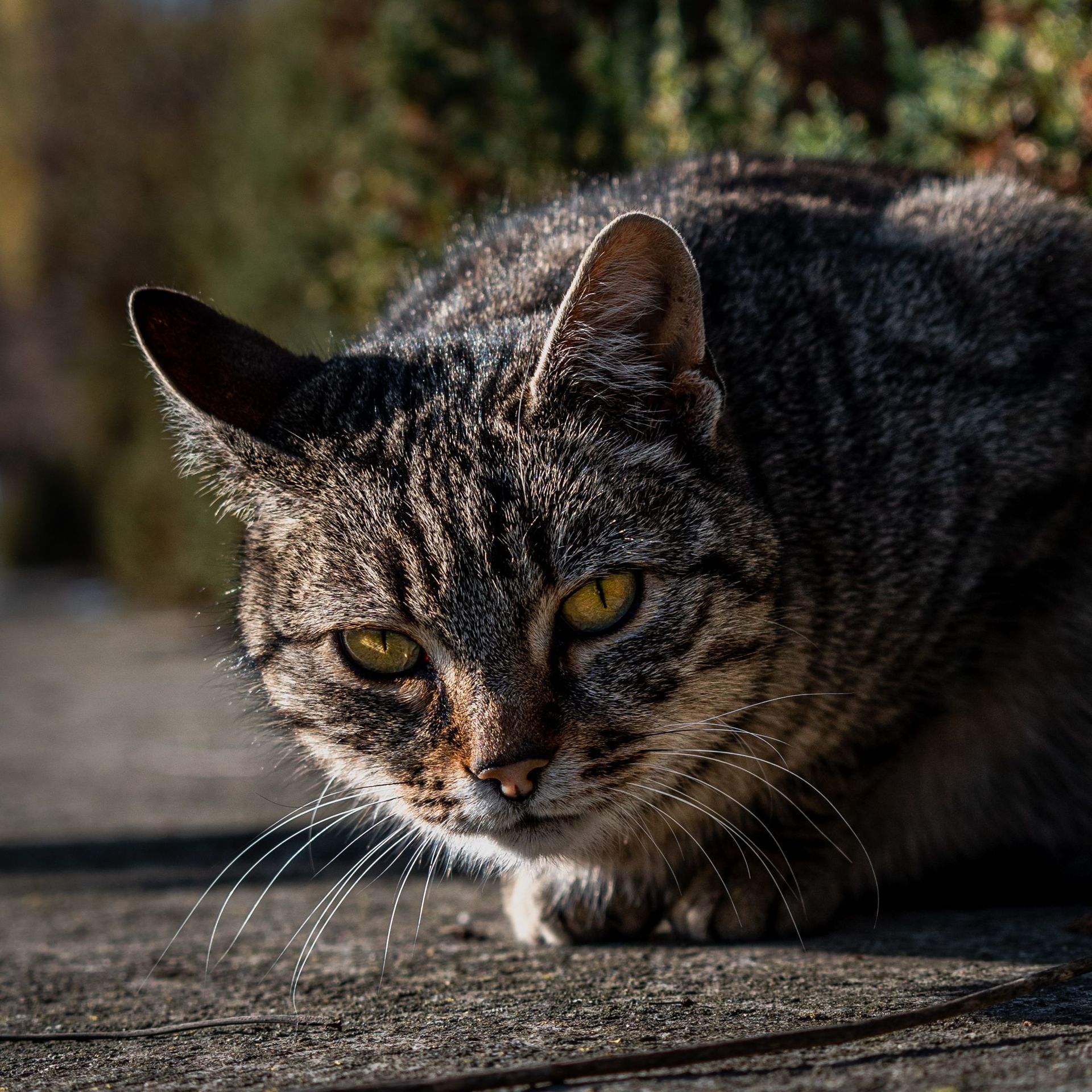
A hard, unbroken stare reads as a threat to most cats, the same signal that would pass between two unfamiliar cats sizing each other up before a fight. Softening the gaze, rather than holding it, is what actually earns trust.
Cats rely heavily on visual signals since much of their communication happens without sound. Between two cats, a locked, unblinking stare is a challenge, the kind of look that precedes a stand-off or a retreat. Cats extend that same reading to people, particularly a cat that is shy, new to a household, or already on edge about something else in its environment. A person leaning in and staring, even out of pure fascination with how a cat looks, can come across as the human version of squaring up for a confrontation.
A 2020 study published in Scientific Reports by researchers at the Universities of Sussex and Portsmouth tested this directly. Cats were more likely to approach an unfamiliar person who slow-blinked at them than one who held a neutral expression. The technique is simple to copy. Look toward the cat with a relaxed face, then narrow the eyes gradually as if drifting off to sleep. Hold that soft squint for a beat, then look away or blink normally. Many cats will return the gesture, and the exchange has become known among behaviorists as a small, reliable way to signal calm intent without a word.
None of this means eye contact with a cat is inherently bad. A cat that already trusts its owner will often hold a relaxed gaze during everyday moments. That is different from a fixed, unbroken stare aimed at a cat that is uncertain or withdrawing. The habit worth breaking is the prolonged, wide-eyed stare. It might come from genuine curiosity, a phone camera pointed at a cat for too long, or a child fascinated by a pet. Looking away periodically, or trading the stare for a slow blink, turns a moment that reads as pressure into one that reads as safety.
Raising your voice when a cat misbehaves
Credit: Alex Vo / Pexels
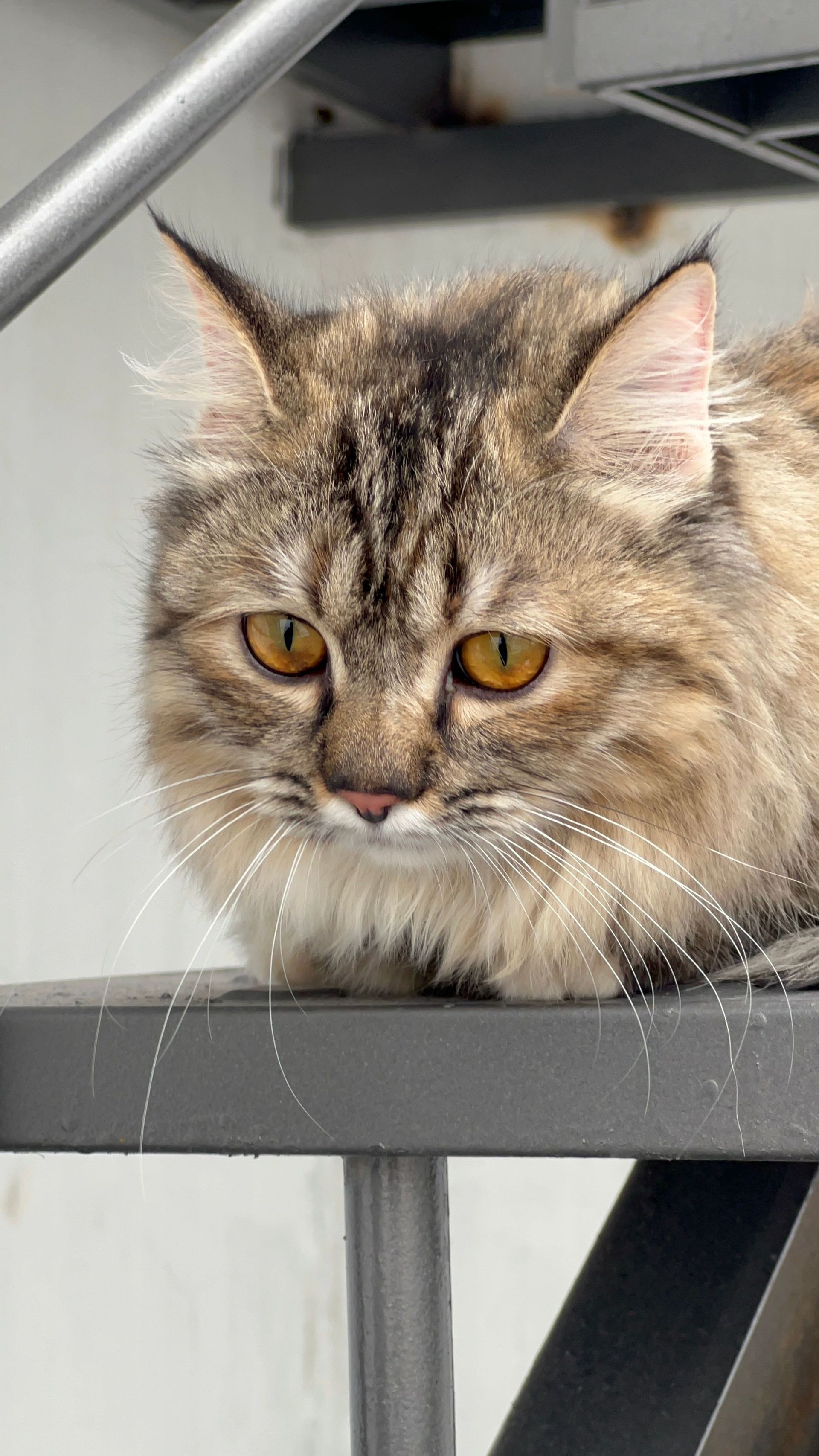
Yelling startles a cat without teaching it anything useful. Cats do not connect a raised voice with a specific action the way a scolded child might. What a loud voice reliably teaches a cat is that its owner is unpredictable and worth being wary of.
Part of the disconnect comes down to hearing. A cat's range extends well beyond a human's, reaching frequencies up to roughly 64 kilohertz compared with about 20 kilohertz for people. Their ears are built to pick up small, sharp sounds with precision. A sudden shout lands on that sensitive system the same way a loud bang or a slammed door does, as a jolt rather than as information. Even a perfectly timed scolding does not translate into cause and effect the same way it might for a dog. Dogs have learned to read tone over generations of close cooperation with people.
Behaviors that prompt yelling, a cat on the counter, a scratched armrest, a knocked-over glass, are almost always driven by something practical rather than defiance. Boredom, a scratching post in the wrong spot, a countertop that smells like food, or simple curiosity are common causes. Veterinary behaviorists generally find that punishment aimed at these behaviors does not resolve the underlying cause. The behavior often continues when the owner is out of the room, or the cat becomes generally more anxious and withdrawn around the person doing the yelling.
A more effective response addresses the reason the behavior is happening. A cat jumping on counters usually needs a more interesting vertical space elsewhere, like a shelf or a cat tree. A scratched piece of furniture usually needs a scratching post nearby that matches the material and angle the cat already prefers. Calmly interrupting the moment, redirecting to the acceptable option, and rewarding the cat once it uses it tends to change the behavior permanently. A raised voice never quite manages that.
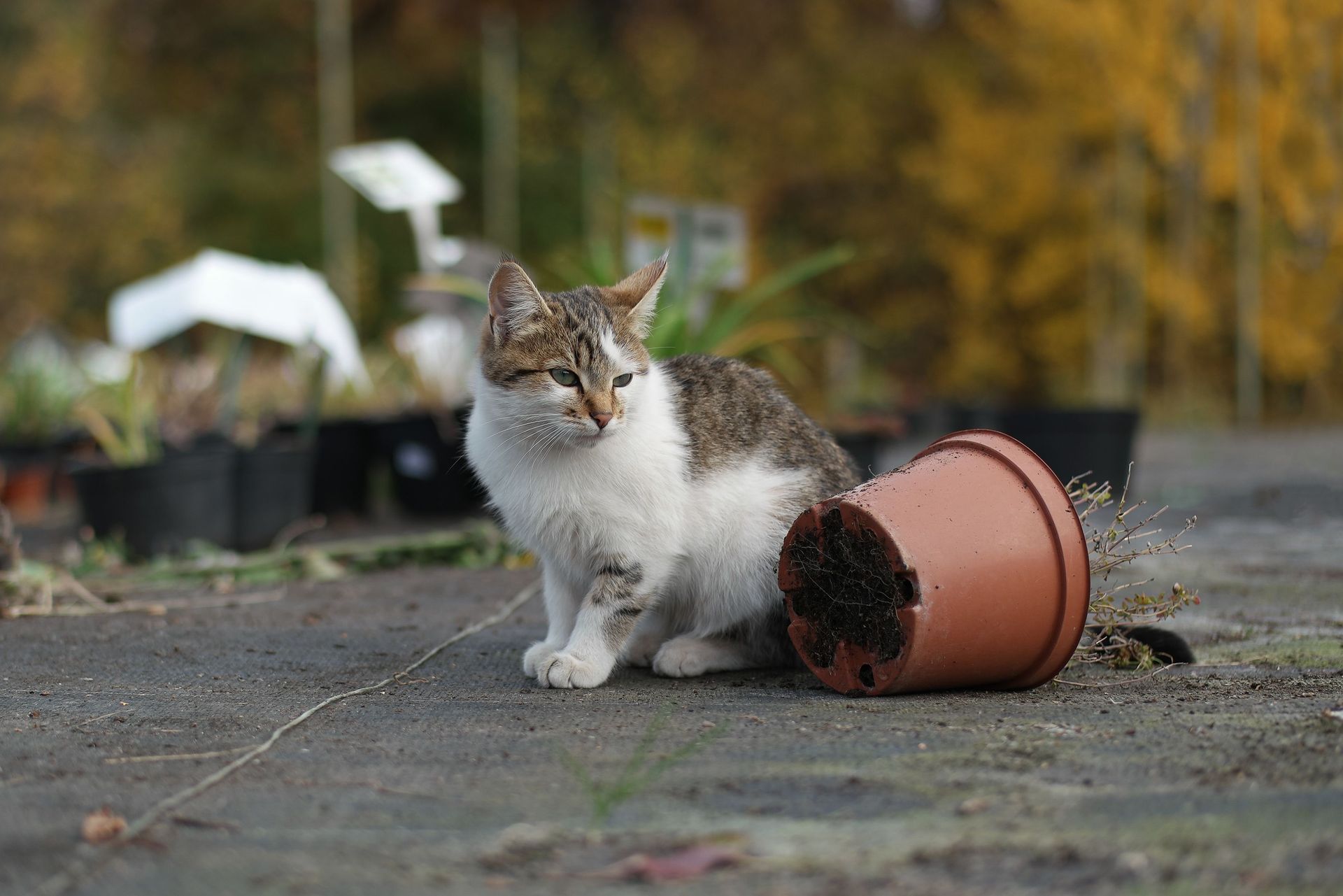
Punishing a cat after finding a mess it made earlier
Credit: Kostiantyn Klymovets / Pexels
Scolding a cat for a mess found minutes or hours after the fact does not function as punishment for that action. The association between behavior and consequence has to happen almost immediately to mean anything to an animal. By the time a knocked-over plant or a spot outside the litter box is discovered, the moment that caused it is already gone from the cat's memory.
This is a basic feature of how learning works across species, not something unique to cats. A consequence needs to land within a few seconds of a behavior for an animal to connect the two. A cat that gets scolded on the way into a room where the mess happened an hour earlier is not learning to avoid that action. It is learning that its owner sometimes appears and becomes upset for reasons the cat cannot identify, a far less useful and more stressful lesson.
What often gets read as a guilty look, ears back, a lowered body, slinking away before a word is even said, is usually something else. It is a reaction to the owner's tone, posture, and facial expression in that exact moment, not a memory of wrongdoing. Cats are quick to pick up on tension in a room, and a tense owner walking in and scanning the floor sends a clear enough signal on its own.
A more useful response starts with figuring out why the behavior happened at all. Elimination outside the litter box is frequently tied to a dirty box, a medical issue such as a urinary tract infection, or stress from another cat guarding the area. No amount of scolding addresses any of those causes. Rubbing a cat's nose in a mess, an old piece of advice that still circulates, teaches nothing and only adds fear to an unresolved problem. If a behavior is caught in progress, a calm interruption and redirection works far better than a delayed reaction the cat cannot connect to anything at all.
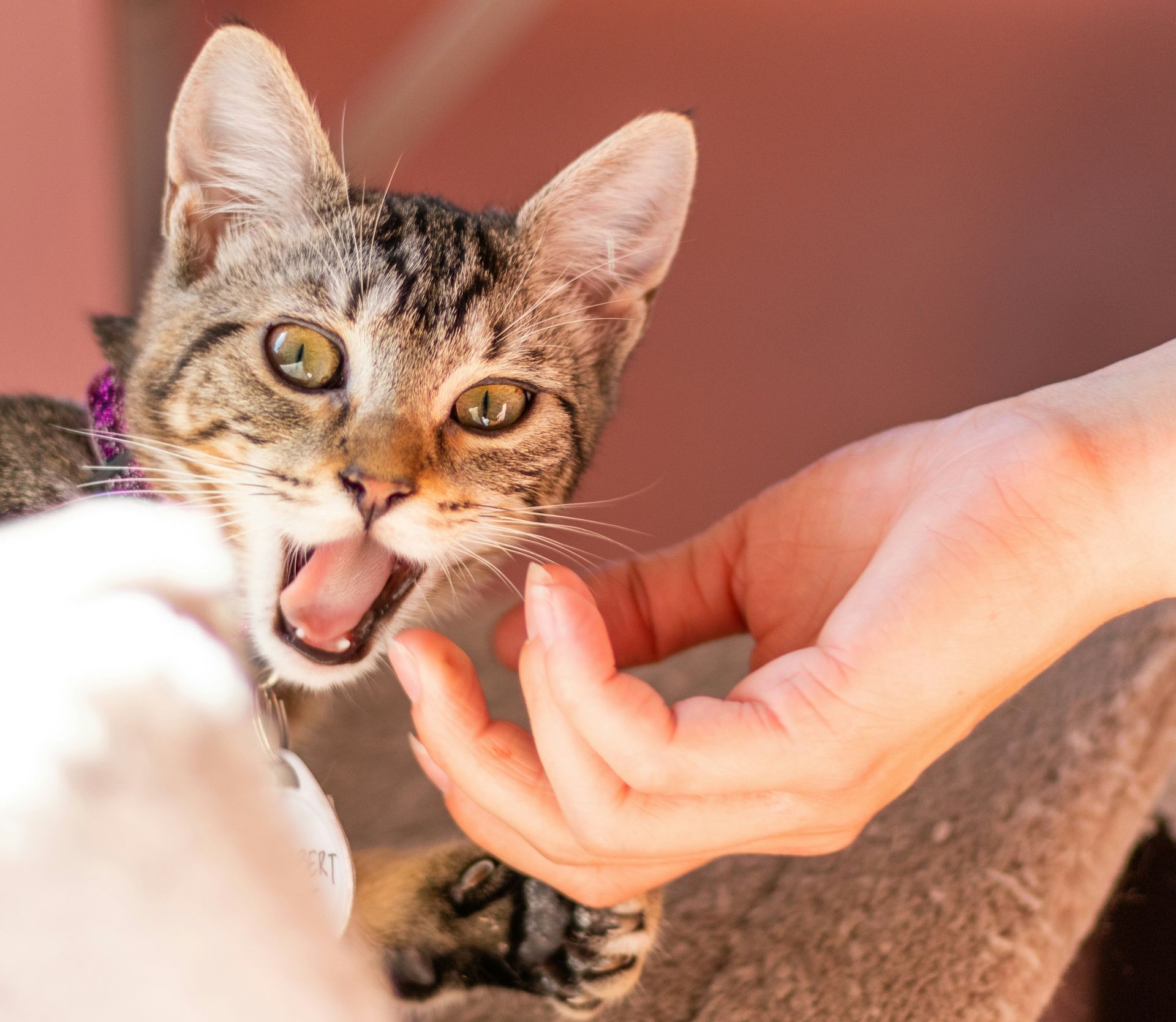
Grabbing a cat without warning
Credit: Brendan Sapp / Unsplash
Reaching down and scooping up a cat without warning skips the one step that actually makes handling feel safe: giving the cat time to see it coming. A cat that hisses, twists away, or claws when grabbed from above or behind is usually reacting to a startle, not refusing affection from someone it likes.
Cats are small enough to be prey as well as predators, and that shapes their instincts in specific ways. Threats in the wild typically come from above or from behind, whether from a bird of prey or a larger animal closing in unseen. A hand appearing suddenly in either direction can trigger a fight-or-flight reflex before the cat has time to register who it belongs to. This holds true even with an owner the cat trusts completely in every other context.
The moments this shows up most often are easy to spot. A child runs over and grabs a cat mid-nap. An owner lifts a cat off a counter or a bookshelf with no lead-up, or picks up a sleeping cat that had no idea anyone was nearby. Senior cats add another layer to this, since reduced hearing or vision means they notice an approaching hand later. Arthritis can also make a sudden lift genuinely painful, not just startling.
A slower approach solves most of this. Letting a cat see or hear someone coming gives it a moment to orient before being touched. Offering a hand to sniff first, the way cats greet each other nose to nose, and speaking briefly before making contact both help too. Once contact starts, supporting the chest and hindquarters properly, rather than grabbing under the front legs alone, keeps the lift both comfortable and predictable. Children in the house benefit from the same rule: let the cat come to the hand rather than the hand chasing the cat.
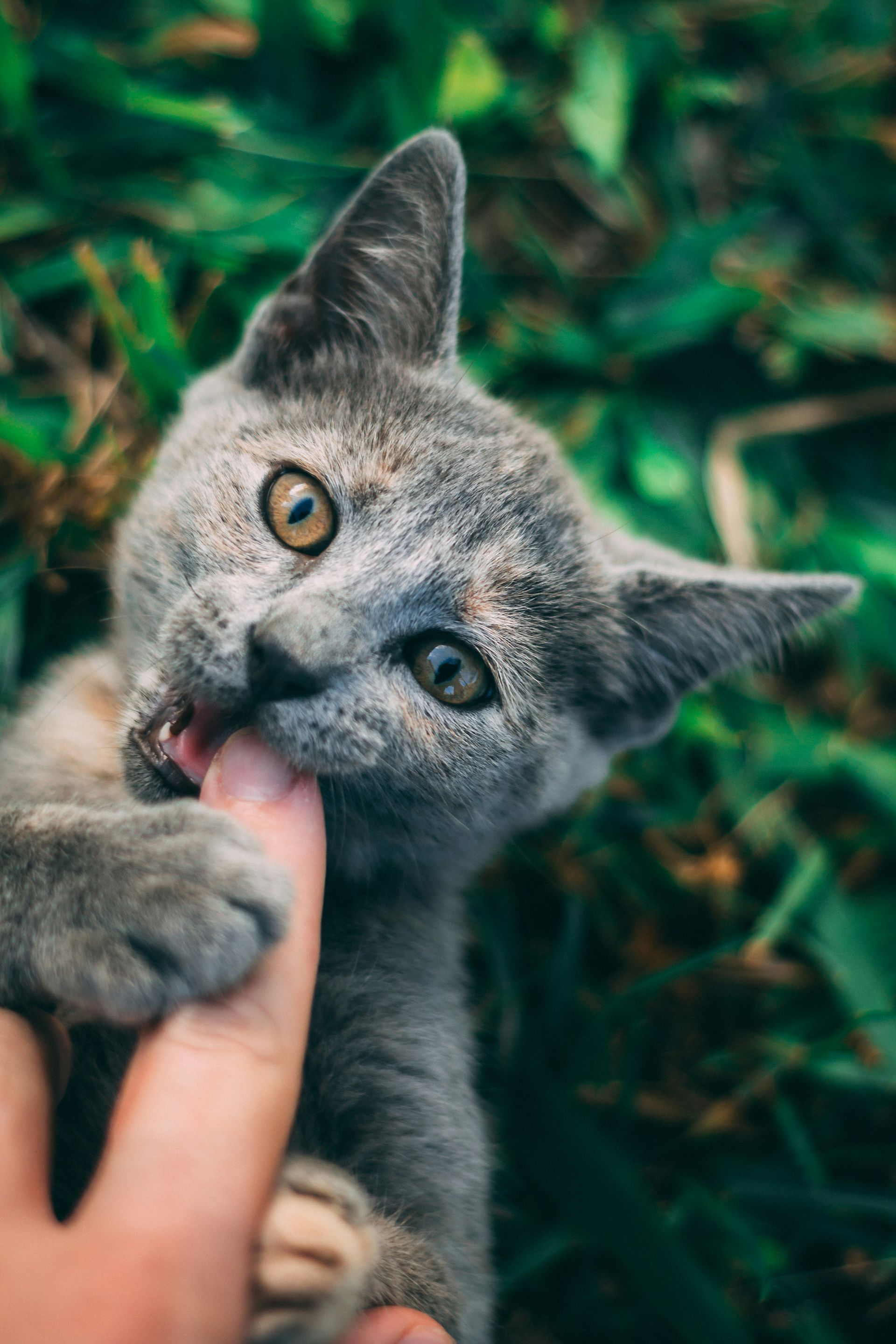
Playing with a cat using bare hands instead of toys
Credit: Geronimo Giqueaux / Unsplash
Using fingers as a plaything during kitten games teaches a cat that human skin is fair game to bite and claw, and that lesson tends to carry straight into adulthood. A wand toy or a toy on a string satisfies the same instinct without ever pointing it at a hand.
Kittens learn how hard is too hard through play with littermates, who yelp, stop playing, or nip back when a bite lands with too much force. That feedback loop is how bite inhibition develops. A kitten that plays mainly with a human hand does not get the same correction. A person who laughs at a gentle nibble can unintentionally reward the exact behavior that becomes a problem once adult teeth and claws are involved. The habit is not limited to kittens, either. An adult cat introduced to hand-play for the first time can pick up the same association just as easily.
Hands also make an unconvincing substitute for prey in another way. A hand that jerks back the instant it gets bitten looks, from a cat's point of view, exactly like something fleeing. That tends to trigger more chasing and biting rather than less. A toy that moves like real prey, darting, hiding, then going still, gives a cat's hunting sequence somewhere to land: stalk, chase, catch, and release. That resolution is part of what makes toy-based play satisfying rather than something the cat keeps escalating.
If the habit is already in place, the fix is less about scolding and more about substitution. The moment a cat's mouth or claws reach for a hand, going still rather than yanking away removes the fleeing-prey cue. Swapping in a wand toy right away redirects the same energy somewhere it can actually be resolved. Over a few consistent weeks, most cats shift their play targeting away from hands entirely, especially if every person in the house follows the same rule.
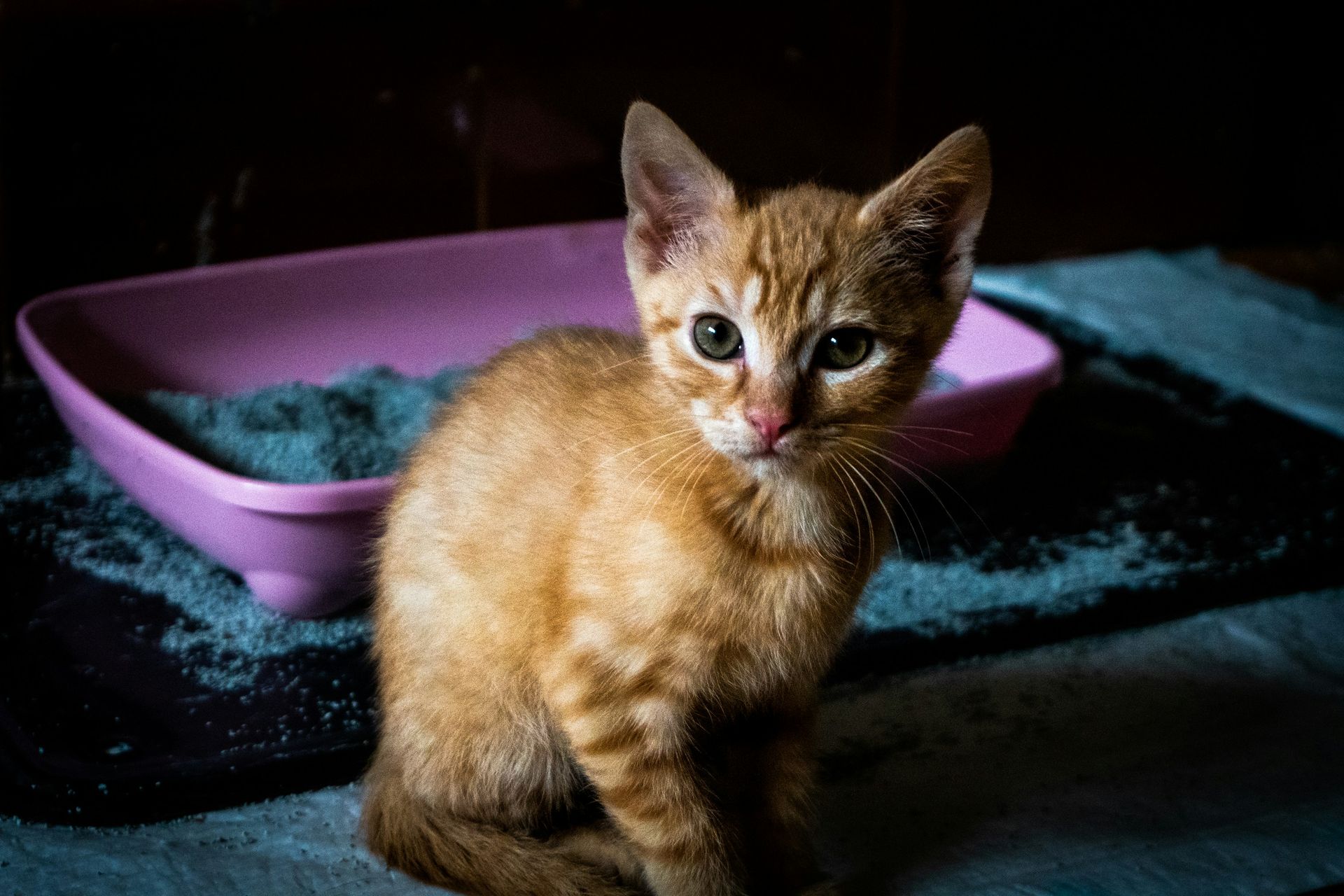
Letting the litter box go too long between scoops
Credit: Jozsef Hocza / Unsplash
A litter box that only gets scooped every few days becomes unpleasant enough that many cats will start eliminating somewhere else in the house instead. Daily scooping is the single change most likely to fix a cat that has stopped reliably using its box.
Cats groom themselves obsessively and treat their bathroom habits with the same standard. A box holding several days of waste smells overwhelming to a nose built to detect far more than a human's can. A cat faced with that choice every time it needs to go will often decide the box itself is the problem rather than tolerate it. The result usually looks like defiance from the outside: a puddle on a bathmat, or a pile behind the couch. It is closer to the cat solving an unpleasant situation the only way available to it.
Veterinary guidelines on litter box care generally call for scooping at least once a day. Homes with more than one cat sharing a box usually need scooping more often than that to keep pace. A full litter change and box wash should follow a schedule based on the litter type, typically every one to four weeks for clumping litter. Skipping that schedule does more than create odor in the house. It can push a cat toward developing a genuine aversion to the box as a location, a harder habit to reverse than simply catching the problem early would have been.
This is a separate issue from how many boxes a home has. Even a single, appropriately sized box can function well if it is kept clean on a consistent schedule. A cat that has already started avoiding its box is worth taking to a veterinarian first. Litter box avoidance is also one of the more common early signs of a urinary tract problem. Ruling that out matters before assuming the issue is purely about cleaning frequency.
Switching cat food abruptly
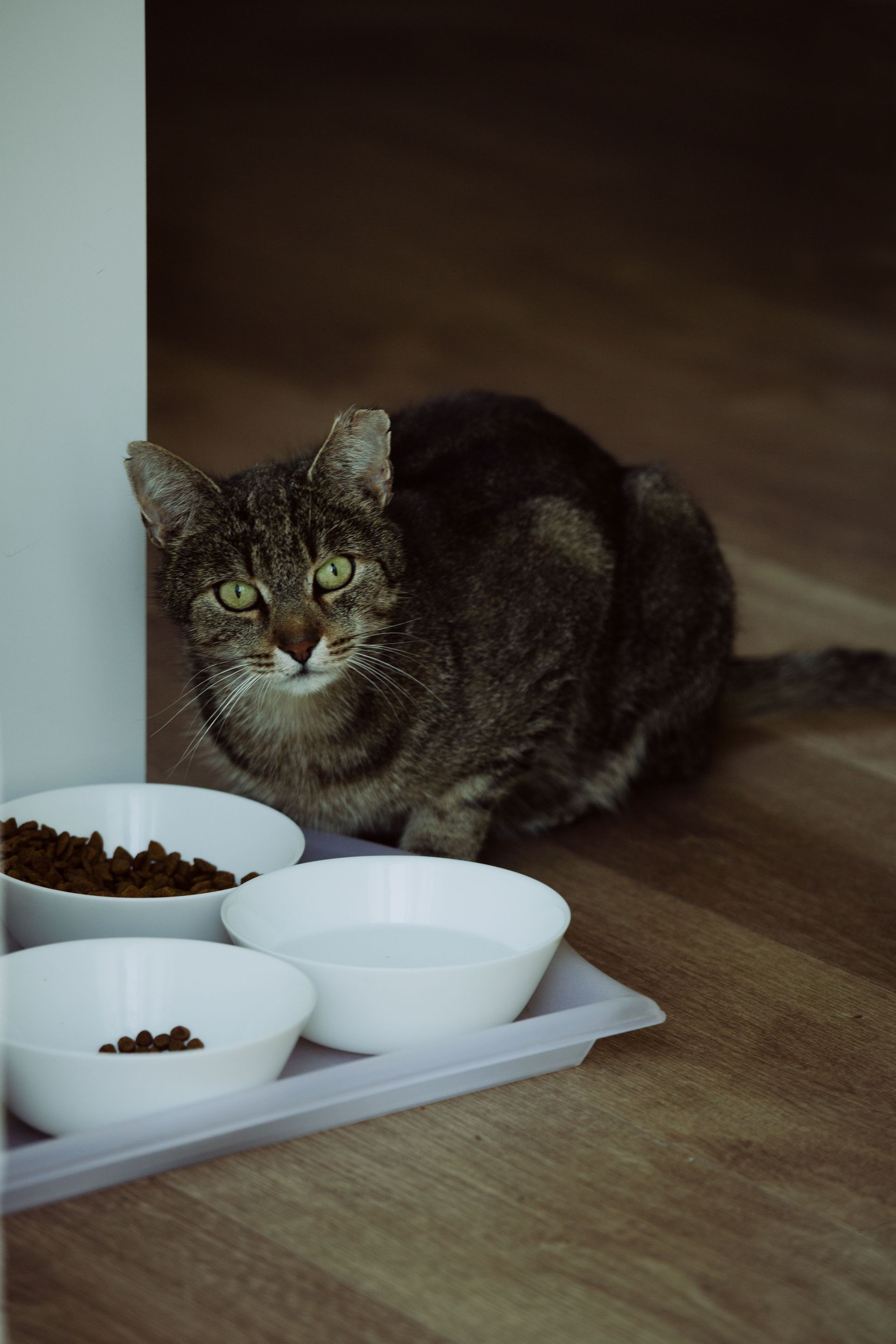
Credit: Vasilissa Popil / Pexels
Replacing a cat's food overnight, instead of blending the old and new formulas gradually, is a common and avoidable cause of trouble. It often leads to vomiting, diarrhea, and days of reduced appetite. A transition spread across seven to 10 days prevents nearly all of it.
A cat's digestive system, including the balance of bacteria in its gut, adjusts to the specific composition of whatever it has been eating consistently. A sudden shift in protein source, fat content, or fiber changes that balance faster than the gut can adapt. That mismatch is what produces the loose stool or upset stomach that follows an abrupt switch. Cats are also naturally wary of unfamiliar food, a trait that served wild cats well by preventing them from eating something spoiled or unsafe. A full bowl of something entirely new can simply get ignored rather than eaten.
That refusal carries more risk for cats than it would for some other pets. A cat that goes without food for more than a day or two is at real risk of a serious liver condition called hepatic lipidosis. This applies whether the cause is illness or simply turning up its nose at a new formula. The condition develops when the body starts breaking down fat reserves too quickly during a prolonged period of not eating. It turns a food preference issue into a genuine health concern if it drags on.
The standard fix is a gradual blend. A small amount of new food gets mixed into the old for a few days, then the ratio shifts steadily until the new food fills the entire bowl. This typically takes seven to 10 days, or longer for a cat with a known sensitive stomach. This differs from simply rotating between a few flavors a cat already eats without issue, which rarely causes problems. The concern applies specifically to switching brands, formulas, or protein sources the cat has not eaten before. A veterinarian is worth consulting first for any change tied to a medical condition.
Rearranging furniture and the home environment too often
Credit: Helena Jankovičová Kováčová / Pexels
Moving furniture, replacing a cat tree, or reorganizing a room removes the scent markers and familiar layout a cat relies on to feel secure in its own home. Cats read a stable environment as safety, so frequent changes register as a small, repeated disruption rather than something to shrug off.
Cats mark their surroundings constantly through scent. They deposit pheromones from glands on the sides of their face every time they rub against a chair leg, a doorframe, or a person's ankle. That scent map is how a cat recognizes its space as safe territory rather than unfamiliar ground. Rearranging a room erases part of that map in a single afternoon, and the cat has no way to understand why familiar landmarks disappeared. Territory mattered enormously to the wild ancestors of the domestic cat, since a defined hunting range was tied directly to survival. An indoor cat's entire territory is the home itself, which makes a rearranged living room a bigger event than it looks to the person doing the rearranging.
The response varies by cat. Some investigate the new layout within an hour and settle back down. Others, particularly cats already prone to anxiety, show more visible stress. Signs include hiding for longer than usual, skipping meals, over-grooming, or eliminating outside the litter box even though nothing about the box itself changed.
Some disruption is unavoidable, including moves, renovations, or a new piece of furniture that has to go somewhere. What helps is keeping a cat's core resources, its litter box, food and water stations, and a favored resting spot, in the same locations even when everything else changes. Introducing bigger changes gradually rather than all at once tends to shorten the adjustment period considerably. So does giving a cat time alone to re-explore an altered room without people crowding in to watch.
Using strong scented candles, cleaners or oils around a cat
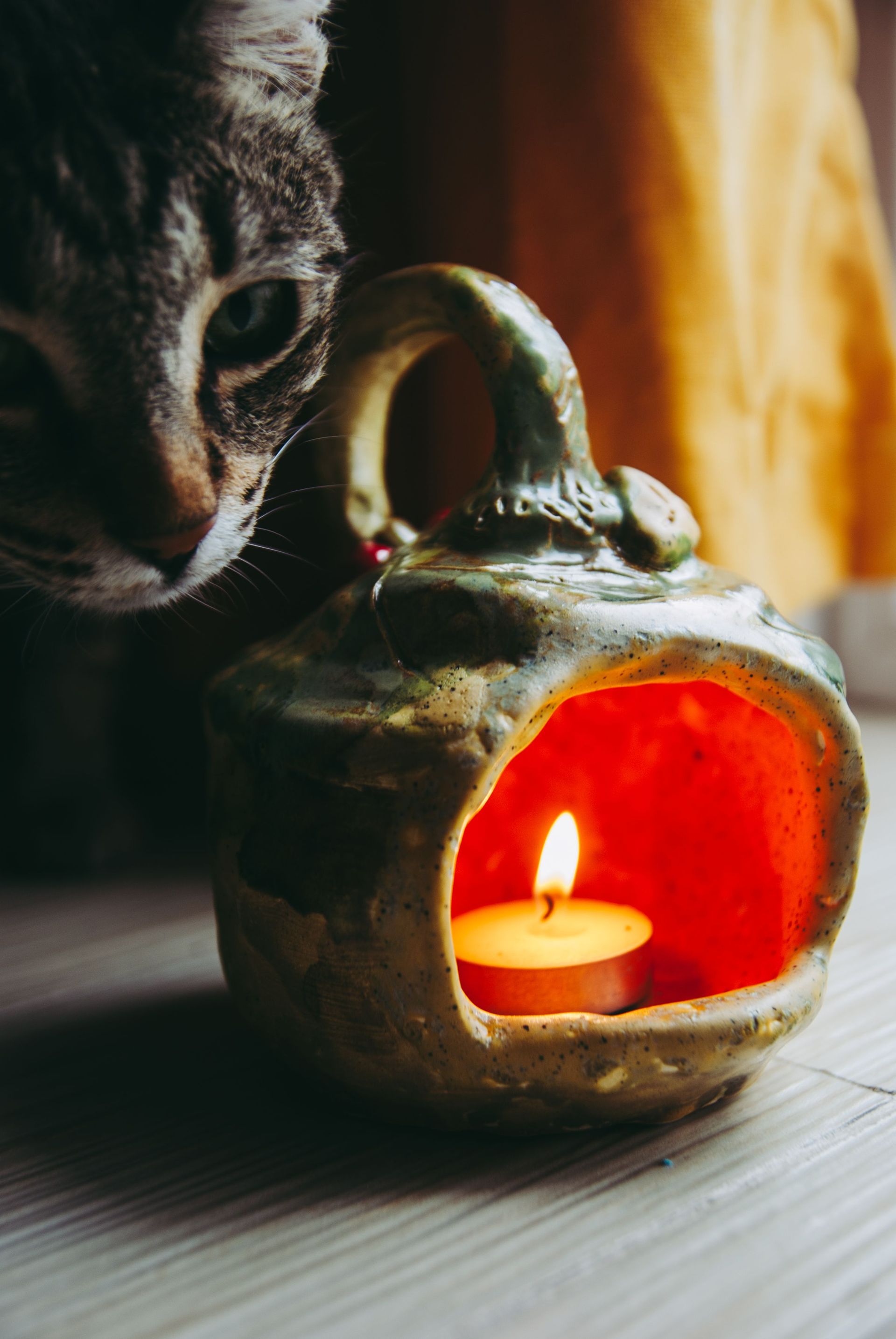
Credit: Dagmara Dombrovska / Pexels
A cat's sense of smell is far more sensitive than a human's. Several popular home fragrances, including specific essential oils, are not just unpleasant to a cat but genuinely toxic. Citrus oils, tea tree oil, and pine-based scents show up most often on the list of ingredients to keep away from cats.
Cats have roughly 200 million scent receptors, compared with about five million for people. They also have a specialized organ in the roof of the mouth that detects chemical signals humans cannot register at all. A candle, diffuser, or cleaning product that smells pleasant and mild to a person can register as overwhelming to a cat well before toxicity even becomes a factor. The toxicity risk comes down to how a cat's liver processes certain compounds. Cats lack some of the enzymes dogs and humans use to break down specific plant compounds, including the terpenes and phenols found in many essential oils. Exposure levels harmless to people can build up to dangerous concentrations in a cat's body as a result.
The exposure often happens without anyone realizing it. Oil from a diffuser settles in a fine layer on a cat's fur, and the cat later ingests it while grooming. A concentrated cleaning product used on a floor or a scratching post leaves residue a cat then walks across and licks off its paws. Signs of a reaction can include drooling, vomiting, lethargy, or difficulty walking, and any of those following a known fragrance exposure is worth an immediate call to a veterinarian.
The safest approach in a home with cats is to skip essential oil diffusers entirely, or restrict them to rooms the cat never enters. Choosing unscented or specifically cat-safe cleaning products matters too, particularly in the areas a cat spends the most time, including food and water bowls, bedding, and the litter box.
Petting a cat past the point it wants to stop
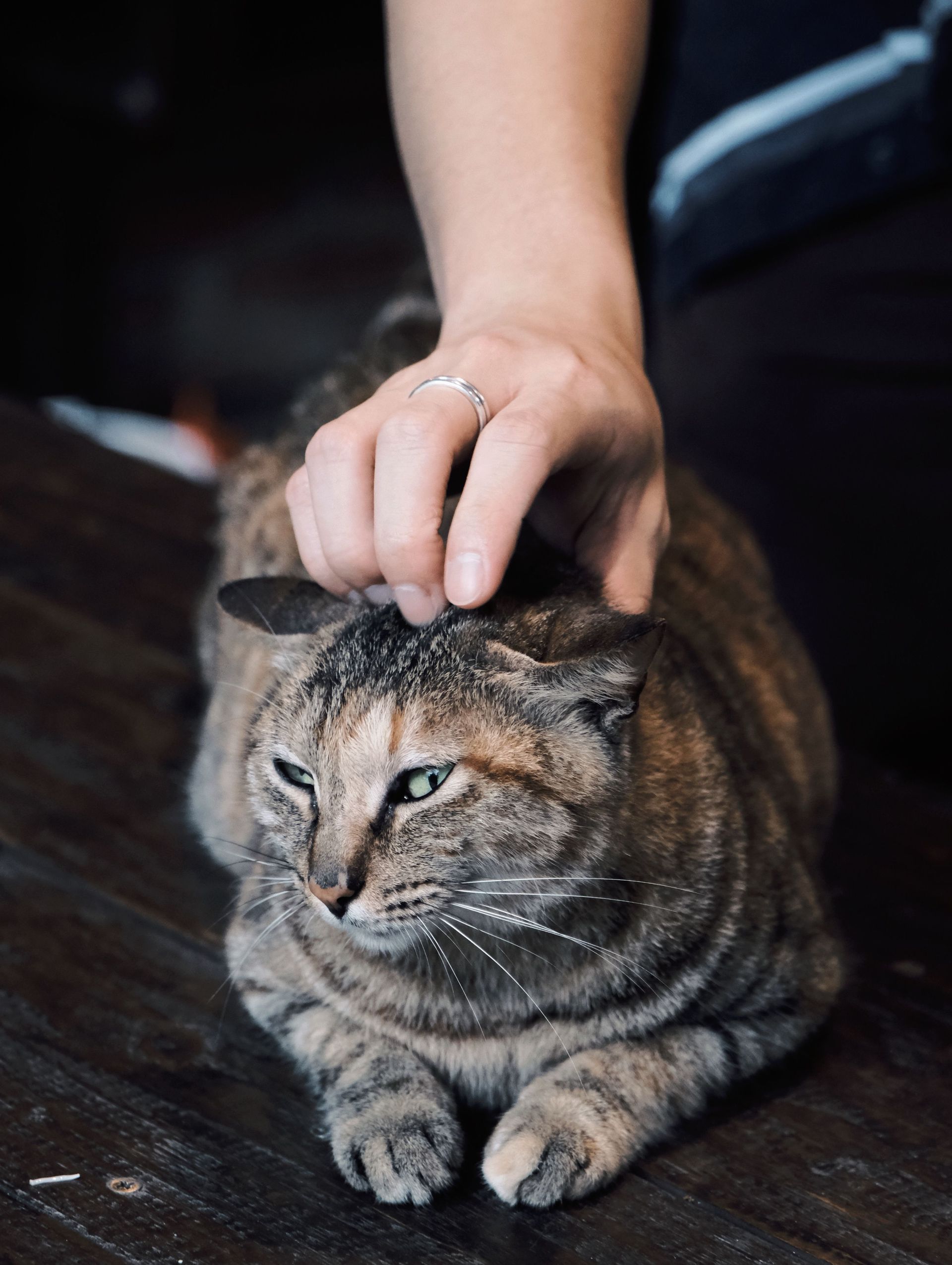
Credit: Teresa Jang / Pexels
Continuing to pet a cat after it has already signaled enough is the most common trigger behind what veterinarians call petting-induced aggression. It is a sudden bite or swat that looks unprovoked but almost never is. The warning signs typically show up well before the bite does, they just tend to go unnoticed.
Unlike a single unwanted touch or a startling grab, this is about repetition crossing a threshold. Nerve endings under a cat's skin that register petting as pleasant at first can shift to registering the same repeated motion as irritating. That shift can happen within a couple of minutes, even during a session the cat initially seemed to enjoy. The lower back and the area near the base of the tail tend to reach that threshold fastest in most cats. That is why a stroke down the back that starts out welcome can end in a bite a few seconds later.
The signals worth watching for include a tail that starts swishing or flicking more insistently, and skin along the spine that visibly twitches or ripples. Ears that rotate sideways or flatten, a sudden stillness or muscle tension, and pupils that dilate noticeably are common too. Any one of these is a cue to stop, not a cue to see how the cat reacts to a bit more.
Every cat's threshold is different, and the same cat's tolerance can shift day to day depending on its mood or stress level elsewhere. Keeping petting sessions short and pausing every few strokes to check the cat's body language both help. So does sticking to areas most cats tolerate well: the head, cheeks, chin, and the base of the ears. Letting the cat initiate contact by leaning into an offered hand, rather than a person reaching out first, tends to help too. It keeps the interaction within whatever window the cat is comfortable with that day.
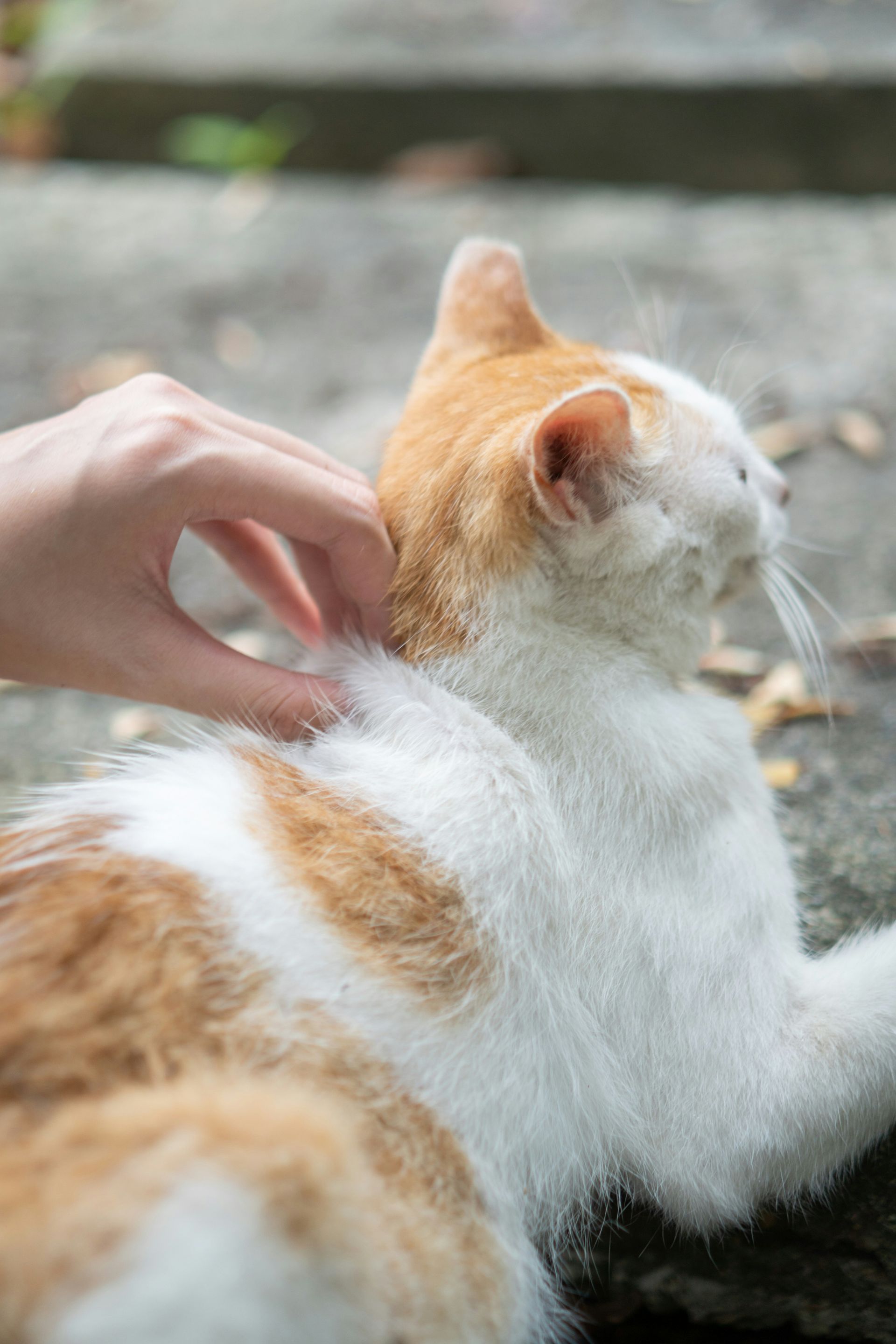
Carrying an adult cat by the scruff of its neck
Credit: Shawn Rain / Unsplash
Lifting or restraining a grown cat by the loose skin at the back of its neck causes fear and physical discomfort rather than the calming effect many people expect. The reflex that lets kittens go limp when scruffed largely disappears by adulthood, which changes what the same handling actually does to the cat.
Mother cats carry very young kittens by the scruff because kittens are born with a flexor reflex. Grasping that loose skin causes their whole body to relax so the mother can move them without a struggle. That reflex fades as kittens mature, and by adulthood it is mostly gone. An adult cat that goes still when scruffed is not experiencing the same relaxed response a kitten would. Veterinary behaviorists now describe that stillness as behavioral shutdown, a state closer to learned helplessness under high stress than to calm.
Because the reflex is gone, holding an adult cat this way also requires a tighter grip to keep it from twisting free. That grip pinches skin in a way that causes real pain, particularly in older cats or those with arthritis. It is also worth noting that adult cats are scruffed by other cats in only two situations in nature: during mating, or when caught by a predator. Neither is a comforting association for a cat to be reminded of at home.
Some owners scruff an adult cat specifically as a form of discipline, assuming it mimics how a mother cat corrects a kitten. It does not work the same way at that age and functions more as a stressful physical restraint than a lesson. A properly supported hold works better: one arm under the chest, the other supporting the back legs and hindquarters. A towel wrapped snugly around the body for tasks like nail trims or giving medication accomplishes the same practical goal without the fear response.
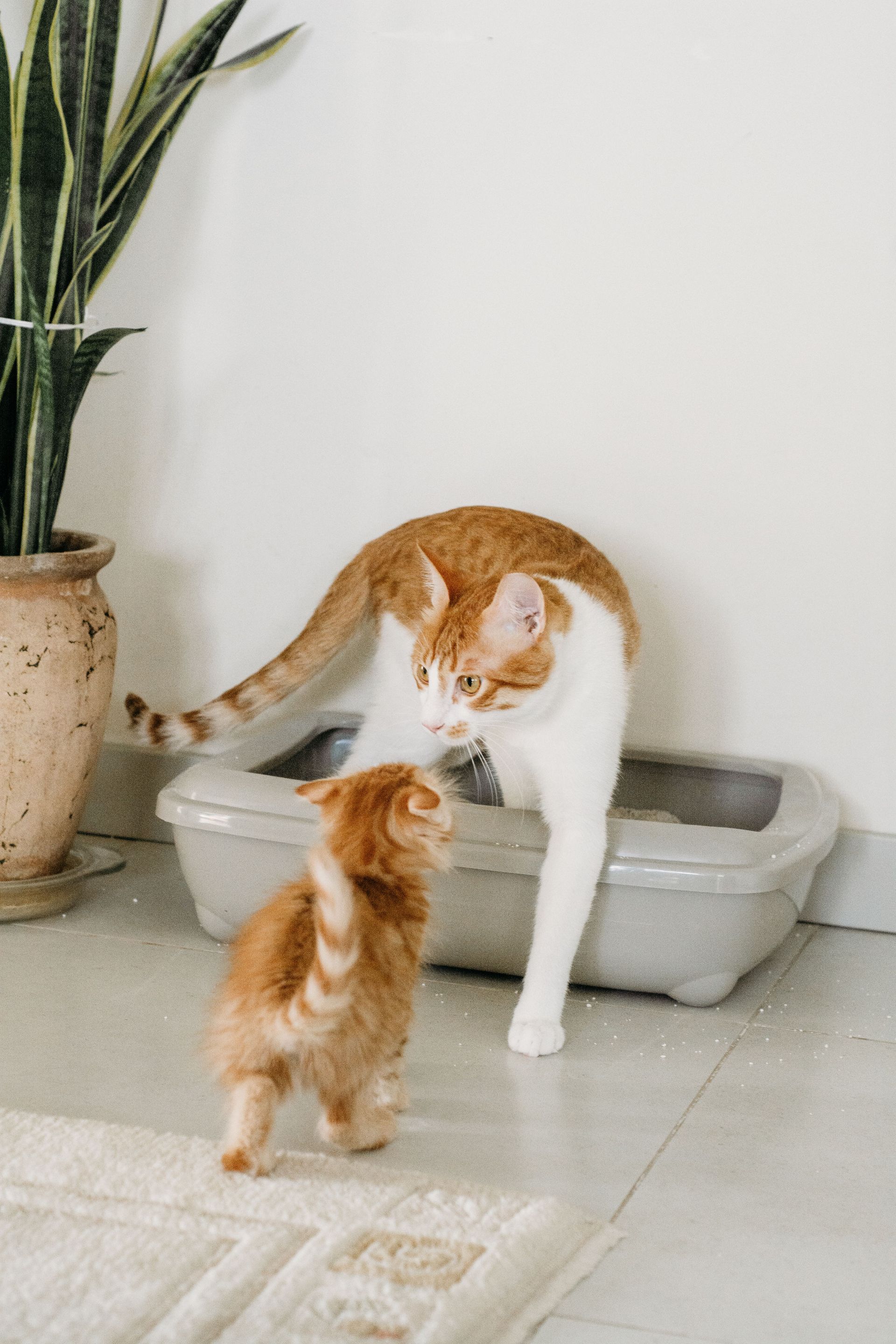
Keeping only one litter box for multiple cats
Credit: Nadiye Odabaşı / Pexels
A single litter box shared between two or more cats is one of the most common causes of stress-related house-soiling in multi-cat homes. Veterinary guidelines call for one litter box per cat, plus one extra, a formula widely known as the N+1 rule.
Even cats that appear to get along fine can treat a litter box as a contested resource. One cat can block access to the only box. Sometimes this is obvious, through hissing or swatting. Just as often it is subtle. Simply sitting near the entrance, or staring at another cat as it approaches, can be enough to make a cautious cat avoid the box rather than risk a confrontation. The result usually shows up as elimination somewhere else in the house. That often gets read as bad behavior, when it is really a cat trying to avoid a conflict it does not want to have.
The N+1 formula works out simply in practice. One cat needs two boxes, two cats need three, three cats need four, and so on. Spreading those boxes across separate locations in the home matters as much as the total count. Boxes placed side by side tend to get treated by cats as one shared resource rather than as separate options. That defeats much of the purpose of having extras in the first place.
This guidance comes from feline life stage and house-soiling guidelines published by veterinary and feline practitioner associations. It holds up as one of the more consistently recommended fixes for house-soiling in homes with more than one cat. Litter box avoidance is also commonly cited as one of the leading behavioral reasons cats end up surrendered to shelters. That makes the fix, adding boxes and spacing them out, a fairly low-cost way to prevent a much bigger problem down the line.
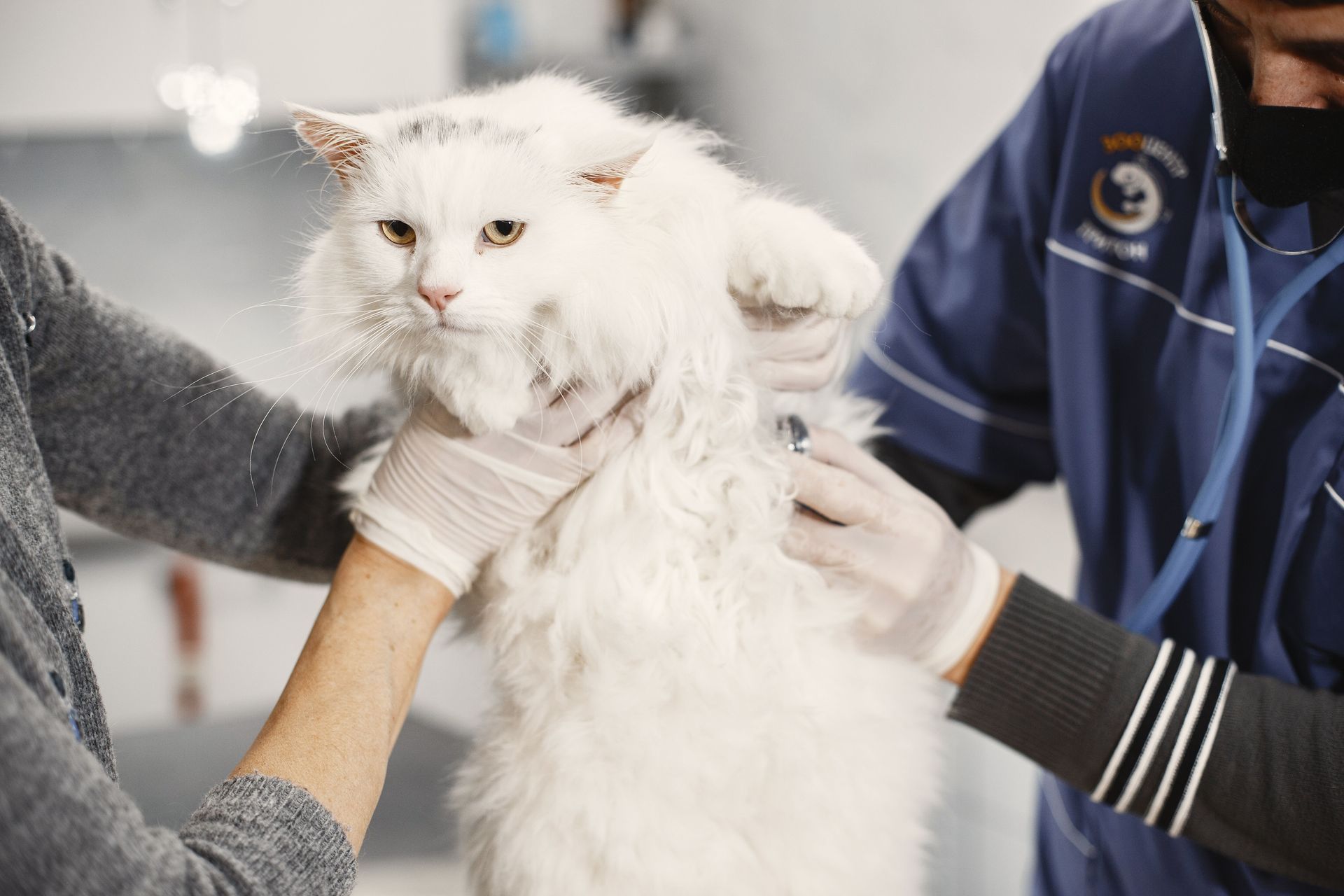
Only using the carrier for vet visits
Credit: Gustavo Fring / Pexels
Bringing out the carrier only for trips to the veterinarian teaches a cat to treat the carrier itself as a warning sign that something stressful is coming. Left out full time as an ordinary object instead, the same carrier eventually stops triggering that reaction at all.
This works the same way as any learned association. A cat that only ever sees the carrier appear right before a car ride and an unfamiliar, noisy waiting room starts reacting to the carrier itself. Handling by strangers adds to that, and the reaction often starts well before anyone has even picked the carrier up. Many cats bolt under a bed or behind furniture the moment the carrier gets pulled out of a closet. That means the stress of the trip effectively starts minutes earlier than the trip itself.
That early stress has a practical downside beyond the difficulty of getting the cat inside. Cats that arrive at a veterinary office already worked up tend to show elevated heart rate and blood pressure readings that reflect anxiety rather than an underlying health issue. This situational stress can complicate a vet's ability to get an accurate baseline during the exam.
The fix is to remove the carrier from the list of things that only ever predict something bad. Keeping it out permanently in a room the cat already spends time in works well. Leave the door open, with a blanket or towel inside, and it becomes just another piece of furniture rather than a signal. Placing treats, a favorite toy, or a bit of catnip inside occasionally, with no carrier ride attached, gives the cat positive reasons to go in voluntarily. Some owners take this further by taking a cat on brief, low-stakes rides around the neighborhood that end back at home rather than at a clinic. That helps break the direct link between the carrier and something unpleasant. Once that link loosens, the actual veterinary trips tend to go more smoothly for everyone involved.