
From iconic fashions on the streets of Harajuku to a morning Sumo practice viewing at Arashio Stable, the best free activities
Jezael Melgoza / Unsplash
Tokyo’s reputation for being expensive is accurate in some respects and misleading in others. Accommodation and restaurant meals can run high, and the city’s paid attractions, from teamLab to the sky decks, carry prices that add up quickly over a week. But the free layer of Tokyo is genuinely substantial: world-class temples, imperial gardens, mountain hikes, bizarre museums, and one of the most famous urban spectacles on earth all cost nothing to experience.
The activities on this list span the full range of what makes Tokyo worth visiting: historic, contemporary, natural, commercial, strange, and serene. None of them requires a yen at the door. Several require some planning, particularly the sumo stable visit and the tuna auction at Toyosu Market, which have specific timing requirements that catch unprepared visitors out. Others can be slotted into any day’s itinerary without advance thought. Together, they cover enough ground to anchor several full days in the city without spending on anything beyond food and transit.
The 10 free activities below appear in Lonely Planet, covering the city’s best no-cost experiences across neighborhoods and activity types. Most are accessible by Tokyo’s public transit system, which is efficient enough that moving between neighborhoods for a day of free activities doesn’t require taxis or significant time investment. Tokyo’s IC card system, loaded at any station machine, handles all transit automatically across trains and buses, removing the friction of buying individual tickets for each journey between neighborhoods. Suica and Pasmo IC cards are interchangeable and work on essentially all Tokyo transit, including buses, making them the single most useful logistical item for a Tokyo trip, regardless of how many free activities fill the days. The free activities in this list are spread across enough neighborhoods that using them as anchors and building paid dining and transit around them produces a genuinely full day structure without requiring additional paid attractions to fill the time.
-1920x1280.jpg)
Nicholas Doherty / Unsplash
Senso-ji is Tokyo’s most famous Buddhist temple and among the most visited religious sites in Japan. The approach through Nakamise-dori, the narrow passage leading to the main gate, is lined with stalls selling everything from giant rice crackers to washi paper fans, and the crowds that move through it at midday are genuinely dense. Arriving at 6 a.m. when the temple opens produces a dramatically different experience: the same approach, the same gate, the same main hall, but with a quiet that belongs to the priests and the earliest local visitors, not the tourist hordes.
The temple complex itself extends well beyond the main hall, with smaller shrines, garden areas, and the five-story pagoda, giving the site a depth that rewards wandering rather than a linear approach to the main gate and back. The nearby Asakusa neighborhood carries its own appeal: rickshaws, sake bars, craft workshops, and a riverside promenade along the Sumida River that connects to Toyosu in one direction and Ueno in the other.
The Lonely Planet writers specifically recommend arriving at the crack of dawn. The temple opens at 6 a.m., and the first hour produces the kind of quiet contemplative experience that the site’s history and architecture deserve. Later in the day, particularly on weekends, the kimono-clad visitors and tour groups make the narrow approach genuinely difficult to move through without feeling part of a managed crowd. The adjacent Asakusa neighborhood repays time beyond the temple itself: the Nakamise shopping street has been selling souvenirs and food to pilgrims and visitors for centuries, and the range of quality, from genuinely good craft items to cheap tourist merchandise, is worth taking the time to distinguish between. The Sumida River walk south from Asakusa toward Toyosu is a free 6-kilometer promenade that passes through several neighborhoods and offers a river-level perspective on the city’s eastern districts that the train doesn’t. The Nakamise shopping street is one of Japan’s oldest continuously operating shopping areas, and the vendors selling sembei rice crackers and traditional sweets reflect a commercial tradition that has run on this street since the 18th century.
Denys Nevozhai / Unsplash
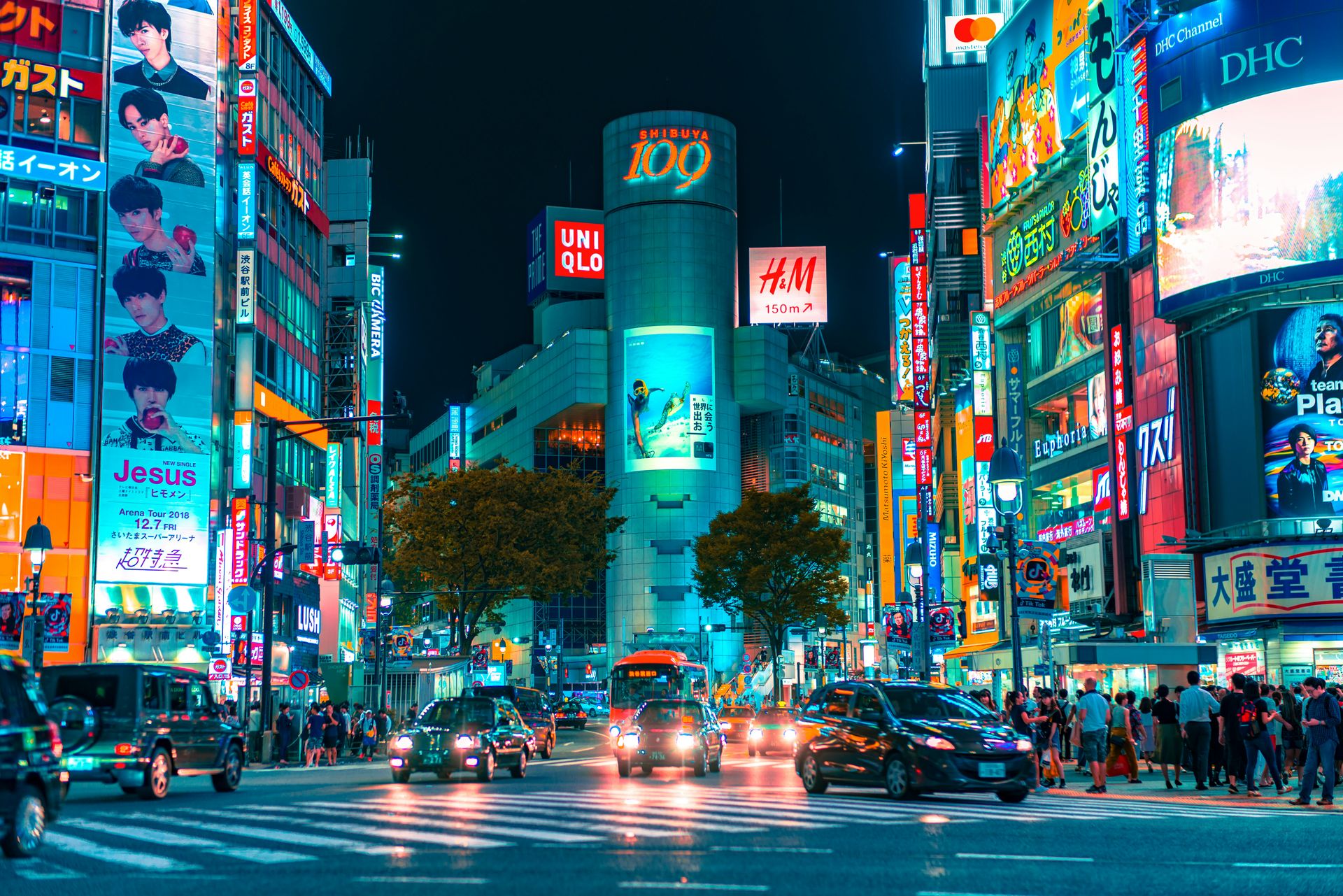
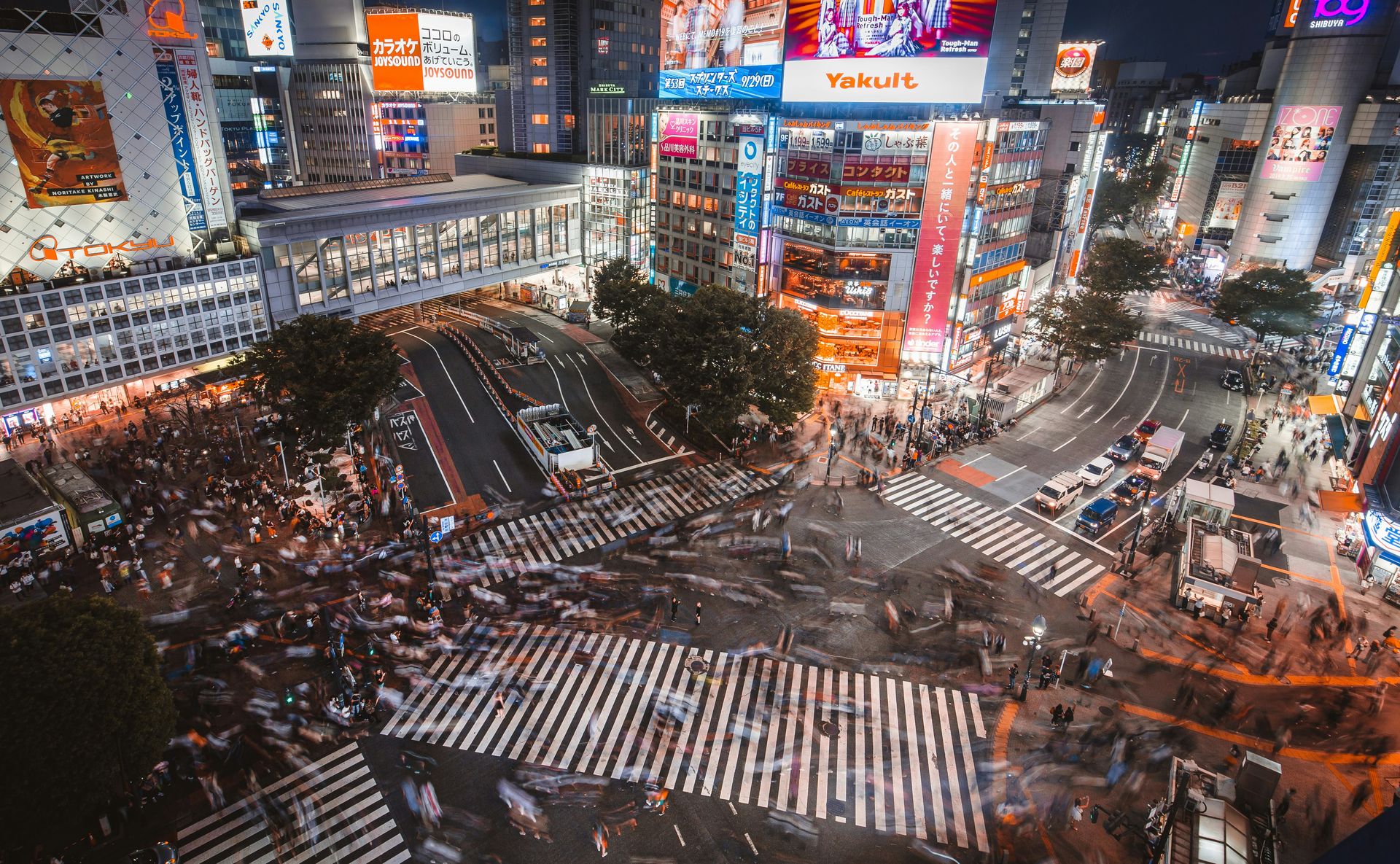
Shibuya Crossing is thought to be the world’s busiest intersection, and watching a full cycle of the traffic lights from ground level or from an elevated vantage point is one of those experiences that delivers exactly what the reputation promises. Every few minutes, traffic stops in all directions simultaneously, and several hundred people cross from every angle at once, a coordinated chaos that produces a visual spectacle unlike anything in other major cities.
The roof of the Shibuya 109 department store, known as Mag’s Park, provides the elevated view that most photographers use. The crossing looks best in the evening, when the surrounding neon signs light up, and it appears as a river of umbrellas and light. A couple of floors below Mag’s Park in the adjacent Mark City building, the Myth of Tomorrow, a monumental 1967 mural by artist Okamoto Taro commissioned for a Mexican hotel, lost for decades, and reinstalled here in 2008, is worth the short detour.
Joining the crossing instead of watching it is the other option, and the experience of moving through the intersection with hundreds of others in all directions is its own distinct form of entertainment. The key is timing: stand in a good position before the light changes, move with the crowd, and look up at the surrounding buildings as you cross, not at your phone. The Shibuya Center-gai pedestrian street behind the crossing, lined with fast food restaurants and entertainment venues, extends the neighborhood’s high-energy commercial character in a different direction and provides a useful alternative circuit for visitors who’ve finished with the crossing itself. The free sections of the Shibuya Scramble Square $SQ building’s lower floors provide an indoor counterpart to the outdoor crossing experience, and the building’s architecture is worth experiencing at ground level for the sense of scale it produces. The evening hours between 7 and 10 p.m. are the most rewarding time to be in the Shibuya area: the crossing is at its most active, the department stores are still open, and the surrounding entertainment district has its peak energy before the late-night crowds thin out.
john w / Wikimedia Commons (CC BY 2.0)
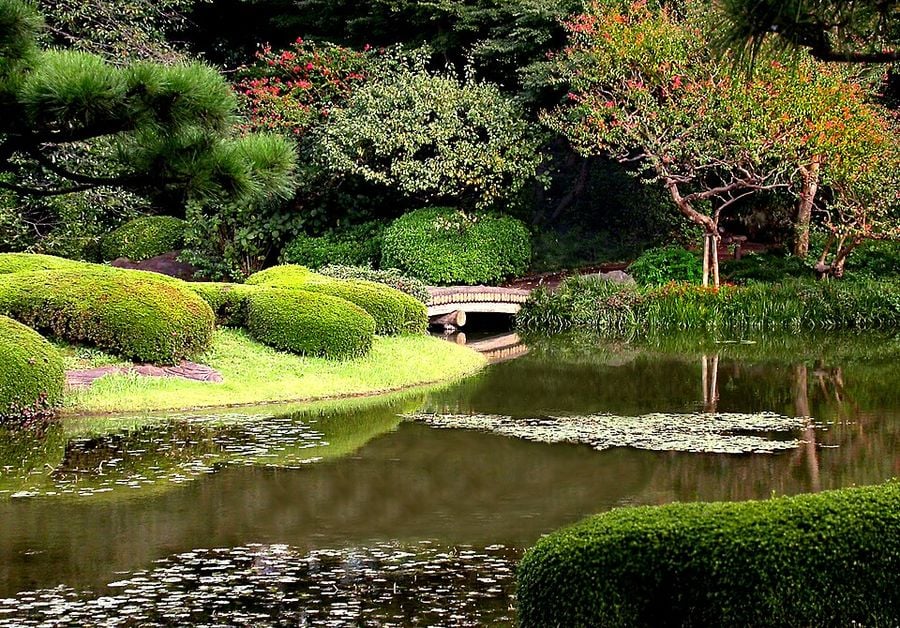
The Imperial Palace sits at the center of Tokyo, and its grounds are open to the public at no charge. The full loop around the palace’s outer moats covers five kilometers and is a popular running course for Tokyo office workers, making the path well-maintained and navigable even without a map. The views of the famous bridges and the remnants of the medieval keep visible across the moat give the walk a layered historical quality, making it more than a simple park circuit.
The Imperial Palace East Garden, which encompasses the former innermost circles of the castle, is free to enter and features broad lawns, small stretches of woodland, and seasonal flora, documented on a Flower Calendar maintained online by the palace. The garden’s open spaces give visitors an unusually quiet pocket of central Tokyo, and the historic stonework, manicured plantings, and the occasional glimpse of the palace buildings together make it one of the better free hours in the city.
Kitanomaru Park, adjacent to the palace grounds, is home to the Budokan martial arts arena and the Chidorigafuchi Moat. In spring, the path encircling the moat fills with cherry blossoms, among the most photographed in Tokyo, and arriving early in the morning during peak bloom is essential for getting any sense of the landscape beneath the photographers. The East Garden’s closing day on Fridays and on selected holidays is worth checking before planning the palace loop, specifically for the garden access, since the outer moat walk is always accessible, but the garden follows its own opening hours. The Kokyo Gaien national garden near Sakuradamon Gate marks the assassination site of Ii Naosuke in 1860, and the marker at the location gives even a casual walk through the area a specific historical anchor. The surrounding Marunouchi business district, adjacent to the palace grounds, features a well-developed outdoor sculpture program along its main pedestrian street, adding another layer of free cultural content to the palace loop for visitors approaching from Tokyo Station.
amanderson2 / Flickr (CC BY 2.0)
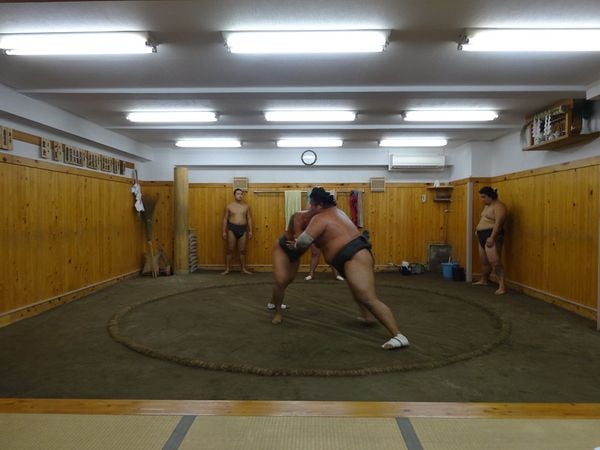
Sumo tournaments in Tokyo happen three times per year, and tickets sell out quickly, but watching wrestlers in morning practice at a sumo stable costs nothing and offers a more intimate view of the sport than the tournament environment does. Arashio Stable allows visitors to watch the morning practice session through windows on the street, with training typically running between 7:30 a.m. and 9 a.m. on weekday mornings.
The schedule has specific exclusions worth knowing before planning the visit. Practice doesn’t take place in March, July, or November, the tournament months when wrestlers are competing, not training, or on the week following a major tournament when the stable is recovering from the tournament schedule. Checking the stable’s website before making the trip across town is essential since the current schedule is posted there and saves the frustration of arriving on a day when no practice is happening.
The experience itself is specifically worth the planning effort. Watching wrestlers go through their drills at close range, with the sounds and physicality of training visible through the windows, creates a connection to sumo that watching a televised tournament doesn’t. The wrestlers’ size and speed, apparent immediately in person, tend to reframe the sport for visitors who had previously only seen it on screen. The area around Arashio Stable in Nihonbashi includes several other sumo-related institutions within walking distance, including the Japan Sumo Museum at Ryogoku Kokugikan, which is free to enter and covers the sport’s history through photographs, ranked championship records, and historical equipment. The Ryogoku area surrounding the museum has a concentration of chanko-nabe restaurants, the high-calorie stew that forms the core of wrestlers’ diets, and eating at one provides a culinary context for the training visit. The Ryogoku Kokugikan tournament schedule runs three times annually in January, May, and September, and checking whether the dates align with a Tokyo visit is worth doing before the trip, since tournament tickets are more widely available through ticket resellers than the official allocation suggests.
Fumiaki Hayashi / Unsplash
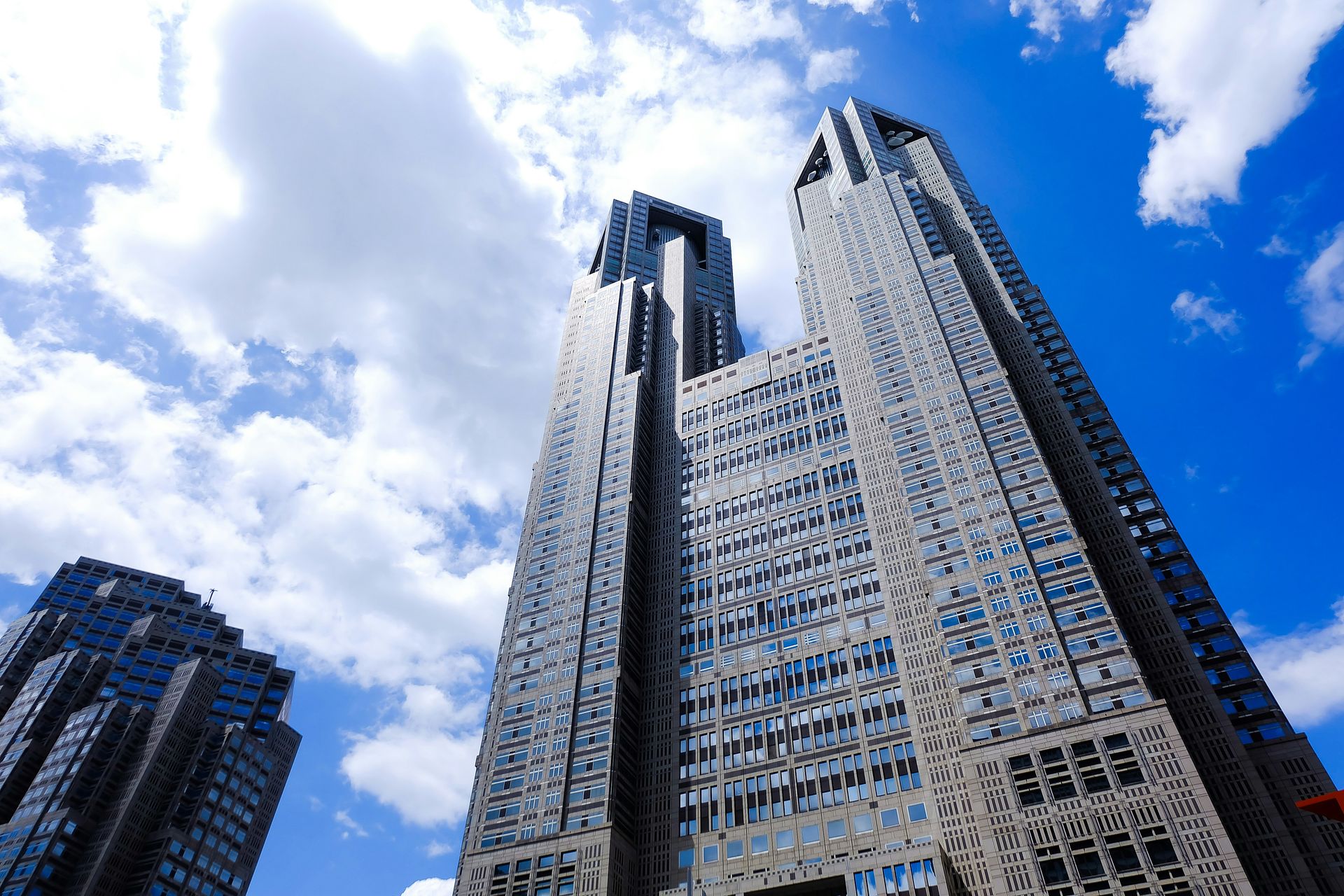
The 45th-floor observation deck of the Tokyo Metropolitan Government Building is free and offers one of the best unobstructed views of the city. The deck sits 202 meters above street level, and on a clear day, Mt Fuji appears on the western horizon as an unmistakable presence above the city’s low skyline. The observation deck has both north and south towers, with the south tower open most evenings and the north tower closing earlier.
Coming at dusk captures both the city’s transition from daylight to neon and the best probability of a clear Fuji sighting, since the mountain is often clearer in the morning and evening than in the midday haze. The building itself is worth looking at from street level before ascending: Kenzo Tange’s 1991 design gives it a Gothic cathedral quality that is unusual for a government administration building and deliberately dramatic.
The Shinjuku neighborhood immediately surrounding the building provides several free evening activities to extend the visit: the giant Godzilla atop Hotel Gracery Shinjuku roars on the hour between noon and 8 p.m., the narrow alleys of Golden Gai are worth walking even without entering any of the bars, and the neon-lit Kabukicho entertainment district is among the most visually dense environments in a city that is full of them. The free observation deck in the building’s south tower stays open until 11 p.m. most evenings, which makes it viable as a late-night activity after dinner in the surrounding Shinjuku area, and the nighttime view of the lit city stretching in every direction is significantly more dramatic than the daytime version. The building’s ground-level plaza is also a popular lunchtime gathering spot for government office workers, and sitting there on a weekday provides an unusually local snapshot of central Tokyo’s working population. The Tokyo City Hall building’s overall footprint, designed by Kenzo Tange to evoke a Gothic cathedral in concrete, is worth studying from the plaza before entering, since the building is one of the more significant pieces of late 20th-century Japanese public architecture and rarely gets the attention it deserves from visitors focused on the observation deck.
Samuel Malmstrom / Unsplash
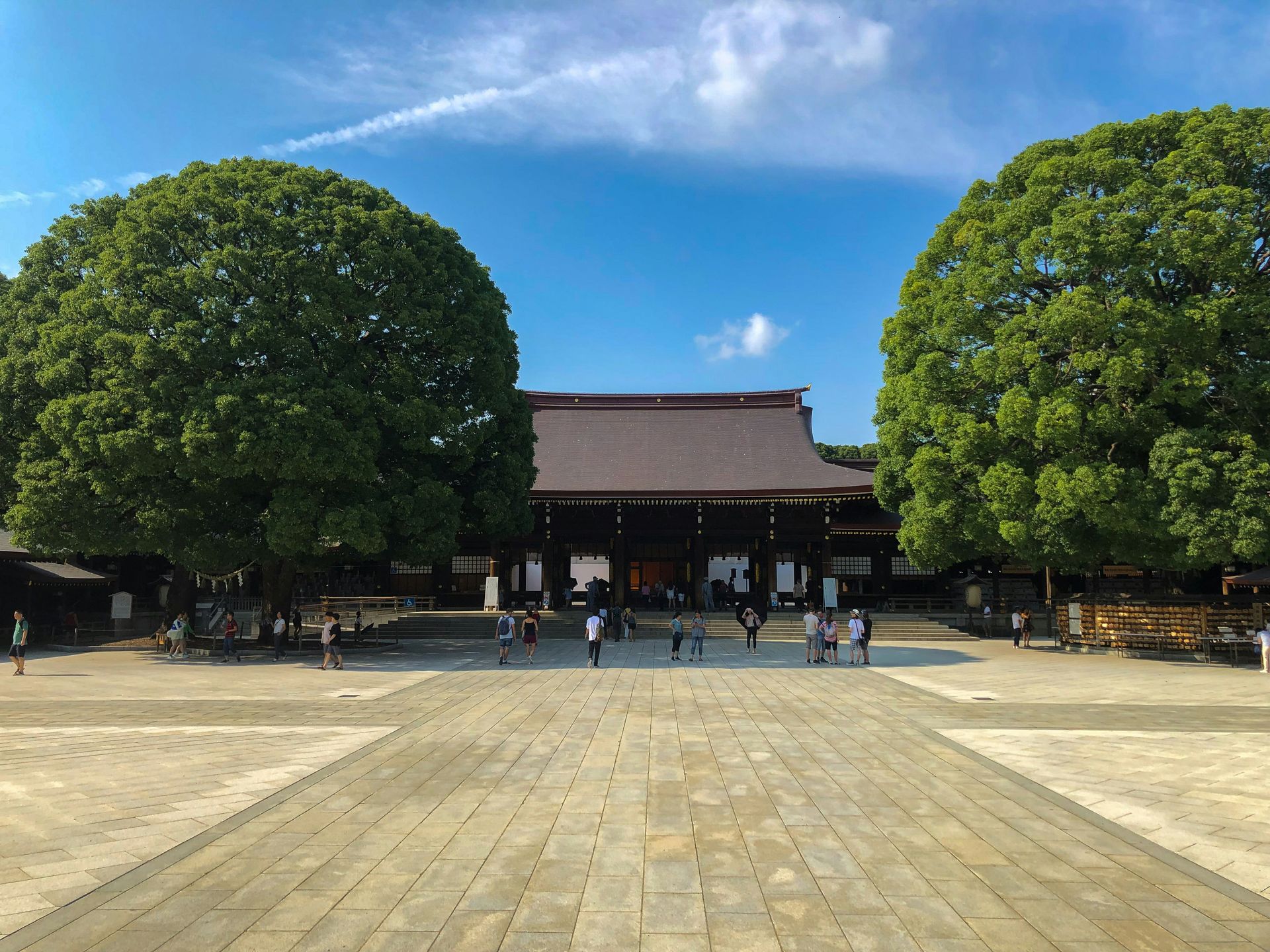
Meiji-jingu is Tokyo’s most significant Shinto shrine, dedicated to Emperor Meiji and built in 1920 within a forest that the shrine’s planners specifically grew from 100,000 trees donated from across Japan. The forest now covers 70 hectares in central Tokyo and creates a genuinely forested environment in which the shrine buildings appear as clearings, not urban structures. The approach along the main gravel path, particularly on misty mornings, has an atmospheric quality that the surrounding Harajuku and Shibuya neighborhoods do not prepare visitors for.
The shrine grounds extend to a garden area, the Gyoen, that charges a small admission fee and is separate from the shrine approach itself, which is free. Traditional wedding processions pass through the outer grounds on weekend mornings, and spotting the wedding party accompanied by Shinto priests in formal robes is a specific experience worth arriving early for on weekend visits.
Yoyogi-koen, the large public park adjacent to the shrine, transitions from the forested approach into open sports fields and picnic lawns where the weekend culture of Tokyo’s young adult population is on full display. Rockabilly dancers have performed here on Sunday mornings for decades, musicians practice in the park’s alcoves, and, in good weather, the atmosphere is one of the more specifically local scenes available for free in central Tokyo. The shrine’s inner garden, Meiji Jingu Gyoen, charges a small admission fee but includes an iris garden that is among the most celebrated in Tokyo during the early June flowering season. The free outer grounds are sufficient for most visits, but the inner garden is worth the modest fee for visitors arriving at the right time of year. The shrine’s gift shop and sake barrel display near the main entrance are part of the free approach, and the large wooden barrels of sake and wine donated to the shrine each year from French winemakers, a legacy of Emperor Meiji’s modernization policies, are one of the more unexpected details in the otherwise traditionally Japanese environment.
Nichika Sakurai / Unsplash
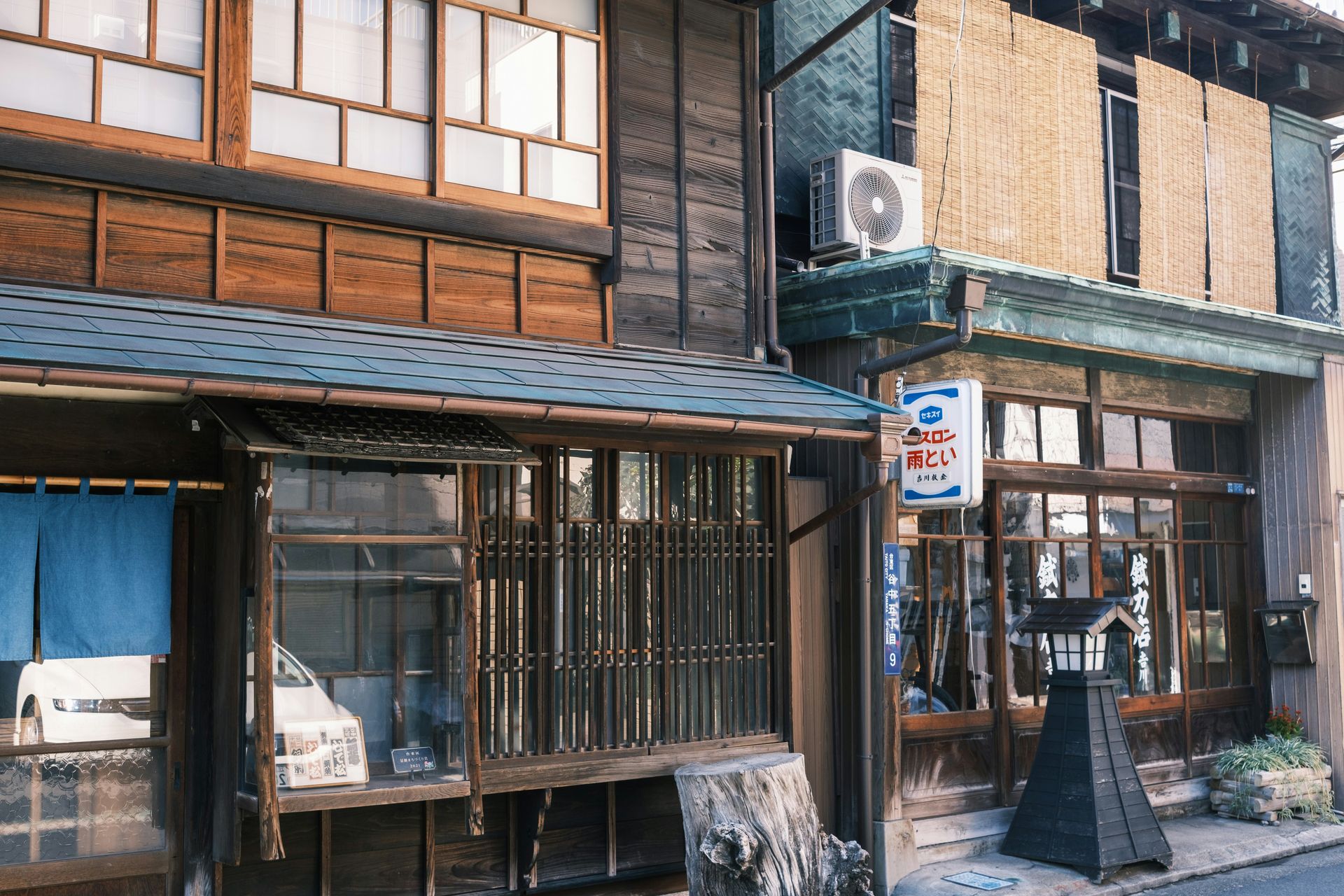
Yanaka, Nezu, and Sendagi, collectively known as Yanesen, are the areas of Tokyo that were spared from the firebombing that destroyed most of the city in World War II. That historical circumstance preserved a streetscape that no longer exists in most of the rest of Tokyo: narrow walking streets, small family temples and shrines, craft shops, galleries, and wooden buildings whose scale and material reflect a pre-war urban fabric. Walking through Yanesen produces a consistent background awareness of Tokyo’s destroyed past that the contemporary city doesn’t otherwise allow.
Yanaka Cemetery, one of Tokyo’s oldest, is the neighborhood’s most distinctive feature: a large, densely planted graveyard that functions as a public park, with cats living among the graves and visitors picnicking under the cherry trees in spring. The cemetery is a genuinely peaceful and unexpectedly beautiful space whose cultural significance, as a burial ground for artists, writers, and Meiji-era public figures, adds depth to a walk that already has plenty of visual interest.
SCAI the Bathhouse, a contemporary art gallery housed in a 200-year-old public bathhouse, is free to enter and showcases work by significant Japanese and international artists in a converted space whose original wooden structure and tiled interior give it a distinct physical character that white-cube galleries lack. The gallery schedule and current exhibitions are worth checking before visiting, as the gallery closes between shows. The Yanesen area has also become a center for independently run craft and vintage shops that have moved into the neighborhood’s older wooden buildings, and the browsing quality along the main shopping street, Yanaka Ginza, is genuinely high for visitors interested in locally made ceramics, textiles, and secondhand objects. The Yanaka area’s artisan culture makes it a particularly productive neighborhood for finding craft objects and small-run printed materials made in Tokyo, and the prices at independent shops here tend to be lower than comparable items at tourist-oriented shops in Asakusa. The Yanesen area is also worth visiting during the local Asakusa Samba Carnival in August, a free outdoor event that takes the Brazilian influence that has been present in Tokyo since the early 20th century and turns it into one of the city’s most visually spectacular street events.
Laurentiu Morariu / Unsplash
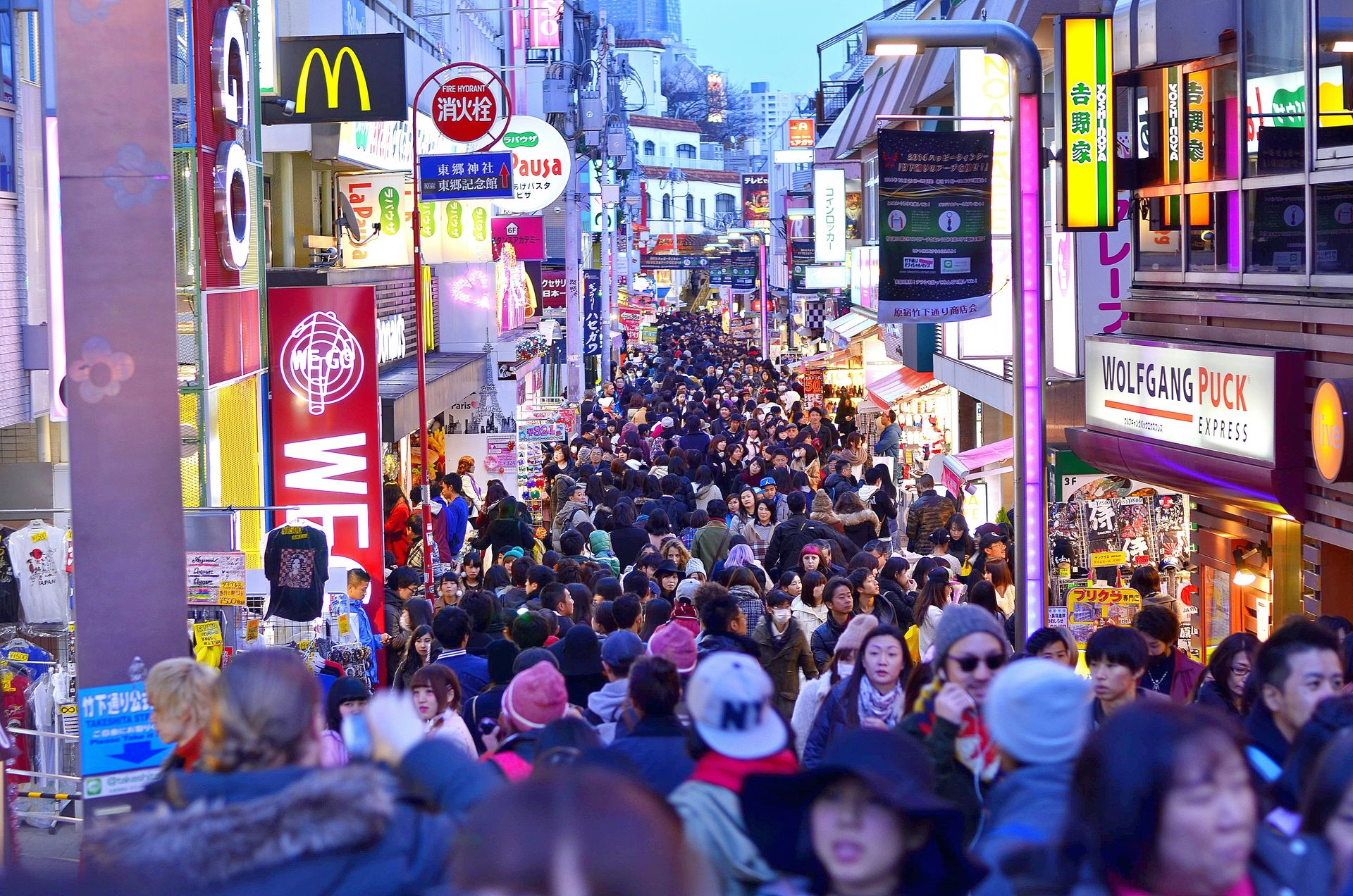
Harajuku’s main street, Takeshita-dori, concentrates Tokyo youth fashion and pop culture in a few hundred meters of storefronts, stalls, and food vendors that produce a sensory experience unlike anywhere else in the city. The street is narrow and always crowded, and the merchandise, kawaii characters, extreme fashion, crepe trucks, bubble tea, and cosplay supplies, reflects a specific subculture that has global influence disproportionate to the street’s physical scale.
The adjacent Omotesando boulevard offers a completely different register of the same fashion-consciousness: wide, tree-lined, and built around the luxury boutiques and architecturally significant buildings that have made it a testing ground for major Japanese and international architects. The contrast between Takeshita-dori’s maximalist chaos and Omotesando’s curated calm, separated by less than five minutes’ walking, is one of Tokyo’s more instructive juxtapositions.
Yoyogi-koen, the large park at the top of the Omotesando slope, connects both areas to Meiji-jingu and provides a green counterpoint to both streets. The park hosts international cultural festivals throughout the year, celebrating everything from Irish culture to Thai food to Brazilian music, most of which are free to attend and specifically worth checking the schedule for before planning a Harajuku visit. The Design Festa Gallery, just off Takeshita-dori, is a multi-room space where hundreds of independent Japanese artists rent walls and alcoves to show work, and the ever-changing mix of painting, sculpture, installation, and illustration makes it a free gallery experience that has no equivalent elsewhere in the city. The adjacent Omotesando Hills shopping complex, designed by Tadao Ando, features free public areas, including a central atrium worth visiting for its architectural quality, regardless of any interest in the shops it houses. Takeshita-dori runs most intensely on weekend afternoons when the visitor and local youth traffic peaks simultaneously, making a weekday morning visit a calmer introduction to the same street at a pace that allows for actual browsing, not pure navigation. The street’s specific food vendors, particularly the crepe stands that have been a Harajuku institution since the 1970s, are worth treating as genuine cultural artifacts, not tourist novelties. The crepe format that Tokyo youth culture developed here has influenced street food globally in ways that aren’t always traced back to this specific street.
e / Unsplash
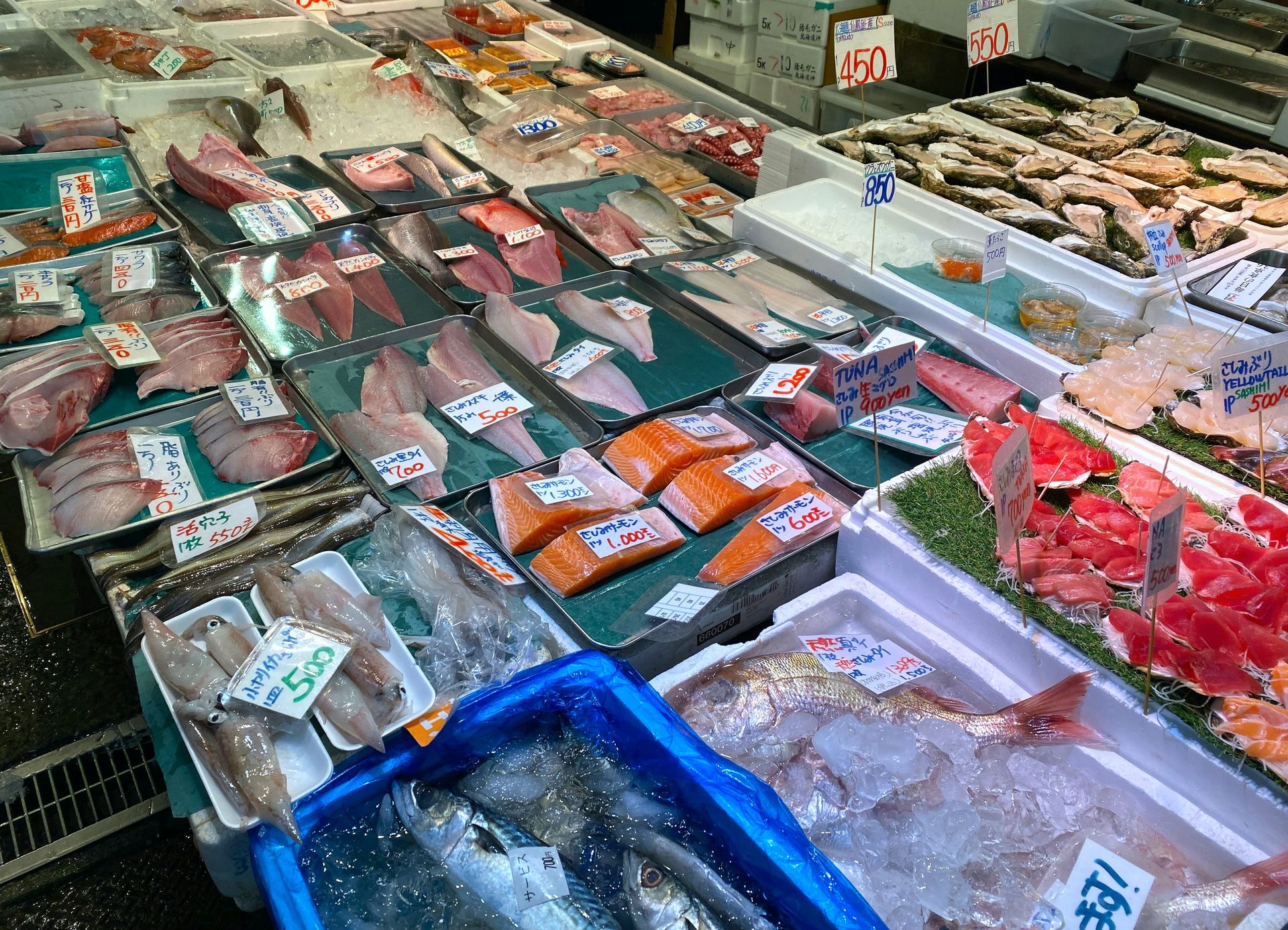
Toyosu Market is the wholesale fish market that replaced Tsukiji in 2018, and its tuna auction is one of the most genuinely distinctive free experiences available in Tokyo. A limited number of visitors who apply in advance can watch the hour-long auction from a viewing platform above the market floor, where wholesale tuna transactions occur at a pace and volume difficult to process in real time. The auction starts around 5:30 a.m., so attending requires an early alarm and careful transit planning.
The application process is managed through the market’s website and requires advance registration. The number of spots is limited enough that competition for them is intense, particularly during peak tourist months, so applying as early as possible before the intended visit date is worth it. Visitors who don’t secure auction spots can still explore the market’s exhibition spaces and infographics about the history of Tokyo’s fish market system, with QR code-based multilingual tours available throughout the complex.
Tsukiji, the nearby old market site, is still worth visiting separately. Its outer market retains dozens of stalls selling dried seafood, pickles, kitchen knives, and specialty food items, and arriving early for breakfast from the food vendors gives access to an atmosphere that genuinely predates the clean modern infrastructure of Toyosu. The two markets together cover a significant slice of Tokyo’s culinary culture, accessible from a single train ride. The outer market at Tsukiji specifically rewards the kind of unhurried exploration that the fish auction’s early start time makes difficult for most visitors: arriving around 8 a.m. when vendors are fully set up but the morning rush has passed, gives access to the market’s full range of products at a manageable pace. The food vendors at Tsukiji serve some of Tokyo’s best tamagoyaki, the sweet rolled egg that is a traditional Japanese breakfast item, and finding the stall with the shortest queue and ordering one is a specific, worthwhile Tsukiji activity.
Ryunosuke Kikuno / Unsplash
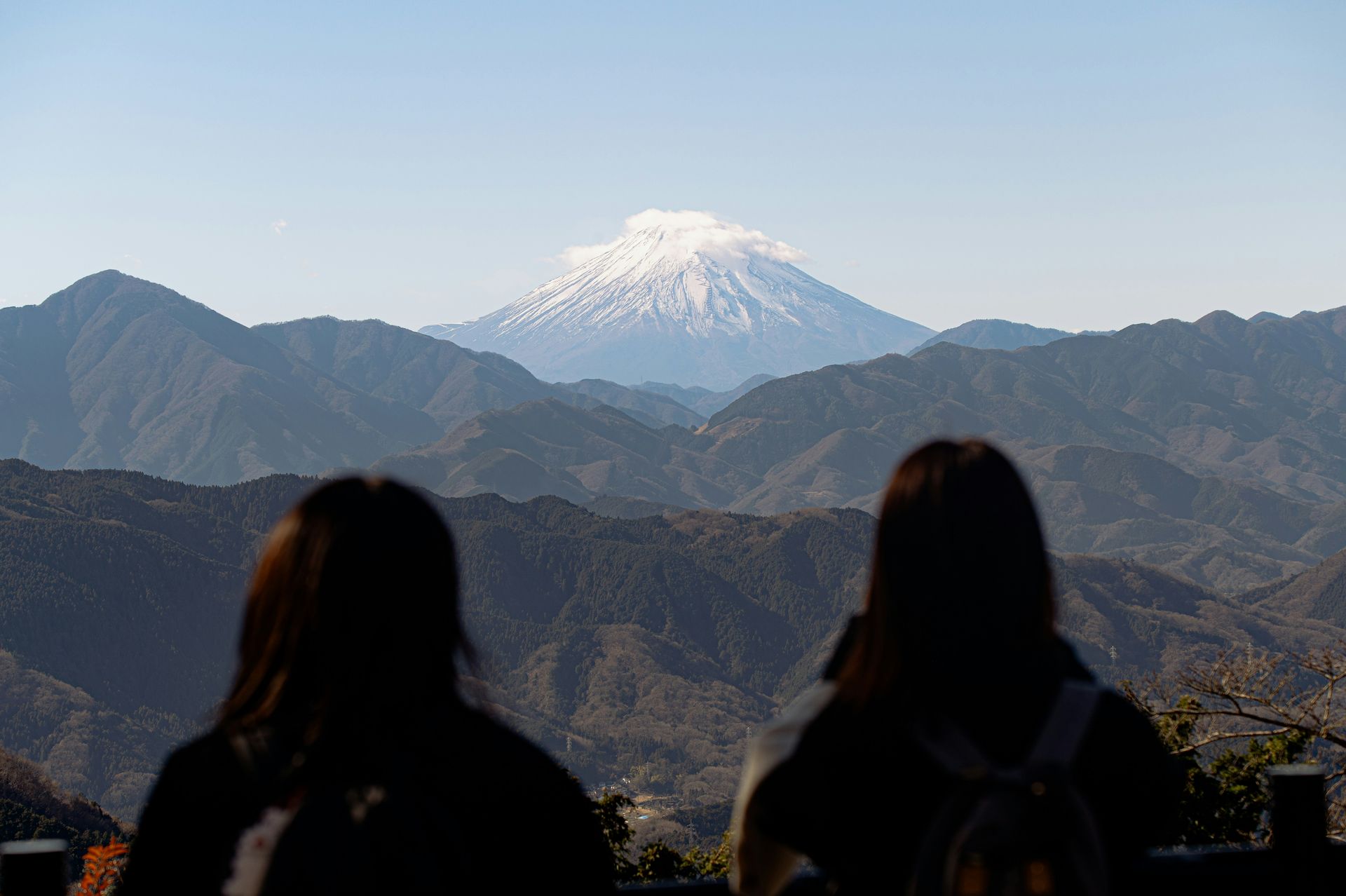
Mount Takao sits in the western Tokyo suburbs and is accessible from Shinjuku in about an hour by train, making it the most accessible genuine mountain hike for visitors staying in the city center. The peak reaches 599 meters and is topped by a Buddhist temple, a beer garden, and observation areas with views across the Kanto plain to Mount Fuji on clear days. Several walking trails ascend from the base station, all of them manageable with moderate fitness and appropriate footwear.
The Lonely Planet writers specifically recommend visiting during koyo, the autumn foliage season, when the mountain’s mixed deciduous forest turns across several weeks in October and November. The foliage colors on Mount Takao during this period are genuinely spectacular, and accessible trails, an open-air temple, and mountain views together make it one of the better full-day free excursions from central Tokyo. Arriving early reduces the crowd density that builds significantly by midday on autumn weekends.
The cable car from the base station ascends to roughly the halfway point for visitors who want to reduce the total climb, though it charges a modest fee. Taking the cable car up and walking down one of the forested trails is a popular approach that balances convenience with the reward of forest walking. The trail options vary in difficulty and length, and the summit area’s temple and tea houses provide rest stops that make the arrival feel earned. The trail No. 1 from the cable car base to the summit takes about 90 minutes one way for most walkers and passes through several rest stops, a monkey park, and the temple at the ridge before the final push to the summit. The variety of trail options, ranging from paved nature paths to steeper, unpaved routes through denser forest, means the mountain offers a different experience depending on the pace and direction chosen. The base area at Takaosanguchi Station has several restaurants and shops to satisfy post-hike appetites, and the local tofu dishes and seasonal mushroom preparations reflect the mountain food culture that has developed among the hiking crowd over many decades.