
The top river cruises in Europe for 2026
From Rhine castle country to Douro wine valleys, Europe's best river cruises ranked by route and season
Westend61 / Getty Images
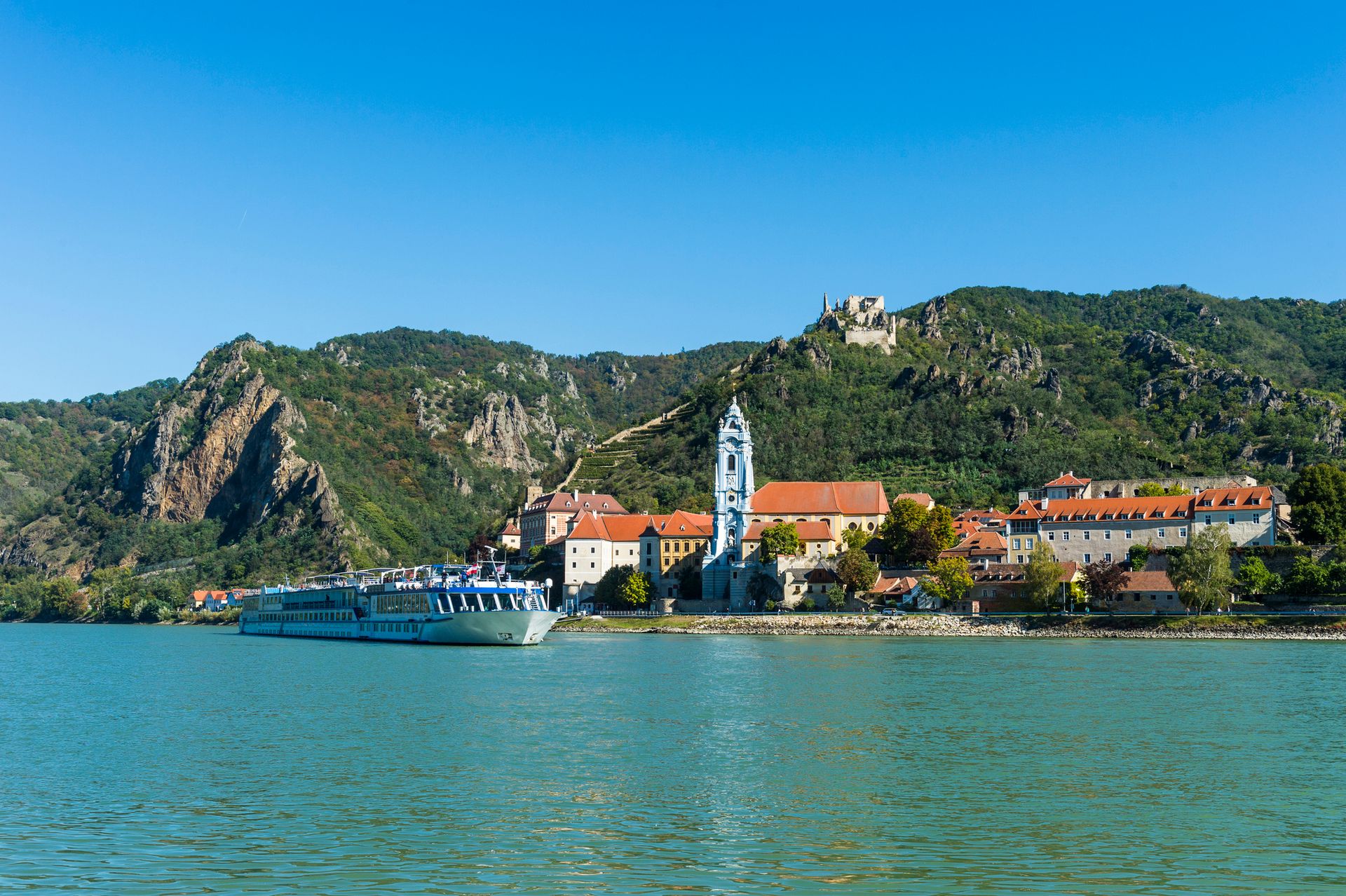
A European river cruise solves a logistical problem that no other travel format addresses as elegantly. Travelers $TRV who want to experience multiple cities and countries in a single trip often face a relentless cycle of packing, unpacking, navigating unfamiliar transit systems, checking in and out of different hotels, and losing hours of each day to the mechanics of movement rather than the experience of being somewhere. A river cruise collapses all of that overhead into a single embarkation and disembarkation, letting passengers wake up in a different port each morning without ever touching their luggage between ports. The ship moves while passengers sleep, and the view from the cabin window becomes the destination itself as medieval castles, terraced vineyards, and illuminated city waterfronts slide past.
The European river cruise market has expanded significantly over the past two decades, and the variety of rivers, itineraries, and ship experiences now available gives travelers a genuine range of choices to match different interests and travel styles. The Danube and the Rhine remain the most popular routes, but the Rhône, the Douro, the Seine, and the Dutch canal network all offer distinct cultural and scenic identities. Itinerary length varies from seven days to 15 or more, ship sizes range from intimate 100-passenger vessels to Europe’s largest river ship at 196 guests, and the seasonal calendar extends from spring tulip season through winter Christmas market sailings. Choosing the right river and the right time of year is as important as choosing the right cruise line, and the decision rewards travelers who think through their priorities before booking.
The nine itineraries below come from U.S. News & World Report’s list of the best river cruises in Europe for 2026 and 2027, which evaluated sailings based on their scenic and cultural value, the variety of ports and excursions offered, the cruise lines operating each route, and the overall travel experience each river and itinerary delivers. The list spans the continent’s major navigable rivers, from the 1,780-mile Danube to the 240-mile Seine, offering travelers a comprehensive overview of what European river cruising has to offer across every region and season.
1. The Lower and Upper Danube spans 10 countries in 15 days
Credit: AmaWaterways
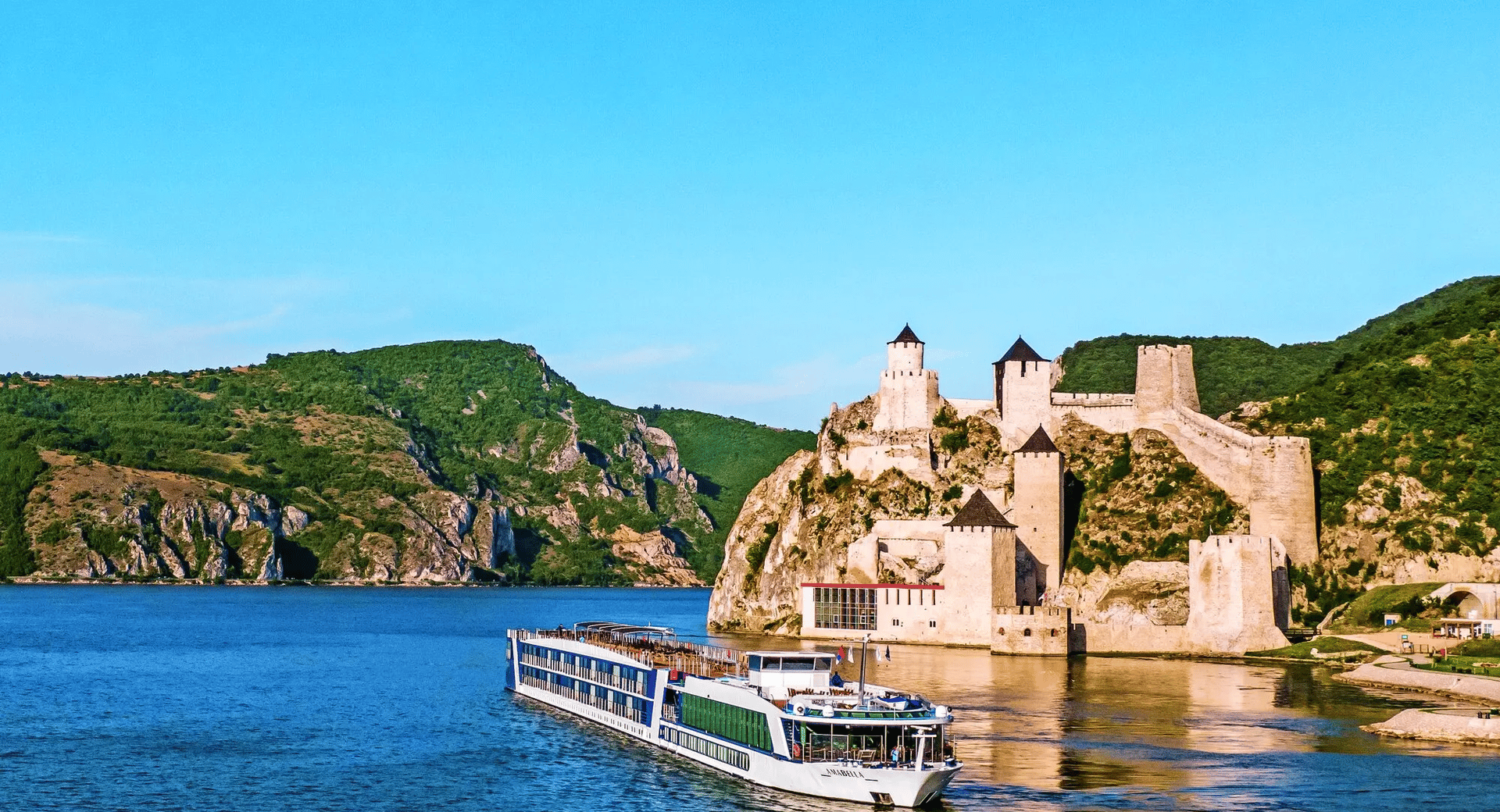
AmaWaterways’ Grand Danube Cruise is a 15-day sailing that covers a substantial portion of the Danube’s 1,780-mile length, traveling from Vilshofen in Germany to Giurgiu in Romania — or the reverse — and stopping in 10 countries along the way, including Austria, Slovakia, Hungary, Serbia, Bulgaria, and Croatia. The cruise operates across four of AmaWaterways’ ships simultaneously, including the AmaMagna, which at 196 guests is Europe’s largest river cruise ship, giving travelers a choice of vessel scale within the same itinerary. The length and geographic range of this sailing place it in a category by itself on this list: no other single itinerary covers as many countries or as much of the Danube in one continuous voyage.
The port list covers both the well-known capitals of the Upper Danube and the less-visited towns of the lower river. The Passau Castle Hike in Vilshofen provides an active start to the voyage, while Weissenkirchen in Austria’s Wachau Valley offers an apricots, sweets, and wine tasting that reflects the agricultural identity of one of the river’s most scenic stretches. The Bratislava Castle hike in Slovakia and a guided bicycle ride along the Danube near Mohács in Hungary round out the activity options in the upper section, while a Banitsa pastry and yogurt tasting in Vidin, Bulgaria, introduces passengers to the culinary traditions of the river’s eastern reach.
The 15-day duration gives the Grand Danube Cruise a sustained immersion in Central and Eastern European culture that shorter Danube sailings cannot provide. Passengers experience the contrast between the grand imperial capitals of Vienna and Budapest and the smaller, less-visited towns of Serbia, Bulgaria, and Romania within a single voyage, a range of historical and cultural contexts that would require multiple separate trips to replicate independently. For travelers seeking the most comprehensive Danube experience in a single booking, this itinerary is the definitive option.
2. The Upper Danube threads the Wachau Valley wine region
Credit: Viking
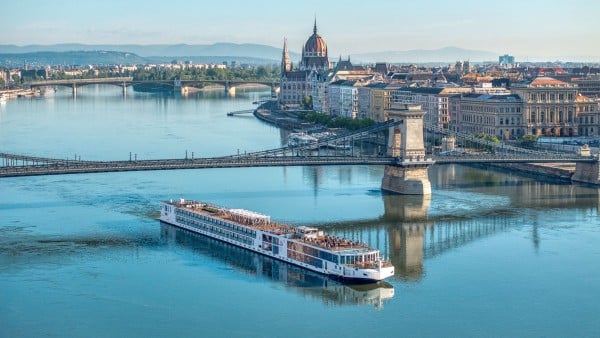
The Upper Danube sailing between Budapest, Hungary, and the German cities of Passau, Regensburg, Vilshofen, or Munich attracts the broadest range of river cruise lines of any itinerary on this list. Viking, AmaWaterways, Avalon Waterways, Uniworld, Tauck, Riverside Luxury Cruises, Emerald Cruises, CroisiEurope, and Riviera Travel all operate sailings on this route. The concentration of operators reflects both the route’s popularity and the density of culturally significant stops it delivers within a relatively compact geography. Itinerary variations include different departure cities, shorter sailings, and round-trip options from Budapest, offering travelers significant flexibility to match the voyage length and ports to their schedule and interests.
The Wachau Valley, a UNESCO World Heritage Site stretching along the Danube in Lower Austria, is the route’s scenic centerpiece. The valley’s riverside vineyards, picturesque villages, medieval monasteries, and castle ruins — all concentrated into a few miles of river corridor — produce the kind of view that defines the European river cruise aesthetic. Dürnstein, the most photographed town in the Wachau, sits beneath the ruins of Kuenringerburg Castle, where Richard the Lionheart was held prisoner in the 12th century. Passengers who go ashore in Dürnstein can visit the castle ruins and walk the town’s main street, which preserves a medieval character that larger Austrian cities have long since absorbed into modern development.
Vienna, the route’s most significant urban stop, offers passengers the choice between Habsburg imperial grandeur — Schönbrunn Palace, the Spanish Riding School, the Kunsthistorisches Museum — and a more layered engagement with the city’s cultural identity through its coffeehouse culture, its contemporary music scene, and the catacombs beneath St. Stephen’s Cathedral. Regensburg, one of Germany’s oldest medieval cities, offers a different perspective on urban history at the western end of the route, with colorful Gothic-era buildings and a medieval stone bridge spanning the Danube since the 12th century. The Upper Danube itinerary remains the most reliably rewarding introduction to European river cruising for first-time passengers.
3. The Lower Danube passes the Iron Gates to Eastern Europe
Credit: Viking
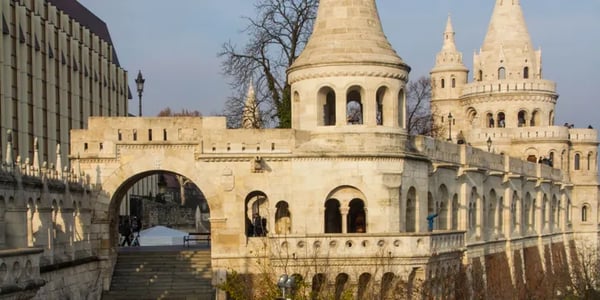
The Lower Danube itinerary covers countries — Croatia, Serbia, Bulgaria, Hungary, and Romania — that receive a fraction of the tourist attention directed at Austria and Germany, and the sailing attracts passengers specifically interested in the less-traveled dimension of European history and culture. Avalon Waterways, Viking, Uniworld, and Emerald Cruises all operate Lower Danube routes, and Viking’s 11-day Passage to Eastern Europe, sailing from Bucharest to Budapest, provides one of the most detailed examples of what this section of the river offers. The itinerary stops in Ruse and Vidin, Bulgaria; Golubac and Belgrade, Serbia; Osijek, Croatia; and Kalocsa, Hungary, before concluding in Budapest.
The Iron Gates, on the border between Serbia and Romania, constitute the Lower Danube’s signature natural feature. The roughly two-mile gorge cuts through a section of the Carpathian Mountains where the river narrows to less than 500 feet in places, and the rock walls on both banks rise to dramatic heights above the water. The gorge is one of the most celebrated natural wonders in Europe and gives the Lower Danube a scenic drama that the more pastoral upper section, for all its charm, does not match.
Kalocsa, in southern Hungary, illustrates the kind of cultural specificity that makes the Lower Danube itinerary valuable for travelers who want depth over familiarity. The town, which dates back more than 1,000 years, grows approximately 8,000 acres of hot red peppers in the surrounding agricultural zone and houses the world’s first paprika museum, an institution dedicated to the spice that has defined Hungarian cuisine for centuries. The Belgrade waterfront, where the Sava River joins the Danube beneath the walls of the Kalemegdan Fortress, provides a dramatically different kind of stop: a capital city with a vibrant contemporary culture that most Western European travelers have not yet encountered. The Lower Danube rewards travelers who accept a lower baseline of tourist infrastructure in exchange for genuinely novel experiences.
4. The Rhine connects Basel to Amsterdam via castle country
Credit: Avalon Waterways
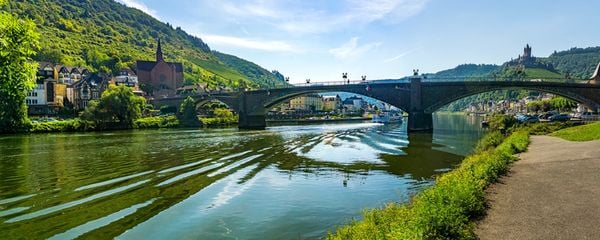
The Rhine from Basel, Switzerland, to Amsterdam is among the most popular river cruise routes in Europe, and the breadth of cruise lines offering seven-day itineraries on this corridor — every major operator maintains Rhine sailings — reflects both the route’s consistent appeal and the logistical ease of flying into Basel or Amsterdam. The standard itinerary passes through German towns, including Düsseldorf, Speyer, and Rüdesheim am Rhein, and typically includes a stop in Strasbourg, France, before completing the journey at the other terminus. The middle Rhine section between Rüdesheim and Koblenz, where the river cuts through the Rhine Gorge, and more than 40 medieval castles appear on the hillsides above the water, provides the route’s most celebrated scenery.
Longer Rhine itineraries extend onto the Moselle and Main rivers, opening the route to additional wine regions and smaller towns that the standard Basel-to-Amsterdam sailings do not reach. Avalon Waterways’ eight-day Rhine and Moselle sailing begins in Amsterdam and ends in Remich, Luxembourg, stopping at Cochem in Germany to see the Reichsburg Castle from its hilltop position above the Moselle Valley, at Bernkastel to taste wines from the surrounding vineyards, and at Luxembourg’s Moselle Region for a guided wine walk or cycling excursion. The Moselle extension gives the itinerary a rural, wine-country character distinct from the more urban and architectural focus of the standard Rhine route.
The Rhine’s castles require some explanation for passengers who expect to tour them from the inside. Most of the famous Rhine Gorge castles are best appreciated from the water or from the riverbanks below, and some are ruins or privately owned. The experience of sailing past a sequence of medieval fortifications on both hillsides simultaneously, while the vine-covered slopes drop to the water’s edge, is specific to the river and cannot be replicated by road through the same region. The Rhine is the right choice for travelers who want the classic European river cruise experience — castles, vineyards, cathedral towns, and the effortless movement between them — in a well-serviced and reliably scenic package.
5. The Rhône anchors France’s top gastronomic corridor
Credit: Uniworld
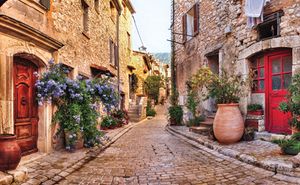
The Rhône River flows 505 miles from the Swiss Alps through France to the Mediterranean, and the river cruises that operate on it concentrate almost entirely on the French section between Lyon and Avignon, a stretch that passes through some of the country’s most important wine appellations and culinary traditions. Lyon’s reputation as the gastronomic capital of France makes it the natural anchor for these sailings, and the city’s position at the confluence of the Rhône and the Saône gives it a riverine identity that suits the cruise format particularly well. Avignon, at the end of the standard itinerary, is a medieval walled city whose 14th-century papal palace and surrounding Provençal landscape provide a culturally rich conclusion to the voyage.
Uniworld’s eight-day Burgundy and Provence sailing aboard the 158-passenger S.S. Catherine runs between Arles and Lyon, with stops in Avignon, Viviers, Tournon, and Beaune. Arles, at the southern end of the route, holds some of the best-preserved Roman amphitheaters and theater ruins in France, structures that were in active use during the Roman Empire and remain largely intact two millennia later. Arles also holds a specific connection to Vincent van Gogh, who lived in the city in 1888 and 1889 and produced more than 200 paintings during his time there, many depicting the light, architecture, and landscapes visible from the streets he walked.
Tournon, a smaller stop on the Rhône between Lyon and Avignon, carries two distinct attractions that justify a half-day ashore. The castle perched above the town offers views across the river to the vineyards of Tain-l’Hermitage on the opposite bank, one of the Rhône’s most celebrated wine appellations. The historic Train de l’Ardèche, a narrow-gauge railway that climbs through the Ardèche mountains above the town, provides a scenic rail journey through terrain the river itself does not reach. The Rhône suits travelers who prioritize French food and wine above all other considerations and want a river itinerary where every port stop reinforces that theme.
6. The Seine covers Normandy and Giverny in 240 miles
Credit: Avalon Waterways
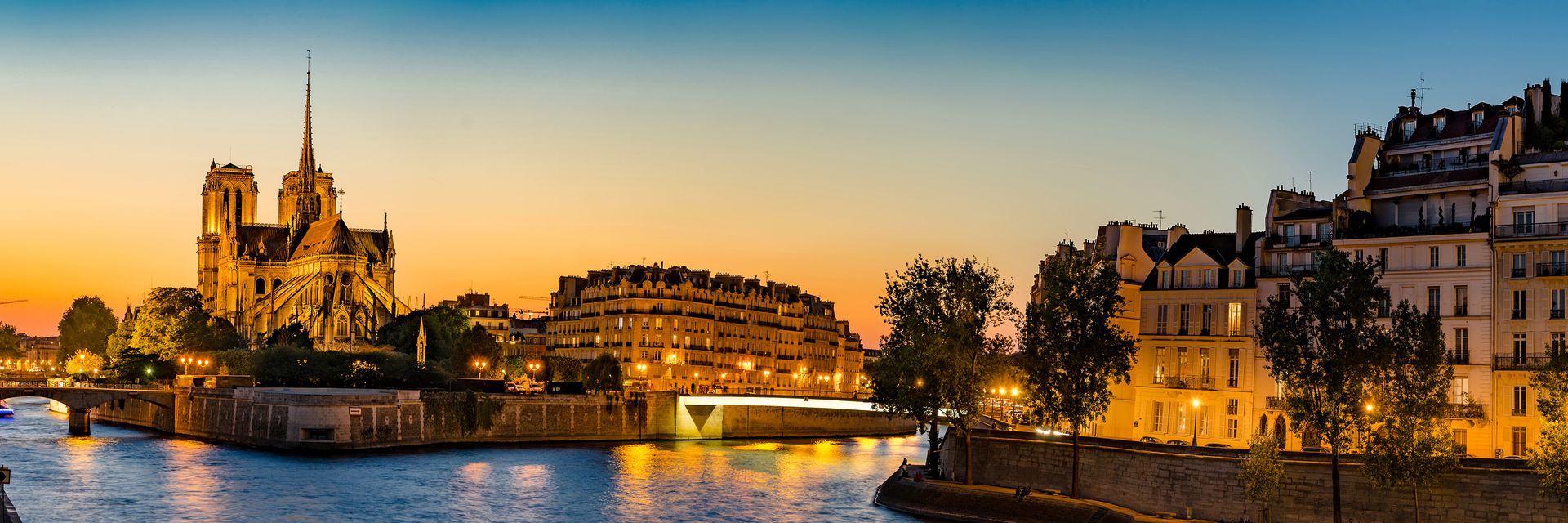
The Seine’s 240-mile sailing distance from Paris to the English Channel makes it one of the shortest European river cruise routes, but the historical and cultural density of the stops along its banks gives this itinerary a depth that longer voyages on other rivers do not consistently match. Paris alone justifies several days of pre- or post-cruise exploration, with the Louvre, Notre Dame Cathedral, and the Musée d’Orsay within walking distance of the river, and the Seine’s nightly illumination of the Eiffel Tower visible directly from the ship as it moors in the city. The tower’s 20,000 lights twinkle for five minutes at the top of each hour after dark. Paris’s cultural weight alongside the historical significance of the downstream stops makes the Seine the most intellectually concentrated itinerary on this list.
The Normandy beaches, accessible from the river stops along the Seine’s lower section, lend the itinerary a historical dimension that no other European river route offers. D-Day sites, including Omaha Beach, the American Cemetery at Colleville-sur-Mer, and the Pointe du Hoc clifftop battery, bring passengers into direct contact with the physical landscape of the Allied invasion, and the guided tours that cruise lines organize to these sites give travelers contextual depth that a solo visit without a historian guide does not readily deliver. Giverny, where Claude Monet lived and worked for more than 40 years and where the water lily ponds that inspired his most famous paintings still exist, is accessible from Vernon on the Seine, roughly 50 miles from Paris.
Avalon Waterways offers several eight- and nine-day round-trip itineraries from Paris along the Seine, including Active and Discovery sailings that incorporate bicycle tours, kayaking excursions in Les Andelys, and a visit to the Palais Bénédictine in Le Havre, where the famous herbal liqueur has been produced since the 19th century. The Château Gaillard at Les Andelys, built by Richard the Lionheart in 1196, and the Château de Malmaison outside Paris, Napoleon Bonaparte’s last home before his final exile, give the itinerary a royal and imperial historical thread that runs alongside its impressionist and military chapters.
7. The Douro winds through Portugal’s oldest wine region
Credit: Tauck
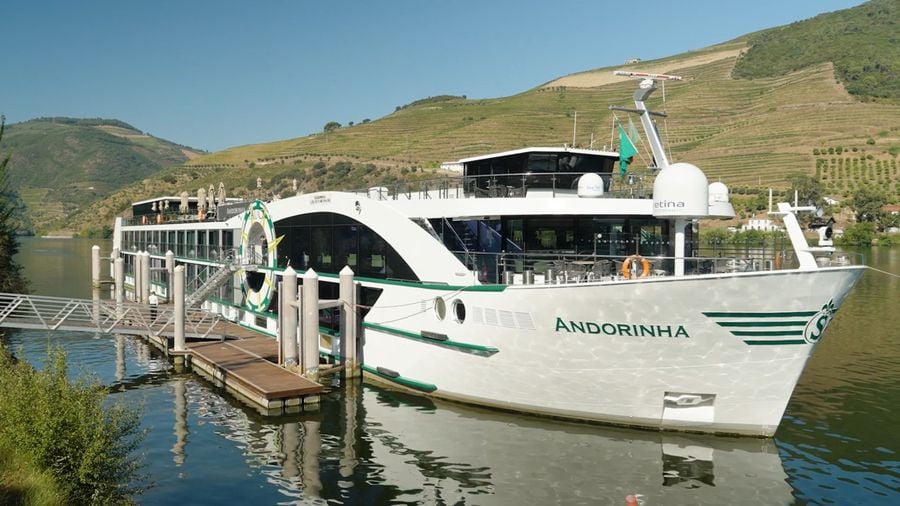
The Douro River Valley in Portugal holds the distinction of being the world’s oldest officially demarcated wine region, a status granted in 1756 when the Marquis of Pombal established boundaries around the port wine production zone to protect its commercial integrity. The valley’s UNESCO World Heritage designation reflects both the agricultural achievement of the terraced vineyards carved into the schist hillsides over the centuries and the historic significance of the wine trade, which shaped Portugal’s economic and cultural development. A river cruise along the Douro immerses passengers in this landscape directly: the terraced vines descend to the waterline on both banks, and the quintas — traditional wine estates — appear at intervals along the route.
Tauck’s eight-day Villages and Vintages sailing runs round-trip from Porto, starting with a day in the city to explore the Ribeira waterfront district, the Cathedral of Porto, and Vila Nova de Gaia across the river, where the historic port wine lodges store barrels in their riverside warehouses. The itinerary stops in Pinhão, deep in the heart of the Douro Valley and surrounded by some of the most celebrated wine estates in Portugal, and crosses into Spain at Vega de Terrón to visit Salamanca’s UNESCO-listed old city. The baroque Mateus Palace near Peso da Régua and the medieval town of Guimarães, where the Kingdom of Portugal was founded in 1128, extend the itinerary's historical and architectural range beyond its wine-country focus.
Porto itself merits two or three days of exploration beyond the Douro cruise’s overnight stay. The city’s azulejo tile facades, Gothic-Renaissance cathedral, and iron bridge designed by an associate of Gustave Eiffel give it an architectural character as distinctive as any Portuguese city, and the food and wine scene in the Ribeira district and the Bonfim neighborhood represents some of the most rewarding urban eating in the Iberian Peninsula. The Douro suits travelers whose primary interest is wine, Portuguese history, and the visual drama of the terraced agricultural landscape, and who want those three elements delivered without leaving a single river valley.
8. The Dutch Waterways bloom with tulips in spring
Credit: AmaWaterways
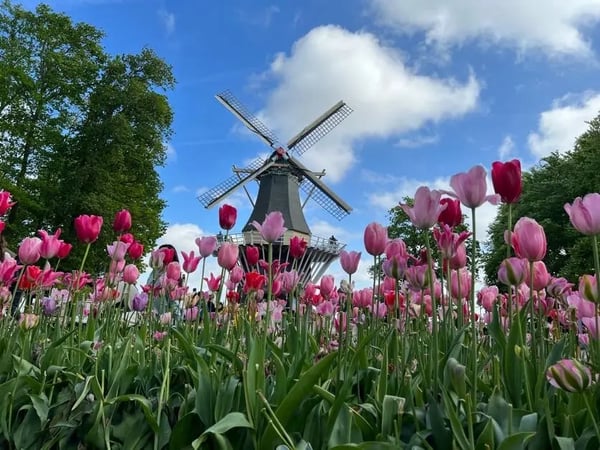
Tulip season in the Netherlands and Belgium runs from mid-March to mid-May, a short window that concentrates enormous demand into a compressed booking period, making early reservations the single most important practical decision for travelers who want to experience the flowering bulb fields at their peak. The Dutch Waterways itineraries navigate canals and rivers through the Low Countries — Belgium, the Netherlands, and Luxembourg — stopping at UNESCO World Heritage villages and towns surrounded by color-saturated agricultural fields during the few weeks when the tulips, hyacinths, and daffodils bloom simultaneously.
AmaWaterways’ seven-night Tulip Time cruise departs round-trip from Amsterdam and stops in Zierikzee, a well-preserved harbor town in the Zeeland province of the Netherlands with a history dating to medieval maritime trade, and in Ghent, Belgium, where the St. Bavo’s Cathedral houses the Ghent Altarpiece, one of the most significant and technically accomplished works of Early Flemish painting in existence. The Antwerp stop adds a city with one of Europe’s largest historic port areas and a culinary identity built around waffles, chocolate, and Belgian beer, available both on independent walks and on organized culinary tours.
The Floralia Brussels spring flower show at Groot-Bijgaarden Castle, accessible from the Antwerp stop, fills the grounds of a medieval castle complex with approximately one million flowers during the tulip season period, creating a horticultural spectacle calibrated to the same seasonal moment as the agricultural fields along the waterways. The cruise concludes with a return to Amsterdam and an excursion to Keukenhof gardens in nearby Lisse, where more than 70 acres of tulips in hundreds of varieties open to visitors for the same eight-week window each spring. Keukenhof is the most visited flower garden in the world, and arriving as part of a river cruise itinerary gives passengers the logistical support of organized transfer and timing that independent visitors must arrange on their own. The short tulip season window and the high demand for these sailings mean that travelers who wait until spring to book will find the best departures already sold out, making early reservation the most consequential single planning decision for this itinerary.
9. Christmas markets cruises across multiple rivers in winter
Credit: Viking
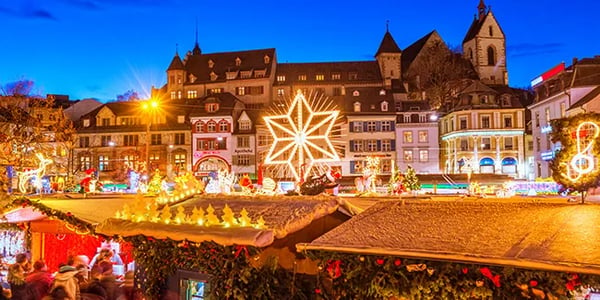
Christmas markets river cruises are a bucket-list trip for many European travel enthusiasts, offering a way to visit multiple traditional holiday markets across several countries in a single sailing, while the ship itself provides festive programming and warm refuge between outdoor market visits. Most major river cruise lines offer Christmas market itineraries on the Danube, the Rhine, the Main, the Moselle, the Elbe, the Douro, the Garonne, the Dordogne, and other rivers, with sailings concentrated between late November and mid-December when the markets are fully operational. Nuremberg, Germany, and Salzburg, Austria, anchor many itineraries with two of the oldest and most celebrated Christkindlesmarkts in the world.
Viking’s 12-day Christmas on the Rhine and Moselle itinerary sails from Paris to Zurich and visits markets in Paris, Reims, and Strasbourg in France before crossing into Germany. The German section includes stops in Trier, Koblenz, and Mannheim, each with its own market configuration and local traditions, before the itinerary concludes in Basel, Switzerland, with an overland transfer to Zurich. Zurich’s oldest Christmas market sits along the shores of Lake Zurich and offers a Swiss conclusion that contrasts with the French and German character of the preceding days. The Paris starting point allows passengers to combine a few days in the French capital with the river sailing, giving the overall trip a two-city urban anchor alongside the smaller market towns.
The Christmas markets sailing calendar fills rapidly, and the most popular itineraries on the Rhine and Danube sell out months before the first December departure. The timing window is narrow — most markets open in late November and close before Christmas Eve — and the weather across Germany, Austria, and France in December ranges from cold and clear to grey and wet, significantly affecting the outdoor market experience. Travelers $TRV who have planned around the markets for years and book early enough to secure their preferred itinerary and cabin will find the Christmas markets river cruise among the most atmospheric travel experiences available in Europe.