Gabriela Palai / Pexels
Flying reduces the world to airports. You board in one indistinguishable terminal and emerge in another, with a few hours of pressurized tube in between, and the specific geography of the planet — the mountain ranges, the river systems, the gradual transition from farmland to forest to desert — is invisible beneath the clouds. Rail travel works differently. The train moves at a pace that allows the landscape to develop properly, to change in ways that register as change rather than as a jump cut between climates. You arrive knowing something about the country you have crossed that the airplane passenger does not.
The great train journeys of the world are great for different reasons. Some are great because of the engineering — the tunnels, viaducts, and switchbacks required to take a railway through genuinely difficult terrain. Some are great because of the landscape — because the route happens to cross some of the most beautiful country on Earth at the speed required to appreciate it. Some are great because of the trains themselves — historic rolling stock, impeccable service, the specific pleasure of a well-run railway doing what a well-run railway can do. And some are great because of what they mean to the places they pass through — the routes that opened up continents, connected isolated communities, or carried the political and economic ambitions of nations that built them.
The 15 journeys here span six continents and range from half-day excursions to multiday epics. They include luxury trains where the train is explicitly the attraction and commuter-style services where the route is the point and the rolling stock is entirely ordinary. They include journeys through mountain ranges, along coastlines, across deserts, and through dense urban landscapes. What they share is the specific quality of a journey that rewards the time it takes — that provides, in the hours or days of the ride, something worth having beyond the arrival at the destination.
Practical notes for each journey cover the key booking considerations, the best seat positions, and where to look at the moments that matter most.
1 / 15
mas_hha / Pexels
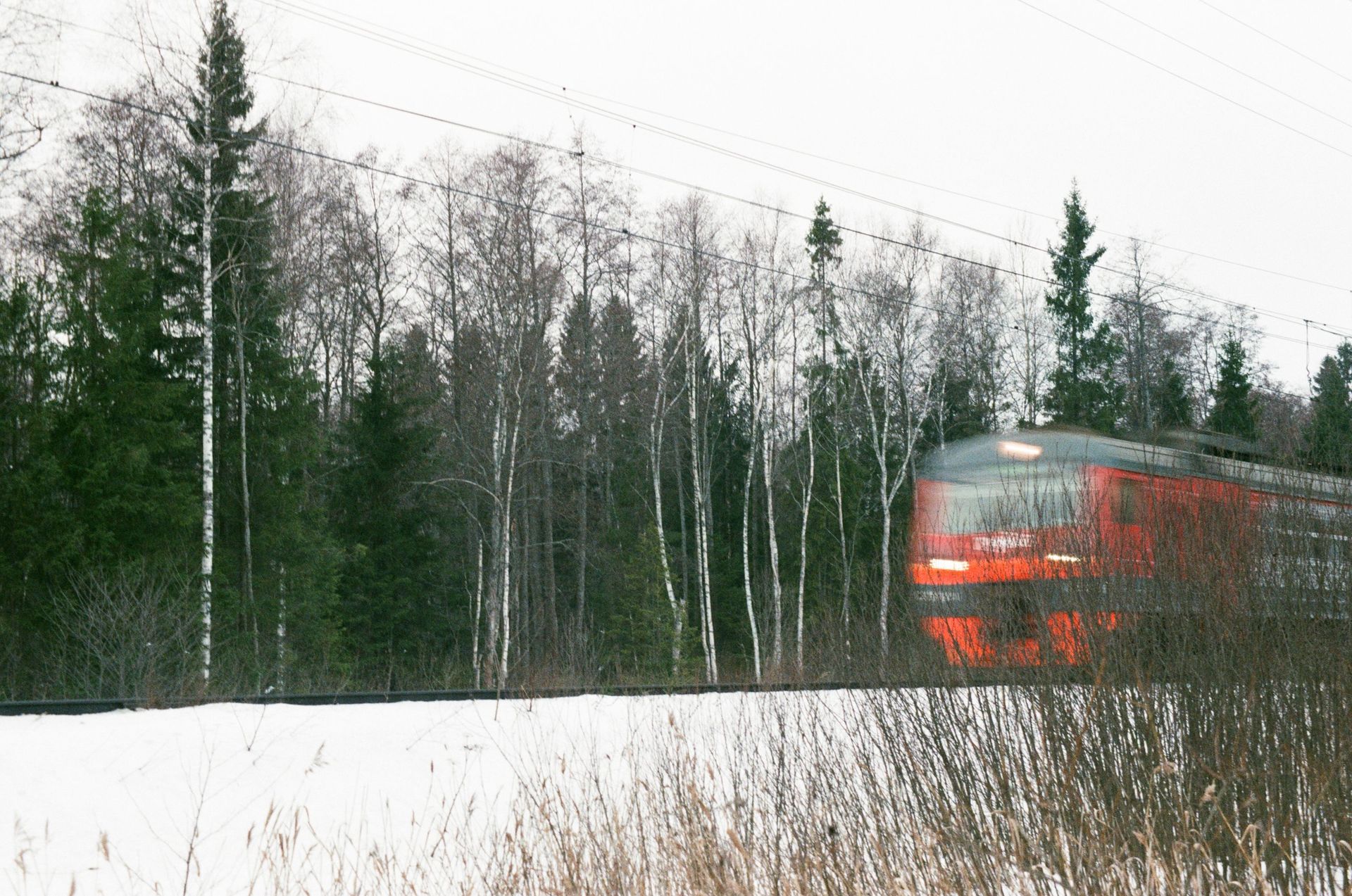
The Trans-Siberian Railway — 9,289 kilometers from Moscow to Vladivostok, the longest railway line in the world — takes approximately seven days to complete end-to-end on the direct service and passes through eight time zones, the full width of Russia, and some of the most varied and most remote landscape in the world. It is the journey that most directly earns the description "the whole point of the trip" — there is no airport option that replaces it, because what the journey provides is not transport but a specific, extended encounter with the scale of Russia.
The landscape transitions in ways that take days rather than hours to unfold. The train leaves Moscow through the industrial suburbs of European Russia and the flat agricultural land of the southern Urals, crosses the Ural Mountains — modest in height but significant as the continental boundary between Europe and Asia — and enters the Siberian taiga: the world's largest forest, extending thousands of kilometers in every direction. After several days, Lake Baikal appears — the deepest lake on Earth, holding approximately 20% of the world's unfrozen surface fresh water — stretching to the horizon on both sides of the track. Beyond Baikal, the landscape transitions again through the grasslands and semi-desert of the Russian Far East.
Three main routes are available: the Trans-Siberian proper (Moscow to Vladivostok), the Trans-Mongolian branch (Moscow to Beijing via Ulaanbaatar), and the Trans-Manchurian branch (Moscow to Beijing via Manchuria). The Trans-Mongolian route adds the extraordinary visual transition from Siberian taiga to Mongolian steppe to Gobi Desert to Chinese farmland, making it the recommended itinerary for most international travelers.
Practical notes: book sleeping compartments well in advance. The second-class platzkart (open sleeping car) is the most social option; the first-class compartments are more private. Take food — the dining car is an experience but not a reliable food supply. Book the southernmost available berth for the best views of Lake Baikal.
2 / 15
Oskar Gross / Pexels
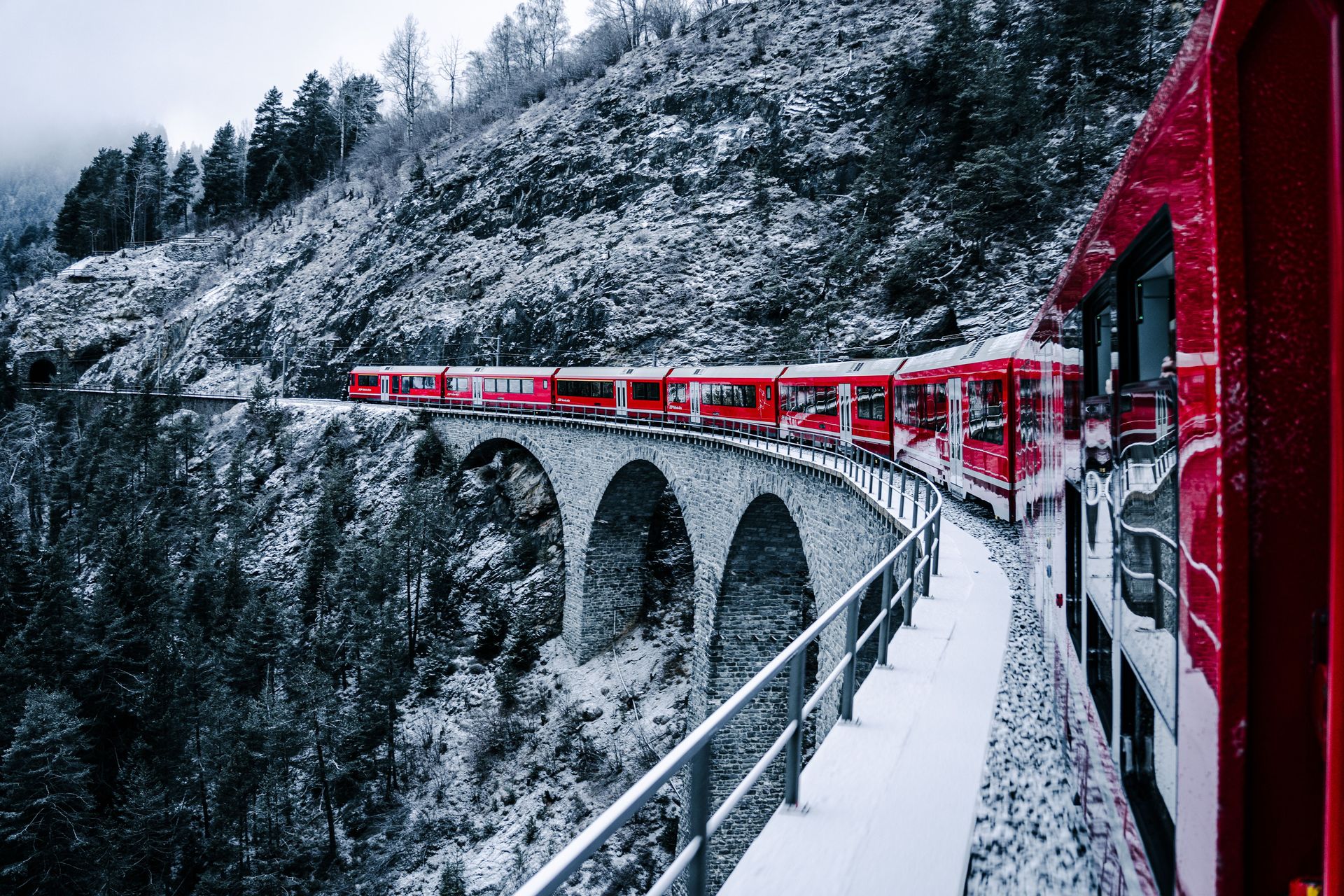
The Glacier Express — the "slowest express train in the world," running between Zermatt and St. Moritz through the heart of the Swiss Alps in approximately eight hours — is the most famous scenic rail journey in Europe and the one that most explicitly positions itself as a destination rather than transport. The route crosses 291 bridges, passes through 91 tunnels, and traverses the Oberalp Pass at 2,033 meters above sea level — the highest railway crossing in Switzerland.
The name refers to the Rhône Glacier at the route's highest point, not to the train's speed. The Glacier Express moves at an average of 36 kilometers per hour — slow enough to observe the landscape properly and to photograph the series of dramatic viaducts, gorges, and alpine valleys that the route crosses. The Landwasser Viaduct — a six-arch curved stone viaduct at 65 meters height that leads directly into a tunnel in the cliff face — is the most photographed moment of the journey and is announced by staff as it approaches.
The panoramic dining car — with oversized windows that extend into the roof for upward views of the mountain walls — provides an excellent lunch service along the route. The quality of the food is secondary to the quality of the windows, but both are adequate.
Practical notes: reservations are mandatory and include a seat reservation fee above the standard Swiss Pass or point-to-point ticket. Travel from Zermatt to St. Moritz (west to east) to have the sun on the right side for most of the morning journey. Request seats on the right side of the train for the best views of the Landwasser Viaduct.
3 / 15
Credit: Wikipedia (CC BY 2.5)
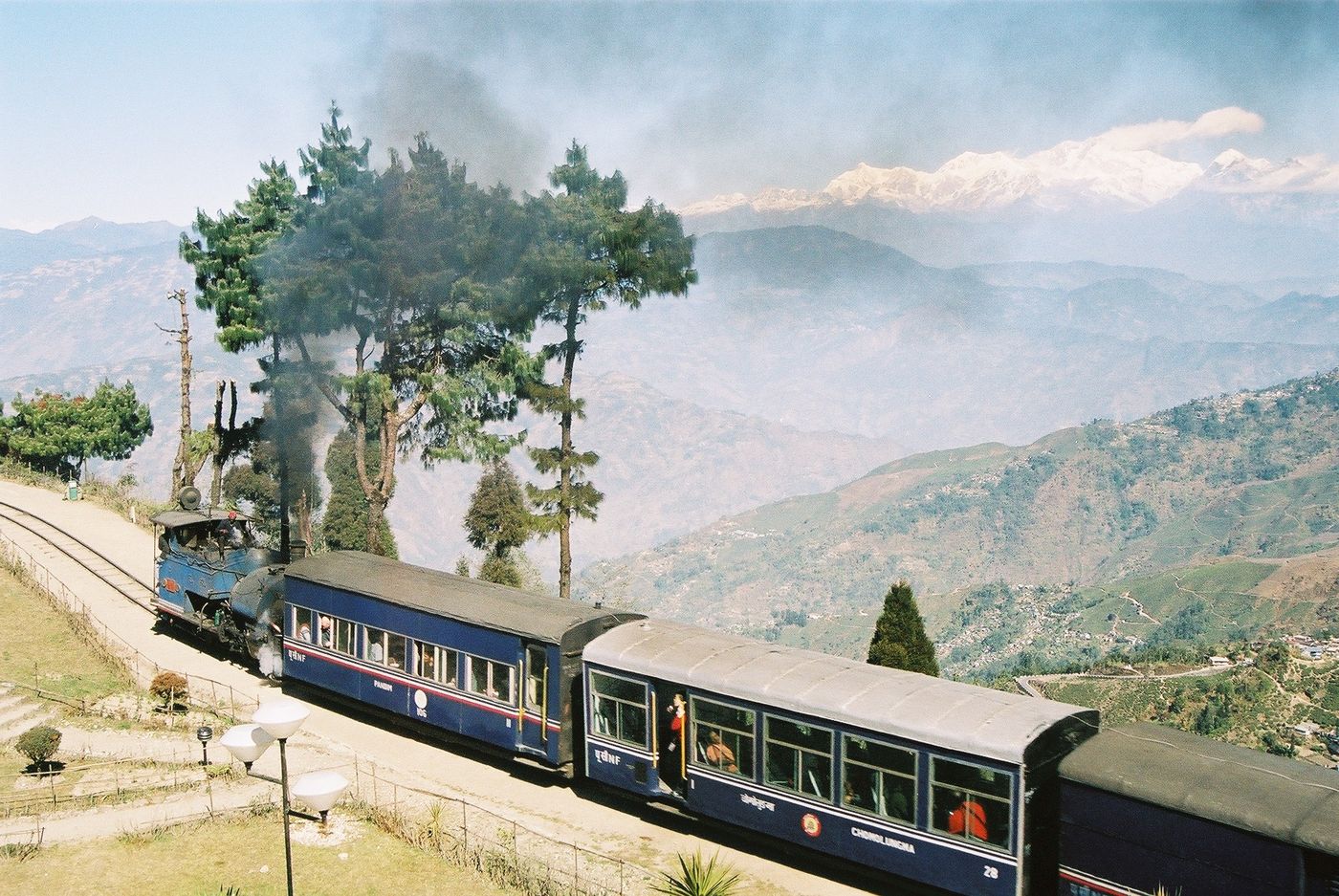
The Darjeeling Himalayan Railway — the narrow-gauge steam railway that climbs 2,134 meters from Siliguri in the West Bengal plains to Darjeeling in the Himalayan foothills, a distance of 88 kilometers accomplished in approximately seven to eight hours — is one of the engineering marvels of the British colonial railway system and one of the few working mountain railways in the world that still operates with steam traction on its heritage services.
The DHR, known affectionately as the "Toy Train" for its narrow 2-foot gauge track and small steam locomotives, was built between 1879 and 1881 and achieved UNESCO World Heritage Site status in 1999. The specific engineering challenges of the route — gaining 2,134 meters of elevation in 88 kilometers — are addressed through a series of loops (where the train spirals up a hillside by reversing direction), zigzags (where the train reverses up a steep incline), and the famous Batasia Loop, where the track describes a complete spiral to gain height, with views of Kanchenjunga (the world's third-highest mountain) visible on clear mornings.
The tea gardens that cover the hillsides around Darjeeling — the source of Darjeeling tea, one of the most prized teas in the world — frame the upper portion of the journey with rows of tea bushes and the occasional figure of a tea picker moving through the plants.
Practical notes: book the heritage steam service (not the diesel service) well in advance through the Indian Railways website or a specialist booking agent. The journey from Darjeeling to Kurseong and back is the most accessible option for travelers with limited time. Mornings offer the best chance of Kanchenjunga views.
4 / 15
Filipa Moreira / Pexels
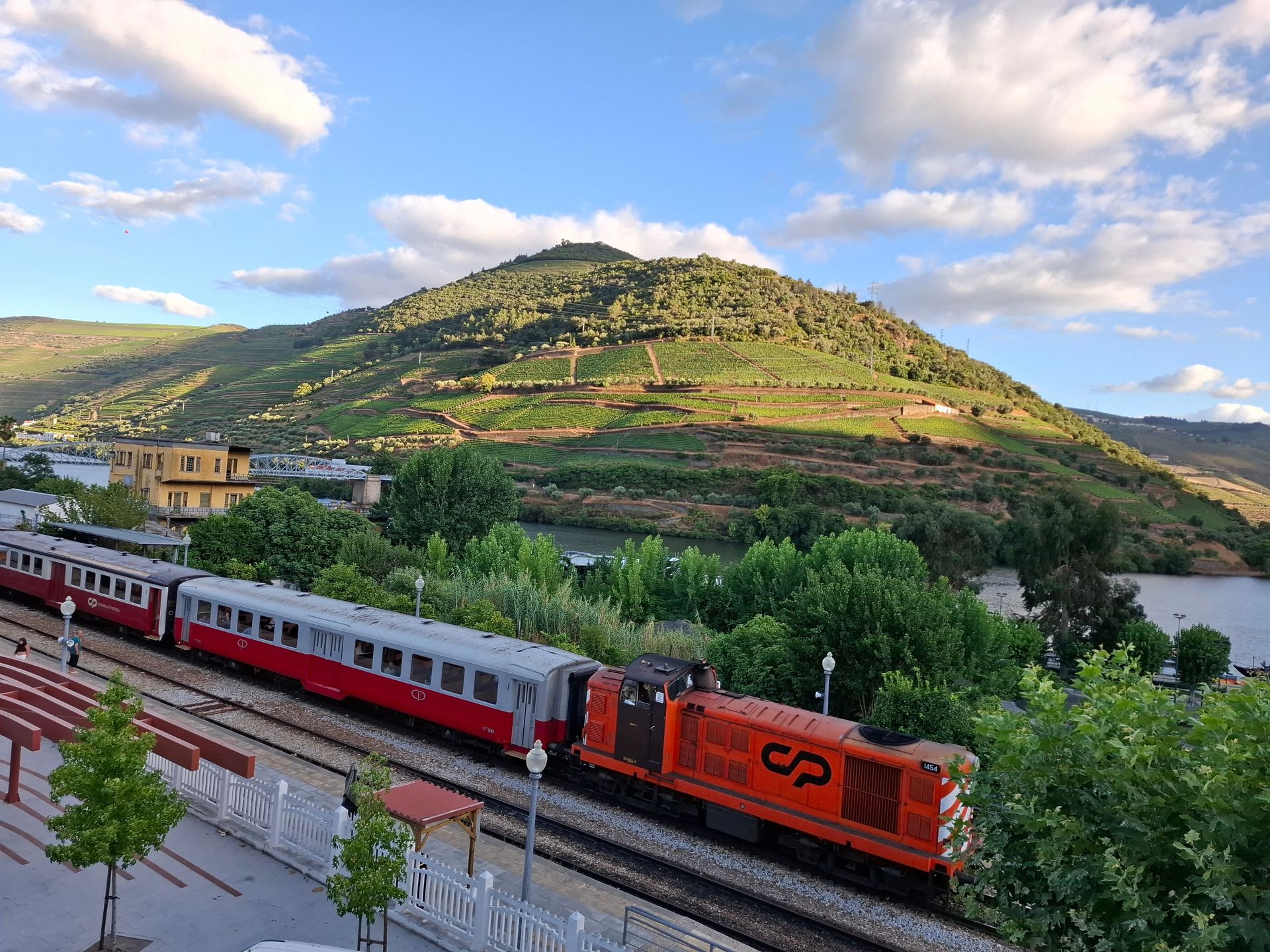
The Douro Valley railway line — running east from Porto along the Douro River through the wine country of northern Portugal for approximately 200 kilometers to the Spanish border — is the most beautiful rail journey in Western Europe that most travelers have never made, despite its accessibility from Porto and its combination of dramatic river gorge scenery, terraced vineyards, and the specific pleasure of a Portuguese regional railway operating without the performative self-consciousness of designated scenic routes.
The line follows the Douro River through the narrow gorge that the river has cut through the pre-Cambrian rock of the Iberian plateau, with the track alternately high on the valley walls and low alongside the riverbank. The vineyards of the Port wine country — UNESCO World Heritage-listed since 2001 — occupy every available slope from river to ridge, the terraces cut into the schist hillsides in a pattern that has been maintained for three centuries.
The specific pleasure of the Douro Valley line is its ordinariness as well as its beauty. This is a regional service used by local people, not a heritage tourist train; the stations are small and functional, the rolling stock is standard Portuguese suburban equipment, and the ticket price is modest. The journey requires no special booking beyond a standard Portuguese rail ticket.
Practical notes: take the morning train from Porto Campanhã for the best light on the south-facing vineyard slopes. The section between Pinhão and Pocinho is the most dramatic; if time is limited, take the train from Porto to Pinhão (approximately three hours) and return by road or continue to the end of the line. Sit on the left side of the train traveling east for valley views.
5 / 15
Tomoyn / Wikipedia (CC BY 4.0)
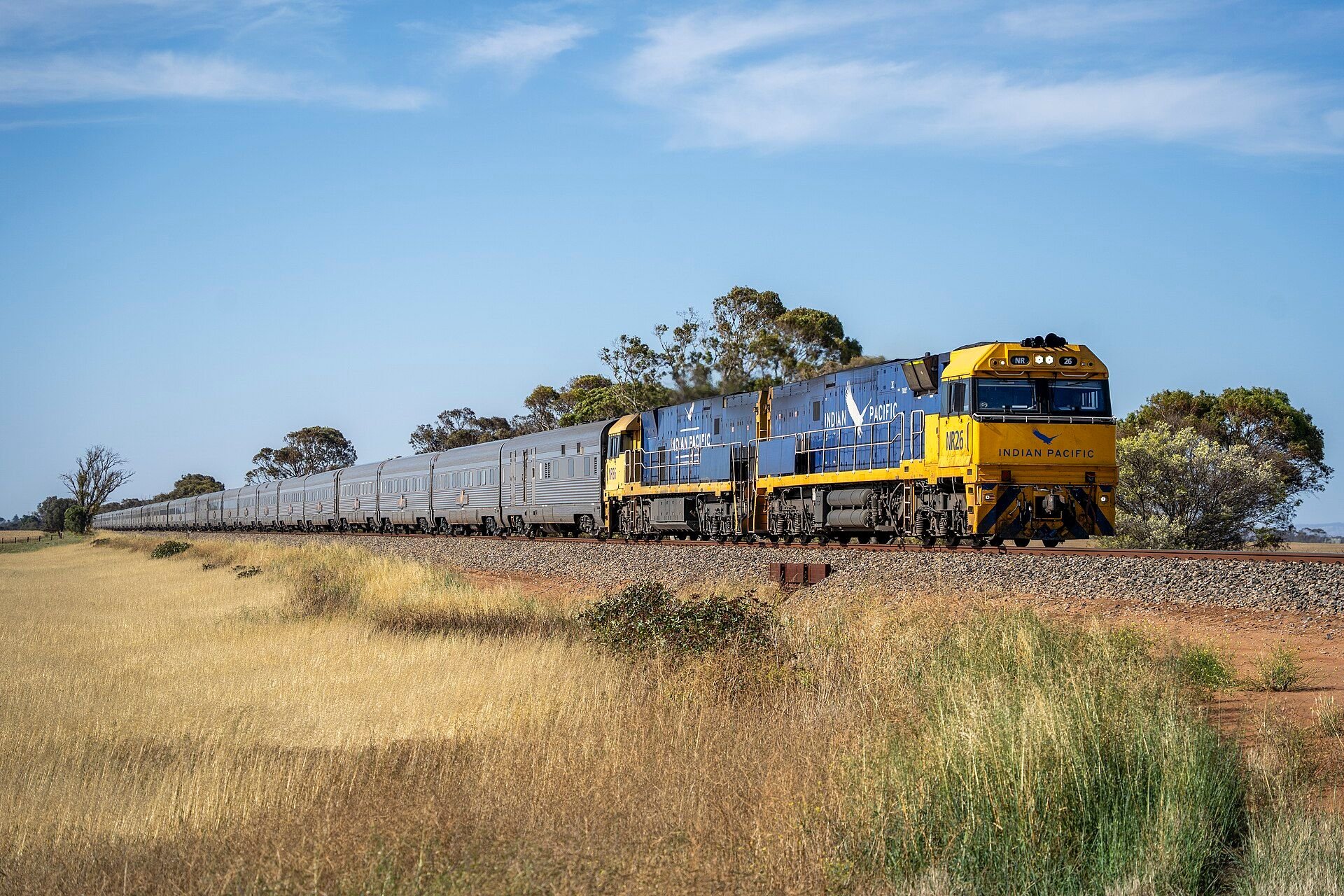
The Indian Pacific — the 4,352-kilometer transcontinental service connecting Sydney on the Pacific coast to Perth on the Indian Ocean, accomplished over 65 hours — is the journey that crosses Australia's interior at the pace required to appreciate what the interior actually is: not the empty space that the phrase "the outback" implies, but a vast, quiet, ancient landscape of red earth, saltbush, and the specific silence of a continent that has been geologically stable for 600 million years.
The route includes the Nullarbor Plain crossing — 478 kilometers of dead-straight track across the world's largest single piece of limestone and the longest straight railway section in the world — where the train runs due west for over a day without a significant curve. The Nullarbor (whose name derives from the Latin for "no tree") is genuinely treeless: the flatness of the plain and the shallow limestone substrate prevent tree root development, and the vegetation is low saltbush as far as the eye can reach in every direction.
The Indian Pacific is operated as a luxury cruise-style train by Great Southern Rail, with three service levels (Gold, Silver, and Daytripper), a restaurant car serving Australian produce and wines, and an observation lounge car. The Gold service includes off-train excursions at selected stops including the mining town of Broken Hill and the historic settlement of Cook, a ghost town on the Nullarbor that was abandoned when the railway was automated in the 1990s.
Practical notes: book well in advance, particularly for Gold class; the train runs three times weekly and fills quickly. The Nullarbor crossing occurs overnight on the Sydney-to-Perth direction; consider the Perth-to-Sydney direction to see it in daylight.
6 / 15
Dirk Pothen / Pexels
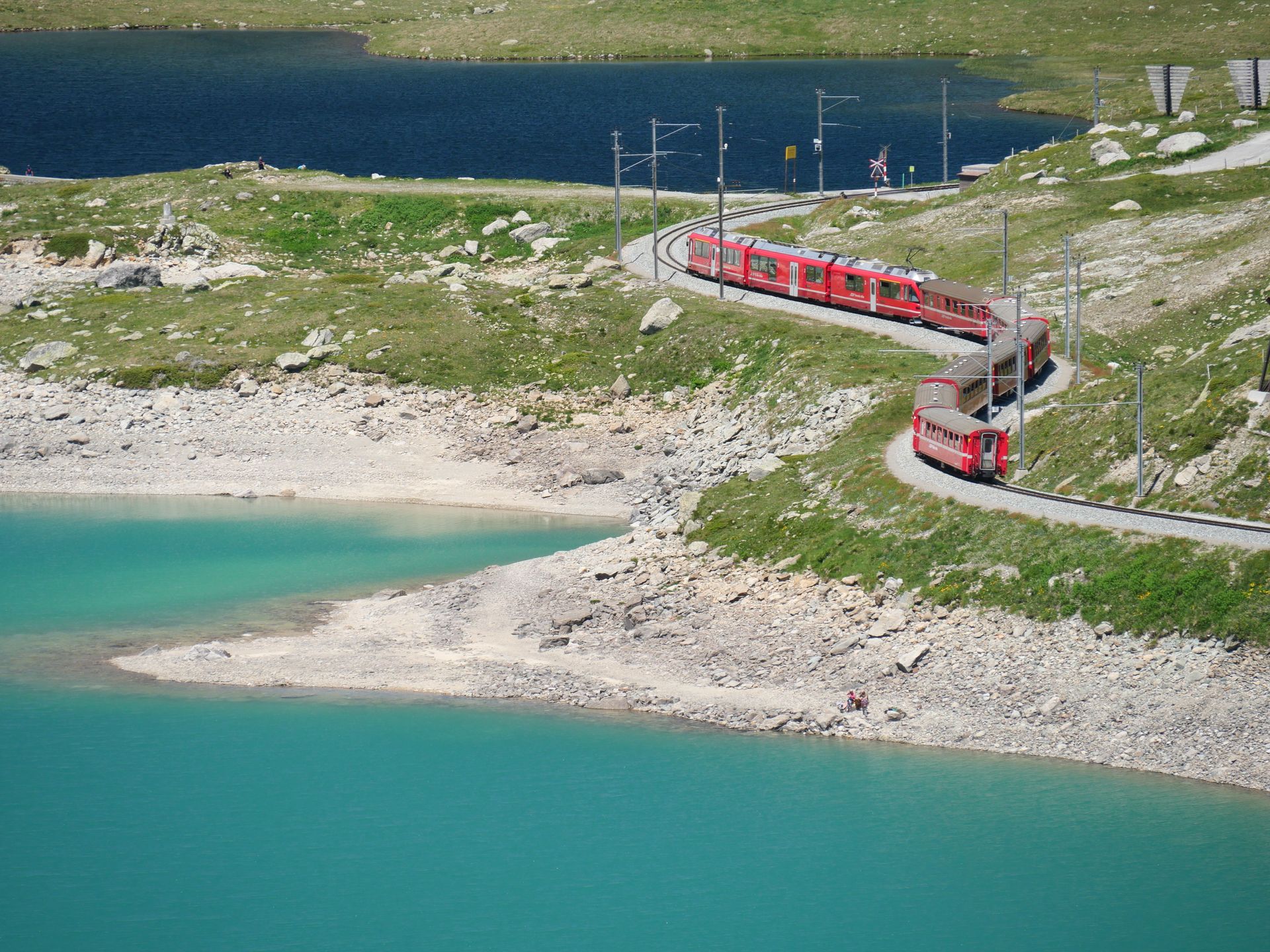
The Bernina Express — the Rhaetian Railway service between Chur in Switzerland and Tirano in Italy, crossing the Bernina Pass at 2,253 meters — is the highest crossing of the Alps by any railway line and the only transalpine railway that crosses the Alps without a tunnel, remaining above ground through the full ascent and descent of the pass. The entire Rhaetian Railway, including the Bernina line, is a UNESCO World Heritage Site.
The journey from Chur to Tirano takes approximately four hours and traverses a landscape that changes completely in the course of the ride: from the Rhine gorge's limestone walls and medieval villages, across the open alpine meadows and glaciers of the Bernina Pass, and then down through the Italian-speaking valleys of the Valtellina to the lakeside town of Tirano on the Lombardy plain. The transition from Swiss German to Italian, from Alpine to Mediterranean, is visible in the architecture of the stations as the train descends.
The Brusio spiral viaduct — a circular viaduct built to reduce the gradient as the line descends toward Tirano, in which the train describes a complete loop and passes over itself — is the engineering highlight of the Italian portion. The Morteratsch Glacier, visible from the train near the Bernina Pass, has retreated several kilometers since the railway was built in 1910, providing an unintentional long-term illustration of glacial retreat.
Practical notes: the Bernina Express bus connection extends the journey to Lugano for a complete transalpine itinerary. Travel from Chur to Tirano for the descent with the best forward views. Book the panoramic car for the oversized windows.
7 / 15
Timothy Stevens / Wikipedia (CC BY-SA)
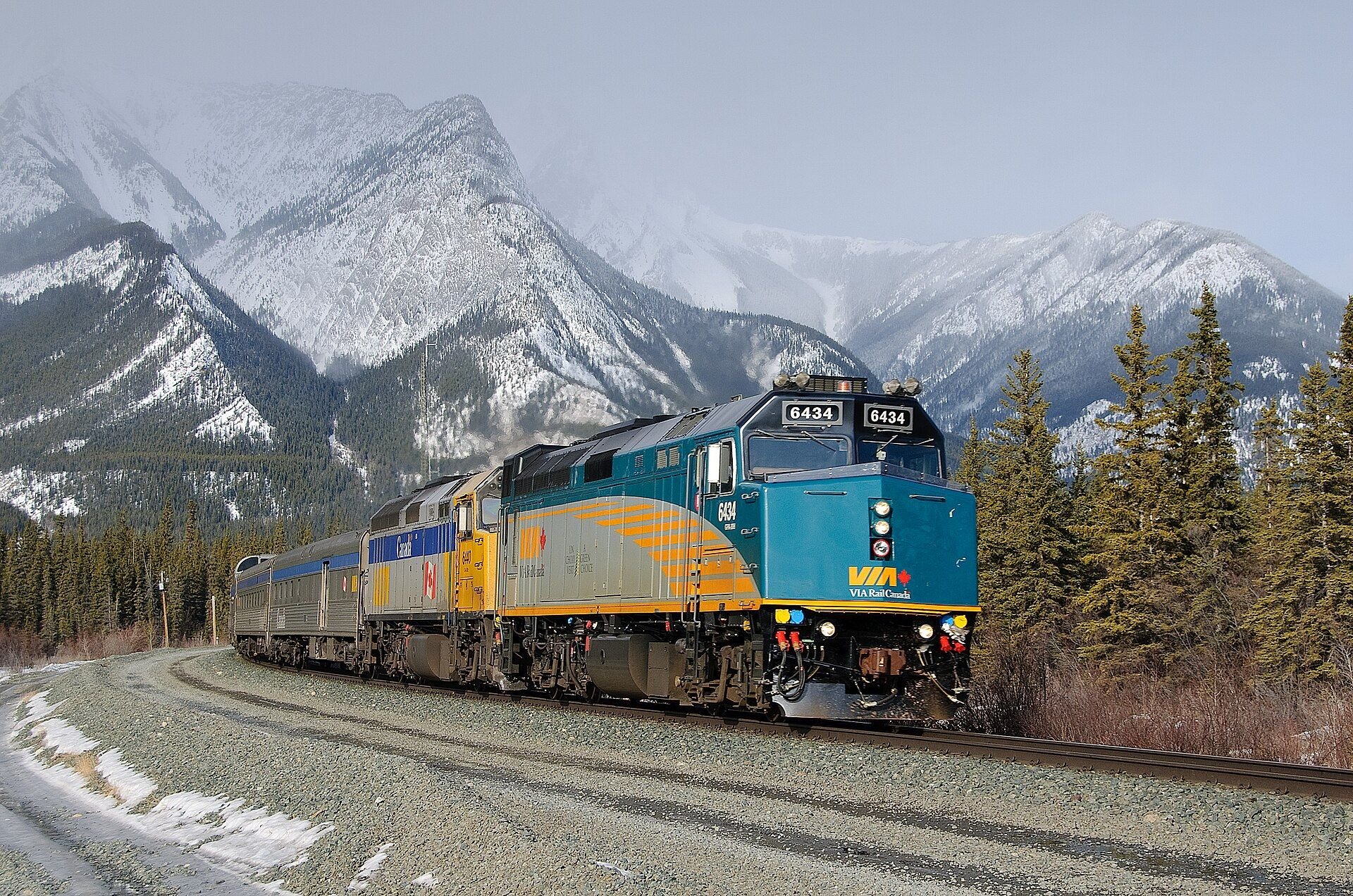
The Rocky Mountaineer — the private luxury rail service running between Vancouver and Banff or Jasper through the Canadian Rockies — operates as a two-day daytime-only service (no overnight travel, with passengers staying in Whistler or Kamloops between the two daily sections) specifically designed to ensure that the entire mountain crossing occurs in daylight. This design decision — accepting two days of travel where one overnight train would suffice — reflects a correct understanding of the journey's value: the mountains are the point.
The route traverses the Fraser Canyon and Thompson River gorges before entering the mountain landscape of the Canadian Rockies, where the peaks rise to over 3,000 meters above the valley floors. The specific visual quality of the Canadian Rockies — the combination of sharp limestone peaks, glacial lakes of improbable turquoise color, dense coniferous forest, and the occasional bear or moose visible from the train — is the landscape that most visually confirms the received image of Canada.
The Rocky Mountaineer operates in two service levels (SilverLeaf and GoldLeaf), with the GoldLeaf service providing a glass-domed observation deck above the standard seating level. The food service — regional Canadian produce, Pacific seafood, Alberta beef — is served at the seats rather than in a dining car, allowing passengers to eat without missing the landscape.
Practical notes: book as early as possible; the Rocky Mountaineer sells out months in advance. GoldLeaf is worth the premium for the upper dome observation level. Travel in September for the best combination of visibility and fall foliage color.
8 / 15
Nils R / Pexels
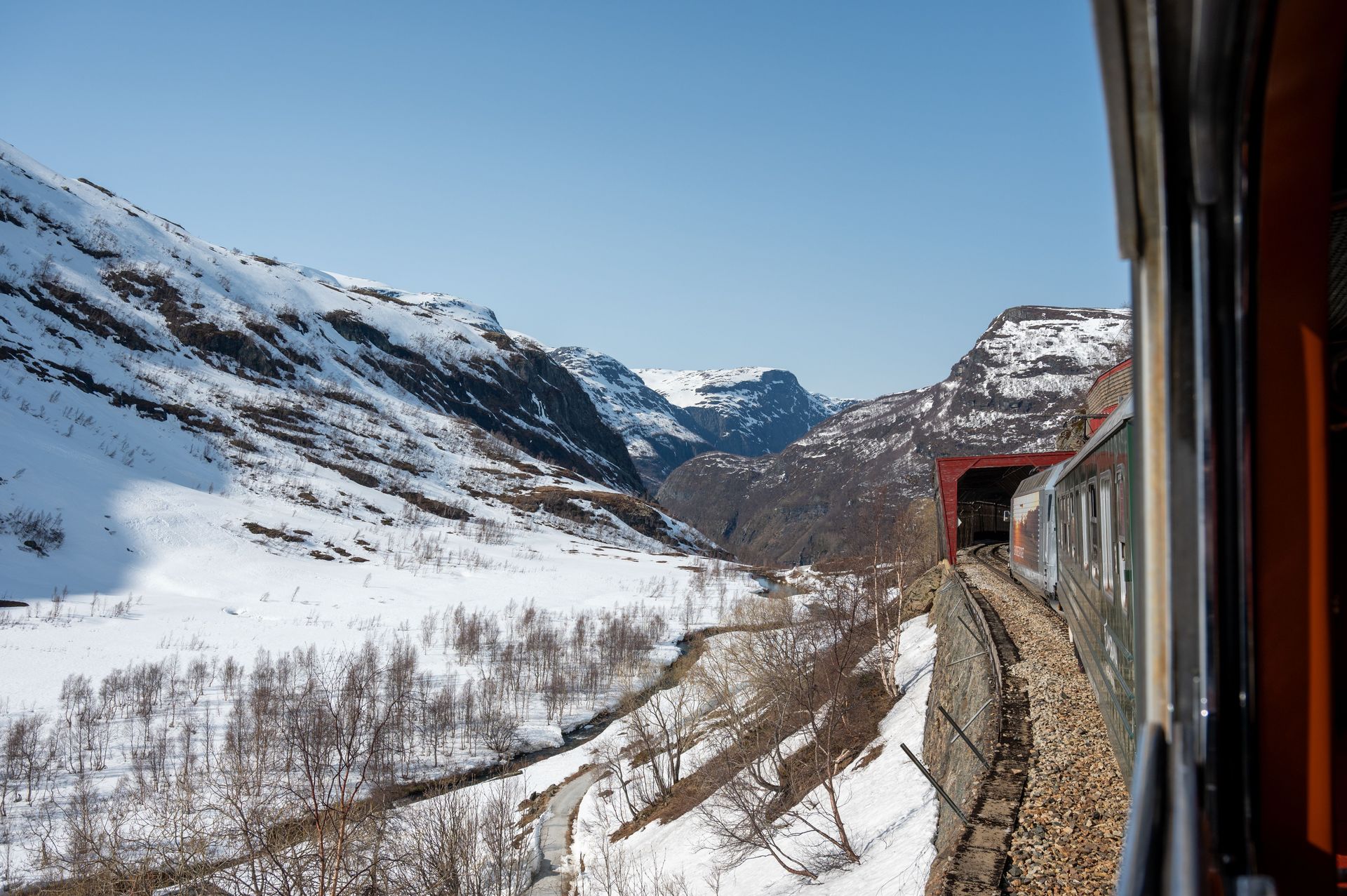
The Flåm Railway — the 20-kilometer narrow-gauge branch line that descends 863 meters from Myrdal on the Bergen Railway to the Aurlandsfjord at Flåm — is the steepest standard-gauge railway line in the world and one of the most concentrated scenic experiences available on any train: 20 kilometers of tunnels, waterfalls, mountain farms, and fjord views accomplished in approximately one hour of travel.
The Flåm Railway was built between 1923 and 1940, with the specific engineering challenge of descending 863 meters in 20 kilometers (a gradient of approximately 55 meters per kilometer — the maximum gradient used is 55‰, meaning 55 meters of elevation change per kilometer of track) producing the tunnels, curves, and mountain passages that make the line remarkable. The train passes through 20 tunnels and stops at Kjosfossen waterfall, where passengers can disembark for a view of a waterfall that drops approximately 225 meters.
The combination of fjord landscape and mountain landscape — the train begins at mountain level and arrives at fjord level — is the specific quality that distinguishes the Flåm Railway from other scenic mountain railways. The fjord at the base of the descent, with its mirrored water reflecting the mountain walls, is visible from the train in the final kilometers of the descent.
Practical notes: the Flåm Railway is one component of the "Norway in a Nutshell" itinerary that combines Bergen Railway, Flåm Railway, Sognefjord ferry, and Gudvangen-Voss bus in a single day from Bergen. Book the full itinerary through the Norwegian railway (Vy) or the fjordnorway.no website. Travel from Myrdal to Flåm for the descent.
9 / 15
Roger Ce / Pexels
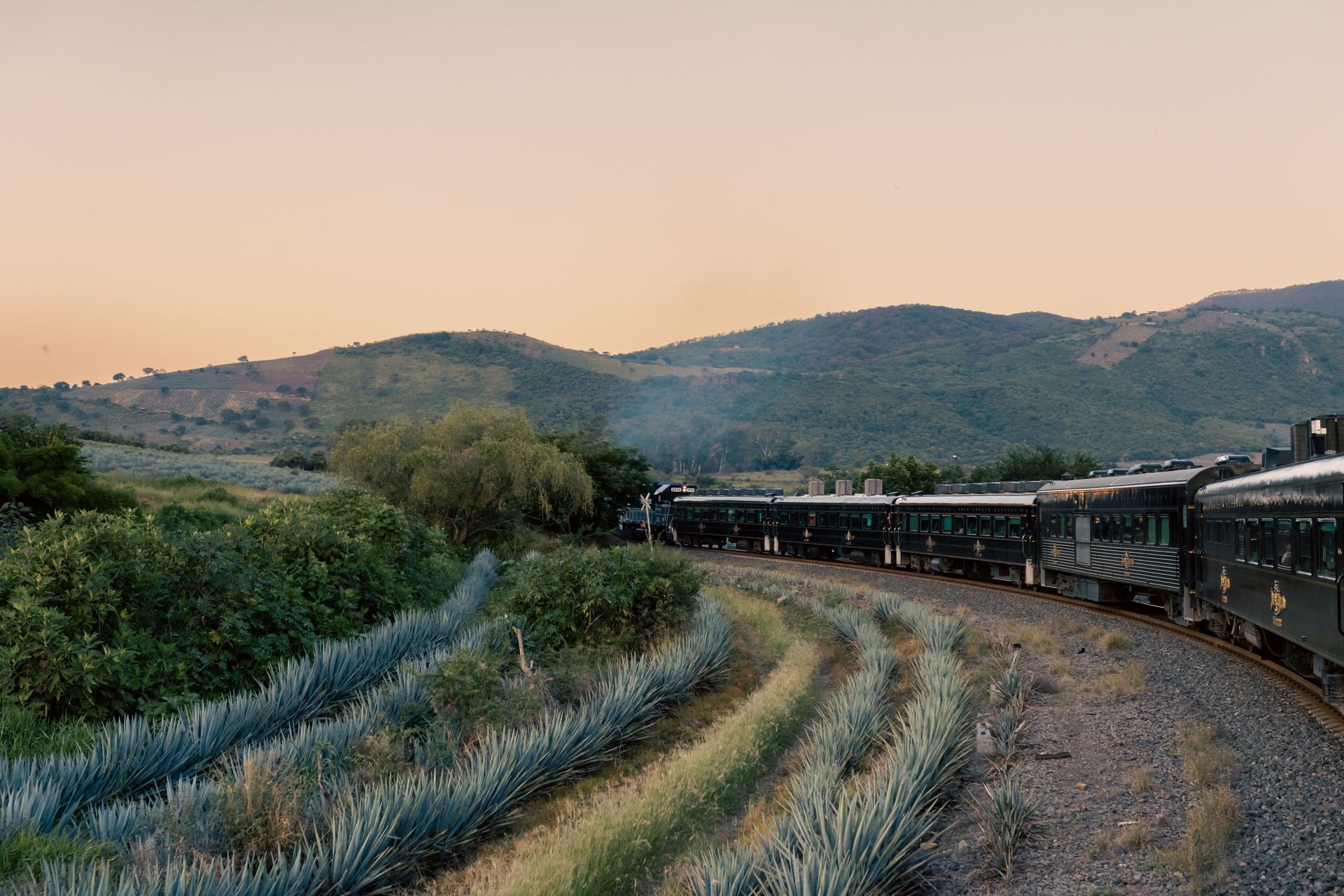
The Chihuahua al Pacífico Railway — known as El Chepe — connects Los Mochis on Mexico's Pacific coast to the city of Chihuahua in the north through 655 kilometers of the Sierra Tarahumara mountains, crossing a series of canyon systems collectively known as the Copper Canyon (Barrancas del Cobre), which are four times the size and in places deeper than the Grand Canyon.
The journey takes approximately 15 hours on the express service and is most commonly done over two or three days with overnight stops in Divisadero (for views of the canyon system) and Creel (for access to Tarahumara indigenous communities and the canyon rim trails). The route includes 36 major bridges, 87 tunnels, and the dramatic descent from the Sierra Madre Occidental $OXY — at over 2,400 meters — to the coastal plain at sea level.
The Copper Canyon landscape is one of the most dramatic in North America and the least visited relative to its quality. The canyon walls are not the arid red rock of the American Southwest but a complex of deep gorges with pine forest at the canyon rim and subtropical vegetation at the canyon floor, reflecting the 1,500 meters of elevation change between top and bottom. The Tarahumara people — one of the few indigenous communities in Mexico that maintained their independence from both Spanish colonial rule and subsequent Mexican governments — live throughout the Sierra Tarahumara and sell crafts at the canyon-rim stations.
Practical notes: the El Chepe Regional (slower) service stops at more stations than the express and provides better access to the canyon viewpoints. Travel from Los Mochis to Chihuahua for the ascent through the most dramatic canyon scenery in daylight.
10 / 15
Credit: Vietnam National Authority of Tourism
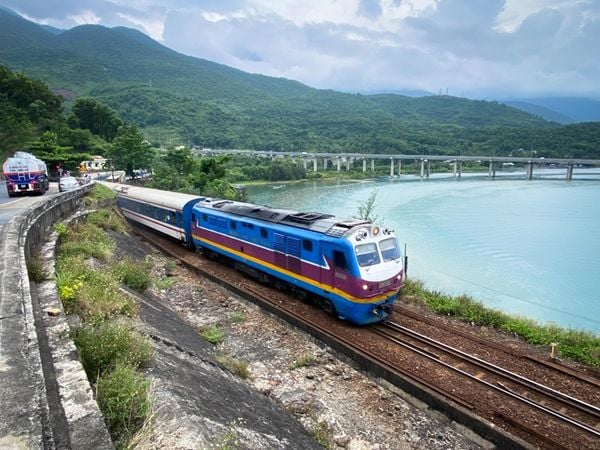
The Reunification Express — the train service connecting Hanoi in the north to Ho Chi Minh City in the south along Vietnam's 1,726-kilometer coastline — is the journey that crosses Vietnam at the speed required to understand the country's extraordinary geographic and cultural diversity. The full end-to-end journey takes approximately 30 to 35 hours; most travelers take it in sections, using the train for specific segments while using flights for the longer gaps.
The most celebrated single section is the crossing of the Hải Vân Pass (Cloud Pass) — a mountain headland that juts into the South China Sea between Da Nang and Hue, requiring the railway to climb to 96 meters before descending back to sea level on the other side. The Hải Vân crossing offers a few minutes of views over the South China Sea that are among the most dramatic on any coastal railway in the world, with the tracks clinging to the cliff face and the blue sea stretching to the horizon below.
The journey through central Vietnam passes through the imperial capital Hue, through the ancient trading port of Hoi An (accessible by bus from Da Nang), and through the fishing communities of the central coast, each visible from the train window at the pace that actually allows observation. The transition from the northern landscape — broader rivers, more industrial character, cooler light — to the southern landscape — coconut palms, Delta flatness, the heat of the tropics — is legible over the course of the journey.
Practical notes: book the Da Nang to Hue section specifically to experience the Hải Vân Pass in daylight. Soft sleeper compartments are comfortable and bookable through the Vietnam Railways website (dsvn.vn). Travel from north to south to have the sea on the left side crossing the pass.
11 / 15
Bill Silveira / Pexels
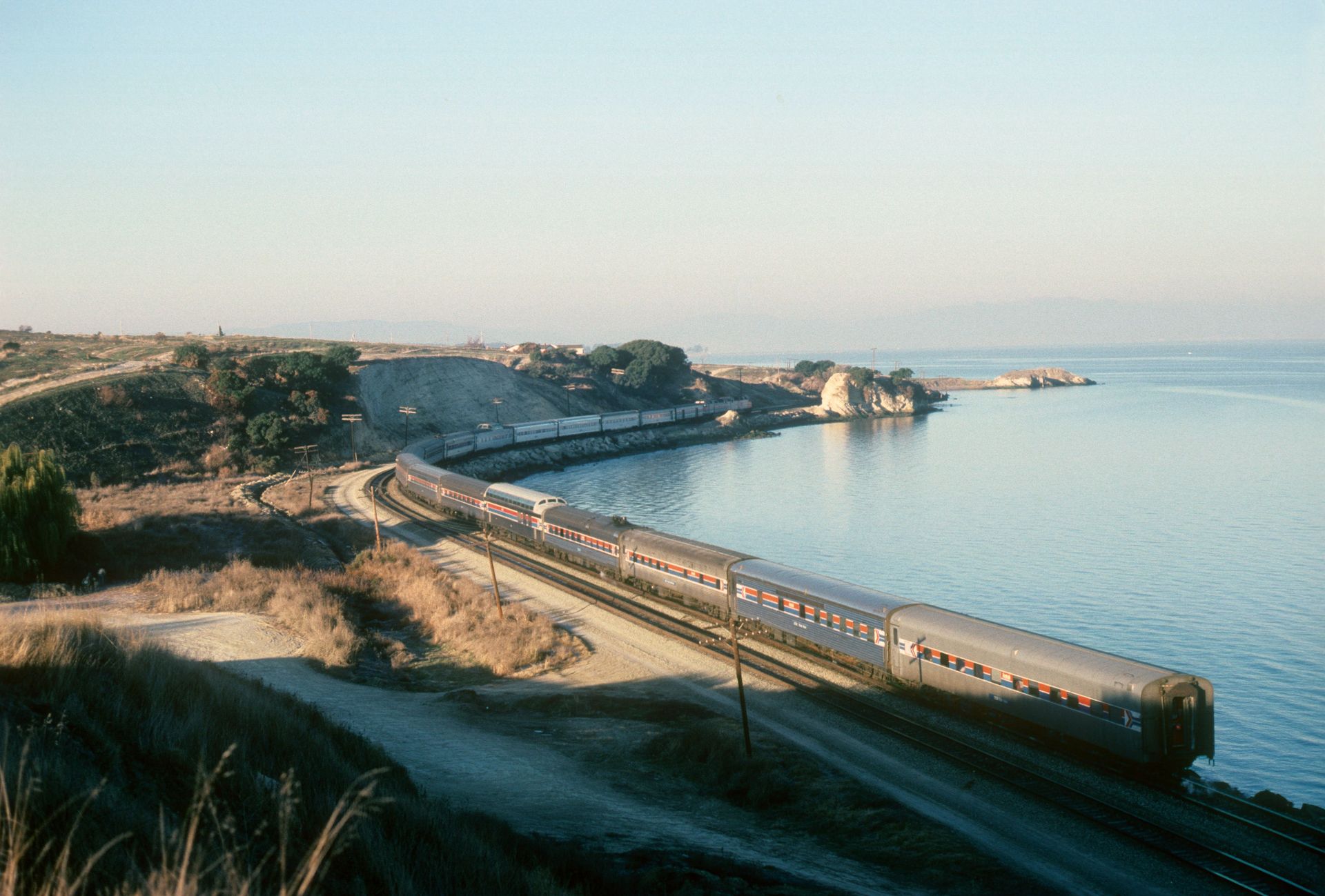
The Coast Starlight — Amtrak's service between Los Angeles and Seattle, a 2,235-kilometer route along the Pacific coast of the United States completed in approximately 35 hours — is the American long-distance train that most clearly demonstrates what American passenger rail at its best can be, and the one whose route most consistently rewards the time investment.
The route leaves Los Angeles through the San Fernando Valley and Santa Barbara, running along the Pacific coast for a section that is the most visually dramatic coastal rail line in North America — the tracks run within meters of the ocean on a narrow shelf between the cliffs and the water, with the Pacific immediately below the train window. The route then turns inland through the Coast Range mountains, crosses the Sacramento Valley, and enters northern California's redwood country before continuing through Oregon and Washington.
The California coastal section — from Santa Barbara to San Luis Obispo, particularly the stretch through the Gaviota Coast — is the highlight and occurs in the morning when traveling northbound from Los Angeles. The Cascades section in Oregon and Washington provides a different but equally significant landscape of volcanic peaks (Mount Shasta, Mount Hood, Mount Rainier visible on clear days), river valleys, and the dense Douglas fir forests of the Pacific Northwest.
Practical notes: book the Superliner Roomette or Bedroom for overnight travel — the coach seats are adequate for the California section but uncomfortable for the full 35-hour journey. Travel northbound (Los Angeles to Seattle) to experience the California coastal section in morning light. The Sightseer Lounge Car provides 360-degree views.
12 / 15
tansaisuketti / Wikimedia Commons (CC BY-SA 3.0)
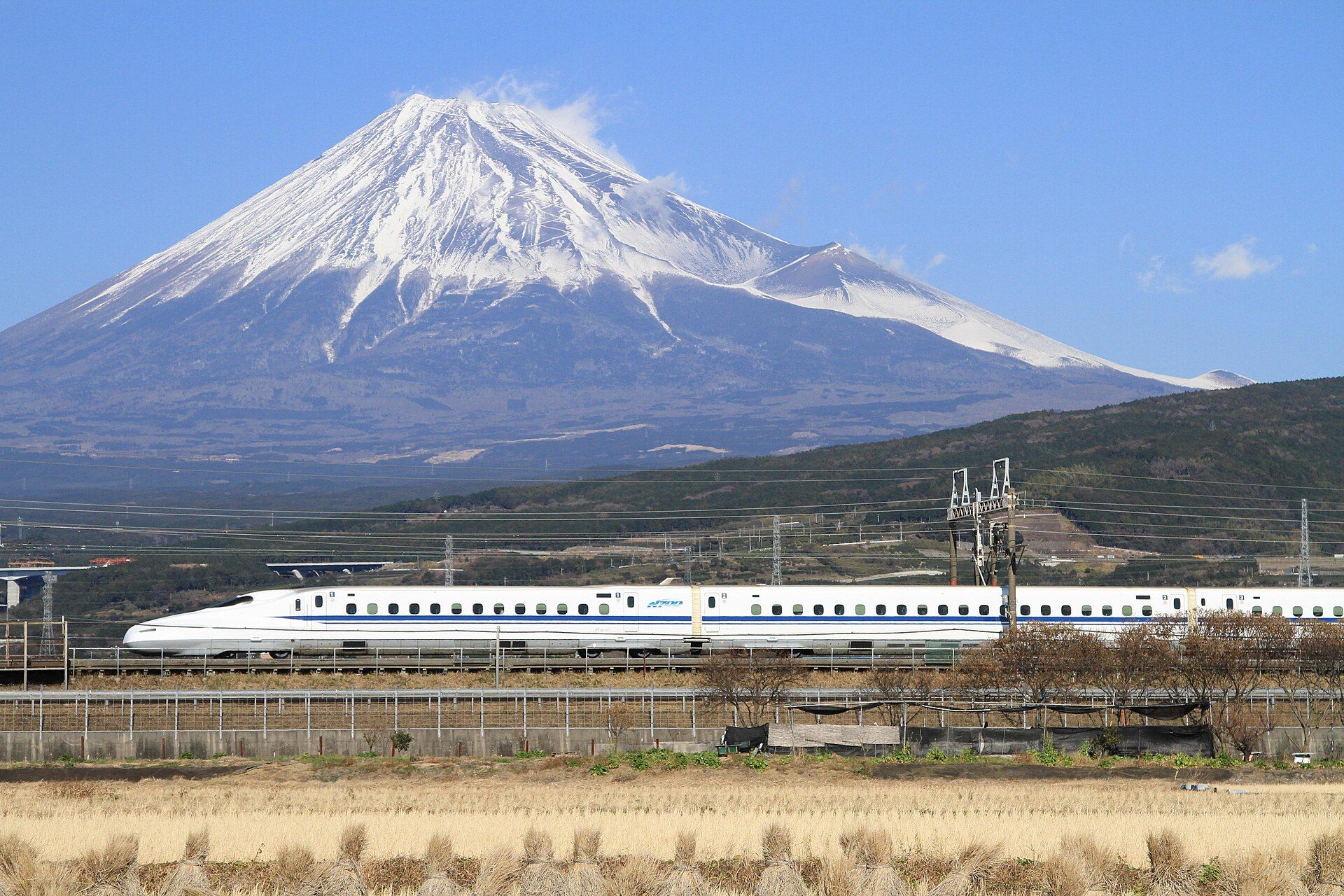
The Shinkansen — Japan's high-speed bullet train network, operating at speeds up to 320 kilometers per hour on the main Tōkaidō and Sanyō lines — is not a scenic journey in the conventional sense: at 300 km/h, the foreground blurs and the middle-distance landscape is visible only briefly before it passes. What the Shinkansen provides instead is the experience of infrastructure excellence at its most developed — a railway so precisely engineered, so reliably operated, and so deeply embedded in the social fabric of Japan that the journey becomes a lesson in what a society's relationship with technology can be.
The Tokyo to Osaka Tōkaidō Shinkansen route offers one specific scenic moment that justifies the entire journey: the view of Mount Fuji from the right side of the train (when traveling westbound from Tokyo) approximately 40 minutes from Tokyo. On clear days — most likely in winter and spring — the mountain is visible for several minutes, its perfect volcanic cone rising above the surrounding lowlands. The rest of the route passes through the dense urban corridor of the Tōkaidō megalopolis at a speed that makes individual buildings, stations, and landmarks appear and vanish before they can be processed.
The operational experience — the precision of the departure times (measured in seconds, not minutes), the cleanliness of the cars, the efficiency of the conductors who bow to the carriage before entering and bow again as they leave — is the attraction as much as the landscape.
Practical notes: the Japan Rail Pass provides unlimited Shinkansen access and is worth purchasing for multi-city itineraries. Reserve seats (included in the pass) in advance. Sit on the right side traveling from Tokyo to Osaka for Mount Fuji views; sit near a window in an unreserved car for more flexibility.
13 / 15
Roderick Eime / Wikipedia (CC BY 2.0)
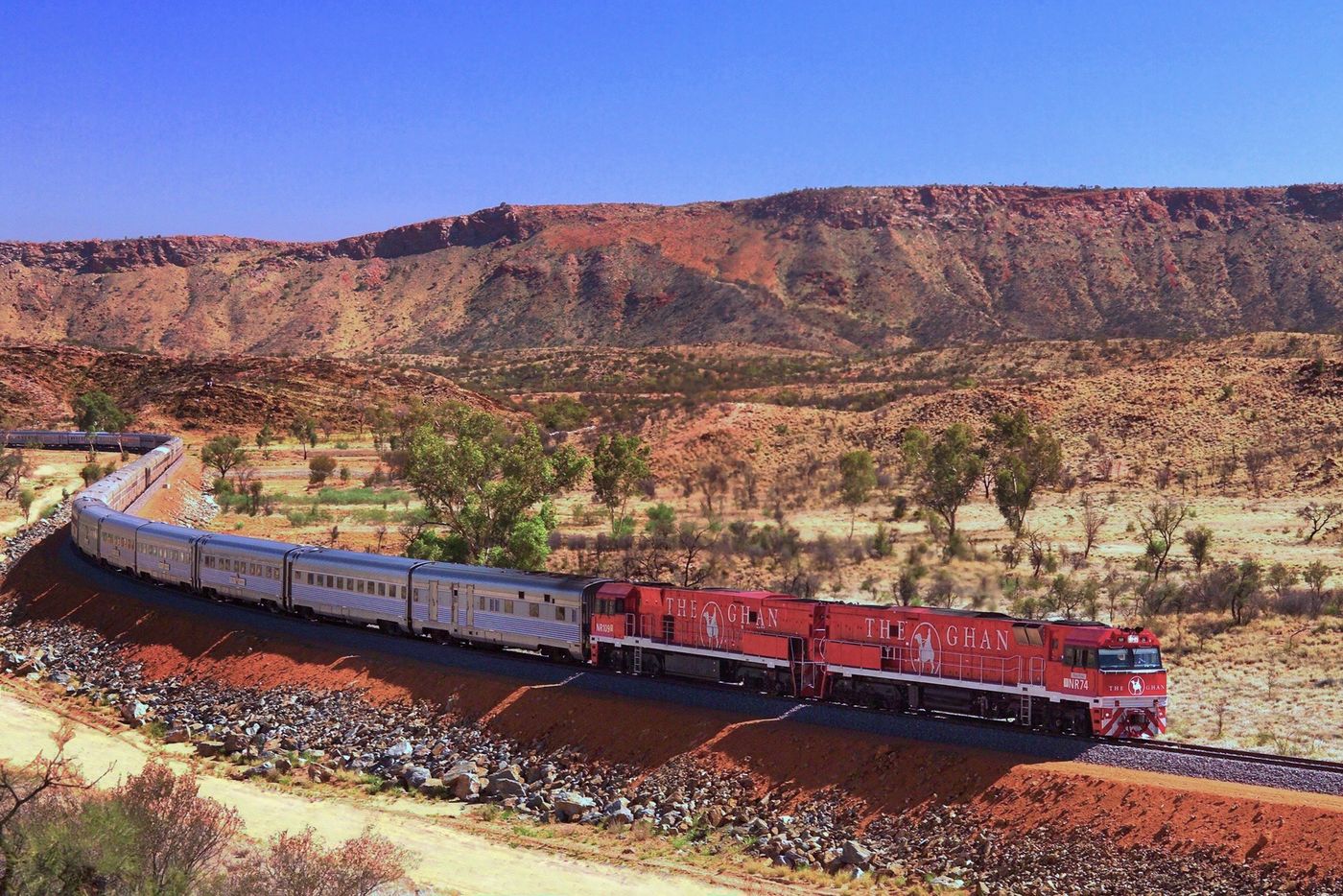
The Ghan — the Australian transcontinental service connecting Adelaide in the south to Darwin in the north through 2,979 kilometers of the Australian interior — takes 54 hours and crosses the continent through landscapes that most Australians have never seen: the flat Flinders Ranges of South Australia, the red earth of the Northern Territory, the termite mounds and spinifex plains of the Top End, and the approach to Darwin through the monsoon-influenced northern savanna.
The journey is named for the Afghan cameleers who transported supplies through the Australian interior before the railway was built — the camels imported from Afghanistan and Pakistan in the 19th century were the primary transport solution for the pre-railway interior, and the communities along what became the railway route retain traces of their Afghan heritage. The original Ghan railway route (built in the 1920s) was so frequently flooded by the Todd River that it was eventually abandoned; the current route, completed in 2004, runs on higher ground and is reliable year-round.
The off-train experiences at Alice Springs and Katherine Gorge are among the highlights of the journey: Alice Springs provides access to Uluru (a full day excursion) and the MacDonnell Ranges, while the Katherine Gorge boat tours allow access to one of the most spectacular gorge systems in the Northern Territory. Both are included in the premium Gold service packages.
Practical notes: the Ghan runs twice weekly and is fully booked months in advance during the dry season (April to October). The Gold class service includes off-train excursions; the Platinum service provides butler service and private cabin. Travel from Adelaide to Darwin to experience the increasing drama of the landscape as the journey progresses northward.
14 / 15
abdullah çadırcı / Pexels
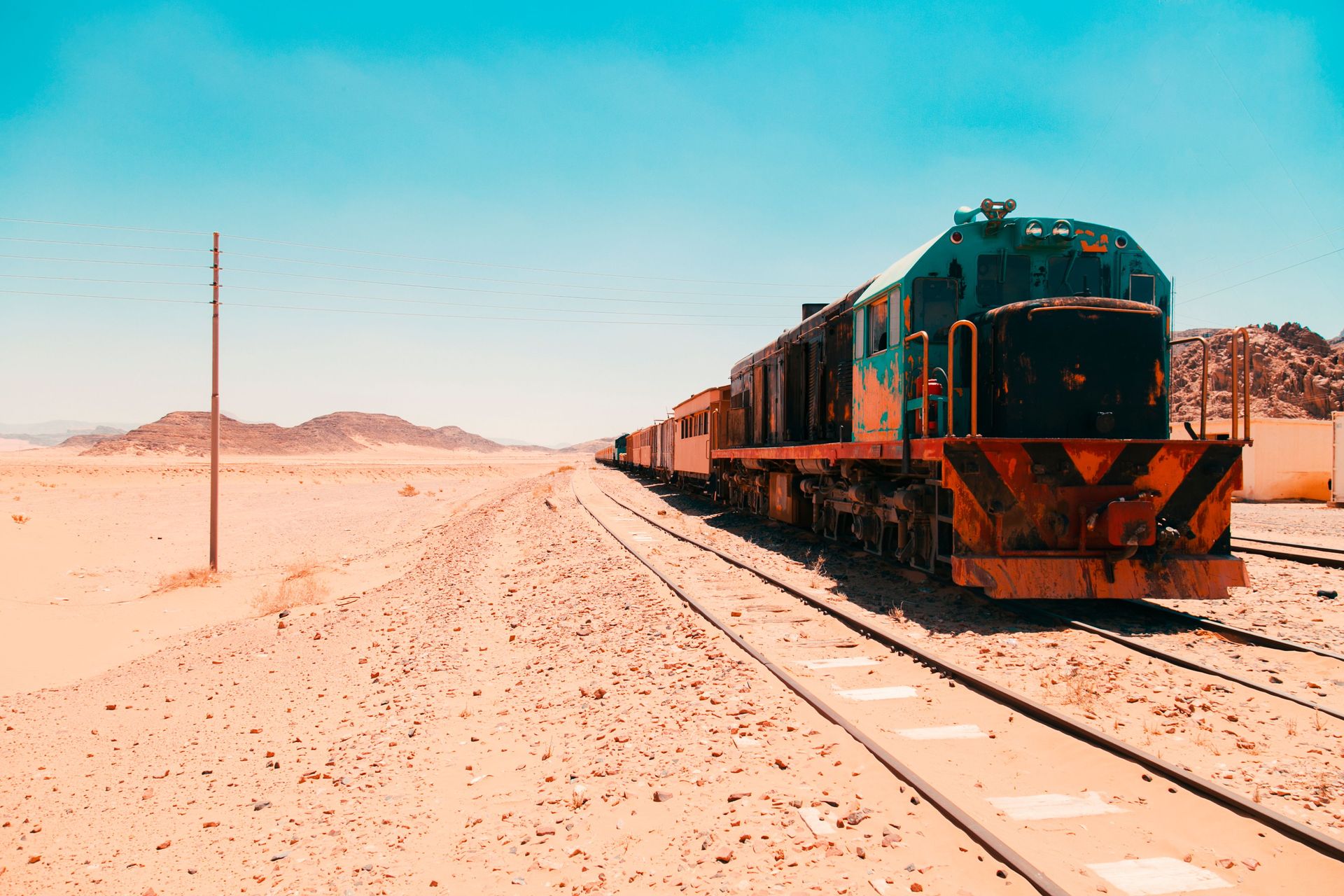
The Hedjaz Railway — built by the Ottoman Empire between 1900 and 1908 to connect Damascus to Medina and transport pilgrims to the holy cities of the Hejaz — was one of the most ambitious railway projects in the Arab world and one whose history is directly connected to the events of World War I. T.E. Lawrence (Lawrence of Arabia) led Arab guerrilla forces in the systematic destruction of the railway during the Arab Revolt of 1916 to 1918, and sections of the line have never been rebuilt.
The section that currently operates for tourists — the Jordan Hejaz Railway between Amman and Qatrana in southern Jordan — is a short but historically significant heritage service that uses original Ottoman rolling stock on some runs. The more accessible experience for most international travelers is the Wadi Rum Desert Railway tour that uses vintage Hedjaz rolling stock in the UNESCO-listed desert landscape of Wadi Rum, where Lawrence himself operated.
The historical significance of the Hedjaz Railway extends beyond its current limited operation: the rusting locomotives, abandoned stations, and dynamited bridges of the Jordanian desert represent one of the most intact records of World War I infrastructure in the Middle East. Driving the former railway route through Jordan and Saudi Arabia — following the telegraph poles and embankments that mark the original alignment — is a form of historical travel available to no other railway in the world.
Practical notes: the Jordan Hejaz Railway heritage services operate intermittently; check current schedules with the Jordan Tourism Board before planning around them. The Wadi Rum desert train experience is more reliably bookable through local operators in Wadi Rum village.
15 / 15
Clément Proust / Pexels
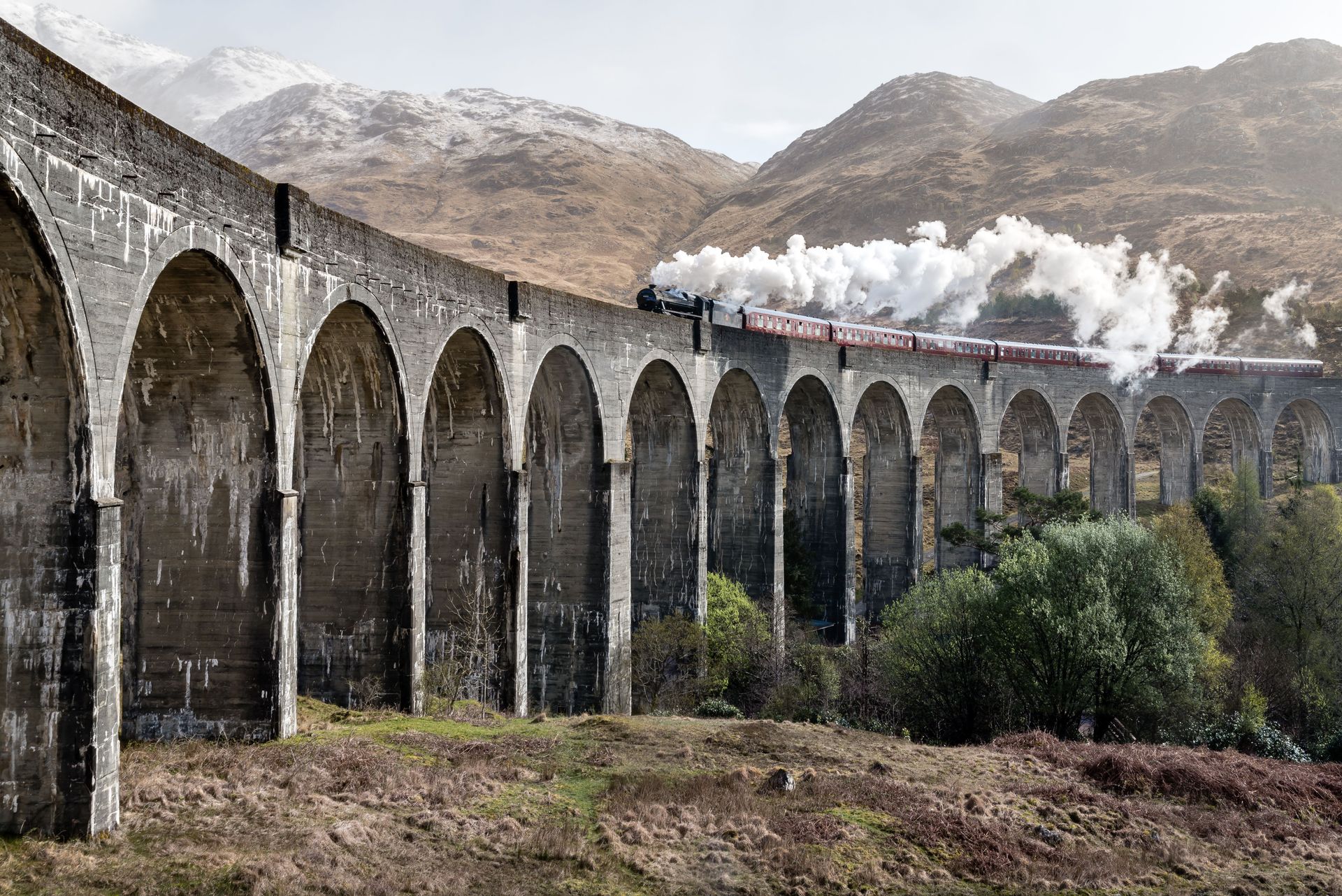
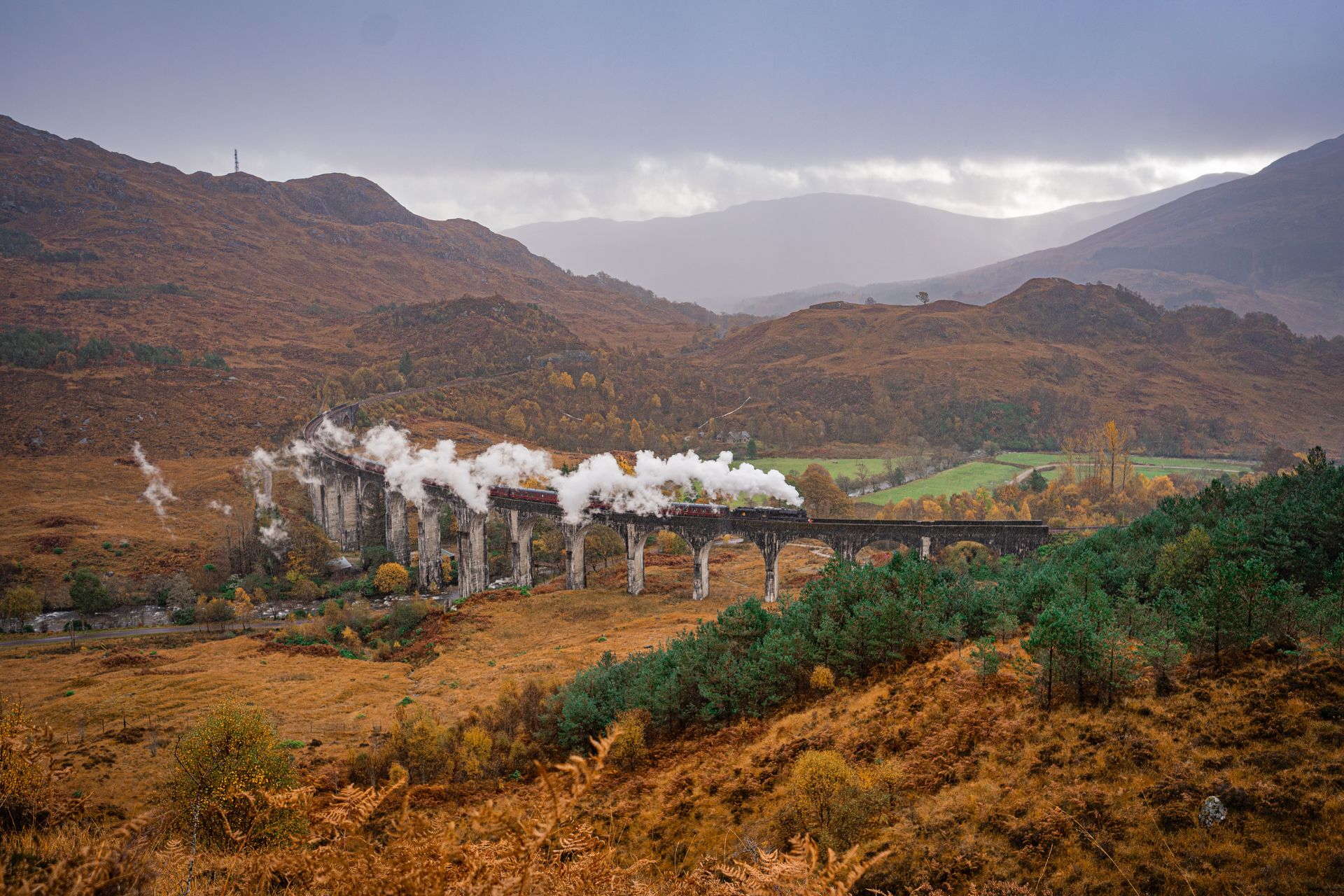
The West Highland Line — the railway connecting Glasgow to Mallaig on the Scottish west coast, via Fort William and the Glenfinnan Viaduct — is the most beautiful railway in Britain and, in the opinion of many rail travelers, in Europe. The 264-kilometer route from Glasgow Queen Street to Mallaig takes approximately five and a half hours and passes through the Highland landscape that most visitors to Scotland travel to see: the moorland, the lochs, the mountain glens, and the specific quality of Highland light on water.
The Glenfinnan Viaduct — the 21-arch concrete viaduct built in 1901 that crosses the head of Loch Shiel in Lochaber — is the most photographed railway structure in Britain and one of the most recognizable in the world, partly through its role in the Harry Potter films (it appears as the viaduct crossed by the Hogwarts Express). The Jacobite steam train service — operated seasonally between Fort William and Mallaig — crosses the viaduct with a steam locomotive, producing the image that most travelers associate with the Scottish Highlands.
The section from Fort William to Mallaig — the final 67 kilometers of the route, along the shores of Loch Eil, through the Rough Bounds of Knoydart, and down to the fishing harbor of Mallaig — is the most dramatic. The route crosses the Glenfinnan Viaduct early in this section, then follows the shore of Loch Eilt and Loch Ailort before reaching the coast at Loch nan Uamh (where Bonnie Prince Charlie landed in 1745) and continuing to Mallaig.
Practical notes: book the Jacobite steam train service well in advance through the West Coast Railways website — it operates from late April to October and sells out months ahead. The ScotRail regular service runs year-round and provides the same route at a fraction of the cost. Sit on the right side traveling from Fort William to Mallaig for loch and coastal views.
