
President Donald Trump said Thursday that Saudi Arabia will not enrich uranium under the nuclear cooperation agreement signed with the U.S. this week, and that the deal is conditional on Riyadh joining the Abraham Accords.
The president's comments on Truth Social conflict with a provision in the 30-year agreement that could allow enrichment on Saudi soil
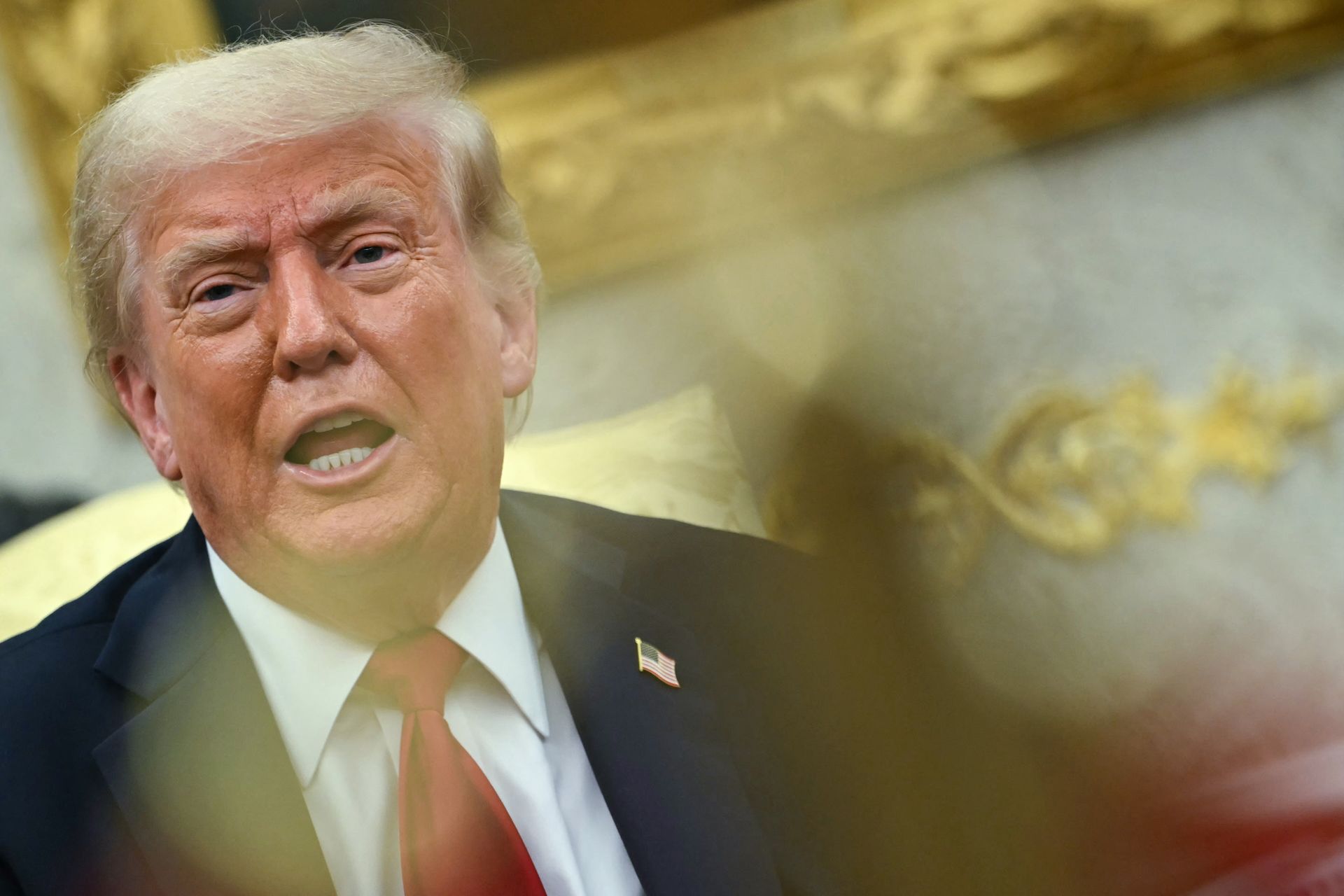
US President Donald Trump speaks in the Oval Office of the White House in Washington, DC on July 14, 2025. (Andrew Caballero-Reynolds/AFP via Getty Images)
President Donald Trump said Thursday that Saudi Arabia will not enrich uranium under the nuclear cooperation agreement signed with the U.S. this week, and that the deal is conditional on Riyadh joining the Abraham Accords.
On Truth Social, Trump declared: "There will be no enrichment of material!" He added that the deal "is totally subject to Saudi Arabia joining the very respected and successful Abraham Accords."
Trump's statement came a day after U.S. Secretary of Energy Chris Wright and Saudi Minister of Energy Prince Abdulaziz bin Salman signed a peaceful nuclear cooperation agreement, known as a 123 agreement, along with an accompanying bilateral safeguards agreement. The Energy Department said the agreements lay the legal foundation for a decades-long, multibillion-dollar partnership and will now be transmitted to Congress for review.
Trump's claim that the deal bars enrichment conflicts with a key provision of the agreement, according to the Wall Street Journal. That clause would require American companies to build a uranium enrichment facility on Saudi soil if a joint two-year U.S.-Saudi study concluded the move was commercially justified. Should Washington decline to move forward once the study was complete, the kingdom would be prohibited from pursuing enrichment on its own or through another foreign partner for a decade.
The Abraham Accords condition Trump described also departs from the approach his administration had taken, according to the Journal. Although Trump has pushed Saudi Arabia to normalize ties with Israel, his administration had stopped short of making Israeli recognition a prerequisite for Riyadh to acquire American nuclear technology. The Biden administration had tied nuclear cooperation to Saudi-Israeli normalization, but those prospects stalled after Hamas's October 2023 attack on Israel.
The 30-year deal gives American companies a central role in developing Saudi Arabia's nuclear infrastructure while excluding foreign competitors. Westinghouse Electric and its AP1000 reactor would be among the primary beneficiaries.
The agreement has drawn criticism from lawmakers on both sides of the aisle. Senator Ed Markey of Massachusetts charged that the Trump administration was jeopardizing U.S. and regional security by risking the spread of nuclear weapons in Saudi Arabia and stoking an arms race across the Middle East. Representative Brad Sherman of California said Congress should approve the deal only if Saudi Arabia commits never to enrich uranium or reprocess spent reactor fuel. Secretary of State Marco Rubio brushed aside the criticism, assuring reporters that Washington would never finalize an arrangement with any nation that carried the risk of nuclear proliferation.
Join 500,000+ readers who start their day with Quartz.
By subscribing, you agree to our Terms of Service and Privacy Policy.