The Trump administration wants half the value of every vehicle built under the U.S.-Mexico-Canada Agreement to originate from U.S. sources in order to qualify for preferential tariff treatment, according to Reuters.

The proposal, unveiled during U.S.-Mexico negotiations in Mexico City, would also raise overall North American content rules to 82%
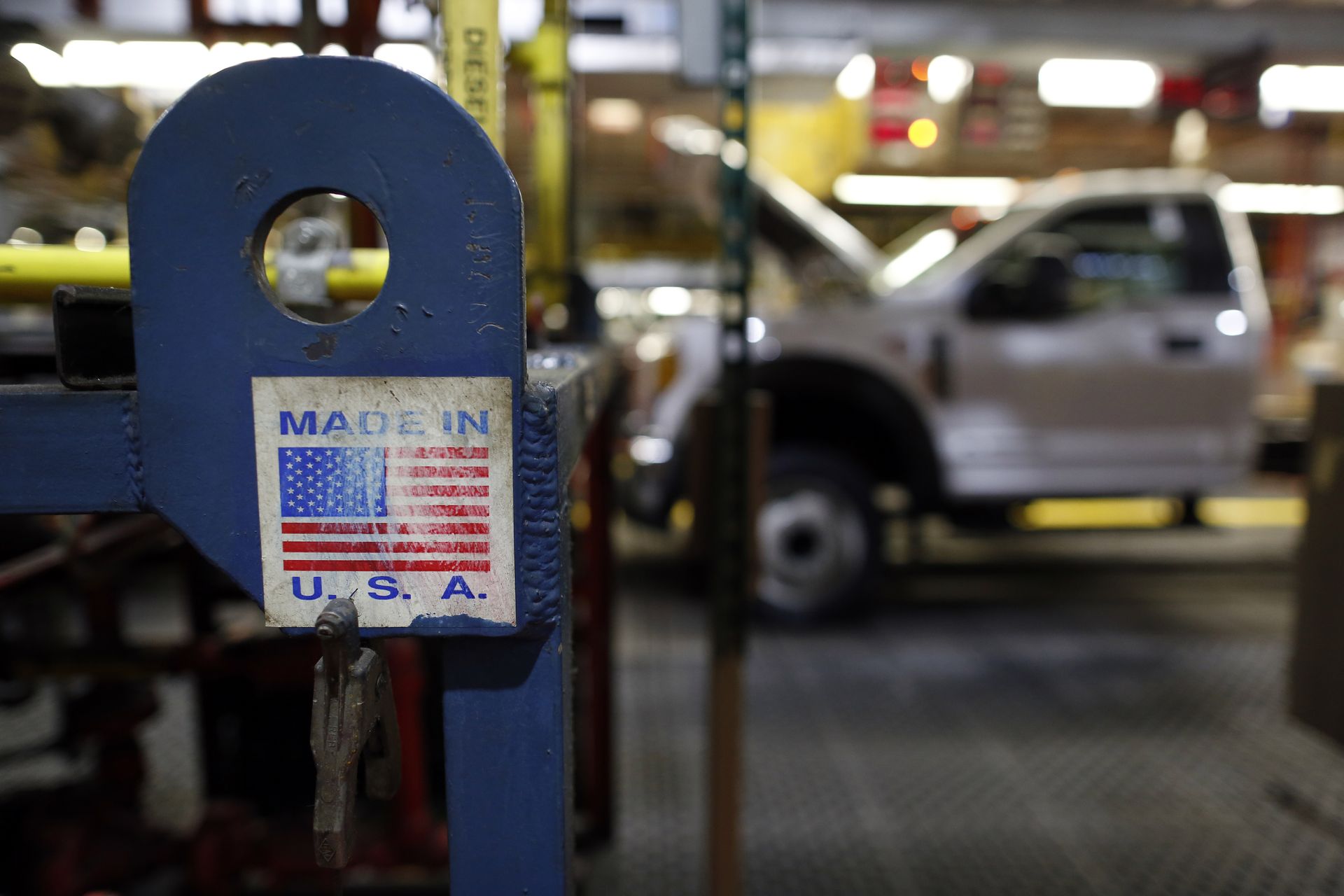
Bloomberg / Getty Images
The Trump administration wants half the value of every vehicle built under the U.S.-Mexico-Canada Agreement to originate from U.S. sources in order to qualify for preferential tariff treatment, according to Reuters.
Four people familiar with the U.S. negotiating position told Reuters that the demand, which pairs an 82% overall North American content threshold with the 50% U.S.-specific floor, emerged from this week's bilateral talks in Mexico City. The current USMCA requires 75% regional content for vehicles to qualify for preferential treatment, with no U.S.-specific requirement.
Adopting the proposal would represent a significant departure from current USMCA terms, which set a high-wage-jurisdiction production floor — covering facilities in the U.S. or Canada — at 40% of core parts value for passenger cars and 45% for pickup trucks. The new U.S. proposal contains no provision for counting Canadian parts content, and Canada was not represented in the Mexico City talks.
The Office of the U.S. Trade Representative announced that Deputy U.S. Trade Representative Ambassador Jeff Goettman led the U.S. delegation to Mexico City on May 28-29 for the first of three planned bilateral rounds with Mexico. A second round is scheduled for June 16-17 in Washington, D.C., with a third round planned for the week of July 20 in Mexico City. The negotiations focus on rules of origin for key industrial goods, among other topics.
Trump administration officials have repeatedly questioned the rationale for Canadian vehicle and auto parts exports to the U.S., and the decision to leave Ottawa out of the Mexico City talks fits that pattern. People from the auto industry who spoke with Reuters said U.S. Trade Representative Jamieson Greer is widely expected to reach a deal on rules of origin with Mexico independently, then hand Canada a finished agreement with little room for input. When asked directly, Greer has declined to say whether the agreement would remain a three-country framework or eventually split into two separate bilateral arrangements.
Neither the methodology for arriving at the 82% regional content threshold nor the framework for measuring the 50% U.S. value floor had been spelled out, according to Reuters. The agreement took effect in 2020, succeeding NAFTA, which had governed North American commerce since 1994; together, the three economies now conduct roughly $1.6 trillion in trade annually under its terms.
Join 500,000+ readers who start their day with Quartz.
By subscribing, you agree to our Terms of Service and Privacy Policy.